Deterministic Drivers and Ecological Assembly of Anammox Bacterial Communities in Wastewater Treatment Systems
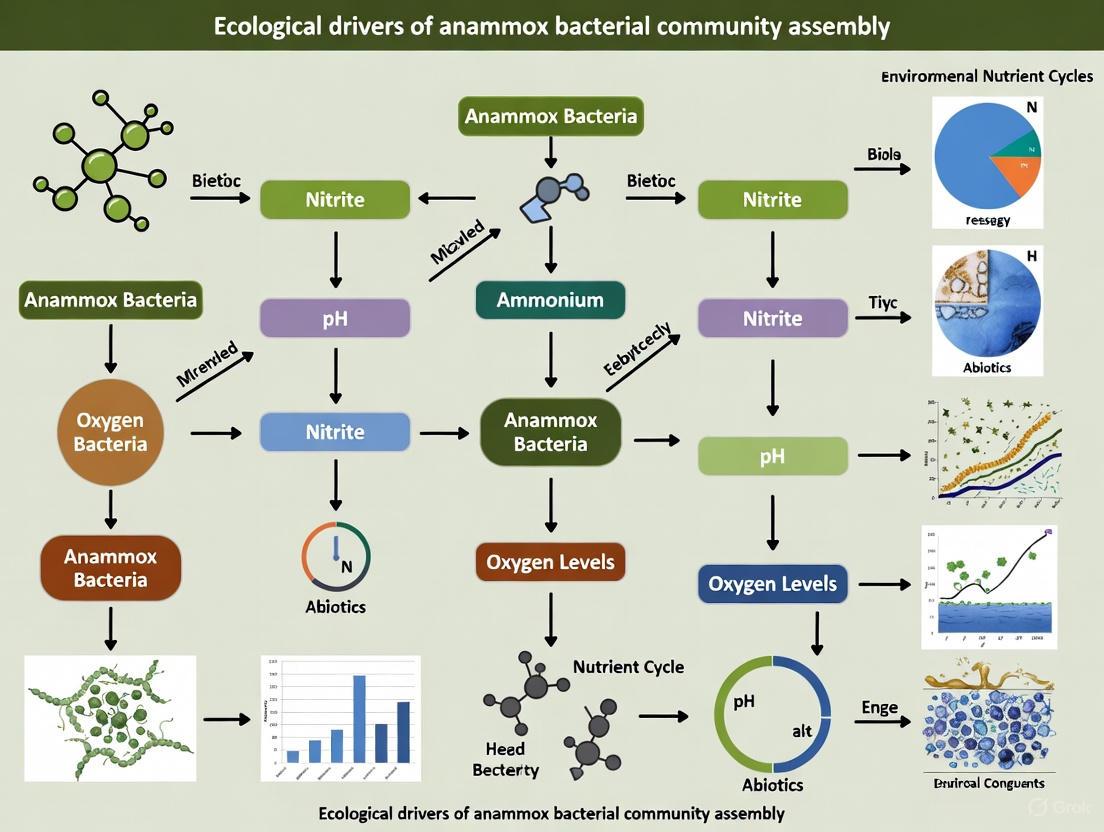
This article synthesizes current research on the ecological mechanisms governing the assembly of anammox bacterial communities, a crucial process for sustainable nitrogen removal.
Deterministic Drivers and Ecological Assembly of Anammox Bacterial Communities in Wastewater Treatment Systems
Abstract
This article synthesizes current research on the ecological mechanisms governing the assembly of anammox bacterial communities, a crucial process for sustainable nitrogen removal. We explore the fundamental principles of stochastic versus deterministic assembly, highlighting recent evidence that deterministic processes, driven by factors like substrate limitation and filtration dynamics, predominantly shape functional biofilms. The review details methodological advances in bioreactor technology, such as Anammox-MBRs and DMBRs, that leverage these ecological principles for robust process application. We further address operational challenges, including sensitivity to temperature and emerging pollutants, and present optimization strategies grounded in microbial ecology. Finally, we compare anammox with other nitrogen-removal pathways, validating its role in the global nitrogen cycle and its potential for creating energy-positive wastewater treatment systems, with implications for environmental biotechnology.
The Ecological Blueprint: Unraveling Core Principles of Anammox Community Assembly
The structure and function of any microbial ecosystem are fundamentally shaped by its assembly processes—the mechanisms that determine which species colonize, persist, and interact within a community. These processes are broadly categorized as either deterministic or stochastic. Deterministic processes encompass predictable selection pressures imposed by abiotic environmental factors (e.g., pH, temperature, substrate availability) and biotic interactions (e.g., competition, facilitation). In contrast, stochastic processes involve unpredictable elements of ecological drift, random birth-death events, and probabilistic dispersal [1]. In engineered biological systems like anaerobic ammonium oxidation (anammox) reactors, understanding the balance between these forces is crucial for optimizing system performance, enhancing functional stability, and steering microbial communities toward desired outcomes [2] [3].
The study of these ecological drivers is particularly salient in anammox bacterial community assembly research. Anammox bacteria, central to a highly efficient biological nitrogen removal technology, are characterized by slow growth and sensitivity to environmental fluctuations [2]. Understanding whether their communities assemble primarily through deterministic selection or stochastic chance provides critical insights for managing biomass retention, preventing process failure, and improving nitrogen removal efficiency in wastewater treatment applications [2] [4] [5].
Theoretical Framework of Stochastic and Deterministic Processes
The following diagram illustrates the key processes and their relationships in microbial community assembly.
Deterministic Processes
Deterministic processes result in predictable community composition based on specific environmental conditions and species interactions.
- Homogeneous Selection: This occurs when consistent environmental conditions across habitats select for the same set of microbial species, leading to communities that are more similar than would be expected by chance. In anammox systems, this can be driven by stable operating parameters such as substrate type and concentration, temperature, and pH [2] [3].
- Heterogeneous Selection: Opposite to homogeneous selection, this process dominates when environmental conditions vary between habitats, selecting for different microbial populations and resulting in communities that are more dissimilar than expected by chance [3].
Stochastic Processes
Stochastic processes introduce an element of chance into community assembly, making outcomes less predictable.
- Dispersal Limitation: This arises when geographic or physical barriers prevent microbial taxa from reaching a suitable habitat. In engineered granular sludge systems, the limited microbial exchange between individual granules is a classic example, contributing to high variability between granules even within the same reactor [6].
- Ecological Drift: This refers to random changes in species abundance due to chance birth-death events, whose effects are more pronounced in small populations and can lead to random loss of species from a community [1].
Quantitative Analysis of Assembly Processes in Anammox Systems
The relative influence of stochastic and deterministic processes varies significantly across different anammox reactor configurations and microhabitats. The table below summarizes quantitative findings from recent studies.
Table 1: Quantitative Contributions of Assembly Processes in Anammox Systems
| System Type | Community Component | Deterministic Contribution | Stochastic Contribution | Key Deterministic Factor(s) | Citation |
|---|---|---|---|---|---|
| Anammox DMBR | Functional Membrane Biofilm | Dominant (Primarily Homogeneous Selection) | Lower | Limited nitrogen substrates, low filtration permeate drag force | [2] |
| Anammox Granules (Swine WWTP) | Whole Community | 10.20-26.47% | 71.51-89.75% (Dispersal Limitation) | Complex wastewater composition | [6] |
| Anammox Granules (Lab-scale) | Whole Community | Lower | Dominant (Dispersal Limitation) | N/A | [6] |
| Anaerobic Digestion Granules | Floating/Settled Biomass | Homogeneous Selection primary mechanism | Dispersal processes also contributed | Temperature shift, flotation event | [1] |
| Cold-Rolling Wastewater Treatment | Activated Sludge | Deterministic dominant | Stochastic also present | Regional environmental factors, wastewater composition | [3] |
The data reveals a critical pattern: the assembly of anammox bacteria is highly context-dependent. While deterministic processes often govern specific functional niches like membrane biofilms, stochasticity, particularly dispersal limitation, frequently dominates in suspended or granular sludge communities [2] [6]. Furthermore, the balance can shift under different conditions. For instance, anammox bacteria were found to be predominantly affected by homogeneous selection under high substrate-loading conditions, but by drift under low substrate-loading [2].
Methodological Approaches for Quantifying Assembly
Experimental Workflow for Community Assembly Analysis
A typical research pipeline for investigating these processes involves sample collection, molecular analysis, and ecological inference, as detailed in the workflow below.
Key Analytical Frameworks
- Null Model Analysis: This is a cornerstone method. It compares observed phylogenetic diversity (e.g., β-diversity) to a distribution of values expected under a null hypothesis of random assembly. The β-nearest taxon index (βNTI) is a key metric derived from this analysis. |βNTI| > 2 indicates a dominant role of deterministic processes (homogeneous selection if βNTI < -2, or heterogeneous selection if βNTI > +2), while |βNTI| < 2 suggests a significant role for stochastic processes [2] [6] [3].
- Neutral Community Model: This model predicts species occurrence and abundance based on random immigration and ecological drift. A good fit between observed data and the neutral model suggests stochastic assembly is dominant. Significant deviations from the model indicate the influence of deterministic selection [6].
- Co-occurrence Network Analysis: This infers potential microbial interactions based on correlation patterns. The Zi-Pi plot derived from network analysis classifies taxa into ecological roles (e.g., specialists, generalists), providing insights into niche-based (deterministic) versus stochastic influences. Increased modularity in networks can indicate a community's response to stress, such as nitrogen-loading fluctuations [4].
Research Reagents and Materials for Assembly Studies
The following table catalogs essential reagents, materials, and tools used in experimental anammox community assembly research.
Table 2: Essential Research Reagents and Materials for Anammox Assembly Studies
| Category | Item | Technical Function in Research |
|---|---|---|
| Bioreactor Components | Polyurethane Porous Material / PVA Gel Beads | Serves as a biofilm carrier; provides high surface area for bacterial attachment, retains biomass, creates distinct microhabitats for studying assembly [7]. |
| Dynamic Membrane Bioreactor (DMBR) | Creates a functional membrane biofilm; allows investigation of assembly under low permeate drag force and substrate limitation [2]. | |
| Molecular Biology Reagents | DNA/RNA Co-extraction Kits | Simultaneous extraction of genomic DNA (for community structure) and RNA (for active community) from complex samples like granules [1]. |
| 16S rRNA Gene Primers (e.g., 338F/806R) | Amplifies the V3-V4 hypervariable region for high-throughput sequencing and microbial community profiling [7]. | |
| Illumina MiSeq Platform | High-throughput sequencing platform for 16S rRNA gene amplicons to characterize microbial community composition [7]. | |
| Analytical Software & Tools | PICRUSt2 | Phylogenetic Investigation of Communities by Reconstruction of Unobserved States; predicts functional potential of microbial communities from 16S rRNA gene data [4]. |
| I-sanger Cloud Platform / QIIME2 | Bioinformatic platforms for processing and analyzing high-throughput sequencing data, including OTU/ASV picking and diversity analyses [7]. | |
| R (with vegan, picante, etc.) | Statistical computing environment for performing null model analysis, neutral model fitting, and other ecological statistical tests [6] [3]. |
Implications for Anammox Process Optimization
Understanding community assembly rules provides a scientific basis for manipulating anammox systems. When deterministic processes dominate, operators can steer the community by controlling key selective pressures like substrate loading and availability. For instance, niche differentiation among anammox genera can be exploited by creating selective microhabitats; Candidatus Kuenenia, for example, shows preferential enrichment in membrane biofilms with limited nitrogen substrates [2]. Furthermore, the knowledge that biofilms can protect anammox bacteria from inhibitory conditions like low pH suggests that using biofilm reactors is a deterministic strategy to enhance process resilience [5].
Conversely, in systems where stochastic dispersal limitation is a major factor (e.g., in granular sludge), strategies like controlled mixing or bioaugmentation with specific consortia can be employed to overcome random variability and ensure the presence of key functional guilds [6]. Managing the nitrogen-loading rate is critical, as both excessive loading and starvation can cause performance deterioration and alter anammox bacterial abundance, indicating a shift in the dominant assembly processes under stress [4].
Key Anammox Genera and Their Distinct Physiological Niches
The discovery of anaerobic ammonium-oxidizing (anammox) bacteria has fundamentally reshaped our understanding of the global nitrogen cycle, challenging the long-held paradigm that denitrification was the sole significant pathway for fixed nitrogen removal from ecosystems [8] [9]. These specialized microorganisms perform the anammox reaction, oxidizing ammonium using nitrite as an electron acceptor under anoxic conditions to yield dinitrogen gas [8]. This process provides a more environmentally sustainable alternative to conventional nitrogen removal technologies, with lower energy requirements, reduced greenhouse gas emissions, and no need for external carbon sources [10]. Beyond engineered systems, anammox bacteria are now recognized as cornerstone contributors to nitrogen loss in natural environments, accounting for 10-40% of all nitrogen gas production in marine settings [8].
A comprehensive understanding of anammox ecology requires moving beyond treating these organisms as a monolithic functional group. Research has revealed significant genomic and physiological diversity among anammox bacteria, which has led to niche differentiation and distinct distribution patterns across environmental gradients [8] [10] [11]. This technical guide examines the key anammox genera—Candidatus Brocadia, Candidatus Kuenenia, Candidatus Jettenia, and Candidatus Scalindua—detailing their unique physiological characteristics and the ecological mechanisms governing their community assembly. Framed within the context of ecological drivers, this review synthesizes current knowledge on how deterministic and stochastic processes shape anammox bacterial communities across diverse ecosystems.
Physiological Diversity of Key Anammox Genera
Anammox bacteria belong to a monophyletic group within the phylum Planctomycetota [10]. To date, six genera have been identified: Candidatus Brocadia, Candidatus Kuenenia, Candidatus Jettenia, Candidatus Scalindua, Candidatus Anammoximicrobium, and Candidatus Anammoxoglobus [9]. The first four genera represent the most extensively studied and widely distributed, each exhibiting distinct physiological traits and habitat preferences that underpin their ecological niches.
Table 1: Key Physiological Characteristics and Habitat Preferences of Major Anammox Genera
| Genus | Common Environments | Temperature Optima | Salinity Tolerance | Notable Physiological Traits |
|---|---|---|---|---|
| Ca. Brocadia | WWTPs, freshwater sediments, terrestrial ecosystems [10] [11] | Mesophilic (~30-40°C) [10] | Low to moderate [10] | Relatively higher growth rates; adapts to broader environmental conditions [10] |
| Ca. Kuenenia | WWTPs, engineered systems [10] | Mesophilic [10] | Low [10] | Dominates biofilm configurations; exhibits niche differentiation in substrate-limited conditions [2] |
| Ca. Jettenia | WWTPs, some freshwater environments [10] | Mesophilic [10] | Low [10] | Greater environmental specificity; more sensitive to unfavorable conditions [10] |
| Ca. Scalindua | Marine, estuarine sediments [11] [9] | Broader range including lower temperatures [11] | High (marine) [11] | Dominant in marine ecosystems; phylogenetically diverse; acidophilic amino acid bias in proteome [8] [11] |
Table 2: Nutrient Uptake Affinities and Metabolic Partnerships of Anammox Genera
| Genus | Substrate Affinity (NHâ‚„âº/NOâ‚‚â») | Common Metabolic Partners | Interaction Type with Partners |
|---|---|---|---|
| Ca. Brocadia | Varies between species [2] | Denitrifiers, AOB [10] | Competition for nitrite [6] |
| Ca. Kuenenia | Varies between species [2] | AOB, NOB [10] | Cooperative (NO provision) [10] |
| Ca. Jettenia | Not well characterized | Dependent on vitamin producers [10] | Cross-feeding (vitamins) [10] |
| Ca. Scalindua | Adapted to low nutrient marine conditions [11] | Unknown in marine environments | Keystone role in co-occurrence networks [11] |
Genomic and Proteomic Adaptations
Genomic analyses reveal significant adaptations among anammox genera that correlate with their environmental preferences. Halophilic and non-halophilic species show distinct genetic profiles, with halophiles possessing a unique set of genes absent in other species [8]. Proteomic investigations further demonstrate evolutionary divergence, with halophilic strains like Ca. Scalindua exhibiting a bias toward acidic amino acids and under-representation of cysteine, adaptations that enhance protein stability and function under high salinity [8]. These fundamental differences in genomic makeup and proteomic composition underscore the deep evolutionary adaptations that have enabled anammox bacteria to colonize diverse habitats.
Community Assembly Processes in Anammox Ecosystems
The assembly of anammox bacterial communities is governed by a complex interplay of deterministic (niche-based) and stochastic (neutral) processes, whose relative importance varies across environmental contexts and ecosystem types.
Deterministic versus Stochastic Assembly
Deterministic processes occur when environmental conditions (e.g., temperature, pH, substrate availability) or biological interactions (e.g., competition, cooperation) impose selection pressures that favor specific taxa. In contrast, stochastic processes arise from random birth-death events, dispersal limitations, and ecological drift [2] [6].
In engineered systems like wastewater treatment plants, deterministic factors often exert strong influences on community composition. Studies of anammox dynamic membrane bioreactors (DMBRs) have demonstrated that deterministic assembly prevails in membrane biofilms, particularly under conditions of limited nitrogen substrates and low filtration permeate drag force [2]. This deterministic selection leads to niche differentiation, with different anammox genera preferentially colonizing specific microhabitats within reactors. For instance, Ca. Kuenenia shows preferential enrichment on membrane biofilms, while Ca. Brocadia and Ca. Jettenia dominate in suspended sludge fractions [2].
Conversely, stochastic processes frequently dominate in granular sludge systems. Analysis of 200 anammox granules from full-scale and lab-scale reactors revealed that dispersal limitation accounted for 71.51-89.75% of community assembly, indicating limited microbial exchange between granules [6]. This stochastic dominance results in high heterogeneity among individual granules, despite functional bacteria maintaining high relative abundance at the system level.
Environmental Filters Shaping Anammox Communities
Key environmental factors act as deterministic filters that shape anammox community composition:
Temperature: Temperature regimes significantly influence anammox bacterial activity and stress response. Under dissolved oxygen (DO) perturbations, anammox biofilms at 20°C and 14°C exhibited divergent transcriptional responses, with community-wide gene expression differing significantly depending on the temperature regime [12]. Lower temperatures generally reduce metabolic activity but may confer protection against oxygen stress [12].
Substrate Availability: Nitrogen substrate concentrations and ratios strongly influence anammox community composition. Variations in nitrogen substrate affinities among anammox genera drive population shifts in reactors, with substrate-limited conditions promoting deterministic assembly [2]. Different anammox species possess distinct half-saturation constants (Km) for ammonium and nitrite, creating niche differentiation along substrate concentration gradients [2].
Salinity: Salinity serves as a powerful environmental filter, clearly separating marine-adapted Ca. Scalindua from freshwater genera like Ca. Brocadia and Ca. Kuenenia [11] [9]. Estuarine environments with salinity gradients demonstrate progressive shifts in anammox community composition along the salinity continuum.
Dissolved Oxygen: DO concentrations represent a critical determinant for anammox distribution, as these strictly anaerobic bacteria exhibit high sensitivity to oxygen. However, different species show varying degrees of oxygen tolerance, creating microhabitat specialization within anoxic zones and biofilms [12].
The following diagram illustrates the ecological processes and environmental factors governing anammox community assembly across different ecosystems:
Diagram Title: Ecological Framework of Anammox Community Assembly
Methodologies for Studying Anammox Ecology
Molecular Techniques for Community Analysis
Advanced molecular techniques have revolutionized our ability to characterize anammox community structure and function:
High-Throughput Sequencing (HTS): 16S rRNA gene amplicon sequencing enables comprehensive profiling of anammox bacterial diversity and community composition across environmental samples [11] [9]. This approach has revealed unprecedented diversity within anammox communities, including the discovery of rare taxa that play crucial ecological roles.
Quantitative PCR (qPCR): Target gene quantification (e.g., 16S rRNA and hzo genes) provides accurate measurements of anammox bacterial abundance in environmental samples [9]. This method has demonstrated anammox abundances ranging from 2.34×10ⵠto 9.22×10ⵠcopies/g sediment in estuarine systems like Hangzhou Bay [9].
Metagenomics and Metatranscriptomics: Shotgun metagenomic sequencing reveals the functional potential of anammox communities, while metatranscriptomics provides insights into gene expression patterns under different environmental conditions [12]. These approaches have revealed that different anammox species and key biofilm taxa display divergent transcriptional responses to environmental stressors like DO perturbations [12].
Table 3: Molecular Methods for Anammox Community Characterization
| Method | Target | Application in Anammox Research | Key Insights Generated |
|---|---|---|---|
| 16S rRNA Amplicon Sequencing | 16S rRNA gene hypervariable regions | Diversity assessment, community composition [11] [9] | Identification of six anammox genera; spatial distribution patterns [9] |
| Quantitative PCR (qPCR) | Functional genes (hzo) and 16S rRNA | Absolute abundance quantification [9] | Anammox abundance correlates with environmental factors [9] |
| Metagenomic Sequencing | Total community DNA | Functional potential analysis [12] | Identification of halophilic adaptation genes [8] |
| Metatranscriptomic Sequencing | Total community RNA | Gene expression profiling [12] | Stress response mechanisms to DO and temperature [12] |
Experimental Approaches for Physiological Characterization
Controlled laboratory studies have been instrumental in elucidating the physiological characteristics of different anammox genera:
Bioreactor Studies: Continuous-flow bioreactors with precise environmental control enable investigation of growth kinetics, substrate affinities, and inhibition thresholds under defined conditions [2] [12]. These systems have revealed fundamental differences in nutrient uptake kinetics among anammox genera.
Disturbance Experiments: Purposeful application of environmental stressors (e.g., oxygen pulses, temperature shifts) followed by monitoring of process performance and microbial response provides insights into functional resilience and adaptation mechanisms [12]. Such experiments have demonstrated that temperature regime modulates the transcriptional response of anammox bacteria to oxygen shocks [12].
Isotope Tracer Techniques: ¹âµN-labeled substrate incubations allow quantification of anammox process rates in both natural and engineered systems, enabling researchers to link community composition with biogeochemical function [11].
The following diagram outlines a generalized experimental workflow for investigating anammox community ecology:
Diagram Title: Experimental Workflow for Anammox Ecology Research
The Scientist's Toolkit: Essential Research Reagents and Materials
Table 4: Key Research Reagents and Materials for Anammox Studies
| Reagent/Material | Function/Application | Example Use Cases |
|---|---|---|
| Primer Sets (Brod541F/Amx820R) | Amplification of anammox bacterial 16S rRNA genes [11] | Diversity assessment in coastal sediments [11] |
| DNA Extraction Kits (FastDNA SPIN) | High-quality DNA extraction from complex matrices [11] | Nucleic acid isolation from sediment samples [11] |
| Polycarbonate Incubation Bottles | Contamination-free experimental vessels [13] | Deep-water addition phytoplankton bloom experiments [13] |
| Liquid Waveguide Spectrophotometry | Sensitive nanomolar nutrient concentration measurement [13] | Precise quantification of nutrient drawdown ratios [13] |
| CIE Lab* Color Space Analysis | Digital quantification of anammox sludge chromaticity [14] | Correlation between sludge color and metabolic activity [14] |
| SBR Bioreactor Systems | Controlled cultivation of anammox biofilms [12] | Investigation of temperature and DO disturbance effects [12] |
| Dynamic Membrane Bioreactors (DMBRs) | Biomass retention and functional biofilm study [2] | Analysis of niche differentiation in membrane biofilms [2] |
| ATP (Standard) | ATP (Standard), MF:C10H16N5O13P3, MW:507.18 g/mol | Chemical Reagent |
| XST-14 | XST-14, MF:C16H21NO4, MW:291.34 g/mol | Chemical Reagent |
Ecological Interactions and Network Dynamics
Anammox bacteria do not function in isolation but rather as embedded members of complex microbial communities. Network analysis of co-occurrence patterns has revealed intricate relationships between anammox bacteria and associated microbial taxa, with predominantly negative correlations (60.00-90.91% of connections) observed between anammox bacteria and heterotrophic populations in granular sludge systems [6]. These negative correlations suggest resource competition, particularly for nitrite, between these functional groups.
In contrast, some anammox genera engage in cooperative interactions. Recent research has identified a novel nitric oxide (NO) cross-feeding mechanism that enhances nitrogen removal performance when strengthened [10]. Additionally, anammox bacteria depend on metabolic partnerships with other community members for essential nutrients; for instance, some anammox bacteria rely on other heterotrophic bacteria to provide essential amino acids and vitamins for growth and development [10].
The role of rare species in maintaining ecological stability has gained increasing recognition. In coastal sediments, rare anammox taxa appear more susceptible to dispersal limitations and environmental selection but play crucial roles in maintaining the ecological stability of anammox bacterial communities [11]. These rare species may serve as a reservoir of functional resilience, potentially becoming more prominent under changing environmental conditions.
The ecological distribution and community assembly of anammox bacteria are governed by a complex interplay between phylogenetic constraints, physiological adaptations, and environmental selection. The major anammox genera—Ca. Brocadia, Ca. Kuenenia, Ca. Jettenia, and Ca. Scalindua—each occupy distinct physiological niches shaped by their evolutionary histories and adaptive capabilities. While Ca. Brocadia and Ca. Kuenenia dominate engineered systems with their broader tolerance ranges and faster growth potential, Ca. Scalindua maintains its supremacy in marine environments through specialized salt adaptation mechanisms.
The relative importance of deterministic versus stochastic processes in community assembly varies across ecosystem types, with deterministic selection predominating in controlled engineered systems and under strong environmental gradients, while stochastic processes frequently govern granular sludge communities and natural environments with moderate selection pressures. This understanding of anammox ecology provides a critical foundation for optimizing nitrogen removal in engineered systems and predicting nitrogen cycling responses to environmental change in natural ecosystems.
Future research directions should focus on integrating multi-omics approaches to link community composition with function, elucidating the mechanisms of rare species contributions to ecosystem resilience, and developing predictive models that incorporate both ecological theory and microbial physiology to forecast anammox community dynamics under changing environmental conditions.
Within the framework of ecological drivers governing anammox bacterial community assembly, environmental filters act as deterministic forces that select for specific functional traits, ultimately shaping community structure and ecosystem function. The anaerobic ammonium oxidation (anammox) process, performed by specialized bacteria within the phylum Planctomycetota, represents a crucial microbial pathway for nitrogen removal in both natural and engineered ecosystems. The efficacy of this process is fundamentally governed by key environmental parameters—notably substrate concentration, temperature, and pH—which filter the community composition and metabolic activity of anammox bacteria (AnAOB). This technical guide synthesizes current research on how these deterministic drivers influence anammox ecology and performance, providing a structured analysis of quantitative relationships, underlying mechanisms, and methodological approaches for their investigation. The insights herein are pivotal for predicting anammox community dynamics and optimizing their application in wastewater treatment and biogeochemical cycling models.
Substrate Dynamics and Nitrogen Removal Stoichiometry
Governing Stoichiometry and Metabolic Interferences
The core anammox metabolism follows a well-defined stoichiometry, in which ammonium (NHâ‚„âº) and nitrite (NOâ‚‚â») are converted to dinitrogen gas (Nâ‚‚) under anaerobic conditions. The classic stoichiometric relationship is described by the following equation [15]: NH₄⺠+ 1.32NOâ‚‚â» + 0.066HCO₃⻠+ 0.13H⺠→ 1.02Nâ‚‚ + 0.26NO₃⻠+ 0.066CHâ‚‚Oâ‚€.â‚…Nâ‚€.â‚â‚… + 2.03Hâ‚‚O
This equation reveals two critical stoichiometric ratios for monitoring process performance: the ΔNOâ‚‚â»-N/ΔNHâ‚„âº-N consumption ratio (theoretical: ~1.32) and the ΔNO₃â»-N/ΔNHâ‚„âº-N production ratio (theoretical: ~0.26). Empirical studies at 30°C have confirmed values close to these theoretical expectations, with reported consumption and production ratios of 1.21 ± 0.11 and 0.25 ± 0.06, respectively [16]. Deviations from these ratios often signal the presence of interfering metabolic processes or suboptimal environmental conditions.
The presence of organic carbon represents a significant environmental filter that shapes microbial community structure by favoring competing heterotrophic denitrifying bacteria (DB). These bacteria compete with AnAOB for the essential electron acceptor, nitrite. The intensity of this competition is largely governed by the chemical oxygen demand (COD) and the carbon-to-nitrogen (C/N) ratio of the influent [17]. While a C/N ratio of 0.5 can support synergistic nitrogen removal in integrated systems, a ratio exceeding 2.0 in mainstream wastewater typically triggers intense competition, leading to the suppression of AnAOB and a marked decline in nitrogen removal efficiency [17]. This competitive exclusion represents a clear case of substrate-mediated environmental filtering.
Table 1: Substrate Inhibition Thresholds and Stoichiometric Ratios in Anammox Systems
| Parameter | Theoretical Value | Experimental Value | Inhibition Threshold | Remarks |
|---|---|---|---|---|
| ΔNOâ‚‚â»-N/ΔNHâ‚„âº-N Consumption | 1.32 | 1.21 ± 0.11 [16] | - | Key indicator of anammox activity |
| ΔNO₃â»-N/ΔNHâ‚„âº-N Production | 0.26 | 0.25 ± 0.06 [16] | - | Confirms stoichiometric conversion |
| Optimal C/N Ratio | 0.5 [17] | 0.5 [17] | >2.0 (mainstream) [17] | Promotes synergy with denitrifiers |
| NHâ‚„âº-N Influent Concentration (Low-Strength) | - | ~17 mg/L [16] | - | Mimics municipal wastewater partial nitritation effluent |
| NOâ‚‚â»-N Influent Concentration (Low-Strength) | - | ~21 mg/L [16] | - | Must be maintained for stable operation |
Experimental Protocol: Substrate Inhibition and Stoichiometry Assay
Objective: To determine the impact of varying C/N ratios and substrate concentrations on anammox activity and process stoichiometry.
Materials:
- Lab-scale bioreactor (e.g., Sequencing Batch Reactor (SBR) or Upflow Anaerobic Sludge Blanket (UASB))
- Synthetic wastewater feed system
- Anammox biomass (granular or suspended)
- Peristaltic pumps for influent/effluent
- Analytical instruments: Spectrophotometer/Flow Injection Analyzer for NHâ‚„âº-N, NOâ‚‚â»-N, NO₃â»-N; COD reactor
Methodology:
- Reactor Setup: Operate a lab-scale UASB reactor with an effective volume of 8 L, inoculated with anammox sludge (e.g., dominated by Candidatus Kuenenia). Maintain temperature at 30±1°C and pH at 7.5-8.0 using a buffer [16].
- Baseline Operation: Establish baseline performance with a synthetic wastewater containing NHâ‚„âº-N (60-700 mg/L) and NOâ‚‚â»-N (80-920 mg/L), and no external organic carbon [18]. Measure the steady-state influent and effluent nitrogen species to confirm the stoichiometric ratios are close to theoretical values.
- C/N Ratio Variation: Introduce sodium acetate or another organic carbon source to the synthetic feed to create a series of C/N ratios (e.g., 0, 0.5, 1.0, 1.5, 2.0). Maintain nitrogen concentrations constant.
- Monitoring and Analysis: For each C/N condition, after reaching steady-state (typically >3 hydraulic retention times), monitor daily:
- Influent & Effluent NHâ‚„âº-N, NOâ‚‚â»-N, NO₃â»-N
- Effluent COD
- Nitrogen Removal Rate (NRR) and Nitrogen Removal Efficiency (NRE)
- Data Processing: Calculate the observed ΔNOâ‚‚â»-N/ΔNHâ‚„âº-N and ΔNO₃â»-N/ΔNHâ‚„âº-N ratios. Plot NRE and specific anammox activity against the C/N ratio to identify the inhibition threshold [17].
Diagram 1: Substrate-driven community assembly logic. C/N ratio acts as a key environmental filter, determining the microbial community structure and resulting nitrogen removal performance. PD-DB: Partial Denitrifying Bacteria.
Temperature as a Critical Environmental Filter
Temperature-Dependent Activity and Community Adaptation
Temperature exerts a profound selective pressure on anammox communities, directly influencing metabolic rates and shaping microbial consortia through deterministic selection. AnAOB exhibit a characteristic temperature optimum, typically between 30°C and 40°C [16]. However, their activity is measurable across a much broader range, from below 10°C to over 40°C.
Quantitative data reveals the significant impact of temperature shifts. A pilot-scale study demonstrated that as temperatures decreased from >20°C to <15°C, the contribution of the anammox pathway to total nitrogen removal plummeted from 88.4% to just 8.2%. Concurrently, the system shifted to a denitrification-dominated process, with its contribution rising from 10.1% to 90.1% [19]. This represents a clear temperature-mediated ecological filter, selecting for a different functional microbial guild. Furthermore, the Nitrogen Removal Rate (NRR) is severely affected; one UASB study reported a drop in NRR from 5.73 kg N mâ»Â³ dâ»Â¹ at 30°C to 2.78 kg N mâ»Â³ dâ»Â¹ at 16-20°C [16].
This kinetic response is linked to a shift in the dominant anammox species. The abundance of Candidatus Kuenenia, a common reactor-dwelling AnAOB, was observed to be higher at elevated temperatures, giving it a competitive advantage over denitrifying bacteria in this range [19]. At lower temperatures, other microbial groups like Denitratesoma can become enriched, helping to maintain system robustness through denitrification [19].
Table 2: Temperature-Driven Performance and Kinetic Parameters in Anammox Systems
| Temperature Regime | Nitrogen Removal Rate (NRR) | Dominant Nitrogen Removal Pathway | Contribution to Total N Removal | Key Microbial Shift |
|---|---|---|---|---|
| >20°C (High) | 5.73 kg N mâ»Â³ dâ»Â¹[cite] | Anammox-dominated SAD [19] | Anammox: 88.4% [19] | Candidatus Kuenenia enriched (7.13% abundance) [19] |
| 15-20°C (Moderate) | 4.25 kg N mâ»Â³ dâ»Â¹ (avg) [16] | Transitional SAD [19] | Anammox: ~53.9% [19] | Balance between AnAOB and DB |
| <15°C (Low) | 2.78 kg N mâ»Â³ dâ»Â¹ [16] | Denitrification-dominated SAD [19] | Denitrification: 90.1% [19] | Denitratesoma enriched (3.47% abundance) [19] |
Experimental Protocol: Evaluating Temperature Kinetics and Thresholds
Objective: To quantify the temperature dependency of anammox activity and identify critical temperature thresholds for process stability.
Materials:
- Temperature-controlled bioreactor (e.g., UASB or SBR with water jacket)
- Thermostatic water bath and circulating pump
- Anammox biomass
- Standard analytical equipment for nitrogen species
Methodology:
- Acclimatization: Start the reactor operation at 30°C with a stable nitrogen load. Allow the system to reach steady-state, indicated by consistent NRR and stoichiometric ratios [16].
- Temperature Variation: Implement a stepwise or gradual decrease in operational temperature. For example, from 30°C → 25°C → 20°C → 16°C, allowing sufficient time (e.g., >20 days per step) for the microbial community to acclimate at each new temperature [16].
- Data Collection: At each temperature steady-state, record:
- Influent and Effluent NHâ‚„âº-N, NOâ‚‚â»-N, NO₃â»-N concentrations
- Hydraulic Retention Time (HRT) and Nitrogen Loading Rate (NLR)
- Calculate the NRR and NRE
- Kinetic Analysis: Model the temperature dependency of the NRR. The activation energy for the anammox reaction can be estimated using the Arrhenius equation within the mid-temperature range (e.g., 15-35°C).
- Microbial Community Analysis: At the end of each temperature phase, take sludge samples for DNA extraction and 16S rRNA gene amplicon sequencing to track shifts in the relative abundance of AnAOB (e.g., Brocadia, Kuenenia) and denitrifying bacteria (e.g., Denitratesoma) [19].
The pH Filter and Process Stability
Optimal Range and Inhibitory Extremes
pH acts as a stringent physiological filter for anammox bacteria, directly impacting enzyme activity and cellular integrity. The generally accepted optimal pH range for the anammox process is between 7.5 and 8.0 [18]. Operating within this window is critical for maintaining the activity of key enzymes like hydrazine hydrolase (Hzs) and hydrazine dehydrogenase (Hdh).
Deviations from this optimal range can lead to severe inhibition. Excessively low pH (<6.5) can cause the conversion of free ammonia (NH₃) to ammonium (NHâ‚„âº), but more critically, it may disrupt the proton motive force across the anammoxosome membrane, impairing energy conservation [15]. Conversely, at high pH (>8.5), the equilibrium shifts to increase the concentration of free ammonia (FA), which is known to be inhibitory to anammox bacteria even at relatively low concentrations (e.g., >10 mg/L) [20].
Novel strategies are emerging to exploit pH as a selective filter. For instance, the cultivation of acid-tolerant ammonia-oxidizing bacteria (AOB) like Candidatus Nitrosoglobus in Membrane Aerated Biofilm Reactors (MABRs) has enabled stable partial nitritation at a pH as low as 5.0-5.2. This acidic environment strongly suppresses nitrite-oxidizing bacteria (NOB), creating ideal conditions (i.e., a mix of NH₄⺠and NOâ‚‚â») for a subsequent anammox process in a two-stage system [15].
Experimental Protocol: Determining pH Optimum and Inhibition
Objective: To establish the optimal pH range for anammox activity and quantify inhibition at pH extremes.
Materials:
- Batch reactors (serum bottles or small bioreactors)
- Active anammox biomass
- pH stat system or buffers for precise pH control
- Titrants (e.g., HCl and NaOH solutions)
- Analytical equipment for nitrogen species
Methodology:
- Batch Test Setup: Dispense equal volumes of well-homogenized anammox sludge into multiple batch reactors.
- pH Adjustment: Set each reactor to a target pH across a defined range (e.g., 6.0, 6.5, 7.0, 7.5, 8.0, 8.5, 9.0) using mild acids or bases. Maintain pH constant throughout the experiment using a pH stat system or a robust buffer.
- Activity Assay: Spike all bottles with the same initial concentrations of NHâ‚„âº-N and NOâ‚‚â»-N. Place them on a shaker to ensure mixing and maintain anaerobic conditions.
- Sampling: Take liquid samples at regular intervals (e.g., every 30-60 minutes) over several hours to track the depletion of NHâ‚„âº-N and NOâ‚‚â»-N.
- Kinetic Calculation: Calculate the Specific Anammox Activity (SAA) for each pH condition, expressed as mg N gâ»Â¹ VSS hâ»Â¹, based on the maximum slope of substrate depletion.
- Data Modeling: Plot SAA against pH to identify the optimum pH and the inhibitory thresholds. The data can be fitted to a non-linear model (e.g., a Gaussian curve) to describe the pH-activity relationship.
Diagram 2: Hierarchical impact of environmental filters. The primary drivers (Substrate, Temperature, pH) exert effects at physiological and ecological levels, which converge to determine overall process performance and ultimately lead to a deterministically filtered microbial community.
The Scientist's Toolkit: Essential Research Reagents and Materials
Table 3: Key Reagents and Materials for Anammox Ecological Research
| Reagent/Material | Function/Application | Example Usage in Protocols |
|---|---|---|
| Synthetic Wastewater Base | Provides essential inorganic nutrients (P, Ca, Mg, trace elements) and buffer capacity. | Used in all continuous and batch cultures to maintain microbial growth and stable pH [18]. |
| Ammonium Chloride (NHâ‚„Cl) | Primary ammonium source for anammox metabolism and microbial growth. | Component of synthetic feed to maintain specific NHâ‚„âº-N influent concentration [16]. |
| Sodium Nitrite (NaNOâ‚‚) | Essential electron acceptor for the anammox reaction. | Component of synthetic feed; concentration is carefully controlled to avoid inhibition [16]. |
| Sodium Bicarbonate (NaHCO₃) | Inorganic carbon source for autotrophic growth and pH buffer. | Added to synthetic wastewater (e.g., 1.25 g/L) to maintain pH in optimal range (7.5-8.0) [18]. |
| Sodium Acetate (or other organic carbon) | Organic carbon source to manipulate C/N ratio and study heterotrophic competition. | Used in substrate inhibition assays to simulate the impact of organic matter in wastewater [17]. |
| Trace Element Solutions | Supplies vital micronutrients (e.g., Fe, Zn, Co, Cu, Mo) for metalloenzymes in anammox metabolism. | Added in small quantities (e.g., 1 mL/L) to synthetic wastewater to prevent nutrient limitation [18]. |
| Plastic Biofilm Media (e.g., Bee-Cell 2000) | Provides high-surface-area attachment site for biofilm formation, enhancing biomass retention. | Used in upflow anaerobic biofilm reactors to support biomass growth and improve process stability [18]. |
| Ansamitocin P-3 | Ansamitocin P-3, MF:C32H43ClN2O9, MW:635.1 g/mol | Chemical Reagent |
| CCG 203769 | CCG 203769, MF:C8H14N2O2S, MW:202.28 g/mol | Chemical Reagent |
Substrate, temperature, and pH function as powerful deterministic filters in the assembly of anammox bacterial communities. Their effects are quantifiable and predictable, governing system performance through defined stoichiometric relationships, kinetic thresholds, and structured microbial interactions. Mastering these environmental drivers is essential for advancing the application of anammox ecology, enabling more reliable reactor operation, accurate ecosystem modeling, and the development of robust nitrogen removal technologies for a sustainable water cycle. Future research should focus on integrating multi-omics approaches with kinetic modeling to unravel the complex regulatory networks that underpin the deterministic selection processes described herein.
In microbial ecology, the assembly and function of bacterial communities are driven by two fundamental types of interactions: competition and cross-feeding. These interactions are particularly consequential in engineered ecosystems such as wastewater treatment systems, where they determine the efficacy of biotechnological processes. The anaerobic ammonium oxidation (anammox) process, renowned for its energy-efficient nitrogen removal capabilities, presents an ideal model system for investigating these microbial interactions. Within anammox consortia, complex networks of competition for resources and cross-feeding of metabolites emerge as critical ecological drivers that shape community structure, stability, and function. This technical guide examines the roles of competition and cross-feeding in anammox bacterial community assembly, integrating contemporary research findings and methodological approaches to provide a comprehensive resource for researchers and biotechnology professionals.
Ecological Framework of Microbial Interactions
Microbial interactions form a continuum from cooperative cross-feeding to competitive exclusion, with the balance between these forces determined by environmental conditions, niche availability, and species traits. In anammox systems, these interactions manifest at multiple scales, from the molecular level of metabolite exchange to the population level of resource competition.
Table 1: Fundamental Types of Microbial Interactions in Anammox Systems
| Interaction Type | Ecological Definition | Manifestation in Anammox Systems | Impact on Community Assembly |
|---|---|---|---|
| Competition | Mutual inhibition between populations seeking the same limited resources | Competition for nitrogen substrates (NHâ‚„âº, NOâ‚‚â»), space on biofilm carriers, essential micronutrients | Drives niche partitioning and deterministic assembly; promotes functional heterogeneity |
| Cross-Feeding | One population produces metabolites that benefit another population | Exchange of amino acids, vitamins (B6), cofactors (MOCO), and signaling molecules | Enhances metabolic efficiency and community stability; enables division of labor |
| Cooperative Facilitation | Multiple populations collectively perform functions neither can achieve alone | Anammox bacteria coupled with AOB and DNB for complete nitrogen removal | Increases functional redundancy and system resilience to perturbations |
| Exploitative Interactions | One population benefits from metabolites without reciprocal benefit | "Cheater" strains utilizing pyoverdine siderophores without production costs | Can destabilize communities but may be regulated through spatial structuring |
Deterministic versus Stochastic Assembly
The relative importance of competition and cross-feeding in community assembly is reflected in the balance between deterministic and stochastic processes. Recent research on anammox dynamic membrane bioreactors (DMBRs) reveals that membrane biofilm communities assemble primarily through deterministic processes, particularly homogeneous selection driven by environmental filtering [2] [21]. This deterministic assembly is influenced by factors including substrate affinity variations among anammox genera, limited nitrogen substrate availability in biofilms, and relatively weak permeate drag forces during filtration [2].
In contrast, suspended sludge communities in most anammox bioreactors are primarily governed by stochastic processes like random dispersion and ecological drift [2]. This dichotomy highlights how reactor engineering and operational parameters can fundamentally shift the ecological forces shaping microbial communities, with direct implications for nitrogen removal performance.
Cross-Feeding in Anammox Consortia
Cross-feeding represents the cornerstone of metabolic cooperation in anammox communities, enabling complex metabolic networks that enhance functional efficiency and stability.
Metabolic Cross-Feeding Mechanisms
Table 2: Documented Cross-Feeding Relationships in Anammox Systems
| Exchanged Metabolite | Producer Organisms | Recipient Organisms | Functional Role |
|---|---|---|---|
| Nitric Oxide (NO) | Ammonia-oxidizing bacteria (AOB), Denitrifying bacteria (DNB) | Anammox bacteria | Crucial intermediate enabling alternative anammox pathway with reduced NO₃⻠production [22] |
| Vitamin B6 | Symbiotic bacteria in consortia | Anammox bacteria | Serves as highly effective antioxidant, protecting anammox bacteria from high NH₄⺠concentrations and variable dissolved oxygen [23] |
| Molybdopterin Cofactor (MOCO) | Armatimonadetes, Proteobacteria | Anammox bacteria | Essential cofactor for anammox metabolism; influences carbon fixation and acetyl-CoA production [22] |
| Folate | Symbiotic bacteria | Anammox bacteria | Secondary metabolite supporting growth and activity of anammox bacteria [22] |
| Exopolysaccharides | Acidobacteriota-affiliated bacteria | Anammox consortia | Promotes consortium aggregation and biofilm formation [22] |
| Amino Acids | Anammox bacteria | Symbiotic bacteria | Anammox bacteria synthesize costly amino acids for auxotrophic symbionts [23] |
Nitric Oxide as Key Cross-Fed Metabolite
The cross-feeding of nitric oxide (NO) represents a particularly sophisticated interaction within anammox consortia. Meta-omics analyses reveal that NO produced by ammonia-oxidizing bacteria (AOB) and denitrifying bacteria (DNB) can be directly utilized by anammox bacteria through an alternative metabolic pathway that condenses NO with NH₄⺠to form N₂ [22]. This pathway bypasses the production of NO₃⻠as a byproduct, potentially increasing the nitrogen removal efficiency of the process.
Batch tests with selective inhibitors have confirmed that approximately 91.3% of nitrogen removal can be attributed to anammox activity supported by this NO cross-feeding mechanism, despite anammox bacteria comprising only 14.4% of the community [22]. This demonstrates the profound functional impact that cross-feeding interactions can have on ecosystem processes.
Figure 1: Nitric Oxide (NO) Cross-Feeding Pathway in Anammox Consortia
Dynamic Regulation of Cross-Feeding Under Stress
Cross-feeding relationships are not static but respond dynamically to environmental conditions. Research on full-scale anammox reactors treating sludge digester liquor revealed that under high NH₄⺠concentrations (1785.46 ± 228.5 mg/L), anammox bacteria adjusted their cooperative strategies to reduce metabolic costs [23]. Specifically, anammox bacteria reduced their supply of amino acids to symbiotic partners while increasing uptake of vitamin B6, which served as a critical antioxidant for stress resistance.
This metabolic reallocation demonstrates how microbial communities dynamically optimize resource investment under stressful conditions, prioritizing essential survival functions over cooperative exchanges that carry high metabolic burdens [23].
Competition and Niche Differentiation
While cross-feeding represents cooperative interactions, competition exerts equally powerful selective pressures that shape anammox community assembly and function.
Competition for Substrates and Spatial Niches
In anammox dynamic membrane bioreactors (DMBRs), competition for limited nitrogen substrates (NH₄⺠and NOâ‚‚â») in membrane biofilms creates strong selective pressures that drive deterministic community assembly [2] [21]. Different anammox bacterial genera exhibit varying substrate affinities, leading to niche differentiation and spatial segregation:
- Candidatus Kuenenia: Selectively enriched in membrane biofilms (8.5% abundance) due to high substrate affinity under limited conditions [21]
- Candidatus Brocadia and Jettenia: Occupy distinct niches in suspended sludge versus biofilm environments [2]
This niche differentiation illustrates how competition for resources promotes spatial organization and functional specialization within anammox communities.
Competition Mediated by Secondary Metabolites
Iron competition represents another key competitive interaction mediated through siderophore production and utilization. Research on pseudomonads has revealed complex "lock-key" systems where specific pyoverdine siderophores (keys) match with corresponding receptor proteins (locks), creating intricate interaction networks [24].
These iron competition networks demonstrate distinctive topological properties across habitats and lifestyles:
- Pathogenic strains: Form simpler, more specialized networks dominated by specific lock-key groups
- Environmental strains: Develop complex, interconnected networks with numerous "deceiver" receptors that can utilize siderophores produced by other strains [24]
This habitat-specific network architecture demonstrates how ecological context shapes the evolution of competitive strategies.
Research Methodologies for Investigating Microbial Interactions
Experimental Protocols for Interaction Analysis
Pairwise Interaction Screening Protocol
A standardized method for quantifying microbial interactions involves comparing growth yields in mono-culture versus co-culture systems [25]:
Materials and Reagents:
- Test bacterial strains (e.g., WR4 Flavobacterium johnsoniae, WR21 Chryseobacterium daecheongense)
- Liquid and solid NA media
- 48-well culture plates
- Incubation shaker maintaining 30°C
- Colony counting equipment
Procedure:
- Inoculate single strains separately in NA liquid medium, incubate at 30°C for 12 hours
- Adjust bacterial suspensions to approximately 10ⷠcells/mL (OD₆₀₀ ~0.1)
- For mono-cultures: Transfer 7 μL of single-strain suspension to 693 μL fresh NA medium in 48-well plate
- For co-cultures: Mix equal volumes of two strain suspensions, then transfer 7 μL mixture to 693 μL fresh NA medium
- Incubate plates at 30°C with shaking at 170 rpm for 48 hours
- Serially dilute cultures and plate on solid NA medium for colony counting
- Calculate interaction types based on biomass comparisons:
[ \text{Interaction Type} = \begin{cases} \text{Facilitation} & \text{if } MPi + MPj < CP{i+j} \ \text{Neutral} & \text{if } MPi + MPj = CP{i+j} \ \text{Competition} & \text{if } MPi + MPj > CP_{i+j} \end{cases} ]
Where (MPi) and (MPj) represent mono-culture biomass, and (CP_{i+j}) represents total co-culture biomass [25].
Community Interaction Strength Quantification
For multi-strain communities, the average interaction strength can be quantified using absolute quantitative PCR with strain-specific primers:
Materials and Reagents:
- Bacterial DNA extraction kit (e.g., E.Z.N.A. Bacterial DNA Kit)
- Strain-specific 16S rRNA primers
- SYBR Premix Ex Taq for qPCR
- Quantitative PCR instrument
- NanoDrop spectrophotometer for DNA quantification
Procedure:
- Extract genomic DNA from mono-cultures and multi-strain co-cultures after 48 hours incubation
- Design strain-specific primers by aligning full-length 16S rRNA sequences and identifying variable regions
- Validate primer specificity using PCR with all test strains as templates
- Generate standard curves for each strain using known cell concentrations
- Perform quantitative PCR on DNA from co-cultures using each strain-specific primer set
- Calculate observed interaction strength (OIF) for n-strain communities:
[ \text{OIF} = \frac{\sum \log{10}(\frac{CPi}{MP_i})}{n} ]
Where (CPi) represents strain i biomass in co-culture, and (MPi) represents strain i biomass in mono-culture [25].
Figure 2: Experimental Workflow for Microbial Interaction Analysis
The Scientist's Toolkit: Essential Research Reagents
Table 3: Key Research Reagents for Investigating Microbial Interactions
| Reagent/Equipment | Specification | Research Application | Functional Role |
|---|---|---|---|
| Zero-Valent Iron (ZVI) | Nanopowder, 65-75 nm particle size, >99.5% Fe | Enhancing anammox activity at low temperatures (10-30°C) [26] | Stimulates specific anammox activity; modulates oxidative stress; promotes key genera (Ca. Brocadia) |
| Selective Inhibitors | Specific metabolic pathway inhibitors | Differentiating contributions of AOB, DNB, and anammox bacteria [22] | Enables dissection of individual functional group contributions in complex consortia |
| SAG Bioink | Alginate-Gelatin composite with microbial suspension | 3D bioprinting of stable denitrifier niches [27] | Creates controlled microenvironments with optimized porosity, mechanical stability, and metabolic activity |
| Strain-Specific Primers | 16S rRNA variable region targets | Absolute quantification of strain abundances in co-cultures [25] | Enables precise tracking of population dynamics in complex communities |
| Metabolic Analytes | Vitamin B6, amino acids, NO detection assays | Tracking cross-fed metabolites in anammox consortia [23] | Quantifies metabolic exchange rates and pathways |
| Extracellular Polymeric Substance (EPS) Extraction Kits | Chemical extraction and quantification | Analyzing biofilm matrix components in anammox granules [2] | Characterizes structural foundation of microbial aggregates |
| Elabela(19-32) | Elabela(19-32), MF:C75H119N25O17S2, MW:1707.0 g/mol | Chemical Reagent | Bench Chemicals |
| CW-069 | CW-069, MF:C23H21IN2O3, MW:500.3 g/mol | Chemical Reagent | Bench Chemicals |
Technological Applications and Engineering Strategies
Biofilm Reactor Engineering
The manipulation of microbial interactions enables significant advances in wastewater treatment engineering. In anammox dynamic membrane bioreactors (DMBRs), the deterministic assembly of membrane biofilm communities can be harnessed to enhance nitrogen removal performance [2]. Engineering strategies include:
- Substrate gradient control: Creating limited nitrogen substrate conditions in membrane biofilms to selectively enrich high-affinity anammox bacteria like Candidatus Kuenenia
- Permeate drag force optimization: Regulating filtration forces to promote preferential colonization of functional microbes from suspended sludge to membrane biofilm
- Niche differentiation promotion: Utilizing distinct inoculated anammox sludges to create spatially segregated functional zones
These engineered communities demonstrate significantly improved nitrogen removal efficiency, with membrane biofilms contributing 5.2-7.2% of the total nitrogen removal load despite representing only 8.5% of the community abundance [21].
3D Bioprinting for Stable Ecological Niches
Emerging technologies like 3D bioprinting enable unprecedented control over microbial microenvironment design. Recent research demonstrates the construction of stable niches for denitrifiers using 3D bioprinting with optimized bioink composed of alginate, gelatin, and bacterial suspensions [27]. This approach yields:
- Enhanced functional performance: 3D-bioprinted denitrifying materials achieve >95% total nitrogen and COD removal, matching the performance of 10-fold higher concentrations of free cells
- Improved ecological stability: Functional bacteria relative abundance increases by nearly 60% compared to free-cell systems
- Superior mechanical properties: Printed structures demonstrate Young's modulus of 0.1075 MPa and fracture energy of 611.69 J/m², enabling resilience in complex hydraulic environments
- Optimal mass transfer: Controlled pore structures (20×20×5 mm with 4 mm spacing) enhance substrate diffusion and metabolic product removal
This biofabrication approach represents a paradigm shift in environmental biotechnology, enabling precise ecological niche construction for enhanced process stability and functionality [27].
Microbial interactions through competition and cross-feeding constitute fundamental ecological drivers that shape the assembly, stability, and function of anammox bacterial communities. The intricate balance between these opposing forces determines community structure and metabolic efficiency in engineered ecosystems. Contemporary research reveals that these interactions are not fixed but dynamically responsive to environmental conditions, with communities adjusting cooperation strategies under stress and competition driving niche differentiation.
Advanced methodological approaches, including pairwise interaction screening, molecular quantification of population dynamics, and engineered niche construction through 3D bioprinting, provide powerful tools for investigating and harnessing these interactions. As our understanding of these complex ecological relationships deepens, novel opportunities emerge for optimizing biotechnological processes through targeted management of microbial community interactions. Future research directions should focus on real-time monitoring of interaction dynamics, evolutionary trajectories of cooperative systems, and integration of interaction network data into predictive models for enhanced ecosystem engineering.
The ecological drivers governing the assembly of anaerobic ammonium oxidation (anammox) bacterial communities are a central focus in modern wastewater treatment research. A critical aspect of this ecological understanding is the pronounced spatial differentiation between two key microhabitats: suspended sludge and membrane biofilms. In engineered anammox systems, such as membrane bioreactors (MBRs) and dynamic membrane bioreactors (DMBRs), these distinct niches support microbial communities that differ fundamentally in their assembly mechanisms, composition, and function [2] [28]. Understanding the deterministic and stochastic processes that shape these communities is essential for optimizing nitrogen removal performance and advancing the application of anammox technology. This whitepaper synthesizes current research to provide an in-depth technical guide on the ecological drivers of anammox bacterial community assembly across different spatial niches, framing these findings within the broader context of microbial ecology.
Core Concepts and Ecological Framework
Defining the Niches: Suspended Sludge vs. Membrane Biofilms
In anammox bioreactors, suspended sludge and membrane biofilms represent distinct microhabitats with unique physicochemical properties. Suspended sludge consists of microbial aggregates freely moving in the liquid phase, while membrane biofilms are surface-attached communities that develop on filtration membranes [2] [28]. These differences in physical structure create variations in substrate availability, mass transfer limitations, and shear forces, ultimately driving divergent ecological assembly processes.
From an ecological perspective, community assembly is governed by the balance between deterministic and stochastic processes. Deterministic processes include environmental selection, where abiotic factors like substrate concentration or dissolved oxygen shape the community, and biotic interactions such as competition or cooperation. Stochastic processes encompass random birth-death events (ecological drift), dispersal limitations, and random colonization [2] [29]. The relative influence of these processes varies significantly between suspended and biofilm habitats.
Anammox Process Biochemistry and Key Microorganisms
Anammox bacteria are chemolithoautotrophic organisms that belong to the phylum Planctomycetes. They anaerobically oxidize ammonium (NHâ‚„âº) using nitrite (NOâ‚‚â») as an electron acceptor to produce dinitrogen gas (Nâ‚‚) [15]. The metabolic pathway occurs within a specialized organelle called the anammoxosome and involves the intermediate production of hydrazine (Nâ‚‚Hâ‚„), a highly reactive compound [15]. The overall stoichiometry of the reaction is: NH₄⺠+ 1.32 NOâ‚‚â» + 0.066 HCO₃⻠+ 0.13 H⺠→ 1.02 Nâ‚‚ + 0.26 NO₃⻠+ 0.066 CHâ‚‚Oâ‚€.â‚…Nâ‚€.â‚â‚… + 2.03 Hâ‚‚O [15]
Several anammox genera have been identified, each with distinct ecological preferences and substrate affinities. The most common genera include:
- Candidatus Brocadia: Frequently dominant in suspended sludge systems [28]
- Candidatus Kuenenia: Often preferentially enriched in membrane biofilms [2] [21]
- Candidatus Jettenia: Tolerant of low nitrogen loading rates [30]
- Candidatus Scalindua: Dominant in marine and saline environments [29] [11]
Table 1: Key Anammox Bacterial Genera and Their Characteristics
| Genus | Preferred Habitat | Key Characteristics | Relative Growth Rate |
|---|---|---|---|
| Ca. Brocadia | Suspended sludge | Common in wastewater treatment plants | Moderate |
| Ca. Kuenenia | Membrane biofilms | High substrate affinity; biofilm-adapted | Moderate |
| Ca. Jettenia | Low-load systems | Tolerates low nitrogen loading | Slow |
| Ca. Scalindua | Marine/saline environments | Salt-tolerant; dominant in marine sediments | Variable |
Quantitative Comparison of Community Assembly
Performance and Community Structure Metrics
Recent comparative studies have revealed systematic differences between suspended sludge and membrane biofilm communities in anammox systems. The spatial differentiation of anammox bacteria significantly influences nitrogen transformation pathways and overall reactor performance [2] [31].
Table 2: Comparative Performance and Community Metrics in Anammox DMBRs
| Parameter | Suspended Sludge | Membrane Biofilm | Measurement Method |
|---|---|---|---|
| Anammox abundance | Variable (inoculum-dependent) | Up to 8.5% selective enrichment of Ca. Kuenenia | 16S rRNA gene sequencing [21] |
| NH₄⺠removal contribution | ~70-80% of total removal | 5.2-7.2% of nitrogen removal load | Mass balance calculation [2] |
| Community assembly process | Primarily stochastic (ecological drift) | Primarily deterministic (homogeneous selection) | Neutral community model; null model analysis [2] |
| Dominant anammox genus | Ca. Brocadia or Ca. Jettenia | Ca. Kuenenia (preferentially enriched) | High-throughput sequencing [2] [28] |
| Influence of permeate drag force | Minimal direct influence | Significant influence on community structure | Controlled filtration experiments [2] |
Ecological Assembly Mechanisms
The assembly processes governing suspended sludge and membrane biofilm communities follow fundamentally different trajectories. In suspended sludge, stochastic processes predominantly shape the community, with ecological drift explaining a substantial portion of community variation [2]. This results in more unpredictable community composition and greater susceptibility to random fluctuations in population dynamics.
In contrast, membrane biofilm communities are primarily assembled through deterministic processes, particularly homogeneous selection [2] [21]. This process accounts for approximately 9.67-9.82% of the variance in membrane biofilm communities, significantly higher than in suspended sludge [21]. The deterministic assembly is driven by consistent environmental filters, including limited substrate availability (NH₄⺠and NOâ‚‚â») due to mass transfer resistance within the biofilm matrix, and the relatively weak permeate drag force during DMBR filtration that enables selective colonization [2].
Research Methods and Experimental Approaches
Core Methodologies for Studying Community Assembly
Investigating spatial differentiation in anammox systems requires integrated experimental and analytical approaches. The following workflow outlines key methodologies used in this field:
Detailed Experimental Protocols
Reactor Operation and Sampling
Lab-scale anammox DMBRs are typically operated for extended periods (e.g., 360 days) to observe community succession [2]. Systems are inoculated with different anammox sludges dominated by specific genera (e.g., Candidatus Kuenenia or Candidatus Jettenia) to track population dynamics. The bioreactors employ submerged flat-sheet membrane modules with a total filtration area of approximately 0.02 m² and operate with a hydraulic retention time (HRT) of 24-48 hours [2]. Sampling involves collecting both suspended sludge and membrane biofilm samples at regular intervals for comparative analysis.
Nitrogen Removal Performance Assessment
Regular monitoring of nitrogen compounds (NHâ‚„âº, NOâ‚‚â», NO₃â») in influent and effluent streams is conducted using standard methods [2]. Total nitrogen removal efficiency (TNRE) is calculated as: TNRE (%) = [(Influent TN - Effluent TN) / Influent TN] × 100. In DMBR systems, the specific contribution of membrane biofilms to nitrogen removal is quantified by comparing removal rates before and after biofilm development, or by selectively inhibiting specific pathways [2].
Molecular Biological Analysis
DNA Extraction and Amplification: Total genomic DNA is extracted from samples using commercial kits (e.g., FastDNA SPIN Kit for soil) [11]. The 16S rRNA gene of anammox bacteria is amplified using specific primer sets such as Brod541F and Amx820R [11].
High-Throughput Sequencing: Amplified genes are sequenced using Illumina platforms. Processing of raw sequences involves quality filtering, chimera removal, and clustering into operational taxonomic units (OTUs) at 97% similarity threshold [30] [11].
Quantitative PCR (qPCR): Absolute abundances of anammox bacteria and functional genes are quantified using SYBR Green-based qPCR assays with genus-specific primers [28].
Community Assembly Analysis
Null Model Testing: The relative importance of deterministic vs. stochastic processes is quantified using null model approaches [2]. The deviation of observed community similarity from that expected under stochastic assembly is measured using β-nearest taxon index (βNTI) [29]. |βNTI| > 2 indicates predominantly deterministic assembly, while |βNTI| < 2 suggests stochastic dominance [2].
Co-occurrence Network Analysis: Microbial interactions are investigated through correlation-based network construction using SparCC algorithm [30]. Network topology parameters (modularity, connectivity, centrality) identify keystone species and potential interactions between anammox and denitrifying bacteria [30].
The Scientist's Toolkit: Research Reagent Solutions
Table 3: Essential Research Reagents and Materials for Anammox Community Studies
| Reagent/Material | Application | Function/Principle | Example Specifications |
|---|---|---|---|
| FastDNA SPIN Kit | DNA extraction | Efficient lysis and purification of microbial DNA from complex matrices | MP Biomedical, suitable for soil and sludge samples [11] |
| Brod541F/Amx820R primers | Anammox detection | Specific amplification of anammox bacterial 16S rRNA gene | Target ~279 bp region; annealing temperature ~56°C [11] |
| PBS Buffer | Sample preparation | Washing sludge samples to remove residual substrates | 10 mM phosphate buffer, pH 7.4 [28] |
| ¹âµN-labeled substrates | Isotopic tracing | Quantifying anammox contribution to Nâ‚‚ production | ¹âµNH₄⺠as tracer; analysis by mass spectrometry [28] |
| Polyurethane sponge fillers | Biofilm carriers | Providing surface for biofilm attachment and growth | Used in bioreactors to enhance microbial attachment [30] |
| Trace element solution | Microbial growth | Supplying essential micronutrients for anammox metabolism | Contains EDTA, Fe²âº, Zn²âº, Cu²âº, etc. [28] |
| FR122047 | FR122047, MF:C23H25N3O3S, MW:423.5 g/mol | Chemical Reagent | Bench Chemicals |
| PLH1215 | PLH1215, MF:C19H26N4O, MW:326.4 g/mol | Chemical Reagent | Bench Chemicals |
Mechanisms Underlying Spatial Differentiation
Environmental Drivers of Niche Partitioning
The spatial differentiation between suspended sludge and membrane biofilms is driven by distinct environmental conditions in each microhabitat. Key factors include:
Substrate Gradients: Membrane biofilms exhibit steeper substrate concentration gradients due to diffusion limitations, creating distinct microenvironments [2]. Candidatus Kuenenia, with its high substrate affinity, is selectively enriched in the substrate-limited biofilm environment [2] [21].
Hydrodynamic Forces: The permeate drag force during filtration creates selective pressure that influences microbial colonization on membranes [2]. Weaker drag forces promote more deterministic assembly by enabling preferential attachment of specific taxa.
Oxygen Gradients: In integrated fixed-film systems, oxygen penetration depth creates aerobic, anoxic, and anaerobic zones within biofilms, allowing coexistence of aerobic ammonia-oxidizing bacteria (AOB) and anaerobic anammox bacteria [32] [28].
Microbial Interactions and Cross-Feeding
Complex microbial interactions contribute to spatial differentiation. Metagenome-assembled genomes (MAGs) have revealed that dominant denitrifiers can provide essential resources for anammox bacteria, including amino acids, cofactors, and vitamins [30]. These cross-feeding relationships are structured spatially, with different interactions occurring in suspended versus biofilm habitats.
Niche differentiation is also influenced by the production of extracellular polymeric substances (EPS). Anammox bacteria, particularly Candidatus Brocadia sinica, exhibit highly hydrophobic cell surfaces that promote aggregation and biofilm formation [32]. The composition and molecular structure of EPS vary between suspended and biofilm communities, further reinforcing spatial differentiation [32].
Implications and Future Research Directions
Applications in Wastewater Treatment
Understanding spatial differentiation in anammox systems enables more efficient bioreactor design and operation. The findings directly inform:
Bioreactor Optimization: Knowledge of deterministic assembly in biofilms allows for precise manipulation of membrane biofilm communities to enhance nitrogen removal [2] [21].
Process Stability: The cooperation between anammox and denitrifying bacteria in biofilms increases community stability and functional resilience [30].
Advanced Configurations: Integration of anammox with heterotrophic processes in biofilm systems enables treatment of complex wastewaters while maintaining process efficiency [32].
Knowledge Gaps and Future Perspectives
Despite significant advances, several challenges remain in understanding and exploiting spatial differentiation in anammox systems:
Mechanistic Drivers: Further research is needed to precisely quantify the contribution of specific factors (substrate affinity, attachment mechanisms, microbial interactions) to niche differentiation [2].
Advanced Imaging Techniques: Application of high-resolution techniques like FISH-NanoSIMS could spatially resolve metabolic activities and interactions within biofilms.
Rare Biosphere Dynamics: The functional roles of rare anammox taxa in community assembly and ecosystem functioning require further investigation [29] [11].
Process Control Strategies: Developing real-time monitoring and control strategies that account for spatial differentiation could optimize reactor performance and stability [32].
In conclusion, the spatial differentiation between suspended sludge and membrane biofilms represents a fundamental ecological phenomenon with significant implications for anammox process optimization. The deterministic assembly of specialized anammox communities in membrane biofilms, contrasted with the stochastic assembly in suspended sludge, provides a framework for targeted management of functional microbial communities in wastewater treatment systems.
Engineering Ecosystems: Methodologies for Harnessing and Applying Anammox Assembly
The pursuit of efficient and resilient biological wastewater treatment has catalyzed a paradigm shift from simply evaluating bioreactor performance to fundamentally understanding and engineering the microbial ecosystems within them. Central to this is the anaerobic ammonium oxidation (anammox) process, a revolutionary microbial reaction that converts ammonium and nitrite directly into nitrogen gas under anoxic conditions, offering significant energy and cost savings over traditional nitrogen removal methods [33]. The core challenge, however, lies in the slow growth rate of anammox bacteria (doubling time >11 days) and their susceptibility to environmental perturbations, making biomass retention and community control paramount [2] [33]. This guide examines three advanced bioreactor configurations—Membrane Bioreactors (MBRs), Dynamic Membrane Bioreactors (DMBRs), and Biofilm Reactors—through the lens of microbial community assembly (MCA), the ecological processes that determine how these complex communities develop, function, and withstand stress [34]. A nuanced understanding of the interplay between deterministic (predictable, selection-based) and stochastic (random, dispersal-based) assembly processes enables researchers to move beyond black-box approaches and strategically design systems for enhanced nitrogen removal [2] [34] [6].
Core Bioreactor Configurations: Mechanisms and Microbial Niches
The physical configuration of a bioreactor defines the microhabitats available to microorganisms, thereby directly influencing the assembly and function of the microbial community.
Membrane Bioreactors (MBRs)
MBRs employ a microfiltration or ultrafiltration membrane (typically with a pore size of 0.1 µm) to achieve complete biomass retention, effectively decoupling the hydraulic retention time (HRT) from the solids retention time (SRT) [2] [33]. This is critical for anammox processes, as it prevents the washout of slow-growing bacteria, allowing for rapid start-up and high biomass concentrations [33]. The primary ecological challenge in MBRs is membrane fouling, a complex process driven by the adsorption of anammox microorganisms, extracellular polymeric substances (EPS), and soluble microbial products (SMP) onto membrane surfaces [33]. This fouling layer creates a unique microhabitat with potential mass transfer limitations for substrates like ammonium and nitrite. While this can lead to functional stratification, it also increases operational costs and complexity due to the need for membrane cleaning and fouling control strategies, such as optimizing gas sparging or backwashing [33].
Dynamic Membrane Bioreactors (DMBRs)
DMBRs represent an evolution of the MBR concept, utilizing a coarse-pore support material (e.g., nylon mesh) upon which a functional, self-forming "dynamic membrane" or "cake layer" develops [2]. This biofilm layer serves a dual purpose: it acts as the filtration barrier and, crucially, as a highly active site for nitrogen removal. Research shows that anammox bacteria, particularly Candidatus Kuenenia, can be preferentially enriched within this dynamic membrane, contributing significantly to the total nitrogen removal [2]. Ecologically, the assembly of the membrane biofilm community in DMBRs is strongly influenced by deterministic processes. Key factors include:
- Limited Nitrogen Substrates: Mass transfer resistance within the biofilm creates substrate gradients, imposing a strong selective pressure that shapes the community [2].
- Low Permeate Drag Force: Gentle hydrodynamic conditions, especially during low-flux and early-stage filtration, favor deterministic assembly and the development of a stable, functional biofilm [2]. This deterministic control allows for the niche differentiation of anammox bacteria, enabling the formation of a tailored, high-performance biofilm community.
Biofilm Reactors (e.g., MBBR, IFBR, Granular Systems)
Biofilm reactors, including Moving Bed Biofilm Reactors (MBBRs) and Inverse Fluidized Bed Reactors (IFBRs), retain biomass by allowing microorganisms to attach and grow on carrier materials [35] [36]. The biofilm structure provides a protective matrix for anammox bacteria and can create simultaneous aerobic and anaerobic zones due to oxygen diffusion gradients, facilitating integrated processes like partial nitrification-anammox (PN/A) [33]. A key ecological characteristic of these systems, particularly anammox granules, is the dominance of stochastic assembly processes. Studies on full-scale and lab-scale anammox granules have shown that dispersal limitation (the limited physical movement of microbes between granules) can account for 71.51–89.75% of community assembly, leading to high heterogeneity between individual granules [6]. However, deterministic selection becomes more pronounced for specific functional groups, such as nitrifying and denitrifying bacteria, particularly when faced with complex wastewater compositions [6].
Table 1: Comparative Analysis of Anammox Bioreactor Configurations for Community Control
| Feature | MBR (Microfiltration) | DMBR (Dynamic Mesh) | Biofilm Reactor (MBBR) |
|---|---|---|---|
| Biomass Retention Mechanism | Physical membrane filtration (0.1 µm) | Self-forming functional biofilm on support mesh | Biofilm formation on suspended carriers or granulation |
| Typical Nitrogen Removal Efficiency (TNRE) | High (e.g., >90% in PN/A MBRs [33]) | Enhanced (e.g., 26% contribution from membrane biofilm alone [2]) | Superior (e.g., 94 ± 3% in MBBR [36]) |
| Dominant Community Assembly Process | Mixed; stochastic in bulk sludge, more deterministic in membrane fouling layer | Strongly Deterministic in the functional membrane biofilm [2] | Stochastic (Dispersal limitation) in granules; more deterministic for specific functional groups [6] |
| Key Microbial Assembly Drivers | Membrane properties, fouling layer, EPS/SMP | Substrate limitation (NHâ‚„âº, NOâ‚‚â»), low permeate drag force [2] | Carrier surface properties, substrate diffusion gradients, wastewater complexity [6] |
| Advantages for Community Control | Prevents washout, high biomass concentration, pure anammox enrichment possible | Functional biofilm self-assembles, niche differentiation for anammox genera, reduced fouling | Resilient structure, creates oxic/anoxic niches, suitable for mainstream treatment [35] |
| Limitations & Challenges | Membrane fouling, high operational cost, complex cleaning | Requires control to maintain optimal biofilm thickness and activity | Mass transfer limitations in thick biofilms, potential for inner-layer activity loss [33] |
Quantitative Performance and Operational Factors
The selection of a bioreactor configuration is guided by its performance metrics and responsiveness to key operational parameters. The table below synthesizes quantitative data and findings from comparative studies.
Table 2: Performance Data and Key Influencing Factors Across Bioreactor Studies
| Reactor Type | Total Nitrogen Removal Efficiency (TNRE) | Key Operational Factors & Impact on Anammox Activity | Dominant Anammox Genus Enriched |
|---|---|---|---|
| MBBR [36] | 94 ± 3% | C/N Ratio: TNRE decreases as C/N increases from 3 to 8.Fe²âº: 1-5 mg/L increases SAA; 5-10 mg/L becomes inhibitory.NOâ‚‚â»-N: >150 mg/L significantly reduces SAA. | Candidatus Brocadia (20.4% of community) |
| Sequential Batch Reactor (SBR) [36] | 85 ± 3% | Factors similar across systems, but performance varies with operational cycle and mixing. | Not Specified |
| Upflow Anaerobic Sludge Blanket (UASB) [36] | 73 ± 3% | Granule stability and flotation can be issues at high NLR, influencing community dynamics. | Not Specified |
| DMBR [2] | >90% (System Total) | Limited Nitrogen Substrates in biofilm: Drives deterministic assembly.Low Permeate Drag: Favors deterministic assembly and stable biofilm. | Candidatus Kuenenia (preferentially enriched in membrane biofilm) |
Experimental Framework: Analyzing Community Assembly
Understanding MCA requires a combination of established molecular techniques and sophisticated ecological statistical models.
Core Molecular and Analytical Methods
- 16S rRNA Gene Amplicon Sequencing: This is the foundational method for profiling microbial community composition. It allows researchers to identify the types and relative abundances of microorganisms present in sludge, biofilm, or granule samples [36] [6].
- Metagenomics: Shotgun metagenomic sequencing moves beyond identification to reveal the functional potential of the community by sequencing all the genetic material in a sample. This can identify genes involved in the anammox pathway (e.g., hzs* gene), nitrification, denitrification, and other relevant processes [34].
- Quantitative PCR (qPCR): Used to absolutely quantify the abundance of specific microbial groups, such as anammox bacteria, ammonia-oxidizing bacteria (AOB), and nitrite-oxidizing bacteria (NOB) [33].
- Analytical Chemistry: Regular monitoring of nitrogen species (NHâ‚„âº, NOâ‚‚â», NO₃â»), COD, pH, and temperature is essential for correlating performance with microbial community shifts [2] [36].
Ecological Statistical Analysis for MCA
- Null Model Analysis: This is a key method for quantifying the relative contribution of deterministic vs. stochastic processes. It compares observed patterns of community similarity (e.g., β-diversity) to a distribution of patterns expected under random assembly (the null model). The deviation from the null expectation indicates the strength of deterministic selection [34] [6]. The beta-Nearest Taxon Index (βNTI) is a common metric used for this purpose.
- Neutral Community Model: This model assesses how well community composition can be predicted by random immigration and ecological drift, helping to quantify the role of stochasticity [34] [6].
- Network Analysis: Co-occurrence networks are constructed to visualize and quantify the interactions (positive/cooperative or negative/competitive) between different microbial taxa. Studies have revealed prevalent negative correlations between anammox bacteria and heterotrophic populations, suggesting competition for resources [6].
The following workflow diagram illustrates the standard experimental and analytical pipeline for investigating microbial community assembly in anammox bioreactors:
The Scientist's Toolkit: Essential Research Reagents and Materials
Table 3: Key Reagents and Materials for Anammox Bioreactor Research
| Item | Function/Application | Example & Context |
|---|---|---|
| Synthetic Wastewater | Provides a defined, consistent substrate for studying anammox kinetics and community assembly without the complexity of real wastewater. | Typically contains NH₄⺠(e.g., (NH₄)₂SO₄) and NO₂⻠(e.g., NaNO₂) at concentrations ~80 mg/L each, plus essential minerals and bicarbonate buffer [2] [36]. |
| Anammox Seed Sludge | The initial microbial inoculum containing anammox bacteria and a supporting community. The source determines the starting point of community assembly. | Can be dominated by different genera (e.g., Candidatus Kuenenia, Candidatus Jettenia, Candidatus Brocadia), leading to distinct niche differentiation and reactor performance [2]. |
| Biofilm Carriers | Provide a surface for biofilm attachment in MBBRs and IFBRs, influencing biofilm thickness, mass transfer, and microbial community structure. | Made of materials like polyethylene, with high surface-area-to-volume ratio. Properties like surface roughness and hydrophobicity affect initial bacterial attachment [35] [33]. |
| Membrane Modules | The core filtration unit in MBRs and DMBRs, critical for biomass retention and creating a unique microhabitat. | MBR: Microfiltration membranes (0.1 µm pore size, SINAP) [2]. DMBR: Coarse-pore materials like nylon mesh, which allows a functional biofilm to form [2]. |
| DNA Extraction Kit | For high-yield and high-quality extraction of microbial genomic DNA from complex samples like sludge and biofilms. | Essential for downstream 16S rRNA amplicon sequencing and metagenomic analysis. Must be effective against tough Gram-negative anammox cell walls. |
| 16S rRNA Primers | Target conserved regions of the 16S rRNA gene for PCR amplification, allowing for taxonomic profiling of the community. | Specific primer sets (e.g., 515F/806R for Bacteria and Archaea) are used to amplify the variable regions, which are then sequenced on platforms like Illumina MiSeq [6]. |
| Kif18A-IN-16 | Kif18A-IN-16, MF:C30H37N5O4S, MW:563.7 g/mol | Chemical Reagent |
| Kansuinine A | Kansuinine A, MF:C37H46O15, MW:730.8 g/mol | Chemical Reagent |
The strategic control of microbial communities in MBRs, DMBRs, and biofilm reactors is fundamental to advancing anammox technology. The choice of configuration dictates the primary ecological drivers: DMBRs excel by fostering deterministic assembly in a self-forming, functional membrane biofilm, while biofilm reactors often exhibit greater stochasticity but offer resilience and niche differentiation. MBRs provide maximum biomass retention but grapple with the trade-off of membrane fouling. Future research will be guided by the integration of multi-omics data (metagenomics, metatranscriptomics, metabolomics) to link community structure with function more dynamically [34]. Furthermore, the application of AI and machine learning for real-time process control and predictive modeling, as seen in the emerging field of AI-driven perfusion bioreactors, holds immense promise for optimizing these complex biological systems [37]. By continuing to dissect the ecological mechanisms underpinning performance, researchers can transition from simply operating bioreactors to intelligently engineering their microbial consortia for unprecedented levels of efficiency and stability in wastewater treatment.
Leveraging Deterministic Assembly for Functional Membrane Biofilm Formation
In the pursuit of advanced wastewater treatment technologies, the anaerobic ammonium oxidation (anammox) process has emerged as a highly efficient, sustainable biological nitrogen removal pathway [2]. Functional membrane biofilms in anammox dynamic membrane bioreactors (DMBRs) play a crucial role in enhancing system performance and operational stability [2]. Recent ecological research has revealed that these biofilms are not randomly assembled; rather, their development follows deterministic patterns driven by specific environmental and biological factors [2]. Understanding these deterministic processes enables researchers to precisely manipulate biofilm communities for enhanced nitrogen removal efficiency.
The assembly of anammox bacterial communities is governed by the interplay between stochastic processes (random colonization, ecological drift) and deterministic processes (environmental selection, species interactions) [2]. While stochastic processes often dominate in suspended anammox sludge systems, recent evidence demonstrates that deterministic assembly prevails in membrane biofilm communities, leading to predictable, optimized microbial consortia with enhanced nitrogen removal capabilities [2] [21]. This whitepaper explores the mechanisms driving deterministic assembly in anammox membrane biofilms and provides practical guidance for leveraging these principles in research and application.
Core Principles of Deterministic Assembly in Biofilm Systems
Defining Deterministic versus Stochastic Assembly
Microbial community assembly theory divides the processes governing community formation into two primary categories: deterministic and stochastic. Deterministic processes involve non-random, predictable forces such as environmental filtering, where abiotic conditions select for specific taxa, and biotic interactions like competition and facilitation [2]. In contrast, stochastic processes encompass random events including probabilistic dispersal, ecological drift, and random birth-death events [38]. In anammox DMBRs, research has demonstrated that deterministic processes dominate membrane biofilm assembly, accounting for community variance through mechanisms such as homogeneous selection [2] [21].
Key Deterministic Factors in Anammox Membrane Biofilms
Multiple factors drive deterministic assembly in functional membrane biofilms. Substrate availability serves as a primary selector, with limited nitrogen substrates (NH₄⺠and NOâ‚‚â») in membrane biofilms favoring anammox bacteria possessing high substrate affinity, particularly Candidatus Kuenenia [2] [21]. The physical filtration dynamics of DMBRs create selective pressures, with relatively weak permeate drag forces enabling preferential microbial colonization rather than random deposition [2]. Additionally, spatial constraints influence assembly processes, with reduced spatial constraints in larger pore spaces promoting increased phylogenetic and functional diversity while diminishing the role of stochastic processes [38].
Figure 1: Deterministic Assembly Drivers in Anammox Membrane Biofilms. This diagram illustrates the hierarchical relationship between broad deterministic categories and specific factors that collectively shape the final biofilm community structure.
Quantitative Evidence for Deterministic Assembly in Anammox Systems
Performance Metrics of Anammox DMBRs with Deterministic Biofilms
Table 1: Nitrogen Removal Performance in Anammox Systems with Varied Assembly Patterns
| System Type | Total Nitrogen Removal Efficiency | Anammox Bacteria Abundance in Biofilm | Anammox Contribution to Nitrogen Removal | Dominant Assembly Process |
|---|---|---|---|---|
| Anammox DMBR | 85.3-87.6% | 8.5% (Candidatus Kuenenia) | 5.2-7.2% of nitrogen removal load | Deterministic (Homogeneous selection: 9.67-9.82%) |
| Anammox MBR | 76.1-81.7% | No significant enrichment | Not quantified | Stochastic dominance |
| Coastal Sediments | Not applicable | Variable (Candidatus Scalindua dominated) | Not quantified | Ecological drift (65-72%) |
Research comparing anammox DMBRs and MBRs demonstrates the functional advantages of deterministically assembled biofilms [2]. DMBRs achieve superior nitrogen removal efficiency (85.3-87.6%) compared to conventional MBRs (76.1-81.7%), attributable to the selective enrichment of functional anammox bacteria, particularly Candidatus Kuenenia, in the membrane biofilm [2]. This enriched biofilm community contributes significantly to the total nitrogen removal load, highlighting the practical benefits of deterministic assembly. In contrast, studies of anammox bacteria in coastal sediments reveal predominantly stochastic assembly (ecological drift accounting for 65-72% of community variation), with rare species more influenced by deterministic processes like dispersal limitation [11].
Comparative Analysis of Assembly Processes Across Environments
Table 2: Ecological Assembly Processes in Different Biofilm Systems
| System | Stochastic Processes | Deterministic Processes | Key Deterministic Factors | Impact on Community |
|---|---|---|---|---|
| Anammox DMBR Membrane Biofilm | Minor role | Homogeneous selection (9.67-9.82%) | Limited nitrogen substrates, weak permeate drag force | Preferential enrichment of Ca. Kuenenia (8.5% abundance) |
| Porous Media Biofilms (20μm pore) | 79.9% of community variance | Minor role | Spatial constraint | Phylogenetically closer species, uniform distribution |
| Porous Media Biofilms (300μm pore) | 31.6% of community variance | Increased role | Reduced spatial constraint | Enhanced phylogenetic/functional diversity |
| Coastal Sediment Anammox Communities | Ecological drift (65-72%) | Dispersal limitation, homogeneous selection | Environmental conditions, geographic distance | Rare species more susceptible to deterministic processes |
The dominance of deterministic processes in anammox DMBRs stands in contrast to other biofilm systems [2] [38]. In porous media biofilms, stochastic processes initially dominate under high spatial constraints (79.9% of community variance in 20μm pores), with deterministic selection increasing as spatial constraints diminish [38]. This demonstrates how engineering design can manipulate assembly processes. Similarly, in coastal sediments, the overall anammox community is primarily shaped by ecological drift, though rare species remain more susceptible to deterministic processes like dispersal limitation and environmental selection [11].
Experimental Protocols for Studying Deterministic Assembly
Anammox DMBR Operation and Community Analysis
Bioreactor Setup and Operation: Establish lab-scale DMBRs with an effective volume of 6.5 L and submerged flat sheet membrane modules with a total filtration area of 0.02 m² [2]. Use nylon mesh as the filter material for DMBR operation. Maintain operational parameters as follows: hydraulic retention time (HRT) of 6.8-7.5 hours, sludge retention time (SRT) of 28.6-32.5 days, and temperature of 32.5°C [2]. Feed reactors with synthetic wastewater containing NH₄⺠and NO₂⻠in a 1:1.32 ratio. For comparative studies, operate parallel MBR systems using microfiltration membranes (0.1 μm pore size) instead of nylon mesh.
Community Assembly Analysis: Regularly collect samples from both suspended sludge and membrane biofilms for 16S rRNA amplicon sequencing [2]. Extract DNA using standardized kits (e.g., FastDNA SPIN Kit for soil) and amplify the anammox bacterial 16S rRNA gene with specific primers Brod541F and Amx820R [11]. Sequence amplicons on an Illumina platform and process data through QIIME 2 [11]. Quantify assembly processes using null model analysis based on β-nearest taxon index (βNTI) and Raup-Crick values [2] [39]. A βNTI value > +2 indicates homogeneous selection, while < -2 indicates variable selection [2].
Microfluidic Porous Media Systems for Spatial Constraint Studies
Microfluidic Chip Fabrication: Design microfluidic chips with micropillar arrays featuring varying diameters (20μm, 50μm, 100μm, 300μm) to simulate different porous environments [38]. Maintain consistent porosity (0.77) across all chips by adjusting pillar spacing proportional to diameter. Use soft lithography techniques with polydimethylsiloxane (PDMS) to create the microfluidic devices. Bond completed PDMS chips to glass slides using oxygen plasma treatment.
Biofilm Development and Monitoring: Inoculate chips with soil microbial communities or specific anammox consortia [38]. Feed with intensive soil extract medium (ISEM) or anammox-specific medium at flow rates proportional to each chamber's volume to maintain identical residence times. Monitor biofilm development in situ using confocal laser scanning microscopy (CLSM) with appropriate fluorescent stains (e.g., SYTO 9 for cells, Con A for polysaccharides) [38]. Quantify biofilm characteristics including thickness, roughness, and coverage through image analysis. For community analysis, extract DNA directly from chips after predetermined incubation periods and process as described in section 4.1.
Figure 2: Experimental Workflow for Analyzing Deterministic Assembly. This diagram outlines the key steps from bioreactor operation through data analysis for determining the relative influence of deterministic processes in anammox biofilm communities.
The Scientist's Toolkit: Essential Research Reagents and Materials
Table 3: Key Research Reagents and Materials for Deterministic Assembly Studies
| Item | Function/Application | Specifications/Alternatives |
|---|---|---|
| Dynamic Membrane Bioreactor | Main experimental platform for anammox cultivation | 6.5L effective volume, submerged flat sheet membrane modules (0.02m² filtration area) |
| Nylon Mesh Filter | Filtration material enabling selective biofilm formation | ~100μm pore size for DMBR operation |
| Microfiltration Membrane | Control filtration material for MBR comparison | 0.1μm pore size (SINAP, China) |
| DNA Extraction Kit | Microbial community DNA isolation | FastDNA SPIN Kit for soil (MP Biomedical) |
| Anammox-Specific Primers | Amplification of anammox bacterial 16S rRNA gene | Brod541F and Amx820R (specific for Planctomycetes) |
| High-Throughput Sequencer | Community composition analysis | Illumina NovaSeq platform |
| Microfluidic Chips | Studying spatial constraints on biofilm assembly | PDMS chips with micropillar arrays (20-300μm diameters) |
| Confocal Microscope | In situ biofilm visualization and characterization | CLSM with appropriate fluorescent staining capabilities |
| Synthetic Wastewater | Standardized feeding medium | NH₄⺠and NO₂⻠in 1:1.32 ratio, essential minerals, pH 7.5-8.0 |
| Butyrolactone Ia | Butyrolactone Ia, MF:C23H22O7, MW:410.4 g/mol | Chemical Reagent |
| NVP-BSK805 | NVP-BSK805, MF:C27H28F2N6O, MW:490.5 g/mol | Chemical Reagent |
Technical Applications and Implementation Strategies
Optimizing DMBR Operations for Deterministic Assembly
Successful implementation of deterministic assembly principles requires strategic operational adjustments. Substrate gradient management is crucial; maintaining limited nitrogen substrates in membrane biofilm zones creates selective pressure for high-affinity anammox bacteria like Candidatus Kuenenia [2] [21]. This can be achieved by controlling bulk nitrogen concentrations and hydraulic retention times to create diffusion-limited conditions at the membrane surface. Filtration intensity control represents another key parameter; operating at relatively weak permeate drag forces (typical of DMBRs) enables selective colonization rather than random deposition, favoring the deterministic enrichment of functional organisms [2].
Inoculum selection strategically influences deterministic outcomes. Research demonstrates that different anammox genera (Candidatus Kuenenia, Candidatus Jettenia) exhibit distinct niche preferences and substrate affinities [2]. Inoculating with specific anammox sludge compositions can predispose the system toward desired community structures. Furthermore, carrier material engineering enhances deterministic processes; novel materials like bio-wax carriers have demonstrated superior biofilm formation capabilities under varying shear stresses compared to traditional materials like high-density polyethylene (HDPE) [39].
Monitoring and Validation Approaches
Robust monitoring protocols are essential for validating deterministic assembly. Regular community analysis via 16S rRNA amplicon sequencing tracks assembly patterns over time, while null model statistical analysis (βNTI, RCbray) quantifies the relative influence of deterministic processes [2] [39]. Performance correlation establishes links between community composition and nitrogen removal efficiency, with specific anammox abundances (e.g., 8.5% Candidatus Kuenenia in biofilm) corresponding to defined functional contributions (5.2-7.2% of nitrogen removal) [2]. Advanced metabolomic approaches can further reveal functional interactions between community structure and metabolic output, providing deeper insights into the functional consequences of deterministic assembly [40].
The strategic application of deterministic assembly principles represents a paradigm shift in functional membrane biofilm engineering for anammox systems. By understanding and manipulating the environmental drivers that selectively enrich specific anammox populations, researchers and engineers can optimize nitrogen removal performance beyond what is achievable through conventional operational approaches. The evidence clearly demonstrates that deterministic processes, particularly homogeneous selection driven by substrate limitation and controlled filtration dynamics, yield biofilm communities with enhanced functional capabilities.
Future research should focus on refining quantitative models that predict community outcomes based on specific operational parameters, expanding the repertoire of carrier materials that promote desirable assembly patterns, and exploring the integration of deterministic principles with emerging wastewater treatment paradigms. As our understanding of microbial ecology in engineered systems deepens, the intentional design of functional microbial communities through manipulated assembly processes will undoubtedly play an increasingly central role in advancing environmental biotechnology.
The ecological assembly of anammox bacterial communities in engineered ecosystems is predominantly governed by a set of critical operational parameters. Among these, Sludge Retention Time (SRT), Hydraulic Retention Time (HRT), and nitrogen loading rates serve as potent leverage points for directing microbial community structure and function [41]. The anammox process, a robust and sustainable alternative to conventional nitrification-denitrification, is intrinsically linked to the slow growth rate of anammox bacteria (AnAOB), which have doubling times reported between 10-30 days [42] [43]. This physiological constraint necessitates operational strategies that maximize biomass retention and optimize substrate availability. Within the context of hybrid systems like the Integrated Fixed-Film Activated Sludge (IFAS), which synergistically combine suspended and attached growth, these parameters can be manipulated to create distinct ecological niches, thereby controlling population dynamics and enhancing process stability [41]. This guide delves into the mechanistic control exerted by SRT, HRT, and loading rates, providing a technical framework for researchers aiming to direct anammox community assembly for both fundamental research and applied drug development endeavors, such as targeting novel enzymes or metabolic pathways.
Core Parameter Definitions and Ecological Impact
Hydraulic Retention Time (HRT)
HRT is defined as the average length of time a soluble compound remains within a reactor, calculated as the reactor volume (V) divided by the influent flow rate (Q): HRT = V/Q [44]. Ecologically, HRT directly determines the contact time between AnAOB and their substrates (ammonium and nitrite). Excessively short HRTs can lead to the washout of slow-growing bacteria, while excessively long HRTs may be economically inefficient and potentially lead to secondary substrate limitations [45]. Its manipulation is a direct tool for controlling nitrogen loading rates and shaping microbial competition.
Sludge Retention Time (SRT)
SRT, also known as mean cell residence time, is the average time that solid biomass (sludge) remains in the system. In anammox systems, a long SRT is crucial to counteract the slow growth rate of AnAOB and prevent their washout from the reactor [46] [41]. Strategically, SRT can be used to selectively retain desired microbial populations, such as AnAOB in biofilms, while washing out competing organisms like nitrite-oxidizing bacteria (NOB) from the suspended sludge fraction [41].
Nitrogen Loading Rate (NLR)
The NLR is the mass of nitrogen introduced into the reactor per unit volume per day (e.g., kg N/(m³·d)). It is a function of influent nitrogen concentration and HRT. The NLR imposes a direct selective pressure on the microbial community, as high concentrations of substrates, particularly nitrite, can be inhibitory to AnAOB [45] [47]. Different anammox species exhibit varying tolerances to NLR, influencing community speciation [47].
Table 1: Operational Range and Impact of Core Parameters on Anammox Systems
| Parameter | Typical Range for Anammox | Direct Ecological Impact | Process Performance Impact |
|---|---|---|---|
| HRT | 2 - 24 hours [46] [45] | Determines microbial washout rate and contact time with substrates. | Shorter HRT increases NLR; optimal HRT maximizes nitrogen removal efficiency (NRE) [45]. |
| SRT | 30 - 80 days (for enrichment) [46] | Determines retention of slow-growing AnAOB; enables selective washout of competitors (e.g., NOB) [41]. | Longer SRT is critical for startup and stability; allows for biomass accumulation. |
| NLR | 0.1 - 15+ kg N/(m³·d) [45] [47] | High levels can inhibit AnAOB; selects for species with higher tolerance (e.g., Candidatus Brocadia sinica) [47]. | Directly determines nitrogen removal rate (NRR); must be balanced with HRT to prevent inhibition. |
Quantitative Relationships and Experimental Data
The interplay between SRT, HRT, and NLR is complex, and research has quantified their synergistic effects on anammox activity and community structure.
SRT and Specific Anammox Activity (SAA)
A comprehensive study investigating SRTs between 30 and 1280 days found that SRTs between 30 and 80 days were optimal for enriching anammox bacteria and achieving a peak Specific Anammox Activity (SAA) of 0.22 g N/g VSS-d [46]. Notably, SAA was negligible during the first 105 days, highlighting the slow enrichment period. The study also derived key growth kinetics parameters, with a maximum specific growth rate (μₘâ‚â‚“) of 0.062 dâ»Â¹ and a first-order decay rate of 0.008 dâ»Â¹ [46].
HRT and NLR Synergy
The relationship between HRT and NLR is intrinsically linked, as reducing HRT increases the NLR for a given influent concentration. One study demonstrated that a rapid decrease in HRT from 12 hours to 4 hours, which increased hydraulic shear force, served as an effective strategy to enhance SAA and promote the formation of denser, more active granular sludge [43]. This strategy led to a significant increase in SAA compared to a reactor with a fixed HRT, indicating that hydraulic selection pressure can optimize microbial aggregates for higher metabolic activity [43].
Another investigation showed that varying the NLR by adjusting HRT and substrate concentration led to an optimal NLR of 0.320 kg N/(m³·d) for total nitrogen removal, but sustained high substrate removal rates at an NLR of 0.548 kg N/(m³·d) [45]. This suggests that while overall efficiency might peak at a moderate NLR, the metabolic capacity of the community can remain vigorous at higher loads.
Community Shifts Driven by Operational Parameters
Operational parameters directly dictate species selection. Research has shown that feeding composition and nitrogen load can cause a shift in the dominant anammox species. For instance, in one experiment, the dominant population shifted from Candidatus Brocadia caroliniensis to Candidatus Brocadia sinica when ammonium and nitrite concentrations exceeded approximately 270 mg NH₄–N Lâ»Â¹ and 340 mg NO₂–N Lâ»Â¹, respectively [47]. Furthermore, different species exhibited preferences for growth morphology: Ca. B. caroliniensis and Candidatus Jettenia preferentially formed biofilms on surfaces, whereas Ca. B. sinica predominantly formed granules in suspension [47]. This has direct implications for reactor design and operational strategy.
Table 2: Summary of Quantitative Experimental Findings from Anammox Studies
| Study Focus | Key Operational Conditions | Performance Outcome | Microbial Community & Kinetics |
|---|---|---|---|
| SRT Impact [46] | SRT: 30-80 days; NLR: 122.1 mg N/L·d | Max N-removal efficiency: 86.6% | Peak SAA: 0.22 g N/g VSS-d; μₘâ‚â‚“: 0.062 dâ»Â¹; Dominant genera: Anammoxoglobus, Rhizobiales |
| NLR & HRT Impact [45] | Optimal NLR: 0.320 kg N/(m³·d); Higher NLR: 0.548 kg N/(m³·d) | Max NRE at 0.320 kg N/(m³·d); High SrNH₄+-N: 3.17 mgN/(gVSS·h) at high NLR | Substrate degradation followed a Boltzmann model; Process stability achieved under shortening HRT. |
| Species Selection [47] | High N load: >270 mg NH₄–N Lâ»Â¹ & >340 mg NO₂–N Lâ»Â¹ | Shorter start-up with NO supplementation; High N-removal rates (1200 mg N/L·d) | Shift from Ca. B. caroliniensis to Ca. B. sinica at high loads; Morphology linked to species. |
| Hydraulic Strategy [43] | Sharp HRT decrease (12h to 4h) vs. fixed HRT | Significant SAA enhancement with reduced HRT; Improved sludge granulation | Doubling time of anammox bacteria was shortened; Strategy effective for low-purity inoculum. |
Experimental Protocols for Parameter Optimization
Protocol: Determining Optimal SRT for Enrichment
This protocol is adapted from studies focused on enriching anammox bacteria in sequencing batch reactors (SBRs) [46].
- Reactor Setup: Operate multiple laboratory-scale SBRs with identical working volumes (e.g., 4-5 L).
- Inoculum and Feed: Seed with mixed sludge and feed with a synthetic mineral medium containing ammonium (NHâ‚„Cl) and nitrite (NaNOâ‚‚) as substrates.
- SRT Operation: Maintain different, fixed SRTs in each reactor (e.g., 30, 50, 80, 120 days) by controlling the volume of sludge wasted daily.
- Monitoring: Continuously monitor effluent ammonium, nitrite, and nitrate concentrations to calculate nitrogen removal efficiency (NRE) and rate (NRR).
- Activity Assay: Periodically perform batch tests to determine the Specific Anammox Activity (SAA). The SAA batch test involves: a. Placing a known volume of sludge in a sealed batch reactor. b. Adding a phosphate buffer and known concentrations of ammonium and nitrite. c. Tracking the linear decrease in nitrite concentration over time under controlled temperature and mixing. d. Calculating SAA as the maximum nitrogen conversion rate normalized to the volatile suspended solids (VSS) content [46] [48].
- Kinetics Analysis: Use the performance data from different SRTs to estimate kinetic parameters like the maximum specific growth rate (μₘâ‚â‚“) and decay coefficient using established models.
Protocol: Evaluating HRT and NLR Synergy
This protocol outlines the strategy for testing the interaction between HRT and NLR, which can be applied in up-flow anaerobic reactors or SBRs [45] [43].
- Reactor Setup: Establish two parallel reactors (R0 and R1) with the same inoculum.
- Baseline Operation: Start both reactors at the same moderate HRT (e.g., 12 h) and low NLR.
- Divergent Strategies: a. R0 (Fixed HRT): Gradually increase the NLR by solely increasing the influent nitrogen concentration, keeping HRT constant. b. R1 (Decreasing HRT): Gradually increase the NLR by solely decreasing the HRT (e.g., from 12 h to 4 h), keeping the influent nitrogen concentration constant.
- Performance Tracking: Measure daily the influent and effluent nitrogen species. Calculate NLR, NRR, and NRE.
- Sludge Characterization: Periodically analyze sludge samples for VSS, particle size distribution, and extracellular polymeric substances (EPS) composition.
- Microbial Community Analysis: At the end of each operational phase, take sludge samples from both reactors for DNA extraction. Perform 16S rRNA gene amplicon sequencing to track shifts in the microbial community structure, particularly the relative abundance of anammox species and NOB.
The Scientist's Toolkit: Research Reagent Solutions
Table 3: Essential Research Reagents and Materials for Anammox Experiments
| Item | Specification / Example | Function in Research |
|---|---|---|
| Synthetic Mineral Medium | Based on van der Star et al. (2007): NHâ‚„Cl, NaNOâ‚‚, KHCO₃, KHâ‚‚POâ‚„, MgSO₄·7Hâ‚‚O, FeSO₄·7Hâ‚‚O, EDTA [48]. | Provides essential macro/micronutrients for autotrophic growth; allows for precise control of substrate (NHâ‚„âº, NOâ‚‚â») concentrations. |
| Anaerobic Bioreactor | Up-flow anaerobic sludge blanket (UASB), Sequencing Batch Reactor (SBR); Made of organic glass; Working volume 4-5 L [45] [43]. | Core vessel for cultivating anammox biomass under controlled anoxic conditions. |
| Carrier Media (for IFAS/MBBR) | High specific surface area plastic carriers (e.g., K1, Biochip) [41]. | Provides surface for biofilm attachment, enhancing biomass retention and creating niche differentiation. |
| Zero-Valent Iron (ZVI) | Nano-powder, particle size 65-75 nm, specific surface area >8 m²/g [48]. | Used as an additive to stimulate anammox activity, particularly at low temperatures; acts as source of Fe(II/III) for heme-containing enzymes. |
| Gas Chromatograph/Mass Spectrometer | System for measuring Nâ‚‚, COâ‚‚, Nâ‚‚O in off-gas. | Quantifies the end-products of the anammox and denitrification processes, essential for mass balance and pathway confirmation. |
| DNA Extraction & Sequencing Kits | Commercial kits for environmental DNA; Primers for 16S rRNA gene (e.g., Pla46F, 630R for Planctomycetes) [47]. | Enables analysis of microbial community structure and dynamics in response to operational parameter changes. |
| Analytical Probes & Kits | pH, ORP (Oxidation-Reduction Potential), DO (Dissolved Oxygen) probes; Spectrophotometric test kits for NHâ‚„âº, NOâ‚‚â», NO₃â». | For real-time monitoring and offline verification of critical water quality parameters governing anammox biochemistry. |
| Egfr-IN-140 | Egfr-IN-140, MF:C27H37FN8O2, MW:524.6 g/mol | Chemical Reagent |
| NDs-IN-1 | NDs-IN-1, MF:C20H18N2O2, MW:318.4 g/mol | Chemical Reagent |
Conceptual Pathway of Parameter Control
The following diagram illustrates the logical relationship and mechanistic impact of SRT, HRT, and NLR on the anammox ecosystem, ultimately driving community assembly and process performance.
The Role of Quorum Sensing in Regulating Community Metabolism and EPS Production
Quorum Sensing (QS) represents a fundamental mechanism of cell-cell communication in bacteria, enabling population-density-dependent coordination of gene expression. Within complex microbial ecosystems, particularly those driving critical bioprocesses like anaerobic ammonium oxidation (anammox), QS systems regulate pivotal community behaviors including the production of extracellular polymeric substances (EPS) and the execution of metabolic pathways central to biogeochemical cycling [49] [50]. In the specific context of ecological drivers of anammox bacterial community assembly, understanding QS is paramount. It provides a mechanistic link between microbial population dynamics, functional gene regulation, and the subsequent development of community structure and function [2] [6]. This review synthesizes current evidence on how Acyl-Homoserine Lactone (AHL)-mediated QS directly influences community metabolism and EPS production, thereby shaping the assembly, stability, and efficacy of anammox consortia and other complex microbial ecosystems.
Fundamental Mechanisms of Quorum Sensing
Core Principles and Key Signaling Molecules
Quorum Sensing is a sophisticated regulatory system that allows bacteria to synchronize collective behavior based on population density. The canonical model involves the continuous production and release of small, diffusible signaling molecules called autoinducers (AIs). As the bacterial population grows, the extracellular concentration of these AIs increases proportionally. Once a critical threshold concentration is reached, the AIs bind to specific intracellular receptors, triggering a signal transduction cascade that leads to the coordinated expression of target genes across the population [50]. This process enables a unified behavioral shift, effectively allowing the bacterial community to operate as a multicellular entity.
Among the various classes of AIs, N-acyl-homoserine lactones (AHLs) are the most extensively studied in Gram-negative bacteria, especially in environmental and engineered systems like anammox reactors. AHLs share a common homoserine lactone moiety but differ in the length of their N-acyl side chain (typically 4 to 18 carbon atoms), which may also bear a hydroxy or keto substituent at the third carbon [51] [50]. This structural variation confers specificity to different QS circuits. Common AHLs identified in anammox and wastewater treatment systems include C6-HSL, C8-HSL, C10-HSL, C12-HSL, and 3OC12-HSL [52] [53]. The concentration of these signaling molecules in complex ecosystems is remarkably low, operating effectively in the picomolar to nanomolar range, a stark contrast to the micromolar concentrations often required in pure culture laboratory systems [51].
The Molecular Pathway of AHL-Mediated Quorum Sensing
The following diagram illustrates the canonical AHL-mediated QS pathway in a Gram-negative bacterium, integrating key processes such as EPS production that are regulated by this system.
Figure 1: Molecular Pathway of AHL-Mediated Quorum Sensing. The process initiates with AHL synthesis and progresses through a positive feedback loop, culminating in coordinated phenotypic responses like EPS production once a critical AHL threshold is reached.
The molecular pathway, as illustrated in Figure 1, involves a cascade of specific events. First, LuxI-type synthases produce AHL signals within the cell. These AHLs are then released and diffuse through the extracellular environment, accumulating as the microbial population grows. Upon reaching a critical threshold concentration, the AHLs bind to their cognate cytoplasmic LuxR-type receptor proteins. This AHL-LuxR complex then acts as a transcriptional activator, binding to specific promoter regions (lux boxes) and initiating the expression of target genes. This includes the upregulation of the luxI gene itself, creating a positive feedback loop that amplifies the QS response [50]. The resulting phenotypic changes are diverse and include the synthesis of EPS, production of hydrolytic enzymes, and regulation of metabolic pathways central to community function.
QS Regulation of Extracellular Polymeric Substances (EPS)
Mechanisms Linking QS to EPS Synthesis
Quorum Sensing exerts direct control over the production and composition of EPS, which forms the architectural scaffold of microbial aggregates like biofilms and granules. The regulatory mechanisms are multifaceted. QS signaling molecules, particularly AHLs, regulate the expression of genes involved in the ATP synthesis and central carbon metabolism pathways [49]. This regulation ensures a sufficient supply of energy (ATP) and precursor molecules (e.g., sugars, amino acids) required for the biosynthesis of key EPS components such as polysaccharides, proteins, and humic acids.
Metagenomic analyses of partial nitritation-anammox (PNA) systems have revealed that AHL-based QS is a crucial communication pathway, with AHLs potentially synthesized by key nitrogen-converting microorganisms like anammox bacteria and ammonia-oxidizing bacteria (AOB) [52]. The presence of AHLs is strongly and positively correlated with the secretion of EPS. For instance, in a microbial granulation ecosystem, the initiation of biomass granulation was strongly correlated with a 100-fold elevation in specific AHLs, which was simultaneously associated with changes in EPS production [51]. "Add-back" studies, where exogenous AHLs are introduced into systems, consistently result in increased EPS synthesis, confirming a causal relationship [51] [49].
Impact of QS on EPS Composition and Aggregate Stability
The influence of QS extends beyond the quantity of EPS to its chemical composition and physical properties, which directly dictate the stability and functionality of microbial aggregates. AHL signaling has been shown to modulate the ratio between the key EPS components: proteins (PN) and polysaccharides (PS) [49]. This balance is critical for the structural integrity of aggregates. The regulation targets both loosely bound EPS (LB-EPS) in the outer layer and tightly bound EPS (TB-EPS) in the inner core of the aggregate [49]. Studies have demonstrated that the exogenous addition of specific AHLs, such as C6-HSL, can stimulate the secretion of anammox EPS [53]. Furthermore, the presence of AHLs has been shown to upregulate the production of nitric oxide reductase (Nir), an enzyme linked to EPS regulation and microbial aggregation processes [53]. The table below summarizes quantitative findings on the effects of specific AHLs on EPS production and related parameters in different microbial systems.
Table 1: Impact of Quorum Sensing Signaling Molecules on EPS and System Performance
| AHL Signal Molecule | System / Microorganism | Observed Effect on EPS/System | Magnitude of Change / Correlation | Reference |
|---|---|---|---|---|
| Specific AHLs (Mix) | Microbial Granulation Ecosystem | Non-random conversion to granules; correlated with EPS changes | AHLs elevated up to 100-fold during granulation initiation | [51] |
| C6-HSL | Anammox Consortia (Candidatus Brocadia) | Stimulated secretion of extracellular polymers; regulation of Nir | Positive correlation with EPS secretion and enzyme regulation | [53] |
| AHLs (General) | Novosphingobium sp. ERN07 | Positively regulated bacterial aggregation | Harmonized content and proportion of EPS components | [49] |
| AHLs (General) | SBBR Biofilm | Significant positive correlation with EPS content | Strong positive correlation reported | [49] |
| C12-HSL | Anammox Granular Sludge Reactor | Accelerated start-up of anammox process | Start-up time reduced by 14 days | [53] |
QS Control of Community Metabolism
Regulation of Hydrolytic Enzyme Production and Nutrient Cycling
Quorum Sensing serves as a master regulator of community metabolism, particularly through the coordinated expression of extracellular hydrolytic enzymes. This regulation ensures efficient processing of complex organic matter, a rate-limiting step in biogeochemical cycles [50]. In marine environments, amendments of different AHLs (C4-HSL, C6-HSL, 3-oxo-C8-HSL, C12-HSL, C14-HSL) to natural bacterial assemblages have been shown to significantly impact several specific enzymatic activities, with responses observed as early as 6 hours after AHL addition [54]. This rapid functional shift demonstrates the direct metabolic influence of QS signals.
The regulation of these hydrolytic enzymes by QS has profound implications for ecosystem function. By controlling the degradation of particulate organic matter (POM) and high-molecular-weight dissolved organic matter (DOM), QS directly influences carbon allocation and nutrient remineralization in aquatic systems [54] [50]. Furthermore, the expression of QS is niche-dependent. It is most pronounced in high-density bacterial microniches such as marine particles, aggregates, and biofilms, which are also hotspots of bacterially mediated biogeochemical transformations [50]. This spatial coupling underscores the role of QS in optimizing community metabolism in resource-rich environments.
Metabolic Regulation in Anammox and Wastewater Treatment Systems
Within engineered ecosystems like anammox reactors, QS plays a critical role in regulating the metabolic pathways responsible for nitrogen removal. Metagenomic analyses of PNA systems have identified a wide array of nitrogen conversion and AHL-quorum sensing related genes, indicating a tight coupling between signaling and metabolism [52]. Key functional bacteria, including Candidatus Kuenenia and Nitrosomonas, are implicated in both nitrogen conversion and the AHL synthesis process [52].
A crucial aspect of QS in community metabolism is its role in enhancing system robustness and resistance to environmental stress. For example, in anammox consortia exposed to long-term stress from an anionic surfactant (SDS), the QS mechanism was identified as a key factor in facilitating community resistance [55]. The presence of signaling molecules induces a QS-mediated protective response, which can involve upregulation of EPS production and oxidative stress defense systems, allowing the functional community to maintain metabolic activity and recover more rapidly from inhibition [55].
Experimental Methodologies for QS Research
Key Analytical Protocols
Investigating the role of QS in complex microbial communities requires a combination of sensitive chemical analysis, molecular biology techniques, and functional assays. Below is a detailed methodology for the detection and quantification of AHLs, a cornerstone of QS research.
Table 2: Standard Experimental Protocol for AHL Extraction and Quantification
| Protocol Step | Description | Critical Parameters & Technical Notes |
|---|---|---|
| 1. Sample Collection | Collect mixed liquor suspension; separate biomass via centrifugation (e.g., 8000 g for 5 min). Collect treated effluent. | Immediately freeze pellet at -80°C for later EPS/RNA work. Freeze supernatant at -80°C for AHL extraction. [51] |
| 2. AHL Extraction | Thaw supernatant. Extract twice with two volumes of dichloromethane. Combine organic phases. | Use high-purity solvents. Extraction efficiency should be estimated using standard AHLs spiked into a heat-inactivated sample matrix. [51] |
| 3. Extract Concentration | Concentrate the combined dichloromethane extracts under a gentle stream of nitrogen gas. | Avoid complete dryness. Reconstitute in 50 μL of methanol:water (1:1 v/v) for HPLC-MS/MS analysis. [51] |
| 4. HPLC-MS/MS Analysis | Chromatograph on a reverse-phase column (e.g., XR-ODS C18) with a gradient of methanol/ammonium formate. | Instrument: HPLC coupled to tandem mass spectrometer. Ionization: Electrospray Ionization (ESI) in positive mode. Detection: Multiple Reaction Monitoring (MRM). [51] |
| 5. Identification & Quantification | Identify AHLs by matching retention time and transition ions of standards. | Use matrix-matched standard curves (e.g., 0.5-200 μg/L) for accurate quantification. Calculate limits of detection (LOD) with signal-to-noise ratio of 3.3. [51] |
The Scientist's Toolkit: Essential Research Reagents
Research into QS and its ecological functions relies on a specific set of chemical and biological reagents.
Table 3: Essential Research Reagents for Quorum Sensing Studies
| Research Reagent | Function / Role in Experimentation | Example Application |
|---|---|---|
| Synthetic AHL Standards | Analytical standards for identification and quantification via HPLC-MS/MS; used in "add-back" experiments. | >97% purity AHLs (e.g., C4-HSL, C6-HSL, 3OC12-HSL) are used to create calibration curves and test phenotypic effects. [51] [54] |
| AHL Bioreporter Strains | Bacterial biosensors that produce a detectable output (e.g., luminescence, pigment) in response to specific AHLs. | Used to detect AHL production and activity in environmental samples or culture supernatants. [51] |
| Quorum Quenching (QQ) Enzymes | Enzymes (e.g., AHL-lactonase, AHL-acylase) that degrade AHL signals. | Used to disrupt QS and confirm the role of AHLs in a specific process via loss-of-function experiments. [50] |
| EPS Extraction Kits/Chemicals | Reagents for the standardized extraction of EPS fractions (LB-EPS & TB-EPS) from microbial aggregates. | Typically involve cation exchange resin (CER) or formaldehyde/NaOH methods for extracting EPS from sludge/biofilm. [49] |
| DNA/RNA Extraction Kits | Kits optimized for environmental samples to extract nucleic acids for community and metatranscriptomic analysis. | Used to link QS presence to shifts in microbial community composition (16S rRNA) and gene expression (metatranscriptomics). [2] [52] |
| nNOS-IN-5 | nNOS-IN-5, MF:C23H22N4O, MW:370.4 g/mol | Chemical Reagent |
QS as an Ecological Driver in Anammox Community Assembly
The assembly of anammox bacterial communities is governed by a combination of stochastic (random dispersal, ecological drift) and deterministic (environmental selection, biotic interactions) processes [2] [6]. Quorum Sensing emerges as a key deterministic factor, shaping community structure and function through microbial interactions. While some studies suggest that stochastic processes dominate the assembly of suspended anammox sludge communities [6], deterministic processes like QS become more influential in structured environments like biofilms and granules [2].
QS signaling directly impacts niche differentiation and spatial distribution of anammox bacteria. For instance, in anammox dynamic membrane bioreactors (DMBRs), niche differentiation leads to the preferential enrichment of Candidatus Kuenenia on membrane biofilms, forming functional biofilms that enhance nitrogen removal [2]. This selective enrichment is a deterministic process influenced by factors like substrate availability and is likely mediated by inter-species communication, including QS. The diagram below illustrates how QS integrates with ecological and engineering parameters to drive anammox community assembly and function.
Figure 2: QS as an Ecological Driver in Anammox Community Assembly. External operational and environmental factors influence QS activity, which in turn structures the microbial community through deterministic processes and specific interactions, ultimately determining the system's functional performance and stability.
Furthermore, co-occurrence network analyses of anammox granules have revealed prevalent negative correlations between anammox bacteria and heterotrophic populations, suggesting resource competition [6]. QS can modulate these complex interspecies interactions, influencing the overall ecological dynamics. The activation of QS, for example through the co-cultivation of anammox sludge with AHL-producing strains like Pseudomonas aeruginosa, can significantly accelerate the in-situ enrichment of Candidatus Brocadia from anoxic pig farm sludge, demonstrating its practical application in steering community assembly [53]. This strategy enhances the secretion of EPS and regulates key metabolic enzymes, creating a favorable microenvironment for the establishment and growth of anammox bacteria, thereby shifting community assembly from a stochastic to a more deterministic process.
Selective Enrichment Strategies for Target Anammox Genera
The anaerobic ammonium oxidation (anammox) process represents a significant advancement in sustainable wastewater treatment, enabling the direct conversion of ammonium and nitrite into nitrogen gas under anoxic conditions. The ecological drivers governing anammox bacterial community assembly have emerged as a critical research focus, particularly the selective enrichment of target genera for enhanced process performance. The efficient enrichment of specific anammox bacteria remains challenging due to their slow growth rates, high sensitivity to environmental conditions, and the absence of pure cultures, creating a substantial bottleneck for practical applications [56]. Understanding the deterministic processes that shape anammox community assembly provides the foundational knowledge for developing targeted enrichment strategies [21].
This technical guide synthesizes current research on selective enrichment techniques for major anammox genera, including Candidatus Brocadia, Candidatus Kuenenia, Candidatus Scalindua, and Candidatus Nitrosoglobus, within the broader context of ecological drivers governing anammox bacterial community assembly. By examining environmental factors, operational parameters, and specific selection pressures, we present a comprehensive framework for directing microbial succession toward desired population structures for both engineered systems and natural environments.
Anammox Genera and Ecological Niches
Diversity and Habitat Specialization
Anammox bacteria belong to a deep-branching phylogenetic group within the phylum Planctomycetes and exhibit distinct habitat preferences and functional specializations. Current research has identified several candidate genera, each occupying specific ecological niches based on environmental parameters such as temperature, pH, salinity, and substrate availability [56] [11].
Candidatus Scalindua demonstrates remarkable adaptability to marine environments and has been identified as the predominant genus in coastal sediments, particularly in the South China Sea [11]. Candidatus Brocadia and Candidatus Kuenenia show preference for estuarine sediments and engineered wastewater treatment systems, with Candidatus Brocadia exhibiting greater abundance in low-temperature conditions [57] [11]. Candidatus Nitrosoglobus represents a specialized acid-tolerant ammonium-oxidizing bacteria that can drive partial nitritation under acidic conditions [58].
Community assembly mechanisms vary significantly among these genera, with deterministic processes predominantly shaping functional membrane biofilm communities in engineered systems [21], while ecological drift primarily influences community composition in coastal sediments [11]. Rare species within these communities play crucial roles in maintaining ecological stability and respond differently to environmental selection pressures compared to abundant taxa [11].
Comparative Analysis of Anammox Genera
Table 1: Characteristics and Preferred Enrichment Conditions for Major Anammox Genera
| Genus | Preferred Habitat | Temperature Range (°C) | pH Range | Salinity Tolerance | Key Selective Factors |
|---|---|---|---|---|---|
| Ca. Brocadia | Estuarine sediments, WWTPs | 20-45 [56] | 6.7-8.3 [56] | Low to moderate | Low temperature [57], ZVI addition [48] |
| Ca. Kuenenia | WWTPs, Freshwater systems | 30-40 [56] | 6.5-8.0 [56] | Low | Magnetic field [59], C/N ratio control |
| Ca. Scalindua | Marine sediments, Open ocean | -2.5-35 [56] | 7.0-8.5 | High (marine) | Salinity, Organic carbon content [11] |
| Ca. Nitrosoglobus | Acidic nitritation systems | 27±1 [58] | 5.0-6.0 [58] | Low | FNA accumulation, Low pH [58] |
| Ca. Jettenia | WWTPs, Freshwater | 30-40 | 6.8-8.0 | Low | Organic carbon type |
Table 2: Functional Genes and Molecular Markers for Target Anammox Genera
| Genus | Functional Marker Genes | Key Enzymes | Relative Growth Rate | Nitrogen Removal Rate |
|---|---|---|---|---|
| Ca. Brocadia | hzsB, hdh | Hydrazine synthase, Hydrazine dehydrogenase | Moderate [56] | 32.7 ± 4.7 g-N/(m³·d) at 10-7.5°C [57] |
| Ca. Kuenenia | hzsB, hdh, nirS | Hydrazine synthase, Hydrazine dehydrogenase, Nitrite reductase | Slow [56] | 82% TNRE with MF [59] |
| Ca. Scalindua | hzsA, hdh | Hydrazine synthase, Hydrazine dehydrogenase | Variable [11] | Dependent on habitat [11] |
| Ca. Nitrosoglobus | amoA, amoB | Ammonia monooxygenase | Fast (for AOB) [58] | 135.9 mg N gâ»Â¹ VSS dâ»Â¹ [58] |
Strategic Enrichment Methodologies
Environmental Factor Control
Temperature Manipulation: Temperature serves as a powerful selective pressure for enriching specific anammox genera. Mesophilic strains like Candidatus Kuenenia typically thrive at 30-40°C, while Candidatus Brocadia demonstrates greater flexibility and can be selectively enriched during temperature decreases from 27.8°C to 7.5°C [57]. Pilot-scale implementations have documented a 429.1% increase in absolute abundance of Candidatus Brocadia despite seasonal cooling from 27.8°C to 7.5°C, highlighting its low-temperature resilience [57]. Implementing a controlled temperature decrease from 30°C to 15°C over 60 days can effectively favor Candidatus Brocadia over other genera.
pH and Free Nitrous Acid (FNA) Guidance: pH control represents another crucial selective parameter, with most anammox bacteria performing optimally between pH 6.5-8.3 [56]. However, acid-tolerant ammonium-oxidizing bacteria like Candidatus Nitrosoglobus can be selectively enriched under acidic conditions (pH 5.0-6.0) coupled with FNA accumulation [58]. Research demonstrates that FNA pretreatment at 1.35 mg HNOâ‚‚-N/L (pH 5.5, 27°C) for 24 hours effectively suppresses nitrite-oxidizing bacteria (NOB) while promoting Candidatus Nitrosoglobus dominance, achieving a specific ammonium oxidation rate of 135.9 mg N gâ»Â¹ VSS dâ»Â¹ [58].
Salinity Gradients: For marine-adapted genera like Candidatus Scalindua, implementing gradual salinity increases (5-30 g/L NaCl over 60 days) can effectively select against freshwater species while promoting target genus dominance. Studies of coastal sediments reveal that Candidatus Scalindua dominates in high-salinity environments like the South China Sea, while Candidatus Brocadia and Candidatus Kuenenia prevail in lower-salinity estuarine systems [11].
Process Engineering Strategies
Partial Denitrification Coupling with Anammox (PDA): The coupling of partial denitrification with anammox (PDA) creates selective conditions favoring specific bacterial consortia. This approach leverages denitrifying bacteria like Thauera and Zoogloea to reduce nitrate to nitrite under limited organic carbon conditions (C/N ratio 2.5-5.0), providing the essential nitrite for anammox metabolism [59]. Under low-strength magnetic field influence (20 mT), this strategy enabled stable nitrogen removal efficiency of 82% while selectively enriching Candidatus Kuenenia [59]. The optimal C/N ratio for selective enrichment depends on the target genus, with lower ratios (∼2.0) favoring Candidatus Brocadia and slightly higher ratios (∼3.5) selecting for Candidatus Jettenia.
Magnetic Field Application: The application of low-strength magnetic fields (1.3-20 mT) represents an innovative approach for selective enrichment. Integrated metagenomics and meta-transcriptomics analyses reveal that magnetic field exposure enhances the transcriptional activity of anammox bacteria, particularly Candidatus Kuenenia, while simultaneously promoting the selective enrichment of partial denitrifying bacteria like Thauera [59]. Reactors operated under 20 mT magnetic field strength demonstrated 12-15% higher nitrogen removal efficiency compared to control systems, accompanied by significant upregulation of anammox-related gene expression [59].
Zero-Valent Iron (ZVI) Supplementation: The addition of ZVI nanoparticles at low concentrations (5-10 mg/L) selectively stimulates Candidatus Brocadia, particularly at suboptimal temperatures (13-20°C) [48]. ZVI functions as an electron donor, enhances heme synthesis (critical for anammox enzymes), and modulates oxidative stress responses. Metataxonomic analysis confirms that ZVI supplementation selectively promotes Candidatus Brocadia while reducing overall microbial diversity, creating a more specialized community structure [48]. However, benefits may diminish when transitioning from synthetic to real municipal wastewater due to biomass stress and organic load variations.
Chemical Selection Pressure
Kanamycin-Based Selection: The antibiotic kanamycin presents a highly effective selective pressure for enriching comammox bacteria like Candidatus Nitrospira inopinata from anammox-inoculated sludge [60] [61]. This approach exploits the inherent resistance of certain nitrifying bacteria to specific antibiotics. Under low ammonia concentrations (∼4.88 mg/L), ambient temperatures (21.6-28.4°C), and minimal aeration (0-0.01 mg/L), kanamycin application enables rapid enrichment (70 days) of Candidatus Nitrospira inopinata, achieving 95.22% relative abundance in the nitrifying community [60].
Free Nitrous Acid (FNA) Pretreatment: FNA accumulation serves as a potent selective force for niche differentiation within anammox and ammonium-oxidizing bacterial communities. Sustained FNA concentrations (>6 mg HNOâ‚‚-N/L) under acidic conditions (pH < 6) cause molecular structure alterations, functional group disruption, and microbial cell lysis, preferentially suppressing NOB while selecting for FNA-tolerant taxa like Candidatus Nitrosoglobus [58]. Implementing FNA pretreatment (1.35 mg HNOâ‚‚-N/L at pH 5.5 for 24 hours) before continuous operation enables deterministic assembly of target communities.
Experimental Protocols for Selective Enrichment
FNA-Guided Enrichment of Ca. Nitrosoglobus
Objective: Selective enrichment of acid-tolerant AOB Candidatus Nitrosoglobus under acidic partial nitritation conditions.
Materials:
- Bioreactor system with pH, DO, and temperature control
- Conventional activated sludge inoculum
- Synthetic wastewater: NH₄HCO₃ (500 mg N/L), essential minerals, phosphate buffer
- HCl (1 mol/L) for pH adjustment
- Sodium nitrite solution (1 g N/L)
Methodology:
- Reactor Setup: Establish two parallel air-lift reactors (5 L working volume) with continuous aeration, temperature control (27 ± 1°C), and pH monitoring.
- FNA Pretreatment (FNA-PR reactor only):
- Seed reactor with 2 L activated sludge and add 1 L sodium nitrite solution (final concentration: 200 mg N/L)
- Adjust pH to 5.5 using 1 mol/L HCl to achieve FNA concentration of 1.35 mg HNOâ‚‚-N/L
- Maintain conditions for 24 hours with mixing
- Reactor Operation:
- Transfer pretreated biomass to FNA-PR reactor
- Seed second reactor (wFNA-PR) with untreated activated sludge as control
- Operate both reactors at HRT of 2 days with continuous feeding of synthetic wastewater
- Maintain pH at 5.5-6.0 without external alkalinity supplementation
- Monitoring and Analysis:
- Daily measurement of NHâ‚„âº, NOâ‚‚â», NO₃⻠concentrations
- Weekly qPCR analysis of amoA gene abundance
- 16S rRNA amplicon sequencing for community composition analysis
- Specific ammonium oxidation rate determination through batch assays
Expected Results: FNA-PR reactor should demonstrate robust nitrite accumulation (>90% nitrite accumulation ratio) within 30-45 days, with complete NOB suppression and dominant enrichment of Candidatus Nitrosoglobus, while the control reactor maintains mixed AOB community without specific enrichment [58].
Low-Temperature Enrichment of Ca. Brocadia with ZVI
Objective: Selective enrichment of Candidatus Brocadia under low-temperature conditions (10-20°C) using zero-valent iron supplementation.
Materials:
- Sequencing batch reactors (SBR) with temperature control
- Anammox biomass (adapted to 30±2°C)
- ZVI nanopowder (65-75 nm particle size, >99.5% purity)
- Synthetic wastewater: NHâ‚„Cl, NaNOâ‚‚, minerals, bicarbonate buffer
- Municipal wastewater for long-term testing
Methodology:
- Biomass Acclimation:
- Start with anammox biomass from stable reactor (31±2°C, NLR 0.8±0.05 g N/L·d)
- Gradually decrease temperature from 30°C to target temperature (13-20°C) at rate of 1°C every 3-4 days
- ZVI Supplementation:
- Prepare ZVI suspension in anaerobic deionized water
- Add to reactor at final concentration of 5 mg/L every 24 hours
- Maintain control reactor without ZVI addition
- Operation Parameters:
- Temperature: 13°C for low-temperature enrichment
- pH: 7.5±0.2 using bicarbonate buffer
- DO: <0.1 mg/L maintained through nitrogen gas purging
- Feeding cycle: 6-hour cycles including feeding, reaction, settling, decanting
- Activity Monitoring:
- Specific anammox activity (SAA) measurements weekly
- Enzymatic activity (HDH, NIR) assays
- Oxidative stress markers (ROS, GSH)
- Microbial community analysis via 16S rRNA gene sequencing
Expected Results: ZVI-amended reactor should maintain 25-40% higher specific anammox activity at 13°C compared to control, with selective enrichment of Candidatus Brocadia (2-3 fold increase in relative abundance) over 60-90 days of operation [48].
Research Reagent Solutions
Table 3: Essential Research Reagents for Anammox Enrichment Studies
| Reagent/Chemical | Specification | Application Purpose | Target Genus |
|---|---|---|---|
| Kanamycin | Pharmaceutical grade, ≥750 μg/mg | Selective inhibition of NOB and conventional AOB | Ca. Nitrospira inopinata [60] |
| Zero-Valent Iron (ZVI) | Nanopowder, 65-75 nm, >99.5% Fe | Electron donor, enzyme cofactor stimulation | Ca. Brocadia [48] |
| Hydrazine (Nâ‚‚Hâ‚„) | Analytical standard, 1-3 g/L solutions | Metabolic intermediate for activity recovery | All anammox genera [62] |
| Free Nitrous Acid (FNA) | Generated in-situ from NaNOâ‚‚ at pH 5.5 | Selective pressure for acid-tolerant AOB | Ca. Nitrosoglobus [58] |
| Magnetic Field | 1.3-20 mT strength | Enhancement of metabolic and transcriptional activity | Ca. Kuenenia [59] |
Signaling Pathways and Metabolic Networks
The selective enrichment of target anammox genera involves complex metabolic networks and signaling pathways that respond to specific environmental stimuli. The diagram below illustrates the key regulatory pathways involved in the response of anammox bacteria to selective enrichment strategies.
Diagram 1: Regulatory Pathways in Selective Enrichment of Anammox Bacteria
The diagram illustrates how specific selective pressures activate distinct cellular response pathways that ultimately lead to the deterministic assembly of target anammox communities. Low temperature and kanamycin primarily induce stress response mechanisms, including heat shock protein expression and oxidative stress defense, preferentially selecting for robust genera like Candidatus Brocadia [57] [48]. ZVI and magnetic field exposure enhance metabolic activation through improved electron transfer, heme synthesis, and enzyme activity, particularly favoring Candidatus Kuenenia and Candidatus Brocadia [59] [48]. FNA accumulation directly influences gene expression patterns, upregulating acid-tolerance genes and ammonium oxidation pathways in specialized genera like Candidatus Nitrosoglobus [58].
Selective enrichment of target anammox genera represents a sophisticated interplay between ecological theory and engineering practice, where understanding community assembly mechanisms enables precise manipulation of microbial populations. The strategies outlined in this guide demonstrate that through targeted application of environmental pressures—including temperature modulation, chemical inhibitors, novel physical fields, and specific process configurations—researchers can direct microbial succession toward desired community structures. The deterministic processes governing anammox community assembly provide a framework for predicting and controlling population dynamics in both engineered systems and natural environments.
Future research directions should focus on integrating multiple selective pressures in timed sequences to mimic ecological succession patterns, developing real-time monitoring systems for immediate feedback on community composition changes, and exploring genetic engineering approaches to enhance specific traits in target genera. As our understanding of the ecological drivers of anammox bacterial community assembly deepens, so too will our ability to precisely engineer microbial ecosystems for enhanced nitrogen removal performance across diverse applications.
Navigating Challenges: Troubleshooting and Optimizing Anammox System Performance
Overcoming Sensitivity to Low Temperatures and Metabolic Acclimation
The ecological assembly of anammox bacterial consortia is a complex process driven by multiple environmental filters, among which temperature exerts a predominant selective pressure. The sensitivity of anammox bacteria to low temperatures presents a significant challenge for the year-round application of this energy-efficient nitrogen removal technology, particularly in non-tropical regions. This sensitivity directly influences community structure and function, often leading to reduced nitrogen removal efficiency during colder seasons. Understanding the metabolic acclimation mechanisms that underpin bacterial adaptation to thermal fluctuations is therefore crucial for predicting and engineering stable ecosystem functionality. This technical guide synthesizes recent advances in deciphering these ecological drivers and presents practical strategies for enhancing the low-temperature resilience of anammox systems, providing a framework for researchers and engineers to overcome this fundamental limitation.
Quantitative Impact of Temperature on Anammox Performance
Temperature profoundly influences anammox process kinetics, with notable activity reductions occurring below 20°C and substantial challenges below 15°C. The following data summarize the temperature-dependent performance characteristics observed across multiple studies.
Table 1: Temperature dependence of anammox process performance
| Temperature Range | Specific Anammox Activity | Nitrogen Removal Efficiency (NRE) | Dominant Nitrogen Removal Pathway | Primary Anammox Species |
|---|---|---|---|---|
| >20°C | 18.5 mg NHâ‚„âº-N/(g VSS·d) [19] | 93.8% [19] | Anammox-dominated (88.4%) [19] | Candidatus Kuenenia [19] |
| 15-20°C | 5.4 mg NHâ‚„âº-N/(g VSS·d) [19] | 72.1% [19] | Balanced anammox/denitrification [19] | Candidatus Kuenenia/Brocadia transition [63] [64] |
| 10-15°C | Significantly reduced [65] | 59.1% [19] | Denitrification-dominated (90.1%) [19] | Candidatus Brocadia [66] [67] |
| <10°C | 32.7 g-N/(m³·d) [68] | 70.4% [68] | Partial denitrification coupling with anammox [68] | Candidatus Brocadia [66] |
The generalized temperature equation (GTE) model effectively describes anammox kinetics across three distinct thermal ranges: "cold anammox" (10-15°C), "mesophilic anammox" (15-35°C), and "thermophilic anammox" (35-55°C). This model demonstrates strong correlation between measured and predicted specific anammox activity (R² = 0.97) across the full temperature spectrum [65].
Table 2: Microbial community shifts in response to temperature
| Temperature Condition | AnAOB Absolute Abundance | AnAOB Relative Abundance | Key Functional Genes | Notable Microbial Shifts |
|---|---|---|---|---|
| High (>20°C) | Stable [19] | Candidatus Kuenenia: 7.13% [19] | hzsB, HDH expressed [69] | Anammox-dominated community [19] |
| Low (10-15°C) | Increased 429.1% [68] | Candidatus Brocadia enriched [66] | cspB, TypA upregulated [69] | Denitrification-enriched community [19] |
| Cold Shock Adaptation | Higher activity (0.66 vs 0.48 kg-N/kg-VSS/d) [69] | Maintained initial composition [69] | ppiD, UspA, pqqC upregulated [69] | Enhanced stress response proteins [69] |
Mechanisms of Metabolic Acclimation to Low Temperature
Cellular and Molecular Adaptation Strategies
Anammox consortia employ sophisticated metabolic acclimation strategies to cope with temperature decreases. At the cellular level, these include:
Energy Conservation Reprogramming: At 25°C, anammox consortia significantly alter their energy metabolism, resulting in decreased extracellular polymeric substance (EPS) secretion, and increased intracellular accumulation of ATP and amino acids [66]. This energy conservation strategy helps maintain cellular functions under thermal stress.
Membrane Lipid Restructuring: Anammox bacteria modify their unique ladderane lipid membranes in response to cold conditions through three coordinated mechanisms: increasing ladderane alkyl chain length, introducing shorter non-ladderane alkyl chains, and modifying polar headgroups [69]. This restructuring maintains membrane fluidity and functionality at lower temperatures.
Cold Shock Protein Expression: Both gradual temperature decrease and cold shock exposure induce upregulation of putative cold shock proteins CspB and TypA [69]. However, cold-shocked cultures demonstrate more efficient expression of additional stress response proteins including ppiD, UspA, and pqqC [69].
The diagram below illustrates the interconnected metabolic pathways and regulatory mechanisms involved in low-temperature acclimation:
Metabolic Cross-Feeding and Community-Level Interactions
Temperature adaptation extends beyond individual cellular responses to encompass community-level metabolic cooperation. At ambient temperatures (25°C), strengthened cross-feeding of amino acids, nitrite, and glycine betaine between community members significantly benefits the adaptation of anammox consortia [66]. This metabolic interdependence creates ecological networks that enhance community resilience.
Granular sludge systems further enhance this adaptation through particle size differentiation. Larger granules (2.8-4.75 mm) demonstrate higher specific anammox activity and establish tighter microbial network interactions, with Ca. Kuenenia dominating in medium-sized granules (G3) and transitioning to Ca. Brocadia in larger granules (G4) [63] [64]. This spatial organization facilitates metabolic complementarity under mixed nutrient conditions.
Experimental Protocols for Low-Temperature Adaptation
Cold Shock Adaptation Method
The cold shock technique provides an accelerated adaptation pathway for enhancing low-temperature anammox activity:
Materials:
- Planktonic anammox culture ("Ca. Kuenenia")
- Temperature-controlled bioreactor
- Quantitative proteomics equipment (LC-HRMS/MS)
- Lipid analysis instrumentation (UPLC-HRMS/MS)
Procedure:
- Inoculate bioreactor with mature anammox biomass
- Maintain control culture at optimal temperature (30-35°C)
- For test culture, apply cold shock through hours-long exposure to extremely low temperatures (specific temperature and duration optimized based on initial community)
- Monitor metabolic activity via specific anammox activity assays
- Analyze proteomic changes using quantitative shot-gun proteomics
- Characterize membrane lipid structure evolution using UPLC-HRMS/MS
- Compare performance with gradually acclimated culture [69]
Validation Metrics:
- Specific anammox activity ≥0.66 kg-N/kg-VSS/d [69]
- Maintenance of N-respiration protein content at initial levels [69]
- Upregulation of cold shock proteins (ppiD, UspA, pqqC) [69]
Temperature-Based Nitrogen Removal Process Optimization
This pilot-scale protocol enables seasonal optimization of mainstream anammox:
Materials:
- Two-stage pilot system (SBR + UASB)
- Anammox seed sludge
- External sludge for carbon source production (2 kg/d)
- Sodium acetate solution for supplemental carbon
Procedure:
- Phase I (>20°C): Operate SBR for partial nitrification with NAR >89%
- Phase II (15-20°C): Transition to complete nitrification as temperature decreases
- Phase III (<15°C): Implement external sludge addition (2 kg/d) for in-situ fermentation
- Phase IV (Temperature increase): Enhance denitrification capability with increased external sludge (2 kg/d)
- Monitor nitrogen removal efficiency, anammox activity, and microbial community composition throughout operation [19]
Performance Validation:
- Achieve NRE of 93.8% (>20°C), 72.1% (15-20°C), and 59.1% (<15°C) [19]
- Document shift from anammox-dominated (88.4%) to denitrification-dominated (90.1%) nitrogen removal as temperature decreases [19]
- Confirm enrichment of Denitratesoma (3.47%) at moderate and low temperatures [19]
The workflow for implementing and monitoring this temperature-based strategy is illustrated below:
Embedding Immobilization Technology Protocol
Embedding immobilization technology (EIT) creates a protective microenvironment for anammox bacteria under low-temperature stress:
Materials:
- Polyvinyl alcohol-sodium alginate (PVA-SA) gel or similar matrix
- Mature anammox biomass
- Conductive polymers or inorganic hybrids (optional additives)
- Encapsulation equipment
Procedure:
- Prepare PVA-SA gel matrix according to established protocols
- Mix anammox biomass with gel solution at optimal ratio
- Form gel beads using appropriate encapsulation technique
- Optional: Incorporate conductive polymers to enhance electron transfer
- Implement immobilized beads in reactor system
- Monitor key enzymatic activities (HDH, HZS) under low-temperature operation [67]
Performance Metrics:
- 67% increase in HDH activity (0.16 μmol cytochrome-c/(min·mg protein)) at 10°C [67]
- 85% increase in HZS activity (0.53 nmol/(min·mg protein)) at 10°C [67]
- Stable ammonium removal efficiency (~80%) and NRE (~90%) at 10-13°C [67]
The Scientist's Toolkit: Research Reagent Solutions
Table 3: Essential research reagents and materials for anammox low-temperature studies
| Reagent/Material | Function/Application | Example Use Case | Key Considerations |
|---|---|---|---|
| Hydrazine Synthase (hzsB) Primers | Quantification of anammox bacteria abundance via qPCR [70] | Tracking AnAOB population dynamics during temperature adaptation | Target: HSBeta396F/HSBeta742R primers [70] |
| 13C-DNA Stable-Isotope Probe | Linking metabolic activity to microbial identification [70] | Identifying active anammox bacteria at different temperatures | Requires 56-day incubation; ineffective at 5°C [70] |
| PVA-SA Gel Matrix | Biomass immobilization for enhanced cryotolerance [67] | Embedding immobilization technology for low-temperature applications | Enhances HDH and HZS activities at 10°C [67] |
| Sodium Acetate Solution | Supplemental carbon source for denitrification augmentation [19] | Maintaining nitrogen removal at temperatures <15°C | Increases SCOD by 15 mg/L in UASB influent [19] |
| Hydroxylamine (NH₂OH) | Stimulator of partial denitrification/anammox process [71] | Accelerating startup of PDA systems | Optimal at ≤10 mg N/L; inhibitory above 15 mg N/L [71] |
| External Waste Activated Sludge | Carbon source production via in-situ fermentation [19] | Enhancing denitrification at moderate and low temperatures | Dosage: 2 kg/d; produces 6.2-12.6 mg SCOD/(g VSS·d) [19] |
| Cold Shock Proteins Antibodies | Detection and quantification of stress response proteins [69] | Mechanistic studies of cold adaptation | Targets: ppiD, UspA, pqqC, CspB, TypA [69] |
Overcoming the low-temperature sensitivity of anammox bacteria requires an integrated approach that addresses both physiological constraints and ecological drivers of community assembly. The strategies outlined in this guide—from targeted acclimation protocols to system-level process optimizations—leverage fundamental understanding of metabolic acclimation to enhance application resilience. The temperature-dependent kinetics, community shifts, and metabolic reprogramming detailed herein provide a scientific foundation for extending anammox technology to non-tropical regions. Future research should focus on elucidating the specific genetic regulators of thermal acclimation and developing advanced immobilization materials that provide optimal microenvironments for anammox consortia under fluctuating temperature conditions. By aligning engineering solutions with ecological principles, the full potential of anammox technology can be realized across diverse climatic regions.
Strategies for Suppressing Nitrite-Oxidizing Bacteria (NOB) Competition
The successful implementation of the anaerobic ammonium oxidation (anammox) process represents a paradigm shift in biological nitrogen removal, offering dramatic reductions in aeration energy demand and organic carbon requirements compared to conventional nitrification-denitrification systems [72]. This autotrophic nitrogen removal pathway hinges upon a delicate syntrophic relationship between ammonia-oxidizing bacteria (AOB) and anammox bacteria (AnAOB), wherein AOB partially oxidize ammonium to nitrite, which AnAOB subsequently use to convert the remaining ammonium to nitrogen gas [41] [73]. However, the ecological stability of this partnership is consistently threatened by nitrite-oxidizing bacteria (NOB), which compete for the essential nitrite substrate, converting it to nitrate and thereby undermining the stoichiometric balance required for efficient nitrogen removal [74] [75].
Suppressing NOB competition constitutes one of the most significant challenges in mainstream anammox applications, particularly under the low-strength nitrogen conditions and temperature fluctuations characteristic of municipal wastewater [76] [77]. The ecological resilience and physiological plasticity of NOB genera, primarily Nitrospira (typically K-strategists with high substrate affinity) and Nitrobacter (often r-strategists with high growth potential), enable their proliferation in diverse engineered environments [74]. This technical guide synthesizes current understanding of NOB suppression strategies from an ecological perspective, framing these methodologies within the broader context of microbial community assembly and selection pressures that govern anammox system performance.
Ecological Principles of NOB Competition
Physiological and Ecological Traits of NOB
The competition between NOB and anammox bacteria centers on their shared requirement for nitrite. NOB possess the enzyme nitrite oxidoreductase (NXR) that catalyzes the oxidation of nitrite to nitrate, while anammox bacteria utilize nitrite as an electron acceptor in their unique metabolic pathway housed within the anammoxosome [74] [15]. This fundamental substrate competition is intensified by the different growth rates of these microorganisms; NOB typically have faster growth rates (doubling times of 7-15 hours) compared to the exceedingly slow-growing anammox bacteria (doubling times of 7-22 days) [72] [15].
From an ecological strategy perspective, key NOB genera exhibit distinct life history patterns that influence their competitive dominance under different reactor conditions:
- Nitrospira: Typically follow a K-strategy, characterized by high substrate affinity, slower growth rates, and greater resilience under stable conditions [74]. They tend to dominate systems with low nitrite concentrations and stable operational parameters.
- Nitrobacter: Generally exhibit r-strategist behavior with higher maximum growth rates but lower substrate affinity, favoring environments with higher nitrite availability and more dynamic conditions [74].
This ecological classification provides a theoretical framework for designing selective pressures that preferentially suppress NOB while maintaining functional AOB and AnAOB activity. The application of r/K selection theory enables system designers to create conditions that disrupt the ecological niche of NOB, particularly the K-strategist Nitrospira that often dominates mainstream systems [74].
Microbial Interaction Dynamics
The competition for resources in anammox systems extends beyond simple substrate competition to encompass complex microbial interactions. The key competitive relationships include:
- AOB vs. NOB for oxygen: Both require oxygen as an electron acceptor, but AOB generally have higher oxygen affinity than NOB at low dissolved oxygen concentrations [72].
- AnAOB vs. NOB for nitrite: Both utilize nitrite, but AnAOB have exceptionally high affinity for this substrate (half-saturation constant Ks of 0.035 mg N Lâ»Â¹) [15].
- AOB vs. AnAOB for ammonium: AOB use ammonium as an energy source, while AnAOB use it as an electron donor [72].
- All autotrophs for inorganic carbon: AOB, NOB, and AnAOB compete for inorganic carbon sources for biomass synthesis [72].
Maintaining a minimal AOB/NOB abundance ratio of approximately 2:1 is considered essential for stable deammonification process operation [72]. This balance ensures sufficient nitrite production by AOB without excessive nitrate formation by NOB.
NOB Suppression Strategies: Mechanisms and Implementation
Process Control-Based Strategies
Dissolved Oxygen Control
Low dissolved oxygen (DO) concentrations represent one of the most effective approaches for selective NOB suppression. AOB generally possess a higher oxygen affinity than NOB, enabling them to outcompete NOB at DO concentrations below 0.5 mg/L [73] [78]. Implementation typically involves maintaining DO levels between 0.15-0.5 mg/L, which creates conditions favorable for AOB while limiting NOB activity [73] [78].
Experimental Protocol: Intermittent Aeration with Low DO
- Reactor Setup: Operate a sequencing batch reactor (SBR) with working volume of 10-46 L, equipped with mechanical stirring and fine-bubble aeration system [79] [73].
- Cyclic Operation: Implement cycles consisting of:
- Aeration Control: Maintain DO at 0.08-0.25 mg/L during aerobic phases using online DO monitoring and feedback control [73].
- Aeration/Anoxic Cycling: Implement alternating aerobic/anoxic periods (e.g., 15 minutes aerobic/15 minutes anoxic) based on real-time nitrite accumulation profiles [73].
- Monitoring: Regularly measure NHâ‚„âº-N, NOâ‚‚â»-N, and NO₃â»-N concentrations to calculate nitrite accumulation efficiency (NAE) and nitrogen removal efficiency (NRE) [78].
This strategy capitalizes on the kinetic differences between AOB and NOB, where AOB can more effectively utilize ammonia at low DO concentrations, leading to nitrite accumulation that subsequently supports the anammox process during anoxic phases [73].
Free Ammonia (FA) and Free Nitrous Acid (FNA) Inhibition
FA (NH₃) and FNA (HNO₂) present powerful chemical inhibition tools for NOB suppression. FA concentrations of 1-150 mg/L have been shown to inhibit NOB activity while having less effect on AOB [78]. FNA, the protonated form of nitrite, also demonstrates stronger inhibitory effects on NOB compared to AOB.
Experimental Protocol: FA-Based NOB Suppression
- Reactor Configuration: Use parallel SBRs (e.g., 10 L working volume) with pH and temperature control [78].
- FA Concentration Manipulation:
- pH Control: Maintain pH at 8.5 using 1M NaOH and 1M HCl to enhance FA formation (FA proportion increases with pH) [78].
- Activity Monitoring: Conduct batch tests to measure specific AOB and NOB activities by tracking NH₄⺠consumption and NO₂⻠production rates, respectively [78].
- Microbial Community Analysis: Use quantitative PCR (qPCR) and 16S rRNA sequencing to track changes in AOB/NOB ratios and population dynamics [78].
This approach exploits the greater sensitivity of NOB to FA compared to AOB, creating selective pressure that favors the nitritation process essential for anammox.
Sludge Retention Time (SRT) Control
Strategic SRT control leverages the different growth rates of AOB and NOB to selectively wash out NOB from the system. At temperatures of 28-30°C, maintaining short SRT (e.g., 2.5 days) can effectively suppress NOB, though this becomes less effective at lower temperatures (<20°C) [78].
Implementation Framework:
- In integrated fixed-film activated sludge (IFAS) systems, suspended sludge SRT can be controlled independently from biofilm SRT, allowing selective washout of NOB (which predominantly grow in suspended flocs) while retaining anammox bacteria (which primarily reside in biofilms) [79] [41].
- Selective discharge of flocs has been shown to remove NOB while preserving anammox bacteria in biofilm carriers, creating a "NOB sink" effect [79] [41].
Biofilm-Based Ecological Strategies
Biofilm systems create physical and chemical gradients that can be engineered to selectively suppress NOB activity. The substrate concentration gradients that develop within biofilms can create differentiated microenvironments that favor AOB and anammox bacteria over NOB.
Elevated Loading Rate Strategy
Applying elevated total ammonia nitrogen (TAN) surface area loading rates (SALR) in moving bed biofilm reactors (MBBR) has emerged as an effective NOB suppression approach [75].
Experimental Protocol: Elevated TAN Loading in MBBR
- Reactor Design: Configure MBBR systems with high-density polyethylene carriers (e.g., AnoxK5 carriers with 25 mm diameter) at filling ratios of 40-50% [75].
- Loading Rate Application: Maintain SALR at approximately 5 g TAN/m²·d through controlled influent ammonium concentrations and hydraulic retention times [75].
- Biofilm Characterization: Monitor biofilm thickness, density, and embedded cell distribution using microscopy and molecular techniques [75].
- Performance Metrics: Track TAN surface area removal rate (SARR), nitrite accumulation ratio, and NOâ‚‚â»-N:NHâ‚„âº-N stoichiometric ratio (target ≈1.15:1 for anammox) [75].
This strategy promotes NOB activity suppression rather than population reduction, likely due to thick biofilm embedding that limits oxygen penetration to NOB populations and creates advantageous competition for AOB [75].
Integrated Fixed-Film Activated Sludge (IFAS) Systems
IFAS configurations leverage the spatial separation between suspended and attached growth to achieve microbial segregation, where AOB primarily reside in suspended flocs while anammox bacteria dominate in biofilms [79] [41].
Implementation Approach:
- System Configuration: Utilize reactors with suspended biomass and added carrier media for biofilm development [79] [41].
- Microbial Segregation: AOB predominantly grow in suspended flocs (93% of total AOB in some studies), while anammox bacteria primarily colonize biofilms (96% of total anammox bacteria) [41].
- Selective NOB Washout: Control suspended SRT to wash out NOB while retaining anammox bacteria in the protected biofilm environment [79] [41].
- Carrier Types: Use various biofilm carriers with high specific surface areas (500-800 m²/m³) to enhance anammox bacteria retention [41].
Emerging and Specialized Approaches
Temperature Manipulation
Temperature control strategies exploit the differential temperature responses of NOB and anammox bacteria. Cold shock adaptation has shown promise for selective NOB suppression while maintaining anammox activity [77].
Experimental Protocol: Cold Shock Adaptation
- Reactor Operation: Operate anammox reactors (e.g., UASB configuration) at 25°C until stable performance is achieved [77].
- Temperature Reduction: Implement rapid temperature decrease to 15°C (cold shock) rather than gradual cooling [77].
- Performance Monitoring: Track nitrogen removal efficiency, specific anammox activity, and heme c content [77].
- Microbial Community Analysis: Use high-throughput 16S rRNA sequencing and qPCR to monitor population shifts, particularly the abundance of Candidatus Kuenenia (anammox) versus Nitrospira (NOB) [77].
Cold shock takes advantage of the unique ladderane lipid composition in anammox bacteria cell membranes, which provides better cryotolerance compared to NOB [77].
Organic Carbon Manipulation
The strategic addition of small organic compounds (e.g., acetate) can trigger multiple microbial interactions that suppress NOB while supporting anammox stability under low-strength nitrogen conditions [76].
Implementation Method:
- Add acetate during a short-range bio-screening phase to enhance denitrifying bacteria (DNB) activity, which competes with NOB for nitrite [76].
- Maintain low COD/TN ratios (approximately 2-3) to support partial denitrification without overwhelming the autotrophic nitrogen removal pathways [76].
- The resulting NOB suppression shows negative correlation between DNB abundance and NOB activity [76].
Comparative Analysis of NOB Suppression Strategies
Table 1: Quantitative Comparison of NOB Suppression Strategies
| Strategy | Key Operational Parameters | Performance Metrics | Limitations |
|---|---|---|---|
| Low DO/Intermittent Aeration | DO: 0.08-0.5 mg/L; Cycle time: 15-60 min [73] | NRE: ~85%; NOB abundance: 2.0-2.6% [73] | Requires precise DO control; potential Nâ‚‚O emissions |
| FA Inhibition | FA: 10-50 mg/L; pH: 8.5 [78] | NAE: 95.1%; ARE: 96.1% [78] | High ammonium requirements; pH control critical |
| SRT Control | SRT: 2.5 days (at 28-30°C) [78] | Effective NOB washout [79] | Less effective at low temperatures; risk of anammox washout |
| Elevated Loading (MBBR) | SALR: 5 g TAN/m²·d [75] | SARR: 2.01±0.07 g TAN/m²·d; Stoichiometric ratio: 1.15:1 [75] | Requires specific biofilm carrier design |
| IFAS Systems | Floc SRT: <5 days; Carrier filling: 40-60% [79] [41] | NRR: 0.87-3.20 kg N/(m³·d) [79] | Complex system operation; carrier cost |
| Cold Shock | Temperature shift: 25°C→15°C [77] | TN removal: 74%; NOB abundance: 0.6% [77] | Applicability to full-scale needs verification |
Table 2: Research Reagent Solutions for NOB Suppression Studies
| Reagent/Category | Function/Application | Example Specifications |
|---|---|---|
| Molecular Biology Tools | ||
| qPCR Assays | Quantification of functional genes (AOB: amoA; NOB: nxrB; anammox: hzsB) [73] [78] | Specific primer sets; standard curves |
| 16S rRNA Sequencing | Microbial community analysis; population dynamics [77] | High-throughput platforms (Illumina) |
| FISH Probes | Spatial distribution of AOB, NOB, anammox in biofilms [73] | Specific oligonucleotide probes (e.g., NIT3 for Nitrobacter) |
| Chemical Inhibitors | ||
| Free Ammonia (FA) | Selective inhibition of NOB activity [78] | Concentration range: 1-150 mg/L |
| Free Nitrous Acid (FNA) | Suppression of NOB growth and activity [74] | Concentration range: 0.01-0.2 mg/L |
| Process Monitoring | ||
| Ion Chromatography | Quantification of NHâ‚„âº, NOâ‚‚â», NO₃⻠[78] | DIONEX ICS-1000 with AS14 column |
| DO/pH Sensors | Real-time monitoring and control [73] [78] | Online meters (e.g., WTW Multi 3420) |
| Biofilm Carriers | ||
| AnoxK5 Carriers | Biofilm support for attached growth [75] | HDPE, 25 mm diameter, high surface area |
| Magnetic Porous Carbon Microspheres | Biofilm carriers that reduce membrane fouling [15] | Hydrophobic compound adsorption |
Integrated Ecological Framework for NOB Management
The most effective approach to NOB suppression often involves integrating multiple strategies that create synergistic selective pressures. The application of r/K selection theory provides a conceptual framework for designing these integrated approaches [74]. By understanding NOB ecological strategies, system designers can manipulate operational parameters to create conditions that favor AOB and anammox bacteria while disadvantaging NOB.
Figure 1: Integrated Ecological Framework for NOB Suppression Strategies
The future of NOB suppression lies in intelligent, adaptive control systems that integrate real-time monitoring with ecological theory. As research continues to unravel the complex interactions between microbial ecology and process engineering, the development of robust mainstream anammox applications will increasingly depend on our ability to strategically manipulate these ecological drivers to favor desirable community assemblies [74] [15]. This approach represents the frontier of sustainable wastewater treatment, where understanding and harnessing microbial ecology enables more efficient, stable, and cost-effective nitrogen removal systems.
The anaerobic ammonium oxidation (anammox) process represents one of the most significant advances in biological wastewater treatment, enabling autotrophic nitrogen removal with substantial advantages over conventional nitrification-denitrification. Anammox bacteria, belonging to the phylum Planctomycetota, catalyze the oxidation of ammonium using nitrite as an electron acceptor under anoxic conditions, producing nitrogen gas as the primary end product [80] [81]. This process reduces operational costs by approximately 60% through lower oxygen demand, eliminates the need for organic carbon sources, and minimizes sludge production and greenhouse gas emissions [82] [81].
However, the ecological assembly of anammox bacterial communities in engineered systems faces significant challenges from emerging pollutants, including antibiotics, heavy metals, and nanomaterials. These contaminants exert selective pressures that reshape microbial community structure, function, and stability [82] [83]. Understanding these ecological drivers is essential for mitigating inhibition and maintaining process efficiency. The susceptibility of anammox bacteria to environmental stressors stems from their slow growth rates (doubling time of 9–29 days) and complex cellular organization featuring the unique anammoxosome organelle bounded by ladderane lipids [82] [80] [81].
This technical guide synthesizes current knowledge on the inhibition mechanisms of major pollutant classes and provides evidence-based mitigation strategies, framed within the context of microbial ecology and community assembly dynamics.
Antibiotic Inhibition: Mechanisms and Microbial Community Response
Antibiotics in wastewater originate from pharmaceutical manufacturing, medical applications, and animal husbandry, with concentrations ranging from ng/L in municipal wastewater to mg/L in pharmaceutical effluents [84]. Their presence exerts profound selective pressures on anammox bacterial communities, potentially inhibiting metabolic activity and promoting antibiotic resistance genes.
Quantitative Inhibition Profiles of Major Antibiotic Classes
Table 1: Antibiotic inhibition thresholds for anammox processes
| Antibiotic Class | Specific Antibiotics | Concentration Range | Inhibition Level | Key Mechanisms |
|---|---|---|---|---|
| Tetracyclines | Oxytetracycline (OTC) | 10-100 mg/L | Short-term inhibition [84] | Protein synthesis inhibition, oxidative stress |
| Tetracycline (TC) | 1-50 mg/L | 21.7% activity loss at 50 mg/L [84] | Ribosome targeting | |
| Fluoroquinolones | Norfloxacin (NOR) | 5-30 mg/L | 80% NRR reduction at 30 mg/L [84] | DNA gyrase inhibition |
| Ciprofloxacin (CIP) | 0.06-0.8 mg/L | TNRE maintained at 93% [85] | Enzyme activity disruption | |
| Sulfonamides | Sulfamethoxazole (SMX) | 0.5-50 mg/L | 13.5% activity loss at 50 mg/L [84] | Folate metabolism inhibition |
| Macrolides | Erythromycin (ERY) | 1-120 mg/L | Significant inhibition >10 mg/L [84] | Protein synthesis inhibition |
| Chloramphenicols | Chloramphenicol (CAP) | 5-1000 mg/L | 95% inhibition at 200 mg/L [82] | Protein synthesis inhibition |
| β-lactams | Penicillin G | 0-200 mg/L | Varied inhibition [82] | Cell wall synthesis disruption |
Molecular Mechanisms of Antibiotic Inhibition
Antibiotics disrupt anammox bacterial physiology through multiple mechanisms, with protein synthesis inhibitors exhibiting particularly strong toxicity. Chloramphenicol, targeting the 50S ribosomal subunit, causes 95% inhibition of anammox activity at 200 mg/L during short-term exposure [82]. Tetracyclines demonstrate concentration-dependent inhibition, with Oxytetracycline (OTC) exhibiting a notable lag period before effects manifest [84].
The cellular response involves oxidative stress defense activation, extracellular polymeric substances (EPS) secretion as a protective barrier, and metabolic pathway modulation [84]. Antibiotics also reshape community ecology by selecting for resistant taxa, with Candidatus Brocadia demonstrating higher resilience compared to other anammox genera [85]. Long-term exposure drives community succession and can stimulate the transfer of antibiotic resistance genes (ARGs) through mobile genetic elements, creating reservoirs of resistance in wastewater treatment systems [82].
Figure 1: Antibiotic inhibition pathways in anammox bacteria. Antibiotics enter cells and induce multiple stress responses, leading to process inhibition and ecological community shifts.
Experimental Protocols for Assessing Antibiotic Inhibition
Batch Inhibition Assays:
- Reactor Setup: Establish serum bottles (100-500 mL) with anammox biomass (2-3 g VSS/L) and basal medium containing NH₄⺠(70 mg N/L) and NO₂⻠(70 mg N/L) in anaerobic工作站 [82] [85].
- Antibiotic Dosing: Add target antibiotics across a concentration gradient (e.g., 0, 1, 5, 10, 50, 100 mg/L) from sterile stock solutions.
- Incubation: Maintain at 35±1°C in the dark with continuous shaking (100 rpm) for 6-24 hours [85].
- Sampling: Collect liquid samples at 2-hour intervals for NHâ‚„âº, NOâ‚‚â», and NO₃⻠analysis via colorimetric methods.
- Activity Calculation: Determine specific anammox activity (SAA) through nitrogen removal rates normalized to biomass VSS.
Long-term Exposure Experiments:
- Reactor Operation: Operate continuous-flow reactors (SBR, UASB, or MBBR) with hydraulic retention time 2-6 hours and sludge retention time 20-30 days [84].
- Progressive Dosing: Introduce antibiotics at sub-inhibitory concentrations, gradually increasing while monitoring nitrogen removal performance.
- Community Analysis: Sample biomass weekly for DNA extraction, 16S rRNA amplicon sequencing, and ARG quantification via qPCR.
- EPS Characterization: Extract EPS using cation exchange resin method and analyze polysaccharide and protein content [84].
Heavy Metal Inhibition: Thresholds and Cellular Defense Mechanisms
Heavy metals present in wastewater—including essential micronutrients and non-essential toxic elements—significantly influence anammox community assembly through concentration-dependent effects ranging from enhancement to severe inhibition.
Concentration-Dependent Effects of Heavy Metals
Table 2: Heavy metal effects on anammox processes
| Heavy Metal | Enhancing Concentration | Inhibitory Concentration | ICâ‚…â‚€ Value | Key Mechanisms |
|---|---|---|---|---|
| Cu²⺠| 0.2-2 mg/L (54.62% NRR increase) [86] | 5-10 mg/L [86] | 30 mg/L [86] | Enzyme disruption, oxidative stress |
| Zn²⺠| 0.5-3 mg/L (45.93% NRR increase) [86] | >10 mg/L [86] | 25 mg/L [86] | Metalloenzyme interference |
| Mn²⺠| 0.5-5 mg/L [86] | Variable | 4.83 mg/L [86] | Oxidative stress |
| Fe²⺠| 0.08 mmol/L (95% efficiency) [86] | 10-30 mg/L [86] | >100 mg/L [83] | Uncompetitive inhibition |
| Cd²⺠| No enhancement | >1 mg/L [83] | <5 mg/L [83] | Sulfhydryl group binding |
| Cr(VI) | No enhancement | Low concentrations [86] | <5 mg/L [83] | DNA damage, enzyme inactivation |
| As(III) | No enhancement | ≥10 mg/L [86] | ~20 mg/L [83] | Enzyme inhibition |
Cellular Defense Mechanisms Against Heavy Metal Stress
Heavy metals interact with anammox bacteria along a spatial trajectory from extracellular adsorption to intracellular accumulation. The initial defense involves EPS complexation, where polysaccharides and proteins provide binding sites through functional groups (carboxyl, hydroxyl, amino) [86] [83]. This extracellular barrier significantly reduces metal bioavailability, with EPS capable of binding 60-80% of certain metals before they reach cell membranes [83].
Upon crossing this barrier, metals encounter the cell membrane, where ladderane lipids in anammox bacteria create a particularly impermeable structure [81]. However, metal ions capable of traversing this barrier disrupt intracellular functions, primarily through protein denaturation, enzyme inhibition, and oxidative stress generation via Fenton reactions [86]. Essential metals like Cu²⺠and Zn²⺠transition from micronutrients to toxicants beyond threshold concentrations, disrupting the delicate metalloenzyme balance in anammox metabolism [86].
The anammoxosome, the site of the key metabolic reactions, represents a critical target for metal inhibition. Metals disrupt the hydrazine synthase (HZS) and hydrazine dehydrogenase (HDH) enzymes, directly impairing the core metabolic pathway [83]. This organelle's unique ladderane membrane provides some protection but can be compromised under high metal stress.
Figure 2: Heavy metal inhibition pathways in anammox bacteria. Metals sequentially overcome extracellular and cellular barriers, ultimately disrupting the core anammoxosome metabolism.
Experimental Protocols for Heavy Metal Toxicity Assessment
Toxicity Threshold Determination:
- Biomass Preparation: Concentrate anammox granules from stable reactors and wash with phosphate buffer (pH 7.5).
- Metal Stock Solutions: Prepare sterile metal solutions from sulfate or chloride salts, filter-sterilized (0.22 μm).
- Dose-Response Testing: Incimate biomass (1 g VSS/L) with metal concentrations spanning 0.1-100 mg/L in serum bottles with basal medium.
- Activity Monitoring: Measure NH₄⺠and NO₂⻠depletion rates over 12 hours compared to metal-free controls.
- ICâ‚…â‚€ Calculation: Determine concentration causing 50% activity inhibition using logistic regression of dose-response data [86].
Microbial Community Response Analysis:
- Long-term Reactor Operation: Maintain lab-scale SBRs with continuous metal dosing at subinhibitory and inhibitory concentrations.
- Time-series Sampling: Collect biomass weekly for DNA/RNA extraction and metalloenzyme activity assays.
- Community Profiling: Analyze 16S rRNA gene amplicons to track population dynamics and quantitative PCR for functional genes (hzsA, hdh) [83].
- EPS Characterization: Monitor EPS composition changes using FTIR and HPLC to identify metal-binding components [86].
Nanomaterial Inhibition: Emerging Threats to Anammox Systems
Engineered nanomaterials (ENMs) represent an emerging concern in wastewater treatment systems due to their unique properties and high reactivity. While comprehensive studies specific to anammox are limited compared to antibiotics and heavy metals, metal oxide nanoparticles (MONPs) have demonstrated significant inhibitory potential.
Inhibition Mechanisms of Nanomaterials
Nanomaterials inhibit anammox bacteria through physical coating, oxidative stress generation, and direct membrane damage. Their high surface area-to-volume ratio enhances interactions with bacterial cells, leading to:
- Membrane disruption via physical penetration and lipid peroxidation
- Oxidative stress through reactive oxygen species (ROS) generation
- Enzyme inhibition by binding to catalytic sites or protein denaturation
- Community structure alteration by selective pressure on sensitive taxa [83]
The inhibitory effects are influenced by nanoparticle size, concentration, surface charge, and stability in aqueous environments. Metal-based nanoparticles may also dissociate, releasing toxic ions that contribute to inhibition through mechanisms described in Section 3 [83].
Mitigation Strategies: Operational and Biological Approaches
Effective mitigation of emerging pollutant inhibition requires integrated strategies spanning operational adjustments, chemical supplementation, and bioaugmentation approaches.
Operational Mitigation Strategies
Static Magnetic Fields (SMF): Application of appropriate SMF intensity enhances nitrogen removal performance and improves anammox bacterial resistance to antibiotics like oxytetracycline, increasing TN removal by 7.8% compared to non-magnetic systems [84].
Biochar Amendment: Addition of biological carbon carriers provides adsorption sites for pollutants, reducing bioavailability while supporting biofilm development and microbial community stability [84].
Controlled Granulation: Promoting anammox granulation improves biomass retention and creates diffusion barriers that reduce direct pollutant exposure. Optimal granulation is achieved through controlled nitrogen loading rates (0.5-1.0 kg N/m³/d) and selective waste of dispersed biomass [87].
Carbon Nanomaterial Supplementation: Specific carbon nanomaterials can enhance electron transfer efficiency and stimulate anammox metabolic activity, partially counteracting inhibitor effects [84].
Biological Mitigation Strategies
Bioaugmentation: Periodic addition of specialized inhibitor-degrading or resistant bacterial strains enhances community resilience. This includes inoculation with Candidatus Brocadia strains demonstrating higher tolerance to certain antibiotics [85].
Acclimation Strategies: Progressive exposure to increasing inhibitor concentrations drives selection of adapted communities. This involves step-wise concentration increases over 2-3 SRT periods, allowing natural selection of resistant subpopulations [82] [84].
Quorum Sensing Manipulation: Optimization of acyl-homoserine lactone (AHL) signaling enhances granulation and stress response mechanisms, improving community-level resistance [87].
The Scientist's Toolkit: Essential Research Reagents and Methodologies
Table 3: Essential research reagents and methodologies for anammox inhibition studies
| Category | Specific Reagents/Methods | Function/Application | Technical Notes |
|---|---|---|---|
| Anammox Cultivation | Basal mineral medium | Provides essential nutrients | NH₄⺠and NO₂⻠at 1:1 molar ratio [81] |
| Candidatus Brocadia cultures | Model anammox organism | Suspend in anaerobic bicarbonate buffer [80] | |
| Activity Assays | ¹âµN-labeled ammonium isotopes | Tracing anammox pathway | GC-MS analysis of ²â¹Nâ‚‚/³â°Nâ‚‚ production [80] |
| Hydrazine detection reagents | Metabolic intermediate measurement | Colorimetric methods at 458 nm [81] | |
| Specific Anammox Activity (SAA) protocol | Biomass activity quantification | Nitrogen removal rate normalized to VSS [82] | |
| Molecular Analysis | DNA extraction kits (e.g., PowerSoil) | Community DNA extraction | Include bead-beating for granular biomass [85] |
| 16S rRNA gene primers (Pla46F/630R) | Anammox community profiling | Amplicon sequencing for community structure [85] | |
| hzsA/hdh functional gene primers | Metabolic potential assessment | qPCR for functional gene abundance [83] | |
| Inhibitor Analysis | Antibiotic stock solutions | Inhibition studies | Prepare fresh from powder, filter sterilize [82] |
| Metal salt solutions (CuSOâ‚„, ZnClâ‚‚) | Heavy metal toxicity | Acid-washed glassware to prevent adsorption [86] | |
| EPS extraction reagents (CER method) | Extracellular polymer analysis | Sequential extraction for bound/free EPS [86] |
Mitigating inhibition from emerging pollutants requires a fundamental understanding of ecological drivers governing anammox community assembly. The interactions between antibiotics, heavy metals, nanomaterials and anammox bacteria represent complex ecological selection pressures that reshape community structure and function. Future research should prioritize several key areas:
Mechanistic Studies: Elucidate the specific molecular targets and damage mechanisms at subcellular level, particularly regarding anammoxosome membrane integrity and key enzyme protection [83].
Community Ecology: Decipher the cooperative interactions within anammox consortia that enhance inhibitor resistance, including cross-feeding relationships and communal detoxification mechanisms [83].
Advanced Mitigation: Develop nanoparticle-based protectants and genetic engineering approaches to enhance intrinsic resistance mechanisms, potentially through ladderane membrane modifications or stress response pathway activation [83].
Field Validation: Transition from laboratory studies to pilot-scale validation with real wastewaters, accounting for complex pollutant mixtures and operational variables encountered in full-scale applications [84].
The resilience of anammox ecosystems to emerging pollutants ultimately depends on maintaining functional redundancy and metabolic diversity within the microbial community. By applying ecological principles to process optimization, we can enhance the stability and efficiency of anammox systems for sustainable wastewater treatment in an increasingly contaminated world.
Combating Membrane Fouling Caused by Hydrophobic Anammox Metabolites
In the application of anaerobic ammonium oxidation (anammox) membrane bioreactors (AmxMBRs), membrane fouling represents a significant obstacle that impacts not only operational efficiency but also the ecological dynamics of anammox bacterial communities. This fouling is predominantly driven by hydrophobic metabolites produced by anammox bacteria, which exhibit strong adhesion to conventional membrane materials [88] [89]. The ecological framework of anammox systems reveals that community assembly follows deterministic processes, where environmental filters—including the membrane surface environment—select for specific microbial populations [2] [21]. Understanding and controlling membrane fouling is therefore not merely an engineering challenge but an ecological imperative for maintaining stable anammox consortia and optimizing nitrogen removal performance.
The hydrophobic nature of anammox metabolites, particularly proteins with abundant hydrophobic groups (e.g., CH₃, CH₂, CH), promotes their deposition on membrane surfaces [89]. This creates a filtration resistance that reduces membrane flux and increases operational costs through frequent cleaning requirements [88] [90]. As the anammox process gains traction for energy-efficient wastewater treatment, developing effective antifouling strategies becomes crucial for its widespread implementation. This technical guide examines the mechanisms of membrane fouling by hydrophobic anammox metabolites and presents the most current mitigation approaches, with particular emphasis on how these strategies influence the ecological assembly of anammox bacterial communities.
Mechanisms of Membrane Fouling in Anammox Systems
Primary Fouling Constituents
Membrane fouling in anammox systems arises from complex interactions between microbial metabolites and membrane surfaces. The key foulants include:
Hydrophobic Proteins: Anammox bacterial metabolites contain abundant hydrophobic groups (CH₃, CH₂, and CH) that readily adhere to membrane surfaces [89]. Fourier transform infrared spectroscopy analyses of membrane surface deposits have confirmed the predominance of these hydrophobic compounds compared to hydrophilic fractions [89].
Extracellular Polymeric Substances (EPS) and Soluble Microbial Products (SMP): These constitute the major organic foulants in AmxMBRs, with proteins (PN) and polysaccharides (PS) as main components [91]. The unique metabolic characteristics of slow-growing anammox bacteria result in elevated EPS levels with a high proportion of hydrophobic functional groups [91].
Hydrophilic Polysaccharides: While hydrophobic proteins initiate fouling, hydrophilic modified membranes can adsorb polysaccharides that subsequently undergo gelation with proteins and colloidal biomass, forming compact gel layers with high filtration resistance [88].
Fouling Progression Dynamics
The fouling mechanism evolves through distinct phases:
- Initial Adsorption: Hydrophobic anammox metabolites and cells form hydrophobic interactions with membrane surfaces.
- Gel Layer Formation: On hydrophilic membranes, polysaccharides adsorb and create a base for protein gelation.
- Biofilm Development: Microbial colonization occurs within the organic matrix, further accelerating fouling.
- Pore Blocking: The combined organic and biological deposition increases hydraulic resistance significantly.
Table 1: Characterization of Anammox Membrane Foulants
| Foulant Category | Composition | Interaction Mechanism | Impact on Fouling |
|---|---|---|---|
| Hydrophobic Proteins | Microbial metabolites with CH₃, CH₂, CH groups | Hydrophobic interaction with membrane surfaces | Primary initiator; forms foundation for further fouling |
| Hydrophilic Polysaccharides | Carbohydrate polymers from bacterial metabolism | Adsorption and gelation on hydrophilic surfaces | Forms compact gel layers with high filtration resistance |
| Anammox Cells | Bacterial consortia (e.g., Ca. Brocadia, Ca. Kuenenia) | Hydrophobic cell-membrane interactions | Contributes to biological fouling layer |
| Inorganic Deposits | Calcium, magnesium salts | Co-precipitation with organic foulants | Increases recalcitrance of fouling layer |
Quantitative Assessment of Fouling Mitigation Strategies
Recent research has yielded multiple strategies for mitigating membrane fouling in anammox systems, each with distinct mechanisms and efficacy. The following table synthesizes performance data from recent studies:
Table 2: Performance Comparison of Membrane Fouling Mitigation Strategies in Anammox Systems
| Mitigation Strategy | Mechanism of Action | Fouling Reduction | Impact on Nitrogen Removal | Implementation Considerations |
|---|---|---|---|---|
| Microbiological Immobilization | Carriers adsorb hydrophobic compounds and immobilize bacteria | TMP reduced by an order of magnitude after 50 days [89] | Maintains >80% nitrogen removal efficiency [89] | 50% carrier filling ratio optimal; no direct membrane contact needed |
| Electrically Conductive Membranes | Electrostatic repulsion between negatively charged EPS and membrane surface | Significant mitigation under negative potential [91] | Enhances AnAOB enrichment and nitrogen removal [91] | Requires electrochemical system; capital investment needed |
| Hydrophilic Membrane Modification | Reduces adhesion of hydrophobic proteins and cells | 29.6%–45.2% shorter filtration cycles despite higher initial flux [88] | Comparable TN removal (>80%) but shifts microbial community [88] | May increase polysaccharide gel layer formation; careful design required |
| Dynamic Membrane Bioreactors | Functional biofilm development on filter with nitrogen removal capability | Superior to MBRs in fouling reduction [2] [90] | Membrane biofilm contributes 5.2-7.2% of nitrogen removal load [2] | Leverages beneficial biofilms; requires control of permeate drag force |
Experimental Protocols for Fouling Analysis
Membrane Fouling Potential Assessment
Protocol Objective: Quantify the fouling potential of anammox sludge and evaluate mitigation strategy effectiveness.
Materials and Equipment:
- Bench-scale membrane filtration unit with pressure transducers
- Anammox biomass samples from bioreactor
- Modified and pristine membranes for comparison
- Water quality analyzers (NHâ‚„âº, NOâ‚‚â», NO₃â», COD)
- EPS extraction reagents: cation exchange resin (DOWEX Marathon C) or formaldehyde/NaOH method [89] [91]
Methodology:
- Biomass Characterization: Measure mixed liquor suspended solids (MLSS), volatile suspended solids (VSS), and EPS content of anammox sludge.
- EPS Extraction: Apply cation exchange resin method (10 g resin/g VSS, 400 rpm, 1 hour) or formaldehyde-NaOH method (0.22 μm filtration after extraction) [89].
- Dead-End Filtration Tests: Conduct at constant pressure (e.g., 0.5-1.0 bar) using model foulant (bovine serum albumin) and actual anammox mixed liquor.
- Fouling Resistance Calculation: Determine total fouling resistance (Rₜ), reversible resistance (Rᵣ), and irreversible resistance (Rᵢᵣ) using the resistance-in-series model:
- Rₜ = TMP / (μ × J)
- Where TMP is trans-membrane pressure, μ is permeate viscosity, and J is flux [88]
- Long-Term Filtration Cycle Assessment: Operate membranes in bioreactors with synthetic wastewater, recording filtration cycle duration and flux decline patterns.
Data Analysis:
- Compare filtration cycles between modified and pristine membranes
- Analyze correlation between EPS components and fouling rates
- Evaluate microbial community shifts using 16S rRNA sequencing
Hydrophobic Metabolite Characterization
Protocol Objective: Identify and quantify hydrophobic metabolites contributing to membrane fouling.
Materials and Equipment:
- Fouled membrane samples
- Fourier transform infrared spectroscopy (FTIR) with ATR accessory
- Amino acid analyzer
- Contact angle goniometer
- Scanning electron microscope
Methodology:
- Membrane Surface Analysis: Examine fouled membranes using SEM to visualize surface morphology and fouling layer structure [89].
- Hydrophobicity Measurement: Determine contact angles of membrane surfaces before and after fouling using sessile drop method [88].
- Functional Group Identification: Perform FTIR analysis on membrane surface deposits to identify hydrophobic groups (CH₃, CH₂, CH) and hydrophilic components [89].
- Hydrophobic Fraction Quantification: Analyze amino acid composition of membrane deposits to determine relative abundance of hydrophobic amino acids [89].
Diagram 1: Experimental workflow for comprehensive membrane fouling analysis
Advanced Mitigation Approaches
Electrochemical Fouling Control
The development of electrically conductive membrane-based anammox bioreactors with electrochemical assistance (Amx-EMBR) represents a significant advancement in fouling control. This approach utilizes nanocarbon-based electrically conductive membranes serving as the cathode, creating electrostatic repulsion between negatively charged EPS components and the membrane surface [91]. Simultaneously, carbon fiber brushes with high conductivity serve as the anode, facilitating anammox bacteria enrichment and enhancing metabolic activity [91].
The implementation of a negative potential on the conductive membrane surface results in significant fouling mitigation due to the electrostatic repulsion forces. This approach addresses the fundamental chemical nature of anammox EPS, which contains functional groups (carboxyl, phosphate, and hydroxyl) that confer negative surface charge under neutral pH conditions [91].
Ecological Engineering Through Carrier-Mediated Immobilization
Microbiological immobilization using specialized carriers offers an ecological approach to fouling mitigation by altering the distribution and metabolism of anammox bacteria without direct membrane contact. The introduction of magnetic porous carbon microspheres as carriers at 50% filling ratio has demonstrated remarkable fouling reduction, with trans-membrane pressure an order of magnitude lower after 50 days of operation [89].
This strategy functions through multiple mechanisms:
- Adsorption of Hydrophobic Compounds: Carriers preferentially adsorb hydrophobic metabolites before they reach the membrane surface.
- Bacterial Immobilization: 75% of anammox bacteria become immobilized on carriers, reducing suspended cells that contribute to membrane fouling.
- Microenvironment Creation: Carriers establish differentiated microhabitats that influence community assembly, potentially enriching anammox bacteria with specific metabolic advantages.
Diagram 2: Mechanisms of advanced membrane fouling mitigation strategies
The Scientist's Toolkit: Research Reagent Solutions
Table 3: Essential Research Materials for Anammox Membrane Fouling Studies
| Research Material | Specifications | Function/Application | Key Considerations |
|---|---|---|---|
| Conductive CNTs-PVDF Membranes | Carbon nanotubes on PVDF support, conductivity: 50.0 ± 2.5 S/m [91] | Cathode for electrostatic repulsion in Amx-EMBR | Enables electrochemical fouling control; requires potentiostat |
| Magnetic Porous Carbon Microspheres | Cube shape (4×4×4 cm), high adsorption capacity [89] | Carriers for microbiological immobilization | 50% filling ratio optimal; reduces hydrophobic compounds |
| Polyvinyl Alcohol (PVA) Coating | Hydrophilic polymer solution for membrane modification [88] | Creates hydrophilic membrane surface | May increase polysaccharide gel formation; pore blocking possible |
| Cation Exchange Resin | DOWEX Marathon C type [89] | EPS extraction from anammox biomass | Standardized method: 10 g resin/g VSS, 400 rpm, 1 hour |
| Carbon Fiber Brushes | High surface area (850 m²/kg) [91] | Anode material for AnAOB enrichment in Amx-EMBR | Facilitates Candidatus Kuenenia and Jettenia enrichment |
| 15N Isotope Tracers | 15N-labeled ammonium and nitrite compounds [92] | Quantifying anammox rates and contributions | Enables distinction between anammox and denitrification processes |
Ecological Perspectives and Community Assembly
The deterministic assembly of anammox bacteria in membrane systems represents a crucial ecological dimension of fouling control. Research has demonstrated that membrane biofilm communities in anammox dynamic membrane bioreactors assemble primarily through deterministic processes, with homogeneous selection explaining 9.67-9.82% of community variance [2] [21]. This deterministic assembly is influenced by several factors:
- Substrate Gradients: Limited availability of NH₄⺠and NO₂⻠in membrane biofilms promotes selective enrichment of anammox bacteria with high substrate affinity, particularly Candidatus Kuenenia [2].
- Permeate Drag Force: Relatively weak hydraulic forces during filtration facilitate preferential colonization of specific microbes from the bulk sludge to the membrane biofilm [2].
- Membrane Surface Properties: Hydrophilic/hydrophobic characteristics function as environmental filters that deterministically shape the attached community composition.
The ecological interactions between anammox and denitrifying bacteria further influence fouling dynamics. Metagenome-assembled genomes have revealed that dominant denitrifiers can provide essential materials including amino acids, cofactors, and vitamins for anammox bacteria, creating cooperative cross-feeding relationships that enhance community stability and function [30]. This ecological perspective suggests that fouling mitigation strategies should consider not only immediate fouling reduction but also long-term impacts on microbial community structure and function.
Combating membrane fouling caused by hydrophobic anammox metabolites requires a multifaceted approach that integrates materials science, electrochemistry, and microbial ecology. The most promising strategies include electrochemical systems that leverage electrostatic repulsion, carrier-mediated immobilization that redirects hydrophobic compounds, and surface modifications that alter foulant-membrane interactions. Each approach presents distinct advantages and implementation considerations, with performance varying based on specific operational conditions and anammox community characteristics.
Future research directions should focus on optimizing these strategies while considering their ecological impacts on anammox community assembly and function. The integration of advanced materials with ecological principles will enable the development of next-generation anammox membrane systems that maintain high nitrogen removal efficiency while minimizing fouling-related operational challenges. As deterministic processes continue to be elucidated in anammox community assembly, fouling mitigation strategies can be precisely tailored to select for optimal microbial consortia that simultaneously enhance nitrogen removal and reduce membrane fouling propensity.
Optimization through Bioaugmentation, Carrier Materials, and AI-Driven Controls
The anaerobic ammonium oxidation (anammox) process is a cornerstone of next-generation wastewater treatment, enabling the direct conversion of ammonium and nitrite into nitrogen gas under anaerobic conditions. This process offers a sustainable pathway for nitrogen removal, characterized by minimal energy consumption, reduced sludge production, and no requirement for organic carbon sources [93] [7]. Despite its advantages, the widespread application of anammox technology is hindered by slow microbial growth rates, sensitivity to environmental perturbations, and inhibition by organic and inorganic pollutants [93] [94]. These challenges directly impact the ecological assembly of anammox bacterial communities, a process governed by environmental selection, microbial competition, and functional adaptation.
This whitepaper synthesizes recent advances in three key optimization strategies—bioaugmentation, carrier materials, and AI-driven controls—that enhance process stability and efficiency. By examining these interventions through the lens of microbial ecology, we can elucidate how they steer community assembly to favor robust and functionally resilient ecosystems. The following sections provide a technical guide detailing experimental protocols, quantitative performance data, and visualization of the logical frameworks underpinning these innovative approaches.
Bioaugmentation: Reinforcing Microbial Consortia
Bioaugmentation involves the introduction of specific, high-performing or resilient microbial strains to enhance the functional capacity of an existing microbial community. This strategy is particularly effective for mitigating the inhibitory effects of emerging contaminants and accelerating system startup or recovery.
Resistant Strain-Based Bioaugmentation for Mitigating Triclocarban Inhibition
Triclocarban (TCC), a widely used antimicrobial agent, is a persistent environmental contaminant that can significantly inhibit anammox processes. A recent study demonstrated a bioaugmentation strategy using TCC-resistant bacteria to restore system performance [93] [95].
- Experimental Protocol: The methodology for investigating and applying bioaugmentation is summarized below.
dot code for Diagram: Strategy for Bioaugmentation with Resistant Strains
- Key Findings and Quantitative Data: The study provided clear, quantitative evidence of TCC inhibition and the efficacy of bioaugmentation.
- Inhibition: A high TCC concentration (400 µg Lâ»Â¹) reduced the nitrogen removal efficiency (NRE) by 38.1%, significantly decreased the relative abundance of the key anammox bacterium Candidatus Kuenenia from 13.1% to 3.9%, and increased reactive oxygen species (ROS) production, indicating cell damage [93].
- Mechanism: Molecular simulations indicated that TCC was likely biodegraded via hydrolysis or dechlorination pathways [93] [95].
- Bioaugmentation Efficacy: The isolated resistant strains (Stenotrophomonas acidaminiphila, Achromobacter mucicolens, Pseudomonas mosselii) achieved a TCC removal efficiency of 87.5% in batch tests and helped maintain high cellular ATP and NADH levels under TCC stress, facilitating system recovery [93].
Table 1: Quantitative Impact of Triclocarban on Anammox Process and Bioaugmentation Efficacy
| Parameter | Low TCC (50 µg Lâ»Â¹) | High TCC (400 µg Lâ»Â¹) | Post-Bioaugmentation (with resistant strains) |
|---|---|---|---|
| Nitrogen Removal Efficiency (NRE) | 89.2 ± 2.1% | 38.1% decrease | Quick startup and stabilization achieved |
| Candidatus Kuenenia Abundance | Slight decrease | 13.1% to 3.9% | N/A |
| Triclocarban Removal Efficiency | N/A | N/A | 87.5% |
| Cellular Metabolites (ATP/NADH) | Slight impact | Significantly decreased | High levels maintained |
The Scientist's Toolkit: Research Reagent Solutions for Bioaugmentation
Table 2: Essential Reagents and Materials for Bioaugmentation Studies
| Item | Function/Description | Example Application |
|---|---|---|
| Triclocarban (TCC) | Model non-antibiotic antimicrobial agent; an emerging contaminant used to induce inhibition. | Studying the response and inhibition mechanisms of anammox consortia to environmental stressors [93]. |
| TCC-Resistant Bacterial Strains | Isolated environmental strains (Stenotrophomonas, Achromobacter, Pseudomonas) capable of degrading TCC. | Used for bioaugmentation to mitigate inhibition and restore anammox process performance [93] [95]. |
| Molecular Docking Software | Computational tool for simulating molecular-level interactions between inhibitors and bacterial proteins. | Elucidating the potential binding area of TCC to protein molecules in anammox bacteria [93]. |
| Density Functional Theory (DFT) | Computational chemistry method for modeling electronic structure and predicting degradation pathways. | Predicting the potential biodegradation pathways of TCC, such as hydrolysis and dechlorination [93] [95]. |
Carrier Materials: Creating Protected Niches
Carrier materials provide a protected physical environment for the slow-growing anammox bacteria, facilitating biofilm formation, enhancing biomass retention, and buffering against environmental shocks. Their use is a critical engineering intervention that directly influences the spatial organization and assembly of the microbial community.
Polyurethane Porous Material for Rapid Startup
A 2024 study demonstrated the use of polyurethane porous material as a carrier in an up-flow anammox reactor to expedite startup and enrichment [7].
- Experimental Protocol: The workflow for carrier-mediated reactor startup and analysis is as follows.
dot code for Diagram: Workflow for Carrier-Mediated Reactor Enrichment
- Key Findings and Quantitative Data: The use of the polyurethane carrier led to highly efficient reactor performance and a well-structured microbial community.
- Performance: After a total of 176 days (73-day startup + 103-day enrichment), the reactor achieved high removal efficiencies for ammonia (97.87%) and nitrite (99.96%) [7].
- Microbial Community: The carrier facilitated the development of a diverse community dominated by Planctomycetota (25.25%), Chloroflexi (29.41%), and Proteobacteria (14.3%). The key anammox genus Candidatus Brocadia became dominant, comprising 20.44% of the community [7].
Table 3: Performance and Microbial Community Data from Polyurethane Carrier Study
| Parameter | Start-up Phase (73 days) | After Enrichment (176 days) |
|---|---|---|
| Influent NHâ‚„âº-N | 30 mg/L | 60 mg/L |
| Influent NOâ‚‚â»-N | 40 mg/L | 80 mg/L |
| Hydraulic Retention Time (HRT) | 8 hours | 4 hours |
| NHâ‚„âº-N Removal Efficiency | Data not specified | 97.87% |
| NOâ‚‚â»-N Removal Efficiency | Data not specified | 99.96% |
| Dominant Anammox Genus | N/A | Candidatus Brocadia (20.44%) |
AI-Driven Controls: Optimizing Process Operation
Artificial Intelligence (AI) and Digital Twin (DT) technologies represent a paradigm shift in process control, moving from static operation to dynamic, real-time optimization that can adapt to fluctuating environmental conditions.
Digital Twin-Based Aeration Control
A real-scale demonstration at a full-scale Two-stage AMX facility in South Korea showcased the power of a Digital Twin for optimizing the partial nitritation (PN) process, which is crucial for supplying nitrite to the anammox reaction [96].
- Control Logic: The framework for implementing AI-driven control is a continuous cycle of data collection, simulation, and optimization.
dot code for Diagram: Digital Twin Control Loop for Aeration
- Key Findings: The DT-based aeration control policy (DT-O2CTRL) successfully maintained the optimal nitrite-to-ammonium ratio (NNR) required by the downstream anammox process. The PIDP algorithm searched for the optimal aeration policy under varying influent loads, achieving autonomous operation and demonstrating a viable pathway for reducing energy consumption and improving stability in full-scale plants [96].
Data-Driven Optimization of an Anammox-MBBR
Another study highlights the optimization of an anammox Moving Bed Biofilm Reactor (MBBR) using data-driven approaches to balance the interplay between anammox and denitrifying bacteria [97].
- Experimental Protocol: The study involved operating an MBBR with synthetic wastewater, varying key parameters like Chemical Oxygen Demand (COD: 250-450 mg/L), ammonium (NHâ‚„âº-N: 30-80 mg/L), and Hydraulic Retention Time (HRT: 8-16 h). Intermittent aeration cycles were used to create alternating aerobic and anaerobic conditions [97].
- Key Findings and Quantitative Data: The research quantified the contributions of anammox and denitrification under different conditions, providing clear operational guidelines.
Table 4: Optimization of Anammox-MBBR Operational Parameters [97]
| Operational Condition | Total Nitrogen (TN) Removal Efficiency | Relative Contribution to TN Removal |
|---|---|---|
| Low COD (250 mg/L) | High | Anammox > Denitrification |
| High COD (450 mg/L) | High | Denitrification > Anammox |
| Optimal Point (COD: 350 mg/L, NHâ‚„âº-N: 55 mg/L, HRT: 12 h) | ~90% | Balanced contribution |
The optimization of anammox processes through bioaugmentation, carrier materials, and AI-driven controls represents a holistic engineering strategy that is deeply informed by the ecological principles of microbial community assembly. Bioaugmentation with specialized strains directly alters community composition to enhance functional resilience against toxic invaders. Carrier materials manipulate the physical habitat to create protective niches that favor the growth and retention of slow-growing specialists like anammox bacteria. Finally, AI-driven controls continuously adjust the chemical environment (e.g., oxygen levels) to maintain optimal conditions for the target microbial metabolism. Together, these strategies provide a powerful toolkit for overcoming the historical barriers to anammox implementation, paving the way for more energy-neutral and sustainable wastewater treatment systems. The integration of these approaches, guided by a deeper understanding of microbial ecology, will be crucial for scaling anammox technology to meet the challenges of modern water management.
Validation and Context: Comparing Anammox Assembly Across Environments and Technologies
The microbial processes of anaerobic ammonium oxidation (anammox) and denitrification are the primary engines of nitrogen loss in aquatic ecosystems, playing a critical role in mitigating eutrophication and regulating the global nitrogen cycle. Understanding their distinct yet often interconnected contributions is fundamental for predicting ecosystem responses to anthropogenic nitrogen loading. Within the context of ecological drivers of anammox bacterial community assembly, quantifying the absolute and relative activities of these pathways reveals the complex interplay between environmental constraints, microbial interactions, and ultimate ecosystem function. This whitepaper provides a technical guide for researchers on the methodologies and quantitative frameworks used to dissect the individual contributions of anammox and denitrification to nitrogen removal, with a focus on the factors that govern the assembly and activity of anammox consortia.
Global Quantitative Significance and Ecosystem Variation
On a global scale, denitrification is the dominant pathway for nitrogen removal in most aquatic ecosystems. A comprehensive analysis integrating 2539 paired observations from 136 studies established that the median potential denitrification rate (171.76 nmol-N gâ»Â¹ dayâ»Â¹) is nearly an order of magnitude higher than the median anammox rate (21.55 nmol-N gâ»Â¹ dayâ»Â¹) [98]. This results in a global median anammox-to-denitrification ratio (Rana/den) of 0.129, indicating that denitrification accounts for the majority of nitrogen loss [98].
However, significant variation exists across ecosystem types, and hotspots of anammox activity can rival or even exceed denitrification in specific environments. The table below summarizes the quantitative rates and contributions across major aquatic ecosystems.
Table 1: Global Rates and Contributions of Anammox and Denitrification in Aquatic Ecosystems
| Ecosystem Type | Median Anammox Rate (nmol-N gâ»Â¹ dayâ»Â¹) | Median Denitrification Rate (nmol-N gâ»Â¹ dayâ»Â¹) | Typical Rana/den | Key Drivers |
|---|---|---|---|---|
| Rivers | 1471.38 | 968.67 | >0.50 (often >1) | Organic matter, nitrogen loading, hydrology |
| Lakes & Reservoirs | 89.94 | 284.93 | ~0.13 | Temperature, C/N ratio, oxygen |
| Wetlands | Variable, can be high | Variable, can be high | Can exceed 0.50 | Plant roots, organic carbon, water table |
| Estuaries | 1.92 - 264 | >264 | ~0.129 | Salinity gradient, nitrate load, sediment type |
This ecosystem-level variation is not random but is driven by fundamental ecological drivers that shape the microbial community assembly. The positive correlation observed between anammox and denitrification rates globally suggests that, despite their competition for nitrite, these processes often co-occur in environments that are general hotspots for nitrate reduction [98]. The assembly of anammox bacteria in these environments is strongly influenced by factors such as temperature, nitrogen content, and the presence of cooperative denitrifying bacteria.
Methodologies for Quantifying Process Rates
Accurately partitioning nitrogen loss between anammox and denitrification requires robust experimental methodologies. The following protocols are considered standard in the field.
Isotope-Tracer Techniques
The most definitive method for quantifying process rates uses stable isotopes ((^{15})N) to track the pathway of nitrogen atoms.
- (^{15})N-Labeled Nitrite or Ammonium Batch Assays: Slurry incubations of environmental samples (e.g., sediment) are conducted with (^{15})N-labelled substrates.
- For Anammox: Samples are amended with (^{15})NH(4^+) and (^{14})NO(2^-). The production of (^{29})N(2) ((^{14})N(^{15})N) and (^{30})N(2) ((^{15})N(^{15})N) over time is measured using isotope ratio mass spectrometry (IRMS). The anammox rate is calculated from the production of (^{29})N(2) [30] [98].
- For Denitrification: Samples are amended with (^{15})NO(3^-) or (^{15})NO(2^-). The production of (^{29})N(2) and (^{30})N(2) is measured. Denitrification rates are calculated based on the production of all labelled N(2) gases, with corrections for the anammox contribution [98].
- Key Considerations:
- Incubation Conditions: Experiments must be conducted under anoxic conditions to prevent nitrification.
- Inhibition Controls: Additional treatments with specific inhibitors (e.g., acetylene for denitrification) can provide further validation.
- Time Series: Measurements should be taken at multiple time points to ensure linearity and avoid substrate depletion.
Mathematical Modeling and Metagenomic Calibration
Kinetic models provide a powerful tool for simulating and predicting process rates under varying conditions.
- Model Development: Models are often based on the Activated Sludge Model (ASM) framework. A key step is accurately defining the initial biomass concentrations of functional organisms.
- Metagenomic Sequencing: This technique is used to quantitatively determine the proportion of functional genes in the total microbial community, thereby replacing assumed values with empirical data. For example, metagenomic sequencing can establish that heterotrophic denitrifying biomass (XH) constitutes 66.4% of the sludge community [99].
- Parameter Calibration: Kinetic parameters are calibrated against data from batch tests. Key calibrated parameters for a partial denitrification (PD) model include:
- Anoxic reduction factor for nitrate (ηNO3): 0.097
- Anoxic reduction factor for nitrite (ηNO2): 0.13
- Half-saturation constant for nitrate (KS1): 89.28 mg COD/L
- Half-saturation constant for nitrite (KS2): 102.29 mg COD/L [99]
- Process Simulation: The calibrated model can then simulate nitrogen and COD concentration profiles over time, allowing researchers to test the impact of variables like C/N ratio and biomass composition on the contributions of each pathway [99].
The following diagram illustrates the integrated workflow for combining experimental data with modeling to quantify nitrogen removal pathways.
Ecological Drivers Governing Process Contributions
The contribution of anammox versus denitrification is not fixed but is dynamically regulated by a set of key environmental and biological factors that drive community assembly.
Key Environmental Drivers
- Carbon-to-Nitrogen (C/N) Ratio: This is a primary factor controlling the competition for nitrite. In low C/N environments, anammox gains a competitive advantage as denitrifiers are carbon-limited. Conversely, high C/N ratios stimulate denitrification, which can outcompete anammox for nitrite [99] [100]. Model simulations show that increasing the C/N ratio can enhance the nitrite transformation rate in partial denitrification, thereby influencing substrate supply for anammox [99].
- Temperature: Anammox bacteria have a relatively high optimal temperature range (30–40 °C) [101] [102]. Activity increases significantly within 25–35 °C, with one study reporting a 30% increase for every 5 °C rise [102]. This temperature sensitivity influences their geographic distribution and seasonal activity, with denitrification often dominating in colder systems.
- Nitrite Concentration: Nitrite is a shared substrate and a potent inhibitor. Short-term exposure to nitrite concentrations >100 mg N-NOâ‚‚â»/L can inhibit anammox activity, with long-term exposure to levels as low as 30 mg N-NOâ‚‚â»/L causing a 50% reduction in activity [102]. Kinetic models describe this with non-competitive inhibition models (e.g., Andrews model) with KI (inhibition constant) values around 116.7 mg N-NOâ‚‚â»/L [102].
Microbial Community Interactions
The assembly of anammox bacterial communities is significantly influenced by their interactions with denitrifying bacteria, which can range from competitive to cooperative.
- Competition: Anammox and denitrifiers directly compete for nitrite (NOâ‚‚â»). The outcome is determined by the relative rates of the two processes under prevailing environmental conditions [100].
- Cross-Feeding and Cooperation: Metagenome-assembled genomes (MAGs) have revealed that dominant denitrifiers (e.g., Thauera, Afipia) can provide essential materials like amino acids, cofactors, and vitamins to anammox bacteria (e.g., Candidatus Jettenia) [30]. This cross-feeding creates a cooperative interaction that stabilizes the community and enhances overall nitrogen removal. In simultaneous anammox and denitrification (SAD) systems, spatial stratification occurs: denitrifiers at the bottom reduce nitrate to nitrite, which is then utilized by anammox bacteria in the middle of the reactor [100].
The complex interplay between these ecological drivers and the microbial community is summarized below.
The Scientist's Toolkit: Key Research Reagents and Materials
Table 2: Essential Reagents and Materials for Anammox and Denitrification Research
| Category | Item | Specific Example / Property | Function in Research |
|---|---|---|---|
| Isotopic Tracers | (^{15})N-labeled compounds | (^{15})NH(4)Cl, Na(^{15})NO(2), K(^{15})NO(_3) (>98% atom) | Quantifying process-specific rates in incubation experiments. |
| Molecular Biology | DNA Extraction Kits | Commercial kits for soil/sludge | High-yield, inhibitor-free DNA extraction for metagenomics. |
| PCR Reagents | Primers for hzsB, nirS, nirK, 16S rRNA | Quantifying functional gene abundance (qPCR) and community structure. | |
| Metagenomic Sequencing Services | Illumina NovaSeq, Oxford Nanopore | Profiling total microbial community and reconstructing MAGs. | |
| Chemical Analytes | Inorganic Salts | NH(4)Cl, NaNO(2), NaNO(3), CH(3)COONa | Preparing synthetic wastewater and calibration standards. |
| Analytical Standards | Certified reference materials for IC, HPLC | Calibrating instruments for accurate N-species measurement. | |
| Bioreactor Systems | Lab-scale Bioreactors | SBR, UASB, EGSB with anoxic control | Enriching cultures and studying process kinetics under controlled conditions. |
| Gas Chromatography | GC with TCD and ECD | Measuring N(2), N(2)O, and CO(_2) in headspace gas. | |
| Ion Chromatography | HPLC/IC system | Quantifying aqueous ions (NH(4^+), NO(2^-), NO(_3^-)). |
Quantifying the contributions of anammox and denitrification is essential for a mechanistic understanding of the nitrogen cycle. While denitrification is the dominant process globally, anammox can be the principal pathway in specific ecosystems and engineered systems optimized for its activity. The accurate quantification of these pathways relies on sophisticated isotope-tracer techniques and kinetic models calibrated with metagenomic data. Critically, the contribution of each process emerges from a complex interplay of environmental drivers—including C/N ratio, temperature, and nitrite concentration—that shape the assembly and interactions of the underlying microbial communities. Future research integrating advanced 'omics' tools with refined kinetic models will further our ability to predict and manage nitrogen fluxes in a changing world, solidifying the link between community assembly ecology and ecosystem function.
Comparative Analysis of Community Assembly in Natural and Engineered Systems
The assembly of anaerobic ammonium oxidation (anammox) bacterial communities follows distinct ecological patterns in natural versus engineered environments, driven by fundamentally different selective pressures. This review synthesizes findings from diverse ecosystems to elucidate how deterministic and stochastic processes shape anammox community structure across environmental gradients. In engineered systems, operational parameters impose strong deterministic selection, while in natural systems, environmental gradients and spatial factors create more complex assembly patterns. Understanding these mechanisms is crucial for optimizing anammox applications in wastewater treatment and predicting their ecological role in natural nitrogen cycling.
Anaerobic ammonium oxidation (anammox) represents one of the most significant discoveries in microbial ecology of the past decades, transforming our understanding of the global nitrogen cycle. Anammox bacteria convert ammonium and nitrite directly into dinitrogen gas under anoxic conditions, playing crucial roles in both natural ecosystems and engineered wastewater treatment systems [8]. While the biochemistry of the anammox process is well-characterized, the ecological mechanisms governing the assembly of anammox communities across different habitat types remain less understood.
Community assembly refers to the processes by which species colonize, persist, and interact to form functional ecological communities. These processes exist along a spectrum from purely deterministic (niche-based), where environmental conditions and species interactions determine presence and abundance, to predominantly stochastic (neutral), where random colonization, ecological drift, and dispersal limitations play dominant roles [2] [103]. The balance between these forces varies significantly between natural ecosystems and engineered bioreactors, resulting in distinct community patterns.
This review provides a comprehensive analysis of anammox community assembly mechanisms across environmental gradients, focusing on comparative aspects between natural and engineered systems. By synthesizing findings from diverse habitats including rivers, bays, lakes, and various bioreactor configurations, we aim to establish a unified conceptual framework for predicting anammox community structure and function.
Fundamental Ecology of Anammox Bacteria
Diversity and Physiological Constraints
Anammox bacteria belong to the phylum Planctomycetes and comprise at least seven candidate genera: Candidatus Scalindua, Ca. Brocadia, Ca. Kuenenia, Ca. Jettenia, Ca. Anammoxoglobus, Ca. Anammoximicrobium, and Ca. Brasilis [30] [9]. Each genus exhibits distinct physiological characteristics and environmental preferences that influence their distribution across ecosystems. Ca. Scalindua typically dominates marine environments, while Ca. Brocadia and Ca. Kuenenia are more prevalent in freshwater and engineered systems [30] [9].
All anammox bacteria share severe physiological constraints including slow growth rates (doubling time of 11-13 days), strict anaerobic metabolism, and sensitivity to environmental fluctuations [2] [8]. These constraints make them particularly susceptible to competitive exclusion by denitrifiers and other nitrogen-cycling microorganisms when conditions deviate from their optimal niche [30]. Their metabolism follows the stoichiometry: NH₄⺠+ NO₂⻠→ N₂ + 2H₂O, making them dependent on coordinated nitrogen transformations by other microbial groups [8].
Niche Differentiation and Metabolic Specialization
Recent genomic and physiological studies have revealed substantial niche differentiation among anammox genera. Halophilic and non-halophilic species exhibit distinct genomic signatures, with halophiles showing amino acid substitutions toward lower hydrophobicity and higher acidic residues that presumably enhance protein function under high salinity [8]. Furthermore, different species show varying substrate affinities, temperature optima, and pH tolerance ranges, creating ecological filters that sort communities along environmental gradients [104] [9].
Table 1: Key Functional Traits of Major Anammox Genera
| Genus | Preferred Habitat | Salinity Tolerance | Temperature Optimum | Notable Characteristics |
|---|---|---|---|---|
| Ca. Scalindua | Marine systems | High | 10-30°C | Dominant in oceanic settings |
| Ca. Brocadia | Engineered systems, freshwater | Low-medium | 30-37°C | Common in wastewater treatment |
| Ca. Kuenenia | Engineered systems | Low | 30-40°C | Forms biofilms effectively |
| Ca. Jettenia | Freshwater, engineered | Low | 25-35°C | Tolerates low nitrogen loads |
Community Assembly in Engineered Systems
Deterministic Dominance in Bioreactors
Engineered systems exhibit predominantly deterministic assembly patterns where operational parameters strongly select for specific anammox taxa [2] [21]. In both suspended growth (SGR) and attached growth (AGR) reactors, community composition shows predictable relationships with reactor configuration, substrate loading rates, and hydraulic retention time [105]. Metagenomic analysis of laboratory-scale reactors revealed that even different species within the same genus (Ca. Brocadia sp. 1 and Ca. Brocadia sp. 2) were selectively enriched in suspended versus attached growth configurations, with an average nucleotide identity of 83% between the two populations [105].
In anammox dynamic membrane bioreactors (DMBRs), deterministic processes explain 9.67-9.82% of the variance in community composition, with homogeneous selection being the primary mechanism [21]. This selective enrichment is largely driven by limited substrate availability (NH₄⺠and NOâ‚‚â») in membrane biofilms, which favors taxa with higher substrate affinity such as Ca. Kuenenia [2]. The deterministic assembly in these systems results in highly predictable community structures optimized for nitrogen removal under specific operational parameters.
The Role of Biotic Interactions
In engineered ecosystems, anammox bacteria exist within complex microbial networks where interactions with heterotrophic denitrifiers significantly influence community assembly [30]. Metagenome-assembled genomes from enrichment reactors revealed that dominant denitrifiers (e.g., Thauera, Afipia) provide essential materials including amino acids, cofactors, and vitamins to anammox bacteria, creating obligate cooperative networks [30]. These cross-feeding relationships enhance community stability and nitrogen removal efficiency but also create barriers to initial colonization, explaining the prolonged start-up periods characteristic of anammox reactor initiation.
Table 2: Operational Parameters and Their Impact on Anammox Community Assembly in Engineered Systems
| Parameter | Impact on Community Assembly | Effect on Nitrogen Removal |
|---|---|---|
| Substrate concentration | High NHâ‚„âº/NOâ‚‚â» favors K-strategists; low concentrations favor high-affinity taxa | Optimal ~85% TIN removal at moderate loading |
| Biomass retention | Granular sludge enriches slow-growing anammox; flocculent sludge causes washout | Longer SRT improves stability and efficiency |
| Temperature | Strong deterministic filter (30-40°C optimal) | Activity decreases significantly below 20°C |
| pH | Narrow optimal range (7.5-8.0) imposes strong selection | Deviations reduce efficiency and cause inhibition |
| DO concentration | <1.0 mg/L essential for anammox enrichment | Higher DO allows NOB competition, reducing NOâ‚‚â» availability |
Experimental Protocols for Engineered System Studies
Reactor Setup and Operation: Laboratory-scale anammox reactors typically utilize either suspended growth (SGR) or attached growth packed-bed (AGR) configurations with working volumes of 4-6.5 L [105] [2]. The reactors are maintained under anaerobic conditions by purging with 95% N₂ and 5% CO₂ mixture. Temperature control is critical, with most systems operated at 30-37°C. Hydraulic retention times typically range from 1-2 days, with gradual increases in nitrogen loading rates as biofilm develops [105].
Performance Monitoring: Influent and effluent samples are collected routinely and filtered (0.45 μm) for analysis of NHâ‚„âºâ€“N, NOâ‚‚â»â€“N and NO₃â»â€“N concentrations using standard methods (e.g., HACH methods 10031, 10020, and 8153) [105]. Total inorganic nitrogen (TIN) removal efficiency is calculated as: TIN removal (%) = [(Influent TIN - Effluent TIN) / Influent TIN] × 100. Steady-state performance is typically achieved when TIN removal exceeds 80% consistently [105].
Community Analysis: Biomass sampling for genomic DNA extraction is performed at steady state. For attached growth systems, biofilm is aseptically scraped from carrier media. DNA extraction typically uses commercial kits (e.g., PowerMax soil DNA isolation kit), with quality verification via spectrophotometry and agarose gel electrophoresis [105]. Both 16S rRNA amplicon sequencing (using primers 515F/806R) and whole-community metagenomics (Illumina MiSeq platform) are employed for comprehensive community analysis [105].
Figure 1: Conceptual Framework of Anammox Community Assembly Drivers in Engineered versus Natural Systems
Community Assembly in Natural Systems
Gradient-Driven Distribution Patterns
In contrast to engineered systems, natural anammox communities exhibit more complex assembly patterns influenced by environmental gradients and spatial factors. Along the Yangtze River, anammox abundance and diversity show significant positive correlations with temperature, increasing toward the warmer river mouth [104]. The community composition also shifts substantially along the 4300 km transect, with different genera dominating in headwater, midstream, and estuarine sections [104]. Similar gradient-driven distributions occur in Hangzhou Bay, where salinity emerges as a master variable controlling anammox community structure, filtering taxa according to their salt tolerance [9].
Anammox abundance in natural sediments typically ranges from 10ⵠto 10⸠gene copies per gram of dry sediment, as quantified by hzsA gene numbers [104]. This abundance shows significant negative correlations with latitude and positive correlations with temperature, suggesting broad-scale biogeographic patterning [104]. In Hangzhou Bay, anammox bacterial 16S rRNA gene abundance ranges from 2.34×10ⵠto 9.22×10ⵠcopies/g sediment, with hzo gene abundance ranging from 3.68×10ⵠto 1.70×10ⶠcopies/g [9].
Combined Stochastic and Deterministic Processes
Natural systems typically exhibit a mix of stochastic and deterministic assembly processes. In Hangzhou Bay sediments, null model analysis reveals that deterministic processes explain 53.7% of anammox community assembly, while stochastic processes account for 46.3% [9]. Homogeneous selection (deterministic) and dispersal limitation (stochastic) are the dominant mechanisms, with their relative importance shifting across environmental gradients [9].
Anthropogenic disturbances can alter these natural assembly patterns. Damming of the Yangtze River has significantly modified sediment characteristics, leading to altered anammox community structure and activity above and below the Three Gorges Dam [104]. Similarly, eutrophication influences anammox-dentrifier interactions in lake ecosystems, shifting the balance between these competing nitrogen-removal pathways [30].
Experimental Protocols for Natural System Studies
Field Sampling Design: Comprehensive spatial surveys typically involve collecting sediment samples along environmental gradients. For example, the Yangtze River study collected samples from 23 sites along a 4300 km transect [104], while the Hangzhou Bay study sampled 13 sites across salinity and nutrient gradients [9]. At each site, triplicate sediment samples are collected using grab samplers or corers, with surface sediments (0-20 cm) typically targeted for anammox community analysis.
Environmental Parameter Measurement: In situ parameters including temperature, dissolved oxygen, salinity, and pH are measured at each sampling site. Sediment characteristics including grain size, porosity, and nutrient concentrations (NHâ‚„âº, NOâ‚‚â», NO₃â», total nitrogen, total organic carbon) are analyzed using standard geochemical methods [104] [9].
Molecular Analysis: DNA is extracted from sediments using commercial soil DNA extraction kits. Anammox community composition is typically assessed by 16S rRNA gene amplicon sequencing with anammox-specific primers, or by functional gene markers (hzsA, hzo) [104] [9]. Quantitative PCR is used to determine anammox abundance targeting these same genes. For activity measurements, ¹âµN isotope pairing techniques can be employed to quantify anammox contributions to nitrogen production [104].
Figure 2: Experimental Workflow for Studying Anammox Communities in Natural Systems
Comparative Analysis: Key Distinctions and Commonalities
Divergent Assembly Mechanisms
The most fundamental distinction between natural and engineered systems lies in their dominant assembly mechanisms. Engineered systems exhibit strong deterministic control, with operational parameters filtering communities toward optimized nitrogen removal functions [2] [21]. In contrast, natural systems display a balance of deterministic and stochastic processes, with the relative importance of each shifting across environmental gradients and spatial scales [104] [9].
This distinction has profound implications for community structure and function. Engineered communities are typically less diverse, dominated by a few high-performing taxa, and exhibit predictable composition-function relationships [105] [2]. Natural communities maintain higher phylogenetic and functional diversity, providing functional redundancy and resilience to environmental fluctuations [104] [9].
Convergent Ecological Patterns
Despite their different assembly mechanisms, both systems exhibit some convergent ecological patterns. Niche differentiation consistently structures anammox communities along environmental gradients, whether those gradients are natural (temperature, salinity) or anthropogenic (substrate loading, reactor configuration) [105] [104] [9]. In both systems, anammox bacteria exist within interactive microbial networks, with cooperation and competition shaping community dynamics [106] [30].
Another convergence is the importance of environmental filtering for specific functional traits. In all systems, anammox bacteria with appropriate temperature, pH, and salinity optimus are selected, while those lacking necessary adaptations are excluded [104] [8] [9]. This trait-based filtering creates predictable relationships between environmental conditions and community composition.
Table 3: Comparative Analysis of Assembly Processes in Natural versus Engineered Systems
| Assembly Characteristic | Natural Systems | Engineered Systems |
|---|---|---|
| Dominant processes | Mixed deterministic (53.7%) and stochastic (46.3%) [9] | Strongly deterministic (>90%) [2] [21] |
| Key deterministic factors | Temperature, salinity, sediment texture [104] [9] | Reactor configuration, substrate loading, SRT [105] [2] |
| Key stochastic factors | Dispersal limitation, ecological drift [9] | Initial inoculation, random colonization events |
| Typical diversity | High (5+ genera commonly detected) [104] [9] | Low (1-2 dominant genera) [105] [2] |
| Community stability | Moderate (resilience via diversity) | High (when operational parameters stable) |
| Functional redundancy | High | Low |
| Response to disturbance | Resilient (diversity buffers change) | Sensitive (optimized for specific conditions) |
The Scientist's Toolkit: Essential Research Methods and Reagents
Table 4: Essential Research Reagents and Methods for Anammox Community Studies
| Category | Specific Methods/Reagents | Application/Function |
|---|---|---|
| DNA Extraction | PowerMax Soil DNA Isolation Kit [105] | High-yield DNA extraction from complex matrices |
| Quantification | Nanodrop 1000 Spectrophotometer [105] | DNA concentration and quality assessment |
| Target Amplification | 16S rRNA primers 515F/806R [105]; anammox-specific hzsA, hzo primers [104] [9] | Target gene amplification for community analysis |
| Sequencing | Illumina MiSeq (250-300 bp paired-end) [105] [30] | High-throughput amplicon and metagenome sequencing |
| qPCR | SYBR Green or TaqMan assays targeting 16S rRNA, hzsA, hzo genes [104] [9] | Absolute quantification of anammox abundance |
| Activity assays | ¹âµN isotope pairing technique [104] | Measurement of anammox process rates |
| Nutrient analysis | HACH methods 10031 (NHâ‚„âº), 10020 (NOâ‚‚â»), 8153 (NO₃â») [105] | Chemical monitoring of nitrogen species |
| Bioinformatics | QIIME, USEARCH, SILVA database [105] | Processing and analysis of sequencing data |
| Community analysis | Null model analysis, structural equation modeling [104] [9] | Quantifying assembly processes and relationships |
This comparative analysis reveals fundamental differences in how anammox communities assemble in natural versus engineered ecosystems, with important implications for both basic ecology and applied biotechnology. Engineered systems demonstrate that strong deterministic selection can create highly efficient nitrogen-removing communities, but at the cost of diversity and functional resilience. Natural systems maintain diverse anammox assemblages through a balance of deterministic and stochastic processes, providing functional insurance against environmental fluctuations.
Future research should focus on integrating knowledge across systems to enhance both theoretical ecology and practical applications. Specifically, we identify three priority areas: (1) developing trait-based models that predict anammox community composition and function across environmental gradients; (2) engineering bioreactors that incorporate elements of natural community assembly to enhance stability and resilience; and (3) elucidating the molecular mechanisms underlying niche differentiation among anammox genera.
The ecological drivers of anammox bacterial community assembly represent a paradigm for understanding how microbial communities self-organize across the deterministic-stochastic spectrum. As research in this field continues to mature, we anticipate increasingly sophisticated approaches that leverage assembly principles to manage both natural and engineered ecosystems for optimal nitrogen-cycling functions.
Validating Deterministic Assembly through Ecological Null Modeling
A central goal in microbial ecology is to understand the forces that govern how communities form and change over time. Community assembly is governed by the interplay between deterministic and stochastic processes [107]. Deterministic processes, also known as niche-based theory, suggest that environmental conditions (e.g., pH, temperature, substrate availability) and biological interactions (e.g., competition, cooperation) selectively filter species, leading to predictable community structures. In contrast, stochastic processes emphasize the role of chance events, probabilistic dispersal, and random birth-death events (ecological drift) in shaping communities, resulting in more unpredictable compositions [107].
The validation of deterministic assembly is particularly crucial in engineered systems like anaerobic ammonium oxidation (anammox) reactors, where understanding and controlling microbial communities can optimize system performance and stability [2]. Recent research on anammox bioreactors has demonstrated that the assembly processes can shift between deterministic and stochastic dominance depending on the specific microhabitat. For instance, while suspended anammox sludge communities are often governed by stochastic processes, the biofilm communities attached to membranes in anammox dynamic membrane bioreactors (DMBRs) exhibit predominantly deterministic assembly [2]. This framework provides a powerful foundation for validating deterministic assembly through ecological null modeling.
Ecological Null Modeling: A Methodological Guide
Ecological null modeling provides a statistical framework for quantifying the relative influence of deterministic and stochastic processes on community assembly. The core principle involves comparing observed ecological patterns against patterns expected from a null hypothesis of purely stochastic assembly.
Core Conceptual Workflow
The following diagram illustrates the standard analytical workflow for using null models to infer community assembly processes:
Key Metrics and Statistical Framework
The beta-Nearest Taxon Index (βNTI) serves as the primary metric in this framework. It quantifies the deviation between the observed phylogenetic beta diversity and the mean of the null distribution, measured in standard deviations [108]. The interpretation follows these criteria:
- |βNTI| > +2: Indicates deterministic selection, where:
- βNTI > +2: Heterogeneous selection (different environments select for different species)
- βNTI < -2: Homogeneous selection (similar environments select for similar species)
- |βNTI| < +2: Suggests stochastic processes dominate (drift, dispersal limitation, or homogenizing dispersal)
This framework has been successfully applied across diverse ecosystems. For example, in bark beetle symbiotic microbiomes, |βNTI| < 2 indicated that stochastic processes primarily shaped both gut and cuticular microbial community structures [108]. Conversely, in anammox DMBRs, |βNTI| values significantly greater than +2 provided robust evidence for deterministic assembly in functional membrane biofilms [2] [21].
Case Study: Validating Deterministic Assembly in Anammox Systems
Experimental Design and Reactor Operation
To demonstrate the practical application of null modeling, consider a recent investigation of anammox dynamic membrane bioreactors (DMBRs) [2] [21]. The experimental protocol involved:
- Reactor Setup: Two lab-scale DMBRs (effective volume 6.5 L) with submerged flat-sheet membrane modules (total filtration area 0.02 m²) operated in parallel [2].
- Operational Phases:
- Phase 1 (MBR): Days 121-220, using microfiltration membranes (0.1 μm pore size)
- Phase 2 (DMBR): Days 220-360, using nylon mesh as filtration material [2]
- Inoculation: Two distinct types of seeding anammox sludge dominated by different anammox genera: Candidatus Kuenenia and Candidatus Jettenia [2].
- Sample Collection: Regular sampling of both suspended sludge and membrane biofilm for microbial community analysis.
Methodology for Community Analysis
- DNA Extraction and Sequencing: Microbial genomic DNA was extracted from samples, and the V3-V4 hypervariable region of the 16S rRNA gene was amplified using primers 338F (5'-ACTCCTACGGGAGGCAGCAG-3') and 806R (5'-GGACTACHVGGGTWTCTAAT-3') [109].
- Sequence Processing: Quality-filtered sequences were clustered into operational taxonomic units (OTUs) at 97% similarity threshold, and chimeric sequences were removed [109].
- Null Model Analysis: The R packages "picante" and "ape" were used to calculate βNTI values, comparing observed community phylogenetic patterns against null distributions generated from randomized communities [108].
Table 1: Key Findings from Anammox DMBR Null Model Analysis
| Analysis Component | Finding | Ecological Interpretation | ||
|---|---|---|---|---|
| Membrane Biofilm Assembly | βNTI | > 2 [2] | Deterministic processes dominate assembly | |
| Suspended Sludge Assembly | βNTI | < 2 [2] | Stochastic processes dominate assembly | |
| Ca. Kuenenia Enrichment | Homogeneous selection explains 9.67-9.82% of variance [21] | Selective pressure favors specific anammox bacteria | ||
| Functional vs. Taxonomic | Functional composition showed greater determinism than taxonomic [107] | Environmental selection targets function over taxonomy |
Drivers of Deterministic Assembly Identified
The research identified several key factors promoting deterministic assembly in anammox membrane biofilms:
- Substrate Limitation: Limited availability of NH₄⺠and NO₂⻠in the membrane biofilm created selective pressure that favored Candidatus Kuenenia, which has high substrate affinity [2] [21].
- Reduced Permeate Drag Force: The relatively weak hydraulic forces in DMBRs facilitated preferential colonization of specific microbes from the bulk sludge to the membrane biofilm [21].
- Environmental Filtering: Salinity gradients served as a strong deterministic filter in plateau saline-alkaline wetlands, with the relative importance of deterministic processes increasing with salinity levels [107].
Table 2: Research Reagent Solutions for Ecological Null Modeling Experiments
| Reagent/Equipment | Function in Analysis | Example Specification |
|---|---|---|
| DNA Extraction Kit | Extract microbial genomic DNA from samples | FastDNA Spin Kit for Soil [109] |
| PCR Primers | Amplify target genomic regions | 338F/806R for 16S rRNA V3-V4 [109] |
| Sequencing Platform | Generate community sequence data | Illumina NovaSeq6000 [108] |
| R Packages | Statistical analysis and null modeling | "picante", "ape", "PhyloSuite" [108] |
Advanced Interpretation and Technical Considerations
Integrating Functional and Taxonomic Insights
A critical insight from recent research is that environmental factors often exert stronger selective pressures on functional composition than on taxonomic structure [107]. This phenomenon, known as functional redundancy, explains why deterministic processes may be more easily detected when analyzing functional genes rather than taxonomic markers. In plateau saline-alkaline wetlands, despite dramatic variations in taxonomic compositions, functional genes distributed relatively evenly, with greater determinism observed in functional compositions compared to the more stochastic taxonomic compositions [107].
Context-Dependent Nature of Assembly Processes
The balance between deterministic and stochastic processes is highly context-dependent. In full-scale anammox granules treating swine wastewater, stochastic processes (particularly dispersal limitation) dominated community assembly, accounting for 71.51-89.75% of the assembly process [6]. However, deterministic selection emerged as the main driver (10.20-26.47% contribution) for specific functional groups like nitrifying and denitrifying bacteria, especially when influenced by complex wastewater composition [6]. This highlights the importance of analyzing assembly processes at multiple scales—for the whole community, specific functional groups, and key taxa.
The following diagram illustrates how various ecological forces and reactor conditions influence community assembly processes in anammox systems:
Ecological null modeling, particularly through the βNTI framework, provides a powerful, validated approach for detecting and quantifying deterministic assembly in microbial communities. The case of anammox bioreactors demonstrates that deterministic processes dominate in specific microhabitats like membrane biofilms, driven by environmental filtering, substrate limitations, and controlled hydraulic conditions. The robust demonstration of deterministic assembly enables more predictive management of engineered ecosystems, allowing researchers to manipulate environmental conditions to steer microbial communities toward desired functional outcomes. As molecular techniques continue to advance, integrating functional metagenomics with null model analysis will further enhance our ability to validate and exploit deterministic assembly processes across diverse ecosystems.
The pursuit of sustainable wastewater treatment has catalyzed a paradigm shift from energy-intensive processes toward innovative, eco-centric technologies. Among these, anaerobic ammonium oxidation (anammox) has emerged as a disruptive process, fundamentally altering the approach to biological nitrogen removal. This whitepaper provides a comprehensive lifecycle assessment (LCA) of anammox-based technologies, quantifying their environmental and economic advantages over conventional nitrification-denitrification (ND) systems. Critically, this analysis is framed within the emerging research on ecological drivers of anammox bacterial community assembly—the complex microbial interactions and environmental filters that determine successful process implementation. Understanding these ecological mechanisms is not merely academic; it directly enables reliable engineering design, stable reactor operation, and accurate prediction of long-term environmental benefits. For researchers and scientists engaged in developing sustainable biotechnologies, this synthesis of ecology, engineering, and lifecycle thinking provides a critical framework for evaluating anammox's role in the future of wastewater treatment.
Lifecycle Assessment: Quantitative Environmental Benefits
Lifecycle assessment (LCA) provides a structured framework for quantifying the potential environmental impacts and resource consumption of products or processes throughout their life cycle. Applied to wastewater treatment, LCA reveals the profound advantages of anammox-based systems over conventional nitrification-denitrification.
Table 1: Comparative Lifecycle Environmental Impacts of Nitrogen Removal Processes
| Environmental Impact Category | Conventional ND | Partial Nitritation/Anammox (PN/A) | PD/A with CEPT | Reference |
|---|---|---|---|---|
| Energy Consumption (Aeration) | Baseline (100%) | ~40-60% reduction | Requires aeration for PD | [110] [111] |
| Organic Carbon Requirement | High (100%) | ~100% reduction | Requires C/N ≈ 3 | [110] [111] |
| Sludge Production | Baseline (100%) | ~80-90% reduction | Similar reduction potential | [111] |
| Global Warming Potential | Baseline (High) | Significantly Lower | Significantly Lower | [112] [111] |
| Eutrophication Potential | Baseline (High) | ~50% reduction | Similar reduction potential | [110] |
| Abiotic Depletion Potential | Baseline (High) | Significantly Lower | Significantly Lower | [112] |
| Aquatic & Terrestrial Ecotoxicity | Baseline (High) | Significantly Lower | Significantly Lower | [112] |
Full-scale applications confirm these benefits. A study of a coal chemical wastewater treatment plant demonstrated that a one-stage PN/A process significantly reduced the system's contribution to six key environmental indicators, including global warming potential and eutrophication potential, compared to conventional nitrification-denitrification [112] [111]. The energy footprint and carbon footprint were also "significantly lower," while the effluent quality improved during stable operation [112]. Sensitivity analyses within LCAs indicate that energy consumption and chemical usage are the most critical parameters, underscoring the importance of optimizing these factors to maximize environmental benefits [112].
Economic and Operational Advantages
The environmental benefits of anammox processes are matched by compelling economic advantages, primarily driven by reduced operational expenditures.
Table 2: Economic and Operational Comparison of Nitrogen Removal Technologies
| Parameter | Conventional ND | Mainstream PNA with HRAS | Mainstream PDA with CEPT | Reference |
|---|---|---|---|---|
| Aeration Energy | High | Low | Moderate (required for PD) | [110] [111] |
| External Carbon Source Cost | High | Not Required | Required (C/N=3) | [110] [111] |
| Sludge Handling & Disposal Cost | High | Very Low | Very Low | [111] |
| Chemical Consumption (e.g., FeCl₃) | Variable | Low | Higher (for CEPT) | [110] |
| Potential for Energy Recovery | Moderate | High (via COD capture) | High (improved CHâ‚„ yield with Fe) | [110] |
| Overall Economic Benefit | Baseline | Higher | Context-dependent | [110] |
The foundational economic benefit stems from the autotrophic nature of anammox, which eliminates the need for external organic carbon sources, leading to direct cost savings [111]. Coupled with aeration reductions of nearly 60% and sludge production reductions of 80-90%, the operational cost savings are substantial [111]. Furthermore, innovative configurations that prioritize chemical oxygen demand (COD) capture in preliminary treatment (e.g., High-Rate Activated Sludge - HRAS or Chemically Enhanced Primary Treatment - CEPT) transform wastewater into a resource for biogas production via anaerobic digestion, enhancing energy self-sufficiency [110].
Ecological Drivers of Anammox Community Assembly and Stability
The successful implementation of anammox technology is intrinsically linked to the ecological principles governing the assembly and stability of its microbial consortia. The performance metrics outlined in the previous sections are entirely dependent on a stable and functional microbial ecosystem.
Community Assembly Processes
Microbial communities in anammox systems are assembled through a combination of deterministic (niche-based) and stochastic (neutral) processes. In biofilm and granule systems, dispersal limitation, a stochastic process, often dominates, accounting for 71.51–89.75% of community assembly, indicating limited microbial exchange between individual granules [6]. However, deterministic selection, particularly homogeneous selection, is a significant driver for key functional groups like nitrifying and denitrifying bacteria, with a contribution of 10.20–26.47% [6]. This deterministic enrichment is influenced by complex wastewater composition and operational parameters like dissolved oxygen (DO) [21]. For instance, in dynamic membrane bioreactors (DMBRs), the selective enrichment of Candidatus Kuenenia on membrane biofilms is primarily governed by homogeneous selection driven by high substrate affinity under limited ammonium and nitrite availability [21].
Interspecies Interactions and Network Dynamics
Ecological interactions between anammox bacteria and coexisting microorganisms are critical for system stability and function. Co-occurrence network analyses often reveal prevalent negative correlations (60.00–90.91% of connections) between anammox bacteria and heterotrophic populations, indicating intense competition for resources like nitrite [6]. Despite this competition, mutualistic relationships also form. Metagenome-assembled genomes (MAGs) have revealed that dominant denitrifiers (e.g., Thauera, Afipia) can provide essential materials such as amino acids, cofactors, and vitamins to anammox bacteria, creating a cooperative cross-feeding network [30]. This cooperation increases overall microbial community stability and highlights the importance of microbial interactions for efficient nitrogen removal [30]. The diagram below summarizes the key ecological drivers and their interactions in a typical anammox granule.
Experimental Protocols for Anammox Research and Application
Translating ecological theory into practical application requires robust experimental methodologies. The following protocols are essential for researching, developing, and optimizing anammox processes.
Protocol 1: Enrichment of Anammox Bacteria from Environmental Sediments
This protocol is designed to establish anammox activity from complex environmental inocula like lake sediments, facilitating the study of community assembly [30].
- Inoculum Collection: Collect surface sediments (0–20 cm) anaerobically using a gravity corer. Transport samples in anaerobic bottles at room temperature.
- Bioreactor Setup: Use anaerobic bioreactors (e.g., 5 L working volume) equipped with an inlet/outlet pump system, polyurethane sponge fillers as microbial carriers, and a mixing system (e.g., 60 rpm).
- Anoxic Conditioning: Flush the reactor headspace with argon gas (0.5 LPM for 30 minutes) to establish anoxic conditions. Cover reactors to block light.
- Medium Feeding: Use a synthetic medium containing:
- Substrates: NH₄⺠(e.g., 70 mg/L) and NO₂⻠(e.g., 70 mg/L).
- Inorganic Nutrients: CaCl₂·2H₂O (0.135 g/L), KH₂PO₄ (0.027 g/L), FeSO₄·7H₂O (9.0 mg/L), and MgCl₂ (0.26 g/L).
- Trace Elements: Include a standard trace element solution.
- Buffering Agent: NaHCO₃ to maintain pH.
- Operational Parameters: Maintain temperature at 34 ± 1 °C. Set Hydraulic Retention Time (HRT) between 24–48 hours, adjusting based on removal performance.
- Monitoring: Regularly monitor influent and effluent concentrations of NHâ‚„âº, NOâ‚‚â», NO₃â», and Chemical Oxygen Demand (COD) to track reactor performance and anammox activity.
Protocol 2: Rapid Start-up of Partial Nitrification and Anammox for Low-Strength Wastewater
This protocol uses organic carbon as a "double-advantage" regulator to rapidly initiate a coupled partial nitrification-anammox (PN/A) system for mainstream treatment [76].
- Reactor Configuration: Set up a series-connected system with a Sequencing Batch Reactor (SBR) for partial nitrification followed by an anammox bioreactor.
- Partial Nitrification (SBR) Operation:
- Inoculation: Use activated sludge. *.
- Aeration Strategy: Apply high-frequency aeration (e.g., 12 times/h) with micro-aerobic periods (DO < 0.4 mg/L).
- Bio-screening Phase: Add a short-range pulse of acetate along with NOâ‚‚â»-N to directionally regulate denitrifying bacteria (DNB) and suppress Nitrite-Oxidizing Bacteria (NOB).
- Parameters: Maintain influent COD ~187 mg/L and Total Nitrogen (TN) ~82 mg/L.
- Anammox Reactor Operation: Feed the effluent from the SBR into the anammox reactor to establish the symbiotic partnership.
- Monitoring: Track the nitrogen transformation rates and microbial community succession via 16S rRNA gene sequencing. The system can achieve stable nitrogen removal within 47 days using this strategy.
The workflow for initiating and monitoring a coupled PN/A system is detailed below.
The Scientist's Toolkit: Key Research Reagents and Materials
Advancing anammox research and application requires a specific suite of reagents and materials designed to enrich, sustain, and analyze these slow-growing bacteria and their associated microbial consortia.
Table 3: Essential Research Reagents and Materials for Anammox Studies
| Reagent/Material | Function/Application | Technical Notes |
|---|---|---|
| Polyurethane Sponge Fillers | Microbial carrier for biofilm formation in bioreactors. Enhances biomass retention, crucial for slow-growing anammox bacteria. | Provides high surface area; helps maintain high Solids Retention Time (SRT) independent of Hydraulic Retention Time (HRT). |
| Anoxic Bioreactor System | Provides a controlled, oxygen-free environment for anammox cultivation. | Must be gas-tight; often equipped with mixing and temperature control (e.g., 34 ± 1 °C). |
| Synthetic Wastewater Medium | A defined growth medium for controlled experimentation. | Contains NH₄⺠(e.g., as NH₄Cl) and NO₂⻠(e.g., as NaNO₂) as primary substrates; bicarbonate as carbon source/buffer; and essential minerals. |
| Trace Element Solution | Supplies vital micronutrients (e.g., Fe, Mo, Co, Ni, Zn) for anammox metabolism. | Critical for maintaining high anammox activity. Often includes EDTA as a chelating agent. |
| Argon Gas | Used to establish and maintain anoxic conditions in the reactor headspace. | Preferred over Nâ‚‚ due to higher density, providing a better oxygen barrier. |
| DNA/RNA Extraction Kits | For molecular analysis of the microbial community. | Must be effective for Gram-positive cell walls of Planctomycetes (anammox bacteria). |
| Primers for Functional Genes | To quantify and identify key microbial groups. | Examples: hzsB for anammox bacteria; amoA for AOB; nirS/nirK for denitrifiers. |
| Magnetic Porous Carbon Microspheres | Advanced carrier material that mitigates membrane fouling in MBRs. | Adsorbs hydrophobic metabolites and immobilizes bacteria, extending membrane life [15]. |
The conclusive evidence from lifecycle assessments firmly establishes anammox-based nitrogen removal as a superior alternative to conventional nitrification-denitrification, offering dramatic reductions in energy consumption, carbon emissions, sludge production, and overall environmental impact. However, achieving these documented benefits is not solely an engineering challenge; it is an ecological one. The stability and performance of anammox systems are fundamentally governed by the deterministic and stochastic processes that assemble the microbial community, and by the complex web of competitive and cooperative interactions between anammox bacteria and co-occurring species. A deep understanding of these ecological drivers—such as homogeneous selection for high-affinity taxa and cross-feeding with denitrifiers—is paramount for designing robust processes, troubleshooting instabilities, and unlocking the full economic and environmental potential of anammox technology. For the scientific community, the future path involves integrating ecological theory with engineering practice to develop predictive models, optimize bioreactor ecosystems, and successfully deploy this transformative technology across diverse wastewater streams.
Global Patterns and the Contribution of Anammox to Nitrogen Loss in Aquatic Ecosystems
Anaerobic ammonium oxidation (anammox) represents a critical microbial process in the global nitrogen cycle, contributing significantly to nitrogen loss in aquatic ecosystems. This whitepaper synthesizes global patterns of anammox activity and its relative contribution to nitrogen removal compared to denitrification across diverse aquatic environments. Through analysis of extensive global datasets encompassing 2539 observations from 136 peer-reviewed studies, we demonstrate that anammox constitutes a substantial pathway for nitrogen transformation, particularly in inland waters and marine environments. The ecological drivers of anammox bacterial community assembly—including deterministic processes shaped by environmental selection and stochastic processes influenced by random dispersal—are examined as fundamental mechanisms governing the spatial distribution and functional performance of anammox bacteria. This synthesis provides a comprehensive technical framework for understanding anammox ecology and its application in sustainable nitrogen management strategies.
The nitrogen cycle represents one of the most critical biogeochemical processes sustaining aquatic ecosystems, yet excess reactive nitrogen from agricultural runoff, sewage discharge, and atmospheric deposition has led to widespread eutrophication and environmental degradation [98]. Within this context, two microbial processes—denitrification and anaerobic ammonium oxidation (anammox)—serve as the primary biological pathways for permanent nitrogen removal from aquatic systems through the conversion of reactive nitrogen species to dinitrogen gas (N₂) [113].
While denitrification has long been recognized as the dominant nitrogen loss pathway, the discovery of anammox in the 1990s revealed a previously overlooked mechanism that contributes significantly to nitrogen cycling in both natural and engineered ecosystems [114] [115]. The anammox process provides a metabolic "shortcut" in the nitrogen cycle, wherein anammox bacteria belonging to the phylum Planctomycetes directly oxidize ammonium (NHâ‚„âº) using nitrite (NOâ‚‚â») as an electron acceptor under anoxic conditions, producing Nâ‚‚ gas as the primary end product [114] [116]. This process offers substantial energetic advantages over conventional nitrification-denitrification by bypassing the requirement for organic carbon sources and reducing oxygen demands by approximately 60% [115].
The ecological drivers of anammox bacterial community assembly represent an emerging research frontier with significant implications for understanding nitrogen flux in aquatic ecosystems. Community assembly processes govern the spatial distribution, abundance, and functional performance of anammox bacteria across environmental gradients, with both deterministic factors (environmental selection, substrate availability) and stochastic processes (random dispersal, ecological drift) contributing to observed patterns [2]. Elucidating these mechanisms is essential for predicting ecosystem responses to anthropogenic perturbations and developing targeted strategies for enhanced nitrogen removal in both natural and engineered systems.
Global Patterns of Anammox and Denitrification
Quantitative Rates Across Aquatic Ecosystems
Comprehensive analysis of global datasets reveals distinct patterns in anammox and denitrification rates across aquatic ecosystems. The median anammox and denitrification rates for global inland aquatic ecosystems were determined to be 21.55 nmol-N gâ»Â¹ dayâ»Â¹ and 171.76 nmol-N gâ»Â¹ dayâ»Â¹, respectively, based on 2539 paired observations from 241 field sites worldwide [98]. This substantial dataset encompasses diverse ecosystem types including rivers, lakes, wetlands, and estuaries, providing a robust foundation for comparative analysis.
Table 1: Global rates of anammox and denitrification across aquatic ecosystems
| Ecosystem Type | Anammox Rate (nmol-N gâ»Â¹ dayâ»Â¹) | Denitrification Rate (nmol-N gâ»Â¹ dayâ»Â¹) | Ratio of Anammox to Denitrification (Râ‚â‚™â‚/ð’¹â‚‘â‚™) |
|---|---|---|---|
| Rivers | 1471.38 ± 1366.09 | 968.67 ± 419.42 | >1.0 (anammox dominates) |
| Lakes & Reservoirs | 89.94 - 1471.38 | 284.93 - 968.67 | 0.129 (median across ecosystems) |
| Wetlands | 21.55 (median) | 171.76 (median) | 0.060 - 0.374 (95% CI) |
| Estuaries | 8.21 - 58.90 (95% CI) | 65.40 - 519.25 (95% CI) | Variable with salinity gradients |
| Marine Systems | 1.92 - 264.00 | Not specified | Up to 43.2% of N loss |
Notably, rivers demonstrate exceptionally high anammox rates, with mean values exceeding denitrification rates (1471.38 ± 1366.09 versus 968.67 ± 419.42 nmol-N gâ»Â¹ dayâ»Â¹) [98]. This surprising finding positions rivers as significant hotspots for anammox-mediated nitrogen removal and challenges conventional paradigms that have historically emphasized denitrification as the dominant nitrogen loss pathway in lotic ecosystems.
Relative Contributions to Nitrogen Loss
On a global scale, denitrification remains the dominant nitrogen removal process, contributing approximately 79.8% of total microbial nitrogen loss across terrestrial and aquatic ecosystems, while anammox contributes the remaining 20.2% based on a synthesis of 3240 observations from 199 isotope pairing studies [113]. However, the relative importance of anammox varies substantially across ecosystem types and environmental conditions.
Table 2: Relative contribution of anammox to nitrogen loss across ecosystem types
| Ecosystem | Anammox Contribution | Key Environmental Drivers |
|---|---|---|
| Seawater | Up to 43.2% | Oxygen minimum zones, organic matter flux |
| Rivers | >50% in some systems | Nitrogen loading, sediment composition |
| Lakes | 13-40% of Nâ‚‚ production | Trophic status, depth, thermal stratification |
| Wetlands | Highly variable (typically <30%) | Organic carbon availability, hydrology |
| Engineered Systems | 70-90% of total nitrogen removal | Temperature, DO control, biomass retention |
The contribution of anammox to nitrogen loss demonstrates distinct latitudinal patterns, generally decreasing with increasing latitude in soils and sediments, while showing increasing importance with substrate depth in aquatic systems [113]. This global pattern reflects the interplay between temperature constraints on anammox activity and the availability of nitrogen substrates along depth gradients.
Ecological Drivers of Anammox Bacterial Community Assembly
Deterministic versus Stochastic Processes
The assembly of anammox bacterial communities is governed by the complex interplay between deterministic and stochastic ecological processes. Deterministic processes, including environmental selection based on abiotic factors and biological interactions, shape community composition through niche-based mechanisms. In contrast, stochastic processes such as random dispersal and ecological drift influence community structure through neutral mechanisms [2].
Recent evidence indicates that deterministic processes predominantly govern anammox community assembly in biofilm-based systems, with substrate availability and filtration dynamics serving as key selective pressures [2]. In suspended growth systems, however, stochastic processes often play a more significant role in community assembly, highlighting the influence of reactor configuration on ecological outcomes.
Key Environmental Drivers
Multiple environmental factors exert selective pressures on anammox community composition and function:
Substrate availability: Nitrogen substrate concentrations (NH₄⺠and NOâ‚‚â») and their molar ratios strongly influence anammox community structure, with different anammox genera exhibiting distinct substrate affinities and kinetic adaptations [2]. Limited substrate availability in membrane biofilms promotes deterministic community assembly through strong environmental selection.
Temperature: Anammox bacteria exhibit optimal growth between 30-40°C [98], with temperature serving as a primary determinant of global distribution patterns. The ongoing warming of aquatic ecosystems under climate change is projected to enhance anammox rates in many systems, potentially altering the relative contributions of anammox and denitrification to nitrogen loss.
Salinity: Salinity gradients structure anammox communities across estuarine and marine environments, with Candidatus Scalindua demonstrating particular adaptation to high-salinity conditions [116]. This niche specialization contributes to the dominance of Scalindua in marine oxygen minimum zones.
Dissolved oxygen: Anammox bacteria are strictly anaerobic, yet their coexistence with aerobic ammonia-oxidizing bacteria in oxic-anoxic interfaces creates complex niche differentiation patterns along oxygen gradients [114].
Niche Differentiation and Microbial Interactions
Niche differentiation among anammox genera facilitates their coexistence and functional redundancy in diverse aquatic environments. Studies of anammox dynamic membrane bioreactors (DMBRs) have revealed preferential enrichment of Candidatus Kuenenia in membrane biofilms, while Candidatus Brocadia and Candidatus Jettenia dominate suspended sludge compartments [2]. This spatial segregation reflects genus-specific adaptations to substrate gradients and mass transfer limitations.
Anammox bacteria engage in complex ecological interactions with coexisting microbial groups, particularly denitrifying bacteria. Metagenome-assembled genomes indicate that dominant denitrifiers can provide essential resources including amino acids, cofactors, and vitamin Bâ‚â‚‚ to anammox bacteria, while anammox bacteria supply nitrogen metabolites in return [116]. This cross-feeding creates synergistic relationships that enhance community stability and nitrogen removal efficiency.
Methodologies for Investigating Anammox Ecology
Experimental Enrichment Protocols
Successful enrichment of anammox bacteria from environmental samples requires careful attention to both biotic and abiotic factors:
Bioreactor configuration: Continuous-flow membrane biofilm reactors (MBfRs) and sequencing batch reactors (SBRs) provide effective platforms for anammox enrichment, with membrane systems particularly advantageous for biomass retention [2] [117]. The use of gas-permeable membranes enables efficient supply of gaseous substrates (including Nâ‚‚O) directly to biofilms.
Inoculum selection: Anammox enrichment from eutrophic lake sediments has been demonstrated using modified anaerobic fermentation bioreactors (5L working volume) inoculated with surface sediments (0-20 cm) and operated with hydraulic retention times of 24-48 hours [116].
Medium composition: Synthetic wastewater media should contain balanced ammonium and nitrite concentrations (typically NHâ‚„âº: 20-100 mg N/L, NOâ‚‚â»: 10-75 mg N/L), supplemented with bicarbonate as inorganic carbon source and essential minerals [118].
Operational parameters: Successful enrichment typically requires maintenance of anoxic conditions (argon gas purging), temperature control (30-34°C), and circumneutral pH [116]. Continuous mixing ensures effective contact between microorganisms and substrates.
Molecular and Isotopic Techniques
Advanced molecular methods enable precise characterization of anammox community structure and function:
Gene-based quantification: Quantitative PCR targeting functional genes including hzsB (hydrazine synthase) and 16S rRNA genes provides quantitative assessment of anammox abundance [116].
Community profiling: High-throughput sequencing of 16S rRNA genes and functional markers (nirS, nirK) reveals community composition dynamics during enrichment [2] [116].
Metagenomic analysis: Shotgun metagenomics and metagenome-assembled genomes facilitate reconstruction of metabolic potential and ecological interactions [117] [116].
Isotope pairing: ¹âµN-labeled substrate incubations (e.g., ¹âµNHâ‚„âº, ¹âµNOâ‚‚â») enable direct measurement of anammox rates and pathway contributions to Nâ‚‚ production [113] [118].
Process Monitoring and Analytical Methods
Comprehensive monitoring of nitrogen transformation pathways requires integrated analytical approaches:
Nitrogen species analysis: Regular measurement of NHâ‚„âº, NOâ‚‚â», and NO₃⻠concentrations via colorimetric methods or ion chromatography tracks substrate consumption and product formation [118].
Nâ‚‚O quantification: Dissolved Nâ‚‚O concentrations analyzed via gas chromatography with electron capture detection, coupled with off-gas monitoring, provides assessment of greenhouse gas emissions [118] [119].
Stoichiometric calculations: Anammox activity confirmation through typical stoichiometry (NHâ‚„âº:NOâ‚‚â» removal ratio ≈ 1:1.32) with minimal nitrate production [116].
Research Reagent Solutions for Anammox Research
Table 3: Essential research reagents and materials for anammox studies
| Reagent/Material | Function/Application | Specification Notes |
|---|---|---|
| ¹âµN-labeled substrates (¹âµNHâ‚„âº, ¹âµNOâ‚‚â») | Isotope pairing measurements of anammox rates | ≥98% isotopic purity; essential for pathway discrimination |
| Hydrazine standards | Analytical reference for anammox intermediate | Standard solutions for HPLC calibration |
| hzsB gene primers | Molecular detection and quantification of anammox bacteria | Group-specific primer sets for different anammox genera |
| nosZ gene primers (Clade I & II) | Detection of Nâ‚‚O-reducing bacteria | Critical for assessing Nâ‚‚O sink potential |
| Gas-permeable membranes (silicone) | Bubbleless gas transfer in MBfRs | 1mm thickness; enables efficient Nâ‚‚O supply to biofilms |
| Polyurethane sponge carriers | Microbial attachment surface in biofilm reactors | 3-5mm cubes provide high surface area for biomass retention |
| Vitamin Bâ‚â‚‚ supplements | Cofactor for anammox metabolism; counteracts Nâ‚‚O inhibition | Important for maintaining community functionality under Nâ‚‚O stress |
Anammox in Engineered Ecosystems and Nâ‚‚O Emissions
Wastewater Treatment Applications
The implementation of anammox-based technologies in wastewater treatment has expanded rapidly, with over 100 full-scale plants worldwide by 2014 and continued growth since [114] [117]. The most common configurations include:
Partial Nitritation-Anammox (PNA): Combines partial oxidation of ammonium to nitrite with subsequent anammox reaction, typically implemented in two-stage or single-stage systems [114].
Partial Denitrification-Anammox (PDA): Couples partial reduction of nitrate to nitrite with anammox, particularly suitable for wastewaters with high nitrate concentrations [120].
Anammox-based systems achieve nitrogen removal efficiencies of 70-90% with substantially reduced energy consumption (up to 60% less aeration) and operational costs compared to conventional nitrification-denitrification [114] [115]. Successful treatment has been demonstrated for various high-strength wastewaters, including anaerobic digester supernatants, landfill leachate, and pharmaceutical manufacturing wastewater [115] [120].
Nâ‚‚O Production and Mitigation Strategies
Despite the environmental benefits of anammox processes, significant Nâ‚‚O emissions remain a concern, with reported emission factors ranging from 0.1-4.0% of incoming nitrogen loads [118] [119]. Multiple pathways contribute to Nâ‚‚O production in anammox systems:
Hydroxylamine oxidation: Chemical decomposition of hydroxylamine (NHâ‚‚OH) produces Nâ‚‚O abiotically [114].
Nitrifier denitrification: Ammonia-oxidizing bacteria reduce nitrite to Nâ‚‚O under low oxygen conditions [114] [118].
Heterotrophic denitrification: Denitrifying bacteria produce Nâ‚‚O as an intermediate during nitrate/nitrite reduction [118] [119].
Mathematical modeling indicates that heterotrophic bacteria may contribute up to 75% of total Nâ‚‚O production in nitritation systems treating anaerobic digestion liquor, particularly at low dissolved oxygen concentrations (0.5-1.0 mg Oâ‚‚/L) [119]. Effective mitigation strategies include:
Dissolved oxygen control: Maintaining moderate DO levels (≥1.5 mg/L) reduces N₂O production from both nitrifier denitrification and heterotrophic denitrification [118] [119].
Nâ‚‚O-reducing bacteria enrichment: Biofilters and membrane reactors can enrich nosZ-containing bacteria (e.g., Anaerolineae, Ignavibacteria) that convert Nâ‚‚O to Nâ‚‚ [117].
Carbon availability management: Optimizing organic carbon levels minimizes Nâ‚‚O accumulation during denitrification while preventing excessive heterotrophic growth [116].
Anammox represents a globally significant pathway for nitrogen removal in aquatic ecosystems, with particularly important contributions in riverine, lacustrine, and marine environments. The ecological drivers of anammox bacterial community assembly—spanning deterministic processes shaped by environmental factors and stochastic processes influenced by dispersal limitations—govern the spatial distribution and functional performance of these specialized microorganisms across ecosystem types.
The integration of anammox-based processes into engineered ecosystems for wastewater treatment offers substantial advantages in energy efficiency and operational costs, though challenges remain in managing Nâ‚‚O emissions and optimizing process stability. Future research directions should focus on elucidating the complex ecological interactions between anammox bacteria and coexisting microbial communities, developing refined strategies for community management, and projecting ecosystem responses to global environmental change.
Understanding the global patterns and ecological drivers of anammox processes provides critical insights for sustainable nitrogen management in both natural and engineered ecosystems, contributing to efforts to mitigate anthropogenic disruption of the global nitrogen cycle.
Conclusion
The assembly of anammox bacterial communities is not a random event but a predictable, deterministic process primarily shaped by environmental filters such as substrate availability, operational conditions, and microbial interactions. Understanding these ecological drivers is paramount for transitioning from empirical operation to precise, predictive management of anammox systems. Methodologies that harness deterministic assembly, particularly in membrane bioreactors, demonstrate significant potential for achieving robust, high-rate nitrogen removal. Future advancements hinge on integrating microbial ecology with process engineering, focusing on developing cold-tolerant strains, advanced anti-fouling membranes, and intelligent control systems. This ecological foundation paves the way for the widespread, cost-effective, and energy-efficient application of anammox technology, marking a critical step towards sustainable wastewater treatment and resource recovery in a circular economy.
References
- 1. Combined Stochastic and Deterministic Processes Drive ... [https://pmc.ncbi.nlm.nih.gov/articles/PMC8160314/]
- 2. Deterministic assembly of anammox bacteria [https://www.sciencedirect.com/science/article/abs/pii/S0013935125001446]
- 3. Stochastic and deterministic mechanisms jointly drive the ... [https://www.sciencedirect.com/science/article/pii/S0304389425008398]
- 4. Dynamic Response Mechanisms of Anammox Reactors ... [https://pmc.ncbi.nlm.nih.gov/articles/PMC12029708/]
- 5. Adaptation of anammox process for nitrogen removal from ... [https://www.sciencedirect.com/science/article/pii/S0043135423008060]
- 6. Distinct assembly processes and interspecies interactions ... [https://pubmed.ncbi.nlm.nih.gov/40288132/]
- 7. Start-Up and Bacterial Enrichment of an Anammox Reactor ... [https://www.mdpi.com/2073-4441/16/15/2116]
- 8. Genomic and Physiological Signatures of Evolution in ... [https://pmc.ncbi.nlm.nih.gov/articles/PMC12445922/]
- 9. A comprehensive insight into the abundance and ... [https://www.sciencedirect.com/science/article/abs/pii/S0025326X23013504]
- 10. Deciphering key microbes and their interactions within ... [https://www.sciencedirect.com/science/article/abs/pii/S0960852424015037]
- 11. Critical roles of rare species in the anaerobic ammonium ... [https://link.springer.com/article/10.1007/s42995-025-00315-8]
- 12. Temperature modulates stress response in mainstream ... [https://pmc.ncbi.nlm.nih.gov/articles/PMC7782526/]
- 13. Cross-basin differences in the nutrient assimilation ... - BG [https://bg.copernicus.org/articles/18/897/2021/]
- 14. Deciphering correlation between chromaticity and activity ... [https://pubmed.ncbi.nlm.nih.gov/32726714/]
- 15. Anammox-MBR Technology: Breakthroughs and ... [https://www.mdpi.com/2077-0375/15/11/337]
- 16. Nitrogen removal performance using anaerobic ammonium ... [https://pmc.ncbi.nlm.nih.gov/articles/PMC10450754/]
- 17. The influencing mechanisms and optimization strategies of ... [https://www.sciencedirect.com/science/article/pii/S138589472404230X]
- 18. Application and kinetic evaluation of upflow anaerobic biofilm ... [https://pmc.ncbi.nlm.nih.gov/articles/PMC3691649/]
- 19. Temperature-based strategy for enhanced nitrogen ... [https://www.nature.com/articles/s41545-025-00448-4]
- 20. A critical review of one-stage anammox processes for ... [https://www.sciencedirect.com/science/article/pii/S0960852418309088]
- 21. Deterministic assembly of anammox bacteria [https://pubmed.ncbi.nlm.nih.gov/39832544/]
- 22. Anammox activity improved significantly by the cross-fed ... [https://www.sciencedirect.com/science/article/abs/pii/S0043135423014264]
- 23. Adjusted bacterial cooperation in anammox ... - PubMed Central [https://pmc.ncbi.nlm.nih.gov/articles/PMC11460484/]
- 24. åŸºäºŽåŸºå› ç»„æ•°æ®æŒ–掘高效预测微生物é“载体互作网络 [https://cqb.pku.edu.cn/info/1065/2950.htm]
- 25. æ ¹é™…ç»†èŒä¾¿åˆ©å’Œç«žäº‰äº’ä½œç±»åž‹å’Œå¼ºåº¦çš„ç ”ç©¶æ–¹æ³• [https://cn.bio-protocol.org/mv2/e2003713]
- 26. Low-Temperature Anammox Supported by Zero-Valent ... [https://link.springer.com/article/10.1007/s00248-025-02615-z]
- 27. 3D生物打å°æž„建åç¡åŒ–èŒç¨³å®šç”Ÿæ€ä½å®žçŽ°é«˜æ•ˆè„±æ°® [https://tjusee.tju.edu.cn/info/1120/4517.htm]
- 28. Partition of Anammox and Nitrifiers Through Bio-Carriers ... [https://www.frontiersin.org/journals/bioengineering-and-biotechnology/articles/10.3389/fbioe.2022.819937/full]
- 29. Critical roles of rare species in the anaerobic ammonium ... [https://pubmed.ncbi.nlm.nih.gov/40919465/]
- 30. Ecological interactions and the underlying mechanism of ... [https://microbiomejournal.biomedcentral.com/articles/10.1186/s40168-023-01532-y]
- 31. Enhanced nitrogen removal via SNAD-IFAS process ... [https://www.nature.com/articles/s41545-025-00502-1]
- 32. Biofilms recall versatile capability of anammox integrating ... [https://www.sciencedirect.com/science/article/abs/pii/S1385894724056870]
- 33. Recent developments in anammox-based membrane ... [https://www.sciencedirect.com/science/article/abs/pii/S0048969722066384]
- 34. Microbial community assembly in engineered bioreactors [https://www.sciencedirect.com/science/article/abs/pii/S004313542400397X]
- 35. Mainstream anammox in inverse fluidized bed bioreactors [https://www.sciencedirect.com/science/article/pii/S0043135425012801]
- 36. Assessment of reactor configurations and key factors for ... [https://pubmed.ncbi.nlm.nih.gov/39694283/]
- 37. AI-Driven Perfusion Bioreactors Market 2025: Key Trends ... [https://natlawreview.com/press-releases/ai-driven-perfusion-bioreactors-market-2025-key-trends-growth-drivers]
- 38. The mitigation of spatial constraint in porous environments ... [https://microbiomejournal.biomedcentral.com/articles/10.1186/s40168-025-02075-0]
- 39. Bio-wax carriers exhibit a competitive edge in developing ... [https://www.sciencedirect.com/science/article/abs/pii/S2214714424020737]
- 40. Unveiling the deterministic dynamics of microbial meta- ... [https://pmc.ncbi.nlm.nih.gov/articles/PMC11380791/]
- 41. Research progress of anaerobic ammonium oxidation ... - PMC [https://pmc.ncbi.nlm.nih.gov/articles/PMC10915381/]
- 42. Rapid enrichment strategies for anaerobic ammonium ... [https://www.sciencedirect.com/science/article/abs/pii/S0957582025013874]
- 43. Successful enhancement and related characteristics of ... [https://www.sciencedirect.com/science/article/abs/pii/S2214714421000921]
- 44. Understanding Hydraulic Retention Time (HRT) [https://www.nihaowater.com/news/understanding-hydraulic-retention-time-hrt-a-comprehensive-guide.html]
- 45. Rapid anammox startup in response to nitrogen loading ... [https://www.sciencedirect.com/science/article/abs/pii/S2214714424001958]
- 46. impact of sludge retention time on nitrogen removal [https://pubmed.ncbi.nlm.nih.gov/34240682/]
- 47. Controlling anammox speciation and biofilm attachment ... [https://www.nature.com/articles/s41598-022-26069-2]
- 48. Low-Temperature Anammox Supported by Zero-Valent Iron ... [https://pmc.ncbi.nlm.nih.gov/articles/PMC12534236/]
- 49. Review Regulation of extracellular polymers based on ... [https://www.sciencedirect.com/science/article/abs/pii/S0043135423014975]
- 50. Quorum Sensing Regulates Bacterial Processes That Play ... [https://www.frontiersin.org/journals/marine-science/articles/10.3389/fmars.2022.834337/full]
- 51. The role of quorum sensing signalling in EPS production ... [https://pmc.ncbi.nlm.nih.gov/articles/PMC4030234/]
- 52. Potential microbial functions and quorum sensing systems ... [https://pubmed.ncbi.nlm.nih.gov/33583099/]
- 53. In Situ Enrichment of Anammox Bacteria from Pig Farm ... [https://www.mdpi.com/2311-5637/10/11/548]
- 54. Quorum Sensing Regulates the Hydrolytic Enzyme ... [https://www.frontiersin.org/journals/microbiology/articles/10.3389/fmicb.2021.780759/full]
- 55. Quorum sensing mediated response mechanism of ... [https://www.sciencedirect.com/science/article/abs/pii/S0048969724042694]
- 56. Advances in the Efficient Enrichment of Anammox Bacteria [https://www.mdpi.com/2073-4441/15/14/2556]
- 57. Pilot-scale implementation of mainstream anammox for ... [https://www.nature.com/articles/s41467-024-54805-x]
- 58. Free Nitrous Acid-Guided Microbial Restructuring Enables ... [https://pmc.ncbi.nlm.nih.gov/articles/PMC12613801/]
- 59. Multi-omics analysis revealed the selective enrichment of ... [https://www.sciencedirect.com/science/article/abs/pii/S004313542301059X]
- 60. Rapid enrichment of Ca. Nitrospira inopinata using ... [https://link.springer.com/article/10.1007/s11783-025-2019-2]
- 61. Rapid Enrichment of Ca. Nitrospira Inopinata Using ... [https://www.newswise.com/articles/rapid-enrichment-of-ca-nitrospira-inopinata-using-anammox-and-kanamycin-a-path-toward-sustainable-nitrification]
- 62. Physiological and transcriptomic response of enriched ... [https://pmc.ncbi.nlm.nih.gov/articles/PMC12053348/]
- 63. Adaptation mechanism of anammox granular sludge to ... [https://www.sciencedirect.com/science/article/abs/pii/S0013935125017967]
- 64. Adaptation mechanism of anammox granular sludge to ... [https://pubmed.ncbi.nlm.nih.gov/40780525/]
- 65. Generalized temperature dependence model for anammox ... [https://www.sciencedirect.com/science/article/pii/S0048969721008275]
- 66. Metabolic acclimation of anammox consortia to decreased temperature - PubMed [https://pubmed.ncbi.nlm.nih.gov/32652345/]
- 67. Anammox at low temperature: effectiveness, mechanisms ... [https://pubmed.ncbi.nlm.nih.gov/40423700/]
- 68. Pilot-scale implementation of mainstream anammox for municipal wastewater treatment against cold temperature - PMC [https://pmc.ncbi.nlm.nih.gov/articles/PMC11604950/]
- 69. Adaptation of anammox bacteria to low temperature via ... [https://www.sciencedirect.com/science/article/pii/S0043135421010162]
- 70. Frontiers | Anammox bacterial abundance and diversity in different temperatures of purple paddy soils by 13C-DNA stable-isotope probing combined with high-throughput sequencing [https://www.frontiersin.org/journals/microbiology/articles/10.3389/fmicb.2023.1098681/full]
- 71. Rapid start-up and metabolic evolution of partial ... [https://pubmed.ncbi.nlm.nih.gov/39667627/]
- 72. Development of Strategies for AOB and NOB Competition ... [https://www.mdpi.com/2227-9717/9/3/562]
- 73. Suppressing Nitrite-oxidizing Bacteria Growth to Achieve ... [https://www.nature.com/articles/srep13048]
- 74. Ecological strategies for suppressing nitrite-oxidizing ... [https://www.sciencedirect.com/science/article/abs/pii/S2214714425010220]
- 75. Design strategy and mechanism of nitrite oxidation ... [https://pmc.ncbi.nlm.nih.gov/articles/PMC10094160/]
- 76. Robust partial nitrification and anammox under low- ... [https://www.sciencedirect.com/science/article/abs/pii/S0960852425009411]
- 77. Constructing a robust mainstream ANAMMOX process via ... [https://www.sciencedirect.com/science/article/abs/pii/S2213343725041399]
- 78. Free Ammonia Strategy for Nitrite-Oxidizing Bacteria (NOB) ... [https://www.mdpi.com/2076-3417/14/17/7801]
- 79. Enhancing anammox bacteria enrichment in integrated ... [https://www.sciencedirect.com/science/article/abs/pii/S0960852423013664]
- 80. 厌氧氨氧化细èŒçš„ç ”ç©¶è¿›å±• [https://actamicro.ijournals.cn/html/actamicrocn/2021/4/20210416.htm]
- 81. A critical review on the effects of antibiotics on anammox ... [https://www.degruyterbrill.com/document/doi/10.1515/revce-2020-0024/html?lang=en&srsltid=AfmBOooSUtp_UE97H3aYXGDGV_3m5URsqzgMI5vWgB6mlxHJR2y2EJ8O]
- 82. The influence of antibiotics on the anammox process [https://pmc.ncbi.nlm.nih.gov/articles/PMC8776664/]
- 83. Insights into heavy metals shock on anammox systems [https://www.sciencedirect.com/science/article/abs/pii/S0043135423004670]
- 84. Insights into antibiotics impacts on long-term nitrogen ... [https://www.sciencedirect.com/science/article/abs/pii/S2213343724031671]
- 85. How resistant is anammox biofilm against antibiotics [https://www.sciencedirect.com/science/article/pii/S2405844024173707]
- 86. Effects of Heavy Metals on the Performance and ... [https://www.frontiersin.org/journals/chemical-engineering/articles/10.3389/fceng.2022.851822/full]
- 87. 厌氧氨氧化颗粒污泥形æˆçš„ç ”ç©¶è¿›å±• [https://www.iwt.cn/CN/10.19965/j.cnki.iwt.2023-0881]
- 88. Fouling behavior and mechanism of hydrophilic modified ... [https://www.sciencedirect.com/science/article/abs/pii/S0376738820315611]
- 89. Mitigated membrane fouling of anammox ... [https://www.sciencedirect.com/science/article/abs/pii/S0960852415015631]
- 90. Anammox-MBR Technology: Breakthroughs and Challenges ... [https://pmc.ncbi.nlm.nih.gov/articles/PMC12654104/]
- 91. Electrically conductive membrane-based anammox MBR ... [https://www.sciencedirect.com/science/article/abs/pii/S0043135425015398]
- 92. Quantifying the contribution of reactive nitrogen loss ... [https://www.sciencedirect.com/science/article/abs/pii/S1001074225002037]
- 93. Regulation mechanism and resistant strain based ... [https://www.sciencedirect.com/science/article/abs/pii/S1385894725085857]
- 94. Advances and challenges of anammox-based PN/A ... [https://pubmed.ncbi.nlm.nih.gov/41056783/]
- 95. Regulation mechanism and resistant strain based ... [https://ui.adsabs.harvard.edu/abs/2025ChEnJ.52267745Y/abstract]
- 96. Real-scale demonstration of digital twins-based aeration ... [https://www.sciencedirect.com/science/article/abs/pii/S0011916424009469]
- 97. Anammox-Moving Bed biofilm reactor Data-Driven ... [https://www.sciencedirect.com/science/article/abs/pii/S0960852425016220]
- 98. Global patterns and drivers of coupling between anammox ... [https://www.nature.com/articles/s43247-024-01980-w]
- 99. Determination of partial denitrification kinetic model ... [https://www.sciencedirect.com/science/article/abs/pii/S0960852423004030]
- 100. Varied interspecies interactions between anammox and ... [https://www.sciencedirect.com/science/article/abs/pii/S0048969721075975]
- 101. 5.4 Advantages and limitations of Anammox [https://fiveable.me/advanced-wastewater-treatment/unit-5/advantages-limitations-anammox/study-guide/O5tgB7a4Yonqg0ql]
- 102. Effect of Nitrite and Temperature on Autotrophic ... [https://www.mdpi.com/2311-5637/10/12/637]
- 103. Insights into Anammox self-enrichment [https://www.sciencedirect.com/science/article/abs/pii/S0043135425015180]
- 104. Anammox response to natural and anthropogenic impacts ... [https://www.sciencedirect.com/science/article/abs/pii/S0048969719305777]
- 105. Whole-Community Metagenomics in Two Different Anammox ... [https://pmc.ncbi.nlm.nih.gov/articles/PMC6540106/]
- 106. Diverse interactions and ecosystem engineering can ... [https://www.nature.com/articles/s41467-020-17164-x]
- 107. Environment selected microbial function rather than taxonomic ... [https://pmc.ncbi.nlm.nih.gov/articles/PMC12285268/]
- 108. Specific Function and Assembly of Crucial Microbes for ... [https://www.mdpi.com/1999-4907/16/10/1584]
- 109. Monthly Variation, Environmental Drivers, and Ecological ... [https://www.mdpi.com/2076-2607/13/4/837]
- 110. Evaluation of the economic and environmental benefits ... [https://www.sciencedirect.com/science/article/abs/pii/S1364032123006573]
- 111. Full-scale partial nitritation and anammox (PN/A) ... [https://www.sciencedirect.com/science/article/abs/pii/S1385894723036872]
- 112. Full-Scale Anammox Application in Removing Nitrogen ... [https://papers.ssrn.com/sol3/papers.cfm?abstract_id=4457436]
- 113. Global Relative Importance of Denitrification and Anammox ... [https://pubmed.ncbi.nlm.nih.gov/39737890/]
- 114. Nitrous Oxide Emission from Full-Scale Anammox-Driven ... [https://pmc.ncbi.nlm.nih.gov/articles/PMC9317218/]
- 115. Review Feasibility and interest of the anammox process as ... [https://www.sciencedirect.com/science/article/abs/pii/S030147971300621X]
- 116. Ecological interactions and the underlying mechanism of ... [https://pmc.ncbi.nlm.nih.gov/articles/PMC10116762/]
- 117. Quest for Nitrous Oxide-reducing Bacteria Present in an ... [https://pmc.ncbi.nlm.nih.gov/articles/PMC10982107/]
- 118. N2O production and emission pathways in anammox ... [https://www.sciencedirect.com/science/article/abs/pii/S0048969722053815]
- 119. Modeling of Nitrous Oxide Production from Nitritation ... [https://www.nature.com/articles/srep25336]
- 120. anammox for pharmaceutical wastewater treatment in a ... [https://pubmed.ncbi.nlm.nih.gov/34826739/]