eDNA Metabarcoding in Agriculture: A Revolutionary Tool for Biodiversity Monitoring and Pest Surveillance
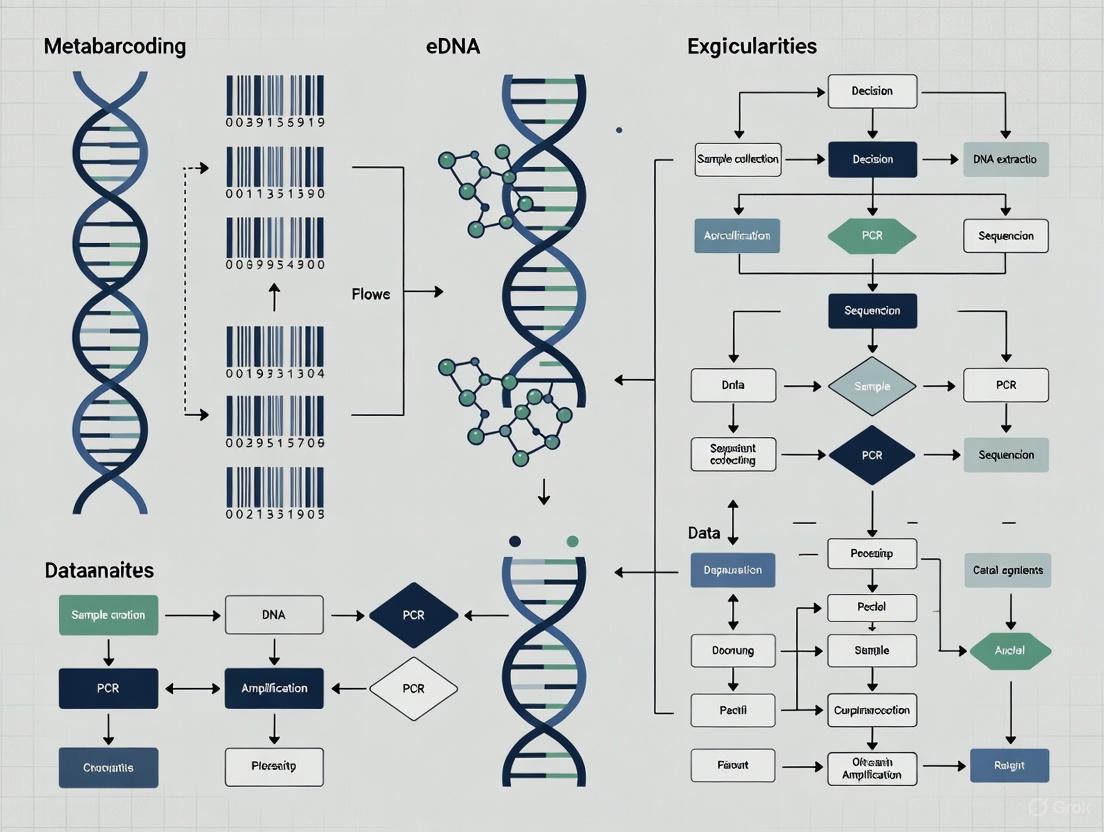
Environmental DNA (eDNA) metabarcoding is a transformative, non-invasive method for assessing agricultural ecological communities.
eDNA Metabarcoding in Agriculture: A Revolutionary Tool for Biodiversity Monitoring and Pest Surveillance
Abstract
Environmental DNA (eDNA) metabarcoding is a transformative, non-invasive method for assessing agricultural ecological communities. This approach detects genetic material shed by organisms into their environment—such as soil, water, and air—enabling comprehensive biodiversity monitoring, invasive species biosurveillance, and pathogen detection. While eDNA metabarcoding offers a sensitive, efficient, and scalable alternative to traditional field surveys, its accuracy can be influenced by factors like pH, temperature, and methodological choices, making it a powerful complement to, rather than a full replacement for, conventional methods. This article explores the foundational principles, methodological optimizations, practical applications, and validation frameworks of eDNA metabarcoding, providing researchers and agricultural professionals with a roadmap for integrating this technology into modern farming systems to enhance food security and ecosystem management.
The Foundation of eDNA: Unlocking the Hidden Biodiversity in Agricultural Ecosystems
Environmental DNA (eDNA) is the genetic material shed by organisms into their surrounding environment through various biological materials such as mucus, feces, urine, gametes, shed skin, and decomposing tissues [1] [2]. This DNA can be extracted from environmental samples including water, soil, sediments, and even air, without the need to directly observe or capture the organisms themselves [2] [3]. In the context of agroecosystems, eDNA technology offers a transformative approach for monitoring biodiversity, tracking pathogens, and assessing ecosystem health with minimal disturbance to crops and local wildlife [4].
The application of eDNA analysis represents a paradigm shift in ecological monitoring, moving from traditional observational methods to molecular-based detection. Since the first seminal manuscript was published in 2008, eDNA tools have seen rapid adoption for their sensitivity, efficiency, and non-invasive nature [3]. For agricultural research, this technology provides unprecedented opportunities to monitor windborne crop pathogens, assess soil microbial communities, and track beneficial insects and pests within farming landscapes [4].
In agricultural environments, eDNA originates from multiple biological processes and can be categorized based on its mechanism of release:
Lysis-Associated eDNA Release: This occurs when cells undergo breakdown due to bacterial endolysins, prophages, virulence factors, or antibiotics. In agroecosystems, this can include pathogen destruction from plant defenses or agricultural treatments. For example, iron-induced activation of prophages can enhance eDNA release from lysed cells, while virulence factors like hemolysins and leukotoxins play central roles in quorum-sensing mechanisms that regulate cell lysis [2].
Lysis-Free eDNA Release: eDNA can be actively secreted through mechanisms involving membrane vesicles, eosinophils, and mast cells. Living cells may also release eDNA in response to pathogen attacks. Notably, plant root tips release eDNA functioning analogously to human neutrophil extracellular traps (NETs) in defense against pathogens, a particularly relevant mechanism in agricultural contexts [2].
Shedding rates of eDNA vary considerably among species and even among individuals of the same species, influenced by factors such as stress (which can amplify tissue shedding rates by up to 100 times), age, diet, water temperature, and the composition of the surrounding biological community [2].
Distribution Across Agricultural Matrices
eDNA distribution varies significantly across different agricultural environmental matrices, each presenting unique opportunities for monitoring:
Soil eDNA: Soil represents a rich reservoir of eDNA in agricultural systems, with concentrations typically ranging from 0.03 to 200 µg/g [2]. Most eDNA is found in upper soil layers, with concentrations decreasing with depth. Soil-bound eDNA is protected from nuclease destruction, allowing for detection of historical biological signals. Soil composition, organic matter content, pH levels, and microbial activity are crucial factors influencing DNA preservation in agricultural soils [2].
Aquatic eDNA: In agricultural water systems (irrigation channels, farm ponds, and rice paddies), eDNA is distributed throughout the water column and can be transported over considerable distances by water movement. Concentrations in mesotrophic waters range from 2.5 to 46 µg/L, while eutrophic waters contain 11.5 to 72 µg/L [2]. This transport characteristic means detected eDNA may not always indicate current presence at the sampling location [2].
Airborne eDNA: Recent research demonstrates that air, while having the lowest DNA concentration of all environmental media, contains sufficient eDNA for monitoring agriculturally significant species. Airborne eDNA enables tracking of pathogen abundance changes over time, often correlating with weather variables, providing critical early warning systems for disease outbreaks in monoculture systems [4].
Table 1: eDNA Concentration Ranges Across Agricultural Environmental Matrices
| Environmental Matrix | Typical eDNA Concentration Range | Primary Influencing Factors |
|---|---|---|
| Soil | 0.03 - 200 µg/g | Soil composition, organic matter, pH, microbial activity, depth [2] |
| Freshwater (Mesotrophic) | 2.5 - 46 µg/L | Trophic state, season, temperature, flow rates [2] |
| Freshwater (Eutrophic) | 11.5 - 72 µg/L | Nutrient loading, biological activity, season [2] |
| Sediments | 0.5 - 96.8 µg/g | Particle adsorption, depth, organic content [2] |
| Air | Lowest concentration of all media | Air currents, precipitation, relative humidity [4] |
Quantitative Analysis of eDNA in Ecosystems
Understanding the distribution patterns and concentrations of eDNA across different ecosystem types provides valuable context for agricultural applications. The following table summarizes key quantitative data available from eDNA research across various environments.
Table 2: Quantitative Distribution of eDNA Across Ecosystem Types
| Ecosystem Type | Specific Environment | eDNA Concentration | Key Factors Affecting Detection |
|---|---|---|---|
| Aquatic Ecosystems | Water Column (Mesotrophic) | 2.5 - 46 µg/L [2] | Currents, temperature, trophic state, season [2] |
| Water Column (Eutrophic) | 11.5 - 72 µg/L [2] | Nutrient loading, biological activity [2] | |
| Sediments (Marine) | 0.30 - 0.45 Gt (total in deep-sea sediments) [2] | Particle adsorption, depth, preservation conditions [2] | |
| Sediments (Haihe River) | 96.8 ± 19.8 µg/g [2] | Organic content, deposition rates [2] | |
| Sediments (Lake Towuti) | 0.5 - 0.6 µg/g (surface layer) [2] | Depth, mineral composition [2] | |
| Terrestrial Ecosystems | Soil | 0.03 - 200 µg/g [2] | Soil type, depth, organic matter, pH, microbial activity [2] |
Experimental Protocols for eDNA Analysis in Agricultural Research
Field Sampling Protocol
Proper field sampling is critical for obtaining reliable eDNA data. The following protocol adapts established methodologies for agricultural contexts [1] [5]:
Water Sampling:
- Collect water samples using sterile containers or specialized sampling equipment like Niskin bottles, avoiding sediment disturbance.
- Filter water through cellulose nitrate membrane filters (typically 0.22 µm pore size) using sterile syringes or peristaltic pumps.
- Record essential metadata: GPS coordinates, depth, salinity, temperature, and habitat characteristics.
- Process filters immediately or preserve in buffer solutions for transport [1].
Soil Sampling:
- Collect soil cores using sterile corers, documenting depth and horizon information.
- For spatial studies, implement stratified random sampling with multiple replicates to account for heterogeneity.
- Store samples in sterile containers and freeze immediately at -20°C or preserve in DNA stabilization buffers [2].
Air Sampling:
- Utilize active air sampling systems that draw known air volumes through DNA collection filters.
- Consider meteorological conditions during sampling, as wind speed, direction, and humidity affect airborne eDNA concentration.
- Process filters following similar protocols to water sampling [4].
Laboratory Processing and Analysis
The laboratory workflow for eDNA analysis involves multiple critical steps:
DNA Extraction: Use commercial kits specifically designed for environmental samples (e.g., DNeasy PowerWater Sterivex Kit). Include extraction blanks as negative controls in each batch to monitor contamination [5].
PCR Amplification and Metabarcoding:
- Design or select primer pairs targeting taxonomically informative gene regions (e.g., COI for animals, ITS for fungi, 16S for bacteria).
- For genetic diversity studies, design primers to amplify specific fragments that discriminate between haplotypes or lineages [5].
- Perform PCR amplification with appropriate controls (negative controls to detect contamination, positive controls to verify reaction efficiency).
- Utilize next-generation sequencing platforms for metabarcoding applications to characterize entire communities [6].
Bioinformatics Analysis:
- Process raw sequences through quality filtering, denoising, and chimera removal.
- Cluster sequences into Operational Taxonomic Units (OTUs) or Amplicon Sequence Variants (ASVs).
- Assign taxonomy using reference databases (e.g., BOLD, SILVA, UNITE).
- For population-level studies, identify haplotypes by comparing to known sequences [5] [7].
Diagram 1: Complete eDNA analysis workflow from field sampling to data interpretation, highlighting the three major phases of eDNA studies in agricultural research.
The Scientist's Toolkit: Essential Research Reagents and Materials
Successful eDNA research requires carefully selected reagents and materials optimized for environmental samples. The following table details essential components of the eDNA research toolkit.
Table 3: Essential Research Reagents and Materials for eDNA Studies in Agroecosystems
| Category | Specific Product/Type | Function in eDNA Workflow |
|---|---|---|
| Sampling Equipment | Niskin Bottles | Collect water samples at specific depths without contamination [1] |
| Sterivex-GP Filter Units (0.22 µm) | Capture eDNA particles from water samples during filtration [5] | |
| Sterile Plastic Canisters | Collect and transport water samples while minimizing contamination [5] | |
| Extraction Kits | DNeasy PowerWater Sterivex Kit | Extract DNA from water filters with minimal inhibitor co-extraction [5] |
| DNeasy PowerSoil Kit | Optimized for difficult-to-lyse environmental samples like soil [2] | |
| PCR Reagents | Taxon-Specific Primers | Amplify target DNA fragments for species detection [5] |
| Universal Primers (e.g., COI, 16S, ITS) | Amplify DNA from multiple taxa for community metabarcoding [6] | |
| PCR Controls (Positive/Negative) | Monitor contamination and reaction efficiency [5] | |
| Preservation Solutions | DNA/RNA Shield Buffer | Preserve eDNA integrity during sample transport and storage [1] |
| Ethanol or ATL Buffer | Stabilize samples until DNA extraction can be performed [1] | |
| AR-M 1000390 hydrochloride | AR-M 1000390 hydrochloride, MF:C23H29ClN2O, MW:384.9 g/mol | Chemical Reagent |
| (25RS)-26-Hydroxycholesterol-d4 | (25RS)-26-Hydroxycholesterol-d4, CAS:956029-28-0, MF:C27H46O, MW:390.7 g/mol | Chemical Reagent |
Applications in Agricultural Ecological Monitoring
eDNA technology offers diverse applications for monitoring agricultural ecological communities:
Pathogen and Pest Surveillance: Airborne eDNA enables tracking of crop pathogen abundance, such as Puccinia striiformis (wheat stripe rust), with changing weather conditions, allowing for early intervention [4]. Soil eDNA can detect root pathogens and nematode communities before visible crop damage occurs.
Biodiversity Assessment: eDNA metabarcoding provides comprehensive biodiversity inventories of agricultural landscapes, detecting everything from soil microbes to beneficial insects and vertebrates [6]. Studies demonstrate eDNA can detect approximately 1.3 times more species than traditional survey methods [6].
Invasive Species Detection: Early detection of invasive species is crucial for agricultural protection. eDNA monitoring of ship ballast water has successfully identified invasive mussel species, demonstrating applications for detecting agricultural invaders in irrigation systems [6].
Genetic Diversity Monitoring: Beyond species presence, eDNA can monitor within-species genetic diversity. Protocols have been validated for detecting mitochondrial DNA haplotypes of amphibian species from water samples, with applications for tracking genetic diversity of non-target species in agricultural ecosystems [5].
Ecosystem Health Assessment: By characterizing biological community changes, eDNA serves as a sensitive indicator of environmental stress from agricultural practices, helping to assess the impact of management strategies and restoration efforts [3] [6].
Diagram 2: Key agricultural applications of eDNA monitoring technology, showing the breadth of uses from pathogen surveillance to ecosystem health assessment in agroecosystems.
Considerations and Limitations for Agricultural Applications
While eDNA technology offers powerful capabilities for monitoring agricultural ecosystems, researchers must consider several important limitations:
Spatial and Temporal Uncertainty: eDNA can be transported from its origin, making precise localization challenging, particularly in aquatic environments with active flow [2]. Temporal detection windows vary significantly, with eDNA persisting from days to several weeks depending on environmental conditions [2].
Detection Sensitivity Issues: False negatives may occur when target organisms are present but eDNA concentration falls below detection thresholds. False positives can result from contamination or detection of eDNA transported from other locations [8] [9].
Quantification Challenges: While eDNA concentration often correlates with biomass, the relationship is not consistently predictable across species and environments due to varying shedding rates and degradation dynamics [2] [9].
Reference Database Limitations: Accurate taxonomic assignment depends on comprehensive reference databases, which remain incomplete for many agricultural taxa, particularly microbes and invertebrates [3] [9].
Standardization Needs: Methodological standardization is still evolving, with current protocols often specific to individual laboratories or projects, complicating cross-study comparisons [3] [9].
These limitations highlight the importance of complementary approaches, where eDNA methods enhance rather than entirely replace traditional monitoring techniques in agricultural research [2] [8].
Environmental DNA (eDNA) analysis has emerged as a transformative tool for monitoring biodiversity in agricultural landscapes, enabling researchers to characterize ecological communities through genetic material recovered from various substrates. In agricultural settings, eDNA metabarcoding provides a non-invasive, high-throughput method for simultaneously detecting a wide range of organisms, including crops, pests, pathogens, beneficial insects, and soil microbiota [2] [10]. The selection of appropriate substrates is paramount for generating comprehensive biodiversity data, as different substrates capture distinct components of agricultural ecosystems. Soil, water, plant surfaces, and air each contain unique eDNA signatures that reflect the complex interactions within agroecosystems, from below-ground microbial processes to airborne pest dispersal patterns.
Agricultural monitoring presents unique challenges for eDNA applications, including the presence of PCR inhibitors in soil, rapid DNA degradation in sun-exposed environments, and the need for precise spatial attribution in mixed-crop landscapes. Despite these challenges, eDNA technologies offer unprecedented opportunities to advance sustainable agriculture by providing detailed insights into pest population dynamics, soil health indicators, and the efficacy of management interventions [10] [11]. This review synthesizes current methodologies and applications of eDNA substrate analysis in agricultural contexts, providing researchers with practical guidance for implementing these approaches in farm-scale monitoring programs.
Comparative Analysis of eDNA Substrates
Substrate Characteristics and Applications
Table 1: Comparative characteristics of primary eDNA substrates in agricultural monitoring
| Substrate | Target Biota | Sampling Density | DNA Yield | Persistence | Key Applications in Agriculture |
|---|---|---|---|---|---|
| Soil | Soil microbes, microfauna, plant roots, decaying organisms | 5-10 samples/ha | 0.03-200 µg/g [2] | Weeks to months | Soil health assessment, microbial community dynamics, pathogen detection |
| Plant Surfaces (Phyllosphere) | Pathogens, pests, pollinators, epiphytic microbes | 10-30 leaves/field | Variable; requires optimized extraction | Hours to days | Pest monitoring, disease surveillance, beneficial insect detection |
| Air | Airborne spores, pollen, insects, vertebrate DNA | 3-5 samplers/field | Low concentration; requires filtration | Hours | Pollinator tracking, pathogen dispersal, pest migration patterns |
| Water | Aquatic organisms, runoff-associated DNA, irrigation sources | 1-2 samples/water source | 2.5-88 µg/L [2] | Days to weeks | Irrigation pathogen monitoring, watershed-scale biodiversity |
| Spider Webs | Airborne insects, vertebrates, pollen | 3-5 webs/field | Comparable to leaf swabs [12] | Weeks (protected) | Passive pest monitoring, vertebrate presence, biodiversity indices |
Biodiversity Detection Efficiency Across Substrates
Table 2: Biodiversity detection metrics for different eDNA substrates in agricultural landscapes
| Substrate | Taxonomic Richness | Microbial Diversity (Shannon Index) | Pest Detection Rate | Sample Processing Time | Cost per Sample (USD) |
|---|---|---|---|---|---|
| Soil | High (150+ OTUs) [11] | 3.87 (organic farms) [10] | Moderate | 2-3 days | $25-40 |
| Plant Surfaces | Moderate (80-140 OTUs) [11] | 2.1-3.2 | High | 1-2 days | $20-35 |
| Air | Variable (70-130 OTUs) [11] | 2.8-3.5 | Moderate-High | 1-2 days | $30-50 |
| Spider Webs | 63 taxa (forest study) [12] | Not assessed | High for flying insects | <1 day | $15-25 |
| Water | Low-Moderate (20-31% overlap with traditional surveys) [13] | 2.4-3.1 | Low | 2-3 days | $35-55 |
Detailed Experimental Protocols
Soil eDNA Sampling and Processing Protocol
Sample Collection:
- Delineate agricultural field into 1-ha grid cells for systematic sampling
- Using a sterilized soil auger, collect 5-10 soil cores (0-15 cm depth) per sampling location
- Combine cores from each location to create a composite sample of approximately 300g [10]
- Store samples immediately in sterile Whirl-Pak bags on dry ice or blue ice for transport
- For temporal studies, collect samples at consistent phenological stages (e.g., pre-planting, peak growth, post-harvest)
DNA Extraction:
- Homogenize 10g subsamples using sterile mortar and pestle under controlled conditions
- Extract DNA using Qiagen DNeasy PowerSoil Kit with the following modifications [10] [11]:
- Extend bead-beating step to 10 minutes for improved cell lysis
- Include negative extraction controls to monitor contamination
- Quantify DNA yield using NanoDrop 2000 spectrophotometer
- Assess DNA integrity via 1.5% agarose gel electrophoresis
- Store extracts at -80°C until amplification
Metabarcoding Analysis:
- Amplify bacterial communities using 16S rRNA gene primers 341F (5'-CCTACGGGNGGCWGCAG-3') and 785R (5'-GACTACHVGGGTATCTAATCC-3') [10]
- Amplify fungal communities using ITS1F (5'-CTTGGTCATTTAGAGGAAGTAA-3') and ITS2 (5'-GCTGCGTTCTTCATCGATGC-3')
- Perform PCR in 25µL reactions containing 12.5µL of 2× Taq PCR Master Mix, 0.5µM of each primer, and 1µL template DNA
- Use thermal cycling conditions: initial denaturation at 95°C for 3 min, followed by 30 cycles of 95°C for 30s, 55°C for 30s, and 72°C for 1min, with final extension at 72°C for 5min [10]
- Purify PCR products using QIAquick PCR Purification Kit before sequencing on Illumina MiSeq platform (2×300 bp)
Figure 1: Soil eDNA processing workflow from field collection to data analysis
Airborne eDNA Sampling Protocol
Passive Air Sampling:
- Deploy passive samplers 1.5m above ground level at 3-5 locations per field [12]
- For spider web sampling: collect intact webs from field margins and structures using sterile forceps
- For leaf surface sampling: randomly select 30 leaves from throughout the canopy
- Expose PBS-moistened filter papers for 2 hours during peak biological activity (morning)
- Record meteorological conditions (temperature, humidity, wind speed) during sampling
Active Air Sampling:
- Use portable air filtration systems with 0.22-0.45 µm filters [14] [15]
- Draw air at standardized flow rates (150+ mL/min) for 30-60 minutes
- Deploy samplers along transects that account for prevailing wind patterns
- Include field blanks exposed for minimal duration to control for contamination
DNA Extraction and Analysis:
- Extract DNA using DNeasy PowerSoil Kit with extended incubation [10]
- For vertebrate detection: amplify 12S-V5 and 16S mam regions [12] [14]
- For arthropod detection: amplify COI gene using primers LCO1490 (5'-GGTCAACAAATCATAAAGATATTGG-3') and HCO2198 (5'-TAAACTTCAGGGTGACCAAAAAATCA-3') [10]
- Use similar PCR conditions as soil protocol with annealing temperature adjusted to 50°C for COI
- Include positive controls (known DNA) and negative controls throughout the process
Research Reagent Solutions
Table 3: Essential research reagents and materials for agricultural eDNA studies
| Category | Specific Product/Kit | Application | Key Features | Considerations for Agricultural Use |
|---|---|---|---|---|
| DNA Extraction | Qiagen DNeasy PowerSoil Kit [10] [11] | All substrate types | Inhibitor removal technology | Optimal for humic-acid rich agricultural soils |
| DNA Extraction | MP Biomedicals FastDNA Spin Kit | Difficult-to-lyse organisms | Enhanced bead-beating | Effective for fungal spores and insect parts |
| PCR Amplification | Thermo Fisher Scientific Taq PCR Master Mix [10] | Metabarcoding PCR | Standardized formulation | Consistent performance across sample types |
| PCR Purification | QIAquick PCR Purification Kit [10] | Post-amplification clean-up | Remove primers, enzymes | Critical for high-quality sequencing libraries |
| Sampling Equipment | Sterivex 0.45µm filters [15] | Water and air sampling | Inline filtration | Compatible with various pump systems |
| Sampling Equipment | Sterile Whirl-Pak bags [10] | Soil and plant samples | Pre-sterilized | Prevent cross-contamination between samples |
| Quantification | Thermo Scientific NanoDrop 2000 [10] | DNA concentration and purity | Minimal sample requirement | Essential for standardizing input DNA |
| Sequencing | Illumina MiSeq Reagent Kit v3 (600-cycle) [10] | Metabarcoding sequencing | 2×300 bp reads | Optimal for 16S, ITS, and COI fragments |
Integrated Sampling Strategies
Multi-Substrate Approach for Comprehensive Assessment
Agricultural biodiversity monitoring benefits substantially from integrated substrate sampling that captures both above-ground and below-ground communities. Research demonstrates that combining soil, plant, and air sampling provides complementary biodiversity data that would be missed using single substrates [10] [11]. For instance, while soil eDNA effectively captures microbial and soil-dwelling organism diversity, airborne eDNA better reflects mobile pests and pollinators, and plant surface eDNA detects epiphytic microorganisms and direct pest interactions.
A structured multi-substrate sampling design should include:
- Stratified soil sampling based on management zones (e.g., crop rows vs. interrows, organic vs. conventional sections)
- Systematic plant sampling that accounts for canopy position and plant developmental stage
- Air sampling networks that consider elevation gradients and edge effects
- Temporal alignment across substrates to enable integrated data analysis
Case Study: Integrated Pest Management Monitoring
Research in Bangladesh demonstrated the power of eDNA metabarcoding for evaluating pest management strategies across different farming systems [10] [11]. The study compared organic, agroecological, and conventional farms, finding that organic systems supported higher microbial diversity (Shannon index = 3.87) while conventional systems had higher pest species richness (27 species). The integration of eDNA data with plant extract efficacy trials revealed that neem extract at 50% concentration achieved 91.3% mortality against Helicoverpa armigera, followed by garlic (85.7%) and tobacco (78.5%).
This approach exemplifies how multi-substrate eDNA analysis can directly inform sustainable agricultural practices by linking biodiversity assessments with management outcomes. The methodology enabled researchers to simultaneously monitor target pest populations, non-target effects on beneficial organisms, and soil microbial community responses to different intervention strategies.
Figure 2: Relationship between farming systems, eDNA substrates, and management outcomes
Quality Control and Methodological Considerations
Contamination Prevention
eDNA studies in agricultural environments require rigorous contamination controls due to the high potential for cross-contamination between samples and the presence of PCR inhibitors. Essential quality control measures include:
- Field controls: Process blank samples exposed to field conditions
- Extraction controls: Include negative controls during DNA extraction
- PCR controls: Incorporate no-template controls in all amplification runs
- Spatial separation: Physically separate pre- and post-PCR activities
- Equipment sterilization: Use bleach-based decontamination protocols for reusable equipment
Data Validation
Method validation should include:
- Positive controls: Known DNA samples to verify amplification efficiency
- Technical replicates: Assess methodological consistency
- Spike-in standards: Quantify potential inhibition and recovery efficiency
- Method comparison: Where possible, compare eDNA results with traditional monitoring data
- Database verification: Curate taxonomic assignments against validated reference databases
The protocols outlined herein provide a foundation for implementing robust eDNA monitoring in agricultural systems, enabling researchers to generate reproducible, high-quality data for assessing ecological communities across multiple substrates.
Environmental DNA (eDNA) metabarcoding is a powerful molecular technique that combines high-throughput sequencing (HTS) with DNA barcoding to identify multi-species communities from complex environmental samples such as soil, water, or air [16]. This approach has revolutionized the monitoring of ecological communities by allowing researchers to characterize biodiversity without direct observation or capture of organisms, thereby reducing the need for taxonomic expertise and extensive fieldwork effort [17] [18]. In agricultural research, metabarcoding provides unprecedented insights into soil health, nutrient cycling, and ecosystem functioning by revealing the composition and dynamics of microbial and invertebrate communities that drive essential ecological processes [19] [20].
The core principle of metabarcoding lies in its ability to simultaneously amplify and sequence DNA barcode markers from multiple taxa within a sample, followed by bioinformatic analysis to assign these sequences to taxonomic groups. This methodology enables researchers to move beyond single-species detection to comprehensive community profiling, making it particularly valuable for assessing the impacts of agricultural management practices on soil biological communities and overall ecosystem health [19].
Fundamental Principles and Workflow
Core Conceptual Framework
Metabarcoding operates on several key principles that distinguish it from traditional monitoring approaches. First, it leverages the fact that all organisms continuously shed DNA into their environment through skin cells, feces, mucus, or decomposition [16]. This environmental DNA persists in terrestrial ecosystems for varying durations—from days to years—depending on environmental conditions that affect degradation rates [16]. Second, the approach utilizes universal PCR primers that target conserved regions of taxonomic marker genes, flanking variable regions that provide species-level discrimination [20]. Finally, the quantitative potential of sequence data, while subject to biases, can provide insights into relative abundance patterns within communities when carefully calibrated and interpreted [17] [18].
The application of these principles in agricultural research allows for non-invasive monitoring of how farming practices affect soil nematode communities, microbial pathways, and overall ecosystem health indicators [19] [20]. For instance, tillage practices significantly influence nematode community structure and distribution within soil profiles, with different tillage regimes favoring distinct functional groups that indicate the health and stability of agricultural ecosystems [19].
Standardized Workflow Diagram
The following workflow diagram illustrates the standardized metabarcoding process from sample collection to data analysis, specifically tailored for agricultural soil samples:
Figure 1: Standardized metabarcoding workflow for agricultural soil samples, highlighting key stages from field collection to data analysis.
Experimental Protocols and Methodologies
Sample Collection and Processing for Agricultural Studies
Proper sample collection and processing are critical for obtaining representative metabarcoding data. In agricultural soil studies, samples should be collected using a standardized soil corer (typically 2.5 cm diameter) from multiple random locations within each plot [19]. For depth-stratified community analysis, cores should be divided into relevant depth increments (e.g., 0-5 cm and 5-20 cm) and pooled to create composite samples [19]. A minimum of 10 cores per composite sample is recommended to account for spatial heterogeneity.
Key considerations for agricultural samples:
- Timing: Sample during key agricultural phases (e.g., pre-planting, post-harvest) to capture management impacts
- Storage: Transport samples on dry ice and store at 4°C for short-term or -20°C for long-term preservation
- Homogenization: Sieve soils through a 5mm mesh to remove stones and debris, with thorough cleaning between samples
- Replication: Include multiple biological replicates (recommended n=4) per treatment to account for variability
For nematode community analysis specifically, subsequent extraction of nematodes from soil using centrifugation and sugar flotation methods is recommended prior to DNA extraction to enrich target organisms and reduce inhibitor content [19] [20].
DNA Extraction and Amplification Protocols
DNA extraction should be performed using commercial kits optimized for soil samples, with modifications as needed for difficult soils. The DNeasy Blood & Tissue Kit (Qiagen) has been successfully used in agricultural nematode studies, with an extended proteinase K digestion step (overnight at 55°C) to ensure complete lysis [19]. DNA concentration should be quantified using fluorometric methods (e.g., Nano spectrophotometer) to ensure sufficient template for library preparation.
For amplification of nematode communities, the 18S rRNA ribosomal gene provides optimal coverage and taxonomic resolution [20]. The primer pair NF1 (GGTGGTGCATGGCCGTTCTTAGTT) and 18Sr2b (TACAAAGGGCAGGGACGTAAT) targeting the V6-V8 regions has demonstrated excellent performance for nematode community profiling in agricultural systems [19]. PCR conditions should be optimized for the specific thermal cycler and reaction composition, typically involving 25-35 cycles with annealing temperatures between 55-60°C.
Quantitative Approaches: For quantitative applications, the qMiSeq approach incorporates internal standard DNAs to convert sequence read numbers to DNA copy numbers, accounting for sample-specific PCR biases [17]. This method enables more reliable cross-sample comparisons and correlation with traditional abundance measures.
Sequencing and Bioinformatic Analysis
Library preparation follows manufacturer protocols for the chosen sequencing platform, with Illumina MiSeq being commonly used for metabarcoding studies (2 × 300 bp paired-end reads recommended) [19]. Include appropriate controls (extraction blanks, PCR negatives) throughout the process to monitor contamination.
Bioinformatic processing typically involves:
- Demultiplexing: Assignment of reads to samples based on dual indexes
- Quality Filtering: Removal of low-quality reads and adapter sequences
- OTU Clustering: Grouping sequences into operational taxonomic units (≥97% similarity)
- Taxonomy Assignment: Using reference databases (e.g., curated nematode databases)
- Contamination Filtering: Removal of sequences present in negative controls
For agricultural applications, subsequent analysis should focus on calculating Nematode-Based Indices (NBIs) such as Maturity Index (MI), Structure Index (SI), Enrichment Index (EI), and Nematode Channel Ratio (NCR) to interpret ecological conditions [19] [20].
Quantitative Data in Metabarcoding Studies
Interpreting Sequence Data for Quantitative Assessment
The interpretation of sequence count data in metabarcoding studies represents a significant methodological consideration. While traditional approaches often convert sequence counts to presence/absence data (Frequency of Occurrence, FOO), there is growing evidence that Relative Read Abundance (RRA) can provide more accurate representations of population-level diet or community composition when appropriate controls are implemented [18].
Table 1: Comparison of Data Interpretation Approaches in Metabarcoding Studies
| Approach | Methodology | Advantages | Limitations | Best Applications |
|---|---|---|---|---|
| Frequency of Occurrence (FOO) | Uses presence/absence based on count thresholds | Conservative; less affected by technical biases | Overestimates importance of rare taxa; sensitive to threshold selection | Species inventories; detection of rare taxa |
| Relative Read Abundance (RRA) | Uses proportion of sequence reads per taxon | Better reflects quantitative composition; more statistical power | Affected by primer biases, genome size, and amplification efficiency | Community comparisons; dominant taxa assessment |
| Quantitative MiSeq (qMiSeq) | Uses internal standards to estimate DNA copies | Accounts for sample-specific PCR efficiency; more quantitative | Requires additional controls and standardization | Absolute abundance estimation; cross-study comparisons |
The qMiSeq approach has demonstrated significant positive relationships between eDNA concentrations and both abundance (R²=0.81) and biomass of captured taxa in validation studies, supporting its utility for quantitative monitoring [17].
Agricultural Application Data
In agricultural contexts, metabarcoding has revealed significant tillage impacts on nematode communities. Research shows that beneficial free-living nematodes are most abundant in surface layers (0-5 cm), with >70% of populations concentrated in this zone, while herbivores dominate deeper soil layers (5-20 cm) [19]. Minimum tillage (MT) and no-tillage (NT) systems support 1.7 times higher bacterivore populations compared to conventional tillage (CT) at crop maturity stages [19].
Table 2: Nematode Community Responses to Tillage Practices in Corn-Soybean Systems
| Parameter | Conventional Tillage (CT) | Minimum Tillage (MT) | No-Tillage (NT) | Soil Depth Variation |
|---|---|---|---|---|
| Bacterivores | Lower abundance | 1.7x higher than CT at maturity | Similar to MT | >70% at 0-5cm depth |
| Herbivores | 47-76% higher than MT/NT | Lower abundance | Lower abundance | Dominate at 5-20cm depth |
| Fungal-Feeding | Lower abundance | Intermediate | Higher abundance | NT shifts to fungal channel |
| Maturity Index | Initially high but declines | Stable | Increases over time | More stable in surface layers |
| Structure Index | Initially high but declines | Stable | Increases over time | Indicates food web complexity |
| Key Genera | Dominated by Pratylenchus | Balanced community | Balanced community | Rhabditis abundant in MT/NT |
These quantitative patterns demonstrate how metabarcoding can detect management impacts on soil biological communities, providing valuable indicators for agricultural sustainability assessment.
Essential Research Reagents and Materials
Successful metabarcoding requires careful selection of reagents and materials throughout the workflow. The following table details key solutions and their applications in agricultural metabarcoding studies:
Table 3: Essential Research Reagent Solutions for Metabarcoding Workflows
| Reagent/Material | Specific Examples | Function/Application | Technical Considerations |
|---|---|---|---|
| DNA Extraction Kit | DNeasy Blood & Tissue Kit (Qiagen) | Isolation of high-quality DNA from nematode extracts | Extended proteinase K digestion (overnight, 55°C) improves yield |
| PCR Primers | NF1/18Sr2b primer pair | Amplification of 18S rRNA V6-V8 regions | Optimal for nematode community coverage; annealing ~58°C |
| Sequencing Kit | Illumina MiSeq Reagent Kit v3 | 2×300 bp paired-end sequencing | Provides sufficient read length for 18S rRNA region |
| Quantification Standards | Synthetic DNA standards (qMiSeq) | Absolute quantification of sequence copies | Enables cross-sample comparisons and abundance estimates |
| Soil Nematode Extraction | Centrifugation-sucrose flotation | Separation of nematodes from soil particles | Reduces PCR inhibitors; improves DNA quality |
| Library Preparation | Illumina Nextera XT Index Kit | Dual indexing for sample multiplexing | Allows pooling of multiple samples in single sequencing run |
| Quality Control | Qubit dsDNA HS Assay, TapeStation | Quantification and quality assessment | Ensires adequate DNA concentration and fragment size |
| Reference Databases | Curated nematode 18S databases | Taxonomic assignment of sequences | Critical for accurate identification; requires regular updating |
Applications in Agricultural Ecological Monitoring
Metabarcoding provides powerful applications for monitoring agricultural ecosystems, particularly through the assessment of nematode communities as bioindicators of soil health. Nematodes occupy multiple trophic levels and respond predictably to environmental disturbances, making them ideal indicators for ecosystem structure and function [19] [20]. Key applications include:
Tillage Impact Assessment: Research has demonstrated that tillage practices significantly influence nematode community structure, with conventional tillage favoring herbivore nematodes (especially Pratylenchus), while minimum tillage and no-tillage systems support higher abundances of beneficial bacterivores [19]. These community shifts directly inform about nutrient cycling pathways and ecosystem stability.
Soil Health Monitoring: Metabarcoding enables calculation of Nematode-Based Indices (NBIs) including the Maturity Index (MI), Structure Index (SI), Enrichment Index (EI), and Nematode Channel Ratio (NCR) [19] [20]. These indices provide integrated measures of soil food web condition, with MI indicating disturbance levels, SI measuring food web complexity, and NCR distinguishing between bacterial and fungal decomposition pathways.
Management Practice Optimization: By revealing how agricultural practices affect soil biological communities, metabarcoding data can guide management decisions toward more sustainable approaches. For instance, the dynamic response of nematode communities to occasional tillage within no-tillage systems helps balance the benefits of conservation practices with practical agronomic needs in clayey soils [19].
The integration of metabarcoding into agricultural monitoring frameworks represents a significant advancement in our ability to assess and manage soil health, providing comprehensive biological data that complements traditional physical and chemical indicators.
Global food production systems are under unprecedented pressure from population growth and climate change, making the monitoring of agricultural biodiversity more critical than ever [21]. Biodiversity supports essential ecosystem functions such as pollination, pest control, and soil fertility maintenance, which are fundamental to productive agriculture. However, traditional biodiversity monitoring methods often fail to capture the full complexity of agricultural ecosystems, creating a significant knowledge gap in our understanding of how farming practices affect ecological communities.
Environmental DNA (eDNA) metabarcoding represents a transformative approach for profiling multi-trophic biodiversity in agricultural landscapes [10]. This novel technique detects genetic material shed by organisms into their environment (e.g., soil, water, air), allowing for comprehensive biodiversity assessment without the need for direct observation or trapping. The application of eDNA metabarcoding in agricultural research enables scientists to explore agro-biodiversity and microbial dynamics at unprecedented scales and resolutions, providing crucial insights for developing sustainable pest management strategies and enhancing food security [10].
The eDNA Metabarcoding Advantage in Agricultural Systems
Technical Foundations and Capabilities
eDNA metabarcoding combines environmental DNA sampling with high-throughput sequencing to identify multiple taxa simultaneously from environmental samples [16]. This approach leverages the fact that all organisms continuously shed genetic material (e.g., through skin cells, feces, mucus, pollen) into their surroundings. In agricultural contexts, this genetic material can be collected from soil, irrigation water, plant surfaces, and even air samples, providing a holistic picture of the agricultural ecosystem [10].
The technique primarily uses two genetic markers for identification: the 16S rRNA gene for bacteria and archaea, and the cytochrome c oxidase I (COI) gene for pest species and other eukaryotes [10]. These standardized genetic regions allow for taxonomic classification across diverse organismal groups, from soil microbes to invertebrate pests and beneficial insects.
Comparative Advantages Over Traditional Methods
Traditional biodiversity monitoring in agricultural systems typically relies on visual surveys, trapping, and morphological identification, which are often labor-intensive, taxonomically biased, and limited in temporal and spatial resolution [16]. In contrast, eDNA metabarcoding offers several distinct advantages:
- Comprehensive taxonomic coverage: From microorganisms to mammals in a single sample [22]
- High sensitivity: Detection of rare, cryptic, or elusive species [16]
- Non-invasiveness: Minimal disturbance to crops and wildlife [10]
- Standardization: Reproducible protocols across different agricultural contexts [22]
- Cost-effectiveness: Reduced labor requirements compared to traditional surveys [22]
- Archival value: Samples can be stored for future reanalysis [16]
Recent research demonstrates that organic farming systems exhibit significantly higher microbial diversity (Shannon index = 3.87) compared to conventional systems, while conventional farms recorded the highest pest species diversity (species richness = 27) [10]. These findings highlight how different agricultural practices shape distinct ecological communities, knowledge that is essential for developing targeted management strategies.
Application Note: Integrated Pest Management and Biodiversity Assessment
Experimental Design and Workflow
A recent study investigated the integration of plant-based pest control methods with eDNA metabarcoding to develop eco-friendly pest management strategies [10]. The research employed a comparative approach across organic, agroecological, and conventional farms in Bangladesh, collecting soil, plant, and air samples for eDNA analysis while testing the efficacy of botanical pesticides against Helicoverpa armigera, a major agricultural pest.
The following workflow illustrates the integrated experimental design:
Key Findings and Implications
The study revealed significant differences in biodiversity patterns across farming systems and demonstrated the efficacy of plant-derived pesticides:
Table 1: Biodiversity Indicators Across Agricultural Management Systems
| Management System | Microbial Diversity (Shannon Index) | Pest Species Richness | Dominant Microbial Taxa | Key Pest Species |
|---|---|---|---|---|
| Organic | 3.87 | 18 | Beneficial decomposers | Helicoverpa armigera |
| Agroecological | 3.45 | 22 | Mixed community | Spodoptera litura |
| Conventional | 2.91 | 27 | Reduced diversity | Multiple pest species |
Table 2: Efficacy of Botanical Pesticides Against H. armigera
| Plant Extract | Concentration | Mortality Rate (%) | Time to 50% Mortality (hours) | Impact on Non-Target Species |
|---|---|---|---|---|
| Neem | 10% | 68.2 | 48 | Low |
| 25% | 82.7 | 36 | Low | |
| 50% | 91.3 | 24 | Moderate | |
| Garlic | 10% | 59.8 | 52 | Low |
| 25% | 74.3 | 42 | Low | |
| 50% | 85.7 | 30 | Low | |
| Tobacco | 10% | 52.4 | 60 | Low |
| 25% | 67.9 | 48 | Moderate | |
| 50% | 78.5 | 36 | High |
Statistical analysis using One-way ANOVA and Tukey's post-hoc test confirmed significant differences (p < 0.05) between treatments and controls, validating the effectiveness of this integrated approach [10].
Detailed Experimental Protocols
Field Sampling and eDNA Collection
Materials Required:
- Sterile Whirl-Pak bags
- Sterilized soil auger (0-15 cm depth)
- Sterile scissors and polyethylene bags for plant samples
- PBS-moistened filter paper for air sampling
- Cooler with ice packs for sample transport
- GPS unit for geolocation recording
Procedure:
- Site Selection: Identify representative plots (10 m × 10 m) within each farming system with a minimum 10 m buffer between plots to reduce edge effects [10].
- Soil Sampling: Collect three sub-samples diagonally from each plot at 0-15 cm depth using a sterilized soil auger. Pool sub-samples to form one composite sample (~300 g). Store in sterile Whirl-Pak bags on ice [10].
- Plant Sampling: Clip leaf and stem tissues (~5 g) from plants showing visible signs of pest infestation using sterile scissors. Place in labeled, sterile polyethylene bags [10].
- Air Sampling: Expose PBS-moistened filter papers for 2 hours at 1.5 m height to capture airborne microbes and particulates. Use triplicate plates with negative controls (unexposed plates) processed alongside each batch to detect contamination [10].
- Sample Preservation: Transport all samples to the laboratory on ice and store at -20°C until DNA extraction.
Laboratory Analysis: DNA Extraction and Metabarcoding
Materials Required:
- Qiagen DNeasy PowerSoil Kit (Cat. No. 12888)
- NanoDrop 2000 spectrophotometer
- Agarose gel electrophoresis equipment
- PCR reagents and thermal cycler
- Illumina MiSeq platform
- Primers: 16S rRNA (341F/785R) and COI (LCO1490/HCO2198)
Procedure:
- DNA Extraction: Extract eDNA from soil, plant surface, and air samples using the Qiagen DNeasy PowerSoil Kit following manufacturer's instructions, with bead-beating for 10 minutes to enhance cell lysis [10].
- Quality Assessment: Measure DNA concentration and purity using NanoDrop 2000 spectrophotometer. Check integrity by 1.5% agarose gel electrophoresis [10].
- PCR Amplification:
- For microbial analysis: Amplify V3–V4 region of 16S rRNA gene using primers 341F (5′-CCTACGGGNGGCWGCAG-3′) and 785R (5′-GACTACHVGGGTATCTAATCC-3′) [10].
- For pest identification: Amplify 658 bp fragment of COI gene using primers LCO1490 (5′-GGTCAACAAATCATAAAGATATTGG-3′) and HCO2198 (5′-TAAACTTCAGGGTGACCAAAAAATCA-3′) [10].
- Library Preparation and Sequencing: Purify PCR products using QIAquick PCR Purification Kit. Sequence on Illumina MiSeq platform (2×300 bp) following standard protocols [10].
- Quality Control: Include positive controls (extracted DNA from Escherichia coli and Helicoverpa armigera) and No-template Controls (NTCs) in each PCR run to detect contamination [10].
Bioassay for Pest Management Efficacy
Materials Required:
- Neem (Azadirachta indica), garlic (Allium sativum), and tobacco (Nicotiana tabacum) plant materials
- Solvents for extraction (ethanol, water)
- Helicoverpa armigera larvae colonies
- Artificial diet or host plants
- Greenhouse facilities with controlled conditions
Procedure:
- Plant Extract Preparation: Prepare extracts from neem, garlic, and tobacco using appropriate solvents (ethanol or water) at concentrations of 10%, 25%, and 50% [10].
- Insect Rearing: Maintain H. armigera colonies on artificial diet or host plants under controlled conditions (25±2°C, 65±5% RH, 14:10 L:D photoperiod) [10].
- Treatment Application: Apply plant extracts to H. armigera larvae using standardized methods (e.g., leaf-dip bioassay or direct application). Include untreated controls and synthetic pesticide treatments for comparison [10].
- Data Collection: Record mortality rates at 24, 48, and 72 hours post-treatment. Calculate corrected mortality using Abbott's formula if necessary [10].
- Statistical Analysis: Analyze data using One-way ANOVA followed by Tukey's post-hoc test to determine significant differences between treatments (p < 0.05) [10].
The Scientist's Toolkit: Essential Research Reagents and Materials
Table 3: Key Research Reagent Solutions for Agricultural eDNA Studies
| Reagent/Material | Function | Example Product | Application Notes |
|---|---|---|---|
| DNA Extraction Kit | Isolation of high-quality DNA from complex matrices | Qiagen DNeasy PowerSoil Kit | Optimal for inhibitor-rich soil samples; includes bead-beating step [10] |
| PCR Master Mix | Amplification of target DNA regions | Thermo Fisher Scientific Taq PCR Master Mix | Provides consistent performance for metabarcoding applications [10] |
| Sequencing Platform | High-throughput DNA sequencing | Illumina MiSeq | 2×300 bp configuration ideal for 16S and COI amplicons [10] |
| Universal Primers | Amplification of taxonomic marker genes | 16S: 341F/785RCOI: LCO1490/HCO2198 | Standardized primers enable cross-study comparisons [10] |
| Plant Extraction Solvents | Extraction of bioactive compounds | Ethanol, distilled water | Different solvents extract different compound classes; water extracts often show lower non-target effects [10] |
| Bioassay Materials | Efficacy testing of pest management | Artificial diet, rearing containers | Standardized conditions essential for reproducible results [10] |
| LYG-202 | LYG-202, CAS:1175077-25-4, MF:C25H30N2O5, MW:438.5 g/mol | Chemical Reagent | Bench Chemicals |
| (Rac)-Epoxiconazole | Epoxiconazole | Epoxiconazole is a broad-spectrum triazole fungicide for plant disease control research. For Research Use Only. Not for human or animal use. | Bench Chemicals |
Data Integration and Analysis Framework
The power of eDNA metabarcoding in agricultural research lies in integrating biodiversity data with management outcomes. The following conceptual framework illustrates how to translate raw data into actionable insights:
The integration of eDNA metabarcoding with agricultural research represents a paradigm shift in how we monitor and manage biodiversity in food production systems. This approach provides unprecedented insights into the complex interactions between farming practices, ecological communities, and ecosystem functions that underpin food security.
Future applications of eDNA metabarcoding in agriculture should focus on:
- Developing standardized protocols for different agricultural contexts and regions [22]
- Establishing long-term monitoring networks to track biodiversity changes in response to management practices and climate change [22]
- Integrating eDNA data with remote sensing and other technologies for multi-dimensional ecosystem assessment [22]
- Expanding reference databases to improve taxonomic resolution, particularly for understudied agricultural regions [21]
As the technology continues to advance and become more accessible, eDNA metabarcoding promises to play an increasingly vital role in guiding the transition toward more sustainable, productive, and resilient agricultural systems worldwide. By embracing this powerful tool, researchers, farmers, and policymakers can make informed decisions that simultaneously address food security and biodiversity conservation challenges.
Environmental DNA (eDNA) metabarcoding has emerged as a transformative tool for monitoring biodiversity, enabling the detection of species from genetic material shed into their environment [2]. This review examines the application of eDNA metabarcoding within agricultural ecosystems, framing it within a broader thesis on monitoring agricultural ecological communities. While eDNA approaches have seen rapid adoption in aquatic and marine systems [13] [2], their application to agricultural landscapes reveals significant methodological gaps and a pronounced bias in global implementation. Agricultural systems present unique challenges and opportunities for eDNA monitoring, from tracking pest populations and beneficial organisms to assessing soil health and the impacts of management practices [20] [10] [23]. This article provides a critical analysis of the current landscape, summarizes quantitative findings from key studies into structured tables, details essential experimental protocols, and visualizes core workflows to support researchers in advancing this field.
The Agricultural eDNA Gap and Global Bias
The potential of eDNA metabarcoding in agriculture is immense, yet its application remains uneven and methodologically heterogeneous. Current evidence indicates a significant gap between technological capability and systematic agricultural implementation.
Table 1: Documented Global Applications of eDNA Metabarcoding in Agriculture
| Region/Country | Study Focus | Key Findings | Reference |
|---|---|---|---|
| Bangladesh | Integrated pest management; microbial dynamics | Organic farms had highest microbial diversity (Shannon Index=3.87); conventional farms had highest pest richness (27 species) | [10] |
| Canada | Farmland arthropod biodiversity and pest monitoring | 7,707 arthropod species detected; 231 registered pest species identified; community composition influenced more by site than crop | [23] |
| United Kingdom | National terrestrial biodiversity using airborne eDNA | 1,120+ taxa identified via air quality networks; complementary to citizen science data | [14] |
| Netherlands | Freshwater macroinvertebrate biomonitoring protocols | Aggressive-lysis of sorted samples showed 70% community overlap with morphology; eDNA only 20% | [13] |
| Global (Review) | Ecosystem biodiversity detection | eDNA is a sensitive, efficient complement to traditional methods; accuracy affected by environmental factors | [2] |
A critical analysis reveals a twofold challenge. Firstly, a methodological gap persists; no single standardised protocol exists for agricultural settings. Studies use different sampling strategies (soil, water, air, specimens), DNA extraction methods (destructive vs. non-destructive), and bioinformatic pipelines, complicating cross-study comparisons [20] [13]. Secondly, a geographical application bias is evident. While research and infrastructure are advancing in North America and Europe [14] [23] [24], large-scale, standardised applications in developing regions, which often host the most biodiversity-rich agricultural landscapes, are limited. The study from Bangladesh [10] represents a notable exception, highlighting the potential for eDNA to guide sustainable pest management in diverse agroecological contexts.
Detailed Experimental Protocols for Agricultural eDNA
Bridging the identified gaps requires robust, standardised methodologies. The following sections detail protocols for key applications in agricultural research.
Protocol 1: Soil Nematode Community Analysis for Soil Health Assessment
Nematodes are critical bioindicators of soil food web structure and ecosystem function. The following workflow provides a standardised method for generating nematode-based indices (NBIs) from soil samples [20].
Step-by-Step Methodology:
- Sample Collection: Collect composite soil samples using a sterilized soil auger from the top 0-15 cm. A minimum of three sub-samples per field is recommended, pooled into a sterile Whirl-Pak bag and immediately stored on ice [10].
- Nematode Elutriation: Extract nematodes from large soil quantities (e.g., 100-300 g) using centrifugal-flotation or Baermann funnel techniques to separate organisms from soil particles [20].
- DNA Extraction: Perform bulk DNA extraction on the nematode elutriate. The Qiagen DNeasy PowerSoil Kit is widely used and effective. Include bead-beating (e.g., 10 minutes) to ensure adequate cell lysis of tough nematode cuticles [20] [10].
- PCR Amplification: Amplify the 18S rRNA gene region using the primers NF1 (5'-GCGGTAATTCCAGCTCCAAT-3') and 18Sr2b (5'-CCTTCCGCAGGTTCACCTAC-3'). These primers provide optimal coverage and taxonomic resolution for nematodes [20].
- PCR Mix (25 µL): 12.5 µL of 2× Taq PCR Master Mix, 0.5 µM of each primer, 1 µL (~10 ng) of template DNA, and nuclease-free water.
- Thermal Cycling: Initial denaturation at 95°C for 3 min; 30 cycles of 95°C for 30 s, 55°C for 30 s, 72°C for 1 min; final extension at 72°C for 5 min [10].
- Sequencing & Analysis: Purify PCR products and sequence on an Illumina MiSeq platform (2×300 bp). Process sequences using a pipeline like QIIME2. Assign taxonomy against a curated nematode-specific reference database (e.g., curated SILVA or PR2) for accurate NBI calculation [20].
Protocol 2: Airborne eDNA for Large-Scale Terrestrial Biodiversity Monitoring
Leveraging existing air quality monitoring networks allows for unprecedented continental-scale biodiversity assessment. This protocol is adapted from the first national-scale airborne eDNA survey [14].
Step-by-Step Methodology:
- Sample Collection: Utilize active air samplers from national ambient air quality monitoring networks. These devices draw air through particulate filters (e.g., PM10, PM2.5), which trap airborne eDNA. No modification to standard network operation is required [14].
- DNA Extraction: Carefully remove a portion of the particulate filter using a sterile punch. Extract DNA using the Qiagen DNeasy PowerSoil Kit, following standard protocols [14].
- Multi-Marker PCR Amplification: To maximize biodiversity recovery, amplify multiple genetic markers in parallel reactions [14]. Using only one marker can miss a significant portion of the community.
- For Vertebrates: Use both 12S and 16S rRNA primers for comprehensive coverage, as they recover non-overlapping sets of species.
- For Arthropods/Plants/Fungi: Use the COI gene (primers LCO1490/HCO2198) and ITS regions.
- Sequencing & Analysis: Pool amplified products after purification and sequence on an Illumina platform. Process data bioinformatically to assign sequences to taxa. Compare detections with complementary data sources like citizen science records to validate and contextualize findings [14].
Protocol 3: Freshwater Macroinvertebrate Biomonitoring
Macroinvertebrates are key indicators of water quality in agricultural landscapes. This protocol compares different DNA extraction approaches against traditional morphology [13].
Table 2: Comparison of Freshwater Macroinvertebrate Monitoring Protocols
| Protocol Step | Morphology (Gold Standard) | Aggressive-Lysis (Destructive) | Soft-Lysis (Non-Destructive) | eDNA from Water |
|---|---|---|---|---|
| Sample Type | Live-sorted specimens | Live-sorted specimens | Live-sorted specimens | Filtered water |
| DNA Source | Not applicable | Homogenized tissue | Preservative/lysis buffer | Environmental DNA |
| Community Overlap with Morphology | 100% | 70% ± 6% | 58% ± 7% | 20% ± 9% |
| Key Advantage | Taxonomic verification; gold standard | High similarity to morphology | Voucher specimens preserved | No sorting required; fast |
| Key Disadvantage | Labor-intensive; requires expertise | Specimens destroyed | Lower DNA yield for hard-bodied taxa | Low overlap with traditional methods |
Step-by-Step Methodology (Aggressive-Lysis Approach):
- Field Collection: Collect macroinvertebrates using standard pond-net sweeps in drainage ditches or streams. Preserve one sample in 96% ethanol for DNA analysis and a parallel sample for morphological identification.
- Sample Sorting and Lysis: Live-sort specimens from debris in the field. For the aggressive-lysis protocol, transfer sorted specimens to a tube with lysis buffer and incubate overnight at 56°C with gentle shaking [13].
- DNA Extraction and PCR: Extract DNA from the lysate using a membrane-based protocol (e.g., Pall Corporation Acroprep plates). Amplify the COI barcode region using primers such as LCO1490/HCO2198.
- Sequencing & Analysis: Sequence on an Illumina MiSeq platform. Compare metabarcoding results to the morphological identification from the parallel sample to validate and calibrate the molecular data.
The Scientist's Toolkit: Research Reagent Solutions
Successful eDNA metabarcoding relies on a suite of reliable reagents and tools. The following table details essential solutions for agricultural applications.
Table 3: Essential Research Reagents and Tools for Agricultural eDNA
| Item | Function/Application | Examples & Notes |
|---|---|---|
| DNeasy PowerSoil Kit (Qiagen) | DNA extraction from complex samples (soil, filters, debris) | Effective for inhibiting substance removal; includes bead-beating step [10]. |
| NF1/18Sr2b Primers | Amplification of 18S rRNA for nematode and microeukaryote communities | Provides optimal coverage and taxonomic resolution for NBIs [20]. |
| LCO1490/HCO2198 Primers | Amplification of COI gene for arthropod and pest identification | Standard barcode marker for animal species; used for pest detection [10] [23]. |
| 341F/785R Primers | Amplification of 16S rRNA V3-V4 region for bacterial community analysis | Used for soil and plant microbiome studies [10]. |
| Illumina MiSeq System | High-throughput sequencing of amplicon libraries | Standard platform for metabarcoding; 2x300 bp provides sufficient read length. |
| Sylphium eDNA Dual Filter Capsule | Standardized filtration of water samples for aquatic eDNA | 0.8 µm pore size; allows consistent processing of water volumes [13]. |
| BOLD/GenBank Databases | Reference databases for taxonomic assignment of sequences | Completeness and curation are critical for accurate identification [23]. |
| QIIME2 Platform | Bioinformatic pipeline for processing raw sequence data | From demultiplexing to diversity analysis; widely supported [10]. |
| Impurity F of Calcipotriol | Impurity F of Calcipotriol, CAS:112875-61-3, MF:C39H68O3Si2, MW:641.1 g/mol | Chemical Reagent |
| Bupropion morpholinol-d6 | Bupropion morpholinol-d6, CAS:1216893-18-3, MF:C13H18ClNO2, MW:261.78 g/mol | Chemical Reagent |
From Lab to Field: Methodological Protocols and Practical Applications in Agriculture
Environmental DNA (eDNA) metabarcoding has emerged as a revolutionary tool for monitoring ecological communities, offering a sensitive, non-invasive, and comprehensive alternative to traditional survey methods. In agricultural landscapes, understanding the complex interactions between crops, pests, soil microbes, and beneficial organisms is vital for sustainable management. The foundation of any successful eDNA study lies in the strategic selection and sampling of environmental substrates—soil, water, and air—each providing a unique window into the agricultural ecosystem. The adoption of eDNA technology in soil health monitoring has seen a rapid increase, with more than 700 publications on soil eDNA methods since 2001 and an annual growth rate of over 20% since 2017 [25]. This application note provides detailed protocols for the strategic sampling of these substrates, framed within the context of monitoring agricultural ecological communities.
Soil eDNA: Capturing the Rhizosphere Revolution
Soil serves as a massive reservoir of environmental DNA, providing critical insights into microbial dynamics, pest presence, and overall soil health. The eDNA concentration in soil is abundant, accounting for roughly 40% of the total DNA pool, with estimated content ranging from 0.03 to 200 µg/g [2]. Soil health is essential for sustainable agricultural practices, biodiversity conservation, and ecosystem functioning, with eDNA technology revolutionizing soil health monitoring by enabling sensitive, non-invasive assessments of soil biodiversity [25].
Strategic Sampling Protocol for Agricultural Soils
- Site Selection: Based on a study comparing farming practices, establish replicate plots (e.g., 10 m × 10 m) within each farm type (organic, conventional, agroecological) with a minimum 10 m buffer between plots to reduce edge effects and spatial autocorrelation [10].
- Collection Technique: Using a sterilized soil auger, collect samples at a depth of 0-15 cm. From each plot, collect three sub-samples (approximately 100 g each) diagonally and pool to form one composite sample (~300 g) [10].
- Spatial Considerations: Sample distribution should be higher in the upper soil layers where eDNA is most abundant, noting that eDNA concentration decreases with increasing depth [2].
- Storage and Preservation: Store composite samples in sterile Whirl-Pak bags and keep on ice immediately after collection. For DNA preservation, use a liquid preservative such as ethanol for storing eDNA on filters at room temperature when refrigeration is not feasible in field conditions [26].
Table 1: Soil eDNA Concentration Variations Across Environments
| Soil Type/Environment | eDNA Concentration | Key Factors Influencing Detection |
|---|---|---|
| General Soil | 0.03 - 200 µg/g [2] | Soil composition, organic matter, pH, microbial activity [2] |
| Haihe River Sediments | 96.8 ± 19.8 µg/g [2] | Particle adsorption, protection from nuclease destruction [2] |
| Ferruginous Sediments (Lake Towuti) | 0.5-0.6 µg/g (surface layer) [2] | Depth, oxidation conditions, mineral composition |
| Agricultural Soils | Highly Variable | Farming practice (organic vs. conventional), crop type, pesticide use [10] |
Water eDNA: Liquid Biopsies for Agricultural Ecosystems
In agricultural contexts, water eDNA can be collected from irrigation channels, ponds, runoff collection areas, and subsurface drainage, providing information about water-borne pathogens, nutrient cycling microbes, and aquatic pests. eDNA analysis enables the identification of organisms without direct observation, making it particularly valuable for detecting rare or invasive species in aquatic agricultural environments [2].
Strategic Sampling Protocol for Agricultural Waters
- Sample Volume: For most agricultural applications, 1 or 2 L of water is typically collected, as this volume has been established as optimal for filtration and concentrating DNA from water samples [26].
- Collection Method: Collect water samples in sterile bottles. For surface waters in irrigation channels or ponds, sample from approximately 10-15 cm below the surface to avoid surface debris [26].
- Filtration Protocol: Filter water samples through 0.7-μm glass fiber filters, which have been identified as the most common and effective filter material for eDNA capture [26]. Filtration can be performed on-site or in the laboratory:
- On-site filtration is beneficial for eDNA preservation but requires portable equipment.
- Laboratory filtration is preferable when processing large sample numbers or turbid water.
- Timing Considerations: The sampling-to-filtering steps should be completed within 24 hours of collection. For remote survey sites, filter locally to reduce transportation time and costs [26].
Table 2: Water Sampling and Filtration Parameters for Agricultural Applications
| Parameter | Recommended Specification | Agricultural Considerations |
|---|---|---|
| Sample Volume | 1-2 L [26] | Adjust based on target organism abundance and water body size |
| Filter Pore Size | 0.7 μm glass fiber filters [26] | Effective for capturing fish DNA (1-10 μm particles) [26] |
| Filtration Location | Field (preferred) or lab | Field filtration prevents eDNA decay during transport [26] |
| Processing Time | Within 24 hours [26] | Extended times reduce DNA quality and detection sensitivity |
| Sample Replicates | ≥3 per site [26] | Accounts for spatial heterogeneity in agricultural water bodies |
Airborne eDNA: The Frontier of Aerobiome Monitoring
Airborne eDNA represents an emerging frontier in agricultural monitoring, particularly for tracking pathogen dispersal, pollen flow, and aerial pest movements. This substrate offers unique insights into the aerobiome of agricultural ecosystems, complementing information obtained from soil and water sampling.
Strategic Sampling Protocol for Agricultural Airborne eDNA
- Collection Method: Employ passive sampling systems using PBS-moistened filter papers. Position collection plates at approximately 1.5 m height to align with crop canopy level [10].
- Exposure Duration: Utilize a 2-hour exposure period following guidelines for standard bioaerosol sampling in field conditions [10].
- Quality Control: Implement triplicate plates and process negative controls (unexposed plates) alongside each batch to detect potential contamination [10].
- Sample Processing: Extract DNA from exposed filters using the same methodologies as for soil and water samples, with appropriate modifications for the expected lower biomass.
Agricultural eDNA Sampling Workflow
Integrated Experimental Design for Agricultural Monitoring
Strategic substrate selection should be guided by specific research questions in agricultural contexts. Different substrates reveal complementary aspects of the agricultural ecosystem, and an integrated approach provides the most comprehensive understanding.
Substrate Selection Framework
- Soil eDNA: Essential for monitoring soil health, microbial communities, root-associated pathogens, and soil-dwelling pests. A study comparing farming systems found organic farms exhibited the highest microbial diversity (Shannon index = 3.87), demonstrating the value of soil eDNA for assessing farming practice impacts [10].
- Water eDNA: Ideal for detecting aquatic pathogens, irrigation-borne diseases, and organisms in agricultural water systems. The qMiSeq approach for water eDNA has shown significant positive relationships between eDNA concentrations and both abundance and biomass of captured taxa [17].
- Airborne eDNA: Crucial for monitoring aerial pathogen dispersal, pollen flow, and flying insect pests. This emerging substrate provides real-time information about airborne communities that affect crop health.
Table 3: Comparative eDNA Detection Metrics Across Agricultural Substrates
| Metric | Soil | Water | Air |
|---|---|---|---|
| Extraction Yield Range | 0.03-200 µg/g [2] | 2.5-88 µg/L [2] | Variable (typically lower) |
| Primary Agricultural Targets | Microbial communities, nematodes, soil pests | Pathogens, aquatic pests, runoff indicators | Fungal spores, pollen, airborne pests |
| Spatial Resolution | High (localized) | Moderate (influenced by flow) | Low (broad dispersal) |
| Temporal Resolution | Weeks to months [2] | Days to weeks [2] | Hours to days |
| Detection of Rare Species | Moderate to High | Moderate | Challenging |
The Scientist's Toolkit: Research Reagent Solutions
Implementing robust eDNA protocols requires specific laboratory reagents and materials. The following table details essential solutions for agricultural eDNA studies.
Table 4: Essential Research Reagent Solutions for Agricultural eDNA Studies
| Reagent/Material | Specification | Function in Protocol |
|---|---|---|
| DNeasy PowerSoil Kit (Qiagen) | Cat. No. 12888 [10] | Optimal extraction for soil samples with inhibitors |
| Qiagen DNeasy Blood and Tissue Kit | - [26] | High-quality eDNA extraction for filters |
| Glass Fiber Filters | 0.7 μm pore size [26] | eDNA capture from water samples |
| 341F/785R Primers | 16S rRNA V3-V4 region [10] | Amplification of bacterial communities |
| LCO1490/HCO2198 Primers | COI gene, 658 bp [10] | Detection of pest arthropods |
| Illumina MiSeq Platform | 2×300 bp configuration [10] | High-throughput sequencing |
| SterivexTM-GP Filter Units | 0.22 μm pore size [26] | Closed-system filtration for field collection |
| 1alpha, 25-Dihydroxy VD2-D6 | 1alpha, 25-Dihydroxy VD2-D6, CAS:216244-04-1, MF:C28H44O3, MW:434.7 g/mol | Chemical Reagent |
| 3,4-Dibromo-Mal-PEG2-N-Boc | 3,4-Dibromo-Mal-PEG2-N-Boc, MF:C15H22Br2N2O6, MW:486.15 g/mol | Chemical Reagent |
Quality Assurance and Data Standardization
Ensuring data quality and interoperability is paramount in eDNA studies, particularly for long-term agricultural monitoring. Adherence to standardized protocols and metadata recording enables cross-study comparisons and meta-analyses.
Critical Quality Control Measures
- Field Controls: Include field blanks (e.g., cooler blanks) and negative controls during sampling to detect contamination [17].
- Laboratory Controls: Implement extraction blanks, PCR negative controls, and positive controls throughout laboratory processing [10].
- Inhibition Testing: Assess sample inhibition through spiked internal controls or dilution series [26].
- Metadata Documentation: Follow standardized frameworks such as the FAIR eDNA (FAIRe) metadata checklist, which incorporates terms from MIxS, Darwin Core, and eDNA-specific fields [27].
eDNA Quality Assurance Framework
Application in Agricultural Research: A Case Study
A recent study leveraging eDNA metabarcoding across organic, agroecological, and conventional farms in Bangladesh demonstrates the power of integrated substrate sampling. Researchers collected soil, plant, and air samples from each farming system and used eDNA metabarcoding to analyze microbial and pest diversity [10]. The findings revealed that organic farms exhibited the highest microbial diversity (Shannon index = 3.87), while conventional farms recorded the highest pest species diversity (species richness = 27) [10]. This integrated eDNA approach provided a comprehensive view of how farming practices influence agro-ecosystem composition, enabling more targeted pest management strategies.
When combined with bioassays of plant extracts against major pests like Helicoverpa armigera, the eDNA data helped contextualize treatment efficacy within the broader ecosystem context. Neem extract at 50% concentration achieved the highest mortality rate (91.3%), followed by garlic (85.7%) and tobacco (78.5%), demonstrating how eDNA monitoring can inform the selection of effective plant-based pesticides [10].
Strategic substrate selection—soil, water, and air—forms the foundation of robust agricultural eDNA monitoring programs. Each substrate offers unique insights into different components of agricultural ecosystems, from soil microbial communities to airborne pathogen dispersal. By implementing the standardized protocols outlined in this application note, researchers can generate comparable, high-quality data that tracks agricultural community dynamics across space and time. The integration of eDNA metabarcoding with emerging technologies such as GIS and remote sensing is expected to further expand its applications in agricultural monitoring, providing real-time, large-scale insights into ecosystem health and resilience [25]. As agricultural systems face increasing pressures from climate change, pest invasions, and sustainability demands, eDNA approaches will play an increasingly vital role in guiding evidence-based management decisions that balance productivity with ecological preservation.
Environmental DNA (eDNA) metabarcoding has emerged as a powerful, non-invasive tool for monitoring biodiversity in agricultural ecosystems. This technique allows researchers to detect a broad range of organisms from soil, water, and other environmental samples, providing critical insights into ecological community responses to farming practices. The effectiveness of eDNA metabarcoding hinges on selecting appropriate genetic markers and primer sets that determine which taxa are detected and with what efficiency. Within agricultural research, this methodology can simultaneously reveal changes in bacterial, fungal, invertebrate, and vertebrate communities in response to management practices, offering a holistic view of agroecosystem health [28]. This application note provides a structured framework for selecting and validating genetic markers for comprehensive ecological community assessment in agricultural landscapes.
Genetic Marker Selection for Agricultural Taxa
The selection of genetic markers represents a critical first step in eDNA experimental design, with each marker offering distinct advantages and limitations for detecting specific taxonomic groups. The table below summarizes the primary genetic markers used in eDNA metabarcoding and their applications in agricultural research.
Table 1: Comparison of Genetic Markers for eDNA Metabarcoding in Agricultural Research
| Genetic Marker | Target Taxa | Advantages | Limitations | Agricultural Application Examples |
|---|---|---|---|---|
| COI (Cytochrome c oxidase I) | Animals, Metazoans [29] | High taxonomic resolution for species identification [29] [30]; Extensive reference databases [30] | Primer-template mismatches can cause significant bias [29]; Highly conserved nature complicates universal primer design [31] | Detecting insect pests and beneficial invertebrates [30]; Monitoring soil mesofauna [28] |
| 12S rRNA | Fish, Vertebrates [31] | High specificity for vertebrates; Short, variable regions enable design of taxon-specific primers [31] [32] | Limited taxonomic resolution for some closely related species [32] | Monitoring vertebrate biodiversity in agricultural waterways and riparian zones |
| 16S rRNA | Bacteria, Archaea [28] | Highly conserved regions facilitate broad amplification; Well-established bioinformatics pipelines [28] | Limited resolution below genus level for some bacterial taxa [28] | Assessing soil microbial communities under different management regimes [28] |
| ITS (Internal Transcribed Spacer) | Fungi [28] | High variability provides good taxonomic resolution for fungi [28]; Standard barcode for fungal identification [30] | Length variation can complicate amplification; Database coverage uneven [28] | Characterizing mycorrhizal and pathogenic fungal communities in crops and soils [28] |
| 18S rRNA | Eukaryotes, Fungi, Protists [31] | Broad eukaryotic coverage; Useful for phylogenetic studies | May lack resolution for species-level identification [31] | Profiling protist and microeukaryote communities in agricultural soils |
Experimental Protocol for Primer Selection and Validation
Stepwise Workflow for Primer Evaluation
A robust primer selection protocol involves sequential validation steps to ensure optimal performance for specific agricultural research applications.
Table 2: Stage-Gated Protocol for Primer Selection and Validation
| Stage | Key Procedures | Outputs & Evaluation Metrics |
|---|---|---|
| 1. In Silico Evaluation | 1.1. Compile reference sequences from databases (NCBI, BOLD) for target taxa [33] [34].1.2. Align sequences using MAFFT [34] or similar tools.1.3. Design primers targeting conserved regions flanking variable regions [34].1.4. Evaluate specificity and universality using Primer-BLAST [34] or PrimerMiner [33]. | List of candidate primers with high in silico coverage and specificity; Estimation of taxonomic coverage and potential off-target amplification. |
| 2. In Vitro Validation | 2.1. Test primers on genomic DNA from target and non-target species [35] [34].2.2. Optimize PCR conditions (annealing temperature, cycle number) [34].2.3. Evaluate amplification success via gel electrophoresis and Sanger sequencing [34].2.4. Assess sensitivity with dilution series [35]. | Optimized PCR protocol; Confirmed amplification success and specificity; Primer efficiency curves. |
| 3. Controlled Mesocosm Validation | 3.1. Apply primers to eDNA from controlled environments with known species composition [32].3.2. Compare species detection against known communities.3.3. Evaluate quantitative relationship between biomass and sequence reads [32]. | Verification of detection sensitivity and specificity in complex samples; Correlation between biomass and read abundance. |
| 4. Field Application | 4.1. Apply optimized protocol to field samples from agricultural sites [28].4.2. Compare biodiversity assessments with traditional survey methods where feasible [35].4.3. Evaluate practical performance across environmental gradients. | Validated field protocol; Assessment of practical utility for monitoring agricultural ecological communities. |
Addressing Technical Challenges in Agricultural Samples
Agricultural samples often present technical challenges that require specialized processing:
- Inhibition Management: Soil and water from agricultural environments often contain PCR inhibitors (e.g., humic acids). Incorporate inhibition removal steps using kits like Zymo OneStep PCR Inhibitor Removal Kit and use of polymerases resistant to inhibitors [36].
- Handling Low-Target DNA: In highly productive ecosystems, target DNA may comprise a small portion of total DNA. Use high-fidelity polymerases (e.g., Platinum SuperFi II) and touchdown PCR to improve specificity [36].
- Multi-Marker Approach: Given primer biases, employ multiple complementary primer sets targeting different genes to maximize taxon detection [31] [29] [35]. For example, using both 12S and 16S rRNA primers significantly increases detected fish diversity compared to either alone [31].
Figure 1: Primer Selection and Validation Workflow. This iterative process ensures primers meet specific research requirements before full-scale deployment.
The Scientist's Toolkit: Essential Reagents and Materials
Table 3: Essential Research Reagents for eDNA Metabarcoding in Agricultural Studies
| Reagent/Material | Function | Examples & Considerations |
|---|---|---|
| DNA Extraction Kits | Isolation of high-quality DNA from complex matrices (soil, water) | Silica-column based (Qiagen DNeasy) [36] or magnetic bead-based (KingFisher) [36] systems; Soil-specific kits for inhibitor-rich samples. |
| PCR Polymerases | Amplification of target barcode regions | High-fidelity enzymes (Platinum SuperFi II) [36]; Inhibitor-resistant formulations for complex environmental samples. |
| Inhibition Removal Kits | Removal of PCR inhibitors common in agricultural samples | Zymo OneStep PCR Inhibitor Removal Kit [36]; Critical for samples with humic acids or organic matter. |
| Primer Sets | Taxon-specific amplification of target barcodes | Multiplexed primer sets (e.g., multiplexed MiFish primers) [36]; Validated sets for target taxa (see Table 4). |
| Positive Controls | Verification of PCR efficiency and detection limits | Genomic DNA from known target species; Synthetic oligonucleotide standards. |
| Negative Controls | Detection of contamination | Extraction blanks (RNase-free water processed alongside samples) [31]; PCR blanks (water template) [31]. |
| Standard Reference Materials | Method validation and cross-study comparisons | Mock communities with known composition; Certified reference materials for quantitative applications. |
| 4-Amino-PPHT | 4-Amino-PPHT, MF:C21H29BrN2O, MW:405.4 g/mol | Chemical Reagent |
| ABT-046 | ABT-046, CAS:1031336-60-3, MF:C20H22N4O2, MW:350.4 g/mol | Chemical Reagent |
Taxon-Specific Primer Performance and Selection
Evaluation of published primers across diverse taxonomic groups reveals significant variation in performance, informing selection for agricultural monitoring applications.
Table 4: Performance of Selected Published Primer Sets Across Taxonomic Groups
| Primer Set | Target Gene | Taxonomic Focus | Reported Performance | Key Considerations |
|---|---|---|---|---|
| MiFish_12S [31] | 12S rRNA | Fish | Detected 34 species in estuarine study; widely used but may not be optimal in all systems [31] | General fish community; less effective for elasmobranchs |
| Riaz_12S [31] | 12S rRNA | Fish | Detected 55 species; most effective for elasmobranchs (6 species) in comparative study [31] | Enhanced elasmobranch detection; suitable for diverse fish communities |
| mlCOIintF-XT/jgHCO2198 [29] | COI | Marine Metazoans | High amplification efficiencies with less taxonomic bias for most marine metazoans [29] | Recommended COI pair for broad metazoan biodiversity |
| Amph1COI/Amph2COI [35] | COI | Amphibians | Successfully amplified 83 amphibian species across all three orders in China [35] | Essential for comprehensive amphibian surveys in agricultural landscapes |
| AscCOI2 [33] | COI | Ascidians | Significantly improved amplification success (82.42% vs. 47.99%) over previous version [33] | Taxon-specific design dramatically improves detection |
| MollCOI253 [34] | COI | Marine Mollusks | Better performance in amplification success and specificity for mollusks [34] | Optimal for mollusk biodiversity surveys |
| Batra_12S [35] | 12S rRNA | Amphibians | Effective for European amphibian species [35] | Regional effectiveness may vary |
| BA_16S [35] | 16S rRNA | Amphibians | Detected 25 Southern American amphibian species [35] | Complementary marker for amphibian detection |
Figure 2: Decision Framework for Primer and Marker Selection in Agricultural eDNA Studies. This multi-step process guides researchers from research question to optimized molecular approach.
Strategic primer selection is fundamental to effective eDNA metabarcoding for monitoring agricultural ecological communities. The optimal approach involves: (1) careful matching of genetic markers to target taxa, (2) implementing a multi-marker strategy to overcome individual primer limitations, and (3) following a structured validation protocol from in silico design to field application. As agricultural research increasingly focuses on holistic ecosystem management, the refined primer selection framework presented here will enable more comprehensive biodiversity assessments, ultimately supporting the development of more sustainable agricultural systems. The expanding toolkit of taxon-specific primers and standardized validation protocols will continue to enhance the utility of eDNA metabarcoding for addressing critical questions in agroecology.
Invasive Alien Species (IAS) pose a significant threat to global agriculture and forest ecosystems, with insect pests alone destroying approximately 400,000 hectares of forest annually in Canada [30]. Traditional insect surveillance methods relying on morphological identification face challenges including labor-intensive processing, taxonomic specialist limitations, and delayed detection [30]. Environmental DNA (eDNA) metabarcoding has emerged as a revolutionary approach for biodiversity monitoring, but questions of cost-effectiveness and field applicability remain barriers to widespread adoption in biosurveillance programs [30].
This case study presents an optimized protocol demonstrating that eDNA metabarcoding from saturated salt solution trap fluids provides a cost-effective, sensitive, and efficient method for invasive pest biosurveillance. The protocol addresses key limitations of traditional surveys while maintaining specimen integrity for morphological validation—a critical requirement for regulatory confirmation [37]. We frame this methodology within the broader context of eDNA metabarcoding for monitoring agricultural ecological communities, highlighting its potential to transform how researchers and biosecurity agencies detect and manage invasive insect species.
Background
The Invasive Species Threat and Monitoring Challenges
Insect pests represent the second most significant threat to Canada's forests after wildfires [30]. Non-native wood-boring beetles in families such as Cerambycidae and Buprestidae, including the emerald ash borer (Agrilus planipennis) and Asian long-horned beetle (Anoplophora glabripennis), are frequently introduced through non-manufactured wood packaging and loose wood dunnage [30]. Beyond ecological damage, these invasions provoke substantial economic losses, necessitating early detection and rapid response protocols [37].
Conventional insect trapping surveys have typically used alcohol-based collection fluids (e.g., ethanol or propylene glycol) to preserve specimens for morphological identification [30]. While effective for specimen preservation, these approaches present practical limitations including high evaporation rates, regulatory constraints, flammability concerns, and substantial costs associated with processing large volumes of specimens [30] [37]. Furthermore, the declining number of taxonomic specialists capable of morphological identification creates bottlenecks in biosurveillance pipelines [30].
eDNA Metabarcoding for Biosurveillance
Environmental DNA metabarcoding utilizes high-throughput sequencing (HTS) to identify multiple species from complex environmental samples without direct observation or capture of organisms [30]. The approach leverages the fact that organisms continuously shed DNA into their environment through skin cells, mucus, waste, and other biological materials [38]. Every living organism—from microscopic bacteria to mammals—leaves this genetic signature in its environment, creating a record of presence that can be detected through sensitive molecular methods [38].
The mitochondrial cytochrome c oxidase I (COI) gene region has been established as the primary marker for metabarcoding in the animal kingdom, while ITS and 16S ribosomal RNA serve as standard markers for fungi and bacteria, respectively [30]. These markers are supported by extensive reference databases including the Barcode of Life Data System (BOLD), which contained over 8 million records for COI as of 2020 [30].
Methodology
Protocol Development and Optimization
The optimized protocol replaces traditional alcohol-based collection fluids with a saturated sodium chloride (NaCl) solution in trap collection jars [30]. This substitution addresses multiple limitations of previous methods while maintaining effectiveness for both eDNA preservation and morphological specimen integrity.
Key Advantages of Saturated Salt Solution:
- Cost-effectiveness: Significantly lower cost compared to alcohol-based solutions
- Safety: Non-flammable and low toxicity to humans
- Logistical benefits: Reduced evaporation rate and fewer regulatory constraints
- Dual-purpose functionality: Preserves both eDNA for molecular analysis and specimen morphology for validation [30]
The protocol was validated using Lindgren funnel traps deployed in forested areas of southern Ontario, Canada, targeting locations with high risk for forest IAS introduction, particularly industrial zones receiving international commodities associated with wood packaging [30].
Experimental Workflow
The following diagram illustrates the comprehensive workflow from trap deployment to data analysis:
Research Reagent Solutions
Table 1: Essential Research Reagents and Materials for eDNA Metabarcoding Biosurveillance
| Reagent/Material | Function | Protocol Specifications |
|---|---|---|
| Saturated NaCl Solution | Trap collection fluid; preserves eDNA and specimen morphology | Non-flammable, low-evaporation alternative to alcohols [30] |
| Lindgren Funnel Traps | Insect interception and collection | 12-funnel design; baited with host volatiles [30] |
| COI Primers | Amplification of animal DNA barcode region | 407-nucleotide segment of cytochrome c oxidase I [37] |
| ITS Primers | Amplification of fungal DNA barcode region | Nuclear ribosomal internal transcribed spacer [30] |
| 16S Primers | Amplification of bacterial DNA barcode region | 16S ribosomal RNA gene [30] |
| High-Throughput Sequencing Platform | Parallel sequencing of amplified DNA fragments | Enables multiplexing of hundreds of samples [30] |
Field Deployment and Sampling
Traps were deployed at four locations in Southern Ontario, Canada, with six sample sites at each location [30]. Sites were selected based on:
- Susceptibility to IAS introduction
- Accessibility for monitoring
- Sufficient area for trap spacing (25-30 meters apart)
- Limited public access to prevent vandalism
- Presence of tree species known to host target IAS showing signs of stress/decline [30]
One location was situated near a municipal landfill and railroad track (Halton Hills), a second in a Carolinian forest park along Lake Erie (Chatham-Kent), a third in a wooded area near Barrie, and a fourth in an industrial area receiving international goods [30]. This strategic placement targeted high-risk pathways for invasive species introduction.
Results and Discussion
Detection Efficiency and Taxonomic Coverage
The optimized protocol demonstrated remarkable efficiency in detecting invasive and native species. From 48 trap locations, the approach identified 2,535 Barcode Index Numbers (BINs) distributed across 57 Orders and 304 Families, with the vast majority being arthropods [30].
Table 2: Taxonomic Composition of Species Detected Using eDNA Metabarcoding Protocol
| Taxonomic Group | Orders Detected | Families Detected | Notable Species Identified |
|---|---|---|---|
| Insects | 30+ | 200+ | Popillia japonica, Anisandrus maiche, Lymantria spp. [37] |
| Arachnids | 5+ | 30+ | Mites, ticks, and spiders |
| Fungi | 15+ | 50+ | Plant pathogenic species [30] |
| Bacteria | 8+ | 20+ | Species of regulatory concern [30] |
| Other Arthropods | 5+ | 20+ | Springtails, millipedes, centipedes |
Two IAS regulated by the Canadian Food Inspection Agency (CFIA) as plant health pests—emerald ash borer (Agrilus planipennis) and gypsy moth (Lymantria dispar)—were successfully identified from eDNA in collected traps [30]. Additionally, the protocol detected six other species of interest due to their potential impacts on native and crop flora and fauna [37].
Notably, the Japanese Beetle (Popillia japonica), a species regulated in Canada, was successfully identified molecularly [37]. A second species, Anisandrus maiche (recently introduced to North America), was detected in every trap, demonstrating the method's sensitivity [37]. The genus Lymantria, which contains numerous species of concern to North American woodlands, was also detected [37].
Comparative Effectiveness
The protocol addressed several limitations of traditional surveillance methods while maintaining regulatory standards. The saturated salt solution proved effective for both DNA preservation and morphological integrity, allowing regulatory agencies to retain physical specimens for confirmation while gaining the screening efficiency of molecular methods [30].
The methodology also demonstrated capacity for detecting non-insect taxa, identifying five bacterial and three fungal genera containing species of regulatory concern across several Canadian jurisdictions [30]. This secondary benefit enhances the cost-effectiveness of surveillance programs by providing additional biosecurity information from the same sample.
Integration Potential with Other Monitoring Approaches
The eDNA metabarcoding approach complements other advanced monitoring technologies. Recent studies have demonstrated how acoustic monitoring with machine learning algorithms can achieve over 90% accuracy in detecting invasive species like cane toads [39]. Similarly, airborne eDNA collected through existing air quality monitoring networks has identified over 1,100 taxa across vertebrates, invertebrates, plants, and fungi [14].
The relationship between different advanced monitoring approaches can be visualized as follows:
Applications in Agricultural Ecological Communities
Within the context of monitoring agricultural ecological communities, this protocol offers several significant applications:
Early Detection and Rapid Response
The sensitivity of eDNA detection allows for identification of invasive species at low population densities before they establish widespread infestations [30]. This early detection capability is particularly valuable for agricultural systems where prompt intervention can prevent substantial economic losses. The protocol's ability to detect both insects and associated pathogens (fungi, bacteria) provides comprehensive threat assessment from a single sample [30].
Biodiversity Assessments in Agroecosystems
Beyond invasive species detection, the approach characterizes broader biodiversity in agricultural landscapes, including beneficial insects, soil organisms, and microbial communities [40]. This information helps researchers understand how agricultural practices affect ecological communities and ecosystem services. Similar eDNA approaches have been successfully used to analyze diet and trophic interactions, including predator-prey and plant-pollinator relationships [40].
Soil Health Monitoring
eDNA technology has revolutionized soil health monitoring by enabling sensitive, non-invasive assessments of soil biodiversity [25]. Startups like Biome Makers and Trace Genomics now specialize in analyzing soil microbiomes to assess agricultural soil health, identifying pathogens, beneficial organisms, and overall microbial diversity from DNA extracted from soil samples [38]. This application guides more sustainable farming practices by optimizing inputs and improving crop resilience [38].
This case study demonstrates that eDNA metabarcoding from saturated salt trap solutions provides a cost-effective, sensitive, and efficient protocol for biosurveillance of invasive pest insects. The method successfully addresses key limitations of traditional surveillance approaches while maintaining the specimen integrity required for regulatory confirmation.
The protocol represents a significant advancement in our capacity to monitor agricultural ecological communities, offering:
- Comprehensive taxonomic coverage across multiple kingdoms
- Early detection capabilities for invasive species at low population densities
- Cost-effectiveness through use of existing trap infrastructure and inexpensive collection fluids
- Dual-purpose functionality preserving both molecular and morphological evidence
Future developments in eDNA technology, including integration with autonomous sampling platforms, artificial intelligence, and expanded reference databases, will further enhance the effectiveness of biosurveillance programs. As sequencing costs continue to decline and methodologies become more standardized, eDNA metabarcoding is positioned to become a cornerstone of invasive species management and agricultural ecosystem monitoring.
For researchers and biosecurity agencies, this protocol offers a validated pathway to implement molecular biosurveillance that aligns with operational constraints and regulatory requirements. The approach demonstrates how modern molecular ecology can be translated into practical tools for protecting agricultural systems and natural ecosystems from biological invasions.
Environmental DNA (eDNA) metabarcoding is revolutionizing the monitoring of agricultural ecological communities by enabling sensitive, non-invasive, and simultaneous assessment of multiple taxa from a single sample. This approach is particularly valuable for understanding the complex interactions between soil health, pollinators, and pathogens that underpin agricultural productivity and ecosystem resilience. The integration of eDNA analysis into agricultural research provides a powerful tool for quantifying biodiversity and detecting subtle changes in community composition in response to management practices and environmental pressures. This Application Note details standardized protocols and data interpretation frameworks for applying eDNA metabarcoding to these three critical components of agricultural ecosystems, supporting the broader research objective of developing comprehensive eDNA-based monitoring for agricultural ecological communities.
Soil Health Monitoring
Table 1: Key Findings from Soil eDNA Metabarcoding Applications
| Parameter | Findings | Research Implications |
|---|---|---|
| Publication Growth | >700 publications since 2001; >20% annual growth since 2017 [25] | Rapidly expanding methodology with increasing standardization |
| Primary Taxa Studied | Bacteria (43% of publications), fungi, metazoans [25] | Prokaryotes are primary indicators for soil health assessment |
| Research Applications | Species invasion, plant-microbial interactions, fertilizer management [25] | Direct relevance to agricultural management practices |
| Technology Integration | Integration with GIS and remote sensing emerging [25] | Potential for large-scale, real-time soil health assessment |
| Detection Efficiency | Enhanced detection of small-sized, rare, or cryptic organisms [41] | More comprehensive biodiversity assessment than traditional methods |
Soil health is fundamental for sustainable agricultural practices, biodiversity conservation, and ecosystem functioning. eDNA metabarcoding enables sensitive assessment of soil biodiversity, with research applications increasingly focused on agricultural management practices including fertilizer application and soil amendment strategies [25]. The MetaSOL project demonstrated that eDNA metabarcoding effectively assesses diversity of key soil invertebrates (earthworms, enchytraeids, and collembolans) across monitoring sites, confirming the power of DNA-based methods for soil invertebrate diversity assessment [41].
Pollinator Monitoring
Table 2: eDNA vs. Traditional Netting for Bombus Detection
| Metric | Flower eDNA | Leaf Surface eDNA | Traditional Netting |
|---|---|---|---|
| Detection Sensitivity | High for non-parasitic species | Significantly lower detection rates | Standard for comparison |
| Species-Level Characterization | Possible for entire bumble bee communities | Limited utility for Bombus detection | Possible with morphological expertise |
| Rare Species Detection | Detected critically endangered species (e.g., B. affinis) | High background eDNA interference | Effective but risks harm to protected species |
| Quantitative Reliability | Detection frequency correlates with abundance | Not reliable for abundance measures | Direct count-based abundance measures |
| Taxonomic Breadth | All species detected except Psithyrus subgenus | N/A | Comprehensive with taxonomic expertise |
Terrestrial eDNA techniques enable sensitive, species-level characterization of whole bumble bee communities, including rare and critically endangered species such as the rusty patched bumble bee (Bombus affinis) [42]. Compared with flower eDNA samples, sequenced leaf surface eDNA samples resulted in significantly lower rates of Bombus detection, likely attributable to high rates of background eDNA on environmental surfaces [42]. For rare non-parasitic species, eDNA methods exhibited similar sensitivity relative to traditional netting, with the significant advantage of being non-lethal for species of conservation concern [42].
Pathogen Monitoring
Table 3: Pathogen Detection via eDNA in Aquatic Systems
| Aspect | Findings | Significance |
|---|---|---|
| Detection Range | 35 potential pathogens (bacteria, fungi, parasites) in river systems [43] | Broad-spectrum pathogen screening capability |
| Pathogen Types | Mostly opportunistic bacterial pathogens [43] | Identifies potential threats to human and animal health |
| Pollution Indicators | Abnormal abundance of Serratia marcescens and Strombidium [43] | Indicators of possible organic and heavy metal pollution |
| Method Advantage | Detects rare or unculturable microorganisms [43] | Overcomes limitations of culture-based methods |
| Public Health Relevance | Aligns with One Health approach [43] | Connects ecological data with human health protection |
eDNA metabarcoding offers a holistic approach to detecting potential pathogens and assessing ecological health in water bodies connected to agricultural landscapes. Research on the Perak River in Malaysia identified 35 potential pathogens, including bacteria, fungi, and parasites, demonstrating the method's utility for public health protection and pollution management [43]. Airborne eDNA has also been successfully used to monitor crop pathogens and pests, with detection sensitivity and accuracy dependent on the quality of reference genome databases [44]. Notably, airborne eDNA levels from pathogens and pests correlate with observed crop damage, showing promise for agricultural surveillance [44].
Experimental Protocols
Soil eDNA Metabarcoding Protocol
Sample Collection:
- Collect soil cores using sterile corers to a depth of 10 cm at multiple locations within the sampling site
- Pool and homogenize samples for composite representation of the area
- Immediately preserve samples in DNA stabilization buffer or flash-freeze in liquid nitrogen
- Store at -20°C until DNA extraction to prevent degradation
DNA Extraction:
- Use PCI (phenol-chloroform-isoamyl) method or commercial soil DNA extraction kits
- Include negative controls throughout the process to monitor contamination
- Quantify DNA yield using fluorometric methods and verify quality via electrophoresis
PCR Amplification & Sequencing:
- Amplify the 16S rRNA gene (V3-V4 region) for prokaryotes using primers 341F/806R
- Amplify the ITS region for fungi using primers ITS1F/ITS2
- Use unique barcoded adapters for multiplexing samples in a single sequencing run
- Perform library preparation and sequencing on Illumina MiSeq or NovaSeq platforms
Bioinformatic Analysis:
- Process raw sequences using QIIME2 or DADA2 for denoising, chimera removal, and Amplicon Sequence Variant (ASV) calling
- Classify taxa against reference databases (Silva, Greengenes, UNITE)
- Conduct diversity analyses (alpha and beta diversity) and indicator species analysis
Pollinator eDNA Monitoring Protocol
Flower eDNA Sample Collection:
- Clip flowers of a single plant species into sterile quart-sized, zip-closable plastic bag until ¼ to ¾ full
- Add 25 mL of eDNA preservative (10% EtOH v/v, 40% propylene glycol v/v, 0.25% SDS w/v)
- Mix gently and allow to sit for 1-2 minutes
- Pour eDNA-containing preservative rinse into labelled 50 mL conical vial for transport
- Store at 4°C short-term or -20°C for long-term preservation
DNA Extraction and Analysis:
- Filter preservative through 0.45µm cellulose nitrate membrane
- Extract DNA using PCI method or commercial kits
- Amplify COI gene region using metabarcoding primers
- Sequence on Illumina platform and analyze with custom bioinformatic pipelines
- Compare detections with traditional netting surveys for validation
Important Considerations:
- Sample multiple flower species within site for comprehensive community assessment
- Wear disposable sterile nitrile gloves and use flame-sterilized tools between samples
- Conduct eDNA sampling prior to netting surveys to avoid contamination
- For rare species, increase sampling intensity and replication
Pathogen Detection Protocol
Water Sample Collection:
- Collect 1L water samples in sterile bottles from multiple locations in water body
- For airborne pathogen detection, use active air samplers with filters
- Process samples within 12-24 hours to minimize DNA degradation
- Filter through 0.45µm cellulose nitrate membrane using oil-free vacuum pump
DNA Extraction and Pathogen Screening:
- Grind filter into powder with liquid nitrogen
- Extract eDNA using PCI method
- Amplify using 16S rRNA primers for bacteria and 18S rRNA primers for eukaryotes
- Include negative controls from distilled water to identify contamination
- Sequence on Illumina platforms
Bioinformatic Analysis:
- Process sequences through standard metabarcoding pipeline
- Classify sequences against pathogen-specific databases
- Identify potential pathogens and abundance patterns
- Correlate pathogen detection with environmental parameters and observed crop damage
The Scientist's Toolkit
Table 4: Essential Research Reagents and Materials
| Item | Function/Application | Specifications |
|---|---|---|
| Cellulose Nitrate Membranes | Filtration of water samples for eDNA capture | 0.45µm pore size [43] |
| eDNA Preservative | Stabilization of DNA in environmental samples | 10% EtOH, 40% propylene glycol, 0.25% SDS [42] |
| PCR Primers | Amplification of taxonomic group-specific gene regions | 16S rRNA (prokaryotes), ITS (fungi), COI (animals) [45] [43] |
| DNA Extraction Kits | Isolation of high-quality DNA from complex matrices | Commercial kits or PCI method [43] |
| Sequencing Platforms | High-throughput sequencing of amplified products | Illumina MiSeq/NovaSeq [46] |
| Bioinformatic Tools | Processing and analyzing sequencing data | QIIME2, DADA2 [45] |
| NH2-PEG3-C1-Boc | Amino-PEG3-CH2CO2-t-butyl ester PEG Linker | Amino-PEG3-CH2CO2-t-butyl ester is a research-grade PEG linker for developing Antibody-Drug Conjugates (ADCs) and drug delivery systems. For Research Use Only. |
| AR-C67085 | AR-C67085, CAS:164992-25-0, MF:C14H22Cl2N5O12P3S, MW:648.23 | Chemical Reagent |
Workflow Visualization
Environmental DNA (eDNA) metabarcoding represents a transformative approach for biodiversity monitoring that can be strategically integrated into existing agricultural monitoring networks. This technique involves the collection and analysis of genetic material from environmental samples such as soil, water, and air to comprehensively identify organisms present within an ecosystem [47]. Unlike traditional monitoring methods that require direct observation or trapping of species, eDNA metabarcoding offers a non-invasive, highly sensitive alternative that can detect rare, cryptic, or elusive species that might otherwise be overlooked in conventional surveys [17]. The application of this molecular tool within agricultural frameworks enables researchers and practitioners to monitor ecological communities with unprecedented resolution, providing valuable insights into pest dynamics, soil health, and overall ecosystem functioning.
The integration of eDNA metabarcoding into established agricultural monitoring networks addresses several critical limitations of conventional approaches. Traditional methods such as visual surveys, trapping, and camera trapping are often labor-intensive, taxonomically biased, and limited in their ability to provide comprehensive biodiversity assessments [47]. Furthermore, these methods typically require specialized taxonomic expertise and may disturb the environment or species being monitored. In contrast, eDNA metabarcoding can efficiently monitor multiple taxonomic groups simultaneously across extensive spatial and temporal scales, making it particularly valuable for assessing the impacts of agricultural management practices on biodiversity [10]. As agricultural systems face increasing pressure to enhance productivity while reducing environmental impacts, eDNA-based monitoring offers a powerful tool for informing sustainable management decisions and tracking ecosystem responses to interventions.
Key Applications in Agricultural Systems
Biodiversity Assessment Across Management Practices
eDNA metabarcoding enables detailed characterization of agricultural biodiversity across different management regimes. Research comparing organic, conventional, and agroecological farming systems has revealed significant differences in microbial and pest communities. Organic farming systems have demonstrated the highest microbial diversity (Shannon index = 3.87), while conventional farms recorded the highest pest species diversity (species richness = 27) [10]. These findings highlight how agricultural practices shape ecological communities and demonstrate the utility of eDNA metabarcoding for tracking these management-induced changes.
Table 1: Biodiversity Metrics Across Agricultural Management Systems
| Agricultural System | Microbial Diversity (Shannon Index) | Pest Species Richness | Key Findings |
|---|---|---|---|
| Organic | 3.87 | 18 | Highest microbial diversity, lowest pest richness |
| Agroecological | 3.45 | 22 | Moderate microbial diversity and pest richness |
| Conventional | 2.98 | 27 | Lowest microbial diversity, highest pest richness |
Pest Management and Monitoring
eDNA metabarcoding provides a powerful approach for detecting and monitoring pest species in agricultural landscapes. By identifying pest species from environmental samples, this technique enables early detection of infestations and tracking of pest population dynamics across growing seasons. The approach has been successfully used to monitor pest communities in various cropping systems, including rice [48], tomato, and eggplant [10]. The quantitative nature of advanced eDNA methods allows researchers not only to detect presence but also to track changes in relative abundance of pest species, providing valuable data for integrated pest management programs [17].
Assessing Impacts of Management Interventions
Beyond baseline monitoring, eDNA metabarcoding can evaluate the ecological impacts of agricultural management interventions. Research has demonstrated its utility for assessing the effects of plant-derived pesticides on non-target organisms and overall ecosystem composition [10]. Similarly, the approach has been used to identify specific organisms that influence crop performance, enabling more targeted management strategies [48]. This application is particularly valuable for understanding the unintended consequences of agricultural practices and for developing more ecologically-informed management approaches.
Quantitative Frameworks for eDNA Integration
The qMiSeq Approach for Quantitative Assessment
The quantitative MiSeq (qMiSeq) approach represents a significant advancement for converting eDNA sequence reads into quantitative data that can be integrated with traditional monitoring metrics. This method uses internal standard DNAs to create sample-specific regression lines that account for PCR inhibition and library preparation biases, enabling the conversion of sequence reads to DNA copy numbers [17]. Validation studies have demonstrated strong positive relationships between eDNA concentrations quantified by qMiSeq and both abundance (R² = 0.81-0.99) and biomass of fish species in aquatic ecosystems [17], suggesting similar applications are feasible in agricultural contexts.
Table 2: Comparison of eDNA Metabarcoding Quantitative Performance
| Method | Quantitative Capability | Key Advantages | Limitations |
|---|---|---|---|
| Traditional Metabarcoding | Relative abundance only | Simple workflow, established protocols | Susceptible to PCR biases, non-quantitative |
| qMiSeq Approach | Absolute quantification possible | Internal standards correct for technical biases | More complex workflow, requires standard curves |
| Species-specific qPCR | Highly quantitative for target species | High sensitivity for rare species | Requires prior knowledge of target species |
The quantitative capabilities of eDNA metabarcoding continue to evolve, with meta-analytical studies reporting a weak but significant quantitative relationship between biomass and sequence production (slope = 0.52 ± 0.34, p < 0.01) across diverse taxonomic groups and ecosystems [49]. This relationship provides a foundation for integrating eDNA data with conventional monitoring data, though careful validation remains essential for specific applications.
Experimental Protocols for Agricultural Applications
Sample Collection and Processing
Field Sampling Protocol:
- Sample Collection: Collect soil samples from the top 0-15 cm using a sterilized soil auger, taking multiple sub-samples diagonally across each plot to ensure spatial representation [10]. For water samples, filter 1-3 L of water through appropriate filter membranes (typically 0.45-5.0 μm pore size depending on target organisms) [50].
- Sample Preservation: Immediately preserve samples using appropriate methods. Soil samples should be stored in sterile Whirl-Pak bags on ice before transfer to -20°C [47]. Filter membranes can be preserved in Longmire's buffer or similar preservatives at -20°C until DNA extraction [50].
- Sample Transport: Maintain cold chain during transport to the laboratory (ideally on ice or at 4°C) to prevent DNA degradation.
Laboratory Processing Protocol:
- DNA Extraction: Extract eDNA using commercial kits such as the Qiagen DNeasy PowerSoil Kit, incorporating bead-beating for 10 minutes to enhance cell lysis [10]. Include extraction controls to monitor for contamination.
- PCR Amplification: Amplify target regions using appropriate primer sets:
- For microbial communities: 16S rRNA gene (341F: 5′-CCTACGGGNGGCWGCAG-3′ and 785R: 5′-GACTACHVGGGTATCTAATCC-3′) [10]
- For pest species: COI gene (LCO1490: 5′-GGTCAACAAATCATAAAGATATTGG-3′ and HCO2198: 5′-TAAACTTCAGGGTGACCAAAAAATCA-3′) [10]
- For quantitative applications: Include internal standard DNAs for normalization [17]
- Sequencing and Analysis: Sequence amplified products on Illumina MiSeq or similar platforms. Process sequences using bioinformatic pipelines (QIIME2, OBITools) for taxonomic assignment against reference databases [47] [10].
Integration with Existing Monitoring Frameworks
Data Integration Protocol:
- Temporal Alignment: Synchronize eDNA sampling with existing monitoring activities to enable direct comparison between traditional and molecular data.
- Spatial Matching: Ensure eDNA sampling locations correspond with established monitoring plots or transects.
- Method Validation: Conduct parallel sampling using traditional methods (e.g., trapping, visual surveys) and eDNA approaches to establish correlation factors and detection probabilities for key species [47].
- Data Synthesis: Integrate eDNA data with conventional monitoring data using statistical models that account for methodological differences and detection probabilities [50].
Visualization of Methodological Workflows
Agricultural eDNA Monitoring Network Integration
Sample Processing and Analysis Pipeline
The Scientist's Toolkit: Essential Research Reagents and Materials
Table 3: Essential Research Reagents and Materials for Agricultural eDNA Studies
| Item | Specification/Example | Function/Application | Considerations |
|---|---|---|---|
| Sample Collection | Sterile Whirl-Pak bags, soil auger, water filtration system | Collection and temporary storage of environmental samples | Maintain cold chain; avoid cross-contamination |
| Filtration Membranes | 0.45-5.0 μm pore size filters | Capturing eDNA particles from water samples | Larger pore sizes (5μm) optimize for metazoan DNA [50] |
| DNA Extraction Kit | Qiagen DNeasy PowerSoil Kit | Isolation of high-quality DNA from complex matrices | Bead-beating step enhances cell lysis efficiency [10] |
| PCR Primers | 16S rRNA (341F/785R), COI (LCO1490/HCO2198) | Amplification of taxonomic marker genes | Primer selection depends on target organisms [10] |
| Internal Standards | Synthetic DNA sequences | Quantification normalization in qMiSeq approach | Corrects for PCR inhibition and library prep bias [17] |
| Sequencing Platform | Illumina MiSeq | High-throughput sequencing of amplified products | Provides sufficient read depth for complex samples |
| Bioinformatics Tools | QIIME2, OBITools | Processing and analyzing sequence data | Enable taxonomic assignment and diversity analyses [47] [10] |
The integration of eDNA metabarcoding into existing agricultural monitoring networks represents a powerful approach for enhancing the resolution, scope, and efficiency of biodiversity assessment in agricultural landscapes. By following the protocols and frameworks outlined in this document, researchers and agricultural professionals can effectively leverage this molecular tool to complement traditional monitoring methods. The strategic implementation of eDNA metabarcoding enables detection of taxonomic groups that are difficult to monitor using conventional approaches, provides early warning of pest incursions, and offers insights into the ecological impacts of management practices. As methodological standards continue to evolve and quantitative frameworks become more refined, eDNA metabarcoding is poised to become an increasingly valuable component of comprehensive agricultural monitoring programs, ultimately supporting more informed and sustainable agricultural decision-making.
Navigating Methodological Trade-Offs: A Guide to Optimizing eDNA Protocols
Environmental DNA (eDNA) metabarcoding has emerged as a powerful tool for monitoring biodiversity, including agricultural ecological communities. This technology enables researchers to detect crop pathogens, pests, and beneficial organisms through genetic traces found in environmental samples. However, designing an effective eDNA study requires navigating significant methodological trade-offs between filtration volume, biological and technical replication, and sequencing parameters. These decisions directly impact detection sensitivity, accuracy, and cost-efficiency—critical considerations for researchers, scientists, and drug development professionals working within resource constraints. This application note synthesizes recent findings to provide evidence-based protocols for optimizing eDNA monitoring strategies in agricultural research contexts, where comprehensive community data must be balanced against practical limitations.
Key Methodological Trade-Offs in eDNA Studies
Filtration Volume: Capacity and Performance
The volume of water filtered for eDNA collection significantly influences species detection rates, particularly for rare or elusive species. Studies demonstrate that filtering larger water volumes (tens to hundreds of liters) using high-capacity capsules substantially improves biodiversity estimates compared to smaller volumes (<2 L).
Table 1: Impact of Filtration Capacity on Biodiversity Detection
| Filtration Capacity | Water Volume Processed | Species Detection Efficiency | Practical Considerations |
|---|---|---|---|
| High-capacity capsules | Tens to hundreds of liters | Significantly improved, especially for rare species | Requires specialized equipment and personnel; higher per-sample cost |
| Low-capacity capsules | <2 liters | Limited to abundant species | Lower cost; suitable for citizen science and large-scale spatial replication |
Research in a Mediterranean watershed found that filtration capacity was a primary source of variation in species richness estimates, with effects more pronounced for terrestrial than aquatic species [51]. While high-volume filtration provides superior detection sensitivity, it requires more expensive equipment and specialized operation, potentially limiting the number of sites that can be sampled [51].
Replication Strategies: Biological and Technical
Replication occurs at multiple levels in eDNA studies, each with distinct impacts on detection accuracy and resource requirements.
Table 2: Replication Strategies in eDNA Metabarcoding
| Replication Type | Impact on Detection | Resource Implications | Recommendations |
|---|---|---|---|
| Site-level replication (across watershed) | Primary factor for regional species diversity | High travel and operation costs | Priority for biodiversity monitoring |
| Within-site replication | Improves local biodiversity estimates | Moderate cost increase | Lower priority when filtering large water volumes |
| PCR replication | Crucial for rare species detection | Increases laboratory costs | Balance with site sampling; avoid pooling replicates |
Site replication across the watershed has been identified as a primary source of variation in biodiversity estimates, with site-level replication deserving lower priority, especially when filtering large water volumes [51]. PCR replication is particularly important for detecting rare species, with some studies recommending up to 12 replicates for reliable detection [51].
Sequencing Depth and Read Length
The choice between metabarcoding and shotgun sequencing approaches involves trade-offs between specificity, information content, and cost.
Table 3: Sequencing Approach Comparisons
| Parameter | Metabarcoding | Shotgun Sequencing |
|---|---|---|
| Genetic information | Limited to barcode regions (few hundred bp) | Genome-wide coverage |
| Specificity | High for predefined taxa | Unbiased pan-biodiversity detection |
| Reference database dependence | High | Moderate, but improved with better databases |
| Additional applications | Species identification only | Population genetics, pathogen surveillance, AMR gene detection |
For pathogen detection in agricultural contexts, read length significantly impacts performance. One study found that for viral pathogens, sensitivity median was 99% with 75 bp reads, increasing to 100% with 150-300 bp reads [52]. For bacterial pathogens, sensitivity was more affected by read length: 87% with 75 bp, 95% with 150 bp, and 97% with 300 bp reads [52]. Precision remained high (>99.7%) across all read lengths for both viral and bacterial pathogens [52].
Experimental Protocols for Agricultural eDNA Monitoring
Water Sampling and Filtration Protocol
Materials Required:
- Peristaltic pump with disposable tubing
- High-capacity filtration capsules (0.45 μM)
- Preservation buffer (e.g., CL1 buffer)
- Cooler for sample transport
- Gloves to prevent contamination
Step-by-Step Procedure:
- Collect water samples from multiple locations within the agricultural water system (irrigation channels, storage ponds, or drainage systems)
- Filter water using high-capacity capsules until clogging occurs, typically processing 10-100 liters depending on water turbidity
- Empty capsules and fill with preservation buffer to minimize eDNA degradation
- Store samples at room temperature during transport and until DNA extraction
- Include field controls (blank filters exposed to air during sampling) to monitor contamination
This protocol emphasizes high-volume filtration, which was identified as a priority for improving biodiversity estimates [51]. For agricultural applications, focus sampling on irrigation inputs and drainage outputs to monitor pathogen introduction and spread.
Laboratory Processing and Sequencing Protocol
DNA Extraction and Amplification:
- Extract eDNA from filters using commercial kits optimized for environmental samples
- Perform multiple PCR replicates (recommended: 8-12) per sample to enhance rare species detection
- Avoid pooling PCR replicates before indexing, as this reduces sensitivity for rare species [51]
- Use negative controls throughout the process to identify potential contamination
Sequencing Approach Selection:
- For comprehensive biodiversity assessment: Employ shotgun sequencing with long-read technologies (Oxford Nanopore or PacBio) to enable population genetics and pathogen detection [53]
- For targeted pathogen surveillance: Use metabarcoding with appropriate markers when reference databases are well-developed for target organisms [44]
- For cost-effective outbreak response: Implement 75 bp read lengths for viral pathogen detection, providing 99% sensitivity with reduced time and resource requirements [52]
Decision Framework for Agricultural Applications
The optimal study design depends on specific monitoring goals, whether for comprehensive ecological assessment, targeted pathogen surveillance, or rapid outbreak response.
Decision Framework for eDNA Study Design
Research Reagent Solutions
Table 4: Essential Materials for eDNA Metabarcoding Studies
| Item | Function | Example Products/Specifications |
|---|---|---|
| High-capacity filtration capsules | Capture eDNA from large water volumes | VigiDNA 0.45 μM filtration kit |
| Low-capacity capsules | Limited volume filtration for spatial replication | Sterivex 0.45 μM |
| Peristaltic pump | Aid water filtration in field settings | Vampire sampler with disposable tubing |
| Preservation buffer | Prevent eDNA degradation during storage | CL1 preservation buffer |
| DNA extraction kits | Isolate eDNA from filters | Commercial kits optimized for environmental samples |
| PCR reagents | Amplify target DNA regions | Includes primers, polymerase, buffers |
| Sequencing platforms | Generate sequence data | Illumina (short-read), Oxford Nanopore (long-read) |
Effective eDNA monitoring of agricultural ecological communities requires careful balancing of methodological trade-offs. Based on current evidence, priority should be given to high-capacity filtration and strategic site replication across the agricultural landscape. PCR replication remains crucial for detecting rare pathogens or pests but should be balanced against the need for broader spatial coverage. Sequencing approach selection should align with monitoring objectives, with shotgun methods providing comprehensive genetic information while metabarcoding offers cost-effective targeted detection. By implementing these evidence-based protocols, researchers can optimize resource allocation for effective agricultural surveillance and ecological assessment.
Environmental DNA (eDNA) metabarcoding has emerged as a powerful, non-invasive tool for biodiversity monitoring, capable of detecting rare and elusive species that often evade traditional survey methods [2]. In agricultural ecological research, this technology offers promising applications for tracking pest species, monitoring beneficial organisms, and assessing the impacts of farming practices on surrounding ecosystems. However, the effectiveness of eDNA detection is profoundly influenced by methodological choices, particularly during the initial sampling phase where filtration strategy plays a critical role. The decision between using high or low-capacity filtration capsules represents a significant trade-off between detection sensitivity, practical feasibility, and resource allocation [51]. This application note synthesizes recent scientific evidence to provide structured protocols and recommendations for optimizing filtration capsule selection in eDNA studies focused on agricultural landscapes, where detecting both aquatic and terrestrial species is often essential for comprehensive ecological assessment.
Comparative Performance Data
The choice between high and low-capacity filtration capsules significantly affects species detection rates, particularly for terrestrial fauna in agricultural watersheds. Evidence from a Mediterranean watershed study demonstrates that filtration capacity is a primary factor influencing biodiversity estimates.
Table 1: Impact of Filtration Capacity on Species Detection
| Metric | High-Capacity Capsules | Low-Capacity Capsules |
|---|---|---|
| Typical Water Volume Processed | Tens to hundreds of liters [51] | < 2 liters [51] |
| Detection of Rare Species | Significantly improved [51] | Limited to abundant species [51] |
| Impact on Terrestrial Species Detection | Stronger positive impact [51] | Weaker performance [51] |
| Equipment Cost & Operational Needs | Higher cost, may require specialized personnel [51] | Lower cost, suitable for citizen science [51] |
| Recommended Application | Essential for comprehensive biodiversity assessment [51] | Suitable for targeted detection of abundant species [51] |
The fundamental advantage of high-capacity capsules lies in their ability to process larger water volumes, thereby capturing more eDNA particles. This is especially crucial for detecting terrestrial species in agricultural ecosystems, as their DNA reaches aquatic systems through indirect pathways and is typically more diluted [51]. While low-volume filtration enables broader spatial replication through cost-effective sampling, it risks significant detection gaps for low-biomass or rare taxa [51].
Experimental Protocols for Filtration Comparison
Field Sampling Design
To rigorously evaluate filtration capsule performance under agricultural watershed conditions, implement the following paired sampling protocol:
- Site Selection: Choose sampling locations at strategic points within agricultural watersheds (e.g., irrigation channels, farm pond outlets, drainage ditches, and receiving streams) to capture community composition across the landscape [51].
- Paired Sampling: At each site, collect quadruplicate water samples using both high-capacity (e.g., VigiDNA 0.45 μM filtration kit) and low-capacity capsules (e.g., Sterivex 0.45 μM) [51]. This paired design controls for spatial and temporal variation.
- Filtration Procedure: Utilize a peristaltic pump to process water until filter clogging occurs. Record the exact volume filtered for each capsule to quantify the relationship between water volume and detection success [51] [54].
- Sample Preservation: Immediately after filtration, fill capsules with CL1 preservation buffer and store at room temperature until DNA extraction [51]. Alternatively, store filters at -20°C if using freezing for preservation [54].
Laboratory Analysis Workflow
The post-sampling laboratory workflow standardizes processing to ensure comparative results:
- DNA Extraction: Extract eDNA from all filters using an identical commercial kit to minimize technical variation.
- PCR Amplification: Perform metabarcoding with primers specific to vertebrate taxa (e.g., 12S marker) [51]. Include multiple PCR replicates (minimum of 3-12 per sample) to assess detection probability [51].
- Sequencing and Bioinformatics: Sequence PCR products individually (do not pool before indexing) to maximize sensitivity for rare species [51]. Process sequences through a standardized bioinformatics pipeline and compare against a curated reference database for taxonomic assignment [55].
Diagram 1: Experimental workflow for comparing filtration capsules
Integrated Sampling Strategy for Agricultural Research
Effective eDNA monitoring in agricultural landscapes requires balancing filtration capacity with other methodological considerations:
- Spatial Replication Priority: Allocate resources primarily to sampling across multiple sites within the watershed rather than excessive within-site replication. Spatial coverage provides greater returns for detecting agricultural biodiversity patterns [51].
- PCR Replication Balance: Implement multiple PCR replicates (3-12 per extract) to enhance rare species detection, but balance this against the benefit of allocating resources to additional site sampling [51].
- Targeted Detection Validation: For specific agricultural pests or species of conservation concern, supplement metabarcoding with targeted qPCR assays on high-capacity capsule samples to confirm presence/absence [56].
Table 2: Research Reagent Solutions for eDNA Filtration
| Reagent/Equipment | Function | Application Note |
|---|---|---|
| High-Capacity Capsules(e.g., VigiDNA) | Maximizes eDNA capture from large water volumes (tens to hundreds of liters) [51] | Critical for detecting terrestrial species and rare taxa in agricultural watersheds [51] |
| Peristaltic Pump | Facilitates water processing through capsules, especially high-capacity units [51] | Enables standardized filtration across diverse aquatic habitats in agricultural landscapes |
| CL1 Preservation Buffer | Stabilizes eDNA immediately after filtration, preventing degradation [51] | Allows room-temperature storage and shipment; essential for remote agricultural areas |
| Universal Primers(e.g., 12S, 16S, trnL) | Amplifies DNA barcodes from multiple taxonomic groups in parallel [51] | Enables comprehensive biodiversity assessment across aquatic and terrestrial communities |
| Blocking Oligonucleotides | Suppresses amplification of predator or human DNA in fecal samples [47] | Useful when analyzing water contaminated with agricultural runoff or predator scat |
For eDNA metabarcoding studies targeting agricultural ecological communities, high-capacity filtration capsules provide definitively superior detection sensitivity, especially for terrestrial species and rare taxa. The ability to process larger water volumes significantly enhances species richness estimates and provides a more comprehensive picture of biodiversity patterns within agricultural landscapes. However, researchers must balance this advantage against increased costs and operational requirements when designing monitoring programs. Optimal study design should prioritize high-capacity filtration at multiple sites across the watershed, supplemented with appropriate PCR replication and careful attention to avoiding technical pitfalls such as pooling replicates before indexing. By implementing these evidence-based protocols, researchers can maximize detection capabilities for both agricultural pests and beneficial organisms, ultimately supporting more effective ecosystem management and conservation strategies in agricultural regions.
In environmental DNA (eDNA) metabarcoding for agricultural ecological monitoring, a robust replication strategy is fundamental to distinguishing true biological signals from methodological noise. The replication architecture encompasses both biological replicates (multiple independent samples from the same environment) to account for spatial heterogeneity and patchy eDNA distribution, and technical replicates (repeated analyses of the same sample) to control for errors and stochasticity in molecular processing [50]. In agricultural settings, where communities of soil microbes, invertebrates, and other organisms exhibit complex spatial patterns, adequate biological replication is critical for accurately characterizing biodiversity and detecting subtle management effects. Similarly, technical replication, particularly during the Polymerase Chain Reaction (PCR) amplification step, is essential for mitigating the effects of amplification bias and stochastic amplification failures, especially for low-abundance taxa that are functionally significant in agroecosystems. This protocol details a systematic framework for determining optimal replication levels to achieve statistically powerful, reproducible, and reliable results in agricultural eDNA studies.
Quantitative Framework for Replication
The table below synthesizes key quantitative recommendations for designing replication strategies in eDNA metabarcoding studies, drawing from general eDNA principles and specific agricultural considerations.
Table 1: Quantitative Replication Guidelines for Agricultural eDNA Metabarcoding
| Replication Tier | Definition | Recommended Level | Primary Function | Agricultural Context Considerations |
|---|---|---|---|---|
| Biological Replicates | Spatially or temporally distinct environmental samples [50]. | Minimum of 3-5 per site or habitat type [57]. | Accounts for spatial heterogeneity and patchiness of eDNA distribution in the environment. | In a field, sample along transects to cover variation in soil type, moisture, or distance from crops. |
| Field Negative Controls | Control samples (e.g., pure water) exposed to the sampling environment and equipment. | 1 per 10-15 field samples [57]. | Detects potential cross-contamination during field sampling. | Crucial when moving between fields with different management practices (e.g., organic vs. conventional). |
| Extraction Replicates | Dividing one sample for multiple, independent DNA extractions. | At least 1 sample per batch should be extracted in duplicate [58]. | Controls for variance and potential bias introduced during DNA extraction. | Recommended for complex matrices like soil or compost, where inhibitor co-extraction is likely. |
| PCR Replicates | Aliquots from a single DNA extract amplified with the same primers [50]. | 3-8 replicates per sample [57]. | Mitigates effects of amplification stochasticity, improves detection of rare taxa. | Higher replication (e.g., 5-8) is advised for detecting rare pests or pathogens. |
| PCR Negative Controls | No-template controls included in the PCR setup. | 1 per PCR plate [58]. | Identifies contamination from reagents or laboratory environment. | Essential for confirming the absence of amplicon contamination between samples. |
Key Principles and Data Interpretation
The guiding principle derived from methodological research is that biological replicates account for environmental variance, while technical (PCR) replicates account for molecular process variance [50]. The probability of detecting a target species increases with the number of biological replicates, as this increases the chance of sampling a water or soil volume containing the target eDNA. Furthermore, studies have shown that homogenizing source water before filtering can remove much of the biological variation, underscoring that the inherent spatial heterogeneity of eDNA is a major driver of variance between biological replicates [50].
For PCR replicates, the optimal number is a balance between statistical confidence and cost. A key finding is that metabarcoding can be as sensitive as qPCR in detecting specific DNA in low abundance if enough lab replicate samples are amplified [57]. This means that for studies aiming to detect rare agricultural pests or pathogens via metabarcoding, increasing the number of PCR replicates (e.g., 5-8) can be a viable strategy to achieve the necessary detection sensitivity without the need for developing species-specific qPCR assays.
Experimental Protocols for Implementing Replication
Protocol 1: Field Sampling of Agricultural Soils for Biological Replication
This protocol is designed to capture the spatial heterogeneity of soil biological communities in an agricultural field.
- 1. Site Stratification: Divide the target agricultural field into homogeneous strata based on factors known to influence soil biology (e.g., soil type, topography, management history, proximity to crop rows).
- 2. Replicate Placement: Within each stratum, randomly assign the locations for a minimum of 5 soil cores [57]. This ensures that biological replication is distributed representatively across the environmental gradient of interest.
- 3. Sample Collection:
- Materials: Sterile gloves, a sterile soil corer or trowel, sterile 50ml conical tubes, a cooler with ice packs or liquid nitrogen for flash freezing.
- Procedure: At each designated point, collect a soil core (e.g., 0-15cm depth) using the sterile corer. Place the entire core into a pre-labeled, sterile 50ml tube. Immediately place the tube on dry ice or in a portable liquid nitrogen dry shipper to preserve eDNA.
- 4. Field Controls: For every 10 soil samples collected, expose one tube containing DNA-free molecular grade water to the ambient air and sampling equipment before sealing it. This serves as a field negative control [57].
- 5. Transport and Storage: Transport samples to the laboratory on ice or dry ice and store at -80°C until DNA extraction.
Protocol 2: Laboratory PCR Replication and Metabarcoding Workflow
This protocol details the laboratory processing steps, emphasizing where technical replication is critical.
- 1. DNA Extraction:
- Materials: Zymo Research Quick-DNA Fecal/Soil Microbe Kit [58], DNA/RNA Shield, Proteinase K, beta-mercaptoethanol, bead-beating equipment.
- Procedure: Extract genomic DNA from 250 mg of homogenized soil per sample according to the manufacturer's instructions, including a bead-beating step for mechanical lysis. Include one extraction negative control (using water instead of sample) per extraction batch.
- Replication: Select at least one sample per batch for extraction in duplicate to assess technical variation introduced at this stage [58].
- 2. DNA Quantification and Quality Assessment:
- Materials: Fluorescent DNA quantification kit (e.g., Promega QuantiFluor ONE dsDNA System [58]), microplate reader.
- Procedure: Quantify double-stranded DNA (dsDNA) concentration in all extracts and controls using a fluorescent dye-based assay, following the manufacturer's protocol for plate-based quantification.
- 3. Step 1 PCR - Target Amplification:
- Materials: High-fidelity DNA polymerase (e.g., NEB Q5), dNTPs, custom metabarcoding primers (e.g., for 18S rRNA, ITS2, or CO1 [58] [59]), molecular grade water.
- Replication Setup: For each DNA extract, set up a minimum of 3-8 PCR reactions [57]. These are your PCR replicates.
- Reaction Setup: In a 96-well plate, prepare a master mix containing all reagents except DNA. Aliquot the master mix into the wells, then add template DNA to each sample well. Include a PCR negative control (water) for every PCR plate.
- Cycling Conditions: Amplify using cycling conditions optimized for your primer set and thermocycler.
- 4. PCR Product Pooling and Clean-up: After confirming successful amplification via gel electrophoresis, pool the respective PCR replicates for each individual biological sample into a single tube. This combines the amplicons from multiple technical replicates to average out stochastic amplification effects. Clean the pooled product using a magnetic bead-based clean-up system [58].
- 5. Step 2 PCR - Indexing: Perform a second, limited-cycle PCR to add dual indices and sequencing adapters to the amplicons from each pooled sample.
- 6. Library Pooling, Normalization, and Sequencing: Quantify the final indexed libraries, normalize to equimolar concentrations, and pool them into a single sequencing library. Sequence on an appropriate platform (e.g., Illumina MiSeq).
Workflow Visualization
The following diagram illustrates the complete experimental workflow, highlighting the points of biological and technical replication.
The Scientist's Toolkit: Essential Research Reagents and Materials
Table 2: Essential Research Reagent Solutions for eDNA Metabarcoding Replication
| Item | Function in Replication Strategy | Example Product / Specification |
|---|---|---|
| Soil DNA Extraction Kit | Efficiently lyses diverse cells and spores while co-purifying PCR inhibitors. Replication requires consistent yield across samples. | Zymo Research Quick-DNA Fecal/Soil Microbe Kit [58] |
| DNA/RNA Shield | Preservative added immediately upon sampling to stabilize eDNA and prevent degradation, ensuring integrity across all biological replicates. | Zymo Research DNA/RNA Shield [58] |
| High-Fidelity DNA Polymerase | Reduces PCR errors during amplification, critical for generating accurate sequence data across all technical (PCR) replicates. | NEB Q5 High-Fidelity DNA Polymerase [58] |
| Metabarcoding Primers | Universal primers that bind to a target gene region (e.g., 18S V4) across a broad taxonomic range, enabling community analysis from a single PCR. | Custom primers from Integrated DNA Technologies [58] |
| Fluorescent dsDNA Quantification Kit | Precisely measures DNA concentration after extraction and before library preparation to ensure equal loading across PCR replicates and samples. | Promega QuantiFluor ONE dsDNA System [58] |
| Magnetic Bead Clean-up Kit | Purifies and size-selects PCR products post-amplification, removing enzymes and primers to prepare high-quality libraries for sequencing. | Millipore MultiScreen PCR 96-well plate [58] |
| Normalization Kit | Enables accurate pooling of multiple indexed libraries into a single, equimolar sequencing pool, ensuring balanced representation. | Norgen NGS 96-well Normalization Kit [58] |
Environmental DNA (eDNA) metabarcoding has emerged as a powerful tool for monitoring agricultural ecological communities, enabling researchers to track biodiversity, soil health, and the impact of farming practices on ecosystems. However, the accuracy of these assessments is frequently compromised by two critical technical challenges: false negatives (failure to detect species that are present) and false positives (detection of species that are absent). These errors stem from various sources including DNA degradation, primer biases, contamination, and bioinformatic errors [60] [61]. This Application Note provides detailed protocols to mitigate these issues, ensuring more reliable data for agricultural research and decision-making.
The following table summarizes the primary sources of false positives and negatives in eDNA metabarcoding and their estimated impacts based on empirical studies:
Table 1: Common Error Sources in eDNA Metabarcoding and Their Impacts
| Error Type | Source | Impact Level | Key Influencing Factors |
|---|---|---|---|
| False Negatives | PCR inhibition | High | Sample type, DNA extraction method |
| Primer bias | Moderate-High | Primer selection, taxonomic group | |
| DNA degradation | Moderate | Environmental conditions, sample storage | |
| Low template DNA | High | Species abundance, biomass | |
| Incomplete reference databases | Moderate | Target taxonomic group | |
| False Positives | Cross-contamination | High | Field/lab practices, workflow separation |
| Index hopping | Moderate | Sequencing platform, library design | |
| PCR recombination | Moderate | Polymerase fidelity, cycle number | |
| Taxonomic misassignment | Moderate | Database quality, bioinformatic parameters |
Mock community experiments have demonstrated that false negative rates can reach 17-25% for specific taxa, leading to statistically significant underestimation of species richness [61]. Similarly, amplification of negative controls has been reported in approximately 30% of targeted eDNA studies despite adherence to best practices [62].
Key Reagents and Research Solutions
Table 2: Essential Research Reagents for Error Mitigation
| Reagent/Solution | Function | Application Note |
|---|---|---|
| DESS fixative | Sample preservation | Superior to ethanol for DNA preservation [63] |
| DNeasy PowerSoil Kit | DNA extraction | Optimal for samples containing sediment [63] |
| Mock community standards | Process control | Validate detection limits and primer efficiency [61] |
| Ultra-pure water | Negative controls | Identify contamination sources [62] |
| Multiple marker sets | Taxonomic coverage | Reduces primer bias; recommended: COI + 18S/12S [63] |
| Polymerase with proofreading | PCR amplification | Reduces PCR errors and recombination [63] |
Experimental Protocols for Error Mitigation
Comprehensive Sampling and Laboratory Workflow
Diagram 1: Complete eDNA workflow with critical control points
Field Sampling Protocol with Contamination Controls
Materials:
- Sterile sampling equipment (single-use gloves, filters, containers)
- DESS fixative for sample preservation
- DNA-free water for field controls
- Cooler with ice packs for temporary storage
Procedure:
- Collect at least 3-5 replicate samples per site to account for spatial heterogeneity [64]
- Include field control samples comprising DNA-free water exposed to the sampling environment (minimum 10% of total samples) [62]
- Preserve samples immediately in DESS fixative
- Transport samples on ice to laboratory
- Store at -20°C until DNA extraction
Validation Metric: Field controls should show no amplification in subsequent analyses.
Laboratory Processing with Optimal Replication
Materials:
- DNeasy PowerSoil Kit or equivalent
- Dedicated pre- and post-PCR workspaces
- UV hood for PCR setup
- Multiple genetic markers (e.g., COI, 18S V4/V9 regions)
Procedure:
- Extract DNA using PowerSoil Kit with extraction blanks (no template controls)
- Design PCR amplification with:
- Include mock community standards with known composition
- Pool PCR replicates and clean amplicons before sequencing
Validation Metric: Extraction blanks should show no amplification; mock communities should recover expected composition.
Bioinformatic Processing Pipeline
Diagram 2: Bioinformatic pipeline with validation steps
VTAM Pipeline Implementation for Robust Filtering
Background: VTAM (Validation of Metabarcoding Data) is a specialized bioinformatic tool that explicitly utilizes control samples (mock communities and negatives) to optimize filtering parameters and minimize both false positives and negatives [65].
Procedure:
- Install VTAM from GitHub:
https://github.com/aitgon/vtam - Run initial quality control:
- Optimize filtering parameters using control samples:
- Apply optimized parameters to entire dataset
- Compare with traditional pipelines (DADA2, QIIME2) for validation
Validation Metric: VTAM typically shows similar sensitivity but higher precision compared to other pipelines [65].
Statistical Validation and Data Interpretation
Occupancy-Detection Modeling
Background: Site occupancy-detection models (SODM) account for imperfect detection and false positive errors in eDNA data, providing more accurate estimates of species presence/absence [60] [64].
Implementation:
- Format data as detection/non-detection matrices with replication
- Use multi-scale occupancy models that separate:
- Sample collection level (field) errors
- Laboratory analysis level errors [64]
- Incorporate covariates influencing detection probability:
- DNA concentration, inhibitor presence, environmental conditions
- Implement in R using
msoccpackage or Bayesian approaches [64]
Case Study Application: When applied to great crested newt (Triturus cristatus) eDNA data, occupancy models accounting for false positives yielded significantly different (8-12% lower) occupancy estimates compared to models assuming no false positives [64].
Replication Optimization for Agricultural Studies
Table 3: Recommended Replication Scheme for Agricultural eDNA Studies
| Study Scale | Sites | Field Replicates | PCR Replicates | Statistical Power |
|---|---|---|---|---|
| Pilot | 20-30 | 3 | 3 | Low (0.6-0.7) |
| Field Trial | 50-100 | 4 | 4 | Moderate (0.7-0.8) |
| Landscape Assessment | 100-200 | 5 | 3-4 | High (0.8-0.9) |
Simulation studies demonstrate that collecting >1 sample from a site improves parameter estimates more than having high replication only at the laboratory analysis stage [64]. For agricultural applications targeting soil microbes or pest species, optimal design includes 4-5 field replicates and 3-4 PCR replicates.
Mitigating false positives and negatives in eDNA metabarcoding requires integrated approach spanning field sampling, laboratory processing, bioinformatics, and statistical analysis. For agricultural ecological monitoring, key recommendations include:
- Implement rigorous controls: Field blanks, extraction blanks, and mock communities at minimum frequency of 10%
- Optimize replication: Prioritize field replication over laboratory replication where resources are limited
- Apply specialized bioinformatics: Utilize VTAM or similar control-informed pipelines
- Validate with statistical models: Implement occupancy-detection models to account for residual errors
This comprehensive protocol enables researchers in agricultural sciences to generate more reliable eDNA data for monitoring ecological communities, assessing conservation practices, and evaluating biodiversity responses to agricultural management.
Within the framework of agricultural ecological research, accurately distinguishing living from dormant organisms is a persistent challenge. Environmental DNA (eDNA) metabarcoding has revolutionized biodiversity monitoring but integrates genetic signals over time, making it difficult to determine if detected organisms were active at the time of sampling. Environmental RNA (eRNA) emerges as a powerful solution, as its rapid degradation in the environment provides a snapshot of the metabolically active portion of the community. This Application Note details the experimental and analytical protocols for leveraging eRNA to detect living agricultural communities, enabling more accurate assessments of ecosystem health, the impacts of farming practices, and the activity of beneficial or pathogenic organisms.
Comparative Dynamics of eDNA and eRNA
The differential decay rates of eDNA and eRNA are the foundation for using eRNA to identify active biological communities. The table below summarizes key comparative studies.
Table 1: Comparative Decay Dynamics of eDNA and eRNA
| Study System | Key Finding | Temporal Context | Citation |
|---|---|---|---|
| Marine Mammal (Bottlenose Dolphin) | eRNA decay was biphasic with a rapid initial loss. Mitochondrial messenger eRNA (emRNA) was undetectable after 4 hours, while ribosomal eRNA (erRNA) and eDNA persisted longer. | Initial rapid decay phase: ~24 hours; Second, slower phase: up to 7 days. | [66] |
| Freshwater Mesocosms | eRNA degraded significantly faster than eDNA across all markers. Messenger RNA (mRNA) degraded faster than ribosomal RNA (rRNA). eDNA displayed biphasic decay, whereas eRNA decay was monophasic. | eRNA demonstrated uniform monophasic decay; eDNA showed biphasic decay for nuclear markers. | [67] |
| General Review | eRNA offers a more current view of biological activities compared to eDNA, which persists longer in the environment. | eRNA provides a "snapshot" of recent activity due to rapid turnover. | [68] [69] |
These distinct decay dynamics allow the ratio of eRNA to eDNA to function as a "molecular clock" [66]. A high eRNA:eDNA ratio suggests a very recent and likely local biological source, whereas a detection consisting primarily of eDNA indicates older, potentially transported genetic material.
Application in Agricultural Ecology
The integration of eRNA metabarcoding into agricultural research provides a transformative tool for investigating the living components of farm ecosystems.
- Monitoring Soil Health and Function: eRNA can reveal the active microbial and faunal communities responsible for nutrient cycling, soil organic matter decomposition, and soil structure formation. This moves beyond a simple census of what organisms are present to identify which are functionally active under different management practices (e.g., organic vs. conventional tillage, cover cropping) [40].
- Detecting Viable Pests and Pathogens: Differentiating between active infestations and the residual DNA from past pathogen or pest populations is critical for integrated pest management. eRNA detection can confirm the presence of living pests, such as nematodes or fungal pathogens, guiding targeted and timely interventions and reducing unnecessary pesticide applications [70].
- Assessing the Activity of Beneficial Inoculants: The efficacy of introduced biofertilizers or biopesticides depends on their survival and activity in the soil. eRNA analysis can monitor the metabolic activity of these beneficial consortia, providing insights into their establishment and function post-application [71].
Detailed Experimental Protocol for eRNA Analysis
The following workflow diagram outlines the critical stages for processing eRNA samples from collection to data analysis.
Figure 1: End-to-end workflow for eRNA analysis from field sampling to bioinformatics.
Sample Collection & Preservation
- Field Sampling: Collect soil cores or water from irrigation ditches or ponds using sterile equipment. For soil, take multiple sub-samples from the area of interest and composite them to create a representative sample. Note: Wear gloves and change them between samples to prevent cross-contamination [70].
- Immediate Preservation: The instability of eRNA necessitates immediate stabilization.
- For water samples, mix with an equal volume of RNA-stabilizing buffer (e.g., RNAlater) in the field.
- For soil samples, sub-sample and immerse in RNAlater immediately upon collection.
- Transport and Storage: Keep samples on dry ice or in a portable freezer at -20°C during transport. Store at -80°C upon arrival in the laboratory. Avoid repeated freeze-thaw cycles.
Laboratory Processing
Nucleic Acid Co-Extraction
Simultaneously extract DNA and RNA from the same sample to allow for direct comparison.
- Lysis: Use a bead-beating protocol with a lysis buffer containing CTAB and proteinase K to effectively break down soil particles and microbial cell walls.
- Separation: Purify total nucleic acids using a commercial kit designed for soil or water samples. Elute in a nuclease-free buffer.
- Aliquot: Split the eluted total nucleic acid into two aliquots: one for direct DNA analysis and one for RNA processing.
DNase Treatment and RNA Integrity Check
- DNase Treatment: Treat the RNA-destined aliquot with a rigorous DNase I treatment (including a second DNase step if possible) to remove any contaminating DNA [66].
- RNA QC: Verify RNA integrity and concentration using a Bioanalyzer or TapeStation. Check for the absence of DNA contamination by performing a PCR with metabarcoding primers on the RNA extract (No-Reverse-Transcriptase control).
Reverse Transcription for Metabarcoding
The choice of reverse transcription (RT) strategy is critical for comprehensive biodiversity recovery [69].
- Recommended Strategy: Use a combination of random hexamers and oligo(dT) primers. Random hexamers bind throughout the RNA molecule, providing broad coverage of fragmented eRNA, while oligo(dT) targets the poly-A tail of eukaryotic messenger RNA.
- Protocol:
- In a nuclease-free tube, combine 1 µg of total RNA, 50 ng of random hexamers, and 50 pmol of oligo(dT)₂₀ primer.
- Heat to 65°C for 5 minutes and immediately place on ice.
- Add M-MLV Reverse Transcriptase, RNase inhibitor, dNTPs, and reaction buffer according to the manufacturer's instructions.
- Incubate at 25°C for 10 minutes (primer annealing), followed by 50°C for 50 minutes (extension), and a final inactivation step at 85°C for 5 minutes.
- The resulting complementary DNA (cDNA) is ready for PCR amplification.
Bioinformatics & Data Analysis
- Sequencing & Demultiplexing: Sequence the cDNA and DNA aliquots on an Illumina MiSeq or NovaSeq platform. Demultiplex sequences based on their unique barcodes.
- Quality Filtering & ASV Picking: Use DADA2 or a similar pipeline to quality-filter reads, correct errors, and infer exact Amplicon Sequence Variants (ASVs). This provides higher resolution than OTU clustering.
- Taxonomic Assignment: Assign taxonomy to ASVs using a curated database (e.g., SILVA for rRNA, UNITE for ITS). Disclaimer: Database accuracy and completeness can impact results.
- Comparative Analysis: Compare the community profiles from the eRNA-derived cDNA and the eDNA. Taxa with a strong signal in the eRNA fraction are considered part of the active community. Statistical analyses (e.g., PERMANOVA, differential abundance testing) can identify communities and taxa that respond to agricultural treatments.
The Scientist's Toolkit: Essential Research Reagents
The following table lists key reagents and materials required for a successful eRNA workflow.
Table 2: Essential Reagents and Materials for eRNA Analysis
| Item Name | Function/Application | Critical Considerations |
|---|---|---|
| RNAlater or Similar RNA Stabilization Reagent | Preserves RNA integrity in field-collected samples by inhibiting RNases. | Essential for preventing degradation between sample collection and lab processing. |
| PowerSoil Total RNA/DNA Kit or Equivalent | Simultaneous co-extraction of DNA and RNA from complex environmental matrices like soil. | Ensures comparable recovery of both nucleic acids from the same sample. |
| DNase I, RNase-free | Digests and removes contaminating DNA from RNA extracts prior to reverse transcription. | Critical for ensuring subsequent RNA signals are not false positives from persistent eDNA. |
| Reverse Transcriptase (e.g., M-MLV) | Synthesizes complementary DNA (cDNA) from an RNA template. | High fidelity and robust activity are key. |
| Random Hexamers & Oligo(dT) Primers | Priming for reverse transcription. A combination is recommended for optimal taxa recovery in metabarcoding [69]. | Random hexamers provide broad coverage; Oligo(dT) targets eukaryotic mRNA. |
| Bioanalyzer or TapeStation | Microfluidic-based analysis for assessing RNA Integrity Number (RIN) and quantifying nucleic acids. | Provides a quantitative and qualitative check of RNA extract quality before proceeding. |
The integration of eRNA metabarcoding into agricultural ecological research represents a significant methodological advancement. By targeting the more labile RNA molecule, researchers can shift from cataloging species presence to actively investigating the living, functioning communities that drive ecosystem processes. The protocols outlined herein provide a roadmap for leveraging eRNA to monitor soil health, detect viable pests, and assess the activity of beneficial organisms with high temporal resolution. As this field matures, eRNA is poised to become an indispensable tool for achieving sustainable and productive agricultural systems.
Validating the Signal: Comparing eDNA Metabarcoding with Traditional Field Methods
Environmental DNA (eDNA) metabarcoding is transforming how researchers monitor biodiversity, offering a novel, non-invasive approach to assess ecological communities. For scientists studying agricultural ecological communities, understanding the precise strengths and limitations of eDNA relative to established field methods is crucial for selecting appropriate monitoring protocols. This application note provides a systematic, evidence-based comparison between eDNA metabarcoding and traditional field surveys, synthesizing recent findings to guide method selection for agricultural research and ecological monitoring.
The transition to eDNA-based monitoring requires a clear understanding of its performance metrics. This document provides a quantitative benchmarking of eDNA against traditional methods, detailing specific experimental protocols and decision frameworks to implement these techniques effectively in agricultural research settings.
Quantitative Benchmarking: eDNA vs. Traditional Surveys
Extensive comparative studies have quantified the performance of eDNA methods against traditional surveying techniques across multiple taxonomic groups. The results demonstrate that the efficacy of eDNA varies significantly depending on the target organisms and environmental context.
Table 1: Comparative Detection Efficacy Across Taxonomic Groups
| Taxonomic Group | Traditional Method | eDNA Method | Key Comparative Findings | Study Reference |
|---|---|---|---|---|
| Freshwater Plants | Field surveys (transects) | Multi-marker eDNA metabarcoding | eDNA detected twice as many species (295 vs. 151); recovered 43% of observed aquatic and 39% of terrestrial species per site. [72] | |
| Freshwater Fish | Conventional net surveys | eDNA metabarcoding (12S region) | High richness detection; pooled eDNA samples showed reduced detection for rare species (<0.05% read abundance). [73] | |
| Wetland Anurans | Visual, call, and dipnet surveys | Targeted eDNA (qPCR) | eDNA and visual surveys detected greatest species richness; eDNA required fewest sampling events; efficacy varied seasonally and by species. [74] | |
| Multitrophic Communities | Morphological identification | Multimarker eDNA metabarcoding | Detected impacts of agricultural stressors across bacteria, phytoplankton, and chironomids; results consistent with morphological surveys. [75] |
Key Performance Insights
- Enhanced Species Richness: eDNA metabarcoding consistently reveals a greater proportion of the species present in an environment, particularly for cryptic, rare, or elusive species that evade traditional observation. [38] [72]
- Sensitivity to Rare Species: While eDNA is powerful for detection, very rare species (constituting less than 0.05% of community DNA in a sample) can be missed, especially when sample pooling strategies are employed. [73]
- Taxonomic and Seasonal Variability: Detection efficacy is not uniform; it is influenced by species-specific ecology (e.g., terrestrial vs. aquatic anurans) and seasonal biological activity. [74]
Experimental Protocols for Comparative Studies
To ensure valid and reproducible comparisons between eDNA and traditional methods, researchers must adhere to standardized, rigorous protocols. The following section outlines proven methodologies from recent studies.
Protocol 1: Freshwater Plant Community Assessment
This protocol is adapted from a study comparing eDNA metabarcoding with traditional field surveys for characterizing riparian and riverine plant communities. [72]
- Field Sampling (Traditional Method): Conduct visual field surveys along defined transects (e.g., <100-m river stretches). Identify all plant species within the transect, categorizing them as aquatic (hydrophytes/helophytes) or terrestrial.
- eDNA Water Collection: Collect water samples directly downstream of field survey transects. Filter multiple volumes of water (e.g., 1-2 L each) through fine-pore filters (0.22-0.45 µm) to capture eDNA.
- Laboratory Analysis (eDNA Method): Employ a multi-marker metabarcoding approach to overcome primer biases. Standard protocol includes:
- DNA Extraction: Use commercial kits (e.g., DNeasy PowerWater Kit) with inclusion of inhibition controls.
- PCR Amplification: Target multiple genetic markers simultaneously:
- Nuclear ribosomal DNA: ITS1 and ITS2
- Chloroplast DNA: rbcL and trnL
- Sequencing & Bioinformatic Processing: Perform high-throughput sequencing (Illumina MiSeq/HiSeq). Process raw sequences through pipeline (QIIME2, DADA2) to generate Amplicon Sequence Variants (ASVs). Assign taxonomy using curated reference databases (e.g., GenBank, SILVA).
Protocol 2: Wetland Anuran Community Monitoring
This protocol is adapted from a comparative study of eDNA and conventional methods for monitoring nine anuran species. [74]
- Conventional Surveys (Multi-method): Implement three complementary traditional methods during spring, early summer, and late summer:
- Visual Encounter Surveys: Two observers search littoral and riparian zones for 1 hour, following parallel transects 2m apart.
- Breeding Call Surveys: Conduct auditory surveys during peak calling activity periods.
- Larval Dipnet Surveys: Perform standardized 1-meter sweeps in littoral zones across multiple depth gradients.
- eDNA Water Sampling and Analysis:
- Collection: Take water samples (e.g., 250 mL) in triplicate from multiple locations within the wetland.
- Filtration & Preservation: Filter water through sterile membranes and preserve filters with RNAprotect reagent or store at -20°C.
- Analysis: Extract eDNA (commercial kits). Analyze via species-specific quantitative PCR (qPCR) assays for each target anuran species. Include multiple PCR replicates and negative controls to account for imperfect detection and contamination.
Decision Framework for Method Selection
The choice between eDNA, traditional methods, or an integrated approach depends on specific research objectives, target organisms, and resource constraints. The workflow below provides a logical pathway for selecting the most appropriate monitoring strategy.
The Scientist's Toolkit: Essential Reagents and Materials
Successful implementation of eDNA workflows requires specific laboratory and field equipment. The following table details key research reagent solutions and their functions in the eDNA analysis pipeline.
Table 2: Essential Research Reagents and Materials for eDNA Workflows
| Item Category | Specific Examples | Primary Function in Workflow |
|---|---|---|
| Sample Collection & Preservation | Sterivex filter units (0.45µm), RNAprotect Tissue Reagent, bleach (10% solution) | Capture eDNA from water; stabilize nucleic acids; decontaminate equipment to prevent cross-contamination. [74] [76] |
| Nucleic Acid Extraction | DNeasy Blood & Tissue Kit, DNeasy PowerWater Kit, ChargeSwitch Total RNA Kit, Proteinase K, PVPP | Isolate high-quality, inhibitor-free DNA/eRNA from complex environmental samples. [73] [76] |
| PCR Amplification | Taxon-specific primers (e.g., 12S, ITS, rbcL), PCR master mixes, dNTPs, qPCR reagents | Amplify target DNA barcode regions; quantify target species eDNA. [73] [74] |
| Library Preparation & Sequencing | Illumina sequencing kits (MiSeq, HiSeq), indexing adapters, AMPure XP beads | Prepare amplicon libraries for high-throughput sequencing; purify sequencing libraries. [72] [73] |
| Bioinformatic Analysis | QIIME2, DADA2, OBITools, curated reference databases (GenBank, SILVA) | Process raw sequences; denoise data; generate ASV/OTU tables; assign taxonomy. [72] [77] |
Environmental DNA metabarcoding represents a powerful tool for monitoring agricultural ecological communities, particularly when the research objective is comprehensive biodiversity assessment across multiple trophic levels. However, traditional field methods remain indispensable for gathering abundance data, demographic information, and for monitoring terrestrial or semi-aquatic species.
For researchers integrating these methodologies into their workflows, the following best practices are recommended:
- Adopt Multi-Marker Approaches: Utilize several genetic markers (e.g., ITS, rbcL, 12S) to maximize species recovery and improve taxonomic resolution. [72] [78]
- Implement Robust Sampling Designs: Account for spatial and temporal heterogeneity in eDNA distribution by collecting multiple replicates and conducting sampling at different time points. [9]
- Embrace FAIR Data Principles: Make eDNA data Findable, Accessible, Interoperable, and Reusable by following standardized metadata checklists and formatting guidelines. [77]
- Apply Hybrid Monitoring Strategies: Combine eDNA and traditional methods to leverage their complementary strengths, particularly for species with complex life histories or low detection probabilities. [74]
The future of ecological monitoring in agricultural landscapes lies in strategically leveraging the unique advantages of both eDNA and traditional methods, creating integrated approaches that provide unprecedented insight into community dynamics and ecosystem health.
Within agricultural ecological research, accurate monitoring of biodiversity is essential for assessing ecosystem health and the impact of farming practices. Traditional survey methods often struggle to detect rare, cryptic, or elusive species, leading to incomplete community data. Environmental DNA (eDNA) metabarcoding has emerged as a transformative tool that complements and often surpasses conventional techniques. This Application Note details how eDNA metabarcoding quantifiably enhances the detection of difficult-to-observe species, provides standardized protocols for its application in agricultural landscapes, and visualizes its integration into ecological research workflows. The principle of complementarity—where eDNA and traditional methods are used together to provide a more complete picture of biodiversity—is central to maximizing detection efficacy [79] [80].
Quantitative Evidence of Enhanced Detection
A synthesis of peer-reviewed studies provides robust, quantitative evidence supporting eDNA metabarcoding's superior sensitivity, particularly in freshwater systems which are critical components of agricultural landscapes.
Table 1: Comparative Species Richness Detected by eDNA vs. Conventional Methods
| System Type | eDNA Performance | Key Findings | Source |
|---|---|---|---|
| Freshwater (<100 species) | Superior | eDNA metabarcoding consistently detected more species than conventional methods (e.g., nets, electrofishing). | [79] |
| Diverse Freshwater & Marine | Comparable/Similar | eDNA reported similar species richness values to conventional methods. | [79] |
| River Systems (Fish) | Superior | The qMiSeq eDNA approach detected more species than capture-based surveys at the majority of sites, identifying rare natives and non-dominant invasives. | [17] |
| Large River (Plants) | Effective | Recovered 24 aquatic plant species, demonstrating utility in environments where visual surveys are impractical. | [81] |
| Wetlands (Herpetofauna) | Effective | Detected 17 amphibian and 5 reptile species, including four species of conservation concern. | [82] |
The advantage of eDNA is further quantified by its ability to reveal specific taxa missed by other approaches. For instance, in riverine systems, eDNA has successfully detected rare native species (e.g., the anguillid eel, Anguilla japonica), non-dominant invasive species (e.g., Channa sp.), and larger-bodied fish that may avoid capture [17]. In Sicilian lakes, a pioneering eDNA study identified 27 invertebrate species, including alien species like Daphnia parvula and Acanthocyclops americanus, and potential new records for the region, providing a biodiversity snapshot where traditional data was limited [80].
Table 2: Detection of Specific Taxa Groups by eDNA in Various Ecosystems
| Taxa Group | eDNA Performance & Utility | Example Detections | Source |
|---|---|---|---|
| Freshwater Fish | High performance; quantitative potential. | Significant positive relationships found between eDNA concentration and fish abundance/biomass using the qMiSeq approach. | [17] |
| Freshwater Macroinvertebrates | Variable based on protocol; can miss key taxa. | Aggressive-lysis of sorted specimens showed 70% community similarity to morphology; eDNA from water showed only 20% similarity. | [13] |
| Marine Elusive & Endangered Species | Highly effective for detection. | Successful detection of scalloped hammerhead sharks, European eels, and sharp-toothed lemon sharks. | [83] |
| Plants in Large Rivers | Effective for aquatic, riparian, and invasive species. | Detection of 16 invasive plant species, plus land-use indicators like crops and ornamentals. | [81] |
| Parasites | Comparable sensitivity to qPCR. | No difference in occupancy or detection probability for the gill louse Salmincola edwardsii between qPCR and metabarcoding. | [84] |
Detailed Experimental Protocols
To achieve reliable and reproducible results, standardized protocols for eDNA metabarcoding are crucial. The following workflows are adapted from validated methodologies used in freshwater ecosystem monitoring.
Field Sampling and Filtration Protocol
Application: Collecting eDNA from agricultural ponds, drainage ditches, and adjacent waterways. Background: Proper sampling is critical to capture the biodiversity of the entire water body while minimizing contamination.
Materials:
- Sterile disposable gloves
- Sylphium eDNA Dual Filter Capsules (0.8 µm pore size) or similar [13]
- Peristaltic pump or manual vacuum system
- Clean sampling bottles (e.g., 1L-2L)
- Cooled container for sample transport
Procedure:
- Site Selection: Identify sampling points that represent different habitats (e.g., near shore, center, inflow/outflow of an agricultural pond).
- Water Collection: Collect a minimum of 1 liter of water from each point. For larger water bodies, collect multiple samples across a transect or use a point sampling strategy, which has been shown to be as effective as transect sampling while being less time-consuming and allowing for larger volumes to be filtered [82].
- Filtration: Filter the water sample through the filter capsule using the pump system. Record the volume filtered. If filtration is impeded by sediment or algae, note the final filtered volume.
- Preservation: Seal the filter capsule and store it immediately in a cooled container. For long-term storage (beyond 24-48 hours), freeze filters at -20°C [13].
- Controls: Include field blank controls (e.g., taking purified water to the field and processing it as a sample) to monitor for cross-contamination.
Laboratory: DNA Extraction and Metabarcoding
Application: Processing water filters to extract community DNA and prepare libraries for high-throughput sequencing. Background: This protocol focuses on a non-destructive approach, allowing for potential further morphological analysis, and includes internal standards for quantitative results.
Materials:
- DNeasy PowerWater Kit (Qiagen) or equivalent
- PCR reagents (polymerase, dNTPs, buffer)
- Taxon-specific metabarcoding primers (e.g., MiFish-U for fish [17], 12S/16S rRNA for herpetofauna [82], COI for invertebrates)
- Internal Standard DNA (e.g., for qMiSeq) [17]
- High-Throughput Sequencer (e.g., Illumina iSeq or MiSeq)
Procedure:
- DNA Extraction: Extract DNA from the filter according to the manufacturer's instructions for the chosen kit. Include extraction blank controls.
- PCR Amplification: Set up PCR reactions using universal primers for the target taxonomic group. To enable quantitative analysis, add known quantities of internal standard DNA to each sample prior to PCR. This allows for the correction of sample-specific PCR biases and the conversion of sequence reads to DNA copy numbers [17].
- Library Preparation and Sequencing: Pool the amplified PCR products, create a sequencing library, and sequence on an appropriate high-throughput platform (e.g., 2x150 bp paired-end sequencing).
Bioinformatic Analysis Pipeline
Application: Processing raw sequencing data to assign taxonomy and generate a community matrix. Background: Consistent bioinformatics is key for cross-study comparisons and accurate taxonomic identification.
Materials:
- High-performance computing cluster or server
- Bioinformatics software (e.g., Mothur, QIIME2, DADA2)
- Curated reference database (e.g., SILVA, PR2, custom databases for target taxa)
Procedure:
- Demultiplexing: Assign sequences to their respective samples based on barcodes.
- Quality Filtering & Denoising: Remove low-quality sequences and chimeras, and correct sequencing errors to generate Amplicon Sequence Variants (ASVs).
- Taxonomic Assignment: Classify ASVs against a curated reference database. The accuracy of this step is highly dependent on the completeness of the database [83].
- Community Matrix Creation: Generate a table of read counts or inferred DNA copies per taxon per sample for downstream ecological analysis.
Workflow Visualization
The following diagram illustrates the integrated experimental workflow, from field sampling to data interpretation, highlighting the principle of complementarity.
The Scientist's Toolkit: Essential Research Reagents & Materials
Successful eDNA metabarcoding relies on a suite of specific reagents and materials. The following table details key solutions for implementing the protocols described in this note.
Table 3: Essential Research Reagents and Materials for eDNA Metabarcoding
| Item | Function/Application | Examples & Notes |
|---|---|---|
| Water Sampling & Filtration | ||
| eDNA Filter Capsules | Captures eDNA particles from water; pore size critical. | Sylphium Dual Filter Capsules (0.8 µm); pore size affects biomass captured [13]. |
| Peristaltic Pump | Drives water through filter in field. | Allows for processing of larger water volumes, increasing detection probability. |
| DNA Extraction & Purification | ||
| DNA Extraction Kit | Isolates DNA from environmental filters. | DNeasy PowerWater Kit (Qiagen); standardized for low-biomass samples. |
| PCR Amplification | ||
| Metabarcoding Primers | Amplifies target barcode region from mixed DNA. | MiFish-U (12S) for fish [17]; COI, 16S, or 12S for invertebrates/herpetofauna [82] [80]. |
| Internal Standard DNA | Enables quantitative metabarcoding. | Added to each sample pre-PCR for qMiSeq; corrects for bias, estimates copy numbers [17]. |
| High-Fidelity Polymerase | Reduces PCR errors and biases. | Essential for generating high-quality data for sequencing. |
| Sequencing & Analysis | ||
| High-Throughput Sequencer | Generates sequence reads for community analysis. | Illumina iSeq/MiSeq platforms common for metabarcoding [17]. |
| Reference Database | Assigns taxonomy to sequence variants. | SILVA (rRNA), BOLD (COI); completeness is a major limitation [83]. |
| Bioinformatic Pipelines | Processes raw data into community matrix. | Mothur, QIIME2, DADA2; used for denoising, chimera removal, and taxonomy [82]. |
Environmental DNA (eDNA) metabarcoding has emerged as a transformative tool for assessing biodiversity and detecting ecological changes. This application note evaluates the accuracy of eDNA metabarcoding in capturing species turnover—the temporal and spatial replacement of species in a community—within agricultural ecosystems. We synthesize recent evidence demonstrating that eDNA can effectively detect spatiotemporal community dynamics when integrated with appropriate experimental design and bioinformatic filtering. By providing standardized protocols and analytical frameworks, this document enables researchers to leverage eDNA for monitoring agricultural ecological communities, supporting sustainable pest management and ecosystem health assessment.
Species turnover, a fundamental component of beta diversity, measures the change in species composition across spatial gradients or temporal periods. Accurate measurement of turnover is crucial for understanding how agricultural communities respond to management practices, environmental change, and anthropogenic disturbances. Traditional monitoring methods (e.g., visual surveys, trapping) are often intrusive, time-consuming, and taxonomically limited, particularly for cryptic or microscopic organisms [85] [2].
Environmental DNA (eDNA) metabarcoding analyzes genetic material shed by organisms into their environment (e.g., soil, water, air) to characterize community composition. This approach offers a sensitive, non-invasive, and scalable alternative for biodiversity monitoring [38] [2]. In agricultural contexts, eDNA enables simultaneous assessment of multi-trophic interactions, including pests, beneficial insects, pathogens, and soil microbiota [10].
The central question addressed in this application note is whether eDNA metabarcoding can accurately capture species turnover patterns. Evidence from diverse ecosystems indicates that with proper methodological standardization, eDNA can indeed detect fine-scale spatial and temporal community changes, providing valuable insights for agricultural research and management [46] [86] [87].
Evidence for eDNA in Detecting Species Turnover
Spatial Turnover Along Environmental Gradients
eDNA metabarcoding effectively captures spatial species turnover across environmental gradients. A study along a tropical-temperate elevation gradient (200-1800 m) revealed high insect turnover at both species and genus levels, with distinct community composition shifts correlated with temperature and vegetation changes [86]. This demonstrates eDNA's sensitivity to fine-scale spatial heterogeneity.
Table 1: eDNA Detection of Spatial Turnover Along Elevation Gradients
| Taxonomic Group | Diversity Pattern | Primary Drivers | Reference |
|---|---|---|---|
| Coleoptera & Lepidoptera | Highest diversity at mid-elevations | Temperature, vegetation structure | [86] |
| Diptera & Hymenoptera | Diversity increases with elevation | Temperature gradients | [86] |
| Overall Insect Communities | High species & genus turnover | Temperature, vegetation composition | [86] |
Temporal Turnover and Seasonal Dynamics
eDNA metabarcoding successfully tracks temporal community changes. Research on aquatic invasive species found detection rates varied significantly across seasons, with optimal detection for most taxa occurring in late summer [46]. Similarly, a four-year fish monitoring study demonstrated eDNA's capacity to document significant temporal diversity declines and community composition shifts in response to anthropogenic pressures [87].
Table 2: eDNA Detection of Temporal Turnover in Aquatic Communities
| Study System | Temporal Scale | Key Findings | Management Implications | |
|---|---|---|---|---|
| Oregon Water Bodies | June-October (bi-weekly) | Peak detection in late August/early September; taxon-specific detection patterns | Ideal sampling timing for invasive species monitoring | [46] |
| Dongshan Bay, China | 2019-2023 (annual) | Significant diversity decline; reduced high trophic level species | Early warning of ecosystem degradation | [87] |
| Agricultural Systems | Pre-monsoon season | Distinct microbial & pest communities across farming practices | Monitoring sustainable agriculture impacts | [10] |
Taxonomic and Functional Turnover
Beyond species presence, eDNA metabarcoding can reveal functional diversity changes in communities. Research in Dongshan Bay demonstrated that eDNA-based monitoring detected not only taxonomic diversity loss but also functional homogenization and reduced trophic complexity in fish communities, providing crucial insights into ecosystem functioning [87].
Standardized Protocols for Agricultural Applications
Experimental Workflow for Agricultural eDNA Sampling
The following diagram illustrates the comprehensive workflow for assessing species turnover in agricultural systems using eDNA metabarcoding:
Field Sampling Protocol
Sample Collection for Agricultural Monitoring
Soil Sampling
- Collect triplicate soil cores (0-15 cm depth) using sterilized soil auger from each plot
- Combine subsamples diagonally across plot to form composite sample (~300 g)
- Store in sterile Whirl-Pak bags on ice for transport [10]
Plant Surface Sampling
- Clip leaf and stem tissues (~5 g) from plants showing pest infestation signs
- Use sterile scissors and place in labeled polyethylene bags
- Include multiple crop species and weed plants for comprehensive community assessment [10]
Air Sampling
- Deploy passive sampling plates with PBS-moistened filter paper at 1.5 m height
- Expose for 2 hours during peak daylight activity periods
- Include triplicate plates and negative controls at each sampling location [10]
Spatiotemporal Sampling Design
Spatial Considerations
- Establish transects or grid patterns across management zones
- Include edge and interior habitats to capture spatial turnover
- Consider distance gradients from potential source populations
Temporal Considerations
- Sample multiple time points across growing season
- Align with key phenological stages of crops and pests
- Conduct pre- and post-treatment sampling for intervention studies
Laboratory Processing Protocol
DNA Extraction and Quality Control
- Use Qiagen DNeasy PowerSoil Kit or equivalent for soil samples
- Include bead-beating for 10 minutes to enhance cell lysis
- Assess DNA concentration and purity using NanoDrop spectrophotometry
- Verify integrity via 1.5% agarose gel electrophoresis [10]
- Process extraction blanks and positive controls with each batch
Marker Selection and Amplification
For Microbial Communities:
- Amplify V3-V4 region of 16S rRNA gene using:
- 341F: 5′-CCTACGGGNGGCWGCAG-3′
- 785R: 5′-GACTACHVGGGTATCTAATCC-3′
- PCR conditions: 95°C for 3 min; 30 cycles of 95°C/30s, 55°C/30s, 72°C/1min; final extension 72°C/5min [10]
For Pest Species Identification:
- Amplify COI gene fragment (658 bp) using:
- LCO1490: 5′-GGTCAACAAATCATAAAGATATTGG-3′
- HCO2198: 5′-TAAACTTCAGGGTGACCAAAAAATCA-3′
- Use 50°C annealing temperature in PCR protocol [10]
For Plant Identification:
- Consider Angiosperms353 baits for higher taxonomic resolution [88]
- Implement spatiotemporal filtering to improve accuracy
Sequencing and Bioinformatics
- Sequence on Illumina MiSeq platform (2×300 bp)
- Process raw reads through quality filtering, denoising, and chimera removal
- Cluster sequences into Molecular Operational Taxonomic Units (MOTUs) at 97% similarity
- Assign taxonomy using reference databases (e.g., SILVA, UNITE, BOLD)
Spatiotemporal Filtering Approach
To improve detection accuracy, implement a candidate taxa filtering approach:
Essential Research Reagents and Materials
Table 3: Essential Research Reagents for Agricultural eDNA Studies
| Category | Specific Product/Kit | Application | Key Features | |
|---|---|---|---|---|
| DNA Extraction | Qiagen DNeasy PowerSoil Kit | Soil DNA extraction | Optimized for inhibitory substance removal; includes bead beating | [10] |
| PCR Amplification | Thermo Fisher Taq PCR Master Mix | Amplification of target genes | Ready-to-use master mix; reduces setup time | [10] |
| Purification | QIAquick PCR Purification Kit | PCR product clean-up | Removes primers, enzymes, salts | [10] |
| 16S rRNA Primers | 341F/785R | Bacterial diversity | V3-V4 hypervariable region; broad taxonomic coverage | [10] |
| COI Primers | LCO1490/HCO2198 | Animal pest identification | Standard barcode region; extensive reference databases | [10] |
| Plant Identification | Angiosperms353 baits | Plant species detection | Target capture approach; improves resolution | [88] |
| Sequencing Platform | Illumina MiSeq | High-throughput sequencing | 2×300 bp reads; ideal for metabarcoding | [10] |
Data Analysis Framework for Species Turnover
Community Composition Analysis
- Calculate alpha diversity indices (Shannon, Simpson, Richness) for within-sample diversity
- Compute beta diversity metrics (Bray-Curtis, Jaccard, Unifrac) for between-sample differences
- Perform permutational multivariate analysis of variance (PERMANOVA) to test group differences
- Conduct indicator species analysis to identify taxa associated with specific conditions
Turnover Quantification Methods
Temporal Turnover:
- Calculate temporal beta diversity between sampling time points
- Use Mantel tests to correlate temporal distance with community dissimilarity
- Apply multivariate autoregressive models to quantify turnover rates
Spatial Turnover:
- Compute distance-decay relationships to assess spatial community structuring
- Conduct variogram analysis to identify spatial autocorrelation patterns
- Implement multivariate regression trees to identify environmental thresholds
Statistical Validation Approaches
- Compare eDNA results with traditional survey data where available
- Use rarefaction curves to assess sampling completeness
- Apply null model approaches to distinguish deterministic from stochastic turnover
- Implement cross-validation to test predictive accuracy of spatial and temporal models
Environmental DNA metabarcoding represents a powerful approach for assessing species turnover in agricultural ecosystems when implemented with appropriate experimental design and analytical frameworks. The protocols outlined in this application note provide researchers with standardized methods for capturing spatial and temporal community dynamics across multiple trophic levels. By integrating spatiotemporal filtering, rigorous laboratory protocols, and multivariate statistical analysis, eDNA metabarcoding can deliver accurate, high-resolution data on community turnover, enabling evidence-based agricultural management and conservation decisions.
Environmental DNA (eDNA) metabarcoding has revolutionized the monitoring of agricultural ecological communities, offering a powerful, non-invasive tool for assessing biodiversity across trophic levels. This approach enables researchers to detect a wide range of organisms from soil microbes to invertebrates and vertebrates through genetic traces found in environmental samples [85]. However, the accuracy of taxonomic assignments in eDNA metabarcoding is fundamentally constrained by the completeness of genetic reference libraries. These databases link DNA sequences to known species, serving as essential lookup tools for identifying organisms from eDNA data [89]. When reference libraries lack sequences for particular species or contain errors, the effectiveness of eDNA metabarcoding is significantly compromised, leading to incomplete biodiversity assessments and uncertain ecological interpretations.
In agricultural research, where understanding the impacts of management practices on associated biodiversity is crucial for sustainability, these limitations are particularly problematic. Incomplete reference libraries directly undermine our ability to monitor how agricultural practices affect the full spectrum of organisms contributing to ecosystem functions [90]. This application note examines the specific challenges posed by database limitations, provides protocols for assessing reference library coverage, and recommends strategies to strengthen the reliability of eDNA metabarcoding for agricultural ecological studies.
The Impact of Incomplete Reference Libraries on Taxonomic Assignments
Taxonomic Coverage Gaps
Comprehensive reference libraries are essential for accurate species identification in eDNA metabarcoding, yet significant gaps persist across taxa and ecosystems. These coverage gaps are especially pronounced in tropical regions and for certain taxonomic groups, limiting the application of molecular tools in biodiversity assessments [91].
Table 1: Documented Reference Library Gaps Across Ecosystems and Taxa
| Ecosystem/Taxa | Documented Gap | Impact on Taxonomic Assignments | Source |
|---|---|---|---|
| Marine annelids (Red Sea, Arabian Gulf) | Only 23-24% of known species represented in reference libraries | 55% of Amplicon Sequence Variants (ASVs) classified only to class or phylum level | [91] |
| Mekong River Basin fish | 33-41% of sequences cannot be assigned to species | Limited detection of regional endemics and threatened species | [89] |
| Soil microorganisms | 20% of phylotypes decreased, 23% increased after agricultural conversion | Taxonomic homogenization with uncertain functional implications | [92] |
| Agricultural biodiversity | Arthropods and microorganisms well-studied, annelids and vertebrates underrepresented | Incomplete understanding of agricultural management impacts | [90] |
Consequences for Biodiversity Assessments
The ramifications of incomplete reference libraries extend beyond simple identification failures to fundamentally skew ecological interpretations:
- Cryptic Diversity Undetected: In the Red Sea annelid study, 10 of the 14 species-level identifications appeared to be cryptic species complexes, suggesting that current biodiversity estimates may significantly underestimate true diversity [91].
- Taxonomic Ambiguity: 43% of Barcode Index Numbers (BINs) in the annelid dataset revealed taxonomic ambiguities, where sequences from different species were either identical or too similar to distinguish, complicating accurate species assignments [91].
- Conservation Gaps: Species of conservation concern often remain undetected. In the Mekong River Basin, many IUCN data deficient and threatened fishes lack reference sequences, creating critical gaps in protection efforts [89].
- Functional Interpretation Challenges: While soil microbial communities show significant taxonomic homogenization with agricultural conversion, functional profiles show minimal changes, suggesting that reference library gaps may obscure our understanding of ecosystem functioning [92].
Quantitative Assessment of Reference Library Completeness
Experimental Protocol for Gap Analysis
Objective: Systematically evaluate the coverage of genetic reference libraries for specific taxonomic groups and geographic regions of interest to agricultural research.
Table 2: Research Reagent Solutions for Reference Library Assessment
| Research Reagent | Function | Application Example |
|---|---|---|
| Barcode of Life Data System (BOLD) | Centralized repository for DNA barcode records | Creating taxon-specific datasets for gap analysis [91] |
| GAPeDNA Web Interface | Automated assessment of global genetic database completeness | Evaluating fish sequence coverage for specific geographic regions [89] |
| MetaZooGene Atlas & Database | Curated reference sequences for marine zooplankton | Cross-referencing regional metabarcoding datasets [91] |
| OBIS (Ocean Biodiversity Information System) | Global database of marine species distributions | Compiling regional species checklists for comparison with molecular data [91] |
| MiFish Primers | Universal primers for fish eDNA metabarcoding | Amplifying 12S rRNA region for aquatic community analysis [17] |
Methodology:
Checklist Compilation:
- Compile comprehensive species lists for the target region and taxonomic group using authoritative sources (e.g., regional checklists, museum records, scientific literature) [91].
- For agricultural contexts, include both crop-associated species and non-target biodiversity across multiple trophic levels.
Database Cross-Referencing:
- Cross-reference species lists against genetic databases (BOLD, GenBank, ENA) using relevant primer pairs for your study system [89].
- Record the proportion of species with at least one reference sequence for the target genetic marker.
- Document taxonomic groups with particularly poor representation.
Sequence Quality Assessment:
- Evaluate existing sequences for quality markers (length >300bp, absence of stop codons or indels, taxonomic verification) [91].
- Flag sequences with uncertain taxonomic assignments or potential errors.
Spatial Coverage Analysis:
- Determine whether reference sequences originate from the study region or geographically distant populations, as this can affect identification accuracy due to intraspecific variation [91].
Reporting:
- Calculate percentage coverage by taxon and ecological functional group.
- Identify critical gaps that limit ecological interpretations.
Workflow Visualization
Reference Library Assessment Workflow
Mitigation Strategies and Alternative Approaches
Experimental Protocol for Multi-Marker Metabarcoding
Objective: Enhance species detection and taxonomic resolution by integrating multiple genetic markers to compensate for single-marker database limitations.
Methodology:
Marker Selection:
- Identify complementary genetic markers with different coverage across target taxa (e.g., COI, 12S, 16S, 18S) [89].
- Prioritize markers based on taxonomic coverage, resolution, and amplification success.
Laboratory Processing:
- Perform DNA extraction using appropriate kits for environmental samples.
- Conduct parallel PCR amplifications for each marker using tagged primers to facilitate multiplexing.
- Implement controls to detect contamination and false positives.
Bioinformatic Processing:
- Process raw sequences through quality filtering, denoising, and chimera removal.
- Cluster sequences into Molecular Operational Taxonomic Units (MOTUs) using appropriate similarity thresholds (typically 97-99%) [91].
Taxonomic Assignment:
- Assign taxonomy using multiple approaches (BLAST, RDP, MEGAN) against curated reference databases.
- Apply conservative thresholds for species-level assignments (typically >98% similarity).
- Aggregate results across markers to maximize detection.
Quantitative Application:
- For quantitative applications, implement the qMiSeq approach, which uses internal standard DNAs to convert sequence reads to DNA copy numbers, providing more reliable abundance estimates [17].
Analytical Framework for Ecological Interpretation
Objective: Derive meaningful ecological insights from eDNA data despite incomplete taxonomic assignments.
Methodology:
Functional Group Classification:
- Assign taxonomically-ambiguous sequences to functional groups based on related taxa.
- Focus on ecologically relevant traits (trophic level, body size, habitat preference).
Indicator Development:
- Develop composite indicators that don't require complete species-level identification. The Demerso-pelagic to Benthic fish eDNA Ratio (DeBRa) demonstrates how ecological indicators can function effectively with incomplete reference databases [93].
- Validate indicators against known environmental gradients or management treatments.
Integration with Traditional Methods:
- Combine eDNA approaches with conventional sampling to ground-truth results and fill taxonomic gaps.
- Use morphological identification to validate molecular assignments and build regional reference collections.
Discussion and Future Directions
The limitations imposed by incomplete reference libraries represent a significant challenge for eDNA metabarcoding applications in agricultural ecological research. However, strategic approaches can mitigate these constraints while the scientific community works toward more comprehensive genetic resources.
Immediate Solutions:
- Regional Database Curation: Develop curated regional databases that integrate public sequences with locally-generated reference data for target taxa [91].
- Multi-Marker Approaches: Combine multiple genetic markers to maximize detection across diverse taxonomic groups [89].
- Hierarchical Classification: Implement analytical frameworks that extract ecological information at higher taxonomic levels when species-level identification is impossible [93].
Long-term Priorities:
- Strategic Sequencing: Prioritize reference sequence generation for ecologically important taxa, agricultural bioindicators, and species of conservation concern [90].
- Integrative Taxonomy: Combine morphological and molecular approaches to validate species identities and address cryptic diversity [91].
- Database Curation: Improve existing reference libraries through taxonomic verification and removal of problematic records.
For agricultural ecological research specifically, future efforts should focus on building comprehensive reference libraries for soil organisms, pollinators, natural enemies of pests, and other functionally important groups that mediate ecosystem services in agricultural landscapes. Only through coordinated efforts to strengthen genetic reference resources can we fully realize the potential of eDNA metabarcoding for understanding and managing agricultural ecosystems.
Environmental DNA (eDNA) metabarcoding represents a transformative approach in ecological monitoring, enabling the detection of species through genetic material shed into the environment. In agricultural ecosystems, where biodiversity underpins critical services from pollination to pest control, understanding community dynamics is essential for sustainable management [10]. This approach involves collecting environmental samples (soil, water, air), extracting DNA, amplifying specific gene regions via PCR, and identifying species through high-throughput sequencing against reference databases [2] [94].
The fundamental thesis of this application note is that eDNA metabarcoding serves as a powerful complement to, rather than a replacement for, traditional monitoring methods. It fills critical gaps in traditional approaches but does not render them obsolete [2] [95]. This synthesis examines the evidence for this integrated framework, providing detailed protocols and comparative analyses to guide researchers in implementing eDNA within comprehensive agricultural biodiversity monitoring strategies.
Quantitative Evidence: Comparative Performance of Monitoring Methods
Biodiversity Detection Across Farming Systems
Empirical studies across different agricultural landscapes demonstrate how eDNA metabarcoding reveals distinct biodiversity patterns that are difficult to detect with traditional methods.
Table 1: Microbial Diversity Across Agricultural Practices via eDNA Metabarcoding
| Farming System | Sample Type | Diversity Metric | Result | Significance |
|---|---|---|---|---|
| Organic | Soil | Shannon Index | 3.87 | Highest microbial diversity [10] |
| Organic | Soil | Operational Taxonomic Units (OTUs) | 150 ± 10 | Supports diverse microbial populations [11] |
| Conventional | Soil | Operational Taxonomic Units (OTUs) | 85 ± 5 | Lowest microbial diversity [11] |
| Conventional | - | Pest Species Richness | 27 species | Highest pest diversity [10] |
Comparative Method Performance for Fauna Monitoring
A comprehensive case study in Australian agricultural landscapes directly compared multiple monitoring techniques, revealing their complementary strengths and weaknesses.
Table 2: Method Comparison for Biodiversity Monitoring in Agricultural Landscapes
| Method | Taxonomic Coverage | Key Strengths | Key Limitations | Cost Efficiency |
|---|---|---|---|---|
| eDNA Metabarcoding | Vertebrates, Invertebrates, Plants, Fungi, Microbes [14] [95] | Quickest field method; Detects elusive species; Broad taxonomic range [95] | Costs grow with multiple campaigns; Does not provide population structure data [95] | Lower cost for single campaigns [95] |
| Passive Acoustic Monitoring (PAM) | Vocalizing taxa (birds, amphibians) [95] | ~70x more detections; +10 species/site vs. other methods; Lowest cost over 5+ campaigns [95] | Limited to vocalizing species with developed detection models [95] | Most cost-effective for long-term monitoring [95] |
| In-Person Surveys | Birds, Amphibians, Mammals, Reptiles [95] | Provides behavioral and health data [95] | Most time-consuming; Observer bias; Limited temporal coverage [95] | Intermediate cost [95] |
| Camera Trapping | Medium-large mammals, ground birds [95] | Provides visual evidence of presence [95] | Limited to certain size classes and behaviors [95] | Intermediate cost [95] |
Experimental Protocols for Agricultural eDNA Monitoring
Integrated Sampling Protocol for Agricultural Biodiversity
This protocol synthesizes methodologies from multiple studies for comprehensive farm biodiversity assessment [10] [23].
Sample Collection Requirements:
- Soil Sampling: Collect from 0-15 cm depth using sterilized soil auger. Take 3-5 sub-samples diagonally across plot and composite into ~300 g representative sample [10].
- Plant Sampling: Clip ~5 g of leaf and stem tissues from crops showing pest infestation using sterile scissors [10].
- Air Sampling: Deploy passive air samplers with PBS-moistened filter paper at 1.5 m height for 2 hours [10].
- Water Sampling: For farm dams or irrigation channels, collect 1-2 L water samples from multiple points [95].
Spatial Design:
- Arrange sampling in a grid pattern with minimum 10 m buffer between plots to reduce edge effects [10].
- Include 5 sampling points per field for representative coverage [23].
Temporal Frequency:
- Conduct sampling across growing season (pre-planting to post-harvest) to capture temporal dynamics [23].
- For air sampling, repeat during different weather conditions [14].
Controls:
- Field blanks (sterile water exposed to air during sampling)
- Negative PCR controls
- Positive controls using known DNA extracts [10]
Laboratory Processing Protocol
DNA Extraction:
- Use Qiagen DNeasy PowerSoil Kit or equivalent [10] [11].
- Include bead-beating for 10 minutes to enhance cell lysis [10].
- Quantify DNA concentration using NanoDrop spectrophotometer [10].
- Verify integrity via 1.5% agarose gel electrophoresis [10].
PCR Amplification:
- 16S rRNA gene (341F/785R primers) for bacterial communities [10]
- COI gene (LCO1490/HCO2198 primers) for pest species identification [10]
- 12S and 16S markers for vertebrate detection [14]
- Reaction volume: 25 µL containing 2× Taq PCR Master Mix, 0.5 µM each primer, ~10 ng template DNA [10]
Sequencing:
- Illumina MiSeq platform (2×300 bp) [10]
- Purify PCR products using QIAquick PCR Purification Kit before sequencing [10]
Bioinformatic Analysis Pipeline
Data Processing:
- Quality filtering (Q-score >30)
- Denoising and chimera removal
- Amplicon Sequence Variant (ASV) clustering
- Taxonomic assignment against reference databases (BOLD, GenBank) [23]
Reference Databases:
- Curated databases essential for reliable identification [23]
- For agricultural pests, use specialized libraries (e.g., Canadian arthropod pest library with 5103 records representing 783 species) [23]
Visualization of Experimental Workflows
Diagram 1: Complete eDNA metabarcoding workflow for agricultural biodiversity monitoring, showing the three main phases from field sampling to data integration.
Diagram 2: Complementary relationship between eDNA metabarcoding and traditional monitoring methods, showing how integration creates a more comprehensive biodiversity assessment framework.
The Scientist's Toolkit: Essential Research Reagents and Materials
Table 3: Essential Research Reagents and Equipment for Agricultural eDNA Studies
| Item | Function | Specifications/Examples |
|---|---|---|
| Sample Collection | ||
| Sterilized Soil Auger | Collect soil samples without cross-contamination | Stainless steel, ethanol-sterilized between uses [10] |
| Passive Air Samplers | Capture airborne eDNA | PBS-moistened filter paper, 1.5 m height [10] |
| Whirl-Pak Bags | Soil sample transport | Pre-sterilized, prevent contamination [10] |
| DNA Extraction & Purification | ||
| Qiagen DNeasy PowerSoil Kit | DNA extraction from soil/plant samples | Effective for inhibitor-rich samples [10] [11] |
| QIAquick PCR Purification Kit | Purify PCR products before sequencing | Remove primers, enzymes, salts [10] |
| PCR Amplification | ||
| 16S rRNA Primers (341F/785R) | Amplify bacterial communities | V3-V4 region, for microbial diversity [10] |
| COI Primers (LCO1490/HCO2198) | Amplify pest species barcode | 658 bp fragment for arthropod identification [10] |
| 12S/16S Vertebrate Primers | Amplify vertebrate DNA | Multiple markers increase species coverage [14] |
| Taq PCR Master Mix | PCR amplification | Contains polymerase, dNTPs, buffer [10] |
| Sequencing & Analysis | ||
| Illumina MiSeq Platform | High-throughput sequencing | 2×300 bp reads [10] |
| BOLD Database | Taxonomic assignment | Specialized for COI sequences [23] |
| QIIME2 | Microbiome analysis | Bioinformatics pipeline [11] |
Case Study: Integrating eDNA with Plant Extract Pest Management
A recent study from Bangladesh demonstrates the practical application of eDNA metabarcoding for evaluating sustainable agricultural practices, specifically the efficacy of plant extracts for pest control [10].
Experimental Design:
- Treatments: Neem (Azadirachta indica), garlic (Allium sativum), and tobacco (Nicotiana tabacum) extracts at 10%, 25%, and 50% concentrations
- Target Pest: Helicoverpa armigera (cotton bollworm)
- Application: Foliar spray with three weekly applications
- Monitoring: eDNA metabarcoding of soil, plant, and air samples to assess impacts on non-target organisms and overall biodiversity [10]
Results:
- Pest Mortality: Neem extract at 50% concentration showed highest efficacy (91.3% mortality), followed by garlic (85.7%) and tobacco (78.5%)
- Biodiversity Impact: Organic farms showed highest microbial diversity (Shannon index = 3.87), while conventional farms had highest pest diversity
- Concentration Effect: All extracts showed concentration-dependent efficacy [10]
This case study illustrates how eDNA metabarcoding can simultaneously monitor target pest reduction and non-target impacts, providing a comprehensive assessment of sustainable agricultural interventions.
The evidence synthesized in this application note firmly establishes eDNA metabarcoding as a complementary rather than replacement tool for traditional biodiversity monitoring in agricultural ecosystems. The integration of these approaches creates a synergistic framework that leverages the broad taxonomic detection and efficiency of eDNA with the behavioral and population-level data provided by traditional methods.
For researchers implementing this integrated approach, key considerations include:
- Employ multiple genetic markers to maximize taxonomic coverage [14]
- Establish rigorous controls throughout the workflow to ensure data quality [10]
- Utilize curated reference databases specific to agricultural pests and regional biodiversity [23]
- Strategically combine eDNA with traditional methods based on monitoring objectives and resource constraints [95]
This complementary framework enables more comprehensive agricultural biodiversity assessment, supporting the development of more effective and sustainable farming practices that conserve biodiversity while maintaining productivity.
Conclusion
eDNA metabarcoding stands as a revolutionary tool for agricultural ecology, offering unprecedented scalability and sensitivity for monitoring biodiversity, detecting invasive species, and assessing ecosystem health. The synthesis of knowledge confirms that while methodological optimizations—particularly in filtration volume and replication—are critical for robust data, eDNA excels as a powerful complement to traditional surveys, often detecting twice as many species. Future directions must focus on standardizing protocols, expanding genomic reference databases specifically for agricultural pests and symbionts, and integrating eDNA data into predictive models for preemptive pest management and soil health assessment. For researchers and drug development professionals, this technology also opens avenues for discovering novel biological compounds from previously undetected soil and plant-associated microbes, bridging agricultural science with biomedical discovery. The successful adoption of eDNA metabarcoding will be pivotal in developing more resilient and sustainable agricultural systems worldwide.
References
- 1. Environmental DNA (eDNA) [https://oceanexplorer.noaa.gov/technology/edna/]
- 2. Environmental DNA (eDNA): A review of ecosystem ... [https://link.springer.com/article/10.1007/s10531-025-03112-y]
- 3. Environmental DNA - resource [https://iucn.org/resources/issues-brief/environmental-dna]
- 4. Measuring air metagenomic diversity in an agricultural ... [https://pubmed.ncbi.nlm.nih.gov/39096906/]
- 5. A validated protocol for eDNA-based monitoring of within- ... [https://www.nature.com/articles/s41598-023-31410-4]
- 6. Application of eDNA Metabarcoding Technology to Monitor ... [https://www.mdpi.com/2073-4441/17/8/1109]
- 7. Application of environmental DNA metabarcoding to ... [https://pmc.ncbi.nlm.nih.gov/articles/PMC11079634/]
- 8. Applications of environmental DNA (eDNA) to detect ... [https://www.sciencedirect.com/science/article/pii/S2666765723000303]
- 9. A Systematic Review of Sources of Variability and ... [https://www.frontiersin.org/journals/ecology-and-evolution/articles/10.3389/fevo.2020.00135/full]
- 10. Leveraging Environmental DNA Meta barcoding to Explore ... [https://www.agriscigroup.us/articles/IJASFT-11-327.php]
- 11. Leveraging Environmental DNA Metabarcoding to Explore ... [https://www.preprints.org/manuscript/202504.2506]
- 12. Spider Webs, Soil or Leaf Swabs to Detect Environmental ... [https://pmc.ncbi.nlm.nih.gov/articles/PMC12550491/]
- 13. Cross-comparing different protocols for DNA ... [https://link.springer.com/article/10.1007/s10750-025-05993-0]
- 14. First national survey of terrestrial biodiversity using ... [https://www.nature.com/articles/s41598-025-03650-z]
- 15. Advancing the environmental DNA and RNA toolkit for ... [https://pmc.ncbi.nlm.nih.gov/articles/PMC11927557/]
- 16. Environmental DNA Metabarcoding: A Novel Contrivance for ... [https://pmc.ncbi.nlm.nih.gov/articles/PMC9495823/]
- 17. Quantitative environmental DNA metabarcoding shows ... [https://www.nature.com/articles/s41598-022-25274-3]
- 18. Counting with DNA in metabarcoding studies: How should ... [https://pmc.ncbi.nlm.nih.gov/articles/PMC6905394/]
- 19. Metabarcoding–approach–based profiling reveals dynamic ... [https://www.nature.com/articles/s41598-025-09356-6]
- 20. Advancing the use of metabarcoding derived nematode ... [https://www.sciencedirect.com/science/article/pii/S0038071725000653]
- 21. Applications of environmental DNA (eDNA) in agricultural ... [https://pubmed.ncbi.nlm.nih.gov/35882340/]
- 22. eDNA offers opportunities for improved biodiversity ... [https://www.nature.com/articles/s43247-024-01970-y]
- 23. Farmland Biodiversity Monitoring Using DNA Metabarcoding [https://www.mdpi.com/1424-2818/17/8/585]
- 24. New Genomics Investments Expand eDNA Monitoring in ... [https://www.genomebc.ca/blog/new-genomics-investments-expand-edna-monitoring-in-bcs-remote-and-indigenous-communities/]
- 25. Environmental DNA as a tool for soil health monitoring and ... [https://www.sciencedirect.com/science/article/pii/S1470160X25003681]
- 26. Standards for Methods Utilizing Environmental DNA ... [https://pmc.ncbi.nlm.nih.gov/articles/PMC7140814/]
- 27. Study Data Templates - NOAA Omics Data Management Guide [https://noaa-omics-dmg.readthedocs.io/en/latest/study-data-templates.html]
- 28. A small effect of conservation agriculture on soil ... [https://pmc.ncbi.nlm.nih.gov/articles/PMC8008184/]
- 29. Assessing the efficiency of COI primers in eDNA ... [https://www.sciencedirect.com/science/article/abs/pii/S0141113625005070]
- 30. Optimization and validation of a costâ€effective protocol for ... [https://pmc.ncbi.nlm.nih.gov/articles/PMC7920766/]
- 31. Comparing eDNA metabarcoding primers for assessing fish communities in a biodiverse estuary - PMC [https://pmc.ncbi.nlm.nih.gov/articles/PMC9205523/]
- 32. Environmental DNA metabarcoding primers for freshwater fish detection and quantification: In silico and in tanks - PMC [https://pmc.ncbi.nlm.nih.gov/articles/PMC8216916/]
- 33. Validation of improved cytochrome c oxidase I (COI) ... [https://pmc.ncbi.nlm.nih.gov/articles/PMC12269779/]
- 34. Development of environmental DNA metabarcoding primers ... [https://bmcecolevol.biomedcentral.com/articles/10.1186/s12862-024-02265-8]
- 35. Validation and development of eDNA metabarcoding primers ... [https://pmc.ncbi.nlm.nih.gov/articles/PMC12046483/]
- 36. An optimized eDNA protocol for fish tracking in estuarine ... [https://www.nature.com/articles/s41598-025-85176-y]
- 37. Biosurveillance for invasive insect pest species using an ... [https://ui.adsabs.harvard.edu/abs/2021EcoEv..11.1558Y/abstract]
- 38. Top 10 eDNA Startups Revolutionizing Biodiversity ... [https://www.naturetechmemos.com/p/top-10-edna-startups-revolutionizing-biodiversity-monitoring-in-2025]
- 39. Advancing invasive species monitoring: A free tool for ... [https://www.sciencedirect.com/science/article/pii/S1574954125001815]
- 40. Applications of Environmental DNA and RNA in Ecology [https://www.biomedcentral.com/collections/aedre]
- 41. Soil eDNA metabarcoding service: new study published [https://www.allgenetics.eu/soil-edna-metabarcoding-service/]
- 42. Sensitive Environmental DNA Methods for Lowâ€Risk ... [https://pmc.ncbi.nlm.nih.gov/articles/PMC12624520/]
- 43. Ecological Health and Freshwater Pathogen Using eDNA ... [https://pmc.ncbi.nlm.nih.gov/articles/PMC12472127/]
- 44. Sequencing airborne DNA to monitor crop pathogens and ... [https://www.sciencedirect.com/science/article/pii/S2589004225011733]
- 45. Environmental DNA analysis at multiple taxonomic levels ... [https://www.nature.com/articles/s41598-025-05106-w]
- 46. Multi-species eDNA as a screening tool to facilitate early ... [https://www.nature.com/articles/s41598-025-19083-7]
- 47. eDNA metabarcoding for biodiversity assessment, generalist predators as sampling assistants | Scientific Reports [https://www.nature.com/articles/s41598-021-85488-9]
- 48. An ecological network approach for detecting and ... [https://elifesciences.org/articles/87202]
- 49. How quantitative is metabarcoding: A metaâ€analytical ... [https://pmc.ncbi.nlm.nih.gov/articles/PMC7379500/]
- 50. Optimizing target-to-total DNA ratio in eDNA studies [https://pmc.ncbi.nlm.nih.gov/articles/PMC12579850/]
- 51. Navigating Methodological Tradeâ€Offs in eDNA ... [https://pmc.ncbi.nlm.nih.gov/articles/PMC12225708/]
- 52. analysis of read length impact on cost and performance - PMC [https://pmc.ncbi.nlm.nih.gov/articles/PMC11396997/]
- 53. Shotgun sequencing of airborne eDNA achieves rapid ... [https://www.nature.com/articles/s41559-025-02711-w]
- 54. Assessing the Performance of Environmental DNA ... [https://link.springer.com/article/10.1007/s12237-025-01613-1]
- 55. Our Technologies [https://www.spygen.com/our-technologies/]
- 56. Environmental DNA as a tool for hydropower impact ... [https://pmc.ncbi.nlm.nih.gov/articles/PMC12586288/]
- 57. Experimental Design: Deciding on qPCR vs. Metabarcoding [https://edna.dnabarcoding101.org/experimental-design.html]
- 58. Biofilm DNA metabarcoding protocol [https://www.protocols.io/view/biofilm-dna-metabarcoding-protocol-db5v2q66.html]
- 59. VESPA: an optimized protocol for accurate metabarcoding ... [https://pmc.ncbi.nlm.nih.gov/articles/PMC10776621/]
- 60. How to limit false in environmental positives and DNA ? metabarcoding [https://pubmed.ncbi.nlm.nih.gov/27062589/]
- 61. Mock community experiments can inform on the reliability of eDNA ... [https://www.nature.com/articles/s41598-023-47462-5?error=cookies_not_supported&code=6cbd82a2-a252-48e1-b8eb-051b67fb41b5]
- 62. Contamination in Aquatic Environmental DNA Studies [https://www.frontiersin.org/journals/ecology-and-evolution/articles/10.3389/fevo.2020.609973/full]
- 63. Biases in bulk: DNA metabarcoding of ... - PubMed Central [https://pmc.ncbi.nlm.nih.gov/articles/PMC8359149/]
- 64. Optimising sampling and analysis protocols in ... [https://www.nature.com/articles/s41598-021-91166-7]
- 65. VTAM: A robust pipeline for validating metabarcoding data ... [https://www.sciencedirect.com/science/article/pii/S200103702300034X]
- 66. Differential decay of multiple environmental nucleic acid ... [https://www.nature.com/articles/s41598-025-12916-5]
- 67. Comparative Decay Dynamics and Detectability of eDNA ... [https://pubmed.ncbi.nlm.nih.gov/40801081/]
- 68. Advancing the environmental DNA and RNA toolkit for ... [https://pubmed.ncbi.nlm.nih.gov/40124618/]
- 69. Selecting Competent Reverse Transcription Strategies to ... [https://pubmed.ncbi.nlm.nih.gov/39985277/]
- 70. Revolutionizing biodiversity monitoring in rural areas with ... [https://www.ujecology.com/articles/revolutionizing-biodiversity-monitoring-in-rural-areas-with-edna-techniques-1102293.html]
- 71. Potential Utilization of Bacterial Consortium of Symbionts ... [https://www.mdpi.com/2079-7737/12/1/86]
- 72. A comparative analysis of eDNA metabarcoding and field surveys: Exploring freshwater plant communities in rivers - ScienceDirect [https://www.sciencedirect.com/science/article/pii/S0048969724063563]
- 73. Usefulness and limitations of sample pooling for ... [https://www.nature.com/articles/s41598-017-14978-6]
- 74. Frontiers | Comparative efficacy of eDNA and conventional methods for monitoring wetland anuran communities [https://www.frontiersin.org/journals/ecology-and-evolution/articles/10.3389/fevo.2023.1179158/full]
- 75. Environmental DNA metabarcoding reveals comparable ... [https://pmc.ncbi.nlm.nih.gov/articles/PMC9306904/]
- 76. Comparative environmental RNA and DNA metabarcoding analysis of river algae and arthropods for ecological surveys and water quality assessment | Scientific Reports [https://www.nature.com/articles/s41598-022-23888-1]
- 77. A metadata checklist and data formatting guidelines to ... [https://pubs.usgs.gov/publication/70265826]
- 78. Benefits and Limitations of DNA Barcoding ... [https://pubmed.ncbi.nlm.nih.gov/28906059/]
- 79. Calibrating Environmental DNA Metabarcoding to ... [https://www.frontiersin.org/journals/ecology-and-evolution/articles/10.3389/fevo.2020.00276/full]
- 80. The Use of Environmental DNA as Preliminary Description of ... [https://pmc.ncbi.nlm.nih.gov/articles/PMC11815788/]
- 81. Environmental DNA metabarcoding for catchment-scale ... [https://www.sciencedirect.com/science/article/pii/S1470160X25008738]
- 82. Optimization of wetland environmental DNA metabarcoding ... [https://datadryad.org/dataset/doi:10.5061/dryad.8w9ghx3wv]
- 83. Environmental DNA Metabarcoding in Marine Ecosystems [https://www.mdpi.com/2079-7737/14/11/1467]
- 84. Comparison of qPCR and metabarcoding for environmental ... [https://pmc.ncbi.nlm.nih.gov/articles/PMC11074384/]
- 85. A systematic review on environmental DNA (eDNA) Science [https://www.sciencedirect.com/science/article/pii/S1470160X25003711]
- 86. Unravelling high insect diversity and community turnover ... [https://journals.plos.org/plosone/article?id=10.1371/journal.pone.0327884]
- 87. Environmental DNA Metabarcoding Reveals a Decline of ... [https://www.sciencedirect.com/science/article/abs/pii/S0141113625007378]
- 88. Improving plant DNA metabarcoding accuracy with ... [https://pmc.ncbi.nlm.nih.gov/articles/PMC12542809/]
- 89. Are Genetic Reference Libraries Sufficient for ... [https://www.mdpi.com/2073-4441/13/13/1767]
- 90. Geographic, Taxonomic and Metric Gaps in Biodiversity ... [https://pmc.ncbi.nlm.nih.gov/articles/PMC12513691/]
- 91. Gaps and Data Ambiguities in DNA Reference Libraries [https://pmc.ncbi.nlm.nih.gov/articles/PMC12178944/]
- 92. Land conversion to agriculture induces taxonomic ... [https://www.nature.com/articles/s41467-024-47348-8]
- 93. Ecological indicators based on quantitative eDNA ... [https://www.sciencedirect.com/science/article/pii/S1470160X2200437X]
- 94. Past, present, and future perspectives of environmental ... [https://www.sciencedirect.com/science/article/pii/S2351989418303500]
- 95. Biodiversity monitoring for biocredits: a case study ... [https://link.springer.com/article/10.1007/s10531-025-03083-0]