Trophic Cascades and Biogeochemical Feedback Loops: Integrating Top-Down Control and Nutrient Cycling in Ecosystem Science
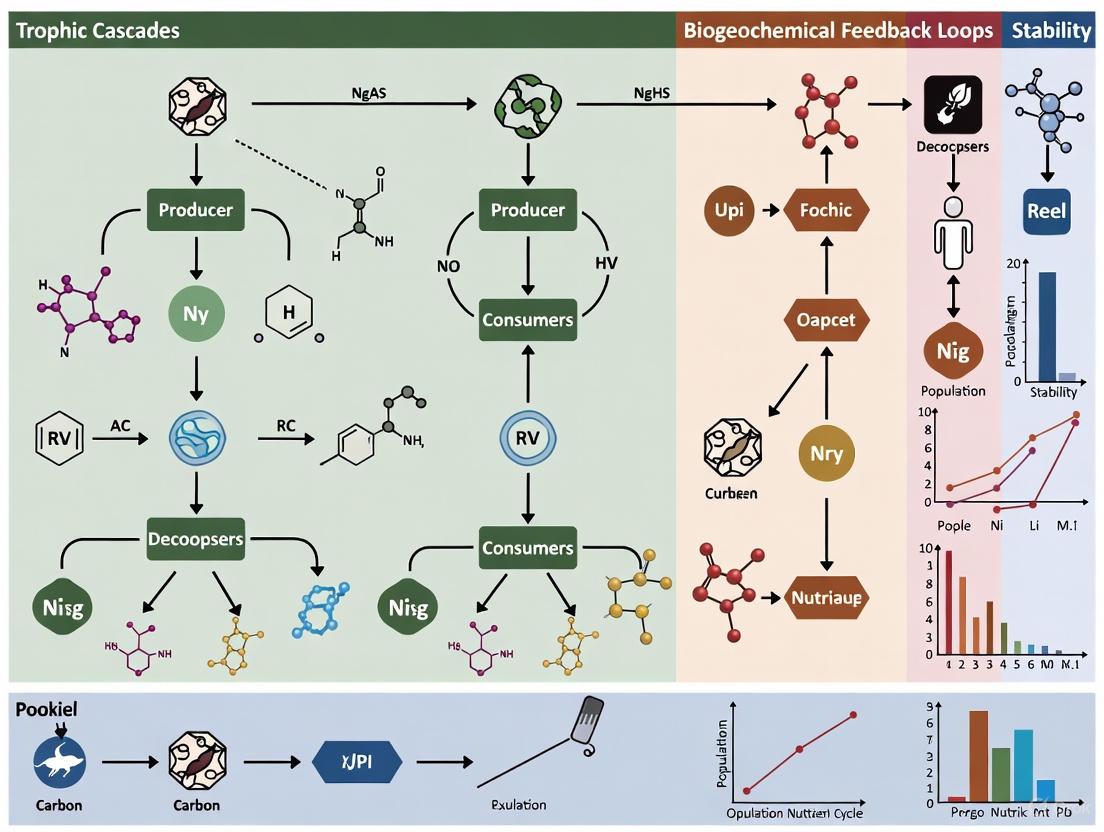
This article synthesizes current research on the interconnected dynamics of trophic cascades and biogeochemical feedback loops, exploring how predator-prey interactions fundamentally influence nutrient cycling and ecosystem function.
Trophic Cascades and Biogeochemical Feedback Loops: Integrating Top-Down Control and Nutrient Cycling in Ecosystem Science
Abstract
This article synthesizes current research on the interconnected dynamics of trophic cascades and biogeochemical feedback loops, exploring how predator-prey interactions fundamentally influence nutrient cycling and ecosystem function. It addresses the foundational theories of top-down and bottom-up control, examines methodologies for quantifying these complex relationships, and investigates the challenges in predicting outcomes in diverse ecosystems. By comparing evidence across terrestrial, freshwater, and marine systems, this review highlights the critical role of apex predators in maintaining biogeochemical equilibrium and discusses the implications of trophic downgrading for ecosystem stability and function in the context of global anthropogenic change.
Theoretical Foundations: Unraveling Top-Down Control and Nutrient Pathways
The trophic cascade is a fundamental ecological concept describing the powerful indirect interactions that can control entire ecosystems. Formally defined, it occurs when predators limit the density and/or behavior of their prey, thereby enhancing the survival of the next lower trophic level, creating reciprocal changes in relative populations that ripple through food chains [1] [2]. This phenomenon triggers a series of reciprocal changes in the relative populations of predator and prey through a food chain, which can result in dramatic changes in ecosystem structure and nutrient cycling [1]. The concept has evolved significantly since its early formulations, transforming from a seemingly straightforward hypothesis about predator control of herbivores to a nuanced understanding of complex ecological interactions with implications for ecosystem management, conservation biology, and climate science.
The intellectual genesis of trophic cascade theory emerged from the seminal work of Nelson Hairston, Frederick Smith, and Lawrence Slobodkin in 1960—often referred to as the HSS hypothesis or the "green world hypothesis" [3]. They proposed that the Earth remains visibly green because predators regulate herbivore populations, preventing them from consuming all available vegetation [3] [4]. This counteracted the prevailing view that plant production was controlled primarily by physical and chemical factors like solar radiation, climate, and nutrient supply [1]. While physical and chemical factors remain important, we now understand that producer communities and their metabolic rates are also significantly influenced by trophic cascades [1].
Historical Development and Theoretical Underpinnings
The Green World Hypothesis and Its Progenitors
The green world hypothesis, first proposed in a 1957 course by Frederick Edward Smith at the University of Michigan, presented a revolutionary perspective on ecosystem regulation [3]. Hairston, Smith, and Slobodkin formally articulated this hypothesis in 1960, arguing that the world appears green because higher trophic levels control herbivore abundance through predation [3] [2]. Their central premise was that herbivores must not be food-limited given the abundance of green material on Earth, but are instead limited by predators that keep their populations and negative impacts on plants in check [2]. This established a tri-trophic interaction as a key regulatory mechanism in ecosystems.
The HSS model faced immediate challenges from alternative perspectives, particularly the plant self-defense hypothesis, which proposed that plants are not entirely consumed by herbivores primarily because of their adaptations against herbivory, such as thorns, toxicity, and cellulose [3]. This chemically-mediated, bottom-up view suggested that most plants have "won" the predator-prey arms race and are heavily defended, therefore remaining free from significant enemy attack [2]. This fundamental debate between top-down and bottom-up control continues to inform ecological research, with the current understanding acknowledging that both forces operate simultaneously in most ecosystems [5].
Terminology and Conceptual Refinement
The term "trophic cascade" itself was coined by American zoologist Robert Paine in 1980 to describe reciprocal changes in food webs caused by experimental manipulations of top predators [1]. Paine's earlier experiments in 1966 with Pisaster ochraceus sea stars demonstrated their role as a keystone species in regulating mussel populations in intertidal zones, providing crucial empirical support for the concept of top-down control [3]. Paine's work illustrated that predator removal could dramatically reduce biodiversity, fundamentally altering ecosystem structure.
Subsequent theoretical work expanded these concepts beyond simple three-level food chains. Lauri Oksanen argued that the top trophic level in a food chain increases the abundance of producers in food chains with an odd number of trophic levels but decreases producer abundance in chains with an even number of trophic levels [4]. He further proposed that the number of trophic levels in a food chain increases as ecosystem productivity increases, adding sophistication to the original HSS model [4].
Table: Key Historical Developments in Trophic Cascade Theory
| Year | Researcher(s) | Contribution | Significance |
|---|---|---|---|
| 1960 | Hairston, Smith, Slobodkin (HSS) | Formulated Green World Hypothesis | Proposed predators as primary regulators preventing herbivores from consuming all vegetation |
| 1966 | Robert Paine | Experimental demonstration with Pisaster sea stars | Introduced keystone species concept; empirical evidence for top-down control |
| 1980 | Robert Paine | Coined term "trophic cascade" | Provided precise terminology for the phenomenon |
| 1980s-1990s | Various researchers | Experimental demonstrations in freshwater lakes | Confirmed trophic cascades control phytoplankton biomass and nutrient cycling |
| 2000s-Present | Multiple research teams | Documentation in terrestrial ecosystems and climate connections | Expanded understanding to complex food webs and climate feedbacks |
Classic Experimental Evidence and Case Studies
Aquatic Ecosystems: Foundational Demonstrations
The earliest and most definitive empirical demonstrations of trophic cascades emerged from aquatic ecosystems during the 1980s and 1990s. A series of whole-ecosystem experiments involved adding or removing top carnivores, such as bass (Micropterus) and yellow perch (Perca flavescens), from freshwater lakes [1]. These manipulative experiments demonstrated that trophic cascades controlled biomass and production of phytoplankton, recycling rates of nutrients, the ratio of nitrogen to phosphorus available to phytoplankton, activity of bacteria, and sedimentation rates [1]. Because these cascades affected rates of primary production and respiration by entire lakes, they influenced the exchange of carbon dioxide and oxygen between the lake and the atmosphere [1].
One of the most cited examples involves the sea otter (Enhydra lutris) in North Pacific coastal ecosystems. Research by James Estes and colleagues demonstrated that where sea otter populations persisted, they suppressed the density and biomass of herbivorous sea urchins, indirectly promoting the abundance of kelp forests [1] [2]. In contrast, at sites where sea otters had been extirpated by the fur trade, sea urchin populations expanded dramatically, creating extensive "urchin barrens" characterized by near-complete elimination of kelp [1] [4] [2]. As sea otter populations recovered in recent decades, predictable changes occurred: reduced urchin densities followed by increased kelp biomass, demonstrating whole-ecosystem recovery with predator reinstatement [2].
Terrestrial Ecosystems: Complexity and Controversy
Although early documented trophic cascades primarily occurred in aquatic systems, subsequent research has identified them in terrestrial ecosystems, albeit often with greater complexity. The reintroduction of gray wolves (Canis lupus) to Yellowstone National Park in the 1990s represents one of the most publicized—and debated—examples of a potential terrestrial trophic cascade [6] [4]. Early observations suggested that wolf restoration led to reduced elk populations and altered behavior, subsequently allowing recovery of aspen (Populus tremuloides), willow (Salix spp.), and other woody vegetation that elk had overbrowsed during the wolves' absence [4] [2].
However, this interpretation has faced substantial scientific scrutiny. Recent comprehensive analyses of over 170 studies reveal a more complex picture [6]. The Yellowstone ecosystem is characterized by multiple influential factors beyond wolf predation, including human hunting outside park boundaries, the presence of other predators like grizzly bears and cougars, and the impact of bison—which are largely invulnerable to wolf predation—on vegetation [6]. Furthermore, environmental constraints like drought and changes in hydrology due to the historical loss of beavers have also shaped vegetation recovery [6]. This complexity illustrates the challenge of establishing clear cause-and-effect relationships in open, multifaceted ecosystems subject to numerous simultaneous influences [6].
Table: Comparative Trophic Cascade Strength Across Ecosystems
| Ecosystem Type | Key Species | Cascade Strength | Mediating Factors |
|---|---|---|---|
| Freshwater Lakes | Piscivorous fish → Zooplanktivorous fish → Zooplankton → Phytoplankton | Strong | Food web simplicity; fast algal growth rates |
| Marine Kelp Forests | Sea otters → Sea urchins → Kelp | Strong | Keystone predator role; limited herbivore diversity |
| Terrestrial Forests | Wolves → Elk → Aspen/Willow | Variable/Moderate | Multiple predator species; prey behavioral adaptations; plant defenses |
| Tropical Systems | Birds/Anthropods → Herbivorous insects → Plants | Variable | High biodiversity; complex food webs; omnivory |
Figure 1: Climate Feedback Loop Involving Trophic Cascades
Modern Paradigms: Complexity, Climate, and Controversies
Beyond Simple Linear Chains: Food Web Complexity
Contemporary understanding has moved beyond viewing trophic cascades as simple linear food chains to recognizing them as complex interactions within broader food webs. The initial HSS model proposed essentially three-level food chains, but we now understand that food web structure significantly influences cascade strength and manifestation [4]. Ecosystems with high species diversity, multiple predator species, and omnivory tend to exhibit dampened trophic cascades compared to simpler systems with linear feeding relationships [4] [2].
This complexity is evident in the phenomenon of mesopredator release, which occurs when the removal of top carnivores allows medium-sized predators to rapidly increase, triggering their own cascading effects [1]. For example, the systematic decline of cougars and wolves across North America during the 20th century facilitated population explosions of mesopredators like coyotes, red foxes, and raccoons [1]. Similarly, the decline of large sharks in the oceans has allowed smaller-bodied sharks and rays to increase, each with consequences for lower trophic levels [1]. These examples illustrate how trophic cascades can involve multiple predator levels with complex interactive effects.
Trophic Cascades and Climate Change Feedbacks
Emerging research reveals profound interconnections between trophic cascades and climate change, with each influencing the other in potentially accelerating feedback loops [5]. Climate change affects trophic cascades through multiple pathways: by forcing species range shifts that create novel species assemblages and interactions, causing phenological mismatches between predators and prey, and increasing the frequency of extreme weather events that disrupt established feeding relationships [5]. For instance, research has documented that reduced winter duration in Montana causes phenological mismatch between seasonal coat color changes in snowshoe hares and snow cover, increasing their vulnerability to predation [5].
Conversely, trophic cascades can significantly influence climate change processes through their effects on carbon cycling and storage [5]. The recovery of sea otters in Pacific coastal ecosystems, by promoting kelp forest growth, enhances carbon sequestration in marine biomass [4]. Similarly, predator-mediated protection of terrestrial vegetation can maintain or increase carbon stocks in forests and other ecosystems [5]. These connections demonstrate that treating climate change and "trophic downgrading" (the loss of apex predators) as isolated phenomena is inadequate—they must be addressed as intertwined challenges [5].
Contemporary Scientific Debates
The field continues to evolve with active scientific debates regarding the prevalence and strength of trophic cascades across different ecosystem types. The question of whether aquatic ecosystems generally exhibit stronger trophic cascades than terrestrial systems remains discussed [3] [2]. Some researchers have suggested that aquatic systems may be more susceptible due to simpler food webs and the prevalence of fast-growing, poorly defended primary producers (phytoplankton and algae) compared to the often chemically defended perennial plants dominating terrestrial systems [2].
The ongoing reevaluation of the Yellowstone wolf reintroduction effects illustrates the continuing scientific dialogue. While early, simplified media accounts presented a straightforward narrative of wolves "restoring" the ecosystem, more recent research emphasizes the complexity of interacting factors [6]. A 2025 comment in a scientific journal even questioned the methodological rigor of certain analyses claiming strong cascading effects, highlighting that willows in Yellowstone have shown limited recovery despite wolf reintroduction [7]. This underscores that in open, complex ecosystems with multiple herbivore species and environmental constraints, straightforward trophic cascades may be masked or dampened [6].
Research Methodologies and Experimental Approaches
Classic Experimental Designs
The foundational evidence for trophic cascades comes from a variety of rigorous experimental approaches. Whole-ecosystem manipulations have been particularly influential, especially in aquatic environments. These experiments involve intentionally adding or removing top predators from contained systems like lakes and monitoring the responses across multiple trophic levels [1]. For example, researchers have manipulated fish populations in lakes to demonstrate how piscivorous fish reduce planktivorous fish abundance, releasing zooplankton from predation and increasing their grazing pressure on phytoplankton, ultimately resulting in clearer water [1] [4].
Predator exclusion experiments represent another key methodology. By establishing paired treatment and control areas with and without predators (often using fences, cages, or natural barriers), researchers can quantify predation effects on herbivore behavior and density, as well as subsequent impacts on plant communities [2]. This approach has been widely used in both terrestrial and marine environments, from fencing studies with deer and elk to caging experiments with starfish and urchins in intertidal zones [4] [2].
Modern Technological Innovations
Contemporary trophic cascade research increasingly leverages advanced technologies that enable more precise and comprehensive monitoring of complex ecological interactions. GPS telemetry allows detailed tracking of predator and prey movements, revealing how the "landscape of fear" influences herbivore foraging behavior and spatial patterns of plant damage [6]. Genetic sampling techniques, including environmental DNA (eDNA), provide non-invasive methods for monitoring species presence and diet composition [6]. Camera traps and bioacoustic monitoring systems enable continuous, automated surveillance of animal activities across large spatial and temporal scales [6].
These technological advances are particularly valuable for studying the restoration of large carnivores, as they help researchers document subtle behavioral responses and trophic interactions that would be difficult to detect through traditional observation methods [6]. The integration of these tools with experimental manipulations strengthens causal inference in complex field settings where controlled experiments are challenging.
Table: Essential Research Toolkit for Studying Trophic Cascades
| Methodology | Application in Trophic Cascade Research | Key Insights Generated |
|---|---|---|
| Whole-ecosystem manipulation | Adding/removing predators from contained systems | Demonstrated causal links across multiple trophic levels in aquatic systems |
| Predator exclusion experiments | Using fences, cages, or natural barriers | Quantified predation effects on herbivore behavior and plant communities |
| GPS telemetry | Tracking animal movements and spatial patterns | Revealed behaviorally-mediated cascades via "landscape of fear" |
| Stable isotope analysis | Tracing energy flow and food web connections | Elucidated trophic positions and feeding relationships |
| Long-term monitoring | Repeated sampling of populations over decades | Documented ecosystem responses to predator recovery/decline |
| Remote sensing & GIS | Mapping vegetation changes over large areas | Detected landscape-scale impacts of predator-mediated herbivory |
Figure 2: Modern Research Workflow for Studying Trophic Cascades
Applications in Conservation and Ecosystem Management
Biomanipulation for Ecosystem Restoration
The principles of trophic cascades have been directly applied to ecosystem management through approaches such as biomanipulation, particularly in freshwater lakes [1]. This management practice involves intentionally removing or adding species to trigger trophic cascades that improve water quality [1]. The most common application involves reducing populations of plankton-eating fish to enhance zooplankton grazing pressure on phytoplankton, particularly to control harmful algal blooms like toxic blue-green algae [1]. In some shallow lakes, managers have removed bottom-feeding fish to promote the growth of rooted vegetation, which stabilizes sediments and increases water clarity [1]. These approaches demonstrate how understanding of trophic cascades can provide practical tools for addressing environmental problems.
Predator Restoration and Rewilding
The intentional restoration of apex predators represents a major application of trophic cascade theory in conservation biology. Efforts to recover wolf populations in North America and Europe, reintroduce tigers in protected areas, and conserve African lions all draw upon the understanding that these predators may help regulate entire ecosystems [6]. However, recent research emphasizes that outcomes are context-dependent and less predictable than often assumed [6]. Restoration efforts are ecologically beneficial for increasing biodiversity and ecosystem complexity, but they may not produce simple, predictable trophic cascades, especially in human-modified landscapes where other factors constrain ecological dynamics [6].
This nuanced perspective suggests that while predator restoration is valuable, the most effective conservation strategy is to prevent the loss of large carnivores in the first place [6]. As one researcher noted, "putting them back, while useful to do, could take 50 to 100 years or more to really restore what was lost" [6]. This highlights the importance of maintaining intact predator-prey relationships rather than attempting to reassemble them after they have been disrupted.
The concept of trophic cascades has evolved substantially from Hairston's original "green world hypothesis" to encompass complex interactions within diverse ecosystems. The fundamental insight that predators can indirectly influence plant communities and ecosystem processes through cascading interactions remains well-established, but contemporary research reveals significant variation in the strength and manifestation of these effects across different ecological contexts [1] [6] [2]. Future research priorities include better understanding the interplay between temperature-induced changes in predator-prey relationships, carbon cycling implications of trophic cascades, species range shift effects, and the impacts of extreme weather and wildfire events on food web dynamics [5].
Rapidly improving technologies such as GPS telemetry, genetic sampling, camera traps, and bioacoustic monitoring promise to advance our understanding by enabling more comprehensive tracking of predator and prey populations and their interactions [6]. Furthermore, integrating trophic cascade research with climate science will be essential for developing effective ecosystem management strategies in an era of rapid global change [5]. As the field moves forward, recognizing that trophic cascades operate within complex networks of species interactions and environmental constraints will lead to more realistic models and more effective conservation applications.
Biogeochemical cycles describe the movement and transformation of chemical elements through different reservoirs within the Earth system, including the atmosphere, hydrosphere (water and ice), biosphere (life), and lithosphere (rock) [8]. These cycles keep essential elements available to plants and other organisms, forming the fundamental metabolic pathways of ecosystems [9]. Unlike energy, which flows unidirectionally through ecosystems, matter is conserved and recycled according to the law of conservation of mass [9]. The cycling of key elements—particularly carbon, nitrogen, and phosphorus—is interconnected, with human activities now significantly altering these natural pathways through agricultural practices, fossil fuel combustion, and wastewater discharge [10] [11].
The interplay between biogeochemical cycles and trophic dynamics creates complex feedback loops that regulate ecosystem functioning. Trophic cascades—the indirect effects of carnivores on plants mediated by herbivores—represent a crucial mechanism through which biological interactions influence nutrient cycling [12] [13]. This review examines biogeochemical cycles through the lens of trophic cascades and their associated feedback loops, providing researchers with methodological frameworks for investigating these critical ecosystem processes.
Core Elemental Cycles
The Carbon Cycle
The carbon cycle is comprised of interconnected rapid and long-term cycles that dynamically exchange carbon between active and geological reservoirs [9]. Carbon dioxide (COâ‚‚) represents the primary atmospheric phase of carbon, where it functions as a greenhouse gas that absorbs heat and contributes to the regulation of Earth's temperature [8].
Table 1: Major Carbon Fluxes and Reservoirs in the Biosphere
| Reservoir/Process | Description | Scale/Quantity |
|---|---|---|
| Atmospheric COâ‚‚ | Primary atmospheric phase of carbon | Increased from ~280 ppm to >423 ppm since industrial revolution [14] |
| Terrestrial Biosphere Uptake | Carbon transfer via photosynthesis | Critical pathway for atmospheric carbon sequestration [8] |
| Geological Reservoirs | Carbonate rocks and fossil fuels | Largest carbon reservoir on Earth [9] |
| Oceanic Uptake | COâ‚‚ dissolution and carbonate formation | Carbonate ions (CO₃²â») form calcium carbonate (CaCO₃) for marine organism shells [9] |
| Inland Water Bodies | Processing, transport, and sequestration | Disproportionately significant despite covering ~1% of Earth's surface [14] |
Carbon cycles rapidly between organisms and the atmosphere through photosynthesis and respiration. Photosynthesis removes COâ‚‚ from the atmosphere to produce energy-rich organic molecules, while respiration returns it through energy-releasing processes [9]. This reciprocal relationship means significant disruption of one process can dramatically affect atmospheric COâ‚‚ levels [9].
Carbon also cycles slowly between land and ocean through geological processes. Weathering of terrestrial rocks releases carbon into soil, where it can be washed into water bodies [9]. In oceans, carbon precipitates as calcium carbonate in marine organism shells, forming sediments that eventually become limestone through geological compression [9]. Plate tectonics subsequently subducts these carbonate sediments, melting and returning them to the surface via volcanic activity [9].
Nitrogen and Phosphorus Cycles
Nitrogen and phosphorus are essential macronutrients with distinctly different biogeochemical cycles. Nitrogen, though abundant in the atmosphere as Nâ‚‚, must be converted to reactive forms via biological or industrial fixation [11]. The Haber-Bosch process now contributes more reactive nitrogen to ecosystems than natural biological fixation, dramatically disrupting nitrogen cycles [11]. In contrast, phosphorus derives exclusively from finite phosphate rock, with no known substitute for its vital functions in DNA synthesis, membrane function, and energy transfer [11].
Table 2: Comparative Analysis of Nitrogen and Phosphorus Cycles
| Characteristic | Nitrogen Cycle | Phosphorus Cycle |
|---|---|---|
| Primary Source | Atmospheric Nâ‚‚ gas | Phosphate rock (non-renewable) |
| Global Reservoirs | Atmosphere, terrestrial systems, oceans | Geological deposits, soils, aquatic sediments |
| Human Alteration | Haber-Bosch process; fossil fuel combustion | Mining for fertilizers; wastewater discharges |
| Environmental Issues | Eutrophication, algal blooms, GHG emissions | Eutrophication, harmful algal blooms |
| Recovery Potential | From wastewater and agricultural runoff | 15-20% of global fertilizer demand potentially from wastewater [11] |
| Policy Examples | USEPA: 10 mg N Lâ»Â¹ nitrate limit | EU: 0.1 mg P Lâ»Â¹ phosphate limit; China: 0.5 mg P Lâ»Â¹ limit [11] |
Nutrient loss from human activities has severe environmental consequences. Approximately 15 million tons of phosphorus and 21 kg N haâ»Â¹ are lost annually from croplands through leaching, runoff, and erosion [11]. These mobilized nutrients accumulate in aquatic systems, driving eutrophication and harmful algal blooms that degrade water quality and ecosystem health [10] [11]. The economic impacts are substantial, with eutrophication mitigation costs in the U.S. alone estimated at $2.2 billion annually [11].
Trophic Cascades and Biogeochemical Feedback Loops
Conceptual Framework
Trophic cascades—defined as the indirect effects of carnivores on plants mediated by herbivores—represent a powerful mechanism through which biological interactions influence biogeochemical cycles [12] [13]. The "green world" hypothesis first attributed the prevalence of terrestrial vegetation to top-down control of herbivores by predators [13]. These cascading effects can manifest through both consumptive effects (direct predation) and non-consumptive effects (fear-mediated behavioral changes) that alter herbivore feeding patterns [12].
Trophic control of ecosystem structure exists along a continuum from complete bottom-up regulation (driven by nutrient availability and primary productivity) to top-down control (where predators regulate biomass distribution across multiple trophic levels) [13]. Most ecosystems operate under a combination of attenuating top-down and bottom-up control, modulated by nutrient cycling and spatiotemporal variability [13]. The incidence of community-level trophic cascades varies across ecosystems, occurring more frequently in marine benthic ecosystems than in their lacustrine and neritic counterparts, and least often in pelagic ecosystems [13].
Trophic Cascades and Carbon Cycling
Empirical evidence demonstrates that trophic cascades significantly influence carbon dynamics in terrestrial ecosystems. A landmark 13C pulse-chase experiment in grassland ecosystems revealed that predators indirectly enhance carbon fixation and retention through behavioral changes in herbivores, even without reducing herbivore biomass [12].
Table 3: Cascading Effects of Predators on Ecosystem Carbon Dynamics
| Parameter | Plants Only (Control) | Plants + Herbivores | Plants + Herbivores + Carnivores |
|---|---|---|---|
| Total Plant Biomass | Baseline | No significant difference from control | No significant difference from control |
| 13C Fixation | Baseline | 33% less than control | Mitigated decline, similar to control |
| 13C Respiration | Baseline | 9.3% more fixed C respired | Decreased proportion of fixed C respired |
| Total 13C Storage | Baseline | 1.4-fold less than +carnivore | 1.2-1.4-fold greater than other treatments |
| Belowground Allocation | Baseline | Reduced | Significantly enhanced |
| Grass Carbon Storage | Baseline | Reduced | Greatest storage, creating carbon sink |
This experiment demonstrated that the presence of hunting spiders (Pisaurina mira) indirectly increased carbon retention in plant biomass by 1.4-fold compared to treatments without predators [12]. This effect occurred primarily through non-consumptive mechanisms, as grasshoppers (Melanoplus femurrubrum) reduced feeding time and shifted foraging patterns in response to predation risk [12]. The cascading effects of predators thus began to affect carbon cycling through enhanced carbon fixation by plants, even without initial changes in total plant or herbivore biomass [12].
The diagram below illustrates the pathways through which trophic cascades influence carbon cycling in terrestrial ecosystems:
Pathways of Trophic Cascades on Carbon Cycling
In marine ecosystems, trophic cascades similarly influence carbon sequestration and storage. Predators in kelp forests, coral reefs, and other benthic habitats indirectly enhance carbon storage in vegetation by reducing herbivory pressure [13]. These cascading impacts extend to biodiversity maintenance, extinction prevention, and strong selective pressures that shape organism morphology and behavior across multiple trophic levels [13].
Methodological Approaches
Experimental Designs for Trophic Cascade Studies
Investigating trophic cascades and their biogeochemical consequences requires carefully controlled experimental designs. The established methodology involves replicated field enclosures with factorial manipulation of trophic levels [12]:
Experimental Treatments: Three core treatments in replicated enclosures: (i) plants only (control for animal effects), (ii) plants and herbivores (+ herbivore), and (iii) plants, herbivores, and carnivores (+ carnivore) [12].
Organism Selection: Use dominant species from the study ecosystem, maintaining natural field densities. The grassland experiment used grasses and perennial herbs, the grasshopper herbivore Melanoplus femurrubrum, and the hunting spider carnivore Pisaurina mira [12].
Carbon Tracing: Employ 13C pulse-chase labeling to track carbon fixation, allocation, and respiration dynamics across treatments [12].
Measurement Parameters: Quantify plant community biomass, 13C fixation rates, ecosystem respiration of 13C, belowground vs. aboveground carbon allocation, and carbon storage in different plant functional groups [12].
The experimental workflow for trophic cascade studies is systematized as follows:
Experimental Workflow for Trophic Cascade Studies
Quantitative Approaches for Biogeochemical Cycling
Process-based quantitative descriptions of biogeochemical cycles require integrated measurement strategies. Research on reclaimed water intake areas demonstrates comprehensive approaches to carbon budget quantification [14]:
Conceptual Model Development: Establish a biogeochemical mass balance model with the water body as the core, creating budget links with atmosphere (water-atmosphere), phytoplankton (water-phytoplankton), and fluvial sediment (water-sediment) [14].
Field Measurements: Monitor environmental parameters including pH, turbidity, suspended solids, oxidation-reduction potential, electrical conductivity, total dissolved solids, and dissolved COâ‚‚ along flow gradients [14].
Process Quantification: Calculate internal carbon conversion rates including total organic carbon, dissolved inorganic carbon (COâ‚‚(aq), HCO₃â», CO₃²â»), and precipitation rates of Ca²⺠and Mg²⺠[14].
Incubation Experiments: Investigate sediment role in carbon cycling through laboratory incubation studies measuring organic matter mineralization and dissolved inorganic carbon production [14].
Research Tools and Reagents
Table 4: Essential Research Reagents and Methodologies for Biogeochemical Studies
| Reagent/Technique | Application | Experimental Function |
|---|---|---|
| 13C Isotope Labeling | Carbon tracing experiments | Pulse-chase methodology to track carbon fixation, allocation, and respiration dynamics [12] |
| Gas Chromatography | Greenhouse gas flux measurements | Quantify COâ‚‚ and CHâ‚„ fluxes at ecosystem interfaces (e.g., water-air) [14] |
| Elemental Analyzer | Total organic carbon (TOC) analysis | Measure organic carbon content in water, soil, and sediment samples [14] |
| Spectrophotometric Kits | Nutrient concentration analysis | Determine nitrate, ammonium, and phosphate concentrations in water samples [11] |
| Molecular Biology Reagents | Microbial community analysis | Identify and quantify functional genes involved in nutrient cycling (e.g., nifH, amoA, ppk) [11] |
| pH/Ion-Selective Electrodes | Water chemistry characterization | Monitor physicochemical parameters (pH, Eh, EC) in aquatic systems [14] |
| Sediment Traps | Carbon sedimentation quantification | Collect and measure particulate organic matter settling in aquatic ecosystems [14] |
| Climate-Controlled Chambers | Incubation experiments | Study temperature-dependent biogeochemical processes under controlled conditions [11] |
Biogeochemical cycles form the fundamental infrastructure for ecosystem nutrient flow, with trophic cascades serving as critical biological mechanisms that regulate carbon, nitrogen, and phosphorus pathways. The integration of top-down trophic control with bottom-up biogeochemical processes creates complex feedback loops that determine ecosystem productivity, carbon sequestration potential, and nutrient retention capacity.
Understanding these interconnected dynamics has never been more urgent, as human activities dramatically alter natural element cycles through fossil fuel combustion, agricultural intensification, and wastewater discharge. The experimental approaches and methodological frameworks outlined herein provide researchers with robust tools to quantify these complex interactions across diverse ecosystems.
Future research priorities should include: (1) scaling trophic cascade-biogeochemical relationships from plot to ecosystem levels, (2) investigating interactive effects of multiple element cycles under global change scenarios, and (3) developing integrated models that couple trophic dynamics with biogeochemical processes to predict ecosystem responses to anthropogenic pressures. Such advances will be essential for developing effective conservation strategies and climate change mitigation approaches that harness natural ecosystem processes.
Predators are not merely passive occupants of the top echelons of food webs; they are dynamic regulators of ecosystem processes whose influence permeates through trophic levels to directly affect biogeochemical cycling [15]. This interconnection forms a critical component of a broader thesis on trophic cascades and biogeochemical feedback loops, representing a paradigm shift from viewing nutrient cycles as solely physically or microbially driven processes. Contemporary research reveals that predators influence elemental transfer and recycling through a complex interplay of consumptive effects (direct killing and consumption of prey) and non-consumptive effects (risk-induced changes in prey traits and behavior) [15] [16]. These effects can alter the distribution of carbon (C), nitrogen (N), and phosphorus (P) among trophic compartments, modify the chemical composition of organic matter, and ultimately determine the fate of nutrients within ecosystems. This technical guide synthesizes the mechanisms, evidence, and methodologies for studying how predators shape nutrient cycling, providing a foundation for researchers investigating the intersection of food web ecology and biogeochemistry.
Theoretical Framework and Key Mechanisms
The theoretical underpinning of predator-driven nutrient cycling rests on integrating principles from ecological stoichiometry with classic ecosystem compartment models [15]. This fusion provides a predictive framework for understanding how predators alter the flow and balance of essential elements.
Core Conceptual Model
At its foundation, the ecosystem is represented as interconnected compartments (soil elemental pools, plants, herbivores, predators) through which elements like C and N flux via trophic interactions, respiration, excretion, egestion, and leaching [15]. This model obeys fundamental mass balance requirements, ensuring elemental inputs equal outputs plus storage at equilibrium. Predators instigate effects through two primary pathways:
- Consumptive Effects (CEs): The killing and consumption of prey determines the flux rate of elements from herbivores to predators. This governs the amount of elements stored in the predator trophic level and released back to the environment via respiration, excretion, and egestion [15].
- Non-Consumptive Effects (NCEs) / Trait-Mediated Effects: The perceived risk of predation alters herbivore behavior (e.g., foraging time and location) and physiology (e.g., metabolic stress) [15] [16]. This changes the flux rate of elements into the herbivore trophic level and can alter the elemental composition of herbivore tissues and waste products.
The following diagram illustrates the core pathways and elemental fluxes in a predator-driven ecosystem model, highlighting the distinct routes of consumptive and non-consumptive effects.
Stoichiometric Bottlenecks and Predator Effects
A critical concept from ecological stoichiometry is the mismatch in elemental demand between trophic levels [15]. Herbivores require a diet with a low C:N ratio to support growth, but often forage on plant material with a high C:N ratio. This creates a bottleneck in the transfer of elements up the food chain. Predators directly and indirectly manipulate this bottleneck:
- Consumptive Effects on Stoichiometry: By reducing herbivore density, predators decrease overall grazing pressure, potentially shifting the plant community toward more palatable species with lower C:N ratios.
- Non-Consumptive Effects on Stoichiometry: Predation risk induces chronic stress in herbivores, elevating their metabolic rate and increasing demand for energy-rich carbon [15]. This can force herbivores to selectively forage for high-carbohydrate foods, leading to excess nitrogen intake which is then excreted [15]. This mechanism represents a direct top-down alteration of nutrient cycling, where fear shifts the balance of C and N entering the soil pool.
Table 1: Comparative Analysis of Predator Effect Mechanisms on Nutrient Cycling
| Mechanism | Primary Effect on Prey | Impact on Elemental Fluxes | Result on Ecosystem Process |
|---|---|---|---|
| Consumptive (Density-Mediated) | Reduces herbivore population density | Decreases C & N transfer to predator level; increases detritus from killed prey | Alters top-down control on plants; shifts nutrient recycling pathways |
| Non-Consumptive (Trait-Mediated) - Behavioral | Alters herbivore foraging time and habitat use | Reduces herbivory rate, modifying C flow from plants | Can increase plant biomass and C sequestration; spatial heterogeneity in grazing |
| Non-Consumptive (Trait-Mediated) - Physiological | Increases herbivore metabolic stress | Increases herbivore C respiration and N excretion rates | Changes stoichiometry of recycled nutrients (higher N availability); alters soil microbial activity |
Empirical Evidence and Ecosystem Manifestations
The theoretical mechanisms of predator-driven nutrient cycling are supported by empirical evidence from diverse ecosystems. The strength and manifestation of these effects depend on food web structure, predator identity, and environmental context.
Classic Trophic Cascades in Aquatic Systems
Some of the most definitive evidence for predator-driven nutrient cycling comes from aquatic systems, which often have simpler food webs that strongly transmit top-down effects [2].
- Kelp Forest Ecosystems: The sea otter-urchin-kelp trophic cascade is a seminal example. Where sea otters (Enhydra lutris) are present, they suppress sea urchin populations, which allows kelp forests to flourish [2]. The kelp beds then act as significant carbon sinks and their physical structure alters local nutrient dynamics and biodiversity. In areas where otters have been extirpated, urchin populations explode and create "urchin barrens," fundamentally shifting the ecosystem to a state of reduced primary production and altered nutrient cycling [2].
- Lake Ecosystems: Experimental and observational studies have demonstrated that piscivorous fish can control planktivorous fish populations, which in turn releases herbivorous zooplankton from predation. The resulting increase in zooplankton biomass intensifies grazing pressure on phytoplankton, increasing water clarity and altering the cycling of nitrogen and phosphorus [2] [17].
Terrestrial Ecosystems and Behavioral Cascades
The influence of predators on nutrient cycling in terrestrial systems is often mediated through more complex, behaviorally-driven pathways.
- Yellowstone Wolf Reintroduction: The reintroduction of gray wolves (Canis lupus) in Yellowstone National Park is proposed to have initiated a behaviorally-mediated trophic cascade [2]. Elk (Cervus elaphus) alter their foraging patterns in response to predation risk, avoiding high-risk areas like river valleys. This spatial shift in herbivory has been linked to the recovery of trembling aspen (Populus tremuloides) and willows, which in turn can stabilize stream banks, alter hydrology, and influence soil chemistry through increased litter input [2].
- Transgenerational Amplification of Effects: Recent research reveals that predator effects can amplify across prey generations. A three-year common garden experiment in a terrestrial old-field system demonstrated that the ecosystem impacts of predators on plant community biomass and soil carbon accumulation were larger in the second generation of predator exposure [16]. This amplification was correlated with heightened antipredator behaviors in the second generation, demonstrating a transgenerational plastic response that links eco-evolutionary dynamics to ecosystem function [16].
Table 2: Ecosystem-Level Outcomes of Predator-Driven Nutrient Cycling
| Ecosystem Type | Key Predator | Documented Effect on Nutrient Cycling | Cascade Strength |
|---|---|---|---|
| Kelp Forest (Marine) | Sea Otter | Increases kelp-derived carbon storage & nitrogen retention; alters detrital pathways | Strong |
| Lake (Freshwater) | Piscivorous Fish | Reduces phytoplankton biomass; alters N:P ratios; increases light penetration | Strong |
| Temperate Forest (Terrestrial) | Gray Wolf | Spatial redistribution of herbivory; increases riparian plant litter input & soil C | Moderate to Strong |
| Old-Field (Terrestrial) | Spider/Insect | Increases soil C accumulation; alters N mineralization via prey stress & excretion | Moderate (Amplifies over generations) |
Methodologies for Experimental Investigation
Quantifying the mechanisms of predator-driven nutrient cycling requires integrated experimental approaches that disentangle consumptive and non-consumptive effects.
Experimental Protocols
Researchers employ a combination of field manipulations, mesocosm studies, and controlled laboratory experiments to isolate the pathways through which predators influence biogeochemistry.
Protocol 1: Field-Based Predator Exclusion/Enclosure
- Objective: To measure the in-situ ecosystem-level effects of predator presence/absence on nutrient pools and fluxes.
- Procedure:
- Establish replicate experimental plots in the field of interest.
- Randomly assign plots to treatments: (a) Predator Access, (b) Predator Exclusion (using fences, cages, or other barriers that permit herbivore but not predator access), and (c) Cage Control (to account for artifact effects of the exclusion structure).
- Monitor predator and herbivore activity via camera traps, direct observation, or track counts.
- Periodically collect data on:
- Plant Biomass and Community Composition: Non-destructive measurements and destructive harvests.
- Herbivore Behavior: Foraging time, vigilance, and habitat use.
- Soil and Water Nutrients: Collect soil cores/water samples for analysis of inorganic N (NHâ‚„âº, NO₃â»), available P, and dissolved organic carbon.
- Elemental Stoichiometry: Analyze C:N:P ratios of plant tissue, herbivore frass, and soil.
- Use isotopic tracers (e.g., ¹âµN) to track the flow of nutrients from plants through the food web and into the soil.
Protocol 2: Trait-Mediated Effect Mesocosm
- Objective: To isolate the non-consumptive (risk) effects of predators from their consumptive effects.
- Procedure:
- Construct controlled mesocosms (e.g., terrariums, aquatic tanks) containing a standardized soil medium, plant community, and herbivore population.
- Assign mesocosms to one of three treatments:
- Risk Treatment: Predators are present but physically separated (e.g., in a cage) so they can be seen, smelled, or heard by herbivores but cannot consume them.
- Consumptive Treatment: Free-ranging predators and herbivores.
- Control Treatment: No predators present.
- Maintain experiments for a duration sufficient for physiological and behavioral responses to manifest (weeks to months).
- Measure herbivore physiological stress indicators (e.g., corticosterone levels, metabolic rate), behavioral changes, and elemental excretion rates.
- Quantify endpoints as in Protocol 1, focusing on differences between Risk and Control treatments to isolate the non-consumptive effect.
Protocol 3: Transgenerational Response Experiment
- Objective: To test for the amplification or dampening of predator effects across herbivore generations [16].
- Procedure:
- Establish a laboratory population of the target herbivore.
- Subject the F0 generation to either a predator risk environment or a control environment.
- Collect offspring (F1 generation) and rear them in a common garden environment without predators.
- Divide the F1 generation, subjecting half to the same risk treatment as their parents and half to a control.
- Compare the behavioral, physiological, and ecosystem responses (e.g., plant consumption, soil C accumulation) of the F1 groups to each other and to the F0 generation. An amplified effect is indicated if the F1 risk group shows a stronger response than the F0 risk group [16].
The workflow for a comprehensive investigation integrating these protocols is depicted below.
The Scientist's Toolkit: Research Reagent Solutions
Table 3: Essential Reagents and Materials for Investigating Predator-Nutrient Cycling Links
| Item/Category | Function in Research | Specific Application Example |
|---|---|---|
| Stable Isotope Tracers (e.g., ¹âµN, ¹³C) | To track the pathway, fate, and transformation of nutrients in the ecosystem. | Pulse-labeling plants with ¹³COâ‚‚ to trace C fixed by photosynthesis into herbivore tissues, predator tissues, and soil organic matter. |
| Respiration Chambers | To measure metabolic COâ‚‚ flux from soil, plants, or individual consumers. | Quantifying elevated respiration rates in herbivores exposed to predator cues, indicating physiological stress [15]. |
| Elemental Analyzer | To determine the elemental (C, N, P) composition and stoichiometry of biological and soil samples. | Measuring C:N ratios of plant tissue before and after predator introduction to test for shifts in plant quality. |
| Environmental DNA (eDNA) Kits | To detect predator or prey presence and diet composition from non-invasive samples. | Monitoring predator distribution in a landscape and analyzing gut contents to confirm trophic links. |
| Soil Nutrient Probes & Kits | For in-situ or lab-based measurement of bioavailable nutrients (NO₃â», NHâ‚„âº, PO₄³â»). | Tracking changes in soil nitrogen availability in predator exclusion plots over time. |
| Radio Telemetry / GPS Trackers | To monitor animal movement and behavior in response to experimental treatments. | Documenting elk avoidance of high-risk habitats in Yellowstone following wolf reintroduction [2]. |
| Enzyme Assay Kits (e.g., for urease, phosphatase) | To quantify microbial activity and nutrient processing rates in soil. | Assessing how predator-induced changes in herbivore excretion alter microbial decomposition dynamics. |
| Ethyl Lauroyl Arginate Hydrochloride | Ethyl Lauroyl Arginate Hydrochloride, CAS:60372-77-2, MF:C20H40N4O3 . ClH, MW:421.0 g/mol | Chemical Reagent |
| O-Benzyl Posaconazole-4-hydroxyphenyl-d4 | O-Benzyl Posaconazole-4-hydroxyphenyl-d4, CAS:170985-86-1, MF:C44H48F2N8O4, MW:790.9 g/mol | Chemical Reagent |
The interconnection between predators and nutrient cycling is a robust ecological phenomenon mediated by both the killing of prey and the pervasive "landscape of fear" that alters prey traits and behavior. These effects propagate through ecosystems to determine the distribution, balance, and recycling rates of key elements like carbon and nitrogen, creating biogeochemical feedback loops that are integral to ecosystem functioning [15]. The growing evidence for transgenerational amplification of these effects [16] further deepens the complexity, suggesting that eco-evolutionary dynamics can intensify the ecosystem-level impacts of predators over time. A comprehensive understanding of these mechanisms is not merely an academic exercise; it is critical for predicting the ecosystem consequences of predator extirpation, for informing rewilding and conservation efforts, and for building resilient ecosystems in an era of global change. Future research must continue to integrate stoichiometric theory, sophisticated experimental designs, and modern tracking technologies to fully unravel the intricate ways in which predators shape the very chemical foundation of their environments.
The 'Landscape of Fear' (LOF) conceptual framework represents a paradigm shift in predator-prey ecology, emphasizing that predators influence their prey not merely through direct consumption, but profoundly through non-lethal, trait-mediated interactions. The concept, formally introduced by Laundré in 2001, is a progeny of the broader "ecology of fear" framework, which defines fear as the strategic manifestation of the cost-benefit analysis of food and safety tradeoffs [18]. Essentially, the LOF is the spatially explicit distribution of perceived predation risk as seen by a population [18]. It is a behavioral trait that provides a spatially dependent measure of how an animal perceives its world (umwelt), influencing where it chooses to forage, rest, and travel based on the perceived threat of predation [18].
This framework is crucial for understanding trait-mediated indirect interactions, where predators trigger changes in prey traits (such as behavior, physiology, or morphology), which in turn indirectly affect other species in the community, including the prey's own resources [19]. These interactions are now recognized as widespread and strong, often carrying equal or greater ecological impact than the direct consumptive effects of predators [20]. The LOF model asserts that the behavior of prey is shaped by psychological maps of their geographical surroundings, which account for the spatial variation in predation risk [21]. This perception of risk drives antipredator behavior, which carries substantial costs by reducing fecundity, survival, and population sizes, thereby becoming a key driver of ecosystem structure and function [21].
Core Principles and Ecological Mechanisms
The Theoretical Foundation: From Risk Perception to Ecosystem Impact
The operation of the Landscape of Fear can be conceptualized as a sequence of distinct, measurable spatial maps. The central element is the Landscape of Fear itself, defined as the spatial variation in prey perception of predation risk [22]. This cognitive map is distinct from, though influenced by, three other interconnected landscapes:
- The Physical Landscape: The abiotic and biotic template, including topography, vegetation structure, and resource distribution.
- The Predation Risk Landscape: The spatial variation in the actual likelihood of encounter and death by a predator.
- The Prey Response Landscape: The observable spatial manifestation of antipredator behavior, such as habitat use, foraging patterns, and vigilance [22].
The following diagram illustrates the relationships and potential mismatches between these landscapes:
Figure 1: The Core Conceptual Framework of the Landscape of Fear. The model centers the Landscape of Fear (prey perception) as distinct from the actual risk and the physical environment, while also illustrating the feedback loop where prey responses can alter the physical landscape through trophic cascades [22].
Key Factors Shaping the Landscape of Fear
The topography of an individual's LOF is sculpted by a complex interplay of internal and external factors, which guide the strategic trade-off between foraging benefits and predation costs.
Predation Risk Factors: The most studied factor is direct and perceived predation risk, which is influenced by (1) the diversity of the predator community, (2) predator activity levels (predation intensity), and (3) the information available to the prey about the likelihood of an attack [18]. For instance, the "rugosity" or "wrinkled" nature of the LOF increases with predator activity, meaning the difference in risk between safe and risky patches becomes steeper [18].
Prey Energetic-State: An animal's internal state critically modulates its risk-taking behavior. Prey in a poor energetic state, due to resource shortage, drought, or disease, are often forced to take greater risks to meet their physiological needs [18]. This aligns with the asset protection principle, where an animal in a high energy state has more to lose and should be more risk-averse [22].
Demographics and Competition: Life-history stages and intraspecific competition alter risk perception. For example, parents protecting offspring may exhibit heightened aversion to risk [18], while competition for mates can temporarily increase risk-taking in males [18]. Furthermore, intra-specific competition can force subordinate individuals into riskier habitats [18].
Prey Ontogeny: The relative strength of consumptive and non-consumptive effects can decouple as prey grow. A study on the sea urchin Paracentrotus lividus found that consumptive effects were greater on smaller urchins, while non-consumptive effects (reduced grazing) acted only on larger, predation-resistant individuals [23]. This finding that "risk and fear" change with ontogeny is crucial for predicting community impacts.
Methodologies for Quantifying the Landscape of Fear
Experimental Protocols and Field Methods
Empirically measuring the LOF requires innovative experimental designs that manipulate either predation risk, resource distribution, or both, while controlling for confounding variables. The following protocols are central to the field.
Protocol 1: Giving-Up Density (GUD) Experiments This method quantifies foraging cost and perceived predation risk by measuring the amount of food left behind in a patch [18].
- Setup: Multiple foraging trays are established across a landscape, containing a known amount of food mixed with a neutral, inedible substrate (e.g., sand).
- Manipulation: Tray placement systematically varies environmental covariates such as distance to cover, vegetation height, or illumination.
- Monitoring: After a standardized foraging period, the remaining food is collected and weighed. This residual is the Giving-Up Density.
- Analysis: Lower GUDs indicate a higher perceived harvest rate and thus a lower perceived predation risk. Spatial analysis of GUDs maps the LOF, revealing how factors like distance to cover shape risk perception [18].
Protocol 2: Landscape-Scale Habitat Manipulation (as in Bardia National Park) This protocol tests the integration of the LOF concept into active wildlife management by manipulating both resources and perceived safety [24].
- Design: Establish a series of experimental plots that vary in:
- Size: To test for the "safe site" effect (e.g., 49 m², 400 m², 3600 m²).
- Mowing Frequency: To alter resource quality and visibility (e.g., 0 to 4 times per year).
- Fertilization: To enhance resource quality (e.g., none, phosphorus, nitrogen).
- Measurement: Use indirect metrics like pellet group counts to measure habitat use by herbivores (e.g., chital, swamp deer, hog deer).
- Spatial Analysis: Compare use between plot centers and edges to determine if animals perceive the core of large, open plots as safer, despite the energetic cost of traveling further from cover [24].
The Scientist's Toolkit: Key Research Reagents and Materials
A range of methodological tools and "reagents" are essential for implementing these protocols and advancing LOF research.
Table 1: Essential Research Reagents and Materials for Landscape of Fear Studies
| Item/Category | Function in Research | Specific Examples & Applications |
|---|---|---|
| GPS Telemetry Collars | Track fine-scale movement and habitat selection of prey and predators in relation to spatial features. Used to construct response landscapes and validate risk models [22]. | Studying elk movement in response to wolf reintroduction in Yellowstone [18]. |
| Giving-Up Density (GUD) Stations | Quantify perceived predation risk by measuring foraging cost. The primary tool for mapping the rugosity of the LOF [18]. | Foraging trays for desert gerbils used to measure risk from owls vs. vipers [18]. |
| Camera Traps & Drones | Remotely monitor animal presence, behavior (vigilance), and habitat use without human interference. Validate pellet count data [24]. | Monitoring deer use of experimental plots in Bardia National Park [24]. |
| Predator Cues | Experimentally simulate predation risk to isolate non-consumptive effects from consumptive ones. | Using audio playbacks of predator calls, artificial predator scents (e.g., wolf urine), or model predators [23]. |
| GIS & Spatial Statistics Software | Analyze and visualize the spatial relationships between risk factors, prey perception, and behavioral responses. Create predictive models of the LOF [22]. | Mapping predation risk models derived from landscape features against prey GPS data. |
| 5'-DMT-5-F-2'-dU Phosphoramidite | FdU-amidite|5-F-dU CE Phosphoramidite Reagent | FdU-amidite for incorporating 5-fluoro-2'-deoxyuridine into oligonucleotides. For Research Use Only. Not for diagnostic or therapeutic use. |
| 1-Cbz-3-Hydroxyazetidine | 1-Cbz-3-Hydroxyazetidine, CAS:128117-22-6, MF:C11H13NO3, MW:207.23 g/mol | Chemical Reagent |
Integration with Trophic Cascades and Biogeochemical Loops
The LOF concept provides the mechanistic link that explains trait-mediated trophic cascades and their subsequent biogeochemical feedbacks. When prey alter their habitat use and foraging behavior in response to fear, they can indirectly shape the distribution, biomass, and species composition of basal resources like plants, thereby influencing ecosystem-level processes.
A canonical example is the reintroduction of wolves in Yellowstone National Park. The presence of wolves created a LOF for elk, which reduced their browsing intensity in high-risk areas like river valleys. This behavioral shift, a trait-mediated interaction, facilitated the regrowth of aspen and willows, a trophic cascade [21]. This vegetation recovery then led to further biogeochemical feedbacks, including streambank stabilization and altered nutrient cycling [18] [21]. The following diagram outlines this causal pathway and its ecosystem consequences:
Figure 2: Pathway of a Trait-Mediated Trophic Cascade. The diagram illustrates how a predator, via the Landscape of Fear, triggers behavioral changes in prey that cascade down to affect primary producers and ultimately drive biogeochemical feedbacks, as observed in Yellowstone National Park [18] [21].
The flexibility in trait expression is a key source of context-dependency in ecosystem functioning [19]. For instance, the competitive goldenrod Solidago rugosa dominates old-field ecosystems not only through resource competition but also because its structure serves as a predation refuge for grasshopper herbivores, which in turn determines grazing pressure and nutrient cycling [19]. This demonstrates that functional traits affecting ecosystems cannot be understood in isolation from the trait-mediated interactions driven by the LOF.
Quantitative Data Synthesis
The following tables synthesize key quantitative findings from major Landscape of Fear studies, highlighting the measurable effects of perceived risk on prey behavior and ecosystem properties.
Table 2: Summary of Key Experimental Findings in Landscape of Fear Research
| Study System / Organism | Experimental Manipulation | Key Measured Outcome | Result & Interpretation |
|---|---|---|---|
| Bardia National Park, Nepal (Cervids) [24] | Plot size (49m², 400m², 3600m²) & mowing/fertilization. | Pellet group density (use/m²). | Larger plots had higher use (0.10/m² in 3600m² vs 0.05/m² in 49m²). Core areas of large plots preferred (0.21/m² center vs 0.13/m² edge), indicating perceived safety in large, open areas. |
| Negev Desert Gerbils [18] | Exposure to different predator types (Barn Owls vs. Vipers) in a vivarium. | Giving-Up Density (GUD) and foraging effort. | Gerbils altered their LOF more significantly in response to the higher perceived threat (owls), demonstrating risk assessment is predator-specific. |
| Mediterranean Sea Urchin (Paracentrotus lividus) [23] | Exposure to predator cues. | Grazing activity on macroalgae. | Non-consumptive effects reduced grazing by 60% in larger, predation-resistant urchins, showing decoupling of risk and fear with ontogeny. |
| Song Sparrows (Melospiza melodia) [18] | Playback of predator calls to simulate risk. | Reproductive output (number of offspring). | "Parental intimidation" by predators led to a 40% reduction in offspring production, linking fear directly to demography. |
Table 3: Factors Modulating the Topography of the Landscape of Fear
| Modulating Factor | Effect on Risk Perception (LOF 'Rugosity') | Empirical Evidence |
|---|---|---|
| Prey Ontogeny | Changes dynamically with life stage; larger prey may feel safer from consumption but not from fear effects. | Larger sea urchins ignored predator cues, but their grazing was significantly suppressed by them [23]. |
| Prey Energetic-State | Increases risk-taking and flattens the LOF when prey are in a poor state (e.g., hungry, thirsty). | Ungulates in drought forage near crocodile-infested waterholes, prioritizing water over safety [18]. |
| Predator Hunting Mode | Ambush predators create sharp risk gradients near cover; cursorial predators create risk in open areas. | Gerbils showed different spatial avoidance behaviors to ambush vipers versus flying owls [18]. |
| Human Presence | Can create a "super predator" effect, inducing a fear response that exceeds that of natural predators. | Mesocarnivores like badgers exhibited greater fear of human voices than of dogs or wolves [21]. |
The 'Landscape of Fear' framework has fundamentally refined our understanding of predator-prey interactions by highlighting the pervasive power of non-consumptive, trait-mediated effects. It provides the mechanistic tissue that connects predator presence to prey behavior, community-level trophic cascades, and ecosystem functioning, including biogeochemical cycles. Moving forward, research is being directed towards several key frontiers [18] [22]:
- Applied Management: Using the LOF as a trait to define population habitat-use and suitability to guide conservation actions, such as the deliberate design of safe habitats in managed landscapes [24].
- Temporal Dynamics: Studying the diel and seasonal dynamics of the LOF, acknowledging that it is a fluid and shifting landscape, not a static map.
- Intra-Population Variability: Investigating how the LOF differs between individuals within a population based on personality, state, and experience.
- Neuro-Ecological Integration: Combining ecology and neuroscience to understand the neurological underpinnings and long-term effects of fear in wild animals (e.g., PTSD-like changes) [21].
- Cross-Context Synthesis: Further integration with the concept of "energy landscapes" and a broader application of state- and prediction-based theory (SPT) to model how unique individuals make trade-offs in unpredictable environments [20].
Trophic cascades, the indirect effects of predators propagating through food webs to influence lower trophic levels, represent a fundamental ecological process regulating ecosystem structure and function [17]. These cascades manifest as density-mediated interactions, where predators reduce herbivore populations, and trait-mediated interactions, where predator presence alters herbivore behavior [17]. Understanding the differential strength of these cascades across aquatic and terrestrial ecosystems is critical for predicting ecosystem responses to anthropogenic disturbances and informing conservation strategies. This review synthesizes current knowledge on comparative cascade strength, examining the underlying mechanisms, methodological approaches for quantification, and implications for ecosystem management within the broader context of biogeochemical feedback loops in ecosystems research.
Quantitative Comparison of Cascade Strength
Meta-analyses reveal significant differences in how trophic cascades propagate through aquatic versus terrestrial ecosystems. The table below summarizes key comparative metrics and findings.
Table 1: Comparative strength of trophic cascades in aquatic versus terrestrial ecosystems
| Characteristic | Aquatic Ecosystems | Terrestrial Ecosystems | Key References |
|---|---|---|---|
| Typical Cascade Strength | Stronger, more frequently observed | Weaker, more attenuated | [25] [17] |
| Herbivore Response Type | Primarily density-mediated | Mix of density and trait-mediated | [17] |
| Attenuation Pattern | Propagates across multiple trophic levels with less attenuation | Strongly attenuated, often within one trophic level | [25] [17] |
| Key Regulating Factors | Consumer uptake and mortality rates; nutrient stoichiometry | Behavioral interactions; intraguild predation; species richness | [26] [17] |
| Metabolic/Taxonomic Influences | Systems dominated by invertebrate herbivores and endothermic vertebrate predators show strongest cascades | Less clearly defined by metabolic class | [17] |
The log10 response ratio has emerged as a standardized metric for quantifying cascade strength. In a notable terrestrial example, the reintroduction of gray wolves (Canis lupus) in Yellowstone National Park produced a log10 ratio of 1.21, corresponding to a ∼1500% increase in willow crown volume—a strength surpassing 82% of those reported in a global meta-analysis of trophic cascades [27]. Despite this strong localized effect, terrestrial cascades generally demonstrate greater attenuation than their aquatic counterparts [25].
Mechanisms Underlying Ecosystem Differences
Structural and Functional Attributes
Several hypotheses attempt to explain the divergent cascade strengths between ecosystems. Food chain compartmentalization appears more pronounced in terrestrial systems, creating weak links that inhibit cascade propagation [17]. Additionally, behavioral responses of prey to predators differ significantly between media; trait-mediated indirect interactions (e.g., "fear of being eaten") play a more substantial role in terrestrial environments, potentially creating non-consumptive cascade effects that complement density-mediated interactions [17].
Biogeochemical Influences
Nutrient stoichiometry regulates cascade strength differently across ecosystems. Aquatic systems experience more direct nutrient coupling, where altered nutrient compositions rapidly affect all trophic levels [26]. In aquatic environments, nutrient enrichment (eutrophication) with imbalanced nitrogen:phosphorus ratios creates immediate effects on algal species composition, which subsequently propagate upward through the food web [26]. Consumers further accelerate stoichiometric discrepancies through various feedbacks, release, and recycling pathways [26].
Table 2: Methodological approaches for quantifying trophic cascade strength
| Method Category | Specific Techniques | Ecosystem Application | Key Metrics |
|---|---|---|---|
| Field Observation | Long-term monitoring; predator reintroduction studies; natural experiments | Both aquatic and terrestrial | Population densities; biomass measurements; vegetation structure |
| Experimental Manipulation | Mesocosm experiments; nutrient enrichment; predator exclusion | More common in aquatic systems | Log10 response ratio; change in biomass across trophic levels |
| Mathematical Modeling | Food chain models; network analysis; stability analysis | Theoretical frameworks applied to both | Cascade strength; interaction strength; stability parameters |
| Stoichiometric Analysis | Nutrient ratio measurements; elemental analysis | Particularly informative in aquatic systems | C:N:P ratios; nutrient use efficiency; recycling rates |
Experimental Protocols for Cascade Quantification
Field-Based Assessment Protocol
Terrestrial Cascade Monitoring (Yellowstone Model)
- Site Selection: Identify representative riparian areas with established willow (Salix spp.) communities
- Predator Presence Documentation: Monitor gray wolf (Canis lupus) and other large carnivore populations through direct observation, tracking, and remote cameras
- Herbivore Density Estimation: Conduct regular elk (Cervus canadensis) population surveys using standardized transect or aerial methods
- Vegetation Response Quantification:
- Measure willow height and crown dimensions at permanently marked stations
- Calculate crown volume using geometric modeling (e.g., cylindrical or spherical approximations)
- Conduct annual measurements during peak growing season to minimize seasonal variability
- Compare pre- and post-reintroduction data using the log10 response ratio: LRR = log10(Xpost/Xpre), where X represents crown volume [27]
Aquatic Mesocosm Experiment Protocol
Nutrient-Mediated Cascade Analysis
- Experimental Setup: Establish multiple replicated mesocosms (≥12) with standardized volumes and initial biological communities
- Treatment Application: Implement gradient nutrient additions (N and P at varying ratios) to simulate eutrophication scenarios [26]
- Community Monitoring:
- Quantify phytoplankton biomass via chlorophyll-a measurements and microscopic enumeration
- Sample zooplankton communities using vertical tows and enumeration
- Monitor planktivorous fish populations through mark-recapture or visual survey methods
- Stoichiometric Analysis: Measure elemental composition (C:N:P) of key species and seston across trophic levels [26]
- Statistical Analysis: Use structural equation modeling to quantify direct and indirect pathways of trophic interactions
Visualization of Cascade Pathways
The following diagrams illustrate the differential pathways of trophic cascades in aquatic and terrestrial ecosystems, highlighting key feedback mechanisms.
The Scientist's Toolkit: Essential Research Reagents and Materials
Table 3: Key research reagents and materials for trophic cascade studies
| Reagent/Material | Application | Function | Ecosystem Specificity |
|---|---|---|---|
| Chlorophyll-a Extraction Kit | Phytoplankton biomass quantification | Measures primary producer abundance in aquatic systems | Primarily aquatic |
| Stable Isotope Tracers (¹âµN, ¹³C) | Food web tracing | Tracks energy flow and nutrient pathways through trophic levels | Both |
| Environmental DNA (eDNA) Sampling Kit | Biodiversity assessment | Detects species presence through genetic material in environment | Both |
| Dendrometer Bands | Tree and shrub growth monitoring | Measures plant response to herbivore pressure | Primarily terrestrial |
| Nutrient Autoanalyzer | Water chemistry analysis | Quantifies N, P, and other nutrient concentrations | Primarily aquatic |
| Radio Telemetry Equipment | Animal movement tracking | Monitors predator-prey spatial interactions and behavior | Both |
| Mesocosm Experimental Systems | Controlled ecosystem studies | Isulates specific trophic interactions for manipulation | Both |
| GIS and Remote Sensing Software | Landscape-scale pattern analysis | Maps vegetation changes and habitat use across large areas | Both |
| 5,5'-Dicarboxy-2,2'-bipyridine | 5,5'-Dicarboxy-2,2'-bipyridine, CAS:1802-30-8, MF:C12H8N2O4, MW:244.20 g/mol | Chemical Reagent | Bench Chemicals |
| Azocarmine G | Azocarmine G, CAS:25641-18-3, MF:C28H18N3NaO6S2, MW:579.6 g/mol | Chemical Reagent | Bench Chemicals |
The comparative analysis of trophic cascade strength across aquatic and terrestrial realms reveals fundamental differences in ecosystem organization and functioning. Aquatic ecosystems generally exhibit stronger cascade propagation with less attenuation across trophic levels, while terrestrial systems demonstrate greater compartmentalization and stronger trait-mediated interactions. These differences emerge from distinct structural constraints, biogeochemical contexts, and behavioral dynamics characteristic of each environment.
Understanding these differential cascade strengths has profound implications for ecosystem management and conservation strategies. The restoration of apex predators, as demonstrated by the Yellowstone wolf reintroduction, can catalyze powerful top-down effects that restore ecosystem structure and function [27] [28]. In aquatic systems, managing nutrient inputs requires consideration of how stoichiometric imbalances propagate through food webs [26]. Future research should focus on integrating molecular tools, advanced monitoring technologies, and cross-ecosystem comparisons to further elucidate the mechanisms governing cascade strength and their implications for ecosystem resilience in an era of rapid global change.
Research and Restoration: Methodologies for Measuring and Applying Trophic Interactions
Understanding trophic linkages—the feeding relationships between species—is fundamental to ecology and crucial for predicting how ecosystems respond to environmental change. These linkages form the architecture of food webs, and their disruption can trigger trophic cascades, which are powerful indirect interactions that can control entire ecosystems [29] [4]. For instance, the removal of a top predator can lead to an overabundance of herbivores, which in turn overgraze vegetation, fundamentally altering the ecosystem structure [4]. These dynamics are intimately connected to biogeochemical feedback loops, as the flow of nutrients and energy through food webs regulates elemental cycling in the biosphere [30].
Modern ecosystem research relies on a suite of advanced technologies to quantify these complex relationships. This guide details three pivotal techniques: stable isotope analysis, which traces the flow of nutrients through food webs; bioacoustics, which monitors species presence and behavior through vocalizations; and acoustic telemetry, which tracks animal movement and interactions. Together, these tools provide the empirical data needed to map trophic interactions, measure the strength of cascades, and model ecosystem-wide responses to perturbations, thereby offering a holistic view of ecosystem function and stability [29] [31] [32].
Stable Isotope Analysis
Core Principles and Ecological Applications
Stable isotope analysis (SIA) leverages the natural variation in the ratios of heavy to light isotopes of elements such as carbon (13C/12C), nitrogen (15N/14N), hydrogen (2H/1H), and oxygen (18O/16O) to unravel ecological processes. These ratios, expressed as δ-values (e.g., δ13C, δ15N), act as natural recorders or fingerprints [31]. The fundamental principle is that isotopic compositions are altered, or fractionated, through biological, geochemical, and physical processes, creating distinctive signatures in organic matter [33].
In trophic ecology, SIA is indispensable for:
- Trophic Position Estimation: Nitrogen isotope ratios (δ15N) exhibit a predictable enrichment (typically 3-4‰) with each trophic transfer, allowing researchers to estimate an organism's trophic level [31] [33].
- Nutrient Source Tracing: Carbon isotope ratios (δ13C) change minimally with trophic transfer but vary significantly among primary producers with different photosynthetic pathways (e.g., C3 vs. C4 plants, phytoplankton vs. benthic algae). This makes δ13C an excellent tracer of basal nutrient sources within a food web [31] [33].
- Tracing Water Sources and Migration: Hydrogen (δ2H) and oxygen (δ18O) isotopes in precipitation exhibit predictable geographical patterns (isoscapes). Analyzing these isotopes in animal tissues (e.g., feathers, hair) or plant water can reveal animal migration routes and plant water uptake sources [31] [34].
SIA is particularly powerful for studying nutrient exchanges in marine symbiotic associations, such as those between corals and their dinoflagellate symbionts (zooxanthellae) or between chemosynthetic bacteria and deep-sea vent fauna. In these intimate partnerships, SIA can trace the transfer of photosynthetically fixed carbon from symbiont to host and the recycling of nitrogenous waste from host to symbiont, revealing the mutualistic nutritional dependencies that underpin these ecosystems [33].
Key Experimental Protocols
The application of SIA to quantify trophic linkages involves a structured workflow, from sample collection to data interpretation.
1. Sample Collection and Preparation:
- Collection: Tissues are collected from the organisms and environment of interest. Common samples include whole blood, muscle, liver, hair, feathers, bone collagen, plant leaves, and soil/sediment. The choice of tissue is critical as it integrates the isotopic diet over different time frames (e.g., liver for short-term, muscle for medium-term, and bone collagen for long-term diet) [31] [34].
- Preparation: Samples are dried, homogenized, and often lipid-extracted (as lipids are depleted in 13C) to standardize analyses. For compound-specific isotope analysis (CSIA), individual biochemical compounds (e.g., amino acids, fatty acids) are chromatographically separated prior to analysis [31] [33].
2. Isotope Ratio Mass Spectrometry (IRMS): Prepared samples are combusted (for C and N) or pyrolyzed (for H and O) in an elemental analyzer, converting the elements into simple gases (CO2, N2, H2, CO). These gases are then introduced into an isotope ratio mass spectrometer (IRMS), which separates ions based on their mass-to-charge ratio and precisely measures the relative abundances of the heavy and light isotopes [31].
3. Data Analysis and Interpretation:
- Mixing Models: Statistical mixing models (e.g., SIAR, MixSIAR) use Bayesian frameworks to estimate the proportional contributions of multiple potential food sources to a consumer's diet, based on their isotopic signatures [33].
- Trophic Level Calculation: Trophic level can be estimated using the formula:
Trophic Level Consumer = λ + (δ15NConsumer - δ15NBase) / Δnwhereλis the trophic level of the baseline organism (e.g., 1 for primary producers),δ15NBaseis the nitrogen isotopic value of the baseline, andΔnis the trophic enrichment factor (typically 3.4‰) [33].
Table 1: Ecological Interpretation of Key Stable Isotope Ratios.
| Isotope | Typical Trophic Enrichment (Δ) | Primary Ecological Application | Example Interpretation |
|---|---|---|---|
| δ15N | +3.0‰ to +4.0‰ per level | Trophic level estimation, nitrogen source | A higher δ15N value indicates a higher position in the food web. |
| δ13C | +0.5‰ to +1.0‰ per level | Basal energy source, photosynthetic pathway | Similar δ13C values between a consumer and a producer indicate a direct dietary link. |
| δ2H, δ18O | Varies with environment | Water source, migratory origin, climate reconstruction | Can distinguish between marine and terrestrial food sources, or map animal origins. |
Table 2: Common Tissue Types and Their Dietary Integration Times for Stable Isotope Analysis.
| Tissue Type | Integration Timeframe | Advantages | Limitations |
|---|---|---|---|
| Blood Plasma | Days to weeks | Short-term dietary record | Requires repeated capture for time-series |
| Whole Blood / Muscle | Weeks to months | Medium-term dietary record | Standard for most trophic studies |
| Liver | Days to weeks | Very short-term dietary record | Metabolically active, rapid turnover |
| Feathers / Hair / Fur | Time of synthesis (seasonal) | Records diet during growth, non-lethal | Inert after synthesis; no current diet info |
| Bone Collagen | Years to lifetime | Long-term dietary average | Destructive sampling, slow turnover |
Figure 1: Stable Isotope Analysis Workflow. This diagram outlines the key steps from field collection to ecological interpretation of stable isotope data.
Bioacoustics
Core Principles and Ecological Applications
Bioacoustics is the science of using sound to study animal behavior and ecology. It leverages the fact that vocalizations are a primary mode of communication for many species, carrying information about species identity, individual identity, behavior, and physiological state [35]. The field has been revolutionized by the advent of Passive Acoustic Monitoring (PAM), which involves deploying autonomous recording units (ARUs) in the field to collect audio data over long periods with minimal human disturbance [36].
In the context of trophic linkages and cascades, bioacoustics provides critical data on:
- Species Presence and Distribution: By identifying species-specific vocalizations, researchers can confirm the presence of predators, prey, and competitors across a landscape, mapping the potential nodes of a food web [35] [36].
- Population Monitoring: Call rates and detection frequencies can be used as indices of population density or abundance, allowing scientists to track changes in key species involved in a trophic cascade [35] [37].
- Behavioral Ecology: Vocalizations can indicate feeding events, alarm calls, territorial disputes, and other behaviors that define species interactions [35]. For example, the recent AI-assisted discovery of a second type of lion roar demonstrates how vocal diversity can reveal finer-scale behaviors relevant to social structure and predation [37].
- Ecosystem Health: The collective acoustic energy of a soundscape, composed of biophony (biological sounds), geophony (environmental sounds), and anthrophony (human-made sounds), can serve as a proxy for overall ecosystem activity and biodiversity [36].
Key Experimental Protocols
1. Data Collection with Passive Acoustic Monitors (PAMs):
- Deployment: PAM units are strategically placed within the study area, often in a grid or transect design, spaced hundreds of meters to kilometers apart to avoid acoustic overlap and ensure broad spatial coverage [36].
- Scheduling: Recording can be continuous or scheduled (e.g., active dawn/dusk periods) to balance data resolution with battery life and data storage [35].
2. Audio Feature Extraction and Analysis: The raw audio signal is processed to extract meaningful features that can be used for classification. This is a critical step where the audio is transformed from a time-domain signal into a representation that highlights discriminative characteristics [35].
- Fast Fourier Transform (FFT): Converts the audio signal from the time domain to the frequency domain, creating a spectrogram (a visual representation of sound frequency over time) [35].
- Common Acoustic Features:
- Mel-Frequency Cepstral Coefficients (MFCCs): The most common feature set, inspired by human auditory perception, effective for species and call type classification [35].
- Spectral Centroid: Measures the "brightness" of a sound.
- Fundamental Frequency (F0): The lowest frequency of a periodic waveform, perceived as pitch.
3. Call Detection and Classification:
- Traditional Machine Learning: Extracted features (e.g., MFCCs) are fed into classifiers like Random Forests or Support Vector Machines to identify species or call types [35].
- Deep Learning: Modern approaches use convolutional neural networks (CNNs) that take spectrograms (e.g., mel-spectrograms) as direct input, automatically learning the relevant features for classification. This approach was key to the recent discovery of the intermediary lion roar, achieving 95.4% accuracy in individual lion identification [37].
Table 3: Common Acoustic Features for Bioacoustics Analysis.
| Feature Name | Description | Ecological Application |
|---|---|---|
| Mel-Frequency Cepstral Coefficients (MFCCs) | Represents the short-term power spectrum of sound based on human hearing perception. | Species identification, individual identification [37]. |
| Fundamental Frequency (F0) | The lowest frequency of a sound, perceived as its pitch. | Distinguishing between call types, e.g., two types of lion roars [37]. |
| Spectral Centroid | The center of mass of the frequency spectrum, indicating "brightness". | Characterizing call timbre and quality. |
| Spectral Flux | Measures the rate of change of the spectral magnitude, useful for detecting note onsets. | Segmenting continuous vocalizations into discrete units. |
Figure 2: Bioacoustics Research Workflow. This diagram illustrates the process from deploying passive acoustic monitors to generating ecological data through computational analysis.
Acoustic Telemetry
Core Principles and Ecological Applications
Acoustic telemetry is a tracking technology that uses sound waves to monitor the movements and behavior of aquatic animals. Animals are tagged with miniaturized acoustic transmitters that emit unique coded signals. A network of submerged hydrophones (receivers) deployed across a study area (e.g., a bay, river, or around offshore wind infrastructure) detects these signals when a tagged animal is within range [32].
This technique is powerful for directly quantifying trophic linkages in aquatic systems by revealing:
- Fine-Scale Movement and Habitat Use: Tracking predator and prey movements in four dimensions (latitude, longitude, depth, time) reveals hunting grounds, refuge areas, and encounter rates [32].
- Predation Events: Predators can be tagged, and their prey can be tagged with transmitters that have a unique predation mortality signal, which is triggered by a change in stomach pH or prolonged lack of movement. This provides direct evidence and timing of predation [32].
- Spatiotemporal Overlap: Co-detections of tagged predators and prey on the same receiver array provide evidence of potential interaction zones, which is crucial for modeling predator-prey dynamics and quantifying the spatial component of trophic cascades [32].
- Impact of Anthropogenic Structures: Telemetry is vital for assessing how man-made structures like offshore wind farms alter fish behavior, migration routes, and predator-prey interactions, potentially creating new ecological niches or acting as prey traps [32].
Key Experimental Protocols
1. Tagging and Receiver Deployment:
- Tag Attachment: Acoustic tags are surgically implanted or externally attached to the study organism. The tag's acoustic signal (power, frequency, ping rate) is selected based on the species and environment to optimize detection range and battery life [32].
- Receiver Array Design: Receivers are moored to the seabed in a strategic array. The design (e.g., curtains, grids, clusters) depends on the research question, whether for tracking migration (curtains) or fine-scale residency (dense grids) [32].
2. Data Processing and Analysis:
- Data Filtering: Raw detection data must be filtered to remove false positives using established algorithms.
- Movement Modeling: Filtered data are used in state-space models (e.g., Hidden Markov Models) to infer underlying behaviors (e.g., foraging, migrating, resting) from movement paths.
- Network Analysis: Co-detection data can be analyzed using social network analysis to quantify interaction strengths between species or among individuals, providing a direct metric for trophic linkage strength [32].
Table 4: Key Considerations for Acoustic Telemetry System Design.
| Component | Considerations | Impact on Study Design |
|---|---|---|
| Transmitter (Tag) | Power output, frequency, ping rate, battery life, sensor type (depth, temp, predation). | Determines detection range, study duration, and data granularity. |
| Receiver (Hydrophone) | Sensitivity, deployment depth, battery life, data storage. | Affects the probability of detecting a tagged animal within range. |
| Array Design | Geometry (grid, curtain), density, and spatial extent of receiver placements. | Determines the type of questions that can be answered (migration vs. fine-scale residency). |
Figure 3: Acoustic Telemetry Workflow. This diagram shows the process from designing a receiver array to deriving ecological insights from animal detections.
The Scientist's Toolkit: Research Reagent Solutions
Table 5: Essential Materials and Tools for Trophic Linkage Research.
| Item / Technique | Function in Research | Key Application in Trophic Studies |
|---|---|---|
| Isotope Ratio Mass Spectrometer (IRMS) | Precisely measures the ratio of heavy to light isotopes in a sample. | Quantifying δ13C and δ15N to establish trophic position and basal resources [31] [33]. |
| Elemental Analyzer | Automates the combustion/pyrolysis of solid samples into simple gases for IRMS. | Preparing biological tissues (muscle, plants) for bulk stable isotope analysis [31]. |
| Passive Acoustic Monitor (PAM) | Autonomous recorder for long-term, non-invasive audio data collection. | Monitoring presence and vocal activity of predator/prey species [35] [36]. |
| Acoustic Transmitter (Tag) | Miniaturized device that emits a unique ultrasonic code; attached to animals. | Tracking fine-scale movements and spatial overlap of predators and prey [32]. |
| Acoustic Receiver (Hydrophone) | Underwater microphone that detects and logs signals from acoustic tags. | Building detection networks to track tagged animals and infer interactions [32]. |
| Machine Learning Classifiers (e.g., CNNs) | Algorithms that automatically detect and classify patterns in complex data. | Identifying species from vocalizations in bioacoustics [37] or behaviors from movement data in telemetry. |
| Bayesian Mixing Models (e.g., MixSIAR) | Statistical models that estimate the proportional contributions of food sources to a consumer's diet. | Quantifying diet composition from stable isotope data [33]. |
| H-Thr-Obzl.HCl | H-Thr-Obzl.HCl, CAS:33645-24-8, MF:C11H16ClNO3, MW:245.70 g/mol | Chemical Reagent |
| 5-Bromothiophene-2-carbaldehyde | 5-Bromothiophene-2-carbaldehyde, CAS:4701-17-1, MF:C5H3BrOS, MW:191.05 g/mol | Chemical Reagent |
The true power of these methodologies is realized when they are integrated. Stable isotopes, bioacoustics, and telemetry are not mutually exclusive; they are complementary tools that, when used together, provide a multi-faceted and robust understanding of trophic linkages and ecosystem dynamics.
An integrated research framework might involve:
- Using bioacoustics to first establish the presence and coarse distribution of a predator species across a landscape.
- Employing acoustic telemetry on a subset of individuals to precisely track their movements, identify core habitats, and, using special predation tags, directly quantify predation rates.
- Conducting stable isotope analysis on tissue samples from the tracked predators and their potential prey to independently verify telemetry-based diet estimates, trace the ultimate sources of energy (e.g., marine vs. terrestrial), and place the studied predator within the broader context of the food web.
This synergistic approach allows researchers to move from correlation to causation in understanding trophic cascades. For example, the reintroduction of a wolf population (monitored via bioacoustics and telemetry) can be linked to changes in herbivore behavior (telemetry), leading to vegetation recovery (remote sensing), and ultimately altering nutrient cycling (measured via SIA) [29] [4]. This holistic view, which considers the ecosystem as a whole, is essential for effective conservation and management. As the philosopher Hegel noted, and as ecologist Richard Levins emphasized, "the truth is the whole" [29]. In ecology, this means that understanding complex phenomena like trophic cascades requires piecing together the contributions from various methodological lenses to see the complete picture of ecosystem function and resilience.
Understanding complex ecological dynamics, such as trophic cascades and biogeochemical feedback loops, requires a multi-faceted research strategy. Trophic cascades are defined as powerful indirect interactions where predators limit the density and/or behavior of their prey, thereby enhancing the survival of the next lower trophic level, and they can control entire ecosystems [2]. Investigating these processes demands a combination of controlled experiments, observational studies, and long-term data collection to establish causality, identify mechanisms, and document emergent patterns over relevant spatial and temporal scales. This guide details three core methodologies—mesocosm experiments, natural experiments, and long-term monitoring—framed within the context of advanced ecosystem research. These approaches are not mutually exclusive; rather, they form a complementary toolkit that allows researchers to balance experimental control with ecological realism [38] [39].
Mesocosm Experiments
Definition and Utility
Mesocosms are experimental enclosures ranging from 1 to several thousands of liters, designed to bridge the gap between highly controlled laboratory microcosms and the overwhelming complexity of fully natural systems [38]. They are semi-controlled field manipulations that allow researchers to test specific hypotheses about the mechanisms underlying natural dynamics [39]. In the study of trophic cascades and biogeochemical cycles, mesocosms enable researchers to isolate and manipulate specific drivers—such as the presence of a predator or nutrient levels—while retaining a degree of biological complexity and environmental variation.
A principal strength of mesocosms is their ability to support realistic levels of biocomplexity at a scale that is often logistically feasible for replication [38]. This makes them particularly valuable for climate-change research, where they are used to examine the ecological consequences of environmental warming, alterations to hydrology, and interactions with other stressors like eutrophication and acidification [38].
Key Experimental Protocols
The following table summarizes the core considerations when designing a mesocosm experiment for ecosystem research:
Table 1: Key Design Considerations for Mesocosm Experiments
| Design Aspect | Considerations and Options | Application in Trophic Cascade Research |
|---|---|---|
| Spatial Scale | 1L to 1000s of L; balance between realism and replication. | Larger tanks may be needed for apex predator studies. |
| Biotic Complexity | Inclusion of multiple trophic levels; from single species to whole communities. | Assembling tri-trophic chains (e.g., predator-herbivore-plant). |
| Abiotic Control | Control of temperature, light, nutrient levels, and other environmental factors. | Simulating climate change scenarios or nutrient pollution. |
| Duration | Short-term (days) to long-term (multiple generations). | Capturing behavioral, population, and evolutionary dynamics. |
| Replication | Crucial for statistical power; constrained by scale and cost. | Essential for robust inference in multi-factorial designs. |
A generalized protocol for establishing a mesocosm experiment to investigate a trophic cascade is as follows:
- Hypothesis Formulation: Define a clear, testable hypothesis. For example: "The presence of piscivorous fish (top predator) will reduce the density of zooplanktivorous fish (intermediate consumer), leading to an increase in zooplankton grazers and a decrease in phytoplankton biomass (primary producer)."
- System Design and Setup: Select an appropriate enclosure size and location (in-situ or ex-situ). The system should be chosen to adequately house the organisms of interest. For instance, a pelagic freshwater cascade would require water column depth, while a benthic cascade would require appropriate substrate [38].
- Community Assembly: Introduce species to establish the desired trophic structure. This often involves a staggered introduction, beginning with primary producers and basal resources, followed by herbivores, and finally predators, allowing each level to acclimate.
- Treatment Application: Randomly assign mesocosms to experimental treatments (e.g., predator presence vs. absence). The manipulation could also involve gradients, such as varying predator density or nutrient concentration.
- Monitoring and Data Collection:
- Abiotic Parameters: Regularly measure temperature, pH, dissolved oxygen, nutrient concentrations (e.g., nitrogen, phosphorus).
- Biotic Responses: Quantify population densities, biomass, or behavior of species at each trophic level. Methods include water sampling for plankton counts, visual census, or non-destructive biomass estimates.
- Statistical Analysis: Use analysis of variance (ANOVA) or linear mixed-effects models to test for significant differences in the response variables (e.g., phytoplankton biomass) between treatments (e.g., with and without predators), thereby providing evidence for a trophic cascade.
Insights from Case Studies
Mesocosm experiments have been instrumental in demonstrating how top-down forces structure ecosystems. The AQUASHIFT programme in Germany, for example, integrated mesocosm studies with other approaches to examine climate change effects in aquatic environments, revealing how shifting predator-prey interactions can alter entire food webs [38]. Furthermore, modern mesocosm experiments are increasingly used to study eco-evolutionary dynamics, where rapid evolution of species in response to environmental manipulation can, in turn, alter the ecological dynamics of the system, such as predator-prey cycles [39].
Natural Experiments
Definition and Utility
Natural experiments are observational studies that leverage unplanned, often large-scale, environmental changes to study ecological processes. In these "experiments," the treatment is applied by nature or human activity outside the researcher's control, such as the reintroduction of a predator, a catastrophic storm, or the extirpation of a key species [2] [4]. This approach provides a high degree of ecological realism and allows for the study of phenomena at spatial and temporal scales that are impossible to replicate in a manipulative experiment.
The classic example of a natural experiment is the study of sea otters in the North Pacific. Where sea otter populations persisted, they suppressed sea urchin densities, allowing kelp forests to flourish. In areas where otters had been hunted to extinction, sea urchin populations exploded, creating "urchin barrens" and drastically reducing kelp coverage [2] [4]. This tri-trophic interaction represents a clear trophic cascade, demonstrated through spatial and temporal comparisons that function as a natural experiment.
Key Methodological Protocols
The methodology for a natural experiment is fundamentally based on a Before-After-Control-Impact (BACI) design, which strengthens inferences about cause and effect.
Table 2: Components of a Robust Natural Experiment Design (BACI)
| Design Component | Description | Example: Wolf Reintroduction to Yellowstone |
|---|---|---|
| Control Site | An ecosystem similar to the impact site but not subjected to the perturbation. | Areas without wolf populations. |
| Impact Site | The ecosystem where the natural event or manipulation occurs. | Yellowstone National Park after wolf reintroduction. |
| Before Data | Baseline data collected prior to the event or manipulation. | Data on elk behavior and aspen sapling recruitment pre-reintroduction. |
| After Data | Data collected following the event or manipulation. | Data on elk behavior (avoiding risky areas) and increased aspen growth post-reintroduction [2]. |
A protocol for conducting a natural experiment on trophic cascades involves:
- Identify a Perturbation: Recognize a natural or human-induced event that creates a clear "treatment." This could be the reintroduction of wolves, the outbreak of a disease, or the construction of a dam.
- Establish Monitoring Sites: Identify both impact and control sites. Control sites should be as ecologically similar as possible to the impact site but shielded from the perturbation.
- Collect Baseline Data: If possible, gather data on key response variables (e.g., herbivore density, plant biomass) before the perturbation occurs. Historical data or paleoecological records can sometimes serve this purpose.
- Implement Long-Term Monitoring: After the perturbation, systematically monitor the response variables at both the impact and control sites over an extended period. This is where long-term monitoring protocols (see Section 4) are integrated.
- Statistical Analysis: Use statistical models (e.g., a BACI analysis) to test whether the change in the impact site from "before" to "after" is significantly different from the change observed in the control site over the same period.
Insights from Case Studies
The "open experimental design" used in a Galápagos subtidal study is a powerful hybrid approach. Researchers used fences to restrict urchins but allowed unconfined predatory fish to move freely, enabling them to quantify a behaviorally-mediated trophic cascade driven by triggerfish while also observing interference from higher predators like sharks and sea lions [40]. This study highlighted that in diverse food webs, species identity and behaviorally-mediated indirect interactions (BMIIs) can be critical in driving cascade strength, factors that are difficult to capture in closed mesocosms [40].
Long-Term Monitoring
Definition and Utility
Long-term monitoring involves the repeated, systematic collection of ecological data over years, decades, or longer. It is essential for documenting slow processes, rare events, and the long-term consequences of perturbations that may not be apparent in short-term studies [39]. In the context of trophic cascades and biogeochemical loops, long-term data are indispensable for validating predictions from models and short-term experiments, and for detecting ecosystem-level shifts.
For example, the decline of trembling aspen forests in the western US was only understood as a potential trophic cascade resulting from gray wolf extirpation through long-term data that showed a significant shift in the age distribution of trees toward older individuals, indicating widespread recruitment failure [2].
Key Methodological Protocols
Effective long-term monitoring requires rigorous standardization and planning.
Table 3: Core Elements of a Long-Term Monitoring Program
| Element | Description | Example Metrics for Trophic Cascades |
|---|---|---|
| Fixed Sites & Transects | Permanently marked locations for repeated sampling. | Vegetation plots, permanent camera traps, underwater transects. |
| Standardized Methods | Consistent protocols for data collection across time and personnel. | Fixed-radius bird counts, standardized seining for fish, quadrat sampling for plants. |
| Core Variables | A set of key abiotic and biotic variables measured consistently. | Temperature, precipitation; population counts of key predator, herbivore, and plant species. |
| Data Management | A robust, curated system for storing and documenting data. | Relational databases with detailed metadata. |
| Regular Sampling | A defined and sustained sampling frequency (e.g., annually, seasonally). | Annual surveys of tree recruitment; seasonal trawls for fish abundance. |
A generalized protocol for long-term monitoring is:
- Define Objectives and Key Variables: Clearly articulate the primary ecological questions and select the most relevant response variables to measure (e.g., salmon abundance, stream nutrient levels, forest canopy cover).
- Establish Sampling Design: Determine the number and location of sampling sites, the frequency of sampling, and the statistical power needed to detect meaningful change.
- Implement Quality Control: Train all personnel in standardized methods, conduct regular calibration exercises, and perform periodic audits of data collection and entry.
- Data Archiving and Curation: Maintain data in accessible, well-documented formats. Public repositories are increasingly the standard for long-term data sets.
- Data Analysis and Synthesis: Use time-series analysis, trend analysis, and meta-analysis to extract meaning from the data. Integrating long-term monitoring data with mechanistic models is a powerful approach for prediction [39].
Insights from Case Studies
Resurrection ecology, a unique approach often reliant on long-term environmental archives, involves reviving dormant stages of organisms (e.g., plankton eggs from sediment cores) to compare ancestors with modern descendants. This can provide direct evidence of evolutionary and ecological changes over decades or centuries, offering profound insights into how populations have responded to past environmental shifts, such as the onset of trophic cascades or climate change [39].
The Scientist's Toolkit: Essential Research Reagents and Materials
The following table details key resources and materials used in the experimental approaches discussed in this guide.
Table 4: Essential Research Reagents and Materials for Ecosystem Experiments
| Item | Function/Application | Experimental Context |
|---|---|---|
| GoPro/Time-lapse Cameras | Monitoring predator-prey interactions and animal behavior without human disturbance. | Documenting triggerfish predation on urchins in the Galápagos [40]. |
| GPS Trackers | Tracking animal movement and spatial ecology to quantify behaviorally-mediated effects. | Studying elk movement in response to wolf reintroduction [2]. |
| Aquatic Mesocosm Arrays | Controlled, replicated tanks or ponds for manipulating food webs and environmental conditions. | Testing effects of nutrient enrichment and warming on plankton communities [38]. |
| Sediment Cores | Archival samples for paleoecology; source of dormant propagules for resurrection ecology. | Reviving decades-old plankton eggs to study evolutionary responses [39]. |
| Water Chemistry Kits (N, P, etc.) | Quantifying nutrient levels and biogeochemical cycling within experimental systems. | Monitoring nutrient fluxes in mesocosms and during long-term monitoring [38]. |
| Tethering Equipment | Experimentally restraining prey to measure relative predation rates in the field. | Assessing spatial variation in predation on sea urchins [40]. |
| 2-Methyl-4-phenyl thiazole | 2-Methyl-4-phenylthiazole|Pharmaceutical Intermediate | 2-Methyl-4-phenylthiazole is a key synthetic intermediate for antifungal and anticancer research. This product is For Research Use Only. Not for diagnostic or therapeutic use. |
| MMAI | MMAI, CAS:132980-16-6, MF:C11H15NO, MW:177.24 g/mol | Chemical Reagent |
Integrated Visualization of Experimental Approaches
The following diagram illustrates how the three methodologies interrelate within the cyclical process of scientific discovery, from initial observation to predictive modeling.
Habitat restoration has emerged as a critical experimental platform for testing fundamental ecological theories about trophic structure and biogeochemical cycling. The deliberate reassembly of ecosystems provides unprecedented opportunities to study how trophic cascades—the propagation of consumer impacts across multiple food web levels—influence ecosystem recovery and function. By manipulating species compositions and interactions, restoration projects serve as living laboratories for examining the complex feedback loops between trophic structure (the organization of feeding relationships) and ecosystem function (the processes and services ecosystems provide) [29] [41]. This approach moves beyond traditional observational ecology by enabling researchers to test hypotheses about mechanistic relationships between biodiversity, trophic interactions, and biogeochemical processes.
The theoretical foundation for this work rests on trophic cascade theory, which posits that predators can indirectly affect primary producers by altering herbivore behavior and abundance [4] [41]. When applied to restoration, this concept expands to include "trophic rewilding"—the intentional restoration of top-down trophic interactions through species reintroductions to promote self-regulating ecosystems [42] [41]. The scientific basis for this approach has strengthened considerably with growing evidence that large animals disproportionately influence ecosystem structure and function through both consumptive and non-consumptive pathways, including effects on nutrient cycling, seed dispersal, and habitat modification [43] [41].
Quantitative Frameworks for Assessing Trophic Recovery
Evaluating the success of trophic restoration requires robust quantitative metrics that capture changes in both ecosystem structure and function. Recent research has developed innovative approaches to translate animal composition and abundance into measurable ecosystem functions.
Table 1: Energy Flow Metrics for Assessing Trophic Function Recovery
| Metric | Definition | Measurement Approach | Ecological Significance |
|---|---|---|---|
| Energetic Intactness | Percentage of historical energy flows remaining in ecosystem | Allometric equations based on species population densities, diets, and assimilation efficiencies [43] | Quantifies functional degradation relative to historical baselines |
| Trophic Energy Flow | Absolute energy consumption by functional groups (kJ mâ»Â² yearâ»Â¹) | Combines population density estimates with species-specific consumption rates [43] | Measures magnitude of animal-mediated ecosystem functions |
| Nutrient Retention Efficiency | Distance dissolved nutrients travel before assimilation (uptake length, S_w) | Short-term nutrient injections in stream reaches [44] | Indicates ecosystem capacity to retain and process nutrients |
| Functional Group Energetics | Energy channeled through specific trophic guilds | Taxonomic and trait-based grouping of species by ecosystem function [43] | Tracks changes to specific ecosystem functions (e.g., seed dispersal, predation) |
Energy flow analysis provides a particularly powerful framework for quantifying trophic function. A 2025 study across sub-Saharan Africa demonstrated that energy flows through bird and mammal populations have decreased to approximately 64% of historical values, with large herbivore-mediated functions declining most severely (72% reduction) [43]. This approach reveals the functional consequences of trophic degradation more accurately than traditional biodiversity metrics, as it weights species by their ecological impact through food consumption rather than treating all species equally.
Complementing broad-scale energy assessments, nutrient dynamics measurements at the habitat scale offer precise indicators of biogeochemical function recovery. Research in restored Piedmont streams showed significantly shorter soluble reactive phosphorus uptake lengths in restored (77m) versus unrestored (3059m) reaches during summer, demonstrating enhanced nutrient retention following restoration [44]. These quantitative frameworks enable researchers to move beyond simple structural assessments (e.g., species presence) to measure the recovery of ecosystem processes.
Experimental Protocols for Trophic Restoration Research
Protocol 1: Nutrient Retention Assessment in Restored Streams
Objective: Quantify changes in nutrient cycling efficiency following stream restoration using short-term nutrient injections.
Materials:
- Research Reagent Solutions: Conservative tracer (e.g., NaCl), nutrient solutions (NaNO₃, K₂HPO₄)
- Equipment: Water quality sensors (conductivity, nutrient probes), automatic water samplers, discharge measurement equipment, spectrophotometer
Methodology:
- Site Selection: Identify paired restored and unrestored reaches in the same stream to control for watershed-scale variables [44].
- Background Sampling: Collect water samples for baseline nutrient concentrations (SRP, NH₄-N, NO₃-N+NO₂-N) and measure discharge.
- Constant Rate Injection: Simultaneously release conservative tracer and nutrient solutions at a constant rate upstream using peristaltic pumps.
- Downstream Monitoring: Measure conductivity and collect water samples at multiple stations downstream until concentrations plateau.
- Uptake Length Calculation: Plot nutrient concentration against distance downstream and calculate uptake length (S_w) as the negative inverse of the slope of the linear regression of log-transformed nutrient concentrations versus distance [44].
- Data Analysis: Compare uptake lengths between restored and unrestored reaches, accounting for seasonal variation and discharge differences.
This approach directly tests how restoration alters ecosystem function by measuring the capacity of stream ecosystems to retain and process nutrients, a key biogeochemical function.
Objective: Evaluate ecosystem-wide impacts of restoring apex predators to degraded ecosystems.
Materials:
- Research Reagent Solutions: Sediment cores, water quality test kits, vegetation survey equipment
- Equipment: GPS collars, camera traps, vegetation monitoring plots, soil sampling equipment
Methodology:
- Baseline Monitoring: Conduct comprehensive pre-reintroduction surveys of herbivore densities, vegetation structure, soil properties, and water quality.
- Staged Reintroduction: Release apex predators (e.g., wolves, large cats) in phases to monitor ecosystem responses [42] [41].
- Trophic Cascade Monitoring:
- Herbivore Behavior: Track spatial and temporal patterns of herbivore movement and browsing using GPS collars and remote cameras.
- Vegetation Response: Monitor changes in plant recruitment, growth, and community composition in permanent vegetation plots.
- Biogeochemical Impacts: Measure alterations in nutrient cycling through soil and water sampling.
- Control Sites: Maintain monitoring in comparable ecosystems without predator reintroduction to distinguish treatment effects from background variation.
- Long-term Assessment: Continue monitoring for decades to capture slow ecological processes and cascading effects [42].
The wolf reintroduction in Yellowstone National Park represents the most famous application of this protocol, demonstrating how restored predators can reduce herbivore pressure on vegetation, ultimately altering stream geomorphology through increased beaver activity [42].
Protocol 3: Optimal Planting Configuration for Habitat Restoration
Objective: Determine the most effective spatial arrangement of transplanted individuals to maximize restoration success.
Materials:
- Research Reagent Solutions: Fertilizer, growth media
- Equipment: Planting equipment, measurement tools (calipers, rulers), environmental sensors
Methodology:
- Experimental Design: Establish multiple treatments with different planting configurations (dispersed, intermediate clumping, tight clumping) while keeping initial propagule number constant [45].
- Performance Metrics: Monitor survival rates, biomass production, and expansion rates across treatments.
- Environmental Stress Assessment: Measure relevant stress gradients (wave energy, desiccation, soil oxygenation) that may modify planting outcomes.
- Mathematical Modeling: Parameterize reaction-diffusion models with empirical data to identify optimal planting distances under different environmental conditions:
- Use equations: u̇ = f(u) + DΔu where f(u) represents growth functions with Allee effects [45]
- Model Validation: Compare model predictions with experimental results across multiple habitat types.
This protocol tests the Stress Gradient Hypothesis, which predicts that positive species interactions (facilitation) become more important in high-stress environments, favoring clumped planting designs that enable mutual protection among neighboring plants [45].
Analytical Approaches and Visualization Frameworks
The complexity of trophic interactions in restored ecosystems requires sophisticated analytical approaches and visualization tools to interpret causal pathways and feedback loops.
Trophic Cascade Pathways in Restored Ecosystems
Mathematical modeling provides essential tools for predicting restoration outcomes and optimizing intervention strategies. Reaction-diffusion models that incorporate Allee effects (positive density dependence) have demonstrated that intermediate planting densities often maximize spread rates in high-stress environments, whereas dispersed configurations perform better under low-stress conditions where competition dominates [45]. These models take the form:
∂u/∂t = f(u) + D(∂²u/∂x²)
where f(u) represents population growth (incorporating Allee effects when positive interactions are significant), D is the diffusion coefficient representing dispersal, and u is population density.
Table 2: Research Reagent Solutions for Trophic Restoration Studies
| Reagent/Tool | Function | Application Example | Key References |
|---|---|---|---|
| Nutrient Tracers (NaNO₃, K₂HPO₄) | Quantify nutrient uptake lengths and retention efficiency | Stream restoration monitoring | [44] |
| Stable Isotopes (¹âµN, ¹³C) | Trace energy pathways and food web linkages | Trophic interaction studies | [43] |
| Environmental DNA (eDNA) | Detect species presence and composition | Non-invasive biodiversity monitoring | [43] |
| Allometric Equations | Convert population data to energy flows | Ecosystem energetics assessment | [43] |
| Reaction-Diffusion Models | Predict spatial spread from restoration plantings | Optimization of planting configurations | [45] |
For large-scale assessments, ecosystem energetics approaches translate animal composition and abundance into functional metrics by calculating annual energy consumption using allometric equations based on body size, diet, and population density [43]. This approach has revealed that approximately two-thirds of historical energy flows through African bird and mammal populations have been lost, with particularly severe declines in megafauna-mediated functions [43].
Case Studies in Trophic Restoration
The reintroduction of gray wolves (Canis lupus) to Yellowstone National Park represents one of the most comprehensive case studies in trophic restoration. The recovery of this apex predator triggered a complex trophic cascade that ultimately altered river morphology through multiple pathways [42]. By reducing elk populations and modifying their browsing behavior, wolves indirectly promoted the recovery of woody riparian species like aspen and willow. This vegetation recovery in turn supported increased beaver populations, whose dam-building activities transformed stream hydrology, enhancing water storage, flood regulation, and aquatic habitat complexity [42]. This case demonstrates how restoring a single keystone species can initiate biogeochemical feedback loops that ultimately modify physical ecosystem structure.
Oostvaardersplassen Megafauna Restoration
The Oostvaardersplassen experiment in the Netherlands tested the effects of restoring functional megafauna using proxy species for extinct wild ancestors [41]. Introduction of primitive cattle and horse breeds along with red deer created a grazing regime that maintained grassland habitats in what was presumed to be naturally forested landscapes. The experiment demonstrated how large herbivores can shape vegetation structure and create habitat heterogeneity that supports diverse species assemblages, including greylag geese that maintain marshland mosaics through their grazing activities [41]. This case highlights the importance of trophic complexity—diversity within trophic levels—in mediating ecosystem responses to restoration.
Black Sea Trophic Restructuring
Marine ecosystems provide compelling examples of how trophic restoration can occur through fisheries management rather than species reintroductions. The Black Sea experienced two major regime shifts driven by overfishing, first depleting piscivorous fish and later triggering blooms of invasive gelatinous plankton [46]. Reductions in fishing pressure enabled a reverse cascade, with zooplankton recovery leading to decreased phytoplankton biomass and improved oxygen conditions [46]. This case demonstrates hysteresis in trophic systems, where the return path to the original state differs from the pathway away from it, emphasizing that different management strategies may be needed for restoration versus conservation.
Habitat restoration provides powerful testbeds for understanding trophic structure and function recovery, revealing the complex feedback loops between species interactions and ecosystem processes. The experimental protocols and analytical frameworks presented here enable researchers to move beyond correlative studies to mechanistic understanding of how trophic cascades shape ecosystems. Future research should prioritize the integration of trophic rewilding with landscape-scale conservation, develop decision frameworks for species selection based on functional traits, and improve the incorporation of animal-mediated functions into earth system models [43] [41].
As restoration initiatives expand globally, they offer unprecedented opportunities to test fundamental ecological theories while addressing pressing conservation challenges. By viewing restoration through the dual lenses of trophic cascades and biogeochemical feedback loops, researchers can develop more predictive frameworks for ecosystem management that recognize the pervasive role of fauna in shaping ecosystem structure and function. The protocols and approaches outlined here provide a foundation for this integrative research program, enabling more effective conservation outcomes in an increasingly human-modified world.
Ecosystem dynamics are governed by the complex interplay between internal regulatory mechanisms and external driving forces. Density dependence, where population growth rates are influenced by population size, provides fundamental internal feedback regulation [47]. Simultaneously, ecosystems are shaped by forcing factors, which are external variables—both abiotic and biotic—that drive changes in ecosystem state and function [48]. Understanding the integration of these elements is particularly crucial within the framework of trophic cascades, the powerful indirect interactions that can control entire ecosystems when a trophic level is suppressed [4], and biogeochemical feedback loops that regulate nutrient cycling and energy flow [30]. This technical guide provides researchers and scientists with advanced methodologies for modeling these complex interactions, with particular emphasis on applications in both terrestrial and marine ecosystems.
Conceptual Foundations
Density Dependence in Population and Ecosystem Ecology
Density dependence describes the phenomenon where environmental factors influence population growth rate in relation to population size or density [47]. This principle represents a fundamental feedback mechanism that regulates population dynamics and contributes to ecosystem stability.
- Negative Density Dependence: Most commonly observed as a linear, inverse relationship between population growth rate and population density, where growth decreases as density increases [47]. In tropical forests, this mechanism maintains biodiversity by preventing single-species dominance through processes like specialized insect herbivory [47].
- Positive Density Dependence: Sometimes observed in systems such as large single-species stands, where population growth increases with density up to a certain threshold [47].
- Demographic Manifestations: Density dependence can affect various vital rates including mortality, fecundity, growth, and maturity, which may be adjusted through time in response to population density [47].
The functional form of density dependence can be modeled through several mathematical representations:
Table 1: Common Mathematical Representations of Density Dependence
| Model Type | Mathematical Form | Key Characteristics | Ecosystem Applications |
|---|---|---|---|
| Logistic Growth | dN/dt = rN(1-N/K) | Regulation around carrying capacity (K) | Basic population models with resource limitation |
| Ricker Model | Nt+1 = Nter(1-Nt/K) | Discrete time with overcompensation | Fisheries stock-recruitment relationships |
| Beverton-Holt | Nt+1 = (λNt)/(1+ (λ-1)Nt/K) | Saturating recruitment without overcompensation | Conservation biology for threatened species |
| Theta-Logistic | dN/dt = rN(1-(N/K)θ) | Flexible shape parameter θ | Systems with non-linear density effects |
Forcing Factors in Ecosystem Dynamics
Forcing factors represent external drivers that can fundamentally alter ecosystem structure and function. Research using Ecopath with Ecosim (EwE) models has demonstrated that multiple forcing factors often act in concert to shape ecosystem dynamics [48].
- Top-Down Forcing: Typically mediated through fishing pressure or predator removal, which can trigger trophic cascades throughout food webs [48] [4]. The removal of sea otters in Pacific kelp forests, for instance, led to sea urchin population explosions that dramatically reduced kelp biomass [4].
- Bottom-Up Forcing: Often driven by changes in primary production resulting from nutrient availability or climatic conditions [48]. In the East China Sea and Southern Humboldt ecosystems, primary production forcing had a stronger overall influence on system-level biomass trends than fishing pressure [48].
- Cross-Boundary Subsidies: External food resources that supplement populations at one trophic level, potentially triggering cascading effects, as demonstrated by wild boar populations in Malaysian rainforests foraging in neighboring oil palm plantations [4].
Trophic Cascades and Biogeochemical Feedback Loops
Trophic cascades represent "powerful indirect interactions that can control entire ecosystems" when a trophic level in a food web is suppressed [4]. These cascades interact intimately with density-dependent processes and biogeochemical feedback loops.
The seminal work of Hairston, Smith, and Slobodkin established that "predators reduce the abundance of herbivores, allowing plants to flourish," known as the green world hypothesis [4]. Subsequent theoretical work by Lauri Oksanen demonstrated that the number of trophic levels in a food chain increases as ecosystem productivity increases, and that the top trophic level increases producer abundance in food chains with odd numbers of trophic levels but decreases it in chains with even numbers of trophic levels [4].
Biogeochemical feedback loops involve the cycling of essential elements (e.g., carbon, nitrogen, phosphorus) through biological and physical processes. Recent research has revealed that methane production in oxygen-rich ocean waters—the "oceanic methane paradox"—is driven by microbial degradation of methylphosphonate by Vibrio species, representing a crucial biogeochemical feedback with climate implications [30].
Methodological Approaches
Quantitative Modeling Frameworks
Loop Analysis for Qualitative Modeling
Loop Analysis (LA), developed by Richard Levins, provides a signed digraph methodology for analyzing food web dynamics qualitatively [29]. This approach enables ecologists to construct food webs using ecological intuition or by fitting data, focusing on qualitative structure without preoccupation with quantification [29].
Methodological Protocol:
- System Variable Identification: Define key ecosystem components (species, trophic levels, or functional groups) as system variables
- Link Specification: Determine the signed interactions (positive, negative, or zero) between all variable pairs
- Feedback Loop Analysis: Identify all feedback loops within the system and their combined effects
- Perturbation Analysis: Evaluate system response to external perturbations or "forcing factors"
- Pathway Identification: Trace cascading effects through the network, including trophic cascades
LA facilitates the identification of specific operating pathways like trophic cascades and their role in relation to the whole food web, embodying Levins' guiding principle that "the truth is the whole" [29].
Ecopath with Ecosim (EwE) for Integrated Assessment
EwE provides a quantitative modeling framework for investigating the relative influence of multiple forcing factors on ecosystem dynamics [48]. The approach allows for simultaneous consideration of top-down (fishing) and bottom-up (primary production) forcing.
Experimental Protocol for EwE Model Calibration:
- Base Map Construction: Develop a static mass-balanced snapshot of the ecosystem (Ecopath)
- Time Dynamic Modeling: Implement differential equations for biomass dynamics (Ecosim)
- Forcing Factor Incorporation:
- Fit model predictions to time series reference data
- Force dynamics top-down by fishing mortality/effort data
- Force dynamics bottom-up by primary production data
- Model Fitting: Adjust vulnerability parameters to optimize fit between model predictions and observed data
- Scenario Testing: Evaluate relative contributions of different forcing factors by comparing model fits under various driver combinations
This methodology has revealed that in most ecosystems, "trophically mediated top-down forcing by fishing combined with bottom-up forcing of primary production yielded the best overall model representations of historical biomass trends" [48].
Advanced Integration Techniques
Mixed Methods Research Frameworks
Mixed methods research offers powerful tools for investigating complex ecological processes through integration of quantitative and qualitative approaches [49]. Integration can occur at multiple levels:
Table 2: Mixed Methods Integration Approaches for Ecosystem Research
| Integration Level | Approaches | Application in Ecosystem Modeling |
|---|---|---|
| Study Design | Exploratory sequential, Explanatory sequential, Convergent designs | Combining qualitative historical analysis with quantitative modeling |
| Methods | Connecting, Building, Merging, Embedding | Linking different data types across spatial and temporal scales |
| Interpretation & Reporting | Narrative, Data transformation, Joint display | Communicating complex model results to diverse stakeholders |
The intervention mixed methods framework is particularly valuable for evaluating management interventions, where qualitative data collected pretrial, during the trial, or post-trial can inform intervention design and explain outcomes [49].
Population Viability Analysis with Density Dependence
Population Viability Analysis (PVA) models incorporate density dependence to assess extinction risk for threatened species [47]. The form of density dependence used in PVA significantly influences viability estimates, yet information on density-dependent processes for most threatened species remains limited [47].
Methodological Protocol:
- Vital Rate Parameterization: Estimate age-specific or stage-specific survival and fecundity rates
- Density-Dependent Function Selection: Choose appropriate functional form (e.g., logistic growth, population cap, or no density dependence) based on species biology
- Stochasticity Incorporation: Include environmental, demographic, and genetic stochasticity
- Scenario Testing: Evaluate population trajectories under different management scenarios
- Sensitivity Analysis: Identify parameters with greatest influence on population outcomes
The Researcher's Toolkit
Essential Research Reagents and Solutions
Table 3: Key Research Reagents and Methodological Solutions for Ecosystem Modeling
| Item/Category | Function/Application | Technical Specifications |
|---|---|---|
| Diffusion-based Cultivation Media | Isolation of previously uncultured marine microorganisms | Modified low-nutrient media for cultivating Verrucomicrobiota and Balneolota [30] |
| Ethoxyzolamide | Inhibition of biophysical carbon concentration mechanisms (CCMs) | Experimental quantification of CCM contributions in marine algae [30] |
| 3-mercaptopicolinic acid | Inhibition of biochemical CCMs | Investigation of complementary CCM coordination in Ulva prolifera [30] |
| Metagenomic Sequencing Tools | Analysis of extracellular enzymes and transporters in heterotrophic prokaryotes | Functional diversity assessment in organic matter cycling [30] |
| phn Operon Analysis | Investigation of methylphosphonate demethylation capacity | Resolution of oceanic methane paradox in Vibrio species [30] |
| Anammox Bacterial Community Proxies | Assessment of nitrogen removal pathways in coastal sediments | Identification of Candidatus Scalindua as keystone genus [30] |
| 2,3-MDA hydrochloride | 2,3-MDA hydrochloride, CAS:86029-48-3, MF:C10H14ClNO2, MW:215.67 g/mol | Chemical Reagent |
| DL-Tryptophan octyl ester hydrochloride | Octyl 2-amino-3-(1H-indol-3-yl)propanoate hydrochloride | Octyl 2-amino-3-(1H-indol-3-yl)propanoate hydrochloride is a pharmaceutical intermediate for synthesis. This product is for research use only (RUO) and not for human use. |
Conceptual and Analytical Frameworks
- Dynamic Centers Hypothesis: Framework for understanding biodiversity hotspots in the Indo-Australian Archipelago through synthesis of fossil records and phylogeographic data [30]
- Loop Analysis (LA): Qualitative signed digraph methodology for analyzing feedback relationships in food webs [29]
- Ecopath with Ecosim (EwE): Quantitative modeling platform for assessing relative impacts of fishing and environmental forcing [48]
- Information-Theoretic Approach: Model comparison methodology based on estimated distance from truth, using criteria like Akaike's Information Criterion (AIC) [50]
Technical Implementation and Workflows
Integrated Ecosystem Assessment Workflow
The following diagram illustrates the comprehensive workflow for integrating density dependence and forcing factors in ecosystem models:
Integrated Ecosystem Assessment Workflow
Trophic Cascade Mechanisms with Density Dependence
The following diagram illustrates how density dependence modulates trophic cascade dynamics across different ecosystem types:
Trophic Cascade Mechanisms with Density Dependence
Applications and Case Studies
Marine Ecosystem Dynamics
Marine ecosystems provide compelling examples of integrated density dependence and forcing factor interactions. Research using EwE models across nine different ecosystems revealed that "fishing effects were considered to be a stronger force influencing past trends" in six systems, while primary production forcing dominated in three systems [48]. The southern Benguela ecosystem showed particularly strong fishing impacts, while the Irish Sea, East China Sea, and Southern Humboldt systems exhibited stronger primary production influences [48].
Case Study: Sea Otter - Sea Urchin - Kelp Trophic Cascade
- System: Pacific kelp forests
- Top-Down Forcing: Historical removal of sea otters through hunting
- Density-Dependent Response: Sea urchin population explosion released from predation pressure
- Ecosystem Impact: Reduction in kelp biomass with cascading effects on habitat structure and carbon sequestration
- Economic Valuation: The potential carbon storage in sea otter-enhanced ecosystems was valued between $205 million and $408 million USD on the European Carbon Exchange (2012) [4]
Terrestrial Ecosystem Dynamics
Terrestrial trophic cascades often involve more complex interactions due to higher species diversity and more diffuse feeding relationships. The reintroduction of gray wolves to Yellowstone National Park represents a frequently cited though complex case study, where the system is "too complex to serve as an example of a straightforward trophic cascade" due to multiple influencing factors including five top predators and various human influences [4].
A more definitive example comes from Banff National Park, where a "serendipitous natural experiment" occurred when wolf packs recolonized the Bow Valley [4]. Areas with high wolf presence showed increased aspen recruitment, willow production, beaver lodge density, and higher riparian songbird density and diversity compared to areas with low wolf presence due to human activity [4].
Microbial Ecosystems and Biogeochemical Feedbacks
Recent advances have revealed the critical importance of microbial interactions in ecosystem dynamics and biogeochemical cycling:
- Picocyanobacteria Dynamics: Estuarine Synechococcus subcluster 5.2 lineages exhibit enhanced tolerance to temperature, salinity, and heavy metal fluctuations, with dynamic seasonal shifts shaping community structure [30]
- Algae-Archaea Symbioses: Previously overlooked archaeal symbionts correlate with algal populations, impacting biogeochemical cycles and offering potential biotechnological applications [30]
- Organic Matter Cycling: Gammaproteobacteria, Alphaproteobacteria, and Bacteroidota employ distinct substrate processing strategies, with functional linkages between extracellular enzymes and TonB-dependent transporters [30]
- Nitrogen Removal Pathways: Anammox bacterial communities in coastal sediments are shaped primarily by ecological drift, with rare taxa particularly sensitive to dispersal limitations and environmental selection [30]
Future Directions and Research Priorities
The integration of density dependence and forcing factors in ecosystem models continues to evolve with several promising research frontiers:
- Genetic and Genomic Integration: Incorporating genomic data into ecological models, as demonstrated by studies of estuarine picocyanobacteria and Marinisomatota metabolic strategies [30]
- Cross-Boundary Dynamics: Better understanding of subsidy cascades where species populations at one trophic level are supplemented by external food resources [4]
- Multiple Stressor Interactions: Investigating synergistic and antagonistic effects between various forcing factors, including climate change, pollution, and biological invasions
- Advanced Computing Approaches: Utilizing artificial intelligence and machine learning for pattern recognition in complex ecological datasets [50]
- Cultural and Socioeconomic Dimensions: Incorporating human dimensions as forcing factors within ecological frameworks, as demonstrated in studies of physical inactivity and obesity [50]
The continued development of integrated modeling approaches that account for both density-dependent feedback and external forcing will be essential for predicting ecosystem responses to anthropogenic change and developing effective conservation and management strategies.
Apex predators exert influence on ecological communities that extends far beyond direct predator-prey interactions, functioning as keystone species that engineer ecosystem processes through trophic cascades. This whitepaper synthesizes current research on the mechanisms by which apex predators trigger cascading effects that reshape ecosystem structure, species composition, and biogeochemical processes. Through quantitative analysis of documented case studies and methodological protocols, we demonstrate how predator-driven trophic cascades manifest across diverse ecosystems and examine the implications for ecosystem management and conservation biology. The findings underscore the critical importance of integrating apex predators into comprehensive ecosystem management strategies to maintain ecological integrity and resilience.
The keystone species concept was formally introduced by Robert T. Paine in 1969 following pioneering research demonstrating that the removal of a single predator species, the Pisaster ochraceus sea star, could dramatically reduce biodiversity in intertidal ecosystems [51]. A keystone species is defined as an organism that helps define an entire ecosystem, where without its presence, the ecosystem would be dramatically different or cease to exist altogether [51]. Keystone species have low functional redundancy, meaning that if they disappear, no other species can fill their ecological niche [51].
Apex predators frequently function as keystone species through their role in initiating trophic cascades—powerful indirect interactions that can control entire ecosystems [4]. Trophic cascades occur when a trophic level in a food web is suppressed, creating cascading effects that alter abundance, biomass, or productivity across multiple trophic levels [52]. The concept has evolved from Aldo Leopold's early observations of overgrazing by deer following wolf extermination to sophisticated modern analyses of complex ecological networks [4]. Contemporary ecology recognizes trophic cascades as fundamental drivers of ecosystem structure, with recent research focusing on their role in regime shifts—persistent, high-amplitude changes that affect multiple ecosystem components [52].
Conceptual Framework: Ecological Mechanisms
Trophic Cascade Typology
Trophic cascades manifest through distinct mechanistic pathways, each with characteristic ecological signatures:
Top-down cascades: Initiated by changes in apex predator populations that subsequently affect lower trophic levels. In a classic three-level food chain, predator removal releases herbivores from limitation, increasing herbivory on primary producers [4]. The green world hypothesis posits that predators reduce herbivore abundance, allowing plants to flourish [4].
Bottom-up cascades: Driven by changes in primary productivity or nutrient availability that propagate upward through food webs [4]. These are particularly influential in nutrient-limited systems where primary producer populations are controlled by resource availability rather than herbivory.
Subsidy cascades: Occur when species at one trophic level receive nutritional supplementation from external sources, altering their population dynamics and subsequent ecological interactions [4]. An example includes native predators supplementing their diet with anthropogenic food sources, leading to increased predation pressure on native prey.
Keystone Species Archetypes
Comprehensive analysis of 230 species identified as keystones in ecological literature reveals five distinct keystone archetypes based on taxonomic class, body size, trophic level, and ecological role [53]. This classification challenges the narrow perception of keystones as large vertebrate predators and demonstrates the functional diversity of keystone species:
Table: Keystone Species Archetypes
| Archetype | Taxonomic Group | Body Size | Trophic Level | Primary Role | Example Species |
|---|---|---|---|---|---|
| Large Aquatic Predators | Fish, Mammals | Large | High | Consumer | Sea Otter, Orca |
| Terrestrial Habitat Modifiers | Mammals, Herps | Medium-Large | Low-Mid | Modifier | Beaver, Prairie Dog |
| Small Predators & Prey | Arthropods, Mollusks | Small | Mid | Consumer/Prey | Krill, Sea Star |
| Terrestrial Mesopredators | Mammals, Birds | Medium | Mid | Consumer | Green-backed Firecrown |
| Aquatic Grazers | Fish, Mollusks | Small | Low | Consumer | Purple Sea Urchin |
These archetypes illustrate that keystone functionality emerges from specific trait combinations and ecological contexts rather than taxonomic affiliation alone [53]. For apex predators, their keystone status typically derives from their position as large consumers at high trophic levels, though their specific ecological impacts vary significantly across ecosystems.
Quantitative Case Studies
The reintroduction of gray wolves (Canis lupus) to Yellowstone National Park in 1995 represents one of the most extensively studied terrestrial trophic cascades [51]. Following wolf extirpation in 1924, elk populations expanded dramatically, leading to overgrazing of woody vegetation including aspen, willow, and cottonwood [51]. This initiated a top-down trophic cascade affecting multiple ecosystem components:
Table: Ecosystem Changes Following Wolf Reintroduction in Yellowstone
| Parameter | Pre-Reintroduction Trend | Post-Reintroduction Response | Timeframe | Magnitude of Change |
|---|---|---|---|---|
| Elk Population | Exponential increase | Significant decline | 1995-2005 | ~50% reduction in northern range |
| Willow Height | Chronic overbrowsing, decline | Increased growth and recruitment | 1995-2010 | 2-4x height increase in protected areas |
| Beaver Colonies | Severe decline due to food shortage | Population recovery | 1995-2009 | 6-fold increase |
| Songbird Diversity | Declining in riparian areas | Increased abundance and diversity | 1995-2010 | Marked recovery in riparian species |
| Stream Bank Erosion | Accelerated erosion | Stabilization through root growth | 1995-2015 | ~90% reduction in erosion rates |
The wolf-driven trophic cascade demonstrates how apex predators indirectly influence physical ecosystem characteristics through complex interaction pathways [51]. The recovery of beaver populations following willow recovery has further engineered aquatic habitats, creating wetlands that support additional species and biogeochemical processes [54].
Pacific Kelp Forest Ecosystem
Marine systems provide equally compelling evidence of apex predators as ecosystem engineers. The North Pacific kelp forest ecosystem demonstrates a classic three-trophic-level cascade involving sea otters (Enhydra lutris), sea urchins, and kelp [51] [54].
Table: Comparative Ecosystem States with and without Sea Otters
| Ecosystem Component | System with Sea Otters Present | System with Sea Otters Absent | Documented Magnitude of Difference |
|---|---|---|---|
| Sea Otter Density | 20-40 individuals/km² | Functionally absent | Near 100% reduction in otter numbers |
| Sea Urchin Density | Low (<1/m²) | High (>20/m²) | 20-100x increase |
| Kelp Forest Density | Dense canopy-forming forests | Deforested barrens | 60-99% reduction in kelp biomass |
| Fish Abundance | High diversity and abundance | Reduced diversity | 50-80% higher in kelp forests |
| Carbon Sequestration | High in kelp biomass | Minimal | Estimated value: $205-408M (2012 USD) [4] |
This cascade demonstrates how apex predators can mediate carbon cycling and storage, with recent economic valuations estimating the carbon sequestration value of sea otter-maintained kelp forests at $205-408 million on the European Carbon Exchange [4]. The trophic cascade also influences nearshore energy flows, sediment transport, and habitat complexity for numerous fish and invertebrate species [54].
Cross-Ecosystem Comparative Analysis
The manifestation of trophic cascades varies significantly across ecosystem types, influenced by factors such as species diversity, productivity, and environmental stability:
Table: Comparative Analysis of Documented Trophic Cascades
| Ecosystem | Apex Predator | Primary Prey | Basal Species | Cascade Strength | Key References |
|---|---|---|---|---|---|
| Yellowstone Terrestrial | Gray Wolf | Elk | Willow/Aspen | Strong | [51] |
| North Pacific Marine | Sea Otter | Sea Urchin | Kelp | Strong | [51] [54] |
| Baltic Sea Pelagic | Cod | Sprat | Zooplankton | Moderate (with bottom-up influence) | [52] |
| Black Sea Pelagic | Predatory Fish | Planktivorous Fish | Phytoplankton | Strong (with gelatinous zooplankton influence) | [52] |
| Eastern Scotian Shelf | Groundfish | Small Pelagics | Zooplankton | Weak (primarily bottom-up) | [52] |
Analysis reveals that trophic cascade regime shifts—persistent ecosystem reorganizations driven by top-down forcing—are relatively rare in open marine systems, with their likelihood increasing as water residence time increases [52]. This pattern suggests that ecosystem susceptibility to predator-driven cascades is moderated by both biological and physical factors.
Methodological Approaches
Experimental Design Protocols
Research on apex predator-driven trophic cascades employs multiple methodological approaches, each with distinct strengths and limitations:
1. Predator Exclusion/Inclusion Experiments
- Protocol: Manipulate predator presence through natural experiments (reintroductions/extirpations) or controlled exclusion/inclusion designs
- Controls: Pre-manipulation baseline data or comparable reference systems without manipulation
- Metrics: Population densities, behavior patterns, vegetation structure, physical parameters
- Case Example: Yellowstone wolf reintroduction with pre- and post-release monitoring of multiple ecosystem parameters [51]
2. Temporal Series Correlation Analysis
- Protocol: Analyze long-term monitoring data using cross-correlation with appropriate time lags between trophic levels
- Statistical Framework: Calculate Pearson product-moment correlations with autocorrelation penalties; examine residual patterns after removing potential driver effects
- Case Example: Black Sea regime shift analysis examining correlations across four trophic levels with lag effects of 0-10 years [52]
3. Network Analysis and Loop Analysis (LA)
- Protocol: Construct qualitative signed digraph models of food webs; analyze feedback loops and interaction pathways
- Analytical Framework: Identify dominant pathways of effect; quantify structural and functional food web measures
- Philosophical Basis: Hegelian principle that "the truth is the whole" emphasizes understanding cascades within complete ecosystem context [29]
Ecological Network Analysis (ENA) Framework
Ecological Network Analysis provides quantitative metrics for assessing ecosystem structure and function:
Diagram Title: Trophic Cascade Network Pathways
This conceptual model illustrates the complex direct and indirect pathways through which apex predators influence ecosystem structure and function. The diagram highlights how consumptive effects (solid arrows) and non-consumptive or engineering effects (dashed arrows) interact to create complex feedback loops.
Research Toolkit: Methodologies and Applications
Investigating apex predator-driven trophic cascades requires specialized methodological approaches and analytical frameworks:
Table: Essential Research Toolkit for Trophic Cascade Studies
| Method Category | Specific Techniques | Primary Applications | Key References |
|---|---|---|---|
| Population Monitoring | Telemetry, Mark-Recapture, Transect Surveys | Quantifying predator-prey dynamics, behavioral responses | [51] [54] |
| Ecosystem Metrics | Vegetation Surveys, Sediment Analysis, Hydrological Mapping | Measuring cascading effects on physical environment | [51] [55] |
| Molecular Ecology | Stable Isotope Analysis, DNA Metabarcoding | Trophic position determination, diet analysis | [53] |
| Network Analysis | Loop Analysis, Ecological Network Analysis | Modeling complex interactions, identifying keystone species | [29] [56] |
| Temporal Analysis | Cross-Correlation, Regime Shift Detection | Identifying lagged responses, persistent state changes | [52] |
| 13-O-Cinnamoylbaccatin III | 13-O-Cinnamoylbaccatin III | 13-O-Cinnamoylbaccatin III is a key taxane intermediate for anticancer research. This product is for Research Use Only (RUO). Not for human or veterinary use. | Bench Chemicals |
The robustness metric from Ecological Network Analysis quantitatively characterizes the balance between pathway efficiency and redundancy that defines sustainable ecosystems [56]. This metric can be applied to assess how predator-driven changes alter overall ecosystem stability and resilience to perturbation.
Apex predators function as ecosystem engineers through their role in initiating and maintaining trophic cascades that shape ecosystem structure, species composition, and biogeochemical processes. The case studies examined demonstrate that the ecological influence of predators regularly extends across multiple trophic levels, ultimately affecting physical habitat characteristics and ecosystem function.
Effective ecosystem management requires recognizing that apex predators are not merely components of ecosystems but fundamental architects of ecological structure and function. Conservation strategies must prioritize the protection and restoration of apex predators where feasible, while acknowledging that predator effects are contextual and modulated by environmental conditions, species traits, and ecosystem type. Future research should focus on quantifying the non-consumptive pathways by which predators influence ecosystems and developing more sophisticated predictive models of cascade strength across environmental gradients.
The management of apex predators as keystone species represents a paradigm shift from single-species conservation to holistic ecosystem stewardship, recognizing that predators and their cascading effects are essential elements of healthy, functioning ecosystems. This perspective is critical for maintaining biodiversity, ecosystem resilience, and the ecological processes that support all life.
Navigating Complexity: Challenges and Contingencies in Predicting Ecosystem Outcomes
Trophic cascades, the indirect species interactions that propagate downward through food webs from consumers to their prey, are powerful forces structuring ecosystems [5]. However, these cascades do not always manifest as classically predicted; they often fail to trigger the anticipated chain of effects, resulting in what can be termed "failed cascades." A critical determinant of this phenomenon is food web structure. Specifically, the presence of omnivory, high biodiversity, and overall food web complexity can buffer systems against the strong, linear top-down control that characterizes classic trophic cascades [13]. For researchers and practitioners, diagnosing the causes of failed cascades is essential for predicting ecosystem responses to perturbations, such as species loss or climate change, and for designing effective conservation and restoration strategies. This guide provides a technical framework for identifying and understanding the biological and structural mechanisms that dampen trophic cascades across diverse ecosystems.
Theoretical Foundations of Trophic Buffering
The Stability-Complexity Paradox and Modern Resolution
The historical ecological debate centered on a paradox: mathematical models suggested that complex food webs were less stable than simple ones [57], yet empirical evidence shows that complex, species-rich ecosystems persist in nature. This paradox has been largely resolved by recognizing that certain structural features, such as omnivory and weak trophic links, can simultaneously increase complexity and enhance stability [13]. Omnivory—the consumption of resources from multiple trophic levels—blurs the distinct boundaries between trophic levels. This blurring disrupts the tight coupling between predator and prey populations that is necessary for a strong trophic cascade to propagate linearly through a food chain [58] [59].
Key Buffering Mechanisms and Their Interactions
The buffering of trophic cascades operates through several non-exclusive mechanisms, which can be diagnosed in empirical systems.
- Dietary Switching in Omnivores: Omnivores can dampen cascades by preying on different trophic levels. If a top predator reduces an herbivore population, an omnivore might switch its diet to include more of the now-abundant primary producers, thus compensating for the reduced herbivory and preventing a runaway increase in producer biomass [58] [60].
- Intraguild Predation: This occurs when species that share the same prey also prey on each other. It creates a network of competitive and predatory interactions that diffuses the top-down pressure of any single predator, preventing a strong cascade from reaching the producer level [13].
- Behaviorally-Mediated Indirect Interactions: The mere presence of a predator can alter the behavior of an omnivore or herbivore (e.g., changes in foraging location or activity time), which in turn affects lower trophic levels. This "landscape of fear" can create trophic cascades without significant mortality, but complex habitats can provide refuges that weaken this effect [5] [13].
Quantitative Evidence from Empirical Studies
Empirical studies across aquatic and terrestrial ecosystems provide quantitative evidence for how omnivory and complexity buffer trophic cascades. The following table synthesizes key findings from experimental and observational research.
Table 1: Empirical Evidence of Trophic Cascade Buffering Mechanisms
| System Type | Experimental Manipulation | Key Finding on Cascade Strength | Proposed Buffering Mechanism |
|---|---|---|---|
| Stream Mesocosm [58] [59] | Density of omnivorous Speckled Dace (Rhinichthys osculus) | Dace induced cascades via benthic (increased algae) and pelagic (increased insect emergence) pathways, but effects were non-linear and peak emergence occurred at intermediate dace density. | Diet shifts; omnivore density-dependence; availability of multiple food sources (algae and invertebrates). |
| Marine Benthic vs. Pelagic [13] | Comparative meta-analysis across ecosystems | Community-level cascades were most frequent in benthic ecosystems and least frequent in pelagic ecosystems. | Inverse relationship with biodiversity and omnivory, which are higher in pelagic systems. |
| Theoretical Food Chain [57] | Mathematical modeling of stability (invariability) with added trophic levels | Stability was highest for a species at the top of the chain and lowest for the species just below the top, mirroring equilibrium biomass patterns. | Alternating top-down and bottom-up control, which is disrupted by omnivory. |
Diagnostic Methodologies and Experimental Protocols
Diagnosing the causes of a failed cascade requires a multi-faceted approach that combines observation, experimentation, and modeling.
Field Observation and Diet Analysis
Objective: To characterize food web structure and identify potential omnivorous nodes.
- Stable Isotope Analysis: Measure the ratio of stable isotopes (e.g., δ¹âµN and δ¹³C) in consumer tissues to determine their trophic position and identify the relative contributions of different food sources (e.g., plant vs. animal matter) to their diet. A wide range in δ¹âµN or an intermediate δ¹âµN value combined with a wide δ¹³C range can indicate omnivory.
- Gut Content Analysis: A direct method to identify recently consumed items and quantify the diet breadth of key consumer species.
Mesocosm Experiments for Mechanism Isolation
Objective: To empirically test the strength of trophic cascades and the role of specific buffers under controlled conditions. The following workflow outlines a robust mesocosm experiment, building on designs used in seminal omnivory research [58] [59].
Detailed Protocol:
- Treatment Design: Implement a factorial design that crosses the presence/absence (or a gradient of densities) of a focal omnivore with the manipulation of a basal resource (e.g., nutrient addition) or the presence/absence of a top predator. This allows for testing the interaction between top-down and bottom-up forces.
- Response Variables: Monitor changes over a relevant timescale.
- Biological: Biomass or abundance of primary producers, herbivores, and other consumers.
- Ecosystem Function: Primary productivity, leaf litter decomposition rates, nutrient flux.
- Data Analysis: Use analysis of variance (ANOVA) for factorial designs or regression analysis for density gradients. A key indicator of buffering is a significant interaction effect between the omnivore and other treatment factors, or a non-linear response (e.g., hump-shaped) of lower trophic levels to omnivore density.
Dynamic Food Web Modeling
Objective: To predict system responses to perturbations beyond the scope of experimental manipulation.
- Model Parameterization: Construct a quantitative food web model using data from field observations and experiments. This includes creating a connectivity matrix that defines who eats whom and estimating interaction strengths.
- Perturbation Analysis: Simulate the removal of a top predator or the addition of an omnivore and observe the model's output for changes in the biomass of all other species. A model that shows minimal change in primary producer biomass following predator removal is diagnostic of a well-buffered, cascade-resistant system.
Table 2: Key Research Reagent Solutions for Diagnosing Trophic Cascades
| Tool or Reagent | Primary Function | Application Example |
|---|---|---|
| Stable Isotopes (¹âµN, ¹³C) | Trophic position and source tracing | Quantifying the degree of omnivory in a consumer and identifying its major carbon sources [58]. |
| Environmental DNA (eDNA) | Non-invasive species detection | Detecting the presence of cryptic species or constructing a preliminary diet list for a focal predator. |
| Chlorophyll-a Fluorescence Probes | Proxy for algal biomass | Rapid, non-destructive measurement of algal standing crop in mesocosm studies to assess cascade strength on primary producers [58]. |
| Linear Mixed-Effects Models | Statistical analysis of hierarchical data | Analyzing mesocosm data where multiple measurements are taken from the same experimental unit over time, accounting for random effects like tank or block [58]. |
| Dynamic Global Vegetation Models (DGVMs) | Large-scale ecosystem projection | Modeling the feedback between biogeochemical cycles (e.g., carbon) and trophic structure under climate change scenarios [61]. |
Interconnection with Biogeochemical Feedback Loops
The buffering of trophic cascades is not merely a biological phenomenon; it is intrinsically linked to global biogeochemical cycles, creating complex feedback loops [62] [61].
- Carbon Cycle Feedback: A successful trophic cascade in a kelp forest, where sea otter predation on urchins allows kelp to flourish, can lead to enhanced carbon sequestration in the kelp biomass [5] [13]. Conversely, a failed cascade due to the absence of otters or the presence of other buffering species results in urchin barrens and a loss of this carbon sink. Thus, trophic buffers can indirectly influence atmospheric COâ‚‚ levels.
- Nutrient Limitation: The capacity of primary producers to respond to a trophic cascade is often limited by nutrient availability (e.g., nitrogen, phosphorus) [61]. In a nutrient-poor system, even a strong release from herbivory may not lead to a significant increase in producer biomass, effectively damping the observable cascade. This bottom-up limitation is a fundamental abiotic buffer.
- Climate Change Interactions: Climate change can disrupt buffering mechanisms. For example, warming temperatures can simplify food webs by reducing biodiversity, thereby making systems more susceptible to strong, unstable cascades [5]. Furthermore, climate-induced range shifts can introduce novel omnivores or remove key predators, altering the trophic buffer capacity of an ecosystem in unpredictable ways.
Diagnosing failed cascades is a central challenge in modern ecology. By systematically assessing food web structure for omnivory, intraguild predation, and behavioral interactions, researchers can move beyond simply documenting the presence or absence of a cascade to understanding the underlying mechanisms that govern ecosystem stability. The integration of advanced diagnostic tools—from stable isotopes to dynamic models—provides a powerful suite of methods for this purpose.
Future research should prioritize several key areas:
- Cross-Ecosystem Synthesis: Quantifying the relative strength of buffering mechanisms across a wider range of terrestrial, freshwater, and marine ecosystems.
- Climate Interactions: Empirically testing how climate-induced stressors (warming, acidification, drought) modify the effectiveness of omnivory and biodiversity as trophic buffers.
- Feedback Loop Quantification: Better integrating trophic models with biogeochemical models, such as Dynamic Global Vegetation Models (DGVMs), to predict the ecosystem-level consequences of trophic buffering under future environmental scenarios [61].
Understanding and diagnosing these buffering mechanisms is not merely an academic exercise; it is critical for forecasting the impacts of biodiversity loss, managing ecosystems for resilience, and informing conservation strategies in an era of rapid global change.
Climate change is acting as a pervasive disruptor of ecological systems, initiating complex feedbacks that extend far beyond simple physiological responses. Two of the most significant ecological consequences are phenological mismatches—the decoupling of timing between interdependent species—and species range shifts toward higher latitudes and elevations. While often studied in isolation, their interaction within the framework of trophic cascades and biogeochemical feedback loops creates compounding impacts on ecosystem structure and function. This whitepaper synthesizes current research to elucidate the mechanisms and consequences of these interactions, providing researchers with methodologies for their study and a conceptual framework for predicting future ecological states. When phenological shifts occur at different rates across trophic levels, they can destabilize consumer-resource interactions, triggering cascades that alter community composition [63]. Concurrently, range shifts reassemble ecosystems, creating novel species interactions that can either buffer or amplify these cascades, with significant implications for global carbon and nutrient cycles [5] [64].
Theoretical Foundations: Linking Mechanisms to Ecosystem-Level Consequences
Phenological Mismatches
Phenological mismatch, also termed "mistiming," occurs when the seasonal life-cycle events of interacting species, such as a consumer and its resource, shift at different rates in response to climate change, causing their temporal peaks to decouple [63]. The Match-Mismatch Hypothesis (MMH) posits that the reproductive success of a consumer depends on the synchrony between its period of peak resource demand (e.g., offspring rearing) and the period of peak resource availability (e.g., prey abundance) [63]. These mismatches arise because species use different environmental cues—such as temperature, photoperiod, or precipitation—to initiate phenological events. As climate change alters these cues unevenly, the historically reliable synchrony between trophic levels breaks down [63]. The fitness consequences for the consumer are often asymmetrical; for example, a consumer that breeds too late may miss the resource peak entirely, while one that breeds too early may face inclement conditions, leading to stabilizing or directional selection on phenology [63].
Species Range Shifts
Climate change is reshaping species' geographic distributions, typically resulting in shifts to higher elevations and latitudes as species track their climatic niches [65] [66]. The capacity for a species to shift its range depends on its dispersal ability, the availability of suitable habitat corridors, and its evolutionary potential [65]. However, not all species within a community shift at the same rate or to the same degree, a phenomenon that can dissolve established ecological interactions and create novel communities [5]. Parasitic and specialist species, such as mistletoes, which have an obligate dependence on host plants, are particularly vulnerable to range contractions if their hosts cannot shift or if the climate becomes unsuitable [66]. The phenomenon of trophic downgrading, the loss of apex predators from ecosystems, is itself a form of range shift that can trigger powerful trophic cascades, fundamentally altering ecosystem structure [5].
Interplay with Trophic Cascades and Biogeochemical Loops
Phenological mismatches and range shifts are not isolated processes; they are deeply intertwined drivers of trophic cascades.
- Mismatch-Induced Cascades: A phenological mismatch between a predator and its prey can release the prey's own food source from top-down control, initiating a classic top-down trophic cascade. For instance, if a bird population's breeding becomes mismatched with its insect prey peak, the released insect population may exert higher herbivory pressure on plants, reducing primary productivity [63].
- Range Shift-Induced Cascades: The arrival or loss of a species through range shifts can destabilize food webs. The invasion of a novel predator or the extirpation of a native one can reconfigure interaction strengths throughout the web [5]. For example, the loss of large carnivores has been shown to trigger cascading effects that ultimately reduce ecosystem carbon sequestration potential [5].
- Biogeochemical Feedback Loops: These ecological cascades have profound implications for biogeochemical cycles. The loss of top predators can lead to reduced carbon storage in vegetation, creating a positive feedback loop to climate change [5]. Conversely, the rewilding of apex predators can enhance carbon capture, representing a negative feedback loop. Climate change can also shift ecosystem size structure toward smaller-bodied organisms, which has cascading effects on community stability and nutrient cycling [64].
Quantitative Trends and Macroecological Patterns
Long-term studies and macroecological analyses are critical for quantifying the magnitude and direction of phenological and range shifts. The following tables summarize key observed and projected trends.
Table 1: Documented Trends in Ecosystem Phenological Diversity (EPD) and Snow Cover Phenology (SPD) in the Northern Hemisphere (1999-2014) [67]
| Region | Phenological Metric | Trend (days/decade) | Ecological Implication |
|---|---|---|---|
| Whole Northern Hemisphere | Green-up EPD | -0.21 | Shrinking phenological diversity; ecosystems are becoming more temporally homogeneous. |
| Brown-up EPD | -0.17 | ||
| Onset SPD (Delaying) | +0.80 | Shorter snow cover duration, driven more by later onset. | |
| End SPD (Advancing) | -3.89 | ||
| North Eurasia | Green-up EPD | -0.26 | Stronger degradation of EPD compared to the hemisphere average. |
| Brown-up EPD | -0.21 | ||
| North America | Green-up EPD | +0.0001 (negligible) | Minimal change in green-up EPD and a very weak decrease in brown-up EPD. |
| Brown-up EPD | -0.02 |
Table 2: Projected Range Shifts for Specialist vs. Generalist Species [65] [66]
| Species Trait | Expected Response to Climate Change | Example | Key Vulnerability |
|---|---|---|---|
| Specialist Species (Narrow habitat, distribution, and host range) | Significant range size reduction; upward elevational shift under pessimistic scenarios. | Temperate high-elevation mistletoes (e.g., Psittacanthus spp.) [66] | Obligate dependence on host plants and mutualists (pollinators, seed dispersers). |
| Generalist Species (Widespread, broad niche) | Greater capacity for range expansion and persistence in novel environments. | Common widespread herbivores | Potential to become invasive in new communities. |
| Phenological Plasticity (Ability to adjust timing) | Can facilitate or hinder persistence, depending on whether plasticity is adaptive or maladaptive in the new environment [65]. | Long-distance migratory birds | Cue reliability; mismatch with resource peaks or exposure to early frosts [63]. |
Methodologies for Research and Monitoring
Experimental Protocols for Investigating Phenological Plasticity and Mismatch
Understanding the role of phenological plasticity in range shifts requires experiments that dissect genetic, environmental, and biotic influences.
Protocol 1: Common Garden and Reciprocal Transplant Experiments
- Objective: To disentangle genetic adaptation from phenotypic plasticity in phenology across a species' range.
- Methodology: Collect individuals or seeds from multiple populations across a latitudinal or elevational gradient. Plant them in a common environment (common garden) or reciprocally transplant them between sites (e.g., central vs. range-edge populations). Monitor key phenophases (e.g., germination, flowering, senescence) [65].
- Data Analysis: Differences in phenology in the common garden indicate genetic differentiation. The response in reciprocal transplants reveals local adaptation and the fitness consequences of phenology in novel environments.
Protocol 2: Beyond-the-Range Transplant Experiments
- Objective: To test a species' fundamental niche and its potential to persist beyond its current range margin via plasticity or adaptation.
- Methodology: Establish experimental plots in currently unsuitable habitat beyond the leading range edge. Introduce individuals from various core and edge populations and monitor survival, growth, reproduction, and phenology over multiple years [65].
- Data Analysis: Assess whether phenological plasticity in the novel environment is adaptive (increases fitness) or maladaptive. This helps forecast range expansion potential.
Protocol 3: Resurrection Studies
- Objective: To directly observe evolutionary responses to climate change over decadal timescales.
- Methodology: Utilize dormant propagule banks (e.g., soil seed banks) or archived seeds. "Resurrect" ancestors from past decades and grow them contemporaneously with modern descendants under controlled conditions to measure shifts in phenological traits and their reaction norms [65].
- Data Analysis: Compare the phenology of ancestral and modern cohorts to provide direct evidence for evolutionary change driven by climate.
Macroecological Analysis of Ecosystem Phenological Diversity
- Objective: To characterize ecosystem-level phenological diversity (EPD) and its response to climate drivers at large spatial scales.
- Data Sources: Time-series remote sensing data, including vegetation phenological dates (green-up, brown-up) and snow cover phenological dates (SPD) (onset, end) [67].
- Methodology:
- Data Processing: Calculate the standard deviation or coefficient of variation of green-up and brown-up dates within a defined spatial unit (e.g., pixel grid) over a time period to represent EPD.
- Trend Analysis: Compute linear regressions of EPD and SPD time series to derive decadal trends.
- Cross-Correlation Analysis: Analyze the response and feedback of EPD to SPD anomalies, considering time-lag effects (e.g., green-up EPD may respond to onset SPD from two years prior) [67].
- Output: Maps and statistical relationships quantifying how EPD is changing and how it is influenced by snow cover dynamics, providing a macroecological perspective.
Conceptual Diagrams of Key Processes
The following diagrams, generated with Graphviz, illustrate the core conceptual and mechanistic pathways discussed in this whitepaper.
Figure 1. The compounding interplay of climate change, phenological mismatch, and range shifts. Climate change directly drives both mismatches and range shifts, which can independently or synergistically trigger trophic cascades. These cascades alter ecosystem structure and function, leading to biogeochemical feedbacks that can either amplify or mitigate the original climate forcing, ultimately resulting in a changed ecosystem state.
Figure 2. The pathway from phenological mismatch to evolutionary and demographic consequences. Unequal shifts in environmental cues and differing phenotypic plasticity between interacting species lead to mistiming. This reduces individual fitness, causing demographic declines and exerting selection pressure on phenology. If the trait is heritable, an evolutionary response may occur, which can potentially rescue the population from decline.
This section details key tools, datasets, and reagents essential for conducting research in this field.
Table 3: Research Reagent Solutions for Studying Phenology and Range Shifts
| Tool/Resource | Function/Description | Application Example |
|---|---|---|
| Long-Term Phenological Datasets | Multi-decadal records of species-specific life-cycle events (e.g., first flowering, bird arrival). | Quantifying rates of phenological shift and identifying mismatches with climatic drivers [63]. |
| Species Distribution Models (SDMs) | Statistical or mechanistic models that correlate species occurrence data with environmental variables to project potential geographic range shifts under climate scenarios. | Forecasting future suitable habitat for mistletoes or carnivores under IPCC scenarios [66]. |
| Stable Isotope Analysis | Measurement of natural isotope ratios (e.g., δ¹³C, δ¹âµN) in animal tissues (feathers, blood) or the environment. | Tracing energy flow and trophic positioning in novel food webs resulting from range shifts [68]. |
| Remote Sensing Phenology Products | Satellite-derived metrics of vegetation cycles (e.g., start/end of season, EVI, NDVI). | Characterizing Ecosystem Phenological Diversity (EPD) at macroecological scales [67]. |
| Controlled Environment Chambers | Growth facilities allowing precise manipulation of temperature, photoperiod, humidity, and COâ‚‚. | Testing species-specific reaction norms of phenology to isolated and combined climate factors [65]. |
| Genetic Markers & Genotyping | Molecular tools (e.g., microsatellites, RADseq) to assess population genetic structure, gene flow, and local adaptation. | Determining the evolutionary potential of range-edge populations to adapt to novel conditions [65]. |
| Climate Reanalysis Data | Spatially and temporally interpolated global climate datasets (e.g., ERA5, PRISM). | Providing high-resolution historical climate data for correlation with phenological and distributional data. |
Trophic cascades, defined as powerful indirect interactions where predators limit the density or alter the behavior of their prey, thereby enhancing the survival of the next lower trophic level, represent a foundational concept in ecology [2]. These interactions, which must occur across a minimum of three feeding levels, can control entire ecosystems, radically transforming ecosystem structure, biodiversity, and function [2]. The central thesis of this whitepaper is that the occurrence and strength of trophic cascades are not universal but are instead governed by a complex suite of contextual factors. These factors include food web architecture, the physical environment, and specific behavioral and functional traits of the species involved. Furthermore, emerging evidence indicates that these cascades are not merely population-level phenomena but can initiate significant biogeochemical feedback loops, influencing critical processes such as carbon sequestration and nutrient cycling [13] [12]. Understanding the context-dependent nature of these interactions is paramount for predicting ecosystem responses to anthropogenic change and for informing effective conservation and restoration strategies.
Theoretical Framework and Historical Debate
The study of trophic control has been shaped by a long-standing debate between top-down (consumer-driven) and bottom-up (resource-driven) perspectives on ecosystem regulation. The prevailing historical view held that climate and local resource pools ultimately controlled primary productivity and species distribution [2]. This bottom-up paradigm was challenged in 1960 by Hairston, Smith, and Slobodkin, who proposed the "green world" hypothesis. They argued that the world is green because higher trophic levels control herbivore abundance, thus preventing overgrazing through a tri-trophic interaction [2] [13].
This hypothesis spurred decades of research, leading to the formal coining of the term "trophic cascade" and the demonstration of these interactions in diverse ecosystems [13]. A key development has been the differentiation between community-level trophic cascades, where predator removal leads to overgrazing of the entire plant community, and population-level cascades, where predator removal leads to the overgrazing of a dominant plant species and its replacement by a less palatable one, leaving the ecosystem functionally somewhat intact [2]. The current understanding acknowledges that the biomasses of trophic levels are often regulated by a pattern of alternating bottom-up and top-down control, modulated by nutrient cycling and spatiotemporal variability [13].
Table 1: Key Theoretical Concepts in Trophic Ecology
| Concept | Description | Ecological Implication |
|---|---|---|
| Top-Down Control | Ecosystem regulation by predators through consumption and fear effects on herbivores [13] [12]. | Predators can indirectly increase plant biomass and alter ecosystem processes. |
| Bottom-Up Control | Ecosystem regulation by primary productivity and resource availability [2] [13]. | Nutrient availability ultimately limits the biomass of all higher trophic levels. |
| Trophic Cascade | Indirect effects of predators on non-adjacent, lower trophic levels (e.g., plants) [2]. | Can lead to wholesale changes in ecosystem structure and function. |
| Behaviorally-Mediated Cascade | A cascade driven by prey behavioral shifts (e.g., foraging patterns) in response to predation risk, rather than by prey mortality [2] [12]. | Can occur even without a change in herbivore population density. |
| Community-Level Cascade | Cascade affecting the entire plant community biomass and structure [2] [13]. | Results in significant loss of biodiversity and ecosystem services. |
| Species-Level Cascade | Cascade affecting the biomass of specific plant species but not the entire community [13]. | Leads to shifts in plant species composition rather than complete denudation. |
Key Factors Determining Trophic Cascade Occurrence and Strength
The emergence and potency of a trophic cascade are not guaranteed in any given ecosystem. A body of evidence, including meta-analyses, has identified several critical factors that determine the context-dependent outcome of these interactions.
Ecosystem Type and Complexity
Strong (1992) suggested that trophic cascades are more prevalent and pronounced in aquatic systems compared to terrestrial ones, and in systems with simple food webs and low redundancy among consumers [2] [13]. This is often attributed to simpler linear food chains in these environments, where the removal of a single predator has a direct and unbuffered impact on subsequent levels. In contrast, terrestrial and complex systems often feature omnivory and diverse predator guilds, which can diffuse the cascading effect. However, recent studies have challenged this strict dichotomy, demonstrating potent cascades in complex terrestrial and marine ecosystems, such as tropical rainforests and seagrass beds, indicating that these phenomena are more pervasive than once thought [2].
Biodiversity and Food Web Structure
Omnivory and high biodiversity are frequently cited as factors that can dampen the strength of trophic cascades. When predators feed on multiple trophic levels or when multiple herbivore species with different feeding preferences are present, the indirect effects of a single predator are less likely to focus on a single plant species or group, thereby buffering the cascade from propagating strongly [13]. The incidence of community-level trophic cascades in neritic and pelagic ecosystems has been found to be inversely related to biodiversity and omnivory [13].
Predator Hunting Strategy and Non-Consumptive Effects
The manner in which predators hunt can profoundly influence cascade dynamics. The classic example from Yellowstone National Park proposes a behaviorally-mediated cascade, where grey wolves, through their presence and hunting strategy, alter elk foraging patterns, thereby relaxing browsing pressure on aspen suckers in high-risk areas [2]. Critically, cascades can be driven entirely by non-consumptive effects (fear), where the mere perceived risk of predation alters herbivore behavior enough to benefit plants, without any measurable reduction in herbivore density [13] [12].
Producer and Consumer Traits
The physical and chemical defenses of primary producers can determine their susceptibility to herbivory and, by extension, the potential for a cascade. Systems dominated by poorly defended, fast-growing plants (e.g., algae, some grasses) are generally more susceptible to strong cascades than those dominated by heavily defended, slow-growing plants (e.g., many vascular plants) [2]. However, even chemically defended vascular plants like seagrasses can be subject to top-down control if the herbivores are potent enough, as evidenced by historical grazing by large turtles and manatees [2].
Table 2: Factors Influencing Trophic Cascade Strength and Prevalence
| Factor | Conditions Favoring Strong Cascades | Conditions Weakening Cascades |
|---|---|---|
| Ecosystem Type | Aquatic (lakes, kelp forests), simple food webs [2] [13] | Terrestrial, complex food webs with high redundancy [13] |
| Spatial Dimensionality | 2-dimensional systems (benthic habitats) [13] | 3-dimensional systems (pelagic zones) [13] |
| Biodiversity / Omnivory | Low biodiversity, low omnivory, linear food chains [13] | High biodiversity, high omnivory, complex food webs [13] |
| Predator Effects | Strong non-consumptive (fear) effects; lethal consumption [12] | Weak behavioral effects; compensatory mortality [12] |
| Plant Traits | Fast-growing, palatable, poorly defended (e.g., algae, aspen) [2] | Slow-growing, chemically or structurally defended (e.g., many shrubs) [2] |
| Herbivore Traits | Specialized herbivores; potent grazers (e.g., urchins) [2] | Generalist herbivores; low-impact grazers |
Experimental Evidence and Methodological Approaches
Robust evidence for trophic cascades comes from a combination of observational studies, controlled experiments, and modeling. A critical experimental approach involves manipulative field studies that isolate the effects of predators on ecosystem structure and function.
A Seminal Field Experiment: Cascades and Carbon Cycling
A landmark 2013 field experiment demonstrated how a behaviorally-mediated trophic cascade can influence ecosystem carbon exchange, a key biogeochemical process [12]. This study provides a template for investigating the extended ecosystem-level consequences of trophic interactions.
Experimental Objective: To test the hypothesis that carnivores increase plant community carbon fixation and reduce respiration, thereby increasing carbon retention, by causing herbivores to reduce foraging impacts via non-consumptive effects [12].
Methodology:
- Design: A replicated (n=??*) field experiment using 0.25-m² fine-mesh enclosures in a grassland ecosystem with three treatments:
- Control: Plants only.
- + Herbivore: Plants and the grasshopper herbivore Melanoplus femurrubrum at natural field density.
- + Carnivore: Plants, grasshoppers, and the sit-and-wait hunting spider Pisaurina mira at natural field density.
- Pulse-Chase Labeling: After 21 days, each enclosure was pulse-labeled with ¹³CO₂. The uptake of this isotopic tracer by the plant community was immediately measured.
- Monitoring: Ecosystem respiration of the ¹³C label was measured repeatedly throughout the growing season. At the end of the experiment, ¹³C allocation to aboveground and belowground plant tissues was quantified.
Note: The specific number of replicates (n) is not provided in the available source material [12].
Key Findings and Interpretation:
- Carbon Fixation: The + Herbivore treatment showed 33% less ¹³C fixation than the Control and + Carnivore treatments, despite no initial difference in total plant biomass. This indicates that herbivory immediately suppresses plant photosynthetic activity, an effect mitigated by predator presence [12].
- Ecosystem Respiration: A greater proportion of the fixed ¹³C was respired in the + Herbivore treatment than in the others, indicating faster carbon turnover when predators were absent [12].
- Carbon Storage: The + Carnivore treatment retained 1.4-fold more carbon in plant biomass than the + Herbivore treatment. This increased storage was primarily observed in grass roots and belowground biomass, indicating a shift in plant carbon allocation strategy in response to reduced herbivory pressure [12].
- Mechanism: Since no significant difference in grasshopper biomass was found between the + Herbivore and + Carnivore treatments, the cascade was driven by non-consumptive effects. The spiders induced fear, changing grasshopper foraging behavior and reducing their per-capita impact on plants [12].
This experiment crucially links a trophic cascade to a biogeochemical feedback loop, demonstrating that predators can enhance an ecosystem's function as a carbon sink.
The Scientist's Toolkit: Key Research Reagents and Materials
The following table details essential materials and methodological components for conducting experimental research on trophic cascades, derived from the featured study and general field practice.
Table 3: Essential Research Materials and Methodologies for Trophic Cascade Studies
| Item / Solution | Function in Research | Example from Featured Experiment |
|---|---|---|
| Field Enclosures | To create controlled, replicated experimental units within a natural habitat, allowing for manipulation of species presence. | 0.25-m² fine-mesh enclosures to contain plants, grasshoppers, and spiders [12]. |
| Isotopic Tracers (e.g., ¹³CO₂) | To pulse-label ecosystems and track the fate of carbon through different pools (plants, soil, atmosphere), quantifying fluxes and retention. | Pulse-chase labeling with ¹³CO₂ to measure carbon fixation, respiration, and allocation [12]. |
| Gas Chromatography / Isotope Ratio Mass Spectrometry | To measure the concentration and isotopic signature of gases (e.g., CO₂) respired from the ecosystem or fixed by plants. | Used to measure the ¹³C content in respired CO₂ and plant tissues [12]. |
| Study Organism Model Systems | Well-understood species with known ecological roles are selected to represent specific trophic levels. | Grasshopper (Melanoplus femurrubrum) as herbivore; Hunting spider (Pisaurina mira) as carnivore [12]. |
| Biomass Sorting and Analysis | To quantitatively assess the distribution of energy and materials among different ecosystem components at the end of an experiment. | Sorting and weighing of aboveground and belowground plant biomass to determine ¹³C allocation [12]. |
Controversies and Unresolved Questions
Despite the wealth of evidence, the context-dependency of trophic cascades remains a source of scientific debate. A prominent example is the ongoing discussion surrounding the trophic cascade in Yellowstone National Park following wolf reintroduction. While some research groups report strong, behaviorally-mediated cascades leading to the recovery of aspen and willow and the stabilization of riverbanks [2] [69], others have published direct critiques, labeling the analysis as "flawed" and invalidating the claim of a strong cascade [7]. This controversy highlights the challenges in attributing ecosystem-level changes to a single factor in a complex, multi-year natural experiment and underscores the need for continued research and rigorous methodological scrutiny.
Another frontier is understanding the full extent of biogeochemical feedback loops initiated by trophic cascades. The experiment on carbon exchange [12] and observations of marine nutrient cycling by whales [70] point to a profound role for predators in regulating ecosystem-scale processes like carbon sequestration. The degree to which these feedback loops operate across different ecosystems and their potential to mitigate anthropogenic climate change are critical areas for future research.
Trophic cascades are powerful ecological interactions whose outcomes are highly context-dependent. Their occurrence and strength are determined by an interplay of factors including ecosystem complexity, biodiversity, species traits, and the nature of predator-prey interactions, particularly the underappreciated role of non-consumptive effects. As the experimental evidence demonstrates, these cascades can extend beyond population control to initiate significant biogeochemical feedback loops, influencing global carbon cycles. Resolving ongoing controversies and scaling up from localized experiments to landscape and global levels are essential steps. For researchers and conservationists, this body of knowledge affirms that protecting and restoring apex predators is not merely an act of single-species conservation but a critical strategy for maintaining the structural and functional integrity of ecosystems worldwide.
Ecosystem recovery following disturbance is not a simple return to a pre-existing state but is profoundly shaped by historical conditions, a phenomenon known as legacy effects [71]. These legacies, embedded in both biotic and abiotic components of ecosystems, create ecological memories that alter future ecosystem structure and function [72]. In the context of global climate change, which is altering the frequency and severity of hydrological disturbances such as drought and flooding, understanding these legacy effects is critical for predicting ecosystem trajectories [71] [72]. This technical guide examines how hydrological regimes create legacy effects that influence ecosystem recovery, framing this within the broader context of trophic cascades and biogeochemical feedback loops. We synthesize current knowledge on the mechanisms, durations, and management implications of these legacies, providing researchers with methodologies for their quantification and analysis.
Theoretical Foundations: Legacy Effects and Hydrological Connectivity
Defining and Characterizing Legacy Effects
Drought legacies are defined as any alterations of an ecosystem state or processes that persist after a drought has subsided [71]. These legacies can manifest across all aspects of ecosystem structure and functioning, including carbon cycling, nitrogen cycling, plant growth, phenology, species composition, and soil physicochemical properties [71]. Similarly, precipitation legacy effects refer to the indirect, persistent, or lagged impacts of historical precipitation patterns on contemporary ecosystem conditions [72].
The recovery trajectory of an ecosystem post-disturbance can be conceptualized in three phases:
- The Impact Phase: The period of maximum perturbation during the drought or hydrological event.
- The Recovery Phase: The period following the disturbance characterized by the rate of recovery toward the baseline.
- The Post-Recovery Phase: The point where the recovery rate levels off; this may result in a full return to the baseline or a shift to a new, altered baseline state, indicating a permanent legacy [71].
Legacy effects can be quantified by their legacy duration (the time the effect persists) and legacy size (the deviation from the pre-disturbance or control baseline) [71]. These effects can be either positive (enhancing recovery) or negative (constraining recovery), thereby amplifying or mitigating the impacts of future disturbances [72].
The Role of Hydrological Connectivity
Hydrological connectivity governs the exchange of water, nutrients, and energy within river-floodplain systems, serving as a primary driver of biogeochemical dynamics [73]. The frequency, duration, and timing of flooding events create distinct biogeochemical conditions in floodplains. For instance, winter inundation can lead to specific trends in chemical parameters compared to prior periods, while summer drying shifts these conditions again, establishing legacies that affect nutrient processing and carbon exchange [73]. These hydrologically-driven biogeochemical changes form a core abiotic template upon which biotic legacies are built.
Mechanisms and Manifestations of Legacy Effects
Legacy effects operate across multiple ecological levels, from physiological responses within individuals to shifts in entire ecosystem processes. The mechanisms vary by scale.
Table 1: Mechanisms Driving Legacy Effects at Different Ecological Levels
| Ecological Level | Mechanisms of Legacy Formation | Manifestation & Impact |
|---|---|---|
| Species/Physiological | Alterations to plant hydraulics; stress memory/imprints; transgenerational effects (e.g., seed dormancy, maternal effects) [71] [72] | Reduced photosynthetic rates; altered stomatal conductance; changes in flowering time or growth patterns in subsequent generations [71] |
| Community | Plant mortality altering meristem densities; shifts in species composition and diversity; changes in trophic interactions (e.g., herbivory pressure) [71] [74] | Constrained or enhanced Net Primary Productivity (NPP); vegetation constraints on recovery; altered food web structure [74] |
| Ecosystem/Biogeochemical | Changes in soil physicochemical properties (e.g., organic matter, nutrient pools); altered microbial community structure and function; modifications to hydrological connectivity [71] [73] | Shifts in carbon allocation (above vs. belowground) and retention; altered nitrogen mineralization rates; changes in ecosystem respiration [12] [74] |
Case Study: Widespread Legacies in Dryland Net Primary Productivity
Remote sensing studies across western US drylands have demonstrated that previous-year NPP anomalies are a stronger predictor of current-year NPP than current-year precipitation alone [74]. This legacy effect follows a linear-positive hypothesis, where a productive previous year tends to result in a productive current year, and vice versa [74]. The strength of this legacy is moderated by mean annual precipitation and vegetation structure, highlighting the interaction between abiotic context and biotic legacy carriers.
Interplay with Trophic Cascades and Biogeochemical Feedbacks
The relationship between abiotic legacies and biotic processes is reciprocal. Trophic cascades—the indirect effects of predators on plants mediated by herbivores—can significantly influence ecosystem carbon dynamics, creating biotic legacies that interact with hydrologically-driven abiotic legacies.
A landmark field experiment demonstrated that the presence of a spider carnivore (Pisaurina mira) indirectly enhanced carbon retention in a grassland ecosystem without reducing grasshopper herbivore (Melanoplus femurrubrum) biomass [12]. This occurred through non-consumptive (fear) effects, which altered grasshopper foraging behavior, reducing feeding time and shifting their plant preference [12].
Table 2: Carbon Flux Responses to Trophic Cascades in an Experimental Grassland
| Carbon Flux Parameter | Plants Only (Control) | + Herbivore Treatment | + Carnivore Treatment | Ecological Implication |
|---|---|---|---|---|
| 13C Fixation (uptake) | Baseline | 33% less than control | Mitigated decline; similar to control | Carnivores alleviate herbivore-induced suppression of photosynthesis [12] |
| Proportion of Fixed 13C Respired | Baseline | 9.3% more than control | Similar to control | Carnivores slow carbon turnover, increasing retention [12] |
| Total 13C Stored in Plant Biomass | Baseline | Lowest | 1.4x greater than +herbivore treatment | Presence of predators enhances ecosystem carbon sink capacity [12] |
| Belowground 13C Allocation | Baseline | Reduced | Greatest | Carnivores shift plant carbon allocation belowground, a key legacy for soil carbon and drought recovery [12] |
This trophic cascade creates a positive biotic legacy: increased belowground carbon storage. This legacy can improve soil structure, water retention, and nutrient cycling, which in turn can help the ecosystem resist or recover from subsequent hydrological disturbances, such as drought [12]. This establishes a biogeochemical feedback loop where predator-induced changes in plant allocation behavior modify the abiotic soil environment, which then influences future plant growth and ecosystem resilience.
Methodological Guide for Quantifying Legacies
Experimental Protocols for Legacy Analysis
1. Drought/Precipitation Manipulation Experiments:
- Design: Establish replicated field plots with controlled precipitation treatments (e.g., rainout shelters, irrigation). Include a range of severity (intensity/duration) and timing (seasonal) treatments [71].
- Measurements: Pre- and post-treatment sampling of plant community composition (cover, density), NPP (via clip harvests or remote sensing), and soil properties (moisture, inorganic N, microbial biomass). Monitor recovery dynamics for a period exceeding the disturbance duration [71] [74].
- Legacy Quantification: Compare treatment plots to control plots post-recovery. Legacy size = (Post-treatment value - Control value). Legacy duration is the time until the treatment and control values are no longer statistically different [71].
2. Trophic Cascade-Carbon Flux Experiment:
- Design: Construct fine-mesh enclosures in a field setting with three treatments: (i) plants only (control), (ii) plants + herbivores, (iii) plants + herbivores + carnivores. Stock with natural field densities of herbivores and predators [12].
- 13C Pulse-Labelling: After a stabilization period, pulse-label the entire enclosed system with 13CO2 and immediately measure plant community uptake [12].
- Tracking: Repeatedly measure ecosystem respiration of 13CO2 throughout the growing season. At harvest, partition plant biomass (aboveground and belowground, by species) and herbivore/predator biomass. Analyze 13C content in all components [12].
- Analysis: Quantify differences in 13C fixation, respiration, and allocation among treatments to isolate the indirect effect of the predator on carbon cycling.
The Researcher's Toolkit: Essential Reagents and Materials
Table 3: Key Research Reagents and Materials for Legacy and Trophic Cascade Studies
| Item | Function/Application |
|---|---|
| Rainout Shelters | To experimentally impose drought conditions by excluding natural rainfall from field plots [71]. |
| 13C-Labeled CO2 | As an isotopic tracer in pulse-chase experiments to track carbon fixation, allocation, and respiration through food webs and ecosystem pools [12]. |
| Soil Corers & Augers | For collecting minimally disturbed soil samples to analyze physical structure, nutrient content, and microbial communities. |
| Portable Gas Exchange System | For in-situ measurement of photosynthetic and respiration rates at the leaf or soil level. |
| Fine-Mesh Field Enclosures | To construct contained experimental ecosystems for manipulating the presence/absence of herbivores and predators [12]. |
| Remotely Sensed NPP Data | Long-term, spatially extensive data (e.g., from MODIS) to analyze legacy effects on primary productivity across regional scales and climate gradients [74]. |
Conceptual Workflow and Data Synthesis
The following diagram illustrates the integrated experimental and analytical workflow for studying hydrological legacies and trophic cascades.
The interplay between hydrological regimes and legacy effects is a fundamental determinant of ecosystem recovery. As climate change increases the frequency of extreme weather events, understanding and anticipating these legacies becomes paramount for ecosystem management and conservation. Key priorities for future research include:
- Temporal Scaling: Determining the maximum duration of different types of legacy effects and how multiple sequential disturbances compound or erase prior legacies [71].
- Integrated Biotic-Abiotic Pathways: Explicitly testing the feedback loops between trophic cascade-induced biotic legacies (e.g., carbon allocation) and abiotic legacies (e.g., soil hydrology) [72] [12].
- Management Applications: Incorporating legacy effects into dynamic vegetation and earth system models to improve forecasts of ecosystem responses to climate change and inform restoration practices aimed at building positive ecological memory [74].
By adopting the methodologies and conceptual frameworks outlined in this guide, researchers can systematically dissect the complex interactions between abiotic limitations, historical contingencies, and biotic processes, ultimately advancing our ability to predict and manage ecosystem resilience in a changing world.
Integrating anthropogenic pressures into ecological forecasting represents a critical frontier in ecosystem science, demanding advanced quantitative approaches to predict systemic responses. This integration is essential within the broader context of understanding trophic cascades—powerful indirect interactions that can control entire ecosystems—and the biogeochemical feedback loops they initiate [4] [13]. Since the mid-20th century, a period marked by intensified human activities known as "the Great Acceleration," global challenges such as climate change, biodiversity loss, and increased food demands have prompted the development of international sustainability frameworks [75]. The core challenge lies in moving beyond traditional ecological risk assessment (ERA), which has historically focused on chemical stressors using single-species laboratory tests, toward a holistic framework that captures ecosystem-level complexities and the services they provide to humanity [75]. The Ecological Risk Assessment-Ecosystem Services (ERA-ES) method exemplifies this evolution, quantitatively assessing both risks and benefits to ES supply resulting from human activities by defining 'risk' as the probability that human activities degrade ecosystem functions and 'benefit' as the potential for human actions to enhance ecosystem processes [75]. This approach is vital for forecasting outcomes in systems governed by trophic dynamics, where human interventions can trigger cascading effects through food webs, ultimately impacting biogeochemical cycles such as carbon sequestration and nutrient remediation [4] [13].
Quantitative Assessment of Anthropogenic Pressures
Core Methodological Approaches
The quantitative assessment of anthropogenic pressures requires methodologies that can distinguish human-driven signals from natural ecological variability. Contemporary statistical approaches must account for multiple, often confounded, drivers of change.
- Accounting for Data Structure and Confounding Factors: Analyses of long-term observational data must consider temporal autocorrelation, where successive observations are not independent, and spatial autocorrelation, where nearby locations are more similar than distant ones [76]. Ignoring these structures increases the risk of incorrect inferences. Furthermore, studies must statistically account for other important non-climatic drivers of change (e.g., eutrophication, fishing pressure, species introductions) whose effects can interact with and obscure responses to anthropogenic pressure [76].
- The Human Modification Index (HMI) as a Proxy: The HMI is a robust, spatially explicit metric used to quantify anthropogenic impact across landscapes. Research on bird communities has utilized the HMI to isolate the effect of human pressure on temporal species turnover, revealing that increased anthropogenic pressure is associated with greater compositional change at long timescales, but can paradoxically slow short-term turnover, suggesting a disruption of intrinsic ecological dynamics rather than simply driving rapid, directed change [77].
- Ecosystem Service Quantification and Risk-Benefit Analysis: The ERA-ES method provides a stepwise framework for quantifying human impacts [75]:
- Quantify ES Supply: Measure the ecosystem function underpinning a service (e.g., sediment denitrification rates for waste remediation).
- Establish Environmental Boundaries: Define critical thresholds for ES supply based on ecological requirements or societal needs.
- Model Stressor-Response Relationships: Use statistical models (e.g., multiple linear regression) to link human activities to changes in ecosystem processes.
- Calculate Risk and Benefit Probabilities: Determine the probability that a human activity will push ES supply below (risk) or above (benefit) the defined thresholds.
Key Quantitative Data and Findings
The application of these quantitative approaches has yielded critical insights into the magnitude and mechanism of anthropogenic impacts. The following table synthesizes key findings from recent research, highlighting the measurable effects of human pressures on ecological systems.
Table 1: Quantitative Findings on Anthropogenic Pressures and Ecological Responses
| Anthropogenic Pressure | Ecological System | Measured Response | Key Quantitative Finding | Source |
|---|---|---|---|---|
| Offshore Wind Farm (OWF) Infrastructure | Belgian North Sea (BPNS) Sediments | Change in Sediment Organic Matter & Texture | Total Organic Matter increased from 0.15% ± 0.03% to 0.41% ± 0.16%; Fine Sediment Fraction increased from 5.3% ± 2.8% to 28.1% ± 18.3%. | [75] |
| OWF-Induced Sediment Change | Belgian North Sea (BPNS) | Waste Remediation Service (Denitrification) | 83% probability that OWF presence enhances denitrification, reducing water column nitrogen by *6.4%. * | [75] |
| Human Modification (HMI) | US Bird Communities | Short-term Temporal Turnover (Sørensen similarity) | HMI associated with marginally slower short-term turnover, disrupting background intrinsic dynamics. | [77] |
| Human Modification (HMI) | US Bird Communities | Long-term Temporal Turnover (Sørensen similarity) | HMI associated with greater long-term turnover, indicating sustained compositional shifts. | [77] |
| Multi-Use Offshore Development (OWF + Mussel Aquaculture) | Belgian North Sea (BPNS) | Waste Remediation Service (Denitrification) | 100% probability of benefit to waste remediation, with a 21.5% reduction in water column nitrogen. | [75] |
Experimental and Field Methodologies
Protocol for Assessing ES Supply Risks and Benefits in Marine Systems
This protocol, adapted from Lorré et al., provides a detailed methodology for quantifying the impact of offshore human activities on the waste remediation ecosystem service [75].
- Objective: To quantitatively assess the risk and benefit of an offshore human activity (e.g., wind farm installation, aquaculture) to the regulating ecosystem service of waste remediation via sediment denitrification.
- Field Sampling:
- Design: Implement a Before-After-Control-Impact (BACI) design. Sample sediments and measure water column nutrients prior to development (Before) and after establishment (After) at both the impact site and a comparable control site.
- Parameters: Collect sediment cores for analysis of Total Organic Matter (TOM) (via loss-on-ignition) and Fine Sediment Fraction (FSF) (via laser diffraction or sieving). Collect water samples for nutrient analysis (e.g., Nitrate, Nitrite, Ammonium).
- Laboratory Analysis:
- Denitrification Rate Measurement: Conduct laboratory incubations of intact sediment cores with added isotopically-labeled 15N-Nitrate. Quantify the production of 15N-N2 gas using Mass Spectrometry. This provides a direct measure of the denitrification process that removes bioavailable nitrogen.
- Data Modeling and Statistical Analysis:
- Develop a Predictive Model: Using data from reference sites, establish a multiple linear regression model between sediment characteristics (TOM and FSF as independent variables) and denitrification rate (dependent variable). Example:
Denitrification Rate = α + β1(TOM) + β2(FSF)[75]. - Calculate Probabilistic Outcomes: Use Monte Carlo simulations to propagate the uncertainty in the measured TOM and FSF from the impact site through the predictive model. This generates a probability distribution of the denitrification rate under the influence of the human activity.
- Define Thresholds and Compute Risk/Benefit: Establish a critical threshold for denitrification rate based on regional water quality goals. The probability of the simulated rate falling below this threshold is the risk. The probability of it exceeding the baseline (pre-development) rate is the benefit.
- Develop a Predictive Model: Using data from reference sites, establish a multiple linear regression model between sediment characteristics (TOM and FSF as independent variables) and denitrification rate (dependent variable). Example:
Protocol for Analyzing Anthropogenic Impacts on Community Turnover
This protocol, based on Antão et al., outlines a method for using large-scale citizen science data to dissect the impact of human pressure on community compositional change [77].
- Objective: To determine how anthropogenic pressures affect multiple metrics of temporal species turnover in animal communities.
- Data Compilation:
- Species Data: Utilize long-term, standardized monitoring data (e.g., US Breeding Bird Survey data), which provides species occurrence or abundance counts across numerous transects over multiple years.
- Anthropogenic Pressure Data: Obtain a spatial layer of the Human Modification Index (HMI) for the study region. Extract HMI values for each transect location.
- Covariate Data: Compile data on potential confounding variables, including observed species richness, regional species pool size, and annual environmental variability (e.g., temperature, precipitation).
- Calculation of Turnover Metrics:
- Short-term Turnover: Calculate the initial rate of decline in Sørensen similarity between time-separated surveys.
- Long-term Turnover: Calculate the asymptotic Sørensen similarity, representing the steady-state compositional difference.
- Throughput: Calculate the exponent of the species-time relationship, representing the overall rate of species accumulation over time.
- Statistical Analysis:
- Hierarchical Modeling: Fit linear mixed-effects models to estimate the effect of HMI on each of the three turnover metrics. The model structure should be:
Turnover Metric ~ HMI + Species Richness + Species Pool + Environmental Variability + (1∣Region/Habitat Type). - Interpretation: The coefficient for HMI in each model reveals the direction and magnitude of anthropogenic impact on that specific aspect of community change, while accounting for other influential factors.
- Hierarchical Modeling: Fit linear mixed-effects models to estimate the effect of HMI on each of the three turnover metrics. The model structure should be:
Visualization of Integrated Systems
Trophic Cascade Pathways and Anthropogenic Perturbations
The following diagram illustrates the fundamental pathways of top-down control in ecosystems and the points where anthropogenic pressures can disrupt these cascades, potentially triggering biogeochemical feedback loops.
Figure 1: Trophic Cascade and Anthropogenic Disruption Pathways
ERA-ES Method Workflow for Quantitative Risk-Benefit Assessment
This workflow details the sequential steps of the Ecological Risk Assessment-Ecosystem Services (ERA-ES) method, a quantitative framework for integrating human pressures into ecological forecasting.
Figure 2: ERA-ES Quantitative Risk-Benefit Assessment Workflow
The Scientist's Toolkit: Research Reagent Solutions
Table 2: Essential Reagents and Materials for Ecosystem Pressure Research
| Item | Function/Application | Technical Specifications |
|---|---|---|
| Isotopically-Labeled Nitrate (15N-NO3) | Tracer for quantifying denitrification rates in sediment incubation experiments. Allows for precise measurement of the N2 gas produced from the added nitrate. | >98% 15N atomic enrichment; prepared in anoxic artificial seawater. |
| Mass Spectrometer | Analytical instrument for measuring the isotopic ratio of gases (e.g., 29N2 and 30N2) produced during denitrification in incubated samples. | Isotope Ratio Mass Spectrometer (IRMS) coupled to a gas bench or custom inlet system. |
| Sediment Corer | Field equipment for collecting undisturbed, depth-stratified samples of marine or freshwater sediments for chemical and biological analysis. | Typically acrylic or PVC core tubes of varying diameters (e.g., 5-10 cm); may include a piston mechanism. |
| Laser Diffraction Particle Analyzer | Laboratory instrument for characterizing the particle size distribution of sediment samples, a key parameter affecting habitat and biogeochemistry. | Measures Fine Sediment Fraction (FSF); requires sample pre-treatment to remove organic matter. |
| GIS Software & Human Modification Index (HMI) Data | Spatial analysis tools and datasets used to quantify and map cumulative anthropogenic pressure across a study landscape. | HMI is a continuous 0-1 index; software like ArcGIS, QGIS, or R with spatial packages is used for extraction and analysis. |
| Environmental DNA (eDNA) Sampling Kit | For non-invasive biodiversity monitoring. Contains filters, cartridges, and preservatives to collect genetic material from water or soil for metabarcoding. | Sterile filter membranes (0.22-1.2 µm), ethanol or commercial preservative for sample fixation. |
| Multiparameter Water Quality Sonde | Field-deployable instrument for in-situ measurement of key water column parameters that interact with anthropogenic pressures. | Sensors for temperature, salinity/density, dissolved oxygen, pH, chlorophyll-a, and nutrients (NO3, NH4). |
Evidence and Efficacy: Validating Trophic Theories Across Diverse Ecosystems
This whitepaper revisits three iconic ecological case studies—sea otters, wolves, and cod—to examine their roles within trophic cascades and associated biogeochemical feedback loops. Trophic cascades, the indirect interactions where predators influence the dynamics of non-adjacent trophic levels, represent a fundamental ecological process with significant implications for ecosystem structure and function [13]. When these top-down controls extend to influence the cycling of chemical elements, they create biogeochemical feedback loops that can fundamentally alter ecosystem services, including carbon sequestration and nutrient cycling [78] [79].
The examination of these case studies provides critical insights for ecosystem-based management, conservation biology, and our understanding of how predator-prey dynamics shape entire ecosystems. This analysis is particularly relevant given the accelerating impacts of climate change and biodiversity loss on global ecosystems.
The Sea Otter Case Study
Historical Context and Population Trajectory
Sea otters (Enhydra lutris) were once distributed continuously along the entire North Pacific Rim from Japan to Baja California, Mexico [78]. During the maritime fur trade in the 18th and 19th centuries, they were hunted extensively for their luxurious pelts, driving them to the brink of extinction by the early 1900s [78]. Conservation efforts throughout the 20th century led to population recoveries in some regions, though the southern sea otter population in California remains listed as threatened with approximately only 3,000 individuals occupying just 13% of their historical range [78].
Trophic Cascade Mechanisms
As a keystone species, sea otters exert disproportionate influence on their ecosystem through two primary pathways: density-mediated and behavior-mediated indirect interactions.
Table 1: Sea Otter-Mediated Trophic Cascades Across Ecosystems
| Ecosystem Type | Primary Prey | Mechanism | Ecosystem Outcome | Biogeochemical Impact |
|---|---|---|---|---|
| Kelp Forests | Sea urchins | Density-mediated reduction of herbivores | Kelp forest flourishing | Enhanced carbon sequestration |
| Seagrass Meadows | Crabs | Behavior-mediated release of mesograzers | Reduced epiphyte loading on seagrass | Improved carbon storage |
| Salt Marshes | Crabs | Density-mediated reduction of bioturbators | Stabilized bank structure | Reduced erosion, carbon preservation |
In kelp forests, sea otters function as apex predators of invertebrates, diving to the ocean floor to forage on shelled creatures including purple sea urchins [78]. By controlling urchin populations, otters prevent these voracious grazers from overconsuming kelp, thereby maintaining the complex forest structure that supports high biodiversity [78]. The relationship represents a classic three-level trophic cascade: otters (top predator) → urchins (herbivore) → kelp (primary producer) [13].
In estuarine environments including seagrass meadows and salt marshes, sea otters predominantly consume crabs [78]. This predation releases mesograzers (snails and slugs) from predation pressure, allowing them to control algal epiphytes that would otherwise smother seagrass [78]. In salt marshes, by managing populations of burrowing crabs, sea otters help stabilize shore banks and prevent erosion [78].
Biogeochemical Feedback Loops
The sea otter-mediated trophic cascades create powerful biogeochemical feedback loops that influence carbon cycling and storage. Kelp forests, seagrass meadows, and salt marshes are all recognized as significant blue carbon ecosystems with substantial capacity for carbon sequestration [78] [79].
Through photosynthesis, these marine vegetation types capture and absorb large amounts of atmospheric carbon dioxide to grow their leafy structures [78]. This process, known as carbon sequestration, removes excess carbon dioxide generated by fossil fuel combustion [78]. When kelp forests flourish due to sea otter presence, they significantly enhance this carbon sink capacity. Research indicates that the presence of top predators can help protect carbon stocks in blue carbon ecosystems [79].
Table 2: Carbon Sequestration Potential of Sea Otter-Mediated Ecosystems
| Ecosystem | Sequestration Mechanism | Scale of Impact | Threats from Otter Absence |
|---|---|---|---|
| Kelp Forests | Rapid biomass accumulation; export to deep sea | High regional capacity | Urchin barrens store minimal carbon |
| Seagrass Meadows | Carbon burial in sediments | Long-term storage (centuries) | Eutrophication and die-offs release carbon |
| Salt Marshes | Soil carbon accumulation | Coastal protection value | Erosion releases stored carbon |
The biogeochemical impact extends beyond carbon cycling to include nutrient dynamics. Healthy kelp forests and seagrass beds enhance nutrient cycling through the uptake of nitrogen and phosphorus, which in turn supports higher primary productivity and further carbon sequestration—creating a positive feedback loop that amplifies the initial effect of sea otter predation [79].
Contemporary Research and Conservation Implications
Recent research has documented that in locations where sea otter numbers have increased in California, kelp, seagrass, and salt marsh ecosystems are recovering and experiencing renewed productivity [78]. However, the southern sea otter population has been unable to naturally expand its range for more than two decades, primarily due to shark predation at range edges where protective kelp cover is sparse [78].
The U.S. Fish and Wildlife Service has determined that sea otter reintroduction to Northern California and Oregon is biologically feasible and may expedite the recovery of this threatened species while restoring vital kelp and seagrass ecosystems [78]. Such reintroductions represent a powerful conservation tool that could help more of the Pacific Coast benefit from the ecosystem services provided by this keystone species [78].
Experimental Evidence for Behavior-Mediated Trophic Cascades
Experimental Design and Methodology
While the sea otter case study demonstrates predator effects in marine ecosystems, foundational experimental evidence for behavior-mediated trophic cascades comes from terrestrial systems. A landmark study investigated trophic dynamics in terrestrial food chains comprised of old field plants, leaf-chewing grasshoppers (Melanoplus femurrubrum), and spider predators (Pisaurina mira) [80].
The experimental design employed a sophisticated manipulation to separate the effects of predators on herbivore density from their effects on herbivore behavior:
- Control treatment: Plants plus grasshoppers
- Risk spider treatment: Plants, grasshoppers, and spiders with glued mouthparts (incapable of killing prey but displaying normal hunting behavior)
- Predation spider treatment: Plants, grasshoppers, and unmanipulated spiders
This design allowed researchers to test whether the indirect effect of predators on plants arose from density or behavioral responses in the herbivore population [80]. The experiments were conducted in 0.25 m² × 0.8 m screen enclosures placed in old fields in northeastern Connecticut, with treatments assigned in a randomized block design and replicated over two successive years to verify consistency [80].
Key Findings and Implications
The results demonstrated that the effect of predators on plants resulted primarily from predator-induced changes in herbivore behavior rather than from predator-induced changes in grasshopper density [80]. Specifically:
- Neither risk nor predation spiders had a significant effect on grasshopper density relative to controls [80]
- Grasshoppers reduced their daily activity time by 65 minutes (18%) in the presence of spiders [80]
- Spider presence caused a significant shift in grasshopper diet selection from grasses to herbs [80]
These behavioral changes—reduced feeding time and diet shifts—were sufficient to drive a trophic cascade without significant predator-induced mortality. This finding demonstrates that the behavioral response of prey to predators can have a strong impact on the dynamics of terrestrial food chains [80].
Figure 1: Behavior-Mediated Trophic Cascade. This diagram illustrates how predator risk influences herbivore behavior, which subsequently reduces plant damage, independent of changes to herbivore density.
Relevance to Marine Systems
The grasshopper-spider system provides a conceptual framework for understanding similar processes in marine environments. In the sea otter ecosystem, both density-mediated and behavior-mediated effects likely operate simultaneously. For instance, the reduction in crab populations represents a density-mediated effect, while changes in crab foraging behavior in response to otter presence could represent a behavior-mediated effect [78] [79].
The demonstration that non-consumptive effects can drive trophic cascades has profound implications for conservation biology, suggesting that the mere presence of predators—not just their predatory success—can influence ecosystem structure and function.
Comparative Analysis of Trophic Cascades
Cross-Ecosystem Patterns
Meta-analyses of trophic cascades across ecosystem types reveal distinct patterns in their prevalence and strength. Community-level trophic cascades, in which predators ultimately regulate the distribution of biomass across multiple trophic levels, occur more frequently in marine benthic ecosystems than in their lacustrine and neritic counterparts and are least frequently found in pelagic ecosystems [13].
These distinctions among ecosystem types likely derive from differences in spatial dimensionality and scale of physical processes through their effects on nutrient availability and community composition [13]. The incidence of community-level trophic cascades among neritic and pelagic ecosystems is inversely related to biodiversity and omnivory, which are in turn associated with temperature [13].
Table 3: Comparative Prevalence of Trophic Cascades Across Ecosystems
| Ecosystem Type | Prevalence of Community-Level Cascades | Key Moderating Factors | Example Species |
|---|---|---|---|
| Marine Benthic | High | Habitat complexity, producer traits | Sea otter |
| Lacustrine | Moderate | Nutrient availability, omnivory | - |
| Marine Neritic | Moderate | Biodiversity, temperature | - |
| Pelagic | Low | Spatial scale, advection | Atlantic cod |
Biogeochemical Loops Across Systems
The biogeochemical implications of trophic cascades extend beyond the marine environments inhabited by sea otters. In the Arctic Ocean, changing nutrient cycling and primary production patterns are altering carbon sequestration potential [81]. Surface waters in much of the ice-free Arctic Ocean exhibit depleted surface dissolved inorganic nitrogen (DIN) inventories quickly after ice retreat, leading to nutrient limitation of primary production [81].
Atmospheric dust deposition represents another significant biogeochemical pathway that connects terrestrial and marine systems. Dust transported from arid regions carries iron, phosphorus, and other limiting nutrients to ocean ecosystems, stimulating phytoplankton growth through the "fertilization effect" [82] [83]. This process enhances the biological pump that transfers carbon from the atmosphere to the deep ocean [82] [83].
Recent research has revealed that Asian glacial source dust is particularly rich in reactive nutrients (such as phosphorus and ferrous iron), giving it far greater fertilization potential than highly weathered North African dust [82] [83]. Since the Middle Pleistocene, nutrient fluxes from Asian dust entering the North Pacific have increased by one to two orders of magnitude due to intensified glacial erosion on the Tibetan Plateau, directly corresponding to sudden changes in productivity and community structure in the region [82] [83].
The Scientist's Toolkit: Research Methods and Reagents
Field Observation and Experimental Methods
The study of trophic cascades and biogeochemical feedback loops employs diverse methodological approaches spanning field observation, experimentation, and molecular techniques.
Table 4: Essential Research Methods for Studying Trophic Cascades
| Method Category | Specific Techniques | Application | Key Tools/Reagents |
|---|---|---|---|
| Population Monitoring | Aerial surveys, direct observation | Document predator-prey dynamics | Spotting scopes, telemetry equipment |
| Ecosystem Assessment | Biomass clipping, species counts | Quantify trophic cascade strength | Drying ovens, analytical balances |
| Dietary Analysis | Stable isotope analysis, direct foraging observation | Determine trophic relationships | Isotope ratio mass spectrometers |
| Molecular Ecology | Gene expression analysis | Assess animal health and stress | Blood collection kits, RNA stabilizers |
| Experimental Ecology | Predator exclusion/enclosure studies | Isolate causal mechanisms | Enclosures, mouthpart manipulation |
Molecular and Physiological Tools
Advanced molecular techniques provide insights into the physiological condition of species within trophic cascades. Gene-expression technology enables researchers to evaluate the health and condition of animals relative to their ecosystem [84]. When a gene is expressed in response to stressful stimuli, it produces messenger RNA (mRNA) that instructs cells to produce proteins that combat the ill effects of the stimuli [84].
Specific pollutants and pathogens activate certain genes, and by identifying and quantifying the mRNA products, researchers can use gene expression in concert with clinical evaluation to diagnose an organism's state of health relative to exposure to contaminants or diseases [84]. In sea otter studies, blood samples collected from individuals in each population are analyzed for evidence of genes expressed by organic pollutants, metals, parasites, bacterial infection, viral infection, injury, and thermal stress [84].
The revisitation of these iconic case studies reveals the profound ecosystem consequences that can result from changes in predator populations. The sea otter case demonstrates how a keystone species can influence multiple ecosystem types through both density-mediated and behavior-mediated pathways, with significant implications for carbon sequestration and storage in blue carbon ecosystems [78] [79].
The experimental evidence from terrestrial systems confirms that behavior-mediated effects alone can drive trophic cascades, independent of direct predation effects [80]. This finding expands our understanding of predator-prey interactions and suggests that the ecological role of predators extends beyond their consumptive effects.
Figure 2: Biogeochemical Feedback Loop. This diagram illustrates the reciprocal relationship between trophic cascades and biogeochemical cycles, where predator presence enhances carbon sequestration, which in turn influences nutrient cycling.
Across ecosystems, the prevalence and strength of trophic cascades vary systematically with ecosystem properties including spatial dimensionality, biodiversity, and nutrient availability [13]. Understanding these patterns is essential for predicting the ecosystem consequences of predator conservation or reintroduction efforts.
The interdisciplinary investigation of trophic cascades and biogeochemical feedback loops continues to yield insights relevant to conservation management, climate change mitigation, and our fundamental understanding of ecosystem dynamics. As research in this field advances, it will increasingly inform evidence-based approaches to maintaining biodiversity and ecosystem function in an era of global environmental change.
Trophic cascades, the indirect effects of predators on plant communities mediated through herbivores, represent a foundational concept in ecology with profound implications for ecosystem management and conservation [13]. Understanding the strength and attenuation of these cascades across diverse ecosystems is critical for predicting the consequences of biodiversity loss and designing effective intervention strategies. This whitepaper provides an in-depth technical guide for researchers conducting cross-ecosystem meta-analyses of trophic cascade strength, framed within the broader context of biogeochemical feedback loops in ecosystems research. The synthesis presented here integrates decades of experimental evidence with emerging analytical frameworks to address the complex interplay between top-down and bottom-up controls in ecological systems.
The foundational work by Shurin et al. (2002) established that while trophic cascades occur across a wide variety of food webs, their magnitudes exhibit substantial variability [85]. This variability stems from a complex interaction of biological traits, methodological approaches, and environmental contexts that modulate energy transfer across trophic levels. Subsequent research has further elucidated that predator effects on herbivores are generally larger and more variable than on plants, indicating frequent attenuation at the plant-herbivore interface [86]. This technical guide synthesizes the current state of knowledge on these patterns and processes, providing researchers with standardized protocols for quantifying, comparing, and interpreting trophic dynamics across ecosystem boundaries.
Theoretical Framework of Trophic Cascades
Historical Development and Key Concepts
The conceptual foundation of trophic cascades has evolved significantly since Lindeman's (1942) pioneering work on energy flux in lacustrine ecosystems [13]. The initial bottom-up trophic paradigm was challenged by the "green world" hypothesis, which attributed terrestrial vegetation prevalence to top-down control of herbivores by predators [13]. This was followed by landmark studies demonstrating top-down control in rocky intertidal zones and trophic cascades in kelp forests, though the term "trophic cascade" itself wasn't coined until 1980 [13].
Contemporary understanding recognizes several distinct types of trophic cascades. Community-level trophic cascades occur when predators ultimately regulate biomass distribution across multiple trophic levels, while species-level cascades involve predators governing biomasses of individual species but not entire trophic levels [13]. Cascades can also be classified as attenuating (top-down interaction strength increases with trophic level), amplifying (interaction strength decreases with trophic level), or neither (interaction strength is independent of trophic level) [13]. This classification provides a nuanced framework for analyzing cross-ecosystem patterns.
Integration with Biogeochemical Cycling
Trophic cascades interact profoundly with biogeochemical cycles, creating complex feedback loops that influence ecosystem functioning. Anthropogenic activities are altering Earth's biogeochemical cycles - particularly carbon (C), nitrogen (N), and phosphorus (P) - which threatens the integrity and resilience of critical planetary systems [87]. These alterations have far-reaching consequences that intersect with trophic dynamics through effects on primary productivity, nutrient cycling, and ecosystem stability.
The interconnection of C, N, P, and other elemental cycles means perturbations can cascade through systems, complicating predictions and management efforts [87]. For instance, climate change is both a driver and consequence of biogeochemical cycle disruption, with warming intensifying expected to make interactions between elemental cycles more dynamic, potentially reshaping ecosystem processes in complex ways [87]. Belowground ecosystem multifunctionality (BEMF), which includes processes like nutrient cycling and decomposition, exhibits threshold responses to climate variables, with an abrupt shift occurring at a mean annual temperature of approximately 16.4°C [88]. This temperature sensitivity creates vulnerabilities for trophic dynamics under climate change scenarios.
Quantitative Synthesis of Cross-Ecosystem Patterns
Comparative Cascade Strength Across Ecosystems
Meta-analyses of field experiments have revealed consistent patterns in trophic cascade strength across ecosystem types. The seminal cross-ecosystem comparison by Shurin et al. (2002) analyzed 102 field experiments across six ecosystems, finding that predator effects varied considerably among systems [85]. Subsequent research has confirmed and refined these patterns, demonstrating that cascade strength follows predictable gradients based on ecosystem properties.
Table 1: Trophic Cascade Strength Across Ecosystem Types
| Ecosystem Type | Relative Cascade Strength | Key Characteristics | Attenuation Patterns |
|---|---|---|---|
| Marine Benthos | Strongest | High spatial complexity, invertebrate herbivores | Often neither amplifying nor attenuating |
| Lentic Benthos | Strong | Structured habitats, mixed predators | Typically attenuating |
| Stream Benthos | Moderate | Hydraulic influence, invertebrate-dominated | Variable attenuation |
| Lentic Plankton | Moderate to Weak | Simple structure, visual predators | Often attenuating |
| Marine Plankton | Weakest | High connectivity, microbial loops | Strong attenuation |
| Terrestrial Systems | Weakest | High diversity, omnivory, structural complexity | Pronounced attenuation |
The strength of trophic cascades shows systematic variation, with the strongest effects observed in lentic and marine benthos, and the weakest in marine plankton and terrestrial food webs [85] [86]. Notably, top-down control of plant biomass is generally stronger in aquatic than terrestrial ecosystems, though differences among aquatic food webs can be as great as those between wet and dry systems [86]. These patterns reflect fundamental differences in the spatial dimensionality, nutrient cycling, and community composition characteristic of each ecosystem type.
Factors Explaining Variation in Cascade Strength
A comprehensive meta-analysis of 114 studies across seven aquatic and terrestrial ecosystems tested various hypotheses about why trophic cascades occur and what determines their magnitude [89]. The analysis revealed that a combination of herbivore and predator metabolic factors and predator taxonomy (vertebrate vs. invertebrate) explained 31% of the variation in cascade strength across all studies [89]. Within systems, similar predator and herbivore characteristics explained approximately 18% of the variation in cascade strength.
The strongest cascades occurred in association with invertebrate herbivores and endothermic vertebrate predators [89]. This pattern likely results from a combination of true biological differences among species with different physiological requirements and research bias among organisms studied in different systems. Contrary to earlier predictions, high system productivity and low species diversity do not consistently generate larger trophic cascades, indicating the importance of specific functional traits rather than aggregate system properties [89].
Table 2: Biological Factors Influencing Trophic Cascade Strength
| Factor Category | Specific Variables | Impact on Cascade Strength | Mechanisms |
|---|---|---|---|
| Predator Traits | Metabolic type (endothermic vs. ectothermic) | Stronger with endothermic vertebrates | Higher consumption rates, greater perceptual range |
| Taxonomy (vertebrate vs. invertebrate) | Stronger with vertebrates | Size disparity, hunting strategies | |
| Herbivore Traits | Metabolic type | Stronger with invertebrate herbivores | Population growth rates, defense mechanisms |
| Mobility | Variable effects | Spatial coupling with predators and plants | |
| System Properties | Spatial dimensionality | Stronger in 2D vs. 3D systems | Encounter rates, predator efficiency |
| Nutrient availability | Context-dependent | Bottom-up modulation of top-down effects | |
| Methodological Factors | Experimental duration | Longer studies detect stronger effects | Time for demographic vs. behavioral responses |
| Spatial scale | Variable effects | Inclusion of relevant processes and heterogeneity |
Methodological Protocols for Cross-Ecosystem Analysis
Standardized Experimental Design
Conducting rigorous cross-ecosystem meta-analysis requires standardized approaches to experimental design, data collection, and analysis. The protocols outlined below synthesize best practices from the literature and address common methodological challenges:
Experimental Manipulations:
- Implement predator inclusion/exclusion treatments using appropriate cage controls, barriers, or manual removal techniques
- Ensure adequate replication (minimum n=5 per treatment) to detect effect sizes typical in trophic cascade studies
- Establish consistent duration guidelines: short-term (≤1 year) for behavioral responses, medium-term (1-3 years) for population responses, and long-term (>3 years) for community-level responses
- Measure responses at multiple trophic levels simultaneously, including predator density, herbivore density/behavior, and plant biomass/community composition
Environmental Covariates:
- Quantify basal resource availability (nutrients, light) to account for bottom-up influences
- Document habitat complexity metrics relevant to each ecosystem type (vegetation density, substrate complexity, physical structure)
- Measure abiotic conditions (temperature, precipitation, hydrology) throughout experiment duration
- Characterize resident community composition, particularly the prevalence of omnivory and intraguild predation
Recent advances highlight the importance of quantifying non-consumptive effects, which can drive trophic cascades through predator-induced changes in herbivore behavior rather than direct mortality [13]. Additionally, integrating measures of biogeochemical processes (e.g., nutrient cycling rates, decomposition) provides critical linkage to ecosystem function beyond biomass patterns.
Meta-Analytic Statistical Framework
Robust comparison of cascade strength across ecosystems requires standardized effect size calculations and appropriate statistical models:
Effect Size Calculation:
- Use log response ratios (LRR) for biomass measures: LRR = ln(Xₜ/X꜀), where Xₜ and X꜀ are treatment and control means
- Calculate Hedges' d for studies reporting only means and measures of variance
- Extract or calculate standard errors for all effect sizes to appropriately weight studies in analyses
Statistical Models:
- Employ mixed-effects models with random effects for study identity and location to account for non-independence
- Include ecosystem type as a fixed effect when testing cross-system hypotheses
- Model continuous predictors (productivity, diversity) as fixed effects when examining mechanistic hypotheses
- Conduct sensitivity analyses to evaluate publication bias and influential cases
The piecewise regression approach identified in belowground ecosystem multifunctionality research [88] can be adapted to detect thresholds in cascade strength along environmental gradients, revealing non-linear relationships that might be missed by conventional linear models.
Conceptual Integration and Visualization
Trophic Cascade Pathways Across Ecosystems
The following diagram illustrates the conceptual framework of trophic cascade pathways and their modulation by ecosystem context and biogeochemical cycles:
Conceptual Framework of Trophic Cascades
This framework illustrates how predator effects propagate through food webs while being modulated by ecosystem context and linked to biogeochemical cycles. The strength of each pathway varies systematically across ecosystems, with the predator-to-plant cascade generally stronger in aquatic than terrestrial systems.
Cross-Ecosystem Comparison Framework
The following workflow provides a systematic approach for designing and implementing cross-ecosystem meta-analyses:
Cross-Ecosystem Meta-Analysis Workflow
Research Reagents and Methodological Tools
Essential Research Solutions for Trophic Cascade Studies
Table 3: Key Research Reagents and Methodological Tools
| Category | Specific Tool/Technique | Application in Trophic Studies | Technical Considerations |
|---|---|---|---|
| Field Manipulation | Predator exclusion cages | Isolate predator effects | Cage control artifacts, mesh size selection |
| Manual removal techniques | Targeted predator reduction | Specificity, labor intensity | |
| Chemical exclosures (e.g., insecticides) | Selective herbivore removal | Non-target effects, environmental persistence | |
| Monitoring & Tracking | Stable isotope analysis (δ¹âµN, δ¹³C) | Trophic position determination | Tissue-specific turnover rates |
| Environmental DNA (eDNA) | Biodiversity assessment | Detection sensitivity, reference databases | |
| Camera traps | Non-invasive predator monitoring | Deployment density, trigger sensitivity | |
| Biomass Assessment | Chlorophyll measurement | Phytoplankton/producer biomass | Extraction method standardization |
| Allometric equations | Plant biomass estimation | Species-specific calibration | |
| Sediment cores | Belowground productivity | Sectioning resolution, dating methods | |
| Biogeochemical Analysis | Nutrient autoanalyzers | N, P concentration quantification | Preservation methods, detection limits |
| CHN elemental analyzers | C, N content in tissues | Sample preparation, standard curves | |
| Gas chromatography | Greenhouse gas flux measurement | Chamber design, sampling frequency | |
| Data Analysis | R metafor package | Effect size meta-analysis | Variance structure specification |
| Structural Equation Modeling | Pathway analysis and mediation | Sample size requirements, model identification |
Discussion and Research Applications
Implications for Ecosystem Management
Understanding cross-ecosystem patterns in trophic cascade strength has profound implications for conservation and ecosystem management. The strong cascades documented in marine benthic systems [13] inform the design of marine protected areas and fisheries management strategies that account for predator-mediated community structure. Similarly, the weaker cascades typical of terrestrial systems suggest different intervention points for managing herbivore impacts in agricultural and natural landscapes.
The integration of trophic cascade science with biogeochemical cycling reveals critical leverage points for addressing global environmental challenges. As anthropogenic activities alter Earth's biogeochemical cycles [87], understanding how these changes propagate through food webs becomes essential for predicting ecosystem responses to global change. The threshold response of belowground ecosystem multifunctionality to temperature [88] highlights the potential for abrupt ecosystem shifts that could disrupt trophic dynamics across multiple systems.
Emerging Research Frontiers
Several emerging research frontiers promise to advance our understanding of cross-ecosystem trophic dynamics:
Non-Consumptive Effects: Fear of predators, rather than predation mortality itself, drives many marine trophic cascades and influences massive vertical migrations [13]. Quantifying these behavioral pathways requires innovative experimental designs that separate consumptive and non-consumptive effects.
Biogeochemical Feedbacks: Biological nutrient cycling creates positive feedback loops that complicate the conventional dichotomy between top-down and bottom-up control [13]. Integrating element cycling into food web models represents a critical frontier for predicting ecosystem responses to anthropogenic change.
Novel Entity Impacts: Emerging pollutants, including synthetic chemicals and microplastics, introduce unprecedented vulnerabilities to elemental cycles [87]. Understanding how these novel entities alter trophic dynamics and biogeochemical processes requires developing new analytical frameworks and experimental approaches.
Cross-Scale Integration: Connecting local-scale trophic interactions to global biogeochemical patterns remains challenging. Advances in remote sensing, environmental DNA monitoring, and data assimilation techniques offer promising pathways for bridging these scales.
The cross-ecosystem meta-analysis framework presented here provides a robust foundation for addressing these emerging questions while advancing both basic ecological understanding and applied conservation goals.
Trophic cascades, the top-down ecological interactions initiated by predators and propagated through food webs, are increasingly recognized as powerful mechanisms for regulating ecosystem carbon dynamics. This in-depth technical guide synthesizes current research on how predator-driven trophic cascades indirectly influence carbon sequestration across diverse ecosystems. We present quantitative data from key studies, detail experimental methodologies for quantifying animal-mediated carbon cycling, and provide visual frameworks for understanding these complex biogeochemical feedback loops. The findings underscore the critical role of apex predators in enhancing carbon storage and stability, presenting a natural tool for climate change mitigation that integrates biodiversity conservation with carbon management strategies.
Trophic cascades represent powerful indirect interactions that can control entire ecosystems, occurring when predators limit the density and/or behavior of their prey and thereby enhance survival of the next lower trophic level [2]. By definition, these cascades must occur across a minimum of three feeding levels, though evidence of 4- and 5-level trophic cascades exists in nature [2]. The concept originated with the "Green World" hypothesis of Hairston et al. (1960), which proposed that the world remains green because higher trophic levels control herbivore abundance, preventing overgrazing of vegetation [2] [17].
Contemporary research has revealed that these cascading consumer effects significantly influence biogeochemical cycles, particularly the terrestrial carbon cycle [12]. When carnivores at higher trophic levels alter the impact of herbivores on plants, they indirectly regulate the amount and type of plant biomass available for photosynthetic carbon fixation and storage [12]. This animal-mediated carbon cycling occurs through both consumptive effects (direct predation) and non-consumptive effects (fear-induced behavioral changes) that alter herbivore foraging patterns and plant physiological responses [12] [17]. The resulting impacts on carbon sequestration can be substantial, with estimates reaching tens of millions of metric tons of carbon stored annually in systems with intact predator populations [90].
Mechanisms of Carbon Regulation via Trophic Cascades
Density-Mediated vs. Trait-Mediated Interactions
The effects of predators on carbon cycling manifest through two primary mechanisms:
Density-mediated indirect interactions (consumptive effects): These occur when direct predation reduces herbivore population density, thereby decreasing herbivory pressure on plants and allowing increased plant biomass and carbon storage [17]. This represents the classical pathway through which trophic cascades were originally understood.
Trait-mediated indirect interactions (non-consumptive effects): These occur when the mere presence of predators alters herbivore behavior, physiology, or foraging patterns without necessarily reducing population density [12] [17]. This "landscape of fear" can cause herbivores to reduce feeding time, increase vigilance, and shift foraging locations, ultimately modifying their impact on plant communities [12].
Research demonstrates that non-consumptive effects can be equally or more important than consumptive effects in driving carbon dynamics. In grassland experiments, spiders indirectly increased carbon storage in plants primarily through fear-induced changes in grasshopper behavior rather than through predation [12].
Ecosystem-Level Carbon Flux Modifications
Trophic cascades influence multiple components of ecosystem carbon exchange:
Carbon fixation: The presence of predators can enhance photosynthetic carbon uptake by reducing herbivory pressure on plants [12]. Experimental studies have documented 33% greater carbon fixation in plant communities when carnivores are present compared to when only herbivores are present [12].
Carbon allocation: Herbivory pressure triggers physiological adjustments in plants that alter aboveground-belowground carbon allocation [12]. Low levels of herbivory (as maintained by predator presence) promote allocation belowground, enhancing carbon storage in root systems [12].
Ecosystem respiration: Systems with reduced predator presence exhibit increased proportions of fixed carbon being respired, accelerating carbon turnover and reducing net ecosystem carbon storage [12].
Carbon retention: The combination of enhanced fixation and reduced respiration in the presence of predators leads to greater carbon retention in plant biomass—up to 1.4-fold greater according to experimental data [12].
Quantitative Evidence from Key Ecosystem Studies
Table 1: Carbon Sequestration Impacts of Trophic Cascades Across Ecosystems
| Ecosystem | Key Species Interaction | Estimated Carbon Impact | Primary Mechanism | Study Duration |
|---|---|---|---|---|
| Boreal Forest | Wolf → Moose → Woody Vegetation | 46-99 million metric tons increase across North American range [90] | Reduced browsing on carbon-dense woody biomass [90] | Multi-decadal observation [90] |
| Coastal Kelp | Sea Otter → Sea Urchin → Kelp | 44-87 million metric tons increase in stored carbon [90] | Kelp forest recovery from urchin overgrazing [2] [90] | 40-year dataset [90] |
| Grassland | Spider → Grasshopper → Grasses/Herbs | 1.4x greater carbon retention in plant biomass [12] | Non-consumptive effects on herbivore behavior [12] | 40-day experimental pulse-chase [12] |
| Tropical Grassland (Serengeti) | Virus → Wildebeest → Grasses → Fire Cycle | 1 million metric tons carbon stored annually post-rinderpest eradication [90] | Reduced fire frequency due to increased grazing [90] | 50-year data analysis [90] |
| High-Altitude Grasslands | Wolf → Elk → Grasses | 8.8-30 million metric tons carbon decrease across range [90] | Disrupted nutrient cycling (reduced fecal inputs) [90] | Comparative landscape studies [90] |
Table 2: Comparative Carbon Flux Measurements from Experimental Studies
| Experimental Treatment | 13C Fixation Rate | Proportion of Fixed 13C Respired | Total 13C Retention in Plant Biomass | Belowground 13C Allocation |
|---|---|---|---|---|
| Plants Only (Control) | Baseline | Intermediate | Baseline | Baseline |
| Plants + Herbivores | 33% less than control [12] | 9.3% greater than control [12] | Lower than control | Reduced allocation [12] |
| Plants + Herbivores + Carnivores | Equivalent to control [12] | Equivalent to control [12] | 1.2x greater than control [12] | Enhanced allocation to roots [12] |
Experimental Protocols for Quantifying Cascade-Driven Carbon Dynamics
Mesocosm Enclosure Design and Implementation
To empirically test trophic cascade effects on carbon cycling, researchers have developed sophisticated field experimental protocols:
Enclosure establishment: Construct 0.25-m² fine-mesh enclosures that exclude external animal influences while allowing normal plant growth [12]. The mesh size should be small enough to prevent movement of experimental organisms but permit light, air, and water exchange.
Treatment structure: Implement three core treatments: (1) plants only (control for animal effects), (2) plants and herbivores (+ herbivore treatment), and (3) plants, herbivores, and carnivores (+ carnivore treatment) [12]. Each treatment should be replicated sufficiently (typically n≥8) to ensure statistical power.
Species selection and stocking: Use dominant species naturally present in the ecosystem. Carefully remove all existing animals before stocking. Maintain natural field densities of both herbivores and predators based on comprehensive baseline surveys [12]. For grassland systems, appropriate organisms include grasshopper herbivores (Melanoplus femurrubrum) and spider predators (Pisaurina mira) [12].
Environmental monitoring: Track microclimatic conditions (temperature, humidity, light availability) throughout the experiment to account for environmental variability.
13C Pulse-Chase Methodologies
Stable isotope techniques enable precise tracking of carbon flow through ecosystem compartments:
Pulse labeling: At predetermined intervals after enclosure establishment (typically 21 days), expose each enclosure to 13CO2 for a standardized duration [12]. Use appropriate containment systems to ensure even distribution of the isotopic label.
Gas exchange measurements: Immediately following pulse labeling, measure plant community uptake of 13C using portable gas exchange systems [12]. Calculate both absolute fixation (13C fixed·m−2) and biomass-specific fixation (13C fixed·plant biomass C−1).
Respiration tracking: Collect repeated measurements of 13CO2 respiration throughout the growing season using static chamber methods or automated soil respiration systems [12]. Determine the proportion of fixed 13C being respired from the system.
Terminal harvest and analysis: At experiment conclusion, destructively harvest all plant biomass (separating aboveground and belowground components) and measure 13C incorporation in different tissues [12]. Also analyze 13C incorporation in herbivore and predator tissues to track carbon flow through the food web.
Landscape-Scale Observational Approaches
For systems where experimental manipulation is impractical, researchers employ complementary observational methods:
Comparative studies: Utilize natural gradients in predator abundance (e.g., areas with and without wolf reintroduction) to compare carbon storage patterns [2] [90].
Historical reconstruction: Analyze sediment cores, tree rings, and other paleoecological indicators to reconstruct pre-disturbance carbon dynamics [2].
Remote sensing: Apply LiDAR, hyperspectral imaging, and other remote sensing technologies to quantify landscape-scale carbon stocks in relation to predator presence [90].
Visualizing Trophic Cascade Pathways and Carbon Flows
Conceptual Framework of Trophic Cascade Effects on Carbon Cycling
Trophic Cascade Carbon Pathway
Experimental Workflow for 13C Tracer Studies
13C Tracer Experimental Workflow
The Scientist's Toolkit: Essential Research Reagents and Methodologies
Table 3: Essential Research Materials for Trophic Cascade-Carbon Studies
| Research Tool Category | Specific Examples | Function/Application | Technical Considerations |
|---|---|---|---|
| Field Enclosure Systems | Fine-mesh cages (0.25-m²), Root barriers, Animal exclusion plots | Isolate experimental treatments, Control species interactions | Mesh size critical for containing target organisms while permitting environmental exchange [12] |
| Stable Isotope Tracers | 13CO2, 13C-labeled compounds, Isotopic analyzers | Track carbon flow through ecosystems, Quantify carbon allocation patterns | Requires specialized containment during pulse phase; analytical sensitivity critical [12] |
| Gas Exchange Measurement | Portable photosynthesis systems, Soil respiration chambers, IRGAs | Measure carbon fixation and respiration rates in situ | Calibration with known standards essential; environmental conditions must be recorded [12] |
| Animal Tracking Technology | GPS collars, Camera traps, Radio telemetry | Monitor predator and herbivore movement, Behavior, and habitat use | Spatial and temporal resolution must match research questions about risk effects [2] |
| Biomass Quantification Tools | Root corers, Leaf area scanners, Allometric equations, Carbon analyzers | Measure plant biomass and carbon content across ecosystem compartments | Destructive harvesting requires careful planning; conversion factors must be validated [12] |
| Remote Sensing Platforms | UAV/drones with multispectral sensors, LiDAR, Satellite imagery | Landscape-scale assessment of vegetation structure and carbon stocks | Ground-truthing essential for accuracy; temporal resolution varies by platform [90] |
Discussion and Research Implications
The evidence synthesized in this technical guide demonstrates that trophic cascades significantly influence carbon sequestration across diverse ecosystems. The quantitative estimates presented in Table 1 reveal that predator-mediated carbon storage can reach magnitudes equivalent to the annual emissions from millions of passenger vehicles [90]. These findings position trophic cascades as potentially important tools in climate change mitigation strategies that simultaneously promote biodiversity conservation.
The experimental protocols detailed herein provide standardized methodologies for quantifying these effects across different ecosystems. The 13C pulse-chase approach, in particular, offers high-resolution tracking of carbon flows through food webs, enabling researchers to disentangle the complex mechanisms driving animal-mediated carbon cycling [12]. The differentiation between density-mediated and trait-mediated interactions is especially critical, as non-consumptive effects may drive carbon dynamics even in systems where predator-induced mortality is minimal [12] [17].
Future research should prioritize multi-ecosystem comparative studies, longer-term experimental manipulations, and the integration of trophic cascade effects into global carbon cycle models. Additionally, researchers should explore how these natural carbon regulation mechanisms can be incorporated into climate policy frameworks, creating synergies between biodiversity conservation and climate change mitigation. The visual frameworks and methodological tools provided in this guide offer a foundation for such advancing research.
Ecosystem restoration has emerged as a critical strategy for counteracting global biodiversity loss and degraded ecosystem functions. This process provides a unique opportunity for scientific validation, allowing researchers to test fundamental ecological theories, such as trophic cascades and biogeochemical feedback loops, at meaningful spatial and temporal scales [13] [52]. When restoration projects are designed as rigorous, large-scale experiments, they move beyond simple rehabilitation to become powerful tools for validating predictions about ecosystem structure and function.
Theoretical ecology has long proposed that ecosystems are structured by both top-down (predator-driven) and bottom-up (resource-driven) processes, yet empirical validation of these concepts in complex natural systems remains challenging [13] [52]. Restoration interventions create natural experiments that allow researchers to observe how ecosystems reassemble, how energy flows through food webs, and how biogeochemical cycles reestablish. This whitepaper synthesizes evidence from marine, freshwater, and terrestrial restoration projects to demonstrate how restoration serves as a validation mechanism for core ecological theories, with particular focus on trophic cascades and their ecosystem-level consequences.
Theoretical Framework: Trophic Cascades and Feedback Loops
Conceptual Foundations of Trophic Control
Trophic cascades occur when predators suppress herbivore abundance or behavior, thereby indirectly enhancing primary producer biomass [13]. This "top-down" control represents a fundamental organizing principle in ecology, with restoration projects providing critical validation of its operation across ecosystem types. The concept originated with the "green world" hypothesis of Hairston, Smith, and Slobodkin, who argued that terrestrial vegetation prevalence resulted primarily from top-down control of herbivores by predators [13].
Early restoration-relevant validation came from landmark studies in the Northeast Pacific demonstrating top-down control of ecosystem structure in rocky intertidal zones and trophic cascades in kelp forests where sea otter reintroduction reduced sea urchin populations, allowing kelp forests to recover [13]. The term "trophic cascade" was subsequently coined to describe these multi-level trophic interactions [13].
Restoration ecology has since revealed that trophic cascades can be classified as:
- Community-level cascades: Predators regulate biomass distribution across multiple trophic levels
- Species-level cascades: Predators govern biomasses of individual species but not entire trophic levels [13]
Furthermore, cascades can be characterized as attenuating (top-down interaction strength increases with trophic level), amplifying (interaction strength decreases with trophic level), or neither [13].
Biogeochemical Feedback Mechanisms
Biogeochemical feedback loops in restoration contexts involve the reciprocal relationships between biological communities and nutrient cycling processes. Restored vegetation often improves soil structure and nutrient retention, creating conditions favorable for further ecosystem development. Similarly, in aquatic systems, restored filter-feeding communities can improve water clarity, enabling light penetration that stimulates submerged vegetation growth [91].
Theoretical models predict that these positive feedbacks can create alternative stable states in ecosystems, and restoration projects provide valuable testing grounds for these predictions. The successful reestablishment of these feedback loops serves as validation of their importance in maintaining ecosystem functionality.
Table 1: Theoretical Ecological Concepts Validated Through Restoration Projects
| Ecological Concept | Predicted Mechanism | Restoration Validation Approach |
|---|---|---|
| Trophic Cascade | Predator addition reduces herbivory, increases primary producer biomass | Reintroduction of apex predators with monitoring of lower trophic levels |
| Biogeochemical Feedback | Nutrient cycling improvements enhance ecosystem productivity | Measurement of nutrient retention and cycling rates pre-/post-restoration |
| Alternative Stable States | Ecosystem regime shifts when thresholds exceeded | Active intervention to push system from degraded to functional state |
| Top-Down vs. Bottom-Up Control | Relative importance of consumer versus resource limitation | Manipulative experiments within restoration context |
| Landscape Connectivity | Dispersal limitation restricts recovery | Corridor restoration with monitoring of species colonization |
Marine Ecosystem Restoration Evidence
Quantitative Restoration Success Metrics
Marine ecosystem restoration has demonstrated measurable success across diverse habitats, providing validation of ecological principles in challenging environments. A recent comprehensive meta-analysis of 764 active restoration interventions across multiple marine habitats worldwide revealed an average success rate of approximately 64% [91]. Success was measured primarily through survival of reintroduced habitat-forming species, with some projects reporting additional metrics including ecosystem functioning, expansion, biodiversity, and environmental quality.
Table 2: Marine Restoration Success by Ecosystem Type [91]
| Marine Ecosystem Type | Median Survival Rate (%) | Success Rate (≥50% Survival) | Key Restoration Species |
|---|---|---|---|
| Tropical Coral Reefs | 66-70% | 67-74% | Hard corals (Acropora spp., Porites spp.) |
| Saltmarshes | 60-62% | 67-74% | Cordgrass (Spartina alterniflora) |
| Animal Forests | 66-70% | 67-74% | Gorgonians, cold-water corals |
| Oyster Beds | 60-62% | 57-63% | Eastern oyster (Crassostrea virginica) |
| Mangroves | 60-62% | 57-63% | Red mangrove (Rhizophora mangle) |
| Macroalgal Forests | 50-57% | 57-63% | Kelp (Macrocystis pyrifera) |
| Seagrasses | 50-57% | 56% | Eelgrass (Zostera marina) |
The analysis demonstrated that marine restoration is "viable for a large variety of marine habitats, including deep-sea ecosystems" and can be successful at all spatial scales [91]. Importantly, restoration interventions were "surprisingly effective even in areas where human impacts persisted," challenging the assumption that complete stressor removal is necessary before initiating restoration.
Trophic Cascade Validation in Marine Systems
Marine restoration projects have provided particularly compelling evidence for trophic cascades, validating theoretical predictions about top-down control. A comprehensive review found that "top-down control is more widespread in neritic and pelagic ecosystems than species-level trophic cascades, which in turn are more frequent than community-level cascades" [13].
The review noted that "fear of predators, rather than predation mortality itself, drives many marine trophic cascades and massive vertical migrations," highlighting the importance of non-consumptive effects in marine trophic dynamics [13]. This finding has profound implications for restoration planning, suggesting that predator reintroduction can yield benefits even when direct predation rates are low.
Case studies from kelp forest ecosystems provide robust validation of trophic cascade theory. Restoration efforts involving sea otter reintroduction have demonstrated dramatic ecosystem-level effects: otters reduce sea urchin populations, decreasing herbivory on kelp, which allows kelp forest recovery, which in turn increases habitat complexity and biodiversity [13]. Similar patterns have been documented in diverse marine habitats, including coral reefs, where restoration of predatory fish populations can indirectly enhance coral recruitment by controlling corallivorous species [52].
Experimental Protocols for Marine Restoration Validation
Protocol 1: Coral Reef Restoration and Monitoring
- Site Selection: Choose degraded reef sites with historical coral presence, moderate water quality, and reduced acute stressors
- Coral Propagation: Collect small fragments (<5 cm) from donor colonies or nurseries
- Outplanting: Attach fragments to substrate using epoxy, cement, or pins at densities of 5-10 colonies/m²
- Monitoring Design:
- Establish permanent transects (10-20m) and quadrats (1m²) in restoration and control sites
- Measure coral survival monthly for first 6 months, then quarterly
- Assess growth rates via 3D photogrammetry or caliper measurements
- Document community metrics: fish abundance/diversity, invertebrate counts, algal cover
- Monitor water quality parameters: temperature, nutrients, turbidity
Protocol 2: Trophic Cascade Assessment in Restored Systems
- Baseline Predator Surveys: Quantify predator abundance via visual census, BRUVS (Baited Remote Underwater Video Systems), or telemetry
- Prey Response Monitoring: Track herbivore density and behavior (grazing rates via tethering experiments)
- Primary Producer Metrics: Measure kelp/seaweed biomass (quadrat harvests), growth rates, and canopy cover (aerial imagery)
- Control-Impact Design: Compare restored sites with appropriate controls (degraded without restoration, and healthy reference sites)
- Statistical Analysis: Use path analysis or structural equation modeling to quantify direct and indirect interactions
Figure 1: Marine Trophic Cascade Pathway. Diagram illustrates the classic three-level trophic cascade initiated by predator restoration, demonstrating both direct (solid arrows) and indirect (dashed arrow) effects that validate theoretical predictions.
Freshwater Ecosystem Restoration Evidence
Large-Scale Restoration Initiatives
Freshwater ecosystems represent some of the most threatened habitats globally, with rivers and wetlands identified as the most endangered ecosystems worldwide [92]. In response, major restoration initiatives have emerged, providing unprecedented opportunities to validate ecological theory at landscape scales.
The Freshwater Challenge (FWC) represents a country-led partnership with ambitious global targets: restoring 300,000 kilometers of degraded rivers and 350 million hectares of degraded wetlands by 2030, while strengthening protection of critical freshwater ecosystems [92]. This initiative, rooted in Targets 2 and 3 of the Kunming-Montreal Global Biodiversity Framework, has been joined by 54 countries and the European Union, creating a massive natural experiment for validating restoration principles.
The FWC supports national commitments to "restore 30% of degraded inland waters and conserve 30% of freshwater ecosystems by 2030," creating standardized frameworks for measuring success and validating ecological theories across biogeographic regions [92].
Trophic Cascade Evidence in Freshwater Systems
Freshwater restoration projects have provided robust validation of trophic cascade theory, particularly through whole-ecosystem experiments. Unlike marine systems, freshwater environments often allow for more controlled manipulative studies, providing strong evidence for causal relationships.
A review of trophic cascades across ecosystem types found that lacustrine (lake) systems frequently demonstrate strong top-down control, with predator reintroduction leading to reduced herbivory and enhanced phytoplankton consumption [13]. The seminal study by Carpenter et al. (1985) demonstrated that "cascades across four trophic levels could explain differences in plant communities among lakes with comparable nutrient availabilities" [13].
Freshwater restoration has validated several nuanced aspects of trophic theory:
- Context dependence: Cascade strength varies with ecosystem size, productivity, and complexity
- Alternative stable states: Systems can remain trapped in degraded states despite restoration efforts
- Nutrient interactions: Top-down and bottom-up forces interact to determine restoration outcomes
The Three Gorges Reservoir in China provides a compelling case study where restoration of filter-feeding fish populations (silver and bighead carp) created a trophic cascade that improved water quality through reduced phytoplankton biomass, validating the application of trophic theory to ecosystem services.
Experimental Protocols for Freshwater Restoration Validation
Protocol 1: Stream Restoration and Ecosystem Monitoring
- Physical Habitat Restoration:
- Reestablish natural channel geometry and riparian vegetation
- Introduce large woody debris and gravel substrates
- Reconnect floodplains and side channels
- Biological Component Restoration:
- Reintroduce native fish predators (e.g., piscivorous fish)
- Stock invertebrate consumers as needed
- Ecosystem Response Monitoring:
- Measure nutrient uptake lengths (nitrate, phosphate)
- Quantify leaf litter decomposition rates
- Document secondary production via benthic invertebrate emergence traps
- Track fish population dynamics via electrofishing surveys
- Trophic Cascade Assessment:
- Analyze stable isotopes (δ¹âµN, δ¹³C) to reconstruct food webs
- Conduct gut content analysis of key consumers
- Measure grazing rates on periphyton
Protocol 2: Wetland Restoration for Biogeochemical Function
- Hydrologic Restoration: Reestablish natural hydrology through ditch blocking, levee removal, or water control structures
- Soil Condition Assessment: Measure bulk density, organic matter content, microbial biomass
- Biogeochemical Monitoring:
- Quantify denitrification rates using acetylene block or ¹âµN methods
- Measure methane flux using static chambers or eddy covariance
- Document carbon sequestration via sediment accretion measurements
- Vegetation Development: Track plant community composition, biomass, and productivity
Figure 2: Freshwater Restoration Feedback Loops. Diagram illustrates the interconnected biogeochemical and trophic feedback pathways in freshwater ecosystem restoration, demonstrating how multiple interventions create reinforcing cycles that enhance recovery.
Terrestrial Ecosystem Restoration Evidence
Monitoring Frameworks for Terrestrial Validation
Terrestrial ecosystem restoration has pioneered sophisticated monitoring frameworks that enable robust validation of ecological theories. The emerging paradigm of dynamic nature management represents a significant shift from traditional, static conservation to approaches that restore natural processes, including grazing, hydrology, fire, and forest gap dynamics [93].
This paradigm shift necessitates new validation approaches. As outlined in a systematic map protocol, evaluating restoration success requires metrics that capture "ecological integrity" through measurements of "trophic complexity, landscape metrics or ecosystem structure, and ecological or biogeochemical processes" [93]. The framework proposed by Torres et al. focuses on two main pillars for measuring restoration progress: "(1) decreasing human forcing of natural processes and (2) increasing the ecological integrity of the ecosystem" [93].
Emerging technologies are enhancing terrestrial restoration validation: "LiDAR, satellite imagery, eDNA, and automatic image detection" enable comprehensive monitoring of ecosystem recovery across spatial scales [93]. These tools allow researchers to validate theoretical predictions about landscape-scale patterns that were previously difficult to measure.
Trophic Cascade Evidence in Terrestrial Systems
Terrestrial restoration projects have provided nuanced validation of trophic cascade theory, often revealing more complex interactions than those observed in aquatic systems. The presence of omnivory, intraguild predation, and more complex food webs in terrestrial systems can attenuate trophic cascades, yet restoration experiments consistently demonstrate their operation.
A meta-analysis found that "marine benthic habitats hosted the strongest trophic cascades of all terrestrial, freshwater, and marine ecosystems studied," suggesting terrestrial cascades may be more context-dependent [13]. Nevertheless, terrestrial restoration has provided compelling examples, particularly through predator reintroductions.
The reintroduction of wolves to Yellowstone National Park represents the iconic terrestrial example, where restored predators altered elk behavior and distribution, reducing grazing pressure on riparian vegetation, which subsequently enabled recovery of streamside habitats and associated species [13]. This cascade validated theoretical predictions about "landscapes of fear" and non-consumptive effects in terrestrial systems.
Similarly, restoration of avian predators in agricultural landscapes has demonstrated trophic cascades that reduce crop pests, validating the application of trophic theory to ecosystem services. These findings have important implications for restoration planning, suggesting that predator conservation can indirectly benefit plant communities through trait-mediated indirect interactions.
Experimental Protocols for Terrestrial Restoration Validation
Protocol 1: Forest Restoration and Trophic Assessment
- Structural Restoration:
- Reestablish canopy heterogeneity through gap creation
- Plant foundation tree species appropriate to successional stage
- Introduce coarse woody debris and leaf litter
- Animal Component Restoration:
- Reintroduce apex predators where feasible
- Implement nest box programs for insectivorous birds
- Manage herbivore populations to balance browsing pressure
- Trophic Network Monitoring:
- Conduct bird point counts and small mammal trapping
- Use DNA metabarcoding of scat to reconstruct food webs
- Measure herbivory rates on indicator plant species
- Quantify seed predation and dispersal
- Ecosystem Process Measurements:
- Document decomposition rates using standardized litter bags
- Measure soil respiration and nutrient cycling
- Assess carbon sequestration in biomass and soils
Protocol 2: Grassland Restoration with Grazing Management
- Abiotic Template Preparation: Soil amendment, erosion control
- Plant Community Establishment: Native seed addition, plug planting
- Consumer Management: Implement regulated grazing regimes, reintroduce keystone herbivores
- Monitoring Design:
- Measure primary production via clip plots or NDVI
- Track consumer pressure using herbivore exclosures
- Document plant community composition and diversity
- Monitor predator activity through camera traps or track surveys
Cross-Ecosystem Synthesis and Research Applications
Unified Validation Framework
Despite ecosystem differences, restoration projects reveal consistent patterns validating core ecological theories across systems. The evidence demonstrates that trophic cascades operate across all ecosystem types, though their strength and detectability vary with food web complexity, omnivory, and spatial heterogeneity [13]. Similarly, biogeochemical feedback loops emerge as critical drivers of recovery trajectories in all restored ecosystems.
A cross-system analysis reveals that:
- Community-level trophic cascades occur more frequently in benthic ecosystems than pelagic or terrestrial systems
- Non-consumptive effects often drive cascades in marine systems, while consumptive effects dominate in freshwater and terrestrial systems
- Biogeochemical feedbacks are most readily measurable in freshwater wetlands but operate across all ecosystems
- Restoration success demonstrates common thresholds (e.g., ≈64% average success in marine systems) despite ecosystem differences [91]
The Scientist's Toolkit: Essential Research Reagents and Methods
Table 3: Essential Research Toolkit for Restoration Validation Studies
| Tool Category | Specific Methods/Technologies | Ecological Validation Application |
|---|---|---|
| Biodiversity Assessment | eDNA metabarcoding, acoustic monitoring, camera traps | Food web reconstruction, species reintroduction success |
| Ecosystem Process Measurement | Stable isotopes (¹âµN, ¹³C), nutrient diffusing substrates, leaf litter bags | Trophic position analysis, nutrient limitation assays, decomposition rates |
| Remote Sensing | LiDAR, multispectral/hyperspectral imagery, drone photogrammetry | Landscape-scale pattern detection, habitat structure quantification |
| Biogeochemical Analysis | Static chambers (greenhouse gases), elemental analyzers, ion chromatography | Nutrient cycling, carbon sequestration, metabolic processes |
| Experimental Manipulation | Herbivore exclosures, predator enclosures, mesocosms | Causal mechanism testing, trophic interaction strength |
| Data Integration | Ocean Accounts framework, GIS, ecological network models | Cross-system comparison, policy-relevant indicator development [94] |
Emerging Research Priorities
Restoration validation science is rapidly evolving, with several emerging priorities identified across ecosystems:
- Technological Integration: Combining eDNA, remote sensing, and automated sensors to capture multi-scale recovery patterns [93] [94]
- Social-Ecological Linkages: Developing accounts that integrate "cultural, social and equity dimensions of human-ocean relationships" and similar human-nature connections in other ecosystems [94]
- Scalability Assessment: Moving from site-specific validation to landscape-scale predictions, enabled by "new and cost-effective technologies" [91]
- Threshold Dynamics: Identifying critical transitions and alternative stable states through restoration experiments
- Climate Resilience: Validating theories about ecosystem response to multiple stressors through restoration in changing environments
The emerging framework of Ocean Accounts for marine systems provides a model for terrestrial and freshwater validation, offering "a standardised way of organising key data on the social, economic and environmental aspects of marine ecosystems" that could be adapted across ecosystems [94]. Such integrated frameworks enable restoration projects to serve dual purposes as both conservation interventions and robust validation mechanisms for ecological theory.
Ecosystem restoration provides indispensable validation of fundamental ecological theories, particularly trophic cascades and biogeochemical feedback loops. The evidence synthesized across marine, freshwater, and terrestrial systems demonstrates consistent patterns of top-down control, while also revealing ecosystem-specific nuances. Restoration projects, when designed as rigorous experiments, transform from simple rehabilitation efforts to powerful scientific tools that test theoretical predictions at meaningful scales.
The continued integration of technological innovations, standardized monitoring frameworks, and cross-ecosystem synthesis will further enhance the validation potential of restoration projects. As global restoration initiatives expand to address biodiversity and climate crises, their scientific value in validating ecological theory will grow correspondingly, creating virtuous cycles where theory informs practice and practice validates theory.
{# The Emerging Picture of Multi-Predator, Multi-Prey Systems}
::{# INTRODUCTION}INTRODUCTION: FROM SIMPLE CHAINS TO COMPLEX NETWORKS::
Traditional predator-prey ecology often focused on simplified, isolated two-species interactions. However, emerging research reveals that ecosystems are characterized by complex networks of multiple predators and multiple prey, whose interactions create dynamic and often counterintuitive effects on population stability, community structure, and ecosystem function. Understanding these multi-predator, multi-prey systems is critical, as they can generate powerful indirect interactions, such as trophic cascades, which have been described as "the key to understanding how ecosystems function" [29]. These cascades extend beyond population control, influencing fundamental processes like carbon cycling and storage, creating critical biogeochemical feedback loops [12]. This whitepaper synthesizes the current theoretical frameworks, experimental evidence, and methodological approaches for studying these complex systems, providing a guide for researchers exploring the emergent dynamics of multi-predator-prey interactions.
::{# THEORETICAL FRAMEWORKS}THEORETICAL FRAMEWORKS: PREDICTING DYNAMICS IN COMPLEX SYSTEMS::
The Habitat Domain Concept and Spatial Juxtaposition
The habitat domain concept provides a spatial framework for predicting emergent multiple predator effects. It defines the spatial extent of habitat space that predators and prey use during resource selection, which is influenced by predator hunting mode and prey foraging behavior [95]. The spatial overlap between these domains determines the nature of species interactions and the resulting impact on prey mortality and ecosystem stability. Dynamical systems models based on these principles confirm that these spatial contingencies hold over long-term cycles [95].
The table below outlines how different spatial configurations of habitat domains lead to distinct ecological interactions and emergent effects.
| Food Web Module | Spatial Configuration (Habitat Domains) | Emergent Multiple Predator Effect | Net Impact on Prey Mortality |
|---|---|---|---|
| Exploitative Competition | Predators: Small, adjacent domains; Prey: Large domain [95] | Spatial Compensation & Substitutable Effects | Compensatory (no net enhancement or reduction) [95] |
| Exploitative Competition | Predators: Large, overlapping domains; Prey: Small domain [95] | Complementary & Additive Effects | Additive or multiplicative mortality increase [95] |
| Independent Food Chains | Predators: Specialize on separated prey populations [95] | Risk Enhancement | Enhanced mortality across the landscape [95] |
| Interference Competition | Predators & Prey: All have large or all have small, overlapping domains [95] | Antagonistic & Risk Reduction | Reduced mortality due to inter-predator conflict [95] |
| Intraguild Predation | Predators: Small, overlapping domains; Prey: Large domain [95] | Prey Refuge & Intraguild Predation | Reduced prey mortality due to predator-predator consumption [95] |
Modeling Complex Multi-Species Interactions
Mathematical models are essential for understanding the long-term dynamics and stability of complex ecosystems. Moving beyond classic two-species Lotka-Volterra models, contemporary approaches incorporate multiple species, mutation, and spatial structure.
- Multi-Species and Eco-Evolutionary Models: Generalized multiple-species predator-prey models can be expanded to include prey mutation, introducing heterogeneity and allowing new species to emerge over time. This creates ecosystems where trophic relationships are an emergent result of selection operating on population dynamics [96]. These eco-evolutionary models combine classical population dynamics with natural selection to explore the relationship between complexity and ecosystem stability [96].
- Spatially Explicit Models: Coupled map lattice (CML) models simulate dynamics on a spatial grid, allowing populations to transfer between adjacent cells. This approach is effective for modeling predator-prey meta-populations and investigating how interaction strength and movement influence spatial and temporal dynamics [96].
Figure 1: Conceptual diagram of two habitat domain configurations leading to different emergent predator effects. Top: Segregated predator domains with wide-ranging prey lead to substitutable effects. Bottom: Overlapping predator domains constraining prey lead to complementary, additive effects. :::
::{# ECOSYSTEM CONSEQUENCES}ECOSYSTEM CONSEQUENCES: TROPHIC CASCADES AND BIOGEOCHEMICAL FEEDBACK LOOPS::
Trophic Cascades and Carbon Cycling
Trophic cascades—the indirect effects of predators on plants mediated through herbivores—are a dominant theme in ecology [29]. Recent research demonstrates that these cascades can significantly influence fundamental biogeochemical cycles, particularly the terrestrial carbon cycle [12].
An influential 13``CO2 pulse-chase experiment in a grassland ecosystem manipulated the presence of herbivores (grasshoppers) and predators (spiders) to isolate their effects on carbon dynamics [12]. The key finding was that the presence of predators indirectly enhanced carbon retention in plant biomass by 1.4-fold compared to treatments with only herbivores, even in the absence of changes in total plant or herbivore biomass [12]. The mechanisms for this were twofold:
- Enhanced Carbon Fixation: Plants in the presence of predators fixed 33% more
13``Cthan plants under herbivore pressure alone [12]. - Reduced Carbon Loss: A lower proportion of the fixed carbon was lost via ecosystem respiration in the presence of predators [12].
This cascade was driven primarily by non-consumptive effects; the spiders altered the grasshoppers' foraging behavior (reducing feeding time and shifting plant preference) without reducing their biomass. This triggered plant physiological responses that increased carbon allocation to belowground grass biomass, enhancing its role as a carbon sink [12]. This demonstrates a direct link between predator presence, herbivore behavior, and ecosystem-scale carbon storage.
Multiple Dynamics and Prey Quality
A single predator-prey system can exhibit multiple dynamic patterns based on the quality of the prey, linked to bottom-up (resource-driven) and top-down (predation-driven) controls. Research on Daphnia (predator) and algae (prey) has shown that a single system can display two distinct population dynamics [97]:
- High Herbivore Biomass Dynamics (HBD): Driven by food quantity effects, resulting in high predator and low prey/algal biomass.
- Low Herbivore Biomass Dynamics (HBD): Driven by food quality effects, such as phosphorus limitation in the predator, resulting in low predator and high prey/algal biomass [97].
This underscores that multi-predator-prey dynamics are not solely governed by top-down forces but emerge from an interplay with bottom-up factors like nutrient availability and resource quality [97] [98].
::{# EXPERIMENTAL METHODOLOGIES}EXPERIMENTAL METHODOLOGIES: FROM FIELD MANIPULATION TO EMPIRICAL MODELING::
Field Manipulation Experiments
Well-designed field experiments are crucial for untangling the complex forces in multi-predator-prey systems. The following protocols detail two robust approaches.
:::{# Protocol 1}Protocol 1: Disentangling Top-Down and Bottom-Up Controls
- Objective: To quantify the separate and interactive effects of resource availability (bottom-up) and predation pressure (top-down) on prey population dynamics [98].
- Experimental Design: A fully crossed, replicated block design. The Krebs et al. study on snowshoe hares established nine 1 km² blocks with the following treatments [98]:
- Control (3 plots): Unmanipulated.
- Food Supplement (2 plots): Provision of high-quality supplemental food.
- Predator Exclusion (2 plots): Use of electric fences to exclude mammalian predators (avian predators retain access).
- Food + Predator Exclusion (1 plot): Combination of food supplement and predator exclusion.
- Fertilizer (2 plots): Application of fertilizer to increase plant abundance (a test of resource quantity vs. quality).
- Data Collection: Prey populations are monitored through regular capture-mark-recapture sessions (e.g., pre-breeding and post-breeding seasons) over multiple years to track density, survival, and reproductive rates [98].
- Key Outcome: This design revealed that food quality and predation operate synergistically; the combined treatment led to an 11-fold increase in hare density compared to controls, far exceeding the effects of either factor alone [98]. :::
:::{# Protocol 2}Protocol 2: Quantifying Trophic Cascade Effects on Ecosystem Carbon Exchange
- Objective: To measure the indirect effects of predators on plant community carbon fixation, allocation, and respiration [12].
- Experimental Design: A replicated mesocosm/enclosure experiment with three treatments:
- Control: Plants only.
- + Herbivore: Plants and natural densities of herbivores.
- + Carnivore: Plants, herbivores, and natural densities of their predators.
13``C Pulse-Labelling: After a stabilization period (e.g., 21 days), enclosures are pulse-labeled with13`CO2, and plant community uptake of the isotopic label is immediately measured [12].- Data Collection:
- Carbon Fixation: Measure of
13``C fixed per m² and per unit of plant biomass.</li>
<li><strong>Ecosystem Respiration:</strong> Repeated measurements of <code>13``CO2</code> respired from the enclosures over time.</li>
<li><strong>Carbon Allocation:</strong> Analysis of
13``C stored in aboveground and belowground plant tissues at the end of the experiment. - Herbivore Behavior & Biomass: Monitoring of herbivore activity and final biomass to distinguish consumptive vs. non-consumptive effects [12]. :::
- Carbon Fixation: Measure of
Figure 2: Pathway of a behaviorally-mediated trophic cascade impacting carbon cycling. Predators induce behavioral changes in herbivores, which alter plant physiology and lead to enhanced ecosystem carbon storage. :::
Empirical Dynamic Modeling
For complex, empirically-derived systems, such as southern sea otters and their estuarine prey, integrated dynamic models are used for prediction and management. The protocol involves [99]:
- Multi-Taxa Data Integration: Parameterizing a coupled dynamical model with long-term data on predator and prey abundances (e.g., otters, clams, crabs).
- Incorporating Bioenergetics and Diet: Integrating species-specific data on predator-prey interaction strengths and predator energy intake rates.
- Model Validation and Projection: Validating the model against observed population trends and diet composition, then using it to project population dynamics and carrying capacity in similar, uncolonized habitats to inform species recovery plans [99].
::{# THE SCIENTIST'S TOOLKIT}THE SCIENTIST'S TOOLKIT: KEY RESEARCH REAGENTS AND SOLUTIONS::
The following table details essential materials and methodological solutions for conducting research on multi-predator-prey systems and trophic cascades.
| Research Solution / Material | Function & Application | Representative Use Case |
|---|---|---|
Stable Isotope Tracers (e.g., 13``CO2) |
To pulse-label ecosystems and track the fixation, allocation, and respiration of recent photosynthate through food webs. | Quantifying trophic cascade effects on ecosystem carbon exchange [12]. |
| Electric Fencing / Predator Exclosures | To physically exclude mammalian predators from experimental plots, isolating the top-down effect of predation on prey populations. | Field experiments assessing separate vs. synergistic effects of food and predation [98]. |
| Supplemental Food Formulations | To provide high-quality nutrients ad libitum, testing the bottom-up effect of resource quality (vs. quantity) on herbivore populations. | Differentiating between resource quality and quantity as population controls [98]. |
| Spatially Explicit Simulation Models (CMLs) | To model population dynamics on a discrete lattice, incorporating local dispersal, interaction, and mutation. | Studying the effects of prey mutation and spatial structure on ecosystem stability [96]. |
| Multi-Species Dynamical Models | To predict long-term population dynamics of empirically-derived predator-prey systems by integrating bioenergetics and diet data. | Forecasting population dynamics for conservation planning (e.g., sea otter recovery) [99]. |
| Habitat Domain Mapping (Field Observation) | To characterize the spatial utilization distributions of predators and prey through direct observation or telemetry. | Parameterizing theoretical models of spatial contingencies in predator-prey interactions [95]. |
::{# CONCLUSION}CONCLUSION::
The study of multi-predator, multi-prey systems reveals a world of profound complexity where indirect effects and spatial contingencies rule. The emerging picture moves beyond simple linear chains to intricate networks where the mere presence of a predator can alter herbivore behavior, shift plant carbon allocation, and ultimately influence an ecosystem's capacity to store carbon. As aptly stated by ecologist Richard Levins, guided by Hegel's philosophy, "the truth is the whole" [29]. Reductionist approaches that extract single interactions are insufficient; a holistic, integrative view of the entire food web is essential to truly understand, predict, and manage the complex dynamics that govern ecological stability and function. Future research, leveraging the methodologies and frameworks outlined herein, will continue to unravel how the loss or reintroduction of key species ripples through these complex networks, with critical implications for conservation, ecosystem management, and understanding global biogeochemical cycles.
Conclusion
The synthesis of research confirms that trophic cascades and biogeochemical feedback loops are inextricably linked, forming a fundamental regulatory architecture in ecosystems. The evidence demonstrates that apex predators are not merely passengers but active drivers of nutrient cycling and carbon sequestration, with documented impacts on processes from phytoplankton dynamics to atmospheric carbon exchange. However, outcomes are highly context-dependent, mediated by food web complexity, abiotic conditions, and pervasive human influence. Future research must prioritize interdisciplinary approaches that integrate trophic ecology with biogeochemistry, leveraging advanced technologies like genomics and remote sensing to build predictive models. For applied fields, this underscores the necessity of preserving and restoring intact predator guilds not just for biodiversity, but as a critical strategy for maintaining resilient ecosystems and their essential life-support functions in an era of rapid global change.
References
- 1. Trophic cascade | Definition, Importance, & Examples [https://www.britannica.com/science/trophic-cascade]
- 2. Trophic Cascades Across Diverse Plant Ecosystems [https://www.nature.com/scitable/knowledge/library/trophic-cascades-across-diverse-plant-ecosystems-80060347/]
- 3. Green world hypothesis [https://en.wikipedia.org/wiki/Green_world_hypothesis]
- 4. Trophic cascade [https://en.wikipedia.org/wiki/Trophic_cascade]
- 5. Review Trophic cascades and climate change [https://www.sciencedirect.com/science/article/abs/pii/S2352249624000284]
- 6. What happens to ecosystems when you restore iconic top ... [https://news.ucsc.edu/2025/11/what-happens-to-ecosystems-when-you-restore-iconic-top-predators-its-more-complicated-than-you-might-think/]
- 7. Flawed analysis invalidates claim of a strong Yellowstone ... [https://www.sciencedirect.com/science/article/pii/S2351989425005001]
- 8. Biogeochemical Cycles [https://www.earthdata.nasa.gov/topics/biosphere/biogeochemical-cycles]
- 9. 7.3: Biogeochemical Cycles [https://bio.libretexts.org/Bookshelves/Ecology/Environmental_Science_(Ha_and_Schleiger)/02%3A_Ecology/2.04%3A_Ecosystems/2.4.03%3A_Biogeochemical_Cycles]
- 10. Nutrient Overloading and Cycling [https://planetaryhealthalliance.org/themes/nutrient-overloading-and-cycling/]
- 11. Nitrogen and phosphorus cycling, removal, recovery ... [https://www.sciencedirect.com/science/article/abs/pii/S0013935125014136]
- 12. Trophic cascade alters ecosystem carbon exchange - PMC [https://pmc.ncbi.nlm.nih.gov/articles/PMC3703983/]
- 13. Trophic cascades and top-down control: found at sea [https://www.frontiersin.org/journals/ecology-and-evolution/articles/10.3389/fevo.2025.1587171/full]
- 14. Process-based quantitative description of carbon ... [https://www.sciencedirect.com/science/article/abs/pii/S0013935124026215]
- 15. Predatorâ€driven elemental cycling: the impact of ... [https://pmc.ncbi.nlm.nih.gov/articles/PMC4662303/]
- 16. Ecosystem Effects of Predators Are Amplified Across ... [https://pubmed.ncbi.nlm.nih.gov/41236367/]
- 17. Understanding patterns and processes in models of trophic ... [https://pmc.ncbi.nlm.nih.gov/articles/PMC4237542/]
- 18. The landscape of fear conceptual framework: definition and ... [https://pmc.ncbi.nlm.nih.gov/articles/PMC5600181/]
- 19. Functional Traits and Trait-Mediated Interactions [https://www.sciencedirect.com/science/article/abs/pii/S0065250415000045]
- 20. Trait-mediated trophic interactions: is foraging theory ... [https://pubmed.ncbi.nlm.nih.gov/22995894/]
- 21. Ecology of fear [https://en.wikipedia.org/wiki/Ecology_of_fear]
- 22. Landscapes of Fear: Spatial Patterns of Risk Perception ... [https://www.sciencedirect.com/science/article/abs/pii/S0169534719300199]
- 23. Consumptive and non-consumptive effects of predators ... [https://pubmed.ncbi.nlm.nih.gov/30958570/]
- 24. Integration of the landscape of fear concept in grassland ... [https://pmc.ncbi.nlm.nih.gov/articles/PMC11294578/]
- 25. Are there real differences among aquatic and terrestrial ... [https://www.sciencedirect.com/science/article/abs/pii/S016953470001942X]
- 26. Ecological stoichiometry and its implications for aquatic ... [https://www.sciencedirect.com/science/article/pii/S1877343512000644]
- 27. The strength of the Yellowstone trophic cascade after wolf ... [https://consbio.org/publications/the-strength-of-the-yellowstone-trophic-cascade-after-wolf-reintroduction/]
- 28. Yellowstone wolves and other carnivores drive strong ... [https://www.eurekalert.org/news-releases/1071830]
- 29. A review of the trophic cascade concept using the lens ... [https://www.sciencedirect.com/science/article/abs/pii/S2352249617300150]
- 30. Advancing ecological and environmental biology research [https://pmc.ncbi.nlm.nih.gov/articles/PMC12413372/]
- 31. Stable isotopes as one of nature's ecological recorders [https://www.sciencedirect.com/science/article/abs/pii/S0169534706001261]
- 32. The role of acoustic telemetry to assess the effects ... [https://www.sciencedirect.com/science/article/pii/S1364032124010323]
- 33. Stable isotopes as tracers of trophic interactions in marine ... [https://pmc.ncbi.nlm.nih.gov/articles/PMC6342181/]
- 34. Stable isotope approaches and opportunities for improving ... [https://pmc.ncbi.nlm.nih.gov/articles/PMC9367551/]
- 35. Automated bioacoustics: methods in ecology and ... - PMC [https://pmc.ncbi.nlm.nih.gov/articles/PMC6597774/]
- 36. Getting to Know Bioacoustics [https://www.borneonaturefoundation.org/conservation/getting-to-know-bioacoustics/]
- 37. AI detects a secret lion roar no one knew existed [https://www.sciencedaily.com/releases/2025/11/251122044327.htm]
- 38. Mesocosm Experiments as a Tool for Ecological Climate- ... [https://www.sciencedirect.com/science/article/abs/pii/B9780124171992000021]
- 39. Experimental ecology and the balance between realism ... [https://www.nature.com/articles/s41467-025-60470-5]
- 40. Experimental demonstration of a trophic cascade in the ... [https://pmc.ncbi.nlm.nih.gov/articles/PMC5400256/]
- 41. Synthesis and future directions for trophic rewilding research [https://pmc.ncbi.nlm.nih.gov/articles/PMC4743824/]
- 42. Trophic Rewilding: The Science of Reintroducing ... [https://earth.org/trophic-rewilding-science-of-reintroducing-predators-into-an-ecosystem/]
- 43. Energy flows reveal declining ecosystem functions by ... [https://www.nature.com/articles/s41586-025-09660-1]
- 44. Nutrient dynamics in restored and unrestored urban ... [https://www.frontiersin.org/journals/environmental-science/articles/10.3389/fenvs.2025.1549218/full]
- 45. Optimal Planting Distance in a Simple Model of Habitat ... [https://www.frontiersin.org/journals/marine-science/articles/10.3389/fmars.2020.610412/full]
- 46. Trophic cascades triggered by overfishing reveal possible ... [https://pmc.ncbi.nlm.nih.gov/articles/PMC1965545/]
- 47. Density Dependence - an overview [https://www.sciencedirect.com/topics/earth-and-planetary-sciences/density-dependence]
- 48. Which forcing factors fit? Using ecosystem models to ... [https://www.sciencedirect.com/science/article/abs/pii/S0304380008004961]
- 49. Achieving Integration in Mixed Methods Designs—Principles ... [https://pmc.ncbi.nlm.nih.gov/articles/PMC4097839/]
- 50. The Forcing Factors of Physical Inactivity and Obesity in ... [https://pubmed.ncbi.nlm.nih.gov/40393611/]
- 51. Role of Keystone Species in an Ecosystem [https://education.nationalgeographic.org/resource/role-keystone-species-ecosystem/]
- 52. Evaluating trophic cascades as drivers of regime shifts in ... [https://pmc.ncbi.nlm.nih.gov/articles/PMC4247402/]
- 53. The diversity of animals identified as keystone species - PMC [https://pmc.ncbi.nlm.nih.gov/articles/PMC10560868/]
- 54. What is a Keystone Species? [https://defenders.org/blog/2023/02/what-keystone-species]
- 55. National Marine Sanctuaries Condition Reports - Thunder Bay [https://sanctuaries.noaa.gov/science/condition/tbnms/rating.html]
- 56. A quantitative engineering study of ecosystem robustness ... [https://pmc.ncbi.nlm.nih.gov/articles/PMC6938333/]
- 57. Stability trophic cascades in food chains - PMC - NIH [https://pmc.ncbi.nlm.nih.gov/articles/PMC6281913/]
- 58. Omnivore density affects community structure through ... [https://pubmed.ncbi.nlm.nih.gov/33392792/]
- 59. omnivore density affects community structure through multiple ... [https://digitalcommons.murraystate.edu/etd/76/]
- 60. Food Webs | Omnivores in the Anthropocene [https://www.sciencedirect.com/journal/food-webs/special-issue/10JG1TPF8NC]
- 61. 4.4.1 Biogeochemical cycles and biotic feedback [https://archive.ipcc.ch/publications_and_data/ar4/wg2/en/ch4s4-4-1.html]
- 62. Biogeochemical Feedback Loops → Term [https://prism.sustainability-directory.com/term/biogeochemical-feedback-loops/]
- 63. Evolutionary and demographic consequences of phenological ... [https://pmc.ncbi.nlm.nih.gov/articles/PMC6544530/]
- 64. Climate change in size-structured ecosystems - PMC [https://pmc.ncbi.nlm.nih.gov/articles/PMC3479741/]
- 65. Does Phenological Plasticity Help or Hinder Range Shifts ... [https://www.frontiersin.org/journals/ecology-and-evolution/articles/10.3389/fevo.2021.689192/full]
- 66. Range and Elevational Shifts of Mistletoes Under Future ... [https://pubmed.ncbi.nlm.nih.gov/41164448/]
- 67. Characterizing ecosystem phenological diversity and its ... [https://www.nature.com/articles/s41598-019-51602-1]
- 68. Cascading Ecological Effects → Term [https://lifestyle.sustainability-directory.com/term/cascading-ecological-effects/]
- 69. Publications | Global Trophic Cascades Program [https://trophiccascades.forestry.oregonstate.edu/publications]
- 70. Trophic Cascades - The Unexpected Effects [https://www.mossy.earth/rewilding-knowledge/trophic-cascades-five-unexpected-effects]
- 71. Drought legacies and ecosystem responses to subsequent ... [https://pmc.ncbi.nlm.nih.gov/articles/PMC9542112/]
- 72. Legacy effects of precipitation change: Theories, dynamics, ... [https://www.sciencedirect.com/science/article/abs/pii/S0301479724037150]
- 73. Hydrological connectivity and biogeochemical dynamics in ... [https://www.sciencedirect.com/science/article/pii/S0022169425000460]
- 74. Widespread legacy effects on net primary productivity ... [https://link.springer.com/article/10.1007/s00442-025-05785-2]
- 75. Quantitative approach for assessing risks and benefits to ... [https://www.sciencedirect.com/science/article/abs/pii/S0048969725011416]
- 76. Quantitative approaches in climate change ecology - PMC [https://pmc.ncbi.nlm.nih.gov/articles/PMC3597248/]
- 77. Slower but deeper community change: Intrinsic dynamics ... [https://pubmed.ncbi.nlm.nih.gov/39358999/]
- 78. How Sea Otters Can Help Save the Planet [https://www.marinemammalcenter.org/news/how-sea-otters-can-help-save-the-planet]
- 79. Ecosystem features determine seagrass ... [https://www.sciencedirect.com/science/article/abs/pii/S0025326X17307828]
- 80. Experimental evidence for a behavior-mediated trophic ... [https://pmc.ncbi.nlm.nih.gov/articles/PMC23467/]
- 81. Changing Biogeochemistry of the Arctic Ocean [https://tos.org/oceanography/article/changing-biogeochemistry-of-the-arctic-oceansurface-nutrient-and-co2-cycling-in-a-warming-melting-north]
- 82. ç ”ç©¶æ示粉尘对全çƒç”Ÿç‰©åœ°çƒåŒ–å¦å¾ªçŽ¯ä¸Žæ°”å€™å½±å“ [https://www.cas.cn/syky/202511/t20251112_5088261.shtml]
- 83. ç ”ç©¶æ示粉尘对全çƒç”Ÿç‰©åœ°çƒåŒ–å¦å¾ªçŽ¯ä¸Žæ°”å€™çš„å½±å“ [https://cn.chinadaily.com.cn/a/202511/11/WS6912d1e3a310ceca48b7c1bf.html]
- 84. Coastal Ecosystem Responses to Influences from Land and ... [https://pubs.usgs.gov/fs/2010/3099/]
- 85. A cross-ecosystem comparison of the strength of trophic ... [https://experts.umn.edu/en/publications/a-cross-ecosystem-comparison-of-the-strength-of-trophic-cascades]
- 86. A crossâ€ecosystem comparison of the strength of trophic ... [https://escholarship.org/uc/item/2dr1x3rh]
- 87. Navigating Earth's biogeochemical dynamics: Integrating ... [https://www.frontiersin.org/journals/environmental-science/articles/10.3389/fenvs.2025.1643879/full]
- 88. Climate change is predicted to reduce global belowground ... [https://www.nature.com/articles/s41467-025-64453-4]
- 89. What determines the strength of a trophic cascade? [https://experts.umn.edu/en/publications/what-determines-the-strength-of-a-trophic-cascade/]
- 90. News Feature: Can predators have a big impact on carbon ... [https://pmc.ncbi.nlm.nih.gov/articles/PMC5877955/]
- 91. Assessing the success of marine ecosystem restoration ... [https://www.nature.com/articles/s41467-025-57254-2]
- 92. Freshwater Challenge | Frontlines of the climate and nature ... [https://www.freshwaterchallenge.org/]
- 93. What evidence exists for the impact of restoration of natural ... [https://pmc.ncbi.nlm.nih.gov/articles/PMC12535033/]
- 94. The Power of Data: the potential of Ocean Accounts for ... [https://www.oceanaccounts.org/ocean-accounts-for-marine-restoration/]
- 95. A spatial theory for emergent multiple predator–prey ... [https://pmc.ncbi.nlm.nih.gov/articles/PMC5587500/]
- 96. A single predator multiple prey model with prey mutation [https://www.sciencedirect.com/science/article/abs/pii/S1007570416301150]
- 97. Multiple dynamics in a single predator-prey system [https://pmc.ncbi.nlm.nih.gov/articles/PMC1088730/]
- 98. Dynamics of Predation | Learn Science at Scitable [https://www.nature.com/scitable/knowledge/library/dynamics-of-predation-13229468/]
- 99. Modeling coupled dynamics of an empirical predator-prey ... [https://www.sciencedirect.com/science/article/pii/S000632072400185X]