A Step-by-Step Guide to PCR Primer Design for Ascidian Phylogenetics: From Theory to Biomedical Applications
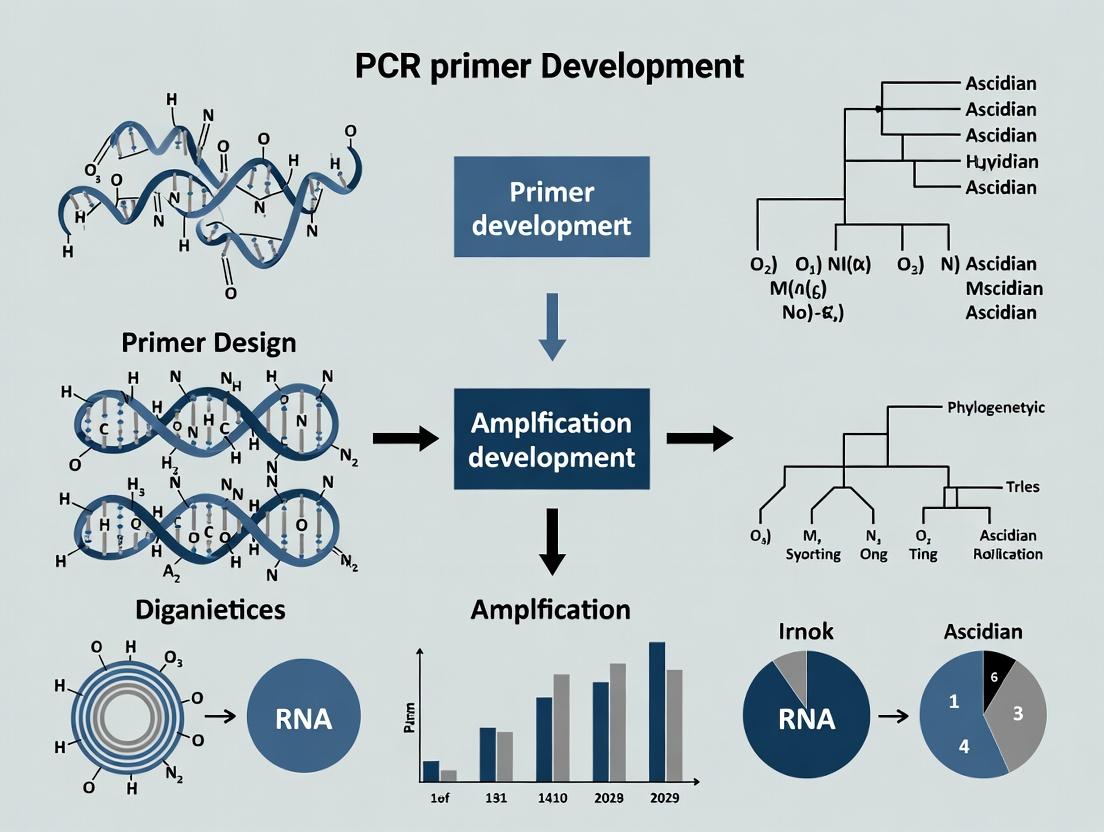
This comprehensive guide details the specialized process of developing effective PCR primers for ascidian phylogenetics, targeting researchers and drug discovery professionals.
A Step-by-Step Guide to PCR Primer Design for Ascidian Phylogenetics: From Theory to Biomedical Applications
Abstract
This comprehensive guide details the specialized process of developing effective PCR primers for ascidian phylogenetics, targeting researchers and drug discovery professionals. It covers the foundational biology of ascidians and their significance as model organisms, provides a detailed methodology for primer design and optimization using modern tools, addresses common troubleshooting challenges in amplifying variable genomic regions, and discusses validation strategies and comparative analysis with other chordates. The article emphasizes how robust primer design underpins accurate phylogenetic reconstruction, which is critical for understanding chordate evolution and discovering novel marine-derived bioactive compounds.
Ascidians Unveiled: Why These Marine Chordates Are Crucial for Phylogenetics and Drug Discovery
Technical Support Center: PCR Primer Development for Ascidian Phylogenetics
FAQs & Troubleshooting
Q1: My PCR reactions using ascidian-specific primers result in non-specific bands or smearing on the gel. What could be the issue? A: This is common when working with diverse ascidian species where genetic distance is underestimated. Primer specificity may be compromised.
- Troubleshooting Steps:
- Check Annealing Temperature: Perform a temperature gradient PCR (e.g., 48°C to 60°C) to optimize specificity.
- Evaluate Primer Design: Re-analyze primer sequences using in silico PCR against the closest available genomic data (e.g., Ciona intestinalis genomes on ANISEED). Ensure no significant secondary structure.
- Increase Stringency: Optimize MgCl₂ concentration (reduce by 0.5 mM increments) and use a touchdown PCR protocol.
- Template Quality: Ensure genomic DNA is clean and not degraded. Run a control PCR with a universal housekeeping gene primer set.
Q2: I am designing primers for a novel ascidian species with no reference genome. What is the best strategy? A: Employ a degenerate primer approach based on conserved chordate domains.
- Protocol: Degenerate Primer Design from Transcriptome Data:
- Sequence Acquisition: Isolate RNA and perform RNA-seq or use publicly available ascidian transcriptomes (e.g., from SRA database).
- Multiple Sequence Alignment: Align target gene orthologs (e.g., Hox genes, Bra) from Ciona, Halocynthia, and other chordates using Clustal Omega or MAFFT.
- Identify Conserved Regions: Select blocks with >70% amino acid identity for back-translation.
- Apply Degeneracy: Use the IUPAC nucleotide code to incorporate degeneracy, but keep it low (<64-fold). Position degeneracy at the 3rd nucleotide of codons where possible.
- Validate: Test primer pairs first on a known ascidian cDNA sample before proceeding to novel species.
Q3: My qPCR assays for ascidian gene expression show high variability and poor reproducibility. A: Ascidian tissues can have high polysaccharide and secondary metabolite content, which inhibit reverse transcription and PCR.
- Troubleshooting Guide:
- Problem: Inhibitors co-purified with RNA/DNA.
- Solution: Use a column-based purification kit with inhibitor removal steps. Include a DNase I treatment for RNA samples. Perform a spike-in control (exogenous RNA/DNA) to check for inhibition.
- Problem: Unstable reference genes.
- Solution: Do not assume standard housekeeping genes are stable. Validate at least three candidate reference genes (e.g., EF1α, GAPDH, β-actin, RPL23) across all your experimental conditions using algorithms like geNorm or NormFinder.
- Problem: Inhibitors co-purified with RNA/DNA.
Key PCR Performance Data in Ascidians
Table 1: Optimized PCR Components for Challenging Ascidian Samples
| Component | Recommended Range / Type | Purpose / Note |
|---|---|---|
| Polymerase | High-Fidelity, Hot-Start (e.g., Q5, Phusion) | Reduces non-specific amplification and improves yield from GC-rich regions. |
| MgCl₂ | 1.5 - 2.5 mM (optimize) | Lower concentrations often increase specificity for ascidian DNA. |
| Annealing Temp | 55°C - 62°C (use gradient) | Typically higher than calculated due to primer degeneracy or GC content. |
| Cycle Number | 30 - 35 cycles | Increased due to often low-abundance transcript targets. |
| Additives | Betaine (1M) or DMSO (2-5%) | Essential for amplifying GC-rich templates or resolving secondary structures. |
| Template (gDNA) | 10 - 50 ng per 25 µL reaction | Purify with CTAB or kit optimized for marine invertebrates. |
Table 2: Validated Reference Genes for Ascidian qPCR (Select based on condition)
| Gene Symbol | Full Name | Stability Note (Example) |
|---|---|---|
| EF1α | Elongation Factor 1-alpha | Most stable in larval development studies. |
| RPL23 | Ribosomal Protein L23 | Stable across adult tissue types. |
| GAPDH | Glyceraldehyde-3-Phosphate Dehydrogenase | Can vary during metamorphosis; requires validation. |
| β-Tubulin | Beta-Tubulin | Suitable for early embryonic stages. |
Experimental Protocol: PCR Primer Validation for Phylogenetics
Title: Multi-Step Validation of Novel Ascidian Primers. Objective: To establish a robust workflow for verifying primer specificity and utility in phylogenetic analysis.
Methodology:
- In Silico Validation:
- Run BLASTn against the NCBI
ntdatabase. Check for significant hits (>80% query cover, identity >70%) to non-target taxa. - Use Primer-BLAST to check for potential primer-dimer formation and off-target amplicons.
- Run BLASTn against the NCBI
- Wet-Lab Specificity Test:
- Perform PCR on a panel of DNA from: target ascidian species, non-target ascidian species, and an outgroup (e.g., sea urchin or amphioxus).
- Run products on a high-resolution 2.5% agarose gel or Bioanalyzer. A single, bright band of expected size only in the target group indicates good specificity.
- Sequencing & Phylogenetic Placement:
- Purify the PCR band, Sanger sequence it, and align the sequence with known homologs.
- Construct a preliminary neighbor-joining tree to confirm the amplified fragment clusters with the expected orthologs.
The Scientist's Toolkit: Research Reagent Solutions
Table 3: Essential Materials for Ascidian Molecular Phylogenetics
| Item | Function | Example/Note |
|---|---|---|
| CTAB DNA Extraction Buffer | Lysis and removal of polysaccharides from ascidian tissue. | Essential for adult tunicate samples. |
| RNAlater Stabilization Solution | Preserves RNA integrity in field-collected specimens. | Critical for transcriptome work. |
| SMARTer RACE cDNA Amplification Kit | Obtain full-length cDNA ends from partial transcripts. | For cloning genes from degenerate primers. |
| Phire Animal Tissue Direct PCR Kit | Rapid PCR from small tissue clips without DNA extraction. | Useful for genotyping multiple individuals. |
| Zymo DNA Clean & Concentrator Kits | Rapid clean-up of PCR products for sequencing. | High recovery for low-yield reactions. |
| TOPOTA Cloning Vector | High-efficiency cloning of AT-rich or difficult PCR products. | Ascidian sequences can be AT-rich. |
Visualization: Experimental Workflows
Title: Ascidian Primer Development and Validation Pipeline
Title: PCR Troubleshooting Decision Tree for Ascidian Samples
Technical Support Center: Troubleshooting PCR & Phylogenetic Analysis in Ascidian Research
This support center addresses common technical challenges in ascidian molecular phylogenetics research, specifically within the context of PCR primer development for studying vertebrate origins.
FAQs & Troubleshooting Guides
Q1: During PCR amplification of ascidian Hox gene clusters, I get multiple non-specific bands. How can I improve specificity? A: This is a common issue due to the high AT-richness and gene duplication events in ascidian genomes.
- Primary Troubleshooting Steps:
- Optimize Annealing Temperature: Perform a gradient PCR (e.g., 58°C to 68°C). Ascidian sequences often require higher temperatures.
- Use Touchdown PCR: Start 5-10°C above the estimated Tm and decrease by 1°C per cycle for the first 10 cycles, then continue at the lower temperature.
- Add PCR Enhancers: Include 5% DMSO or 1M Betaine to reduce secondary structure in GC-rich regions.
- Validate Primer Specificity: In silico PCR against the latest reference genomes (e.g., Ciona intestinalis v2.1, Halocynthia roretzi draft) is essential.
Q2: My qPCR for quantifying gene expression in ascidian larval tissues shows high variability and low efficiency. What are the critical factors? A: RNA quality and primer design are paramount.
- Protocol for Robust Ascidian qPCR:
- RNA Isolation: Use a modified TRIzol protocol with an additional DNase I digestion step. Ascidian tissues contain polysaccharides and pigments that co-precipitate. A typical yield from 50mg of adult tissue is 15-25 µg.
- Primer Design:
- Amplicon size: 80-150 bp.
- Span an exon-exon junction to avoid genomic DNA amplification.
- Validate efficiency (90-105%) with a standard curve from a serial dilution of cDNA.
- Normalization: Use at least two validated reference genes (e.g., EF1α, GAPDH, Actin). Stability must be tested across your specific developmental stages.
Q3: How do I design degenerate primers for conserved developmental signaling pathway genes (e.g., Wnt, FGF) across multiple ascidian species? A: Follow this multi-step alignment and design protocol.
- Detailed Methodology:
- Sequence Retrieval: Gather coding sequences for your target gene from annotated genomes (Ciona, Phallusia, Molgula) and transcriptomes.
- Multiple Sequence Alignment (MSA): Use Clustal Omega or MUSCLE. Focus on conserved protein domains (e.g., from Pfam database).
- Degeneracy Calculation: At variable codon positions, use IUPAC codes. Critical: Keep degeneracy as low as possible (<128-fold) to maintain primer specificity. Focus on 3rd codon position wobble.
- 3' End Stability: Ensure the last 3-5 nucleotides at the 3' end are non-degenerate and have high GC content.
Q4: My phylogenetic tree of ascidian genes, when compared to vertebrate homologs, has very low bootstrap support at key nodes. How can I increase robustness? A: This often relates to alignment quality and model selection.
- Step-by-Step Improvement Guide:
- Alignment Curation: Manually trim poorly aligned terminals and gaps in AliView or similar software.
- Model Testing: Use ModelTest-NG or jModelTest2 to find the best-fit substitution model (e.g., GTR+I+G) before tree construction.
- Analysis Method: Use both Maximum Likelihood (e.g., RAxML) and Bayesian Inference (e.g., MrBayes). Consensus between methods increases confidence.
- Data Type: If using amino acid sequences for deep phylogeny, consider profile mixture models (e.g., C10-C60) to account for site heterogeneity.
Table 1: Recommended PCR Conditions for Ascidian Genomic Regions
| Genomic Target | Typical AT% | Recommended Ta | Recommended [MgCl₂] | Suggested Enhancer | Expected Amplicon Size Range |
|---|---|---|---|---|---|
| Hox Cluster | 62-68% | 64-67°C | 2.0-2.5 mM | 5% DMSO | 500-2000 bp |
| Mitochondrial | 68-72% | 58-60°C | 1.5-2.0 mM | 1M Betaine | 800-1500 bp |
| Single-Copy Nuclear | 55-60% | 62-65°C | 1.5-2.0 mM | None | 300-800 bp |
| Ribosomal (18S) | ~50% | 60-62°C | 2.0 mM | None | 1000-1800 bp |
Table 2: Key Ascidian Model Species & Genomic Resources
| Species | Clade | Genome Status | Key Phylogenetic Significance | Central Research Question |
|---|---|---|---|---|
| Ciona intestinalis (Type A) | Enterogona | Chromosome-level (v2.1) | Basal tunicate; simple body plan. | Ancestral chordate gene regulation. |
| Ciona robusta (Type B) | Enterogona | Chromosome-level | Sister to C. intestinalis; comparative evolution. | Speciation and cis-regulatory divergence. |
| Halocynthia roretzi | Pleurogona | Draft assembly | Derived, fast-evolving lineage. | Developmental system drift. |
| Molgula occidentalis | Pleurogona | Scaffold-level | Tailless larva; regained direct development. | Evolution of metamorphosis and loss of traits. |
| Oikopleura dioica | Appendicularia | Draft assembly | Rapidly evolving, divergent genome. | Genome minimization in chordates. |
Experimental Protocols
Protocol: Isolation of High-Molecular-Weight DNA from Ascidian Adult Tissues for Long-Read Sequencing
- Reagents: CTAB Buffer, Proteinase K, RNase A, Chloroform:Isoamyl Alcohol, Isopropanol, 70% Ethanol, TE buffer.
- Method:
- Grind 100mg of ascidian mantle tissue in liquid N₂.
- Incubate in 1mL CTAB + 20µL Proteinase K (20 mg/mL) at 56°C for 2 hours.
- Add 5µL RNase A (10 mg/mL), incubate at 37°C for 15 min.
- Extract with equal volume Chloroform:Isoamyl Alcohol (24:1), centrifuge.
- Precipitate DNA from aqueous phase with 0.7 vol isopropanol. Pellet gently.
- Wash pellet with 70% ethanol, air-dry, resuspend in 100µL TE buffer.
- Assess integrity via pulsed-field gel electrophoresis. Yield: 5-15 µg.
Protocol: In Situ Hybridization for Ascidian Embryos (Whole Mount)
- Reagents: Fixative (4% PFA in MOPS/Seawater), Proteinase K, Hybridization buffer, DIG-labeled RNA probe, Anti-DIG-AP Fab fragments, NBT/BCIP.
- Method:
- Fix embryos in 4% PFA for 1-2 hours at 4°C.
- Dehydrate in MeOH series, store at -20°C.
- Rehydrate, treat with 1 µg/mL Proteinase K for precise timing (5-15 min based on stage).
- Refix, pre-hybridize at 60°C for 2 hours.
- Hybridize with probe (50-100 ng/mL) overnight at 60°C.
- Stringent washes in 2x SSC/50% formamide at 60°C, then in MABT.
- Block, incubate with Anti-DIG-AP (1:2000) overnight at 4°C.
- Wash, develop color reaction with NBT/BCIP. Stop with PBS/EDTA.
Diagrams
Diagram Title: PCR-Based Phylogenetic Gene Discovery Workflow
Diagram Title: Conserved FGF Signaling Pathway in Ascidians
The Scientist's Toolkit: Research Reagent Solutions
| Item | Function in Ascidian Phylogenetics | Example/Product Note |
|---|---|---|
| CTAB DNA Extraction Buffer | Optimal for polysaccharide-rich ascidian adult tissues. Removes contaminants that inhibit PCR. | Custom preparation (CTAB, NaCl, EDTA, Tris-HCl). |
| DMSO (PCR Grade) | PCR enhancer. Critical for denaturing secondary structure in high AT% ascidian genomic DNA. | Sigma-Aldrich D8418. Use at 3-10% final concentration. |
| Phusion High-Fidelity DNA Polymerase | For amplifying long, conserved regions from low-quality historical samples. High fidelity. | Thermo Scientific F530. Preferred for clone library prep. |
| DIG RNA Labeling Mix | For synthesizing probes for in situ hybridization. Essential for spatial expression mapping in embryos. | Roche 11277073910. |
| SMARTer RACE 5'/3' Kit | Rapid Amplification of cDNA Ends. Crucial for obtaining full-length transcripts of novel genes. | Takara Bio 634858. |
| Branchless Dextran (MW: 10,000) | Used in in situ hybridization wash buffers to reduce background in ascidian embryos. | Sigma D1033. |
| TA-Cloning Vector pCR2.1 | Efficient cloning of TA-rich ascidian PCR products for sequencing validation. | Thermo Fisher K202020. |
| Sea Water Salts (Artificial) | For preparing all embryo culture and fixation media. Consistency is key for developmental studies. | Instant Ocean or Tropic Marin. |
Technical Support Center: Troubleshooting PCR and Sequencing in Ascidian Phylogenetics
This support center is designed to assist researchers developing PCR primers for ascidian phylogenetics, focusing on common genomic target regions. The guidance is framed within a thesis on optimizing primer design for robust phylogenetic inference in Tunicata.
Frequently Asked Questions (FAQs) & Troubleshooting
Q1: I am targeting the 18S rRNA gene in ascidians for broad phylogenetic analysis, but my PCR yields multiple non-specific bands or smear. What could be the issue? A: The 18S rRNA gene is highly conserved but can have multi-copy variants. Non-specific amplification is common.
- Primary Cause: Primer degeneracy too low or annealing temperature too permissive for your specific ascidian clade.
- Troubleshooting Steps:
- Check Primer Specificity: Re-evaluate your primer binding sites using a multiple sequence alignment of ascidian-specific 18S sequences from databases like ANISEED or NCBI. Ascidians may have unique variations.
- Perform Gradient PCR: Run a thermal gradient (e.g., 48°C to 58°C) to optimize annealing stringency.
- Use Touchdown PCR: Start with a higher annealing temperature (e.g., 65°C) and decrease by 0.5°C per cycle for the first 10-15 cycles, then continue at a lower final temperature. This favors specific early amplification.
- Add DMSO (3-5%): This can help resolve secondary structures in the GC-rich regions of rRNA amplicons.
Q2: When sequencing the COI barcode region, I get poor-quality reads or mixed chromatograms after seemingly clean PCR. Why does this happen? A: This often indicates co-amplification of non-target DNA, such as NUMTs (Nuclear Mitochondrial DNA Segments) or symbiotic organism DNA.
- Primary Cause: Non-specific primer binding to paralogous sequences.
- Troubleshooting Steps:
- Gel Extraction & Re-sequence: Gel-purify the band of expected size (~650 bp) to exclude non-target amplicons before sequencing.
- Design Ascidian-Specific Primers: Use conserved regions within ascidian COI alignments to design new primers that avoid known NUMT regions.
- Clone PCR Products: If mixed signals persist, clone the PCR product into a vector and sequence multiple colonies to identify the true mitochondrial COI.
- Verify with Protein Translation: Translate your nucleotide sequence to check for stop codons, which are indicative of NUMTs.
Q3: For Hox gene cluster analysis, my PCR consistently fails to produce any product. What protocols can improve success? A: Hox genes are often low-copy and have large introns, making amplification from genomic DNA challenging.
- Primary Cause: Intron size exceeds PCR capability or primer sites are in non-conserved regions.
- Troubleshooting Steps:
- Switch Template: Use cDNA (reverse-transcribed from mRNA) as template to avoid introns. Ensure RNA is extracted from embryonic or larval stages where Hox genes are expressed.
- Long-Range PCR Protocol: If using genomic DNA, employ a long-range PCR kit with a polymerase blend optimized for long amplicons.
- Protocol:
- Reaction Mix: 1x Long-Range PCR Buffer, 400 µM dNTPs, 0.3 µM each primer, 1 unit Long-Range Polymerase mix, 100-200 ng genomic DNA.
- Cycling: Initial denaturation: 94°C for 2 min; 10 cycles of 94°C for 10s, 60-65°C for 30s, 68°C for 1 min/kb; followed by 20-25 cycles with a 5-10s increment per cycle on the extension step.
- Protocol:
- Nested PCR: Perform a first round PCR with external primers, then use 1 µL of product in a second round with internal primers to increase sensitivity and specificity.
Q4: The ITS region (ITS1-5.8S-ITS2) amplifies easily but is difficult to sequence directly due to intra-genomic variation. How can I obtain a reliable consensus sequence? A: Intra-individual polymorphism in ITS is common in ascidians, leading to overlapping peaks in Sanger sequencing.
- Primary Cause: Multiple, non-identical ribosomal DNA arrays within a single genome.
- Troubleshooting Steps:
- Clone before Sequencing: Mandatory for ITS. Clone the PCR product into a plasmid vector, then sequence 10-20+ clones to sample the variation.
- Use High-Fidelity Polymerase: Use a proofreading polymerase (e.g., Pfu) during PCR to minimize Taq-induced errors that could be mistaken for real variation.
- Sequence from both strands: Sequence each clone with both forward and reverse primers to generate a high-quality read for each variant.
- Bioinformatic Analysis: Align all clone sequences and identify consistent, conserved positions for phylogenetic analysis, treating polymorphisms cautiously.
Comparative Table of Target Regions for Ascidian Phylogenetics
| Marker | Typical Length (bp) | Evolutionary Rate | Primary Use in Phylogenetics | Key Challenge in Ascidians |
|---|---|---|---|---|
| 18S rRNA | ~1800-2000 | Very Slow; Conserved | Deep-level phylogeny (Families/Orders) | Secondary structure; multi-copy variation |
| COI | ~650 | Fast | Species-level barcoding; population genetics | NUMTs; symbiont contamination |
| Hox Genes | Variable (exons ~300-600) | Moderate (coding) | Developmental evolution; deep deuterostome relationships | Large introns; low expression in adults |
| ITS (ITS1+2) | ~500-1000 | Very Fast | Species & population-level genetics | Intra-genomic polymorphism; alignment difficulty |
Experimental Protocol: cDNA Synthesis and Hox Gene Amplification
Objective: Amplify Hox gene fragments from ascidian larval cDNA. Materials: RNase-free tubes, pipette tips, thermal cycler. Reagents: See "Research Reagent Solutions" table.
Procedure:
- RNA Extraction: Homogenize 10-20 ascidian larvae in 500 µL TRIzol. Follow standard chloroform-isopropanol precipitation. Treat with DNase I.
- First-Strand cDNA Synthesis:
- Combine 1 µg total RNA, 1 µL Oligo(dT)18 primer (50 µM), and 10 µL nuclease-free water. Heat to 65°C for 5 min, then chill on ice.
- Add 4 µL 5x Reaction Buffer, 1 µL RiboLock RNase Inhibitor (20 U), 2 µL 10mM dNTP Mix, and 1 µL RevertAid Reverse Transcriptase (200 U). Final volume: 20 µL.
- Incubate at 42°C for 60 min, then 70°C for 5 min to terminate. Dilute cDNA 1:5 with water for PCR.
- Hox Gene PCR:
- Reaction Mix (25 µL): 2.5 µL 10x PCR Buffer, 0.75 µL MgCl2 (50mM), 0.5 µL dNTPs (10mM), 0.5 µL each primer (10 µM), 0.2 µL Taq DNA Polymerase (5 U/µL), 2 µL diluted cDNA, 18.05 µL water.
- Cycling Conditions: Initial Denaturation: 95°C, 3 min. 35 Cycles: 95°C for 30s, 55-60°C (gradient) for 30s, 72°C for 45s. Final Extension: 72°C, 5 min.
- Analysis: Run 5 µL product on a 1.5% agarose gel.
Diagram: PCR Troubleshooting Decision Workflow
The Scientist's Toolkit: Research Reagent Solutions
| Reagent/Material | Function in Ascidian Phylogenetics | Example Product/Brand |
|---|---|---|
| High-Fidelity PCR Mix | Reduces errors in sequences for cloning (e.g., ITS, COI). Critical for accurate haplotype calling. | Platinum SuperFi II, Q5 Hot Start |
| Gel Extraction Kit | Purifies specific amplicon bands from agarose gel, crucial for cleaning up COI or 18S reactions. | QIAquick Gel Extraction Kit, NucleoSpin Gel and PCR Clean-up |
| TA/Blunt-End Cloning Kit | Essential for sequencing polymorphic regions like ITS; allows isolation of individual gene variants. | pGEM-T Easy Vector, Zero Blunt TOPO |
| DNase I (RNase-free) | Treats RNA samples before cDNA synthesis to remove genomic DNA contamination for Hox gene work. | Thermo Scientific DNase I (RNase-free) |
| Reverse Transcriptase | Synthesizes first-strand cDNA from larval/embryonic RNA for amplifying expressed genes like Hox. | RevertAid H Minus, SuperScript IV |
| Long-Range PCR Kit | Amplifies genomic fragments containing large introns, potentially useful for Hox cluster analysis. | LA Taq, PrimeSTAR GXL |
| Proofreading DNA Polymerase | Used for PCR prior to cloning to minimize polymerase-introduced errors. | PfuUltra II, KAPA HiFi |
Technical Support Center: Troubleshooting PCR Primer Design for Ascidian Phylogenetics
FAQs & Troubleshooting Guides
Q1: My PCR consistently fails or yields non-specific bands when amplifying target genes from multiple ascidian species. What could be the cause and how can I fix it?
A: This is a classic symptom of primer-template mismatch due to high inter-specific sequence divergence. Ascidians exhibit high nucleotide substitution rates, especially in mitochondrial genes.
- Troubleshooting Steps:
- Verify Primer Binding Sites: Re-sequence the target region from your species of interest. Align these sequences with your original primer design template.
- Redesign with Degeneracy: If polymorphisms are concentrated in the first two positions of the codon (wobble bases), incorporate degenerate bases (e.g., R for A/G, Y for C/T) into the primer sequence.
- Adjust PCR Stringency: Lower the annealing temperature in a gradient PCR to find the optimal Tm for mismatched primers. Consider using a polymerase blend optimized for amplifying difficult templates.
- Touchdown PCR Protocol: Start with an annealing temperature 5-10°C above the calculated Tm and decrease by 1°C per cycle for the first 10-15 cycles, then continue at a lower temperature for the remaining 20-25 cycles. This enriches for the correct product early on.
Q2: I am getting multiple intra-individual polymorphic sequences from a single-copy nuclear locus, suggesting paralogy or allelic variation. How do I determine which is the correct ortholog for phylogenetic analysis?
A: This challenge stems from high levels of intra-specific polymorphism and potential gene duplication events.
- Troubleshooting Steps:
- Clone and Sequence: Clone the PCR products and sequence multiple clones (e.g., 20-30) from a single individual.
- Haplotype Resolution: Use software like DNaSP or PHASE to infer phased haplotypes from the clone sequences.
- Paralogy Test: Perform a gene tree vs. species tree comparison. Design primers from conserved exonic regions and amplify across introns from genomic DNA. If the gene tree from multiple individuals shows two deeply divergent, monophyletic clades that do not match the species relationships, it suggests paralogy. True alleles should form a cluster within an individual/species.
- Experimental Protocol for Paralogy Testing:
- Step 1: Isolate genomic DNA from at least 5 individuals per species from 3 different species.
- Step 2: Perform PCR using primers in conserved exons flanking a variable intron.
- Step 3: Clone and sequence 10-15 clones per individual.
- Step 4: Construct a neighbor-joining tree of all sequences. True orthologs should primarily show species-specific clustering, while paralogs will form separate lineage-specific clusters.
Q3: My designed universal primers for ascidian COI fail for certain clades. How can I design more robust universal primers given high mutation rates?
A: Truly "universal" primers are often elusive. A tiered approach is more effective.
- Data Mining & Alignment: Download all available COI sequences for Ascidiacea from databases (NCBI, BOLD). Perform a multiple sequence alignment.
- Identify Conserved Blocks: Manually or using software (e.g., GBlocks), identify short blocks (18-22 bp) of high conservation flanking the variable region you wish to amplify.
- Design Primer Cocktails: Instead of a single primer, design a small set (3-4) of primers targeting slightly different conserved motifs. Use them as a mixture in the PCR reaction.
- Consider Primer Position: Place primers on more conservative adjacent tRNA genes if the protein-coding gene itself is too variable.
Table 1: Summary of Ascidian Genetic Divergence Rates (Relative to Vertebrates)
| Genetic Feature | Approximate Rate (vs. Vertebrates) | Impact on Primer Design |
|---|---|---|
| Mitochondrial DNA Evolution | 5-10x faster | Very short evolutionary distances can lead to primer site mismatches. Avoid long primers. |
| Nuclear Protein Evolution | 2-4x faster | Exonic primer sites may still require degeneracy for broad application. |
| Intronic Sequence Divergence | Extremely High | Primers should be anchored in exons for cross-species work. |
| Intra-specific Polymorphism | Very High (e.g., >2% in COI) | May require cloning and sequencing to resolve true haplotypes. |
The Scientist's Toolkit: Research Reagent Solutions
| Item | Function & Rationale |
|---|---|
| High-Fidelity Polymerase Blend (e.g., with proofreading) | Reduces PCR errors crucial for accurate sequencing and haplotype identification, especially with long amplicons. |
| PCR Additives (e.g., Betaine, DMSO) | Helps amplify GC-rich or complex templates by lowering DNA melting temperature and destabilizing secondary structures. |
| TA/TOP0 Cloning Kit | Essential for cloning polymorphic PCR products to separate individual sequence variants (haplotypes/alleles). |
| Degenerate Primer Mix | A synthesized primer pool containing alternative bases at variable positions to bind to divergent sequences. |
| Gradient Thermal Cycler | Mandatory for empirically determining the optimal annealing temperature for primers with potential mismatches. |
| Next-Generation Sequencing (NGS) Service | For high-throughput sequencing of mixed PCR products (amplicon-seq) to directly quantify and phase polymorphisms. |
Diagram 1: Workflow for Ascidian Ortholog Confirmation
Diagram 2: Strategy for Degenerate Primer Design
Experimental Protocol: Touchdown PCR for Divergent Templates
Objective: To amplify target DNA when primer sequences are not a perfect match to the template due to species-level polymorphisms.
Reagents:
- Template genomic DNA (20-50 ng/µL).
- Forward and Reverse Primers (10 µM each).
- High-Fidelity PCR Master Mix (includes buffer, dNTPs, Mg2+, polymerase).
- Nuclease-free water.
Method:
- Prepare a 25 µL reaction mix on ice:
- 12.5 µL PCR Master Mix
- 1.0 µL Forward Primer (10 µM)
- 1.0 µL Reverse Primer (10 µM)
- 2.0 µL Template DNA
- 8.5 µL Nuclease-free water
- Load into thermal cycler and run the following program:
- Initial Denaturation: 95°C for 3 minutes.
- 15 Cycles of Touchdown:
- Denature: 95°C for 30 seconds.
- Anneal: Start at 65°C for 30 seconds, decrease by 0.5°C per cycle.
- Extend: 72°C for 1 minute per kb.
- 25 Cycles of Standard Amplification:
- Denature: 95°C for 30 seconds.
- Anneal: 57°C (or the final touchdown temp) for 30 seconds.
- Extend: 72°C for 1 minute per kb.
- Final Extension: 72°C for 5 minutes.
- Hold: 4°C.
- Analyze 5 µL of product by agarose gel electrophoresis.
Technical Support Center: PCR Primer Development for Ascidian Phylogenetics
FAQ & Troubleshooting Guide
Q1: My PCR consistently yields no product when using universal primers (e.g., COI, 18S) on ascidian cDNA. What are the primary troubleshooting steps? A: This is often due to primer-template mismatch or inhibitory compounds.
- Check Template Quality: Run an agarose gel (1.5%) to confirm genomic DNA/cDNA integrity. A260/A280 ratio should be ~1.8-2.0.
- Test Primer Specificity: Use in silico PCR with your specific ascidian transcriptome data (if available) or closely related species sequences from NCBI to check for binding sites. Mismatches at the 3’-end are critical.
- Use a Touchdown PCR Protocol: This increases specificity when dealing with unknown genetic diversity.
- Protocol: Initial denaturation: 95°C for 3 min. Then 10 cycles of: 95°C for 30s, 65-55°C (decreasing by 1°C per cycle) for 30s, 72°C for 1 min/kb. Follow with 25 cycles at a constant 55°C annealing, and final extension at 72°C for 5 min.
- Add BSA or Betaine: Ascidian tissues contain polysaccharides and polyphenols that inhibit PCR. Add Bovine Serum Albumin (BSA, 0.2 μg/μL) or 1M Betaine to the reaction mix to neutralize inhibitors.
Q2: How do I design degenerate primers for ascidian gene families (e.g., immune receptors, biosynthetic enzymes) from transcriptome data? A: Follow this validated workflow:
- Multiple Sequence Alignment: Cluster nucleotide sequences from your de novo assembled transcriptome using tools like CD-HIT, then align conserved regions with ClustalOmega or MAFFT.
- Identify Conserved Blocks: Visually or using software (e.g., GBlocks), identify regions >18 bp with high conservation for primer binding.
- Apply Degeneracy: Use the IUPAC nucleotide code. Critical: Keep degeneracy low (<128-fold). Focus degeneracy at the 5’-end rather than the 3’-end.
- Validate In Silico: Use Primer-BLAST against the NCBI nt database, restricting to Tunicata, to check for potential off-target amplification.
Q3: My qPCR for candidate biosynthetic gene expression in ascidian colonies shows high variability and poor replicate agreement. How can I improve rigor? A: This typically stems from non-normalized sampling and unstable reference genes.
- Tissue Sampling: Ascidians are symbiotic holobionts. Precisely dissect the same tissue region (e.g., zooid, tunic, or specialized glandular cells) and immediately stabilize in RNAlater.
- Reference Gene Validation: Common housekeeping genes (β-actin, GAPDH) are often unstable in ascidians. You must empirically validate references for your specific species and condition.
- Protocol: Test a panel of 4-6 candidate genes (e.g., RPS18, EF1α, UBC, β-Tubulin). Use geNorm or NormFinder algorithms to determine the most stable 2-3 genes for normalization. The table below summarizes a typical validation result from Botryllus schlosseri studies.
Table 1: Candidate Reference Gene Stability in Botryllus schlosseri (Colonial Ascidian)
| Gene Symbol | Gene Name | Mean Cq Value | Stability Measure (M)* | Recommended Use |
|---|---|---|---|---|
| RPS18 | Ribosomal protein S18 | 19.3 | 0.15 | Excellent for most tissues |
| EF1α | Elongation factor 1-alpha | 20.1 | 0.18 | Excellent for developmental stages |
| UBC | Ubiquitin C | 24.5 | 0.35 | Acceptable (use with 1 other) |
| β-Actin | Beta-actin | 17.8 | 0.65 | Not stable - Do not use alone |
*Lower M value indicates higher stability.
Q4: What specific considerations are needed for PCR amplification of genes from ascidian-associated microbial symbionts? A: You must selectively target prokaryotic DNA.
- Template Separation: Use DNA extraction kits designed for microbial cells (e.g., with lysozyme pretreatment) on separately homogenized tunic or isolated zooids.
- Primer Choice: Use broad-range Bacterial or Archaea-specific 16S rRNA gene primers (e.g., 27F/1492R). Always run a parallel PCR with Eukaryote-specific primers (e.g., 18S rRNA) to check for host DNA contamination.
- PCR Conditions: Use a hot-start Taq polymerase to reduce non-specific amplification from abundant host DNA.
The Scientist's Toolkit: Research Reagent Solutions
Table 2: Essential Reagents for Ascidian Phylogenetics & Gene Discovery
| Reagent/Material | Function & Specific Application |
|---|---|
| RNAlater Stabilization Solution | Preserves RNA integrity in field-collected ascidian samples during transport. Critical for transcriptomics. |
| Plant/Fungal DNA Kit (e.g., Macherey-Nagel NucleoSpin) | Optimized for polysaccharide/polyphenol-rich samples; superior to standard kits for ascidian whole-body extracts. |
| Hot-Start High-Fidelity DNA Polymerase (e.g., Q5, KAPA HiFi) | Reduces non-specific amplification and ensures high fidelity for sequencing-amplicon generation and cloning. |
| Betaine (5M Solution) | PCR additive that destabilizes secondary structures in GC-rich regions and neutralizes mild inhibitors from ascidian tissue. |
| TOPO-TA or pGEM-T-Easy Vectors | For rapid, efficient cloning of PCR products from novel ascidian genes prior to Sanger sequencing. |
| Broad-Range 16S rRNA Primers (27F/1492R) | Essential for profiling the microbial symbiont community, a potential source of bioactive compound synthesis. |
Experimental Protocol: Degenerate PCR for Ascidian Biosynthetic Gene Clusters (PKS/NRPS)
Objective: Amplify conserved domains of Polyketide Synthase (PKS) genes from ascidian genomic DNA.
- Primers: Use degenerate primers for the Ketosynthase (KS) domain.
- Forward:
5'-TSAAGTCSAACATCGGBCA-3' - Reverse:
5'-TGGAANCCGCCGAABCCTCTC-3'
- Forward:
- Reaction Mix (25 μL):
- 10-50 ng ascidian gDNA
- 1X PCR Buffer (with Mg2+)
- 0.2 mM each dNTP
- 0.4 μM each primer
- 0.2 μg/μL BSA
- 1.0 U Hot-Start High-Fidelity Polymerase
- Thermocycling:
- 98°C for 30s (initial denaturation)
- 35 cycles of: 98°C for 10s, 52°C for 30s, 72°C for 45s.
- 72°C for 5 min (final extension).
- Analysis: Run on 1% agarose gel. Expect a faint, smeared product ~700 bp. Gel-purify and clone for sequencing.
Visualizations
Ascidian Gene Discovery Workflow
Design Logic for Degenerate Primers
Designing Precision Primers: A Practical Protocol for Ascidian Phylogenetic Markers
FAQs and Troubleshooting for Ascidian Phylogenetics Primer Development
Q1: The ascidian gene sequence I retrieved from NCBI seems unusually short and lacks the conserved domain I expected. What could be the issue? A1: This is often due to retrieving an mRNA (CDS) record instead of a genomic sequence. mRNA records represent spliced transcripts. For primer design targeting conserved exonic regions, this is acceptable. However, for designing primers to span introns (to distinguish genomic DNA from cDNA amplification), you need the genomic scaffold/contig. Solution: On the NCBI Nucleotide page, locate the "Genomic" region link or switch the database to "Genome" to find the corresponding contig. In ANISEED, ensure you are viewing the "Gene model" with genomic context.
Q2: My multiple sequence alignment from retrieved ascidian orthologs is poor, with many gaps and low identity, making conserved regions for primer design impossible to identify. How can I improve it? A2: This typically indicates inclusion of non-orthologous sequences or misaligned paralogs. Troubleshooting Steps:
- Verify Orthology: Use orthology prediction tools (e.g., OrthoDB, eggNOG) linked in ANISEED or NCBI's Gene database to confirm your sequences are true 1:1 orthologs across your target ascidian species.
- Refine Your Query: Use a well-annotated reference sequence (e.g., from Ciona robusta) as the query in a targeted BLAST against each species' genome or transcriptome.
- Alignment Parameters: Use an alignment algorithm suited for divergent sequences (e.g., MAFFT with G-INS-i strategy) and manually trim poorly aligned flanking regions.
Q3: When searching ANISEED for a specific gene, I find multiple transcript variants. Which one should I use for phylogenetic analysis and primer design? A3: For robust phylogenetics, design primers that amplify all known splicing variants (if targeting cDNA) or a conserved exon. Protocol:
- Align all transcript variants for the gene within the reference species using the ANISEED alignment viewer.
- Identify exonic regions shared across all variants.
- Design primers within these common exons. If targeting genomic DNA, design primers in conserved exons that are separated by an intron in the genome.
Q4: How do I handle missing sequence data for my target gene in key ascidian species listed in ANISEED? A4: ANISEED may have unannotated genomic data. Procedure:
- Download the conserved protein or nucleotide sequence of your gene from a related species.
- Use the "BLAST" function on the ANISEED genome browser for the target species with missing data.
- If a significant hit (E-value < 1e-10) is found in a genomic scaffold, extract the region and use gene prediction tools (e.g., GenScan) or align it with related sequences to approximate exon boundaries for primer design.
Q5: My alignment looks good, but primer design software fails to find suitable primers in the conserved block. What are the common causes? A5: Conserved blocks may have intrinsic properties hindering primer design. Checklist:
- High GC Content (>70% or <30%): Causes poor melting temperature (Tm) and secondary structures. Consider using PCR additives like DMSO.
- Repetitive Sequences: BLAST the primer sequence against the whole genome to check for uniqueness.
- Self-Complementarity: Analyze primers for hairpins and dimer formation using tools like Primer3Plus. Slight adjustment of primer boundaries within the conserved region often resolves this.
Key Experimental Protocol: Sequence Acquisition and Alignment for Ascidian Primer Design
Objective: To acquire and align orthologous gene sequences from public databases for conserved region identification in PCR primer development.
Materials & Software:
- Computer with internet access
- NCBI portal
- ANISEED ascidian database
- Sequence alignment software (e.g., MEGA X, Geneious, or command-line MAFFT)
- Text editor for sequence manipulation
Methodology:
Define Target Gene and Taxa: Clearly identify the gene of interest and the list of ascidian species for your phylogenetic study.
Sequence Retrieval from NCBI: a. Perform a search in the NCBI Nucleotide database using the gene name and a model ascidian species (e.g., "Ciona robusta [organism] AND Hox1"). b. Identify the canonical mRNA record (accession starting with NM_ or XM_). Click on the record. c. Click on "Genomic" under the "Resources" header or use the "Genome Data Viewer" to access the genomic context. Note the exon-intron structure. d. Use the "Pick Primers" tool on the Nucleotide page to check for existing primers or to design within a specific region.
Sequence Retrieval from ANISEED: a. Navigate to the "Genes" section and search by gene name, symbol, or keyword. b. On the gene page, locate the "Gene models & External References" section. Download the protein and/or CDS (cDNA) sequences. c. For orthologs, use the "Phylome" link to access pre-computed phylogenetic trees and download aligned orthologous sequences. d. Alternatively, use the "BLAST" tool on the ANISEED homepage to search for your query sequence against all available ascidian genomes and transcriptomes.
Sequence Alignment: a. Compile all retrieved sequences (from NCBI and ANISEED) into a single FASTA file. Ensure sequence identifiers include species names. b. Align sequences using a multiple sequence alignment tool. * For command-line: Use
mafft --auto input.fasta > aligned_output.fasta. * For GUI (MEGA X): Use "Align > Align by MUSCLE/ClustalW". c. Visually inspect the alignment. Trim ends to the region of consistent alignment across all taxa.Conserved Region Identification: a. Visually scan the alignment for blocks of high sequence conservation. b. Use software like MEGA X to calculate conservation scores or Geneious to visualize conservation histograms. c. Select a conserved block of 150-300 bp for potential primer design.
Table 1: Comparison of NCBI and ANISEED for Ascidian Sequence Data
| Feature | NCBI | ANISEED |
|---|---|---|
| Primary Scope | Comprehensive, all organisms | Focused exclusively on ascidians (tunicates) |
| Genomic Data | Full genomes for key species (e.g., Ciona robusta, Ciona savignyi) | Integrated genome browsers with gene models for multiple species |
| Transcriptomic Data | SRA, TSA, and curated RefSeq mRNAs | Curated transcriptomes and alternative splicing variants |
| Orthology Data | Linked via Gene database (Orthologs tab) | Pre-computed phylomes and orthology groups |
| Best For | Initial BLAST, accessing raw genomic sequences, published primers | Ascidian-specific gene models, cross-species comparisons, developmental expression data |
Table 2: Common Issues and Solutions in Sequence Alignment for Primer Design
| Problem | Likely Cause | Diagnostic Check | Solution |
|---|---|---|---|
| Poor alignment, high gap frequency | Non-orthologous sequences | Check orthology via OrthoDB or reciprocal BLAST | Re-retrieve sequences using strict orthology criteria |
| Short, truncated sequences | Partial mRNA/cDNA records | Compare sequence length to conserved domain (CDD) | Use genomic sequence or search for "complete CDS" |
| Sudden loss of conservation in one sequence | Misassembly or pseudogene | Check for in-frame stop codons; BLAST sequence against its own genome | Exclude the sequence or treat as putative pseudogene |
| Two clear sub-groups within alignment | Paralog confusion | Check gene family phylogeny on ANISEED | Separate paralogs and design primers specific to each clade |
The Scientist's Toolkit: Research Reagent Solutions
| Item | Function in Sequence Acquisition & Primer Development |
|---|---|
| MAFFT Software | Algorithm for multiple sequence alignment, especially effective for divergent nucleotide sequences common in phylogenetics. |
| Primer3Plus / Primer-BLAST | Web-based tools to design PCR primers from an aligned sequence block, checking for specificity, Tm, and secondary structures. |
| DMSO (Dimethyl Sulfoxide) | PCR additive used to improve amplification efficiency when targeting high-GC content templates found in some conserved regions. |
| Betaine | PCR additive used to reduce secondary structure formation in DNA templates and normalize Tm, useful for difficult amplicons. |
| Phire Green Hot Start II PCR Master Mix | A robust, high-specificity polymerase mix suitable for amplifying ancient or divergent sequences with potentially low template quality. |
| GeneRuler DNA Ladder Mix | Essential for accurately sizing PCR products on gels to confirm amplification of the target region from various species. |
Workflow and Pathway Diagrams
Title: Workflow for Ascidian Phylogenetics Primer Design from Databases
Troubleshooting Guides & FAQs
Q1: My PCR consistently yields nonspecific bands or primer-dimer artifacts when using primers designed for ascidian COI gene amplification. How can I improve specificity?
A: This is often a result of low primer annealing specificity. For ascidian phylogenetics, high degeneracy in target sequences can exacerbate this.
- Solution 1: Optimize Annealing Temperature. Calculate the Tm of each primer accurately using the nearest-neighbor method. Set the initial annealing temperature 3-5°C above the lower Tm of the primer pair. Perform a gradient PCR to empirically determine the optimal temperature.
- Solution 2: Check and Adjust Primer Length. Ensure primers are long enough (typically 18-30 bp) to be unique within the ascidian transcriptome. Increase length incrementally (2-3 bp) to improve specificity.
- Solution 3: Evaluate 3' End Stability. The last 5 nucleotides at the 3' end should have low GC content (avoid more than 3 G/C residues) to reduce mispriming. Use tools like Primer-BLAST against a custom ascidian database to check for off-target binding sites.
Q2: How do I balance GC content requirements when designing primers for highly variable ascidian Hox gene regions?
A: Ascidian genomes exhibit variable GC content. An unbalanced GC% between primer pairs can lead to inefficient amplification.
- Solution: Aim for a uniform GC content between 40-60% for both primers. If the template region is AT-rich, try to design primers where the 3' end is relatively GC-rich to enhance initial binding, but keep the overall average within range. For extreme cases, consider using PCR additives like betaine or DMSO (at 5-10% v/v) to equalize strand melting.
Q3: My calculated Tm using different formulas (Wallace vs. NN) varies by over 5°C. Which should I trust for setting my PCR protocol?
A: The simplified Wallace rule (Tm = 2°C(A+T) + 4°C(G+C)) is outdated for precise work.
- Solution: Always use the nearest-neighbor (NN) method with salt and primer concentration corrections for your initial in silico design. The following table summarizes key principles and quantitative targets:
Table 1: Primer Design Parameter Guidelines for Ascidian Phylogenetics
| Parameter | Optimal Range | Critical Consideration for Ascidian Research |
|---|---|---|
| Length | 18 - 30 nucleotides | Longer primers (27-30 bp) preferred for degenerate sites to maintain specificity. |
| Melting Temp (Tm) | 55 - 65°C | Tm of primer pair should be within 2°C of each other. Use NN calculation. |
| GC Content | 40 - 60% | Monitor regional genomic GC bias; adjust to avoid secondary structure. |
| 3' End | Avoid GC-rich clamps | Last 5 bases should have ≤ 3 G/C residues to minimize mispriming. |
| Specificity | BLAST against local DB | Always check against a custom ascidian sequence database. |
Table 2: Common PCR Additives to Troubleshoot Poor Amplification
| Reagent | Typical Concentration | Function | Use Case in Ascidian Work |
|---|---|---|---|
| DMSO | 3-10% (v/v) | Reduces secondary structure, lowers effective Tm. | Amplifying GC-rich regions of ascidian genomes. |
| Betaine | 0.5 - 1.5 M | Equalizes DNA strand stability, prevents hairpins. | Heterogeneous templates or long AT/GC stretches. |
| MgCl₂ | 1.5 - 3.0 mM | Cofactor for Taq polymerase; optimizes fidelity. | Standard optimization; concentration is critical. |
Q4: What is a robust protocol for empirically verifying primer Tm?
A: Follow this gradient PCR protocol.
- Prepare Master Mix: For a 25 µL reaction: 1X PCR Buffer, 200 µM each dNTP, 0.5 µM each primer, 1.5 mM MgCl₂ (adjust if needed), 0.5-1 U DNA polymerase, 50 ng ascidian genomic DNA.
- Gradient Setup: Use your thermocycler's temperature gradient function across a range spanning at least 10°C (e.g., from 5°C below to 5°C above the calculated Tm).
- Cycling Conditions: Initial denaturation: 95°C for 3 min; 35 cycles of: 95°C for 30 sec, Gradient Annealing for 30 sec, 72°C for 1 min/kb; Final extension: 72°C for 5 min.
- Analysis: Run products on a 2% agarose gel. The optimal annealing temperature is the highest one that yields a single, bright target band.
The Scientist's Toolkit: Research Reagent Solutions
Table 3: Essential Materials for Primer Design & Validation in Ascidian Research
| Item | Function & Rationale |
|---|---|
| NN Tm Calculator Software (e.g., OligoCalc, Primer3Plus) | Accurately computes melting temperature using biophysical models, essential for matched primer pairs. |
| Ascidian-Specific Sequence Database (Custom) | Local BLAST database for specificity checking, crucial due to public databases' incomplete ascidian coverage. |
| High-Fidelity DNA Polymerase (e.g., Phusion, Q5) | Provides superior accuracy for sequencing-grade amplicons in phylogenetic studies. |
| PCR Grade Nucleotides (dNTPs) | Pure, balanced solutions prevent incorporation errors that could affect downstream sequence analysis. |
| Thermocycler with Gradient Function | Allows empirical determination of optimal annealing temperature in a single run, saving time and sample. |
| Betaine Solution (5M Stock) | Additive to homogenize melting behavior of variable templates common in ascidian gene families. |
Experimental Workflow Diagram
Diagram Title: Primer Design & Optimization Workflow for Ascidian Genes
Primer Specificity Checking Logic
Diagram Title: Decision Tree for Ascidian Primer Specificity Validation
Troubleshooting Guides & FAQs
Q1: My primers designed in Primer3 for my ascidian COX1 gene produce no PCR product. What are the first parameters I should check? A1: First, verify the primer specificity using Primer-BLAST against the latest non-redundant nucleotide database. For ascidians, ensure your template sequence is from a well-annotated source like ANISEED. Common issues are:
- High GC Content: Ascidian mitochondrial genes can have high GC (>65%). Adjust Primer3's
GC clampandMax GC %settings. - Secondary Structure: Use the
Max Self ComplementarityandMax 3' Self Complementarityparameters in Primer3. Values should typically be below 5.0 and 3.0, respectively.
Q2: In Geneious, how do I resolve a primer dimer warning when designing primers for the 18S rRNA gene in a multi-species alignment? A2: Geneious flags potential dimers based on complementarity.
- In the primer design panel, select the flagged primer pair.
- Use the "Check Primer Dimers" function to visualize the dimer structure.
- If dimers are present, manually adjust the primer sequence within conserved regions identified in your alignment, or use the "Reselect Primers" button with stricter
Dimer ΔGthresholds (e.g., > -5 kcal/mol).
Q3: Primer-BLAST returns no specific hits for my designed primer, suggesting non-specific binding. How can I modify my search for ascidian phylogenetics? A3: This often occurs due to overly relaxed specificity settings.
- Set the
Organismfield to the appropriate taxonomic ID (e.g., "Ascidiacea [7717]"). - Adjust the
Primer specificity stringencyto "Check primers against highly similar sequences." - In the
Excludebox, check "Uncultured/environmental sample sequences" to reduce spurious hits from metabarcoding studies.
Q4: I get inconsistent sequencing results from my PCR amplicon. The electropherogram shows multiple peaks starting ~50bp after the primer. What is the likely cause? A4: This indicates mixed-template PCR, common when primers are not specific enough for a gene family. For example, designing primers for Hox genes in ascidians.
- Solution: Return to Primer-BLAST. Under "Advanced parameters," reduce the
Databasescope to "Reference RNA sequences (refseq_rna)" and increase theMax target sequenceto 100. Re-run to see if your primer binds to multiple paralogous genes. Redesign to target unique exonic regions.
Key Parameter Reference Table
| Tool | Critical Parameter | Recommended Setting for Ascidian Nuclear Genes | Purpose in Phylogenetics |
|---|---|---|---|
| Primer3 | Tm Min/Tm Max |
58°C / 62°C | Ensures uniform annealing temp across taxa. |
Product Size Range |
450-650 bp | Optimizes Sanger sequencing read length. | |
Max Poly-X |
3 | Avoids homopolymer stretches that cause slippage. | |
| Primer-BLAST | Specificity Check |
Ascidiacea [7717] | Confirms binding to target clade only. |
Intron Spanning |
Force inclusion (if targeting cDNA) | Prevents genomic DNA amplification. | |
| Geneious | Consensus Threshold |
80-90% | Designs primers from reliable regions in alignment. |
Degeneracy |
Allow (2-fold max) | Accommodates genetic variation across species. |
Experimental Protocol: Validating Primer Specificity for a Novel Ascidian Gene
Objective: Confirm primer pair specificity for a target gene (e.g., Fgf gene family) prior to phylogenetic screening.
Methodology:
- In Silico PCR: In Geneious, use the "In Silico PCR" tool with your primer sequences against a local database of assembled ascidian transcriptomes (e.g., from ANISEED).
- Gel Electrophoresis: Run PCR products from 3-5 different ascidian species on a 2% agarose gel. A single, bright band of expected size indicates specificity.
- Cloning & Sequencing (if multiple bands appear): Gel-purify the target band and clone using a TA-cloning kit. Sequence 8-10 colonies per species. Consensus sequence should match the intended target.
Visualization: Primer Design & Validation Workflow
Diagram Title: Primer Design and Validation Workflow for Phylogenetics
The Scientist's Toolkit: Research Reagent Solutions
| Item | Function in Primer Development & Testing |
|---|---|
| High-Fidelity DNA Polymerase (e.g., Phusion) | Provides high fidelity amplification from complex genomic DNA for accurate sequencing. |
| TA Cloning Kit (e.g., pGEM-T Easy) | For cloning gel-purified PCR products to confirm sequence identity of individual amplicons. |
| Low EDTA TE Buffer | For stable, long-term storage of primer stocks; EDTA can inhibit PCR if concentrated. |
| Nuclease-Free Water | Used to resuspend and dilute primers to prevent degradation by environmental nucleases. |
| DMSO (Molecular Biology Grade) | Additive (2-5%) to improve PCR amplification of high-GC ascidian templates. |
| DNA Gel Extraction Kit | Purifies specific amplicons from agarose gels for downstream cloning or sequencing. |
| Sanger Sequencing Service | The final validation step to confirm the target locus was amplified. |
Troubleshooting Guide & FAQs
Q1: My degenerate primer set is producing excessive non-specific amplification or smears. How can I improve specificity?
- A: High degeneracy can reduce primer annealing specificity. To mitigate this:
- Increase Annealing Temperature: Use a thermal gradient PCR to determine the optimal annealing temperature. Start 3-5°C above the calculated Tm of the least stable primer variant in the mix.
- Use Touchdown PCR: Begin with an annealing temperature 5-10°C above the calculated Tm and decrease it by 0.5-1°C per cycle for the first 10-15 cycles, then continue at the lower temperature. This enriches specific targets early on.
- Incorporate Betaine or DMSO: Additives like betaine (1.0-1.3 M) or DMSO (3-10%) can help equalize the melting temperatures of different primer variants and destabilize secondary structures, improving yield and specificity.
- Review Degeneracy Position: If possible, limit degeneracy to the 5' end or central regions of the primer rather than the critical 3' end.
- A: High degeneracy can reduce primer annealing specificity. To mitigate this:
Q2: How do I accurately calculate the melting temperature (Tm) for a degenerate primer?
- A: The Tm of a degenerate primer is an approximation. Use the following formula for each unique primer sequence represented in the pool, then use the lowest calculated Tm as your starting point for PCR optimization. The most common formula is the Wallace Rule (for 15-25 bp primers):
- Tm = 2°C * (A+T) + 4°C * (G+C)
- For degenerate primers: Treat degenerate bases (e.g., R = A/G) as contributing 0.5 to each nucleotide count. Many online calculators (e.g., IDT OligoAnalyzer) handle degeneracy automatically. Always verify the method used.
- A: The Tm of a degenerate primer is an approximation. Use the following formula for each unique primer sequence represented in the pool, then use the lowest calculated Tm as your starting point for PCR optimization. The most common formula is the Wallace Rule (for 15-25 bp primers):
Q3: What is the maximum acceptable degeneracy level for a primer in ascidian phylogenetics?
- A: There is no universal maximum, but success rates drop significantly as degeneracy increases. Empirical data from recent studies suggest the following guidelines:
Table 1: Degeneracy Level and PCR Success Rate in Ascidian Gene Amplification
| Degeneracy Level (Number of Variants) | Typical Use Case | Reported Success Rate* | Recommended Action |
|---|---|---|---|
| Low (1-8-fold) | Conserved regions within a genus | >85% | Standard PCR protocols usually sufficient. |
| Medium (64-128-fold) | Family-level amplification across diverse clades | ~50-70% | Requires optimization (touchdown PCR, additives). |
| High (>512-fold) | Deep phylogenetic markers across highly variable families | <30% | Consider redesign, longer primers, or alternative conserved regions. |
Success rate defined as production of a single, sequence-verifiable band.
- Q4: My degenerate primer amplifies the target but Sanger sequencing results are unreadable. What's wrong?
- A: This indicates heterogeneous amplification, where multiple template variants are co-amplified. Solutions include:
- Clone the PCR Product: Clone the amplicon into a plasmid vector and sequence multiple individual colonies to separate the variants.
- Increase Primer Specificity: Redesign primers targeting more conserved blocks, even if it means designing more, less degenerate primer pairs.
- Use Nested PCR: Perform a first-round PCR with the degenerate primers, then use a second round with internal, non-degenerate (or lower degeneracy) primers to amplify a specific subset of products.
- A: This indicates heterogeneous amplification, where multiple template variants are co-amplified. Solutions include:
Experimental Protocol: Designing and Validating Degenerate Primers for Ascidian Phylogenetics
1. Primer Design Workflow: a. Sequence Alignment: Compile protein or nucleotide sequences of your target gene (e.g., Hox, 18S rDNA, COI) from diverse ascidian families via public databases (NCBI, ANISEED). b. Identify Conserved Blocks: Visually or algorithmically identify blocks of high sequence conservation flanking a variable region of phylogenetic interest. c. Introduce Degeneracy: At positions within the conserved block where nucleotide variation exists, assign IUPAC degenerate codes (e.g., R = A/G, Y = C/T, S = G/C). d. Calculate Parameters: Ensure primer length is 18-25 bases. Calculate Tm and degeneracy level. Aim for Tm > 55°C and degeneracy < 128-fold where possible. e. Check for Self-Complementarity: Analyze primers for hairpins and primer-dimer formation using tools like Primer-BLAST.
2. PCR Optimization Protocol: * Master Mix (50 µL reaction): * 1X High-Fidelity PCR Buffer * 200 µM each dNTP * 0.5 µM each degenerate primer * 1.0 M Betaine (optional, for high GC or high degeneracy) * 1.0-2.5 U High-Fidelity DNA Polymerase (e.g., Q5, Phusion) * 10-100 ng Ascidian genomic DNA/cDNA * Nuclease-free water to 50 µL. * Thermal Cycling (Touchdown): 1. Initial Denaturation: 98°C for 30 sec. 2. 10 Cycles of: * Denaturation: 98°C for 10 sec. * Annealing: Start at Tm+10°C, decrease by 1°C per cycle (e.g., 72°C to 63°C). * Extension: 72°C for 30 sec/kb. 3. 25 Cycles of: * Denaturation: 98°C for 10 sec. * Annealing: Use final Tm from step 2 (e.g., 63°C). * Extension: 72°C for 30 sec/kb. 4. Final Extension: 72°C for 2 min. * Analysis: Run 5 µL on a 1.5% agarose gel. If a single band is present, purify and sequence. If smearing occurs, adjust annealing temperature or additive concentration.
Visualization: Degenerate Primer Design & Validation Workflow
Diagram Title: Ascidian Degenerate Primer Design and Testing Pipeline
The Scientist's Toolkit: Research Reagent Solutions
Table 2: Essential Materials for Degenerate Primer-Based Ascidian Phylogenetics
| Item | Function & Rationale |
|---|---|
| High-Fidelity DNA Polymerase (e.g., Q5, Phusion) | Essential for accurate amplification of mixed-template reactions and reducing PCR errors prior to sequencing. |
| Betaine (5M Solution) | PCR additive that promotes primer annealing by destabilizing DNA secondary structures and equalizing Tm differences among degenerate primer variants. |
| TOPO-TA or Ligation-Independent Cloning Kit | For cloning complex, heterogeneous PCR products into plasmids to isolate individual sequences for clean Sanger reads. |
| Gel Extraction & PCR Cleanup Kit | For purifying specific amplicon bands from agarose gels and removing primers/dNTPs before sequencing or cloning. |
| IUPAC Degenerate Oligonucleotides | Synthesized primer pools containing mixed bases at specified positions to match natural sequence variation. |
| Nucleotide BLAST (NCBI) & Primer-BLAST | Critical tools for checking primer specificity against public databases and predicting non-target amplification. |
| ANISEED Database | Primary genomic resource for ascidian sequences, providing essential data for identifying conserved regions across species. |
Technical Support Center
FAQ & Troubleshooting Guide
Q1: My BLASTn search against the contaminant genome database returns zero hits for my primer pair. Does this guarantee experimental specificity?
A: No. A result of zero hits is a good initial sign, but it does not guarantee specificity. You must verify the completeness and relevance of your contaminant genome database. Common issues include:
- Database Scope: Your database may lack genomes for specific environmental contaminants (e.g., Symbiodinium, marine bacteria) prevalent in ascidian samples.
- Draft Genome Quality: Low-coverage or poorly assembled draft genomes may not contain the regions homologous to your primers.
- Search Parameters: Overly stringent parameters (e.g., short word size, high E-value threshold) can miss divergent but potentially cross-reactive regions.
- Action: Broaden your search using discontiguous Megablast or lower the E-value threshold to 10. Re-audit your contaminant database against recent literature on ascidian microbiome studies.
Q2: How do I interpret a high-scoring pair (HSP) with a significant E-value from a non-target contaminant genome?
A: This indicates a high risk of non-specific amplification. You must analyze the alignment details.
- Check the 3' End: Mismatches within the last 5 nucleotides, especially at the ultimate 3' base, are critical. A mismatch at the 3' end significantly reduces primer extension efficiency.
- Evaluate Product Length: If the contaminant HSP suggests an amplicon, calculate its length. A very different length (e.g., 50 bp vs. 150 bp) may be distinguishable on a gel, but risks co-amplification.
- Action: Redesign the primer if the contaminant match has strong identity, especially at the 3' end. Use the alignment to guide your modifications, targeting mismatched regions.
Q3: What are the critical parameters for in silico PCR simulation, and why do results differ between tools?
A: The key parameters are annealing temperature, divalent cation concentration, and maximum product size. Discrepancies arise from different underlying algorithms.
- Mismatch Tolerance: Tools vary in how they penalize mismatches (especially near the 3' end) and gaps.
- Thermodynamic Models: Some tools use simplified melting temperature calculations, while others incorporate full thermodynamic parameters.
- Action: Use a consensus approach. Run simulations in at least two tools (e.g.,
ucsc_inSilicoPCR,primerTree) with consistent parameters. Treat any positive hit from any tool as a potential risk. Standardize your conditions to match your wet-lab protocol (e.g., 60°C annealing, 2mM Mg2+).
Q4: During multiplex specificity checks, my primers form predicted heterodimers, but only at low temperatures (e.g., 30°C). Is this a concern for my PCR run at 60°C?
A: Potentially, yes. While stable duplex formation at 60°C is the primary concern, low-temperature interactions can interfere during reaction setup and the initial ramp-up phase, leading to reduced primer availability and poor efficiency.
- Action: Use thermodynamic analysis (ΔG). A ΔG more negative than -9 kcal/mol at 25°C is a concern. Redesign one of the interacting primers, or adjust primer concentrations in the multiplex mix to favor the desired target binding.
Experimental Protocols
Protocol 1: Comprehensive BLASTn Analysis Against a Custom Contaminant Database
- Database Curation: Compile a FASTA file of contaminant genomes. This must include: common marine bacteria (e.g., Vibrio, PseudoaLteromonas), cyanobacteria, dinoflagellates (Symbiodinium spp.), and fungi from marine environments. Include the host ascidian's mitochondrial genome if targeting nuclear loci.
- Format Database: Use
makeblastdbcommand:makeblastdb -in contaminant_genomes.fasta -dbtype nucl -out contaminant_db. - BLASTn Execution: Run for each primer separately:
blastn -query primer.fasta -db contaminant_db -out primer_results.txt -outfmt "7 qseqid sseqid pident length mismatch gapopen qstart qend sstart send evalue bitscore" -evalue 100 -word_size 7. - Analysis: Parse results. Any hit with an E-value < 10.0 requires manual inspection of the alignment for 3' end complementarity.
Protocol 2: In Silico PCR Simulation Using primerTree
- Input Preparation: Create a multi-FASTA file of all contaminant genomes. Prepare a CSV file with columns:
Primer_Name, Sequence, Max_Amplicon_Size. - Tool Execution: Run the
primerTreepipeline via Docker or local install:primerTree -p primers.csv -d contaminants.fasta -o output_directory --annealing-temp 60. - Output Interpretation: Examine the generated HTML report. Focus on the "Amplifications" table. Any predicted amplicon within the expected size range (± 50 bp) of your target is a fail.
Protocol 3: Multiplex Compatibility Check with multiplex
- Input: Prepare a FASTA file containing all forward and reverse primer sequences for your multiplex panel.
- Run Dimer Prediction: Use the
multiplexcommand:multiplex -primers multiplex_panel.fasta -temperature 60 -output multiplex_report.txt. - Analyze: Review the report for any primer-primer pair interaction with a ΔG ≤ -8 kcal/mol at 60°C. These primers are incompatible in a multiplex reaction.
Data Presentation
Table 1: Summary of In Silico Specificity Testing Results for Ascidian Phylogenetics Primer Set "Asc-COI-202"
| Test Type | Tool/Database Used | Parameter Settings | Result | Interpretation/Action |
|---|---|---|---|---|
| BLASTn vs. Contaminants | Custom DB (125 genomes) | E-value=10, Word size=7 | 2 hits for F-primer to Vibrio sp. | Hit E-value=2.3, 1 mismatch at 3' end. Monitor; redesign if spurious bands appear. |
| In Silico PCR | ucsc_inSilicoPCR |
Temp=60°C, [Mg2+]=2mM, Max size=2000bp | No amplicons predicted. | Pass. |
| In Silico PCR | primerTree |
Temp=60°C, Max size=2000bp | No amplicons predicted. | Pass. |
| Self-Complementarity | multiplex |
Temp=60°C | F-primer hairpin ΔG = -2.1 kcal/mol | Pass. No significant secondary structure. |
| Multiplex Check | multiplex |
Temp=60°C | Dimer between Asc-COI-202-F and Asc-28S-R (ΔG = -10.5 kcal/mol) | Fail. Cannot pool Asc-COI-202 and Asc-28S primers in same tube. |
Visualizations
In Silico Specificity Testing Workflow
The Scientist's Toolkit
Table 2: Research Reagent Solutions for In Silico Specificity Testing
| Item | Function in Protocol | Example/Note |
|---|---|---|
| Custom Contaminant Genome Database | Serves as the reference for BLAST and in silico PCR to predict off-target binding. | Curated FASTA file including marine bacterial, algal, and fungal genomes relevant to ascidian habitat. |
| BLAST+ Suite | Local command-line tools for formatting databases (makeblastdb) and running nucleotide searches (blastn). |
Enables customizable, batch searches without internet dependency. |
| In Silico PCR Software | Simulates PCR amplification from a genome sequence using specific primer sequences and reaction conditions. | primerTree or ucsc_inSilicoPCR. Critical for predicting amplicon size from contaminants. |
| Primer Dimer Analysis Tool | Calculates thermodynamic stability of primer secondary structures and hetero/homo-dimers. | multiplex CLI tool or web-based Multiple Primer Analyzer. Essential for multiplex assay design. |
| High-Performance Computing (HPC) or Local Server | Provides the computational power to run BLAST and simulations against large genome databases efficiently. | Can be a local UNIX server or a cloud computing instance. |
Solving Common PCR Pitfalls in Ascidian Studies: From Failed Amplification to Contamination
Troubleshooting Guides & FAQs
Q1: In our ascidian phylogenetics work, we get no amplification product (complete PCR failure). What are the primary culprits related to template? A1: Complete failure most often stems from severe template degradation or potent inhibitors. For ascidian samples, common issues are polysaccharides and polyphenols (from tunicate tissues) or salts (from marine preservation). Degraded DNA appears as a smear on a gel pre-PCR or has a low 260/230 ratio (<1.8).
Q2: We observe weak or inconsistent bands. Could this still be a template issue? A2: Yes. Partial template degradation, low template concentration, or sub-inhibitory levels of contaminants cause weak amplification. In ascidians, residual guanidine thiocyanate from RNA-centric extractions can inhibit Taq polymerase.
Q3: How can we quickly assess DNA template quality before PCR? A3: Use spectrophotometry (NanoDrop) and fluorometry (Qubit) in tandem. See Table 1.
Table 1: DNA Quality Metrics for PCR
| Metric | Ideal Value | Indication of Problem | Common in Ascidian Samples |
|---|---|---|---|
| A260/A280 | 1.8-2.0 | <1.8 (protein/phenol), >2.0 (RNA) | Low ratio from polyphenols |
| A260/A230 | 2.0-2.2 | <1.8 (salt, chaotropes, carbs) | Very common; marine salts, polysaccharides |
| Fluorometric Conc. (Qubit) | ≥1 ng/µL | Significant discrepancy vs. Nanodrop | Nanodrop overestimates if contaminants present |
| Gel Electrophoresis | Sharp high-MW band | Smear = Degradation | Degradation from field collection |
Q4: What specific protocols can remediate inhibitor issues in ascidian DNA? A4: Protocol 1: Silica Column Re-purification.
- Take up to 100 µL of your DNA in nuclease-free water.
- Add 5 volumes of Binding Buffer (e.g., from a kit).
- Load onto a fresh silica column, centrifuge.
- Wash with Wash Buffer (typically 80% ethanol).
- Elute in 30-50 µL of low-EDTA TE buffer or water. This removes many salts, organics, and small fragments.
Protocol 2: Dilution Test for Inhibition.
- Set up a PCR with a robust, positive control primer pair.
- Use your template at these concentrations: neat, 1:10, 1:100 dilution.
- If amplification appears only in diluted samples, inhibitors are present.
Protocol 3: Use of Inhibitor-Resistant Polymerase Mixes.
- Substitute your standard Taq with a polymerase blend designed for inhibitors (e.g., containing BSA, specialized enzymes).
- Follow the manufacturer's recommended protocol, often allowing for larger reaction volumes (e.g., 25 µL vs 10 µL) to further dilute contaminants.
Q5: How should we handle highly degraded ascidian samples from historical collections? A5: Consider targeted amplification of short amplicons (<200 bp). Use nested or semi-nested PCR protocols to improve specificity and yield from low-quality template. Ensure primer binding sites are within a conserved, short region of your target gene (e.g., 16S rRNA for ascidians).
The Scientist's Toolkit: Research Reagent Solutions
Table 2: Essential Reagents for Troubleshooting Ascidian PCR
| Reagent/Solution | Primary Function | Application Note |
|---|---|---|
| DNA Clean & Concentrator Kits (e.g., Zymo) | Rapid removal of salts, organics, enzymes | Ideal for quick post-extraction clean-up. |
| Inhibitor-Resistant Polymerase (e.g., Platinum Taq HiFi) | Polymerase blends tolerant to inhibitors | Use as first test when suspecting inhibitors. |
| Bovine Serum Albumin (BSA), Molecular Grade | Binds polyphenols and inhibits proteases | Add to PCR at 0.1-0.4 µg/µL final concentration. |
| Polyvinylpyrrolidone (PVP), High MW | Binds polyphenols during extraction | Add to lysis buffer for tunicate tissues. |
| Ethanol Precipitation with Glycogen | Concentrates dilute DNA, removes some inhibitors | Use glycogen (20 µg/mL) as carrier for low-yield samples. |
| Low-EDTA TE Buffer (pH 8.0) | DNA storage; low EDTA minimizes PCR inhibition | For eluting/storing DNA for PCR use. |
Experimental Workflow Visualization
Optimizing PCR Cycling Conditions for AT/GC-Rich Ascidian Genomic Regions
Technical Support Center: Troubleshooting PCR for Ascidian Phylogenetics
Frequently Asked Questions (FAQs) & Troubleshooting
Q1: My PCR reactions for AT-rich ascidian regions yield smeared or non-specific products. What is the primary cause and solution?
A: Non-specific amplification in AT-rich regions is often due to low primer annealing stringency. AT-rich primers have lower melting temperatures (Tm). Solution: Use a touchdown or step-down PCR protocol. Start with an annealing temperature 5-10°C above the calculated Tm and decrease by 1°C per cycle for the first 10-15 cycles, then complete remaining cycles at the final, lower temperature. This ensures early specificity.
Q2: For GC-rich ascidian targets (>70% GC), I get no amplification or very weak bands. How can I improve yield?
A: GC-rich sequences form stable secondary structures. Solutions:
- Add a PCR Enhancer: Use DMSO (2-10%), betaine (1-1.5 M), or formamide (1-5%) to disrupt secondary structures and lower DNA melting temperatures.
- Use a specialized polymerase: Switch to a polymerase mix specifically designed for high-GC content (e.g., Q5 High-GC Enhancer, GC-Rich Resolution Buffer).
- Increase denaturation temperature/time: Use a 98°C denaturation step and extend denaturation time to 10-20 seconds.
Q3: How should I modify standard cycling conditions when amplifying both AT-rich and GC-rich regions from the same ascidian genomic DNA sample?
A: You require a balanced "hybrid" protocol. The key is to use additives compatible with both and a cycling profile with a higher denaturation temperature but a lower, broader annealing temperature range. See the Optimized Hybrid Protocol in the Experimental Protocols section below.
Q4: What is the most critical factor in primer design for variable ascidian genomic regions when developing primers for phylogenetics?
A: Prioritize primer degeneracy strategy over perfect matching. For variable regions, use degenerate bases (e.g., W, S, R, Y) at highly variable positions within conserved flanking sequences. This increases the probability of amplifying across different ascidian species/clades. Keep degenerate positions away from the 3' end to maintain priming efficiency.
Data Presentation: Optimized Cycling Parameters
Table 1: Comparison of Standard vs. Optimized PCR Conditions for Ascidian Genomic Regions
| Condition Parameter | Standard Protocol (for ~50% GC) | Optimized for AT-Rich Regions (>65% AT) | Optimized for GC-Rich Regions (>70% GC) | Optimized Hybrid Protocol (Mixed Targets) |
|---|---|---|---|---|
| Initial Denaturation | 95°C, 3 min | 95°C, 3 min | 98°C, 3 min | 98°C, 3 min |
| Denaturation Cycle | 95°C, 30 sec | 95°C, 30 sec | 98°C, 10-20 sec | 98°C, 15 sec |
| Annealing Cycle | Tm+5°C, 30 sec | Touchdown: Start Tm+10°C, decrease 1°C/cycle to Tm | Tm+3°C, 30 sec | 52-58°C, 30 sec (Broad/Gradient) |
| Extension Cycle | 72°C, 1 min/kb | 72°C, 1 min/kb | 72°C, 1.5 min/kb | 72°C, 1.5 min/kb |
| Number of Cycles | 30-35 | 35-40 | 35-40 | 35-40 |
| Final Extension | 72°C, 5 min | 72°C, 5 min | 72°C, 5 min | 72°C, 5 min |
| Recommended Additives | None | Betaine (1M) or TMAC | DMSO (5%) or GC-Rich Buffer | Betaine (1M) + DMSO (3%) |
| Polymerase Type | Standard Taq | Standard Taq or high-fidelity | GC-specific or high-fidelity | High-fidelity blend |
Experimental Protocols
Protocol 1: Touchdown PCR for AT-Rich Ascidian Targets
- Reaction Mix: 1X PCR buffer, 200 µM dNTPs, 1.5 mM MgCl2, 1M betaine, 0.5 µM each primer, 1.25 U polymerase, 50-100 ng ascidian genomic DNA.
- Cycling:
- Initial Denaturation: 95°C for 3 min.
- 15 Cycles: Denature at 95°C for 30 sec. Anneal starting at Tm+10°C for 30 sec, decreasing by 1°C per cycle. Extend at 72°C for 1 min/kb.
- 25 Cycles: Denature at 95°C for 30 sec. Anneal at final Tm (from step 2) for 30 sec. Extend at 72°C for 1 min/kb.
- Final Extension: 72°C for 5 min.
Protocol 2: High-GC PCR with Additives
- Reaction Mix: 1X GC-rich resolution buffer (if provided), 200 µM dNTPs, 5% DMSO, 0.5 µM each primer, 1 U GC-optimized polymerase, 100 ng ascidian genomic DNA.
- Cycling:
- Initial Denaturation: 98°C for 3 min.
- 35-40 Cycles: Denature at 98°C for 10-20 sec. Anneal at Tm+3°C for 30 sec. Extend at 72°C for 1.5 min/kb.
- Final Extension: 72°C for 5 min.
Mandatory Visualizations
Title: AT-Rich PCR Optimization Workflow
Title: GC-Rich PCR Optimization Workflow
The Scientist's Toolkit: Research Reagent Solutions
Table 2: Essential Reagents for Ascidian PCR Optimization
| Reagent/Chemical | Function in Ascidian PCR Optimization | Example Product/Brand |
|---|---|---|
| Betaine (Trimethylglycine) | Equalizes Tm by reducing base stacking discrimination; critical for stabilizing AT-rich templates and preventing secondary structure. | Sigma-Aldrich Betaine Solution |
| Dimethyl Sulfoxide (DMSO) | Disrupts secondary structures in GC-rich DNA by interfering with hydrogen bonding; lowers overall Tm. | Molecular biology grade DMSO |
| GC-Rich Enhancer Systems | Proprietary buffers often containing co-solvents and salts to facilitate denaturation of high-GC templates. | Q5 High-GC Enhancer, GC-Rich Resolution Buffer (Roche) |
| High-Fidelity DNA Polymerase Blends | Polymerases with proofreading activity for accurate amplification of phylogenetic markers; often come with optimized buffers. | Q5 (NEB), Phusion (Thermo), KAPA HiFi |
| Deoxynucleotide Solution Mix (dNTPs) | Building blocks for DNA synthesis; use high-quality, balanced mixes to prevent misincorporation. | 100mM dNTP Set |
| TMAC (Tetramethylammonium chloride) | Alternative to betaine; suppresses preferential melting of AT bonds, making primer Tm independent of base composition. | Thermo Scientific TMAC |
| 7-deaza-dGTP | Nucleotide analog that replaces dGTP, reducing hydrogen bonding in GC pairs and easing denaturation of GC-rich regions. | Roche 7-deaza-2'-deoxyguanosine 5'-triphosphate |
Addressing Non-Specific Binding and Primer-Dimer Formation
Troubleshooting Guides & FAQs
Q1: In my ascidian 18S rRNA gene amplification, I am getting multiple non-specific bands on the agarose gel. What are the primary causes and solutions?
A: Non-specific binding in ascidian phylogenetics often stems from low primer annealing specificity due to conserved regions across classes (Ascidiacea, Thaliacea, Appendicularia). Implement a touchdown PCR protocol: start 5–10°C above the calculated Tm, then decrease by 1°C per cycle for 10–15 cycles before running standard cycles. Increase annealing temperature incrementally by 2–3°C in subsequent tests. Use 1.5–2.5 mM MgCl2; higher concentrations promote mispriming. Verify primer specificity in silico using BLAST against the NCBI ascidian nucleotide database.
Q2: My qPCR results for ascidian Hox gene expression show high fluorescence in no-template controls (NTCs), indicating primer-dimer formation. How can I redesign primers to prevent this?
A: Primer-dimers often form due to 3'-end complementarity. Follow these redesign rules:
- Limit 3' end complementarity to ≤ 4 contiguous bases.
- Ensure ΔG of 3' end interaction (last 5 bases) is > -6 kcal/mol.
- Incorporate a destabilizing mismatch near the 3' end if necessary.
- Use software (e.g., Primer3Plus, OligoAnalyzer) to check cross-dimers.
Q3: What experimental protocols can I use to diagnose and mitigate primer-dimer formation in real-time PCR assays for ascidian developmental genes?
A: Protocol: Polyacrylamide Gel Electrophoresis (PAGE) for Primer-Dimer Analysis
- Prepare a 10% non-denaturing polyacrylamide gel.
- Run the qPCR product (and NTC) alongside primer-only controls at 100V for 60-90 minutes.
- Stain with SYBR Gold and visualize. Bands <100 bp typically indicate primer-dimers.
- Mitigation: Add 0.5 M Betaine or 1-3% DMSO to the PCR mix to reduce secondary structure and improve stringency. Alternatively, use hot-start DNA polymerases.
Q4: Are there specific nucleotide sequence motifs in ascidian genomes that are prone to non-specific binding, and how should primers be designed to avoid them?
A: Yes, ascidian genomes have AT-rich regions (Ciona intestinalis ~65% AT). Avoid long homopolymeric runs (e.g., AAAA, TTTT). Design primers with 40-60% GC content and keep Tm between 58-62°C for consistency. Use tools like Mfold to check for stable secondary structures in the primer binding region that can cause mis-priming.
Q5: How does the choice of DNA polymerase impact non-specific amplification in challenging PCR of ascidian historical samples with degraded DNA?
A: High-fidelity polymerases with 3'→5' exonuclease proofreading activity (e.g., Q5, Phusion) offer higher specificity but may be less efficient with short, degraded fragments. For degraded samples, use a polymerase blend optimized for sensitivity and specificity, often found in "master mixes for difficult templates," which include additives that enhance specificity.
Table 1: Impact of PCR Additives on Non-Specific Binding in Ascidian COI Gene Amplification
| Additive | Concentration | Specific Band Intensity (a.u.) | Non-Specific Band Intensity (a.u.) | Primer-Dimer Ct in NTC |
|---|---|---|---|---|
| None | - | 1500 | 850 | 28.5 |
| DMSO | 3% | 1650 | 200 | 32.1 |
| Betaine | 0.5 M | 1550 | 150 | 34.8 |
| Formamide | 2% | 1200 | 50 | 35.5 |
| BSA (Fatty Acid-Free) | 0.2 μg/μL | 1750 | 500 | 30.2 |
Table 2: Optimization of Annealing Temperature for Ciona robusta VASA Gene Primers (Primer Tm = 59.5°C)
| Annealing Temp (°C) | Cycle Type | Product Yield (ng/μL) | Specificity Ratio (Target/Non-Target) |
|---|---|---|---|
| 57.0 | Standard | 45.2 | 2.1 |
| 59.5 | Standard | 52.8 | 5.5 |
| 62.0 | Standard | 38.5 | 9.8 |
| 64-59 (Touchdown) | Touchdown (10 cycles) | 60.1 | 15.2 |
Experimental Protocols
Protocol: Touchdown PCR for Ascidian Phylogenetic Markers
- Reaction Setup: 1X PCR buffer, 200 μM dNTPs, 1.5 mM MgCl2, 0.2 μM each primer, 1.25 U hot-start Taq polymerase, 50 ng ascidian genomic DNA.
- Initial Denaturation: 95°C for 3 min.
- Touchdown Cycles (15 cycles): Denature at 95°C for 30 sec. Anneal starting at 68°C for 30 sec (decrease by 0.5°C per cycle). Extend at 72°C for 1 min/kb.
- Standard Cycles (20 cycles): Denature at 95°C for 30 sec. Anneal at 61°C for 30 sec. Extend at 72°C for 1 min/kb.
- Final Extension: 72°C for 5 min.
Protocol: Using In Silico Tools for Primer Specificity Check in Ascidians
- Design: Use Primer-BLAST (NCBI) with the Ascidiacea (taxid:7713) organism parameter.
- Check Dimerization: Input primer sequences into OligoAnalyzer (IDT). Analyze "Heterodimer" and "Hairpin" settings with 50 mM Na+, 2 mM Mg++ conditions.
- Validate: Perform multiple sequence alignment of target region across related species (e.g., using Clustal Omega) to ensure primer binding sites are in conserved regions.
Diagrams
Title: Troubleshooting PCR Problems: Non-Specific Bands & Primer-Dimers
Title: Primer Design & Validation Workflow for Ascidian PCR
The Scientist's Toolkit: Research Reagent Solutions
| Item | Function in Addressing Non-Specificity/Primer-Dimers |
|---|---|
| Hot-Start DNA Polymerase | Remains inactive until initial denaturation step, preventing primer-dimer formation and non-target extension during setup. |
| DMSO (Dimethyl Sulfoxide) | Additive that destabilizes DNA secondary structure, improving primer annealing specificity, especially in GC-rich regions. |
| Betaine | Additive that equalizes the stability of AT and GC base pairing, promoting specific amplification from templates with complex secondary structure. |
| Proofreading Polymerase (e.g., Q5) | High-fidelity enzyme with 3'→5' exonuclease activity to reduce misincorporation, often used with specialized high-specificity buffers. |
| BSA (Bovine Serum Albumin) | Stabilizes the polymerase and neutralizes inhibitors commonly found in crude ascidian tissue extracts, leading to cleaner amplification. |
| Touchdown PCR Master Mix | Pre-optimized blend containing optimized buffer, polymerase, and nucleotides for implementing stringent touchdown protocols. |
| LCGreen or SYBR Green I Dye | Saturation dyes for high-resolution melt curve analysis, crucial for detecting primer-dimer formation in NTCs. |
Strategies for Amplifying Low-Copy Number or Highly Divergent Target Loci
Troubleshooting Guides & FAQs
Q1: My PCR consistently yields no product when targeting low-copy, divergent loci from ascidian genomic DNA. What are the primary strategies to increase sensitivity and specificity?
A1: The failure is likely due to a combination of low template abundance and primer-template mismatches. Implement a multi-primer approach:
- Nested or Semi-nested PCR: Design outer and inner primer sets. The first PCR amplifies a broader region, providing a concentrated template for the second, more specific PCR. This dramatically increases specificity for low-copy targets.
- Degenerate Primers: For divergent loci, design primers that contain wobble bases (e.g., inosine) at highly variable nucleotide positions to accommodate sequence diversity across ascidian species.
- Touchdown PCR: Start with an annealing temperature 5-10°C above the calculated Tm and decrease it by 0.5-1°C per cycle over the next 10-20 cycles, then continue at the lower temperature. This enriches for specific product early on.
- Use of Additives: Include PCR enhancers like Betaine (1-1.5 M) to reduce secondary structure in GC-rich regions or DMSO (3-5%) to improve primer annealing to divergent templates.
Q2: I get excessive non-specific amplification (smears or multiple bands) when using degenerate primers. How can I improve purity?
A2: Non-specificity is common with degenerate primers due to reduced effective primer concentration for any perfect match.
- Increase Annealing Temperature: Optimize using a gradient PCR. Start higher than the lowest Tm among degenerate primer variants.
- Adjust MgCl2 Concentration: Titrate MgCl2 (from 1.5 mM to 3.5 mM in 0.5 mM steps). Too much Mg2+ can stabilize non-specific binding.
- Hot Start PCR: Use a hot-start polymerase to prevent primer dimer formation and mis-priming during reaction setup.
- Reduce Primer Concentration: Lower degenerate primer concentration (e.g., 0.1-0.5 µM) can reduce off-target binding.
- Implement Touchdown PCR (as above).
Q3: For highly degraded or ancient ascidian samples, how can I improve the yield of low-copy targets?
A3: Target fragmentation is the key challenge.
- Design Shorter Amplicons: Aim for products ≤ 200 bp to span the fragmented DNA.
- Use Polymerases with Processivity and Proofreading: Enzymes like a mix of Taq and a high-processivity polymerase (e.g., Phusion or Q5) can better extend through damaged templates, though for ancient DNA, specialized enzymes may be needed.
- Increase Cycle Number: Carefully increase PCR cycles to 40-45, but be mindful of increasing polymerase error rates and artifacts.
- Multiplex PCR: Co-amplify multiple short, low-copy loci in a single reaction to maximize data from limited sample.
Q4: What are the key parameters for designing effective primers for divergent ascidian phylogenetics loci?
A4: Primer design is critical. Follow this checklist:
- Conserved Anchor Regions: Identify short, highly conserved sequence blocks (≥ 6-8 bp) from a multi-sequence alignment for 3' ends of primers.
- Degeneracy Placement: Place degenerate bases towards the 5' end rather than the 3' end to maintain efficient extension.
- Length: Design longer primers (24-30 bases) to tolerate some internal mismatches while maintaining stable binding.
- Tm Calculation: Calculate Tm for each degenerate primer variant and use the lowest for initial annealing temperature optimization.
- Avoid Secondary Structures: Check for self-dimers and hairpins, especially critical for degenerate primers.
Table 1: Comparison of PCR Additives for Challenging Amplification
| Additive | Recommended Concentration | Primary Function | Best For | Considerations |
|---|---|---|---|---|
| Betaine | 1.0 - 1.5 M | Reduces secondary structure, equalizes DNA melting temps | GC-rich targets (>70%), reduces stutter | Can be inhibitory at high concentrations. |
| DMSO | 3 - 5% v/v | Disrupts base pairing, prevents secondary structure | Divergent templates, long amplicons | Reduces Taq activity; titrate carefully. |
| Formamide | 1 - 3% v/v | Denaturant, lowers DNA melting temperature | Highly structured templates | More potent than DMSO; requires optimization. |
| BSA | 0.1 - 0.8 µg/µL | Binds inhibitors, stabilizes polymerase | Crude or inhibitor-containing extracts | Inexpensive, broad-spectrum protector. |
| Trehalose | 0.4 - 0.6 M | Stabilizes enzymes, enhances specificity | Low-copy number, standard reactions | Thermal protectant, often in master mixes. |
Table 2: Nested PCR Protocol Parameters
| Step | Primary PCR | Nested PCR |
|---|---|---|
| Template | 50-200 ng gDNA | 0.5-2 µL of 1:50 dilution of Primary PCR product |
| Primer Concentration | 0.2 - 0.5 µM each | 0.2 - 0.5 µM each (nested primers) |
| Cycles | 20-25 | 25-30 |
| Optimal Annealing Temp | Standard or Touchdown | Standard (often can be more specific) |
| Key Benefit | Initial enrichment of target region | Dramatically increased specificity & yield |
Experimental Protocols
Protocol: Optimized Touchdown PCR for Divergent Loci
- Reaction Mix (25 µL):
- 1X High-Fidelity PCR Buffer
- 200 µM each dNTP
- 0.4 µM each degenerate primer
- 1 M Betaine
- 2.5% DMSO
- 0.5 µg/µL BSA
- 1 unit of high-fidelity DNA polymerase mix
- 50 ng of ascidian genomic DNA.
- Thermocycling Program:
- Initial Denaturation: 98°C for 30 sec.
- Touchdown Phase: 10 cycles of:
- Denaturation: 98°C for 10 sec.
- Annealing: Start at 68°C, decrease by 0.8°C per cycle (68°C to 60.8°C).
- Extension: 72°C for 30 sec/kb.
- Amplification Phase: 25 cycles of:
- Denaturation: 98°C for 10 sec.
- Annealing: 60°C for 20 sec.
- Extension: 72°C for 30 sec/kb.
- Final Extension: 72°C for 2 min.
Protocol: Two-Step Nested PCR for Low-Copy Number Targets
- Primary PCR:
- Set up 25 µL reaction with outer primers (0.2 µM) using standard cycling conditions (25 cycles).
- Use a standard annealing temperature based on the outer primer Tm.
- Product Dilution:
- Dilute the primary PCR product 1:50 in nuclease-free water.
- Nested PCR:
- Set up a fresh 50 µL reaction using 1-2 µL of the diluted primary product as template.
- Use inner (nested) primers (0.4 µM).
- Perform 30 cycles with an annealing temperature optimized for the inner primers.
Visualizations
Title: Nested PCR Workflow for Low-Copy Targets
Title: Multi-Strategy Approach to Amplification Challenges
The Scientist's Toolkit: Research Reagent Solutions
Table 3: Essential Reagents for Amplifying Challenging Loci in Ascidian Phylogenetics
| Reagent / Material | Function & Rationale | Example Product Types |
|---|---|---|
| High-Fidelity Polymerase Mixes | Provides accuracy for sequencing and cloning. Mixes often combine processivity with proofreading. | Q5 High-Fidelity, Phusion Hot Start, Platinum SuperFi. |
| Hot-Start Polymerases | Prevents non-specific amplification and primer-dimer formation during reaction setup. Essential for sensitive reactions. | Hot Start Taq, Immolase. |
| PCR Enhancer Cocktails | Pre-mixed solutions of betaine, DMSO, trehalose, etc., to reduce optimization time for difficult templates. | PCR Enhancer Solution (Sigma), GC-Rich Solution. |
| Molecular Biology Grade BSA | Binds phenolic and other inhibitors common in crude tissue extracts from field-collected ascidians. | Acetylated BSA. |
| Degenerate Primers | Synthesized oligonucleotide pools with mixed bases at variable positions to target divergent loci across species. | Custom synthesis from IDT, Sigma. |
| dNTPs, High-Quality | Pure dNTPs are critical for efficient extension, especially with high-fidelity enzymes and long amplicons. | PCR Grade dNTPs. |
| Positive Control DNA | Genomic DNA from a well-characterized ascidian species (e.g., Ciona intestinalis) to validate primer sets. | Commercially available or lab-prepared. |
Mitigating Symbiont and Environmental Contaminant Co-amplification
Technical Support Center
Troubleshooting Guides & FAQs
Q1: My PCRs from field-collected ascidians consistently yield nonspecific bands or a smear on the gel. I suspect co-amplification of microbial symbionts. What are my first steps? A1: This is a classic symptom of primer non-specificity towards the ascidian host. First, perform an in silico check.
- Tool: Use the NCBI Primer-BLAST tool.
- Input: Your candidate primer sequences.
- Database: Select the "nr" database and restrict the organism field to "Ascidiacea" (Taxid: 158878).
- Analysis: Examine the output for predicted amplicons from non-target prokaryotes (e.g., Proteobacteria) or common fungal contaminants. High similarity (>80%) to non-ascidian sequences indicates a high risk of co-amplification.
Q2: After in silico validation, my primers still amplify contaminant DNA in wet-lab tests. What experimental protocol can definitively diagnose this? A2: Perform a Clone Library and Sanger Sequencing Diagnostic.
- Protocol:
- Run your standard PCR on the problematic ascidian tissue DNA.
- Gel-purify the dominant band (even if it's the expected size).
- Clone the purified product into a standard TA-cloning vector and transform competent E. coli.
- Pick 20-30 colonies for colony PCR and Sanger sequencing.
- Analyze sequences via BLASTN against the NCBI nucleotide database.
- Interpretation: If >10% of your sequences return high-identity matches to bacteria, archaea, fungi, or algae, your primers are co-amplifying contaminants. The table below quantifies a typical diagnostic outcome.
Table 1: Results from a Clone Library Diagnostic for Ascidian COI Primers
| Sequence Type Identified | Number of Clones | Percentage of Total | Likely Source |
|---|---|---|---|
| Target Ascidian COI | 15 | 50% | Host mitochondrial genome |
| Uncultured Bacterium (Proteobacteria) | 9 | 30% | Endosymbiotic or gut microbiome |
| Marine Fungus (Ascomycota) | 4 | 13.3% | Epibiotic environmental contaminant |
| Microalgae (Diatom) | 2 | 6.7% | Environmental contaminant from surface biofilm |
Q3: How can I redesign primers to mitigate this co-amplification? A3: Employ a blocking primer strategy.
- Concept: Design a primer modified at the 3'-end that binds preferentially to the contaminant sequence and blocks its amplification, without elongating itself.
- Detailed Protocol:
- Identify Conserved Region: From your diagnostic sequences, align the contaminant sequences (e.g., the proteobacterial hits). Find a region of 18-25 bp that is highly conserved among contaminants but has ≥3 mismatches to your target ascidian sequence.
- Design Blocking Oligo: Add a C3-spacer (or other chemical modification) to the 3'-end of this sequence to prevent polymerase extension.
- Optimize Concentration: Titrate the blocking primer in your PCR. Start with a 10:1 molar ratio (blocker:forward primer) and adjust. Excessive blocker can inhibit the target reaction.
- Validation: Re-run the clone library diagnostic (Q2) with the optimized blocker cocktail.
Q4: Are there wet-lab DNA extraction methods that can preemptively reduce contaminant load? A4: Yes, a Differential Lysis and Column-Based Purification protocol can enrich for host nuclei/mitochondrial DNA.
- Protocol:
- Homogenize: Gently homogenize ascidian tissue in a lysis buffer designed for animal cells (e.g., with SDS and Proteinase K).
- Initial Incubation: Incubate at 55°C for 1 hour to lyse host cells and release nuclei/mitochondria.
- Selective Precipitation: Add a high-salt solution to precipitate proteins and polysaccharides. Centrifuge. The supernatant contains host and some symbiont DNA.
- Silica-Column Binding: Pass the supernatant through a silica-membrane column. Optimization is key: Adjust the binding buffer pH and ethanol concentration to favor binding of longer, host DNA fragments over shorter prokaryotic DNA.
- Wash and Elute: Perform stringent washes and elute in low-EDTA TE buffer or nuclease-free water.
Visualizations
Diagram Title: Troubleshooting Workflow for Co-amplification
Diagram Title: How a Blocking Primer Inhibits Contaminant Amplification
The Scientist's Toolkit: Research Reagent Solutions
Table 2: Essential Reagents for Mitigating Co-amplification in Ascidian Phylogenetics
| Item | Function & Rationale |
|---|---|
| High-Fidelity DNA Polymerase (e.g., Q5, Phusion) | Reduces PCR errors in cloned products for accurate sequence diagnostics and provides stringent binding for better specificity. |
| TA Cloning Kit (e.g., pGEM-T, TOPO TA) | Allows for efficient ligation and transformation of mixed PCR products for clone library sequencing diagnostics. |
| C3 Spacer (or similar) CPG for Oligo Synthesis | Required for synthesizing 3'-blocked oligonucleotides used as non-extendable blocking primers. |
| Silica-Membrane DNA Purification Columns | Core of differential binding protocols; allows optimization via buffer adjustments to favor host DNA recovery. |
| Gradient Thermal Cycler | Essential for precise optimization of annealing temperatures to maximize specificity of primary and blocking primers. |
| Marine Animal Tissue Lysis Buffer | Optimized for tough invertebrate tissues, often containing SDS, EDTA, and Proteinase K for complete host cell lysis. |
Ensuring Accuracy: Validating Primer Efficacy and Comparative Phylogenetic Analysis
Troubleshooting Guides & FAQs
FAQ 1: My PCR product appears as a smear or multiple bands on the agarose gel. What went wrong in my primer design for ascidian phylogenetics?
- Answer: Non-specific binding is common when amplifying conserved gene regions like 18S rRNA or COI in ascidians. This can be due to low primer annealing specificity.
- Troubleshooting Steps:
- Check Annealing Temperature (Tm): Re-calculate the Tm of both primers using the latest nearest-neighbor method (e.g., using NEB Tm Calculator). Ensure the Tm difference between primer pairs is ≤ 2°C.
- Verify Primer Specificity: Perform an in silico PCR using the ascidian-specific genomic database (e.g., ANISEED) or a tool like Primer-BLAST against the nr database to check for off-target binding.
- Optimize PCR Conditions: Use a temperature gradient PCR to empirically determine the optimal annealing temperature. Consider using a hot-start polymerase and a touchdown PCR protocol to increase stringency.
- Protocol: Touchdown PCR for Ascidian Conserved Regions
- Initial Denaturation: 95°C for 3 min.
- 10 Cycles: Denature at 95°C for 30 sec, Anneal at 65-55°C (decrease 1°C per cycle) for 30 sec, Extend at 72°C (30 sec/kb).
- 25 Cycles: Denature at 95°C for 30 sec, Anneal at 55°C for 30 sec, Extend at 72°C (30 sec/kb).
- Final Extension: 72°C for 5 min.
FAQ 2: The Sanger sequencing chromatogram shows high background noise or multiple peaks starting at my cloning insert. How do I resolve this?
- Answer: This is typically caused by impure template DNA or, more commonly in cloning, a mixed plasmid population (multiple inserts or empty vector).
- Troubleshooting Steps:
- Verify Clone Purity: Re-streak your bacterial transformation on selective (antibiotic) plates to ensure single, isolated colonies. Re-pick a single colony for plasmid miniprep.
- Perform Diagnostic Digest: Before sequencing, always run a restriction digest of your purified plasmid with enzymes that flank your insert. Confirm a single band of expected size on a gel.
- Use High-Quality Template: For sequencing, use column-purified plasmid DNA (e.g., miniprep kit with an additional wash step). Measure A260/A280 (should be ~1.8) and A260/A230 (should be >2.0) ratios.
- Ensure Primer Specificity: Use a sequencing primer that binds uniquely to your vector backbone, at least 50-100 bp upstream of the insert.
FAQ 3: My cloning efficiency is very low after gel extraction and purification of my ascidian PCR product. What can I improve?
- Answer: Low yields from gel extraction or co-purification of agarose inhibitors are major bottlenecks.
- Troubleshooting Steps:
- Optimize Gel Electrophoresis: Use a high-resolution agarose gel (e.g., 2%) and low voltage (5 V/cm) for sharp band separation. Excise the band under long-wavelength UV light (≥365 nm) with a clean razor blade to minimize DNA damage.
- Improve DNA Recovery: Use a gel extraction kit optimized for low-melting-point agarose and follow the protocol precisely. Elute the purified DNA in nuclease-free water (not TE buffer, as EDTA can inhibit downstream cloning enzymes).
- Quantify Accurately: Use a fluorometric assay (e.g., Qubit) for accurate concentration measurement of your extracted insert and vector, as spectrophotometers overestimate DNA concentration in the presence of contaminants.
- Use Fresh Ligase: Ensure your T4 DNA ligase and buffer are fresh. Perform a vector:insert molar ratio gradient (e.g., 1:1, 1:3, 1:7) to find the optimal condition.
Table 1: Common Issues in Validation Workflow & Solutions
| Step | Problem | Potential Cause | Recommended Solution |
|---|---|---|---|
| Gel Electrophoresis | Faint/No Band | Primer degradation, low template quality | Redesign/resuspend primers; check DNA integrity |
| Gel Electrophoresis | Band at Wrong Size | Non-specific priming, mis-priming on paralogs | Increase annealing temp; use gradient PCR; BLAST primers |
| Sanger Sequencing | Poor Read Quality After Insert | Secondary structure in GC-rich ascidian DNA | Use sequencing additive (e.g., DMSO); sequence both strands |
| Cloning | No Colonies on Plate | Inefficient ligation, damaged vector | Test ligase activity; re-linearize & dephosphorylate vector |
| Cloning | Too Many False Positive Colonies | Incomplete digestion of vector | Run digestion for full time; gel-purify cut vector; use CIP/SAP treatment |
Table 2: Recommended QC Metrics for Key Steps
| Experiment | QC Check | Optimal Value/Result | Tool/Method |
|---|---|---|---|
| PCR Primer Synthesis | Yield & Purity | Yield > 25 nmol, A260/A280 ~1.8 | Manufacturer's QC report, Nanodrop |
| PCR Amplification | Specificity & Yield | Single, sharp band at expected size | Agarose gel (1.5-2%), Fluorometry |
| Gel Extraction | DNA Purity & Recovery | A260/A230 > 2.0, Recovery > 60% | Nanodrop, Qubit (comparison to pre-gel amount) |
| Ligation | Insert:Vector Molar Ratio | 3:1 to 7:1 | Calculated from accurate concentration (ng/µL) |
| Sanger Sequencing | Chromatogram Quality | QV20 > 700 bases, low background | Sequencing analysis software (e.g., Geneious, SnapGene) |
Experimental Protocols
Protocol 1: Agarose Gel Electrophoresis for PCR Product Validation
- Prepare a 1.5% agarose gel by dissolving agarose in 1X TAE buffer. Add nucleic acid stain (e.g., SYBR Safe) as per manufacturer's instructions.
- Load 5 µL of PCR product mixed with 1 µL of 6X loading dye into the well. Include a DNA ladder suitable for the expected fragment size (100 bp - 1 kb).
- Run the gel at 90-100V in 1X TAE buffer until bands are adequately separated (30-45 min).
- Image the gel using a blue light or UV transilluminator system.
Protocol 2: Colony PCR for Rapid Clone Screening
- Prepare a master mix for one 25 µL reaction: 12.5 µL PCR mix, 1 µL forward primer (10 µM), 1 µL reverse primer (10 µM), 10.5 µL nuclease-free water.
- Using a sterile pipette tip, touch a bacterial colony from the transformation plate. Smear the tip into 10 µL of sterile water in a separate tube, then transfer 1 µL of this suspension into the PCR master mix.
- Run the standard PCR program used to generate the original insert.
- Analyze 5 µL of the product on an agarose gel. Colonies containing the insert will show a band at the expected size.
Diagrams
Validation Workflow for Ascidian PCR Products
Primer Development & Testing Cycle
The Scientist's Toolkit: Research Reagent Solutions
Table: Essential Materials for Validation Workflow in Ascidian Research
| Item | Function | Example/Notes |
|---|---|---|
| Hot-Start DNA Polymerase | Reduces non-specific amplification during PCR setup, critical for conserved gene targets. | Taq HS, Q5 Hot Start. |
| High-Fidelity DNA Polymerase | Provides accurate amplification for sequencing and cloning; lower error rate than standard Taq. | Phusion, KAPA HiFi. |
| Low-EDTA TE Buffer or Water | For eluting DNA after gel extraction; EDTA in standard TE can inhibit ligation. | Nuclease-Free Water, 10 mM Tris-HCl (pH 8.5). |
| TA/Blunt-End Cloning Kit | Efficiently clones PCR products based on polymerase used (A-tailed vs. blunt-end). | pGEM-T Easy, Zero Blunt TOPO. |
| Blue/White Screening System | Allows visual identification of colonies containing recombinant plasmid with insert. | Vectors with LacZα gene (e.g., pUC19). |
| Plasmid Miniprep Kit | Purifies high-quality plasmid DNA for sequencing reactions. | Kits with endotoxin removal option. |
| Cycle Sequencing Kit | Provides optimized mix for Sanger sequencing reactions from plasmid or PCR templates. | BigDye Terminator v3.1. |
| Capillary Electrophoresis System | The platform for separating and detecting fluorescently-labeled sequencing fragments. | Applied Biosystems 3730xl. |
Assessing Primer Robustness Across Diverse Ascidian Families and Genera
Technical Support Center: Troubleshooting Guides & FAQs
Q1: My PCR reactions using my universal ascidian primer set are yielding no product or inconsistent bands across different genera. What are the primary causes and solutions?
A: This is a common issue when assessing primer robustness across diverse taxa. Primary causes include:
- Sequence Mismatch: Degenerate primers may not capture the full genetic variation in your target region, especially in highly divergent families like Didemnidae versus Phlebobranchia.
- Suboptimal Annealing Temperature: A single annealing temperature is often insufficient for a broad taxonomic range.
- Inhibitory Compounds: Secondary metabolites in ascidian tissue can co-purify with DNA and inhibit PCR.
Troubleshooting Protocol:
- In Silico Re-assessment: Perform a new sequence alignment using the latest genomic resources (e.g., ANISEED database) for your target families. Check for conserved regions flanking your target.
- Temperature Gradient PCR: Set up a thermal gradient from 48°C to 60°C to empirically determine the optimal annealing temperature for each problematic taxon.
- PCR Additives: Include bovine serum albumin (BSA, 0.1-0.4 µg/µL) or betaine (1M) to the master mix to counteract inhibitors and improve amplification of GC-rich templates.
Q2: How should I handle high levels of non-specific amplification or primer-dimer formation when using degenerate primers on mixed ascidian samples?
A: Non-specific binding is exacerbated by degenerate bases. The solution involves increasing stringency and optimizing reaction components.
Troubleshooting Protocol:
- "Touchdown" PCR Protocol:
- Start with an annealing temperature 10°C above your calculated Tm.
- Decrease the annealing temperature by 1°C every cycle for the first 10 cycles.
- Continue for an additional 25 cycles at the final, lower temperature.
- This favors the accumulation of the desired specific product early on.
- Optimize MgCl₂ Concentration: Titrate MgCl₂ from 1.5 mM to 3.5 mM in 0.5 mM increments. Lower concentrations can increase specificity.
- Use "Hot-Start" DNA Polymerase: This prevents primer-dimer formation during reaction setup and the initial denaturation step.
Q3: I am getting sequence chromatograms with multiple peaks (double peaks) following Sanger sequencing of my PCR product. What does this indicate and how can I resolve it?
A: Multiple peaks typically indicate co-amplification of multiple, similar template sequences. In ascidian research, this is frequently due to:
- Co-amplification of paralogous genes within the same organism.
- Amplification of symbiotic organism DNA (e.g., prokaryotes) if primers are not specific enough.
- Cross-contamination between samples.
Resolution Protocol:
- Clone the PCR Product: Ligate the gel-purified PCR product into a T/A cloning vector, transform competent E. coli, and sequence multiple colonies (8-12). This separates individual sequences.
- Design Specific Nested Primers: Using your initial amplicon sequence, design new primers internal to the original set that are specific to your target ascidian gene.
- Apply Restriction Digest Screening: If a known polymorphism creates/cuts a restriction site, digest the PCR product and run on a gel to identify the distinct variants.
Experimental Protocols Cited
Protocol 1: In Silico Primer Validation and Mismatch Tolerance Assessment
- Retrieve all available COI, 18S rRNA, or Histone H3 gene sequences for target ascidian families (e.g., from NCBI, ANISEED).
- Align sequences using MUSCLE or MAFFT with default parameters.
- Map proposed primer sequences onto the alignment. Manually count mismatches, particularly at the critical 3' end.
- Calculate degeneracy and theoretical melting temperature (Tm) ranges for all sequence variants using the nearest-neighbor method.
- Score each primer pair for each genus based on total mismatches and 3'-end stability.
Protocol 2: Empirical Testing of Primer Robustness Using Gradient PCR
- DNA Samples: Use standardized genomic DNA extracts from at least 3 species from each of 5 target families (e.g., Ascidiidae, Styelidae, Pyuridae, Didemnidae, Cionidae).
- Master Mix (25 µL):
- 2.5 µL 10x PCR Buffer (with MgCl₂)
- 1.0 µL dNTPs (10 mM each)
- 0.5 µL Forward Primer (10 µM)
- 0.5 µL Reverse Primer (10 µM)
- 0.2 µL Hot-Start Taq Polymerase (5 U/µL)
- 1.0 µL Template DNA (20 ng/µL)
- 19.3 µL Nuclease-Free Water
- Thermocycler Program:
- 95°C for 5 min (initial denaturation)
- 35 cycles of: [95°C for 30 sec, Gradient 48-60°C for 45 sec, 72°C for 1 min/kb]
- 72°C for 7 min (final extension)
- Analyze 5 µL of product on a 1.5% agarose gel stained with SYBR Safe.
Table 1: In Silico Primer Binding Efficiency Across Ascidian Families
| Primer Pair (Target Gene) | Ascidiidae (n=15 seq) | Styelidae (n=12 seq) | Pyuridae (n=10 seq) | Didemnidae (n=20 seq) | Overall Match Rate |
|---|---|---|---|---|---|
| Uro-COI-F/R (COI) | 15/15 (100%) | 11/12 (92%) | 8/10 (80%) | 14/20 (70%) | 80.7% |
| Asc-18S-F/R (18S rRNA) | 15/15 (100%) | 12/12 (100%) | 10/10 (100%) | 18/20 (90%) | 96.5% |
| Deg-H3-F/R (Histone H3) | 13/15 (87%) | 10/12 (83%) | 9/10 (90%) | 12/20 (60%) | 77.2% |
Note: A "match" is defined as ≤3 total mismatches and no mismatch within the last 3 bases at the 3' end.
Table 2: Empirical PCR Success Rates by Optimal Annealing Temperature
| Taxon (Family) | Species Tested | Uro-COI-F/R (Optimal Ta) | Asc-18S-F/R (Optimal Ta) | Deg-H3-F/R (Optimal Ta) |
|---|---|---|---|---|
| Ascidia mentula (Ascidiidae) | 3 | 100% (52°C) | 100% (55°C) | 100% (50°C) |
| Botryllus schlosseri (Styelidae) | 3 | 100% (50°C) | 100% (55°C) | 67% (48°C) |
| Halocynthia pyriformis (Pyuridae) | 3 | 67% (54°C) | 100% (55°C) | 100% (52°C) |
| Didemnum vexillum (Didemnidae) | 3 | 33% (48°C) | 100% (55°C) | 33% (48°C) |
| Overall Success Rate | 12 | 75% | 100% | 75% |
Visualizations
Title: PCR Troubleshooting Decision Pathway
Title: Primer Robustness Validation Workflow
The Scientist's Toolkit: Research Reagent Solutions
| Item | Function in Ascidian Primer Testing |
|---|---|
| Hot-Start Taq DNA Polymerase | Reduces non-specific amplification and primer-dimer formation during reaction setup, crucial for degenerate primers. |
| PCR Additives Kit (BSA, Betaine, DMSO) | BSA binds inhibitors common in ascidian extracts. Betaine and DMSO destabilize secondary structures, aiding in GC-rich target amplification. |
| TOPO TA Cloning Kit | For separating mixed sequences from a single PCR product prior to Sanger sequencing, essential for diagnosing paralogs or symbiont co-amplification. |
| Gel Extraction & PCR Cleanup Kit | Purifies amplicons from agarose gels or reaction mixes for downstream sequencing or cloning. |
| Quantitative DNA/RNA Spectrophotometer | Accurately assesses template DNA concentration and purity (A260/A280 ratio) to standardize input across diverse samples. |
| Temperature Gradient Thermocycler | Empirically determines the optimal annealing temperature for a primer pair across multiple ascidian taxa in a single run. |
| Annotated Genomic Database Access (e.g., ANISEED) | Provides curated ascidian gene sequences for accurate in silico primer design and mismatch analysis. |
Technical Support Center
Troubleshooting Guides & FAQs
This support center addresses common issues encountered when benchmarking new, ascidian-specific primers against established universal primers (e.g., 18S rRNA, COI universal primers) within ascidian phylogenetics research.
FAQ 1: During gel electrophoresis, my new ascidian-specific primer set produces no band, while the universal primer control shows a strong, clean band. What should I check?
- Answer: This indicates a failure in the amplification of your target with the new primers. Follow this troubleshooting protocol:
- Verify Primer Design: Re-analyze your primer sequences against your specific ascidian cDNA/genomic DNA database. Check for intron-exon boundaries that may cause genomic DNA amplification of unexpected sizes or no amplification from cDNA. Ensure there are no significant secondary structures or self-dimers.
- Optimize Annealing Temperature: Perform a gradient PCR (e.g., 50°C to 65°C) using your new primer set. The universal primer's optimal temperature may not be suitable for your custom primers.
- Check Template Quality & Concentration: Ensure the template DNA is not degraded and is at an appropriate concentration (typically 10-100 ng for genomic DNA). Re-quantify using a fluorometric method. Test the new primers on a positive control template (a known ascidian sample that worked in silico).
- Adjust MgCl₂ Concentration: Titrate MgCl₂ concentration in the PCR mix (e.g., 1.5 mM to 3.5 mM). Mg²⁺ is a critical cofactor for Taq polymerase, and its optimal concentration is primer-pair specific.
FAQ 2: My new primers produce multiple non-specific bands or a smeared product compared to the single, specific band from universal primers. How can I improve specificity?
- Answer: Non-specific binding is common when primers are not fully optimized. Implement this protocol:
- Touchdown PCR Protocol: Use a touchdown program. Start with an annealing temperature 5-10°C above the calculated Tm, then decrease it by 0.5-1.0°C per cycle for the next 10-20 cycles, followed by 10-15 cycles at the final, lower temperature. This favors the accumulation of the most specific product early on.
- Increase Annealing Temperature: If not using a gradient, incrementally increase the annealing temperature by 1-2°C steps.
- Use a Hot-Start Polymerase: Switch to a hot-start Taq polymerase to inhibit activity during setup, reducing primer-dimer and non-target amplification at lower temperatures.
- Optimize Primer Concentration: Test asymmetric primer concentrations (e.g., 0.2 µM forward, 0.5 µM reverse) or lower both (e.g., 0.1-0.2 µM each) to reduce mis-priming.
FAQ 3: Sequencing reveals that my new primer's amplicon contains the correct target but also co-amplifies contaminant or paralogous sequences. The universal primer amplicon is clean. How do I resolve this?
- Answer: This suggests lower specificity in complex genomic DNA. The solution involves post-PCR purification and cloning.
- Gel Extraction & Cloning Protocol: Excise the band of the correct expected size from the agarose gel and purify it using a gel extraction kit. Ligate the purified product into a plasmid vector and transform competent E. coli. Pick multiple colonies (e.g., 8-12) for colony PCR and subsequent Sanger sequencing. This separates the mixed sequences.
- Analyze Sequences: Align all sequences from the clones. Identify the correct target sequence versus paralogs/contaminants. This data is critical for validating the primer's utility and for refining in silico specificity checks.
FAQ 4: When benchmarking sensitivity via serial dilution, my new primers show a lower detection limit than universal primers. Is this acceptable for phylogenetic studies?
- Answer: For phylogenetics, consistency is more critical than extreme sensitivity. However, a significant sensitivity drop is a concern.
- Re-assess Primer Characteristics: Check the GC content and Tm of your new primers. Very high or low GC content can reduce efficiency. Consider redesigning primers with more optimal parameters (e.g., 40-60% GC, Tm of 55-65°C).
- Evaluate PCR Additives: Incorporate enhancers like Betaine (0.5-1.5 M) or DMSO (1-5%) to help amplify difficult templates, which is common with ascidian DNA.
- Interpretation: A 1-2 log difference may be acceptable if the primers provide superior taxonomic specificity for ascidians. The trade-off between sensitivity and specificity must be justified by your research question (e.g., working with degraded historical samples vs. fresh tissue).
Data Presentation
Table 1: Benchmarking Results of New Ascidian-Specific Primers vs. Universal Primers
| Primer Set (Target Gene) | Optimal Annealing Temp (°C) | Amplification Efficiency (E) | Specificity (Gel Result) | Sensitivity (Limit of Detection) | Success Rate Across 20 Ascidian Species |
|---|---|---|---|---|---|
| NewAscidCOI_F/R | 62.5 | 94% (R²=0.999) | Single, sharp band | 0.1 pg DNA | 95% (19/20) |
| Universal_COI (Folmer) | 50.0 | 102% (R²=0.998) | Multiple bands in some spp. | 0.01 pg DNA | 100% (20/20) |
| NewAscid18S_F/R | 60.0 | 90% (R²=0.997) | Single, sharp band | 1 pg DNA | 90% (18/20) |
| Universal_18S | 55.0 | 98% (R²=0.999) | Single band | 0.1 pg DNA | 100% (20/20) |
Experimental Protocols
Protocol 1: Standardized Benchmarking PCR Protocol
- Reaction Mix (25 µL): 1X PCR Buffer, 2.0 mM MgCl₂, 0.2 mM each dNTP, 0.4 µM each forward/reverse primer, 1.25 U Hot-Start Taq Polymerase, 20 ng template genomic DNA from a reference ascidian species.
- Thermocycling Conditions: Initial Denaturation: 95°C for 3 min; 35 Cycles: Denaturation (95°C, 30 sec), Annealing (Gradient or optimal temp, 30 sec), Extension (72°C, 1 min/kb); Final Extension: 72°C for 5 min.
- Analysis: Run 5 µL of product on a 1.5% agarose gel stained with ethidium bromide. Image under UV light.
Protocol 2: Efficiency and Sensitivity Calculation
- Serial Dilution: Prepare a 10-fold serial dilution of template DNA (e.g., 10 ng/µL to 0.01 pg/µL).
- Real-time PCR (qPCR): Run the dilution series in triplicate using SYBR Green chemistry with both new and universal primer sets on a qPCR instrument.
- Analysis: Generate a standard curve plotting Cycle Threshold (Ct) vs. log(DNA concentration). Calculate amplification efficiency (E) using the formula: E = [10^(-1/slope)] - 1. The detection limit is the lowest concentration with consistent amplification.
Diagrams
Title: Primer Benchmarking and Validation Workflow
Title: Troubleshooting No Amplification Protocol
The Scientist's Toolkit
Table 2: Essential Research Reagent Solutions for Primer Benchmarking
| Reagent/Material | Function & Role in Experiment |
|---|---|
| Hot-Start DNA Polymerase | Reduces non-specific amplification during reaction setup, crucial for testing new primers. |
| dNTP Mix | Provides the nucleotide building blocks for DNA synthesis during PCR. |
| MgCl₂ Solution | Critical cofactor for DNA polymerase; concentration directly affects primer annealing and specificity. |
| Betaine or DMSO | PCR enhancers that help denature GC-rich templates and reduce secondary structures, useful for problematic ascidian DNA. |
| TA Cloning Kit | For cloning gel-purified PCR products to validate sequence specificity and identify paralogs/contaminants. |
| SYBR Green qPCR Master Mix | Enables precise quantification of amplification efficiency and sensitivity via real-time PCR. |
| DNA Ladder (100 bp & 1 kb) | Essential for accurately sizing PCR amplicons on agarose gels during specificity checks. |
| Gel Extraction/PCR Purification Kit | For cleaning up PCR products prior to sequencing or cloning steps. |
Evaluating Phylogenetic Signal Strength and Resolution of Amplified Markers
Technical Support Center
Troubleshooting Guides
Issue: Low or No PCR Amplification Potential Causes & Solutions:
- Primer Design: Verify primer specificity for ascidian taxa using updated databases (e.g., ANISEED, NCBI). Check for primer-dimer formation and secondary structure using tools like Primer-BLAST and mfold. Redesign if necessary.
- Template Quality/Degradation: Run template DNA on an agarose gel. A high-molecular-weight smear indicates degradation. Re-isolate DNA using a method with proteinase K/phenol-chloroform for difficult ascidian tissues.
- Inhibitors in DNA Sample: Dilute template DNA 1:10 and 1:100. If amplification appears, inhibitors are present. Perform an additional clean-up step using column purification or ethanol precipitation.
- Suboptimal Mg²⁺ Concentration: Perform a MgCl₂ gradient PCR (1.0mM – 3.0mM in 0.5mM increments). Optimal concentration varies by primer pair and ascidian family.
- Annealing Temperature Too High: Perform a temperature gradient PCR (e.g., 48°C – 62°C). Use the calculated Tm as a midpoint.
Issue: Non-Specific Bands or Smearing Potential Causes & Solutions:
- Annealing Temperature Too Low: Increase annealing temperature in 2°C increments. Use a touchdown PCR protocol.
- Excess Primer/Template: Titrate primer concentration (0.1µM – 0.6µM) and template amount (0.1ng – 100ng).
- Too Many PCR Cycles: Reduce cycles to 30-35.
- Contamination: Use UV-irradiated benches, dedicated pipettes, and include negative controls (no-template and no-primer).
Issue: Poor Phylogenetic Resolution (Polytomies, Low Support) Potential Causes & Solutions:
- Marker Saturation: For rapidly evolving markers (e.g., some mitochondrial genes), use substitution models that account for saturation (e.g., GTR+G+I) and consider analyzing only 1st and 2nd codon positions.
- Insufficient Phylogenetic Signal: Combine data from multiple markers (nuclear + mitochondrial). Use markers with appropriate evolutionary rates for your taxonomic level (see Table 1).
- Alignment Ambiguity: Manually curate automated alignments, especially in indel-rich regions. Consider using alignment masking tools (e.g., Gblocks) to remove ambiguous positions.
- Inappropriate Outgroup: Re-evaluate outgroup selection. An outgroup too distant can cause long-branch attraction artifacts.
FAQs
Q1: Which genetic markers are most recommended for resolving deep vs. shallow nodes in ascidian phylogenetics? A: Marker utility is scale-dependent. See Table 1 for quantitative performance metrics.
Q2: How do I choose between Sanger sequencing and NGS for my amplicon-based phylogeny project? A: Sanger is cost-effective for 1-10 markers across <100 samples. For large-scale phylogenomics or multiplexing many samples/markers, NGS (e.g., Illumina MiSeq) is more efficient. Protocol: For NGS amplicons, you must add platform-specific adapters and sample barcodes via a second-round of PCR after initial amplification.
Q3: My ascidian DNA extraction yields are low due to secondary metabolites. What is the best protocol? A: Modified Phenol-Chloroform Protocol: 1) Grind tissue in liquid N₂. 2) Lyse in CTAB buffer with 2% β-mercaptoethanol at 65°C for 1 hour. 3. Extract with phenol:chloroform:isoamyl alcohol (25:24:1). 4. Precipitate with 0.7 volumes isopropanol and 0.3M NaOAc. 5. Wash pellet with 70% ethanol. 6. Resuspend in TE buffer with RNase A.
Q4: How do I statistically evaluate phylogenetic signal strength in my sequence data? A: Use the Tree Length Distribution Test in PAUP*/PhyloCom or calculate Parsimony-Informative Site (PIS) percentage. For likelihood frameworks, compare likelihood scores under a phylogenetic tree vs. a star tree (null model of no signal). See Protocol below.
Q5: What are the best practices for aligning sequences from variable-length markers (e.g., ITS2)? A: Use a combined strategy: 1) Perform multiple alignment with MAFFT or MUSCLE. 2) Manually refine in AliView or Se-Al based on conserved secondary structure models (use ITS2 Database). 3) Mask regions with ambiguous homology.
Data Presentation
Table 1: Performance Metrics of Common Markers in Ascidian Phylogenetics
| Marker (Gene Region) | Avg. Length (bp) | Avg. PIS%* | Best Taxonomic Scale | Notes & Caveats |
|---|---|---|---|---|
| 18S rRNA (nuclear) | ~1800 | 8-12% | Family/Order level | High amplification success; slow-evolving; prone to alignment ambiguity in variable regions. |
| 28S rRNA (D1-D2) | ~800 | 15-25% | Genus/Species level | Good for species complexes; requires careful primer choice for ascidians. |
| ITS (ITS1-5.8S-ITS2) | ~700 | 25-40% | Species/Population level | High variability; alignment requires secondary structure guidance. |
| COI (mtDNA) | ~658 | 20-30% | Species level ("barcoding") | Standard animal barcode; can saturate at deeper nodes. |
| H3 (Histone H3, nuclear) | ~330 | 10-15% | Family/Genus level | Single-copy protein-coding; complements ribosomal data. |
| MHC-like (vCR1) | ~500 | 30-50% | Population/Species level | Highly polymorphic; useful for recent divergences. |
*PIS% = Parsimony-Informative Sites as a percentage of aligned length. Averages compiled from recent literature (2020-2023).
Experimental Protocols
Protocol 1: Testing Phylogenetic Signal Strength via Likelihood Ratio Test Objective: Quantify if your aligned marker data has significant phylogenetic signal. Steps:
- Model Selection: Use jModelTest2 or ModelFinder to select the best-fit nucleotide substitution model for your alignment.
- Tree Inference: In RAxML or IQ-TREE, infer a maximum likelihood (ML) tree under the selected model. Record the log-likelihood score (lnL_tree).
- Star Tree Constraint: Create a Newick file enforcing a star (fully unresolved) phylogeny for your taxa.
- Constrained Optimization: Re-optimize the likelihood score forcing the star topology (use
-gconstraint option in RAxML or-zin IQ-TREE). Record the score (lnL_star). - Calculate Test Statistic: Λ = 2 * (lnLtree - lnLstar).
- Assess Significance: Λ follows a χ² distribution. Compare Λ to the critical χ² value (df = 2n - 4 for n taxa). A significant result (p < 0.05) rejects the star tree, indicating significant phylogenetic signal.
Protocol 2: Multiplex PCR for Multiple Ascidian Markers Objective: Co-amplify 3-5 markers in a single reaction for high-throughput screening. Steps:
- Primer Design/Balancing: Design all primers to have similar Tm (~60°C). Test primers individually first. Titrate primer concentrations (typically 0.05-0.2µM each) to balance band intensities.
- Master Mix Setup (25µL reaction):
- 1X Buffer (with added MgCl₂ to final 2.0mM)
- 0.2 mM each dNTP
- Optimized primer mix (total primer concentration < 1.0µM)
- 1 U high-fidelity polymerase (e.g., Q5)
- 10-50 ng genomic DNA
- Nuclease-free water to volume.
- Thermocycling:
- 98°C for 30s (initial denaturation)
- 35 cycles of: 98°C for 10s, 60°C for 30s, 72°C for 45s/kb.
- 72°C for 2 min (final extension).
- Post-PCR: Run product on high-resolution agarose or tape station to separate amplicons by size for purification and sequencing.
Mandatory Visualization
Diagram Title: Ascidian Phylogenetics Marker Evaluation Workflow
Diagram Title: Phylogenetic Signal Strength Statistical Test
The Scientist's Toolkit
Table 2: Essential Research Reagent Solutions for Ascidian Marker PCR
| Item | Function | Notes for Ascidian Work |
|---|---|---|
| CTAB Lysis Buffer | Disrupts cell membranes, complexes polysaccharides, and denatures proteins. Critical for tough ascidian tunics and mucus. | Include 2% CTAB, 1.4M NaCl, 20mM EDTA, 100mM Tris-HCl (pH 8.0). Add β-mercaptoethanol fresh. |
| Proteinase K | Broad-spectrum serine protease. Degrades nucleases and other proteins post-lysis. | Use at high concentration (0.5-1 mg/mL) for 2-3 hour incubation at 56°C. |
| PCR Inhibitor Removal Resin (e.g., Chelex, PVPP) | Binds polyphenolics and polysaccharides common in ascidian extracts. | Add 5% PVPP to lysis buffer or use a Chelex clean-up post-extraction. |
| High-Fidelity DNA Polymerase (e.g., Q5, Phusion) | Provides high accuracy and yield for difficult templates and multiplex PCR. | Essential for complex marker sets. Has 3'-5' exonuclease proofreading activity. |
| BSA (Bovine Serum Albumin) | Stabilizes polymerase, neutralizes residual inhibitors (humic acids, tannins). | Add to PCR at 0.1-0.5 µg/µL final concentration. Often crucial for success. |
| DMSO or Betaine | PCR additives that reduce secondary structure in GC-rich templates and improve primer annealing. | Test at 2-5% (v/v) DMSO or 1M Betaine. Useful for ribosomal and ITS regions. |
| Gel Extraction/PCR Clean-up Kit (Magnetic Beads) | Purifies amplicons from primers, dimers, and salts for high-quality sequencing. | Magnetic bead-based kits offer high recovery and are amenable to automation. |
| pGEM-T or CloneJET Vector | For TA or blunt-end cloning of problematic amplicons prior to sequencing. | Use when direct sequencing fails due to heterozygosity or mixed templates. |
Technical Support Center: Troubleshooting PCR Primer Development for Ascidian Phylogenetics
FAQs & Troubleshooting Guides
Q1: Our PCR consistently fails to amplify product from ascidian DNA, despite working with other taxa. What are the primary ascidian-specific challenges? A: Ascidian genomes have exceptionally high AT-content (~65-70% in some families) and may contain secondary metabolites that co-purify with DNA, inhibiting polymerase. First, quantify your DNA with a fluorometric method (e.g., Qubit) and check the 260/230 ratio via spectrophotometry; a low ratio (<1.8) suggests polysaccharide/phenol contamination. Redesign primers targeting a lower annealing temperature (Tm of 50-55°C) to accommodate high AT regions. Include 5% DMSO or 1M Betaine in the PCR mix to reduce secondary structure and improve amplification.
Q2: How do we design degenerate primers for variable ascidian mitochondrial genes (e.g., COI, 16S rRNA) to cover broad taxonomic groups? A: Follow this protocol:
- Sequence Alignment: Gather all available sequences for your target gene from public repositories (NCBI, BOLD) for your target families (e.g., Styelidae, Pyuridae).
- Identify Conserved Regions: Use alignment software (MUSCLE, MAFFT) to locate blocks of >20 bp with >80% identity.
- Apply Degeneracy: Use the IUPAC nucleotide code at variable positions (e.g., R = A/G, Y = C/T). Critical: Keep degeneracy low (<64-fold). Prioritize 3'-end stability by placing degenerate positions in the middle or 5' end of the primer.
- Validate In Silico: Test primer specificity using ecoPCR or Primer-BLAST against a custom database of ascidian sequences.
Q3: We get multiple non-specific bands or smearing when amplifying nuclear ribosomal genes (18S, 28S) from compound ascidians. How do we improve specificity? A: This often indicates intra-genomic variation or co-amplification of symbiont DNA. Implement a Touchdown PCR protocol:
- Start with an annealing temperature 10°C above the calculated Tm.
- Decrease the annealing temperature by 1°C every cycle for the first 10 cycles.
- Continue for an additional 25 cycles at the final, lower annealing temperature.
- Use a high-fidelity polymerase with 3'->5' exonuclease activity. Increase primer specificity by designing them to span more variable regions within the conserved gene.
Q4: What are the best practices for verifying primer specificity for in situ hybridization or qPCR in ascidian developmental studies? A: Beyond standard PCR, you must:
- Clone and Sequence: Gel-purify the PCR product, clone it (TA/TOPO cloning), and sequence 10-20 colonies to confirm a single, correct amplicon.
- Blast to Genome: If a reference genome exists (e.g., Ciona intestinalis), perform a local BLASTN to check for off-target binding sites.
- qPCR Melt Curve Analysis: For qPCR, run a dissociation curve post-amplification. A single sharp peak indicates a specific product; multiple peaks suggest primer-dimer or non-specific amplification.
Experimental Protocol: Degenerate Primer Design and Validation for Ascidian COI Barcoding
- Step 1 – Data Curation: Download all Ascidiacea COI sequences from BOLD Systems. Filter for length (>500bp) and quality.
- Step 2 – Alignment & Primer Design: Align sequences using Geneious Prime with the MAFFT plugin. Visually identify two conserved flanking regions. Input these regions into the online tool "Degenerate Primer Designer" (DegenPrime).
- Step 3 – In Silico PCR: Use the "ecoPCR" tool from the OBITools package with the EMBL nucleotide database restricted to Ascidiacea. Discard primers with predicted amplicons from non-target families.
- Step 4 – Wet-Lab Validation: Test primers on a panel of 5-10 ethanol-preserved tissue samples from known families. Use a master mix with betaine. Cycle conditions: 94°C 2 min; 35 cycles of [94°C 30s, 48°C 45s (decrease by 0.5°C/cycle for first 10 cycles), 72°C 1 min]; 72°C 5 min.
- Step 5 – Sequencing & Analysis: Purify, sequence, and BLAST results to confirm taxonomic identity.
Quantitative Data Summary
Table 1: Comparison of Primer Sets for Ascidian Mitochondrial Genes
| Primer Set | Target Gene | Success Rate Across Families* | Avg. Amplicon Length (bp) | Optimal Annealing Temp. | Key Utility |
|---|---|---|---|---|---|
| LCO1490/HCO2198 | COI | 45% | 658 | 48°C | General metazoan barcode, poor for colonial ascidians. |
| AscCOIF/R (Degenerate) | COI | 92% | 550 | 50-52°C (TD) | Designed for Styela, Botryllus, Polycarpa. |
| 16Sar-L/16Sbr-H | 16S rRNA | 78% | ~500 | 50°C | Good for deep phylogeny, variable regions. |
| AscND6F/R | ND6 | 88% | 450 | 55°C | Useful for resolving Polyclinidae relationships. |
| Data synthesized from recent case studies (2020-2024). Success rate = % of species yielding a single, sequenceable band. |
Table 2: Troubleshooting Common PCR Issues in Ascidian Research
| Symptom | Possible Cause (Ascidian-specific) | Recommended Solution |
|---|---|---|
| No Amplification | Inhibitors from tannins/polysaccharides | Re-purify DNA with CTAB or kit with inhibitor removal steps. Add 1% PVP-40 to extraction buffer. |
| Smeared Bands | High genomic DNA degradation (common in field samples) | Reduce input DNA to <20 ng. Use fresh tissue or RNAlater-preserved samples when possible. |
| Multiple Bands | Intra-individual polymorphism (chimerism) or symbiont DNA | Use nested PCR or redesign primers to a more conserved exon region. |
| Inconsistent Replicates | Variable AT-content affecting primer binding | Switch to a polymerase mix specifically formulated for high AT-content templates. |
The Scientist's Toolkit: Research Reagent Solutions
- High-Fidelity Polymerase (e.g., Q5, Phusion): Essential for accurate amplification prior to sequencing or cloning, minimizing errors in phylogenetic analysis.
- Betaine (5M Solution): PCR additive that equalizes strand melting temperatures, crucial for amplifying high AT-content regions common in ascidian mitochondria.
- DMSO (100%): Additive (3-5%) that reduces secondary structure in GC-rich templates and improves primer annealing specificity.
- CTAB DNA Extraction Buffer: Often superior to silica-column kits for removing acidic polysaccharides and polyphenols from ascidian tunics.
- Proofreading Taq Polymerase Mixes: Blends that offer robustness for difficult templates while maintaining good fidelity.
- RNAlater Stabilization Solution: For field collections, this preserves tissue morphology and DNA/RNA integrity better than ethanol alone for subsequent in situ studies.
- TA/TOPO Cloning Kit: For rapid insertion of difficult-to-amplify or degenerate PCR products into a vector for sequencing confirmation.
Visualizations
Diagram Title: Degenerate Primer Development Workflow
Diagram Title: PCR Failure Decision Tree
Conclusion
Effective PCR primer development is the cornerstone of robust ascidian phylogenetics, directly impacting the accuracy of evolutionary studies and the downstream identification of species with biomedical potential. By mastering the foundational biology, adhering to meticulous design and optimization protocols, proactively troubleshooting amplification issues, and rigorously validating results, researchers can generate reliable phylogenetic data. This precise evolutionary framework is indispensable for elucidating chordate origins and, crucially, for guiding the targeted discovery of ascidian-derived compounds with therapeutic applications in cancer, immunology, and neuroscience. Future directions will involve leveraging high-throughput sequencing data for pan-ascidian primer design and integrating phylogenetic findings with metabolomic screens to accelerate marine drug discovery pipelines.