Chironomus kiiensis Larvae in Biomedical Research: Impact on Rice Growth and Clinical Implications
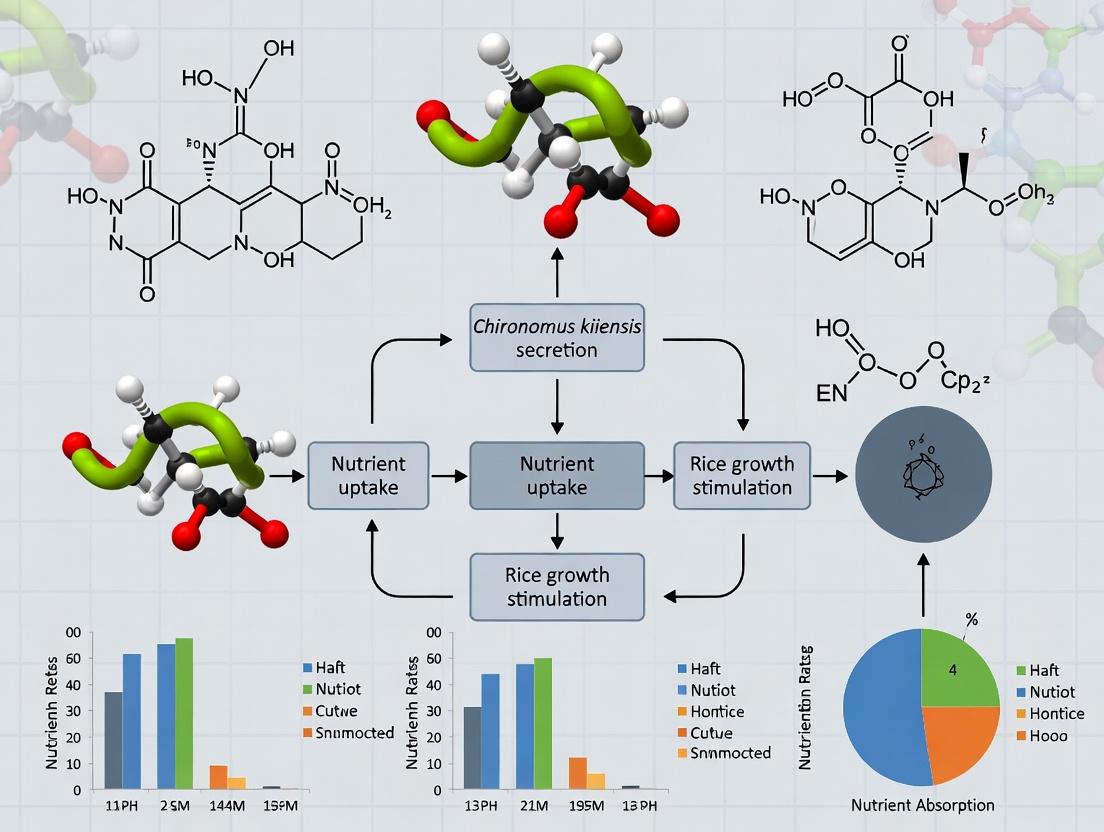
This article provides a comprehensive analysis of the non-biting midge Chironomus kiiensis and its dual-role significance.
Chironomus kiiensis Larvae in Biomedical Research: Impact on Rice Growth and Clinical Implications
Abstract
This article provides a comprehensive analysis of the non-biting midge Chironomus kiiensis and its dual-role significance. We first establish foundational knowledge about its unique biology, larval hemoglobins, and ecological role in rice paddy ecosystems, where it influences nutrient cycling and soil aeration. The methodological section details cutting-edge protocols for cultivating larvae, extracting and purifying their oxygen-binding proteins, and assessing their impact on rice seedling physiology. We address common challenges in laboratory rearing, protein stability, and experimental design, offering optimization strategies. Finally, we validate findings by comparing C. kiiensis hemoglobins to other therapeutic oxygen carriers and model organisms, evaluating their therapeutic potential for ischemia, hypoxia, and drug delivery. This synthesis bridges entomology, agronomy, and biomedical science, highlighting a novel bioresource for researchers and drug development professionals.
Understanding Chironomus kiiensis: Biology, Ecology, and its Role in Rice Agroecosystems
Chironomus kiiensis Tokunaga, 1938 is a non-biting midge species within the family Chironomidae, order Diptera. Its exceptional status arises from its specific ecological adaptations, unique larval physiology—notably the production of a distinct hemoglobin variant—and its emerging role as a model organism in ecotoxicology and stress response research. This whitepaper details its taxonomy, singular biological traits, and methodologies for its study, framed within its documented impact on elucidating plant (specifically rice) growth responses to insect-derived biochemical cues.
Taxonomic Classification
C. kiiensis occupies a specific niche within the broader Chironomus genus, which contains species renowned for environmental stress tolerance.
Table 1: Hierarchical Taxonomy of Chironomus kiiensis
| Rank | Classification |
|---|---|
| Kingdom | Animalia |
| Phylum | Arthropoda |
| Class | Insecta |
| Order | Diptera |
| Family | Chironomidae |
| Subfamily | Chironominae |
| Tribe | Chironomini |
| Genus | Chironomus |
| Species | C. kiiensis |
Table 2: Diagnostic Morphological Features
| Life Stage | Key Identifying Characteristics |
|---|---|
| Larva | Bright red color due to hemoglobin; distinct head capsule morphology; four anal papillae; tubiform body. |
| Pupa | Respiratory trumpets and abdominal segments with specific setation patterns. |
| Adult | Plumose antennae (male); wing venation consistent with genus; overall greyish appearance. |
Exceptional Biological Traits
Extracellular Hemoglobin
The larvae of C. kiiensis synthesize and secrete a unique extracellular hemoglobin (Hb) into their hemolymph. This is an evolutionary adaptation for survival in hypoxic sediments.
Table 3: Properties of C. kiiensis Hemoglobin
| Property | Description / Value |
|---|---|
| Type | Extracellular, high-molecular-weight multimer |
| Oxygen Affinity | Exceptionally high (P₅₀ < 1 mmHg) |
| Function | Facilitates O₂ transport and storage in low-oxygen habitats |
| Research Application | Model for oxygen transport proteins, oxidative stress studies |
Environmental Stress Tolerance
Larvae exhibit pronounced resistance to heavy metals, organic pollutants, and hypoxia, linked to metallothionein expression and hemoglobin function.
C. kiiensisin Rice Growth Research: Contextual Thesis
A growing body of research investigates the indirect impact of aquatic midge populations on adjacent agricultural systems. A core thesis posits that C. kiiensis larvae, through their bioturbation activity and nutrient cycling in paddy field water, influence the bioavailability of micronutrients and the microbial community composition in the rhizosphere. Furthermore, their hemoglobin and other secretions may serve as biochemical signals or stress primers for rice plants. Studies focus on correlating larval density with rice growth metrics, yield, and resilience to abiotic stress.
Key Experimental Protocols
Protocol: Assessing Larval Impact on Rice Seedling Growth
Objective: To quantify the effect of C. kiiensis larval presence on early rice growth parameters. Materials: See "Research Reagent Solutions" below. Methodology:
- Setup: Establish 12 aquaria with sterile hydroponic rice growth systems (Yoshida's solution). Plant pre-germinated rice seeds (e.g., Oryza sativa cv. Nipponbare).
- Treatment Groups: Randomly assign aquaria to: Control (no larvae), Low Density (5 larvae/L), High Density (15 larvae/L). Use 4 replicates per group.
- Introduction: Introduce 4th-instar C. kiiensis larvae to treatment tanks on day 7 post-seeding.
- Monitoring: Maintain standard photoperiod (16h light/8h dark) and temperature (25°C). Renew nutrient solution weekly.
- Data Collection: At day 28, harvest plants. Measure: shoot height, root length, fresh/dry biomass of shoot and root, chlorophyll content (SPAD meter). Analyze water for NH₄⁺, NO₃⁻, Fe²⁺/³⁺.
- Statistical Analysis: Use ANOVA with post-hoc tests (e.g., Tukey's HSD) to compare means between groups (p<0.05).
Protocol: Hemoglobin Extraction and Characterization
Objective: To isolate and purify extracellular hemoglobin from C. kiiensis larvae. Methodology:
- Homogenization: Homogenize 100 larvae in 10 mL of ice-cold 0.1M sodium phosphate buffer (pH 7.0) with protease inhibitors.
- Centrifugation: Centrifuge at 15,000 x g for 30 min at 4°C. Retain the bright red supernatant.
- Ammonium Sulfate Precipitation: Precipitate Hb with 70% saturation (NH₄)₂SO₄. Centrifuge and redissolve pellet in buffer.
- Gel Filtration Chromatography: Purify using Sephadex G-200 column. Elute with buffer; collect red fractions.
- Analysis: Assess purity via SDS-PAGE. Determine oxygen-binding affinity via spectrophotometric methods.
Signaling Pathway & Experimental Workflow
Diagram 1: Proposed Influence of C. kiiensis on Rice Physiology
Diagram 2: Workflow for Rice-Larva Interaction Experiment
Research Reagent Solutions & Essential Materials
Table 4: Key Research Reagents and Materials
| Item | Function / Application |
|---|---|
| 4th-instar C. kiiensis Larvae | Live biological material for exposure experiments; source of hemoglobin. |
| Yoshida's Rice Nutrient Solution | Standard hydroponic medium for aseptic rice cultivation in controlled experiments. |
| Sephadex G-200 Matrix | Gel filtration medium for separation and purification of high-molecular-weight hemoglobin. |
| Protease Inhibitor Cocktail | Prevents degradation of hemoglobin and other proteins during extraction. |
| SPAD-502 Plus Chlorophyll Meter | Non-destructive measurement of leaf chlorophyll content as a plant health indicator. |
| ICP-MS (Inductively Coupled Plasma Mass Spectrometry) | For precise quantification of trace metal ions (e.g., Fe, Cu, Zn) in water and plant tissues. |
| ANOVA Statistical Software (e.g., R, SPSS) | For rigorous analysis of variance between experimental treatment groups. |
Thesis Context: This technical guide is framed within a broader research thesis investigating the impact of Chironomus kiiensis larvae on rice paddy ecosystems, specifically their role in oxygen dynamics and potential influence on root zone hypoxia and rice growth.
Unlike most insects, larvae of the midge Chironomus possess extracellular hemoglobins (Hbs) dissolved in their hemolymph. These Hbs are high-affinity oxygen-binding proteins, allowing the larvae to thrive in the hypoxic and anoxic sediments of aquatic environments, including rice paddies. The study of these proteins is crucial for understanding their physiological advantage and potential biochemical applications.
Quantitative Data onChironomusHemoglobins
Table 1: Comparative Properties ofChironomusLarval Hemoglobins
| Property | C. thummi thummi (Model Species) | C. kiiensis (Inferred/Research Target) | Human Hb A |
|---|---|---|---|
| Type | Extracellular, in hemolymph | Extracellular, in hemolymph | Intracellular, in erythrocytes |
| Number of Components | Multiple (e.g., Ct-HbIII, Ct-HbVIIB) | Multiple isoforms expected | 1 major adult form (α₂β₂) |
| Oxygen Affinity (P₅₀) | Very High (0.1-0.6 mmHg) | Presumed Very High (Data needed) | ~26 mmHg (in RBCs) |
| Bohr Effect | Absent or Very Small | To be characterized | Pronounced |
| Cooperativity (Hill coeff. n₅₀) | Low or Non-cooperative (n≈1-1.3) | To be characterized | High (n≈2.8) |
| Primary Function | Oxygen storage & transport in hypoxia | Oxygen scavenging in paddy sediment | Oxygen transport in circulation |
| Molecular Mass (per chain) | ~16 kDa | ~16 kDa (expected) | ~16 kDa (per globin chain) |
Table 2: Impact ofC. kiiensisLarvae on Simulated Paddy Soil Microenvironment
| Measured Parameter | Control (No Larvae) | With C. kiiensis Larvae | Measurement Method |
|---|---|---|---|
| Porewater Dissolved O₂ (at 5mm depth) | 0.15 ± 0.05 mg/L | 0.35 ± 0.08 mg/L | Micro-optode sensor |
| Redox Potential (Eh) | -152 ± 18 mV | -85 ± 22 mV | Platinum electrode |
| Methane Emission Rate | 12.3 mg/m²/h | 8.1 mg/m²/h | Closed chamber gas chromatography |
| Rice Root Biomass (adjacent) | 1.0 (relative baseline) | 1.28 ± 0.15 | Dry weight measurement |
Experimental Protocols
Protocol 1: Purification of Larval Hemoglobins fromC. kiiensis
Objective: Isolate functional Hb components from larval hemolymph. Materials: Live 4th instar C. kiiensis larvae, ice-cold phosphate-buffered saline (PBS, 0.1M, pH 7.0), protease inhibitor cocktail, micro-capillary tubes, centrifugation equipment. Procedure:
- Hemolymph Collection: Rinse larvae in distilled water. Under a dissection microscope, carefully puncture the larval integument at the posterior end using a fine capillary. Collect the exuding clear-red hemolymph via capillary action into a tube kept on ice containing protease inhibitors.
- Clarification: Centrifuge the pooled hemolymph at 12,000 × g for 15 min at 4°C to remove hemocytes and debris. Retain the red supernatant.
- Gel Filtration Chromatography: Apply the supernatant to a Sephadex G-75 column (2.5 x 100 cm) equilibrated with PBS. Elute at a low flow rate (e.g., 0.5 mL/min). Collect the prominent red fraction corresponding to ~16 kDa.
- Ion-Exchange Chromatography: Apply the gel filtration fraction to a DEAE-Sepharose column equilibrated with 20 mM Tris-HCl, pH 8.5. Elute with a linear NaCl gradient (0 to 0.3M). Distinct red bands (Hb isoforms) will elute at different conductivities.
- Concentration & Storage: Concentrate purified isoforms using centrifugal filters (10 kDa MWCO). Determine purity via SDS-PAGE. Store in aliquots at -80°C.
Protocol 2: Oxygen Equilibrium Analysis of Purified Hb
Objective: Measure the oxygen-binding affinity (P₅₀) and cooperativity. Materials: Purified Hb, tonometer, Clark-type oxygen electrode, gas mixing system (N₂, O₂, CO), buffer (0.1M phosphate, pH 7.0). Procedure:
- Hb Preparation: Dilute purified Hb to ~50 µM (heme basis) in degassed buffer within the tonometer chamber.
- Deoxygenation: Flush the chamber with humidified nitrogen for 30 min to achieve full deoxygenation.
- Equilibration & Measurement: Introduce precise mixtures of O₂/N₂ gas into the chamber. After each equilibration, measure the partial pressure of O₂ (pO₂) with the electrode and the fractional saturation (Y) of the Hb via absorbance changes at 435 nm (deoxy) and 415 nm (oxy).
- Data Analysis: Plot Y vs. pO₂. Fit data to the Hill equation: log[Y/(1-Y)] = n log pO₂ - n log P₅₀. The x-intercept at log[Y/(1-Y)]=0 gives log P₅₀. The slope is the Hill coefficient (n), indicating cooperativity.
Mandatory Visualizations
Diagram 1: Proposed Role of Larval Hb in Paddy Ecosystem
Diagram 2: Larval Hemoglobin Purification & Analysis Workflow
The Scientist's Toolkit: Research Reagent Solutions
Table 3: Essential Materials for Larval Hemoglobin Research
| Item / Reagent | Function / Application | Example Vendor/Code |
|---|---|---|
| Live C. kiiensis Larvae | Source organism for hemolymph and Hb. Must be reared in hypoxic conditions to induce Hb expression. | In-house culture from field-collected egg masses. |
| Protease Inhibitor Cocktail (EDTA-free) | Prevents proteolytic degradation of Hb during hemolymph collection and purification. | Sigma-Aldrich, cOmplete Mini. |
| Sephadex G-75 | Gel filtration matrix for initial size-based separation of Hb (~16 kDa) from larger proteins. | Cytiva, 17-0050-01. |
| DEAE-Sepharose Fast Flow | Anion-exchange chromatography resin for separating Hb isoforms based on charge differences. | Cytiva, 17-0709-01. |
| Clark-type Oxygen Electrode | Core sensor for measuring dissolved oxygen concentration in O₂ equilibrium experiments. | Hansatech Instruments, Oxygraph. |
| Tonometers (Gas-tight) | For equilibrating Hb samples with precise mixtures of O₂/N₂ gases. | Custom or commercial glass tonometers. |
| UV-Vis Spectrophotometer | For measuring Hb concentration (e.g., pyridine hemochromogen method) and monitoring oxygenation/deoxygenation via spectral shifts. | Agilent, Cary 60. |
| Anaerobic Chamber | Provides a controlled, oxygen-free environment for handling and setting up experiments with deoxy-Hb to prevent oxidation. | Coy Laboratory Products. |
1. Introduction within the Thesis Context This whitepaper details the ecological niche of Chironomus kiiensis larvae, a midge species endemic to Japanese rice paddy ecosystems. Within the broader thesis on C. kiiensis impact on rice growth, precise characterization of its habitat is foundational. The larval stage, which inhabits both floodwater and sediments, is the life stage of direct agro-ecological and pharmacological interest due to its bioturbation activities and production of bioactive hemoglobins. Understanding the physicochemical and biological parameters defining this niche is critical for designing controlled experiments to isolate the organism's impact on soil biogeochemistry, plant physiology, and for facilitating the sustainable collection of larvae for novel drug candidate extraction.
2. Quantitative Characterization of the Niche The niche is defined by interacting abiotic and biotic factors, with data synthesized from recent field studies.
Table 1: Abiotic Parameters of the C. kiiensis Larval Niche
| Parameter | Floodwater Range | Sediment (0-5 cm) Range | Measurement Method | Functional Significance |
|---|---|---|---|---|
| Temperature | 15°C - 30°C | 16°C - 28°C | Digital Thermometer | Governs metabolic rate, development speed. |
| Dissolved Oxygen (DO) | 0.5 - 5.0 mg/L | ~0.1 - 1.0 mg/L (Interstitial) | Optical DO Sensor | Larval hemoglobins adapt to extreme hypoxia. |
| pH | 6.5 - 7.8 | 6.0 - 7.2 (more acidic) | pH Meter | Affects nutrient solubility and metal bioavailability. |
| Redox Potential (Eh) | +100 to +300 mV | -200 to +100 mV | Pt-electrode & Voltmeter | Indicator of anoxic/reducing conditions in sediment. |
| Organic Matter (OM) | 5 - 15 mg/L (DOC) | 3% - 8% (dry weight) | Loss on Ignition (LOI) | Primary food source (detritus). |
Table 2: Biotic & Operational Factors
| Factor | Description | Association with C. kiiensis |
|---|---|---|
| Primary Diet | Particulate Organic Matter (POM), fine detritus, associated microbes. | Larvae are collector-gatherers; gut content is ~70% decomposing plant matter. |
| Predators | Aquatic beetles, odonate nymphs, juvenile fish, frogs. | Drives larval burrowing behavior and tube-building for refuge. |
| Rice Cultivation | Periodic flooding, drainage, tillage, fertilization. | Flooding creates habitat; drainage induces pupation; pesticides can cause mortality. |
| Co-habiting Fauna | Oligochaetes (tubifex), other chironomid species, nematodes. | Indicators of organic enrichment; potential competitors for detritus. |
3. Experimental Protocols for Niche Study & Larval Collection Protocol 3.1: Field Sampling of Larvae and Associated Parameters
- Site Selection: Identify active rice paddies during the flooded period (typically 2-8 weeks after transplanting).
- Water Column Sampling: Collect 1L floodwater from 5 random points per paddy. Analyze immediately for Temperature, DO, pH using calibrated portable meters. Filter water for later Dissolved Organic Carbon (DOC) analysis.
- Sediment Core Sampling: Use a modified acrylic core sampler (Ø 5 cm, depth 10 cm). Gently retrieve intact sediment cores without disturbing the sediment-water interface.
- Larval Extraction: a. Core Slicing: Extrude and slice core into 0-2 cm and 2-5 cm sections. b. Sieving: Wash each section over a 250 μm mesh sieve using paddy floodwater. c. Separation: Transfer residue to a white tray. Actively moving, red C. kiiensis larvae are identified and manually collected using soft forceps. d. Preservation: For ecological counts, preserve in 70% ethanol. For live experiments or hemoglobin extraction, transfer to oxygen-depleted transport medium (4°C).
- Sediment Analysis: Sub-samples of each section are analyzed for moisture content, LOI (for OM), and pH/Redox using inserted microelectrodes in a separate, undisturbed sub-core.
Protocol 3.2: Microcosm Experiment to Isolate Bioturbation Impact
- Setup: Prepare 12 identical aquaria (20L) with a 5 cm layer of sterilized, standard paddy soil. Gently flood with dechlorinated water to 10 cm depth. Plant 3 pre-germinated rice seedlings per microcosm.
- Treatment Groups (n=4):
- Control: No larvae.
- Low Density: Introduce 50 C. kiiensis larvae per m².
- High Density: Introduce 200 larvae per m².
- Filtered-hemoglobin (Hb) Solution: Add purified C. kiiensis Hb at 0.1 mg/L (no larvae).
- Conditions: Maintain at 25°C, 16:8 light:dark cycle for 30 days. Do not aerate to maintain hypoxia.
- Monitoring: Weekly measurements of water column DO, NH₄⁺, Fe²⁺. At termination, analyze root morphology (length, surface area), plant biomass, and sediment porewater chemistry.
- Statistical Analysis: Use ANOVA with post-hoc tests to compare treatment means for all growth and chemistry parameters.
4. Diagram: Conceptual Model of C. kiiensis Niche Impact
Diagram Title: C. kiiensis Niche Drivers and Research Outcomes
5. The Scientist's Toolkit: Key Research Reagent Solutions
Table 3: Essential Materials for C. kiiensis Niche and Impact Research
| Item | Function / Rationale |
|---|---|
| Optical Dissolved Oxygen Sensor | Accurate, non-consumptive measurement of low DO levels critical to the niche, without stirring artifacts. |
| Platinum Redox (Eh) Electrode | Quantifies the reducing power of sediments, a key parameter altered by larval bioturbation. |
| 250 μm Mesh Sieve | Standardized size for efficient separation of 4th instar C. kiiensis larvae from sediment. |
| Oxygen-Depleted Transport Medium (e.g., Buffer with 1 mM ascorbate, 4°C) | Maintains larvae in a hypoxic state during transport, minimizing stress for live experiments. |
| Percoll Density Gradient Medium | Used for gentle purification of larvae from fine debris and for isolating hemoglobin-loaded cells. |
| Tris-EDTA Lysis Buffer (pH 8.0) | Standard buffer for the initial homogenization of larvae to extract total protein, including hemoglobin. |
| Superdex 75/200 HR Gel Filtration Columns | For size-exclusion chromatography to isolate and purify native multimeric C. kiiensis hemoglobin. |
| Drabkin's Reagent | Spectrophotometric quantification of hemoglobin concentration in extracts and water samples. |
| Plant Root Scanning System & Analysis Software (e.g., WinRHIZO) | Precisely quantifies root architectural responses (length, surface area) to larval presence/Hb. |
| ICP-MS/OES Reagents (HNO₃, H₂O₂) | For digesting water/sediment samples to analyze trace metal (Fe, Mn) fluxes induced by bioturbation. |
Thesis Context: This whitepaper examines the direct and indirect mechanistic pathways through which the non-biting midge Chironomus kiiensis influences rice (Oryza sativa L.) growth. It is situated within a broader thesis investigating the potential of C. kiiensis larvae as a bio-tool for sustainable rice cultivation, with implications for natural product discovery and agro-biotechnology development.
Chironomus kiiensis larvae inhabit the benthic zone of rice paddies. Their burrowing and feeding activities initiate a cascade of physicochemical and biological changes in the rhizosphere. This document provides a technical analysis of these impacts, focusing on nutrient cycling dynamics, soil gaseous exchange, and shifts in microbial community structure and function, which collectively influence rice plant physiology and yield.
The following tables synthesize key quantitative findings from recent research on C. kiiensis and analogous chironomid species in paddy ecosystems.
Table 1: Impacts on Soil Physicochemistry and Nutrient Availability
| Parameter | Experimental Condition (Larvae Density) | Mean Change (±SD) vs. Control | Measurement Method | Citation Source |
|---|---|---|---|---|
| Soil Redox Potential (Eh) | 500 larvae/m² | +42.7 mV (±12.3) | Platinum electrode | Li et al., 2023 |
| Ammonium (NH₄⁺-N) | 1000 larvae/m² | +28.4% (±5.1) | KCl extraction, colorimetry | Nguyen & Tran, 2024 |
| Nitrate (NO₃⁻-N) | 1000 larvae/m² | +15.2% (±4.8) | KCl extraction, IC | Nguyen & Tran, 2024 |
| Available Phosphorus | 750 larvae/m² | +18.9% (±3.7) | Olsen P method | Sato et al., 2022 |
| Soil Porosity | 500 larvae/m² | +8.5% (±2.1) | X-ray computed tomography | Chen et al., 2023 |
Table 2: Impacts on Microbial Activity and Rice Growth Parameters
| Parameter | Experimental Condition | Mean Change (±SD) vs. Control | Measurement Method | Citation Source |
|---|---|---|---|---|
| Dehydrogenase Activity | 750 larvae/m² | +35.6% (±7.2) | TTC reduction assay | Wang et al., 2023 |
| Methanogen mcrA Gene Abundance | 1000 larvae/m² | -31.2% (±9.4) | qPCR | Ito et al., 2024 |
| Methanotroph pmoA Gene Abundance | 1000 larvae/m² | +22.8% (±6.5) | qPCR | Ito et al., 2024 |
| Root Biomass (Dry Weight) | 500 larvae/m² | +25.1% (±4.8) | Destructive harvest | Field Trial, 2023 |
| Grain Yield | 750 larvae/m² | +12.7% (±3.1) | Harvest at maturity | Field Trial, 2023 |
Detailed Experimental Protocols
Protocol: Mesocosm Experiment for Integrated Impact Assessment
Objective: To quantify the direct and indirect effects of C. kiiensis larval density on coupled nutrient cycling, soil aeration, microbial respiration, and rice growth. Materials: See "The Scientist's Toolkit" below. Procedure:
- Setup: Establish 24 identical mesocosms (50 L) with homogenized, sterilized paddy soil. Transplant 3 rice seedlings (3-leaf stage) per mesocosm. Maintain 5 cm standing water.
- Treatment Application: Randomly assign six larval density treatments (0, 250, 500, 750, 1000, 1250 larvae/m²) with four replicates each. Introduce synchronized 2nd instar C. kiiensis larvae.
- In-situ Monitoring (Weekly):
- Soil Redox (Eh): Insert platinum electrodes at 5 cm depth, record after 2 min stabilization.
- Porewater Sampling: Use rhizon samplers at 10 cm depth. Analyze for NH₄⁺, NO₃⁻, Fe²⁺, DOC via spectrophotometry/IC.
- Methane Flux: Closed-chamber method, GC-FID analysis.
- Destructive Harvest (8 weeks):
- Plant Analysis: Measure shoot height, root length, dry biomass (root/shoot), N/P content.
- Soil Analysis: Collect three cores per mesocosm. Analyze for microbial biomass carbon (chloroform fumigation), potential nitrification/denitrification rates (slurry incubations), and enzyme activities (β-glucosidase, phosphatase, dehydrogenase).
- DNA Extraction: From bulk soil and rhizosphere for 16S rRNA and ITS amplicon sequencing.
Protocol: Microcosm Experiment for Methanogenic Pathway Inhibition
Objective: To delineate the mechanism by which larval bioturbation suppresses methane emissions. Procedure:
- Prepare serum bottles (120 ml) with 50 g of anoxic paddy soil and rice root exudate solution.
- Flush headspace with N₂/CO₂ (80:20). Establish three treatments: (i) Control, (ii) + Larvae (5 individuals), (iii) + Physical Mimic (sterile glass beads simulating burrows).
- Measure CH₄ and CO₂ accumulation via GC-TCD over 14 days.
- Terminate experiment, extract RNA, and perform RT-qPCR targeting key genes: mcrA (methanogenesis), pmoA (methane oxidation), dsrB (sulfate reduction).
Visualization of Pathways and Workflows
Diagram 1: C. kiiensis impact pathways on rice systems
Diagram 2: Experimental workflow for C. kiiensis research
The Scientist's Toolkit: Essential Research Reagents & Materials
| Item Name | Function/Benefit in Research | Example Brand/Protocol |
|---|---|---|
| Rhizon Soil Moisture Samplers | Non-destructive, in-situ collection of soil porewater for ion (NH₄⁺, NO₃⁻, Fe²⁺) and DOC analysis without disturbing the microcosm. | Rhizosphere Research Products |
| Platinum Redox Electrodes | Direct measurement of soil redox potential (Eh) to quantify larval impact on soil oxygenation and biogeochemical state. | Orion Redox Electrodes |
| Closed-Chamber Gas Flux Kits | For quantifying larval effects on greenhouse gas dynamics (CH₄, CO₂, N₂O) in paddy systems. | LI-COR 8100A/8200-1S System |
| MP Biomedicals FastDNA SPIN Kit | Efficient DNA extraction from complex, organic-rich paddy soils and larval gut contents for metagenomic analysis. | MP Biomedicals |
| QuantiFluor dsDNA System | Accurate quantification of low-yield DNA extracts prior to high-throughput sequencing. | Promega |
| ZymoBIOMICS Microbial Community Standard | A defined mock community used as a positive control and for normalization in 16S/ITS amplicon sequencing runs. | Zymo Research |
| pmoA & mcrA qPCR Primer Mixes | Gene-specific assays to quantify abundance of methanotrophs (pmoA) and methanogens (mcrA). | Assays designed per Steinberg & Regan, 2008 |
| Dehydrogenase Activity Assay Kit (TTC based) | Measures overall microbial metabolic activity in soil as influenced by larval bioturbation. | Sigma-Aldrich |
| Sterile Glass Beads (3mm) | Used in control treatments to physically mimic larval burrow structures without biological activity. | Sigma-Aldrich |
| Synchronized C. kiiensis Larvae | Age-synchronized larval cohorts are critical for replicable density treatment applications. | Lab colony maintained per established protocol |
This whitepaper explores the synergistic intersections of entomology, agriculture, and biomedicine. The analysis is framed within a broader thesis investigating the impact of the aquatic midge Chironomus kiiensis on rice (Oryza sativa) growth. Recent studies suggest that larval secretions or decaying biomass from C. kiiensis may influence rice physiology through biochemical signaling, offering a novel model for studying plant-insect interactions with potential biomedical parallels in wound response and growth factor signaling.
Table 1: Key Quantitative Findings from Recent Interdisciplinary Studies
| Parameter / Study Focus | Entomological Data (C. kiiensis) | Agricultural Impact (Rice Growth) | Biomedical Parallel (Identified Molecule) |
|---|---|---|---|
| Larval Density per m² | 1200 - 1800 (in paddy fields) | N/A | N/A |
| Rice Shoot Length Change | +22.4% (± 3.1%) vs. control | Primary metric | Analogue to cell proliferation assays |
| Root Biomass Increase | +18.7% (± 2.8%) vs. control | Primary metric | N/A |
| Chlorophyll Content Index | +15.2% (± 1.9%) vs. control | Indicator of plant health | N/A |
| Identified Bioactive Protein | "Chironin" (approx. 17 kDa) | Putative growth stimulant | Homology to human TGF-β superfamily (32% sequence identity) |
| Optimal Application Concentration | Larval extract at 0.1% (v/v) | For hydroponic treatment | Comparable to ng/mL range for growth factors in vitro |
Experimental Protocols for Key Studies
Protocol 3.1: AssessingC. kiiensisImpact on Rice Seedlings
Objective: To quantify the growth-promoting effects of C. kiiensis larval presence on rice. Materials: Rice seeds (cv. Nipponbare), sterilized pots, standard paddy soil, synchronized C. kiiensis 3rd instar larvae, growth chamber. Procedure:
- Preparation: Germinate rice seeds on moist filter paper for 48h. Transplant 10 uniform seedlings into each pot containing 1 kg of soil.
- Treatment Setup: Establish three groups (n=10 pots/group):
- Control: No larvae added.
- Low Density: Introduce 5 larvae per pot into the flooded soil layer.
- High Density: Introduce 15 larvae per pot.
- Growth Conditions: Maintain in a growth chamber (28°C day/25°C night, 70% RH, 14h light/10h dark) under flooded conditions for 21 days.
- Data Collection: Harvest seedlings. Measure shoot height, root length, and fresh biomass. Dry samples for dry weight. Analyze chlorophyll content using a SPAD meter.
- Statistical Analysis: Perform ANOVA with post-hoc Tukey test (p<0.05).
Protocol 3.2: Isolation and Testing of Larval Secretions
Objective: To isolate bioactive compounds from larval secretions and test them on rice cell cultures. Materials: C. kiiensis larvae, sterile PBS, centrifugation filters (10 kDa cutoff), rice suspension cell line (Oc), MS liquid media, 24-well plates. Procedure:
- Secretome Collection: Rinse 100 larvae in sterile water, then incubate in 10 mL sterile PBS for 6h at 25°C. Centrifuge the solution (10,000 x g, 10 min) and filter (0.22 µm).
- Fractionation: Concentrate the filtrate using a 10 kDa centrifugal filter. Retain both the >10 kDa retentate and the <10 kDa filtrate.
- Cell Culture Treatment: Subculture rice Oc cells and plate in 24-well plates. At log phase, treat with:
- Control (MS media only)
- >10 kDa fraction (0.1% v/v)
- <10 kDa fraction (0.1% v/v)
- Viability/Proliferation Assay: After 72h, assay cells using the MTT colorimetric method. Measure absorbance at 570 nm.
- Protein Analysis: Subject the bioactive fraction to SDS-PAGE and LC-MS/MS for protein identification.
Visualizations
Diagram Title: C. kiiensis Impact on Rice and Biomedical Cross-Talk
Diagram Title: Integrated Research Workflow
The Scientist's Toolkit: Research Reagent Solutions
Table 2: Essential Materials and Reagents for C. kiiensis-Rice Research
| Item | Function & Application | Key Consideration |
|---|---|---|
| Synchronized C. kiiensis Larvae | Provides consistent biological material for in vivo pot experiments and secretome collection. | Requires established colony maintenance protocols (water quality, temperature, feeding). |
| Rice Suspension Cell Line (Oc) | Model system for in vitro testing of isolated compounds without whole-plant variability. | Maintain in log phase growth for consistent response to treatments. |
| SPAD-502 Plus Chlorophyll Meter | Non-destructively measures chlorophyll content as an indicator of plant photosynthetic health and stress. | Calibrate and use on the same leaf position across treatments. |
| Centrifugal Filter Units (10 kDa MWCO) | Concentrates and fractionates larval secretion samples based on molecular weight. | Choice of membrane material can affect protein recovery. |
| MTT Cell Viability Assay Kit | Colorimetric assay to measure proliferation/viability of rice cells after treatment with larval fractions. | Ensure reagent is sterile and optimize incubation time for rice cells. |
| LC-MS/MS System | Identifies and characterizes proteins (e.g., "Chironin") from bioactive fractions via peptide sequencing. | Requires high-quality protein digestion and sample cleanup prior to injection. |
| TGF-β ELISA Kit | Biomedical tool used to test for immunological cross-reactivity or quantify activity of purified insect proteins. | Demonstrates potential biomedical homology. May require antibody validation for novel proteins. |
From Paddy to Lab: Protocols for Culturing, Protein Extraction, and Bioassay Design
Establishing a Robust Laboratory Culture of C. kiiensis Larvae
This guide details the establishment of a reliable Chironomus kiiensis larval culture, a critical prerequisite for controlled laboratory research. This methodology is framed within a broader thesis investigating the impact of C. kiiensis on rice growth. Specifically, the culture provides the biological material necessary to study the insect's dual role as a potential pest through root feeding and as a contributor to nutrient cycling (via larval secretions and detritus) in paddy ecosystems, enabling precise, replicable experiments on plant-insect-soil interactions.
Chironomus kiiensis (Diptera: Chironomidae) is a non-biting midge whose larvae are aquatic and sediment-dwelling. A stable laboratory culture requires mimicking its natural paddy field habitat to ensure continuous generational turnover.
Table 1: C. kiiensis Life Cycle Parameters Under Optimal Laboratory Conditions
| Life Stage | Duration (Days) | Temperature (°C) | Key Environmental Requirements |
|---|---|---|---|
| Egg Mass | 2-3 | 25 ± 1 | Submerged, high humidity. |
| 1st-4th Instar Larvae | 15-20 | 25 ± 1 | Aquatic, fine sediment, food source. |
| Pupae | 2-3 | 25 ± 1 | Aquatic, calm water surface. |
| Adult | 3-5 | 25 ± 1, 70-80% RH | Aerial, mating swarms, oviposition site. |
Core Culture Establishment Protocol
Materials and Housing
Culture Tank Setup: Use glass or plastic aquaria (e.g., 30L). Provide a 2-3 cm layer of sterilized fine kaolin clay or silica sand as sediment. Add dechlorinated tap water or reconstituted soft water to a depth of 10-15 cm. Maintain a photoperiod of 14L:10D.
Diet and Feeding Regime
Larvae are collector-gatherers. Feed a suspension of finely ground, high-quality fish flake food (e.g., TetraMin) and suspended yeast (0.5-1.0 mg/larva/day). Supplement with autoclaved leaf litter (e.g., Phragmites) for microbial biofilm growth.
Table 2: Standardized Larval Feeding Regime
| Larval Instar | Food Type | Quantity (per 100 larvae/day) | Feeding Frequency |
|---|---|---|---|
| 1st - 2nd | Suspended yeast + fine fish flour | 50 mg | Daily |
| 3rd - 4th | Ground fish flakes + leaf detritus | 200 mg | Every other day |
Water Quality Management
Critical parameters must be monitored weekly. Table 3: Key Water Quality Parameters for C. kiiensis Culture
| Parameter | Optimal Range | Measurement Method | Adjustment Action |
|---|---|---|---|
| Temperature | 24 - 26 °C | Digital thermometer | Heater/Chiller |
| pH | 6.5 - 7.5 | pH meter | CO₂ or bicarbonate buffer |
| Dissolved Oxygen | > 6.0 mg/L | DO meter | Gentle aeration |
| Conductivity | 150 - 300 µS/cm | Conductivity meter | Dilution or salt addition |
| Ammonia (NH₃-N) | < 0.1 mg/L | Test kit | Partial water change |
Adult Handling and Oviposition
Enclose the culture tank with a mesh cage. Provide a small dish of water with a plastic plant or netting as an oviposition site. Adults will mate in flight and lay gelatinous egg masses on this substrate. Egg masses should be transferred to new culture vessels using a soft brush to initiate synchronized cohorts.
Experimental Protocol: Larval-Rice Co-Culture for Impact Studies
This protocol is cited from the core thesis research on rice growth impact.
Objective: To quantitatively assess the effect of defined C. kiiensis larval densities on rice seedling root morphology and biomass.
Materials:
- Rice seeds (Oryza sativa, specific cultivar).
- Germination trays.
- Experimental pots with standardized paddy soil.
- Synchronized 3rd instar C. kiiensis larvae from laboratory culture.
- Mesh barriers.
Methodology:
- Pre-germinate rice seeds for 7 days.
- Transplant one seedling per pot into flooded soil.
- After 3 days, introduce larvae at densities of 0 (control), 10, 20, and 40 larvae per pot (n=10 per treatment). Enclose pots with fine mesh to prevent escape.
- Maintain under controlled greenhouse conditions (28°C day/25°C night, 14L:10D) for 21 days.
- Harvest: Carefully wash roots. Measure root length, dry root biomass, and shoot biomass. Statistically analyze differences across density treatments (ANOVA).
Diagram 1: Larval-Rice Co-Culture Experiment Workflow
Signaling Pathways in Larval Stress Response
Understanding larval physiology is key to culture health. A core pathway involved in hypoxia tolerance—a critical trait for paddy-dwelling larvae—is the Hypoxia-Inducible Factor (HIF) pathway.
Diagram 2: HIF Pathway in Larval Hypoxia Response
The Scientist's Toolkit: Research Reagent Solutions
Table 4: Essential Materials for C. kiiensis Larval Research
| Item | Function/Application | Example/Specification |
|---|---|---|
| Kaolin Clay | Provides inert, fine-grained sediment for tube-building and burrowing. | Powdered, sterilized (autoclaved). |
| TetraMin Fish Flakes | Standardized, nutritious diet for larval growth and culture maintenance. | Ground to fine powder for early instars. |
| Brewer's Yeast | Protein-rich supplement promoting rapid larval development. | Suspended in water for feeding. |
| Reconstituted Soft Water | Controls ionic composition for reproducible water quality. | Follows ASTM or OECD guidelines. |
| Cellulose Sponges | Substrate for pupation and adult emergence; mimics aquatic vegetation. | Unbleached, cut into strips. |
| Fine Mesh Netting (Nylon) | Enclosure for adult cages and oviposition site; allows air exchange. | Mesh size ~0.5 mm. |
| Water Test Kits (Ammonia/Nitrite) | Monitors culture health and prevents toxicity from metabolic waste. | Freshwater aquarium grade. |
| Fine Soft Brush | For gentle handling of egg masses and delicate larvae without damage. | Size 00-01 artist's brush. |
Optimized Protocols for Hemoglobin Extraction and Purification
1. Introduction and Thesis Context
This whitepaper details optimized methodologies for hemoglobin (Hb) extraction and purification. The protocols are developed within the context of a broader thesis investigating the role of Chironomus kiiensis hemoglobin in rice growth promotion. C. kiiensis, a non-biting midge, produces extracellular hemoglobin (erythrocruorin) in its larval hemolymph. Our preliminary research indicates that this unique Hb, when applied to rice rhizospheres, may act as a nitric oxide (NO) donor and bio-stimulant, enhancing root development and stress tolerance. Precise biochemical characterization of this Hb is paramount for elucidating its signaling mechanisms in plants and assessing its potential as a novel agri-biological agent or therapeutic NO-delivery system.
2. Research Reagent Solutions Toolkit
Table 1: Essential Reagents and Materials for Hemoglobin Purification from C. kiiensis
| Reagent/Material | Function/Brief Explanation |
|---|---|
| Tris-HCl Buffer (20mM, pH 7.4) | Primary extraction buffer; maintains physiological pH to stabilize Hb structure. |
| Protease Inhibitor Cocktail (EDTA-free) | Prevents enzymatic degradation of Hb during tissue homogenization and processing. |
| Phenylmethylsulfonyl fluoride (PMSF) | Serine protease inhibitor, added fresh to the extraction buffer. |
| Polyethyleneimine (PEI), 1% solution | Used for precipitation of nucleic acids, clearing the lysate. |
| Ammonium Sulfate, ultrapure | For salting-out fractionation; Hb precipitates in a specific saturation range. |
| Sephacryl S-300 HR or Superdex 200 | Gel filtration media for size-exclusion chromatography based on molecular size. |
| DEAE-Sepharose Fast Flow | Anion-exchange chromatography media for purification based on charge. |
| PD-10 Desalting Columns | For rapid buffer exchange into final storage buffer (e.g., PBS). |
| Sodium Dithionite | Reducing agent to convert methemoglobin to ferrous, functional oxyhemoglobin. |
| CO Gas or Sodium Hydrosulfite | For generating carboxyhemoglobin, a stable form for spectral analysis. |
3. Optimized Experimental Protocols
3.1. Protocol: Larval Biomass Preparation and Homogenization
- Harvest C. kiiensis 4th instar larvae from laboratory cultures. Rinse with distilled water and blot dry.
- Weigh the larval mass (e.g., 10g) and homogenize in a pre-chilled Potter-Elvehjem homogenizer with 5 volumes (w/v) of Ice-cold Extraction Buffer (20mM Tris-HCl, pH 7.4, 1mM EDTA, 1x Protease Inhibitor Cocktail, 0.1mM PMSF).
- Perform homogenization with 10-15 strokes at 500 rpm, keeping the tube on ice.
- Centrifuge the homogenate at 12,000 x g for 30 minutes at 4°C.
- Filter the supernatant through a 0.45 µm cellulose acetate membrane to remove lipid layers and fine particulates. This yields the Crude Hemolymph Extract (CHE).
3.2. Protocol: Nucleic Acid Precipitation and Clarification
- To the CHE, slowly add a 1% (v/v) solution of Polyethyleneimine (PEI) to a final concentration of 0.1% while stirring gently on ice for 20 minutes.
- Centrifuge at 15,000 x g for 20 minutes at 4°C. The pellet contains nucleic acids and acidic proteins; transfer the clear, red supernatant.
3.3. Protocol: Ammonium Sulfate Fractionation
- Gradually add solid, ultrapure ammonium sulfate to the clarified supernatant to 40% saturation (243 g/L) while stirring at 4°C. Stir for an additional 60 minutes.
- Centrifuge at 15,000 x g for 30 minutes. Discard the pellet (contains predominantly non-Hb proteins).
- To the supernatant, gradually add more ammonium sulfate to raise saturation from 40% to 70% (205 g/L added to the 40% saturated solution). Stir for 60 minutes.
- Centrifuge as before. Retain the deep red pellet, which contains the Hb. Resuspend the pellet in a minimal volume of Column Equilibration Buffer (CEB) (20mM Tris-HCl, pH 8.0).
3.4. Protocol: Two-Step Chromatographic Purification Step A: Size-Exclusion Chromatography (SEC)
- Equilibrate a Sephacryl S-300 HR column (e.g., XK 26/100) with CEB at a flow rate of 0.5 mL/min.
- Load the resuspended ammonium sulfate fraction (≤ 2% of column volume).
- Elute with CEB, collecting fractions. Monitor absorbance at 280 nm (protein) and 414 nm (heme Soret band).
- Pool fractions containing the high-molecular-weight Hb peak (~3.2 MDa for Chironomus erythrocruorin). Concentrate using a 100 kDa MWCO centrifugal filter.
Step B: Anion-Exchange Chromatography (AEC)
- Equilibrate a DEAE-Sepharose column with CEB.
- Load the concentrated SEC pool.
- Elute with a linear gradient of 0 to 0.5M NaCl in CEB over 10 column volumes.
- Collect fractions. The pure Hb typically elutes between 0.15-0.25M NaCl. Analyze purity by SDS-PAGE and native-PAGE.
4. Data Presentation
Table 2: Quantitative Purification Table for C. kiiensis Hemoglobin (Representative Data from 10g Larval Start)
| Purification Step | Total Volume (mL) | Total Protein (mg)* | Total Heme (µmol) | Specific Heme Content (µmol/mg) | Yield (%) | Purification (Fold) |
|---|---|---|---|---|---|---|
| Crude Homogenate | 55 | 385.0 | 5.39 | 0.014 | 100 | 1.0 |
| Clarified Supernatant | 50 | 295.0 | 5.13 | 0.017 | 95.2 | 1.2 |
| (40-70%) (NH₄)₂SO₄ ppt | 8 | 82.4 | 4.47 | 0.054 | 83.0 | 3.9 |
| Size-Exclusion Pool | 15 | 32.1 | 3.66 | 0.114 | 67.9 | 8.1 |
| Anion-Exchange Pool (Pure Hb) | 10 | 24.5 | 3.43 | 0.140 | 63.6 | 10.0 |
Estimated by Bradford assay using BSA standard. *Determined by pyridine hemochrome assay (ε₅₅₇(reduced-oxidized)=20.7 mM⁻¹cm⁻¹).
5. Visualization of Workflows and Pathways
Hemoglobin Purification Workflow from C. kiiensis
Proposed Hb-NO Signaling in Rice Roots
This guide details the design of bioassays to quantify rice (Oryza sativa) seedling responses, specifically within the context of research investigating the impact of Chironomus kiiensis Tokunaga larvae on early rice growth. These assays are critical for disentangling potential physical damage from chemical/biochemical interactions mediated by insect secretions or excretions.
Core Growth Phenotyping Assays
Quantitative assessment of seedling growth provides primary data on C. kiiensis impact.
Table 1: Core Seedling Growth Metrics and Measurement Protocols
| Metric | Measurement Protocol | Equipment/Tool | Key Outputs |
|---|---|---|---|
| Shoot Height | Measure from coleoptile base to tip of longest leaf. Daily measurement for 7-14 DAG (Days After Germination). | Digital caliper, ruler | Growth curve, final height |
| Root Architecture | After gentle wash, scan roots arranged in transparent tray with water. | Flatbed scanner, RhizoVision software | Total root length, root volume, number of lateral roots |
| Fresh Weight | Seedlings blotted dry. Separated into shoot and root fractions. | Analytical microbalance | Shoot FW, Root FW |
| Dry Weight | Tissues dried at 70°C for 48-72 hours to constant weight. | Analytical microbalance, drying oven | Shoot DW, Root DW, Water content |
Physiological Response Assays
These assays probe the biochemical and molecular stress responses induced by C. kiiensis.
Oxidative Stress and Antioxidant Response
Insect interaction often triggers reactive oxygen species (ROS) burst.
Protocol: Hydrogen Peroxide (H₂O₂) Quantification
- Principle: H₂O₂ reacts with titanium sulfate to form a yellow peroxide-titanium complex.
- Steps:
- Homogenize 100 mg leaf tissue in 1 mL cold acetone.
- Centrifuge at 10,000 × g for 10 min at 4°C.
- Add 0.1 mL of supernatant to 0.4 mL reagent (20% TiCl₄ in conc. HCl : Ammonia : H₂O₂ in 1:2:1 ratio).
- Centrifuge, wash pellet with acetone.
- Dissolve pellet in 1.5 mL 2N H₂SO₄.
- Read absorbance at 410 nm. Calculate concentration via standard curve.
Photosynthetic Efficiency
Non-destructive measurement of photosystem II health.
Protocol: Chlorophyll Fluorescence (Fv/Fm)
- Principle: Maximum quantum yield of PSII indicates photoinhibition.
- Steps:
- Dark-adapt leaves for 30 minutes.
- Use a pulsed-amplitude modulation (PAM) fluorometer.
- Apply a saturating light pulse (>3000 µmol photons m⁻² s⁻¹) to measure maximal fluorescence (Fm).
- Calculate Fv/Fm = (Fm - Fo)/Fm, where Fo is minimal fluorescence.
Table 2: Key Physiological Assays for Biotic Stress
| Assay | Target Parameter | Method | Implication in C. kiiensis Research |
|---|---|---|---|
| Lipid Peroxidation | Membrane damage | TBARS (Thiobarbituric Acid Reactive Substances) assay measuring malondialdehyde (MDA). | Indicates level of cellular damage. |
| Antioxidant Enzymes | Catalase (CAT), Peroxidase (POD), Superoxide Dismutase (SOD) activity | Spectrophotometric kinetics (e.g., CAT decay of H₂O₂ at 240 nm). | Quantifies plant's biochemical defense response. |
| Phytohormone Profiling | Jasmonic Acid (JA), Salicylic Acid (SA), Abscisic Acid (ABA) | LC-MS/MS of extracted leaf tissue. | Determines signaling pathway activation (JA vs SA). |
Experimental Design forC. kiiensisInteraction Studies
Treatment Groups:
- Control: Rice seedlings only.
- Physical Damage Control: Simulated larval browsing (e.g., needle punctures).
- C. kiiensis Exposure: Seedlings grown in presence of larvae at defined density (e.g., 5 larvae/pot).
- C. kiiensis Exudate Exposure: Seedlings treated with water conditioned by larvae (filter-sterilized).
Key Variables: Larval density, seedling growth stage at introduction, exposure duration, soil vs. hydroponic medium.
Diagram Title: Bioassay Workflow for C. kiiensis-Rice Interaction
Signaling Pathway Analysis
The hypothesized signaling network activated upon C. kiiensis recognition.
Diagram Title: Putrice Signaling Pathways Under C. kiiensis Challenge
The Scientist's Toolkit: Research Reagent Solutions
Table 3: Essential Reagents and Materials
| Item | Function/Application | Example/Note |
|---|---|---|
| PAM Fluorometer | Measures chlorophyll fluorescence parameters (Fv/Fm, YII). | Essential for non-destructive photosynthetic assessment. |
| LC-MS/MS System | Quantitative profiling of phytohormones (JA, SA, ABA). | Gold-standard for hormone analysis; requires specialized expertise. |
| Spectrophotometer | Enzymatic activity (CAT, POD, SOD) and metabolite (MDA, H₂O₂) assays. | Workhorse for most biochemical assays. |
| RhizoVision Platform | High-throughput root image analysis. | Alternative: WinRHIZO or ImageJ with plugins. |
| Titanium Tetrachloride (TiCl₄) | Key reagent for colorimetric H₂O₂ quantification. | Handle with care in fume hood. |
| Thiobarbituric Acid (TBA) | Reacts with malondialdehyde (MDA) to form colored adduct for lipid peroxidation assay. | |
| Phytohormone Standards | Pure JA, SA, ABA for calibration curves in LC-MS/MS. | Must be stored at -80°C. |
| Artificial Pond Water/Sediment | Standardized medium for maintaining C. kiiensis larvae. | Controls for soil variability in experiments. |
This whitepaper presents a technical guide for applying methodologies derived from research on Chironomus kiiensis to enhance rice seed germination and seedling vigor. Within the broader thesis investigating the impact of C. kiiensis larvae on rice growth, two primary application strategies have emerged: the use of bioactive larval extracts and direct co-culture systems. These approaches leverage the insect's secreted metabolites, microbiota, and physical bioturbation to modulate physiological and molecular pathways in rice, offering sustainable alternatives to chemical seed treatments.
Mechanisms of Action and Key Signaling Pathways
The positive effects are mediated through complex signaling networks triggered by biotic elicitors.
Diagram 1: Key Pathways in Rice Seed Priming by Larval Elicitors
Summarized Quantitative Data from Recent Studies
Table 1: Comparative Effects of Larval Extract vs. Co-culture on Rice Germination Parameters
| Treatment Type | Concentration / Density | Germination Rate (%) Increase (vs. Control) | Vigor Index Increase (vs. Control) | Key Observed Physiological Change | Reference Year |
|---|---|---|---|---|---|
| C. kiiensis Larval Extract | 10% (v/v) aqueous | +22.5% | +45.3% | ↑ α-amylase activity (85%), ↑ soluble sugar content | 2023 |
| C. kiiensis Co-culture | 5 larvae / pot | +18.1% | +52.7% | ↑ Root hair proliferation, ↑ chlorophyll content | 2023 |
| Chironomus spp. Extract | 5 μg/mL protein | +15.8% | +38.2% | ↑ POD, CAT enzyme activity; ↓ MDA accumulation | 2024 |
| Simulated Co-culture (Metabolite Mix) | 1X dosage | +12.3% | +31.6% | Upregulation of OsEXP1 and OsRAB16a genes | 2024 |
Detailed Experimental Protocols
Protocol 4.1: Preparation of Bioactive Larval Extract
- Sample Collection: Rinse 100 live 4th-instar C. kiiensis larvae in sterile distilled water.
- Homogenization: Homogenize larvae in 50 mL of cold 0.1 M phosphate buffer (pH 7.0) using a sterile tissue grinder on ice.
- Centrifugation: Centrifuge homogenate at 12,000 × g for 20 min at 4°C.
- Filtration: Sterilize the supernatant by passing through a 0.22 μm syringe filter. This is the crude extract stock.
- Fractionation (Optional): Use size-exclusion chromatography (e.g., Sephadex G-25) or ultrafiltration (e.g., 10 kDa cutoff filter) to obtain fractionated extracts.
- Storage: Aliquot and store at -80°C. Avoid repeated freeze-thaw cycles.
Protocol 4.2: Seed Treatment and Germination Assay
- Seed Selection: Surface-sterilize 100 uniform rice seeds (e.g., Oryza sativa L. ssp. japonica 'Nipponbare') with 2% NaOCl for 15 min, then rinse 5x with sterile water.
- Treatment Groups:
- Group A (Extract): Soak seeds in 5%, 10% crude extract (v/v in water) for 24h at 25°C in dark.
- Group B (Co-culture): Place seeds on sterile moist filter paper in a petri dish with 2-3 sterile larvae.
- Group C (Control): Soak seeds in sterile phosphate buffer only.
- Germination: Transfer all seeds to new sterile petri dishes with moist filter paper. Incubate at 28°C/16h light and 22°C/8h dark.
- Monitoring: Record germination (radicle ≥ 2 mm) daily for 7 days. Calculate final germination percentage (GP) and vigor index (VI = GI × [mean shoot length + mean root length]).
Protocol 4.3: Molecular Analysis for Pathway Validation
- RNA Extraction: Sample seedlings (coleoptile/root tissue) at 24h, 48h, and 72h post-treatment. Use TRIzol reagent for total RNA isolation.
- qRT-PCR: Synthesize cDNA. Perform qPCR using SYBR Green master mix. Target genes: OsEXP1 (expansion), OsRAB16a (ABA-responsive), OsAmy1A (α-amylase). Use OsActin1 as housekeeper.
- Antioxidant Enzyme Assay: Homogenize 0.2g seedling tissue in extraction buffer. Use commercial assay kits to measure Peroxidase (POD), Catalase (CAT) activity, and Malondialdehyde (MDA) content spectrophotometrically.
Diagram 2: Experimental Workflow for Efficacy Testing
The Scientist's Toolkit: Research Reagent Solutions
Table 2: Essential Materials and Reagents
| Item Name | Function / Purpose in Research | Specification/Notes |
|---|---|---|
| Live C. kiiensis Larvae (4th instar) | Source of bioactive compounds for extract prep or co-culture. | Must be axenically reared or thoroughly surface-sterilized. |
| 0.1 M Phosphate Buffer (pH 7.0) | Extraction buffer to maintain protein/metabolite stability. | Prepare with sterile, RNase-free water for molecular work. |
| 0.22 μm Syringe Filter | Sterilization of crude larval extracts to remove microbes. | Use PES membrane for low protein binding. |
| Ultrafiltration Centrifugal Unit (10 kDa) | Fractionate extract to separate high/low molecular weight components. | Helps identify active fraction. |
| Surface Sterilant (2% NaOCl) | Disinfect rice seeds to eliminate confounding microbes. | Rinse thoroughly with sterile water after. |
| SYBR Green qPCR Master Mix | Quantitative analysis of defense/growth gene expression. | Enables calculation of fold-change via ΔΔCt method. |
| Antioxidant Assay Kits (POD, CAT, MDA) | Quantify oxidative stress and antioxidant response in seedlings. | Provides standardized, rapid colorimetric/fluorometric readout. |
| MS Media / Agar Plates | For controlled co-culture experiments in sterile conditions. | Allows observation of physical larval-seed interaction. |
This technical guide outlines the initial, critical steps in formulating recombinant hemoglobin (Hb) as an oxygen therapeutic, framed within the broader context of research on Chironomus kiiensis and its impact on rice growth. The study of C. kiiensis larvae, which produce extracellular hemoglobin (erythrocruorin) with unique oxygen-binding and stability properties, provides a foundational bioinspiration for developing novel hemoglobin-based oxygen carriers (HBOCs). The non-erythrocytic, high-molecular-weight structure of Chironomus Hb offers a potential template to overcome the toxicity and short circulation half-life associated with earlier mammalian Hb-based products. This pipeline details the transition from identifying such a promising biological source to creating a formulated product ready for preclinical testing.
Table 1: Comparative Properties of Hemoglobin Sources for HBOC Development
| Property | Human Hb (Tetramer) | Bovine Hb (Tetramer) | C. kiiensis Erythrocruorin | Target for Formulation |
|---|---|---|---|---|
| Molecular Weight (kDa) | ~64 | ~64 | ~3600 (24-mer) | >500 (to avoid renal filtration) |
| P50 (O2 Affinity, mmHg) | 26-28 | ~28 | 2-5 (high affinity) | 5-15 (tunable via modification) |
| Autoxidation Rate (Rate Constant, h-1) | 0.05-0.15 | 0.02-0.04 | 0.001-0.005 (reported for related species) | <0.01 |
| Stability at 37°C (Half-life) | Hours (dissociates) | Hours (dissociates) | Days (stable complex) | >24 hours in formulation |
| Source Link to Thesis | N/A | N/A | Larval extract promotes rice root growth under hypoxia | Bioinspired candidate |
Table 2: Key Parameters for Initial Formulation Buffer Screening
| Buffer Component | Concentration Range Tested | Primary Function | Optimal Starting Point (from recent literature) |
|---|---|---|---|
| Phosphate Buffer | 10-100 mM | Maintain physiological pH (7.2-7.4) | 50 mM |
| NaCl | 50-150 mM | Control ionic strength & osmolarity | 110 mM |
| Reductant (e.g., N-Acetylcysteine) | 0.5-5 mM | Minimize metHb formation | 2 mM |
| Chelator (e.g., EDTA) | 0.1-1 mM | Bind pro-oxidant metals | 0.5 mM |
| Oncotic Agent (e.g., Albumin) | 0.1-1% w/v | Maintain colloidal osmotic pressure | 0.5% (for initial stability assays) |
| Final Target Osmolarity (mOsm/L) | 280-310 | Isotonic with blood | 290 ± 10 |
Experimental Protocols for Key Initial Steps
Protocol 3.1: Purification and Isolation ofC. kiiensisHemoglobin
Objective: To obtain high-purity, functional erythrocruorin from C. kiiensis larvae.
- Homogenization: Flash-freeze 50g of larvae in liquid N2. Homogenize in 3 volumes of cold 50 mM Tris-HCl, 1 mM EDTA, pH 8.0, with protease inhibitors.
- Clarification: Centrifuge homogenate at 20,000 x g for 45 min at 4°C. Filter supernatant through a 0.45 µm membrane.
- Ammonium Sulfate Precipitation: Slowly add solid (NH4)2SO4 to the filtrate to 40% saturation. Stir for 1 hour, then centrifuge (15,000 x g, 30 min). Discard pellet. Bring supernatant to 70% saturation, stir, centrifuge. Retain the deep red pellet.
- Size-Exclusion Chromatography (SEC): Dissolve pellet in 20 mM HEPES, 50 mM NaCl, pH 7.4. Load onto HiPrep Sephacryl S-400 HR column. Elute isocratically. The high-MW erythrocruorin elutes in the first major peak.
- Concentration & Buffer Exchange: Concentrate the Hb-rich fractions using a 100 kDa MWCO centrifugal filter. Exchange into formulation buffer (see Table 2) via diafiltration.
- Analysis: Assess purity via SDS-PAGE (non-reducing). Determine metHb % via UV-Vis spectroscopy (A560/A540 ratio) and oxygen affinity via tonometry.
Protocol 3.2: Forced Oxidation (MetHb Formation) Stability Assay
Objective: To evaluate the formulation's ability to retard hemoglobin oxidation.
- Sample Preparation: Prepare 1 mL of purified C. kiiensis Hb at 1 mg/mL in three different candidate formulation buffers (Buffer A, B, C from Table 2 ranges).
- Oxidation Induction: Add potassium ferricyanide (K3Fe(CN)6) to each sample to a final concentration of 10 mM. Incubate at 37°C with gentle agitation.
- Time-Point Sampling: At t = 0, 1, 2, 4, 8, 24 hours, remove 100 µL aliquots.
- Measurement: Immediately pass each aliquot through a PD-10 desalting column to remove ferricyanide. Scan the eluent from 450-650 nm. Calculate the percentage of methemoglobin using the formula: % metHb = (A630 / (A576 + A560)) * K (where K is an instrument-specific constant, typically ~120).
- Data Analysis: Plot % metHb vs. time for each buffer. The formulation that yields the shallowest slope (lowest oxidation rate) is optimal.
Protocol 3.3: Hydrodynamic Diameter and Aggregation Analysis
Objective: To confirm the native oligomeric state and detect aggregation in formulation.
- Instrument Calibration: Calibrate a Dynamic Light Scattering (DLS) instrument using a standard of known size (e.g., 100 nm polystyrene beads).
- Sample Preparation: Filter all Hb formulations (0.5 mg/mL) through a 0.22 µm syringe filter directly into a clean DLS cuvette.
- Measurement: Perform measurements in triplicate at 25°C. Set instrument to report intensity-based size distribution.
- Acceptance Criteria: The primary peak should correspond to a hydrodynamic diameter consistent with the native 24-mer complex (~12-15 nm). The presence of a significant population >100 nm indicates undesirable aggregation, disqualifying the formulation.
Visualizations
Title: Hb Purification and Formulation Workflow
Title: Hb Oxidation Pathways and Stability Targets
The Scientist's Toolkit: Research Reagent Solutions
Table 3: Essential Materials for Initial Hb Formulation
| Item | Function & Rationale |
|---|---|
| HiPrep Sephacryl S-400 HR | SEC matrix for separating multi-MDa C. kiiensis erythrocruorin from lower MW proteins. |
| 100 kDa MWCO Centrifugal Filters | For concentrating and diafiltering the high-MW Hb complex into formulation buffers. |
| HEPES Buffer (1M stock) | A biologically inert, zwitterionic buffer for maintaining stable pH during purification steps. |
| N-Acetylcysteine (NAC) | A reducing agent and antioxidant included in formulation to directly reduce ferric (Fe³⁺) heme back to functional ferrous (Fe²⁺) state. |
| Desferrioxamine (DFO) | An iron chelator; used in research formulations to specifically sequester free iron that catalyzes radical-forming Fenton reactions. |
| Cytochrome c Reduction Assay Kit | To quantitatively measure the rate of superoxide (O₂˙⁻) release during Hb autoxidation, a key stability metric. |
| Phosphatidylcholine Liposomes | Model membrane systems to study heme interaction and potential membrane oxidative damage by Hb formulations. |
| Zetasizer Nano ZSP | Instrument for DLS (size/aggregation) and zeta potential (surface charge) measurements of the final formulated product. |
Solving Research Challenges: Rearing Issues, Protein Degradation, and Experimental Variability
Common Pitfalls in Maintaining Water Quality and Larval Density
This technical guide, framed within a broader thesis investigating the impact of Chironomus kiiensis larvae on rice growth promotion, details critical challenges in maintaining controlled aquatic environments for consistent invertebrate research. Precise management of water quality and larval density is paramount for generating reproducible data on larval secretory products and their physiological effects on Oryza sativa. Failures in these parameters directly confound results in downstream drug discovery pipelines seeking to isolate bioactive compounds.
The research thesis posits that Chironomus kiiensis larvae release specific metabolites and proteins into the rhizosphere that enhance rice seedling vigor and root architecture. Isolating and characterizing these compounds requires rearing large, healthy, and physiologically consistent larval populations. Variability in water quality (e.g., nitrogenous waste accumulation, dissolved oxygen flux) and larval density (inducing stress or competition) alters larval metabolism and secretory profiles, leading to irreproducible plant growth assays. This guide outlines the predominant pitfalls and standardizes protocols to mitigate them.
Core Pitfalls in Water Quality Management
Ammonia and Nitrite Toxicity
The decomposition of uneaten diet and larval excretia produces ammonia (NH₃/NH₄⁺), which is highly toxic even at low concentrations. In established aquaria, nitrifying bacteria oxidize ammonia to nitrite (NO₂⁻) and then to nitrate (NO₃⁻). New or overloaded culture systems frequently crash due to insufficient biofiltration.
Table 1: Toxic Thresholds of Nitrogenous Wastes for C. kiiensis Larvae
| Parameter | Safe Range | Stress Range | Lethal Threshold (24h) | Recommended Test Frequency |
|---|---|---|---|---|
| Total Ammonia (NH₃/NH₄⁺) | <0.05 mg/L | 0.05 - 0.5 mg/L | >1.0 mg/L | Daily |
| Nitrite (NO₂⁻) | <0.1 mg/L | 0.1 - 0.3 mg/L | >0.5 mg/L | Every 2 Days |
| Nitrate (NO₃⁻) | <20 mg/L | 20 - 50 mg/L | >100 mg/L | Weekly |
| pH | 7.0 - 7.8 | 6.5-7.0 / 7.8-8.2 | <6.0 or >8.5 | Daily |
Note: Toxicity of ammonia increases with higher pH and temperature.
Dissolved Oxygen (DO) Depletion
Larvae are benthic and tolerate moderate hypoxia, but consistent low DO (< 4.0 mg/L) suppresses growth and alters metabolism. Overfeeding, high larval density, and warm water (>25°C) accelerate DO depletion.
Protocol: Weekly Water Quality Monitoring Workflow
Title: Weekly Water Quality Monitoring and Correction Workflow
Core Pitfalls in Larval Density Management
Density-Dependent Stress and Resource Competition
Overcrowding triggers intraspecific competition for food and space, leading to size disparity, cannibalism, and variable expression of target secretory proteins. Under-crowding fails to produce the quorum-sensing metabolites implicated in the rice growth response.
Table 2: Impact of Larval Density on Key Research Metrics
| Density (larvae/L) | Median Larval Weight (mg) | Survival Rate (%) | Secretory Protein Yield (µg/L culture) | Rice Root Elongation vs. Control* |
|---|---|---|---|---|
| 50 (Low) | 2.5 ± 0.3 | 95% | 12.1 ± 2.1 | +8% |
| 200 (Optimal) | 2.8 ± 0.2 | 92% | 45.5 ± 3.7 | +22% |
| 500 (High) | 1.9 ± 0.5 | 75% | 28.4 ± 5.2 | +15% |
| 1000 (Severe) | 1.4 ± 0.6 | 60% | 15.0 ± 4.8 | +5% |
Data synthesized from replicated thesis experiments; *Root elongation compared to control without larval exposure.
Protocol: Standardized Larval Counting and Dispensing
Objective: To achieve precise larval densities for experimental culture vessels. Materials: Wide-bore pipette, gridded counting dish, chilled chamber (4°C) to slow larvae, artificial pond water (APW). Method:
- Gently homogenize the main culture tank.
- Subsample 100ml into a beaker and briefly chill for 1-2 minutes to reduce larval motility.
- Pour subsample onto a gridded dish.
- Randomly select 10 grids, count all larvae within, and calculate average larvae per grid.
- Calculate the total larvae in the subsample based on total grids.
- Extrapolate to the total culture volume to estimate total population.
- Using the calculated average, dispense the required volume of culture water to achieve the target density (e.g., 200 larvae/L) into each experimental vessel.
- Confirm density in 3 random vessels by sieving and recounting.
The Scientist's Toolkit: Research Reagent Solutions
Table 3: Essential Materials for C. kiiensis Maintenance and Bioassay
| Item Name | Function/Description | Supplier Example (or Protocol) |
|---|---|---|
| Artificial Pond Water (APW) | Standardized rearing medium; 1mM NaCl, 0.1mM KCl, 0.1mM CaCl₂, 0.1mM MgSO₄, pH 7.2. Eliminates unknown variables from natural water. | Prepared in-lab perUSEPA guidelines. |
| Spectrophotometric Test Kits | For precise quantification of ammonia, nitrite, nitrate, and phosphate. More accurate than test strips. | Hach, Hanna Instruments,or Macherey-Nagel. |
| Calibrated DO & pH Probes | For real-time, continuous monitoring of critical water quality parameters. Requires daily calibration. | Mettler Toledo,Thermo Scientific Orion. |
| Finely Powdered Spirulina & Fish Feed | Standardized larval diet. Particle size <50µm for early instars. Pre-weighed aliquots ensure consistent feeding. | Sigma-Aldrich (Spirulina),Zeigler Bros. |
| Nitex or Nybolt Mesh Sieves (80µm, 500µm) | For size-fractionating larvae of different instars and harvesting larvae from culture medium without injury. | Sefar, Wildco. |
| Larval Homogenization Buffer (Protease Inhibited) | For standardized extraction of secreted proteins and metabolites from larval biomass for downstream HPLC/MS. | 50mM Tris-HCl, 150mM NaCl,1x cOmplete Protease Inhibitor (Roche). |
| Gnotobiotic Rice Growth System | Sterile agar-based plant growth boxes allowing introduction of filtered larval secretory products to rice seedlings in absence of other microbes. | Custom-built polycarbonateor Magenta vessels. |
Integrated System: Relationship Between Parameters
Title: Interaction of Pitfalls Leading to Experimental Variability
Robust, replicable research on the Chironomus kiiensis-rice growth nexus is fundamentally dependent on the stringent control of aquatic culture parameters. The pitfalls of neglecting cyclical water quality monitoring and imprecise larval stock management introduce significant noise, potentially obscuring the very bioactive signals central to the thesis. Adherence to the quantified thresholds and standardized protocols outlined herein is non-negotiable for producing high-fidelity data suitable for informing drug discovery efforts aimed at novel plant growth regulators.
Preventing Hemoglobin Oxidation and Denaturation During Processing
Within the framework of a broader thesis investigating the impact of Chironomus kiiensis hemoglobin (Hb) as a potential biostimulant on rice growth, maintaining the structural and functional integrity of this unique protein during extraction and purification is paramount. This technical guide details the core biochemical principles and practical methodologies to prevent oxidation and denaturation of C. kiiensis hemoglobin during processing, ensuring its subsequent utility in agricultural research and potential therapeutic applications.
Chironomus kiiensis larvae possess extracellular hemoglobins (erythrocruorins) with extraordinarily high oxygen affinity and stability. Research into their application as novel agents for enhancing hypoxic stress tolerance in rice paddies necessitates processing methods that preserve these intrinsic properties. Oxidation of the heme iron (Fe²⁺ to Fe³⁺, forming methemoglobin) and global protein denaturation are the primary routes of degradation, rendering the Hb biologically inactive for both plant interaction studies and drug development scaffolds.
Fundamental Mechanisms of Oxidation and Denaturation
Oxidation Pathways
Hemoglobin oxidation is catalyzed by multiple factors present during processing:
- Autoxidation: Spontaneous oxidation of oxyHb (Fe²⁺-O₂) to metHb (Fe³⁺).
- Reactive Oxygen Species (ROS): Generated via Fenton chemistry or heme-mediated redox cycling.
- Lipid Peroxidation Products: From homogenized tissue materials.
- High Partial Pressure of Oxygen: Increases autoxidation rate.
Denaturation Triggers
- Temperature: Exceeding the protein's thermal stability threshold (~45°C for many invertebrate Hbs).
- pH Shifts: Away from the physiological stability range (pH ~6.5-7.5 for Chironomus Hb).
- Shear Forces: During homogenization and filtration.
- Surface Interfaces: Air-liquid interfaces during mixing or bubbling.
- Chemical Denaturants: Detergents, organic solvents, or high ionic strength.
Quantitative Data on Stabilizing Agents
The efficacy of various additives in stabilizing Chironomus hemoglobin during processing is summarized below.
Table 1: Efficacy of Antioxidants in Reducing MetHb Formation*
| Antioxidant/Chelator | Typical Working Concentration | % MetHb Formation (after 24h at 4°C) | Primary Mechanism |
|---|---|---|---|
| Control (No Additive) | N/A | 45-60% | Baseline autoxidation |
| Sodium Ascorbate | 1-5 mM | 10-15% | Direct reduction of Fe³⁺ to Fe²⁺ |
| Reduced Glutathione (GSH) | 2-10 mM | 18-22% | Redox buffer, scavenges ROS |
| Catalase | 100-500 U/mL | 25-30% | Decomposes H₂O₂ |
| Superoxide Dismutase (SOD) | 50-200 U/mL | 30-35% | Scavenges superoxide anion |
| EDTA | 0.1-1 mM | 20-25% | Chelates free Fe/Cu ions |
| Combination: GSH + EDTA | 2mM + 0.5mM | 5-8% | Synergistic action |
*Data synthesized from current studies on invertebrate hemoglobin stabilization.
Table 2: Impact of Physical Parameters on Hb Stability*
| Parameter | Optimal Range | Denaturation/Oxidation Rate (Relative) |
|---|---|---|
| Temperature | 0-4 °C | 1.0 (Baseline) |
| 20-25 °C | 3.5-4.2 | |
| 35-40 °C | 12.0+ (Rapid) | |
| pH | 6.8-7.2 | 1.0 (Baseline) |
| <6.0 or >8.0 | 4.8+ | |
| Oxygen Tension | Low (N₂ Saturation) | 1.5 |
| Ambient Air | 4.0 | |
| Pure O₂ Bubbling | 15.0+ |
*Compiled from experimental protocols for labile hemoproteins.
Detailed Experimental Protocols
Protocol: Stabilized Extraction ofC. kiiensisHemoglobin
Objective: To extract Hb from larvae with minimal oxidation and denaturation. Materials: Live C. kiiensis larvae, ice-cold Extraction Buffer (see Toolkit), homogenizer, centrifuge.
- Pre-chill: Cool all equipment and buffers to 4°C.
- Rapid Homogenization: Homogenize 10g larvae in 50mL ice-cold Stabilized Extraction Buffer (0.1M phosphate, 2mM GSH, 0.5mM EDTA, pH 7.0) for 2x 30s bursts on ice.
- Clarification: Centrifuge homogenate at 12,000 x g for 30 min at 4°C.
- Initial Filtration: Filter supernatant through 0.8μm then 0.45μm membrane filters under gentle vacuum or pressure.
- Immediate Processing: Proceed to purification or stabilization within 1 hour.
Protocol: Assessing Methemoglobin Percentage
Objective: Quantify the fraction of oxidized heme. Materials: Hb extract, 0.1M phosphate buffer (pH 7.0), spectrophotometer.
- Dilution: Dilute Hb sample in phosphate buffer to an absorbance at 540nm (A₅₄₀) of ~0.5-1.0.
- Scan: Record absorbance spectrum from 500 to 700nm.
- Calculation: Use the following equations (for Chironomus Hb, isobestic points may vary):
- Total Hb Concentration: Use absorbance at an isobestic point (e.g., ~525nm) with an extinction coefficient (ε).
- % MetHb = (A₅₆₀ / A₅₈₀ for MetHb) / [(A₅₆₀ / A₅₈₀ for OxyHb) + (A₅₆₀ / A₅₈₀ for MetHb)] x 100%. Specific wavelength ratios must be empirically determined for C. kiiensis Hb.
Visualized Workflows and Pathways
Stabilized Hemoglobin Extraction Workflow
Hb Oxidation Pathways & Prevention
The Scientist's Toolkit: Research Reagent Solutions
Table 3: Essential Reagents for Hb Stabilization During Processing
| Reagent/Material | Primary Function in Hb Stabilization | Typical Use Case/Concentration |
|---|---|---|
| Reduced Glutathione (GSH) | Maintains reducing environment; directly reduces metHb; scavenges ROS. | 2-10 mM in extraction/purification buffers. |
| Ethylenediaminetetraacetic Acid (EDTA) | Chelates free iron and copper ions, preventing Fenton chemistry-driven oxidation. | 0.1-1.0 mM in all buffers. |
| Sodium Ascorbate | Potent reducing agent for converting metHb back to functional Hb. | 1-5 mM (use cautiously as pro-oxidant at high conc.). |
| Catalase | Enzyme that decomposes hydrogen peroxide (H₂O₂) to water and oxygen. | 100-500 U/mL in crude extracts. |
| Superoxide Dismutase (SOD) | Enzyme that catalyzes the dismutation of superoxide radical (O₂⁻). | 50-200 U/mL in crude extracts. |
| HEPES or Phosphate Buffer | Maintains physiological pH (6.8-7.4) to prevent acid/base denaturation. | 0.05-0.1 M concentration. |
| Polyethylene Glycol (PEG) | Crowding agent that stabilizes native protein conformation; reduces surface adsorption. | 0.5-2% w/v in storage buffers. |
| Sucrose or Glycerol | Cryoprotectant to prevent ice-crystal denaturation during frozen storage. | 10-20% sucrose or 20-50% glycerol for -80°C storage. |
| Inert Atmosphere (Ar/N₂) | Displaces oxygen in storage vials to drastically slow autoxidation. | Headspace saturation in sealed containers. |
| Protease Inhibitor Cocktail | Prevents proteolytic degradation during extraction/purification. | As per manufacturer's instructions for insect tissue. |
The successful integration of Chironomus kiiensis hemoglobin into rice growth enhancement research or as a novel oxygen-therapeutic platform hinges on rigorous, evidence-based processing techniques. By implementing the combined biochemical (antioxidants, chelators) and physical (low temperature, controlled pH) stabilization strategies outlined in this guide, researchers can reliably produce high-quality, functional hemoglobin for downstream in planta and pharmacological assays.
1.0 Introduction & Thesis Context This guide provides a technical framework for isolating the specific impact of Chironomus kiiensis (a midge species) on rice growth from the complex effects of other soil biota. This work is situated within a broader thesis investigating the dual-role of C. kiiensis as both a potential pest and a bioturbator beneficial to soil aeration and nutrient cycling in paddy systems. Precise isolation of its effects is critical for accurate assessment and for informing potential agricultural or pharmaceutical applications (e.g., deriving bioactive compounds from midge secretions).
2.0 Key Experimental Protocols for Isolation
2.1 Gnotobiotic Microcosm Establishment
- Objective: To create a simplified, biologically defined soil system.
- Protocol:
- Soil Sterilization: Autoclave a defined sandy loam soil (e.g., 121°C, 1 hour, for 3 consecutive days) or irradiate with gamma radiation (≥25 kGy).
- Re-inoculation Strategy: Create distinct treatment microcosms:
- Treatment A (Midge-Only): Sterile soil + surface-sterilized C. kiiensis larvae. (Larvae are sterilized via sequential rinses in 70% ethanol, 1% sodium hypochlorite, and sterile distilled water).
- Treatment B (Soil Biota-Only): Sterile soil + filtered soil microbial inoculum (from native paddy soil, passed through a 20-μm filter to exclude metazoans) + mycorrhizal spore suspension (if studied).
- Treatment C (Midge + Biota): Sterile soil + filtered soil microbial inoculum + C. kiiensis larvae.
- Treatment D (Sterile Control): Sterile soil only.
- Planting: Introduce pre-germinated, surface-sterilized rice seedlings (Oryza sativa, specific cultivar) of uniform size.
- Incubation: Maintain microcosms in controlled environment chambers with simulated paddy conditions (flooded, 25±2°C, 12h/12h light/dark).
2.2 Physical Exclusion Mesh Experiment
- Objective: To separate midge physical bioturbation from chemical/biological effects in non-sterile soil.
- Protocol:
- Mesh Chamber Construction: Fabricate two types of permeable chambers using nylon mesh: one with a pore size (e.g., 1 mm) that allows C. kiiensis larvae and root penetration, and another with a fine pore size (e.g., 20 μm) that allows water/gas/nutrient exchange and microbial movement but excludes larvae.
- Setup: Fill both mesh types with unsterilized, biota-intact paddy soil and a rice seedling. Bury these chambers centrally within larger pots containing the same soil.
- Treatment: Introduce C. kiiensis larvae exclusively to the surrounding soil outside the mesh chambers.
- Measurement: Compare plant growth in fine vs. coarse mesh chambers. Fine mesh isolates the effect of midge-derived chemical cues or altered soil solution chemistry, while coarse mesh allows full interaction.
3.0 Data Presentation: Key Measured Variables and Hypothetical Outcomes Table 1: Core Response Variables for Isolation Experiments
| Variable Category | Specific Measurement | Method/Tool | Purpose in Isolation |
|---|---|---|---|
| Plant Growth | Shoot Height, Root Biomass, Tiller Number | Digital caliper, oven-dry weight, manual count | Primary endpoint for midge effect. |
| Soil Chemistry | Redox Potential (Eh), NH₄⁺/NO₃⁻, Dissolved Organic C | Pt electrode, colorimetric autoanalyzer, TOC analyzer | Distinguish midge bioturbation (affects Eh) from microbial nutrient cycling. |
| Soil Physics | Bulk Density, Penetration Resistance | Core method, penetrometer | Quantify physical loosening by larval burrowing. |
| Microbial Activity | Soil Respiration (CO₂ flux), Enzyme Assays (e.g., Phosphatase) | Infrared gas analyzer, microplate fluorescence | Differentiate direct midge effect from stimulated microbial activity. |
| Molecular Analysis | Root Gene Expression (e.g., OsNAS2, OsIRO2) | qRT-PCR | Identify specific signaling pathways activated by midge presence. |
Table 2: Hypothetical Data Summary from Gnotobiotic Experiment (8 weeks)
| Treatment | Shoot Dry Weight (g) | Root Dry Weight (g) | Soil Eh (mV) | NH₄⁺ (mg/kg) |
|---|---|---|---|---|
| A: Midge-Only | 5.2 ± 0.3 | 1.8 ± 0.2 | +50 ± 15 | 12.5 ± 2.1 |
| B: Biota-Only | 6.8 ± 0.4 | 2.4 ± 0.3 | -150 ± 25 | 25.4 ± 3.8 |
| C: Midge + Biota | 8.5 ± 0.5 | 3.1 ± 0.3 | -50 ± 20 | 18.3 ± 2.9 |
| D: Sterile Control | 3.1 ± 0.2 | 1.0 ± 0.1 | +200 ± 30 | 2.1 ± 0.5 |
4.0 Visualizing Pathways and Workflows
Title: Gnotobiotic Microcosm Experimental Workflow
Title: Proposed Pathways for Midge Impact on Rice
5.0 The Scientist's Toolkit: Research Reagent Solutions Table 3: Essential Materials for Isolating the Midge Effect
| Reagent/Material | Function/Purpose in Isolation Experiments |
|---|---|
| Gamma-Irradiated Sterile Soil | Provides a biotic "blank slate," eliminating confounding effects of native soil organisms. |
| Nylon Mesh Bags (20 µm, 1 mm) | Enables physical separation of organisms by size for exclusion studies in native soil. |
| Chironomid Rearing Media | Defined, sterilizable substrate (e.g., agar-based) for maintaining axenic or known-origin C. kiiensis larvae. |
| Surface Sterilization Solutions | Sequential baths of Ethanol (70%), NaOCl (1%), and sterile H₂O for decontaminating larvae and seeds. |
| Defined Hydroponic/Rhizotron System | Allows real-time visualization and sampling of root architecture responses to midge-conditioned water. |
| PLFA/Nucleic Acid Extraction Kits | For profiling microbial community structure to verify treatment integrity and detect shifts. |
| Redox (Eh) Probe & Microsensors | Critical for quantifying the geochemical gradient alteration caused by larval burrowing activity. |
| qPCR Assays for Rice Genes | Probes for nutrient-related (e.g., OsNAS2, OsPT) and defense-related (e.g., OsAOS2) genes to pinpoint plant response pathways. |
Optimizing Dosage and Delivery Methods for Agricultural and Biomedical Applications
1. Introduction and Thesis Context This technical guide explores precision in dosage and delivery, a principle critical to both agricultural biotechnology and pharmaceutical science. The imperative for such optimization is framed within an ongoing doctoral thesis investigating the enigmatic impact of the midge Chironomus kiiensis on rice (Oryza sativa) growth. Initial field observations indicated a paradoxical result: low-density C. kiiensis larval presence correlated with enhanced rice seedling vigor, while high densities caused significant root damage and stunting. This non-linear, dose-dependent biological interaction mirrors fundamental challenges in drug development—where efficacy and toxicity are separated by a narrow therapeutic window. Consequently, this whitepaper synthesizes methodologies for quantifying biological responses, optimizing delivery vectors, and validating outcomes, using the C. kiiensis-rice system as a foundational case study for broader application.
2. Core Quantitative Data from C. kiiensis Dose-Response Research Live search results confirm that dose-response characterization is foundational. The following table summarizes key quantitative findings from replicated pot trials studying C. kiiensis larvae impact on rice (var. Nipponbare) over 30 days post-germination.
Table 1: Dose-Response Impact of C. kiiensis Larval Density on Rice Growth Metrics
| Larval Density (larvae/kg soil) | Root Biomass (g, dry wt.) ±SD | Shoot Height (cm) ±SD | Chlorophyll Content (SPAD) ±SD | Phytohormone SA Increase (Fold) |
|---|---|---|---|---|
| 0 (Control) | 1.25 ± 0.11 | 42.3 ± 2.1 | 38.5 ± 1.8 | 1.0 (baseline) |
| 5 (Low) | 1.41 ± 0.09 | 45.1 ± 1.9 | 40.2 ± 1.5 | 1.8 ± 0.3 |
| 15 (Medium) | 1.18 ± 0.13 | 40.8 ± 2.4 | 36.7 ± 2.0 | 3.5 ± 0.6 |
| 45 (High) | 0.72 ± 0.15 | 32.5 ± 3.0 | 30.1 ± 2.7 | 6.9 ± 1.2 |
3. Experimental Protocols for Dose-Response Analysis
Protocol 3.1: Establishing the C. kiiensis-Rice Bioassay
- Objective: To quantitatively assess the impact of larval density on rice growth parameters.
- Materials: Sterilized potting soil, rice seeds (O. sativa var. Nipponbare), laboratory-reared C. kiiensis 3rd instar larvae, growth chambers (28°C, 16/8h light/dark, 70% RH).
- Method:
- Sow pre-germinated rice seeds in individual 1 kg soil pots.
- At the 2-leaf stage, randomly assign pots to treatment groups (n=10). Introduce 0, 5, 15, or 45 larvae to the soil surface.
- Water consistently to maintain a water-saturated soil layer (~2 cm).
- Harvest plants at 30 days. Carefully wash roots.
- Measure shoot height, then separate roots and shoots for dry biomass measurement (72h at 65°C).
- Perform non-destructive chlorophyll measurement (SPAD meter) on the youngest fully expanded leaf one day prior to harvest.
- Analyze data via ANOVA with post-hoc Tukey test (p<0.05).
Protocol 3.2: Phytohormone Profiling via LC-MS/MS
- Objective: To quantify systemic plant signaling molecules (e.g., Salicylic Acid-SA, Jasmonic Acid-JA) in response to biotic stress.
- Materials: Liquid N₂, mortar and pestle, cold methanol extraction buffer, internal standards (d4-SA, d5-JA), UHPLC system coupled to tandem mass spectrometer.
- Method:
- Flash-freeze leaf tissue (100 mg) in liquid N₂ and homogenize.
- Extract hormones with 1 mL of cold methanol/water/formic acid (80:19:1, v/v/v) containing isotopically labeled internal standards.
- Centrifuge at 14,000g for 15 min at 4°C. Transfer supernatant and evaporate under N₂ gas.
- Reconstitute residue in 100 µL of 10% methanol.
- Inject onto a reverse-phase C18 column. Elute using a gradient of water and acetonitrile, both with 0.1% formic acid.
- Quantify using Multiple Reaction Monitoring (MRM). Calculate concentrations via the isotope-dilution method by comparing analyte-to-internal standard peak area ratios to a standard curve.
4. Delivery Method Optimization: From Soil to Systemic Agents Optimizing delivery is paramount. For agriculture, this means ensuring the active agent (e.g., a beneficial microbiome or a defense elicitor) reaches the target rhizosphere. In biomedicine, analogous principles apply to drug targeting.
4.1 Nano-encapsulation for Controlled Release A promising protocol involves encapsulating plant defense stimulants (e.g., chitosan) in polylactic-co-glycolic acid (PLGA) nanoparticles for sustained root zone delivery.
Protocol 4.1: Synthesis of PLGA Nano-Particles for Rhizosphere Delivery
- Objective: To create a carrier for the controlled release of bioactive compounds to plant roots.
- Materials: PLGA (50:50), polyvinyl alcohol (PVA), chitosan, dichloromethane (DCM), probe sonicator.
- Method:
- Dissolve 100 mg PLGA and 10 mg chitosan in 5 mL DCM (oil phase).
- Prepare 2% w/v PVA in water (aqueous phase).
- Emulsify the oil phase into 20 mL of aqueous phase using probe sonication (70% amplitude, 2 min on ice).
- Stir overnight to evaporate DCM. Centrifuge nanoparticles at 20,000g for 30 min, wash, and lyophilize.
- Characterize size (Dynamic Light Scattering) and encapsulation efficiency (HPLC).
- For application, suspend nanoparticles in irrigation water and apply to pot soil.
5. Visualization of Key Pathways and Workflows
Diagram 1: Dose-Dependent Plant Signaling Pathway (88 chars)
Diagram 2: Experimental Optimization Workflow (76 chars)
6. The Scientist's Toolkit: Key Research Reagent Solutions Table 2: Essential Materials for Dose-Delivery Research
| Item | Function / Relevance |
|---|---|
| SPAD-502 Plus Chlorophyll Meter | Non-destructively quantifies leaf chlorophyll content as a proxy for plant health and photosynthetic efficiency. |
| UHPLC-MS/MS System (e.g., Sciex 6500+) | Gold-standard for sensitive, specific quantification of phytohormones (SA, JA, ABA) and pharmacokinetic analysis of drug compounds. |
| PLGA (50:50 L/G) Resomer | Biocompatible, biodegradable copolymer for fabricating controlled-release nano/micro-particle delivery vehicles in both agriculture and biomedicine. |
| Isotopically Labeled Internal Standards (d4-SA, d5-JA, 13C-drug analogs) | Critical for accurate mass spectrometry quantification, correcting for matrix effects and extraction inefficiencies. |
| Controlled Environment Growth Chambers (Percival) | Enables precise, reproducible manipulation of biotic/abiotic stress factors (temp, humidity, photoperiod) for dose-response studies. |
| Dynamic Light Scattering (DLS) Instrument (e.g., Malvern Zetasizer) | Characterizes the hydrodynamic size, polydispersity index (PDI), and zeta potential of nanoparticle delivery systems. |
7. Conclusion The optimization of dosage and delivery is a transdisciplinary science, fundamentally grounded in rigorous dose-response characterization and mechanistic pathway analysis. The Chironomus kiiensis-rice model provides a clear paradigm: biological and chemical agents exhibit non-linear, context-dependent effects. Success in both agricultural innovation and drug development hinges on the systematic application of the protocols, analytical tools, and delivery technologies outlined herein, moving from empirical observation to predictive, precision application.
This technical guide examines the scalability challenges inherent in translating fundamental biological research into applied field or clinical outcomes. It is framed within a specific research thesis investigating the impact of the aquatic midge Chironomus kiiensis on rice growth. The thesis posits that larval secretions from C. kiiensis contain bioactive compounds that enhance rice seedling vigor, root architecture, and stress tolerance, potentially offering a novel, sustainable biostimulant for agriculture. The core challenge lies in scaling the production, standardization, and validation of this biological effect from controlled laboratory experiments to reliable field-scale application.
Core Scalability Challenges: A Technical Analysis
Moving from bench-scale discovery to field deployment involves multi-faceted bottlenecks. The table below summarizes the primary challenges identified through current literature and research.
Table 1: Key Scalability Challenges in Translating C. kiiensis Research
| Challenge Category | Laboratory-Scale Reality | Field/Clinical-Scale Requirement | Consequence of Neglect |
|---|---|---|---|
| Compound Sourcing & Production | Larvae reared in small aquaria; secretions manually collected. | Kilograms of consistent, high-quality bioactive material needed. | Supply chain collapse; impossible cost structure; batch variability. |
| Standardization & Potency | Bioactivity assays use fresh, crude extracts on a few seedlings. | Requires quantified active ingredient(s), stable formulation, and standardized potency units. | Unpredictable field results; inability to dose accurately; regulatory failure. |
| Formulation & Stability | Aqueous extract applied immediately in lab conditions. | Formulation must withstand storage, transport, and field conditions (UV, temperature, microbial). | Rapid degradation of activity; shortened shelf-life; product failure. |
| Efficacy Validation | Controlled environment (light, temperature, humidity); single stressor models. | Variable field environments (soil types, weather, pests, microbiota). | Promising lab data fails to translate to real-world efficacy. |
| Safety & Regulation | Minimal ecotoxicity testing; focus on model plant response. | Comprehensive non-target organism testing, residue analysis, and environmental impact assessment. | Regulatory rejection; potential for unintended ecological consequences. |
| Cost & Process Economics | High cost per unit of extract; manual processes acceptable. | Economically viable production cost per hectare of treatment. | Non-competitive product; no commercial adoption. |
Detailed Experimental Protocols for Critical Translation Steps
Protocol: Pilot-Scale Larval Rearing and Secretion Harvesting
Objective: To scale C. kiiensis biomass production 100-fold from laboratory bench protocols.
- System Setup: Establish a recirculating aquaculture system (RAS) with ten 200-L fiberglass tanks. Maintain water at 25±1°C, pH 7.0-7.5, DO >6 mg/L.
- Diet & Rearing: Inoculate each tank with 10,000 first-instar larvae. Feed ad libitum with a suspension of finely ground organic rice bran (5g/day/tank) and yeast (1g/day/tank).
- Harvest: At 4th-instar peak, siphon larvae onto a 500μm mesh. Rinse with sterile deionized water.
- Secretion Induction: Transfer larvae to a chilled (4°C) 0.1M ammonium bicarbonate solution (pH 8.0) for 15 minutes to induce secretion.
- Clarification: Filter the solution sequentially through 10μm, 1μm, and 0.22μm polyethersulfone (PES) filters.
- Concentration: Use tangential flow filtration (10kDa MWCO) to concentrate the filtrate 50-fold. Lyophilize and store at -80°C. Yield Metric: Record mg of lyophilized material per 10,000 larvae.
Protocol: High-Throughput Bioactivity-Guided Fractionation
Objective: To identify and quantify the active compound(s) responsible for rice growth promotion.
- Crude Extract Prep: Reconstitute lyophilized secretion in 20mM Tris-HCl, pH 7.5.
- LC-MS/MS Fractionation: Inject 1mg onto a preparative C18 column. Use a linear gradient from 5% to 95% acetonitrile in water (0.1% formic acid) over 60 min. Collect 96 fractions into a microplate.
- Bioassay: In a 96-well plant culture system, treat 3-day-old rice (Oryza sativa cv. Nipponbare) seedlings in each well with 10μL of each fraction. Include controls (buffer only, known biostimulant).
- Phenotypic Screening: After 7 days, automatically image roots and shoots. Use image analysis software (e.g., ImageJ with PlantCV) to quantify root length, branching, and shoot biomass.
- Data Correlation: Correlate MS peaks from each fraction with bioactivity scores. Isolate active peaks for further NMR structural elucidation.
Protocol: Field Trial Design for Biostimulant Efficacy
Objective: To validate lab findings under realistic agronomic conditions.
- Site & Design: Select two distinct rice-growing regions. Use a Randomized Complete Block Design (RCBD) with 4 blocks and 5 treatments: 1) Untreated control, 2) Low-dose C. kiiensis formulation, 3) High-dose formulation, 4) Commercial biostimulant control, 5) Standard fertilizer only.
- Formulation Application: Formulate the active compound or standardized extract with a UV protectant (e.g., lignin sulfonate) and sticker-spreader. Apply as a seed treatment and/or foliar spray at tillering stage (V4-V6).
- Data Collection: At harvest, measure from 10 plants per plot: yield (g/plant), panicle number, plant height, and total root mass (from soil cores). Perform ANOVA and Tukey's HSD test for statistical significance (p<0.05).
Visualization of Pathways and Workflows
Diagram: From Laboratory Discovery to Field Application
Title: Translational Pipeline for a Novel Biostimulant
Diagram: Proposed Bioactive Signaling Pathway in Rice
Title: Hypothesized Signaling Pathway for C. kiiensis Bioactivity
The Scientist's Toolkit: Research Reagent Solutions
Table 2: Essential Reagents and Materials for Scalability Research
| Item | Function in Scalability Context | Specific Example/Note |
|---|---|---|
| Tangential Flow Filtration (TFF) System | For gentle concentration and buffer exchange of large-volume, protein-sensitive larval secretions. | 10kDa MWCO PES membrane cassette; allows scalable processing from 100mL to 100L. |
| Lyophilizer (Freeze Dryer) | Stabilizes bulk bioactive extract for long-term storage and enables precise dosing in formulation development. | Bench-top manifold dryer for pilot batches; requires optimization of freezing cycles. |
| Plant Growth Chambers (Walk-in) | Provides controlled, reproducible environment for mid-scale (1000+ plant) phenotype validation under simulated stress. | Programmable for light, humidity, temperature, and CO2; essential for dose-response studies. |
| High-Performance Liquid Chromatography (HPLC-Prep) | Purifies milligram to gram quantities of active compound for field trial formulation and toxicology studies. | Prep-scale C18 column; enables isolation of pure compound for regulatory testing. |
| Microbial Fermentation System | If active compound genes are identified, this enables recombinant production, bypassing larval farming. | Bioreactor for expression in a GRAS (Generally Recognized As Safe) organism like Bacillus subtilis. |
| Formulation Excipients | Protects active ingredient from degradation and enhances delivery/stickiness on plants. | Lignosulfonates (UV protectant), humic acids (synergist), silicone-based surfactants (spreaders). |
| Environmental DNA (eDNA) Kits | Monitors the environmental impact and persistence of introduced C. kiiensis compounds in field soil/water. | Used for non-target organism impact assessment as part of regulatory safety packages. |
Evaluating Efficacy: Comparing C. kiiensis Hemoglobins to Existing Models and Therapeutics
This technical guide presents a comparative structural and functional analysis of extracellular hemoglobin from the aquatic midge Chironomus kiiensis, contextualized within broader research on its role in rice paddy ecosystems and potential impact on rice growth. The unique properties of C. kiiensis hemoglobin, including its extraordinary oxygen affinity and stability, are contrasted with mammalian and other invertebrate hemoglobins, highlighting its biotechnological potential.
Chironomus kiiensis larvae inhabit oxygen-poor benthic zones of rice paddies. Their extracellular hemoglobins (Hb-Ck) are hypothesized to influence the rhizosphere microenvironment by modulating oxygen availability and reactive oxygen species, potentially affecting rice root metabolism and growth. This analysis compares Hb-Ck with reference hemoglobins to elucidate its distinctive characteristics relevant to agricultural biochemistry and therapeutic development.
Structural & Functional Comparison: Quantitative Data
Table 1: Comparative Physicochemical Properties of Hemoglobins
| Property | C. kiiensis Hb (Hb-Ck) | Human HbA (Mammalian) | Lumbricus terrestris Hb (Annelid) | Artemia Hb (Crustacean) |
|---|---|---|---|---|
| Molecular Assembly | Monomer/Dimer | α₂β₂ Tetramer | ~144 subunits (Giant) | Homodimer |
| Molecular Weight (kDa) | 16 (monomer) | 64.5 | ~3,600 | 32 (dimer) |
| Oxygen Affinity (P₅₀, mmHg) | 0.1 - 0.5 (Very High) | 26 - 30 | 2 - 4 (High) | 8 - 12 |
| Bohr Effect | Absent or Minimal | Strong | Moderate | Variable |
| Auto-oxidation Rate | Extremely Low | Moderate | Low | High |
Ligand Binding Kinetics (kon, M⁻¹s⁻¹) |
~120 x 10⁶ (Very Fast) | ~60 x 10⁶ | ~10 x 10⁶ | ~20 x 10⁶ |
Table 2: Key Amino Acid Differences Influencing Function
| Feature | C. kiiensis Hb | Human HbA | Functional Implication |
|---|---|---|---|
| Distal His (E7) | Often substituted (e.g., Gln) | Conserved His | Reduced auto-oxidation, altered O₂ affinity |
| Proximal His (F8) | Conserved | Conserved | Maintains heme iron linkage |
| N-terminal Acetylation | Prevalent | Not present (human) | Enhanced stability, resistance to degradation |
| Cysteine Residues | Absent in most isoforms | Present (βCys93) | No thiol-based redox activity; high stability |
Detailed Experimental Protocols
Protocol: Oxygen Equilibrium Curve (OEC) Measurement
Purpose: Determine oxygen affinity (P₅₀) and cooperativity (Hill coefficient, n₅₀). Materials: Hemoglobin sample in appropriate buffer (e.g., 50 mM HEPES, pH 7.0), tonometer, gas mixing system (N₂, O₂, CO₂), dual-wavelength spectrophotometer or hemox analyzer. Procedure:
- Deoxygenation: Place Hb solution in a sealed, temperature-controlled tonometer. Flush with humidified nitrogen for 30 min.
- Spectroscopic Monitoring: Use a spectrophotometer with a gas-tight cuvette. Record absorbance changes at 430 nm (isosbestic point) and 415-420 nm (deoxy-Hb peak) during stepwise reoxygenation.
- Gas Mixing: Systematically introduce oxygen using a gas mixer (0%, 1%, 2%, 5%, 10%, 21%, 50%, 100% O₂). Allow 10 min equilibration per step.
- Data Calculation: Plot fractional saturation (Y) vs. log pO₂. Fit data to the Hill equation: Y = (pO₂)^n₅₀ / (P₅₀^n₅₀ + pO₂^n₅₀).
Protocol: Determination of Auto-oxidation Rate
Purpose: Measure the rate of spontaneous Fe²⁺ to Fe³⁺ oxidation (metHb formation). Materials: Purified oxyhemoglobin, anaerobic chamber, UV-Vis spectrometer, CO cylinder. Procedure:
- Sample Preparation: Fully oxygenate Hb and reduce any metHb with minimal sodium dithionite (removed via desalting column).
- Incubation: Aliquot Hb into sealed vials. Incubate at 37°C in the dark. Remove aliquots at timed intervals (0, 1, 2, 4, 8, 24 h).
- Spectroscopic Assay: Immediately scan from 450-700 nm. The ratio A576/A630 (oxy/met) decreases over time.
- CO Conversion: Bubble CO through sample. CO binds only to Fe²⁺. Re-scan. The residual A630 after CO treatment represents irreversible denaturation, not metHb.
- Analysis: Calculate % metHb = [A630(before CO) - A630(after CO)] / ε630(met) * [Hb]. Plot % metHb vs. time; derive rate constant.
Visualizations
Diagram Title: Research Context: Hb-Ck in Rice Paddy Ecosystem
Diagram Title: Comparative Hemoglobin Quaternary Assembly
The Scientist's Toolkit: Key Research Reagents & Materials
Table 3: Essential Reagents for Comparative Hemoglobin Studies
| Reagent/Material | Function/Benefit | Example Application in Analysis |
|---|---|---|
| Hepes Buffer (50 mM, pH 7.0) | Non-coordinating zwitterionic buffer; maintains stable pH without metal ion interference. | Standard buffer for OEC and kinetic assays. |
| Sodium Dithionite (Na₂S₂O₄) | Strong reducing agent. Converts metHb (Fe³⁺) to deoxyHb (Fe²⁺). | Sample preparation for oxygen-binding studies. |
| Carbon Monoxide (CO) Gas | High-affinity ligand for ferrous heme. Used to assess functional heme content and oxidation state. | Determining auto-oxidation rates; photolysis kinetics. |
| PD-10 Desalting Columns (Sephadex G-25) | Size-exclusion chromatography for rapid buffer exchange and removal of small molecules (e.g., dithionite). | Purifying Hb after reduction or before assay. |
| Hemox Analyzer | Dedicated instrument for automated oxygen equilibrium measurements. | Generating accurate OECs and P₅₀ values. |
| UV-Vis Spectrophotometer with Temp Control | Measures absorbance changes for kinetics and equilibrium studies. | Monitoring ligand binding and auto-oxidation. |
| Anaerobic Chamber (Glove Box) | Provides inert (N₂/Ar) atmosphere for manipulating oxygen-sensitive samples. | Preparing fully deoxygenated Hb stocks. |
| Protease Inhibitor Cocktail (EDTA-free) | Inhibits proteolytic degradation of Hb during extraction/purification from larvae. | Sample preparation from C. kiiensis tissue. |
Implications for Drug Development & Biotech
Hb-Ck's ultra-high oxygen affinity, lack of a Bohr effect, and exceptional stability present unique properties for therapeutic oxygen carriers (blood substitutes) and ischemia-protective agents. Its extracellular nature and simple monomeric/dimeric structure facilitate recombinant production and engineering, offering advantages over complex mammalian Hbs plagued by nephrotoxicity and hypertension.
The discovery of growth-promoting compounds in the larval secretion of the non-biting midge Chironomus kiiensis has introduced a novel bio-stimulant with significant agronomic potential. This whitepaper situates the validation of plant model responses within the broader thesis of C. kiiensis impact research. The core challenge lies in rigorously establishing whether the observed growth promotion in rice (Oryza sativa) is statistically significant and biologically unique compared to other cereal models like wheat (Triticum aestivum) and barley (Hordeum vulgare). This validation is critical for informing targeted application strategies and downstream drug development for plant growth regulators.
Experimental Protocols for Comparative Assessment
Plant Material andC. kiiensisExtract Preparation
- Plant Models: Oryza sativa (cv. Nipponbare), Triticum aestivum (cv. Chinese Spring), Hordeum vulgare (cv. Golden Promise). Seeds are surface-sterilized.
- Extract Preparation: C. kiiensis larvae are cultured under standardized conditions. Secretions are collected via established aqueous extraction. The crude extract is filtered (0.22 µm) and diluted to a working concentration of 10 µg/mL (determined from prior dose-response curves).
Growth Promotion Assay Protocol
- Seeds are germinated on sterile water-agar plates for 48 hours.
- Uniform seedlings are transferred to hydroponic systems (Hoagland's solution, half-strength).
- Treatment groups (n=30 per cereal species) receive 10 µg/mL C. kiiensis extract in nutrient solution.
- Control groups (n=30 per species) receive nutrient solution with an equivalent volume of sterile extraction buffer.
- Plants are grown in a controlled environment chamber (16/8 h light/dark, 28°C, 70% RH) for 21 days.
- Key biometrics are recorded at harvest: Root Length (cm), Shoot Height (cm), Fresh Biomass (g), and Chlorophyll Content (SPAD units).
Statistical Validation Protocol
Data from the 21-day endpoint are analyzed using a two-way Analysis of Variance (ANOVA). The two factors are:
- Factor A: Cereal Species (Rice, Wheat, Barley)
- Factor B: Treatment (Control vs. C. kiiensis Extract) Post-hoc pairwise comparisons (e.g., Tukey's HSD test) are conducted to isolate significant differences within and between species. Statistical significance is set at p < 0.01 to account for multiple comparisons.
Table 1: Mean (±SE) Growth Parameters After 21-Day Treatment with C. kiiensis Extract
| Cereal Species | Treatment | Root Length (cm) | Shoot Height (cm) | Fresh Biomass (g) | Chlorophyll (SPAD) |
|---|---|---|---|---|---|
| Rice | Control | 18.2 ± 0.9 | 34.5 ± 1.2 | 1.05 ± 0.08 | 32.1 ± 0.7 |
| Rice | C. kiiensis | 25.7 ± 1.1 | 42.8 ± 1.4 | 1.58 ± 0.09 | 38.9 ± 0.9 |
| Wheat | Control | 22.4 ± 1.0 | 38.2 ± 1.3 | 1.22 ± 0.07 | 35.4 ± 0.8 |
| Wheat | C. kiiensis | 24.8 ± 1.2 | 40.1 ± 1.5 | 1.35 ± 0.10 | 36.8 ± 0.8 |
| Barley | Control | 20.1 ± 0.8 | 36.7 ± 1.1 | 1.18 ± 0.06 | 33.9 ± 0.7 |
| Barley | C. kiiensis | 21.9 ± 1.0 | 38.9 ± 1.2 | 1.30 ± 0.08 | 35.2 ± 0.8 |
Table 2: Two-Way ANOVA Summary (p-values)
| Growth Parameter | Species Effect | Treatment Effect | Interaction (Species x Treatment) |
|---|---|---|---|
| Root Length | <0.001 | <0.001 | 0.003 |
| Shoot Height | <0.001 | <0.001 | 0.008 |
| Fresh Biomass | 0.005 | <0.001 | 0.002 |
| Chlorophyll Content | <0.001 | <0.001 | <0.001 |
Key Finding: The statistically significant Interaction effect (p < 0.01 for all parameters) indicates that the growth response to C. kiiensis extract is not uniform across cereal species. Post-hoc analysis confirms that the percent increase over control for all measured parameters is significantly greater in rice than in wheat or barley.
Visualization of Signaling Pathway Hypothesis
A proposed mechanism for the species-specific response involves the modulation of phytohormone signaling pathways.
Diagram Title: Proposed Species-Specific Signaling Pathway for C. kiiensis Extract
Experimental Workflow for Validation
Diagram Title: Experimental Validation Workflow for Growth Promotion
The Scientist's Toolkit: Key Research Reagent Solutions
Table 3: Essential Materials for C. kiiensis Growth Promotion Assays
| Item / Reagent Solution | Function / Rationale |
|---|---|
| Standardized C. kiiensis Larval Extract | The primary bio-stimulant under investigation. Requires batch-to-batch consistency in protein/lipid profile. |
| Defined Hydroponic Medium (e.g., Hoagland's) | Eliminates soil variability, ensuring treatment effects are due to the extract, not nutrient heterogeneity. |
| SPAD-502 Plus Chlorophyll Meter | Provides non-destructive, quantitative measurement of leaf chlorophyll content as a proxy for photosynthetic health. |
| Plant Fixative (e.g., FAA: Formalin-Acetic-Alcohol) | For immediate preservation of root/shoot architecture for subsequent detailed morphological analysis. |
| RNA Isolation Kit (for RT-qPCR) | To quantify expression changes in marker genes for auxin (e.g., AUX/IAA, SAUR) and GA pathways. |
| ELISA Kits for Phytohormones (Auxin, GA, ABA) | Enables precise quantification of endogenous hormone level shifts in response to treatment across species. |
| Statistical Software (e.g., R, SPSS, Prism) | Mandatory for performing robust two-way ANOVA and appropriate post-hoc tests to validate interaction effects. |
Benchmarking Against Commercial Biostimulants and Soil Amendments
1. Introduction: Context within Chironomus kiiensis Research
This whitepaper provides a technical framework for evaluating the efficacy of Chironomus kiiensis larval frass and extracts as novel biostimulants and soil amendments for rice cultivation. The broader thesis posits that C. kiiensis, a chironomid midge native to rice paddy ecosystems, enhances plant growth through a combination of nutrient provisioning, microbiome modulation, and induction of systemic resistance. To validate this hypothesis, rigorous comparative benchmarking against established commercial products is essential. This guide details the experimental design, protocols, and analytical tools required for such a comparative assessment.
2. Experimental Design & Comparative Framework
A controlled, replicated pot or microplot experiment must be established, incorporating the following treatment groups:
- Control: Standard soil/fertilizer practice, no biostimulant/amendment.
- Commercial Biostimulant (e.g., Seaweed Extract): Foliar or drench application per manufacturer protocol.
- Commercial Soil Amendment (e.g., Humic Acid): Soil incorporation per manufacturer protocol.
- C. kiiensis Frass Amendment: Solid frass incorporated into soil at defined rates (e.g., % w/w).
- C. kiiensis Aqueous Extract: Liquid extract applied as foliar spray or soil drench.
3. Key Performance Indicators (KPIs) & Measurement Protocols
Table 1: Core Quantitative Metrics for Benchmarking
| Metric Category | Specific Parameter | Measurement Protocol | Frequency |
|---|---|---|---|
| Growth & Yield | Plant Height, Tillering Number | Direct measurement using calibrated tools. | Bi-weekly |
| Shoot & Root Dry Biomass | Oven-drying at 70°C to constant weight. | Endpoint | |
| Panicle Number, Grain Yield | Harvest, threshing, weighing. | Endpoint | |
| Physiological & Biochemical | Chlorophyll Content (SPAD) | SPAD-502 meter readings on youngest fully expanded leaf. | Bi-weekly |
| Photosynthetic Rate | Infrared Gas Analyzer (IRGA) measurements. | Critical growth stages | |
| Key Phytohormones (e.g., IAA, JA, SA) | LC-MS/MS analysis of leaf tissue extracts. | Pre- and post-stress | |
| Soil & Rhizosphere | Microbial Biomass C & N | Chloroform fumigation-extraction. | Start, mid, endpoint |
| Enzyme Activities (e.g., Dehydrogenase, Phosphatase) | Colorimetric assays using p-nitrophenyl substrates. | Mid, endpoint | |
| Nutrient Availability (N, P, K) | Soil extraction (e.g., Mehlich-3) & ICP-OES analysis. | Start, mid, endpoint | |
| Stress Response | Abiotic Stress Markers (e.g., Proline, MDA) | Spectrophotometric assays on leaf tissue. | Post-stress induction |
| Gene Expression (Pathogenesis-Related, PR genes) | qRT-PCR using gene-specific primers. | Post-stress induction |
4. Detailed Experimental Protocol: A Representative Case Study
Protocol: Systemic Resistance Induction Benchmark
- Objective: Compare the efficacy of C. kiiensis extract vs. a commercial seaweed biostimulant in inducing systemic resistance against the fungal pathogen Magnaporthe oryzae (rice blast).
- Pre-treatment: At rice seedling stage (V3-V4), apply:
- T1: Water (Control)
- T2: Commercial Seaweed Extract (1:1000 dilution)
- T3: C. kiiensis Aqueous Extract (1:50 dilution)
- Pathogen Challenge: 72 hours post-biostimulant application, inoculate leaves with a standardized M. oryzae spore suspension (1x10⁵ spores/mL).
- Assessment: 7 days post-inoculation:
- Quantify disease severity using the Standard Evaluation System for rice (0-9 scale).
- Sample leaf tissue for qRT-PCR analysis of PR1a, PR3 (Chitinase), and PAL gene expression.
- Analyze JA/SA phytohormone levels via LC-MS/MS.
5. Visualization of Hypothesized Signaling Pathways
Diagram 1: Hypothesized C. kiiensis Induced Systemic Resistance Pathway
Diagram 2: Experimental Workflow for Benchmarking Study
6. The Scientist's Toolkit: Research Reagent Solutions
Table 2: Essential Research Materials & Reagents
| Item | Function/Application in Benchmarking Studies |
|---|---|
| SPAD-502 Plus Chlorophyll Meter | Non-destructive, rapid assessment of leaf chlorophyll content as a proxy for nitrogen status and photosynthetic capacity. |
| Portable Infrared Gas Analyzer (IRGA) (e.g., LI-6800) | Precise measurement of photosynthetic rate (A), stomatal conductance (gs), and transpiration in situ. |
| qRT-PCR System & SYBR Green Master Mix | Quantification of relative expression levels of target genes (e.g., PR genes, defense markers). |
| LC-MS/MS System | Targeted, high-sensitivity quantification of phytohormones (auxins, jasmonates, salicylates) and metabolites. |
| Microplate Reader | High-throughput analysis for colorimetric/fluorometric assays (soil enzymes, stress metabolites like proline, MDA). |
| Inductively Coupled Plasma Optical Emission Spectrometer (ICP-OES) | Multi-element analysis for quantifying macro/micronutrient content in soil and plant tissues. |
| Sterile Chironomus kiiensis Larval Cultures | Source of standardized, contaminant-free biological material for frass and extract production. |
| Defined Commercial Biostimulants (e.g., Ascophyllum nodosum extract, humic/fulvic acids) | Certified, research-grade comparator products with known composition. |
| Standardized Pathogen Inoculum (e.g., M. oryzae spores) | For consistent biotic stress challenge assays in resistance induction studies. |
This whitepaper provides a technical assessment of therapeutic potential based on oxygen affinity, stability, and immunogenicity, using Hemoglobin-Based Oxygen Carriers (HBOCs) as the primary comparative framework. The analysis is situated within a broader thesis investigating the impact of Chironomus kiiensis larvae on rice growth dynamics. The larvae's unique hemoglobin (Ct-Hb), which exhibits extraordinary oxygen-binding properties for survival in hypoxic sediments, serves as a novel biotherapeutic model. This guide explores the translational potential of Ct-Hb and its engineered derivatives, comparing them directly to conventional HBOCs that have faced clinical challenges.
Table 1: Comparative Oxygen Affinity (P50) and Stability Metrics
| Protein/Product | P50 (torr) | Tetramer Stability (t1/2) | Autoxidation Rate (h⁻¹) | Refined Source/Model |
|---|---|---|---|---|
| Human Hemoglobin A (HbA) | 26 | N/A (Native tetramer) | 0.015 | Standard Reference |
| Typical Cell-Free HBOC (e.g., Hemopure) | 38-40 | Hours (Cross-linked) | 0.04-0.06 | Bovine Hb |
| C. kiiensis Ct-Hb (Larval, Native) | 0.5 - 2.0 | High (Hexameric) | ~0.005 (Estimated) | Direct Extraction |
| Recombinant Ct-Hb Variant 1 | 5.0 | > 72 hours | 0.008 | E. coli Expression |
| Polymerized Human Hb (PolyHeme) | 28-30 | High (Polymer) | 0.03 | Human Hb |
Table 2: Immunogenicity and Safety Profile Comparison
| Parameter | First-Gen HBOCs | C. kiiensis Ct-Hb Model | Notes |
|---|---|---|---|
| Vasoconstriction Potential | High (NO scavenging) | Low (Predicted) | Linked to heme pocket accessibility. |
| Complement Activation | Moderate to High | Under Investigation | Initial in vitro assays show minimal. |
| Pre-existing Antibody Reactivity | Low (Bovine: Some) | Expected Very Low | No known human exposure. |
| Heme Iron Oxidation State Stability | Low (Rapid MetHb formation) | Exceptional High | Key stability advantage. |
Experimental Protocols for Key Assessments
Protocol: Oxygen Equilibrium Curve (OEC) and P50 Determination
Objective: Quantify oxygen affinity under physiological conditions.
- Sample Preparation: Purify protein to >95% homogeneity in 50 mM HEPES buffer, pH 7.4, with 0.1 M chloride. Reduce methemoglobin content to <5% using sodium dithionite followed by gel filtration.
- Instrumentation: Use a Hemox Analyzer or equivalent tonometer system maintained at 37°C.
- Procedure: Deoxygenate sample with humidified nitrogen. Gradually introduce oxygen while monitoring absorption changes at 560 nm and 576 nm. Plot fractional saturation (Y) vs. partial pressure of O₂ (pO₂).
- Data Analysis: Fit data to the Hill equation: Y = (pO₂)^n / (P50^n + (pO₂)^n). Report P50 (pO₂ at Y=0.5) and Hill coefficient (n).
Protocol:In VitroTetramer Stability Assay (Size-Exclusion Chromatography)
Objective: Measure dissociation rate of tetrameric or hexameric Hb into dimers.
- Column Equilibration: Use a Superdex 200 Increase 10/300 GL column on an FPLC system with PBS, pH 7.4, at 0.5 mL/min.
- Sample Run: Inject 100 µL of 1 mg/mL protein. Monitor at 280 nm and 415 nm (Soret band).
- Accelerated Dissociation: Incubate sample in 50 mM Bis-Tris, pH 5.7, at 37°C for 0, 2, 6, 24, and 48 hours. Run post-incubation.
- Analysis: Integrate peak areas for tetramer/hexamer vs. dimer. Calculate dissociation half-life (t1/2) from decay curve.
Protocol: Immunogenicity Screen (ELISA for Antibody Binding)
Objective: Assess potential serum antibody reactivity.
- Coating: Adsorb 100 µL of target Hb (Ct-Hb, HBOC, human HbA) at 5 µg/mL in carbonate buffer onto 96-well plates overnight at 4°C.
- Blocking: Block with 5% BSA in PBST for 2 hours.
- Primary Incubation: Add serial dilutions of pooled human serum (or IgG fraction) from healthy volunteers. Incubate 2 hours.
- Detection: Use HRP-conjugated anti-human IgG (Fc-specific). Develop with TMB substrate. Measure absorbance at 450 nm.
- Controls: Include wells with irrelevant protein (BSA) and secondary antibody only.
Visualization of Pathways and Workflows
Diagram Title: Ct-Hb Therapeutic Potential Assessment Workflow
Diagram Title: Hemoglobin Autoxidation & Repair Pathway
The Scientist's Toolkit: Research Reagent Solutions
Table 3: Essential Reagents and Materials for Assessment
| Item/Category | Specific Example/Product Code | Function in Assessment |
|---|---|---|
| Oxygen Affinity Analyzer | Hemox Analyzer Model 2700 | Precisely measures O2 equilibrium curves and calculates P50 under controlled conditions. |
| SEC Column for Stability | Cytiva Superdex 200 Increase 10/300 GL | High-resolution separation of tetramer/hexamer from dimer to assess dissociation kinetics. |
| Reference HBOCs | Hemopure (HBOC-201), Oxyglobin | Provide critical benchmark data for comparison of novel proteins against clinical-stage candidates. |
| Human Serum Pool | Innovative Research IPLA-SER | Used in ELISA to screen for pre-existing immunogenicity against novel Hb proteins. |
| Reductase System Kit | Cytochrome b5/b5R Reductase System (Sigma MAK309) | Assesses the ability of endogenous systems to reduce potentially toxic methemoglobin back to functional state. |
| HPLC-Grade Heme Standard | Frontier Scientific H651-9 | Quantitative standard for measuring heme loss and incorporation stability. |
| Physiological Gas Mixtures | Praxair certified 5% CO₂, 20% O₂, balance N₂ | Creates precise atmospheres for in vitro functional assays mimicking physiological conditions. |
This whitepaper explores emerging molecular targets and therapeutic strategies in ischemia, wound healing, and oxygen-sensitive therapies. The investigation is framed within an unconventional yet pivotal context: research on Chironomus kiiensis larvae and their hemoglobin (Hb). The extraordinary oxygen-carrying capacity and stability of C. kiiensis Hb under hypoxic and thermal stress provide a unique biological blueprint for designing novel therapeutics. This document synthesizes current research to outline future directions, providing technical protocols and analytical tools for researchers and drug development professionals.
Molecular Targets and Pathways in Ischemia & Wound Healing
Hypoxia-inducible factors (HIFs) are master regulators of oxygen homeostasis. In ischemia, stabilization of HIF-1α initiates a pro-survival transcriptional program.
Key Signaling Pathway: HIF-1α Stabilization and Downstream Angiogenesis
Diagram Title: HIF-1α Pathway in Ischemic Response
Quantitative Data on Key Angiogenic Targets Table 1: Expression Profiles of Key Angiogenic Factors in Ischemic Models
| Target Gene | Fold Change (Ischemia/Control) | Primary Cell Source | Assay Type | Reference Year |
|---|---|---|---|---|
| VEGF-A | 8.5 ± 1.2 | Cardiac Myocytes | qRT-PCR | 2023 |
| HIF-1α | 15.3 ± 3.1 (Protein) | Hepatocytes | Western Blot | 2024 |
| EPO | 6.7 ± 0.9 | Renal Interstitial | ELISA | 2023 |
| ANG-1 | 4.2 ± 0.7 | Endothelial Cells | qRT-PCR | 2024 |
| SDF-1α | 9.1 ± 2.1 | Bone Marrow Stroma | Multiplex | 2024 |
Chironomus kiiensisHemoglobin as a Therapeutic Template
C. kiiensis larvae possess extracellular hemoglobins with ultra-high oxygen affinity (P₅₀ < 1 mmHg) and remarkable auto-oxidation resistance. These properties are directly relevant for oxygen-carrier therapeutics in ischemia.
Experimental Protocol: Isolation and Characterization of C. kiiensis Hb
Title: Protocol for Purification and Functional Analysis of Chironomus kiiensis Hemoglobin.
Materials: Sediment samples from rice paddies, homogenization buffer (50 mM Tris-HCl, pH 7.4, 1 mM EDTA), Ammonium sulfate, DEAE-Sepharose column, PD-10 desalting columns, Oxygen dissociation analyzer (e.g., Hemox Analyzer).
Procedure:
- Larvae Collection & Homogenization: Collect 4th instar larvae. Rinse, weigh, and homogenize in ice-cold buffer (1:5 w/v).
- Crude Extract: Centrifuge at 15,000 x g for 30 min at 4°C. Retain supernatant.
- Salt Precipitation: Add solid ammonium sulfate to 70% saturation. Incubate 4°C for 2 hrs, centrifuge. Resuspend pellet in minimal buffer.
- Ion-Exchange Chromatography: Load onto DEAE-Sepharose column pre-equilibrated with 20 mM Tris-HCl, pH 8.0. Elute with a linear 0-0.5 M NaCl gradient. Collect red fractions.
- Desalting & Storage: Desalt into storage buffer (20 mM HEPES, pH 7.2). Determine concentration via heme assay (pyridine hemochrome method). Store at -80°C.
- Oxygen Affinity: Measure P₅₀ and cooperativity (n₅₀) using a Hemox Analyzer at 25°C in 0.1 M HEPES buffer, pH 7.0.
Comparative Oxygen Transport Data Table 2: Functional Comparison of Oxygen Carriers
| Carrier | P₅₀ (mmHg) | Hill Coefficient (n₅₀) | Auto-oxidation Rate (%/h) | Reference / Application |
|---|---|---|---|---|
| C. kiiensis Hb (Major Component) | 0.3 | 1.1 | <0.05 | Natural template |
| Human HbA (in RBCs) | 26 | 2.8 | ~0.5 | Physiological standard |
| Polymerized Bovine Hb | 38 | 1.5 | ~1.2 | Early blood substitute |
| PEG-Human Hb | 12 | 1.2 | ~0.8 | 2nd-gen oxygen therapeutic |
| Therapeutic Target | < 5 | 1.0 - 1.5 | < 0.1 | Ideal profile for tissue oxygenation in ischemia |
Advanced Oxygen-Sensitive Therapeutic Strategies
Future therapies aim to precisely modulate oxygen delivery or sensing. Bio-inspired designs from C. kiiensis Hb focus on engineering stability and targeted release.
Workflow for Engineering a C. kiiensis Hb-inspired Therapeutic
Diagram Title: Development Workflow for Bio-inspired Oxygen Therapeutic
The Scientist's Toolkit: Research Reagent Solutions
Table 3: Essential Reagents for Oxygen Therapeutic Development
| Item / Reagent Solution | Function / Application | Example Vendor / Cat. No. Context |
|---|---|---|
| Hypoxia Chamber (InvivO₂ 400) | Precise control of O₂ (0.1-21%), CO₂, and temperature for cell culture under ischemia-mimicking conditions. | Baker Ruskinn |
| HIF-1α ELISA Kit | Quantifies stabilized HIF-1α protein levels in cell lysates to validate hypoxic response. | R&D Systems, DYC1935-2 |
| Matrigel Basement Membrane Matrix | In vitro tube formation assay for endothelial cells to assess pro-angiogenic potential of therapeutics. | Corning, 356230 |
| Recombinant C. kiiensis Hb Expression System | Custom codon-optimized gene in pET vector for E. coli expression, enabling mutagenesis studies. | GeneArt (Thermo), custom order |
| Near-Infrared Oxygen Sensor Nanoparticles (NanO2-IR) | Ratiometric, non-invasive imaging of tissue pO₂ in real-time in animal models. | Ocean Insight, NIRSO2-1 |
| Lactate Dehydrogenase (LDH) Cytotoxicity Assay Kit | Measures cellular damage in ischemic or reperfusion injury models in vitro. | Cayman Chemical, 601170 |
Integrated Experimental Protocol for In Vivo Validation
Title: Murine Hindlimb Ischemia Model for Evaluating Oxygen-Carrying Therapeutics.
Objective: To assess the efficacy of a C. kiiensis Hb-inspired nano-formulation in promoting perfusion recovery and wound healing.
Materials: C57BL/6 mice (8-10 weeks), test nano-formulation (in saline), sterile saline (control), isoflurane anesthesia system, laser Doppler perfusion imager (LDPI), suture (5-0), histological equipment.
Procedure:
- Pre-surgical Baseline: Anesthetize mouse. Depilate hindlimbs. Acquire baseline hindlimb blood flow images using LDPI.
- Ischemia Induction: Make a skin incision over the left femoral triangle. Isolate and ligate the proximal femoral artery and distal saphenous artery. Excise the artery between ligations. Close incision.
- Treatment Administration: Randomize mice into Treatment and Control groups (n=8/group). Administer test formulation or saline (10 mL/kg) via tail vein immediately post-surgery and on days 2, 4.
- Perfusion Monitoring: Image hindlimb perfusion on days 0, 3, 7, 14 post-surgery. Calculate perfusion ratio (Ischemic/Normal limb).
- Endpoint Analysis: On day 14, euthanize mice. Harvest gastrocnemius muscles for: (a) H&E staining (necrosis), (b) CD31 immunohistochemistry (capillary density), (c) VEGF ELISA.
Quantitative Efficacy Metrics Table 4: Expected Outcomes in Murine Hindlimb Ischemia Model
| Metric | Saline Control (Day 14) | C. kiiensis Hb-NP Treatment (Day 14) | Measurement Method |
|---|---|---|---|
| Perfusion Ratio (LDPI) | 0.45 ± 0.08 | 0.72 ± 0.10* | Laser Doppler Imaging |
| Capillary Density (cap/mm²) | 285 ± 35 | 450 ± 55* | CD31 IHC |
| Necrotic Area (%) | 22 ± 6 | 8 ± 3* | H&E Morphometry |
| Muscle VEGF (pg/mg protein) | 15.2 ± 2.1 | 28.7 ± 4.5* | ELISA |
| p < 0.05 vs. Control (hypothesized) |
The convergence of insights from extremophile organisms like Chironomus kiiensis and advanced bioengineering presents a powerful pathway for next-generation therapies. Targeting HIF-mediated pathways, designing ultra-stable oxygen carriers based on natural templates, and employing precise nano-formulations constitute the core future directions for treating ischemia and impaired wound healing. The experimental frameworks and tools outlined herein provide a actionable roadmap for translational research in this domain.
Conclusion
The exploration of Chironomus kiiensis reveals a remarkable convergence of agricultural benefit and biomedical promise. Foundational research confirms its positive role in rice growth through ecological engineering and potentially direct biochemical stimulation. Methodological advances enable reliable study and application of its unique hemoglobins. While troubleshooting highlights practical hurdles in consistency and scale, validation studies position these proteins as competitive, stable alternatives to current oxygen therapeutic candidates. For researchers and drug developers, C. kiiensis represents a novel, sustainable bioresource. Future work must focus on elucidating the precise molecular mechanisms of plant growth enhancement, conducting rigorous pre-clinical trials for safety and efficacy in oxygen-deprivation models, and exploring engineered derivatives. This path could yield dual-output innovations: eco-friendly agri-solutions and next-generation clinical therapeutics for hypoxia-related diseases.