CRISPR Engineering of Microbial Consortia: A Next-Generation Platform for Synthetic Biology and Therapeutic Development
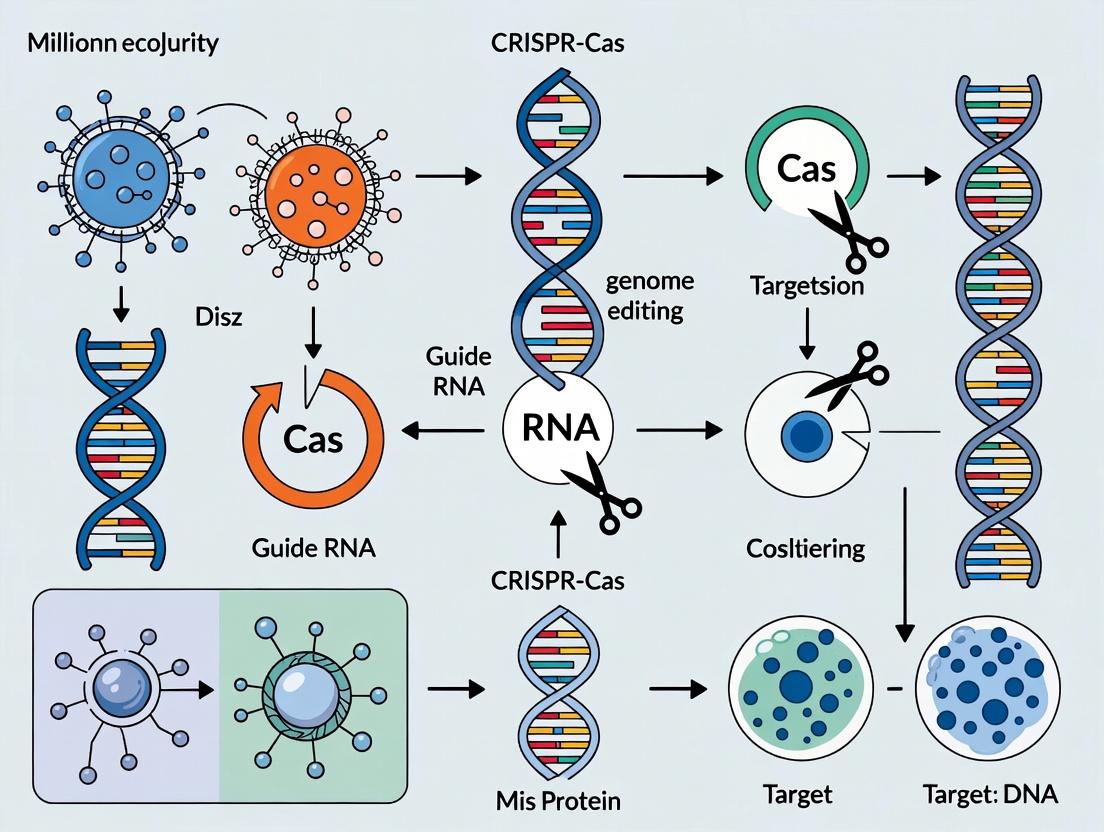
This article provides a comprehensive guide for researchers and biotechnology professionals on applying CRISPR-based genome editing to engineer microbial consortia.
CRISPR Engineering of Microbial Consortia: A Next-Generation Platform for Synthetic Biology and Therapeutic Development
Abstract
This article provides a comprehensive guide for researchers and biotechnology professionals on applying CRISPR-based genome editing to engineer microbial consortia. We explore the foundational principles of consortia design and CRISPR delivery, detail advanced methodologies for precise multi-species manipulation, address critical troubleshooting and optimization challenges, and validate strategies through comparative analysis of current tools and approaches. The content synthesizes the latest research to outline a roadmap for harnessing engineered microbial communities in drug development, bioremediation, and industrial biotechnology.
The Blueprint: Core Principles and Design Rationale for CRISPR-Engineered Microbial Ecosystems
Microbial consortia are defined as assemblages of two or more microbial populations that interact, often symbiotically, to perform complex functions unattainable by individual members. These naturally occurring communities, such as those in the human gut, soil, or bioreactors, exhibit emergent properties like metabolic division of labor, enhanced stability, and resilience. The drive to engineer these consortia stems from the limitations of monoculture biotechnology. Engineered consortia offer powerful platforms for distributed biosynthesis of complex drugs, advanced bioremediation, and living therapeutics that can sense and respond to dynamic environments, such as the human gastrointestinal tract. Within the broader thesis on CRISPR genome editing, this research focuses on leveraging CRISPR tools to precisely rewire inter-species interactions and metabolic pathways in synthetic consortia, moving beyond single-organism manipulation to program community-level behavior.
Application Notes
Note 1: Metabolic Cross-Feeding for Drug Precursor Synthesis A common engineering goal is to distribute the metabolic burden of producing a valuable compound, such as the anti-cancer drug precursor taxadiene, across a consortium. This avoids overburdening a single strain and can improve titers.
Table 1: Consortium Performance for Taxadiene Production
| Consortium Design | Member 1 Role | Member 2 Role | Max Titer (mg/L) | Stability (Days) | Reference Year |
|---|---|---|---|---|---|
| E. coli / E. coli | Upstream Pathway (IPP production) | Downstream Pathway (Taxadiene synthesis) | 58.0 | 5 | 2023 |
| E. coli / S. cerevisiae | Provides Acetate | Converts Acetate to Taxadiene | 33.5 | 7 | 2024 |
| B. subtilis / E. coli | Provides Mevalonate | Converts Mevalonate to Taxadiene | 72.3 | 10+ | 2024 |
Note 2: CRISPR-Mediated Population Control CRISPR tools enable dynamic population control. A widely used system employs CRISPRi (interference) to repress essential genes in a sub-population based on quorum-sensing signals, maintaining a desired strain ratio critical for co-culture fermentations.
Table 2: Key CRISPR Systems for Consortium Engineering
| System Type | Target Organism | Delivery Method | Key Function in Consortia | Editing Efficiency (%) |
|---|---|---|---|---|
| CRISPR-Cas9 | E. coli | Plasmid | Knockout of competitive pathways | 85-99 |
| CRISPRi (dCas9) | B. subtilis | Chromosomal integration | Tunable repression of growth genes | 70-95 |
| CRISPRa (dCas9-activator) | S. cerevisiae | Plasmid | Activation of metabolite export genes | 60-80 |
| CRISPR-Cas12a | Diverse Soil Bacteria | Conjugation | Broad-host-range editing | 40-75 |
Experimental Protocols
Protocol 1: Establishing a Synthetic, Cross-Feeding Consortium Objective: To co-culture two E. coli strains engineered for obligatory metabolic cross-feeding (e.g., strain A requires lysine, strain B requires methionine).
- Strain Preparation: Grow mono-cultures of auxotrophic strains A and B overnight in LB medium supplemented with their required amino acids (50 µg/mL).
- Consortium Inoculation: Wash cells 3x in minimal M9 medium. Mix strains at a 1:1 ratio based on OD600. Inoculate 1 mL of M9 without amino acids at a starting total OD600 of 0.05.
- Cultivation: Grow in a 37°C shaker (250 rpm). Monitor OD600 and strain ratios every 2 hours for 12 hours.
- Ratio Quantification: Use flow cytometry with strain-specific fluorescent markers (e.g., GFP vs. mCherry) to quantify population dynamics.
- Metabolite Analysis: At stationary phase, use HPLC-MS to quantify the exchanged metabolites (lysine, methionine) in the supernatant.
Protocol 2: Implementing CRISPRi-Based Population Feedback Control Objective: To use a quorum-sensing signal (AHL) to trigger CRISPRi-mediated growth inhibition of an "overgrown" strain.
- Circuit Assembly: Clone a CRISPRi module targeting an essential gene (e.g., dnaB) in the "controller" strain under an AHL-inducible promoter (pLux). The "target" strain produces AHL constitutively.
- Calibration: Characterize the dose-response of the pLux promoter to AHL in mono-culture.
- Co-culture Experiment: Co-culture controller and target strains in minimal medium. Sample periodically.
- Monitoring: Measure total CFU/mL via plating and individual strain ratios via selective antibiotic plates or fluorescence. Extract and sequence genomic DNA to confirm CRISPRi-mediated repression via qPCR of the target gene.
Diagrams
Workflow for Engineering a CRISPR-Edited Microbial Consortium
Quorum-Sensing Feedback Loop for Population Control
The Scientist's Toolkit
Table 3: Key Research Reagent Solutions for Consortium Engineering
| Item | Function in Research | Example Product/Catalog |
|---|---|---|
| Broad-Host-Range CRISPR Plasmids | Enables genetic manipulation across diverse bacterial species in a consortium. | pKHR (Addgene #187712) |
| Synthetic AHL Quorum Sensing Molecules | Precise chemical induction of communication circuits; calibrate cross-talk. | N-(3-Oxododecanoyl)-L-homoserine lactone (Cayman Chemical #10010129) |
| Fluorescent Protein Plasmids (GFP, mCherry) | Visual tagging for flow cytometry or microscopy-based population tracking. | pGEN-GFP (Addgene #19366) |
| Auxotrophic Media Kits (Drop-out) | Selective cultivation to maintain and select for specific consortium members. | Sunrise Science Amino Acid Drop-out Mixes |
| Microbial Co-culture Chemostats | Hardware for maintaining consortia at steady-state under controlled conditions. | DASGIP Parallel Bioreactor System (Eppendorf) |
| Cell-to-Cell Metabolite Analysis Kit | Quantifies metabolites specifically exchanged between co-cultured strains. | Not commercially standardized; requires tailored LC-MS/MS protocols. |
This Application Note details protocols for deploying CRISPR Toolkit 2.0 systems in complex microbial communities. The broader thesis frames these tools as essential for moving beyond single-strain editing to program interactions within synthetic or environmental consortia. Precision editing across species enables the dissection of metabolic cross-feeding, quorum sensing, and the creation of stable, engineered ecosystems for bioproduction and therapeutic applications.
Comparative Analysis of Adapted Cas Enzymes & Systems
The following table summarizes key CRISPR-Cas systems with features amenable to multi-species editing, based on current literature and product availability.
Table 1: CRISPR Toolkit 2.0: Adapted Cas Enzymes for Consortium Editing
| Cas System | Natural Origin (Phylum) | PAM Requirement | Size (aa) | Key Adapted Feature for Multi-Species Use | Primary Application in Consortia |
|---|---|---|---|---|---|
| SpCas9 (Standard) | Streptococcus pyogenes (Firmicutes) | 5'-NGG-3' | 1368 | Broad heterologous expression; extensive gRNA libraries. | Knockouts in diverse Gram-negative bacteria with compatible expression systems. |
| SaCas9 | Staphylococcus aureus (Firmicutes) | 5'-NNGRRT-3' | 1053 | Smaller size for delivery with diverse vectors (e.g., phage). | Editing in species with restrictive vector size limits. |
| Cas12a (Cpfl) | Lachnospiraceae bacterium (Firmicutes) | 5'-TTTV-3' | 1300 | T-rich PAM; creates staggered cuts; processes own crRNAs. | Multiplexed editing and transcriptional repression in consortia. |
| dCas9-SunTag | Engineered (Fusion) | N/A (nuclease dead) | ~1800 (complex) | Recruits multiple effector proteins; amplifies signal. | High-level activation of silent biosynthetic gene clusters across species. |
| CasMINI | Engineered (from Cas12f) | 5'-T-rich-3' | 529 | Ultra-compact size for broad delivery. | Editing in hard-to-transform consortium members. |
| CasΦ (Cas12-φ) | Biggiephage (Phage) | 5'-TBN-3' | ~700-800 | Compact, phage-derived; works in high-GC content genomes. | Targeting pathogens or modulating phage-host dynamics within a consortium. |
Detailed Application Notes and Protocols
Protocol 3.1: Consortium-Wide Gene Knockout Using Broad-Host-Range Vectors
Aim: To simultaneously disrupt a target gene (e.g., luxS for quorum sensing) in multiple bacterial species within a defined coculture. Background: Uses a broad-host-range plasmid (e.g., pBBR1 or RSF1010 origin) expressing SaCas9 (for size) and a conserved gRNA.
Materials (Research Reagent Solutions):
- pBHR-SaCas9-gRNA Array: Broad-host-range vector encoding SaCas9 and up to 3 gRNAs targeting conserved regions.
- Electrocompetent Cells: For individual consortium members.
- Consortium Growth Medium: Defined medium supporting all species.
- Selection Antibiotics: Specific for the vector in each species (must be pre-determined).
- CRISPR-Cas9 Efficiency Quantifier Kit (Commercial): For measuring indel rates via next-gen sequencing.
Method:
- Individual Transformation: Transform the pBHR-SaCas9-gRNA plasmid into electrocompetent cells of each consortium member species individually. Confirm transformation via plating on selective media.
- Pre-Consortium Assembly: Grow each transformed strain individually to mid-log phase in selective medium.
- Consortium Assembly & Editing: Mix strains at desired starting ratios (e.g., 1:1:1 OD600). Inoculate consortium into fresh, selective medium to induce Cas9 expression (add inducer if using inducible promoter). Culture for 48-72 hours.
- Harvest and Analysis: Sample the consortium at time points. Serial dilute and plate on selective media to isolate individual species colonies. Screen 10-20 colonies per species via colony PCR and Sanger sequencing of the target locus to confirm editing efficiency.
Protocol 3.2: Cross-Species Transcriptional Activation using dCas9-SunTag
Aim: To activate a silent antibiotic production gene cluster in one species using a transcriptional activator expressed in a different, "driver" species. Background: Explorts inter-species signaling and protein secretion.
Materials (Research Reagent Solutions):
- Strain A (Driver): E. coli with Type III/VI secretion system expressing dCas9-SunTag and gRNA.
- Strain B (Target): Contains silent BGC with upstream guide target.
- Strain B (Control): Contains a non-targeting gRNA.
- VP64-p65-Rta (VPR) Effector Plasmid: In Driver strain, fused to scFv for SunTag binding.
- LC-MS/MS Kit: For detecting activated secondary metabolite production.
Method:
- Strain Engineering: Engineer Driver Strain A to express dCas9-SunTag and a gRNA targeting the promoter region of the target BGC in Strain B. Co-express the VPR effector. Engineer a control driver with non-targeting gRNA.
- Coculture Setup: Coculture Driver Strain A with Target Strain B in a 2:1 ratio in appropriate medium. Include controls (Driver Control + Strain B; Strain B alone).
- Induction & Culture: Induce expression of the SunTag system and secretion machinery. Culture for 24-48 hours.
- Monitoring Activation: Harvest cells and supernatant. For supernatant: Perform LC-MS/MS to detect and quantify the specific secondary metabolite. For cells: Perform RT-qPCR on Target Strain B to measure transcript levels of key genes from the activated BGC.
Visualized Workflows and Pathways
Title: Workflow for Multi-Species Gene Knockout
Title: Cross-Species Gene Activation via Secreted dCas9-SunTag
The Scientist's Toolkit: Key Research Reagent Solutions
Table 2: Essential Reagents for CRISPR Consortium Editing
| Reagent / Solution | Function / Application |
|---|---|
| Broad-Host-Range Cloning Kit (e.g., pBBR1 MCS) | Provides vectors with replicons functional across diverse Gram-negative species, essential for delivering CRISPR machinery. |
| Species-Specific Electrocompetent Cell Preparation Kit | Enables high-efficiency transformation of consortium members that are not commercially available as competent cells. |
| Genome-Wide gRNA Library for Non-Model Bacteria | Pre-designed libraries targeting conserved essential genes for consortium fitness screens. |
| dCas9 Effector Fusion Library (VP64, VPR, KRAB) | Modular activators/repressors for cross-species transcriptional programming in consortia. |
| CRISPR Delivery Phage Particles (Phagemid) | For overcoming transformation barriers in hard-to-edit consortium members via transduction. |
| Microbial Consortium Tracking Kit (Barcoded) | Uses genetic barcodes and amplicon sequencing to track edited strain abundance and dynamics over time. |
| Cas9 Cleavage Detection Kit (T7E1/SURVEYOR) | Validates editing efficiency in mixed samples by detecting heteroduplex formation post-PCR. |
| Chromatin Immunoprecipitation (ChIP) Kit for dCas9 | Maps dCas9 binding sites across species in a consortium context to assess off-target binding. |
Within the broader thesis of engineering microbial consortia using CRISPR genome editing, the targeted delivery of genetic cargo (e.g., CRISPR-Cas systems, regulatory genes) to specific consortium members is a critical challenge. This document details three primary delivery mechanisms—conjugative plasmids, bacteriophages, and synthetic nanocarriers—highlighting their applications, quantitative performance, and protocols for use in consortia research.
Table 1: Quantitative Comparison of Delivery Mechanisms for Microbial Consortia
| Mechanism | Typical Payload Size (kb) | Delivery Efficiency* (%) | Host Range | Temporal Control | Key Advantage for Consortia |
|---|---|---|---|---|---|
| Conjugative Plasmids | 10 - 500 | 10^-1 - 10^-5 (per recipient) | Broad, among Gram-negative bacteria | Low (constitutive) | Horizontal gene transfer mimics natural interactions. |
| Engineered Phages | ≤ 10 (packaging limit) | 10^8 - 10^10 PFU/mL; high MOI-dependent | Extremely narrow (strain-specific) | High (by addition) | Exceptional species/strain specificity. |
| Synthetic Nanocarriers | Variable (DNA, RNA, proteins) | 1 - 80% (highly variable with formulation) | Broad (chemically tunable) | High (by addition) | Chemically programmable; can target non-bacterial cells. |
*Delivery Efficiency: Conjugation = transconjugants per donor; Phage = plaque-forming units (PFU); Nanocarriers = % of target cell population transfected.
Experimental Protocols
Protocol 3.1: Targeted Delivery via Conjugative Plasmid (RP4-based) in a Dual-Species Consortium
Aim: To deliver a CRISPR-Cas9 plasmid from an engineered E. coli donor to a specific Pseudomonas putida recipient within a co-culture.
Materials: See Scientist's Toolkit (Section 5).
Method:
- Donor and Recipient Preparation: Grow donor E. coli (carrying RP4-based conjugative plasmid with CRISPR payload and selective marker aacC1, gentamicin-resistant) and recipient P. putida (with chromosomal kanR marker) to mid-log phase (OD600 ~0.5) in LB with appropriate antibiotics.
- Mating on Solid Support: Mix donor and recipient cells at a 1:10 ratio (donor:recipient). Concentrate 1 mL of mixed culture by centrifugation (8,000 x g, 2 min). Resuspend pellet in 50 µL LB. Spot onto a sterile 0.22 µm nitrocellulose filter placed on non-selective LB agar. Incubate at 30°C for 4-6 hours.
- Selection of Transconjugants: Resuspend cells from the filter in 1 mL fresh LB. Plate serial dilutions onto LB agar plates containing both gentamicin (selects for plasmid) and kanamycin (selects for P. putida). Incubate at 30°C for 24-48 hours.
- Validation: Count colony-forming units (CFU). Verify transconjugants via colony PCR for the CRISPR payload and by assessing the intended genomic edit.
Protocol 3.2: Phage-Mediated Delivery (λ Phage) of a Base Editor toE. coli
Aim: To use engineered lambda phage for transduction of a cytosine base editor (CBE) gene cassette.
Materials: See Scientist's Toolkit (Section 5).
Method:
- Phage Propagation & Titering: Propagate engineered λ phage (with packaged CBE expression cassette replacing non-essential genes) in an E. coli host per standard protocols. Determine phage titer via plaque assay.
- Transduction: Grow the target E. coli consortium member to OD600 ~0.3. Mix cells with phage at an MOI (Multiplicity of Infection) of 1-5 in a total volume of 500 µL of LB + 10 mM MgSO4 (stabilizes phage). Incubate at 37°C for 30 min without shaking to allow adsorption.
- Outgrowth and Selection: Add 2 mL of LB broth and incubate with shaking for 1 hour to allow expression of the antibiotic resistance marker on the transduced cassette. Plate onto selective agar plates. Incubate overnight.
- Analysis: Screen colonies for the presence of the CBE cassette and sequence target genomic loci to quantify base editing efficiency.
Protocol 3.3: Lipid-Based Nanocarrier (Lipoplex) Delivery to Bacterial Cells
Aim: To transfert a CRISPR-Cas9 ribonucleoprotein (RNP) complex into a model bacterium.
Materials: See Scientist's Toolkit (Section 5).
Method:
- RNP Complex Formation: Assemble Cas9 protein with sgRNA (targeting chromosomal gene) at a 1:2 molar ratio in nuclease-free buffer. Incubate at 25°C for 10 minutes.
- Lipoplex Preparation: Dilute cationic lipid transfection reagent (e.g., Lipofectamine) in serum-free medium per manufacturer's instructions. Mix the diluted lipid gently with the pre-formed RNP complex. Incubate at room temperature for 15-20 minutes to form lipoplexes.
- Bacterial Transfection: Harvest mid-log phase bacterial cells. Wash and resuspend in an appropriate electroporation-like buffer (e.g., 10% glycerol). Gently mix the bacterial suspension with the lipoplex solution. Incubate at the optimal growth temperature for 2-4 hours.
- Recovery and Screening: Plate cells on non-selective media for recovery. After 24 hours, screen individual colonies via PCR and sequencing for indel mutations at the target locus.
Visualizations
Title: Conjugative Plasmid Delivery Workflow
Title: Phage-Mediated CRISPR Delivery
Title: Nanocarrier Lipoplex Formation & Delivery
The Scientist's Toolkit
Table 2: Key Research Reagent Solutions for Consortia Delivery Experiments
| Item | Function in Context | Example/Supplier Note |
|---|---|---|
| RP4/oriT-based Suicide Vector | Contains origin of transfer (oriT) for conjugation; suicide in recipient to force genomic integration. | pK18mobsacB or similar; allows for allelic exchange. |
| Broad-Host-Range Conjugative Plasmid | Self-transmissible vector for heterologous gene expression across species. | pBBR1MCS-2 with added mob and tra from RP4. |
| Engineered λ Phage Lysate | High-titer phage stock genetically modified to carry CRISPR payloads. | Prepared via transfection of packaging cell line; titer >10^9 PFU/mL. |
| Cationic Lipid Transfection Reagent | Forms lipoplexes with nucleic acids or proteins for membrane fusion/transfection. | Lipofectamine 3000 or custom-synthesized lipids like DOTAP. |
| CRISPR-Cas9 RNP Complex | Pre-assembled, active editing machinery for direct delivery, avoiding host transcription. | Commercially available Alt-R S.p. Cas9 Nuclease 3NLS. |
| Membrane Permeabilizers | Chemicals that temporarily disrupt cell envelopes to enhance nanocarrier entry. | Sub-inhibitory concentrations of Tris-EDTA or polymyxin B nonapeptide. |
| Fluorescent Reporter Plasmids | Visual confirmation of delivery success and efficiency via fluorescence (GFP, mCherry). | pUC18-mini-Tn7T-Gm-GFP for chromosomal integration in Gram-negatives. |
| Selective Antibiotics (Gentamicin, Kanamycin) | For selective growth of transconjugants/transductants after delivery event. | Use at consortium-specific minimum inhibitory concentrations (MICs). |
Introduction This application note provides a detailed framework for designing and engineering synthetic microbial consortia, framed within the broader thesis of leveraging CRISPR genome editing for advanced consortium research. The protocols focus on establishing foundational systems that progress from simple, controllable interactions to complex, stable networks with applications in bioproduction and therapeutic development.
Table 1: Quantitative Parameters for Co-culture System Design
| Parameter | Simple 2-Strain Auxotroph | 3-Strain Metabolic Loop | Complex Network (n>3) |
|---|---|---|---|
| Number of Engineered Dependencies | 1 (Unidirectional) | ≥2 (Bidirectional) | ≥n (Highly Interconnected) |
| Typical Growth Rate (μ, h⁻¹) | 0.2 - 0.4 | 0.15 - 0.3 | 0.1 - 0.25 |
| Stabilization Time (h) | 24 - 48 | 48 - 96 | >120 |
| Key Measurement (OD₆₀₀) | Ratio (Strain A/Strain B) | Absolute density of each strain | Population dynamics via markers |
| CRISPR Use Case | Knock-out of essential gene | Knock-in of heterologous pathway | Multiplexed repression/activation |
| Communication Molecule | Shared metabolite (e.g., amino acid) | Two or more exchanged metabolites | AI-2, AHLs, or other quorum signals |
Protocol 1: Establishing a Simple, CRISPR-Engineered Auxotrophic Pair
Objective: To create and validate a stable, obligatory co-culture of two strains, each lacking an essential gene for a metabolite the other provides.
Materials & Reagents:
- Bacterial Strains: E. coli MG1655 or other suitable chassis.
- Growth Media: M9 minimal medium + 0.4% carbon source (e.g., glucose).
- CRISPR Plasmids: pTarget series or similar, with designed sgRNAs targeting araB (strain A) and leuB (strain B). Donor DNA for repair (if using HDR).
- Antibiotics: As required for plasmid/cassette maintenance.
- Analytical: HPLC or LC-MS for metabolite quantification; plate reader for growth.
Procedure:
- CRISPR Knock-out: Independently transform each parental strain with CRISPR plasmids to generate deletions in araB (involved in arabinose metabolism, precursor for Strain B) and leuB (involved in leucine biosynthesis for Strain A). Verify auxotrophy on selective plates.
- Pre-culture: Grow each auxotrophic strain separately in M9 medium supplemented with the required metabolite (50 µg/mL arabinose for ΔaraB; 50 µg/mL leucine for ΔleuB).
- Co-culture Inoculation: Wash cells 3x in unsupplemented M9. Inoculate a fresh M9 flask with a 1:1 initial OD₆₀₀ ratio of the two strains. Use a total starting OD₆₀₀ of 0.05.
- Monitoring: Incubate at 37°C with shaking. Monitor co-culture OD₆₀₀ and strain ratios every 4-6 hours for 48h via colony-forming unit (CFU) counts on differential media or via fluorescent markers.
- Validation: At 24h, sample culture supernatant. Quantify arabinose and leucine concentrations via HPLC to confirm cross-feeding.
Diagram 1: Simple Auxotrophic Pair Workflow
Protocol 2: Constructing a 3-Strain Metabolic Loop with Quorum Sensing Control
Objective: To engineer a stable consortium of three strains where survival is governed by a circular metabolic exchange and population density is regulated via CRISPR-interfaced quorum sensing.
Materials & Reagents:
- Strains: Three engineered E. coli strains (S1, S2, S3).
- Plasmids:
- S1: Produces metabolite M1 (e.g., indole); carries luxI gene (produces AHL).
- S2: CRISPRa system (dCas9-VPR) under AHL-inducible promoter; targets promoter for M2 (e.g., acetate scavenging) biosynthesis genes.
- S3: CRISPRi system (dCas9-sgRNA) under AHL-inducible promoter; represses degradation enzyme for M3 (e.g., arabinose).
- Media: Defined minimal medium lacking M1, M2, M3.
- Inducer/Analyte: Synthetic AHL for calibration; LC-MS/MS for metabolite analysis.
Procedure:
- Strain Construction: Use CRISPR-HDR to integrate the required genetic modules (luxI, metabolite pathways, CRISPRa/i systems with their respective sgRNAs) into the genome of each base strain.
- Individual Characterization: Calibrate each strain's response to AHL and production/consumption of its target metabolite in monoculture.
- Loop Assembly: Inoculate all three strains at equal OD in fresh minimal medium. Use an initial AHL pulse (10 nM) if necessary to initiate the circuit.
- Dynamic Monitoring: Sample every 3 hours for 96h. Measure: i) OD and strain ratios (via flow cytometry), ii) AHL concentration (reporter assay or MS), iii) Metabolite M1, M2, M3 concentrations.
- Perturbation Test: At 48h, dilute the culture 1:10 in fresh medium to test circuit resilience and re-stabilization.
Diagram 2: 3-Strain Metabolic Loop with QS
The Scientist's Toolkit: Key Research Reagent Solutions
| Item | Function in Consortia Research |
|---|---|
| CRISPR/dCas9 Variant Plasmids (a/i) | Enables precise, tunable transcriptional activation (CRISPRa) or repression (CRISPRi) of multiple genes across consortium members without cutting DNA. |
| sgRNA Library Pools | For multiplexed engineering or screening of genetic perturbations that affect community behavior and stability. |
| Synthetic AHL / AI-2 Molecules | Defined quorum sensing inducters to exogenously control timing and strength of inter-strain communication circuits. |
| Fluorescent Protein / Antibiotic Resistance Markers | Stable, orthogonal markers for tracking individual strain population dynamics in real-time via flow cytometry or plating. |
| Minimal Defined Media Kits | Essential for eliminating cross-feeding from complex media components, forcing engineered metabolic interactions. |
| Microfluidic Co-culture Devices | Provides physical compartmentalization and high-throughput analysis of pairwise and higher-order interactions. |
| LC-MS/MS Metabolomics Suites | For absolute quantification of cross-fed metabolites, signaling molecules, and pathway intermediates. |
Within the broader thesis on CRISPR genome editing of microbial consortia, the engineering of synthetic communities presents a transformative approach for complex bioproduction, bioremediation, and therapeutic applications. A core challenge lies in moving beyond single-strain engineering to design and control multi-species systems. This necessitates rigorous metrics to quantify the dynamic, interdependent behaviors of consortium members. This Application Note details the key metrics—Stability, Robustness, and Emergent Functions—and provides protocols for their measurement, directly supporting research aimed at creating predictable, resilient, and functionally sophisticated CRISPR-edited consortia for drug development and beyond.
Defining and Quantifying Key Metrics
The performance of an engineered consortium is evaluated through three interdependent lenses.
Stability refers to the ability of a consortium to maintain its intended species composition and functional output over time under constant environmental conditions. It is a measure of internal homeostasis.
Robustness is the capacity of a consortium to maintain its stability and function in the face of external perturbations, such as shifts in nutrient availability, pH, temperature, or the introduction of invasive species.
Emergent Functions are novel properties or behaviors that arise from the interactions between consortium members and are not present in any individual member in isolation. These are the target high-value outputs of consortium engineering.
Quantitative Metrics Table
The following table summarizes the core quantitative measures for each key metric.
Table 1: Key Metrics for Engineered Consortia
| Metric | Sub-Category | Measured Variable | Typical Measurement Method | Target Value/Goal |
|---|---|---|---|---|
| Stability | Compositional | Species Abundance Ratio | qPCR, 16S rRNA sequencing, Flow Cytometry | CV < 15% over 50+ generations |
| Functional | Metabolite/Target Product Titer | HPLC-MS, GC-MS, Fluorescent Reporter Assay | Consistent yield (±10%) over time | |
| Population | Total Viable Cell Density (OD600, CFU/mL) | Spectrophotometry, Plating | Steady-state maintained | |
| Robustness | Resilience | Recovery time (Tr) to steady-state post-perturbation | Time-series measurements of above variables | Minimize Tr |
| Resistance | Magnitude of deviation from baseline post-perturbation | As above | Minimize deviation amplitude | |
| Functional Redundancy | Performance upon knockdown/out of a member species | Targeted CRISPRi/a or antibiotic ablation | >70% function retained | |
| Emergent Functions | Synthetic Ecology | Cross-feeding efficiency (e.g., [Product] / [Precursor]) | Metabolomics, Enzyme Assays | Efficiency > theoretical maximum for single strain |
| Consortium Productivity | Specific productivity (mg product / L / hr / OD) | Combined product & biomass measurement | Exceeds sum of monoculture productivities | |
| Programmable Behavior | Dynamic response range of a logic-gate output | Fluorescence, Bioluminescence | High ON/OFF ratio (>50:1) |
Experimental Protocols
Protocol 3.1: Measuring Compositional Stability and Robustness to Nutrient Perturbation
Objective: Quantify the stability of a 2-member CRISPR-engineered consortium under constant conditions and its robustness to a pulse of limiting nutrient.
Materials: Pre-engineered E. coli Strain A (auxotroph for Leu, produces Indole) and Strain B (auxotroph for Trp, consumes Indole). Defined minimal media with limiting concentrations of Leu and Trp.
Procedure:
- Inoculation & Baseline Stability: Co-inoculate strains A and B at a defined ratio (e.g., 1:1 by OD) in triplicate bioreactors with steady-state chemostats or in well-shaken batch cultures. Maintain constant temperature, pH, and dilution rate (if chemostat).
- Time-Series Sampling: Every 4 hours for 48 hours (batch) or daily at steady-state (chemostat), collect 2 mL samples.
- Sample Processing: Split sample: 1 mL for OD600 (total biomass) and species-specific qPCR (using engineered CRISPR array-specific probes or fluorescent markers). 1 mL is centrifuged, and supernatant is filtered for HPLC analysis of indole and residual amino acids.
- Perturbation Pulse: At a defined steady-state timepoint (T=0), spike the culture with a 10x bolus of the limiting nutrient (Leu). Continue sampling as in step 2 for an additional 24-48 hours.
- Data Analysis: Calculate the coefficient of variation (CV) for species ratio and product titer during the pre-perturbation period (Stability). For Robustness, calculate the recovery time (Tr) and maximum deviation for each variable post-perturbation.
Protocol 3.2: Validating an Emergent Cross-Feeding Function
Objective: Demonstrate that consortium productivity exceeds the theoretical sum of its monoculture parts.
Materials: Strain X (CRISPR-edited to overexpress pathway enzymes A→B but lacks final enzyme). Strain Y (CRISPR-edited to overexpress final enzyme B→C but lacks early pathway enzymes). Substrate A. Appropriate selective media.
Procedure:
- Monoculture Controls: Inoculate Strain X in media supplemented with Substrate A. Inoculate Strain Y in media supplemented with intermediate B. Measure final titer of Product C after 24h.
- Consortium Culture: Co-inoculate Strains X and Y in media supplemented only with Substrate A. Measure final titer of Product C after 24h.
- Quantification: Use LC-MS to precisely quantify intracellular and extracellular pools of A, B, and C.
- Calculation: Compare the measured consortium yield of C to the (theoretical yield of X + theoretical yield of Y). An emergent function is indicated if consortium yield > sum of monoculture yields, demonstrating efficient cross-feeding of B.
Visualizing Interactions and Workflows
Diagram 1: Consortium Stability & Robustness Framework
Diagram 2: Consortium Engineering & Testing Workflow
The Scientist's Toolkit: Research Reagent Solutions
Table 2: Essential Reagents for Consortium Metrics Research
| Reagent / Material | Supplier Examples | Function in Consortium Research |
|---|---|---|
| CRISPR-Cas9/gRNA Plasmids | Addgene, Thermo Fisher, In-house | Enables precise genomic edits (knock-outs, knock-ins, regulatory control) to create interdependencies. |
| Defined Minimal Media Kits | Teknova, Sunrise Science | Essential for controlling nutrient availability and forcing cross-feeding interactions; ensures reproducibility. |
| Species-Specific qPCR Probe/Primer Sets | IDT, Thermo Fisher | Allows precise, quantitative tracking of individual member abundance in a mixed culture over time. |
| LC-MS/Grade Metabolomics Standards | Sigma-Aldrich, Cambridge Isotope Labs | For absolute quantification of cross-fed metabolites, pathway intermediates, and final products. |
| Fluorescent Protein & Antibiotic Markers | Takara Bio, GoldBio | Provides selectable markers for consortium assembly and visual tracking via flow cytometry. |
| Microfluidic Co-culture Devices | Emulate, CellASIC | Enables high-resolution, single-cell level observation of spatial interactions and dynamics. |
| Live-Cell Metabolic Dyes (e.g., CFSE) | Thermo Fisher | Tracks population growth dynamics and division rates within each consortium member. |
From Theory to Bench: A Step-by-Step Protocol for CRISPR-Mediated Consortia Engineering
Application Notes
This document details a comprehensive workflow for engineering microbial consortia using CRISPR-based genome editing, framed within a thesis focused on programming inter-species interactions for therapeutic and bioproduction applications. The integration of in silico design with streamlined in vivo assembly is critical for the rapid prototyping of complex, multi-strain systems with defined metabolic pathways and regulatory networks.
Key Advantages: This workflow accelerates the Design-Build-Test-Learn (DBTL) cycle for consortium development. In silico tools predict off-target effects and model cross-feeding dynamics, while advanced in vivo assembly techniques enable the simultaneous integration of large genetic constructs across multiple microbial species. This is particularly vital for developing consortia for drug precursor synthesis, where pathway segmentation across species can improve yield and stability over monoculture approaches.
Core Challenges Addressed: The protocol specifically tackles heterogeneity in editing efficiency across diverse bacterial species, the burden of large DNA construct expression, and the stability of engineered interactions in vivo. Recent data (2023-2024) indicates that the use of CRISPR-Cas12a (Cpfl) can improve editing efficiency in GC-rich genomes common in non-model microbes by up to 40% compared to SpCas9. Furthermore, the implementation of CRISPR-mediated base editing and prime editing allows for precise, nick-free modifications, reducing DNA damage response and improving cell viability in fragile consortium members by approximately 60%.
Experimental Protocols
Protocol 1:In SilicoGuide RNA Design and Consortium Modeling
Objective: To design high-specificity gRNAs and model consortium behavior prior to construction.
Target Identification & gRNA Design:
- Input the genomic sequences of all consortium member strains (e.g., E. coli, B. subtilis, S. cerevisiae) into dedicated design platforms (e.g., Benchling, CHOPCHOP, or CRISPy-web).
- For multi-species editing, select a Cas nuclease with broad PAM compatibility (e.g., Cas12a). Design 3-5 gRNAs per target locus.
- Run off-target analysis using the tool's genome databases. Accept gRNAs with zero predicted off-targets with ≤3 mismatches.
- Quantitative Filter: Select the gRNA with the highest predicted on-target efficiency score (typically >60) and the lowest off-target score.
Metabolic and Interaction Modeling:
- Construct a Genome-Scale Metabolic Model (GEM) for each species using platforms like CarveMe or ModelSEED.
- Use constraint-based modeling tools (e.g., COBRApy) to simulate metabolite exchange. Define the objective function (e.g., maximize production of target compound "P").
- Analyze simulation output to identify optimal pathway segmentation and necessary knock-out/knock-in targets.
Protocol 2:In VivoAssembly via CRISPR-Cas9/12a Assisted Recombineering
Objective: To assemble and integrate large DNA constructs (>5 kb) into the genomes of multiple consortium members.
DNA Construct Preparation:
- Design homology arms (HA) of 500-1000 bp flanking the integration site. Synthesize the full linear DNA construct (GOI + HA) as a dsDNA fragment or assemble via Gibson assembly in vitro.
Electrocompetent Cell Preparation & Transformation:
- Grow target bacterial strains to mid-log phase (OD600 ~0.5-0.6).
- Wash cells 3x with ice-cold 10% glycerol. Concentrate 100-fold.
- For each transformation, mix 50 µL of competent cells with 100-500 ng of the linear DNA construct and 100 ng of the relevant CRISPR plasmid (expressing Cas nuclease and the designed gRNA).
- Electroporate at recommended settings for the species (e.g., 1.8 kV for E. coli). Recover in rich medium for 2-3 hours at 37°C.
Selection and Screening:
- Plate on agar containing appropriate antibiotics (for selection of the integrated DNA or the CRISPR plasmid).
- Screen colonies by colony PCR using one primer inside the integrated construct and one primer in the genomic region outside the homology arm.
- Validate correct assembly by Sanger sequencing of the junction regions.
Protocol 3: Consortium Assembly and Phenotypic Validation
Objective: To combine engineered strains and quantify consortium function.
Inoculum Preparation:
- Grow mono-cultures of each engineered strain to stationary phase in defined minimal medium.
- Wash cells 2x with fresh medium to remove spent metabolites.
Co-culture Initiation:
- Inoculate a fresh bioreactor or multi-well plate with defined starting ratios of each strain. A common starting point is a 1:1 ratio for two-member consortia, or equal OD600 for more members.
- Maintain appropriate environmental conditions (temperature, aeration).
Time-course Monitoring:
- Sample at 0, 6, 12, 24, 48, and 72 hours.
- Quantitative Measures:
- Population Dynamics: Use strain-specific selective plating or qPCR with species-specific primers to quantify relative abundances.
- Metabolite Production: Analyze supernatant via HPLC or LC-MS for target compound and key intermediate concentrations.
- System Stability: Serial passage the consortium 10-15 times and re-measure population dynamics and productivity at the endpoint.
Data Presentation
Table 1: Comparison of CRISPR Nucleases for Multi-Species Genome Editing
| Nuclease | PAM Sequence | Guide RNA Length | Key Advantage for Consortia | Avg. Editing Efficiency Range (2023 Data)* | Best For |
|---|---|---|---|---|---|
| SpCas9 | 5'-NGG-3' | 20 nt | High efficiency in model organisms | 70-95% in E. coli; 10-60% in non-models | Rapid editing in well-characterized strains. |
| Cas12a (Cpfl) | 5'-TTTV-3' | 20-24 nt | T-rich PAM, processes own crRNA | 50-85% in high-GC bacteria | Editing AT-rich genomes; multiplexing. |
| SaCas9 | 5'-NNGRRT-3' | 21 nt | Smaller size, different PAM | 40-75% in Bacillus spp. | Species with NGG PAM scarcity. |
| Base Editor (BE4) | NGG (for SpCas9) | 20 nt | C•G to T•A transitions without DSBs | 20-50% (product-dependent) | Introducing precise point mutations. |
| Prime Editor (PE2) | NGG (for SpCas9) | 30-nt pegRNA | All 12 possible base-to-base changes | 10-40% (varies by edit) | Precise, flexible sequence installation. |
*Efficiency defined as percentage of colonies with desired edit among screened colonies.
Table 2: Key Metrics for a Model Two-Strain Therapeutic Consortium (Simulated Data)
| Metric | Time Point (hr) | Strain A (Producer) CFU/mL | Strain B (Regulator) CFU/mL | Target Metabolite (µg/mL) | Intermediate (µg/mL) | pH |
|---|---|---|---|---|---|---|
| Mono-culture A | 24 | 3.2 x 10^9 | N/A | 5.1 | 0.0 | 6.8 |
| Mono-culture B | 24 | N/A | 4.1 x 10^9 | 0.0 | 12.5 | 7.2 |
| Co-culture (1:1) | 0 | 1.0 x 10^6 | 1.0 x 10^6 | 0.0 | 0.0 | 7.0 |
| Co-culture (1:1) | 24 | 1.8 x 10^9 | 2.5 x 10^9 | 42.7 | 3.2 | 7.0 |
| Co-culture (1:1) | 72 | 5.0 x 10^8 | 9.0 x 10^8 | 118.4 | 1.1 | 6.9 |
Diagrams
Title: Strategic Workflow for Engineering Microbial Consortia
Title: Segmented Metabolic Pathway with Cross-Talk in a Two-Strain Consortium
The Scientist's Toolkit
Table 3: Essential Research Reagent Solutions for CRISPR Consortium Engineering
| Reagent / Material | Function in Workflow | Key Consideration |
|---|---|---|
| CRISPR Plasmid Kit (e.g., pCRISPR-Cas12a) | Provides the Cas nuclease and scaffold for gRNA cloning in a broad-host-range vector. | Ensure plasmid compatibility with all target species (replication origin, antibiotic marker). |
| High-Fidelity DNA Assembly Mix (e.g., Gibson Assembly) | Seamlessly assembles multiple DNA fragments (GOI, promoters, homology arms). | Critical for error-free construction of large, complex genetic circuits. |
| Genome-Scale Metabolic Model (GEM) Software (COBRApy) | In silico prediction of metabolic fluxes and identification of optimal pathway segmentation. | Model quality depends on genome annotation completeness. |
| Species-Specific Electroporation Buffer | Prepares competent cells of non-model bacterial species for efficient DNA transformation. | Composition (sucrose, MgCl2, etc.) is often optimized per species or genus. |
| Droplet Digital PCR (ddPCR) Reagents | Absolutely quantifies the abundance of each strain in a consortium from a single sample. | More precise for dynamic populations than standard qPCR or plating. |
| LC-MS Grade Solvents & Standards | Enables accurate identification and quantification of metabolic products and intermediates. | Essential for calculating mass balance and pathway efficiency. |
| Anaerobic Chamber or Sealed Bioreactor | Maintains defined atmospheric conditions for obligate anaerobes in consortia. | Critical for studying gut microbiome-relevant engineered consortia. |
| Fluorescent Reporter Proteins (e.g., sfGFP, mCherry) | Enables real-time, non-destructive tracking of strain-specific gene expression in co-culture. | Choose spectrally distinct fluorophores and confirm no cross-talk. |
Application Notes
Within the paradigm of engineering microbial consortia for therapeutic and industrial applications, a foundational step is the meticulous selection and pre-engineering of robust chassis organisms. This process, framed within CRISPR genome editing research, aims to create stable, cooperative, and controllable community members. Key considerations include:
- Ecological Compatibility: Selected strains must thrive in the shared consortium environment (e.g., gut-mimetic conditions, bioreactor parameters). Growth kinetics, nutrient exchange profiles, and tolerance to metabolic byproducts are quantitatively assessed.
- Genetic Tractability: Chassis organisms must be amenable to high-efficiency CRISPR editing for knock-ins, knock-outs, and regulatory circuit integration.
- Orthogonality & Containment: Engineered genetic circuits must not interfere with native chassis or cross-talk with partner strains. Biosafety measures, such as auxotrophies or kill-switches, are pre-installed.
- Consortium Function: Chassis are pre-engineered with "social" traits, including quorum sensing modules for population control, metabolic cross-feeding pathways, or adhesion proteins for spatial structuring.
Table 1: Quantitative Metrics for Chassis Strain Selection
| Metric | Target Range / Ideal Trait | Measurement Method | Relevance to Consortium Life |
|---|---|---|---|
| Doubling Time | ≤ 90 minutes in target medium | Growth curve (OD600) | Ensures competitive fitness. |
| CRISPR Editing Efficiency | ≥ 80% for gene knockout | Transformation, colony PCR, sequencing | Enables reliable multiplexed engineering. |
| Plasmid Curing Rate | ≥ 95% after counter-selection | Antibiotic sensitivity plating | Facilitates marker-free, stable genome integration. |
| Quorum Sensing Sensitivity | Induction fold-change ≥ 50 | Fluorescence reporter assay (e.g., GFP) | Enables population-density-dependent behavior. |
| Metabolic Burden | < 20% growth reduction from baseline | Growth rate comparison (± circuit) | Maintains chassis fitness post-engineering. |
| Stress Tolerance (pH, Oxidative) | Viability > 60% after shock | CFU count post-exposure | Ensures resilience in dynamic environments. |
Protocols
Protocol 1: High-Throughput Screening for Consortium-Compatible Growth Phenotypes
Objective: Identify candidate chassis strains with compatible growth kinetics and stress tolerance under simulated consortium conditions.
- Inoculate candidate strains (e.g., E. coli Nissle 1917, B. subtilis, L. lactis) in 96-well deep plates with defined consortium medium.
- Culture in a plate reader at 37°C with continuous shaking. Monitor OD600 every 15 minutes for 24 hours.
- Apply Stressors at mid-exponential phase (OD600 ~0.5): Add sterile lactic acid (pH 5.5) or hydrogen peroxide (1 mM). Resume monitoring for 12 hours.
- Analyze Data: Calculate maximum growth rate (µ_max), lag time, and stress recovery rate. Select strains with complementary phases and high robustness.
Protocol 2: CRISPR-Cas9 Mediated Knock-in of Quorum Sensing Receiver Module
Objective: Integrate a luxR-type receiver gene and its cognate promoter driving a reporter (mScarlet-I) into the chassis genome. Materials: pCas9cr4 plasmid (addgene #62655), pACRISPR donor plasmid (custom), electrocompetent chassis cells, SOC recovery medium, LB agar plates with appropriate antibiotics.
- Design: Design sgRNA targeting a neutral genomic "safe-haven" locus (e.g., ykgC in E. coli). Synthesize homology arms (500 bp) flanking the donor cassette (PluxI-luxR-PluxI-mScarletI).
- Prepare Cells: Transform the pCas9cr4 plasmid (constitutively expressing Cas9 and λ-Red proteins) into chassis and prepare electrocompetent cells.
- Electroporation: Mix 100 ng of pACRISPR donor plasmid (containing sgRNA and donor DNA) with 50 µL competent cells. Electroporate at 1800 V.
- Recovery & Screening: Recover in SOC for 2 hours at 30°C. Plate on selective agar. Screen colonies via PCR and Sanger sequencing for correct integration.
- Curing: Incubate positive colonies at 37°C without selection to cure the pCas9cr4 plasmid. Verify loss via antibiotic sensitivity.
Protocol 3: Validation of Orthogonal Communication in Co-culture
Objective: Confirm engineered chassis responds only to its cognate signal (AHL-1) and not to cross-talk signals (AHL-2) from a partner strain.
- Engineer two chassis strains: Strain A (Receiver from Protocol 2), Strain B (engineered to produce AHL-1 or AHL-2).
- Set Up Co-cultures: In a 24-well plate, inoculate Strain A with either: a) Strain B (AHL-1 producer), b) Strain B (AHL-2 producer), c) Control Strain B (no AHL).
- Monitor: Incubate at 37°C with shaking. Measure mScarlet-I fluorescence (Ex/Em: 569/594 nm) and OD600 every hour for 12 hours.
- Quantify Specificity: Calculate fold-induction of fluorescence normalized to OD600. Specific activation should only occur in co-culture (a).
Diagrams
Strain Selection and Pre-engineering Workflow
Engineered Quorum Sensing Receiver Pathway
The Scientist's Toolkit: Research Reagent Solutions
Table 2: Essential Materials for Chassis Pre-engineering
| Item | Function in Pre-engineering | Example/Supplier |
|---|---|---|
| CRISPR-Cas9 Plasmid System | Enables targeted genome editing. Provides Cas9 and recombinase proteins. | pCas9cr4 (Addgene), pORTMAGE-2. |
| Synthetic Donor DNA Fragments | Serves as homology-directed repair (HDR) template for precise knock-ins. | Gibson Assembly fragments, gBlocks (IDT). |
| Defined Consortium Growth Medium | Mimics the target environment (e.g., minimal medium, simulated gut medium). Enables compatibility screening. | Custom formulations, M9 + specific carbon sources. |
| Fluorescent Protein Reporters | Quantifies gene expression and circuit activity in real-time. | mScarlet-I (bright red), sfGFP (green). |
| Quorum Sensing Ligands | Pure chemical inducers (AHLs, AIPs) for calibrating and testing communication circuits. | Cayman Chemical, Sigma-Aldrich. |
| Electroporation Apparatus | High-efficiency transformation method for delivering CRISPR plasmids into chassis strains. | Bio-Rad Gene Pulser. |
| Plate Reader with Fluorescence | High-throughput kinetic measurement of growth (OD) and reporter output. | Tecan Spark, BMG Labtech CLARIOstar. |
| Neutral Genomic Locus Kit | Pre-validated DNA targets for stable, low-burden integration in common chassis. | E. coli HME63 (NEB), B. subtilis amyE locus vectors. |
This protocol details methodologies for the coordinated delivery of CRISPR-Cas machinery to diverse microbial species within a consortium. The goal is to enable simultaneous genetic perturbations across taxonomic boundaries (e.g., in synthetic co-cultures of Escherichia coli, Bacillus subtilis, and Pseudomonas putida), facilitating the study of interspecies interactions, pathway optimization, and community-level phenotypes. A key challenge is the development of delivery vectors and conditions that transcend host-specific barriers to transformation and editing efficiency.
Table 1: Comparison of Broad-Host-Range (BHR) Delivery Systems for Multi-Species CRISPR Editing
| Delivery System | Typical Host Range | Editing Efficiency Range* | Key Advantage | Primary Limitation |
|---|---|---|---|---|
| RP4-based Conjugation | Gram-negative, some Gram-positive | 10⁻³ – 10⁻¹ | Very broad range, high DNA transfer capacity | Time-consuming, requires donor strain |
| RK2-based Vectors | Broad Gram-negative | 10⁻⁴ – 10⁻² | Stable maintenance in diverse hosts | Lower efficiency in non-enterics |
| Mobilizable Plasmids | Customizable via oriT | 10⁻⁵ – 10⁻² | Flexible, combines with various conjugative systems | Requires helper plasmid/donor |
| Electroporation with BHR Vectors | Physically permeable species | 10⁻⁴ – 10⁻¹ | Rapid, no donor required | Host-specific optimization critical |
| Transduction (Phage) | Highly species-specific | 10⁻³ – 10⁻¹ | Highly efficient within host range | Extremely narrow taxonomic reach |
*Efficiency defined as percentage of recipient cells receiving and expressing the CRISPR machinery. Actual values are species- and construct-dependent.
Table 2: Editing Outcomes in a Model Tri-Species Consortium (E. coli, B. subtilis, P. putida)
| Target Species | Target Gene | Delivery Method | Average Editing Efficiency (%) | Phenotypic Knockout Confirmation |
|---|---|---|---|---|
| E. coli | lacZ | RP4 Conjugation | 98.2 ± 1.1 | Yes (Blue/White assay) |
| B. subtilis | amyE | Mobilizable Plasmid (pLS20 oriT) | 65.4 ± 8.7 | Yes (Starch hydrolysis) |
| P. putida | gfp | RK2 Vector Electroporation | 78.9 ± 5.2 | Yes (Fluorescence loss) |
| All Three | Species-specific markers | Coordinated Conjugation | E. coli: 95.1, B. subtilis: 41.3, P. putida: 70.2 | Coordinated loss of function observed |
Experimental Protocols
Protocol 3.1: Tri-Parental Mating for Coordinated RP4-Based Plasmid Delivery Objective: Transfer a CRISPR-Cas9 plasmid from an E. coli donor to multiple recipient species simultaneously. Materials: Donor E. coli (with helper plasmid pRK2013), Mobilizer E. coli (with RP4-based CRISPR plasmid), Recipient cultures (B. subtilis, P. putida), LB broth, LB agar plates, appropriate antibiotics, sterile filters (0.22 µm). Steps:
- Grow donor, mobilizer, and all recipient strains to mid-log phase (OD600 ~0.5-0.6).
- Mix 100 µL of each strain in a 1.5:1.5:1 ratio (donor:mobilizer:each recipient) on a sterile membrane filter placed on LB agar.
- Incubate agar plate (non-selective) at 30°C for 6-8 hours for conjugation.
- Resuspend the cell mixture from the filter in sterile LB broth.
- Plate serial dilutions on selective agar containing antibiotics that select for the CRISPR plasmid in the recipients and counter-select against the donor E. coli strains.
- Incubate plates at optimal temperatures for each recipient (e.g., 30°C for P. putida, 37°C for B. subtilis) for 24-48 hours.
- Screen transconjugant colonies by colony PCR and sequencing for CRISPR target sites.
Protocol 3.2: Electroporation of Broad-Host-Range CRISPR Plasmids into Diverse Recipients Objective: Direct transformation of multiple species with a common CRISPR plasmid. Materials: BHR plasmid (e.g., pBBR1 ori), Gene Pulser, Electroporation cuvettes (2 mm gap), ice-cold 10% glycerol, SOC recovery medium. Steps:
- Prepare electrocompetent cells for each target species using standard protocols (wash extensively with ice-cold 10% glycerol).
- Aliquot 50 µL of competent cells, mix with 100-200 ng of purified BHR CRISPR plasmid.
- Electroporate using species-optimized parameters (e.g., E. coli: 2.5 kV, 200Ω, 25µF; P. putida: 2.0 kV, 400Ω, 25µF).
- Immediately add 1 mL SOC medium, recover with shaking (1-3 hours at optimal temperature).
- Plate on selective media and incubate. Screen colonies as in Protocol 3.1.
Visualization Diagrams
Title: Multi-Species CRISPR Editing Workflow
Title: CRISPR Plasmid Transfer via Conjugation
The Scientist's Toolkit: Essential Research Reagents & Materials
Table 3: Key Reagent Solutions for Multi-Species CRISPR Delivery
| Item | Function & Application | Example/Catalog Consideration |
|---|---|---|
| Broad-Host-Range (BHR) Cloning Vectors | Plasmid backbone capable of replication in diverse species. Essential for maintaining CRISPR machinery across taxa. | pBBR1 (oriV), RK2/RP4-based vectors (e.g., pUCP series, pJB3), RSF1010 derivatives. |
| Mobilizable Helper Plasmids | Provide conjugation machinery in trans to transfer mobilizable CRISPR plasmids from donor to recipients. | pRK2013 (provides RP4 tra genes), pUX-BF13. |
| Species-Specific Electroporation Kits | Optimized buffers and protocols for preparing competent cells of non-model environmental isolates. | Custom buffers (e.g., 10% glycerol + 0.5M sucrose for Gram-positives). |
| Universal CRISPR-Cas9 Expression Cartridges | Pre-assembled Cas9 + gRNA scaffold cassettes compatible with BHR vectors, reducing cloning steps. | Synthesized modules with promoters like P_{J23119} (constitutive, broad) or P_{tet} (inducible). |
| Taxon-Selective Antibiotics | For selective plating post-delivery to isolate specific consortium members carrying the CRISPR plasmid. | Use species-specific resistance markers (e.g., trimethoprim for many Gram-negatives, spectinomycin for Gram-positives). |
| High-Fidelity DNA Assembly Master Mix | For efficient cloning of gRNA sequences into BHR vectors, critical when building libraries for multiple targets. | Gibson Assembly, NEBuilder HiFi. |
| Consortium Growth Media | Chemically defined or complex media that supports the co-culture of all target species for post-editing community phenotyping. | M9 minimal medium with suited carbon sources, or diluted LB. |
Case Study: Enhanced Butyrate Production in a Synthetic Gut Consortium
Application Note: This case study demonstrates the use of CRISPRi to modulate carbon flux in a co-culture of Escherichia coli and Clostridium butyricum to enhance butyrate yield, a metabolite with therapeutic value for gut health.
Key Experimental Data
Table 1: Butyrate Production in Engineered vs. Wild-Type Consortium
| Consortium Strain | Butyrate Titer (g/L) | Productivity (g/L/h) | Yield (g product/g substrate) | Key Genetic Modification |
|---|---|---|---|---|
| Wild-Type Co-culture | 12.3 ± 0.8 | 0.26 ± 0.02 | 0.31 ± 0.02 | N/A |
| CRISPRi-Engineered (pTargetF-ack) | 18.7 ± 1.1 | 0.39 ± 0.03 | 0.46 ± 0.03 | Knockdown of acetate kinase (ack) in E. coli |
Detailed Protocol: CRISPRi-Mediated Pathway Modulation
Objective: To knockdown competing acetate production in E. coli within a co-culture to redirect carbon toward lactate, a substrate for C. butyricum butyrogenesis.
Materials:
- Strains: E. coli MG1655, C. butyricum ATCC 19398.
- Plasmids: pTargetF (addgene #62226) with sgRNA targeting ack gene.
- Media: M9 minimal medium with 20 g/L glucose, reinforced clostridial medium (RCM).
- Equipment: Anaerobic chamber (97% N₂, 3% H₂), spectrophotometer, HPLC.
Procedure:
- sgRNA Cloning: Clone the 20-nt spacer sequence (5'-GTCGTTGAACTACCGCACGA-3') into pTargetF via BsaI site Golden Gate assembly.
- Consortium Assembly: Transform E. coli with pTargetF-ack. Grow anaerobically in M9 medium to OD₆₀₀ ~0.3. Induce CRISPRi with 100 µM IPTG for 2 hours.
- Co-culture Initiation: Inoculate induced E. coli culture (1% v/v) with C. butyricum from RCM (2% v/v) into fresh mixed medium (M9+RCM 1:1).
- Fermentation: Incubate anaerobically at 37°C for 48h. Monitor OD₆₀₀ and substrate/metabolite concentrations via HPLC hourly for the first 12h, then every 6h.
- Analysis: Quantify butyrate, acetate, and lactate via HPLC with an Aminex HPX-87H column.
Visualizing the Metabolic Cross-Feeding Pathway
Diagram 1: CRISPRi Modulated Metabolic Cross-Feeding for Butyrate
Research Reagent Solutions
Table 2: Essential Reagents for Metabolic Consortium Engineering
| Reagent/Material | Function in Experiment |
|---|---|
| pTargetF Plasmid (Addgene #62226) | CRISPRi vector for dCas9 and sgRNA expression in E. coli. |
| BsaI-HF v2 (NEB) | Restriction enzyme for Golden Gate assembly of sgRNA spacer. |
| Anaerobic Chamber (Coy Lab) | Maintains strict anoxia for obligate anaerobes like Clostridium. |
| Aminex HPX-87H Column (Bio-Rad) | HPLC column for organic acid (butyrate, acetate) separation. |
| IPTG (Isopropyl β-D-1-thiogalactopyranoside) | Inducer for lac promoter controlling dCas9 expression. |
Case Study: Targeted Pathogen Inhibition in a Mucosal Model Consortium
Application Note: This protocol outlines using CRISPR-Cas13a (type VI) engineered into a probiotic consortium to specifically target and degrade mRNA of virulence genes in Salmonella enterica serovar Typhimurium.
Key Experimental Data
Table 3: Pathogen Inhibition by Cas13a-Engineered Consortium
| Engineered Probiotic | Target Gene | Pathogen Reduction (CFU/mL, Log) | Virulence Factor Reduction | Off-Target Effects |
|---|---|---|---|---|
| Lactobacillus reuteri (pCas13a-hilA) | hilA (invasion regulator) | 3.2 ± 0.4 | 85% ± 5% (Invasion Assay) | None detected (RNA-seq) |
| Control (Empty Vector) | N/A | 0.1 ± 0.05 | <5% | N/A |
Detailed Protocol: Cas13a-Mediated Pathogen mRNA Interference
Objective: To engineer L. reuteri to express Cas13a and a sgRNA targeting S. Typhimurium hilA mRNA upon co-culture.
Materials:
- Strains: Lactobacillus reuteri DSM 20016, S. Typhimurium SL1344.
- Plasmid: pC13S (Engineered Lactobacillus vector with P23 promoter driving Cas13a and sgRNA).
- Media: MRS broth, LB broth, DMEM for cell culture.
- Cell Line: Caco-2 human intestinal epithelial cells.
Procedure:
- Vector Construction: Clone the hilA-targeting spacer (5'-AAUGCUCAUCUACUCCAGAC-3') into pC13S.
- Probiotic Engineering: Electroporate L. reuteri with pC13S-hilA. Select on MRS with 10 µg/mL erythromycin.
- In Vitro Co-culture Assay: Seed Caco-2 cells in 24-well plates. Infect with S. Typhimurium (MOI 10) and simultaneously add engineered L. reuteri (MOI 100). Co-culture for 6h anaerobically.
- Assessment:
- Pathogen Load: Lyse cells with 1% Triton X-100, plate serial dilutions on LB+Streptomycin for Salmonella CFU.
- Invasion: Gentamicin protection assay (100 µg/mL, 1h).
- Specificity: Extract total RNA, perform RNA-seq on Salmonella transcriptome.
Visualizing the Cas13a Pathogen Inhibition Mechanism
Diagram 2: Cas13a Mediated Antivirulence in a Consortium
Research Reagent Solutions
Table 4: Essential Reagents for Antipathogen Consortium
| Reagent/Material | Function in Experiment |
|---|---|
| pC13S Expression Vector | Shuttle vector for Cas13a and sgRNA expression in Lactobacillus. |
| Electroporator (Bio-Rad Gene Pulser) | For high-efficiency transformation of L. reuteri. |
| Caco-2 Cell Line (ATCC HTB-37) | Model human intestinal epithelium for invasion assays. |
| Gentamicin Sulfate (Thermo Fisher) | Antibiotic for killing extracellular bacteria in invasion assays. |
| RNeasy Protect Bacteria Kit (Qiagen) | For intact bacterial RNA extraction for transcriptomics. |
Case Study: Arsenic Biosensing via Synthetic Microbial Consortia
Application Note: This application note details a two-strain biosensor where CRISPR-activated amplification in a reporter strain is triggered by a detector strain sensing arsenic, enabling high-sensitivity, low-background environmental detection.
Key Experimental Data
Table 5: Performance of Consortium-Based Arsenic Biosensor
| Arsenic [As(III)] Concentration | Detector Strain Output (AHL ng/mL) | Reporter Strain Fluorescence (RFU) | Time to Signal (min) |
|---|---|---|---|
| 0 ppb (Background) | 0.5 ± 0.1 | 105 ± 15 | N/A |
| 10 ppb (WHO Limit) | 8.2 ± 1.3 | 1250 ± 210 | 140 ± 10 |
| 50 ppb | 25.4 ± 3.1 | 5800 ± 430 | 95 ± 8 |
Detailed Protocol: Two-Layer Biosensor Consortium Assembly
Objective: To couple an arsenic-sensitive detector E. coli to a CRISPRa-based amplifier/reporter E. coli via quorum sensing.
Materials:
- Detector Strain: E. coli DH5α with plasmid pJ23100-arsR-luxI.
- Reporter Strain: E. coli MG1655 with plasmids pCRISPRa-sfGFP (dCas9-VPR, sgRNA to PsfGFP) and pLuxR-Plux-GFP.
- Signal Molecule: N-(3-oxohexanoyl)-L-homoserine lactone (AHL).
- Equipment: Microplate reader, flow cytometer.
Procedure:
- Strain Preparation: Grow detector and reporter strains separately overnight in LB with appropriate antibiotics.
- Consortium Setup: Mix strains at a 1:1 ratio (OD₆₀₀ = 0.05 each) in minimal medium in a 96-well plate. Add sodium arsenite (As(III)) at varying concentrations.
- Signal Propagation:
- Layer 1: Arsenic binds ArsR, derepressing luxI expression in detector strain. LuxI produces AHL.
- Layer 2: AHL diffuses to reporter strain, binds LuxR, activating Plux. This drives expression of a sgRNA targeting a minimal promoter upstream of sfGFP, recruiting dCas9-VPR for potent activation.
- Quantification: Monitor fluorescence (ex485/em520) every 30 min for 8h. Calibrate RFU against As(III) standard curve. Confirm via flow cytometry.
Visualizing the Two-Layer Biosensing Consortium Workflow
Diagram 3: Two-Layer Consortium Biosensor with CRISPRa Amplification
Research Reagent Solutions
Table 6: Essential Reagents for Biosensor Consortium
| Reagent/Material | Function in Experiment |
|---|---|
| dCas9-VPR CRISPRa System (Addgene #63798) | Transcriptional activation complex for signal amplification. |
| N-(3-Oxohexanoyl)-L-homoserine lactone (AHL) | Diffusible quorum-sensing signal molecule. |
| Sodium (Meta)Arsenite (Sigma-Aldrich) | Standard for preparing As(III) solutions for calibration. |
| Black-walled 96-well Plates (Corning) | For optimal fluorescence measurement in microplate reader. |
| Flow Cytometer (e.g., BD Accuri C6) | For single-cell resolution of reporter gene expression. |
Within CRISPR genome editing microbial consortia research, a frontier lies in engineering multi-species communities to function as living therapeutics and diagnostic systems. This application note details protocols for designing consortia that perform coordinated therapeutic delivery and real-time, in situ diagnostics within complex host environments. The focus is on inter-bacterial communication, division of labor, and CRISPR-based regulatory circuits to achieve spatiotemporal control.
Key Principles & Design Frameworks
Programmed consortia operate on principles of quorum sensing (QS), CRISPR interference (CRISPRi), and synthetic gene circuits. A common framework involves:
- Sensor Strains: Engineered to detect disease biomarkers (e.g., inflammation signals, pathogens, metabolic byproducts).
- Actuator Strains: Engineered to produce and deliver therapeutic molecules (e.g., antimicrobial peptides, immunomodulators, metabolic enzymes) in response to signals from sensor strains.
- Regulator/Helper Strains: Provide essential metabolites, stabilize the community, or offer tunable population control via CRISPR-based killing switches.
Table 1: Quantitative Parameters for Consortium Design
| Parameter | Typical Range / Value | Description & Impact |
|---|---|---|
| Quorum Sensing (AHL) Threshold | 1-10 nM to >100 nM | Concentration for circuit activation; determines consortium population density required for response. |
| CRISPRi Repression Efficiency | 70% - 99.5% | Knockdown of target gene expression; critical for fine-tuning metabolic pathways. |
| Therapeutic Payload Expression | 10 - 1000 mg/L (in culture) | Inducible production level of therapeutic protein (e.g., nanobodies, enzymes). |
| Diagnostic Signal Output (Fluorescence) | 10 - 1000-fold increase | Reporter (e.g., GFP) induction ratio upon biomarker detection. |
| Consortium Stability | 5 - 30+ days (in vivo) | Duration of maintained population ratios and function in model systems. |
| Inter-strain Signaling Delay | 30 mins - 4 hours | Time lag between sensor activation and actuator response. |
Detailed Protocols
Protocol 1: Engineering a Diagnostic Sensor Strain for Inflammation
Aim: Modify E. coli Nissle 1917 to detect tetrathionate, a biomarker for gastrointestinal inflammation, and produce a cognate acyl-homoserine lactone (AHL) signal.
Materials:
- Plasmid pTetr-T7RNAP: Contains the ttrRBS-ttrS promoter (responsive to tetrathionate) driving expression of T7 RNA polymerase.
- Plasmid pT7-LuxI: Contains the T7 promoter driving expression of LuxI (AHL synthase).
- Strain: E. coli Nissle 1917 ΔluxS.
- Inducer: Sodium tetrathionate (Na2S4O6).
- Detection: LC-MS for AHL quantification; fluorescence if reporter is included.
Procedure:
- Transform electrocompetent E. coli Nissle 1917 ΔluxS sequentially with pTetr-T7RNAP and pT7-LuxI. Select on appropriate antibiotics.
- Inoculate a single colony into LB medium with antibiotics. Grow overnight at 37°C.
- Dilute culture 1:100 in fresh medium with antibiotics. Grow to mid-log phase (OD600 ~0.5).
- Add sodium tetrathionate (0-100 µM final concentration) to experimental cultures. Use untreated controls.
- Incubate for 3-5 hours. Collect supernatant by centrifugation (13,000 x g, 2 min).
- Extract AHL from supernatant with ethyl acetate and analyze via LC-MS or using a standardized AHL bioreporter assay.
Protocol 2: Constructing a CRISPRi-Controlled Therapeutic Actuator Strain
Aim: Engineer Bacteroides thetaiotaomicron to express a therapeutic protein (e.g., IL-10 mimetic) upon receiving AHL signal, with basal expression silenced by CRISPRi.
Materials:
- Plasmid pLux-gRNA-dCas9: Contains a LuxR/Plux promoter driving expression of a gRNA targeting the therapeutic gene's RBS. Constitutively expresses dCas9.
- Plasmid pTherapeutic: Contains the therapeutic gene under a constitutive promoter, but its RBS is targeted by the above gRNA. Also contains a LuxR/Plux promoter driving a "silencer" gRNA that targets the first gRNA for degradation upon AHL binding.
- Strain: B. thetaiotaomicron.
- Inducer: 3OC6-HSL (AHL).
Procedure:
- Conjugate both plasmids into B. thetaiotaomicron using E. coli S17-1 λ pir as donor. Plate on selective media with gentamicin.
- Grow confirmed colonies in Bacteroides defined medium with antibiotics.
- For induction, add 3OC6-HSL (10-100 nM) to experimental cultures. Include uninduced controls.
- Incubate anaerobically at 37°C for 16-24 hours.
- Measure therapeutic protein expression via ELISA from sonicated cell lysates. Confirm CRISPRi repression in uninduced samples via qRT-PCR.
Protocol 3: In Vitro Validation of Consortium Function
Aim: Co-culture sensor and actuator strains to validate signal transduction and therapeutic output in response to a simulated biomarker.
Materials:
- Engineered Sensor Strain (from Protocol 1).
- Engineered Actuator Strain (from Protocol 2).
- Co-culture medium (minimal medium supporting both strains).
- Biomarker: Sodium tetrathionate.
- Controls: Mono-cultures, consortia without biomarker.
Procedure:
- Grow both strains separately to mid-log phase.
- Mix at a defined initial ratio (e.g., 1:1 Sensor:Actuator by OD600). Inoculate at a final OD600 of 0.05 in fresh co-culture medium.
- Add tetrathionate (50 µM) to experimental co-cultures.
- Incubate at 37°C with appropriate atmosphere (microaerobic for E. coli Nissle, anaerobic for Bacteroides can be managed in specialized chambers).
- Sample at 0, 4, 8, 12, and 24 hours.
- Flow cytometry: Use strain-specific markers (e.g., constitutive fluorophores) to track population dynamics.
- Supernatant analysis: Quantify AHL (LC-MS/bioreporter) and therapeutic protein (ELISA).
- Cell lysates: Verify therapeutic protein production in actuator strain via Western blot.
Diagrams
Diagram 1: Consortium Logic for Inflammation Sensing & Therapy
Diagram 2: CRISPRi/AHL Therapeutic Actuator Circuit
The Scientist's Toolkit: Research Reagent Solutions
Table 2: Essential Research Reagents & Materials
| Item | Function & Application | Key Consideration |
|---|---|---|
| Inducible CRISPRi Systems (dCas9 + gRNA plasmids) | Tunable gene knockdown in diverse bacterial species. Essential for metabolic balancing and circuit control in consortia. | Choose species-specific promoters and ribosome binding sites for optimal expression. |
| Broad-Host-Range Conjugation Plasmids (e.g., RP4 oriT) | Enables plasmid transfer from E. coli to non-model bacteria (e.g., Bacteroides, Lactobacillus). | Requires specialized donor E. coli strain (e.g., S17-1). |
| Synthetic AHLs (e.g., 3OC6-HSL, C4-HSL) | Standardized quorum sensing molecules for characterizing and inducing communication circuits. | Highly specific to their cognate LuxR-type receptors. Store in anhydrous DMSO. |
| LC-MS/MS AHL Detection Kits | Accurate quantification of specific AHL types in complex culture supernatants. | More precise than bioassays for quantifying multiple AHLs in consortia. |
| Strain-Specific Fluorescent Reporters (e.g., constitutive mCherry, GFP) | Tracking individual strain population dynamics in co-culture via flow cytometry. | Select fluorophores with minimal spectral overlap and ensure no fitness cost. |
| Anaerobic/Microaerophilic Chamber | For culturing obligate anaerobic members of a consortium (e.g., Bacteroides, Clostridium). | Critical for maintaining viability of key chassis strains. |
| qPCR Probes for Strain-Specific 16S rRNA | Absolute quantification of strain ratios in consortia from environmental or in vivo samples. | Design probes to avoid cross-reactivity with other consortium members/host flora. |
| In Vivo Imaging System (IVIS) | Non-invasive, longitudinal tracking of bioluminescent or fluorescent reporter strains in animal models. | Requires engineered strains with strong, stable luciferase expression. |
Navigating Complexity: Solving Common Pitfalls in Consortia Engineering and Performance Tuning
Within the broader thesis on CRISPR genome editing of microbial consortia, this document addresses critical technical hurdles that impede editing efficiency and specificity. Successfully engineering complex, multi-species microbial communities requires overcoming challenges unique to polyculture environments, such as variable transformation efficiencies, off-target effects across divergent genomes, and delivery vector host-range limitations. This application note provides detailed protocols and analyses to diagnose and mitigate these failure points.
Quantitative Hurdles in Microbial Consortia Editing
The following table summarizes common quantitative failure points based on current literature and experimental data.
Table 1: Common Quantitative Failure Points in Microbial Consortia CRISPR Editing
| Hurdle Category | Typical Metric | Benchmark for Success | Common Failure Range | Primary Impact |
|---|---|---|---|---|
| Delivery Efficiency | Transformation/Transduction Efficiency (CFU/µg DNA) | >10³ CFU/µg for key consortium members | <10¹ CFU/µg for recalcitrant species | Editing cannot be initiated |
| On-target Editing | Editing Efficiency (% of population) | >90% for pure culture; >70% for target in consortium | <20% in complex consortia | Failure to achieve desired genotype |
| Off-target Effects | Off-target mutation frequency (reads with indels) | <0.1% total reads | 0.5-5.0% in non-target species | Unintended genetic changes, loss of consortium function |
| Species-Specificity | Specificity Index (Target spp. edits/Non-target edits) | >100 | <10 in dense consortia | Lack of precision, collateral damage |
| Consortia Viability | Post-editing Community Relative Abundance (% of control) | >80% | <50% | Edited consortium is unstable or non-functional |
Application Notes & Diagnostic Protocols
Protocol A: Diagnosing Delivery Failure in Recalcitrant Consortium Members
Objective: To identify bottlenecks in CRISPR component delivery across diverse microbial species within a synthetic consortium.
Materials:
- Synthetic consortium culture.
- Species-specific selective agar plates.
- Electroporator or conjugation apparatus.
- Fluorescently labeled CRISPR plasmid (e.g., with GFP).
- Flow cytometer or fluorescence microscope.
- DNA extraction kit and qPCR system.
Procedure:
- Prepare Delivery Vectors: Use a broad-host-range plasmid (e.g., pBBR1 origin) encoding a non-functional, fluorescently marked CRISPR system (no gRNA or Cas9 with inactive mutations).
- Transformation Attempt: Perform electroporation or conjugation of the plasmid into both the isolated target species and the full consortium.
- Quantitative Delivery Assessment:
- Plate on species-selective media with appropriate antibiotics. Count CFU after 48 hours to calculate transformation efficiency.
- For the consortium, use flow cytometry to sort fluorescent cells, then plate on selective media to identify which species were successfully transformed.
- Extract plasmid DNA from consortium samples 24h post-delivery and perform qPCR with species-specific 16S rRNA primers and plasmid-specific primers to determine delivery rate per species.
- Diagnosis: Failure to detect fluorescence or plasmid DNA in a target species indicates a primary delivery hurdle (cell wall, restriction systems, lack of replication origin function).
Protocol B: Quantifying Editing Specificity and Off-Target Effects in a Consortium
Objective: To measure on-target editing efficiency and detect off-target mutations across all consortium genomes.
Materials:
- Consortium sample pre- and post-editing.
- Metagenomic DNA extraction kit.
- PCR primers for on-target locus and predicted off-target sites.
- High-fidelity DNA polymerase.
- Next-generation sequencing (NGS) library prep kit.
- Bioinformatic pipeline (e.g., CRISPResso2, BWA, GATK).
Procedure:
- Sample & Extract DNA: Harvest consortium biomass at 0h and 48h post-editing induction. Perform metagenomic DNA extraction.
- Amplify Target Regions: Perform PCR for:
- The intended on-target locus.
- In silico predicted off-target sites (allow 1-5 mismatches) from all available consortium genome sequences.
- Sequencing & Analysis:
- Prepare amplicon NGS libraries and sequence.
- Process on-target reads through CRISPResso2 to quantify indel percentage.
- Map all reads from a metagenomic shotgun library (post-editing) to the reference consortium genomes. Use variant calling tools to identify statistically significant indel formations at predicted off-target sites and across the rest of the genome.
- Diagnosis: Low on-target indel frequency suggests poor gRNA activity or Cas9 expression. High indel frequency at predicted off-target sites indicates a gRNA specificity problem. Widespread unexpected mutations may indicate DNA damage response dysregulation.
Visualization of Key Concepts and Workflows
Title: Diagnostic Workflow for CRISPR-Cas Editing Failures in Microbial Consortia
Title: Intracellular CRISPR Pathway & Consortia-Specific Hurdles
The Scientist's Toolkit: Research Reagent Solutions
Table 2: Essential Reagents for Diagnosing CRISPR-Cas Editing Hurdles in Consortia
| Reagent/Material | Function & Rationale | Example/Format |
|---|---|---|
| Broad-Host-Range Cloning Vectors | Ensures plasmid replication across diverse bacterial phyla, critical for initial delivery diagnostics. | pBBR1, RSF1010, oriT-based vectors. |
| Fluorescent Reporter Plasmids | Allows visual tracking of plasmid delivery and maintenance in mixed cultures without selection. | Plasmid encoding GFP/mCherry under constitutive promoter. |
| Species-Selective Media | Enables isolation and CFU counting of individual consortium members post-transformation. | Agar supplemented with specific carbon sources, antibiotics, or inhibitors. |
| High-Fidelity Cas9 Variants | Reduces off-target editing in non-target species; crucial for specificity. | eSpCas9(1.1), SpCas9-HF1, or Geobacillus Cas9 (thermosensitive for control). |
| Metagenomic DNA Extraction Kits | High-yield, unbiased DNA isolation from all consortium members for NGS analysis. | Kit with mechanical lysis (bead beating) and inhibitor removal. |
| gRNA In Vitro Transcription Kits | For rapid testing of gRNA activity in cell-free systems or pre-complexing with Cas9. | T7 polymerase-based transcription kits. |
| NGS Amplicon Sequencing Service/Primers | Directly quantifies on-target and predicted off-target editing frequencies. | Primers with overhangs for Illumina barcoding. |
| CRISPResso2 or Similar Software | Specialized bioinformatic tool for quantifying indel efficiencies from NGS data. | Command-line or web-based tool. |
Application Notes & Protocols for CRISPR-Engineered Microbial Consortia
Table 1: Primary Drivers of Instability in Synthetic Microbial Consortia
| Driver | Primary Effect | Typical Impact Metric (Range) | CRISPR-Based Mitigation Strategy |
|---|---|---|---|
| Genetic Drift | Loss of engineered function due to mutation/selection. | Plasmid loss rate: 1-10% per gen. Functional output decay: 20-80% over 50-100 gens. | CRISPRi-based kill switches targeting wild-type revertants. CRISPRa circuits to boost essential genes. |
| Competition | Dominance of faster-growing strains, reducing diversity. | Fold-change in strain ratio: 10-1000x over 72h. | Quorum-sensing (QS) coupled CRISPRi to limit growth of dominant members. Resource partitioning via engineered auxotrophies. |
| Collapse | Catastrophic loss of community function or biomass. | Sharp decline in OD600 (>70%) or product titer (>90%). | Synthetic cross-feeding networks. CRISPR-dCas9 linked stress-response promoters for community-wide regulation. |
Table 2: Performance Metrics for Stabilized Consortia Post-Intervention
| Intervention Type | Consortium Diversity (Shannon Index) | Functional Stability Duration (generations) | Reference Product Titer (Relative to Baseline) |
|---|---|---|---|
| Unengineered (Control) | 1.2 ± 0.3 | 15 ± 5 | 1.0 |
| CRISPRi Growth Limitation | 1.8 ± 0.2 | 60 ± 10 | 0.7 |
| Engineered Cross-Feeding | 2.1 ± 0.1 | 100+ | 1.5 |
| Orthogonal QS-CRISPR Circuit | 2.4 ± 0.2 | 80 ± 15 | 1.2 |
Detailed Experimental Protocols
Protocol 2.1: Mitigating Competitive Exclusion via QS-Coupled CRISPRi Objective: To stabilize a two-strain consortium by preventing overgrowth of Strain A. Materials: See Scientist's Toolkit. Workflow:
- Circuit Design: Clone a lasI synthase gene (from P. aeruginosa) under a constitutive promoter into the genome of Strain B.
- CRISPRi Module: In Strain A, integrate a dCas9 gene and a sgRNA targeting an essential gene (e.g., dnaB). The sgRNA expression is driven by a lasR-responsive promoter (pLas).
- Consortium Assembly: Inoculate Strain A (CRISPRi recipient) and Strain B (signal producer) in a 1:1 ratio in minimal medium with necessary additives.
- Monitoring: Sample every 4 hours for 48h.
- Measure OD600 and perform CFU plating on selective media to determine strain ratios.
- Quantify acyl-homoserine lactone (AHL) signal via LC-MS or reporter assay.
- Measure community function (e.g., product formation).
- Validation: RNA-seq or qPCR on Strain A to confirm induction of sgRNA and repression of target gene as AHL concentration increases.
Protocol 2.2: Engineering Obligate Cross-Feeding to Prevent Collapse Objective: Create interdependent strains to enforce coexistence. Materials: See Scientist's Toolkit. Workflow:
- Create Auxotrophs: Use CRISPR-Cas9 to knock out amino acid biosynthesis genes (e.g., argA in Strain X, ilvD in Strain Y).
- Engineer Exporters: Introduce heterologous exporter genes or modify regulatory elements of existing transporters to enhance metabolite secretion.
- Validate Dependency: Culture engineered strains individually in minimal medium – growth should be negligible. Co-culture should restore growth.
- Consortium Stability Assay: Serially passage the co-culture (1:100 dilution daily) for 20+ passages. Monitor strain ratios via flow cytometry (using constitutive fluorescent markers) and community function.
- Evolutionary Rescue: If collapse occurs, isolate survivors and sequence knock-out loci to identify compensatory mutations.
Visualizations
The Scientist's Toolkit
Table 3: Essential Research Reagents & Solutions
| Item | Function & Application |
|---|---|
| dCas9 (dead Cas9) Variants (dCas9, dCas12) | Transcriptional repression (CRISPRi) or activation (CRISPRa) without DNA cleavage. Core protein for dynamic regulation in consortia. |
| Broad-Host-Range (BHR) Vectors (e.g., pBBR1, RSF1010 origin) | Essential for deploying genetic circuits across diverse bacterial species within a consortium. |
| Quorum Sensing Systems (lasI/lasR, luxI/luxR) | Provide cell-density-dependent signaling molecules (AHLs) for inter-strain communication and feedback control. |
| Fluorescent Protein Reporters (GFP, mCherry, BFP) | Constitutively expressed for strain tracking and ratio quantification via flow cytometry or microscopy. |
| Antibiotic Markers (with narrow spectrum) | For selective plasmid maintenance and strain isolation. Use varying markers for different consortium members. |
| Chromosomal Integration Tools (CRISPR-Cas9, λ-Red) | For stable, plasmid-free genomic edits to reduce genetic load and drift. |
| Metabolite Assay Kits (Amino Acids, SCFAs) | To quantify cross-fed metabolites (e.g., arginine, isoleucine) in culture supernatants. |
| Microfluidic Cultivation Devices (e.g., Mother Machine) | For single-cell tracking and studying population dynamics under controlled, chemostat-like conditions. |
Within the broader thesis on engineering stable, multifunctional microbial consortia using CRISPR genome editing, a central challenge is preventing collapse into monocultures. This requires precise tuning of both metabolic interdependence (cross-feeding) and population-level communication (quorum sensing, QS). This document provides application notes and protocols for quantifying and optimizing these interactions to build robust, programmable consortia for applications in therapeutic drug synthesis and delivery.
Application Notes: Key Parameters & Quantitative Benchmarks
Table 1: Common Quorum Sensing Systems for Consortium Engineering
| System (Origin) | Autoinducer Molecule | Receptor/Regulator | Key Dynamic Range (nM-µM) | Typical Transfer Function (Output vs. Cell Density) | Primary Use in Consortia |
|---|---|---|---|---|---|
| LuxI/LuxR (Aliivibrio fischeri) | 3OC6-HSL (AHL) | LuxR | 10 - 1000 nM | Sigmoidal, high sensitivity | Intrapopulation synchronization, bioluminescence reporting. |
| LasI/LasR (Pseudomonas aeruginosa) | 3OC12-HSL | LasR | 100 - 10,000 nM | Broader threshold range | Layered communication, virulence factor control (often orthogonalized). |
| AinS/AinR (Vibrio harveyi) | C8-HSL | AinR | ~10 - 100 nM | Multi-channel integration | Fine-grained density sensing in complex environments. |
| c-di-GMP (Various bacteria) | c-di-GMP | Pleiotropic (e.g., PilZ) | 0.1 - 10 µM intracellular | Ultrasensitive, switch-like | Biofilm formation, persistence regulation in consortia. |
| AIP-based (Gram-positive, e.g., S. aureus) | Autoinducing Peptide (AIP) | AgrC (Membrane Histidine Kinase) | EC50 varies by peptide (~nM) | Highly specific, strain-dependent | Creating private communication channels between engineered strains. |
Table 2: Metrics for Quantifying Metabolic Cross-Feeding Efficiency
| Metric | Measurement Method | Target Range for Stable Co-culture | Implications for Consortium Design |
|---|---|---|---|
| Specific Metabolite Exchange Rate | LC-MS/MS of supernatant; calculated as (pmol/cell/hour). | 0.1 - 10 pmol/cell/hour | Rates below lower limit lead to starvation; above upper limit can cause toxicity or overflow metabolism. |
| Growth Coupling Coefficient (GCC) | Derived from paired mono- vs. co-culture growth rates (µco / µmono). | GCC > 0.5 for each partner | Values <0.3 indicate weak coupling and high risk of population collapse. |
| Relative Fitness (w) | Time-series CFU counting or flow cytometry. | w ≈ 1.0 for both strains | Sustained deviation >1.2 indicates competitive dominance. CRISPRi can be used to tune w. |
| Synchronization Lag Time | Time delay between growth phases of producer and consumer strains. | Ideally < 20% of total cultivation time | Long lags allow producer overgrowth. Can be minimized by pre-conditioned media or QS priming. |
Detailed Experimental Protocols
Protocol 2.1: Calibrating an Orthogonal QS Module for Layered Communication
Objective: Integrate a heterologous QS system (e.g., LuxI/LuxR) into two consortium members and characterize the input-output transfer function.
Materials:
- Strains: E. coli MG1655 ΔluxS (background) with CRISPR-edited genomic integration sites.
- Plasmids: pLuxR-GFP (reporter in strain A), pLuxI (signal generator in strain B). Both with appropriate antibiotic resistance and compatible origins.
- Reagents: Synthetic 3OC6-HSL (Cayman Chemical), M9 minimal medium + 0.2% glucose, antibiotics, 96-well black-walled plates.
Procedure:
- Strain Construction: Use CRISPR-Cas9 with HDR templates to genomically integrate the pLuxR-GFP construct (constitutive LuxR, LuxPR-GFP) into Strain A and pLuxI (constitutive) into Strain B.
- Monoculture Calibration: Grow Strain A to mid-log phase. Distribute into a 96-well plate with a 0-1000 nM gradient of exogenous 3OC6-HSL. Incubate at 37°C with shaking.
- Data Acquisition: Measure OD600 and GFP fluorescence (Ex: 488nm / Em: 510nm) every 30 minutes for 12-18 hours.
- Analysis: Plot normalized GFP/OD vs. AHL concentration at stationary phase. Fit a Hill function: Response = (R_max * [AHL]^n) / (K_d^n + [AHL]^n) to determine apparent Kd and cooperativity (n).
- Co-culture Validation: Co-culture Strain A (reporter) and Strain B (producer) at varying starting ratios (e.g., 1:9 to 9:1). Monitor GFP and OD. Correlate GFP induction timing with calculated cell density of Strain B.
Protocol 2.2: Quantifying Amino Acid Cross-Feeding Dynamics
Objective: Measure the exchange rate of a key metabolite (e.g., L-tryptophan) between an auxotrophic producer and consumer strain.
Materials:
- Strains: Producer (Engineered overproducer, e.g., E. coli ΔtrpR, Ptrc-trpECD). Consumer (Complete trp operon deletion, ΔtrpLEDCBA).
- Reagents: M9 minimal medium lacking tryptophan, supplemented with 0.2% glycerol, 0.05% casamino acids (trp-free). Internal standard for LC-MS (e.g., D5-L-tryptophan).
Procedure:
- Pre-culture: Grow producer and consumer separately in complete medium to mid-log phase. Wash 3x in PBS.
- Initiation: Inoculate producer alone (control) and producer + consumer (1:1 ratio) into trp-deficient medium at low OD600 (0.05). Start biological triplicates.
- Sampling: Take samples every hour for 8 hours. For each sample:
- Immediately filter (0.22 µm) 1ml of culture to separate cells from supernatant. Snap-freeze supernatant for LC-MS.
- Serially dilute remaining culture for CFU plating on selective media to determine population ratios.
- LC-MS Analysis: Thaw supernatants, add internal standard, and analyze using reverse-phase LC coupled to tandem MS. Quantify tryptophan concentration against a standard curve.
- Calculation: Plot [Trp] vs. time. The exchange rate is derived from the difference in tryptophan depletion rates between producer-alone and co-culture conditions, normalized to the producer cell count.
Visualization: Pathways and Workflows
Diagram 1: Engineered QS & Cross-Feeding Logic
Diagram 2: Protocol for Tuning Interdependence
The Scientist's Toolkit
Table 3: Key Research Reagent Solutions
| Item | Function/Application in Consortia Engineering | Example Product/Source |
|---|---|---|
| Synthetic Autoinducers (AHLs, AIPs) | Precisely calibrate QS circuits without relying on bacterial synthesis; used for dose-response experiments. | Cayman Chemical, Sigma-Aldrich (e.g., C6-HSL, 3OC12-HSL). |
| CRISPR-Cas9 & HDR Donor DNA Kits | Enable precise genomic integrations and knockouts for creating auxotrophies or inserting QS modules. | NEB HiFi DNA Assembly Cloning Kit, Integrated DNA Technologies (IDT) gBlocks. |
| LC-MS/MS Grade Solvents & Standards | Essential for quantitative metabolomics to measure cross-fed metabolite concentrations in supernatants. | MilliporeSigma, Fisher Chemical Optima LC/MS grade. |
| Fluorescent Protein/Reporter Plasmids | Visualize and quantify gene expression from QS promoters or metabolic biosensors in real-time. | Addgene (e.g., pLuxR-GFP, mScarlet-I expression vectors). |
| Chemically Defined Minimal Media | Eliminate background nutrients to force strict metabolic interdependence; essential for growth coupling studies. | Teknova M9 or MOPS-based custom formulations. |
| Membrane Filtration Units (0.22µm) | Rapid separation of microbial cells from culture supernatant for metabolite analysis. | Millipore Steriflip or similar centrifugal filters. |
| qPCR Master Mix with Probes | Quantify absolute abundances of different consortium members in a co-culture over time. | Thermo Fisher TaqMan Environmental Master Mix 2.0. |
| Microfluidic Co-culture Devices | Study population dynamics and communication at single-cell resolution in spatially structured environments. | CellASIC ONIX2 or custom PDMS chips. |
The engineering of microbial consortia using CRISPR-based technologies offers unprecedented control over complex biological systems for applications in therapeutics, bioremediation, and bioproduction. However, a central challenge lies in effectively scaling interventions from controlled, high-throughput microplate screens to functional, stable ecosystems in bioreactors and ultimately in vivo. This application note details the key scaling challenges, quantitative benchmarks, and essential protocols for advancing CRISPR-edited microbial consortia research.
Quantitative Scaling Benchmarks and Challenges
The transition across scales introduces significant shifts in parameters affecting consortium stability and function.
Table 1: Key Parameter Shifts Across Scaling Stages
| Parameter | Microplate (96-well) | Bioreactor (1 L Stirred-Tank) | In Vivo (Mouse GI Tract) | Primary Challenge |
|---|---|---|---|---|
| Volume | 100-200 µL | 500-1000 mL | N/A (Complex environment) | Gradient formation, mass transfer |
| Mixing | Orbital shaking | Impeller-driven, controlled | Peristalsis, mucus layers | Shear stress, biofilm disruption |
| Population Density | ~10^8-9 CFU/mL | ~10^9-10 CFU/mL | ~10^10-11 CFU/g content | Quorum sensing dynamics, competition |
| Oxygen Transfer | High (surface:volume) | Controlled (kLa ~10-150 h⁻¹) | Anaerobic to microaerobic | Metabolic shift, oxidative stress |
| Resource Dynamics | Batch, defined media | Fed-batch/chemostat, controlled | Continuous, host-diet influenced | Nutrient limitation, cross-feeding |
| Resident Diversity | Defined (2-5 strains) | Defined, but risk of contamination | Highly diverse native microbiota | Invasion resistance, niche occupancy |
Table 2: Common CRISPR Editing Efficiency Drop-off During Scale-Up
| Scale | Typical Editing Efficiency (Model Consortium)* | Major Contributing Factors |
|---|---|---|
| Microplate | 70-95% | Optimized transformation, high selection pressure, uniform conditions. |
| Shake Flask | 50-80% | Moderate heterogeneity, suboptimal aeration for some members. |
| Bioreactor | 30-70% | Shear stress, genetic instability without selection, competitive release. |
| In Vivo | 10-40% | Host immune pressure, native microbiota competition, plasmid loss. |
*Efficiency defined as % of target population retaining functional edit after 5-10 generations without selection.
Detailed Experimental Protocols
Protocol 3.1: Microplate-Based Consortium Assembly & High-Throughput Screening
Objective: To assemble and test CRISPR-edited microbial interactions in a controlled, high-throughput format. Materials: See "The Scientist's Toolkit" (Section 5). Procedure:
- Strain Preparation: Individually cultivate each consortium member (e.g., engineered E. coli and B. thetaiotaomicron) to mid-log phase in appropriate anaerobic chambers.
- CRISPR Edit Verification: Isplicate genomic DNA and perform colony PCR (using primers flanking the edit) and Sanger sequencing on 10-20 colonies per strain to confirm edit stability prior to co-culture.
- Consortium Assembly: In a 96-well anaerobic plate, combine strains at defined ratios (e.g., 1:1, 10:1) in a total volume of 150 µL of supplemented minimal medium. Include single-strain controls.
- Dynamic Monitoring: Seal plate with a breathable membrane. Load into a plate reader maintained at 37°C anaerobically. Measure OD600 (biomass) and fluorescence (for reporter strains) every 30 minutes for 24-48h.
- Endpoint Analysis: At 24h, serially dilute cultures and plate on selective and differential agars to quantify absolute and relative abundances of each strain.
- Data Analysis: Calculate growth rates, area under the curve (AUC), and final ratio shifts. Use this to identify optimal initial ratios for functional output.
Protocol 3.2: Scaling to a Controlled Bioreactor for Stability Assessment
Objective: To transition a promising consortium to a bioreactor for longer-term stability and productivity studies under defined conditions. Procedure:
- Bioreactor Setup & Inoculation: Autoclave a 1L stirred-tank bioreactor with pH and DO probes. Aseptically add 900 mL of pre-reduced, tempered medium. Inoculate with the pre-assembled microplate consortium to an initial OD600 of 0.05 total.
- Environmental Control: Set temperature to 37°C. For anaerobic operation, sparge with N2/CO2 mix for 30 min pre-inoculation and maintain a low headspace flow. For microaerobic conditions, set DO cascade control (e.g., 5% saturation via agitation/sparging). Maintain pH at 6.8 using 1M NaOH/HCl.
- Fed-Batch Operation: Upon depletion of the primary carbon source (indicated by DO spike or metabolite data), initiate a feed of a limiting nutrient (e.g., 50% glucose solution) at a rate lower than the consortium's maximum consumption rate to maintain selection pressure.
- Sampling & Monitoring: Take 5 mL samples every 2-4 hours under aseptic conditions. Analyze for OD600, strain ratios (via plating/flow cytometry), substrate/metabolite concentrations (HPLC), and plasmid retention (if applicable).
- Long-Term Stability: Operate in continuous (chemostat) mode at a dilution rate (D) ~50% of the consortium's maximum growth rate. Monitor for strain displacement or edit loss over 50-100 generations.
Protocol 3.3: In Vivo Validation in a Gnotobiotic Mouse Model
Objective: To assess the colonization stability and function of the edited consortium within a living host environment. Procedure:
- Mouse Model Preparation: House germ-free C57BL/6 mice in flexible film isolators. Pre-condition with a defined diet for one week.
- Consortium Preparation for Gavage: Cultivate edited strains separately, harvest at mid-log, wash in sterile PBS, and combine at the ratio determined optimal in bioreactor studies. Resuspend in 200 µL of 10% sucrose (for cryoprotection) and PBS.
- Consortium Administration: Orally gavage each mouse with 10^8 total CFU of the prepared consortium. Administer daily for 3 days to ensure stable colonization.
- In Vivo Sampling & Tracking: Collect fresh fecal pellets daily. Homogenize, serially dilute, and plate on selective media to quantify strain dynamics. Use strain-specific qPCR primers for sensitive detection.
- Functional Readout: At endpoint (e.g., Day 7-14), sacrifice mice, collect cecal and colonic contents. Analyze for expected metabolic output (e.g., short-chain fatty acid levels via GC-MS) and host response (e.g., cytokine levels).
- Edit Stability Check: Isolate colonies from fecal plates and sequence the edited genomic locus to confirm in vivo genetic stability.
Visualizing Workflows and Challenges
Diagram Title: Decision Workflow for Scaling CRISPR Microbial Consortia
Diagram Title: Interdependencies of Key Scaling Challenges
The Scientist's Toolkit: Essential Research Reagents & Materials
Table 3: Key Research Reagent Solutions for Scaling Studies
| Item | Function & Relevance to Scaling | Example Product/Catalog |
|---|---|---|
| Anaerobic Chamber | Creates O2-free environment for cultivating obligate anaerobes (common consortium members) during microplate and initial culture steps. | Coy Laboratory Products Vinyl Glove Box |
| CRISPR-Cas9 Plasmid System | Enables targeted genome editing in diverse bacteria. "All-in-one" plasmids with constitutive Cas9 and editing templates are crucial for initial engineering. | pCas9, pORTMAGE systems |
| Species-Selective Media | Allows for differential quantification of consortium member abundances from complex co-cultures across all scales. | Brain Heart Infusion + Antibiotics; Minimal Media with unique carbon sources. |
| Gnotobiotic Mouse Model | Provides a controlled in vivo environment free of native microbiota, essential for initial colonization studies of defined consortia. | Taconic Biosciences, Germ-Free C57BL/6 |
| Benchtop Bioreactor System | Enables controlled scale-up with real-time monitoring of pH, DO, and temperature. Critical for studying consortium dynamics under defined perturbations. | Eppendorf BioFlo 120; Sartorius Biostat A plus |
| Flow Cytometer with Cell Sorter | Enables high-throughput analysis and sorting of consortium populations based on fluorescent reporters (e.g., for edited vs. non-edited cells). | BD FACSAria, Beckman Coulter MoFlo Astrios |
| Metabolite Analysis Platform | Quantifies substrates and products (e.g., SCFAs, enzymes) to assess consortium function. Essential for connecting genetic edit to output at all scales. | GC-MS (for SCFAs), HPLC (for sugars, organic acids) |
Within CRISPR-engineered microbial consortia research, the controlled application and containment of genetically modified microorganisms (GMMs) are paramount. This document provides Application Notes and Protocols for implementing two primary containment strategies: inducible kill switches and environmental biocontrols via auxotrophies. These protocols are designed to ensure biocontainment in both laboratory and potential field-deployment scenarios, aligning with the broader thesis goal of developing robust, safe, and controllable engineered microbial ecosystems for therapeutic and bioproduction applications.
Application Notes
Kill Switch Mechanisms
Concept: A genetically encoded circuit that, upon detection of a specific inducer or environmental cue, triggers programmed cell death (PCD) of the engineered microbe. Primary Inducers: Common inducers include small molecules (e.g., anhydrotetracycline, arabinose), thermal shifts, or the absence of essential nutrients. Recent advances focus on "passive" sensing of escape events (e.g., loss of a lab-specific signal). Key Considerations: Escape frequency (cells surviving induction) must be minimized (< 1 x 10⁻⁸). The kill mechanism should be rapid, irreversible, and impose a high fitness cost to prevent suppressor mutations.
Environmental Biocontrol via Essential Metabolite Auxotrophies
Concept: Engineering strains to be dependent on an exogenous, non-environmentally available essential metabolite (e.g., an unnatural amino acid, specific nucleobase). Survival is thus restricted to environments where the metabolite is supplied. Synthetic Auxotrophy: Utilizes CRISPR-mediated gene editing to inactivate an essential endogenous metabolic gene and introduce an inducible or constitutive heterologous rescue system. Containment Strength: Determined by the metabolite's environmental scarcity and the completeness of the essential gene knockout.
Table 1: Comparison of Common Containment Systems
| System Type | Specific Mechanism | Reported Escape Frequency | Induction/Kill Time | Key Advantage | Key Limitation |
|---|---|---|---|---|---|
| Toxin-Antitoxin Kill Switch | Tightly regulated expression of a stable toxin (e.g., CcdB, RelE) and its labile antitoxin. | ~10⁻⁷ to 10⁻⁹ | 30 min - 4 hrs | High lethality, tunable | Potential for pre-toxin accumulation |
| CRISPR-Based Self-Targeting | Inducible CRISPR-Cas system targeting the host genome. | < 10⁻⁸ | 1 - 2 hrs | Extremely low escape, self-destructive | Requires sustained Cas expression |
| Synthetic Auxotrophy | Deletion of dapA (diaminopimelate synthesis) with plasmid-based rescue. | ~10⁻⁸ (in metabolite absence) | N/A (Growth Cessation) | Passive containment, no inducer needed | Requires controlled metabolite supply |
| Two-Layer Locked Strain | Combined dapA auxotrophy + arabinose-inducible kill switch. | < 10⁻¹² | Varies by switch | Multi-layered, extremely robust containment | Increased genetic complexity |
Table 2: Performance Metrics for Inducible Kill Switches in E. coli
| Inducer | Circuit Design | Baseline Leakiness (CFU/mL) | Post-Induction Survival (%) | Time to 99.9% Killing |
|---|---|---|---|---|
| Anhydrotetracycline (aTc) | PLtetO-1 driving ccdB toxin | 10² | 0.001 | 90 minutes |
| L-Arabinose | pBAD driving mazF toxin | 10³ | 0.01 | 120 minutes |
| Temperature (30°C to 42°C) | cI857 repressor controlling relE | 10⁴ | 0.1 | 180 minutes |
| Theophylline (Riboswitch) | Riboswitch-regulated expression of hoK | 10¹ | <0.0001 | 60 minutes |
Detailed Experimental Protocols
Protocol 4.1: Implementing a Two-Component, Inducible Kill Switch inE. coli
Objective: To construct and validate a kill switch using the pBAD promoter to control the expression of the ccdB toxin gene.
Materials:
- E. coli chassis strain (e.g., DH5α, MG1655)
- Plasmid backbone with pBAD promoter, araC regulator, and suitable origin/antibiotic resistance.
- ccdB toxin gene sequence.
- L-Arabinose (inducer) and D-Glucose (repressor).
- LB media and agar plates.
- Spectrophotometer, plate reader, colony counter.
Methodology:
- Cloning: Clone the ccdB gene downstream of the pBAD promoter in the chosen plasmid backbone using Gibson Assembly or restriction digestion/ligation. Transform into a standard cloning strain. Verify sequence.
- Transformation: Transform the verified plasmid into the target engineering chassis strain. Select on appropriate antibiotic plates.
- Leakiness Assay (Baseline):
- Inoculate 3 independent colonies into 5 mL LB + antibiotic. Grow overnight.
- Perform serial dilutions (10⁻¹ to 10⁻⁸) in PBS.
- Plate 100 µL of dilutions 10⁻⁶, 10⁻⁷, and 10⁻⁸ onto LB + antibiotic WITH 0.2% glucose (repressed state) and WITHOUT sugar.
- Incubate plates at 37°C for 24-48 hours. Count colonies. Calculate CFU/mL. Leakiness is indicated by growth on no-sugar plates.
- Kill Kinetics Assay:
- Dilute an overnight culture 1:100 into fresh LB + antibiotic. Grow to mid-log phase (OD₆₀₀ ~0.5).
- Split culture into two flasks: Induced (add L-arabinose to 0.2% w/v) and Control (add equivalent volume of water).
- Immediately take a sample (t=0), then sample every 30 minutes for 4 hours.
- For each sample, perform serial dilutions and plate on LB + antibiotic + 0.2% glucose (to repress further toxin production on the plate).
- Count colonies and plot Log₁₀(CFU/mL) vs. Time.
- Escape Frequency Assay:
- Plate 100 µL of a concentrated, induced culture (e.g., after 4 hours of induction) directly on non-selective LB agar. Incubate.
- The number of surviving colonies divided by the total plated CFU gives the escape frequency. Sequence survivors to characterize escape mutations.
Protocol 4.2: Creating and Testing a Synthetic DAP Auxotroph for Biocontainment
Objective: To generate a ΔdapA strain dependent on exogenous diaminopimelate (DAP) and supplement it with a plasmid-rescued, inducible version for controlled growth.
Materials:
- E. coli wild-type strain.
- CRISPR-Cas9 plasmid for genome editing.
- Donor DNA template for dapA deletion and homology arms.
- M9 minimal media, LB media.
- Diaminopimelate (DAP) stock solution.
- Antibiotics as needed.
Methodology:
- Strain Engineering:
- Design gRNA targeting the dapA gene.
- Co-transform the CRISPR-Cas9 plasmid and a linear donor DNA fragment containing homology arms flanking a selection marker (or marker-less scar) into the target strain.
- Select for transformants on LB + DAP (50 µg/mL) + appropriate antibiotics.
- Verify deletion via colony PCR and sequencing. Cure the CRISPR plasmid if necessary.
- Auxotrophy Validation:
- Inoculate the ΔdapA strain into LB + DAP. Grow overnight.
- Wash cells 3x in sterile PBS to remove residual DAP.
- Perform a spot assay on two M9 minimal agar plates: one supplemented with 50 µg/mL DAP, and one without DAP.
- Spot 5 µL of serial dilutions (10⁰ to 10⁻⁵) of washed cells. Dry and incubate at 37°C for 48 hours. Growth should only occur on DAP-supplemented plates.
- Rescue Construct Testing:
- Clone the dapA gene under an inducible promoter (e.g., pBAD, PLtetO-1) on a plasmid.
- Transform this plasmid into the ΔdapA strain.
- Repeat the spot assay on M9 minimal agar plates containing the appropriate inducer/repressor for the rescue construct's promoter. Growth should be contingent on both the presence of the plasmid and the correct inducer.
Diagrams
Diagram Title: Logic of an Inducible Kill Switch Pathway
Diagram Title: Biocontainment via Synthetic Auxotrophy Workflow
The Scientist's Toolkit: Research Reagent Solutions
Table 3: Essential Materials for Containment Implementation
| Reagent/Material | Function/Description | Example Product/Catalog # |
|---|---|---|
| Tightly Regulated Expression Systems | Provides minimal leakiness and high dynamic range for toxin or rescue gene control. | pBAD series (AraC/pBAD), PLtetO-1 (TetR), rhamnose (pRha) systems. |
| CRISPR-Cas9 Genome Editing Kit | Enables precise knockout of essential genes to create auxotrophs. | Commercial kits for target organism (e.g., NEB CRISPR-Cas9). |
| Cytotoxic "Toxin" Genes | Genes whose expression leads to rapid, irreversible cell death. | ccdB, mazF, relE, hoK-sok cassettes. |
| Unnatural Amino Acids (uAAs) | For advanced auxotrophies; uAAs (e.g., BOC-L-lysine) are not found in nature, providing strong containment. | BOC-L-Lysine (Chem-Impex Int. 29026). |
| Chemically Defined Minimal Media | Essential for validating auxotrophies and measuring escape frequencies without cross-feeding. | M9 Minimal Salts, MOPS EZ Rich defined media. |
| Cell Viability/Proliferation Assay | Quantitative measure of kill switch efficiency (e.g., based on ATP or membrane integrity). | BacTiter-Glo, LIVE/DEAD staining kits. |
| Digital PCR (dPCR) System | For absolute quantification of escapee DNA in environmental samples, providing high sensitivity for containment verification. | QuantStudio 3D, QX200 Droplet Digital PCR. |
Benchmarking Success: Validation Frameworks and Comparative Analysis of Engineering Strategies
Application Notes
Within CRISPR genome editing of microbial consortia research, validating engineered function and consortium stability is paramount. This toolkit integrates orthogonal validation strategies to de-risk therapeutic development. Omics analyses confirm genotypic alterations and global transcriptional responses. Functional assays measure the consortia's metabolic output or therapeutic activity. Longitudinal testing under simulated host conditions assesses ecological resilience, a critical determinant for in vivo efficacy.
Table 1: Core Validation Metrics and Associated Methods
| Validation Tier | Primary Metric | Example Method(s) | Quantitative Output |
|---|---|---|---|
| Genotypic & Molecular | Editing Efficiency & Specificity | Amplicon-seq, Shotgun metagenomics | % target allele modification, Off-target index |
| Transcriptomic | Pathway Activation/Repression | Meta-transcriptomics (RNA-seq) | Differential gene expression (log2FC, padj) |
| Functional & Phenotypic | Therapeutic Molecule Production | LC-MS/MS, Bioassay (e.g., growth inhibition) | Metabolite titer (µg/mL), Bioactivity units |
| Ecological & Stability | Member Abundance & Dynamics | 16S/ITS rRNA-seq, Flow cytometry | Relative abundance (%), Absolute cell count (CFU/mL) |
| Longitudinal Performance | Functional Resilience over Time | Serial passaging in host-mimic media | Decay rate of function (%/passage), Shannon diversity index |
Detailed Protocols
Protocol 1: Multiplexed Amplicon Sequencing for Editing Efficiency in Consortia
Purpose: To quantify CRISPR-Cas editing efficiency at multiple target loci across all consortium members simultaneously.
- Sample Lysis & DNA Extraction: Use a bead-beating lysis kit (e.g., ZymoBIOMICS DNA Miniprep) on 500 µL of consortium pellet. Elute in 50 µL.
- Multiplex PCR Amplification: Design barcoded primers for all edited genomic loci plus a conserved control locus (e.g., 16S rRNA). Use a high-fidelity polymerase (e.g., Q5 Hot Start). Cycle: 98°C 30s; 25 cycles of (98°C 10s, 65°C 30s, 72°C 20s); 72°C 2min.
- Library Purification & Quantification: Pool amplicons at equimolar ratios. Clean with SPRIselect beads (0.8x ratio). Quantify via Qubit dsDNA HS assay.
- Sequencing & Analysis: Sequence on an Illumina MiSeq (2x300 bp). Demultiplex reads. Align to reference sequences using
bowtie2. Calculate editing efficiency as:(reads with edit / total aligned reads) * 100%for each target.
Protocol 2: Consortium Functional Output Assay (Butyrate Production Example)
Purpose: To quantify the stable functional output (butyrate) of an engineered consortium over time.
- Culture & Sampling: Grow consortium in triplicate in anaerobic gut-mimic medium. At intervals (e.g., 24h, 48h, 72h), centrifuge 1 mL culture (13,000 x g, 5 min).
- Metabolite Extraction: Filter supernatant through a 0.2 µm nylon filter. Dilute 1:10 in LC-MS grade water containing internal standard (e.g., d8-butyrate).
- LC-MS/MS Analysis:
- Column: HILIC column (e.g., Acquity UPLC BEH Amide).
- Mobile Phase: (A) 10mM Ammonium Acetate in water, pH 9.0; (B) Acetonitrile. Gradient from 85% B to 50% B over 10 min.
- Detection: Negative ESI mode, MRM transition 87→43 for butyrate.
- Quantification: Generate standard curve (0.1-100 µM butyrate). Calculate sample concentration from linear regression.
Protocol 3: Longitudinal Stability Testing via Serial Passaging
Purpose: To assess the structural and functional resilience of the engineered consortium under selective pressure.
- Inoculation: Start triplicate cultures at 1% inoculum in host-mimic medium (e.g., supplemented fecal microbiota medium).
- Passaging Regime: Every 48 hours, subculture 2% (v/v) into fresh medium. Continue for 30+ passages.
- Monitoring Points: At passages 0, 5, 10, 20, 30:
- Flow Cytometry: Stain with SYBR Green I and member-specific FISH probes for absolute counts.
- Functional Readout: Perform Protocol 2.
- Genomic Sampling: Preserve pellet for amplicon-seq (Protocol 1).
- Data Analysis: Calculate the decay constant (k) for function and member abundance using a linear regression of ln(value) vs. passage number.
Diagrams
Title: Omics Validation Workflow for Engineered Consortia
Title: Serial Passaging for Longitudinal Stability Testing
The Scientist's Toolkit: Research Reagent Solutions
Table 2: Essential Reagents and Materials for Validation
| Item | Function & Application | Example Product/Catalog |
|---|---|---|
| Bead-beating Lysis Kit | Mechanical & chemical lysis for robust DNA/RNA co-extraction from diverse microbial cells. | ZymoBIOMICS DNA/RNA Miniprep Kit |
| High-Fidelity PCR Polymerase | Accurate amplification of target loci for sequencing with minimal error introduction. | NEB Q5 Hot Start High-Fidelity 2X Master Mix |
| Metabolomics Internal Standards | Isotope-labeled analogs for precise absolute quantification of metabolites via LC-MS/MS. | Cambridge Isotope d8-Butyric Acid |
| Host-Mimic Growth Medium | Complex medium simulating host environment (e.g., gut, skin) for physiologically relevant testing. | Gibson's MODIFIED fecal microbiota medium |
| Viability Stain for Flow Cytometry | Nucleic acid stain for total cell count and viability assessment in consortia. | Thermo Fisher SYBR Green I |
| Strain-Specific FISH Probes | Fluorescently labeled oligonucleotides for tracking specific consortium members microscopically or via flow. | Custom designed from 16S rRNA sequence |
| Anaerobic Chamber | Maintains oxygen-free atmosphere for cultivating and manipulating obligate anaerobic members. | Coy Laboratory Vinyl Anaerobic Chamber |
This application note, framed within a broader thesis on CRISPR genome editing for microbial consortia research, provides a practical comparison between CRISPR-based systems and traditional genetic tools. The focus is on their application in manipulating synthetic and natural microbial consortia for biotechnology and therapeutic development. The ability to precisely edit genomes in a community context is paramount for advancing fields like live biotherapeutic products (LBPs) and metabolic engineering.
Quantitative Comparison of Key Features
Table 1: Feature Comparison of Genetic Tools for Consortia Manipulation
| Feature | Traditional Tools (Plasmids, Transposons, Homologous Recombination) | CRISPR-Based Systems (Cas9, dCas9, Base Editors) |
|---|---|---|
| Editing Precision | Low to moderate; prone to off-site integrations. | Very high; guided by RNA sequence. |
| Multiplexing Capacity | Low; requires sequential construction. | High; multiple gRNAs can be expressed simultaneously. |
| Delivery Efficiency | Varies widely; often low for non-model species. | Similar constraints, but efficiency amplified by precise targeting. |
| Throughput | Low; labor-intensive clone screening. | High; enables pooled library screening in consortia. |
| Temporal Control | Limited; constitutive expression common. | High; inducible Cas systems available. |
| Key Application in Consortia | Establishing single-strain pathways, random mutagenesis. | Targeted knock-ins/outs, transcriptional reprogramming, species-specific editing. |
Table 2: Performance Metrics in a Model Consortium (Theoretical Data Based on Current Literature)
| Metric | Traditional Homologous Recombination | CRISPR-Cas9 with RecET | CRISPRi (dCas9) |
|---|---|---|---|
| Editing Efficiency (%) | 0.1 - 5% | 50 - 90%* | >95% (knockdown) |
| Off-Target Effects | High (random integration) | Low (but sequence-dependent) | Very Low |
| Time to Isolate Edited Clone (weeks) | 3 - 6 | 1 - 2 | N/A (modulation, not editing) |
| Suitability for Dynamic Control | Poor | Moderate (kill-switches) | Excellent (tunable repression). |
*Efficiency highly dependent on DNA repair machinery and delivery.
Application Notes & Detailed Protocols
Protocol: Targeted Knock-Out in a Consortium Member using CRISPR-Cas9
Objective: Disrupt a specific gene (geneX) in Bacteroides thetaiotaomicron within a simplified gut consortium.
Research Reagent Solutions:
| Reagent/Material | Function |
|---|---|
| pCas9-gRNA_E. coli-Bacteroides Shuttle Vector | Delivers Cas9 and specific gRNA to target species. |
| Anhydrotetracycline (aTc) | Inducer for Cas9/gRNA expression. |
| Sucrose Counter-Selection Cassette | Selects for double-crossover homologous recombination events. |
| Consortium Growth Medium (CGM) | Defined medium supporting all consortium members. |
| Species-Specific PCR Primers | Verifies editing exclusively in the target strain. |
| Next-Generation Sequencing (NGS) Library Prep Kit | Validates on-target editing and screens for off-target effects in the community. |
Methodology:
- gRNA Design & Vector Construction: Design a 20-nt spacer targeting geneX. Clone into the Bacteroides-suicide vector containing Cas9, homology arms (~500 bp) flanking geneX, and a sucrose-sensitivity gene (sacB).
- Conjugation: Mobilize the vector from an E. coli donor strain into B. thetaiotaomicron via filter mating.
- Selection & Induction: Plate on CGM with antibiotics (for plasmid selection) and aTc to induce CRISPR-Cas9. This creates a double-strand break (DSB) at geneX.
- Counter-Selection: Plate colonies on CGM containing sucrose. Only clones where the vector has integrated via homology-directed repair (HDR), replacing geneX with the cassette, will survive (sacB confers sucrose sensitivity when not integrated).
- Validation: Isolate genomic DNA from (i) pure culture of edited B. thetaiotaomicron and (ii) the reconstituted consortium. Use species-specific PCR and Sanger sequencing to confirm the knockout. Use NGS (amplicon sequencing of the target locus from consortium DNA) to quantify editing efficiency within the community context.
- Consortium Phenotyping: Measure consortium-wide metabolic output (e.g., by HPLC) or community structure (16S rRNA sequencing) pre- and post-editing.
Protocol: Transcriptional Modulation of a Consortium using CRISPRi
Objective: Tunably repress a metabolic pathway (pathY) across multiple bacterial species in a consortium.
Research Reagent Solutions:
| Reagent/Material | Function |
|---|---|
| Broad-Host-Range dCas9 Vector (e.g., RP4 origin) | Enables dCas9 expression in diverse species. |
| Library of Species-Specific gRNAs | Targets essential promoter regions of pathY genes in each species. |
| Programmable CRISPRi Array Vector | Allows cloning of multiple gRNAs behind inducible promoters. |
| Isopropyl β-d-1-thiogalactopyranoside (IPTG) | Inducer for gRNA array expression. |
| Fluorescent Reporter Strains (if available) | Serve as real-time proxies for pathway activity in each species. |
Methodology:
- Multiplex gRNA Design: Design gRNAs targeting the -10/-35 promoter regions of key pathY genes in each consortium member of interest.
- Array Assembly: Assemble the gRNAs into a single, inducible expression vector using Golden Gate assembly.
- Consortium Transformation/Conjugation: Introduce the broad-host-range dCas9 vector and the gRNA array vector into the consortium via electroporation or tri-parental mating.
- Titration Experiment: Grow the engineered consortium in microtiter plates with a gradient of IPTG concentrations. Monitor:
- Population Dynamics: via flow cytometry (if fluorescent reporters are used) or species-specific qPCR.
- Pathway Output: via substrate consumption or metabolite production assays.
- Data Analysis: Model the dose-response relationship between inducer concentration, target repression, and consortium function.
Visualization of Workflows and Pathways
CRISPR Consortia Editing Workflow
CRISPRi vs Traditional Gene Expression Control
Within microbial consortia research, precise genome editing of individual community members is a critical tool for elucidating inter-species interactions and engineering synthetic ecosystems. This application note provides a comparative evaluation of three primary CRISPR platforms—Cas9, Cas12, and Base Editors—for community editing, focusing on specificity, efficiency, and delivery considerations essential for multi-strain environments.
Comparative Platform Analysis
Table 1: Quantitative Comparison of CRISPR Systems for Microbial Consortia Editing
| Feature | Cas9 (SpCas9) | Cas12a (e.g., LbCas12a) | Cytosine Base Editor (CBE) | Adenine Base Editor (ABE) |
|---|---|---|---|---|
| Primary Action | DSB creation (blunt ends) | DSB creation (staggered ends) | C•G to T•A conversion | A•T to G•C conversion |
| PAM Requirement | 5'-NGG-3' (Common) | 5'-TTTV-3' (Common) | 5'-NGG-3' (for SpCas9 nickase) | 5'-NGG-3' (for SpCas9 nickase) |
| Targeting RNA | Dual: crRNA + tracrRNA | Single crRNA | Single guide RNA (sgRNA) | Single guide RNA (sgRNA) |
| Editing Efficiency in Mixed Cultures* | 10-40% (strain-dependent) | 15-50% (strain-dependent) | 30-70% (avg. in E. coli) | 20-60% (avg. in E. coli) |
| Indel Frequency | High | High | Very Low (<1%) | Very Low (<1%) |
| Off-Target Risk | Moderate | Lower than Cas9 (shorter seed region) | Low (nickase-based) | Low (nickase-based) |
| Key Advantage for Consortia | Robust, well-characterized | Simpler RNA system, T-rich PAM | Precise point mutations, no DSB | Precise point mutations, no DSB |
| Key Limitation for Consortia | High DSB toxicity in non-model strains | Lower raw activity in some species | Restricted to C•G to T•A edits | Restricted to A•T to G•C edits |
*Efficiencies are highly variable and depend on delivery, transformation method, and strain-specific repair pathways.
Detailed Protocols
Protocol 1: Plasmid-Based Delivery for Multi-Strain Editing with Cas9
This protocol enables targeted gene knockout in a specified member of a co-culture.
- Design & Cloning: Design a 20-nt spacer sequence specific to the target gene in the organism of interest, adjacent to a 5'-NGG-3' PAM. Clone into an appropriate Cas9-sgRNA expression plasmid with a strain-specific, narrow-host-range origin of replication and selective marker (e.g., pMB1 for E. coli, p15A for other Proteobacteria).
- Consortia Transformation: Prepare electrocompetent cells of the single target strain. Transform with the assembled plasmid. Recover cells in selective medium for 2 hours at optimal growth temperature.
- Consortia Assembly & Editing: Mix the transformed target strain with pre-grown partner strains at the desired ratio (e.g., 1:1 OD600). Plate the mixed culture on selective agar to maintain plasmid pressure. Incubate for 24-48 hours.
- Screening & Validation: Isolate single colonies from the target strain via selective re-streaking. Perform diagnostic colony PCR spanning the target locus and sequence amplicons to confirm indels.
Protocol 2: RNP Delivery for Editing Non-Model Consortium Members with Cas12a
Using Ribonucleoproteins (RNPs) avoids plasmid maintenance issues and is suitable for strains with poor transformation efficiency.
- RNP Complex Assembly: In vitro, transcribe or synthesize a 42-nt crRNA targeting the desired sequence (5'-TTTV PAM). Purify recombinant LbCas12a protein. Pre-complex 100 pmol of Cas12a protein with 120 pmol of crRNA in 10 µL of NEBuffer 3.1. Incubate at 25°C for 15 minutes.
- Electroporation into Mixed Culture: Grow the target strain in consortium with other members to mid-log phase. Wash the entire consortium mix twice with ice-cold 10% glycerol. Resuspend cell pellet in 50 µL glycerol. Add 10 µL of pre-complexed RNP and electroporate (e.g., 1.8 kV for 2 mm cuvette).
- Recovery & Outgrowth: Immediately recover electroporated cells in 1 mL of rich, non-selective medium for 3 hours at optimal temperature to allow for editing and repair.
- Analysis: Plate serial dilutions on strain-selective media to isolate the edited target organism. Screen individual colonies by PCR and sequencing.
Protocol 3: Base Editing for Allelic Conversion in a Consortium Context
This protocol uses a Cytosine Base Editor (BE4max) for precise, DSB-free conversion.
- Vector Design: Clone a sgRNA (targeting a window positions 4-8 within the protospacer) into a BE4max expression plasmid harboring a consortium-compatible broad-host-range origin (e.g., RK2) and a selective marker.
- Conjugation or Transformation: Introduce the plasmid into the target consortium member via transformation or, for recalcitrant strains, via tri-parental mating using a conjugative helper plasmid.
- Editing Window: Culture the edited strain in the presence of the consortium under selection for 48-72 hours to allow base editing to occur.
- Verification: Isolate genomic DNA from the total consortium. Perform PCR on the target locus using strain-specific primers. Submit the PCR product for high-throughput amplicon sequencing to quantify the percentage of C•G to T•A conversion at the target site within the mixed population.
Visualizations
Title: CRISPR Platform Selection Workflow for Community Editing
Title: Cas9 vs Base Editor Molecular Pathways
The Scientist's Toolkit: Key Research Reagent Solutions
Table 2: Essential Reagents for CRISPR Community Editing
| Reagent / Material | Function in Consortia Editing | Example Vendor/ID |
|---|---|---|
| Narrow-Host-Range Cloning Vectors | Plasmid maintenance restricted to target strain, preventing horizontal gene transfer in the consortium. | pMB1, p15A origin plasmids (Addgene) |
| Broad-Host-Range Cloning Vectors | Plasmid maintenance across diverse bacterial phyla for delivery to non-model consortium members. | RK2, RSF1010 origin plasmids (e.g., pBBR1 series) |
| Purified Recombinant Cas Proteins | For RNP assembly and delivery, crucial for editing strains with low transformation efficiency or to avoid plasmid use. | SpCas9 (NEB #M0386), LbCas12a (IDT) |
| Synthetic crRNAs / sgRNAs | High-purity, off-the-shelf targeting RNAs for rapid RNP complex assembly or in vitro transcription templates. | IDT Alt-R CRISPR-Cas crRNAs |
| Electrocompetent Cell Preparation Kit | Standardized reagents for preparing electrocompetent cells of diverse environmental isolates for RNP or plasmid delivery. | Lucigen MicroPulser Electrocompetent Cell Kit |
| Strain-Selective Media Components | Antibiotics, carbon sources, or indicator dyes to isolate and plate specific consortium members post-editing. | Teknova, Sigma-Aldrich |
| High-Fidelity Amplicon Sequencing Kit | For deep sequencing of target loci from mixed genomic DNA to quantify editing efficiency in a population. | Illumina MiSeq CRISPR Amplicon kits |
Within CRISPR genome editing microbial consortia research, a central thesis explores whether designed, genetically engineered consortia or selected, naturally occurring consortia offer superior and more reliable therapeutic efficacy. Engineered consortia utilize CRISPR tools for precise genetic programming of metabolic pathways, regulatory circuits, and inter-species communication. Natural consortia are often derived from human or environmental microbiomes and selected for a desired function. This application note compares key case studies, presenting data, protocols, and tools for researchers.
Table 1: Therapeutic Efficacy & Key Parameters of Representative Consortia
| Consortium Type & Target | Key Organisms/Modifications | Therapeutic Outcome (Quantitative Measure) | Stability (Duration) | Key Advantage | Key Challenge |
|---|---|---|---|---|---|
| Engineered: Synthetic Biology Engineered Therapeutic (SYNBIOTIC) for Phenylketonuria (PKU) | E. coli Nissle 1917 engineered with CRISPRa to upregulate L-amino acid deaminase. | Blood Phe reduction >50% in murine model vs. control. Serum Phe: ~600 µM to <300 µM. | Maintained over 2-week administration. | Precise, tunable degradation of target metabolite. | Immune response to engineered strain; potential horizontal gene transfer. |
| Natural: Fecal Microbiota Transplant (FMT) for C. difficile Infection (CDI) | Diverse, undefined community from healthy donor. | Clinical resolution rate: ~90% after single treatment. Recurrence rate <10%. | Often long-term (>1 year) remodelling of gut ecology. | High efficacy in resistant infections; ecological resilience. | Batch variability; risk of pathogen transfer; mechanism often unclear. |
| Engineered: Quorum Sensing (QS) Programmed Consortium for Inflammatory Bowel Disease (IBD) | Bacteroides thetaiotaomicron (sensor) engineered with CRISPRi to detect QS signal, secreting IL-10 from Lactococcus lactis (effector). | Reduction in murine colitis score by 70% vs. disease control. Histopathological improvement >60%. | Function maintained for 5 days in vivo without plasmid loss. | Programmable sensing & response; spatial-temporal control. | Consortium ratio must be carefully controlled; complex genetic circuitry. |
| Natural: Defined Bacterial Consortium (SER-287) for Mild-to-Moderate Ulcerative Colitis | Spore-forming bacteria from human gut (e.g., Firmicutes). | Clinical remission rate: 40% at week 8 vs. 21% for placebo (Phase 1b). Increased endoscopic remission. | Effects observed during 8-week dosing period. | Defined composition; naturally adapted to gut niche. | Moderate efficacy; patient microbiome variability affects response. |
Table 2: Technical & Development Metrics Comparison
| Parameter | Engineered Consortia | Natural Consortia |
|---|---|---|
| Development Timeline | Long (1-3+ years for design, build, test) | Short to Medium (screening & selection) |
| Regulatory Pathway | Complex (novel biologics, extensive safety data) | Evolving (complex biologic or live biotherapeutic) |
| Mechanistic Clarity | High (designed circuits, known genetic basis) | Low to Moderate (often correlative, multi-factorial) |
| Manufacturing | Defined, but requires fermentation & purification of GMOs. | Can be complex (anaerobic culture) or simple (spore preparation). |
| Tunability | High (dosing, induction, ratio control possible). | Low (limited post-administration control). |
Detailed Experimental Protocols
Protocol 3.1: Construction of a CRISPRa-Based Engineered Consortium for Metabolic Disease
Aim: To engineer a consortium where Strain A degrades a harmful metabolite, and Strain B provides a essential growth factor for A.
Materials:
- Bacterial Strains: E. coli Nissle 1917 (EcN), Bacteroides vulgatus.
- Plasmids: dCas9-activator plasmid (pCRISPRa) with guide RNA targeting promoter of deaminase gene; complementation plasmid for essential vitamin.
- Reagents: Anaerobic growth media, antibiotics, metabolite standard (e.g., Phe), HPLC supplies, gnotobiotic mouse model.
Procedure:
- Strain Engineering:
- Transform EcN with pCRISPRa-gRNA targeting the native LAAD promoter. Verify activation via qRT-PCR and enzyme activity assay.
- Transform B. vulgatus with a plasmid expressing the essential vitamin biosynthetic cluster missing in EcN.
- In Vitro Consortium Validation:
- Co-culture engineered EcN and B. vulgatus in anaerobic minimal media containing the target metabolite (Phe). Omit the vitamin to force dependency.
- Sample at 0, 6, 12, 24h. Measure: a) Metabolite concentration (HPLC), b) Strain ratios (qPCR with strain-specific primers), c) Community stability via plating on selective media.
- In Vivo Efficacy Testing:
- Use germ-free or antibiotic-treated mice. Pre-colonize with B. vulgatus (effector) for 48h.
- Orally gavage with engineered EcN (sensor/degredator).
- Induce disease state or provide metabolite in drinking water.
- Monitor: Serum/metabolite levels (daily blood spot), fecal bacterial abundance (qPCR), host inflammation markers (ELISA on serum/tissue).
- At endpoint, analyze cecal and colon contents for metabolite and bacterial spatial distribution (FISH).
Protocol 3.2: Screening and Validation of a Natural Consortium for Anti-pathogen Activity
Aim: To isolate a natural consortium from healthy donors that inhibits Clostridioides difficile growth in vitro and in vivo.
Materials:
- Samples: Fecal samples from multiple healthy screened donors.
- Pathogen: C. difficile ribotype 027 spores and vegetative cells.
- Models: In vitro anaerobic chemostat or batch culture; murine model of CDI.
- Reagents: Anaerobic blood agar, C. difficile selective media (CCFA), bile salts, 16S rRNA sequencing reagents.
Procedure:
- Consortium Enrichment & Screening:
- Prepare fecal slurries (10% w/v in anaerobic PBS) from donors. Filter through 100µm then 20µm filters to remove debris.
- In an anaerobic chamber, co-culture filtrate with ~10^4 CFU of vegetative C. difficile in rich media (e.g., BHIS) for 24h.
- Plate on CCFA to quantify C. difficile CFU. Select donor samples showing >90% inhibition.
- Fractionation and Identification:
- Subject inhibitory samples to sequential filtration (5µm, 0.8µm, 0.2µm) or size-exclusion chromatography.
- Test each fraction for inhibition. Perform 16S rRNA amplicon sequencing on active fractions to identify candidate inhibitory species.
- Reconstitution & Validation:
- Culture candidate species anaerobically. Create defined mixtures (2-10 species).
- Test defined mixtures for C. difficile inhibition in vitro and in an ex vivo human gut model.
- In a murine CDI model (mice pre-treated with antibiotics), administer the defined consortium 24h before C. difficile challenge.
- Monitor: Weight loss, survival, C. difficile fecal burden (qPCR/CFU), toxin levels, and histopathology of cecum/colon.
Visualization Diagrams
Diagram 1: Workflow for Engineered vs Natural Consortia Development.
Diagram 2: Engineered Consortium Logic: QS-CRISPRi Control.
The Scientist's Toolkit: Key Research Reagent Solutions
Table 3: Essential Materials for CRISPR-Edited Consortia Research
| Item | Function & Application | Example/Catalog Consideration |
|---|---|---|
| dCas9 Modulator Plasmids | Enables CRISPR interference (CRISPRi) or activation (CRISPRa) for programmable gene regulation in consortia members. | Addgene kits for E. coli, Bacteroides; anhydrotetracycline (aTc) or N-acyl homoserine lactone (AHL) inducible systems. |
| Anaerobic Chamber/Workstation | Essential for culturing obligate anaerobes found in natural consortia and for ex vivo community experiments. | Coy Laboratory Products, Baker Ruskinn. Maintains atmosphere of N2/H2/CO2. |
| Gnotobiotic Mouse Models | Provides a sterile (germ-free) or defined colonization background for in vivo testing of consortium efficacy and dynamics. | Jackson Laboratory Gnotobiotic Core services or in-house isolator facilities. |
| Strain-Specific qPCR Primers/Probes | Quantifies absolute abundance of each consortium member in vitro and in vivo from complex DNA mixtures. | Designed against unique genomic regions (e.g., single-copy genes); use TaqMan probes for specificity. |
| Synthetic Human Gut Media | Physiologically relevant in vitro culture media to maintain community structure and function during experiments. | Examples: SHIMME, SIM, or Gifu Anaerobic Medium (GAM), tailored to study specific metabolic interactions. |
| Microfluidic Coculture Devices | Enables spatial structuring of consortia, mimicking intestinal crypts/villi, to study microenvironmental effects. | Emulate Inc. organ-on-a-chip, or custom PDMS devices for bacterial gradient studies. |
| Live-Cell Imaging Probes (BONCAT/FISH) | Tracks active protein synthesis and spatial localization of specific consortium members within a community. | BONCAT (HPG labeling) combined with Click chemistry; 16S rRNA FISH with spectral imaging. |
Application Notes: Integrating Emerging Technologies into CRISPR-Genome Edited Microbial Consortia Research
The strategic engineering of microbial consortia via CRISPR-based genome editing presents a transformative approach for bioproduction, bioremediation, and therapeutic development. The integration of emerging computational and analytical technologies is critical to overcoming current limitations in design, control, and analysis. This note details the application of three key technologies: Single-Cell Multi-Omics, Machine Learning (ML)-Driven Dynamic Modeling, and Spatially Resolved Metabolomics.
Table 1: Quantitative Impact of Emerging Technologies on Consortia Research
| Technology | Key Metric Improved | Current Benchmark | Potential Gain with Technology | Primary Challenge Addressed |
|---|---|---|---|---|
| Single-Cell Multi-Omics | Resolution of member states | Population-average RNA-seq | Identification of 100% of unique subpopulations vs. ~60% | Functional heterogeneity |
| ML-Driven Dynamic Modeling | Predictive accuracy of consortia dynamics | ODE-based models (R² ~0.5-0.7) | Increase R² to >0.9 for complex 5+ member systems | Non-linear interactions & emergent properties |
| Spatially Resolved Metabolomics | Local metabolite mapping | Bulk metabolomics (µM sensitivity) | µm-scale mapping with pM sensitivity; spatial correlation | Microenvironmental niche formation |
Experimental Protocols
Protocol 1: Single-Cell RNA-seq of CRISPR-Edited Consortium Members Post-Induction
Objective: To profile transcriptional heterogeneity within individual species of a engineered consortium following an environmental trigger.
Materials:
- CRISPR-edited microbial co-culture (e.g., 3-member syntrophic consortium).
- Fixation Buffer (1% methanol-free formaldehyde in PBS).
- Chromium Next GEM Chip G (10x Genomics).
- Chromium Single Cell 3' GEM, Library & Gel Bead Kit v3.1 (10x Genomics).
- Cell Suspension Buffer (0.04% BSA in PBS).
- Targeted CRISPR Guide Capture oligonucleotides (designed to pull down gRNA transcripts).
Procedure:
- Induction & Fixation: At the target cultivation timepoint (e.g., mid-log phase), induce the consortia with the relevant stimulus (e.g., add pollutant, shift pH). Immediately withdraw 1mL culture and fix with 10mL ice-cold Fixation Buffer for 15min at 25°C. Quench with 125mM glycine.
- Cell Wall Disruption & Sorting: Pellet cells. For Gram-negative bacteria, resuspend in Lysozyme solution (1mg/mL) for 10min. For Gram-positive, use a gentle enzymatic lysis cocktail. Pass through a 20µm strainer. Use FACS to sort and pool cells based on a conserved fluorescent marker (e.g., constitutively expressed GFP in all edited members) to enrich for engineered cells.
- Single-Cell Library Preparation: Process up to 10,000 sorted cells through the 10x Genomics Chromium Controller per manufacturer's protocol. Critical Step: Spike the Reverse Transcription master mix with custom oligonucleotides complementary to the constant region of the expressed gRNA. This enables simultaneous capture of mRNA and the CRISPR guide sequence, linking genotype (which edit) to phenotype (transcriptional state).
- Sequencing & Analysis: Sequence libraries on an Illumina NovaSeq. Process data using Cell Ranger with a custom reference genome combining all consortium members. Use Seurat or Scanpy for downstream analysis, leveraging the gRNA capture data to demultiplex cells by their specific genetic modification.
Protocol 2: Establishing a Spatially Resolved Metabolite Map of a Consortium Biofilm
Objective: To correlate the spatial organization of a CRISPR-engineered consortium with local chemical gradients.
Materials:
- Consortium biofilm grown on a conductive ITO-coated glass slide.
- MALDI matrix (e.g., 2,5-dihydroxybenzoic acid at 20 mg/mL in 70:30 MeCN:H₂O with 0.1% TFA).
- MALDI-TOF/TOF or MALDI-FTICR mass spectrometer equipped with a high-resolution imaging stage.
- Optical microscope.
- Fluorescent in situ hybridization (FISH) probes specific to each consortium member.
Procedure:
- Biofilm Growth & Preparation: Grow the engineered consortium as a biofilm on an ITO slide in a continuous flow cell for 48-72 hours. Gently rinse with ammonium formate (150mM) to remove media salts.
- Cryo-Sectioning (Optional): For thick biofilms (>50µm), snap-freeze in liquid N₂ and cryo-section to 10µm thickness, thaw-mounting onto the ITO slide.
- Matrix Application: Apply MALDI matrix uniformly using a robotic sprayer (e.g., TM-Sprayer). Optimize spray cycles for small metabolite detection (<500 m/z).
- Spatial Metabolomics Data Acquisition: Insert slide into the MALDI source. Define the imaging area. Acquire mass spectra in positive/negative ion mode with a spatial resolution of 10-50µm. Use a mass range of 50-2000 m/z.
- Correlative Imaging: After MALDI imaging, perform FISH on the same slide using species-specific probes labeled with different fluorophores. Image using confocal microscopy.
- Data Integration: Co-register the optical/FISH image with the MALDI ion images using software like SCiLS Lab or MSiReader. Overlay the spatial distribution of key metabolites (e.g., cross-fed intermediates, quorum sensing molecules) with the spatial map of the engineered species.
The Scientist's Toolkit: Key Research Reagent Solutions
| Item | Function in Consortia Research |
|---|---|
| CRISPRa/i Base Editor Plasmids (e.g., dCas9-ω for E. coli) | Enables precise upregulation (activation) or downregulation (interference) of native genes without knock-outs, fine-tuning metabolic flux in situ. |
| Orthogonal Inducible Promoter Systems (e.g., LuxI/LuxR, p-Coumaric acid responsive) | Allows independent, population-specific control of gene expression in multiple consortium members simultaneously. |
| Barcoded Mobilizable CRISPR Plasmids | Enables high-throughput, parallel editing across diverse bacterial isolates via conjugation; the barcode tracks each edit. |
| Stable Isotope-Labeled Substrates (e.g., ¹³C-Glucose, ¹⁵N-Ammonia) | Used with single-cell or spatially resolved methods to trace metabolic flux and nutrient exchange between engineered members. |
| Microfluidic Co-culture Devices (e.g., Mother Machine, droplet generators) | Provides physical control over cell-cell interactions and population structure for testing consortia dynamics and stability. |
| Cell-Specific Lysis Reagents | Allows selective extraction of RNA/proteins from one species in a co-culture for "partitioned" omics analysis. |
Visualization: Workflows and Pathways
Integrative Consortia Engineering & Analysis Workflow
CRISPR-Programmed Synthetic Cross-Feeding Pathway
Conclusion
The strategic application of CRISPR to engineer microbial consortia represents a paradigm shift in synthetic biology, moving beyond single-strain engineering to harness the power of designed communities. This synthesis of foundational design principles, robust methodological pipelines, systematic troubleshooting, and rigorous validation frameworks provides a actionable roadmap for researchers. The key takeaway is that success hinges on integrating genetic precision with ecological insight. Future directions point towards the development of standardized, modular toolkits for consortia assembly, the integration of AI for predictive community design, and the translation of these complex living medicines into clinical trials for conditions like cancer, metabolic disorders, and antibiotic-resistant infections. As tools mature, CRISPR-engineered consortia are poised to become indispensable platforms for next-generation biotherapeutics and sustainable bioproduction.