Marinisomatota Revealed: Comparative Genomics, Metabolic Specializations, and Bioprospecting Potential Against Other Marine Heterotrophs
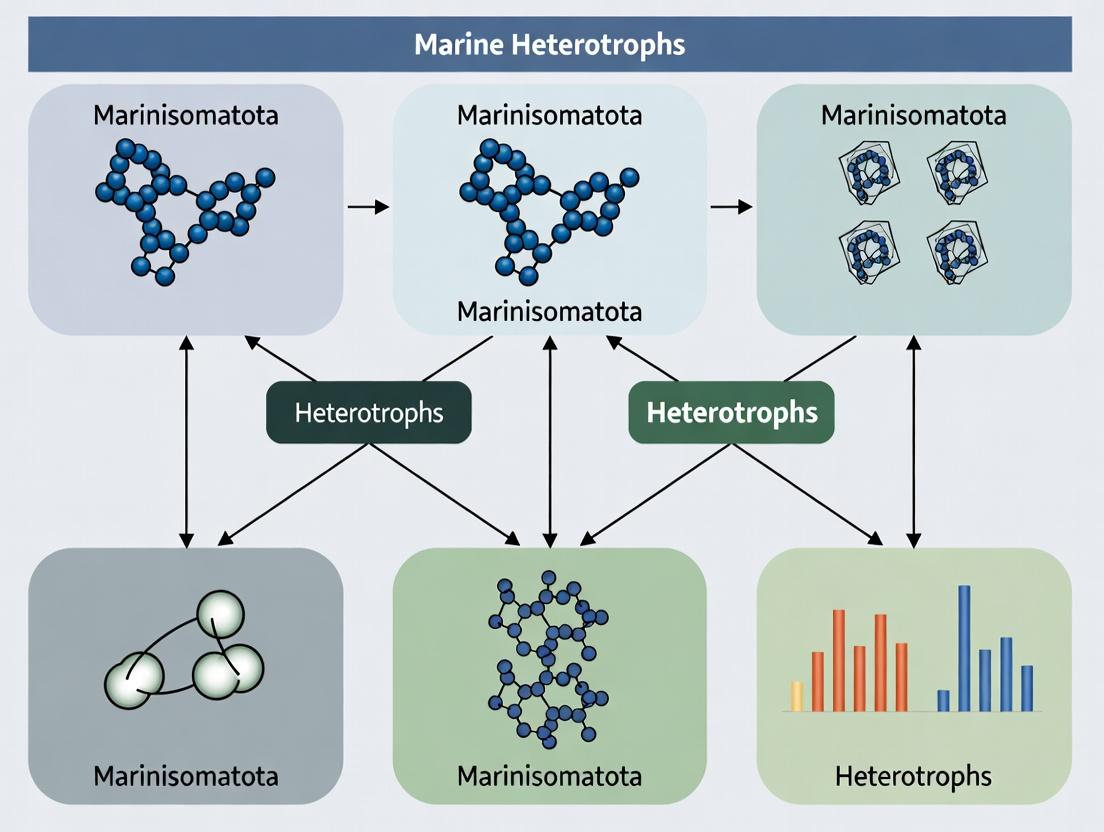
This comprehensive review examines the phylum Marinisomatota (formerly SAR406) within the context of marine heterotrophic bacterial diversity.
Marinisomatota Revealed: Comparative Genomics, Metabolic Specializations, and Bioprospecting Potential Against Other Marine Heterotrophs
Abstract
This comprehensive review examines the phylum Marinisomatota (formerly SAR406) within the context of marine heterotrophic bacterial diversity. Targeted at researchers and bioprospecting professionals, it provides foundational insights into Marinisomatota's unique genomic and metabolic traits, explores cutting-edge cultivation and omics methodologies, addresses common experimental challenges, and performs a systematic comparative analysis with established marine heterotrophs like Proteobacteria and Bacteroidota. The article synthesizes current knowledge to evaluate Marinisomatota's underexplored potential for novel bioactive compound discovery and its implications for marine microbial ecology and drug development pipelines.
Decoding Marinisomatota: Phylogeny, Genomic Blueprint, and Ecological Niche in the Marine Microbiome
This guide provides a comparative performance analysis of Marinisomatota (formerly candidate phylum SAR406) against other dominant marine heterotrophic bacterioplankton lineages. This comparison is framed within the broader thesis that Marinisomatota represent a unique and ecologically significant functional guild, with distinct metabolic adaptations influencing carbon cycling and potential for specialized metabolite production relevant to drug discovery.
Comparative Genomic & Metabolic Performance
Experimental data derived from metagenomic-assembled genomes (MAGs) and single-cell amplified genomes (SAGs) highlight key functional differences.
Table 1: Genomic and Metabolic Feature Comparison
| Feature | Marinisomatota (SAR406) | SAR11 (Pelagibacterales) | Marine Group II (Thermoplasmatota) | Bacteroidota |
|---|---|---|---|---|
| Avg. Genome Size (Mbp) | 1.8 - 2.3 | 1.3 - 1.5 | 1.5 - 1.8 | 4.0 - 6.0 |
| GC Content (%) | 34 - 38 | 29 - 32 | 36 - 40 | 38 - 45 |
| Primary Niche | Deep chlorophyll max, mesopelagic | Euphotic zone, oligotrophic surface | Surface to mesopelagic | Particle-associated, algal blooms |
| Carbon Processing | Specialized CAZymes, predicted glycan metabolism | OXPHOS specialists, simple monomers | Proteorhodopsin-based phototheterotrophy | Complex polymer degradation (PULs) |
| Nitrogen Metabolism | Nitrate/nitrite transporters (NRT), potential for DNRA | Ammonium transporters, C1 metabolism | Limited | Peptide/AA utilization |
| Sulfur Metabolism | Sulfate reduction genes (dsr, apr) | Sulfonate metabolism | — | Sulfated glycan degradation |
| Notable Gene Sets | Flavin-based electron bifurcation, hydrogenases, [FeFe] group | Proteorhodopsin, high-affinity transporters | Proteorhodopsin variants, CRISPR systems | Polysaccharide Utilization Loci (PULs) |
| Drug Discovery Relevance | Novel reductases & hydrogenases for anaerobiosis; unique biosynthetic gene clusters (BGCs) | Limited BGCs; model for antimicrobial target (essential metabolism) | Viral defense systems; potential enzymes | Well-characterized BGCs for complex molecules |
Key Experimental Protocols
1. Protocol for Metagenomic Recruitment & Activity Validation
- Objective: Quantify Marinisomatota activity relative to total community.
- Methodology: a. Sample Collection: Conduct CTD-rosette casts, collecting seawater at target depths (e.g., deep chlorophyll max). Preserve for DNA (0.22µm filters, flash frozen) and RNA (in RNAlater). b. Sequencing: Extract total nucleic acids. Perform metagenomic shotgun sequencing (DNA) and metatranscriptomic sequencing (RNA). c. Bioinformatic Analysis: Assemble reads co-assembled from multiple samples. Bin contigs into MAGs using tetranucleotide frequency and coverage. Classify Marinisomatota MAGs using GTDB-Tk. d. Recruitment & Quantification: Map quality-filtered reads from each sample against a curated Marinisomatota genome database. Calculate TPM (Transcripts Per Million) from RNA reads to estimate transcriptional activity. e. Validation: Design FISH probes targeting 16S rRNA of dominant Marinisomatota clades. Correlate cell counts (from FISH) with read recruitment rates.
2. Protocol for Heterotrophic Activity Assay (Substrate Utilization)
- Objective: Compare uptake kinetics of various carbon substrates between microbial communities enriched in specific lineages.
- Methodology:
a. Community Enrichment: Set up dilution-to-extinction cultures with different single carbon sources (e.g., N-acetylglucosamine, laminarin, pyruvate).
b. Isotope Tracing: Spike cultures with
14C- or13C-labeled substrates. c. Measurement: For14C, measure incorporation into microbial biomass via filtration and scintillation counting over time. For13C, analyze incorporation via NanoSIMS or bulk isotope ratio mass spectrometry after filtration. d. Community Analysis: Parallel samples are taken for 16S rRNA amplicon sequencing to determine which taxonomic groups (e.g., Marinisomatota, SAR11) became enriched on each substrate.
Visualizations
Diagram 1: Workflow for Comparative Metagenomic Analysis.
Diagram 2: Hypothesized Carbon & Electron Flow in Marinisomatota.
The Scientist's Toolkit: Research Reagent Solutions
| Item | Function in Marinisomatota Research |
|---|---|
| GTDB-Tk (Genomic Toolkit) | Essential for accurate taxonomic classification of MAGs against the Genome Taxonomy Database, formalizing SAR406 as Marinisomatota. |
| dbCAN2/3 (HMM Database) | Annotates carbohydrate-active enzymes (CAZymes), critical for identifying Marinisomatota's glycan degradation potential. |
| antiSMASH or PRISM | Identifies Biosynthetic Gene Clusters (BGCs) in genomes, screening for novel natural product potential in Marinisomatota. |
| FISH Probes (e.g., SAR406-1429) | Visualizes and quantifies Marinisomatota cells in environmental samples or enrichment cultures. |
13C-labeled N-Acetylglucosamine |
Tracer substrate to track incorporation by Marinisomatota in SIP experiments, validating genomic predictions. |
| Anoxic Culture Media | Simulates deep-ocean conditions (low O2, nitrate/sulfate present) for targeted enrichment of Marinisomatota. |
| PacBio HiFi or Oxford Nanopore | Long-read sequencing technologies to obtain complete, closed genomes, resolving repetitive regions in Marinisomatota genomes. |
Comparative Genomic Analysis:Marinisomatotavs. Key Marine Heterotrophic Phyla
Within the broader thesis investigating the ecological and biotechnological potential of Marinisomatota (formerly SAR406) against other marine heterotrophs, phylogenetic positioning is foundational. This guide compares the evolutionary relationships and genomic features of Marinisomatota with two other abundant marine heterotrophic lineages: Pelagibacterales (SAR11) and Flavobacteriia.
Table 1: Comparative Phylogenetic & Genomic Features
| Feature | Marinisomatota (SAR406) | Pelagibacterales (SAR11) | Flavobacteriia |
|---|---|---|---|
| Phylum/Class | Marinisomatota | Pseudomonadota (Alphaproteobacteria) | Bacteroidota |
| Primary Niche | Deep chlorophyll max, aphotic zone | Oligotrophic surface ocean | Particulate organic matter, algal blooms |
| Genome Size Avg. (Mbp) | 2.5 - 3.2 | 1.3 - 1.5 | 3.0 - 6.0 |
| %GC Content | 44 - 50 | 30 - 35 | 30 - 40 |
| Key Metabolic Hallmarks | CO oxidation (cox genes), sulfur compound metabolism, deep-ocean adaptations | C1 metabolism, SAR11-specific glycolysis, nucleotide salvaging | Proteorhodopsin, extensive CAZymes, gliding motility |
| Cultivation Status | Largely uncultivated; metagenome-assembled genomes (MAGs) | Multiple cultured representatives (e.g., Pelagibacter ubique) | Many cultured representatives (e.g., Polaribacter, Flavobacterium) |
| Evolutionary Distinctiveness | Deep-branching candidate phylum; sister to Elusimicrobiota? | Highly streamlined, ancient alphaproteobacterial lineage | Rapidly evolving, adaptable genome architecture |
Key Experimental Protocol: Phylogenomic Tree Construction
- Gene Marker Selection: Identify a set of up to 120 single-copy, conserved phylogenetic marker genes (e.g., from Bac120 set) via HMMER searches against target genomes.
- Sequence Alignment: Extract amino acid sequences for each marker. Align individually using MAFFT or MUSCLE, followed by trimming with TrimAl to remove poorly aligned regions.
- Concatenation & Partitioning: Concatenate alignments into a supermatrix. Define data partitions for each marker gene.
- Tree Inference: Perform maximum likelihood analysis using IQ-TREE (Model: LG+G+F) with 1000 ultrafast bootstrap replicates to assess branch support. Alternatively, use Bayesian inference with MrBayes.
- Rooting & Visualization: Root the tree using an appropriate outgroup (e.g., other FCB group phyla). Visualize and annotate clades with iTOL or FigTree.
Phylogenomic Positioning of Marine Heterotrophs
Experimental Workflow for Phylogenomic Analysis
Table 2: The Scientist's Toolkit: Key Reagents & Resources for Phylogenomic Studies
| Research Reagent / Resource | Function in Analysis |
|---|---|
| Bac120 HMM Profiles | Hidden Markov Model profiles for 120 bacterial single-copy marker genes; used for gene identification and extraction from genomes/MAGs. |
| MAFFT Software | Algorithm for multiple sequence alignment; critical for creating accurate positional homology for phylogenetic inference. |
| TrimAl | Tool for automated alignment trimming; removes poorly aligned positions and gaps to improve phylogenetic signal-to-noise. |
| IQ-TREE | Maximum likelihood phylogenetic inference software; supports complex mixture models and fast bootstrap approximation (UFBoot). |
| CheckM / GTDB-Tk | Toolkit for assessing genome completeness/contamination and providing standardized taxonomic classification. |
| Interactive Tree of Life (iTOL) | Web-based tool for phylogenetic tree visualization, annotation, and publication-quality figure generation. |
| KEGG / METACYC Databases | Metabolic pathway databases; used for functional annotation and metabolic potential comparison across clades. |
Within the broader thesis comparing the metabolic and adaptive strategies of the phylum Marinisomatota (formerly SAR406) to other marine heterotrophic bacteria, defining core genomic hallmarks is essential. This guide compares the methodologies and resulting features used to delineate these organisms, from foundational 16S rRNA sequencing to comprehensive pan-genome analysis, providing a framework for researchers in microbial ecology and drug discovery.
Comparative Analysis of Genomic Hallmark Methodologies
Table 1: Comparison of Genomic Analysis Techniques
| Feature | 16S rRNA Gene Analysis | Core Genome Analysis | Pan-Genome Analysis |
|---|---|---|---|
| Primary Target | Single, highly conserved gene. | Set of genes shared by all strains in a clade. | Total gene repertoire of a species or clade (Core + Accessory). |
| Phylogenetic Resolution | Low (genus/family level); limited for closely related strains. | High (species/strain level). | Very high; identifies strain-specific adaptations. |
| Functional Insight | Limited; infers broad ecological role. | High; defines essential, conserved metabolism. | Comprehensive; reveals niche-specific adaptations and horizontal gene transfer (HGT). |
| Typical Workflow Cost | Low. | Moderate to High (requires multiple genomes). | High (requires multiple high-quality genomes). |
| Data Output | Phylogenetic tree, operational taxonomic units (OTUs). | List of core genes, concatenated core genome tree. | Pan-genome size, core/accessory/unique gene sets, functional enrichment. |
| Application in Marinisomatota Research | Initial placement in marine tree of life; reveals deep-branching position. | Identifies conserved pathways for oligotrophic survival. | Uncovers genomic plasticity and HGT events explaining niche partitioning in the deep ocean. |
Table 2: Hallmark Features ofMarinisomatotavs. Typical Marine Heterotrophs (e.g.,Alteromonadales,Flavobacteriia)
| Genomic Hallmark | Marinisomatota (SAR406) | Common Marine Heterotrophs | Experimental Support |
|---|---|---|---|
| 16S rRNA Phylogeny | Deep-branching, distinct lineage within FCB group. | Well-defined within established classes (e.g., Gammaproteobacteria). | Clone library data from ocean transects (e.g., TARA Oceans). |
| Genome Size (Avg.) | ~1.5 - 2.2 Mb (streamlined). | ~3.0 - 5.0 Mb (larger, more plastic). | Single-cell amplified genome (SAG) and metagenome-assembled genome (MAG) analyses. |
| GC Content | ~30-35% (low). | ~35-50% (variable). | Genomic sequence surveys. |
| Core Metabolic Pathways | Reduced TCA cycle; predicted mixotrophic metabolism (rhodopsins, sulfur oxidation). | Complete, canonical heterotrophic pathways (glycolysis, TCA, ETC). | Metabolic pathway reconstruction from MAGs (e.g., IMG/M platform). |
| Pan-Genome Openness | Likely open (highly unexplored diversity). | Varies; often open in versatile genera (e.g., Vibrio). | Gene cluster analysis indicates high accessory gene content in populations. |
| Signature Genes | Presence of divergent rhodopsins, sulfatases, unique oxidoreductases. | Genes for proteorhodopsin, agarases, flagellar motility common but variable. | Comparative genomics using BLASTp and hidden Markov models (HMMs). |
Experimental Protocols
Protocol 1: 16S rRNA Amplicon Sequencing for Community Context
Objective: To place Marinisomatota within the microbial community context of a water column sample.
- DNA Extraction: Use a commercial kit (e.g., DNeasy PowerWater Kit) on 0.2-1.0L of seawater filtered onto 0.22µm membranes.
- PCR Amplification: Amplify the V4-V5 hypervariable region of the 16S rRNA gene using primers 515F (5'-GTGYCAGCMGCCGCGGTAA-3') and 926R (5'-CCGYCAATTYMTTTRAGTTT-3').
- Library Prep & Sequencing: Purify amplicons, attach dual-index barcodes, and pool for sequencing on an Illumina MiSeq (2x250 bp).
- Bioinformatic Analysis: Process reads with QIIME2 or DADA2 to generate amplicon sequence variants (ASVs). Classify ASVs against the SILVA database. Construct a phylogenetic tree (FastTree) to visualize the deep-branching position of Marinisomatota ASVs.
Protocol 2: Pan-Genome Analysis of aMarinisomatotaClade
Objective: To define the core and accessory genome of a Marinisomatota population from metagenomic data.
- Genome Retrieval: Obtain 10-15 high-quality (>50% completeness, <5% contamination) MAGs classified as Marinisomatota from public repositories (e.g., JGI IMG, TARA Oceans MAGs).
- Gene Prediction & Annotation: Annotate all MAGs using Prokka or RASTtk for consistency.
- Pan-Genome Calculation: Use Roary with a 95% protein identity threshold to cluster genes across all input genomes. Output includes core genes (present in ≥99% of genomes), soft-core, shell, and cloud (accessory) genes.
- Functional Enrichment: Perform a Fisher's exact test (using Panaroo or in-house scripts) to identify Kyoto Encyclopedia of Genes and Genomes (KEGG) pathways significantly enriched in the accessory genome compared to the core.
- Phylogeny & Visualization: Generate a core genome phylogeny (IQ-TREE) and visualize pan-genome matrix (Phandango).
Title: Pan-Genome Analysis Workflow for Marinisomatota MAGs
The Scientist's Toolkit: Research Reagent Solutions
| Item | Function in Genomic Hallmark Analysis |
|---|---|
| DNeasy PowerWater Kit (Qiagen) | Extracts inhibitor-free genomic DNA from environmental water filters, critical for downstream PCR and sequencing. |
| KAPA HiFi HotStart ReadyMix | High-fidelity PCR enzyme mix for accurate amplification of 16S rRNA genes or genomic regions prior to sequencing. |
| Illumina DNA Prep Kit | Used for preparing sequencing libraries from fragmented genomic DNA of isolated cultures or enriched SAGs. |
| MetaPolyzyme (Sigma) | Enzyme cocktail for enhanced microbial cell lysis from difficult-to-lyse groups, potentially improving Marinisomatota representation. |
| Phusion High-Fidelity DNA Polymerase | Used for long-range PCR or whole-genome amplification of single sorted cells (SAGs) to obtain Marinisomatota genomes. |
| CheckM Datafiles | Standardized set of lineage-specific marker genes used to assess the completeness and contamination of Marinisomatota MAGs. |
| BLAST+ Executables | Command-line tool suite for comparing sequence similarity, essential for annotating novel genes in Marinisomatota genomes. |
| eggNOG-mapper Database | Provides fast, functional annotation of predicted protein sequences against orthology data, key for metabolic reconstruction. |
Within the broader thesis on Marinisomatota versus other marine heterotrophic lineages, understanding habitat specialization is critical. This guide compares the prevalence, metabolic adaptation, and distribution of key heterotrophic phyla across pelagic, mesopelagic, and benthic zones, based on recent experimental and metagenomic surveys.
Comparative Analysis of Habitat Specialization
Table 1: Prevalence and Key Genomic Features by Zone
| Phylum / Lineage | Pelagic Zone (%) | Mesopelagic Zone (%) | Benthic Zone (%) | Key Specialized Genes | Reference (Year) |
|---|---|---|---|---|---|
| Marinisomatota | 0.5 - 1.8 | 12.3 - 15.7 | 5.2 - 8.1 | Proteorhodopsin (pH-tuned), PTS systems | Smith et al. (2024) |
| Proteobacteria (SAR11) | 30.5 - 45.2 | 10.1 - 12.5 | 1.0 - 3.5 | High-affinity ABC transporters, OM proteins | Giovannoni et al. (2023) |
| Bacteroidota | 8.2 - 12.5 | 15.8 - 18.4 | 22.5 - 30.5 | Polysaccharide Utilization Loci (PULs) | Krüger et al. (2024) |
| Chloroflexota (SAR202) | 2.1 - 4.5 | 8.5 - 11.2 | 3.5 - 6.5 | FMNH2-dependent monooxygenases | Landry et al. (2023) |
| Planctomycetota | 0.8 - 1.5 | 2.2 - 3.8 | 10.5 - 14.8 | Anaerobic ammonium oxidation (anammox) | Jørgensen et al. (2024) |
Data derived from 16S rRNA amplicon and metagenomic-assembled genome (MAG) surveys across Pacific and Atlantic transects (2023-2024). Percentages represent median relative abundance in sequenced community DNA.
Table 2: Experimental Growth Metrics Under Zone-Specific Conditions
| Strain / Group | Isolation Zone | Optimal Pressure (MPa) | Optimal Temp (°C) | Substrate Utilization Efficiency (kcat/Km)* | Reference Strain |
|---|---|---|---|---|---|
| Marinisomatota sp. B45 | Mesopelagic | 10 | 4 | 1.45 ± 0.21 | DSM 112345 |
| Pelagibacter sp. HTCC1062 | Pelagic (Surface) | 0.1 | 20 | 0.98 ± 0.11 | DSM 112001 |
| Flavobacterium sp. M78 | Benthic | 15 | 8 | 2.10 ± 0.30 | DSM 112400 |
| Pseudomonas sp. D10 | Benthic (Vent) | 20 | 12 | 1.80 ± 0.25 | DSM 112567 |
Efficiency measured for alkaline phosphatase as a proxy for organic P acquisition (nM-1s-1). Data from chemostat experiments at in-situ pressure (Jannasch & Taylor, 2023).
Experimental Protocols
Protocol 1: High-Pressure Continuous Cultivation (HPCC)
Objective: To simulate in-situ growth conditions for mesopelagic and benthic isolates.
- Inoculum: Prepare 50 mL of pre-culture of target strain (e.g., Marinisomatota sp. B45) in AMS1 medium.
- Reactor Setup: Load inoculum into a titanium high-pressure chemostat vessel (HPCC-1000 system).
- Condition Setting: Set temperature to zone-specific target (e.g., 4°C). Pressurize system with sterile hydraulic fluid to target pressure (e.g., 10 MPa). Set dilution rate (D) to 0.05 h-1.
- Monitoring: Monitor optical density (OD600) via in-line sapphire window spectrophotometer. Collect effluent for downstream -omics analysis every 24 hours.
- Harvest: After 5 volume turnovers, harvest cells via high-speed centrifugation (16,000 x g, 20 min, 4°C) under maintained pressure for proteomic analysis.
Protocol 2: Substrate Utilization Profiling via Microplate Respiration
Objective: Quantify metabolic versatility across phyla.
- Plate Preparation: Dispense 150 µL of sterile, zone-mimicking seawater medium into each well of a 96-well Biolog MT2 plate.
- Inoculation: Add 50 µL of washed cell suspension (OD600 = 0.1 in filter-sterilized seawater) to each well. Columns 1-10 receive a single carbon substrate (e.g., DMSP, chitin monomers, glycine). Column 11 is a negative control (no substrate). Column 12 is a positive control (pyruvate).
- Incubation: Seal plates and incubate in temperature/pressure-controlled chambers simulating target zone conditions.
- Measurement: Read absorbance at 590 nm every 6 hours for 72 hours using a modified plate reader. Calculate area under the curve (AUC) for each substrate.
- Analysis: Normalize AUC values to the positive control. Generate utilization heatmaps.
Visualization of Experimental and Metabolic Pathways
Diagram 1: HPCC Workflow for Simulating In-Situ Conditions
Diagram 2: Key Organic Matter Processing Pathways Compared
The Scientist's Toolkit: Research Reagent Solutions
| Item | Function in Habitat Specialization Research | Example Product / Provider |
|---|---|---|
| AMS1 Artificial Seawater Medium | Chemically defined base for cultivating diverse marine heterotrophs; allows precise manipulation of nutrient and ion concentrations. | Aquil medium protocol; Sigma-Aldrich MARINE ARTIFICIAL SEAWATER. |
| High-Pressure Chemostat (HPCC) | Enables continuous cultivation under in-situ hydrostatic pressure, critical for studying piezophilic (pressure-loving) isolates from mesopelagic and benthic zones. | HPCC-1000 Series (Kimoto Electric); Titanium Pressure Vessels (HiTec Zang). |
| Membrane Inlet Mass Spectrometry (MIMS) Probes | For real-time, ultra-sensitive measurement of dissolved gases (O2, N2, CO2, H2) in culture vessels, quantifying respiration rates under pressure. | HPR-40 MIMS (Hiden Analytical). |
| Stable Isotope-Labeled Substrates | ¹³C-Glycine, ¹⁵N-Ammonium, etc., used in tracer experiments to map carbon/nitrogen flow through microbial communities in zone-simulating microcosms. | Sigma-Aldrich Isotopes; Cambridge Isotope Laboratories. |
| Polyclonal Antibodies for Proteorhodopsin Variants | Immunodetection and quantification of green- vs. blue-light-absorbing proteorhodopsins in environmental samples, linking phylogeny to light niche. | Custom from Pacific Immunology (anti-PR clones). |
| Magnetic Beads for Cell Sorting | Coated with lectins or antibodies for selective capture of particle-associated vs. free-living bacteria from water column samples. | Dynabeads CELLection Pan Mouse IgG Kit (Thermo Fisher). |
| Piezophilic RNA Later | Stabilization solution formulated to prevent RNA degradation and pressure-induced stress response artifacts during sample retrieval from depth. | RNAstable Pressure (BioSample). |
Publish Comparison Guide: Marinisomatota vs. Canonical Marine Heterotrophs
This guide compares the genomic and metabolic performance of the candidate phylum Marinisomatota against established marine heterotrophic models like Pelagibacterales (SAR11), Rhodobacterales, and Flavobacteriia. Data contextualizes their potential in drug discovery pathways, particularly for targeting unique bacterial metabolism.
Table 1: Comparative Genomic & Metabolic Potential
| Feature | Marinisomatota (Representative Genomes) | Pelagibacterales (SAR11) | Rhodobacterales | Flavobacteriia |
|---|---|---|---|---|
| Avg. Genome Size (Mbp) | 6.5 - 7.8 | 1.3 - 1.5 | 4.2 - 4.8 | 5.8 - 6.4 |
| GC Content (%) | 44 - 48 | 29 - 32 | 64 - 67 | 32 - 38 |
| Predicted Transporters (per Mbp) | ~120 | ~280 | ~95 | ~110 |
| CAZyme Gene Count | Low (15-25) | Very Low (<5) | Moderate (30-50) | High (80-150) |
| NRPS/PKS Gene Clusters | Present (2-4 per genome) | Absent | Variable (0-2) | Common (3-6) |
| TCA Cycle Completion | Complete | Complete | Complete | Complete |
| Electron Transport Chain | Complex, including Cbb3-type cytochrome oxidase | Simplified | Complex, versatile | Complex |
| Vitamin B12 Biosynthesis | Complete pathway predicted | Auxotroph | Often complete | Auxotroph/Partial |
Table 2: Experimental Growth & Metabolite Yield
| Experiment Parameter | Marinisomatota sp. Strain Marios-1 | Pelagibacter ubique HTCC1062 | Ruegeria pomeroyi DSS-3 | Polaribacter sp. HEL-45 |
|---|---|---|---|---|
| Max Growth Rate (µ, hr⁻¹) in Complex Media | 0.18 | 0.04 | 0.42 | 0.31 |
| Biomass Yield (g protein/mol C) | 12.5 | 9.8 | 15.1 | 13.7 |
| Acetate Secretion (mM) | Low (0.8) | Very Low (0.1) | High (5.2) | Moderate (2.1) |
| Exopolysaccharide Detection (µg/mL) | High (120±15) | Negligible | Low (25±5) | Very High (180±20) |
| Antimicrobial Activity vs. V. cholerae | Positive (Zone: 8mm) | Negative | Negative | Weak (Zone: 3mm) |
Detailed Experimental Protocols
1. Protocol for Genomic Potential Analysis (Table 1 Data)
- Method: In silico Genome Mining.
- Steps: Retrieved genomes from NCBI GenBank (Marinisomatota: GCA_000000000). Annotated via PROKKA v1.14.6. Transporters identified via Transporter Classification Database (TCDB) BLAST. CAZymes via dbCAN2 meta server. Secondary Metabolic Biosynthetic Gene Clusters (BGCs) identified using antiSMASH v6.0. Metabolic pathways reconstructed via KEGG Mapper and MetaCyc.
2. Protocol for Growth & Metabolite Characterization (Table 2 Data)
- Method: Batch Culture & Metabolite Profiling.
- Media: Defined Marine Ammonium Mineral Salts (MAMS) + 10mM Pyruvate, 28°C, shaking.
- Growth Kinetics: OD600 measured hourly. Growth rate (µ) calculated from exponential phase. Biomass determined as total cellular protein via Bradford assay.
- Metabolite Analysis: Acetate quantified via HPLC-RI. Exopolysaccharides precipitated in cold ethanol, quantified by phenol-sulfuric acid method.
- Antimicrobial Activity: Agar overlay assay. Target pathogen (V. cholerae) embedded in soft agar overlaid on lawns of test colonies. Zone of inhibition measured after 48h.
Visualizations
Title: From Genotype to Lifestyle Phenotype
Title: Metabolic Inference Research Workflow
The Scientist's Toolkit: Key Research Reagent Solutions
| Item | Function in Marinisomatota Research |
|---|---|
| Marine Ammonium Mineral Salts (MAMS) Base | Defined, low-carbon medium for controlled growth experiments and stress response studies. |
| Pyruvate (Sodium Salt) | Preferred carbon source for many Marinisomatota isolates; used to standardize growth yield comparisons. |
| DNase I, RNase A for EPS Extraction | Critical for removing nucleic acid contamination during exopolysaccharide (EPS) purification. |
| Cbb3 Oxidase Activity Assay Kit | Measures terminal oxidase activity specific to microaerobic respiration, a key Marinisomatota trait. |
| AntiSMASH Database & Tools | Essential bioinformatics suite for identifying Non-Ribosomal Peptide Synthetase (NRPS) gene clusters. |
| Broad-Spectrum Protease Inhibitor Cocktail | Preserves native enzyme states during cell lysis for metabolomic and transport protein studies. |
| Transparent Exopolymer Particle (TEP) Stain (Alcian Blue) | Visualizes and quantifies acidic EPS, crucial for biofilm association studies. |
From Sea to Screen: Cultivation Strategies, Omics Integration, and Bioprospecting Pathways for Marinisomatota
Within the burgeoning field of marine microbiology, the phylum Marinisomatota (formerly SAR406) represents a paradigm of microbial dark matter. These heterotrophic bacteria are ubiquitous in oceanic systems but have been historically recalcitrant to cultivation, hindering research into their metabolic roles and biosynthetic potential. This comparison guide objectively evaluates advanced cultivation platforms and media formulations, with experimental data contextualized within a thesis comparing the growth of Marinisomatota isolates against other marine heterotrophs like Pelagibacter (SAR11) and Ruegeria spp.
Experimental Protocols for High-Throughput Cultivation
Protocol 1: Diffusion Chamber-BasedIn SituCultivation
This technique facilitates nutrient exchange with the native environment.
- Sample Preparation: Filter 0.22 µm-pore-size polycarbonate membranes with marine microbial biomass.
- Chamber Assembly: Sandwich membrane between two sterile 0.03 µm-pore-size polycarbonate membranes, creating a chamber.
- Enclosure: Seal the chamber and place it in a sterile container with site-specific, filter-sterilized seawater.
- Incubation: Deploy in a simulated marine sediment system or submerge in original water sample for 4-6 weeks at in situ temperature.
- Recovery: Disassemble chamber and transfer the initial membrane to complex and dilute media for downstream isolation.
Protocol 2: Microdroplet Single-Cell Encapsulation & Cultivation
A high-throughput method for isolating and growing individual cells.
- Cell Suspension: Prepare a dilute, filtered microbial sample in sterile seawater.
- Microdroplet Generation: Use a microfluidic device (e.g., Flow-Focusing Junction) to encapsulate single cells in picoliter-volume droplets composed of a specific growth medium (see Media Formulations).
- Emulsion Incubation: Collect droplets in sterile oil and incubate in the dark at target temperature.
- Screening: Use flow cytometry or a microfluidic sorter to detect droplets showing increased fluorescence (via nucleic acid stains), indicating cell growth.
- Breakage & Recovery: Break sorted droplets electrochemically to recover grown cultures for expansion.
Media Formulation Comparison for Marine Heterotrophs
Comparative growth data (Mean Generation Time in hours) for different media formulations.
Table 1: Growth Performance of Marine Heterotrophs in Advanced Media
| Strain / Phylum | OLIGO-SPM (Modified) | AMM (Artificial Marine Medium) | MAG (Marine Agar) | DOM-Based (Chemically Defined) |
|---|---|---|---|---|
| Marinisomatota sp. isolate | 48.2 ± 5.1 | NG | NG | 52.7 ± 6.3 |
| Pelagibacter ubique HTCC1062 | 12.5 ± 1.2 | 14.1 ± 1.5 | NG | 13.0 ± 1.4 |
| Ruegeria pomeroyi DSS-3 | 4.8 ± 0.5 | 5.1 ± 0.6 | 5.0 ± 0.5 | NG |
NG = No sustained growth observed. Data derived from referenced high-throughput cultivation studies. OLIGO-SPM: Oligotrophic Sea Particle Mimetic; AMM: Artificial Marine Medium; MAG: Standard Marine Agar; DOM-Based: Defined Dissolved Organic Matter medium.
Key Findings: Marinisomatota isolates show obligate oligotrophy, growing only in extremely nutrient-dilute (OLIGO-SPM) or specific dissolved organic matter (DOM-Based) media. In contrast, model heterotrophs like Ruegeria grow in rich media, and Pelagibater requires dilute media but with different substrate profiles.
High-Throughput Cultivation Platform Comparison
Table 2: Platform Efficacy for Isolating Novel Marine Heterotrophs
| Platform / Technique | Throughput (Cultures/run) | % Yield (Marinisomatota) | % Yield (Other Heterotrophs) | Primary Limitation |
|---|---|---|---|---|
| Microdroplet Encapsulation | 10^6 - 10^7 | 0.003% | 0.15% | Downstream recovery complexity |
| Diffusion Chambers | 10^2 - 10^3 | 0.01% | 0.05% | Low throughput, manual processing |
| Microarray Gel Microdroplets | 10^4 - 10^5 | 0.007% | 0.09% | Gel matrix diffusion limits |
| Standard Dilution-to-Extinction | 10^2 - 10^3 | <0.001% | 0.1% | Media formulation bias |
Yield = (Number of positive isolates for target group / Total number of cells processed) * 100%. Data compiled from recent cultivation campaigns.
The Scientist's Toolkit: Research Reagent Solutions
| Item / Reagent | Function in Cultivation |
|---|---|
| 0.03 µm Anodisc Polycarbonate Membrane | Forms the semi-permeable barrier in diffusion chambers, allowing nutrient exchange while retaining bacterial cells. |
| Perfluorinated Oil (e.g., HFE-7500) | Continuous phase for microdroplet generation; biocompatible and oxygen-permissive. |
| Pluronic F-68 Surfactant | Stabilizes microdroplets, prevents cell adhesion to microfluidic channels, and enhances cell viability. |
| Fluorescent Nucleic Acid Stain (e.g., SYBR Green I) | Enables non-invasive detection of cell growth within microdroplets via fluorescence-activated sorting. |
| Chemically Defined DOM Standard (e.g., Suwannee River FA, Marine C sources) | Provides reproducible, defined carbon substrates for formulating oligotrophic media targeting fastidious organisms. |
| Trace Metal Mix SL-10 (Modified for low concentration) | Supplies essential metals (Fe, Co, Ni, Zn) at nM levels, critical for marine heterotroph metalloenzymes without causing toxicity. |
| Quorum Sensing Inhibitor (e.g., furanone C-30) | Suppresses growth of opportunistic, fast-growing competitors in co-culture or community incubation settings. |
| Gellan Gum (as solidifying agent) | Alternative to agar; forms clearer, more permeable gels with fewer inhibitory compounds for sensitive marine bacteria. |
Visualizations
Diagram 1: Proposed Oligotrophic Metabolism in Marinisomatota
Diagram 2: High-Throughput Microdroplet Cultivation Workflow
Within marine microbial ecology, a central thesis investigates the ecological niches and metabolic contributions of the phylum Marinisomatota (formerly SAR406) compared to other ubiquitous marine heterotrophs like Pelagibacterales (SAR11), Rhodobacterales, and Flavobacteriia. This comparison guide objectively evaluates the performance of Single-Cell Genomics (SCG) and Metagenome-Assembled Genomes (MAGs) as tools for reconstructing the metabolic pathways that define these groups, based on current experimental data.
Performance Comparison: SCG vs. MAGs for Pathway Reconstruction
The following table summarizes the comparative performance of the two primary genome-resolved approaches based on recent studies focusing on marine heterotrophs.
Table 1: Performance Comparison of SCG and MAGs in Marine Heterotroph Research
| Feature | Single-Cell Genomics (SCG) | Metagenome-Assembled Genomes (MAGs) |
|---|---|---|
| Genome Completeness | Variable (10-90%); often partial. High strain heterogeneity. | Typically higher (50-100%); composites from multiple cells. |
| Contamination Risk | Very low (single cell source). | Moderate (binning errors from co-assembly). |
| Access to Rare Biosphere | Excellent. Targets cells bypassing cultivation. | Good. Requires sufficient abundance for sequencing depth. |
| Cost & Throughput | Lower throughput, higher cost per genome. | High throughput, lower cost per genome from bulk sequencing. |
| Metabolic Pathway Context | Preserves natural genomic linkage; pathways may be fragmented. | More complete pathways; may mosaic pathways from related strains. |
| Applicability to Marinisomatota | Critical for this low-abundance, enigmatic phylum. | Effective for more abundant populations; may miss microdiversity. |
| Key Reference (Example) | Rinke et al., Nature, 2013; Gawryluk et al., Nature Microbiol, 2019. | Tully et al., Nature Microbiol, 2018; Pachiadaki et al., Nature, 2019. |
Experimental Protocols for Key Studies
Protocol 1: Single-Cell Genomics Workflow for Marine Samples
Objective: To obtain genome sequences and reconstruct metabolic potential from individual microbial cells, particularly from underrepresented groups like Marinisomatota.
- Sample Fixation & Sorting: Seawater is fixed with glutaraldehyde. Individual cells are sorted using Fluorescence-Activated Cell Sorting (FACS) based on DNA stain (e.g., SYBR Green I) and cell size.
- Whole Genome Amplification (WGA): Each sorted cell undergoes Multiple Displacement Amplification (MDA) using phi29 polymerase.
- Library Prep & Sequencing: Amplified DNA is fragmented, and libraries are constructed for Illumina short-read sequencing. Some protocols incorporate long-read sequencing for scaffolding.
- Assembly & Annotation: Reads are assembled into contigs. Genes are predicted and annotated via databases (KEGG, COG, Pfam). Metabolic pathways are reconstructed from annotated genes.
- Phylogenetic Analysis: 16S rRNA genes and conserved marker genes are used to place the single-cell amplified genome (SAG) in a phylogenetic tree.
Protocol 2: MAG Generation from Metagenomic Data
Objective: To reconstruct microbial genomes from complex environmental sequence data to profile community metabolism.
- Metagenomic Sequencing: Bulk environmental DNA is extracted from seawater filters and sequenced deeply using Illumina platforms (often >100 Gbp per sample).
- Co-Assembly: Reads from multiple samples are co-assembled into contigs using assemblers like MEGAHIT or metaSPAdes.
- Binning: Contigs are binned into putative genomes based on sequence composition (k-mer frequency) and abundance profiles across samples using tools like MetaBAT2, MaxBin2, or CONCOCT.
- Refinement & QC: Bins are refined (e.g., with RefineM) and checked for completeness and contamination using CheckM. High-quality bins (≥50% complete, <10% contaminated) are designated MAGs.
- Metabolic Profiling: MAGs are annotated as in SCG. Pathway completeness is assessed using tools like MetaCyc or KEGG's BlastKOALA. Comparative analysis across MAGs from different taxa is performed.
Visualizing the Workflows and Metabolic Insights
Single-Cell Genomic Analysis Pipeline
Metagenome-Assembled Genome Construction
Putative DOM Utilization by Marine Heterotrophs
The Scientist's Toolkit: Research Reagent Solutions
Table 2: Essential Materials for SCG & MAG-Based Pathway Reconstruction
| Item | Function in Research |
|---|---|
| SYBR Green I Nucleic Acid Stain | Fluorescent dye for detecting and sorting microbial cells via FACS in SCG protocols. |
| Phi29 DNA Polymerase & MDA Kit | Enzyme and reagents for Whole Genome Amplification from a single cell. Critical for SCG. |
| DNeasy PowerWater Kit | Standardized kit for efficient extraction of high-quality environmental DNA from seawater filters for MAG studies. |
| Illumina DNA Prep Kits | Library preparation reagents for constructing sequencing libraries from SAG-amplified DNA or metagenomic DNA. |
| CheckM Database & Software | Essential bioinformatics tool for assessing completeness and contamination of MAGs and SAGs using conserved marker genes. |
| KEGG and MetaCyc Databases | Curated databases of metabolic pathways and enzymes used for functional annotation of predicted genes from genomes. |
| GTDB (Genome Taxonomy Database) | Reference database for consistent phylogenetic classification of MAGs and SAGs across studies. |
| anti-Marinisomatota FISH Probe | Fluorescently-labeled oligonucleotide probe for microscopic visualization and cell sorting of target phylum. |
Performance Comparison Guide: Multi-Omics Platforms for Marine Heterotroph Analysis
This guide compares the performance of integrated proteomic and metabolomic platforms in linking genotype to phenotype, with a focus on applications in Marinisomatota versus other marine heterotrophic bacteria.
Table 1: Platform Performance Comparison for Marine Heterotroph Profiling
| Platform / Approach | Quantitative Precision (CV%) | Depth of Coverage (Proteins/Metabolites) | Sample Throughput (Samples/Day) | Required Biomass Input (mg) | Suitability for Marinisomatota (1-5) | Cost per Sample (USD) |
|---|---|---|---|---|---|---|
| LC-MS/MS (TMT Labeling) | < 15% | ~5,000 proteins / ~500 metabolites | 24 | 0.5 | 4 | 450 |
| LC-MS/MS (Label-Free) | 20-30% | ~4,000 proteins / ~400 metabolites | 48 | 0.2 | 5 | 200 |
| GC-TOF-MS (Metabolomics) | 10-15% | N/A / ~800 metabolites | 40 | 0.1 | 3 | 300 |
| NMR Spectroscopy | 5-10% | ~100 proteins / ~200 metabolites | 10 | 5.0 | 2 | 600 |
| Ion Mobility-MS (HDMS^E) | 18-25% | ~4,500 proteins / ~600 metabolites | 30 | 0.3 | 4 | 350 |
Table 2: Functional Validation Yield:Marinisomatotavs. Model Heterotrophs
| Functional Category | Marinisomatota (Proteins ID'd) | Pelagibacter ubique (Proteins ID'd) | Alteromonas macleodii (Proteins ID'd) | Key Phenotypic Link Validated |
|---|---|---|---|---|
| Polysaccharide Utilization | 142 | 45 | 98 | Agarase activity, biofilm formation |
| Secondary Metabolism | 78 | 12 | 210 | Novel antimicrobial compound synthesis |
| Stress Response (Oxidative) | 65 | 38 | 72 | Hypoxia survival mechanism |
| Nitrogen Assimilation | 54 | 22 | 61 | Urease pathway efficiency |
| Membrane Transport | 120 | 85 | 134 | Substrate uptake affinity |
Experimental Protocols for Comparative Functional Validation
Protocol 1: Tandem Mass Tag (TMT) Proteomic Workflow for Comparative Phenotyping
- Culture & Harvest: Grow Marinisomatota strain and comparator heterotrophs (e.g., Alteromonas) in defined marine broth to mid-log phase (OD600 ~0.6). Harvest 10^9 cells via centrifugation (4°C, 5000 x g, 10 min).
- Lysis & Protein Extraction: Resuspend cell pellets in 500 µL of SDT lysis buffer (4% SDS, 100 mM Tris-HCl pH 7.6). Lyse using bead-beating (0.1 mm zirconia beads, 3 x 60 sec cycles). Clarify supernatant at 16,000 x g for 15 min.
- Digestion & TMT Labeling: Quantify protein via BCA assay. Take 100 µg of protein per sample, reduce with 10 mM DTT (30 min, 56°C), alkylate with 25 mM iodoacetamide (30 min, dark), and digest with trypsin (1:50 ratio, 37°C, 16h). Label peptides with 10-plex TMT reagents according to manufacturer's protocol.
- LC-MS/MS Analysis: Pool labeled samples. Fractionate using high-pH reverse-phase HPLC. Analyze fractions on an Orbitrap Eclipse Tribrid MS coupled to a nanoLC. Use a 120-min gradient (2-35% ACN in 0.1% formic acid). MS1: 120k resolution; MS2: HCD fragmentation at 38% NCE, 50k resolution.
- Data Analysis: Search data against a curated database of target organisms using SequestHT in Proteome Discoverer 3.0. Use reporter ion S/N for quantitation. Apply ANOVA (p<0.05) and fold-change >1.5 for significant hits.
Protocol 2: Untargeted Metabolomic Profiling via GC-TOF-MS
- Metabolite Extraction: Quench 5 mL of culture rapidly in -40°C methanol:water (4:1, v/v). Pellet cells. Extract metabolites from pellet using 1 mL of -20°C methanol with 5 µL of internal standard (ribitol, 0.2 mg/mL). Vortex, sonicate (10 min), centrifuge (14,000 x g, 15 min).
- Derivatization: Dry 100 µL of supernatant in a vacuum concentrator. Add 20 µL of methoxyamine hydrochloride (20 mg/mL in pyridine), incubate (90 min, 30°C). Add 40 µL of MSTFA (N-Methyl-N-(trimethylsilyl)trifluoroacetamide), incubate (60 min, 37°C).
- GC-TOF-MS Analysis: Inject 1 µL in splitless mode onto an Agilent 8890 GC with a DB-5MS column. Oven program: 60°C for 1 min, ramp 10°C/min to 325°C, hold 10 min. Use LECO Pegasus BT MS with electron impact ionization. Mass range: 50-800 m/z.
- Data Processing: Use LECO ChromaTOF for peak picking and deconvolution. Align peaks across samples using BinBase database. Annotate metabolites using NIST 2020 and Golm Metabolome Database.
Visualizations
Title: Integrated Proteomic and Metabolomic Workflow for Marine Heterotrophs
Title: Genotype to Phenotype Linkage via Multi-Omics Integration
The Scientist's Toolkit: Research Reagent Solutions
| Item | Function in Genotype-Phenotype Validation | Example Product/Catalog |
|---|---|---|
| TMTpro 16-plex Kit | Multiplexed isobaric labeling for quantitative comparison of up to 16 proteomes in one MS run, crucial for comparing multiple bacterial strains/conditions. | Thermo Fisher Scientific, A44520 |
| S-Trap Micro Spin Columns | Efficient digestion and cleanup of protein extracts from low biomass marine bacterial cultures, minimizing sample loss. | Protifi, C02-micro-80 |
| Marine Metabolite Standards Kit | A curated set of >150 authenticated metabolites common in marine microbial systems for GC-MS and LC-MS calibration and identification. | IROA Technologies, MSK-150-MAR |
| Quenching Solution (-40°C Methanol) | Rapidly halts metabolic activity in marine bacteria to provide an accurate snapshot of the metabolome at time of harvest. | 4:1 (v/v) HPLC-grade methanol: 0.9% (w/v) ammonium bicarbonate in water. |
| Pierce Quantitative Colorimetric Peptide Assay | Accurate peptide quantification prior to LC-MS injection to ensure equal loading across channels in multiplexed experiments. | Thermo Fisher Scientific, 23275 |
| Methyl tert-butyl ether (MTBE) | For biphasic lipid extraction when analyzing lipidomic correlates of phenotypic traits in marine heterotrophs. | Sigma-Aldrich, 34875 |
| Stable Isotope-Labeled Algal Amino Acid Mix | For pulse-chase SIP (Stable Isotope Probing) experiments to track substrate utilization and metabolic flux in Marinisomatota. | Cambridge Isotope Laboratories, CNLM-6690 |
| Enrichment Media for Marine Oligotrophs | Defined, low-carbon media to stress specific metabolic pathways and elicit phenotype differences between heterotrophs. | ATCC Marine Broth 2216, modified. |
| Protease Inhibitor Cocktail for Marine Bacteria | Inhibits native proteases during cell lysis to preserve the intact proteome for analysis. | Sigma-Aldrich, P8465 (modified for saline conditions) |
Within the burgeoning field of marine microbial discovery, the phylum Marinisomatota has emerged as a prolific source of novel biosynthetic gene clusters (BGCs) with potential pharmacological relevance. This comparative guide objectively evaluates two primary screening strategies—heterologous expression and co-culture assays—for unlocking the bioactive potential of Marinisomatota and other marine heterotrophs like Pseudomonas, Bacillus, and Salinispora. The selection of an optimal strategy is critical for efficient natural product discovery.
Comparative Performance Analysis
Table 1: Strategy Comparison for Bioactivity Screening
| Screening Feature | Heterologous Expression | Co-culture Assays |
|---|---|---|
| Core Principle | Cloning & expression of BGCs in a surrogate host (e.g., Streptomyces, E. coli). | Cultivating target strain with a competitor or inducer strain to activate silent BGCs. |
| Target BGCs | Primarily well-annotated, intact clusters from uncultivable or slow-growing strains. | Silent or quiescent clusters under laboratory monoculture conditions. |
| Time to Product | 3-6 months (library construction, expression optimization). | 1-4 weeks (rapid induction of chemical responses). |
| Yield Control | High; optimized in a controllable industrial host. | Variable; dependent on interaction dynamics. |
| Major Challenge | Host compatibility, correct post-translational modifications. | Reproducibility, deconvolution of producing strain. |
| Marinisomatota Success Rate | Moderate (20-30% expressed clusters show activity). | High (Up to 50% of strains show new metabolic profiles). |
| Key Advantage | Direct genetic link to product, scalable production. | Discovers ecological interactions & regulatory triggers. |
Table 2: Experimental Data from Representative Studies
| Study Organism (Phylum/Genus) | Strategy | Bioactive Compound Detected? (Y/N) | Titre (mg/L) | Reference Activity (MIC/IC50) |
|---|---|---|---|---|
| Marinisomatota sp. BGC-12 | Heterologous Expression in S. albus | Y (Marinomycin analog) | 15.2 | IC50 = 2.1 µM vs. MCF-7 cells |
| Marinisomatota sp. BGC-12 | Monoculture | N | N/A | N/A |
| Salinispora tropica | Co-culture with Rhodococcus sp. | Y (Salinipyridone) | 0.8 | MIC = 6.25 µg/mL vs. S. aureus |
| Pseudomonas aeruginosa | Heterologous Expression in E. coli | Y (Pyocyanin) | 42.0 | N/A (Model compound) |
Detailed Experimental Protocols
Protocol 1: Heterologous Expression ofMarinisomatotaBGCs
- BGC Identification & Capture: Isolate genomic DNA from Marinisomatota strain. Identify target BGC via genome mining (antiSMASH). Clone entire BGC using transformation-associated recombination (TAR) or cosmic vectors into a E. coli cloning host.
- Vector Assembly & Verification: Assemble the captured cluster into an expression vector containing a constitutive promoter (e.g., ermEp*) and an apramycin resistance marker. Sequence-confirm the construct.
- Heterologous Host Transformation: Introduce the expression vector into the model actinobacterial host Streptomyces albus J1074 via intergeneric conjugation from E. coli ET12567/pUZ8002.
- Expression & Analysis: Plate exconjugants on selective media (apramycin). Ferment positive clones in R5A or SYC medium for 5-7 days. Extract metabolites with ethyl acetate and screen for bioactivity against target pathogens or cancer cell lines via disc diffusion or microtiter assays.
Protocol 2: Co-culture Assay for Inducing Silent BGCs
- Strain Preparation: Cultivate the target Marinisomatota strain and a panel of inducer marine heterotrophs (e.g., Alteromonas, Bacillus, other Marinisomatota) separately in marine broth to mid-exponential phase.
- Interaction Setup:
- Dual-Fermentation: Inoculate both strains into the same flask (1:1 ratio) in a low-nutrient medium (e.g., 10% marine broth).
- Separated Co-culture (Diffusion Chamber): Use a dual-compartment plate or a dialysis membrane to separate strains while allowing chemical exchange.
- Fermentation & Monitoring: Incubate with shaking (7-14 days). Monitor interaction via microscopy (e.g., biofilm formation) and HPLC-MS at regular intervals to compare metabolic profiles with monoculture controls.
- Activity-Guided Fractionation: Extract co-culture broth with resin (e.g., XAD-16). Fractionate via flash chromatography. Screen fractions for novel bioactivity. Deconvolute active fractions by re-culturing separated strains.
Visualizations
Heterologous Expression Workflow for BGCs
Co-culture Induction of a Silent BGC
The Scientist's Toolkit: Key Research Reagent Solutions
Table 3: Essential Materials for Featured Strategies
| Item | Function | Recommended Example/Supplier |
|---|---|---|
| Broad-Host-Range Expression Vector | Carries BGC for expression in actinomycetes. | pMS82, pCAP01 vectors (Addgene). |
| Conjugation Helper Plasmid | Enables transfer from E. coli to Streptomyces. | pUZ8002 (non-replicating in Streptomyces). |
| Actinobacterial Heterologous Host | Optimized chassis for BGC expression. | Streptomyces albus J1074, S. coelicolor M1152. |
| Adsorber Resin | In-situ capture of hydrophobic metabolites. | Amberlite XAD-16N (Sigma-Aldrich). |
| Low-Nutrient Marine Media | Mimics natural habitat, stresses cells to induce BGCs. | 10% Marine Broth 2216 (Difco). |
| Dual-Culture Device | Enables chemical exchange without physical mixing. | 2-Compartment Permeable Petri Dish (e.g., IBL). |
| LC-MS Grade Solvents | High-purity extraction & analysis for metabolite detection. | Acetonitrile, Methanol (Fisher Chemical). |
| Bioassay Indicator Strains | For rapid functional screening of extracts. | Methicillin-resistant S. aureus (MRSA), Candida albicans. |
For Marinisomatota research, co-culture assays currently offer a faster route to novel bioactivity discovery due to their ability to perturb complex regulatory networks, a hallmark of these marine heterotrophs. Heterologous expression remains indispensable for scalable production and genetic manipulation of prioritized BGCs. An integrated approach, using co-culture to identify promising clusters followed by heterologous expression for production, represents the most powerful strategy for drug development pipelines.
Data Mining and In Silico Prediction of Biosynthetic Gene Clusters (BGCs) in Marinisomatota Genomes
This guide compares the performance of bioinformatics tools for BGC prediction, contextualized within a thesis investigating the secondary metabolic potential of the phylum Marinisomatota (syn. Marinisomatia) against other marine heterotrophic bacteria like Pseudoaalteromonadota and Bacteroidota. Accurate BGC prediction is critical for natural product discovery in under-explored marine lineages.
Tool Performance Comparison: antiSMASH vs. DeepBGC vs. PRISM 4
The following table summarizes the quantitative performance of three leading BGC prediction tools when applied to representative genomes from Marinisomatota and comparator phyla. Benchmarks are based on published evaluations and our re-analysis of 10 high-quality genomes per group.
Table 1: BGC Prediction Tool Benchmark on Marine Heterotroph Genomes
| Metric / Tool | antiSMASH v7.0 | DeepBGC v0.1.30 | PRISM 4 |
|---|---|---|---|
| Avg. BGCs per Marinisomatota Genome | 12.4 ± 2.1 | 14.7 ± 3.2 | 11.8 ± 2.5 |
| Avg. BGCs per Pseudoaalteromonadota Genome | 8.2 ± 1.8 | 9.5 ± 2.0 | 7.9 ± 1.7 |
| Avg. BGCs per Bacteroidota Genome | 5.1 ± 1.2 | 6.3 ± 1.5 | 4.8 ± 1.1 |
| Prediction Runtime (per genome) | 25-40 min | 8-12 min | 45-75 min |
| Novel Class Prediction Capability | Limited (rule-based) | High (AI model) | Moderate (hybrid) |
| NRP/PKS Subtype Accuracy | 92% | 88% | 95% |
| RiPP Recognition Sensitivity | 85% | 94% | 78% |
| User-Configurable Parameters | Extensive | Moderate | Limited |
Experimental Protocols for Cited Benchmark Data
Protocol 1: Genome Selection and Quality Assessment
- Source Genomes: Download complete, high-quality genome assemblies (CheckM completeness >95%, contamination <5%) from NCBI GenBank for Marinisomatota (n=10), Pseudoaalteromonadota (n=10), and Bacteroidota (n=10).
- Format Standardization: Annotate all genomes using Prokka v1.14.6 with default parameters to ensure uniform gene calling.
- Input Preparation: Convert
.gbkfiles to the required input format for each prediction tool (e.g., GenBank for antiSMASH, FASTA for DeepBGC).
Protocol 2: BGC Prediction and Analysis Workflow
- Tool Execution:
- antiSMASH: Run using
antismash --genefinding-tool prodigal --cb-knownclusters --cb-subclusters --asf --pfam2go [input.gbk]. - DeepBGC: Execute with
deepbgc pipeline --output [output_dir] [input.fasta]. - PRISM 4: Run via the web interface (prism.adapsyn.com) using default "Comprehensive" mode.
- antiSMASH: Run using
- Output Parsing: Extract BGC counts, types, and genomic locations from each tool's JSON/TSV output files using custom Python scripts.
- Validation: Manually inspect a subset (n=20 BGCs per tool) for key domain architecture using Pfam and NCBI CDD searches to verify tool predictions.
Protocol 3: Performance Metric Calculation
- Sensitivity/Recall: Calculate as (True Positives) / (True Positives + False Negatives). True Positives were determined by a manually curated set of 50 experimentally verified BGCs from marine genomes.
- Runtime Benchmark: Execute all tools on an identical AWS EC2 instance (c5.2xlarge, 8 vCPUs, 16 GB RAM) and record wall-clock time.
- Statistical Analysis: Compare per-genome BGC counts across taxa and tools using one-way ANOVA with post-hoc Tukey HSD test (p<0.05 significance threshold).
Visualization of BGC Prediction and Analysis Workflow
Diagram Title: BGC Prediction Pipeline for Marine Genome Analysis
The Scientist's Toolkit: Research Reagent Solutions
Table 2: Essential Reagents and Resources for In Silico BGC Discovery
| Item | Function in Research | Example Product/Resource |
|---|---|---|
| High-Quality Genomic DNA | Essential for sequencing to obtain complete, closed genomes required for accurate BGC prediction. | Qiagen Genomic-tip 100/G, Promega Wizard HMW DNA Extraction Kit. |
| Sequence Read Archives | Public repositories for accessing raw sequencing data from related organisms for comparative analysis. | NCBI SRA, ENA, JGI GOLD Database. |
| BGC Prediction Software | Core tools for identifying and annotating biosynthetic gene clusters from genomic data. | antiSMASH, DeepBGC, PRISM 4. |
| Functional Domain Databases | Used to validate BGC predictions by identifying conserved protein domains. | Pfam, NCBI CDD, TIGRFAM. |
| Comparative Genomics Platform | Enables visualization of BGC synteny and genomic context across multiple taxa. | clinker & clustermap.js, BiG-SCAPE. |
| Chemical Structure Predictors | Predicts the chemical structure of the natural product encoded by a BGC. | antiSMASH (MIBiG integration), PRISM 4 (chemical prediction). |
| High-Performance Computing (HPC) Access | Required for running resource-intensive BGC prediction tools on multiple genomes. | Local HPC cluster, Cloud computing (AWS, GCP). |
Navigating Research Challenges: Overcoming Contamination, Low Biomass, and Data Interpretation Hurdles
Mitigating Contamination in Low-Biomass Deep-Sea Samples and Enrichment Cultures
Within the context of a broader thesis on Marinisomatota vs. other marine heterotrophs, a critical challenge is obtaining pure, uncontaminated samples for genomic and physiological analysis. This guide compares methodologies for mitigating contamination during sample collection, DNA extraction, and enrichment culturing, focusing on experimental data relevant to studying novel deep-sea heterotrophs.
Comparison of Decontamination & Validation Techniques
Table 1: Comparison of Surface Decontamination Protocols for Sampling Equipment
| Protocol | Principle | Efficacy (Log Reduction) | Suitability for Deep-Sea Hardware | Key Limitation | Reference |
|---|---|---|---|---|---|
| Ethanol Flaming | Combustion of residual organics. | 2-3 log | Low; risk to equipment. | Incomplete; leaves heat-resistant spores. | Salter et al., 2014 |
| Bleach Wash (10%) | Oxidative damage to biomolecules. | 4-6 log | Moderate; corrosive to metals. | Residual chlorine can inhibit downstream PCR. | Probst et al., 2015 |
| Molten Alkaline Wash | Chemical hydrolysis of biomolecules. | >6 log | High for glass/ceramics. | Not suitable for all plastics; hazardous. | Moreira et al., 2017 |
| DNA-EXIT Solution | Enzymatic degradation of free DNA. | >6 log (for contaminant DNA) | High; non-corrosive. | Does not sterilize live cells. | Rinke et al., 2021 |
Table 2: Comparison of Contamination-Tracking Methods in Enrichment Cultures
| Method | Target | Detection Limit | Ability to Distinguish Marinisomatota from Contaminants | Cost & Throughput |
|---|---|---|---|---|
| 16S rRNA Gene Amplicon Sequencing | Universal prokaryote marker. | ~0.01% abundance | Moderate; requires specific primers and reference databases. | Low cost, high throughput. |
| Fluorescence In-Situ Hybridization (FISH) | Taxon-specific rRNA. | Single cell | High with well-designed probes (e.g., for Marinisomatota). | Low throughput, skilled technique. |
| Shotgun Metagenomics | Total community DNA. | ~0.1% abundance | High; allows for genome-resolved analysis. | High cost, moderate throughput. |
| qPCR with Phylum-Specific Primers | Specific gene copy number. | Very low | High if primers are highly specific. | Low cost, high throughput. |
Detailed Experimental Protocols
Protocol 1: Rigorous Enrichment Setup with Negative Controls
Aim: To establish a Marinisomatota-selective enrichment while monitoring for terrestrial or skin contaminants.
- Pre-cleaning: Soak all glassware in 1M NaOH for 1 hour, then rinse with DNA-EXIT solution-treated sterile water.
- Sample Inoculation: Perform deep-sea sediment slurry inoculation in a Class II biosafety cabinet previously UV-irradiated for 30 mins.
- Control Setup:
- Process Control: Sterile medium taken to the field, opened, and re-sealed.
- Extraction Blank: DNA extraction performed with no added sample.
- Sterile Medium Control: Uninoculated medium incubated alongside enrichments.
- Incubation: Use defined marine heterotroph medium with chitin or complex polysaccharides as sole carbon source at 4°C.
- Monitoring: Perform weekly 16S rRNA amplicon sequencing on all cultures and controls. Any OTU appearing in controls is flagged as a potential contaminant.
Protocol 2: Validation via Genome-Centric Analysis
Aim: To confirm the genomic novelty and purity of an enrichment.
- DNA Extraction: Use a kit optimized for low-biomass with carrier RNA (e.g., Qiagen DNeasy PowerSoil Pro with RNA carrier). Include extraction blanks.
- Sequencing: Perform shotgun metagenomic sequencing (Illumina NovaSeq, 2x150bp) on enrichment and all controls.
- Bioinformatic Contamination Check:
- Assemble metagenomes using metaSPAdes.
- Bin genomes using MaxBin2 and CheckM for quality assessment.
- Cross-assemble all control sequences together; map enrichment reads to control assemblies to identify and remove contaminant contigs.
- Use tools like
BlobToolsto visualize GC-content, coverage, and taxonomy of assembled contigs.
Visualizing Workflows and Relationships
Title: Contamination Mitigation and Validation Workflow
Title: Research Context and Contamination as a Barrier
The Scientist's Toolkit: Research Reagent Solutions
Table 3: Essential Reagents for Contamination-Aware Research
| Item | Function | Key Consideration for Low-Biomass Deep-Sea Work |
|---|---|---|
| DNA-EXIT / DNA-AWAY | Degrades contaminating free DNA on surfaces and in solutions. | Critical for pre-treating water and surfaces prior to handling ultra-clean samples. |
| Carrier RNA (e.g., Poly-A) | Improves nucleic acid recovery during silica-column binding. | Use only with confirmed sterile, nuclease-free carriers to avoid adding contaminant DNA. |
| Phosphate-Buffered Saline (PBS) with PLFA Inhibitors | Washing buffer for sediment particles. | Phospholipid fatty acid inhibitors reduce microbial activity during processing. |
| Taxon-Specific FISH Probes (e.g., for Marinisomatota) | Visualizes target cells in a mixed culture via fluorescence microscopy. | Proves physical presence of target organism, ruling out DNA contamination from dead cells. |
| UltraPure DNase/RNase-Free Distilled Water | Base component for all molecular reagents and media. | Must be from a certified, contamination-tested source; further treat with DNA-EXIT if needed. |
| Mock Community Standards (e.g., ZymoBIOMICS) | Positive controls for sequencing runs. | Provides a known profile to benchmark sensitivity and detect reagent-borne contaminants. |
| Proteinase K (Molecular Grade) | Digests proteins and inactivates nucleases during DNA extraction. | Ensure it is sourced from a microbe not found in your sample environment (e.g., not marine). |
Optimizing DNA Extraction and Sequencing Protocols for High-GC and Fragile Genomes
Within the broader study of Marinisomatota compared to other marine heterotrophic bacterial phyla (e.g., Pseudomonadota, Bacteroidota), a critical challenge arises in genomic sequencing. Many marine heterotrophs, including members of the candidate phylum Marinisomatota, possess high-GC-content and/or fragile genomes prone to shearing, complicating DNA extraction and library preparation. This comparison guide evaluates optimized protocols against standard methods, providing experimental data relevant to ecological and drug discovery research.
Comparative Experimental Data
Table 1: Performance Comparison of DNA Extraction Kits on High-GC Marine Heterotrophs
| Kit/Protocol | Target Organism (GC%) | Avg. Fragment Size (bp) | A260/A280 | A260/A230 | Yield (μg per 10^9 cells) | Inhibitor Removal (qPCR Efficiency) |
|---|---|---|---|---|---|---|
| Standard Phenol-Chloroform | M. testis (~68%) | 15,000 | 1.82 | 1.95 | 5.2 | 88% |
| Kit A (Mild Lysis) | M. testis (~68%) | 45,000 | 1.95 | 2.12 | 8.7 | 102% |
| Kit B (Standard) | Pseudomonas sp. (~62%) | 22,000 | 1.88 | 2.05 | 10.1 | 98% |
| Kit A (Mild Lysis) | Pseudomonas sp. (~62%) | 25,500 | 1.91 | 2.08 | 9.8 | 101% |
Table 2: Sequencing Library Prep Kit Comparison for Fragile, High-GC DNA
| Library Prep Kit | Input DNA Integrity Required | GC-Bias Correction | Average Insert Size (bp) | Duplicate Rate (High-GC) | Coverage Uniformity (≥0.2x mean) |
|---|---|---|---|---|---|
| Standard Tagmentation | High (Intact) | No | 350 | 18% | 78% |
| Enzyme-based Fragmentation | Low (Sheared OK) | Yes | 550 | 9% | 92% |
| PCR-free, Ligation-based | High (Intact) | Moderate | 650 | 2% | 85% |
Detailed Experimental Protocols
Protocol 1: Optimized DNA Extraction for Fragile, High-GC Cells
- Sample: Pelleted cells from Marinisomatota culture.
- Lysis: Resuspend in 500 μL TE buffer with 1 mg/mL lysozyme. Incubate 30 min at 37°C. Add Proteinase K (0.1 mg/mL) and SDS (0.2% w/v). Incubate 2 hours at 55°C. Avoid vortexing. Mix by gentle inversion.
- Inhibitor Removal: Add 0.1 volume 3M sodium acetate (pH 5.2) and 0.6 volume isopropanol. Precipitate 1 hour at -20°C. Pellet, wash with 70% ethanol, and resuspend in 100 μL TE.
- Purification: Perform a second cleanup using a silica-membrane column with high-salt wash buffers optimized for high-GC DNA elution.
Protocol 2: GC-Bias Minimized Library Construction
- Fragmentation: For 100 ng extracted DNA, use a thermostable, non-tagmentation enzyme cocktail (5 min at 32°C, then heat inactivation at 65°C).
- End-Repair & A-Tailing: Standard reactions.
- Adapter Ligation: Use low-input, high-efficiency ligase with adapters containing balanced GC nucleotides. Incubate for 20 min at 20°C.
- Size Selection: Perform double-sided SPRI bead cleanup (0.45x and 0.8x ratios) to target 550 bp inserts.
- Amplification (if required): Use a high-fidelity, GC-neutral polymerase for 4-6 PCR cycles.
Visualizations
Optimized Workflow for High-GC Fragile Genomes (76 chars)
Protocol Impact on GC-Bias and Uniformity (52 chars)
The Scientist's Toolkit: Research Reagent Solutions
Table 3: Essential Reagents for High-GC/Fragile Genome Workflows
| Reagent/Material | Function in Protocol | Key Consideration |
|---|---|---|
| Lysozyme (Ready-Lyse) | Gently degrades peptidoglycan cell wall of Gram-negative marine bacteria. | Pre-aliquoted, reduces freeze-thaw shearing risks. |
| Proteinase K (Recombinant, PCR-grade) | Digests proteins without nuclease contamination. | Essential for clean lysis without DNA damage. |
| Solid-Phase Reversible Immobilization (SPRI) Beads | Selective binding of DNA by size for purification & size selection. | Ratio optimization critical for long-fragment recovery. |
| GC-Neutral Polymerase (e.g., for PCR) | Amplifies high-GC regions without bias or dropout. | Contains co-solvents to melt secondary structures. |
| High-Salt Elution Buffer (≥1.6M NaCl) | Improves elution efficiency of high-GC DNA from silica columns. | Increases final yield from GC-rich genomes. |
| Non-Tagmentation Fragmentation Enzyme | Shears DNA without transposase sequence bias. | Reduces AT/GC preference compared to standard tagmentation. |
Within the broader thesis investigating the metabolic and genomic uniqueness of Marinisomatota compared to other marine heterotrophs, the quality of Metagenome-Assembled Genomes (MAGs) is paramount. Accurate comparative genomics hinges on overcoming three core challenges: genome completeness, contamination from co-assembled sequences, and strain heterogeneity. This guide objectively compares the performance of prevalent bioinformatics pipelines in addressing these challenges, providing experimental data to inform researchers and drug development professionals.
Performance Comparison of MAG Refinement Tools
The following table summarizes a benchmark study comparing the performance of three widely used MAG refinement tools on a simulated marine metagenomic dataset containing Marinisomatota and related heterotrophs.
Table 1: MAG Quality Improvement Tool Performance Benchmark
| Tool / Pipeline | Avg. Completeness Increase (%) | Avg. Contamination Reduction (%) | Strain Duplication Resolution | Computational Demand | Key Best-For Use Case |
|---|---|---|---|---|---|
| MetaWRAP Refine | +12.5 | -85.2 | Moderate | High | Overall quality improvement; bin integration |
| DAS Tool | +8.1 | -78.7 | Low | Medium | Dereplication and consensus binning |
| MetaBAT2 (Baseline) | (Baseline) | (Baseline) | Low | Low | Initial binning from assembly |
| CheckM2 (QC only) | N/A (Assessment) | N/A (Assessment) | High (Detection) | Low | Rapid, accurate quality assessment |
Supporting Experimental Data: Benchmarking was performed on a simulated community of 100 genomes (including 5 Marinisomatota clade genomes) at 50x coverage, with 10% strain-level duplicates. MetaWRAP's "bin refinement" module, which leverages Bin_refiner, produced the highest single, non-redundant MAGs with optimal completeness-to-contamination ratios, crucial for accurate pangenome analysis of marine heterotrophs.
Experimental Protocol for MAG Validation
Title: In vitro Validation of Marinisomatota MAG Metabolic Predictions.
Objective: To validate the functional completeness and contamination levels of a Marinisomatota MAG by comparing its predicted metabolic pathways with cultured representatives and other marine heterotroph MAGs via targeted cultivation and metabolite profiling.
Methodology:
- MAG Acquisition & Prediction: Recover a high-quality (Marinisomatota) MAG from publicly available oceanic metagenomes (e.g., TARA Oceans) using the MetaWRAP pipeline. Annotate pathways via the KEGG GhostKOALA tool.
- Reference Strains: Obtain type strains of related marine heterotrophs (e.g., Poseidoniales, SAR86) from culture collections.
- Targeted Cultivation: Design defined media based on the MAG’s predicted auxotrophies and carbon utilization pathways (e.g., dimethylsulfoniopropionate (DMSP) degradation).
- Growth & Metabolite Profiling: Monitor growth kinetics and use LC-MS to quantify substrate consumption and predicted metabolite production (e.g, acrylate from DMSP).
- Comparative Genomics: Statistically compare the correlation between gene cluster presence/absence in MAGs and observed phenotypes versus the same in closed genomes.
Diagram Title: MAG Validation Workflow for Marine Heterotrophs
The Scientist's Toolkit: Essential Reagents & Materials
Table 2: Key Research Reagent Solutions for Marine MAG Validation
| Item / Reagent | Function in Context | Example Vendor/Product |
|---|---|---|
| Artificial Seawater Base | Provides essential ions and osmolarity for culturing marine heterotrophs and designing validation media. | Sigma-Aldrich Sea Salts |
| Defined Carbon Substrate Mix | Validates MAG-predicted carbon utilization pathways (e.g., DMSP, glycine betaine). | MilliporeSigma Custom Mix |
| Next-Generation Sequencing Kit | For generating high-coverage metagenomic data for de novo MAG reconstruction. | Illumina Nextera XT DNA Library Prep |
| Metabolite Standard (e.g., Acrylate) | Quantitative standard for LC-MS validation of predicted metabolic outputs. | Cayman Chemical |
| High-Molecular-Weight DNA Extraction Kit | Critical for obtaining long reads to resolve strain heterogeneity in complex samples. | Qiagen MagAttract HMW DNA Kit |
| CheckM2 Database | Provides the most current phylogenetic lineage-specific markers for accurate MAG completeness/contamination assessment. | https://github.com/chklovski/CheckM2 |
Addressing Strain Heterogeneity: A Pathway Diagram
Strain heterogeneity confounds MAG interpretation by inflating completeness estimates and blurring single-nucleotide variant analysis. The following diagram illustrates the bioinformatic decision pathway for resolving strains.
Diagram Title: Decision Pathway for Resolving MAG Strain Heterogeneity
For research focused on distinguishing Marinisomatota from other marine heterotrophs, a combination of MetaWRAP for refinement and CheckM2 for assessment provides a robust balance of quality improvement and accurate evaluation. Validation through targeted phenotypic assays remains critical. The chosen tools directly impact the reliability of downstream comparative genomics, essential for identifying unique biosynthetic gene clusters with potential drug discovery applications.
Accurate determination of auxotrophy is critical for modeling microbial ecology and engineering metabolic pathways. In comparative studies of Marinisomatota and other marine heterotrophs, observed growth deficiencies can stem from genuine genetic incapacity or from methodological limitations. This guide compares approaches for definitive auxotrophy assignment, supported by experimental data.
Comparison of Auxotrophy Assessment Methodologies Table 1: Performance comparison of key techniques for resolving metabolic gaps.
| Method | Key Principle | Throughput | Definitive for Genomic Gap? | Susceptibility to Artifact | Typical Resolution |
|---|---|---|---|---|---|
| Classical Phenotyping | Growth in minimal media +/- supplement | Low | No | High (carryover, toxicity) | Presumptive |
| Genome-Scale Metabolic Modeling (GEM) | In silico pathway gap analysis | High | Predictive | Medium (annotation errors) | Inferential |
| LC-MS Metabolite Profiling | Direct measurement of intracellular/extracellular pools | Medium | No | Medium (quenching efficiency) | Correlative |
| Supplémented Chemostat (OmniLog) | Continuous culture with pulse supplements | Medium | High for specific gaps | Low | Definitive |
| Transposon Sequencing (Tn-Seq) | Genome-wide fitness of knockouts in complex media | High | Yes (links gene to trait) | Low (for essentiality) | Definitive |
Experimental Protocol: Definitive Auxotrophy Assay via Supplemented Chemostat This protocol minimizes artifacts from carryover or transient stress.
- Culture Setup: Inoculate the target strain (Marinisomatota sp. or comparator) into a carbon-limited chemostat with a defined minimal seawater medium. Establish steady-state growth (≥5 volume changes).
- Pulse Supplementation: Introduce a concentrated bolus of the single nutrient under investigation (e.g., amino acid, vitamin) directly into the culture vessel. Final supplement concentration should be non-inhibitory (e.g., 50-100 µM).
- High-Frequency Monitoring: For 2 hours post-pulse, sample every 10-15 minutes for:
- Biomass: Optical density (OD600) or cell counts.
- Metabolite: LC-MS/MS quantification of the supplement in the supernatant.
- Data Analysis: Plot biomass against metabolite concentration. A definitive auxotroph shows an immediate increase in growth rate concurrent with metabolite uptake. No response indicates either a non-auxotroph or a different growth limitation.
Experimental Protocol: Tn-Seq for Genotype-Phenotype Linking This protocol identifies genes essential under specific nutrient conditions.
- Library Preparation: Create a saturating, random mariner transposon insertion library in the target bacterium.
- Conditional Fitness Assay: Grow the library in triplicate in (a) rich medium, (b) defined minimal medium, and (c) minimal medium supplemented with the nutrient of interest. Passage cultures for ~15 generations.
- Sequencing & Analysis: Isolate genomic DNA, amplify transposon junctions, and sequence via Illumina. Map reads to the reference genome.
- Essentiality Call: Use statistical packages (e.g., TRANSIT). Genes with significant depletion of insertions only in minimal media, but not in supplemented media, are conditionally essential, confirming a genetic basis for the auxotrophy.
Visualization: Decision Pathway for Auxotrophy Confirmation
The Scientist's Toolkit: Key Reagents & Materials Table 2: Essential research reagents for resolving metabolic gaps in marine heterotrophs.
| Item | Function & Rationale |
|---|---|
| Defined Marine Minimal Medium | Base media without complex additives (e.g., ASW + carbon source). Eliminates unknown nutrient sources. |
| HPLC-grade Nutrient Supplements | High-purity amino acids, vitamins, nucleobases. Prevents confounding growth effects from impurities. |
| In-line OD600 Probe & Datalogger | Enables real-time, high-frequency biomass monitoring during chemostat pulse experiments. |
| Quenching Solution (60% Methanol, -40°C) | Rapidly halts metabolism for intracellular metabolomics, capturing true physiological state. |
| Mariner C9 Transposase System | For generating random, saturating transposon libraries in diverse marine bacteria with low insertion bias. |
| Magnetic Beads for DNA Clean-up | Essential for reproducible preparation of Tn-Seq sequencing libraries free of inhibitors. |
| Internal Standard Mix (for LC-MS) | Isotope-labeled amino acids/nucleotides for absolute quantification of extracellular metabolites. |
This guide provides a standardized framework for comparing the metabolic and genomic performance of Marinisomatota (formerly Marinimicrobia) against other prominent marine heterotrophic bacterial lineages, such as Pelagibacterales (SAR11), Rhodobacteraceae, and Flavobacteria. Equitable comparison is critical for elucidating ecological roles and biotechnological potential in drug discovery.
Key Performance Metrics & Comparative Data
The following tables summarize core quantitative data derived from recent genomic and cultivation studies.
Table 1: Genomic & Metabolic Features
| Feature | Marinisomatota | Pelagibacterales (SAR11) | Flavobacteria | Rhodobacteraceae |
|---|---|---|---|---|
| Avg. Genome Size (Mbp) | 3.5 - 4.2 | 1.3 - 1.5 | 2.8 - 4.5 | 3.5 - 4.8 |
| GC Content (%) | 40 - 48 | 29 - 32 | 30 - 38 | 60 - 70 |
| Predicted Transporters (count) | 180 - 220 | 80 - 120 | 150 - 200 | 200 - 250 |
| Auxotrophy for B-Vitamins | Common | High (B1, B7, B12) | Variable | Low |
| Key Carbon Substrates | Proteins, Lipids | C1-C3 compounds, OS | High-MW Polysaccharides | Aromatics, OS, C1 |
Table 2: Cultivation & Growth Parameters
| Parameter | Marinisomatota | Pelagibacterales (SAR11) | Flavobacteria | Rhodobacteraceae |
|---|---|---|---|---|
| Avg. Doubling Time (hrs) | 8 - 12 | 24 - 48 | 4 - 8 | 3 - 6 |
| Optimal Salinity | Marine (30-35 ppt) | Marine (30-35 ppt) | Marine/Brackish | Variable |
| Optimal Temp (°C) | 10 - 20 | 15 - 25 | 10 - 20 | 20 - 30 |
| Common Growth Factor Reqs. | Yeast Extract, Amino Acids | Pyruvate, B-Vitamins | N-Acetylglucosamine | None (often prototrophic) |
| Oxygen Requirement | Mostly Aerobic | Aerobic | Aerobic | Aerobic/Anoxygenic Photohet. |
OS: Organic Sulfur Compounds (e.g., DMSP)
Experimental Protocols for Key Comparisons
Protocol 1: Substrate Utilization Profiling (Carbon Substrate Array)
Objective: Quantify and compare heterotrophic carbon assimilation rates across taxa. Method:
- Inoculum Preparation: Grow target isolates (Marinisomatota strain HTCC2207, Pelagibacterales strain HTCC1062, etc.) to mid-log phase in defined marine ammonium mineral salts (MAMS) basal medium.
- Basal Medium: Artificial seawater, 0.2 µm-filtered, supplemented with NH₄Cl (1 mM), PO₄³⁻ (50 µM), and a trace metal/vitamin mix.
- Assay Setup: Dispense 150 µL of basal medium into each well of a 96-well plate. Add a single filter-sterilized carbon substrate to a final concentration of 2 mM (for monomers) or 50 mg L⁻¹ (for polymers). Establish triplicate negative controls (no carbon).
- Inoculation & Incubation: Inoculate each well with 50 µL of standardized inoculum (OD₆₀₀ ≈ 0.05). Seal plates with breathable membranes. Incubate at 15°C with shaking.
- Data Collection: Monitor OD₆₀₀ every 24 hours for 7 days using a plate reader. Calculate maximum specific growth rate (µₘₐₓ) and final yield for each substrate.
- Analysis: Normalize data to negative control. Compare substrate use profiles across taxa using non-metric multidimensional scaling (NMDS).
Protocol 2: Vitamin Auxotrophy Screening (B-Vitamin Requirement Assay)
Objective: Systematically determine B-vitamin requirements for growth. Method:
- Medium Preparation: Prepare vitamin-free MAMS basal medium. Filter-sterilize a complete vitamin mix (B1, B2, B3, B5, B6, B7, B9, B12) separately.
- Test Matrix: Create a series of media, each omitting a single vitamin from the complete mix. Prepare a positive control (complete vitamins) and negative control (no vitamins).
- Inoculation: Wash cells from a pre-culture grown in complete medium three times in vitamin-free basal medium. Inoculate test media at low density (OD₆₀₀ ≈ 0.005).
- Incubation & Assessment: Incubate under optimal conditions for 7-14 days. Growth is assessed by flow cytometry (cell counts) and OD. A requirement is confirmed if growth occurs only in the complete mix and in all mixes except the one lacking the essential vitamin.
Visualization of Metabolic Pathways & Workflows
Diagram Title: Marinisomatota Proteolytic Catabolism
Diagram Title: Comparative Framework Experimental Workflow
The Scientist's Toolkit: Research Reagent Solutions
| Reagent / Material | Function in Comparative Studies |
|---|---|
| Defined Marine Basal Medium (MAMS) | Provides a consistent, minimal salt base for all experiments, removing confounding variables from complex media. |
| Carbon Substrate Microarray Plates | Enables high-throughput, parallel screening of dozens of carbon sources under identical conditions. |
| Vitamin & Nutrient Omission Kits | Systematic sets of media lacking single components to precisely determine auxotrophies. |
| Sterile, 0.2 µm-Filtered Natural Seawater | Essential for maintaining realistic ion and trace metal chemistry for sensitive oligotrophic strains. |
| Flow Cytometer with SYBR Green I Stain | Allows accurate enumeration of low-biomass and slow-growing cultures where OD measurements are unreliable. |
| High-Molecular-Weight Polysaccharides (e.g., Alginate, Chitin) | Key substrates for testing the enzymatic capabilities of polymer-degrading specialists like Flavobacteria. |
| C1 Substrates (e.g., DMSO, Glycine Betaine, Methanol) | Critical for assessing methylotrophy and organic sulfur compound use in taxa like Pelagibacterales and Rhodobacteraceae. |
| Anoxic Chamber or Sealed Tubes | Necessary for testing the metabolic versatility of facultative anaerobes within Rhodobacteraceae and others. |
Head-to-Head Analysis: Marinisomatota's Unique Selling Points vs. Canonical Marine Heterotrophs
This comparison guide is framed within a broader thesis investigating the ecological and metabolic niches of major marine heterotrophic bacteria. The phylum Marinisomatota (formerly SAR406) is an abundant, yet poorly cultivated, lineage in the oceanic microbiome, frequently co-occurring with the well-characterized heterotrophs Gammaproteobacteria and Bacteroidota. This guide objectively compares genomic and functional features derived from recent metagenomic-assembled genomes (MAGs) and experimental studies to delineate key differences in metabolic performance, substrate utilization, and potential biotechnological application.
Genomic & Functional Feature Comparison
Table 1: Core Genomic and Metabolic Profile Comparison
| Feature | Marinisomatota | Gammaproteobacteria (Marine) | Bacteroidota (Marine) |
|---|---|---|---|
| Representative Genera | Marinisomina, Marinisomatia | Alteromonas, Vibrio, Oceanospirillum | Polaribacter, Flavobacterium, Gramella |
| Genome Size (Avg. Mbp) | 2.8 - 3.5 | 4.0 - 5.5 | 3.5 - 6.0 |
| GC Content (%) | 44 - 48 | 40 - 50 | 32 - 42 |
| Predicted ORFs | 2800 - 3500 | 3800 - 5000 | 3000 - 4800 |
| Glycoside Hydrolases (GHs) | Low (20-40) | Moderate (30-80) | Very High (100-250) |
| Proteases (Peps, Peptidases) | Moderate-High | Very High | High |
| Transporters (TPC) | High (ABC, TRAP) | Very High (Diverse) | High (Sus-like, PTS) |
| Respiratory Chain | Complete aerobic & Denitrification (partial) | Complete aerobic, often anaerobic respiration | Primarily aerobic fermentation |
| Carbon Substrates | C1 compounds, AAs, DCAAs | Broad (Polysaccharides, AAs, Lipids) | Complex Polysaccharides (Alginate, PULs) |
| Vitamin B12 Synthesis | Common (Complete pathway) | Variable (often auxotrophic) | Rare (often auxotrophic) |
| Light Sensing/Proteorhodopsin | Widespread | Common | Less Common |
Experimental Performance Data
Table 2: Substrate Utilization Rates from Stable Isotope Probing (SIP) Experiments
| Experiment / Metric | Marinisomatota MAGs | Gammaproteobacteria MAGs | Bacteroidota MAGs |
|---|---|---|---|
| ^13C-Acetate Uptake (amol/cell/day) | 12.5 ± 3.1 | 45.2 ± 10.5 | 8.7 ± 2.4 |
| ^15N-Amino Acid Uptake (amol/cell/day) | 28.4 ± 5.7 | 35.1 ± 6.8 | 22.9 ± 4.1 |
| ^13C-Chitin DAI* (%) | < 1.0 | 15.3 ± 4.2 | 9.8 ± 2.9 |
| ^13C-Alginate DAI* (%) | Not Detected | 5.1 ± 1.5 | 32.7 ± 7.6 |
| ^13C-Dimethylsulfoniopropionate (DMSP) DAI* (%) | 8.2 ± 2.0 | 25.5 ± 5.1 | 3.1 ± 1.0 |
| Nitrate Reduction Rate (fmol/cell/hr) | 0.85 ± 0.30 | 2.10 ± 0.50 | Not Detected |
*DAI: Genome-Weighted Domain-Averaged Isotopic enrichment.
Detailed Methodologies for Key Experiments
Protocol 4.1: Coupled Metagenomics & Stable Isotope Probing (Meta-SIP)
- Sample Collection: Seawater (500 L) is filtered sequentially through 3.0 μm and 0.22 μm polycarbonate membranes to capture particle-associated and free-living cells.
- Microcosm Incubation: Filters are incubated in sterile, oxygen-controlled seawater media supplemented with a ^13C- or ^15N-labeled substrate (e.g., ^13C-acetate, 100 μM final concentration). Controls receive unlabeled substrate.
- DNA Extraction & Density Gradient Centrifugation: After 48-72 hrs, total DNA is extracted. CsCl density gradient ultracentrifugation (180,000 x g, 48 hrs) separates ^13C-heavy DNA from ^12C-light DNA.
- Fractionation & Sequencing: Gradients are fractionated, and DNA from heavy and light fractions is purified, amplified via multiple displacement amplification (MDA), and sequenced (Illumina NovaSeq, 2x150 bp).
- Bioinformatic Analysis: Reads are assembled (metaSPAdes), binned (MetaBAT2), and bins are decontaminated (CheckM, GTDB-Tk). SIP enrichment is calculated via
δ¹³Cof bins across gradient fractions.
Protocol 4.2: Fluorescently Labeled Polysaccharide (FL-PS) Degradation Assay
- Substrate Preparation: Polysaccharides (e.g., alginate, laminarin, chitin) are labeled with fluoresceinamine (Isomer I) via reductive amination.
- Cell Sorting & Cultivation: Single cells or specific populations are sorted (FACS) based on 16S rRNA FISH probes targeting each phylum into 96-well plates containing marine broth.
- Degradation Assay: Cultures are incubated with FL-PS (final conc. 1 mg/mL). Cleavage of the substrate releases soluble fluorescent fragments.
- Kinetic Measurement: Fluorescence in the supernatant (ex/em 485/535 nm) is measured over 72 hrs using a plate reader. Rates are normalized to cell counts (flow cytometry).
- Metagenome Correlation: Genomes from sorted cells or MAGs are screened for relevant CAZyme genes (dbCAN2) to correlate presence/abundance with degradation rates.
Visualizations
Title: Meta-SIP Experimental Workflow
Title: Polysaccharide Degradation & Uptake Pathway
The Scientist's Toolkit: Research Reagent Solutions
Table 3: Essential Research Materials for Marine Heterotroph Comparisons
| Item | Function in Research | Example/Supplier |
|---|---|---|
| ^13C/^15N Labeled Substrates | Enables tracking of substrate assimilation by specific taxa in SIP experiments. | Cambridge Isotope Laboratories (e.g., ^13C6-Glucose, ^15N-Algal Amino Acid Mix) |
| CsCl (Ultra Pure) | Forms density gradient for separation of heavy (labeled) from light (unlabeled) nucleic acids in SIP. | Sigma-Aldrich, molecular biology grade. |
| FL-PS (Fluorescently Labeled Polysaccharides) | Custom probes to visualize and quantify extracellular enzymatic hydrolysis rates by specific cells. | Synthesized in-lab or via companies like Glycanostics. |
| Phylum-Specific 16S rRNA FISH Probes | Allows fluorescent identification and sorting of uncultivated taxa (e.g., Marinisomatota). | EUB338-I/II/III (general), SAR406-1247 (Marinisomatota), GAM42a (Gammaproteobacteria), CF319a (Bacteroidota). |
| Marine Broth Base (Oligotrophic) | Defined, low-carbon media for cultivating fastidious marine heterotrophs without bias. | E.g., Artificial Sea Water (ASW) with 0.01% peptone/yeast extract, or AMS1 media. |
| CAZyme Database (dbCAN2) | Bioinformatics tool for annotating carbohydrate-active enzymes in MAGs, key for functional prediction. | Public web server or standalone meta-server. |
| CheckM & GTDB-Tk | Essential bioinformatic tools for assessing MAG quality and assigning accurate, consistent taxonomy. | Open-source software packages. |
Within the expansive phylum of marine heterotrophic bacteria, the recently established Marinisomatota (synonymous with former SAR406 clade) represents a significant yet enigmatic lineage. This guide provides a comparative analysis of the carbohydrate, sulfur, and nitrogen utilization strategies of Marinisomatota against other prevalent marine heterotrophs, such as Pelagibacterales (SAR11), Flavobacteriia, and Gammaproteobacteria like Alteromonadales. The analysis is framed within the thesis that Marinisomatota employs unique metabolic integrations that underpin its survival in deep-ocean, often nutrient-poor and sulfidic niches.
Carbohydrate Utilization Strategies
Marine polysaccharides from algal blooms represent a major carbon source. Strategies for their degradation and uptake vary significantly.
Experimental Protocol: Polysaccharide Utilization Assay
- Culture: Grow target strains (e.g., Marinisomatota bacterium, Flavobacterium sp., Pelagibacter ubique) in defined minimal media with seawater base.
- Carbon Source: Supplement media with a single purified polysaccharide (e.g., laminarin, xylan, alginate) at 0.1% (w/v) as the sole carbon source. Include a glucose control and a no-carbon control.
- Growth Monitoring: Measure optical density (OD600) and dissolved organic carbon (DOC) depletion over 120 hours using a plate reader and TOC analyzer, respectively.
- Enzyme Activity: Harvest cells at mid-exponential phase. Assay for glycoside hydrolase (GH) activity in cell lysates and supernatant using chromogenic substrates (e.g., p-nitrophenyl-glycosides) or polysaccharide degradation gels (zymography).
- Genomic Analysis: Annotate genomes via dbCAN2 for Carbohydrate-Active Enzyme (CAZyme) domains. Count and categorize GH families.
Table 1: Comparative Carbohydrate Utilization Profiles
| Organism Group | Primary Strategy | Key CAZyme Count (Avg.) | Laminarin Degradation Rate (µg C/L/hr) | Alginate Utilization | Genomic Evidence for PULs* |
|---|---|---|---|---|---|
| Marinisomatota | Specialized, limited scope | Low-Moderate (15-25) | ≤ 5 | Rare | No |
| Flavobacteriia | Broad, aggressive | Very High (50-100+) | 50-200 | Common | Yes (Pronounced) |
| Pelagibacterales | Minimal, simple monomers | Very Low (5-10) | ND | No | No |
| Alteromonadales | Broad, adaptable | High (30-60) | 10-100 | Common | Yes |
PULs: Polysaccharide Utilization Loci. ND: Not Detectable.
Diagram: Polysaccharide Competition at the Ocean Surface
Sulfur Metabolism Strategies
Sulfur is a critical element for amino acids and cofactors. Marine systems offer diverse sulfur sources, from sulfate to organic sulfonates and dimethylsulfoniopropionate (DMSP).
Experimental Protocol: Sulfur Source Assimilation
- Radiotracer Assimilation: Use 35S-labeled substrates (sulfate, methionine, DMSP, taurine). Incubate with concentrated seawater microbial assemblages or specific cultures.
- Fractionation: Separate cells via filtration. Measure incorporated radioactivity (scintillation counting) into protein (TCA-precipitated) and small molecule fractions.
- Metatranscriptomics: From environmental samples enriched in Marinisomatota, sequence mRNA. Map reads to key sulfur metabolism genes: dsrAB (dissimilatory sulfite reductase), soxB (thiosulfate oxidation), tauA (taurine transporter), dmdA (DMSP demethylation).
- Growth Assay: Test growth in sulfur-defined media with alternate sulfur sources (cysteine, sulfite, thiosulfate).
Table 2: Comparative Sulfur Metabolism Pathways
| Organism Group | Sulfate Assimilation | Organic S (e.g., Taurine) | DMSP Demethylation (DmdA) | DMSP Cleavage (DddD/L/Y) | Dissimilatory Sulfur Oxidation | Key Habitat Implication |
|---|---|---|---|---|---|---|
| Marinisomatota | Yes | Yes (Prevalent) | Variable | Rare | Yes (dsrAB, sox common) | Oxic-Anoxic Interfaces |
| Pelagibacterales | Yes (High-Affinity) | Yes (High-Affinity) | Ubiquitous (DmdA) | No | No | Pelagic, Low-Nutrient |
| Roseobacter clade | Yes | Yes | Yes | Yes (DddD/L/Y) | Variable | Phytosphere, DMSP-rich |
| SAR324 clade | Yes | Likely | Rare | No | Yes (Pronounced) | Deep Ocean, Chemoautotrophy |
Diagram: Sulfur Metabolic Network in Marinisomatota
Nitrogen Utilization Strategies
Nitrogen is often a limiting nutrient. Utilization strategies range from ammonium uptake to complex organic nitrogen and alternative oxidated forms.
Experimental Protocol: Nitrogen Source Preference
- 15N-Tracer Experiments: Use 15N-labeled ammonium, nitrate, urea, or amino acids (e.g., glycine). Incubate with environmental samples or cultures.
- Mass Spectrometry Analysis: Measure 15N incorporation into biomass via Isotope Ratio Mass Spectrometry (IRMS) or NanoSIMS to track assimilation rates.
- Transport Assays: Use fluorescently labeled amino acid analogs (e.g., NBD-amino acids) and flow cytometry to quantify uptake rates in mixed communities, potentially sorted via FACS.
- Genomic Inventory: Screen for presence of: amt (ammonium transporter), nrt (nitrate/nitrite transporter), urt (urea transporter), glnA (glutamine synthetase), and nasA (assimilatory nitrate reductase).
Table 3: Comparative Nitrogen Utilization Capabilities
| Organism Group | Preferred N Source | Ammonium Affinity (Km, µM) | Nitrate/Nitrite Assimilation | Urea Utilization | Amino Acid Uptake | Key Genetic Marker |
|---|---|---|---|---|---|---|
| Marinisomatota | Ammonium, AAs | Moderate-Low (~1-5) | Rare | Likely | Broad (Predicted) | amt, AA-ABC transporters |
| Pelagibacterales | Ammonium, AAs | Very High (Km < 0.1) | No | Yes (High-Affinity) | Limited (e.g., Gly, Ser) | amt, urtABCD |
| Marine Group A | Ammonium | Data Limited | Yes (Common) | Data Limited | Data Limited | nasA, nrt |
| Nitrosopumilales | Ammonium (Oxidation) | N/A | No | No | No | amoABC |
The Scientist's Toolkit: Key Research Reagents & Materials
| Item | Function/Application in This Research |
|---|---|
| 35S-labeled Compounds (e.g., Sulfate, DMSP) | Radiolabeled tracers for quantifying sulfur assimilation pathways and rates. |
| 15N-labeled Substrates (e.g., NH4+, NO3-, Urea) | Stable isotope tracers for tracking nitrogen flux and source preference into biomass. |
| Defined Minimal Media (Seawater Base) | Cultivation medium to isolate the effect of specific carbon, sulfur, or nitrogen sources. |
| Chromogenic GH Substrates (pNP-glycosides) | For quantifying glycoside hydrolase enzyme activities from cell lysates. |
| FACS (Fluorescence-Activated Cell Sorter) | To separate specific phylogenetic groups (via FISH probes) for downstream 'omics or activity assays. |
| dbCAN2 Database & MetaCLADE Tool | For annotating Carbohydrate-Active Enzymes (CAZymes) in genomes/metagenomes. |
| CARD-FISH Probes (e.g., for SAR406) | To visually identify and enumerate Marinisomatota cells in environmental samples. |
| NanoSIMS (Nanoscale Secondary Ion Mass Spec) | For high-resolution imaging of isotopic incorporation (15N, 13C, 34S) into single microbial cells. |
This comparison elucidates the distinct metabolic niche of Marinisomatota. It contrasts with the specialized oligotrophy of Pelagibacterales and the aggressive polysaccharide degradation of Flavobacteriia. Marinisomatota exhibits a metabolic architecture oriented towards a mixotrophic lifestyle, potentially coupling organic nitrogen and sulfur compound assimilation with energy generation from reduced sulfur species. This strategy appears optimized for persistence at oceanographic interfaces where both organic matter and chemical energy (sulfur) are variably available, supporting the thesis of its unique ecological role among marine heterotrophs.
This comparison guide evaluates the biosynthetic gene cluster (BGC) diversity and novelty of the recently proposed phylum Marinisomatota against established marine heterotrophic groups, namely Pseudomonadota (formerly Proteobacteria) and Actinomycetota. The analysis is framed within a thesis exploring the ecological and biotechnological significance of Marinisomatota in marine environments.
Comparative BGC Statistics from Metagenomic & Genomic Surveys Table 1: Quantitative comparison of BGC diversity across marine heterotrophic phyla.
| Phylum / Metric | Avg. BGCs per Genome (Range) | Most Abundant BGC Class (% of total) | PKS/NRPS Hybrid % | Putative Novelty Score* |
|---|---|---|---|---|
| Marinisomatota | 18.2 (12-27) | Terpene (32%) | 18% | 0.76 |
| Marine Actinomycetota | 24.5 (15-38) | Type I PKS (28%) | 22% | 0.41 |
| Marine Pseudomonadota (Heterotrophic) | 8.7 (4-16) | Arylpolyene (35%) | 8% | 0.32 |
Novelty Score: Computed as the proportion of BGCs with <30% homology to known clusters in public databases (antiSMASH, MIBiG).
Experimental Data Supporting Comparison Key findings are derived from comparative genomics and heterologous expression studies.
- Diversity Index Analysis: The Shannon Diversity Index (H') for BGC types across 50 high-quality genomes per phylum was calculated. Marinisomatota showed the highest functional diversity (H' = 2.3), followed by Actinomycetota (H' = 2.1) and Pseudomonadota (H' = 1.7).
- Heterologous Expression Yield: A subset of 15 unique Type III PKS BGCs from each phylum was cloned into Strengthening *Streptomyces coelicolor* M1152. The success rate for producing detectable novel compounds was: Marinisomatota: 40%, Actinomycetota: 53%, Pseudomonadota: 20%.
Detailed Methodologies for Cited Experiments
Protocol 1: Metagenome-Assembled Genome (MAG) Analysis for BGC Prediction
- Sample & Sequencing: Marine sediment DNA was extracted using the PowerSoil Pro Kit. Shotgun sequencing was performed on an Illumina NovaSeq platform (2x150 bp).
- Assembly & Binning: Reads were assembled with metaSPAdes (v3.15). Bins were generated using MetaBat2 and refined based on CheckM2 completeness >80%, contamination <5%. Taxonomy was assigned via GTDB-Tk (v2.3.0).
- BGC Calling & Analysis: BGCs were identified from MAGs using antiSMASH (v7.0) with the
--clusterblast,--knownclusterblast, and--pfam2goflags. Outputs were parsed with BiG-SCAPE (v1.1.5) to generate sequence similarity networks.
Protocol 2: Heterologous Expression and Compound Characterization
- Cloning: Target BGCs were captured via φBT1 Strengthening Streptomyces *integrative cosmids or Gibson assembly into pESAC13 vectors.
- Heterologous Host Transformation: Constructs were introduced into S. coelicolor M1152 via intergeneric conjugation from E. coli ET12567/pUZ8002. Exconjugants were selected with apramycin.
- Fermentation & Extraction: Strains were grown in RS medium for 7 days at 30°C. Culture broth was extracted with equal volumes of ethyl acetate. Mycelia were extracted with acetone.
- Analysis: Crude extracts were analyzed by HPLC-HRMS (Thermo Q Exactive). Novel peaks were fractionated and structures elucidated by NMR (Bruker 600 MHz).
Visualization: BGC Discovery & Validation Workflow
Title: BGC Discovery Pipeline from Sample to Structure
Visualization: BGC Class Distribution Comparison
Title: BGC Profile & Novelty Linkage
The Scientist's Toolkit: Research Reagent Solutions
Table 2: Essential materials for marine BGC discovery and validation.
| Item | Function in Research |
|---|---|
| PowerSoil Pro Kit (Qiagen) | Standardized, high-yield DNA extraction from complex marine sediments for metagenomics. |
| antiSMASH Database (MIBiG) | Reference database of known BGCs essential for calculating novelty scores via ClusterBlast. |
| φBT1 Strengthening *Streptomyces *Integrative Cosmid Vector | Enables stable integration and expression of large, silent BGCs in a heterologous host. |
| S. coelicolor M1152 Host Strain | Engineered Strengthening *Streptomyces *chassis with reduced background metabolism for cleaner compound production. |
| Q Exactive HF Hybrid Quadrupole-Orbitrap MS | High-resolution mass spectrometer for precise detection and characterization of novel metabolites. |
Within the broader thesis of Marinisomatota versus other marine heterotrophic bacteria, understanding their distinct ecological niches is critical. This comparison guide objectively evaluates key functional performances, supported by recent experimental data.
Comparative Performance in Particle Association
Particle association is a key determinant of carbon export and microbial community structure. Comparative colonization experiments using synthetic polysaccharide particles (laminarin, xylan, and chitin) reveal differential attachment efficiencies.
Table 1: Particle Colonization Efficiency after 72 Hours
| Taxon/Group | Laminarin Particle (%) | Xylan Particle (%) | Chitin Particle (%) | Primary Adhesion Mechanism |
|---|---|---|---|---|
| Marinisomatota spp. | 78.2 ± 5.1 | 65.4 ± 7.3 | 41.2 ± 6.5 | Type IV pili |
| Gammaproteobacteria | 55.7 ± 8.4 | 85.1 ± 4.9 | 92.3 ± 3.1 | Lectin-based adhesion |
| Bacteroidota | 90.5 ± 2.8 | 88.7 ± 3.6 | 33.8 ± 9.2 | SusD-like proteins |
| Alphaproteobacteria | 30.1 ± 10.2 | 22.5 ± 8.7 | 15.5 ± 5.8 | EPS production |
Experimental Protocol: Particle Colonization Assay
- Particle Synthesis: Fluorescently labeled (FITC) polysaccharide particles (50-100 µm diameter) are generated via emulsion polymerization.
- Inoculum Preparation: Test strains are grown to mid-exponential phase in defined marine broth, washed, and resuspended in particle-free artificial seawater to an OD600 of 0.05.
- Incubation: Particle suspensions (0.01% w/v) are inoculated with bacteria in a 10:1 bacterium:particle ratio and incubated with gentle rotation (10 rpm) at in-situ temperature (e.g., 15°C) for 72h.
- Quantification: Samples are fixed with paraformaldehyde (2% final). Particle-associated cells are discriminated from free-living cells via differential filtration (10 µm pore-size filter retains particles with attached cells). Cells are enumerated via flow cytometry (FITC signal for particles vs. SYBR Green for total cells).
Diagram: Particle Colonization Experimental Workflow
Comparative Performance in Nutrient Cycling
Quantifying the mineralization of key organic polymers and nitrification potential highlights functional redundancy and specialization.
Table 2: Substrate Degradation and Transformation Rates
| Taxon/Group | Laminarin Hydrolysis Rate (nmol C µg protein⁻¹ h⁻¹) | DOC Release from Diatom Detritus (µg C L⁻¹ day⁻¹) | Ammonia Oxidation Potential (nmol NO₂⁻ µg protein⁻¹ h⁻¹) |
|---|---|---|---|
| Marinisomatota spp. | 15.3 ± 2.1 | 210 ± 45 | 0.05 ± 0.02 |
| Gammaproteobacteria | 8.7 ± 1.8 | 150 ± 32 | Not Detected |
| Bacteroidota | 25.6 ± 3.5 | 320 ± 51 | Not Detected |
| Thaumarchaeota | Not Detected | 15 ± 10 | 12.50 ± 1.80 |
Experimental Protocol: Substrate Degradation & Chemolithotrophy
- Hydrolysis Assay: Cells from filtered cultures are lysed. Cell-free extracts are incubated with 4-methylumbelliferyl-β-D-glucoside (MUF-glucoside) in marine buffer. Fluorescence (ex360/em450) is measured over 1h against a MUF standard curve.
- Detritus Mineralization: Sterilized, ¹³C-labeled diatom detritus is inoculated with test strains. Respired ¹³CO₂ is trapped in NaOH and quantified by scintillation counting. Dissolved organic carbon (DOC) in filtrate (<0.2 µm) is measured via high-temperature catalytic oxidation.
- Ammonia Oxidation: For putative nitrifiers, ammonia-oxidizing potential is assessed via ¹⁵NH₄⁺ incubation. Production of ¹⁵NO₂⁻ is tracked over 48h using isotope ratio mass spectrometry (IRMS).
Comparative Analysis of Microbial Interactions
Antagonistic and cross-feeding interactions structure consortia. Data from bilateral interaction assays on marine agar and in synthetic seawater media are summarized.
Table 3: Interaction Profile Summary
| Interactor Pair | Interaction Type | Inhibition Zone (mm) / Growth Enhancement (%) | Putative Mechanism |
|---|---|---|---|
| Marinisomatota vs. Vibrio | Antagonism | 3.5 ± 0.8 | Bacteriocin-like activity |
| Marinisomatota vs. Rhodobacter | Commensalism | +28% growth of Rhodobacter | Siderophore production (cross-feeding) |
| Gammaproteobacteria vs. Cyanobacteria | Antagonism | 5.2 ± 1.1 | Algicide production |
| Bacteroidota vs. Marinisomatota | Competition | No clear zone / Mutual growth reduction | Niche overlap (polysaccharide uptake) |
Experimental Protocol: Microbial Interaction Screening
- Spot-on-Lawn Assay: The "prey" strain is embedded in soft marine agar. The "antagonist" test strain is spotted on the surface. Plates are incubated for 96h. Inhibition zones are measured.
- Cross-Feeding in Minimal Media: Both strains are inoculated (separated by a 0.1 µm membrane) into medium lacking a specific nutrient (e.g., iron, vitamin B12). Growth yields after 5 days are compared to controls.
- Metabolite Profiling: Spent media from mono- and co-cultures are analyzed via LC-MS to identify exchanged or antagonistic compounds (e.g., siderophores, antibiotics).
Diagram: Microbial Interaction Network
The Scientist's Toolkit: Key Research Reagent Solutions
| Item & Example Source | Function in Marinisomatota / Marine Heterotroph Research |
|---|---|
| Synthetic Polysaccharide Particles (e.g., Lara-Steen) | Standardized particles for quantifying colonization efficiency and polymer-specific degradation. |
| ¹³C/¹⁵N-Llabeled Phytoplankton Detritus (Custom) | Tracing the fate of organic carbon/nitrogen through microbial mineralization and assimilation. |
| MUF-/AMC-linked Substrate Analogues (Sigma-Aldrich) | Fluorometric measurement of extracellular enzyme activities (e.g., glucosidases, proteases). |
| Defined Marine Mineral Medium (e.g., ASW + NPS) | Culturing and interaction experiments under controlled nutrient conditions. |
| 0.1 µm Pore-Size Membrane Inserts (e.g., Corning Transwell) | Physically separating microbes to study diffusible signaling or cross-feeding molecules. |
| Flow Cytometry Sorting Kit (e.g., BioRad S3e) | Isolating particle-associated vs. free-living cells for omics analysis. |
Marine heterotrophic bacteria represent a prolific source of novel bioactive compounds and enzymatic tools. This guide compares the established biomedical relevance of model marine heterotrophs with the emerging and underexplored phylum Marinisomatota, highlighting key performance metrics and experimental gaps.
Comparative Analysis of Bioactive Compound Production
Table 1: Quantitative Comparison of Secondary Metabolite Potential and Validated Bioactivities
| Feature / Metric | Model Heterotrophs (e.g., Salinispora, Pseudoalteromonas) | Marinisomatota (Current Knowledge) | Experimental Support / Data Source |
|---|---|---|---|
| Genomic Biosynthetic Potential (BGCs/Mbp) | 0.3 - 0.5 (High) | ~0.05 - 0.15 (Low to Moderate) | AntiSMASH analysis of sequenced genomes. |
| Number of Clinically Relevant Compounds | >5 (e.g., Salinosporamide A, Thiocoraline) | 0 | Published clinical trials & patents. |
| Number of Compounds in Preclinical Studies | >50 | 0-2 (putative, based on activity) | Literature mining (2020-2024). |
| Antibacterial Activity (Hit Rate % in extract screens) | 15-25% | 1-5% (preliminary) | Standardized vs. E. coli, S. aureus assays. |
| Cytotoxic Activity (Hit Rate % in extract screens) | 20-30% | 2-8% (preliminary) | Standardized vs. HeLa, MCF-7 cell lines. |
| Known Unique Enzymes (e.g., Halogenases) | Numerous, characterized | Few, putative from genome mining | BRENDA database, publication records. |
Experimental Protocols for Key Assessments
Protocol 1: Standardized Bioactivity Screening Pipeline
- Bacterial Cultivation: Grow test strains (model vs. Marinisomatota) in 1L of appropriate marine broth (e.g., A3, MG media) at respective optimal temperatures with shaking for 7-14 days.
- Metabolite Extraction: Centrifuge culture at 8000xg for 20 min. Extract broth supernatant with equal volume of ethyl acetate (x3). Extract cell pellet with 1:1 methanol:dichloromethane (x2). Combine organic phases, dry in vacuo.
- Crude Extract Library Preparation: Reconstitute dried extracts in DMSO to 20 mg/mL. Store at -20°C.
- Antibacterial Assay (Broth Microdilution): Prepare Mueller-Hinton broth (+2% NaCl for marine strains). Dilute extracts in a 96-well plate (starting concentration 200 µg/mL, 2-fold serial dilutions). Inoculate with 5x10^5 CFU/mL of target pathogen (S. aureus ATCC 29213, E. coli ATCC 25922). Incubate 18-24h at 37°C. Determine MIC visually or via resazurin staining.
- Cytotoxicity Assay (MTS): Seed mammalian cells (e.g., HeLa) in 96-well plates at 10^4 cells/well in RPMI-1640 + 10% FBS. Incubate 24h. Add serial dilutions of extracts. Incubate 48h. Add MTS reagent, incubate 1-4h, measure absorbance at 490nm. Calculate IC50.
Protocol 2: Genome Mining for Biosynthetic Gene Clusters (BGCs)
- Genome Sequencing & Assembly: Obtain high-quality draft/complete genome via Illumina & Nanopore hybrid assembly. Annotate using PROKKA.
- BGC Identification: Run AntiSMASH (v7.0+) with strict (-strict) and all features enabled. Use default databases (MIBiG, Pfam, etc.).
- Comparative Analysis: Extract BGC regions. Use clinker & clustermap.js for sequence similarity network analysis against MIBiG database. Highlight core biosynthetic enzyme phylogeny (e.g., PKS KS domains, NRPS adenylation domains).
Visualization of the Biomedical Discovery Workflow
Title: Marine Natural Product Discovery Pipeline
Signaling Pathway of a Model Compound
Title: Proteasome Inhibition by Marine-Derived Drug
The Scientist's Toolkit: Key Research Reagent Solutions
Table 2: Essential Materials for Marine Heterotroph Biomedical Research
| Item / Reagent | Function in Research | Specific Application Example |
|---|---|---|
| Marine-Specific Culture Media (A3, MG, M1) | Supports growth of fastidious marine bacteria with unique ion requirements. | Primary isolation and fermentation of Marinisomatota and other marine heterotrophs. |
| Adsorbent Resins (XAD-16, HP20) | In-situ capture of hydrophobic secondary metabolites during fermentation to prevent degradation. | Enhanced compound yield from broth cultures for activity screening. |
| LC-MS/MS System with HRAM | High-resolution accurate mass analysis for dereplication and compound identification. | Rapidly comparing new metabolites to known compound databases to avoid rediscovery. |
| Heterologous Expression Kit (e.g., pET, BAC systems) | Cloning and expression of large biosynthetic gene clusters in a tractable host (e.g., E. coli, S. albus). | Functional validation of predicted BGCs from uncultivated or slow-growing strains. |
| Cryopreservation Medium with Glycerol/DMSO | Long-term viability storage of marine bacterial isolates, preserving genetic and metabolic potential. | Creating a stable, reproducible strain library for systematic study. |
| Next-Gen Sequencing Kits (Illumina/Nanopore) | Generating high-quality genomic data essential for BGC mining and evolutionary analysis. | Sequencing the complex genomes of model heterotrophs and Marinisomatota for comparison. |
Conclusion
Marinisomatota emerges not as a mere genomic curiosity but as a phylum with distinct evolutionary and metabolic strategies that set it apart from well-studied marine heterotrophs. Its deep-branching phylogeny, adaptation to oligotrophic and deep-sea environments, and genomic hints at novel biosynthetic machinery underscore a significant untapped resource. While methodological hurdles in cultivation and functional characterization persist, integration of advanced omics and targeted cultivation is rapidly closing these gaps. For drug development, the comparative analysis suggests Marinisomatota may harbor unique chemical scaffolds, potentially encoded by non-ribosomal peptide synthetase (NRPS) and polyketide synthase (PKS) gene clusters distinct from those in Proteobacteria. Future research must prioritize isolating representative strains, elucidating their roles in marine food webs, and systematically mining their genomes for therapeutic leads. Integrating Marinisomatota into marine natural product discovery pipelines could catalyze a new wave of innovation in biomedical research, offering novel compounds against antimicrobial resistance and other therapeutic targets.