Mitigating Genetic Drift in Synthetic Biology: From Foundational Concepts to Advanced Control Strategies
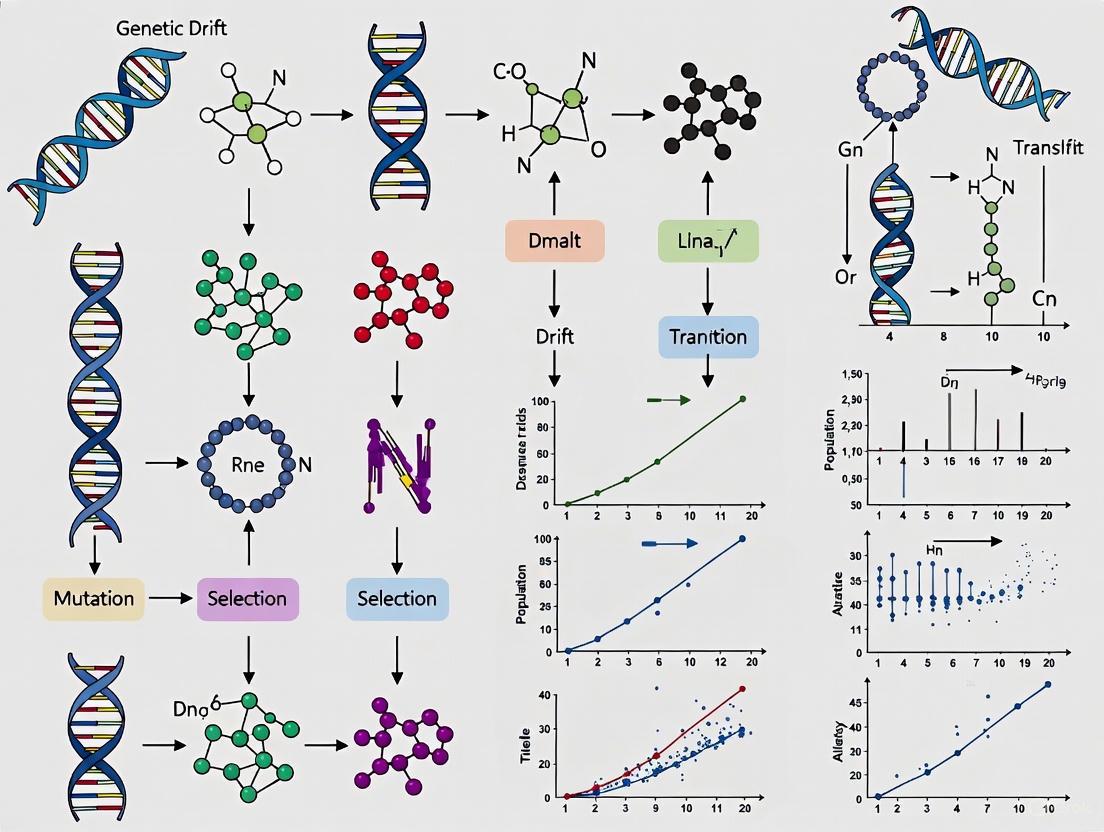
This article provides a comprehensive framework for researchers, scientists, and drug development professionals to understand, manage, and counteract genetic drift in engineered biological systems.
Mitigating Genetic Drift in Synthetic Biology: From Foundational Concepts to Advanced Control Strategies
Abstract
This article provides a comprehensive framework for researchers, scientists, and drug development professionals to understand, manage, and counteract genetic drift in engineered biological systems. Synthesizing the latest research, we explore the fundamental principles and insidious impacts of genetic drift on system stability and therapeutic efficacy. The content details a suite of cutting-edge computational and experimental methodologies, from evolutionary algorithms and genotype-preference selection to biosafety-enhanced chassis design, offering practical solutions for robust system optimization. We further present rigorous validation frameworks and comparative analyses of mitigation techniques, concluding with a forward-looking perspective on integrating these strategies into the drug development pipeline to ensure the reliable and safe application of synthetic biology in biomedicine.
Genetic Drift Fundamentals: Understanding the Unseen Threat to Synthetic Biological Systems
What is Genetic Drift?
Genetic drift is a fundamental evolutionary process where allele frequencies within a population change randomly due to sampling error from one generation to the next [1]. Unlike natural selection, which is a directional process favoring adaptive traits, genetic drift is a non-directional, random process that can lead to the fixation or loss of alleles regardless of their selective value [2]. The magnitude of its effect is inversely related to population size, making it a particularly potent force in small, isolated populations such as those found in laboratory colonies, breeding programs, and synthetic biological systems [2] [1].
Key Characteristics and Consequences:
- Driven by Chance: The random fluctuation in allele frequencies is a result of chance events in gamete sampling [1].
- Stronger in Small Populations: The effect of genetic drift is more pronounced in populations with a small effective population size (Nₑ) [2] [1]. The expected variance in allele frequency (p) after one generation is given by Var(p) = p₀q₀/2Nₑ for diploid organisms [1].
- Leads to Fixation or Loss of Alleles: Over time, drift can cause alleles to reach a frequency of 1.0 (fixation) or 0.0 (loss) [1]. The probability of fixation for a neutral allele is equal to its current frequency [1].
- Reduces Genetic Diversity: By causing the loss of alleles, drift decreases the genetic variation within a population [1].
- Increases Population Subdivision: Isolated populations subjected to drift will become genetically differentiated from one another over time [1].
- Can Overwhelm Selection: In small populations, genetic drift can lead to the fixation of deleterious alleles or the loss of beneficial ones, reducing the efficacy of natural selection [3].
Troubleshooting Guide: Managing Genetic Drift in Engineered Organisms
This guide addresses common issues researchers face when genetic drift disrupts experimental systems or production lineages.
| Problem | Primary Cause | Diagnostic Signs | Solutions & Mitigation Strategies |
|---|---|---|---|
| Loss of engineered function (e.g., reporter gene silencing, decreased pathway output) | Fixation of deleterious mutations in synthetic constructs or regulatory elements due to strong genetic drift [2] [3]. | Diminished fluorescent signal, reduced product titers in a subset of cultures, confirmed by sequencing. | 1. Increase population size during culture passages [1].2. Implement periodic selection to maintain functional lineages.3. Use genomic barcoding to track lineage diversity and bottlenecks. |
| Phenotypic divergence between identical starter cultures | Founder effects and bottlenecks during sub-culturing, leading to random fixation of different alleles in parallel lines [2] [3]. | High variance in growth rates, morphology, or output between technical replicates started from the same clonal source. | 1. Standardize culture volume and inoculation density [2].2. Use single-use master cell banks instead of serial passaging [2].3. Perform population genomics to confirm neutral divergence. |
| Unexpected emergence of a novel phenotype | Drift-driven fixation of a spontaneous mutation that was present at a low frequency in the founder population [2]. | A new, stable trait appears in a culture (e.g., antibiotic resistance, altered metabolism) without directed evolution. | 1. Resequence the population to identify the causal mutation.2. Re-constitute the culture from an earlier, cryopreserved stock to confirm it is a new fixation. |
| Reduced fitness and viability in a lab population | Increased genetic load; drift fixes slightly deleterious mutations, leading to inbreeding depression, especially in small colonies [2] [3]. | Decreased growth rate, lower sporulation efficiency, or reduced reproductive output over generations. | 1. Outcrossing (if possible) to introduce genetic variation and mask deleterious alleles [3].2. Expand population size to reduce the strength of drift [1].3. Enforce rotational breeding schemes [2]. |
FAQs on Genetic Drift in Research Settings
Q1: What is the difference between a population bottleneck and a founder effect? Both are forms of genetic drift that cause a sudden reduction in genetic diversity. A bottleneck occurs when a population undergoes a drastic, often temporary, reduction in size (e.g., from a freeze-thaw cycle or biocontainment breach) [1]. A founder effect occurs when a new population is established by a small number of individuals from a larger source population (e.g., initiating a new culture from a single colony) [1]. The northern elephant seal is a classic bottleneck example, while the introduction of Mycosphaerella graminicola to Australia exemplifies a founder effect [2] [1].
Q2: How can I measure genetic drift in my experimental system? Genetic drift can be quantified by tracking changes in neutral genetic markers over generations.
- Direct Method: Use whole-genome sequencing or high-density SNP genotyping of populations across multiple time points. Calculate the variance in allele frequencies at neutral sites over time. The variance is expected to be Var(p) = p₀q₀[1 − (1 − 1/2Nₑ)^t] after t generations [1].
- Indirect Method: Estimate the effective population size (Nₑ), which determines the rate of drift. Nₑ can be inferred from genomic data by measuring the rate of inbreeding (increase in homozygosity) or the extent of linkage disequilibrium (non-random association of alleles) [1].
Q3: What is the propagule model and how does it relate to genetic drift? The propagule model describes the genetic outcome when new subpopulations are founded by one or a few individuals, creating a severe genetic bottleneck [3]. This leads to new subpopulations having low genetic diversity and being highly genetically differentiated from each other and their source. Immigration can later increase diversity and reduce differentiation. This model is highly relevant to lab workflows involving colony isolation and is supported by genomic studies in dynamic metapopulations like Daphnia magna [3].
Q4: Can genetic drift ever be beneficial in a research or bioproduction context? While typically a complicating factor, drift can occasionally be leveraged. In directed evolution experiments, drift in small populations can randomly fix a beneficial mutation that might otherwise be lost in a larger population due to competition. It can also facilitate the accumulation of non-adaptive mutations that lead to population subdivision, which can be useful for studying speciation or generating diversity for screening [1].
Experimental Protocols & Workflows
Protocol 1: Quantifying Drift Using Barcoded Lineages
This methodology uses neutral genetic barcodes to directly visualize and quantify the impact of drift in a microbial population.
Detailed Methodology:
- Library Construction: Generate a diverse library of isogenic engineered cells, each carrying a unique, neutral DNA barcode integrated into a safe-harbor genomic locus.
- Founder Population: Mix barcoded lineages to create a highly diverse founder population. Use sequencing to confirm the initial equal frequency of barcodes.
- Experimental Passaging: Passage multiple replicate populations from the founder culture for a set number of generations. A key parameter is to vary the population size at each transfer to experimentally manipulate the strength of drift.
- Sample and Sequence: At designated time points, sample biomass from each replicate population. Extract genomic DNA and use PCR to amplify the barcode region for high-throughput sequencing.
- Data Analysis: Quantify the frequency of each barcode in each replicate over time. Calculate summary statistics like Shannon's Diversity Index to measure diversity loss. The variance in barcode frequency across replicates directly measures drift.
Protocol 2: Monitoring Phenotypic Divergence
This protocol assesses the functional consequences of drift by tracking core phenotypes over time.
Detailed Methodology:
- Baseline Characterization: For a clonal population of your engineered organism, establish baseline measurements for key phenotypes (e.g., growth rate, fluorescence intensity, product yield).
- Establish Replicate Lines: Start a large number (e.g., 50-100) of independent replicate cultures from this clonal source.
- Serial Propagation: Propagate each line independently for a pre-determined number of generations, ensuring each transfer involves a controlled, small bottleneck (e.g., 1:1000 dilution).
- Phenotypic Screening: At regular intervals, assay all replicate lines for the key phenotypes.
- Statistical Analysis: Calculate the variance and distribution of phenotypic values across replicates. An increase in variance over time, without selection, is a hallmark of drift acting on underlying genetic variation. Compare the distribution to the original baseline to identify lines where fixation of mutations may have caused significant divergence.
The Scientist's Toolkit: Research Reagent Solutions
| Reagent / Material | Function in Drift Research | Example Application |
|---|---|---|
| Cryopreservation Agents (e.g., Glycerol, DMSO) | To create stable master cell banks, archiving population states at specific generations and preventing further drift. | Periodically freezing population samples during a long-term passage experiment to create a "fossil record" [2]. |
| Neutral DNA Barcodes | To tag individual lineages within a population, allowing their frequency to be tracked via sequencing without affecting fitness. | Inserting a unique 20bp random sequence into a neutral genomic location to directly visualize lineage extinction and fixation [2]. |
| High-Fidelity Polymerase (e.g., Q5) | To minimize the introduction of new mutations during PCR for genotyping or barcode library construction. | Amplifying barcode regions for sequencing with minimal error, ensuring accurate frequency counts [4]. |
| Genomic DNA Cleanup Kits | To purify DNA from population samples before sequencing, removing contaminants like salts that can inhibit enzymes. | Cleaning up gDNA extracted from a whole population sample before sending for NGS to ensure high-quality data [4]. |
| Inbred or Isogenic Strains | To provide a uniform genetic background, reducing standing variation and making drift-evolved changes easier to detect. | Starting a drift experiment with a genetically identical clone to ensure any divergence is due to new mutations and drift [2]. |
Technical Support & Troubleshooting Hub
This section addresses frequently asked questions and specific issues you might encounter in your research on genetic drift and therapeutic protein production.
Frequently Asked Questions (FAQs)
FAQ 1: We are observing unexpected and inconsistent drops in therapeutic protein yield in our engineered microbial populations over multiple generations. Could genetic drift be the cause? Yes, genetic drift is a likely culprit. In any finite population, genetic drift causes random fluctuations in allele frequencies. In the context of synthetic biology, this can lead to the loss of engineered genetic constructs—such as plasmids or expression cassettes for your therapeutic protein—from the population over time, especially if these constructs impose any metabolic burden, even a slight one. This non-selective, random loss directly compromises production yield and consistency [5] [6].
FAQ 2: How can we distinguish between a problem caused by genetic drift and one caused by natural selection? The key differentiator is selective advantage. If a drop in yield is due to natural selection, you would expect to see the proliferation of a specific, fitter genetic variant that does not express your protein, or expresses it at a lower cost. In contrast, genetic drift is a random process; the loss of production capability occurs stochastically and is not linked to a specific fitness advantage. Monitoring the genetic diversity of your production strain population, not just the average yield, can help identify the signature of drift [5].
FAQ 3: What are the primary biosafety risks introduced by genetic drift in engineered organisms? Genetic drift poses two significant biosafety risks:
- Loss-of-Function Risk: Drift can lead to the inactivation or loss of safety mechanisms, such as "kill switches" or auxotrophic genes engineered to prevent survival outside the lab. This compromises biocontainment [6].
- Unpredictable System Behavior: The random fixation of alleles can alter the intended function of synthetic gene circuits, leading to unpredictable and potentially hazardous organism behavior, especially in environmental release applications [6] [7].
FAQ 4: Our small-scale fermentations show high yield, but this collapses during scale-up. Is genetic drift a factor? Yes, this is a classic scenario where genetic drift can have a major impact. Scale-up often involves a population "bottleneck"—where a small sample from the master cell bank is used to inoculate a large bioreactor. This bottleneck dramatically accelerates genetic drift, increasing the chance that a non-producing variant randomly becomes fixed in the large-scale production population [5].
FAQ 5: What are the most effective strategies to mitigate genetic drift in a production setting? Key strategies include:
- Maintaining Large Effective Population Sizes: Avoid serial passaging with small inoculums.
- Implementing Robust Selection: Use continuous and effective antibiotic selection or complementation of essential genes to maintain your construct.
- Engineering Redundancy and Stability: Incorporate genetic elements that stabilize the construct (e.g., chromosomal integration over high-copy plasmids) and design redundant safety circuits to counter random inactivation [6].
Troubleshooting Guide
| Problem Symptom | Potential Root Cause | Diagnostic Experiments | Recommended Solutions |
|---|---|---|---|
| Gradual, unpredictable decline in product titer over sequential production batches. | Genetic drift leading to the accumulation of non-producing cells in the population. | Single-Cell Analysis: Use flow cytometry to check for a sub-population with low or no protein expression.Plasmid Retention Assay: Plate samples on selective and non-selective media to quantify plasmid loss rates. | - Strengthen antibiotic selection.- Switch to a more stable genetic system (e.g., chromosomal integration).- Increase the size of the inoculum for each batch. |
| Rapid failure of a biocontainment circuit (e.g., a kill switch) during long-term cultivation. | Inactivation of essential circuit components via genetic drift (e.g., point mutations, deletions). | Circuit Sequencing: Sequence the genetic circuit from a sample of the failed population to identify inactivating mutations.Functional Assay: Test the response of the failed population to the kill-switch inducer. | - Re-engineer the circuit with redundant, essential components [6].- Implement a "dead-man's switch" that requires a constant signal to remain viable. |
| High clonal variation in product yield when isolating single colonies from a production culture. | Underlying genetic heterogeneity has been revealed and fixed by drift in different sub-clones. | Clone Screening: Screen a large number of single-clone isolates for production yield to map the population's heterogeneity.Genomic Analysis: Perform whole-genome sequencing on high- and low-producing clones to identify drifted loci. | - Improve the homogeneity of the master cell bank by single-cell cloning and screening.- Implement periodic re-cloning to re-homogenize the production strain. |
Key Experimental Protocols for Monitoring Genetic Drift
This section provides detailed methodologies for critical experiments to quantify and track genetic drift in your synthetic biological systems.
Protocol 1: Quantifying Plasmid Loss Rate Due to Genetic Drift
Objective: To measure the rate at which an expression plasmid is spontaneously lost from a microbial population without selective pressure, a direct measure of genetic drift's impact on system stability.
Materials:
- Your production strain containing the plasmid of interest.
- Selective growth medium (with antibiotic).
- Non-selective growth medium (without antibiotic).
- Shaker incubator.
- Spectrophotometer.
- Plating equipment and agar plates (both selective and non-selective).
Methodology:
- Inoculation and Growth: Inoculate the production strain into selective medium and grow to mid-log phase.
- Passaging: Dilute the culture 1:1000 into fresh non-selective medium. This represents one growth cycle.
- Serial Transfer: Repeat Step 2 for 50-100 generations. For each cycle, record the optical density (OD) to monitor growth.
- Plating and Counting: At regular intervals (e.g., every 10 generations), take a sample from the culture. Perform serial dilutions and plate onto both selective and non-selective agar plates.
- Calculation: After incubation, count the colonies on both sets of plates.
- Plasmid Retention Rate (%) = (Colony count on selective plates / Colony count on non-selective plates) × 100.
- Data Analysis: Plot the Plasmid Retention Rate against the number of generations. A sharp decline indicates high susceptibility to genetic drift.
Protocol 2: Amplicon Sequencing for Tracking Allele Frequency Dynamics
Objective: To precisely monitor the frequency of specific genetic variants (e.g., a specific nucleotide in a construct) in a population over time with high resolution.
Materials:
- Population samples collected at multiple time points.
- DNA extraction kit.
- PCR reagents and primers for amplifying your target genetic locus.
- Library preparation kit for next-generation sequencing (NGS).
- NGS platform (e.g., Illumina MiSeq).
Methodology:
- Sample Collection: Collect cell pellets from your evolving population at defined time points (e.g., days 0, 10, 20, 30).
- DNA Extraction: Extract genomic DNA from each sample.
- Target Amplification: Perform PCR to amplify the specific region of interest (e.g., your therapeutic protein gene or a safety circuit component) from each sample's DNA. Use primers with overhangs containing NGS adapter sequences.
- Library Preparation and Sequencing: Index each sample, pool them into a single library, and sequence on an NGS platform to achieve high coverage (>1000x per sample).
- Bioinformatic Analysis:
- Variant Calling: Use a pipeline (e.g.,
breseqfor microbes) to identify single nucleotide polymorphisms (SNPs) and their frequencies in each sample. - Visualization: Create a plot showing the frequency of key neutral or near-neutral alleles over time. Fluctuations in these frequencies are a direct visualization of genetic drift.
- Variant Calling: Use a pipeline (e.g.,
Amplicon Seq Workflow for Tracking Genetic Drift
The Scientist's Toolkit: Research Reagent Solutions
This table details key materials and their functions for studying and mitigating genetic drift in synthetic biology systems.
| Research Reagent / Tool | Function & Application in Genetic Drift Research |
|---|---|
| Auxotrophic Markers | Genes complementing a host strain's inability to synthesize an essential metabolite (e.g., an amino acid). They provide strong, continuous selection pressure to maintain engineered constructs, directly countering genetic drift [6]. |
| Fluorescent Reporter Proteins (e.g., GFP, mCherry) | Serve as visual, non-disruptive proxies for gene expression and construct stability. Flow cytometry or fluorescence microscopy can track the distribution of expression levels across a population, revealing drift-driven heterogeneity. |
| Kill Switches | Genetic circuits designed to induce cell death upon specific triggers (e.g., absence of a chemical). They are a core biosafety feature, but their components are susceptible to inactivation by genetic drift, requiring redundant design [6]. |
| CRISPR/dCas9 Systems | Can be used to create synthetic, programmable gene drives to bias inheritance or to actively repress the growth of genetic variants that have lost a key construct, acting as a counter-measure to drift [6]. |
| Stable Chromosomal Integration Sites | Pre-characterized genomic "safe havens" for inserting genes of interest. This avoids the high copy number and instability of plasmids, providing a more stable foundation less prone to loss via genetic drift. |
| Dual-Plasmid Selection Systems | Utilize two compatible plasmids, each carrying a different essential gene or selection marker. This creates a high genetic barrier against the complete loss of the engineered system due to random drift events. |
| Cell-Free Protein Synthesis Systems | Bypass the use of living cells altogether for some applications. Since there is no cell division, there is no genetic drift, offering ultimate stability and control for certain types of experiments and on-demand production [7]. |
Genetic Drift Mitigation Logic and Tools
FAQs: Understanding Drift Load in Experimental Systems
FAQ 1: What is drift load and why is it a concern in my model organism population? Drift load is the reduction in a population's mean fitness caused by the stochastic increase in frequency of deleterious mutations due to genetic drift, a process particularly potent in small populations [8]. In model organisms like mice, this is a major concern because over multiple breeding generations, all inbred and genetically modified strains are subject to genetic drift, which can alter the phenotypes associated with the underlying genetic background and compromise experimental reproducibility [9].
FAQ 2: How does the Generalized Haldane (GH) Model improve drift load quantification over traditional models? The Generalized Haldane (GH) model, based on branching processes, provides a more flexible framework for quantifying total genetic drift by accounting for variance in offspring number (V(K)) and can generate and regulate population size (N) internally [10]. This contrasts with Wright-Fisher models, which require an external N and assume a Poisson distribution of offspring (V(K) = E(K) ~1) [10]. The GH model is particularly useful for complex systems like multi-copy genes, as it estimates the total effect of genetic drift from diverse molecular mechanisms (e.g., gene conversion, unequal crossover) without requiring each mechanism to be tracked individually [10].
FAQ 3: What specific experimental readouts are used to quantify fitness loss? Fitness loss is quantified by measuring changes in key demographic rates and genetic parameters. The table below summarizes common metrics used in demo-genetic models to track fitness decline from drift load.
Table: Key Experimental Metrics for Quantifying Fitness Loss
| Metric Category | Specific Readout | Interpretation of Fitness Loss |
|---|---|---|
| Demographic Rates | Reduction in population growth rate | Direct measure of declining mean population fitness [8] |
| Increase in variance of growth rates (Demographic Stochasticity) | Heightened vulnerability to random extinction [8] | |
| Genetic Parameters | Accumulation of deleterious mutations (Genetic Load) | Genomic measure of fitness burden [8] |
| Loss of heterozygosity / Increase in inbreeding | Reduced potential to mask deleterious alleles [8] |
Troubleshooting Guide: Experimental Challenges in Quantifying Drift
Problem: Observed evolutionary rate contradicts predictions from the standard neutral model.
- Potential Cause: The standard Wright-Fisher model may under-account for the total strength of genetic drift in your experimental system, especially if it involves multi-copy genes or strong demo-genetic feedback [10].
- Solution: Apply the Generalized Haldane (GH) model to re-evaluate the neutral expectation. For instance, in ribosomal RNA genes (rDNAs), the GH model resolved the paradox of extremely fast evolution, which was incompatible with the Wright-Fisher model, by showing it was compatible with neutral evolution under a much stronger drift regime [10].
Problem: Uncontrolled drift load and background genetic drift are confounding phenotypic results.
- Potential Cause: The genetic background of your model organism population is not stable. This is a known issue in mouse strains, where genetic drift occurs over breeding generations [9].
- Solution: Implement a rigorous Genetic Stability Program. The Jackson Laboratory, for example, uses such a program to effectively limit cumulative genetic drift, thereby stabilizing phenotypes and ensuring the reliability of models for research and drug development [9].
Problem: Difficulty predicting the success of a genetic rescue intervention in a small, high-drift population.
- Potential Cause: The positive feedback loop of demo-genetic feedback, where inbreeding and drift load reduce the population size, which in turn strengthens genetic drift, creating an "extinction vortex" [8].
- Solution: Use genetically explicit, individual-based simulation models that incorporate demo-genetic feedback. Parameterize these models with your organism's specific data (e.g., demographic rates, deleterious mutation load) to test different genetic rescue scenarios (e.g., number of migrants, source population) and predict which is most likely to increase population growth and delay extinction [8].
Experimental Protocol: A Workflow for Quantifying Drift Load
The following diagram outlines a general experimental workflow for assessing drift load, integrating concepts from genetic and demographic measurement.
Table: Detailed Methodology for Key Workflow Steps
| Workflow Step | Detailed Methodology & Considerations |
|---|---|
| Effective Population Size (Ne) Estimation | Estimate Ne from genetic data (e.g., using linkage disequilibrium methods) or demographic data (accounting for unequal sex ratio, family size). Note that Ne is often much smaller than the census size (Nc) [8]. |
| Genetic Data Collection for Load | Use whole-genome sequencing to identify deleterious alleles. Load can be partitioned as: - Realized Load: Fitness cost from deleterious alleles in homozygous state. - Masked Load: Deleterious alleles currently hidden in heterozygotes [8]. |
| Quantifying Drift Load | Drift load is the component of the total genetic load caused by the stochastic increase in frequency of (typically weakly deleterious) mutations in small populations due to genetic drift [8]. Model fitness as a function of genotype to calculate the mean population fitness reduction. |
| Model Demo-Genetic Feedback | Use individual-based simulation software (e.g., SLiM) to build a model that includes: - Demographic stochasticity: Variance in birth/death rates. - Deleterious mutations: With defined dominance and selection coefficients. - Density feedback: How demographic rates change with population size [8]. |
The Scientist's Toolkit: Key Research Reagent Solutions
Table: Essential Materials and Reagents for Drift Load Studies
| Item / Reagent | Function & Application in Experimentation |
|---|---|
| Inbred & Genetically Stable Model Organisms | Provides a defined genetic background for experiments. Sourcing from institutions with Genetic Stability Programs (e.g., The Jackson Laboratory) limits cumulative genetic drift, protecting phenotype reproducibility [9]. |
| Genetically Explicit Simulation Software | Open-source programs (e.g., SLiM, others) enable forward-time, individual-based simulation of demo-genetic feedback, allowing for in-silico testing of evolutionary hypotheses and intervention strategies [8]. |
| Synthetic Biological Constructs | Simplified genetic circuits (e.g., minimal promoter architectures) can be engineered into cells to "bend nature to understand it," distilling complex biological phenomena to their essentials to enable rigorous testing of evolutionary models [11] [12]. |
| Generalized Haldane (GH) Model | A theoretical reagent for quantifying total genetic drift from all molecular mechanisms (e.g., gene conversion, unequal crossover) in multi-copy gene systems, without the need to parameterize each mechanism individually [10]. |
Frequently Asked Questions (FAQs)
1. What is a genetic bottleneck and how does it lead to diversity loss? A genetic bottleneck is a sharp reduction in population size, often due to environmental catastrophes, habitat destruction, or disease outbreaks. This event leaves behind a small, non-representative sample of the original population's gene pool. The key consequences are:
- Loss of Allelic Diversity: The surviving population has fewer unique alleles, reducing the genetic variation available for future adaptation [13].
- Increased Genetic Drift: In smaller populations, random fluctuations in allele frequencies become more pronounced. This can lead to the fixation or loss of alleles purely by chance, rather than through natural selection [13].
- Inbreeding: Reduced population size often leads to mating between related individuals, resulting in increased homozygosity. This can reveal deleterious recessive alleles, a phenomenon known as inbreeding depression, which further threatens population viability [14] [13].
2. What is the difference between census size and effective population size (Nₑ)? The census size is the total number of individuals in a population. The effective population size (Nₑ) is a key parameter in population genetics that quantifies the rate of genetic drift and inbreeding [15]. It is defined as the size of an idealized Wright-Fisher population that would experience the same amount of genetic drift or inbreeding as the population under study [15]. Real-world factors like unequal sex ratios, variance in family size, and population fluctuation mean that Nₑ is almost always much smaller than the census size [15].
3. What Nₑ thresholds are critical for conservation and management? Research provides guidelines for minimum viable effective population sizes [14]:
- Nₑ ≥ 100 is required to prevent inbreeding depression in the short term.
- Nₑ ≥ 1,000 is required to retain a population's adaptive potential over the long term, allowing it to maintain genetic variation and adapt to environmental changes.
4. How can we mitigate the negative effects of population bottlenecks? The primary method to counteract diversity loss is through assisted gene flow [14].
- Genetic Rescue: Translocations from other populations can alleviate the detrimental effects of inbreeding and genetic load in a small, isolated population.
- Genetic Restoration: Introducing new genetic diversity can increase levels of genetic variation and restore a population's adaptive potential. Simulations show that regular, small-scale translocations can rapidly rescue populations from inbreeding depression [14].
5. Does all genetic diversity loss result from bottlenecks? No, other factors can also reduce diversity. Recent research indicates that population structure—such as subdivision, migration, and admixture—can heavily bias estimates of historical Nₑ and contribute to diversity loss in ways that mimic a bottleneck [16]. Furthermore, in non-bottlenecked populations, processes like learning can systematically alter survival chances and surprisingly mitigate the loss of genetic diversity caused by drift [17].
Troubleshooting Guides
Problem 1: Diagnosing Diversity Loss in a Natural Population
You are monitoring a population that has undergone a recent decline. You suspect a genetic bottleneck is eroding diversity and fitness.
| Observation | Possible Cause | Recommended Action |
|---|---|---|
| Rapid loss of unique alleles and heterozygosity | Strong genetic drift due to small population size [13] | Estimate contemporary Nₑ using genetic marker data [15] |
| Reduced fecundity, survival, or increased disease susceptibility | Inbreeding depression [14] | Perform parental analysis to estimate inbreeding coefficients |
| Population fails to adapt to changing environment (e.g., new pathogen) | Loss of adaptive potential [14] | Use genetic data to assess if Nₑ is below 1,000 [14] |
| Historical Nₑ estimates are biased and do not match known census size | Undetected population structure (subdivision, migration, or admixture) [16] | Conduct population structure analyses (e.g., PCA, ADMIXTURE) prior to Nₑ estimation [16] |
Experimental Protocol: Estimating Recent Effective Population Size (Nₑ)
- Method: Use the software GONE, which estimates recent historical changes in Nₑ from a single sample of individuals using linkage disequilibrium (LD) between genetic markers [16].
- Key Consideration: GONE assumes an isolated population. If there has been recent mixture of previously separated populations or continuous migration at a low rate, the estimates of Nₑ can be substantially biased [16].
- Protocol:
- Sample Collection: Collect tissue or DNA from a single, random sample of individuals from the population.
- Genotyping: Genotype individuals across a high-density SNP array or via whole-genome sequencing.
- Population Structure Analysis: Critical Pre-step. Perform analyses (e.g., with ADMIXTURE or similar software) to identify genetically differentiated groups. If structure is found, restrict Nₑ estimation to these groups [16].
- Run GONE: Input the genotype data into GONE, following the software's guidelines for parameter settings.
- Interpretation: The output provides estimates of Nₑ over the past ~100-200 generations, allowing you to identify the timing and severity of a bottleneck [16].
Problem 2: Designing a Genetic Rescue Plan
Your diagnostics confirm a small, isolated population with low Nₑ and signs of inbreeding. You need to plan a translocation for genetic rescue.
| Challenge | Risk | Mitigation Strategy |
|---|---|---|
| Outbreeding depression (reduced fitness in hybrids) | Low if populations have the same karyotype, were isolated <500 years, and are adapted to similar environments [14] | Select a donor population that is recently diverged and ecologically similar [14] |
| "Swamping" local adaptation | Gene flow can maintain local adaptation unless it is overwhelming [14] | Introduce a controlled amount of gene flow (e.g., 1-20 migrants per generation) rather than a large, one-time influx [14] |
| Donor population also has low genetic diversity | Limited benefit from genetic rescue/restoration [14] | Use a donor population that is outbred and has higher genetic diversity for a greater effect [14] |
| Introducing novel pathogens | Health risk to the recipient population | Implement a strict pathogen screening and quarantine protocol for donor individuals |
Experimental Protocol: Implementing and Monitoring Genetic Rescue
- Source Selection: Identify a potential donor population using genetic data to ensure it is differentiated but not too distantly related, following the guidelines in the table above [14].
- Translocation: Introduce a specific number of individuals from the donor population into the target population. A starting point is to aim for a rate of 1-20 migrants per generation to increase genetic diversity without immediately swamping local traits [14].
- Monitoring - Genetic: Periodically re-genotype the population to track changes in heterozygosity, allelic diversity, and Nₑ.
- Monitoring - Fitness: Measure fitness traits (e.g., juvenile survival, growth rates, fecundity) before and after translocation to document the success of the genetic rescue.
The Scientist's Toolkit: Key Research Reagents & Materials
| Item | Function in Experiment |
|---|---|
| High-Fidelity DNA Polymerase (e.g., Q5) | Used for amplifying genetic markers for genotyping with minimal errors, crucial for accurate diversity estimates [18]. |
| SNP Genotyping Array / Whole-Genome Sequencing Kit | Provides the raw data on genetic variation (SNPs) across the genome, which is fundamental for all downstream analyses of diversity and Nₑ [16]. |
| GONE Software | A key computational tool for estimating the recent historical effective population size (Nₑ) from a single sample of genotyped individuals [16]. |
| Population Structure Software (e.g., ADMIXTURE) | Used to identify subpopulations and genetic clusters within sampled data, which is a critical pre-analysis step to avoid biased Nₑ estimates [16]. |
| recA- Competent E. coli Cells (e.g., NEB 5-alpha) | Essential for stable propagation of cloned DNA fragments, such as those used in developing genetic markers, by preventing unwanted recombination [18]. |
Core Concepts Visualization
Distinguishing Drift from Selection and Mutation Pressure in Engineered Systems
Key Concepts and Definitions
What is Genetic Drift? Genetic drift is the change in the frequency of an existing gene variant (allele) in a population due to random sampling of organisms. It is a stochastic process that can cause allele frequencies to fluctuate randomly over generations, potentially leading to the loss of genetic variation or fixation of alleles. The effects of drift are more pronounced in smaller populations [19].
What is Selection Pressure? Selection pressure refers to the effect of natural selection on a population, which can accelerate the rate of nonsynonymous mutations (positive selection) or conserve amino acids (negative/purifying selection). It is often quantified using the dN/dS ratio, where a value greater than 1 indicates positive selection, less than 1 indicates purifying selection, and equal to 1 indicates neutral evolution [20].
What is Mutation Pressure? Mutation pressure describes the effect of differential mutation rates on allele frequencies, potentially driving evolutionary change when combined with genetic drift, particularly across different genomic environments with varying effective population sizes (Nₑ) [21] [22].
How do these forces interact in engineered systems? In synthetic biological systems, these evolutionary forces can interfere with designed functions. Genetic drift can cause random loss of engineered constructs, selection can favor mutations that disrupt intended functions but improve survival, and mutation pressure can systematically bias evolutionary outcomes based on underlying mutation rates [23] [24].
Troubleshooting Guide: Common Experimental Challenges
FAQ: How can I determine if observed genetic changes are due to drift versus selection?
Problem: You observe unexpected loss or fixation of genetic elements in your engineered microbial population but cannot determine whether this results from random drift or selective processes.
Solution: Implement controlled experiments and statistical analyses to distinguish these forces:
- Population Size Manipulation: Repeat your experiment with multiple population sizes. Since genetic drift is strongly dependent on population size (effect inversely proportional to Nₑ), while selection is less dependent on size, observing stronger effects in smaller populations suggests drift [25] [19].
- Replicate Lines: Maintain multiple identical populations under the same conditions. Parallel changes across most replicates suggest selection, while random, divergent changes among replicates indicate drift [19] [23].
- Fitness Assays: Compete the evolved variants against the original engineered strain in a neutral marker system. If variants show consistent fitness advantages, selection is likely operating [20].
Prevention: Maintain large population sizes (>1000 individuals) where possible, and periodically revive populations from frozen stocks to minimize generational time for drift to occur [23].
FAQ: Why is my synthetic genetic circuit losing function over generations even without apparent selective pressure?
Problem: Your carefully engineered circuit shows progressive performance degradation despite the absence of measurable fitness costs that would drive selection against the circuit.
Solution: This pattern strongly suggests genetic drift is accumulating neutral or nearly neutral mutations that affect circuit function:
- Mutation Accumulation Assay: Propagate multiple parallel lines through single-cell bottlenecks to maximize drift effects. Sequence resulting populations to identify accumulated mutations in circuit components [23].
- Circuit Robustness Analysis: Check if specific circuit components (promoters, RBS sequences, coding regions) are particularly prone to loss-of-function mutations through mutational vulnerability analysis [24].
- Parameter Sensitivity Modeling: Use computational models to determine if small changes in expression levels or kinetic parameters could explain performance declines, which would indicate susceptibility to drift [22].
Prevention: Implement redundant circuit design, use more stable genetic elements, and minimize serial passaging in your experimental workflow [23] [24].
FAQ: How do I quantify the relative contributions of drift, selection, and mutation pressure in my system?
Problem: You need to mathematically disentangle the effects of multiple evolutionary forces acting on your engineered biological system.
Solution: Apply population genetics models and statistical methods:
- Wright-Fisher Model: For haploid systems with non-overlapping generations, use this model to simulate expected drift patterns: The probability of obtaining k copies of an allele with frequency p is given by the binomial formula
(2N)!/(k!(2N-k)!) * p^k * q^(2N-k)where N is population size, and q = 1-p [19] [26]. - Moran Model: For systems with overlapping generations, this model may be more appropriate, as it accounts for stepwise birth-death processes [26].
- dN/dS Analysis: For protein-coding sequences, calculate the ratio of nonsynonymous to synonymous substitution rates. Values significantly >1 indicate positive selection, while values <1 suggest purifying selection [20].
- Effective Population Size (Nₑ) Estimation: Calculate Nₑ using temporal allele frequency changes or linkage disequilibrium methods to quantify expected drift strength [25] [19].
FAQ: What strategies can mitigate genetic drift in long-term experiments?
Problem: Your research requires maintaining stable engineered populations over many generations, but drift threatens experimental reproducibility.
Solution: Implement drift-mitigation protocols:
- Cryopreservation: Archive early-generation populations and periodically restart experiments from frozen stocks rather than maintaining continuous cultures [23].
- Population Refreshment: Backcross to the original engineered strain every 5-10 generations, ensuring proper chromosomal refreshment including sex chromosomes in diploid systems [23].
- Large Population Maintenance: Use chemostats or other continuous culture devices that maintain large, well-mixed populations rather than serial transfer protocols with bottlenecks [17].
- Structured Population Management: In animal models, maintain careful pedigree records and implement rotational breeding schemes to minimize allele frequency changes [23].
Experimental Protocols and Methodologies
Protocol 1: Population Bottleneck Experiment to Assess Drift
Purpose: Quantify the impact of genetic drift on engineered genetic elements through controlled population bottlenecks.
Materials:
- Engineered microbial or mammalian cell population
- Appropriate growth medium and culture conditions
- Dilution equipment and sterile technique supplies
- PCR reagents for genotyping
- Sequencing capabilities
- Flow cytometer or other measurement device for engineered function
Procedure:
- Start with a clonal population of your engineered system.
- Establish multiple parallel lines (≥10).
- For each transfer cycle:
- Grow cultures to stationary phase
- Implement severe dilution (1:1000 to 1:10000) to create population bottlenecks
- Plate for single colonies and randomly select one to continue each line
- Maintain control lines with large population sizes (>10⁶) and no bottlenecks.
- Measure allele frequencies or circuit function every 10 generations.
- Continue for 50-100 generations.
- Sequence final populations to identify fixed mutations.
Interpretation: Greater variance in allele frequencies or circuit performance among bottlenecked lines compared to controls indicates stronger genetic drift effects [19] [23].
Protocol 2: Fluctuation Test to Measure Mutation Pressure
Purpose: Quantify mutation rates in engineered genetic elements to assess mutation pressure.
Materials:
- Engineered bacterial strain with selectable marker (e.g., antibiotic resistance)
- Non-selective and selective growth media
- Sterile culture tubes and plating equipment
Procedure:
- Inoculate many small (0.1-0.5 mL) independent cultures from a small number of cells.
- Grow cultures to saturation without selection.
- Plate entire cultures on selective media and non-selective media for viability counts.
- Count resistant colonies on selective plates and total viable cells on non-selective plates.
- Apply the Ma-Sandri-Sarkar maximum likelihood method to estimate mutation rate from the distribution of resistant colonies across independent cultures.
Interpretation: High mutation rates indicate strong mutation pressure that could interact with drift to accelerate evolutionary change in your engineered system [21] [22].
Protocol 3: Competitive Fitness Assay to Detect Selection
Purpose: Measure relative fitness of evolved variants to detect selection.
Materials:
- Ancestral and evolved strains with distinguishable markers (e.g., different fluorescent proteins)
- Flow cytometer or selective plating method
- Appropriate growth media
Procedure:
- Mix ancestral and evolved strains in known proportions (typically 1:1).
- Propagate mixed culture for multiple generations with serial dilution.
- Sample at regular intervals and quantify strain ratios using markers.
- Calculate selection coefficient s from the change in log ratio of the two strains over time:
s = ln([Evolved]/[Ancestral])_t - ln([Evolved]/[Ancestral])_0 / t
Interpretation: Significant deviation of s from zero indicates selection acting on the evolved strain [20].
Quantitative Data and Mathematical Models
Table 1: Mathematical Models for Distinguishing Evolutionary Forces
| Model Name | Application | Key Parameters | Force Measured |
|---|---|---|---|
| Wright-Fisher | Discrete generations, ideal for microbial systems | Population size (N), allele frequency (p) | Genetic drift [19] [26] |
| Moran | Overlapping generations, useful for mammalian cells | Birth/death rates, population size | Genetic drift (runs 2x faster than Wright-Fisher) [26] |
| dN/dS Ratio | Protein-coding sequences | Nonsynonymous/synonymous substitution rates | Selection pressure [20] |
| Coevolutionary Model | Interacting molecular components | Effective population sizes (Nₑ), mutation rates (u), selection coefficients (s) | Mutation pressure-drift interaction [21] [22] |
Table 2: Expected Patterns for Different Evolutionary Scenarios
| Observation | Suggests Drift | Suggests Selection | Suggests Mutation Pressure |
|---|---|---|---|
| Changes occur more rapidly in small populations | ✓ | ||
| Parallel evolution across replicates | ✓ | ||
| Consistent bias in mutation types | ✓ | ||
| dN/dS > 1 for specific genes | ✓ | ||
| Random loss of function across components | ✓ | ||
| Dependence on mutation rate exceeding neutral expectation | ✓ [22] |
Diagnostic Diagrams and Workflows
Research Reagent Solutions
| Reagent/Resource | Function | Application Examples |
|---|---|---|
| Fluorescent protein markers (GFP, RFP, etc.) | Track allele frequencies without selection | Competitive fitness assays, population dynamics monitoring [17] |
| Neutral genetic markers | Distinguish strains without fitness effects | Drift measurement, population structure analysis [19] |
| Conditional lethal circuits | Measure selection coefficients | Fitness cost quantification of engineered elements [20] |
| Error-prone PCR systems | Increase mutation rates | Mutation pressure studies, evolutionary robustness testing [21] |
| CRISPR-based barcoding | Lineage tracking | Quantifying drift and selection in complex populations [23] |
| Long-read sequencers (Nanopore, PacBio) | Detect haplotypes and linked mutations | Coevolution analysis, mutation spectrum characterization [22] |
Proactive Mitigation: Computational and Experimental Strategies for Stabilizing Synthetic Functions
Leveraging Evolutionary Algorithms for Drift-Resistant Genetic Circuit Design
Core Concepts: Genetic Drift and Circuit Stability
What is genetic drift in the context of synthetic biology?
Genetic drift is a random evolutionary process that causes changes in gene frequency within a population over time. In synthetic biology, this presents a significant challenge as it can lead to the loss-of-function in engineered genetic circuits. Unlike natural selection, genetic drift is nonselective and results in nonadaptive changes. It occurs in any finite population and can overwhelm selection in small populations, reducing genetic variation within populations while increasing variation among populations [5].
Why are engineered genetic circuits particularly vulnerable to genetic drift?
Engineered genetic circuits are vulnerable to genetic drift because their function often provides no growth advantage to the host organism. In fact, cells that acquire mutations inactivating the circuit often have a growth advantage because they reduce their metabolic load. These mutant cells can outcompete functional cells in the population, leading to rapid loss of circuit function over generations. One study found that a standard Lux receiver circuit (T9002) lost function in less than 20 generations due to deletion mutations between homologous transcriptional terminators [27].
Troubleshooting Guides
Problem: Rapid loss-of-circuit function in serial propagation
Observation: Circuit function decreases significantly within 20-50 generations during serial propagation without selective pressure.
Diagnosis: This is typically caused by deletion mutations between repeated sequence elements in your genetic circuit, particularly homologous transcriptional terminators or promoter sequences [27].
Solution: Re-engineer the circuit to eliminate sequence homology:
- Replace identical terminators with functionally equivalent but non-homologous alternatives
- Avoid repeated operator sequences in promoters
- Use the following design principles to increase evolutionary half-life [27]
Experimental Protocol for Diagnosis:
- Propagate cells containing the genetic circuit in liquid culture for 50+ generations with daily dilution
- Sample populations at regular intervals (every 10 generations) and measure circuit function
- Isolate plasmid DNA from non-functional populations and sequence the entire circuit
- Identify common deletion endpoints and sequence motifs in multiple independent lineages
Problem: Unstable expression despite inducible promoters
Observation: Circuit output becomes heterogeneous despite initially tight regulation.
Diagnosis: Mutations are accumulating in promoter regions or regulatory elements. Promoter mutations are selected for more than any other biological part in genetic circuits [27].
Solution:
- Use multiple, distinct inducible systems in parallel to reduce selective pressure on any single promoter
- Decrease basal expression levels to reduce metabolic burden
- Implement negative feedback loops to stabilize expression
- Consider moving the circuit to the chromosome instead of high-copy plasmids
Problem: Scar sequence mutations disrupting circuit function
Observation: Mutations frequently occur in assembly scar sequences between BioBricks.
Diagnosis: The scar sequences created by standard assembly methods create hotspots for mutations, including point mutations, small insertions and deletions, and insertion sequence (IS) element insertions [27].
Solution:
- Use alternative assembly strategies that minimize or eliminate scar sequences
- Re-engineer circuits using synthesis with optimized codons and without repeated elements
- Include selective markers within the circuit architecture when possible
FAQ: Addressing Common Experimental Challenges
Q: Can I use antibiotic resistance as selective pressure to maintain circuit function? A: While antibiotic resistance can help maintain plasmid presence, it does not ensure evolutionary stability of your specific circuit function. Studies show circuits still accumulate loss-of-function mutations even when antibiotic selection is maintained [27].
Q: How does expression level affect evolutionary stability? A: Higher expression levels consistently decrease evolutionary half-life. One study found that evolutionary half-life exponentially decreases with increasing expression levels. Reducing expression 4-fold increased evolutionary half-life over 17-fold in one tested circuit [27].
Q: What types of mutations commonly cause loss-of-function? A: Multiple mutation types are observed: deletion between homologous sequences (most common), point mutations in key regulatory elements, small insertions and deletions, large deletions, and insertion sequence (IS) element insertions that often occur in scar sequences between parts [27].
Q: Can evolutionary algorithms help design more robust circuits? A: Yes, evolutionary algorithms can explore the heuristic space for optimal combinations of genetic elements that maintain function under evolutionary pressure. This approach has successfully generated new algorithms for other complex optimization problems [28].
Stability Data and Design Principles
Table 1: Evolutionary Stability of Genetic Circuit Designs
| Circuit Design | Expression Level | Sequence Homology | Evolutionary Half-life | Primary Failure Mode |
|---|---|---|---|---|
| T9002 (original) | High | High (terminators) | <20 generations | Deletion between terminators |
| T9002 (re-engineered) | High | None | >2-fold improvement | Point mutations |
| T9002 (optimized) | Low (4-fold reduction) | None | >17-fold improvement | Multiple, distributed |
| I7101 (original) | High | High (operators) | <50 generations | Promoter mutations |
Table 2: Design Principles for Evolutionarily Robust Circuits
| Design Principle | Implementation | Expected Stability Improvement |
|---|---|---|
| Eliminate sequence repeats | Use non-homologous terminators | 2-3 fold |
| Reduce expression level | Weaken RBS or promoters | 4-17 fold |
| Use inducible promoters | Limit expression to necessary periods | 2-5 fold |
| Distribute functional load | Modular circuit architecture | 3-6 fold |
| Chromosomal integration | Single copy reduces burden | Varies by system |
Experimental Protocols
Protocol 1: Measuring Evolutionary Stability via Serial Propagation
Purpose: Quantify the evolutionary half-life of your genetic circuit design.
Materials:
- Strain with genetic circuit
- Appropriate liquid growth media
- Inducer compounds if using inducible circuits
- Plate reader for fluorescence/absorbance measurements
Procedure:
- Start 3 independent cultures of your strain in 2mL media
- Grow cultures to late log phase (12-16 hours)
- Dilute 1:1000 into fresh media daily (approximately 10 generations per transfer)
- Every 20 generations, sample and freeze population for backup
- At each time point, measure circuit function by inducing and measuring output
- Continue for 200-300 generations or until function drops below 10% initial
- Plot normalized function vs. generations to determine evolutionary half-life
Analysis: Calculate evolutionary half-life as the number of generations until circuit function decreases to 50% of its initial value [27].
Protocol 2: Evolutionary Algorithm for Circuit Optimization
Purpose: Use evolutionary computation to generate robust circuit designs.
Materials:
- Library of biological parts (promoters, RBS, coding sequences, terminators)
- Assembly method for rapid construction
- High-throughput screening method
- Computational resources for algorithm execution
Procedure:
- Define genetic representation of solution domain (combination of parts)
- Establish fitness function that evaluates circuit function AND stability
- Initialize population of candidate solutions
- Apply selection, crossover, and mutation operators iteratively
- Evaluate fitness of each generation
- Continue until convergence or maximum generations reached [29] [28]
Representation Example:
The Scientist's Toolkit: Research Reagent Solutions
Table 3: Essential Research Reagents for Drift-Resistant Circuit Design
| Reagent/Category | Function/Application | Examples/Specifications |
|---|---|---|
| Non-homologous terminators | Prevent deletion mutations | Diverse set with <70% sequence identity |
| Promoter library | Tunable expression control | Varying strengths, inducible systems |
| Standardized biological parts | Modular circuit design | BioBricks from Registry of Standard Biological Parts [30] |
| Evolutionary algorithm software | Optimize circuit configurations | Custom implementations in Python/MATLAB |
| Codon optimization tools | Reduce translational burden while maintaining function | Various web servers and standalone tools [30] |
| High-throughput screening | Evaluate circuit function and stability | Flow cytometry, microfluidics, robotic automation |
Workflow Visualization
The following diagram illustrates the complete methodology for designing evolutionarily robust genetic circuits:
Genetic drift, the random fluctuation of allele frequencies in a population, poses a significant threat to synthetic biological systems. In finite populations, drift can lead to the loss of beneficial genetic variants and reduce adaptive potential, undermining the stability and productivity of engineered biological functions [31] [19]. This technical support center provides resources to help researchers combat genetic drift by implementing Genotype-Preference Selection, a multi-population competitive evolutionary algorithm designed to maintain genetic diversity by explicitly considering and preserving distinct genotypes during environmental selection [32]. The guides and protocols below will assist in troubleshooting common experimental challenges.
Frequently Asked Questions (FAQs) and Troubleshooting
Q1: My synthetic population has rapidly lost genetic variation. How can I determine if genetic drift is the cause?
A: A rapid loss of variation, especially in a small population, strongly suggests genetic drift. To confirm:
- Monitor Allele Frequencies: Track changes in neutral allele frequencies over generations. Drift causes random "wobbling" of frequencies, while selection produces directional change [31] [19].
- Check Effective Population Size (Nₑ): Genetic drift is stronger when the effective population size is small. Your experimental Nₑ might be smaller than the census size due to bottlenecks or unequal reproductive success [31].
- Use Controls: Maintain a large, control population under the same conditions. A faster loss of heterozygosity in your smaller test population indicates drift [19].
Q2: My genotype-preference selection algorithm is not maintaining stable subpopulations. What could be wrong?
A: Instability often arises from insufficient genetic diversity during selection. Implement these strategies:
- Incorporate a Historical Survival Population: Introduce a repository of genetically diverse individuals from past generations into the competition between parent and offspring populations. This acts as a buffer against diversity loss [32].
- Apply a Genotype-Phenotype Fitness Criterion: During environmental selection, evaluate individuals based on both their genotype (using Pareto dominance for convergence) and their phenotype (ensuring diversity in expressed traits). This dual approach more precisely identifies optimal and suboptimal individuals worth preserving [32].
- Utilize Population Spectral Radius: Assess the overall convergence quality of a population as a whole, rather than evaluating individuals separately. Favor selecting populations with a minimal spectral radius, as this helps retain a wider set of genotypes [32].
Q3: I am getting inconsistent or failed results from my SNP genotyping, which is critical for tracking genotypes. How can I troubleshoot this?
A: Inconsistent genotyping data can derail diversity tracking. Follow this checklist [33]:
- Verify DNA Quality and Quantity: Use accurately quantified DNA. Degraded DNA or inhibitors in the sample can cause assay failure.
- Check for Hidden SNPs: Multiple or trailing clusters in your assay can be caused by a secondary, undetected single nucleotide polymorphism (SNP) under a primer or probe binding site. Search databases like dbSNP and redesign your assay if necessary.
- Use Appropriate Controls: Always include positive controls (e.g., homozygous and heterozygous genotypes) and a no-template control (NTC) to test for contamination in every run [34].
- Review Cluster Plots with Advanced Software: If your instrument's software cannot make clear calls, try specialized genotyping software (e.g., TaqMan Genotyper Software) which may have improved clustering algorithms for difficult data [33].
Q4: How do I balance the introduction of new genetic diversity with the risk of introducing deleterious traits?
A: This is a central challenge in managing genetic drift.
- Prioritize Functional Diversity: Focus on maintaining genotypic diversity that is linked to known, neutral, or beneficial phenotypic diversity, as assessed by a genotype-phenotype fitness criterion [32].
- Manage Population Structure: Use a multi-population approach. This allows new variants to be tested in semi-isolated demes, preventing a potentially deleterious variant from sweeping the entire metapopulation while still preserving it for potential future utility [31] [32].
- Implement Gradual Introgression: When introducing new genetic material, do so gradually and monitor fitness consequences across multiple generations before fully integrating it.
Experimental Protocols
Protocol 1: Implementing a Multi-Population Competitive Evolutionary Algorithm with Genotype Preference
This protocol outlines the core methodology for maintaining genetic diversity against drift [32].
1. Objective To maintain high genotypic and phenotypic diversity in a synthetic population undergoing evolution, thereby mitigating the effects of genetic drift and improving adaptability.
2. Materials and Reagents
- Platform: High-throughput biofoundry automation system (e.g., an Opentrons liquid handler or equivalent) for streamlined Design-Build-Test-Learn (DBTL) cycles [35].
- Software: j5 DNA assembly design software, Cello for genetic circuit design, or SynBiopython library for standardized DNA design [35].
- Analysis Tools: Computational resources for running spectral radius analysis and genotype-phenotype fitness evaluation.
3. Workflow Diagram
4. Procedure 1. Initialization: Start with a population possessing high initial genetic diversity. 2. Population Selection (Genotype Preference): From the available populations, select the one with the minimal spectral radius. This metric assesses overall population convergence and favors the retention of both optimal and suboptimal genotypes. 3. Historical Population Injection: To counteract diversity loss, incorporate a "historical survival population"—a stored, genetically diverse population from a previous generation—into the current parent-offspring competition pool. 4. Competition and Recombination: Allow the parent, offspring, and historical populations to compete. Preferentially select individuals with significant genotype differences to recombine into a new, joint population. 5. Fitness Assessment: Evaluate the new population using a genotype-phenotype-based fitness criterion. This involves: * Comparing genotypes using the Pareto dominance principle to ensure convergence. * Concurrently evaluating both genotype and phenotype diversity to identify individuals with good convergence and diversity. 6. Iteration: Repeat the DBTL cycle. If genetic diversity drops below a threshold, re-inject the historical population to replenish variation.
Protocol 2: Troubleshooting SNP Genotyping for Accurate Diversity Monitoring
1. Objective To resolve common issues in SNP genotyping assays, ensuring accurate data for tracking genotypic diversity in populations.
2. Materials
- Controls: Homozygous mutant, heterozygous, homozygous wild-type, and no-template control (NTC) DNA samples [34].
- Reagents: Validated SNP genotyping assay mix, high-quality DNA template, master mix.
- Equipment: Real-time PCR instrument, computer with genotyping analysis software (e.g., TaqMan Genotyper).
3. Workflow Diagram
4. Procedure 1. No or Weak Amplification: * Accurately re-quantify DNA using a fluorometric method. Avoid degraded samples. * Check for PCR inhibitors by spiking a known control into the test sample. * Verify the reaction setup and cycling conditions. Consider increasing the cycle number [33]. 2. Poor Cluster Formation: * Trailing Clusters: Often caused by variable gDNA quality or concentration. Standardize DNA preparation protocols [33]. * Multiple Clusters: Search dbSNP for secondary polymorphisms under primer or probe sites. Redesign the assay to mask these sites as "N" in the sequence [33]. * Check if the target region is within a copy number variable region and validate with a copy number assay. 3. Failed No-Template Control (NTC): * If the NTC shows amplification, it indicates contamination. Discard the run, replace all reagents, and decontaminate workspaces [34]. 4. Software Cannot Make Calls: * Export the data and analyze it with specialized software (e.g., TaqMan Genotyper), which may have more robust clustering algorithms [33].
Data Presentation
Table 1: Common Genotyping Problems and Solutions
| Problem Symptom | Possible Cause | Recommended Solution | Key Control to Use |
|---|---|---|---|
| No amplification | Degraded DNA, inhibitors, inaccurate quantification [33] | Re-quantify DNA with fluorometer; dilute to remove inhibitors; check setup [33] | No-template control (NTC) [34] |
| Single cluster only | Very low minor allele frequency (MAF), assay failure [33] | Increase sample size; use Hardy-Weinberg equation to check detectability; re-design assay [33] | Homozygous positive controls [34] |
| Multiple or trailing clusters | Hidden SNP under primer/probe; copy number variation [33] | Search dbSNP and redesign assay; validate with copy number assay [33] | Known heterozygous sample |
| Software fails to autocall | Poor separation between clusters [33] | Analyze data with advanced software (e.g., TaqMan Genotyper) [33] | Full set of genotype controls [34] |
Table 2: The Scientist's Toolkit: Key Research Reagent Solutions
| Item | Function/Application in Diversity Maintenance |
|---|---|
| Biofoundry Automation | Integrated robotic platform to execute high-throughput Design-Build-Test-Learn (DBTL) cycles, enabling rapid prototyping and testing of diverse genetic constructs [35]. |
| j5 DNA Assembly Software | An open-source tool for automated design of DNA assembly strategies, standardizing the "Build" phase and facilitating the creation of complex genetic variants [35]. |
| TaqMan SNP Genotyping Assays | Validated assays for accurate allele frequency determination, crucial for monitoring population diversity and detecting drift [33]. |
| Synthetic Biology Software (Cello, SynBiopython) | Computational tools for designing genetic circuits (Cello) and standardizing DNA design across platforms (SynBiopython), enhancing the "Design" phase [35]. |
| Historical Survival Population Archive | A biobank of cryopreserved, genetically diverse cell lines or organisms from past generations, used to reintroduce lost variation into a population [32]. |
Visualizations and Workflows
Core MPCEA-GP Algorithm Workflow
This diagram illustrates the logical flow of the Multi-Population Competitive Evolutionary Algorithm based on Genotype Preference (MPCEA-GP), which is central to countering genetic drift [32].
Archiving Historical Genotypes to Counteract Diversity Loss Over Time
FAQs on Genetic Drift and Archiving
What is genetic drift and why is it a concern for my research? Genetic drift is a fundamental evolutionary process characterized by random fluctuations in allele frequencies within a population from one generation to the next [17]. These random changes can lead to the permanent loss of genetic variants, reducing diversity [36]. For researchers, this is a critical concern because genetic drift can change the phenotype of your model organisms and compromise the reproducibility of your experiments over time, even under identical laboratory breeding conditions [23].
How can archiving historical genotypes help counteract genetic drift? Archiving creates a stable, cryogenically preserved repository of genetic material [37]. This serves as an insurance policy against the random changes that accumulate in living colonies. If genetic drift occurs, you can recover the original genetic background of your strain from these frozen archives, effectively "resetting" the genetic clock and restoring the original phenotypes and experimental conditions [23].
What are the key components of a effective genetic archive? A proper genetic archive requires more than just freezing samples. Key components include [37]:
- Secure, Long-Term Storage: Reliable cold storage units (e.g., ultra-low temperature freezers or liquid nitrogen) with minimal freeze-thaw cycles.
- Standard Operating Procedures (SOPs): Detailed, written protocols for all tasks, from sample accessioning and cataloging to loans and disposal.
- Comprehensive Data Management: Meticulous tracking of all associated data (e.g., using Darwin Core standards), including pedigree information and the number of inbred generations.
- Trained Personnel: Staff trained using the written SOPs to ensure accuracy and consistency in all repository procedures.
My mouse colony is small; how often should I refresh the genetics? For long-term maintenance, it is recommended to refresh the genetic background of your strain by backcrossing to the appropriate inbred genetic background every 5-10 breeding generations to minimize the risk of drift [23].
Troubleshooting Guide: Common Genetic Drift Scenarios
Problem: Unexpected Phenotype in a Previously Stable Model Organism
This is a common signal that genetic drift may have occurred in your colony [23].
| Possible Cause | Diagnostic Steps | Recommended Solution |
|---|---|---|
| Accumulated spontaneous mutations [23] | Sequence the genome of affected individuals and compare to original background. Review breeding logs for number of generations. | Recover the strain from your frozen genetic archive. If unavailable, refresh the genetic background via backcrossing [23]. |
| Substrain divergence | Verify the source and nomenclature of your strain. Compare your experimental results with recent literature. | Always report detailed substrain and breeding strategy in publications. Obtain new breeding stock from the original, trusted vendor [23]. |
Problem: Loss of Genetic Diversity in a Synthetic Genetic Circuit Population
This can occur even without selective pressure, due to random chance in small populations [17] [36].
| Possible Cause | Diagnostic Steps | Recommended Solution |
|---|---|---|
| Small effective population size [36] | Calculate the population size used in your experiments. Monitor allele frequencies over time. | Increase the population size for experiments. For long-term storage, archive a large number of distinct genetic variants [37]. |
| Bottleneck event during culture passage | Review lab protocols for steps that involve a drastic reduction in cell numbers. | Archive master stocks of the entire population. When propagating, use a large inoculum to maintain diversity [36]. |
Experimental Protocols for Mitigation
Protocol 1: Backcrossing to Refresh Genetic Background
This protocol is used to minimize the impact of genetic drift by reintroducing the original, stable genome from a trusted vendor into your colony [23].
Key Reagent Solutions:
- Inbred Mice from Trusted Vendor: The source of the original, non-drifted genetic background (e.g., C57BL/6J from JAX).
- Homozygous "Drifted" Colony Mice: The mice from your own colony that need to be refreshed.
Workflow:
Steps:
- Initial Cross: Breed a homozygous female from your "drifted" colony with an inbred male from a trusted vendor. This produces the first backcross generation (N1), which is heterozygous.
- First Backcross: Take an N1 heterozygous male and mate it with an inbred female from the trusted vendor. This produces the N2 generation.
- Second Backcross: Take an N2 heterozygous male and mate it with an inbred female from the trusted vendor. This produces the N3 generation. By this step, the sex chromosomes are fully refreshed.
- Re-establish Homozygosity: Intercross male and female N3 heterozygotes to re-homozygose your gene of interest (e.g., a knockout allele) on the refreshed genetic background [23].
Protocol 2: Establishing a Cryopreserved Genetic Archive
Long-term cryopreservation is the most robust method to halt genetic drift entirely for a strain [23] [37].
Key Reagent Solutions:
- Cryoprotectant: Such as dimethyl sulfoxide (DMSO) or glycerol.
- Aseptic Collection Supplies: Sterile tubes, pipettes, and labels.
- Controlled-Rate Freezer: For gradual cooling to prevent ice crystal formation.
- Long-Term Storage Vessel: Liquid nitrogen cryovats or ultra-low temperature freezers (-80°C or colder).
Workflow:
Steps:
- Sample Collection: Aseptically collect the biological material to be preserved (e.g., sperm, embryos, engineered bacterial cells).
- Cryopreservation: Mix the sample with an appropriate cryoprotectant solution. Use a controlled-rate freezer to slowly cool the samples to the desired storage temperature, minimizing cold shock and ice damage.
- Long-Term Storage: Transfer the frozen samples to a long-term storage vessel, ideally in the vapor phase of liquid nitrogen (-135°C to -196°C) [37].
- Data Cataloging: Log all sample information into a secure database. Essential data includes strain identity, genotype, date, passage number, and storage location [37].
- Viability Testing: After freezing, thaw a test sample to confirm viability and the ability to recover a live organism or functional culture.
- Strain Recovery: When needed, thaw an archived vial to regenerate the original, non-drifted strain for experiments [23].
Troubleshooting Guides
Guide 1: Resolving Inefficient Cell Killing in Deadman Kill Switches
Problem: Your Deadman kill switch is not producing sufficient cell death (e.g., less than 3 logs of killing) upon removal of the survival signal (e.g., ATc).
Solutions:
- Check Toxin Gene and RBS Strength: The killing efficiency is highly dependent on the specific toxin and its Ribosome Binding Site (RBS) strength. Test and optimize different toxin-RBS combinations [38].
- Implement a Combinatorial Killing Approach: A single killing mechanism may be insufficient. Incorporate a redundant, synergistic approach by combining a toxin with essential protein degradation [38].
- Verify Circuit Monostability: Ensure the toggle switch is truly monostable, favoring the TetR+ ("death") state in the absence of ATc. This can be achieved by altering the RBS strengths of LacI and TetR [38].
- Accelerate Switching Dynamics: Slow switching can allow population escape. Fuse a degradation tag (e.g., recognized by mf-Lon protease) to LacI to create a positive feedback loop that accelerates the transition to the death state upon signal removal [38].
- Minimize Leaky Toxin Expression: Incorporate additional palindromic LacI operator sites in the toxin gene promoter and use a transcriptional terminator upstream to insulate the gene from spurious transcription [38].
Performance Data of Different Toxin and Combinatorial Strategies:
| Toxin / Killing Mechanism | Additional Module | Survival Ratio after 6 hours | Key Characteristics |
|---|---|---|---|
| EcoRI (Endonuclease) [38] | None | < 1 x 10⁻³ [38] | Damages host cell DNA [38] |
| CcdB (DNA gyrase inhibitor) [38] | None | < 1 x 10⁻³ [38] | Native to E. coli; well-characterized [38] |
| MazF (Ribonuclease) [38] | None | < 1 x 10⁻³ [38] | RNA-level toxin; native to E. coli [38] |
| mf-Lon Protease | Targeting MurC (essential for peptidoglycan biosynthesis) [38] | < 1 x 10⁻⁴ [38] | Degrades essential proteins [38] |
| EcoRI + mf-Lon-MurC [38] | Combinatorial | < 1 x 10⁻⁷ [38] | Most effective; synergistic DNA damage and essential protein degradation [38] |
Guide 2: Troubleshooting Signal Crosstalk in Passcode Circuits
Problem: Your Passcode circuit shows incorrect ON/OFF states, activating with the wrong environmental signals or failing to activate with the correct ones.
Solutions:
- Verify Hybrid TF Orthogonality: Ensure the DNA Recognition Modules (DRMs) of your hybrid transcription factors are orthogonal. Test each hybrid TF individually against all promoters used in the circuit to confirm there is no unintended regulation [38].
- Check for ESM Specificity: Confirm that the Environmental Sensing Module (ESM) of each hybrid TF responds only to its intended inducer. Be aware of known crosstalk; for example, the GalR ESM can be inhibited by high levels of IPTG [38].
- Validate AND Gate Logic: For Passcode circuits requiring multiple inputs, ensure the design correctly implements an AND gate. The output TF (Hybrid C) should only be expressed when both input TFs (Hybrid A and B) are active, which requires their specific inducers (inputs a and b) to be present [38].
Guide 3: Managing Genetic Drift in Long-Term Biocontainment Experiments
Problem: Over multiple generations, your engineered microbial strain exhibits unexpected changes in phenotype or biocontainment circuit performance, potentially due to genetic drift.
Solutions:
- Understand Genetic Drift: Recognize that genetic drift refers to spontaneous, genomic changes that accumulate in any independent breeding colony over time, potentially altering phenotypes and compromising experimental reproducibility [23] [39].
- Implement a Genetic Refresh Protocol: Regularly backcross your engineered strain to a stable genetic background from a trusted vendor. A recommended method to properly refresh sex chromosomes is [23]:
- Breed a homozygous female from your colony with an inbred male from the vendor to produce N1 heterozygous pups.
- Mate an N1 heterozygous male with an inbred female from the vendor to generate N2 mice.
- Repeat step 2: Mate an N2 heterozygous male with an inbred female to generate N3 mice.
- Mate female and male N3 heterozygotes to re-homozygose your biocontainment allele.
- Cryopreserve Early Stock: Preserve the original, validated strain by cryopreservation. This provides an insurance policy and allows you to revert to the original genotype if drift occurs [23].
- Track and Report Pedigree: Meticulously record the number of inbred generations. Refresh the genetic background every 5-10 breeding generations to minimize drift impact. Always use proper strain nomenclature and report breeding strategies in publications [23].
Frequently Asked Questions (FAQs)
FAQ 1: What is the core principle behind the Deadman kill switch?
The Deadman kill switch is a passively activated biocontainment system based on a monostable toggle switch. It uses unbalanced reciprocal repression between two transcription factors (e.g., LacI and TetR). The circuit is designed to favor the "death" state (TetR+). A specific environmental signal (e.g., ATc) is required to maintain the circuit in the subordinate "survival" state (LacI+), which represses toxin expression. Removing the signal causes the circuit to switch to the stable death state, derepressing the toxin and killing the cell [38].
FAQ 2: How do Passcode circuits allow for more complex control?
Passcode circuits use hybrid LacI/GalR family transcription factors. These hybrids combine an Environmental Sensing Module (ESM) from one TF with a DNA Recognition Module (DRM) from another. This modularity allows you to "reprogram" which environmental inputs control a given promoter. Furthermore, by combining multiple orthogonal hybrid TFs that regulate a single promoter, you can create complex logic gates (like an AND gate), requiring multiple specific signals to be present simultaneously for cell survival [38].
FAQ 3: Can I manually trigger cell death if the sensor fails?
Yes. The Deadman circuit design includes a fail-safe mechanism to directly induce cell death, bypassing the environmental sensor. By artificially derepressing the subordinate TF (e.g., adding IPTG to derepress LacI), you can activate toxin production and cause cell death, irrespective of the primary survival signal's presence [38].
FAQ 4: Why should I be concerned about genetic drift in my synthetic biology experiments?
Genetic drift introduces spontaneous genomic mutations over generations. In synthetic biology, this can [23] [39]:
- Alter Circuit Function: Change the expression levels or function of your carefully engineered genetic constructs.
- Reduce Experimental Reproducibility: Lead to inconsistent results between experiments conducted months or years apart.
- Create Misleading Phenotypes: A drifted genetic background can produce effects that are misinterpreted as being caused by the engineered circuit. Proactive colony management is essential for reliable, long-term biocontainment studies.
Experimental Protocols
Protocol: Characterizing Kill Switch Efficiency
Objective: Quantify the cell killing efficiency of a biocontainment circuit after removal of the survival signal.
Materials:
- Bacterial strains harboring the kill switch circuit.
- Growth medium with and without the survival signal (e.g., ATc).
- Agar plates for colony counting.
- Incubator and shaking incubator.
Method:
- Growth Condition: Grow the engineered strain in a medium containing the survival signal to maintain the "survival" state until the mid-log phase [38].
- Signal Removal: Wash the cells to remove the survival signal and resuspend them in a fresh medium without the signal to activate the kill switch [38].
- Sample and Plate: At specific time intervals (e.g., 0, 2, 4, 6 hours) after removal, take aliquots from the culture. Perform serial dilutions and plate them onto agar plates containing the survival signal (this allows all living cells to form colonies, regardless of the circuit state) [38].
- Incubate and Count: Incubate the plates overnight. Count the resulting colonies to determine the Colony Forming Units (CFU) per milliliter at each time point [38].
- Calculate Survival Ratio: The killing efficiency is expressed as the Survival Ratio, calculated as (CFU/mL at time t) / (CFU/mL at time 0). Effective kill switches should show a reduction of 3-5 logs or more within 6 hours [38].
Protocol: Testing Hybrid Transcription Factor Specificity
Objective: Confirm that a newly constructed hybrid TF only responds to its intended inducer and regulates only its target promoter.
Materials:
- Plasmids expressing the hybrid TF.
- Reporter plasmids with a GFP gene under a promoter containing the target DRM's operator sites.
- A range of potential inducer molecules.
Method:
- Co-transform the hybrid TF plasmid and the corresponding reporter plasmid into your host strain (e.g., E. coli) [38].
- Induce Cultures: Grow multiple cultures of the transformed strain. Add different candidate inducer molecules to separate cultures, including the intended inducer and others that should not activate the TF [38].
- Measure Output: After a suitable incubation period, measure the GFP fluorescence (or other reporter output) for each culture using a flow cytometer or plate reader [38].
- Analyze Data: A functional and specific hybrid TF will show high reporter expression only in the presence of its intended inducer and minimal expression with other inducers or with no inducer [38].
System Diagrams
Deadman Kill Switch Logic
Passcode Circuit AND Gate
Research Reagent Solutions
| Reagent / Tool | Function / Description | Example Application |
|---|---|---|
| Toxin Genes (ccdB, ecoRI, mazF) | Well-characterated toxins that damage DNA, RNA, or essential cellular processes to induce cell death [38]. | Core effector module in kill switches [38]. |
| mf-Lon Protease | A heterologous protease that targets and degrades proteins fused with a specific degradation tag (pdt#1) [38]. | Used for targeted protein degradation and to accelerate kill switch dynamics by degrading LacI [38]. |
| Hybrid LacI/GalR TFs | Engineered transcription factors combining sensing and DNA-binding domains from different natural TFs [38]. | Building blocks for Passcode circuits to sense novel input combinations [38]. |
| Degradation Tag (pdt#1) | A short peptide tag fused to a protein, making it a target for degradation by mf-Lon protease [38]. | Fused to LacI to accelerate switching or to essential genes (e.g., MurC) to induce cell death [38]. |
| Anhydrotetracycline (ATc) | A small molecule that inhibits the TetR transcription factor [38]. | The "survival signal" in the prototype Deadman kill switch [38]. |
Optimizing Bioreactor and Fermentation Parameters to Maximize Population Size
Troubleshooting Guides
FAQ: Addressing Common Bioreactor Challenges
Q: My bioreactor culture shows lower-than-expected cell density. What are the primary factors I should investigate?
A: Low cell density often stems from suboptimal substrate concentration or feeding strategies. In fed-batch processes, which are common for maximizing product yield, the feeding rate of growth-limiting nutrients like carbon and nitrogen sources is critical [40]. You should also verify that environmental parameters like dissolved oxygen (pO₂) are maintained above critical levels through a cascaded control strategy that may adjust agitation speed, gassing rate, or head pressure [41].
Q: How can the physical design of my bioreactor system impact genetic drift in my cell population during scale-up?
A: The design dictates the homogeneity of your culture environment. Inadequate mixing can create gradients in nutrients, temperature, and metabolites, imposing a selective pressure on the population [41]. Furthermore, for adherent cells like mesenchymal stem cells, the choice of scale-up method (e.g., multi-tray systems versus microcarriers) directly affects the available surface area and can become a bottleneck, inadvertently prolonging culture time and increasing the number of population doublings, which in turn elevates the risk of genetic drift [42].
Q: What are the best practices for fermentation media optimization to maximize yield?
A: Moving beyond the traditional "one-factor-at-a-time" method, which is time-consuming and can miss interactive effects, is recommended. Modern approaches use statistical and mathematical techniques like Response Surface Methodology (RSM) and Artificial Neural Networks (ANN) to efficiently model complex interactions between medium components and identify optimal concentrations [43]. The choice of carbon source is particularly critical, as rapidly metabolized sources like glucose can cause catabolite repression and inhibit the production of secondary metabolites [43].
Troubleshooting Guide for Low Productivity
| Problem Area | Specific Issue | Possible Cause | Recommended Solution |
|---|---|---|---|
| Process Control | Low Dissolved Oxygen (pO₂) | High cell density consuming oxygen faster than transfer rate. | Implement a cascaded control: increase agitation, then gassing rate, then head pressure, and finally oxygen enrichment [41]. |
| Inhomogeneous Mixing | Inadequate agitation or incorrect impeller type for cell line. | Verify impeller design (e.g., Rushton for microbial); ensure it provides adequate heat and mass transfer [41]. | |
| Feed Strategy | Suboptimal Biomass | Incorrect substrate feed rate or concentration. | Use optimization techniques (e.g., Genetic Algorithms) to determine the optimal feeding profile for multiple nutrients [40]. |
| Catabolite Repression | Use of a rapidly assimilated carbon source (e.g., glucose). | Switch to a slowly metabolized carbon source like lactose or glycerol to avoid repression of target pathways [43]. | |
| Genetic Stability | Loss of Stemness/Function | Genetic drift from prolonged culture and selective pressure. | Determine a maximum number of passages based on genetic analysis; minimize culture time and handling [42]. |
| Adherent Cell Scale-Up | Limited surface area for growth in large volumes. | Use microcarriers made from edible materials to maximize surface-to-volume ratio in bioreactors [42]. |
Experimental Protocols & Data
Protocol: Media Optimization Using an Integrated Statistical Approach
This protocol outlines a methodology for optimizing a fermentation medium to maximize the yield of a target product, such as capsular polysaccharide, and can be adapted for maximizing cell population size [44].
- Initial Screening (Plackett-Burman Design): Begin by screening a wide range of potential medium components (e.g., carbon, nitrogen, salts, trace elements) to identify which factors have a significant effect on your response (e.g., cell density). This design efficiently narrows down the most influential variables from a large set.
- Optimization (Response Surface Methodology - RSM): Take the significant factors identified in the first step and use a central composite design (CCD) or Box-Behnken design to model their interactive effects. This creates a predictive mathematical model for your system.
- Model Validation and Fed-Batch Application: Use the model to predict the optimal concentrations of the key media components. Validate the model by running a batch fermentation with this optimized medium. Finally, to further enhance yield, implement a fed-batch process where concentrated nutrients are added based on the optimized feeding profile determined by the model [44].
Quantitative Data for Fermentation Control
The following table summarizes key parameters and their target ranges for effective bioreactor control. These parameters are common levers for optimizing population size.
| Parameter | Typical Target Range | Impact on Population Size | Control Method |
|---|---|---|---|
| Dissolved Oxygen (pO₂) | 20-40% of air saturation | Critical below a cell-specific threshold; limits growth and can alter metabolism. | Cascaded control of agitation, gas flow, pressure, and O₂ enrichment [41]. |
| pH | Varies by cell line (e.g., 6.8-7.4 for many) | Drift from optimum can inhibit enzyme function and reduce growth rate. | Automated addition of acid (e.g., HCl) or base (e.g., NaOH) via peristaltic pumps [41]. |
| Temperature | Varies by cell line (e.g., 37°C for mammalian) | Directly affects all metabolic reaction rates; tight control is essential for reproducibility. | Jacketed bioreactor with circulating heated/cooled water [41]. |
| Substrate Feed Rate | Determined via optimization | Prevents substrate limitation or inhibition; key to maintaining high growth rates in fed-batch. | Pumps controlled by algorithms (e.g., Genetic Algorithms) based on setpoints or feedback [40]. |
| Agitation Speed | Varies by vessel size & cell shear sensitivity | Increases oxygen transfer and mixing; must be balanced against potential shear damage. | Impeller motor with variable speed control [41]. |
Visualizations
Bioreactor Optimization and Genetic Drift Workflow
Signaling Pathway: Nutrient-Linked Genetic Drift
The Scientist's Toolkit
Research Reagent Solutions
| Reagent / Material | Function in Optimization & Genetic Drift Mitigation |
|---|---|
| Slowly Metabolized Carbon Sources (e.g., Lactose, Glycerol) | Prevents carbon catabolite repression, allowing for sustained production and growth, especially in secondary metabolite fermentation [43]. |
| Amino Acid Supplements (e.g., Tryptophan) | Can act as precursors for specific metabolic pathways; supplementation has been shown to enhance the production of certain metabolites like actinomycin V [43]. |
| Microcarriers (Edible) | Provide a scalable surface for the adherent growth of cells like mesenchymal stem cells, maximizing volume-to-surface ratio in bioreactors and helping to reduce culture duration [42]. |
| Mass Flow Controllers (MFC) | Precisely regulate the supply of gases (Air, O₂, N₂) into the bioreactor, enabling accurate control of dissolved oxygen levels through cascaded control strategies [41]. |
| Statistical Software (e.g., for RSM, ANN) | Enables the modeling of complex interactions between multiple media components and process parameters to find the global optimum for cell growth or product yield [43]. |
Troubleshooting Instability: Diagnosing and Correcting Drift in Bioproduction Pipelines
NGS Workflow for Allele Frequency Monitoring
The following diagram illustrates the core steps for using Next-Generation Sequencing (NGS) to monitor allele frequencies in a population, which is crucial for detecting genetic drift in synthetic biological systems.
Troubleshooting Guide
Common Experimental Issues and Solutions
Problem: No or weak amplification during library preparation
- Possible Causes and Solutions:
- PCR inhibitors in template: Dilute the template or purify it using a dedicated clean-up kit [45].
- Suboptimal PCR conditions: Lower the annealing temperature in 2°C increments or increase the number of cycles (up to 40 cycles) [45].
- Insufficient template quality/quantity: Check DNA concentration and quality; increase template amount if below recommended input [46] [45].
Problem: High rate of nonspecific amplification or smeared bands
- Possible Causes and Solutions:
- Excessive template: Reduce the amount of starting template by 2–5 fold [45].
- Low stringency conditions: Increase the annealing temperature in 2°C increments, use touchdown PCR, or reduce the number of cycles [45] [47].
- Primer issues: Verify primer specificity using BLAST; avoid self-complementary sequences or dinucleotide repeats [45] [47].
Problem: Suspected contamination in NGS workflow
- Possible Causes and Solutions:
- Carryover contamination from previous PCR products: Physically separate pre-PCR and post-PCR work areas. Use dedicated equipment, lab coats, and filtered pipette tips in the pre-PCR area [45].
- Contaminated reagents: Use new reagent aliquots. Decontaminate pipettes and workstations with 10% bleach or UV irradiation [45].
Bioinformatics and Data Analysis Challenges
Problem: Genotype calling uncertainties with low-coverage data
- Context: This is a significant challenge in population genomics, as low sequencing depth leads to statistical uncertainty in genotype assignment [48].
- Solution: Use probabilistic methods and specialized tools that do not rely on hard genotype calls. Software suites like
ngsToolsandANGSDare designed to account for this uncertainty, making them suitable for low-coverage data [48].
Problem: Inaccurate allele frequency estimates
- Context: Standard methods can be biased by sequencing errors, alignment artifacts, and low coverage [48].
- Solution: Employ methods that incorporate genotype likelihoods and estimate allele frequencies directly from these likelihoods, which is more robust for low-to-moderate coverage data [48].
Research Reagent Solutions
Table: Key reagents and materials for NGS-based population genomics
| Item | Function/Application |
|---|---|
| High-Fidelity DNA Polymerase | Reduces errors during PCR amplification in library preparation; crucial for accurate variant calling [45]. |
| DNA Library Preparation Kits | Provide standardized reagents for fragmentation, adapter ligation, and library amplification [46]. |
| Indexed Adapters (Barcodes) | Enable multiplexing of multiple samples in a single sequencing run by labeling DNA fragments from a specific sample [46]. |
| Size Selection Beads/Kits | Ensure uniform and appropriate insert size for the NGS application and reduce adapter dimer contamination [46]. |
| Bioinformatics Tools (e.g., ngsTools, ANGSD) | Software for population genetics analyses from NGS data, specially designed for datasets with low sequencing depth [48]. |
Frequently Asked Questions (FAQs)
How can I improve the accuracy of allele frequency estimation from low-coverage NGS data?
For low-coverage data, avoid relying on called genotypes. Instead, use probabilistic frameworks implemented in tools like ngsTools and ANGSD that work directly with genotype likelihoods to account for the statistical uncertainty inherent in low-depth sequencing, leading to more accurate estimates of population genetic parameters [48].
What is a major source of contamination in NGS workflows, and how can it be prevented? The most common source is carryover contamination from previous PCR products (amplicons). Establish physically separated pre-PCR and post-PCR work areas with dedicated equipment, reagents, and lab coats. Never bring reagents or equipment from the post-PCR area back to the pre-PCR area [45].
Why is my NGS data showing inconsistent results across replicate synthetic populations? Beyond technical noise, this could indicate the effects of genetic drift, especially in small populations. Consistent monitoring of allele frequencies over multiple generations using the NGS workflow above is essential to distinguish drift from other factors like selection. Ensure your experimental design includes sufficient biological replicates to account for stochastic drift effects.
My PCR for library prep is failing. What are the first parameters to check? First, confirm all reaction components were included using a positive control. Then, consider increasing the number of PCR cycles by 3-5 (up to 40). If that fails, try lowering the annealing temperature, increasing extension time, or checking for PCR inhibitors by diluting or purifying the template [45].
Data Analysis Workflow
The diagram below details the key bioinformatics steps for transforming raw sequencing data into actionable insights about allele frequency and genetic drift.
For researchers and scientists in drug development, a production strain is the cornerstone of a bioprocess, yet it can also be its most unpredictable component [49]. Even in controlled cultivation environments, microbial populations are subject to genetic drift—the stochastic, random fluctuations in gene frequencies over generations. This process can lead to a decline in the very traits your work depends on, such as the yield of a specialized metabolite or the stability of a heterologous pathway [50]. This technical support center is designed to help you diagnose, troubleshoot, and correct for genetic drift, enabling you to maintain robust and reliable production strains.
FAQs: Understanding Genetic Drift in Production Systems
1. What is genetic drift and how does it impact my production strain?
Genetic drift is a stochastic evolutionary force that causes random changes in the frequency of genetic variants in a population from one generation to the next. Its impact is inversely related to the effective population size (Ne); the lower the Ne, the stronger the effect of drift [51]. In your bioprocess, this can result in:
- Reduced Product Yield: The random fixation of deleterious mutations can impair key biosynthetic functions. For example, successive subculturing of Aspergillus terreus led to a paclitaxel yield dropping to one-fourth of its original level [50].
- Loss of Key Phenotypes: Strains can degenerate, showing signs like reduced growth rate, loss of fruiting body formation in fungi, or a marked decline in conidia production [50].
- Experimental Irreproducibility: Small, isolated breeding populations can diverge genetically from the original master cell bank, leading to inconsistent performance and difficulties in replicating results [52].
2. How is genetic drift different from selective pressure?
Genetic drift and selection are distinct evolutionary forces that shape your strain's population [51]:
- Genetic Drift is a random process. It does not select for fitness and can sometimes fix deleterious mutations or eliminate beneficial ones by chance.
- Selective Pressure is a deterministic force that systematically increases the frequency of genetic variants that enhance survival or reproduction in a given environment.
A selection regime dominates when Ne × |s| >> 1 (where 's' is the selection coefficient), favoring the fixation of beneficial mutations. A genetic drift regime takes over when Ne × |s| << 1, making the fixation of mutations effectively random [51].
3. What are the primary indicators that my strain is experiencing genetic drift?
Be alert to the following signs of strain degeneration, often observed during multigenerational subculturing [50]:
- Declining Growth Metrics: Progressively slower growth rate and reduced mycelial biomass.
- Loss of Productivity: A steady decrease in the titer of your target molecule (e.g., cordycepin, paclitaxel).
- Morphological Changes: Failure to form fruiting bodies or a reduction in spore production.
- Physiological Stress Markers: Accumulation of reactive oxygen species (ROS) and a decline in antioxidant enzyme activity.
4. Can the host's genetic background really control genetic drift in a pathogen or production system?
Yes. Research on plant-virus interactions has demonstrated that the host's genetic background can directly influence the effective population size (Ne) of a pathogen, thereby modulating the strength of genetic drift [51]. This principle can be applied to microbial biomanufacturing; the design of your production system and cultivation parameters can either exacerbate or minimize the effects of drift on your strain population.
Troubleshooting Guides: From Detection to Reconstitution
Guide 1: Diagnosing Genetic Drift and Performance Loss
| Observed Symptom | Potential Causes | Recommended Diagnostic Actions |
|---|---|---|
| Gradual decline in product titer over multiple generations | • Genetic drift leading to fixation of deleterious mutations• Regulatory feedback mechanisms reasserting control• Plasmid instability in recombinant strains | • Sequence strain genomes from current working cell bank and compare to Master Cell Bank [49]• Use competitive fitness assays to compare ancestral and evolved strains [53]• Analyze expression of key pathway enzymes via RT-PCR [50] |
| Increased culture heterogeneity and unstable performance | • Strong genetic drift in small population bottlenecks• Emergence of non-producing subpopulations | • Measure reactive oxygen species (ROS) and antioxidant enzyme activity [50]• Perform single-cell analysis or plating to isolate subpopulations• Track plasmid retention rates if applicable [54] |
| Reduced growth rate or morphological changes | • Accumulation of mutations in stress response or metabolic genes• "Over-engineering" leading to diminished fitness [55] | • Monitor growth rates and morphological features over successive batches [50]• Perform whole-genome resequencing to identify accumulated mutations [53] |
Guide 2: Strategies to Minimize Genetic Drift
| Strategy | Protocol Summary | Best For |
|---|---|---|
| Optimize Cell Banking & Inoculum | • Prepare large Master Cell Banks (MCB) to minimize cumulative generations [49].• Use a structured seed train to limit the number of divisions between the WCB vial and production bioreactor.• Validate banking processes to ensure vial consistency. | All production systems, especially those using mammalian cells or slow-growing microbes. |
| Increase Effective Population Size (Ne) | • Design bioreactor inoculation and transfer protocols to avoid severe population bottlenecks [51].• Use larger culture volumes for serial passaging when possible. | Microbial fermentations, Adaptive Laboratory Evolution (ALE) experiments. |
| Implement Selective Pressure | • Maintain selection markers (e.g., antibiotics) for recombinant strains [49] [54].• For natural products, use media that favor the producing strain to counter its competitive disadvantage. | Recombinant systems, strains with auxotrophic markers. |
| Monitor Genetic Stability | • Implement a routine genotypic monitoring plan using sequencing or PCR-based techniques.• Regularly phenotype production strains against a reference standard. | Long-term research projects, GMP manufacturing. |
Guide 3: Reconstituting a Degenerated Strain
Strain degeneration, often observed after repeated subculturing, can sometimes be reversed.
- Protocol: Hybridization to Restore Productivity
- Generate Monospore Isolates: From the degenerated strain, isolate multiple single-spore cultures [50].
- Cross Isolates: Hybridize chosen monospore isolates to generate new genetic combinations.
- Screen Progeny: Screen the new hybrid strains for restoration of desired traits (e.g., fruiting body formation, metabolite production).
- Validate Stability: Pass the reconstituted strain through several generations to ensure the restored traits are stable.
Example: A degenerated Cordyceps strain showed restored fruiting body formation and higher cordycepin/adenosine levels after hybridization of monospore isolates, with traits remaining stable over four transfers [50].
- Protocol: Reintroduction of Environmental Stimuli
- Identify Stimuli: Determine which host-related or environmental signals (e.g., microbial co-cultures, plant extracts) are missing in the lab environment.
- Supplement Culture: Add the identified stimuli (e.g., dichloromethane extract from Cliona sp.) to the growth medium.
- Assess Productivity: Measure the restoration of specialized metabolite production (e.g., camptothecin, paclitaxel) [50].
Essential Experimental Protocols
Protocol: Serial Batch Transfer for Adaptive Laboratory Evolution (ALE)
Application: Using adaptive evolution to improve complex phenotypes like tolerance, fitness, or substrate utilization [55] [53].
Detailed Methodology:
- Inoculation: Start multiple parallel cultures by inoculating a small volume of fresh medium with the ancestral production strain.
- Growth: Incubate cultures under defined, selective conditions (e.g., presence of an inhibitory compound, target substrate as sole carbon source).
- Daily Transfer: Before the culture reaches stationary phase, transfer a small, fixed volume of the culture (typically 1-2% of the total volume) into fresh medium [53]. This maintains selection for rapid growth.
- Monitoring: Regularly monitor growth (OD600) and periodically screen populations for the desired phenotypic improvement.
- Isolation and Validation: Isolate single clones from evolved populations and validate the stability of improved phenotypes in a clean genetic background.
Protocol: Competitive Fitness Assay
Application: Quantifying the fitness difference between an evolved strain and its ancestor [53].
Detailed Methodology:
- Labeling: If possible, introduce a neutral genetic marker (e.g., a differently colored fluorescent protein) into the ancestral strain to distinguish it from the evolved strain.
- Co-culture: Inoculate a fresh medium with a known ratio of ancestral and evolved cells (e.g., 1:1).
- Growth: Allow the cells to grow for a set number of generations.
- Measurement: At regular intervals, sample the co-culture and use flow cytometry or selective plating to determine the ratio of the two strains.
- Calculation: The change in ratio over time quantifies the selection coefficient (s) and relative fitness. An increase in the frequency of the evolved strain indicates a fitness advantage.
The Scientist's Toolkit: Research Reagent Solutions
| Reagent / Material | Function / Application |
|---|---|
| Cryopreservatives (e.g., Glycerol, DMSO) | For preparing Master and Working Cell Banks to suspend metabolic activity and ensure long-term genetic stability [49]. |
| Selection Antibiotics | Maintains selective pressure on recombinant strains to prevent loss of plasmids or genetic elements, countering drift [49] [54]. |
| Specialized Medium Components | Used in ALE to impose selective pressure (e.g., sole carbon sources, inhibitory compounds) or to reconstitute degenerated strains (e.g., plant extracts) [53] [50]. |
| Neutral Genetic Markers (e.g., Fluorescent Proteins) | Enables tracking of subpopulations and precise measurement of competitive fitness in co-culture assays [53]. |
| Next-Generation Sequencing (NGS) Kits | For whole-genome resequencing to identify mutations accumulated during drift or adaptation, linking genotype to phenotype [55] [53]. |
| Plasmid Stability Engineering Systems | Proprietary systems (e.g., EffiX) improve plasmid retention in microbial hosts, directly addressing a key instability factor [54]. |
FAQs on Fermentation Scale-Up and Genetic Stability
Q1: Why do fermentation processes often perform poorly when moving from the lab to an industrial factory, even with a genetically stable microbe?
The challenge lies in fundamental physical and operational differences between small and large scales, not just volume. At an industrial scale, it is nearly impossible to maintain the same level of precision and homogeneity as in the lab [56]. Key factors include:
- Gradients in Large Tanks: In industrial fermenters, conditions are not uniform. You will find gradients in temperature, oxygen (higher at the bottom), and nutrient concentrations (higher at the top) [56]. Your microorganisms will experience varying environments, which impacts growth rate and overall yield.
- Different Physical Processes: Timings for heating, cooling, and emptying tanks change dramatically, moving from minutes to several hours [56]. A process that relies on immediate cooling to stop fermentation will fail at a large scale.
- Changes in Raw Materials: Industrial processes use continuous UHT-type sterilization and industrial-grade raw materials, unlike the batch sterilization and reagent-grade materials common in labs. This can lead to chemical changes (like Maillard reactions) that alter the growth medium and affect your microbe's performance [56] [57].
Q2: How can the principles of "scaling down" help mitigate the risk of scale-up failure?
You can de-risk scale-up by mimicking industrial-scale constraints in your lab experiments. This "scale-down" approach is quicker and cheaper for identifying potential problems [56].
- Mimic Factory Conditions: Test how your microbial strain responds to anticipated gradients and longer process timings (e.g., gradual cooling instead of immediate) in a small-scale bioreactor [56].
- Use Industrial-Grade Inputs: Validate your process with the industrial-grade raw materials and sterilization methods you plan to use in the factory early in your development process [57].
- Generate High-Quality Data: The data from these scale-down trials are ideal for process modelling and creating a "digital twin" of the process, which can significantly increase the chances of first-time-right process development at the factory scale [56].
Q3: What is the connection between fermentation scale-up and genetic drift in synthetic biology?
In the context of synthetic biology, your product is often based on engineered genetic circuits. The principles of population genetics apply directly to the large, heterogeneous populations of cells in a production fermenter.
- Multi-Copy System Dynamics: Engineered biological systems, with their plasmids and complex regulatory networks, can be viewed as multi-copy gene systems. Neutral evolution (genetic drift) in such systems can be extremely fast, acting both within and between individual cells in a population [10].
- Drift Versus Selection: Genetic drift is a random process that can cause non-adaptive changes and reduce genetic variation within a population [58] [59]. During scale-up, the strong environmental gradients and sub-optimal conditions can weaken the selective pressure for your desired function. This allows genetic drift to potentially overwhelm selection, leading to the loss of your engineered function over time, even if it was stable in a small, well-mixed lab bioreactor [10] [12].
Troubleshooting Guides
Problem: Slow or Stalled Fermentation Initiation/Rate
| Possible Cause | Investigation Method | Corrective Action |
|---|---|---|
| Inactive or Stressed Culture | Check viability and vitality of inoculum; review storage and revival protocols. | Use a fresh, actively growing inoculum; optimize the revival medium and conditions [60]. |
| Inhibitors in Growth Medium | Test industrial-grade raw materials at lab scale; analyze for contaminants [57]. | Source alternative raw materials; adjust sterilization parameters to minimize inhibitor formation (e.g., Maillard reactions) [56] [57]. |
| Sub-Optimal Physical Conditions | Use scaled-down experiments to map microbe response to temperature and pH gradients [56]. | Adjust set-points for temperature and pH control to account for large-scale gradients; improve mixing strategy if possible. |
Problem: Inconsistent Yield or Product Quality Between Batches
| Possible Cause | Investigation Method | Corrective Action |
|---|---|---|
| Genetic Instability (Drift/Selection) | Sample cells at different fermentation time points and plate on selective vs. non-selective media to check for plasmid loss or mutation. | Increase selective pressure in the medium; re-engineer the genetic construct for more stable integration or replication [12]. |
| Variable Raw Material Quality | Implement strict quality control and testing for all raw material lots [57]. | Establish robust raw material specifications and a pre-qualification process for suppliers [57]. |
| Poor Control of Fed-Batch Processes | Use process models to simulate nutrient addition profiles and their impact. | Implement advanced process control strategies for feeding; ensure feeding solutions are properly sterilized and homogenous [57]. |
Problem: Microbial Contamination
| Possible Cause | Investigation Method | Corrective Action |
|---|---|---|
| Inadequate Sterilization | Perform a rigorous sterility validation program that assesses the entire sterile boundary of the fermentation system [57]. | Review and validate all sterilization cycles for growth medium, feed lines, and the fermenter itself; check for dead legs in piping. |
| Faulty Inoculum Transfer | Audit aseptic transfer procedures. | Implement and strictly follow standardized SOPs for aseptic transfer; use sterile connectors. |
| Non-Axenic Culture | Check the master cell bank for contamination. | Create a new master cell bank from a single, verified colony; use antibiotics if compatible with the process. |
Experimental Protocol: A Scale-Down Approach to Quantifying Genetic Drift
This protocol provides a methodology to investigate how scale-up stresses can lead to the loss of a synthetic biological function through genetic drift, even in the absence of overt selection against it.
Objective
To simulate industrial-scale gradients in a lab-scale fermenter and quantify the resulting impact on the genetic stability of an engineered microbial population.
Background
Genetic drift is the random change in allele frequencies in a population due to sampling error [58]. Its effects are magnified in small, stressed, or bottlenecked populations [59]. Large-scale fermentation creates sub-populations of cells experiencing different micro-environments (e.g., oxygen limitation), effectively creating small, semi-isolated populations where drift can act rapidly [10] [56].
Materials
- Lab-scale bioreactor (e.g., 1-2 L) with capability for programmable oscillation of a key process parameter (e.g., dissolved oxygen).
- Engineered microbe with a traceable, non-essential, and non-selectable genetic marker (e.g., a constitutively expressed fluorescent protein encoded on a plasmid without antibiotic resistance).
- Flow cytometer or plate reader for quantifying marker expression.
- Shaker flasks for control experiments.
Methodology
- Inoculum Preparation: Start with a genetically homogenous population of your engineered microbe. The marker gene should be present in >99% of cells.
- Fermentation Conditions:
- Control: Run a standard, well-mixed batch fermentation in a shaker flask and your lab-scale bioreactor under constant, optimal conditions.
- Scale-Down Simulation: In the bioreactor, run a batch fermentation where you program the dissolved oxygen (DO) to oscillate rapidly between a high value (e.g., 80%) and a low value (e.g., 5%) with a cycle time of several minutes. This simulates the varying conditions a cell might experience as it circulates through a large, imperfectly mixed tank [56].
- Sampling: Take samples at regular intervals throughout the fermentation (e.g., every 2-3 hours) to monitor optical density (cell growth) and marker frequency.
- Analysis:
- Measure Population Heterogeneity: Use flow cytometry to analyze at least 10,000 cells per sample for the presence and intensity of the fluorescent marker.
- Quantify Genetic Drift: Calculate the percentage of cells that have lost the marker (become non-fluorescent) over time. Compare the rate of loss between the control and the scale-down simulation batches.
The workflow for this experiment is outlined in the following diagram:
Expected Outcome
The population subjected to oscillating DO conditions is expected to show a significantly faster and greater loss of the non-selectable genetic marker compared to the control, demonstrating how scale-up stresses can accelerate genetic drift.
The Scientist's Toolkit: Key Research Reagent Solutions
| Item | Function in Scale-Down/Stability Research |
|---|---|
| Programmable Lab-Scale Bioreactor | Allows for precise control and, crucially, the intentional introduction of oscillations in parameters like DO and temperature to mimic industrial-scale gradients [56]. |
| Traceable Genetic Marker (e.g., Fluorescent Protein) | Serves as a neutral reporter to track genetic drift without applying selective pressure, allowing you to isolate the effect of random drift from selection [12]. |
| Industrial-Grade Raw Materials | Using the lower-purity, bulk materials intended for large-scale production during R&D helps identify their potential inhibitory effects on growth and genetic stability early on [57]. |
| Flow Cytometer | Enables high-throughput, single-cell analysis of microbial populations, providing quantitative data on population heterogeneity and the frequency of genetic markers [12]. |
| Digital Twin / Process Modeling Software | Uses data from scale-down experiments to create a computer model of the process, predicting performance and identifying stability risks at full scale before commitment [56]. |
Mitigating Horizontal Gene Transfer Risks in Complex Microbial Communities
Troubleshooting Guide: Common HGT Experimental Issues
Affirmation of Followed Procedure
Before investigating complex causes, always verify that standard experimental procedures were followed.
- Check 1: Confirm that the correct selective antibiotics and concentrations were used in your culture media.
- Check 2: Ensure proper sterile technique was maintained throughout the experiment to prevent contamination.
- Check 3: Validate that control strains (positive and negative) were included and behaved as expected.
Common Mistakes and Their Solutions
When your experimental results show unexpected HGT events or a complete absence of transfer, it is often due to a few common issues.
| Problem | Possible Causes | Recommended Solutions |
|---|---|---|
| Unexpectedly high HGT frequency | - Contamination with external DNA- Incorrect antibiotic concentration leading to relaxed selection- Overestimation due to colony clumping | - Implement strict DNA decontamination protocols (e.g., DNase treatment of surfaces)- Re-titer antibiotic stocks and verify effective concentration in media- Use liquid culture assays or microscope to confirm single colonies |
| No detectable HGT events | - Non-permissive conditions for natural competence- Mismatch repair systems actively rejecting acquired DNA- Insufficient donor DNA quantity/quality | - Optimize culture conditions to induce competence (e.g., nutrient starvation, specific pheromones)- Use donor DNA with closer phylogenetic similarity or utilize mismatch repair-deficient mutants- Verify DNA purity and concentration; use fresh preparations |
| Inconsistent results between replicates | - Slight variations in microbial growth phase at time of experiment- Fluctuations in incubation temperature or gas atmosphere- Inhomogeneous mixing in solid vs. liquid media | - Standardize inoculum by measuring optical density (OD) at the start- Use calibrated incubators and ensure adequate media volume-to-flask space ratio- Specify and consistently use either broth or plate mating methods |
Narrowing Down the Details: Data Collection Template
To effectively diagnose the issue, systematically document the following evidence for each experiment:
- Strain Details: Donor and recipient species/strain designations, including known genetic markers.
- Culture Conditions: Medium composition, temperature, oxygenation (aerobic/anaerobic), growth phase at time of assay.
- Assay Type: Co-culture, DNA transformation, plasmid conjugation, transduction.
- Quantitative Data: Initial and final cell densities (CFU/mL), number of transconjugants/transformants, calculated HGT frequency.
- Environmental Context: If simulating a specific microbiome, document the community composition and metabolic state.
Submit an Issue Report for Persistent Problems
If the issue persists after exhaustive troubleshooting, escalate by submitting a detailed report to your lab head or core facility using the template below.
| Field | Information to Include |
|---|---|
| Hypothesis Tested | Brief statement of the experimental goal. |
| Full Protocol | Step-by-step method, including all reagents with catalog numbers and lot numbers. |
| Deviations | Any minor changes from the standard protocol. |
| Raw Data | All replicate values, not just averages. Include control results. |
| Environmental Factors | Room temperature, humidity if potentially relevant, personnel. |
| Proposed Next Steps | Your suggestions for further investigation. |
Frequently Asked Questions (FAQs)
General HGT Concepts
Q1: What is Horizontal Gene Transfer (HGT) and why is it a significant risk in synthetic biology and microbial communities? Horizontal Gene Transfer is the movement of genetic material between organisms by means other than traditional reproduction. This poses a significant risk because engineered genetic elements (e.g., antibiotic resistance genes, synthetic circuits) could transfer from a designed chassis organism into unintended environmental or host-associated microbes [61]. This can disrupt native microbial communities, alter ecosystem functions, and potentially spread hazardous functions.
Q2: Are some microbial environments more prone to HGT events? Yes, recent large-scale genomic studies indicate that industrialized human microbiomes exhibit significantly higher rates of HGT compared to non-industrialized populations [61] [62]. The dense, diverse communities found in guts or biofilms are hotspots for genetic exchange, and lifestyle factors can influence these frequencies.
Implementation & Process
Q3: What is the first step in designing an experiment to assess HGT risk for a new genetically modified microbe? The critical first step is a thorough literature and genomic database review to identify mobile genetic elements (MGEs) within your chassis organism and its common partners. Remove or disable non-essential MGEs (like transposons and integrated prophages) from the design to inherently reduce HGT potential before any lab work begins.
Q4: How do I determine if a detected genetic element was transferred via recent HGT within my experimental community? The primary method is phylogenetic incongruence. This involves:
- Sequencing the genomes of isolates from your community.
- Building phylogenetic trees for multiple core genes (e.g., ribosomal proteins).
- Building a tree for the gene of interest (e.g., the synthetic construct). A recent HGT event is strongly indicated if the tree for the gene of interest shows a different evolutionary history than the core gene trees, placing a recipient strain close to the donor in the construct tree but far away in the core genome trees.
Q5: What negative controls are essential for a reliable HGT assay? Always include these controls:
- Donor-only control on selective media to confirm the selector kills the donor.
- Recipient-only control on selective media to confirm the selector kills the recipient and that no spontaneous resistance arises.
- Sterile media control to check for contamination.
Technical & Solution
Q6: What molecular strategies can be used to mitigate HGT of synthetic genetic constructs? Multiple technical solutions can be layered for greater security:
| Strategy | Mechanism | Best For |
|---|---|---|
| Xeno-Nucleic Acids (XNAs) | Uses synthetic genetic polymers not found in nature, which natural cellular machinery cannot replicate. | Long-term containment of genetic information. |
| Recoding of Essential Genes | Makes the host dependent on synthetically recoded versions of essential genes, making any transferred native genes non-functional. | Containing the entire engineered organism. |
| Toxin-Antitoxin Systems | The synthetic construct encodes a stable toxin and an unstable antitoxin. Losing the construct leads to toxin persistence and cell death. | Retaining plasmid-based systems in a population. |
| CRISPR-Based Self-Targeting | The engineered organism's CRISPR system targets and cleaves any DNA sequence that lacks the synthetic construct. | Preventing the loss of the construct and targeting any transferred copies. |
Q7: When should I consider an HGT risk sufficiently mitigated and the engineered system safe for use in a complex community? There is no single "safe" threshold, as it depends on the application and potential consequences of gene escape. The process is iterative. A system can be considered sufficiently mitigated for a specific contained use only after:
- Implementing multiple redundant containment strategies (e.g., recoding + toxin-antitoxin).
- Conducting long-term co-culture experiments in simulated natural environments without detecting transfer above a baseline (e.g., < 10⁻¹² transconjugants per recipient).
- Performing a final risk-benefit analysis for the intended application.
Business & Research Impact
Q8: How does proactively mitigating HGT risk improve the overall drug development pipeline? It reduces the risk of catastrophic delays or termination of a product candidate due to regulatory concerns over genetic escape. A well-documented HGT mitigation strategy strengthens Investigational New Drug (IND) applications, builds investor and public trust, and prevents future liabilities associated with the unintended spread of engineered genes.
Q9: Can a standardized HGT risk assessment framework reduce research and development costs? Yes. Early investment in HGT testing and mitigation prevents costly redesigns in later stages of development. It standardizes safety protocols across projects, reduces repeat experimentation, and creates a valuable knowledge base of "safe harbor" genomic locations and stable genetic architectures that can be reused, accelerating future projects.
Experimental Protocol: Quantifying HGT Frequency in a Model Community
Objective
To quantitatively measure the rate of plasmid conjugation from an engineered donor strain to a defined recipient strain in a laboratory microcosm.
Materials
- Donor Strain: Escherichia coli MG1655 harboring plasmid pBR322 (Amp⁺, Tet⁺).
- Recipient Strain: Escherichia coli MG1655 Rifampicin-resistant mutant (Rif⁺).
- Media: LB broth, LB agar plates.
- Selective Agar: LB + Ampicillin (100 µg/mL) + Rifampicin (50 µg/mL) for transconjugants; LB + Ampicillin for donor count; LB + Rifampicin for recipient count.
- Equipment: Sterile tubes, spreaders, incubator at 37°C.
Detailed Methodology
- Culture Preparation: Grow donor and recipient strains overnight in separate LB broths with appropriate antibiotics (Donor: Amp; Recipient: Rif).
- Cell Washing: Pellet 1 mL of each culture by centrifugation (5,000 x g, 5 min). Wash cells twice with 1 mL of fresh, antibiotic-free LB to remove residual antibiotics.
- Mating Assay:
- Mix donor and recipient cells at a 1:10 ratio in a fresh tube (e.g., 100 µL donor + 900 µL recipient). This is the mating mixture.
- Also prepare control tubes with only donor cells and only recipient cells diluted in LB.
- Incubate all tubes statically for 2 hours at 37°C to allow cell contact and conjugation.
- Plating and Enumeration:
- After incubation, perform a serial dilution (10⁻¹ to 10⁻⁵) of the mating mixture and controls in sterile PBS or LB.
- Plate 100 µL of appropriate dilutions onto the selective agar plates.
- Donor Count (CFU/mL): Plate mating mixture on LB+Amp. (Recipient count: Plate mating mixture on LB+Rif).
- Transconjugant Count (CFU/mL): Plate mating mixture on LB+Amp+Rif.
- Incubate plates overnight at 37°C and count colonies the next day.
- Calculation: Calculate the conjugation frequency using the formula: Conjugation Frequency = (Number of Transconjugants CFU/mL) / (Number of Recipients CFU/mL)
Key Research Reagent Solutions
| Item | Function in HGT Research | Example/Note |
|---|---|---|
| Broad-Host-Range Plasmid (e.g., RP4) | A model conjugative plasmid to study conjugation mechanisms and frequencies across different bacterial species. | Ensures transfer in diverse model communities. |
| DNase I | Enzyme that degrades free environmental DNA. Used in controls to distinguish transformation (DNA uptake) from conjugation (cell-cell contact). | Critical for pinpointing the HGT mechanism. |
| Selective Antibiotics | To selectively grow donor, recipient, and transconjugant cells. Essential for quantifying HGT events. | Verify stability and appropriate concentration for each bacterial species. |
| Fluorescent Protein Markers (e.g., GFP, RFP) | Genetically encoded tags for visualizing donor, recipient, and transconjugant cells via fluorescence microscopy or flow cytometry. | Allows for visualization of transfer events without plating. |
| Biofilm-Promoting Media | Culture conditions that encourage biofilm formation, a known hotspot for HGT. Used to study transfer in structured communities. | e.g., M63 minimal media with glucose. |
| Mismatch Repair-Deficient Mutant Strains | Recipient strains with inactivated mismatch repair systems (e.g., ΔmutS). Used to assess the impact of genetic distance on HGT efficiency. | Increases the success of interspecies genetic transfer. |
Visualization of HGT Mitigation Workflow and Strategies
HGT Mitigation Workflow
Layered HGT Containment Strategies
Balancing Selection Pressure and Genetic Diversity in Long-Term Cultures
Frequently Asked Questions (FAQs)
Q1: What is genetic drift and why is it a problem in long-term cultures?
Genetic drift is the random fluctuation of allele frequencies in a population over time. In long-term cultures, it leads to a progressive loss of genetic diversity as certain variants are lost by chance rather than selection [63]. This is problematic because it reduces the genetic variation necessary for populations to adapt to new stressors, such as environmental changes or new pathogens, potentially compromising culture health and experimental reproducibility [63] [52].
Q2: How does balancing selection counteract genetic drift?
Balancing selection is a class of natural selection that actively maintains advantageous genetic diversity within a population through mechanisms like heterozygote advantage or frequency-dependent selection [64] [65]. Unlike genetic drift, which randomly erodes variation, balancing selection preserves specific polymorphisms over long periods, sometimes for millions of years, thereby ensuring a reservoir of diversity that can be crucial for adaptive responses [64] [66].
Q3: What are the key genetic signatures of long-term balancing selection?
Genomic regions under long-term balancing selection can be identified by two primary signatures:
- An excess of alleles at intermediate frequencies: The site frequency spectrum (SFS) shows a higher proportion of mid-frequency alleles compared to the L-shaped spectrum expected under neutrality [65].
- An increased ratio of polymorphic to divergent sites: Balancing selection reduces the probability of a variant going extinct or reaching fixation, leading to a higher density of polymorphisms in the region over deep evolutionary time [65].
Q4: Can you provide an example of balancing selection in a non-human model?
Yes. Research in the flowering plant genus Capsella provides strong evidence. The self-fertilizing species Capsella rubella underwent a severe population bottleneck, yet thousands of genetic variants were preserved across its genome, disproportionately at immunity-related loci like MLO2b [66]. The same alleles were maintained in its outcrossing relative, Capsella grandiflora, indicating trans-species balancing selection over hundreds of thousands of years [66].
Troubleshooting Guides
Issue: Unexplained Loss of Culture Fitness or Adaptive Potential
This may indicate that critical genetic diversity has been lost to genetic drift.
Diagnosis and Action Plan:
- Sequence and Monitor: Regularly sequence a panel of key genetic markers in your culture over multiple generations. Focus on genes historically linked to balancing selection, such as immunity or pathogen-interaction genes [66].
- Analyze Diversity Metrics: Calculate statistics like Tajima's D or the Non-central Deviation (NCD) to detect deviations from neutral evolution. A significantly positive value can signal an excess of intermediate-frequency variants, a hallmark of balancing selection [65].
- Compare to Baseline: Compare current genetic diversity to a frozen, early-generation stock to quantify the extent of drift [52].
Issue: Failure to Maintain a Specific Phenotypic Trait in Culture
A trait governed by a balanced polymorphism might be lost if the selective pressure maintaining it is inadvertently removed.
Diagnosis and Action Plan:
- Audit Culture Conditions: Review and document any changes in media composition, temperature, or other environmental factors. The selective landscape must remain consistent to maintain balancing selection [67].
- Implement Managed Breeding: If possible, structure the culture population to minimize inbreeding. This can be achieved by maintaining a large effective population size (Ne) and using breeding strategies that equalize reproductive success among individuals [63] [39].
- Consider Genetic Rescue: Introduce new genetic material from a separate, diverse culture of the same species to reintroduce lost alleles, a process known as genetic rescue. This has successfully restored fitness in endangered populations like the mountain pygmy-possum [63].
The following table summarizes key metrics for monitoring genetic drift and detecting balancing selection in population cultures.
| Metric | Description | Interpretation | Application Example |
|---|---|---|---|
| Effective Population Size (Ne) | The number of individuals in an idealized population that would show the same amount of genetic drift as the actual population [63]. | A small Ne indicates higher susceptibility to genetic drift. | Used in conservation genetics to assess vulnerability of small, threatened populations [63]. |
| Tajima's D | A statistic that compares the number of segregating sites to the average number of nucleotide differences [65]. | A value of zero suggests neutral evolution. A significantly positive value suggests balancing selection or a population bottleneck. A negative value suggests positive or purifying selection [65]. | Applied in genome-wide scans in humans and plants to identify candidate loci under balancing selection [65] [66]. |
| Non-central Deviation (NCD) | A statistic quantifying how close allele frequencies are to a target equilibrium frequency (e.g., 0.5) expected under balancing selection [65]. | A low NCD value reflects low deviation from the target frequency, a signature of balancing selection. NCD2, which uses fixed differences with an outgroup, has high detection power [65]. | Developed and used to identify that ~0.6% of analyzed genomic windows in humans show signatures of long-term balancing selection [65]. |
| Trans-Species Polymorphisms | Shared polymorphisms between two or more species that diverged millions of years ago [64] [66]. | Strong evidence for long-term balancing selection maintaining the same alleles over evolutionary timescales. | Found in immunity genes in Capsella plant species and in the LAD1 gene in humans, chimpanzees, and bonobos [64] [66]. |
Experimental Protocols
Protocol 1: Genomic Scan for Balancing Selection Using the NCD Statistic
This protocol is adapted from Bitarello et al. (2018) for detecting long-term balancing selection from genomic data [65].
Key Reagent Solutions:
- High-Quality Genome Sequences: Whole-genome sequencing data from multiple individuals of the population of interest.
- Outgroup Genome Sequence: A high-quality reference genome from a closely related species (e.g., chimpanzee for human studies).
- Bioinformatics Software: For variant calling (e.g., GATK), sequence alignment (e.g., BWA), and population genetics analysis (e.g., VCFtools, custom Python/R scripts).
Methodology:
- Variant Calling: Map sequencing reads to a reference genome and call single nucleotide polymorphisms (SNPs) across the population. Apply stringent filters to remove low-quality and repetitive regions to avoid mismapping errors [65].
- Site Frequency Spectrum (SFS): For each SNP, calculate the minor allele frequency (MAF) to build the folded SFS.
- Calculate NCD2: The NCD2 statistic is calculated for a genomic window or single locus using the formula:
NCD2(tf) = √[ Σ(p<sub>i</sub> - tf)² / n ]where pi is the MAF for the i-th SNP, n is the number of informative sites (including fixed differences), and tf is the target frequency (often set to 0.5 for symmetric overdominance) [65]. - Significance Testing: Compare the observed NCD2 values to a null distribution generated from simulations under a neutral evolutionary model, considering the population's demographic history. Outlier regions with significantly low NCD2 values are candidates for LTBS [65].
Protocol 2: Monitoring and Minimizing Genetic Drift in Laboratory Cultures
This protocol outlines best practices for managing animal colonies or cell cultures to reduce the impact of genetic drift [52] [39].
Key Reagent Solutions:
- Cryopreservation Medium: For creating a frozen genetic stock of the founding population.
- Genotyping Platform: Microarray or sequencing-based method for routine genetic monitoring (e.g., for SNP profiling).
- Standardized Culture Media: Consistent, high-quality reagents to minimize selective pressure changes [68] [67].
Methodology:
- Establish a Foundational Bank: Cryopreserve a large, genetically diverse stock of the founding culture population. This serves as a baseline and a source for repopulation [52].
- Maximize the Effective Population Size (Ne): Structure breeding or subculturing to involve as many individuals as possible. Avoid serial passaging from a single individual, which creates a severe bottleneck [52] [39].
- Implement a Rotational Breeding Scheme: Use a circular mating system where each individual contributes equally to the next generation. This prevents any single genetic line from dominating and reduces the rate of allele loss [39].
- Routine Genetic Quality Control: Periodically genotype the culture at strategic marker loci and compare the data to the foundational bank. Track metrics like heterozygosity and allele frequencies to detect drift early [52].
- Accurate Record-Keeping and Nomenclature: Maintain meticulous records of breeding generations and culture passages. Use full and accurate strain nomenclature, including substrain designations, as they indicate known or suspected genetic divergence [52].
Research Reagent Solutions
| Item | Function | Example Application |
|---|---|---|
| Cryopreservation Medium | Long-term, stable storage of foundational cell lines or gametes to preserve genetic diversity and create a baseline reference [52]. | Creating a master stock of a primary cell line at the lowest possible passage number. |
| High-Fidelity DNA Polymerase | Accurate amplification of DNA for genotyping and sequencing, minimizing introduced errors during library preparation [65]. | Preparing sequencing libraries for whole-genome analysis of culture populations. |
| SNP Genotyping Array | High-throughput, cost-effective profiling of thousands of single nucleotide polymorphisms across the genome for population monitoring [63]. | Routine quality control to check cultured populations against reference SNP profiles. |
| Optimized Culture Media | Provides consistent and defined growth conditions to prevent unintended shifts in selective pressures that could alter allele frequencies [68] [67]. | Supporting stable long-term culture of synthetic microbial communities. |
Visualizations
Validation and Benchmarking: Quantifying the Efficacy of Drift Mitigation Strategies
In the field of multi-objective optimization for synthetic biology, quantitatively assessing the performance of computational algorithms is paramount. Researchers and drug development professionals rely on standardized metrics to benchmark how effectively an algorithm can identify optimal genetic designs, especially when confronting challenges like genetic drift that can lead to suboptimal or unstable solutions. Among the most critical metrics for this evaluation are Pareto Sets Proximity (PSP), Inverted Generational Distance (IGD), and Hypervolume (HV). These metrics provide a robust framework for comparing the convergence, diversity, and comprehensiveness of solutions produced by different multi-objective evolutionary algorithms (MOEAs). Their proper application ensures that algorithms developed to counteract genetic drift in synthetic gene circuits are validated with statistical rigor, enabling the selection of designs that are not only high-performing but also evolutionarily robust [69] [70].
Metric Definitions and Core Interpretations
The table below summarizes the core definitions, ideal values, and primary focus of each key benchmarking metric.
Table 1: Core Performance Metrics for Multi-objective Optimization
| Metric | Full Name | Core Interpretation | Ideal Value | Primary Focus |
|---|---|---|---|---|
| PSP | Pareto Sets Proximity [69] | Measures convergence and diversity in both decision (genotype) and objective (phenotype) space. | 1 (Higher is better) | Multi-modal Solution Quality |
| IGD | Inverted Generational Distance [69] | Measures the average distance from the true Pareto front to the nearest solution in the obtained set. | 0 (Lower is better) | Convergence to True PF |
| HV | Hypervolume [71] | Measures the volume of objective space dominated by the obtained solution set, relative to a reference point. | N/A (Higher is better) | Diversity & Completeness |
Frequently Asked Questions (FAQs) and Troubleshooting
Q1: My algorithm shows a good Hypervolume (HV) but a poor IGD score. What does this indicate? This discrepancy typically points to an issue with diversity. A high HV suggests your solution set covers a large portion of the objective space, which is good. However, a poor IGD score indicates that the solutions are not close to the true Pareto-optimal front. In essence, you may have found a diverse set of solutions, but they are sub-optimal. This can happen if the algorithm is good at exploration (finding diverse regions) but poor at exploitation (converging to the exact optimal points within those regions). To address this, you might need to fine-tune your algorithm's mutation and crossover strategies to improve local convergence without sacrificing global search capabilities [69].
Q2: Why is the PSP metric particularly important for problems involving genetic drift or multi-modal optimization? Genetic drift in population-based algorithms can cause a loss of valuable genetic variants, analogous to its effect in biological populations [72]. The PSP metric is crucial because it evaluates performance in the decision space (genotype) in addition to the objective space (phenotype). Many problems, especially in synthetic biology, have multiple distinct genetic designs (i.e., multiple "modes" in decision space) that map to the same or similar phenotypic performance. A good PSP score confirms that your algorithm has successfully found and maintained these diverse, equivalent optimal solutions, thereby preserving crucial functional diversity and mitigating the risk of premature convergence caused by genetic drift [69].
Q3: When benchmarking, what is the single biggest mistake that leads to unreliable metric scores? The most common critical error is using an inadequate or unrepresentative "true" Pareto front (PF) or Pareto set (PS) as a reference. The calculated values for IGD and PSP are entirely dependent on the reference set used. If this set does not comprehensively represent the true global optima, your metrics will be misleading and not reflect the algorithm's true performance. To ensure reliability, you must use a widely accepted and thoroughly computed reference set from standard benchmarks or dedicate significant computational resources to generate a high-quality, dense approximation of the true PF/PS for your specific problem [69].
Q4: How can I graphically diagnose the performance issues identified by these metrics? Visualizing your algorithm's results in both the decision and objective space is key. The diagram below illustrates a generalized workflow for diagnosing common algorithm performance issues using these visualizations and their corresponding metric signatures.
Diagram 1: Performance Diagnosis Workflow: A flowchart for diagnosing common algorithm issues like poor diversity (potentially indicating genetic drift) or poor convergence through visualization and metric analysis.
Experimental Protocol for Metric Calculation and Benchmarking
This protocol provides a step-by-step methodology for calculating HV, IGD, and PSP to benchmark multi-objective optimization algorithms, with special considerations for biological applications where genetic drift is a concern.
1. Pre-Benchmarking Preparation:
- Algorithm Setup: Configure the algorithms to be tested (e.g., NSGA-II, MOEA/D, or your custom algorithm).
- Reference Set Generation: For a standard test problem, obtain the true Pareto Front (PF) and Pareto Set (PS) from a reputable benchmark repository (e.g., CEC'2020 for MMOPs [69]). For a novel biological problem, this may require extensive computation to create a high-quality approximation.
- Parameter Definition: Define the reference point for HV calculation, which should be slightly worse than the worst possible objective values in the space.
2. Execution and Data Collection:
- Independent Runs: Execute each algorithm for a statistically significant number of independent runs (e.g., 20-30 runs) to account for stochasticity.
- Final Population Archive: For each run, save the final population of non-dominated solutions. This archive represents the algorithm's output for that run.
3. Metric Calculation: Calculate the metrics for each independent run according to the formulas below. The median and interquartile range of these results across all runs are often reported for robust comparison.
Table 2: Calculation Formulas for Key Metrics
| Metric | Calculation Formula / Principle | Key Parameters | ||
|---|---|---|---|---|
| HV [71] | ( HV = \Lambda \left( \bigcup_{i=1}^{ | S | } vi \right) ) Where ( \Lambda ) is the Lebesgue measure, ( S ) is the solution set, and ( vi ) is the hypercube between a reference point and solution ( i ). | Reference Point |
| IGD [69] | ( IGD(P, S) = \frac{1}{ | P | } \sum{p \in P} \min{s \in S} d(p, s) ) Where ( P ) is the true Pareto Front, ( S ) is the obtained solution set, and ( d(p,s) ) is the Euclidean distance. | True Pareto Front (P) |
| PSP [69] | A composite metric considering both IGD in objective space (IGDF) and decision space (IGDX). ( PSP = \frac{1}{2} \left( \frac{1}{1+IGDF} + \frac{1}{1+IGDX} \right) ) | True PF (P) and True PS (X) |
4. Interpretation and Analysis:
- Statistical Testing: Perform non-parametric statistical tests (e.g., Wilcoxon rank-sum test) to determine if performance differences between algorithms are significant.
- Holistic View: Consider all metrics together. No single metric is sufficient. For example, good HV and IGD with poor PSP indicates failure to find multiple equivalent solution modes in decision space, a critical shortcoming for countering genetic drift.
The Scientist's Toolkit: Essential Research Reagents and Computational Solutions
The following table details key computational tools and conceptual "reagents" essential for conducting robust benchmarking in the context of synthetic biology and genetic circuit optimization.
Table 3: Key Research Reagent Solutions for Performance Benchmarking
| Item / Tool Name | Function / Purpose | Relevance to Genetic Drift & Benchmarking |
|---|---|---|
| CEC'2020 Benchmark Suite [69] | A standard set of multi-modal multi-objective optimization problems (MMOPs) for testing algorithms. | Provides a controlled environment to validate an algorithm's ability to maintain diverse solutions and resist genetic drift before applying it to biological models. |
| CRISPR-Cas9 System [73] | A genome-editing tool used for high-throughput loss-of-function screens of regulatory elements. | Enables the creation of mutational libraries to empirically test and validate the robustness of synthetic gene circuits predicted in silico to be resistant to drift. |
| Mutational Scanning Libraries [73] | Libraries of genetic variants (e.g., of an enhancer) used to assay the activities of regulatory elements. | Allows for the exploration of evolutionary potential and the identification of sequences whose performance is robust (low drift) to minor mutations. |
| Pareto Archived Stream | An internal algorithm archive that stores non-dominated solutions during a run. | Acts as a "memory" to prevent the loss of high-performing genetic designs due to stochastic genetic drift in the main population. |
| Q-Learning Adaptive Controller [71] | A reinforcement learning technique for dynamically adjusting algorithm parameters (e.g., mutation rate). | Can be integrated into an optimizer to intelligently balance exploration/exploitation, adapting to counter convergence drift and maintain population diversity. |
| Abstraction Hierarchy [30] | A conceptual framework from synthetic biology for managing complexity in genetic circuit design. | Aids in structuring benchmarking experiments by separating concerns between device performance, circuit function, and system-level robustness to evolutionary forces. |
Advanced Benchmarking Strategy Diagram
For complex scenarios, particularly in multi-modal problems common in biological systems, a more sophisticated benchmarking strategy is required. The following diagram outlines an advanced workflow that integrates multiple metrics and spaces for a comprehensive assessment.
Diagram 2: Multi-Space Benchmarking Strategy: An advanced workflow showing parallel analysis in both decision space (genotype) and objective space (phenotype) for a holistic performance evaluation, crucial for assessing resilience to genetic drift.
Technical Support Center
Frequently Asked Questions (FAQs)
Q1: What is the primary data standard I should use to ensure my synthetic biology designs are reproducible and can be shared unambiguously with other researchers or software tools? A1: The Synthetic Biology Open Language (SBOL) is the recommended, community-developed data standard for this purpose. SBOL provides a machine-tractable, ontology-backed representation for capturing knowledge about biological designs, from DNA components to multi-cellular systems. Its use of Semantic Web technologies ensures that information is exchanged in a standardized, unambiguous format, which is crucial for reproducibility and tool interoperability [74] [75]. You should use SBOL to represent the structural and functional aspects of your biological designs.
Q2: My team uses different software tools for design, simulation, and DNA assembly planning. How can we facilitate data exchange between these tools to create a seamless workflow? A2: The key is to adopt a suite of compatible standards coordinated by the COMBINE initiative. Your workflow can be integrated as follows:
- Design: Use SBOL to describe the biological components and devices [75].
- Modeling & Simulation: Link your SBOL designs to computational models encoded in the Systems Biology Markup Language (SBML). The simulation experiments themselves can be described using the Simulation Experiment Description Markup Language (SED-ML) [76] [75].
- Visualization: Communicate design structures using the standardized glyphs of SBOL Visual [74].
- Packaging: Consolidate all related files (SBOL, SBML, SED-ML) into a single, annotated COMBINE archive (OMEX format) for easy sharing and reproducibility [76].
Q3: We are setting up an automated biofoundry. What architectural and software considerations are critical for mitigating genetic drift in high-throughput strain engineering cycles? A3: For an automated platform, you should focus on:
- Architecture: Implement Robot-Assisted Modules (RAMs) that support modular and flexible workflow configurations. This allows for scalable and reproducible experiments, which is fundamental for tracking and managing genetic stability [77].
- Software & Data: Utilize SBOL to create a precise, digital record of every engineered strain and genetic construct used across iterations. This provides a gold standard reference to compare against when sequencing output strains to detect drift.
- AI Integration: Incorporate artificial intelligence for predictive modeling. An AI can analyze performance data over multiple "test-learn" cycles to identify constructs or host strains that are prone to drift and recommend more stable alternatives [77].
Q4: Are there any ready-to-use software tools that can help me visualize my genetic circuit designs according to community standards? A4: Yes, several tools support standard visualizations. SBOLCanvas and VisBOL allow you to create and view genetic diagrams using the standardized glyphs of SBOL Visual. DNAplotlib is another tool that enables highly customizable, programmatic visualization of genetic constructs [74].
Troubleshooting Guides
Problem: Inconsistent experimental results when replicating a published genetic circuit. This may be caused by: Ambiguity in the description of the original biological design, leading to differences in physical implementation.
| Step | Action | Rationale & Tools |
|---|---|---|
| 1 | Locate the original design files. | Request the SBOL file from the authors or check repositories like SynBioHub [75]. An SBOL file provides an unambiguous digital description. |
| 2 | Validate your construct's sequence. | Use the SBOL Validator tool to check and convert between file formats. Sequence your constructed DNA and compare it to the original SBOL design to verify accuracy [74]. |
| 3 | Verify the functional model. | If a computational model was provided, ensure it is in a standard like SBML. Use a simulation tool like iBioSim or COPASI to replicate the expected behavior before testing in the lab [76] [75]. |
Problem: Genetic drift observed in a microbial population during long-term fermentation. This may be caused by: Selective pressure against the burden of expressing a synthetic circuit, leading to the overgrowth of non-functional mutants.
| Step | Action | Rationale & Tools |
|---|---|---|
| 1 | Diagnostic Sequencing. | Sequence a sample of the population to confirm the nature of the mutations. This differentiates between algorithmic design flaws and mechanistic evolutionary pressure. |
| 2 | Algorithmic Mitigation Check. | Re-examine your circuit design. Use tools like Cello or Eugene to check if the logic can be simplified to reduce metabolic burden, a key driver of drift [75]. |
| 3 | Mechanistic Mitigation Check. | Implement inducible expression systems or genetic "kill switches" to suppress non-functional mutants. Tools like SBOLDesigner can help integrate these stability mechanisms into your existing design [74] [75]. |
| 4 | Iterate with AI. | In a biofoundry, use AI models to analyze drift data and suggest more robust genetic architectures or cultivation parameters for the next Design-Build-Test-Learn cycle [77]. |
The Scientist's Toolkit: Research Reagent Solutions
The following table details key resources for conducting reproducible synthetic biology research, with a focus on data exchange and design.
| Item | Function in Research | Relevance to Mitigation Strategies |
|---|---|---|
| SBOL Data Standard [74] [75] | Provides a standardized, machine-readable format for exchanging biological design information. | Serves as the foundational record for both algorithmic (design) and mechanistic (implementation) approaches, enabling precise tracking and comparison. |
| SynBioHub Repository [75] | An open-source repository for storing, sharing, and discovering SBOL-described biological designs. | Allows researchers to access validated, community-shared designs, reducing initial design flaws that could lead to genetic instability. |
| SBOLValidator/Converter [74] | A software tool for converting between SBOL, GenBank, and FASTA file formats. | Ensures that sequence information is accurately translated between different software tools, preventing implementation errors. |
| COMBINE Archive (OMEX) [76] | A single file that packages all models, data, scripts, and metadata related to a simulation experiment. | Encapsulates the entire context of an experiment, which is critical for diagnosing the root cause of drift in later stages. |
| DNAplotlib [74] [75] | A Python library for generating highly customizable visualizations of genetic constructs. | Aids in the clear communication of complex genetic designs, facilitating collaborative troubleshooting of unstable circuit architectures. |
| Cello & Eugene [75] | Software tools for the automated design and rule-based specification of genetic circuits. | Employs algorithmic approaches to generate and optimize genetic designs for predictable function, thereby pre-emptively mitigating causes of failure. |
Experimental Workflow for Mitigation Analysis
The following diagram illustrates a integrated experimental workflow that combines algorithmic and mechanistic approaches to mitigate genetic drift, incorporating relevant data standards and tools.
FAQs on Modeling Concepts and Design
FAQ 1: What is the most common reason for unrealistic population growth or collapse in my individual-based model? The most common reason is the lack of, or incorrect implementation of, density-dependent feedback. In non-spatial models, population size can be directly specified. However, in spatial individual-based models, the population size is an emergent property. Without a negative feedback mechanism where local population density reduces the net reproductive rate, populations are prone to grow indefinitely or go extinct. This feedback is essential to avoid unbounded growth and achieve a stable equilibrium [78].
FAQ 2: How can I design a synthetic gene circuit to last longer in an engineered microbial population? You can implement genetic feedback controllers that counteract evolutionary degradation. Research shows that controllers using post-transcriptional regulation (e.g., with small RNAs) generally outperform transcriptional ones. Furthermore, feedback linked to the host's growth rate can significantly extend the functional half-life of a circuit. Some multi-input controller designs have been shown to improve circuit half-life over threefold without needing to couple function to an essential gene [79].
FAQ 3: My simulated populations are losing genetic variation too quickly. What could be the cause? Rapid loss of variation can be caused by settings that are not biologically realistic. Key parameters to review include:
- Population Size: An excessively small effective population size will accelerate the effects of genetic drift.
- Selection Strength: Overly strong selection can rapidly purge variation.
- Mutation and Recombination Rates: Ensure these are enabled and set to plausible values. Calibrating your model with known empirical data or published simulation parameters can help identify the issue [80].
FAQ 4: What are the key advantages of using continuous space versus discrete grids in spatial IBMs? Discretized spatial landscapes (grids) often make model assumptions that do not provide a consistent approximation to continuous-space dynamics. In fact, discretization error can sometimes increase with finer grids. Continuous space is often simpler and more accurate for modeling many real-world situations, as it is easier to translate natural history data (e.g., "offspring disperse around 100m") directly into model parameters [78].
Troubleshooting Guide for Common Experimental Issues
Issue 1: Unstable Population Dynamics
- Problem: Simulated population explodes or goes extinct unexpectedly.
- Solution: Implement density-dependent population regulation.
- Mechanism: Introduce a rule where the probability of reproduction decreases, or the probability of death increases, as the number of individuals in a local area rises.
- Parameterization: Use a function that scales birth rates (
f) or death rates (μ) based on local density. For example, an individual's death probability could be calculated asμ = base_mortality + (density * crowding_coefficient)[78]. - Validation: Run the model with the regulation mechanism turned off to confirm it is the source of instability.
Issue 2: Unrealistically Rapid Loss of Engineered Gene Function
- Problem: A synthetic gene circuit (e.g., for a therapeutic protein) is quickly lost from the engineered population due to evolution.
- Solution: Integrate burden-mitigating and evolutionary-stabilizing genetic elements.
- Burden Feedback: Use stress-responsive promoters to drive repression of overly burdensome gene expression [81].
- Stabilizing Controllers: Implement control architectures that sense circuit output or host growth rate and adjust expression to minimize fitness costs [79].
- Alternative Strategy: Couple the circuit's function to the expression of an essential gene, making loss-of-function mutations deleterious [79].
Issue 3: Poor Computational Performance and Slow Simulation Speed
- Problem: The model runs too slowly, especially with large populations or complex landscapes.
- Solution: Optimize code and consider modeling trade-offs.
- Language: Code in a compiled language like C++ for maximum speed. While R is great for prototyping, it can be slow for large IBMs [82].
- Efficiency: Use efficient data structures and algorithms for spatial searches (e.g., k-d trees).
- Scale: Consider if all individual details are necessary. Sometimes, a more abstracted model can answer the question faster [78].
Quantitative Data for Model Parameterization and Comparison
Table 1: Performance Metrics for Different Genetic Controller Architectures [79]
| Controller Type | Primary Input Sensed | Actuation Mechanism | Short-Term Performance (τ±10) | Long-Term Half-Life (τ50) |
|---|---|---|---|---|
| Open-Loop | N/A | N/A | Baseline | Baseline |
| Negative Autoregulation | Circuit output protein | Transcriptional | Improved | Slightly Improved |
| Growth-Based Feedback | Host growth rate | Post-transcriptional (sRNA) | Similar to Baseline | >3x Improvement |
| Multi-Input Controller | Circuit output & host state | Combined | Improved | >3x Improvement |
Table 2: Key Parameters for Spatial Individual-Based Models [78]
| Parameter | Description | Considerations for Stability |
|---|---|---|
| Dispersal Distance (σD) | Standard deviation of offspring displacement from parent. | Affects local density and genetic mixing. |
| Baseline Birth Rate (f) | Expected number of offspring per individual. | Must be balanced by mortality to prevent explosion. |
| Baseline Death Rate (μ) | Probability of an individual dying per time step. | Must be balanced by birth rate to prevent extinction. |
| Density-Dependent Coefficient | Scaling factor for density's effect on birth/death. | Crucial for achieving a stable equilibrium population. |
Experimental Protocols for Key Analyses
Protocol 1: Measuring the Evolutionary Longevity of a Gene Circuit This protocol quantifies how long a synthetic gene circuit maintains its function in a simulated evolving population [79].
Model Setup:
- Implement an ordinary differential equation model that captures host-circuit interactions, including resource consumption and growth rate.
- Augment it with a population model containing competing strains (e.g., ancestral, partially functional, non-functional).
- Set up a mutation scheme that allows for transitions from higher-function to lower-function strains.
Simulation Execution:
- Run the simulation in repeated batch conditions (e.g., nutrients replenished and population diluted every 24 simulated hours).
- Track the total protein output
Pof the entire population over time.
Data Analysis:
- P0: Record the initial output from the purely ancestral population.
- τ±10: Calculate the time taken for the output
Pto fall outside the rangeP0 ± 10%. - τ50: Calculate the time taken for the output
Pto fall belowP0/2.
Protocol 2: Implementing Density-Dependent Regulation in a Spatial IBM This protocol stabilizes population size in a spatial individual-based model [78].
Define a Local Neighborhood:
- For each individual, define a local interaction radius. This represents the area within which density is calculated.
Calculate Local Density:
- At each time step, for each individual, count the number of other individuals within its local interaction radius.
Modify Vital Rates:
- Adjust the probability of reproduction (
f) or death (μ) based on the local density. - Example Death Rule:
μ = μ_base + (density * c), whereμ_baseis the baseline mortality andcis a crowding coefficient. - Example Birth Rule:
f = f_base / (1 + density * k), wheref_baseis the baseline fecundity andkis a scaling parameter.
- Adjust the probability of reproduction (
Calibration:
- Run the model and adjust the coefficients (
c,k) until the global population fluctuates around a stable equilibrium.
- Run the model and adjust the coefficients (
The Scientist's Toolkit: Research Reagent Solutions
Table 3: Essential Tools for In Silico Evolutionary Experiments
| Tool / Resource | Function | Example Use Case |
|---|---|---|
| SLiM (Simulation Framework) | A flexible, powerful individual-based eco-evolutionary simulator [78]. | Modeling complex spatial interactions and selection in populations. |
| Aevol Platform | A platform for in silico experimental evolution with a nucleotide-level genome representation [80]. | Studying the evolution of genome structure and size under various scenarios. |
| Host-Aware Multi-Scale Models | ODE models that couple intracellular circuit dynamics with population-level competition [79]. | Predicting the evolutionary longevity of engineered gene circuits. |
| Juicer / CHiCAGO Pipelines | Open-source tools for analyzing chromatin interaction data (Hi-C) [83]. | Validating model predictions about 3D genome architecture in real cells. |
| Genetic Controllers (e.g., sRNA-based) | Synthetic genetic parts that provide feedback regulation on gene expression [79]. | Building more robust and evolutionarily stable synthetic biological systems. |
Workflow and Conceptual Diagrams
FAQs: Core Challenges in Therapeutic Protein Production
Q1: What are the most common challenges leading to production failure in therapeutic protein development? A1: The primary challenges can be categorized into molecular, cellular, and process-level issues. Key problems include:
- Protein Instability and Heterogeneity: The complex secondary and tertiary structures of therapeutic proteins must be maintained, and unwanted heterogeneity can arise from improper folding or inconsistent post-translational modifications [84].
- Immunogenicity: Therapeutic proteins can trigger unwanted immune responses in patients, which is linked to various side effects and can neutralise the therapy's efficacy [85].
- Low Production Yield: The manufacturing process is highly complex, involving over 5,000 critical process steps. Yield can be adversely affected by the choice of cell line, culture conditions, and the efficiency of purification and viral clearance steps [84].
- Genetic Instability: Under sustained bioprocessing conditions, the genetic constructs used for production can experience drift or mutation, leading to a gradual decline in the productivity or quality of the therapeutic protein [86].
Q2: How can I improve the stability and half-life of my therapeutic protein candidate? A2: Several protein-engineering platform technologies are routinely employed to enhance pharmacokinetic properties:
- Fc Fusion: Fusing the therapeutic protein to the Fc region of an antibody leverages the neonatal Fc receptor (FcRn) recycling pathway to significantly extend its circulating half-life. Examples include factor VIII and IX Fc-fusions (Eloctate, Alprolix) [84].
- PEGylation: Covalently attaching polyethylene glycol (PEG) chains to the protein increases its hydrodynamic size, reducing renal clearance and protecting it from proteolytic degradation. Examples include PEGylated factor VIII (Adynovate) and interferon beta-1a (Plegridy) [84].
- Albumin Fusion: Fusion with human serum albumin, which has a naturally long half-life, can prolong the therapeutic protein's presence in the bloodstream. An example is the GLP-1 receptor agonist-albumin fusion (Tanzeum) [84].
Q3: My cell line is producing a therapeutic protein with inconsistent quality. What could be the cause? A3: Inconsistent quality, often seen as heterogeneous post-translational modifications (like glycosylation), typically points to issues in the production system [84].
- Cell Line and Culture Conditions: The choice of host cell line (e.g., bacterial, yeast, mammalian, plant) directly impacts the protein's characteristics. Culture conditions such as pH, temperature, and nutrient availability must be tightly controlled to ensure consistent product quality [84].
- Genetic Construct Design: Suboptimal codon usage can interfere with efficient and accurate translation in the host organism. Using codon optimization algorithms during the gene design phase can improve expression levels and fidelity [87].
Troubleshooting Guides for Common Experimental Issues
Issue 1: Low or No Expression of Recombinant Protein
| Step | Action | Rationale & Details |
|---|---|---|
| 1 | Verify DNA Sequence and Integrity | Confirm the synthesized genetic construct is correct via sequencing. Check for errors in the promoter, RBS (in bacteria), Kozac sequence (in eukaryotes), or the gene itself that may have arisen from synthesis or cloning [86] [87]. |
| 2 | Check Host-Specific Elements | Ensure all regulatory parts (e.g., promoter, terminator) are compatible with your host organism. A part that functions in E. coli will not work in a yeast or mammalian cell line without adaptation [86]. |
| 3 | Assess Codon Optimization | Use a digital design tool (e.g., GeneOptimizer algorithm) to codon-optimize your sequence for the chosen host. This knocks down complexities that can interfere with assembly and improves translation efficiency [87]. |
| 4 | Analyze mRNA Levels | Perform RT-qPCR to determine if the issue is at the transcriptional (no mRNA) or translational (mRNA present but no protein) level [86]. |
| 5 | Review Culture Conditions | Optimize induction parameters (temperature, inducer concentration, timing), media composition, and oxygen transfer to ensure they support high-level protein production [84]. |
Issue 2: High Immunogenicity or Aggregation of Expressed Protein
| Step | Action | Rationale & Details |
|---|---|---|
| 1 | Analyze Glycosylation Pattern | Use mass spectrometry to characterize glycosylation. Non-human glycan structures can be immunogenic. Consider glyco-engineering strategies (e.g., as used in the antibody Gazyva) to humanize the glycosylation profile [84]. |
| 2 | Screen for Protein Aggregates | Employ techniques like size-exclusion chromatography (SEC) and dynamic light scattering (DLS). Aggregation is a key cause of immunogenicity [85]. |
| 3 | Implement Protein Engineering | To reduce immunogenicity, consider techniques like PEGylation to shield antigenic epitopes or humanization for monoclonal antibodies [84]. |
| 4 | Introduce Degradation Tags | Use protein-engineering approaches to fuse degradation tags (e.g., specific peptide sequences) to the therapeutic protein. This can enhance its stability within the production host and prevent the accumulation of misfolded aggregates [86]. |
Research Reagent Solutions
Table: Essential Research Reagents for Therapeutic Protein R&D
| Reagent / Solution | Function / Application |
|---|---|
| Codon Optimization Software | Digitally redesigns gene sequences to match the codon bias of the host organism, thereby improving translation efficiency and protein yield [87]. |
| Specialized Expression Vectors | Plasmid backbones containing host-specific promoters (e.g., T7 for bacteria), terminators, and selection markers to enable high-level protein expression [86]. |
| Heterologous Expression Systems | A range of host cells (bacteria, yeast, mammalian, transgenic plants/animals) used to produce the therapeutic protein, each with distinct advantages for different protein types [84]. |
| Protein Fusion Partners | Ready-to-use genetic constructs for fusing proteins to Fc regions, albumin, or tags like GST and His to aid in purification, improve stability, and extend half-life [84]. |
| Analytical Grade Enzymes & Buffers | For critical quality control tests, including assays to measure potency, identity, purity, and to detect contaminants throughout the production process [84]. |
Experimental Protocol: Monitoring and Mitigating Genetic Drift in a Production Cell Line
Objective: To establish a longitudinal assay for detecting genetic drift in a Chinese Hamster Ovary (CHO) cell line engineered to produce a monoclonal antibody, and to implement a mitigation strategy using the MPCEA-GP (Multivariate Process Control and Evolutionary Algorithm-Guided Passaging) model.
Materials:
- Stable recombinant CHO cell line expressing the target mAb.
- Standard cell culture media and bioreactor or shake flask systems.
- DNA extraction kit and PCR reagents.
- Next-Generation Sequencing (NGS) platform.
- Flow cytometer or ELISA kits for titer measurement.
- Capillary electrophoresis or mass spectrometry for protein quality analysis (e.g., glycosylation).
Methodology:
- Longitudinal Study Design:
- Initiate a long-term culture of the production cell line, simulating a typical production timeline with serial passaging.
- Sample cells at defined intervals (e.g., every 10 passages) for analysis.
Multi-Parameter Phenotypic Monitoring:
- Viability and Growth Kinetics: Measure cell density and viability at each sampling point.
- Productivity (Titer): Quantify the concentration of the therapeutic antibody in the culture supernatant using ELISA.
- Product Quality: Analyze critical quality attributes (CQAs) such as glycosylation patterns, charge variants, and aggregation levels.
Genotypic Analysis for Drift:
- Extract genomic DNA from each sample.
- Use NGS to sequence the genetic construct encoding the therapeutic antibody. Focus on the promoter, gene coding sequence, and selection marker regions.
- Map mutations, insertions, or deletions over time.
Data Integration and MPCEA-GP Feedback:
- Correlate genotypic changes with shifts in phenotypic data (titer, quality). A decline in performance linked to specific mutations indicates detrimental genetic drift.
- Based on this analysis, the MPCEA-GP model dictates a "construct rescue" protocol: isolate high-producing cells from the population using flow cytometry-based sorting for high intracellular antibody expression.
- Use the rescued cells to re-establish the production bank, effectively purging the drifted population.
MPCEA-GP Genetic Drift Mitigation Workflow
Signaling Pathway: Engineering an Enhanced Protein Production Host
Objective: This diagram visualizes the rational engineering of a host cell's internal signaling and machinery to boost therapeutic protein production, a key strategy to outcompete negative effects of genetic drift.
Engineered Host Cell Pathways for Production
Troubleshooting Guides
Issue 1: My Synthetic Population is Experiencing Reduced Fitness and Shows Signs of Inbreeding. What Can I Do?
Problem Description The engineered biological population you are studying in the lab shows a significant decline in key performance metrics, such as growth rate or protein production yield. This is accompanied by molecular evidence of reduced genetic diversity, analogous to inbreeding depression observed in small, isolated wild populations [88].
Diagnostic Steps
- Quantify Fitness Decline: Measure and compare growth rates, fluorescence intensity, or other relevant output metrics between the current population and the original, un-declined stock. A significant drop indicates a potential problem.
- Assess Genetic Diversity: Sequence a sample of individuals from the population. Calculate heterozygosity or the number of unique sequence variants at your target loci and compare it to the original population [88].
- Check Population Size and Bottlenecks: Review your laboratory maintenance protocols. Consistently using a very small number of individuals to passage the culture can simulate a population bottleneck and accelerate genetic drift.
Solutions
- Recommended: Implement Assisted Gene Flow (Analogous to Genetic Rescue)
- Concept: Introduce genetic variation from a separate, genetically distinct but compatible synthetic population. This can mask deleterious alleles and restore heterosis (hybrid vigor) [88].
- Protocol:
- Identify a Donor Population: Select a donor population that is genetically distinct but capable of genetic exchange with your declining population.
- Perform Genetic Crossings: Mix the declining population with the donor population. The specific method (e.g., plasmid conjugation, co-culture with mating, in vitro recombination) depends on your chassis organism.
- Monitor F1 Hybrids: Screen the resulting hybrid population for the restoration of high fitness and performance traits.
- Alternative: Facilitate Purging
- Concept: Under certain conditions, inbreeding can expose recessive deleterious alleles to selection, allowing them to be "purged" from the population. This is a riskier strategy and works best with very large population sizes and strong selection pressure [88].
- Protocol:
- Apply a Selective Bottleneck: Subject the population to a strong selection pressure (e.g., an antibiotic, specific nutrient limitation) that is directly linked to your desired function.
- Expand Survivors: Allow only the survivors of this bottleneck to reproduce and form the next generation.
- Monitor Closely: Track fitness over several generations to confirm recovery.
Issue 2: My Gene Circuit is Unstable and Loses Function Over Generations
Problem Description A synthetic gene circuit, stable in initial clones, shows progressive loss of function or variegated expression when maintained as a population over multiple generations. This mirrors the loss of genetic diversity and the fixation of deleterious mutations due to genetic drift in small populations [88] [10].
Diagnostic Steps
- Verify Plasmid Integrity: Isolate plasmids from non-functional cells and check for deletions or rearrangements via restriction digest or sequencing.
- Test for Contaminants: Rule out microbial contamination that could be outcompeting your engineered strain.
- Check Copy Number: For plasmid-based systems, quantify the plasmid copy number in the population. A decline suggests a high metabolic burden is selecting for plasmid-free cells.
Solutions
- Recommended: Reduce Genetic Drift by Increasing Effective Population Size (Ne)
- Concept: In conservation, larger populations are less susceptible to the random loss of beneficial alleles. In the lab, you can mimic this by ensuring a large, well-mixed culture is used for each passage [88].
- Protocol:
- Minimize Bottlenecks: When passaging cultures, use a large inoculum (e.g., 1:100 dilution or larger) rather than picking single colonies.
- Use Chemostats or Bioreactors: For long-term evolution experiments, use continuous culture systems that maintain a constant, large population size.
- Recommended: Stabilize with Genomic Integration
- Concept: To prevent the loss of costly genetic elements, integrate your gene circuit into the host genome, much like protecting a keystone species' habitat to ensure its persistence [89].
- Protocol:
- Design Integration Construct: Use a system like CRISPR-Cas9 [90] or a recombinase to target your circuit to a specific genomic safe-harbor locus.
- Verify Stable Inheritance: Confirm that the circuit is stably inherited in the absence of selection pressure.
Frequently Asked Questions (FAQs)
Q1: What is the fundamental connection between conservation genetics and synthetic biology? Both fields manage populations with limited genetic variation facing evolutionary pressures. Conservation biology deals with small, isolated populations threatened by inbreeding and genetic drift [89] [88]. Synthetic biology often creates small, founder populations of engineered organisms that face the same risks within a bioreactor or flask. The principles for managing genetic diversity are directly transferable.
Q2: When should I consider "genetic rescue" for my engineered microbial population? Consider genetic rescue when you observe a persistent decline in a key fitness trait (like growth rate or yield) that correlates with a measurable loss of genetic diversity, and when traditional methods like re-transformation or single-colony picking fail to restore function [88].
Q3: What are the risks of outbreeding depression in a synthetic biology context? Outbreeding depression occurs when introduced genes disrupt co-adapted gene complexes or successful metabolic pathways, leading to reduced fitness in hybrids [88]. In the lab, this could manifest if a donor strain has incompatible genetic backgrounds (e.g., different codon usage, metabolic conflicts) that cause the rescued population to perform worse than the original declined one.
Q4: How can I measure "genetic drift" in my lab population? You can track drift by:
- Sequencing: Periodically sequence target loci in a sample of the population and track the change in allele frequencies over generations [88].
- Using Reporter Genes: Start with a population with two distinguishable neutral reporters (e.g., GFP and RFP). Genetic drift will cause the ratio of colors to randomly fluctuate over time in the absence of selection.
Q5: How does "purging" work, and when is it a viable strategy? Purging relies on inbreeding to expose recessive deleterious mutations so that natural selection can remove them [88]. This is a high-risk strategy in synthetic biology. It may be viable if you have a very large population size and can apply a strong, specific selection pressure for your desired function, allowing you to selectively eliminate individuals carrying deleterious load.
Quantitative Data in Conservation and Synthetic Biology
The table below summarizes key threats to population stability and their parallels in both fields.
| Threat to Populations | Manifestation in Conservation Biology | Manifestation in Synthetic Biology | Key Quantitative Metric |
|---|---|---|---|
| Inbreeding Depression | Reduced offspring survival and fertility in small populations [88]. | Decline in growth rate, productivity, or circuit function in clonal cultures. | Fitness Coefficient (W); Relative growth rate vs. ancestor. |
| Loss of Genetic Diversity | Decreased heterozygosity, measured by sequencing neutral markers [88]. | Loss of plasmid diversity or fixation of deleterious mutations in a population. | Heterozygosity (H); Number of alleles per locus; Shannon Diversity Index. |
| Genetic Drift | Random fluctuation in allele frequencies, strength = 1/(2Ne) [88] [10]. | Random loss of a functional (but costly) genetic element from a fraction of the population. | Variance in Allele Frequency per generation; Rate of plasmid loss. |
| Extinction Vortex | Interaction of genetic, demographic, and environmental factors leading to extinction [88]. | Progressive decline in performance and population size until the culture is non-viable or unproductive. | Population Viability Analysis (PVA); Probability of population crash over time. |
Experimental Protocol: Implementing and Monitoring Genetic Rescue
Objective: To restore fitness and genetic diversity in a declining synthetic population through human-assisted gene flow.
Materials:
- Recipient population (fitness-declined strain)
- Donor population (genetically distinct, compatible strain)
- Appropriate growth medium and culture vessels
- Equipment for monitoring growth (e.g., spectrophotometer, flow cytometer)
- DNA extraction kit and sequencing services
Methodology:
- Baseline Measurements:
- Grow the recipient and donor populations independently to mid-log phase.
- Measure the baseline fitness (e.g., optical density, doubling time) of both.
- Sample cells from the recipient population for genomic DNA extraction and subsequent sequencing to establish baseline genetic diversity.
Genetic Crossing:
- Mix the recipient and donor populations at a predetermined ratio (e.g., 1:1) in fresh medium.
- Allow the mixed population to co-culture for a set number of generations to permit genetic exchange. The method of exchange (conjugation, transduction, natural transformation) must be supported by your chosen organisms.
Selection and Expansion:
- After crossing, apply a selection pressure that favors the function you wish to rescue (e.g., antibiotic resistance, ability to use a specific carbon source).
- Expand the selected population.
Post-Rescue Monitoring:
- Measure the fitness of the hybrid population and compare it to the pre-rescue recipient.
- Sample the hybrid population for sequencing to confirm the incorporation of new genetic variants and an increase in heterozygosity.
Diagram: Genetic Rescue Workflow
The Scientist's Toolkit: Key Research Reagents & Materials
| Item | Function in Experiment |
|---|---|
| High-Fidelity DNA Polymerase | Accurate amplification of genetic loci for diversity analysis and sequencing. |
| CRISPR-Cas9 System [90] | For precise genomic integration of genetic circuits to enhance stability and reduce drift. |
| Guide RNA (gRNA) Libraries [90] | To target the Cas9 nuclease to specific genomic locations; selection of an effective gRNA is critical for success. |
| Fluorescent Reporter Genes (e.g., GFP, RFP) | Visual markers for tracking population dynamics, cell sorting, and quantifying gene expression. |
| Selection Antibiotics | To maintain selective pressure for plasmids or integrated constructs, preventing their loss. |
| Chemostat/Bioreactor System | To maintain microbial populations at a constant, large size for many generations, minimizing genetic drift. |
| Next-Generation Sequencing (NGS) Services | For comprehensive monitoring of genetic diversity and allele frequency changes across the entire genome. |
| Sanger Sequencing Reagents [91] | For validating constructs and troubleshooting specific genetic sequences. |
Conclusion
Effectively addressing genetic drift is not merely an academic exercise but a critical prerequisite for the reliable and safe deployment of synthetic biology in clinical and industrial settings. A holistic approach that integrates foundational understanding, proactive computational design, diligent troubleshooting, and rigorous validation is essential. Future progress hinges on the development of standardized genetic stability protocols, the creation of next-generation chassis with inherently low drift potential, and the formal incorporation of genetic drift risk assessment into the drug development lifecycle. By adopting these strategies, researchers can transform genetic drift from a formidable, unseen threat into a manageable parameter, thereby unlocking the full potential of synthetic biology to deliver transformative biomedical innovations.
References
- 1. Genetic Drift [https://www.apsnet.org/edcenter/sites/PopGenetics/Pages/geneticdrift.aspx]
- 2. Genetic Mutations and Genetic Drift in Animals [https://www.biovenic.com/genetic-mutations-and-genetic-drift-in-animals.htm]
- 3. Genetic Drift Shapes the Evolution of a Highly Dynamic ... [https://pmc.ncbi.nlm.nih.gov/articles/PMC9778854/]
- 4. Troubleshooting Guide for Cloning [https://www.neb.com/en-us/tools-and-resources/troubleshooting-guides/troubleshooting-guide-for-cloning?srsltid=AfmBOoowWzCe0JwwPDkIiS5nr-6R7XgNu2ZVBNyTmMGlrkGmOWunw1Hi]
- 5. Biology Undergraduates' Misconceptions about Genetic Drift [https://pmc.ncbi.nlm.nih.gov/articles/PMC3433298/]
- 6. Bottlenecks and opportunities for synthetic biology ... [https://www.nature.com/articles/s41467-022-29889-y]
- 7. Advances in Synthetic Biology and Biosafety Governance [https://www.frontiersin.org/journals/bioengineering-and-biotechnology/articles/10.3389/fbioe.2021.598087/full]
- 8. A Guide for Developing Demo‐Genetic Models to Simulate ... [https://pmc.ncbi.nlm.nih.gov/articles/PMC12076008/]
- 9. Genetic Drift – What It Is and How to Minimize Its Impact on ... [https://resources.jax.org/therapeutic-area-essentials/genetic-drift-what-it-is-and-how-to-minimize-its-impact-on-your-research]
- 10. The paradox of extremely fast evolution driven by genetic ... [https://elifesciences.org/reviewed-preprints/99992]
- 11. Using Synthetic Biology to Make Cells Tomorrow's Test Tubes [https://pmc.ncbi.nlm.nih.gov/articles/PMC4837077/]
- 12. Using Synthetic Biology to Understand the Evolution of ... [https://www.sciencedirect.com/science/article/pii/S0960982210007979]
- 13. Genetic Diversity and Bottlenecks – Molecular Ecology & ... [https://openpress.wheatoncollege.edu/molecularecologyv1/chapter/genetic-diversity-and-bottlenecks/]
- 14. Severe consequences of habitat fragmentation on genetic ... [https://pmc.ncbi.nlm.nih.gov/articles/PMC5469170/]
- 15. Prediction and estimation of effective population size [https://www.nature.com/articles/hdy201643]
- 16. Impact of population structure in the estimation of recent ... [https://pmc.ncbi.nlm.nih.gov/articles/PMC10694967/]
- 17. Learning mitigates genetic drift | Scientific Reports [https://www.nature.com/articles/s41598-022-24748-8]
- 18. Troubleshooting Guide for Cloning [https://www.neb.com/en-us/tools-and-resources/troubleshooting-guides/troubleshooting-guide-for-cloning?srsltid=AfmBOoqyaHK7iWrCg3ym0-OcWdqoRWrTW8coaR2aI6aKUO0lV9ChkvtO]
- 19. Genetic drift [https://en.wikipedia.org/wiki/Genetic_drift]
- 20. Selection Pressure - an overview [https://www.sciencedirect.com/topics/agricultural-and-biological-sciences/selection-pressure]
- 21. Mutation pressure, drift, and the pace of molecular coevolution [https://pubmed.ncbi.nlm.nih.gov/37364099/]
- 22. , Mutation , and the pace of molecular coevolution - PMC pressure drift [https://pmc.ncbi.nlm.nih.gov/articles/PMC10319038/]
- 23. Remember, Only YOU can Prevent Genetic Drift [https://www.jax.org/news-and-insights/jax-blog/2018/march/only-you-can-prevent-genetic-drift]
- 24. Explanations for failures in designed and evolved systems [https://pmc.ncbi.nlm.nih.gov/articles/PMC12041745/]
- 25. BIOL 5130 Natural Selection [https://ww2.tnstate.edu/ganter/BIO513%20L03%20Drift.html]
- 26. 5.5: Random Genetic Drift - Mathematics LibreTexts [https://math.libretexts.org/Bookshelves/Applied_Mathematics/Mathematical_Biology_(Chasnov)/05%3A_Population_Genetics/5.05%3A_Random_Genetic_Drift]
- 27. Designing and engineering evolutionary robust genetic circuits [https://jbioleng.biomedcentral.com/articles/10.1186/1754-1611-4-12]
- 28. Automatically Generated Algorithms for the Vertex Coloring ... [https://journals.plos.org/plosone/article?id=10.1371/journal.pone.0058551]
- 29. Genetic algorithm [https://en.wikipedia.org/wiki/Genetic_algorithm]
- 30. A Guide in Synthetic Biology: Designing Genetic Circuits ... [https://www.mdpi.com/2674-0583/3/3/11]
- 31. Natural Selection, Genetic Drift, and Gene Flow Do Not Act ... [https://www.nature.com/scitable/knowledge/library/natural-selection-genetic-drift-and-gene-flow-15186648/]
- 32. A multi-population competitive evolutionary algorithm ... [https://www.sciencedirect.com/science/article/abs/pii/S221065022400364X]
- 33. SNP Genotyping Support—Troubleshooting [https://www.thermofisher.com/us/en/home/technical-resources/technical-reference-library/real-time-digital-PCR-applications-support-center/snp-genotyping-support/snp-genotyping-support-troubleshooting.html]
- 34. Genotyping Troubleshooting Guide [https://www.jax.org/jax-mice-and-services/customer-support/technical-support/genotyping/troubleshooting]
- 35. Frontiers in biofoundry: opportunities and challenges [https://www.frontiersin.org/journals/synthetic-biology/articles/10.3389/fsybi.2025.1630026/full]
- 36. What is genetic drift? [https://www.biologysimulations.com/post/what-is-genetic-drift]
- 37. Genetic Resources | The Society for the Preservation of ... [https://spnhc.org/genetic-resources/]
- 38. “Deadman” and “Passcode” microbial kill switches for ... [https://pmc.ncbi.nlm.nih.gov/articles/PMC4718764/]
- 39. Strategies to minimize genetic drift and maximize ... [https://animalab.eu/knowledge-base/strategies-to-minimize-genetic-drift-and-maximize-experimental-reproducibility-in-mouse-research]
- 40. Optimization of fed-batch bioreactors using genetic algorithm [https://www.sciencedirect.com/science/article/abs/pii/S009813540400047X]
- 41. What is P&ID and how can I use it to understand my ... [https://infors-ht.com/en/blog/what-is-p-id-and-how-can-i-use-it-to-understand-my-bioreactors-better]
- 42. Are genetic drift and stem cell adherence in laboratory ... [https://pmc.ncbi.nlm.nih.gov/articles/PMC10493286/]
- 43. Strategies for Fermentation Medium Optimization: An In-Depth ... [https://pmc.ncbi.nlm.nih.gov/articles/PMC5216682/]
- 44. Optimization of fermentation media for the production ... [https://www.sciencedirect.com/science/article/pii/S014486172500387X]
- 45. Troubleshooting your PCR [https://www.takarabio.com/learning-centers/pcr/faq/troubleshooting?srsltid=AfmBOor8ouF1Lgae8LNak4dMhKmiSbxm9Qubgdg9MEEvOEFToxdLgsTz]
- 46. A clinician's guide to bioinformatics for next-generation ... [https://pmc.ncbi.nlm.nih.gov/articles/PMC9870988/]
- 47. PCR Troubleshooting Guide & Solutions [https://www.bosterbio.com/protocol-and-troubleshooting/pcr-troubleshooting?srsltid=AfmBOoqWDD8B8s7pd7vuK8QBxwtasuQSqMWxp6WUiRbChpxRS_UZgVE7]
- 48. ngsTools: methods for population genetics analyses from ... [https://pmc.ncbi.nlm.nih.gov/articles/PMC4016704/]
- 49. Production Strain - an overview [https://www.sciencedirect.com/topics/engineering/production-strain]
- 50. Adaptive Changes and Genetic Mechanisms in Organisms ... [https://www.mdpi.com/1422-0067/26/5/2130]
- 51. Within-plant genetic drift to control virus adaptation to host ... [https://pmc.ncbi.nlm.nih.gov/articles/PMC11326801/]
- 52. Strategies to Minimize Genetic Drift [https://www.genengnews.com/sponsored/strategies-to-minimize-genetic-drift/]
- 53. Adaptive laboratory evolution – principles and applications for ... [https://pmc.ncbi.nlm.nih.gov/articles/PMC3716822/]
- 54. Advanced Microbial Biomanufacturing: Overcoming Strain ... [https://www.bioprocessintl.com/sponsored-content/advanced-microbial-biomanufacturing-overcoming-strain-development-challenges-for-precise-target-molecule-production]
- 55. Optimizing the strain engineering process for industrial-scale ... [https://pmc.ncbi.nlm.nih.gov/articles/PMC10548853/]
- 56. How to scale fermentation processes from lab to factory [https://www.foodnavigator.com/Article/2025/06/17/how-to-scale-fermentation-processes-from-lab-to-factory/]
- 57. Scale-up of industrial microbial processes - PMC [https://pmc.ncbi.nlm.nih.gov/articles/PMC5995164/]
- 58. Genetic drift [https://evolution.berkeley.edu/evolution-101/mechanisms-the-processes-of-evolution/genetic-drift/]
- 59. Genetic Drift and Gene Flow | General Genetics Class Notes [https://fiveable.me/general-genetics/unit-16/genetic-drift-gene-flow/study-guide/BQGCDgFRngPPlAyH]
- 60. Troubleshooting Fermentation: Common Problems and ... [https://www.foodgears.com.hk/post/troubleshooting-fermentation-common-problems-and-how-to-fix-them]
- 61. horizontal gene transfer [https://www.chinagut.cn/discovery/recommend/1166448160]
- 62. 科学家发现工业化提高了人类微生物群水平基因转移 [http://www.caivd-org.cn/article.asp?id=11013]
- 63. Conservation genetics as a management tool: The five best ... [https://pmc.ncbi.nlm.nih.gov/articles/PMC8740573/]
- 64. and Genetic (Aida Andrés) - Max Planck Institute... Diversity Selection [https://www.eva.mpg.de/genetics/former-department-groups/genetic-diversity-and-selection/]
- 65. Signatures of Long - Term in Human Genomes... Balancing Selection [https://pmc.ncbi.nlm.nih.gov/articles/PMC5952967/]
- 66. - Long drives evolution of immunity term in... balancing selection genes [https://elifesciences.org/articles/43606]
- 67. What's Killing My Cell Cultures? Troubleshooting ... [https://www.corning.com/worldwide/en/products/life-sciences/resources/stories/at-the-bench/what-is-killing-my-cell-cultures-troubleshooting-cell-growth-issues.html]
- 68. Cell Culture Troubleshooting [https://www.sigmaaldrich.com/US/en/applications/cell-culture-and-cell-culture-analysis/cell-culture-troubleshooting?srsltid=AfmBOorN0913q3uwS5NQlIp9PB_eYu0QFIQeeKu-rnfkr22xQYNSyT0m]
- 69. An improved differential evolution algorithm for multi-modal ... [https://pmc.ncbi.nlm.nih.gov/articles/PMC11041989/]
- 70. Rich vehicle routing optimization based on variable ... [https://www.nature.com/articles/s41598-025-06946-2]
- 71. Adaptive crayfish optimization algorithm for multi-objective ... [https://www.nature.com/articles/s41598-025-02218-1]
- 72. The Generalized Haldane (GH) model tracking population ... [https://elifesciences.org/reviewed-preprints/99990v3]
- 73. A synthetic synthesis to explore animal evolution and ... [https://pmc.ncbi.nlm.nih.gov/articles/PMC9149795/]
- 74. The Synthetic Biology Open Language [https://sbolstandard.org/]
- 75. The Synthetic Biology Open Language (SBOL) Version 3 [https://www.frontiersin.org/journals/bioengineering-and-biotechnology/articles/10.3389/fbioe.2020.01009/full]
- 76. Specifications of standards in systems and synthetic biology [https://pmc.ncbi.nlm.nih.gov/articles/PMC11293897/]
- 77. Architectures of emerging biofoundry platforms for synthetic ... [https://pubmed.ncbi.nlm.nih.gov/41177134/]
- 78. Population genetics meets ecology: a guide to individual ... [https://pmc.ncbi.nlm.nih.gov/articles/PMC11291129/]
- 79. Genetic controllers for enhancing the evolutionary ... [https://www.nature.com/articles/s41467-025-63627-4]
- 80. In silico experimental evolution: a tool to test evolutionary ... [https://bmcbioinformatics.biomedcentral.com/articles/10.1186/1471-2105-14-S15-S11]
- 81. preparing synthetic biology for real-world deployment - PMC [https://pmc.ncbi.nlm.nih.gov/articles/PMC11623912/]
- 82. Individual Based Models In R – malloc(evol_ecol) [https://bradduthie.github.io/blog/individual-based-models-in-r/]
- 83. Frequently Asked Questions [https://arimagenomics.com/faqs/]
- 84. Recent advances in ( therapeutic ) drug... | F1000Research protein [https://f1000research.com/articles/6-113]
- 85. : developments, progress, challenges, and future... Therapeutic proteins [https://pmc.ncbi.nlm.nih.gov/articles/PMC10948735/]
- 86. Synthetic biology: advancing the design of diverse genetic ... [https://pmc.ncbi.nlm.nih.gov/articles/PMC3773533/]
- 87. Solving Real-World Problems with Synthetic DNA [https://www.thermofisher.com/us/en/home/brands/thermo-scientific/molecular-biology/molecular-biology-learning-center/molecular-biology-resource-library/spotlight-articles/synthetic-dna-solving-problem.html]
- 88. Is now the time? Review of genetic rescue as a conservation ... [https://pmc.ncbi.nlm.nih.gov/articles/PMC10213484/]
- 89. Conservation Biology FAQ [https://conbio.org/professional-development/education-programs/conservation-biology-faq]
- 90. Troubleshooting CRISPR [https://hms.harvard.edu/news/troubleshooting-crispr]
- 91. Troubleshooting DNA Templates with Sanger Sequencing [https://blog.genewiz.com/troubleshooting-dna-templates-with-sanger-sequencing]