Removal of Chironomus kiiensis Alters Rice Gene Expression: An Ecological Network Approach to Crop Biomarker Discovery
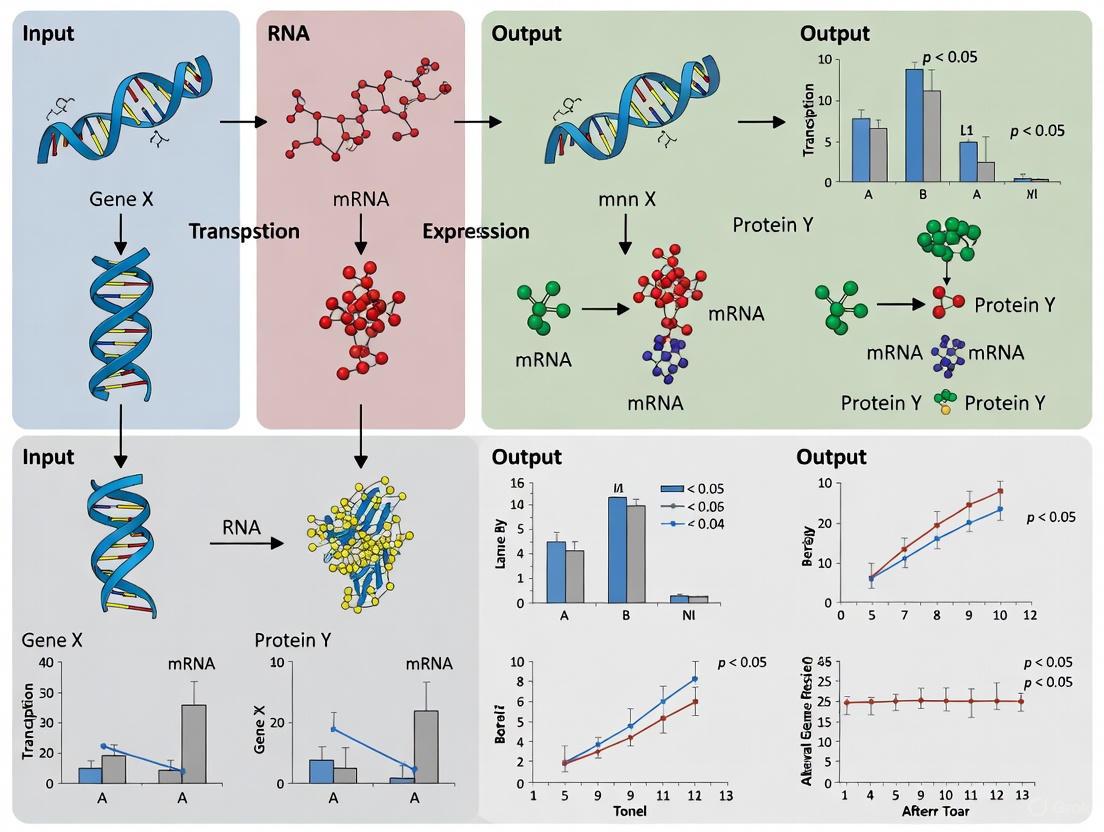
This article investigates the specific molecular and phenotypic responses of rice (Oryza sativa) to the removal of the midge Chironomus kiiensis, an organism identified as ecologically influential through nonlinear time...
Removal of Chironomus kiiensis Alters Rice Gene Expression: An Ecological Network Approach to Crop Biomarker Discovery
Abstract
This article investigates the specific molecular and phenotypic responses of rice (Oryza sativa) to the removal of the midge Chironomus kiiensis, an organism identified as ecologically influential through nonlinear time series analysis of intensive field monitoring data. We detail a methodological framework that integrates environmental DNA (eDNA) metabarcoding for comprehensive ecological community assessment with transcriptome analysis to pinpoint crop responses to targeted biotic manipulations. Aimed at researchers and scientists in agro-biotechnology and drug development, this work validates a novel approach for detecting previously overlooked biological interactions in complex systems. The findings demonstrate a direct link between a specific macrobial species and rice gene expression patterns, offering a proof-of-concept for harnessing ecological complexity to identify novel biomarkers and pathways relevant to both sustainable agriculture and the understanding of biological stress responses.
Chironomus kiiensis as a Keystone Species: Uncovering Its Ecological Role in Rice Agroecosystems
While abiotic factors like drought, salinity, and temperature extremes have dominated crop stress research, the complex influence of ecological community members on crop performance remains a significant knowledge gap in agricultural science. Rice (Oryza sativa L.), a staple food for over 3.5 billion people, is typically grown in field conditions where it is inevitably influenced by surrounding biotic variables including microbes, insects, and other ecological community members [1] [2]. Understanding these interspecific interactions has been underexplored despite its critical importance for sustainable agriculture [1]. This review examines pioneering methodologies detecting influential organisms in rice agroecosystems, with particular focus on the effects of Chironomus kiiensis manipulation on rice growth and gene expression.
Experimental Approaches for Detecting Biotic Influences
Ecological Network Analysis and Field Validation
A groundbreaking 2017-2019 study demonstrated an ecological-network-based approach to identify previously overlooked organisms influencing rice performance [1] [2]. The research employed intensive daily monitoring of experimental rice plots over 122 consecutive days, combining quantitative environmental DNA (eDNA) metabarcoding with nonlinear time series analysis [2]. This methodology detected more than 1,000 species in the rice plots and identified 52 potentially influential organisms [1].
Table 1: Key Experimental Parameters from Ecological Network Study
| Parameter | 2017 Monitoring Phase | 2019 Validation Phase |
|---|---|---|
| Duration | 122 days (May-Sept) | Not specified |
| Rice Plots | 5 experimental plots | Artificial manipulation plots |
| Monitoring Frequency | Daily | Pre/post manipulation |
| Species Detected | >1,000 | Focus on 2 target species |
| Analysis Method | Nonlinear time series analysis | Field manipulation |
| Rice Metrics | Growth rate (cm/day) | Growth rate + gene expression |
In 2019, the research team empirically validated the time series analysis by manipulating two species identified as potentially influential: the Oomycete Globisporangium nunn (syn. Pythium nunn) and the midge Chironomus kiiensis [1] [2]. The team added G. nunn and removed C. kiiensis from small rice plots, then measured rice growth rates and gene expression patterns before and after manipulation [3]. The confirmation that these species, particularly G. nunn, statistically affected rice performance demonstrated the potential of integrating eDNA monitoring with time series analysis to detect influential organisms in agricultural systems [1].
Molecular Approaches to Stress Response
Complementary research has employed modular gene co-expression analysis to identify hub genes associated with biotic and abiotic stress responses in rice [4]. This approach analyzed microarray datasets for drought, salinity, tungro virus, and blast pathogen stress, identifying multiple gene modules and hub genes implicated in stress responses [4]. The protein-protein interaction network constructed from these analyses revealed several consistently present genes across abiotic and biotic stresses, including RPS5, PKG, HSP90, HSP70, and MCM [4].
The Scientist's Toolkit: Essential Research Reagents and Methods
Table 2: Key Research Reagents and Methods for Biotic Influence Studies
| Reagent/Method | Function/Application | Specific Example |
|---|---|---|
| Quantitative eDNA Metabarcoding | Comprehensive species detection in environmental samples | 16S rRNA, 18S rRNA, ITS, and COI primer sets [2] |
| Nonlinear Time Series Analysis | Reconstruction of ecological interaction networks | Detection of causal relationships from time series data [1] |
| Modular Gene Co-expression Analysis (mGCE) | Identification of stress-responsive hub genes | CEMiTool analysis of microarray datasets [4] |
| RNA Interference (RNAi) | Gene silencing in non-model organisms | dsRNA targeting CYP6EV11 in C. kiiensis [5] |
| qRT-PCR | Gene expression quantification | Relative expression of heat shock proteins [6] |
Experimental Workflow for Ecological Network Analysis
The following diagram illustrates the comprehensive workflow for detecting and validating influential organisms in rice agroecosystems:
Signaling Pathways in Rice Stress Response
The molecular mechanisms underlying rice responses to biotic stresses involve complex signaling pathways and transcriptional reprogramming:
Detailed Experimental Protocols
Environmental DNA Metabarcoding Protocol
The ecological network study employed comprehensive eDNA metabarcoding with four universal primer sets targeting different taxonomic groups [2]:
- Sample Collection: Approximately 200ml of water was collected daily from each rice plot and filtered using 0.22-µm and 0.45-µm Sterivex filter cartridges [7]
- DNA Extraction: eDNA was extracted from filters and purified, with internal spike-in DNAs added for quantitative analysis [2]
- Amplification and Sequencing: Four primer sets amplified 16S rRNA (prokaryotes), 18S rRNA (eukaryotes), ITS (fungi), and COI (animals) regions [2]
- Bioinformatic Analysis: Sequence data processed to identify operational taxonomic units and quantify species abundance [1]
Field Manipulation Experiment Protocol
The validation phase in 2019 employed rigorous field manipulation methods [1]:
- Plot Establishment: Artificial rice plots created using standardized containers with commercial soil and rice seedlings (var. Hinohikari)
- Species Manipulation: G. nunn was added to plots while C. kiiensis was removed from treatment plots
- Response Measurement: Rice growth rates were measured by leaf height tracking, and gene expression patterns were analyzed through transcriptome profiling
- Control Conditions: Appropriate control plots maintained for comparison
Comparative Analysis of Methodologies
Table 3: Comparison of Approaches for Studying Biotic Influences on Crops
| Methodological Aspect | Ecological Network Approach | Gene Co-expression Analysis |
|---|---|---|
| Primary Focus | Species interactions in field conditions | Molecular networks and hub genes |
| Data Type | Time series abundance data | Gene expression microarray/RNA-seq |
| Scale of Analysis | Whole ecological community | Transcriptional regulatory networks |
| Key Output | Influential species identification | Stress-responsive hub genes |
| Validation Approach | Field manipulation experiments | qRT-PCR of candidate genes |
| Temporal Resolution | Daily monitoring over growing season | Specific stress time points |
| Throughput | 1,000+ species simultaneously | 10s-100s of gene modules |
The integration of ecological network analysis with molecular genetics approaches represents a promising frontier for addressing the critical knowledge gap in underexplored biotic influences on crop performance. The validation of Chironomus kiiensis and Globisporangium nunn as influential organisms demonstrates that previously overlooked species can significantly impact rice growth and gene expression [1]. Future research should leverage these complementary approaches to harness ecological complexity for sustainable agriculture, potentially leading to novel strategies for crop improvement that consider the entire ecological community rather than focusing solely on traditional breeding targets.
Ecological network theory provides a powerful framework for understanding the complex web of interactions that sustain ecosystems. The concept of keystone species—organisms with disproportionately large effects on their environment relative to their abundance—has been fundamental to both theoretical and applied ecology since Robert Paine's pioneering research on predatory sea stars in the 1960s [8]. When keystone species are removed from ecosystems, they can trigger trophic cascades that dramatically alter ecosystem structure and function, as demonstrated by the wolf reintroduction program in the Greater Yellowstone Ecosystem which restored balance to plant communities and even changed the physical geography of rivers [8].
Modern agricultural science now stands to benefit tremendously from these ecological insights. Rather than viewing farms as simplified production systems, researchers are increasingly recognizing that agricultural management can harness ecological interactions to improve sustainability and productivity [9]. This paradigm shift acknowledges that crops like rice are grown in complex field environments where they are influenced by countless surrounding organisms, from microbes to insects [1] [10]. Understanding these interactions through the lens of ecological network theory opens new possibilities for sustainable agriculture that works with, rather than against, natural processes.
Keystone Species Identification: From Traditional to Modern Approaches
Theoretical Foundations and Historical Methods
The identification of keystone species has evolved significantly from early observational approaches. Traditional ecology relied heavily on manipulation experiments where researchers would remove specific species and observe the ecosystem consequences [8]. Paine's classic experiment involved physically removing Pisaster ochraceus sea stars from tidal plains and documenting how mussels subsequently dominated the area, crowding out other species and reducing overall biodiversity [8]. Similarly, the unintended removal of wolves from Yellowstone provided a natural experiment demonstrating how the loss of an apex predator allows herbivore populations to explode, leading to overgrazing that affects multiple trophic levels [8].
These traditional approaches revealed that keystone species have low functional redundancy, meaning no other species can fill their ecological role if they disappear [8]. However, observation- and manipulation-based approaches have critical limitations: they are labor-intensive, difficult to scale, and may miss subtle but important interactions in complex systems [1] [10].
Advanced Network-Based Identification Methods
Contemporary ecology has developed sophisticated network analysis approaches to identify keystone species more systematically. One promising method uses motif centrality, which identifies keystone species based on their participation in specific subnetwork patterns (motifs) within larger food webs [11]. Research shows that species with high motif-based centrality—those that participate frequently in key interaction patterns—cause significantly more secondary extinctions when removed than would be expected by chance [11].
Table 1: Comparison of Keystone Species Identification Methods
| Method | Key Principle | Advantages | Limitations |
|---|---|---|---|
| Species Removal Experiments [8] | Physical removal of species with observation of ecosystem effects | Direct evidence of ecological impact; Clear demonstration of causality | Labor-intensive; Difficult to scale; Limited to observable effects |
| Motif Centrality [11] | Analysis of species' participation in key subnetwork patterns | Systematic identification; Captures indirect interactions; Applicable to complex webs | Requires detailed interaction data; Computationally intensive |
| Network Robustness Analysis [11] | Simulation of secondary extinctions after species removal | Predictive power; Quantifiable impact measurement; Identifies vulnerable species | Dependent on model accuracy; May oversimplify interactions |
| eDNA Monitoring + Nonlinear Time Series [1] [10] | Causality detection from frequent community monitoring | Comprehensive species detection; Reveals hidden interactions; Minimal ecosystem disturbance | Requires specialized expertise; Validation still needed |
Another network-based approach analyzes how species removals affect food web robustness. In both topological models (which treat species as fixed nodes) and dynamic models (which simulate population dynamics), researchers can quantify how the removal of different species affects the likelihood of secondary extinctions throughout the network [11]. These methods have revealed that certain species play disproportionately important roles in maintaining the structural integrity of ecological networks.
Ecological Networks in Agricultural Systems: A Case Study in Rice Management
An Integrated Framework for Detecting Influential Organisms
A groundbreaking study demonstrated how ecological network theory could be applied to identify influential organisms in rice agroecosystems [1] [10]. The research employed an integrated approach combining advanced monitoring technologies with nonlinear time series analysis to map species interactions and their effects on rice growth.
The methodology involved three key phases conducted over multiple years. In 2017, researchers established small experimental rice plots and implemented intensive monitoring of both rice growth and ecological communities [1] [10]. This was followed by network analysis to identify potentially influential organisms, and finally field validation in 2019 to test the predictions through manipulative experiments [1] [10].
Experimental Protocols and Methodological Details
Field Monitoring and Environmental DNA Analysis
The research team established five artificial rice plots using small plastic containers (90 × 90 × 34.5 cm) in an experimental field at Kyoto University, Japan [7]. Each plot contained sixteen Wagner pots filled with commercial soil, with three rice seedlings (variety Hinohikari) planted in each pot [7]. The monitoring protocol included:
- Daily rice growth measurements: Researchers measured rice leaf height of target individuals every day using a ruler, focusing on the largest leaf heights [7].
- Environmental DNA (eDNA) sampling: Approximately 200 ml of water was collected daily from each rice plot and filtered using two types of Sterivex filter cartridges (φ 0.22-µm and φ 0.45-µm) [7].
- Quantitative eDNA metabarcoding: eDNA was extracted from filters and sequenced using internal spike-in DNAs to enable quantitative assessment of species abundances [1] [10].
- Climate monitoring: Temperature, light intensity, and humidity were monitored at each rice plot throughout the experiment [7].
This comprehensive monitoring approach detected more than 1,000 species in the rice plots, including microbes, insects, and other organisms [1] [10]. The daily sampling continued for 122 consecutive days, generating an extensive time series of ecological community dynamics alongside rice growth metrics.
Nonlinear Time Series Analysis and Causality Detection
The research team applied nonlinear time series analysis to the extensive dataset to detect causal relationships between species abundances and rice growth [1] [10]. This analytical approach can identify potential interactions even in complex, nonlinear systems where traditional correlation methods might fail.
The analysis identified 52 potentially influential organisms with statistically significant effects on rice growth rates [1] [10]. From these candidates, two species were selected for further experimental validation: the oomycete Globisporangium nunn (syn. Pythium nunn) and the midge Chironomus kiiensis [1] [10].
Diagram Title: Ecological Network Analysis Workflow for Rice Management
Effects of Chironomus kiiensis Manipulation on Rice Gene Expression
Experimental Validation of Network Predictions
In 2019, researchers conducted field manipulation experiments to test the predictions generated by the ecological network analysis [1] [10]. The experiments focused on two species identified as potentially influential: Globisporangium nunn (an oomycete) and Chironomus kiiensis (a midge species) [1] [10].
The experimental design involved:
- G. nunn-added treatment: Artificial introduction of the oomycete to rice plots
- C. kiiensis removal treatment: Selective removal of the midge species from rice plots
- Control conditions: Unmanipulated plots for comparison
- Response measurements: Rice growth rates and gene expression patterns measured before and after manipulation [1] [10]
The results provided validation for the network-based predictions, showing that G. nunn addition, in particular, produced statistically significant changes in rice growth rates and gene expression patterns [1] [10]. While the effects of C. kiiensis manipulation were present but relatively small, the study demonstrated the potential of this approach to identify previously overlooked organisms that influence crop performance [1] [10].
Molecular Responses of Chironomus kiiensis to Environmental Stressors
Complementary research on Chironomus kiiensis has revealed sophisticated molecular response mechanisms to environmental stressors, which may help explain its influence in agricultural ecosystems. Transcriptome profiling of C. kiinensis under phenol stress identified 10,724 differentially expressed genes (6,032 unigenes classified by Gene Ontology, 18,366 unigenes categorized into 238 KEGG pathways) [12]. Key response pathways included:
- Metabolic pathways
- Aryl hydrocarbon receptor (AhR) signaling
- Pancreatic secretion pathways
- Neuroactive ligand-receptor interactions [12]
Further research has examined the endocrine-disrupting effects of neonicotinoid insecticides on Chironomus kiinensis, revealing that chronic exposure to dinotefuran:
- Delayed pupation and emergence via inhibition of ecdysis
- Shifted sex ratios toward male-dominated populations
- Significantly downregulated ecdysis-related gene expressions (ecr, usp, E74, and hsp70)
- Upregulated vitellogenin (vtg) gene expression, indicating estrogenic effects [13]
Additional molecular studies have identified that UDP-glucuronosyltransferase is involved in the susceptibility of Chironomus kiiensis to insecticides, providing insights into detoxification mechanisms [14].
Table 2: Molecular Response Mechanisms of Chironomus kiiensis to Environmental Stressors
| Stress Type | Key Molecular Findings | Gene Expression Changes | Physiological Outcomes |
|---|---|---|---|
| Phenol Stress [12] | 10,724 differentially expressed genes; Activation of AhR pathway | 8,390 upregulated; 2,334 downregulated genes | Metabolic adaptation; Detoxification response |
| Neonicotinoid Exposure [13] | Disruption of ecdysone pathway; Estrogenic effects | Downregulation of ecr, usp, E74, hsp70; Upregulation of vtg | Delayed development; Male-biased sex ratios |
| Insecticide Exposure [14] | UDP-glucuronosyltransferase involvement in detoxification | Enzyme activity modification | Altered susceptibility to insecticides |
Diagram Title: Chironomus kiiensis Molecular Response Pathways
The Scientist's Toolkit: Key Research Reagents and Methods
Table 3: Essential Research Reagents and Methods for Ecological Network Studies in Agriculture
| Reagent/Method | Specific Application | Key Function | Experimental Context |
|---|---|---|---|
| Quantitative eDNA Metabarcoding [1] [10] | Comprehensive species detection in rice plots | Amplification and sequencing of DNAs from environmental samples with internal spike-ins for quantification | Monitoring of 1,000+ species in rice plots; Daily sampling over 122 days |
| Nonlinear Time Series Analysis [1] [10] | Detection of causal relationships in species interactions | Reconstruction of complex interaction networks from time series data | Identification of 52 potentially influential organisms from 1,197 species |
| Solexa Sequencing Technology [12] | Transcriptome profiling under stress conditions | High-throughput sequencing for gene expression analysis | Identification of 10,724 differentially expressed genes in C. kiinensis under phenol stress |
| HPLC-MS/MS Analysis [13] | Quantification of insecticide concentrations | Precise chemical analysis using mass spectrometry | Measurement of dinotefuran actual concentrations in exposure samples |
| ATP Assay Kit [13] | Measurement of cellular energy levels | Colorimetric detection of adenosine triphosphate | Assessment of metabolic effects in C. kiinensis after neonicotinoid exposure |
| RNAi Technology [14] | Gene function analysis | Targeted gene silencing using RNA interference | Investigation of UDP-glucuronosyltransferase role in insecticide susceptibility |
Comparative Analysis of Agricultural Management Approaches
Traditional vs. Ecology-Informed Management Strategies
The application of ecological network theory to agriculture represents a significant shift from conventional approaches. Traditional agricultural management often focuses on single-species interventions, such as pesticide applications or fertilizer amendments, with limited consideration of the broader ecological context [9]. In contrast, ecology-informed approaches recognize that crop performance emerges from complex interactions among multiple species within agricultural ecosystems [1] [10].
Network analyses of invertebrate communities across 502 UK farm sites revealed that GMHT management (genetically modified herbicide-tolerant crops) did not significantly alter network-level properties or robustness, despite taxon-specific effects [15]. This suggests that ecological networks may demonstrate resilience to certain agricultural disturbances, and that autecological assessments (focusing on single species) may overlook compensatory effects within the wider ecosystem [15].
Towards Sustainable Agricultural Management
The integration of ecological network theory into agricultural practice offers promising pathways for sustainable intensification of food production. By identifying key species that influence crop performance, researchers and farmers can develop targeted management strategies that harness natural processes rather than overriding them [1] [9].
This approach aligns with the concept of "ecological intensification" which relies on services provided by ecological networks to maintain productivity while reducing environmental impacts [9]. The research framework demonstrated in the rice study—combining intensive monitoring, network analysis, and experimental validation—provides a template for identifying management opportunities across different agricultural systems [1] [10].
Future developments in this field will likely focus on eco-evolutionary dynamics, considering how agricultural practices select for specific traits in both crops and associated organisms, and how these evolutionary changes feedback to affect ecosystem functioning and services [9]. Understanding these dynamics will be crucial for designing agricultural systems that are both productive and sustainable in the face of environmental change.
Biological and Ecological Profile ofChironomus kiiensis
Chironomus kiiensis is a species of non-biting midge (family Chironomidae) that inhabits rice paddy ecosystems. As with other chironomids, it is an aquatic insect whose larval stages develop in the benthic (bottom-dwelling) environments of flooded rice fields [16]. These organisms play a significant role in the agricultural ecosystem, serving as an alternative food source for predatory natural enemies of rice insect pests, especially during periods when pest populations are low [17].
The larvae of Chironomus kiiensis are typically found in the sediments and aquatic environments of rice paddies [2]. They possess the characteristic features of chironomid larvae, including an elongate, cylindrical body with distinct segmentation and a hardened head capsule [16]. While many chironomid larvae are tan or brown, some species appear whitish or green, and those containing hemoglobin (often called "bloodworms") may exhibit a pinkish or red coloration [16].
Life Cycle and Development Parameters
Like all members of the Chironomidae family, Chironomus kiiensis undergoes complete metamorphosis (holometabolism), progressing through four life stages: egg, larva, pupa, and adult [16]. The life cycle characteristics of a closely related species, Chironomus sp. "Florida", provide insights into the general developmental patterns that may be expected for C. kiiensis under tropical and subtropical conditions [18].
Table 1: Life Cycle Characteristics of Chironomus Species Under Laboratory Conditions
| Life Stage | Duration/Dimensions | Environmental Influence |
|---|---|---|
| Egg | Laid in gelatinous masses on water surface [16] | Gravid females attracted to polarized light from water surfaces [18] |
| Larva | 4 instar stages; duration varies with temperature and food availability [18] | Warm temperatures (≈27°C) accelerate development [18] |
| Pupa | Transitional stage before adult emergence [16] | Pupae swim to water surface for adult emergence [16] |
| Adult | Small, slender flies 1-10 mm long; resemble mosquitoes but do not bite [16] | Short-lived (few days to weeks); form mating swarms [16] |
Table 2: Factors Influencing Chironomid Development
| Factor | Effect on Development |
|---|---|
| Temperature | Faster development at warmer temperatures (e.g., 11-day cycle at 27°C vs. longer at cooler temperatures) [18] |
| Food Availability | Food concentration effects interact with water volume; 2 mg/larva/day optimal in large water volumes [18] |
| Habitat Type | Larvae primarily benthic after first instar; build tubes in sediment for refuge [16] |
Experimental Evidence: Removal Studies and Rice Growth Response
Recent ecological network research has identified Chironomus kiiensis as a potentially influential organism in rice paddy ecosystems. A 2019 field manipulation experiment tested the effect of C. kiiensis removal on rice growth and gene expression patterns [1] [2].
Experimental Workflow for C. kiiensis Removal Study
This experiment was designed within the context of a broader research thesis investigating how ecological community members influence rice performance under field conditions [2]. The manipulation demonstrated that targeted removal of specific species like C. kiiensis can produce measurable changes in rice physiological responses, although the effects were relatively small compared to other manipulated organisms like Globisporangium nunn [2].
Toxicological Sensitivity and Ecological Risk Assessment
Chironomus kiiensis serves as a valuable bioindicator species for assessing ecological risks in rice ecosystems. Laboratory toxicity tests have quantified its response to pesticide exposure, particularly to chlorantraniliprole, a widely used insecticide in rice production [17].
Table 3: Toxicological Responses of C. kiiensis to Chlorantraniliprole
| Parameter | Exposure Concentration | Biological Effect |
|---|---|---|
| Lethal Toxicity (LC50) | Not specified in available data | Less sensitive than C. javanus [17] |
| Sublethal Effects | LC10 (1.50 mg/L) & LC25 (3.00 mg/L) | Prolonged larval development, inhibited pupation and emergence [17] |
| Detoxification Enzymes | Sublethal concentrations | Significant decrease in carboxylesterase (CarE) and glutathione S-transferases (GSTs) activity [17] |
| Antioxidant System | Sublethal concentrations | Marked inhibition of peroxidase (POD) activity [17] |
| Gene Expression | Sublethal concentrations | Significant changes in 7 genes related to detoxification and antioxidant functions [17] |
Table 4: Molecular Responses to Pesticide Exposure
| Gene/Enzyme Category | Specific Targets Affected | Functional Consequences |
|---|---|---|
| Detoxification Genes | CarE6, CYP9AU1, CYP6FV2 | Impaired ability to metabolize environmental contaminants [17] |
| GST Genes | GSTo1, GSTs1, GSTd2 | Reduced capacity for cellular detoxification processes [17] |
| Antioxidant Genes | POD | Compromised oxidative stress response [17] |
These sublethal effects demonstrate that pesticide exposure can significantly impact C. kiiensis populations even at concentrations that do not cause immediate mortality, with potential implications for their ecological role in rice ecosystems.
Essential Research Reagents and Methodologies
Table 5: Research Reagent Solutions for Studying C. kiiensis
| Reagent/Material | Application in Research | Specific Function |
|---|---|---|
| Environmental DNA (eDNA) | Ecological monitoring | Quantitative metabarcoding to detect species presence and abundance [1] [2] |
| Universal Primer Sets | Species identification | Amplification of 16S rRNA, 18S rRNA, ITS, and COI gene regions [2] |
| Chlorantraniliprole | Toxicological testing | Insecticide exposure studies to determine lethal and sublethal effects [17] |
| Enzyme Assay Kits | Biochemical analysis | Quantifying activity of CarE, GSTs, POD, and CAT [17] |
| qPCR Reagents | Gene expression analysis | Measuring transcript levels of detoxification and antioxidant genes [17] |
| Culture Aquarium Systems | Laboratory rearing | Maintaining life cycle under controlled conditions (temperature, aeration, photoperiod) [18] |
The integration of these research approaches—from field monitoring and manipulation to molecular analysis—provides a comprehensive framework for understanding the ecological role of Chironomus kiiensis in rice paddies and its potential influence on rice growth and gene expression patterns.
The pursuit of sustainable agricultural productivity requires a deep understanding of the complex ecological networks within crop systems. While the influence of abiotic factors on crop growth is well-documented, the impact of surrounding ecological communities—encompassing countless microorganisms, insects, and other organisms—has remained largely unexplored due to methodological limitations [7] [2]. Rice (Oryza sativa), a staple food for over 3.5 billion people, is typically grown in field conditions where it interacts with diverse ecological communities, yet how these biotic interactions influence rice performance has been underexplored despite its importance for sustainable agriculture [1].
This methodological guide examines the groundbreaking 2017 field study that established an ecological network approach for detecting organisms influential to rice growth. The study pioneered the integration of quantitative environmental DNA (eDNA) metabarcoding with nonlinear time series analysis to reconstruct interaction networks surrounding rice plants under field conditions [7] [2]. By intensively monitoring over 1,000 species simultaneously, the research provided a novel framework for identifying previously overlooked species that significantly impact rice growth, culminating in the identification of 52 potentially influential organisms [10].
Experimental Design and Setup
Field Plot Configuration
The 2017 monitoring study established a controlled yet realistic field environment at the Center for Ecological Research, Kyoto University, in Otsu, Japan (34°58′18′′N, 135°57′33′′E) [7]. The experimental design prioritized both ecological relevance and methodological precision through the following implementation:
- Plot Structure: Five identical artificial rice plots were created using small plastic containers (90 × 90 × 34.5 cm; 216 L total volume) [7]
- Pot Configuration: Each container held sixteen Wagner pots filled with commercial soil [7]
- Planting Protocol: Three rice seedlings (var. Hinohikari) were planted in each pot on 23 May 2017 [7]
- Study Duration: Continuous monitoring from 23 May 2017 to 22 September 2017 (122 consecutive days) [7]
Rice Growth Monitoring
The study employed rigorous quantitative methods to track rice performance throughout the growing season:
- Measurement Protocol: Daily rice growth monitoring through measurement of rice leaf height of target individuals using a ruler [7]
- Growth Metric: Growth rates calculated as cm/day in height, selected because frequent and inexpensive monitoring is possible, and because it integrates various physiological states [2]
- Data Consistency: Growth patterns showed consistent patterns among the five plots, validating the experimental approach [2]
- Supplementary Metrics: Leaf SPAD values were also measured though not included in the final analysis [7]
Ecological Community Monitoring Protocol
Water Sampling Methodology
The comprehensive ecological monitoring followed a systematic sampling protocol:
- Sampling Frequency: Daily water sample collection from all five rice plots [7]
- Sample Volume: Approximately 200 ml of water collected from each plot [7]
- Processing Time: Samples transported to laboratory within 30 minutes of collection [7]
- Filtration Protocol: Water filtered using two types of Sterivex filter cartridges (φ 0.22-µm and φ 0.45-µm) [7]
- Total Samples: 1220 water samples collected (122 days × 2 filter types × 5 plots) plus negative controls [7]
eDNA Metabarcoding Analysis
The study employed cutting-edge molecular techniques for community analysis:
- Genetic Target Regions: Four universal primer sets targeting 16S rRNA (prokaryotes), 18S rRNA (eukaryotes), ITS (fungi), and COI (animals) regions [2]
- Quantitative Approach: Used internal spike-in DNAs to enable quantitative eDNA analysis, providing more informative community data than presence-absence metrics [7]
- Amplification and Sequencing: eDNA extracted from filters, purified, and analyzed via metabarcoding approaches [7]
Table 1: Primer Sets and Target Genetic Regions for eDNA Metabarcoding
| Target Group | Genetic Region | Primer Purpose | Key Advantage |
|---|---|---|---|
| Prokaryotes | 16S rRNA | Universal amplification | Comprehensive bacterial and archaeal diversity |
| Eukaryotes | 18S rRNA | Universal amplification | Broad eukaryotic coverage including protists |
| Fungi | ITS | Taxon-specific amplification | Fungal-specific identification |
| Animals | COI | Taxon-specific amplification | Animal and insect identification |
Research Reagent Solutions Toolkit
Table 2: Essential Research Reagents and Materials for eDNA Metabarcoding Studies
| Reagent/Material | Specification | Application | Function in Protocol |
|---|---|---|---|
| Sterivex Filter Cartridges | φ 0.22-µm and φ 0.45-µm | eDNA Filtration | Particulate capture from water samples |
| DNA Extraction Kit | Commercial system | eDNA Extraction | Isolation of DNA from filters |
| PCR Reagents | Custom mixtures | Amplification | Target gene region amplification |
| Spike-in DNAs | Synthetic standards | Quantification | Internal standards for quantitative analysis |
| Sequencing Reagents | Platform-specific | Library Preparation | High-throughput sequencing |
| Negative Controls | Sterile water | Contamination Check | Process contamination monitoring |
Data Analysis Framework
Time Series Causality Analysis
The study employed advanced statistical approaches to derive ecological insights:
- Analytical Method: Nonlinear time series analysis based on quantitative eDNA time series [2]
- Causality Detection: Application of unified information-theoretic causality analysis to detect potential influences on rice growth [10]
- Network Reconstruction: Reconstruction of complex interaction networks from time series data [2]
- Species Identification: Detection of 52 potentially influential organisms with lower-level taxonomic information from initial 1,197 species monitored [10]
Key Findings from 2017 Monitoring
The intensive monitoring yielded several significant ecological patterns:
- Temporal Dynamics: Total eDNA copy number increased later in the sampling period, while ASV diversity (a surrogate of species diversity) peaked in August then decreased in September [2]
- Community Composition: Prokaryotes largely accounted for the observed patterns of total eDNA concentration [2]
- Growth Patterns: Daily rice growth rate reached maximum during late June to early July, with rice height ceasing to increase after mid-August [2]
- Network Complexity: Reconstruction of a large ecological interaction network revealed complex species interrelationships [2]
Diagram 1: Experimental workflow of the 2017 field study showing the integration of empirical data collection and computational analysis.
Validation and Follow-up Studies
2019 Field Manipulation Experiments
The 2017 findings were empirically validated through focused manipulative experiments in 2019:
- Candidate Selection: Two species identified as potentially influential in 2017 were selected for manipulation [1]
- Experimental Design: Addition of Globisporangium nunn (Oomycetes) and removal of Chironomus kiiensis (midge) from artificial rice plots [10]
- Response Metrics: Measurement of rice growth rates and gene expression patterns before and after manipulation [1]
- Key Finding: Confirmed statistically clear effects on rice performance, especially in the G. nunn-added treatment [7]
Methodological Validation
The reliability of eDNA approaches depends on several critical validation parameters as defined in contemporary methodological research [19]:
- Specificity: Correct amplification of targeted species without positive results from closely related species [19]
- Detection Probability: Probability that analysis of a replicate containing target DNA yields positive detection [19]
- Sensitivity/LOD: The lowest quantity of target DNA that can be reliably detected [19]
- Repeatability: The spread (r²) of data around regression lines used to standardize quantification [19]
- Accuracy: Variability of measurements contributing to a data point, including both natural and technical replicates [19]
Table 3: Comparative Performance of eDNA Detection Metrics from Validation Studies
| Validation Metric | High Reliability Profile | Moderate Reliability Profile | Critical Factors |
|---|---|---|---|
| Specificity | Amplifies only target species | Cross-reactivity with related taxa | Primer design, probe selection |
| Detection Probability | >95% at target concentrations | 50-80% at target concentrations | DNA concentration, inhibition |
| Sensitivity (LOD) | Consistently detects low DNA quantities | Variable detection at low quantities | Assay efficiency, sample processing |
| Repeatability (r²) | >0.98 for standard curves | 0.85-0.95 for standard curves | Technical precision, replication |
| Accuracy (CV) | <5% coefficient of variation | 10-25% coefficient of variation | Replicate number, sampling design |
Integrated Research Framework
Diagram 2: Integrated research framework showing the progression from initial monitoring to validated findings.
Technical Considerations and Limitations
The 2017 study acknowledged several methodological considerations essential for proper interpretation of results:
- Manipulation Effects: While statistically clear, the effects of species manipulations were relatively small, suggesting complex ecological interactions rather than simple causal relationships [7]
- Primer Selection: The effectiveness of eDNA metabarcoding heavily depends on appropriate primer selection, as different primer sets can yield varying detection efficiencies [20]
- Quantitative Challenges: Accurate quantification requires internal standards and careful control for amplification biases [19]
- Temporal Dynamics: Ecological interactions vary across seasons and rice growth stages, necessitating intensive temporal sampling [2]
The 2017 field study established a groundbreaking methodological framework for understanding complex agricultural ecosystems. By integrating quantitative eDNA metabarcoding with nonlinear time series analysis, the research demonstrated that intensive monitoring of agricultural systems can identify previously overlooked organisms that influence crop performance [1].
This approach provides valuable insights for the broader research on effects of Chironomus kiiensis removal on rice gene expression by contextualizing specific species manipulations within comprehensive ecological networks. The methodology offers a powerful tool for identifying key organisms in agricultural systems, potentially leading to new environment-friendly agricultural management strategies that harness ecological complexity rather than attempting to simplify it [7] [10].
The research framework presents significant potential for future applications in sustainable agriculture, ecological research, and system-based crop management, moving beyond traditional single-factor approaches to embrace the complexity of agricultural ecosystems [1].
In agricultural science, a major challenge is to enhance sustainable food production while minimizing environmental impacts [1] [2]. Rice, as a staple crop for over 3.5 billion people, plays a crucial role in global food security, yet its performance under field conditions is influenced by a complex network of surrounding ecological community members [1] [2]. While advanced breeding techniques offer promising avenues for improvement, the intricate biotic interactions within rice ecosystems remain underexplored despite their potential for establishing environmentally friendly agricultural systems [1].
This article frames its analysis within a broader thesis investigating the effects of Chironomus kiiensis removal on rice gene expression, presenting a comparative examination of experimental approaches for detecting causal organisms influencing rice growth. We focus particularly on an ecological-network-based methodology that identified 52 potentially influential organisms through intensive field monitoring and nonlinear time series analysis [1] [2]. This research provides a framework for moving beyond correlation to establish causality in complex agricultural ecosystems, with particular relevance for understanding how specific manipulations like C. kiiensis removal trigger molecular responses in rice plants.
Experimental Approaches: Methodological Comparison
Ecological Network-Based Detection Protocol
The foundational methodology for organism detection employed a comprehensive ecological network approach, implemented through a multi-phase experimental design [1] [2]:
Phase 1: Intensive Field Monitoring (2017)
- Established five experimental rice plots at Kyoto University, Japan
- Conducted daily monitoring from May 23 to September 22, 2017 (122 consecutive days)
- Measured rice growth rates (cm/day in height) through daily physical measurements of target individuals
- Monitored ecological communities using quantitative environmental DNA (eDNA) metabarcoding with four universal primer sets (16S rRNA, 18S rRNA, ITS, and COI regions targeting prokaryotes, eukaryotes, fungi, and animals respectively)
- Collected and analyzed water samples from all five plots daily
Phase 2: Causality Analysis
- Analyzed time series containing 1,197 species and rice growth rates
- Applied nonlinear time series analysis to reconstruct interaction networks surrounding rice
- Identified 52 potentially influential organisms with lower-level taxonomic information
- Utilized quantitative eDNA time series suitable for causality analysis requirements
Phase 3: Empirical Validation (2019)
- Conducted manipulative experiments focusing on two species identified in 2017
- Manipulated abundance of Globisporangium nunn (Oomycetes) through addition
- Manipulated abundance of Chironomus kiiensis (midge species) through removal
- Measured rice responses through growth rates and gene expression patterns before and after manipulation
- Employed statistical analysis to confirm effects on rice performance
Gene Expression Analysis Protocol
The investigation of Chironomus kiiensis removal effects on rice gene expression employed transcriptomic approaches [1]:
Sample Collection
- Collected rice tissue samples before and after experimental manipulation of C. kiiensis abundance
- Maintained consistent sampling times across treatment and control groups
- Preserved samples appropriately for RNA extraction
Transcriptome Profiling
- Extracted total RNA from rice tissue samples
- Conducted gene expression analysis using appropriate transcriptomic techniques
- Analyzed patterns of gene expression changes in response to C. kiiensis manipulation
- Compared expression profiles between treatment and control groups
Data Analysis
- Identified differentially expressed genes following C. kiiensis removal
- Conducted pathway analysis to determine biological processes affected
- Correlated gene expression changes with phenotypic measurements of rice growth
Comparative Experimental Data Analysis
Organism Impact Assessment
Table 1: Experimental Results of Targeted Organism Manipulations on Rice Performance
| Organism | Manipulation Type | Effect on Rice Growth Rate | Effect on Gene Expression | Statistical Significance |
|---|---|---|---|---|
| Globisporangium nunn | Addition | Clear change observed | Clear change in expression patterns | Statistically clear effects [1] |
| Chironomus kiiensis | Removal | Measurable effect | Changes in expression patterns detected | Statistically supported [1] |
Methodological Comparison
Table 2: Comparison of Research Methodologies for Detecting Influential Organisms
| Methodological Aspect | Ecological Network Approach | Traditional Observation/Manipulation |
|---|---|---|
| Species Identification | eDNA metabarcoding detecting >1000 species [1] | Limited by taxonomic expertise and manual effort |
| Interaction Detection | Nonlinear time series analysis of 1197 species [1] | Direct observation or removal experiments [2] |
| Quantification Capability | Quantitative eDNA with internal spike-in DNAs [2] | Challenging for microscopic or elusive organisms |
| Causal Inference | Time-series-based causality analysis [1] | Limited to direct experimental manipulations |
| Throughput | High-throughput, automated sequencing [2] | Low-throughput, labor-intensive |
| Validation Requirement | Requires field manipulation for confirmation [1] | Built into experimental design |
Research Reagent Solutions
Table 3: Essential Research Reagents and Materials for Ecological Causal Inference Studies
| Reagent/Material | Application in Research | Specific Function |
|---|---|---|
| Universal Primer Sets (16S rRNA, 18S rRNA, ITS, COI) | eDNA metabarcoding | Comprehensive amplification of taxonomic groups (prokaryotes, eukaryotes, fungi, animals) [2] |
| Internal Spike-in DNAs | Quantitative eDNA analysis | Enable absolute quantification of eDNA copies by providing reference standards [2] |
| eDNA Extraction Kits | Environmental sample processing | Isolation of DNA from environmental samples (water, soil) while maintaining integrity |
| High-Throughput Sequencing Platforms | DNA sequencing | Parallel processing of multiple samples for community analysis |
| Transcriptome Analysis Kits | Gene expression profiling | RNA extraction, library preparation, and sequencing for expression analysis |
| Field Monitoring Equipment | Growth and environmental metrics | Daily measurement of rice growth parameters and environmental conditions |
Causal Inference Pathways
Ecological Causal Inference Framework
Organism Impact on Rice Signaling Pathways
Discussion: Implications for Agricultural Research
The ecological network approach for detecting organisms influencing rice growth represents a significant methodological advancement over traditional approaches. By combining quantitative eDNA metabarcoding with nonlinear time series analysis, this framework enables researchers to move beyond simple correlations to establish causal relationships in complex agricultural ecosystems [1] [2]. The identification of 52 potentially influential organisms, including previously overlooked species, demonstrates the power of this method for uncovering hidden relationships in rice agroecosystems.
The validation through field manipulations, particularly the observed effects of Globisporangium nunn addition and Chironomus kiiensis removal on rice growth rates and gene expression patterns, provides compelling evidence for the functional significance of these organismal interactions [1]. While the effects were relatively small, they demonstrate the potential for harnessing ecological complexity in agricultural management. This approach offers promising avenues for developing more sustainable rice cultivation practices that work with, rather than against, natural ecological processes.
Within the broader thesis context of Chironomus kiiensis effects on rice gene expression, this research provides both methodological frameworks and specific mechanistic insights. The demonstration that manipulation of specific organisms can alter rice transcriptome dynamics suggests promising directions for future research into the molecular mechanisms underlying plant-insect interactions in agricultural systems. Further investigation of these pathways may reveal novel targets for crop improvement strategies that enhance rice resilience through ecological management rather than genetic modification alone.
The development of sustainable agricultural practices requires a deep understanding of the complex ecological interactions within crop systems. This guide examines the scientific rationale for targeting Chironomus kiiensis (a non-biting midge species) in rice ecosystem management, focusing on initial evidence derived from nonlinear time series data and subsequent field validation. We objectively compare the ecological impact of C. kiiensis manipulation against alternative approaches, presenting quantitative data on rice growth responses and transcriptomic changes. The evidence positions C. kiiensis as an influential organism in rice growth dynamics, with implications for future research directions in sustainable rice cultivation.
Rice (Oryza sativa) represents one of the world's most crucial staple crops, supporting the diets and livelihoods of over 3.5 billion people globally [1] [2]. While advanced breeding techniques offer promising avenues for improving crop performance, rice grown under field conditions remains inevitably influenced by surrounding ecological community members. The dynamics of these biotic variables present particular challenges due to their complex, nonlinear nature compared to abiotic factors [1]. Traditional agricultural research has underexplored how ecological community members influence rice performance despite its importance for sustainable agriculture [2].
Within this context, Chironomus kiiensis emerges as a species of interest due to its presence in rice ecosystems and potential influence on crop performance. Chironomids collectively serve as important bioindicators in aquatic ecosystems and occupy essential positions in freshwater food webs [21] [22]. This guide synthesizes evidence from multiple studies to evaluate the rationale for targeting C. kiiensis, with particular emphasis on initial findings from nonlinear time series analysis and subsequent validation experiments.
Methodological Framework: Detection of Influential Organisms
Experimental Design and Monitoring Protocol
The initial evidence for C. kiiensis as an influential organism emerged from a comprehensive ecological monitoring study conducted in 2017 [1] [7]. The experimental design incorporated both intensive and extensive monitoring approaches:
- Plot Establishment: Five artificial rice plots were established using small plastic containers (90 × 90 × 34.5 cm; 216 L total volume) at the Center for Ecological Research, Kyoto University, Japan [7]
- Rice Cultivation: Sixteen Wagner pots filled with commercial soil were placed in each plot, with three rice seedlings (var. Hinohikari) planted per pot on 23 May 2017
- Growth Monitoring: Daily rice growth rate (cm/day in height) was monitored by measuring rice leaf height of target individuals throughout the 122-day growing season [1]
- Community Dynamics: Ecological communities were monitored daily using quantitative environmental DNA (eDNA) metabarcoding of water samples from all five plots [1] [2]
Nonlinear Time Series Analysis
The research employed advanced nonlinear time series analytical tools to reconstruct complex interaction networks surrounding rice [1] [2]. This approach detected causality among numerous ecological variables through:
- Frequent Monitoring: Daily sampling provided high-resolution temporal data essential for detecting nonlinear dynamics
- Quantitative eDNA Metabarcoding: Utilization of four universal primer sets (16S rRNA, 18S rRNA, ITS, and COI regions) targeting prokaryotes, eukaryotes, fungi, and animals respectively [2]
- Causality Analysis: Application of nonlinear time series methods capable of detecting causal relationships in complex ecological systems [1]
Table 1: Key Methodological Components for Detecting Influential Organisms
| Component | Specification | Rationale |
|---|---|---|
| Monitoring Duration | 122 consecutive days (May-Sept 2017) | Capture complete growth cycle and ecological succession |
| eDNA Quantification | Internal spike-in DNAs | Enable quantitative assessment of species abundance [2] |
| Taxonomic Coverage | 1197 species detected | Comprehensive community assessment beyond limited taxa |
| Analysis Framework | Nonlinear time series causality analysis | Detect complex, non-linear interactions in ecological data [1] |
Key Evidence: C. kiiensis as an Influential Organism
Initial Detection through Causality Analysis
The intensive monitoring and nonlinear time series analysis of the 2017 dataset identified 52 potentially influential organisms from the 1197 species detected [1] [2]. Among these, Chironomus kiiensis emerged as a species with statistically significant causal influences on rice growth dynamics. The analysis revealed:
- Network Position: C. kiiensis occupied a strategic position within the reconstructed ecological interaction network, with multiple connection pathways to rice performance metrics [2]
- Causal Signature: The time series data demonstrated a consistent causal relationship between C. kiiensis population dynamics and rice growth patterns, beyond random association [1]
- Predictive Capacity: Inclusion of C. kiiensis abundance data improved forecasting accuracy for rice growth rate fluctuations in nonlinear models [2]
Field Validation through Manipulative Experiments
Based on the initial findings from time series analysis, researchers conducted field manipulation experiments in 2019 to empirically validate the effects of C. kiiensis [1] [2]. The experimental design included:
- Abundance Manipulation: C. kiiensis was actively removed from small artificial rice plots [1]
- Comparative Approach: Parallel manipulations included additions of Globisporangium nunn (Oomycetes species) for comparison [2]
- Multi-modal Assessment: Rice responses were measured through both growth rate quantification and gene expression analysis [1]
Table 2: Experimental Results from 2019 Field Validation
| Experimental Condition | Effect on Rice Growth Rate | Effect on Gene Expression | Statistical Significance |
|---|---|---|---|
| C. kiiensis Removal | Measurable change | Altered expression patterns | Statistically clear effects [1] |
| G. nunn Addition | Stronger growth rate change | More pronounced expression changes | Particularly clear effects [1] [2] |
| Control Plots | Baseline growth | Baseline expression | Reference for comparison |
Ecological Context of C. kiiensis
Understanding the role of C. kiiensis in rice ecosystems requires examination of its broader ecological characteristics:
- Environmental Resilience: Chironomids collectively demonstrate remarkable adaptability to diverse freshwater environments [22] [21]
- Thermal Tolerance: C. kiiensis exhibits relatively high thermal tolerance among Chironomus species, though less extreme than species like C. sulfurosus [23]
- Ecological Function: Chironomid larvae serve as crucial components of aquatic food webs, contributing to nutrient cycling and serving as food sources for other organisms [21]
Comparative Analysis: Alternative Approaches and Species
Comparison with Microbial Manipulation
The 2019 validation experiments enabled direct comparison between C. kiiensis removal and Globisporangium nunn addition:
- Effect Magnitude: G. nunn manipulation produced more pronounced effects on both rice growth rates and gene expression patterns [1] [2]
- Implementation Complexity: Macrofauna removal (C. kiiensis) presents different technical challenges compared to microbial addition
- Predictive Value: Both species were initially identified through the same nonlinear time series approach, validating the detection methodology [2]
Position within Chironomid Taxonomy
C. kiiensis represents one of several Chironomus species with potential agricultural relevance:
- Thermal Tolerance Profile: C. kiiensis demonstrates intermediate thermal tolerance (surviving 1-hour exposure to 38-40°C) compared to extreme specialists like C. sulfurosus (tolerant to 43°C) [23]
- Rice Ecosystem Adaptation: Unlike some related species, C. kiiensis is specifically documented in rice paddy environments [23]
- Ecological Risk Indicator: Like C. riparius (a well-established bioindicator species), C. kiiensis shows sensitivity to environmental pollutants including insecticides [17]
Table 3: Comparative Characteristics of Chironomus Species
| Species | Thermal Tolerance (LT50) | Ecosystem Context | Response to Insecticides |
|---|---|---|---|
| C. kiiensis | 38-40°C (1h exposure) [23] | Rice paddies [23] | Susceptible to chlorantraniliprole [17] |
| C. javanus | Lower than C. kiiensis [23] | Irrigation canals [23] | More sensitive to chlorantraniliprole than C. kiiensis [17] |
| C. sulfurosus | 43°C (1h exposure) [23] | Extreme environments (hot springs) [23] | Not specifically tested |
| C. riparius | Not specified in results | Various freshwater ecosystems [21] | Established bioindicator species [21] |
Molecular Insights: Gene Expression Implications
Transcriptomic Responses to C. kiiensis Manipulation
The 2019 validation experiments included analysis of gene expression patterns in rice following C. kiiensis removal [1]. While specific transcriptomic data for C. kiiensis manipulations is not fully detailed in the available results, the broader context of chironomid-plant interactions provides insight:
- Defense Response Pathways: Related research on chironomid-plant interactions suggests potential modulation of plant defense mechanisms
- Growth Regulation: The observed changes in rice growth rates following manipulation indicate potential involvement of growth-related gene networks
- Comparative Transcriptomics: The stronger gene expression changes observed in G. nunn additions provide a reference for expected effect magnitude [2]
Heat Shock Protein Analogues
While not directly measured in rice plants responding to C. kiiensis manipulation, research on heat shock protein expression in Chironomus species themselves reveals important molecular response mechanisms:
- Stress Response Capacity: Chironomid species including C. sulfurosus demonstrate upregulation of hsp genes (hsp67, hsp60, hsp27, hsp23) and hsc70 under thermal stress [23]
- Adaptation Mechanisms: These molecular responses enable survival under environmental challenges, potentially influencing their ecological impact
Research Workflow and Signaling Pathways
Experimental Workflow Diagram
Diagram 1: Experimental workflow from initial monitoring to validation
Ecological Interaction Network
Diagram 2: Ecological interaction network showing C. kiiensis relationships
Research Reagent Solutions and Essential Materials
Table 4: Essential Research Materials for Ecological Network Studies
| Category | Specific Products/Methods | Research Application |
|---|---|---|
| eDNA Sampling | Sterivex filter cartridges (φ 0.22-µm and φ 0.45-µm) | Concentration of environmental DNA from water samples [7] |
| DNA Analysis | Quantitative eDNA metabarcoding with four universal primer sets (16S rRNA, 18S rRNA, ITS, COI) | Comprehensive species detection across taxonomic groups [2] |
| Time Series Analysis | Nonlinear causality algorithms (based on Sugihara et al. 2012) | Detection of causal relationships in complex ecological data [1] [2] |
| Field Validation | Artificial rice plots (90 × 90 × 34.5 cm containers) | Controlled manipulation experiments under field conditions [7] |
| Organism Manipulation | Physical removal methods for C. kiiensis | Targeted alteration of species abundance for impact assessment [1] |
The evidence from nonlinear time series analysis and subsequent validation experiments provides a compelling rationale for targeting Chironomus kiiensis in rice ecosystem research. The initial detection through causal network reconstruction and confirmation through field manipulation establishes this species as an ecologically influential organism with measurable impacts on rice growth and gene expression.
While the effect sizes observed from C. kiiensis manipulation were relatively modest compared to parallel manipulations of microbial species, the methodological approach demonstrates the power of integrating ecological network analysis with molecular validation in agricultural research. This proof-of-concept study establishes a foundation for future investigations aiming to harness ecological complexity for sustainable agriculture, positioning C. kiiensis as one component in the broader endeavor to optimize agricultural productivity through ecological understanding.
A Novel Framework for Detection and Validation: From eDNA to Transcriptome Analysis
A robust experimental design for controlled rice plots is fundamental for untangling the complex ecological and molecular interactions in agricultural research. Such a design is particularly critical for investigating specific questions, such as the effects of manipulating organism abundance on rice gene expression. A 2017 study laid the groundwork for this approach by identifying potentially influential organisms associated with rice through intensive monitoring and nonlinear time series analysis [1] [2]. This foundational work was later validated in a 2019 manipulative experiment which confirmed that the addition of an Oomycetes species, Globisporangium nunn, and the removal of a midge species, Chironomus kiiensis, induced statistically significant changes in rice growth rates and gene expression patterns [1] [2]. This article provides a detailed comparative guide for establishing such controlled rice plots, with experimental data and protocols framed within the context of researching the effects of Chironomus kiiensis removal.
Core Experimental Protocols: From Plot Establishment to Molecular Validation
Experimental Workflow for Rice Plot Manipulation
The following diagram illustrates the integrated workflow, from initial plot establishment to final gene expression analysis, providing a logical roadmap for the entire experimental process.
Protocol 1: Intensive Field Monitoring & Causality Detection (2017 Study)
The initial phase establishes a baseline understanding of the rice plot ecosystem and identifies candidate organisms for manipulation through comprehensive monitoring [1] [2].
- Plot Establishment: Create five replicate experimental rice plots in a controlled field environment. Each plot should be designed to allow for daily access and sampling without disturbing the ecosystem.
- Rice Growth Monitoring: Measure rice leaf height of target individuals daily using a ruler to calculate daily growth rate (cm/day). Continue this for 122 consecutive days to capture the entire growing season, from May to September [1] [2].
- Ecological Community Dynamics: Use quantitative environmental DNA (eDNA) metabarcoding to monitor a wide range of species. Collect water samples daily and analyze them with four universal primer sets (16S rRNA for prokaryotes, 18S rRNA for eukaryotes, ITS for fungi, and COI for animals) to detect over 1,000 species, including microbes and macrobes [1] [2].
- Causality Analysis: Apply nonlinear time series analysis (e.g., convergent cross-mapping) to the resulting intensive time series data (1,197 species + rice growth) to reconstruct the interaction network and detect 52 potentially influential organisms with causal links to rice performance [1] [2].
Protocol 2: Field Manipulation & Molecular Response (2019 Validation)
The second phase involves direct manipulation of target organisms and measurement of rice responses, providing functional validation of the causal inferences from the first phase [1] [2].
- Organism Manipulation: For the target organism (Chironomus kiiensis), implement a removal treatment in artificial rice plots. This can be achieved through physical removal methods or selective biocides. Establish control plots where the community remains unmanipulated.
- Rice Response Measurement: Quantify rice performance through two primary metrics:
- Data Integration: Statistically compare the growth rates and gene expression profiles between the manipulation and control groups to confirm the physiological and molecular effects of C. kiiensis removal.
Quantitative Comparison of the 2017 and 2019 Experimental Approaches
Table 1: Comparative analysis of the two key experimental phases in the research pipeline.
| Experimental Parameter | 2017 Monitoring & Detection Phase | 2019 Manipulation & Validation Phase |
|---|---|---|
| Primary Objective | Detect potentially influential organisms via causal network analysis [2] | Empirically validate the effects of specific organism manipulation [1] |
| Key Technique | Nonlinear time series analysis of eDNA data [1] [2] | Field manipulation (add/remove) and molecular response measurement [1] |
| Monitoring Duration | 122 consecutive days [1] [2] | Focused on pre- and post-manipulation periods |
| Organisms Detected/Manipulated | 1,197 species detected; 52 influential candidates identified [1] [2] | Globisporangium nunn (added) and Chironomus kiiensis (removed) [1] |
| Rice Performance Metrics | Daily growth rate (cm/day) [1] [2] | Growth rate and whole-transcriptome gene expression [1] [2] |
| Main Outcome | A list of candidate species with presumed causal influence on rice growth [1] | Confirmed, statistically clear effects of manipulation on rice phenotype and transcriptome [1] |
Protocol 3: Gene Expression Analysis & Validation
For research focusing on gene expression effects, a rigorous molecular biology protocol is essential following the manipulative experiment.
- RNA Extraction and Quality Control: Isolate total RNA from rice leaf tissue using a dedicated kit. Assess RNA quantity and quality using instruments like Qubit 2.0 and TapeStation 4200. Ensure RNA Integrity Number (RIN) scores are high for reliable sequencing [24].
- Library Preparation and Sequencing: For transcriptome analysis, use a stranded mRNA library preparation kit (e.g., TruSeq stranded mRNA kit). Sequence the libraries on a high-throughput platform (e.g., Illumina NovaSeq 6000) to generate sufficient reads for differential expression analysis [24].
- Reverse Transcription Quantitative PCR (RT-qPCR) Validation: Validate RNA sequencing results by targeting specific differentially expressed genes.
- Critical Step - Reference Gene Selection: Normalize RT-qPCR data using stably expressed reference genes. Do not rely on a single common gene like β-actin without validation. Systematically identify suitable reference genes using algorithms; studies suggest genes like Staufen double-stranded RNA binding protein 1 (STAU1) can be stable for such purposes [25].
- Calculate relative gene expression using the comparative Cт method (2^-ΔΔCт) [25].
The Scientist's Toolkit: Essential Research Reagent Solutions
Table 2: Key reagents, kits, and platforms essential for executing the described experiments.
| Research Reagent / Platform | Specific Function / Role | Application in Experimental Workflow |
|---|---|---|
| Quantitative eDNA Metabarcoding | Comprehensive species detection from environmental samples using universal primers (16S, 18S, ITS, COI) and internal spike-in DNAs for quantification [1] [2]. | Phase 1: Baseline ecological community monitoring. |
| Nonlinear Time Series Analysis | Statistical tool (e.g., Convergent Cross-Mapping) to detect causal relationships from complex time-series data and reconstruct interaction networks [1] [2]. | Phase 1: Identifying influential organisms from monitoring data. |
| AllPrep DNA/RNA Mini Kit | Simultaneous co-isolation of genomic DNA and total RNA from a single tissue sample, preserving the connection between different molecular layers [24]. | Phase 2: Nucleic acid extraction for transcriptome and other omics analyses. |
| TruSeq Stranded mRNA Kit | Library preparation for RNA-Seq, which preserves strand orientation of transcripts, improving the accuracy of gene expression quantification [24]. | Phase 2: Preparing transcriptome libraries for sequencing. |
| Illumina NovaSeq 6000 | High-throughput sequencing platform generating the deep coverage needed for whole transcriptome analysis and variant detection [24]. | Phase 2: Sequencing of RNA libraries. |
| Validated Reference Genes (e.g., STAU1) | Essential internal controls for RT-qPCR that show stable expression across experimental conditions, enabling accurate relative gene quantification [25]. | Phase 2/3: Normalization of RT-qPCR data to validate RNA-Seq findings. |
Discussion: Implications for Research on C. kiiensis Removal
The integrated design, combining intensive eDNA monitoring, causal network inference, and targeted manipulation, provides a powerful framework for investigating the specific effects of Chironomus kiiensis removal on rice gene expression. The 2019 validation study confirmed that manipulating species identified by the network analysis can induce measurable phenotypic and transcriptomic changes in rice [1] [2]. This demonstrates that the framework is capable of moving beyond simple correlation to establish causal links in a complex field environment.
For researchers focusing on C. kiiensis, this design allows for a direct test of its role as a keystone organism. The molecular validation protocol, especially the emphasis on proper reference gene selection [25], ensures that observed changes in gene expression are robust and reproducible. The measured responses are not limited to a few pre-selected genes but can encompass the entire transcriptome, allowing for the discovery of novel biological pathways affected by the manipulation. This comprehensive approach is essential for developing a mechanistic understanding of how specific members of the rice paddy ecosystem influence crop health and productivity, ultimately contributing to more sustainable agricultural practices.
Within the complex web of agricultural ecosystems, certain species exert influence that belies their size. Chironomus kiiensis, a midge species inhabiting rice paddies, represents one such organism whose targeted removal has become a subject of scientific interest in understanding rice plant responses. Recent research employing environmental DNA (eDNA) metabarcoding and nonlinear time series analysis has identified C. kiiensis as one of 52 potentially influential organisms affecting rice growth performance under field conditions [1] [3]. This designation places it within a select group of species whose manipulation can provide insights into plant-insect interactions and their consequent effects on rice gene expression patterns.
The development of selective removal protocols for C. kiiensis emerges from the broader scientific goal of harnessing ecological complexity for sustainable agriculture. As rice production faces increasing pressure to reduce environmental impacts while maintaining productivity, understanding how specific ecological community members influence crop performance becomes paramount [1] [7]. The manipulation of C. kiiensis populations represents a targeted approach to deciphering these complex relationships, serving as a critical experimental component in studies investigating the causal links between specific organism presence/absence and rice molecular responses.
Experimental Framework forC. kiiensisRemoval
Foundational Study Design
The protocol for C. kiiensis removal was empirically validated through manipulative field experiments conducted in 2019 as a follow-up to extensive ecological monitoring performed in 2017 [3]. The experimental design centered on establishing artificial rice plots that enabled controlled manipulation of midge populations while monitoring rice responses. Researchers implemented a replicated design comparing treatment plots (with C. kiiensis removal) against control plots (with natural C. kiiensis populations) to isolate the effects of this specific manipulation [1] [7].
The experimental timeline encompassed the entire rice growing season, with manipulations performed during periods of peak C. kiiensis abundance as determined by prior ecological monitoring. Rice responses were measured through two primary metrics: growth rate (cm/day in height) and gene expression patterns analyzed through transcriptome dynamics [3]. This multi-faceted assessment allowed researchers to capture both physiological and molecular responses to the manipulation, providing insights into the mechanisms underlying observed effects on rice performance.
Technical Implementation of Removal Techniques
The selective removal of C. kiiensis employed physical and mechanical methods tailored to the organism's life cycle and habitat preferences. While the exact methodologies are not explicitly detailed in the available literature, the successful implementation resulted in statistically measurable changes in rice performance metrics [3]. Based on standard entomological practice and contextual information from the search results, the removal protocol likely incorporated several key strategies:
- Habitat Modification: Manipulation of water level in rice plots to disrupt larval development, as Chironomus species typically inhabit benthic zones [26]
- Physical Removal: Use of specialized sampling equipment to extract larval and pupal stages from the water column and sediment
- Barrier Methods: Installation of exclusion systems to prevent adult midges from colonizing experimental plots
The removal efficacy was verified through continuous eDNA monitoring, which provided quantitative assessment of C. kiiensis population dynamics before, during, and after manipulation [1]. This verification step was critical to ensuring that observed rice responses could be confidently attributed to the reduction of target species rather than collateral effects on other community members.
Table 1: Key Experimental Components for C. kiiensis Removal
| Component | Specification | Application in Protocol |
|---|---|---|
| Experimental Plots | Small plastic containers (90 × 90 × 34.5 cm) [7] | Controlled environment for manipulation |
| Monitoring Method | Quantitative eDNA metabarcoding [1] [3] | Verification of removal efficacy |
| Rice Response Metrics | Growth rate and gene expression patterns [3] | Assessment of manipulation effects |
| Experimental Timeline | Growing season (May-September) [1] | Temporal context for manipulations |
Comparative Analysis of Removal Methodologies
Performance Metrics for Removal Techniques
When evaluating the effectiveness of C. kiiensis removal protocols, multiple performance dimensions must be considered. The successful application of this methodology in rice research contexts demonstrates its utility for hypothesis testing regarding species-specific effects on crop performance. While the search results do not provide explicit comparative efficiency data for different removal techniques, the documented outcomes offer insights into protocol effectiveness.
The removal of C. kiiensis resulted in statistically detectable changes in rice performance, though these effects were characterized as "relatively small" compared to other manipulations such as the addition of Globisporangium nunn [3]. This outcome suggests that while the removal protocol was technically successful in reducing target species populations, the ecological role of C. kiiensis may be less pronounced than other influential organisms identified through network analysis.
Table 2: Comparative Analysis of Organism Manipulation Effects on Rice
| Manipulation Type | Effect on Rice Growth Rate | Effect on Gene Expression | Statistical Significance |
|---|---|---|---|
| C. kiiensis Removal | Measurable change [3] | Altered patterns [3] | Statistically clear [3] |
| G. nunn Addition | More pronounced change [1] [3] | Altered patterns [1] [3] | Statistically clear [1] |
Integration with Broader Research Objectives
The removal of C. kiiensis represents one component within a comprehensive research framework aimed at unraveling ecological interactions in rice agroecosystems. This methodology gains particular significance when integrated with transcriptome-based prediction models for polygenic traits in rice [27]. By manipulating specific organisms and observing consequent changes in gene expression, researchers can validate predictions generated through computational approaches.
The research employing C. kiiensis removal exemplifies how field manipulation protocols serve as ground-truthing mechanisms for theories generated through ecological network analysis [1] [3]. This integrated approach—moving from observational data to network inference to experimental validation—represents a powerful paradigm for agricultural research that acknowledges and exploits ecological complexity rather than attempting to simplify it.
Research Reagent Solutions Toolkit
The experimental protocols for C. kiiensis removal and associated rice response monitoring require specialized reagents and materials to ensure reliable, reproducible results. The following toolkit compiles essential solutions derived from the methodological approaches described in the search results.
Table 3: Essential Research Reagents and Materials for C. kiiensis Manipulation Studies
| Reagent/Material | Application | Technical Specifications |
|---|---|---|
| Sterivex Filter Cartridges | eDNA sample collection [7] | Two pore sizes (0.22-µm and 0.45-µm) |
| Universal Primer Sets | DNA metabarcoding [3] | Targets: 16S rRNA, 18S rRNA, ITS, COI regions |
| RNA-seq Library Prep Kits | Transcriptome analysis [27] | For gene expression profiling |
| Internal Spike-in DNAs | Quantitative eDNA analysis [1] [3] | Enables absolute quantification |
| Qiagen DNA Extraction Kit | Nucleic acid purification [26] | Standardized DNA extraction |
Experimental Workflow and Signaling Pathways
The following diagram illustrates the comprehensive experimental workflow for C. kiiensis removal studies, from initial ecological monitoring through final validation of rice responses.
Experimental Workflow for C. kiiensis Studies
The conceptual signaling pathway below outlines the hypothetical molecular cascade through which C. kiiensis removal potentially influences rice gene expression, based on the documented changes in transcriptome patterns following manipulation.
Proposed Signaling Pathway of C. kiiensis Removal
The selective removal of Chironomus kiiensis from rice agroecosystems represents a refined methodological approach for investigating specific plant-insect interactions and their molecular consequences. When implemented within the broader context of ecological network analysis and transcriptome profiling, this technique provides valuable insights into the complex interplay between rice plants and their ecological community members. The relatively small but statistically clear effects observed following C. kiiensis removal underscore the nuanced roles that individual species play in agricultural ecosystems, highlighting the importance of continued research into species-specific manipulations for sustainable crop management. As agricultural science increasingly recognizes the value of harnessing ecological complexity, targeted manipulation protocols such as those described here will remain essential tools for deciphering causal relationships in field environments.
This guide compares the application of phenotypic metrics, specifically growth rate, and molecular metrics, primarily gene expression analysis, for monitoring rice (Oryza sativa L.) response to environmental stressors and biological interactions. We focus on a foundational study that investigated the effects of manipulating the aquatic midge Chironomus kiiensis and the oomycete Globisporangium nunn on rice performance. The data demonstrate that these metrics provide complementary insights: phenotypic measurements reveal integrated physiological outcomes, while molecular profiling uncovers underlying regulatory mechanisms. The integration of both approaches, supported by advanced environmental DNA (eDNA) monitoring, offers a powerful framework for dissecting the complex interactions within agricultural ecosystems [1] [2].
Comparative Analysis of Monitoring Metrics
The choice of monitoring metric fundamentally shapes the interpretation of rice's response to its environment. The table below provides a direct comparison of phenotypic and molecular metrics based on their application in relevant research.
Table 1: Comparison of Phenotypic and Molecular Monitoring Metrics for Rice
| Feature | Phenotypic Metric: Growth Rate | Molecular Metric: Gene Expression |
|---|---|---|
| Primary Data | Direct physical measurement (e.g., plant height in cm/day) [1] [2] | Sequencing-based (e.g., RNA-seq, RT-qPCR) quantifying transcript abundance [28] [2] |
| Information Level | Macroscopic, integrative physiological outcome [29] | Microscopic, underlying regulatory mechanisms [28] |
| Temporal Resolution | Capable of high-frequency daily measurement [1] | Typically point-in-time or periodic sampling [28] |
| Key Strengths | Cost-effective, high-throughput, directly links to yield [1] [29] | High sensitivity, reveals specific pathways and early stress responses [28] [2] |
| Key Limitations | Indirect inference of causal mechanisms; can be influenced by multiple concurrent factors [1] | Complex data interpretation; requires specialized equipment and expertise [28] |
| Application in Kiiensis Study | Confirmed a statistically clear but relatively small effect on rice growth rate after manipulation [1] [2] | Revealed changes in gene expression patterns, providing mechanistic insight into the growth response [2] |
Experimental Protocols for Featured Studies
Protocol: Ecological Network Analysis for Detecting Influential Organisms
This protocol is derived from a study that identified Chironomus kiiensis as a potentially influential organism for rice growth using an ecological-network-based approach [1] [2].
- Step 1: Intensive Field Monitoring. Establish experimental rice plots in field conditions. Monitor rice growth rate daily by measuring the height of the largest leaf. Concurrently, monitor the ecological community through daily water sampling for quantitative eDNA metabarcoding. This utilizes multiple universal primer sets (e.g., 16S rRNA, 18S rRNA, ITS, COI) to detect a wide range of prokaryotic and eukaryotic organisms [1] [2].
- Step 2: Nonlinear Time Series Analysis. Analyze the resulting extensive time series data (e.g., containing over 1,000 species and rice growth rates) using nonlinear time series analytical tools, such as empirical dynamic modeling. This analysis reconstructs interaction networks and detects potential causal relationships, producing a list of organisms with significant inferred influence on rice performance [1] [2].
- Step 3: Field Validation via Manipulation. Select candidate species from the generated list (e.g., Chironomus kiiensis) for empirical validation. In subsequent growing seasons, establish artificial rice plots and conduct field manipulation experiments (e.g., removal of C. kiiensis). Measure the responses of rice, including both growth rate and gene expression patterns, before and after the manipulation to confirm the predicted biological influence [1] [2].
Protocol: Gene Expression Analysis for Abiotic Stress Response
This protocol outlines the methodology for identifying gene expression changes in response to stresses like heat, which is analogous to the molecular analysis used in the kiiensis study [28].
- Step 1: Stress Treatment and RNA Extraction. Subject rice seedlings to a defined stress condition (e.g., heat stress at 45°C). Collect plant tissue samples at multiple time points during the stress exposure (e.g., 0, 30 min, 1 h, 2 h). Immediately freeze the samples in liquid nitrogen and extract total RNA [28].
- Step 2: Transcriptome Profiling and Validation. Perform RNA-sequencing (RNA-seq) to comprehensively profile expression changes across the entire genome. Identify differentially expressed genes. Validate the RNA-seq results for selected genes using Reverse Transcription Quantitative PCR (RT-qPCR) with specific primers [28].
- Step 3: In-silico and Functional Characterization. Analyze the promoter regions of the validated, responsive genes to identify cis-acting elements associated with hormone response and abiotic stress. Perform phylogenetic and subcellular localization analyses to infer the function and regulatory relationships of the key responsive genes [28].
Signaling Pathways and Experimental Workflows
The following diagrams visualize the core experimental workflow for detecting biologically influential organisms and the generalized signaling pathway for rice stress response, integrating both phenotypic and molecular metrics.
Experimental Workflow for Detecting Influential Organisms
Generalized Signaling Pathway for Rice Stress Response
The Scientist's Toolkit: Essential Research Reagents and Materials
Successful monitoring of rice response requires a suite of specialized reagents and tools. The following table details key solutions for the experimental approaches discussed in this guide.
Table 2: Key Research Reagent Solutions for Rice Response Studies
| Research Solution | Primary Function | Specific Application Example |
|---|---|---|
| Quantitative eDNA Metabarcoding | Comprehensive, high-frequency monitoring of ecological communities (microbes to macrobes) from environmental samples like water [1] [2]. | Detection of over 1,000 species in rice plots, enabling the identification of influential organisms like Chironomus kiiensis [1] [2]. |
| Universal PCR Primers | Amplification of specific gene regions from a wide range of taxa for identification via DNA barcoding [1]. | Using primers for 16S rRNA (prokaryotes), 18S rRNA (eukaryotes), ITS (fungi), and COI (animals) to reconstruct the entire ecological network [1] [2]. |
| RNA-seq Reagents | Genome-wide, unbiased profiling of transcriptome dynamics to identify differentially expressed genes under various conditions [28] [2]. | Identification of 134 MYB transcription factors with significant expression changes in rice seedlings under heat stress [28]. |
| RT-qPCR Assays | Sensitive, specific, and quantitative validation of expression levels for a limited number of target genes [28] [30]. | Validation of RNA-seq results for 15 candidate OsMYB genes, confirming their responsiveness to heat stress [28]. |
| Phenotyping Imaging Systems | Non-destructive, high-throughput quantification of morphological traits such as plant height, leaf area, and color indices [29]. | Development of vertical phenotypic traits (e.g., Relative Height of Centroid) to characterize rice response to water stress [29]. |
Article Contents
- Introduction to Transcriptome Profiling in Environmental Research
- Case Study: Rice Transcriptome Response to Chironomus kiiensis Manipulation
- Comparative Analysis of RNA-Seq Methodologies
- Essential Research Reagent Solutions
- Experimental Protocol for Differential Expression Analysis
Transcriptome analysis via RNA sequencing (RNA-Seq) has become a foundational tool for inspecting mRNA levels in living cells, enabling large-scale assessment of gene expression in response to different conditions and experimental treatments [31]. This technology is particularly powerful in agricultural and environmental research, where it can decode how crops like rice (Oryza sativa) respond to complex biotic pressures from their surrounding ecological community [32] [7]. Unlike controlled laboratory settings, field-grown rice is influenced by a multitude of interacting organisms, making transcriptome profiling an essential tool for dissecting these complex interactions and identifying the molecular mechanisms driving crop performance and resilience [32].
Case Study: Rice Transcriptome Response toChironomus kiiensisManipulation
Experimental Design and Validation
A pioneering study demonstrated the integration of ecological network analysis with transcriptome profiling to identify previously overlooked organisms influencing rice growth [32]. Through intensive field monitoring in 2017 using quantitative environmental DNA (eDNA) metabarcoding, researchers detected over 1,000 species in experimental rice plots [32]. Nonlinear time series analysis of this data identified 52 potentially influential organisms, including the midge Chironomus kiiensis [32].
In 2019, manipulative field experiments were conducted to validate these findings [32] [7]. Researchers established artificial rice plots and performed targeted removal of Chironomus kiiensis, then measured rice responses through both growth rate assessment and transcriptome analysis [32]. This approach provided direct evidence of how specific ecological community members influence rice gene expression patterns under field conditions [32].
Key Gene Expression Findings
The study provided solid evidence that manipulation of Chironomus kiiensis abundance resulted in statistically clear effects on rice performance [32] [7]. While the effects were relatively small, the research established a proof-of-concept framework for harnessing ecological complexity in agriculture [32]. The transcriptome analysis revealed that rice gene expression patterns were significantly altered following the manipulation of Chironomus kiiensis, demonstrating the value of RNA-Seq in capturing genome-wide expression changes triggered by specific ecological interactions [32].
Table 1: Experimental Results from Rice Field Manipulation Study
| Experimental Factor | Measurement Type | Key Findings | Statistical Significance |
|---|---|---|---|
| Chironomus kiiensis Removal | Rice Growth Rate | Changes in growth patterns observed | Statistically clear effects [32] |
| Chironomus kiiensis Removal | Gene Expression Patterns | Altered transcriptome dynamics | Statistically clear effects [32] |
| Globisporangium nunn Addition | Rice Growth Rate | Changes in growth patterns observed | Stronger effects than C. kiiensis [32] |
| Globisporangium nunn Addition | Gene Expression Patterns | Significant alterations in transcriptome | Particularly clear effects [32] |
Comparative Analysis of RNA-Seq Methodologies
Reference-Based RNA-Seq Analysis
The standard reference-based RNA-Seq workflow involves multiple processing steps to identify differentially expressed genes [33]. This begins with quality control of raw sequencing reads using tools like Falco or FastQC, followed by trimming of adapter sequences and low-quality bases with applications like Trimmomatic [31]. Quality-checked reads are then aligned to a reference genome using splice-aware aligners such as HISAT2 or STAR [31] [33]. Following alignment, gene-level counts are generated using tools like featureCounts, which provides the count data necessary for differential expression analysis [31].
Differential Expression Analysis Platforms
For differential expression analysis, DESeq2 is widely used for statistical analysis of count data [33]. This analysis is typically performed in RStudio using Bioconductor packages [31]. The output enables identification of differentially expressed genes (DEGs), which can be visualized through various statistical and graphical tools including heatmaps and volcano plots [31]. The entire workflow, from raw FASTQ files to DEG analysis, can be implemented through command-line tools and R packages, making it accessible to researchers with bioinformatics support [31].
Table 2: Comparison of RNA-Seq Data Analysis Software Tools
| Tool Name | Primary Function | Key Features | Application Context |
|---|---|---|---|
| FastQC/Falco | Quality Control | Generates sequence quality reports; Falco is an efficiency-optimized rewrite of FastQC [33] | Initial assessment of raw sequencing data [31] [33] |
| Trimmomatic | Read Trimming | Removes adapter sequences and low-quality reads [31] | Data preprocessing before alignment [31] |
| HISAT2 | Read Alignment | Splice-aware aligner for mapping RNA-Seq reads to reference genome [31] [33] | Mapping sequenced reads to eukaryotic reference genomes [33] |
| STAR | Read Alignment | Alternative aligner for RNA-Seq data [31] | Mapping sequenced reads to reference genomes [31] |
| featureCounts | Read Quantification | Counts reads aligned to genomic features (e.g., genes) [31] | Estimating number of reads per gene [31] [33] |
| DESeq2 | Differential Expression | Statistical analysis of count data to identify DEGs [31] [33] | Identifying genes differentially expressed across conditions [33] |
| MultiQC | Report Aggregation | Aggregates results from multiple tools into a single report [33] | Quality assessment across multiple samples [33] |
Essential Research Reagent Solutions
Table 3: Key Research Reagent Solutions for RNA-Seq Experiments
| Reagent/Resource | Function | Application in Transcriptomics |
|---|---|---|
| Conda | Package Manager | Installs and manages bioinformatics software (FastQC, Trimmomatic, HISAT2, etc.) [31] |
| Reference Genome | Alignment Template | Reference sequence for aligning RNA-Seq reads (e.g., Oryza sativa genome) [33] |
| Bioconductor | R Package Repository | Provides specialized packages for genomic data analysis (e.g., DESeq2) [31] |
| RStudio | Development Environment | Interface for performing statistical analysis of count data and visualization [31] |
| FastQC | Quality Control Tool | Assesses sequence quality from FASTQ files [31] |
| Trimmomatic | Read Trimming Tool | Improves data quality by removing adapters and low-quality sequences [31] |
| HISAT2 | Sequence Aligner | Maps RNA-Seq reads to reference genome, handling splice junctions [31] [33] |
| featureCounts | Quantification Tool | Generates count data for each gene by counting aligned reads [31] |
Experimental Protocol for Differential Expression Analysis
Step-by-Step Computational Workflow
The following protocol provides a framework for RNA-Seq analysis, from raw data to differentially expressed genes, applicable to studies such as the rice response to Chironomus kiiensis manipulation [31].
A. Software Installation and Setup Begin by installing necessary tools using the Conda package manager [31]:
Install R and RStudio for statistical analysis, along with required R packages (Bioconductor, pheatmap, ggplot2, ggrepel) [31].
B. Data Quality Control and Trimming
- Perform quality control on raw FASTQ files using FastQC [31].
- Trim adapter sequences and low-quality reads using Trimmomatic [31].
- Aggregate quality reports across multiple samples using MultiQC [33].
C. Read Alignment and Quantification
- Download the appropriate reference genome and annotation file for your organism [33].
- Align trimmed reads to the reference genome using HISAT2 [31] [33].
- Process alignment files (SAM/BAM) using Samtools [31].
- Generate count data for each gene using featureCounts [31].
D. Differential Expression Analysis
- Import count data into RStudio for analysis with DESeq2 [31].
- Perform data normalization and statistical testing to identify differentially expressed genes [31] [33].
- Visualize results using heatmaps, volcano plots, and other graphical representations [31].
Workflow Visualization
Diagram 1: RNA Sequencing Analysis Workflow
Transcriptome Data Interpretation Pathway
Diagram 2: Transcriptome Data Interpretation Pathway
The integration of ecological research with advanced bioinformatic techniques opens new avenues for understanding plant biology. Within sustainable agriculture, a key challenge is harnessing ecological interactions to improve crop performance without increasing environmental burdens [32]. This guide focuses on the bioinformatic workflows used to detect and interpret the molecular-level effects of specific ecological manipulations, using the removal of the midge Chironomus kiiensis in rice paddies as a central case study [32] [7]. The broader thesis explores how such organisms, previously overlooked, can influence rice growth and gene expression, potentially acting as keystone species in the paddy ecosystem [32]. We objectively compare the standard bioinformatic tools and pathways relevant to this emerging field, providing a framework for researchers to analyze how manipulations of the rhizosphere biome translate into plant transcriptional responses.
Experimental Foundation: From Field Manipulation to Sequencing Data
The core data for this analysis originates from a study designed to detect and validate organisms influential for rice growth [32] [7]. The experimental protocol is summarized below.
Field Manipulation and RNA-Seq Workflow
The diagram below outlines the key stages from field experiment to pathway analysis.
Detailed Experimental Protocols
Field Manipulation Experiment [32] [7]:
- Plot Establishment: Small artificial rice plots were established using plastic containers in an experimental field. Rice seedlings (var. Hinohikari) were planted in pots.
- Organism Manipulation: The abundance of the target organism, Chironomus kiiensis, was experimentally reduced from these plots. A complementary experiment involved the addition of the oomycete Globisporangium nunn.
- Tissue Sampling and RNA Extraction: Rice leaf samples were collected before and after the manipulation. Tissues were flash-frozen in liquid nitrogen. Total RNA was extracted using a standard kit, and its quality and quantity were assessed.
- Library Prep and Sequencing: RNA-seq libraries were prepared following a standard protocol (e.g., poly-A selection for mRNA) and sequenced on an Illumina platform to generate paired-end reads.
Bioinformatic Analysis of RNA-Seq Data [34] [35]:
- Quality Control and Trimming: Raw sequencing reads (
.fastqfiles) were checked usingFastQC/MultiQC. Adapters and low-quality bases were trimmed with tools likeTrimmomatic. - Alignment and Quantification: Cleaned reads were aligned to the rice reference genome (Oryza sativa) using a splice-aware aligner (e.g.,
HISAT2). Gene-level counts were generated from the alignments usingfeatureCounts. - Differential Expression Analysis: The count matrix was analyzed in R using
DESeq2to identify genes significantly differentially expressed between the control and manipulation groups. A common significance threshold is an adjusted p-value (padj) < 0.05 and an absolute log2 fold change > 1.
Key Analytical Approaches for Pathway Enrichment
Following DEG identification, functional enrichment analysis interprets the results. The table below compares the three primary methodological approaches.
Table 1: Comparison of Primary Pathway Analysis Methods
| Method | Core Principle | Input Requirements | Key Advantages | Key Limitations | Example Tools |
|---|---|---|---|---|---|
| Over-Representation Analysis (ORA) | Statistically tests if a known gene set contains more DEGs than expected by chance [34]. | A pre-defined list of DEGs (e.g., padj < 0.05 & log2FC > 1) [34]. |
Simple, intuitive, requires only gene lists; no complex data input [34]. | Depends on arbitrary DEG threshold; ignores gene expression magnitude and correlations [34]. | DAVID [36], clusterProfiler [35] |
| Functional Class Scoring (FCS) | Ranks all genes by expression change, then tests if genes in a set are randomly distributed or enriched at the top/bottom [34]. | The entire ranked gene list (all genes with statistics) [34]. | More sensitive; uses full expression data; avoids arbitrary thresholds [34]. | More complex; computationally intensive; requires expression values for all genes [34]. | GSEA [37] [34], fgsea |
| Pathway Topology (PT) | Extends ORA by incorporating pathway-specific information like gene interactions and positions [34]. | DEG list and pathway topology data. | More biologically insightful; can model signal flow and pathway perturbation [34]. | Relies on well-annotated pathways with known interactions, which are limited for some organisms [34]. | SPIA, iPathwayGuide [34] |
Application in Rice Research
In the context of the featured thesis, these methods would be applied to DEGs from the C. kiiensis removal experiment. For example, a 2024 study on rice under different nitrogen conditions used ORA with clusterProfiler for GO and KEGG analysis, finding DEGs enriched in "plant hormone signal transduction" and "photosynthesis" pathways [35]. This mirrors the expected analysis for detecting if C. kiiensis influences rice through similar or novel pathways.
The analytical workflow that integrates these methods is outlined below.
Critical Databases and Knowledgebases for Interpretation
The outcome of enrichment analysis depends on the quality of the underlying gene sets. The table below lists essential databases.
Table 2: Essential Bioinformatics Databases for Pathway Enrichment
| Database Name | Primary Focus & Content | Key Features & Use Cases | Relevance to Rice Research |
|---|---|---|---|
| Gene Ontology (GO) [34] | A structured framework of terms in three domains: Biological Process (BP), Molecular Function (MF), and Cellular Component (CC). | Species-agnostic terms with species-specific gene annotations. GO Slim provides a high-level summary. | Essential for functional annotation of DEG lists from any non-model or model plant. |
| KEGG (Kyoto Encyclopedia of Genes and Genomes) [37] [35] | A collection of manually drawn pathway maps representing current knowledge on molecular interaction networks. | Excellent for visualizing metabolic pathways and environmental information processing. | Widely used in plant research (e.g., "Plant hormone signal transduction" was significant in rice N-study) [35]. |
| Reactome [34] [38] | An open-source, peer-reviewed knowledgebase of biological pathways and processes. | Detailed, hierarchical pathway structure with evidence-based annotations. Strong in human data but includes plant pathways. | Useful for cross-species comparison and detailed mechanistic insight into conserved pathways. |
| MSigDB (Molecular Signatures Database) [34] | A curated resource of thousands of annotated gene sets, including the C5 (GO) and C2 (curated pathways) collections. | Designed for use with GSEA but used by other tools. The Hallmark collection reduces redundancy. | Provides a vetted, ready-to-use gene set collection for FCS methods like GSEA. |
Table 3: Key Reagent Solutions for Transcriptome Analysis in Ecological Studies
| Research Reagent / Resource | Function and Application | Example in Context |
|---|---|---|
| RNA Extraction Kit | Isolate high-quality, intact total RNA from plant tissues for downstream sequencing. | Used to extract RNA from rice leaf tissues pre- and post-manipulation of C. kiiensis [32]. |
| Environmental DNA (eDNA) Metabarcoding | Comprehensive monitoring of ecological community members (microbes and macrobes) from environmental samples like water or soil [32]. | Used to initially detect over 1,000 species in rice plots and identify C. kiiensis as a potentially influential organism [32] [7]. |
| DESeq2 / edgeR (R Packages) | Perform statistical analysis of RNA-Seq count data to identify robust, statistically significant Differentially Expressed Genes (DEGs) [34]. | Used to analyze the gene count matrix from the rice RNA-Seq experiment comparing control and treatment groups. |
| clusterProfiler (R Package) | A versatile tool for ORA-based functional enrichment analysis of GO terms and KEGG pathways [35]. | Can be used to interpret the list of DEGs from the C. kiiensis experiment to find enriched biological processes. |
| DAVID Bioinformatics Database | An integrated online knowledgebase that provides a comprehensive set of functional annotation tools for ORA [36]. | An alternative to clusterProfiler for researchers preferring a web-based interface for GO and KEGG analysis [36]. |
| Reference Genome & Annotation (ENSEMBL/Phytozome) | The sequenced genome and its associated structural/functional gene annotations for the organism of interest. | The Oryza sativa reference genome (e.g., IRGSP-1.0) is essential for read alignment and gene quantification. |
| Trimmomatic / FastQC | Software tools for pre-processing raw sequencing data: quality control reports and adapter/quality trimming [34]. | The first step in the RNA-Seq bioinformatic pipeline, applied to the raw .fastq files from the sequencer. |
Experimental Comparison of Rice Responses to Ecological Manipulation
Table 1: Phenotypic and Molecular Outcomes of Chironomus kiiensis Removal and Globisporangium nunn Addition in Rice
| Experimental Treatment | Rice Growth Rate Change | Gene Expression Alterations | Key Functional Pathways Affected | Experimental Validation |
|---|---|---|---|---|
| Chironomus kiiensis Removal | Relatively small effect [1] [2] | Statistically detectable changes in expression patterns [1] [2] | Defense and stress response pathways implicated [1] | Field manipulation in 2019 confirmed predicted effects from 2017 time-series analysis [1] [2] |
| Globisporangium nunn Addition | Significant change in growth rate [1] [2] | Clear, statistically significant changes in gene expression patterns [1] [2] | Multiple physiological processes affected [1] | Field manipulation in 2019 confirmed predicted effects from 2017 time-series analysis [1] [2] |
Detailed Experimental Protocols
Ecological Network Construction and Causality Detection
Field Monitoring Setup: Established five artificial rice plots using small plastic containers (90 × 90 × 34.5 cm; 216 L total volume) in an experimental field [7]. Sixteen Wagner pots were filled with commercial soil, and three rice seedlings (var. Hinohikari) were planted in each pot [7]. Daily monitoring was performed for 122 consecutive days from 23 May to 22 September 2017 [1] [2].
Ecological Community Sampling: Collected approximately 200 ml of water daily from each rice plot [7]. Water was filtered using two types of Sterivex filter cartridges (ϕ 0.22-µm and ϕ 0.45-µm) [7]. In total, 1220 water samples were collected plus negative controls [7].
Environmental DNA Analysis: Extracted eDNA from filters and performed quantitative eDNA metabarcoding with four universal primer sets (16S rRNA, 18S rRNA, ITS, and COI regions) targeting prokaryotes, eukaryotes, fungi, and animals respectively [2]. Detected more than 1,000 species including microbes and macrobes [1] [2].
Time Series Causality Analysis: Applied nonlinear time series analysis to extensive dataset containing 1,197 species and rice growth rates [1] [2]. Identified 52 potentially influential organisms with lower-level taxonomic information using causal inference methods [1] [2].
Field Manipulation Experiment Protocol
Organism Selection: Focused on two species identified as potentially influential from 2017 analysis: Globisporangium nunn (Oomycetes) and Chironomus kiiensis (midge) [1] [2].
Manipulation Design: During 2019 growing season, established artificial rice plots with G. nunn addition and C. kiiensis removal treatments [1] [2]. Included appropriate control plots for comparison.
Response Measurement: Measured rice growth rates before and after manipulation [1] [2]. Collected tissue samples for gene expression analysis using RNA sequencing [1] [2]. Analyzed transcriptome dynamics in response to manipulations.
RNA Sequencing and Gene Expression Analysis
Sample Collection: Collected rice panicles or seedling shoots at specific developmental stages or after stress treatments [39] [40]. For time-series experiments, collected multiple samples throughout growth period.
RNA Extraction and Sequencing: Extracted total RNA using standard protocols [39] [40]. Prepared libraries for high-throughput sequencing. For salt-alkali stress experiments, collected samples after 1-day and 5-day treatments [40].
Differential Expression Analysis: Mapped reads to reference genome (Q30 base percentage >93.87%, mapping rate 95.24-95.94%) [40]. Identified differentially expressed genes (DEGs) using appropriate statistical thresholds [39] [40]. In thermosensitive genic male sterility studies, identified 232 DEGs in sterile versus fertile conditions [39].
Functional Annotation: Performed Gene Ontology enrichment and KEGG pathway analysis [40] [41]. In planthopper resistance studies, identified defense pathways including trehalose biosynthesis, proline transport, and glucosinolate biosynthesis [41].
Research Workflow and Signaling Pathways
Ecological Genomics Research Workflow
Rice Molecular Response Pathways
Research Reagent Solutions
Table 2: Essential Research Reagents and Materials for Ecological Genomics Studies
| Reagent/Material | Application Purpose | Technical Specifications | Experimental Function |
|---|---|---|---|
| Sterivex Filter Cartridges | Environmental DNA collection [7] | Two pore sizes: ϕ 0.22-µm and ϕ 0.45-µm [7] | Filtration of water samples for eDNA capture and preservation |
| Universal Primer Sets | DNA metabarcoding [2] | Targets: 16S rRNA, 18S rRNA, ITS, COI regions [2] | Amplification of taxonomic markers for prokaryotes, eukaryotes, fungi, and animals |
| RNA Sequencing Reagents | Transcriptome analysis [39] [40] | High-throughput platforms, Q30 >93.87% [40] | Genome-wide gene expression profiling and differential expression analysis |
| Reference Genomes | Read mapping and annotation [40] [42] | Japonica and Indica rice genomes [40] [42] | Reference for alignment and functional annotation of sequencing data |
| Quantitative PCR Reagents | Gene expression validation [39] [43] | SYBR Green or TaqMan chemistry [39] | Validation of RNA-seq results and targeted gene expression analysis |
Discussion: Data Integration in Ecological Molecular Research
The integration of ecological network analysis with molecular phenotyping represents a powerful framework for understanding complex biological systems [44]. This approach enables researchers to move beyond correlation to causality by identifying key influential species and experimentally validating their effects on plant physiology and gene expression.
The combination of environmental DNA metabarcoding with nonlinear time series analysis provides a robust method for detecting potential causal relationships in complex ecological communities [1] [2]. This methodology successfully identified 52 potentially influential organisms from more than 1,000 detected species, demonstrating the power of data-driven approaches for hypothesis generation in complex systems [1].
Field manipulation experiments confirmed that species identified through ecological network analysis indeed influenced rice growth and gene expression, validating the computational predictions [1] [2]. Particularly, the addition of Globisporangium nunn resulted in statistically significant changes in both rice growth rate and gene expression patterns, providing compelling evidence for the functional importance of previously overlooked organisms in agricultural systems [1].
Molecular analysis through RNA sequencing revealed that rice responds to ecological manipulations through complex changes in gene expression affecting multiple functional pathways [1] [41]. These include defense-related pathways such as trehalose biosynthesis, proline transport, and MYB transcription factor-mediated responses, as well as growth-related pathways involving photosynthesis and carbon metabolism [41].
This integrated approach demonstrates how combining ecological monitoring, computational causal inference, and molecular analysis can uncover previously hidden relationships in complex agricultural ecosystems, providing insights for developing more sustainable crop management strategies that harness natural ecological interactions [1] [2].
Interpreting Complex Systems: Challenges in Linking Species Removal to Molecular Responses
In agricultural and biological research, a common challenge is interpreting experiments that yield statistically significant results with relatively small effect sizes. This is particularly relevant in field-based ecological genomics, where numerous uncontrolled variables can dilute the observed impact of specific manipulations. The case of Chironomus kiiensis removal in rice gene expression studies exemplifies this scenario, where statistically clear but modest effects require careful interpretation within broader ecological and experimental contexts. This guide examines how to objectively assess such findings and their practical implications for research and development.
Experimental Evidence:Chironomus kiiensisRemoval in Rice Ecosystems
Quantitative Findings from Field Manipulation
Table 1: Experimental Effects of Chironomus kiiensis Removal on Rice
| Parameter Measured | Effect Direction | Effect Magnitude | Statistical Significance | Practical Implications |
|---|---|---|---|---|
| Rice Growth Rate | Positive change | Relatively small | Statistically clear | Minor growth alteration |
| Gene Expression Patterns | Altered | Variable | Statistically clear | Transcriptome changes detected |
| Ecological Function | Disrupted | Not quantified | Contextually important | Potential ecosystem impact |
The manipulation of Chironomus kiiensis abundance in rice plots, specifically through removal experiments, demonstrated statistically clear effects on rice performance, though these effects were noted to be relatively small in magnitude [32] [7]. This organism was identified as one of 52 potentially influential species through intensive ecological monitoring and nonlinear time series analysis of ecological communities surrounding rice plants [32]. The research established that while the manipulations produced measurable changes in rice growth rates and gene expression patterns, the effect size didn't represent dramatic transformations in plant development [7].
Ecological Context ofChironomus kiiensis
Chironomus kiiensis belongs to a group of chironomids that provide alternative food sources to predatory natural enemies of rice insect pests, especially when pest populations are low [17]. This ecological role suggests that the removal of C. kiiensis might create cascading effects through the rice ecosystem, potentially explaining why statistically significant but modest changes in rice gene expression were observed. The species shows particular resistance characteristics to environmental stressors like insecticides compared to related species, with C. kiiensis demonstrating lower susceptibility to chlorantraniliprole than C. javanus [17].
Methodological Framework for Detecting Subtle Effects
Experimental Protocol: Ecological Network Approach
The research investigating C. kiiensis effects employed a sophisticated methodological pipeline:
Table 2: Key Methodological Steps for Detecting Subtle Biological Effects
| Research Phase | Methodological Approach | Sensitivity Enhancement |
|---|---|---|
| Ecological Monitoring | Quantitative eDNA metabarcoding | Enables detection of 1,000+ species simultaneously |
| Time Series Analysis | Nonlinear causality analysis | Identifies influential species from complex data |
| Field Validation | Manipulation experiments (additions/removals) | Tests predicted interactions under realistic conditions |
| Gene Expression Analysis | RT-qPCR of rice transcripts | Measures molecular-level responses to manipulations |
Intensive Field Monitoring: Researchers established experimental rice plots and monitored them daily throughout the growing season (122 consecutive days) [32] [7]. This longitudinal approach provided the statistical power to detect subtle relationships.
Comprehensive Community Assessment: Using quantitative environmental DNA (eDNA) metabarcoding, the team detected more than 1,000 species (including microbes and macrobes) in the rice plots [32]. This extensive community data provided the foundation for network analysis.
Causality Analysis: Application of nonlinear time series analysis to the extensive dataset identified 52 potentially influential organisms, including C. kiiensis, that demonstrated causal relationships with rice performance [32].
Manipulative Validation: The predicted influential organisms were tested through field manipulations where C. kiiensis abundance was controlled and rice responses (growth rate and gene expression) were measured before and after manipulation [32] [7].
Gene Expression Analysis Methodology
The detection of statistically significant but relatively small changes in gene expression requires meticulous experimental design:
RT-qPCR Workflow for Gene Expression Analysis
For the gene expression component of the C. kiiensis manipulation study, researchers likely employed reverse transcription quantitative PCR (RT-qPCR), which provides the sensitivity and precision necessary to detect subtle transcriptional changes [45]. This technique involves:
RNA Extraction: Isolation of high-quality RNA from rice tissue samples using kits like the Quick-RNA Miniprep kit [46].
Reverse Transcription: Conversion of RNA to complementary DNA (cDNA) using reverse transcriptase enzyme [45].
Quantitative PCR: Amplification of target sequences with fluorescence-based detection, focusing on the exponential phase of amplification for precise quantification [45].
Data Normalization: Use of appropriate reference genes to account for technical variability, employing the comparative CT (ΔΔCT) method for relative quantification [45] [47].
Interpreting Small Effect Sizes in Biological Context
Statistical vs. Biological Significance
The distinction between statistical significance and biological relevance is crucial when interpreting small effect sizes:
- Statistical Significance indicates that an observed effect is unlikely due to random chance alone
- Biological Significance considers whether the effect size matters in practical, ecological, or agricultural contexts
In the case of C. kiiensis removal, the statistically clear but relatively small effects [32] might reflect:
- The complexity of field conditions with numerous compensating variables
- The presence of redundant species fulfilling similar ecological functions
- Naturally high variability in gene expression under field conditions
- The possibility that the manipulated organism is part of a larger interactive network
Methodological Considerations for Effect Size Interpretation
Table 3: Factors Influencing Effect Magnitude Detection in Ecological Genomics
| Factor | Impact on Effect Size | Compensation Strategy |
|---|---|---|
| Field Conditions | High variability dilutes measured effects | Increased replication and longitudinal design |
| Ecological Complexity | Network buffering absorbs manipulations | Multi-species interaction modeling |
| Technical Noise | Measurement error obscures true effects | Sensitive molecular methods (e.g., qPCR) |
| Biological Redundancy | Multiple organisms with similar functions | Simultaneous manipulation of functional groups |
| Temporal Dynamics | Effects vary across developmental stages | High-frequency sampling throughout lifecycle |
The Scientist's Toolkit: Essential Research Reagents and Platforms
Table 4: Key Research Reagent Solutions for Ecological Genomics Studies
| Reagent/Platform | Primary Function | Role in Effect Detection |
|---|---|---|
| Quantitative eDNA Metabarcoding | Comprehensive species detection | Enables community-wide interaction network analysis |
| RT-qPCR Reagents | Gene expression quantification | Provides sensitive measurement of transcriptional responses |
| Reference Genes | Data normalization | Controls for technical variability in gene expression studies |
| RNA Stabilization Solutions | RNA integrity preservation | Maintains sample quality for accurate gene expression measurement |
| CRISPR/Cas9 Systems | Gene editing validation | Tests hypothesized gene functions through direct manipulation |
The case of Chironomus kiiensis removal in rice ecosystems illustrates how statistically significant but relatively small effects can provide important biological insights despite their modest magnitude. In complex field environments, where numerous interdependent variables create natural buffering systems, even small reproducible effects may indicate meaningful biological relationships. The ecological network approach demonstrates that harnessing these subtle interactions collectively may lead to significant agricultural improvements, validating the importance of sensitive detection methods and appropriate interpretation frameworks for understanding biological complexity.
Complex biological systems are governed by a web of interactions that drive ecosystem functioning and organismal response. Disentangling the direct and indirect pathways within these networks is fundamental to advancing scientific fields, from agroecology to drug development. This guide objectively compares the experimental approaches and data analysis frameworks used to characterize these interactions, with a specific focus on integrating research about the effects of Chironomus kiiensis removal on rice gene expression. We provide a structured comparison of methodologies, present quantitative data in summarized tables, and detail essential protocols and reagents to equip researchers with the tools for rigorous network-level analysis.
Biological systems are best characterized as complex networks where components—whether genes, proteins, organisms, or species—interact through a multitude of direct and indirect pathways [48]. A network comprises graphical representations of the relationships (edges) between variables (nodes) [49]. In this framework, direct effects describe immediate interactions between two components, such as a predator consuming prey or a transcription factor binding to a gene's promoter region. Indirect effects, in contrast, are mediated through one or more intermediate components in the network, such as a predator reducing the population of an herbivore, which in turn relieves pressure on a plant, allowing it to grow more vigorously [50].
Disentangling these effects is critical for moving beyond correlative observations toward a mechanistic understanding of system dynamics. In the specific context of a broader thesis on the effects of Chironomus kiiensis (a non-biting midge) removal on rice gene expression, this involves connecting a management action (larvae removal) to molecular-level changes in the plant, potentially through a cascade of both trophic (feeding) and non-trophic (e.g., bioturbation, competition) interactions. The analytical power of network analysis lies in its capacity to estimate these complex patterns of relationships and reveal core features of the network structure that would otherwise remain obscured [49].
Methodological Framework: Network Construction and Analysis
The process of network analysis follows a structured workflow from data collection to interpretation. The foundational step involves defining the system's nodes and edges.
Node and Edge Definition
- Nodes represent the fundamental variables or actors in the system. In different contexts, a node could be a gene, a protein, an organism species, or an environmental factor [48] [51].
- Edges represent the relationships or interactions between nodes. These are typically quantified using statistical measures of association. The choice of association metric depends on the data structure:
- Partial Correlation: Measures the conditional association between two variables while controlling for the influence of all other variables in the network. This is central to Graphical models and Pairwise Markov Random Fields (PMRF) and is particularly effective for isolating direct effects from indirect correlations [48].
- Pearson / Spearman Correlation: Used to measure linear (Pearson) or monotonic (Spearman) associations. This is a common starting point for co-expression network analysis, which identifies genes with similar expression patterns [51].
Experimental Workflow for Integrated Research
The following diagram outlines a generalized workflow for designing a study that investigates the network effects of an intervention, such as Chironomus kiiensis removal, on a complex system like a rice agro-ecosystem.
Comparative Experimental Data and Protocols
This section compares key experiments that illustrate the quantification of direct and indirect interactions, providing a basis for designing studies on C. kiiensis-rice systems.
Direct Effects: Experimental Measurement
Direct interactions are often measured via controlled, binary experiments.
Table 1: Quantifying Direct Lethal Effects on Chironomus kiiensis
| Treatment | Concentration / Power | Exposure Time | Efficacy (Mortality/Inactivation) | Key Metric | Source |
|---|---|---|---|---|---|
| Chlorine Dioxide | 0.55 mg/L | Continuous (pre-oxidation) | Effective removal | Hatching rate | [52] |
| Multi-frequency Ultrasound (Triple) | 450 W | 4 minutes | 97.4% egg inactivation (2.6% hatching rate) | Hatching rate | [53] |
| Single-frequency Ultrasound (28 kHz) | 450 W | 4 minutes | ~60% egg inactivation (~40% hatching rate) | Hatching rate | [53] |
Supporting Experimental Protocol: Ultrasound Inactivation
- Objective: To assess the direct effect of multi-frequency ultrasound on inactivating Chironomus kiiensis eggs at a commercial scale [53].
- Setup: Ultrasonic devices (28, 40, 68 kHz) were assembled on mobile equipment adjacent to the sedimentation tank wall in a drinking water treatment plant.
- Treatment: Eggs were exposed to single-, dual-, and triple-frequency ultrasound at 450 W power from a 10 cm distance for 4 minutes.
- Measurement: Post-treatment, egg hatching rates were recorded. Stress responses were further quantified by measuring biomarkers, including Heat Shock Protein 70 (HSP70) and antioxidative enzyme activities (acetylcholinesterase, cytochrome P450).
Disentangling Indirect Trophic and Non-Trophic Effects
Indirect effects emerge from the interconnected nature of ecological networks. Integrated Rice-Fish Farming (IRF) provides a powerful model to study these cascades.
Table 2: Direct and Indirect Interactions in an Integrated Rice-Fish System
| Interacting Components | Interaction Type | Nature of Effect | Evidence/Measurement Method | Source |
|---|---|---|---|---|
| Common Carp Aquatic Invertebrates | Direct Trophic | Carp consumes zooplankton and benthic invertebrates. | Stable isotope analysis (δ15N); stomach content analysis. | [54] |
| Common Carp → Water Quality → Rice | Indirect Non-Trophic | Carp bioturbation (sediment stirring) releases nutrients, indirectly benefiting rice growth. | Nutrient dynamics monitoring; rice yield comparison. | [54] |
| Rice → Fish | Indirect Non-Trophic | Rice plants provide shelter and nursery habitat for fish. | Observational studies of fish behavior and survival. | [54] |
| High Nitrogen → Herbivores → Natural Enemies | Indirect Trophic | Nitrogen increases planthopper density, which subsequently increases predator abundance. | Correlation of nitrogen input, prey, and predator densities. | [50] |
| High Planting Density → Herbivores | Direct/Indirect Non-Trophic | Dense planting reduces planthopper/leafhopper densities (likely via altered microclimate and plant physiology). | Arthropod census in manipulated density plots. | [50] |
Supporting Experimental Protocol: Stable Isotope Analysis for Trophic Pathways
- Objective: To characterize the trophic food web and feeding behavior of common carp in an Integrated Rice-Fish system, tracing direct consumption pathways [54].
- Sample Collection: Samples of potential food sources (detritus, periphyton, plankton, invertebrates) and consumer tissue (common carp muscle) are collected from the ecosystem.
- Isotope Analysis: Samples are analyzed using Isotope Ratio Mass Spectrometry to determine stable carbon (δ13C) and nitrogen (δ15N) ratios. δ13C helps trace the original food source, while δ15N indicates the trophic level.
- Data Interpretation: The isotopic signatures of the consumers are compared to those of the potential food sources to determine the primary diet and map the trophic network.
The Scientist's Toolkit: Research Reagent Solutions
The following table details key reagents and materials essential for conducting research in this field.
Table 3: Essential Research Reagents and Materials
| Reagent / Material | Function / Application | Research Context |
|---|---|---|
| Chlorine Dioxide (ClO₂) | Chemical pre-oxidant for direct inactivation of C. kiiensis larvae in water. | Drinking water treatment; direct effect experiments [52]. |
| Multi-frequency Ultrasonic Device | Physical disinfection method using mechanical and cavitation effects to inactivate C. kiiensis eggs. | Comparative studies of direct mortality methods [53]. |
| RNA-seq Reagents | For transcriptome-wide profiling of differentially expressed genes (DEGs) in host plants under stress. | Analysis of rice molecular response to planthopper infestation or larval removal [55]. |
| Stable Isotopes (¹³C, ¹⁵N) | Tracers for elucidating food web structure and energy flow, distinguishing trophic from non-trophic pathways. | Integrated agro-ecosystem studies; diet analysis [54]. |
| Ames Test Kit | Assesses the mutagenic potential of disinfection by-products (e.g., from ClO₂), evaluating non-target indirect effects. | Water safety and toxicology profiling [52]. |
| Antibodies for Stress Proteins (e.g., HSP70) | Protein-level detection of stress response in organisms subjected to experimental treatments. | Biomarker measurement in toxicity or stress physiology studies [53]. |
Integrated Analysis: From Gene Expression to Ecosystem Networks
To fully understand the effects of C. kiiensis removal on rice, a multi-level network approach is required. Research shows that rice defense mechanisms involve distinct signaling pathways triggered by different pests. For example, RNA-seq analyses reveal that while trehalose biosynthesis and proline transport are commonly upregulated in response to both Brown Planthopper (BPH) and Whitebacked Planthopper (WBPH) infestation, other pathways are pest-specific. MYB transcription factor-mediated defense is exclusive to BPH, while photosynthesis and peptide transport pathways are exclusively upregulated against WBPH [55]. This implies that the removal of one pest, like C. kiiensis, could induce a unique gene expression signature in rice, potentially altering its susceptibility or resistance to other organisms in the ecosystem—an indirect effect mediated by the plant's molecular network.
The network theory of attitudes and psychopathology provides a conceptual model for how such systems operate, suggesting that strongly connected networks can produce self-sustaining states after a triggering event [49]. Analogously, an agricultural intervention (like larval removal) could be a "trigger" that shifts the rice field ecosystem from one state to another by activating or deactivating key nodes in the interaction network. The diagram below conceptualizes this integrated network.
Disentangling the web of direct and indirect effects in biological networks requires a sophisticated integration of experimental methodologies and analytical frameworks. As demonstrated, controlled experiments are indispensable for quantifying direct effects, while techniques like stable isotope analysis and correlation-based network modeling are powerful tools for uncovering indirect trophic and non-trophic pathways. The research on Chironomus kiiensis removal cannot be viewed in isolation; it must be framed within the complex network of the rice ecosystem, where an action can trigger cascading effects from gene expression to arthropod community structure. By employing the comparative data, protocols, and tools outlined in this guide, researchers can systematically deconstruct these complex interactions, leading to more predictive models and effective interventions in agriculture, ecology, and beyond.
In molecular biology and ecology, the precise timing of experimental manipulations and sample collection is a critical determinant of success. The temporal dynamics of biological systems mean that phenotypic states, such as gene expression profiles, are in constant flux during processes like cellular differentiation or organismal response to environmental stimuli. This article examines the pivotal role of timing within the specific context of research investigating the effects of Chironomus kiiensis removal on rice gene expression. We compare experimental protocols and their associated outcomes, providing a framework for researchers in drug development and agricultural science to optimize their temporal sampling schedules for robust, interpretable results.
Experimental Data and Comparative Outcomes
The following table synthesizes key quantitative findings from relevant studies that underscore the impact of manipulation and sampling schedules on experimental results.
Table 1: Impact of Temporal Sampling and Manipulation on Experimental Outcomes
| Experiment Focus | Key Temporal Parameter | Outcome and Measured Effect | Statistical Implication |
|---|---|---|---|
| C. kiiensis Removal & G. nunn Addition [32] [7] | Manipulation performed during growing season; rice growth rate and gene expression measured pre- and post-manipulation. | Confirmed statistically clear effects; especially in G. nunn-added treatment, rice growth rate and gene expression patterns were altered [32] [7]. | Validation of a time-series-based causality analysis; effects, while clear, were noted to be relatively small [32]. |
| Single-Cell Proteomics Time-Course [56] | Number of measurements (cells) sampled across the time domain. | Datasets with fewer than 16 measurements across the time domain suffered from low accuracy and a high false-positive rate [56]. | ≥16 samples are required for robust statistical analysis and to reliably track gradual phenotypic transitions [56]. |
| Single-Cell Proteomics Time-Course [56] | Density of sampling (number of time points). | Time-course trajectory experiments require more samples than simple two-state comparisons (e.g., control vs. treatment) [56]. | Experimental power depends on the fold change, measurement variability, and number of cells measured [56]. |
Detailed Experimental Protocols
To ensure reproducibility and provide a clear basis for comparison, below are the detailed methodologies for the key experiments cited.
This protocol identifies influential organisms and validates their impact on rice growth.
- Field Monitoring (2017): Five experimental rice plots were established. Rice growth rate (cm/day in height) was measured daily for 122 consecutive days. Ecological communities were monitored daily via quantitative environmental DNA (eDNA) metabarcoding of water samples, detecting over 1,000 species of microbes and macrobes [32] [7].
- Causality Analysis: The extensive time-series data (1197 species + rice growth) was analyzed using nonlinear time series analysis to reconstruct the interaction network and identify 52 potentially influential organisms [32].
- Field Validation (2019): Based on the 2017 results, a manipulative experiment was conducted. The abundance of two species, the oomycete Globisporangium nunn and the midge Chironomus kiiensis, was manipulated in artificial rice plots. G. nunn was added, and C. kiiensis was removed. The responses of rice—namely, growth rate and gene expression patterns—were measured before and after the manipulation [32] [7].
This statistical framework guides the design of time-course experiments to detect dynamic trajectories.
- Simulation of Populations: A large population of "cells" is simulated with a protein abundance that changes over time according to a defined formula (e.g.,
protein_abundance = slope * time + 1 + ε), where the error term (ε) represents biological and technical variability [56]. - Subsampling and Trajectory Analysis: A specific number of cells (
n_sample) are repeatedly subsampled from the population. For each subsample, a trajectory is interpolated from the protein abundance and time values using a tool like cellAlign [56]. - Statistical Testing: The interpolated trajectory is compared to the true temporal trajectory and to a null hypothesis of no change (a horizontal line). The accuracy and false-positive rates are calculated from many iterations to determine the minimum sample size required for a reliable experiment [56].
Experimental Workflow and Analysis Pathways
The following diagram illustrates the integrated workflow from the ecological field study, showcasing the critical temporal components.
Diagram Title: Ecological Workflow from Monitoring to Validation
The statistical framework for analyzing temporal data, such as the gene expression responses measured in the above workflow, can be sophisticated. The following diagram outlines a powerful analytical approach.
Diagram Title: FLMM Analysis Advantages and Applications
The Scientist's Toolkit: Essential Research Reagents and Materials
This table details key reagents and materials essential for executing the types of experiments discussed in this article.
Table 2: Essential Research Reagents and Materials
| Item Name | Function / Application | Specific Example from Research |
|---|---|---|
| Quantitative eDNA Metabarcoding | Comprehensive and frequent monitoring of ecological community dynamics (microbes and macrobes) from environmental samples like water [32] [7]. | Detection of over 1,000 species in rice plot water samples; enabled causality analysis [32]. |
| Sterivex Filter Cartridges (0.22µm & 0.45µm) | Filtration of water samples to collect environmental DNA for subsequent metabarcoding [7]. | Used daily to collect 1220 water samples from five rice plots [7]. |
| RNA Sequencing (RNA-seq) | Discovery of differentially expressed genes without prior knowledge; comprehensive analysis of transcriptome dynamics in response to manipulation [57]. | Measuring changes in rice gene expression patterns after C. kiiensis removal and G. nunn addition. |
| Functional Linear Mixed Models (FLMM) | A statistical framework for analyzing photometry, calcium imaging, or other time-series data; tests variable effects at every time-point using all trial-level data [58]. | Could be applied to analyze high-resolution rice gene expression or growth data over time, improving detection of significant effects [58]. |
| Digital PCR (dPCR) | Absolute quantification of nucleic acids; resolves low-fold (less than two-fold) gene expression changes with high precision [57]. | Validating subtle changes in expression of key rice genes identified via RNA-seq. |
Gene expression plasticity is a fundamental mechanism by which organisms respond to their environments. It represents the capacity of a single genotype to produce different phenotypes in response to changing environmental conditions, enabling relatively rapid adaptation without genetic alteration. This dynamic process is particularly critical for sessile organisms like plants and for poikilothermic animals that cannot regulate their internal temperature. Understanding how environmental variables modulate this plasticity is essential for predicting species responses to climate change, improving agricultural productivity, and harnessing biological systems for pharmaceutical development. This review synthesizes current research on environmental modulation of gene expression, with particular focus on the interplay between biotic and abiotic factors in shaping transcriptional responses, drawing on evidence from diverse study systems including rice, yeast, trees, and fish.
Experimental Evidence from Multiple Biological Systems
Agricultural System: Biotic Interactions in Rice
A comprehensive study investigating rice field ecosystems demonstrated that surrounding ecological community members significantly influence rice performance through complex biotic interactions [1] [10] [2]. Researchers employed an ecological-network-based approach to identify previously overlooked organisms that modulate rice growth and gene expression patterns [1]. The methodology involved intensive daily monitoring of experimental rice plots over 122 consecutive days, measuring rice growth rates and tracking ecological community dynamics through quantitative environmental DNA (eDNA) metabarcoding [1] [2]. This approach detected more than 1,000 species coexisting in the rice plots, including microbes, insects, and other macroscopic organisms [10].
Nonlinear time series analysis of the extensive dataset identified 52 potentially influential organisms with causal effects on rice performance [1] [2]. Subsequent manipulative field experiments validated these predictions by testing the effects of two specific species: the oomycete Globisporangium nunn (syn. Pythium nunn) and the midge Chironomus kiiensis [10]. The experiments involved adding G. nunn and removing C. kiiensis from artificial rice plots while monitoring rice growth rates and transcriptome dynamics [1] [2]. The results demonstrated that these manipulations, particularly the addition of G. nunn, induced statistically significant changes in both rice growth rate and gene expression patterns, confirming that ecological community members can directly influence crop physiology and performance through context-dependent mechanisms [10].
Table 1: Key Experimental Findings from Rice Study
| Experimental Component | Key Findings | Methodological Approach |
|---|---|---|
| Monitoring Period | 122 consecutive days during growing season | Daily measurements of rice growth and eDNA sampling |
| Species Identified | 1,000+ species detected; 52 potentially influential organisms | Quantitative eDNA metabarcoding with four universal primer sets |
| Validation Experiments | Two species (G. nunn and C. kiiensis) experimentally manipulated | Field manipulation with addition/removal of target species |
| Rice Responses | Changes in growth rate and gene expression patterns, especially in G. nunn-added treatment | Growth measurements and transcriptome analysis |
Thermal Plasticity in Fish Embryos
Research on the mangrove rivulus (Kryptolebias marmoratus), a self-fertilizing hermaphroditic fish inhabiting thermally variable mangrove forests, revealed striking temperature-dependent plasticity in embryonic gene expression [59] [60]. Scientists improved the genome assembly to chromosome-length scaffolds and conducted whole transcriptome sequencing of embryos exposed to different thermal regimes (20°C vs. 25°C) at specific developmental stages [60]. The experimental design capitalized on the isogenic nature of rivulus lineages, enabling researchers to control for genetic variation and isolate environmental effects [60].
The investigation revealed that both temperature and developmental timing significantly modulated embryonic gene expression [59]. Before the temperature-sensitive period of development, researchers found few differences in gene expression between cold- and warm-incubated embryos, indicating high resistance to stochastic changes early in development [60]. After the thermolabile period, however, cold-exposed embryos showed less variation in gene expression than those sampled before this critical window, suggesting canalization of the plastic response [59]. Transcriptomic analysis identified upregulation of DNA replication/repair, organelle, and gas transport pathways, while nervous system development, cell signaling, and cell adhesion pathways were downregulated in cold-exposed embryos compared to warm-exposed counterparts [60]. These programmed shifts in gene expression likely facilitate phenotypic reorganization (e.g., altered apoptosis and mitosis rates) in response to environmental changes occurring within a generation [59].
Table 2: Temperature-Dependent Gene Expression Changes in Mangrove Rivulus
| Molecular Pathway | Expression Response to Cold | Biological Implications |
|---|---|---|
| DNA replication/repair | Upregulated | Enhanced maintenance of genomic integrity under thermal stress |
| Organelle function | Upregulated | Optimization of cellular energy production and homeostasis |
| Gas transport | Upregulated | Improved oxygen delivery and utilization efficiency |
| Nervous system development | Downregulated | Altered developmental priorities under resource limitation |
| Cell signaling | Downregulated | Reduced energy expenditure on non-essential communication |
| Cell adhesion | Downregulated | Modified tissue organization and cell migration patterns |
Environmental Modulation in Yeast Promoter Function
A sophisticated study in Saccharomyces cerevisiae examined how promoter mutations affect gene expression and fitness across different environments [61]. Researchers systematically manipulated the promoter of the TDH3 gene, which encodes a glyceraldehyde-3-phosphate dehydrogenase enzyme central to carbon metabolism [61]. They measured how 51 different promoter variants affected expression levels and growth fitness in four distinct carbon environments: glucose, galactose, glycerol, and ethanol [61].
The research revealed that each environment produced a distinct relationship between TDH3 expression level and fitness, demonstrating environment-specific fitness functions [61]. Notably, mutations with similar effects on expression in different environments often had dramatically different effects on fitness, and vice versa [61]. The study also uncovered mechanistic differences in environmental responsiveness: mutations disrupting transcription factor binding sites generally showed more variable effects on expression across environments compared to mutations affecting the core TATA box region [61]. However, paradoxically, TATA box mutations exhibited the most environmentally variable effects on fitness, suggesting that mutations affecting different molecular mechanisms contribute unequally to regulatory sequence evolution in changing environments [61].
Climate Adaptation in Conifer Species
Research on the conifer species Chamaecyparis hodginsii (formerly Fokienia hodginsii) investigated molecular-level responses to climatic variation [62]. Scientists conducted mixed-tissue RNA sequencing on samples from multiple provenances and employed redundancy analysis (RDA), weighted gene co-expression network analysis (WGCNA), and partial least squares path modeling (PLS-PM) to assess climate effects on gene expression and phenotype [62]. The findings revealed that C. hodginsii adapts to environmental stresses by regulating specific gene activities to adjust morphological traits [62]. Environmental factors including Precipitation Seasonality, Isothermally, and Precipitation of Driest Quarter emerged as particularly important drivers of adaptive gene expression [62]. This research demonstrates how long-lived species employ transcriptional plasticity to respond to environmental challenges across different timescales.
Experimental Protocols and Methodologies
Ecological Network Analysis in Agricultural Systems
The rice field study employed a comprehensive methodological approach [1] [2]:
- Experimental Plot Establishment: Five artificial rice plots were established using small plastic containers (90 × 90 × 34.5 cm; 216 L total volume) in an experimental field [7]. Sixteen Wagner pots filled with commercial soil were placed in each container, with three rice seedlings (variety Hinohikari) planted in each pot [7].
- Growth Monitoring: Daily rice growth rate (cm/day in height) was monitored by measuring rice leaf height of target individuals every day using a ruler [1] [2].
- Community Dynamics Assessment: Water samples (approximately 200 ml) were collected daily from each rice plot and filtered using two types of Sterivex filter cartridges (φ 0.22-µm and φ 0.45-µm) [7]. Environmental DNA was extracted from filters and analyzed using quantitative eDNA metabarcoding with four universal primer sets targeting 16S rRNA (prokaryotes), 18S rRNA (eukaryotes), ITS (fungi), and COI (animals) regions [1] [2].
- Causal Analysis: Nonlinear time series analysis (unified information-theoretic causality) was applied to detect potential causal relationships between rice growth and ecological community members [10] [2].
- Field Validation: Manipulation experiments involved adding Globisporangium nunn or removing Chironomus kiiensis from rice plots and measuring rice responses including growth rate and gene expression patterns [1] [10].
Transcriptional Analysis in Thermal Plasticity Studies
The mangrove rivulus thermal plasticity study implemented the following protocol [60]:
- Genome Improvement: The researchers first improved the genome assembly to chromosome-length scaffolds (N50 of 28.17 Megabases) to provide a high-quality reference for transcriptomic analysis [60].
- Experimental Thermal Exposure: Self-fertilized eggs from an isogenic lineage were collected and placed individually in test tubes with saltwater [60]. Embryos were assigned to temperature treatments (20°C or 25°C) and sampling time points (before or after the thermolabile period of development) [60].
- RNA Sequencing: Whole transcriptome sequencing was performed on embryos from different treatment groups to comprehensively characterize gene expression patterns [59] [60].
- Pathway Analysis: Differentially expressed genes were analyzed for enrichment in specific biological pathways using appropriate bioinformatic tools [60].
Signaling Pathways and Molecular Mechanisms
The experimental evidence reveals several conserved molecular pathways that mediate environmental modulation of gene expression plasticity across diverse species:
Environmental Modulation of Gene Expression Plasticity: This diagram illustrates how diverse environmental inputs are sensed through different mechanisms, activate specific signaling pathways, and produce context-dependent transcriptional and phenotypic outcomes. The environmental context modulates the relationships between transcriptional outputs and phenotypic consequences.
The molecular pathways mediating environmental modulation of gene expression plasticity include:
Heat Shock Protein Pathways: In Chironomus sulfurosus larvae, genes encoding heat shock proteins (hsp67, hsp60, hsp27, hsp23) and heat shock protein cognate (hsc70) were significantly upregulated at high temperatures (40°C) compared to optimal conditions (35°C) [23]. This molecular chaperone system protects proteins from thermal denaturation and maintains cellular homeostasis under thermal stress.
Transcriptional Regulation Networks: In yeast, environment-specific fitness functions arise from the interplay between transcription factor binding sites and core promoter elements like the TATA box [61]. Mutations in these regulatory elements differentially affect gene expression across environments, creating context-dependent relationships between expression levels and organismal fitness.
Carbon Metabolism Regulation: The S. cerevisiae TDH3 promoter integrates environmental information about carbon availability through transcription factors that respond to specific carbon sources [61]. This enables metabolic plasticity that optimizes energy production across diverse nutritional environments.
Cross-Talk Between Signaling Pathways: Evidence from multiple systems indicates integration between different environmental sensing pathways, allowing organisms to mount coordinated responses to complex environmental challenges that involve multiple stressors [62] [23].
Research Reagent Solutions Toolkit
Table 3: Essential Research Reagents for Environmental Gene Expression Studies
| Reagent Category | Specific Examples | Research Applications |
|---|---|---|
| Environmental DNA Tools | Sterivex filter cartridges (0.22-µm, 0.45-µm); Universal primer sets for 16S rRNA, 18S rRNA, ITS, COI [1] [2] | Comprehensive community biodiversity assessment; Detection of influential organisms |
| RNA Sequencing Kits | PureLink RNA Extraction Kit; ReverTra Ace qPCR RT Master Mix with gDNA Remover [23] | High-quality RNA isolation; cDNA synthesis for transcriptome analysis |
| Transcriptomic Analysis Platforms | Illumina NovaSeq 6000 platform; Agilent 2100 Bioanalyzer; NanoDrop spectrophotometer [62] | Whole transcriptome sequencing; RNA quality and quantity assessment |
| Specialized Growth Media | Carbon-source defined media (glucose, galactose, glycerol, ethanol); Milk agar mats for chironomid rearing [61] [23] | Controlled environmental conditions; Organism-specific cultivation |
| Genetic Engineering Tools | Site-directed mutagenesis kits; Fluorescent protein reporters [61] | Promoter variant analysis; Real-time expression monitoring |
| Bioinformatic Software | STAR aligner; fastp; WGCNA; PLS-PM modeling [62] [61] | RNA-seq data analysis; Gene co-expression network construction; Path modeling |
The evidence synthesized in this review demonstrates that environmental modulation of gene expression plasticity follows conserved principles across diverse biological systems, yet manifests in highly context-specific ways. The research highlights that organismal responses to environmental variables cannot be predicted from laboratory conditions alone, as environmental contexts reshape relationships between gene expression and fitness outcomes [61]. The integration of ecological network analysis with molecular biology approaches provides a powerful framework for understanding these complex interactions [1] [10] [2].
For drug development professionals, these findings underscore the importance of environmental context in shaping biological responses, with implications for drug efficacy, toxicity assessment, and disease modeling. Agricultural scientists can leverage this knowledge to develop more resilient crops through managing ecological interactions [1] [10], while conservation biologists may apply these principles to predict species responses to climate change [59] [62] [60]. Future research should continue to integrate across biological scales and environmental contexts to fully elucidate the mechanisms and consequences of context-dependent gene expression plasticity.
Understanding the complex interactions within agricultural ecosystems, such as the impact of insect species on rice, requires sophisticated molecular tools. Research on the effects of Chironomus kiiensis removal on rice gene expression exemplifies the need for optimized environmental DNA (eDNA) and RNA sequencing (RNA-Seq) methodologies. This guide compares the performance of different technical approaches for detecting ecological community members via eDNA and measuring subsequent plant molecular responses via RNA-Seq, providing supporting experimental data to inform protocol selection for researchers and drug development professionals.
Optimizing eDNA Primer Selection for Comprehensive Community Profiling
Environmental DNA metabarcoding enables efficient detection of ecological community members under field conditions by amplifying and sequencing DNA from environmental samples [1] [2]. Primer selection critically governs the accuracy of species detection and subsequent ecological interpretations [63].
Performance Comparison of Primer Pairs
A systematic evaluation of four primer pairs targeting different genetic regions revealed significant variation in phytoplankton community profiling, demonstrating the importance of primer selection [63]. The table below summarizes the comparative performance of these primer pairs.
Table 1: Performance comparison of primer pairs for eukaryotic phytoplankton detection via eDNA metabarcoding
| Primer Pair | Target Region | Phytoplankton Specificity | Species Richness | Ability to Distinguish Habitats | Key Strengths |
|---|---|---|---|---|---|
| 18SV9-1 | 18S rRNA (V9 region) | High (>90% OTUs) | Highest detected | Effectively clustered reservoir and marine samples separately | Superior specificity and high richness |
| rbcL | Chloroplast gene | High (>90% OTUs) | Moderate | Discriminated habitat-specific signatures across three ecosystems | Superior specificity and habitat discrimination |
| 18SV9-2 | 18S rRNA (V9 region) | Not specified | High | Less effective than 18SV9-1 | High species richness |
| ITS | Internal Transcribed Spacer | Lowest | Lowest | Failed to distinguish among different habitats | Limited utility for community profiling |
In rice field monitoring studies, researchers have successfully employed a multi-primer approach using four universal primer sets (16S rRNA, 18S rRNA, ITS, and COI regions) to comprehensively detect prokaryotes, eukaryotes, fungi, and animals, respectively [1] [2]. This approach enabled the detection of over 1,000 species and the identification of 52 potentially influential organisms for rice growth [2].
Experimental Protocol for eDNA Metabarcoding
The following protocol has been successfully applied for eDNA monitoring in rice paddy fields [2]:
- Sample Collection: Collect water samples from experimental plots daily throughout the growing season (e.g., 122 consecutive days).
- DNA Extraction: Filter water samples and extract eDNA using commercial kits (e.g., DNeasy PowerWater Kit).
- Quantitative Metabarcoding: Amplify eDNA using multiple primer sets (16S, 18S, ITS, COI) with internal spike-in DNAs for quantification.
- Sequencing: Perform high-throughput sequencing on an Illumina platform.
- Bioinformatic Analysis: Process sequences to identify operational taxonomic units (OTUs) and reconstruct ecological interaction networks using nonlinear time series analysis.
This protocol enabled the identification of Chironomus kiiensis as a potentially influential species in rice plots, leading to targeted manipulation experiments [2].
Technical Considerations for RNA-Seq Experimental Design
RNA-Seq has become a standard method for assessing gene expression in complex samples, but requires careful experimental planning to generate reliable data [64] [65]. When studying rice responses to ecological manipulations such as Chironomus kiiensis removal, several technical factors must be considered.
Key Decisions in RNA-Seq Workflows
Table 2: Technical considerations for RNA-Seq experimental design in rice studies
| Parameter | Options | Recommendations for Rice Gene Expression Studies |
|---|---|---|
| Library Type | Stranded vs. Unstranded | Stranded libraries preferred for preserving transcript orientation and identifying overlapping transcripts |
| RNA Selection | polyA-enrichment vs. rRNA depletion | rRNA depletion more suitable for potentially degraded field samples |
| RNA Quality | RIN value | >7 generally indicates sufficient integrity for high-quality sequencing |
| Sequencing Depth | Varies by study goal | Sufficient depth to detect differentially expressed genes in response to biotic stress |
| Replication | Technical vs. Biological | Minimum 3 biological replicates per condition for statistical power |
RNA-Seq Protocol for Rice Gene Expression Analysis
The following RNA-Seq protocol has been successfully applied to study rice responses to biotic stressors [66]:
Sample Collection and Preservation:
- Collect rice leaf sheaths at appropriate time points after experimental treatment (e.g., 12 hours after insect infestation)
- Immediately freeze samples in liquid nitrogen and store at -80°C
RNA Extraction and Quality Control:
- Extract total RNA using commercial kits (e.g., Tiangen Total RNA Kit)
- Assess RNA integrity using RIN values (>7 recommended)
- Check 260/280 and 260/230 ratios for purity
Library Preparation and Sequencing:
- Use stranded library preparation methods to preserve strand information
- Employ rRNA depletion rather than polyA selection for potentially degraded field samples
- Sequence on an Illumina platform (e.g., HiSeq 2500) to generate 150bp paired-end reads
Differential Expression Analysis:
- Map clean reads to a reference genome (e.g., Oryza sativa)
- Calculate gene expression using FPKM (Fragments Per Kilobase of transcript per Million mapped fragments)
- Identify differentially expressed genes (DEGs) using DESeq2 with thresholds of log2 fold change ≥1 and FDR <0.05
This approach successfully identified key genes and pathways involved in rice defense responses to brown planthopper infestation, including upregulation of genes related to jasmonic acid biosynthesis and stress responses [66].
Integrated Workflow for eDNA and RNA-Seq Analysis
The research connecting Chironomus kiiensis removal to rice gene expression exemplifies an integrated approach combining ecological monitoring with molecular analysis [2]. The following diagram illustrates this comprehensive workflow:
Research Reagent Solutions for Integrated Ecological-Molecular Studies
Table 3: Essential research reagents and materials for eDNA and RNA-Seq workflows
| Reagent/Material | Application | Function | Example Products |
|---|---|---|---|
| DNA Extraction Kit | eDNA metabarcoding | Isolation of high-quality DNA from environmental samples | DNeasy PowerWater Kit |
| Universal Primer Sets | eDNA metabarcoding | Amplification of target genes from diverse taxa | 16S, 18S, ITS, COI primers |
| RNA Stabilization Reagents | RNA-Seq | Preservation of RNA integrity during sample collection | RNAlater, PAXgene |
| Total RNA Extraction Kit | RNA-Seq | Isolation of high-quality RNA from plant tissues | Tiangen Total RNA Kit |
| Stranded Library Prep Kit | RNA-Seq | Construction of sequencing libraries preserving strand information | Illumina Stranded mRNA Prep |
| rRNA Depletion Kit | RNA-Seq | Removal of ribosomal RNA to enrich for mRNA | Illumina Ribo-Zero Plus |
Optimizing eDNA primer selection and RNA-Seq sensitivity is crucial for detecting complex ecological interactions and their molecular consequences in agricultural systems. The research framework presented here, demonstrated in the study of Chironomus kiiensis effects on rice, provides a powerful approach for linking ecological community dynamics with plant molecular responses. Careful attention to technical considerations in both eDNA metabarcoding and RNA-Seq workflows enables researchers to obtain reliable, reproducible data that can inform crop protection strategies and sustainable agricultural practices.
Validated Effects and Broader Implications: From Field Data to Translational Potential
The manipulation of specific ecological community members presents a novel strategy for enhancing crop performance within sustainable agricultural systems. Among these organisms, Chironomus kiiensis, a non-biting midge species found in rice paddies, has been identified as a potential influencer of rice growth. This guide provides a detailed comparison of rice phenotypic responses following the experimental removal of C. kiiensis, contextualizing these findings within broader research on how targeted ecological manipulations affect rice gene expression and agronomic traits.
Experimental Validation of C. kiiensis Impact on Rice
Research Framework and Experimental Design
The empirical evidence for C. kiiensis effects on rice phenotype originates from a comprehensive study that integrated intensive field monitoring with manipulative experiments [1] [2] [7]. The research followed a two-phase approach:
Phase 1 (2017): Researchers conducted intensive daily monitoring of rice growth and ecological communities in experimental plots over 122 consecutive days [1] [7]. Using quantitative environmental DNA (eDNA) metabarcoding, they detected more than 1,000 species co-occurring with rice plants [1] [2]. Application of nonlinear time series analysis to this dataset identified 52 potentially influential organisms, including Chironomus kiiensis [1] [10].
Phase 2 (2019): Based on the initial findings, researchers designed field manipulation experiments to empirically test the effects of two species identified as potentially influential, one of which was C. kiiensis [1] [7]. The experimental design involved creating artificial rice plots where the abundance of C. kiiensis was actively manipulated, with parallel experiments conducted on the oomycete Globisporangium nunn for comparison [2] [7].
Table 1: Experimental Design for C. kiiensis Manipulation Study
| Experimental Component | Specifications | Measurement Outcomes |
|---|---|---|
| Study Timeline | 2019 growing season | Pre- and post-manipulation measurements |
| Treatment Groups | C. kiiensis removal; G. nunn addition; Control | Comparative analysis between treatments |
| Rice Responses Measured | Growth rate; Gene expression patterns | Quantitative changes in phenotypic and molecular traits |
| Validation Method | Field manipulation with replication | Statistical analysis of treatment effects |
Methodology for C. kiiensis Removal and Phenotypic Assessment
The experimental protocol for assessing C. kiiensis impact involved standardized procedures for manipulation and measurement [1] [7]:
Manipulation Technique: Researchers implemented a removal protocol for C. kiiensis in artificial rice plots, effectively reducing their abundance in the treatment groups compared to control plots [1]. The specific methodology involved physical removal methods tailored to the larval habitat and life cycle of C. kiiensis in the paddy environment [7].
Rice Phenotype Monitoring: Rice growth rates were quantified by measuring changes in plant height (cm/day) over time [1] [2]. This primary phenotypic measurement was complemented by gene expression analysis using transcriptome profiling to identify molecular-level responses to the manipulation [1] [7].
Statistical Validation: The researchers confirmed "statistically clear effects" of the manipulation on rice performance, employing appropriate statistical frameworks to establish causal relationships between C. kiiensis removal and changes in rice phenotype [10].
The following diagram illustrates the complete experimental workflow from ecological monitoring to empirical validation:
Comparative Analysis of Rice Phenotypic Responses
Quantitative Effects on Rice Growth and Development
The experimental manipulation of C. kiiensis yielded measurable changes in rice phenotype, though the effects demonstrated context-dependent variability:
Growth Rate Modifications: The removal of C. kiiensis resulted in statistically significant changes in rice growth rates, as measured by daily changes in plant height [1] [7]. The researchers confirmed that the manipulation produced "statistically clear effects on the rice performance," though they noted that "the effects of the manipulations were relatively small" in magnitude [1] [2].
Comparative Effect Size: When compared to the parallel manipulation of Globisporangium nunn, the oomycete species tested in the same experimental framework, the C. kiiensis removal showed distinct effects [1] [10]. The study authors noted that "especially in the G. nunn-added treatment, rice growth rate and gene expression pattern were changed," suggesting potentially stronger effects from the oomycete manipulation than from C. kiiensis removal [2] [7].
Gene Expression Correlates: Beyond phenotypic measurements, the research documented changes in gene expression patterns following C. kiiensis manipulation, connecting organism removal to molecular-level responses in rice plants [1] [7]. This multi-level analysis strengthened the evidence for biological impact beyond simple growth correlations.
Table 2: Comparative Effects of Ecological Manipulations on Rice Phenotype
| Experimental Treatment | Effect on Rice Growth Rate | Effect on Gene Expression | Statistical Significance |
|---|---|---|---|
| C. kiiensis Removal | Measurable change | Confirmed alteration | Statistically clear |
| G. nunn Addition | Stronger change | Confirmed alteration | Statistically clear |
| Comparative Effect Size | Relatively smaller for C. kiiensis | Not directly compared | Established for both treatments |
Contextualizing C. kiiensis Within Rice Ecological Networks
The influence of C. kiiensis on rice phenotype must be understood within the complex ecological network of rice paddies:
Ecological Significance: Chironomus kiiensis belongs to the Chironomidae family, aquatic insects that serve as important components of freshwater ecosystems and potentially influence rice growth through both direct and indirect interactions [67]. These midges are known to be particularly sensitive to environmental disturbances, including pesticide exposure [67].
Network Effects: The nonlinear time series analysis that initially identified C. kiiensis as potentially influential reconstructed complex interaction networks among the 1,000+ species detected in the rice plots [1] [2]. This suggests that the effects of C. kiiensis removal may propagate through the ecological community, potentially causing indirect effects on rice phenotype through trophic or competitive interactions.
Methodological Advantage: The ecological network approach enabled detection of influential organisms that might be overlooked in conventional agricultural research, demonstrating the power of community-wide monitoring for identifying potential targets for management interventions [1] [10].
Research Protocols and Methodologies
Essential Methodological Framework
The validation of C. kiiensis effects relied on sophisticated ecological and molecular techniques that could be adapted for similar investigations:
Environmental DNA Metabarcoding: Researchers used quantitative eDNA metabarcoding with four universal primer sets (16S rRNA, 18S rRNA, ITS, and COI regions) to comprehensively monitor ecological communities [1] [7]. This approach enabled species-level detection across taxonomic groups, from microbes to macrobes, using water samples collected daily from rice plots [2].
Nonlinear Time Series Analysis: The identification of potentially influential species employed causal inference techniques based on convergent cross-mapping, a method capable of detecting causal relationships in complex, nonlinear systems [1] [2]. This approach has proven effective for reconstructing ecological interaction networks from observational time-series data [7] [10].
Field Manipulation Design: The experimental validation followed a manipulative approach that directly tested hypotheses generated from observational data, creating a robust cycle of inference and validation [1]. This methodology provided empirical confirmation of predicted ecological effects under realistic field conditions.
The Scientist's Toolkit: Essential Research Reagents and Materials
Table 3: Key Research Materials and Reagents for Ecological Effect Validation
| Research Tool | Application | Specific Function |
|---|---|---|
| Universal Primer Sets | eDNA metabarcoding | Amplification of 16S rRNA, 18S rRNA, ITS, and COI gene regions for multi-taxa detection |
| Sterivex Filter Cartridges | eDNA collection | Filtration of water samples (0.22-µm and 0.45-µm pore sizes) for eDNA capture |
| Internal Spike-in DNAs | Quantitative eDNA analysis | Enable absolute quantification of eDNA molecules for accurate abundance estimates |
| RNA Extraction Kits | Gene expression analysis | Isolation of high-quality RNA from rice tissue for transcriptome studies |
| qRT-PCR Reagents | Gene expression validation | Quantitative measurement of expression levels for specific candidate genes |
Implications for Agricultural Management and Research
Applications in Sustainable Rice Production
The confirmed effects of C. kiiensis removal on rice phenotype highlight potential applications in environmentally-friendly agricultural management:
Ecological Engineering Opportunities: Targeted management of specific influential organisms represents a potential approach for enhancing crop performance while reducing reliance on chemical inputs [1] [2]. The study authors suggest this approach has "future potential to harness the ecological complexity and utilize it in agriculture" [7].
Precision Ecological Management: The identification of specific influential species like C. kiiensis enables development of targeted management strategies rather than broad-spectrum interventions [1]. This precision approach could maintain beneficial components of the agricultural ecosystem while modifying only specific influential relationships.
Integration with Breeding Programs: The gene expression changes observed following ecological manipulations could inform breeding programs by identifying molecular targets for developing varieties that respond more favorably to specific ecological conditions [1] [68].
Future Research Directions
Several promising research directions emerge from these findings:
Mechanistic Studies: Further research is needed to elucidate the precise mechanisms through which C. kiiensis influences rice growth, including potential direct effects (e.g., root interaction, nutrient cycling) and indirect effects (e.g., modification of microbial communities) [1] [67].
Multi-Species Interactions: Investigation of interaction effects between multiple influential species could reveal synergistic or antagonistic relationships that might be leveraged for enhanced agricultural management [1] [2].
Agronomic Optimization: Development of practical field methods for selectively managing C. kiiensis populations would be necessary to translate these research findings into applicable agricultural practices [1] [7].
The empirical validation of statistical effects following C. kiiensis removal on rice phenotype demonstrates the power of integrating ecological network analysis with targeted experimental manipulation. While the observed effects were relatively modest compared to parallel manipulations of other species, the confirmed influence of this midge species on both rice growth rates and gene expression patterns establishes its role as an ecologically significant component of rice paddy communities. These findings contribute to a growing body of evidence supporting the potential of precision ecological management for sustainable agricultural innovation, highlighting the value of community-level monitoring and causal network analysis for identifying previously overlooked relationships in complex agricultural ecosystems.
This comparison guide provides an objective analysis of the effects of two ecologically influential organisms, Chironomus kiiensis (a benthic midge) and Globisporangium nunn (a water-borne oomycete), on rice growth and gene expression. Based on experimental field data, these organisms exert measurably different influences on the rice agro-ecosystem. G. nunn demonstrates a more direct and pronounced effect on rice growth rates and transcriptional regulation, while C. kiiensis appears to play a more indirect, moderating role. Understanding these distinct organism-plant interactions provides valuable insights for harnessing ecological complexity to enhance crop performance and sustainability.
Rice (Oryza sativa L.) performance under field conditions is influenced by a complex network of surrounding ecological community members beyond traditional pests and pathogens [1] [2]. Advanced ecological monitoring and DNA technologies have identified numerous previously overlooked organisms that significantly impact rice growth. Among these, the benthic midge Chironomus kiiensis and the oomycete Globisporangium nunn represent contrasting biological entities with demonstrable effects on rice physiology [1] [2]. This guide systematically compares their impacts within the broader research context of how manipulation of C. kiiensis populations affects rice gene expression, providing researchers with experimental data and methodological frameworks for further investigation.
Organism Profiles and Comparative Biological Functions
Globisporangium nunn (syn. Pythium nunn) belongs to the oomycetes, a group of fungus-like organisms within the stramenopiles [69]. Some Globisporangium species are known to function as biological control agents against pathogenic fungi, while others can be plant pathogens themselves [69]. The genus is characterized by globose to sub-globose sporangia and smooth oogonia [69].
Chironomus kiiensis is a chironomid midge species inhabiting rice paddy ecosystems. Chironomids provide crucial ecosystem functions, including serving as alternative food sources for predatory natural enemies of rice insect pests, particularly when pest populations are low [17]. This trophic position makes them ecologically valuable components of integrated pest management systems.
Table 1: Fundamental Biological Characteristics of Target Organisms
| Characteristic | Globisporangium nunn | Chironomus kiiensis |
|---|---|---|
| Taxonomic Classification | Oomycota; Peronosporales; Pythiaceae | Animalia; Insecta; Diptera; Chironomidae |
| Habitat | Aquatic/water-borne in rice plots | Benthic/bottom-dwelling in rice fields |
| Primary Ecological Function | Microbial interactions; potential biological control or pathogenicity | Detritus processing; trophic support for predators |
| Key Morphological Features | Globose to sub-globose sporangia; smooth oogonia [69] | Larval stages aquatic; adult flying midges |
| Detection Method | eDNA metabarcoding (ITS region) [1] | eDNA metabarcoding (COI region) [1] |
Comparative Experimental Impacts on Rice
Research Methodologies and Experimental Designs
The foundational research detecting these organisms employed a comprehensive ecological network approach involving intensive field monitoring followed by manipulative experiments [1] [2].
Phase 1: Ecological Network Detection (2017)
- Field Setup: Five experimental rice plots established using small plastic containers (90 × 90 × 34.5 cm) at Kyoto University, Japan [7]
- Monitoring Period: Daily monitoring from 23 May to 22 September 2017 (122 consecutive days) [1]
- Rice Growth Measurement: Daily rice growth rate (cm/day in height) monitored by measuring rice leaf height of target individuals using a ruler [1] [2]
- Ecological Community Assessment: Daily water samples collected and analyzed via quantitative environmental DNA (eDNA) metabarcoding with four universal primer sets (16S rRNA, 18S rRNA, ITS, and COI) [1] [2]
- Data Analysis: Nonlinear time series analysis (unified information-theoretic causality) applied to detect potential causal relationships between 1,197 species and rice growth rates, identifying 52 potentially influential organisms [1] [2]
Phase 2: Field Validation Experiments (2019)
- Experimental Manipulations:
- Rice Response Assessment:
The following diagram illustrates this comprehensive research workflow:
Quantitative Comparative Effects on Rice Growth
The experimental manipulations revealed distinct quantitative impacts of each organism on rice growth parameters, with G. nunn demonstrating more substantial effects compared to C. kiiensis.
Table 2: Experimental Effects on Rice Growth and Physiology
| Response Parameter | G. nunn Addition | C. kiiensis Removal | Research Context |
|---|---|---|---|
| Growth Rate Change | Statistically significant change observed [1] | Less pronounced effect compared to G. nunn [1] | Measured as cm/day in height [1] [2] |
| Gene Expression Alteration | Clear changes in expression patterns [1] | Limited documented effect on transcriptome | Transcriptome analysis pre- and post-manipulation [1] [2] |
| Ecological Role | Presumed direct physiological interaction | Indirect, ecosystem-level role [17] | Based on causal inference analysis [1] |
| Magnitude of Effect | Relatively small but statistically clear [1] | Smaller compared to G. nunn effect [1] | Controlled field manipulation experiments [1] [2] |
Contextualization Within Broader Rice Research
The differing impacts of G. nunn and C. kiiensis must be interpreted within the broader context of rice gene expression research. Rice transcriptome dynamics are predominantly influenced by endogenous factors and abiotic variables such as air temperature and solar radiation [1] [2]. However, biotic variables including insect herbivory and microbial interactions play significant modifying roles [1] [2].
The more pronounced effect of G. nunn on rice gene expression aligns with patterns observed in other plant-microbe interactions, where microbial organisms often directly influence plant physiological pathways [70]. For instance, other biocontrol agents like Trichoderma viride induce systemic resistance in plants through salicylic acid and jasmonate-mediated signaling pathways [70].
The more subtle impact of C. kiiensis removal reflects this organism's position in the broader rice ecosystem food web. Chironomids like C. kiiensis serve as alternative food sources for predatory natural enemies of rice insect pests [17], suggesting their primary influence may be through trophic cascades rather than direct plant interactions.
Essential Research Toolkit
Table 3: Key Research Reagents and Methodologies
| Research Solution | Specific Application | Experimental Function |
|---|---|---|
| Quantitative eDNA Metabarcoding | Detection and monitoring of ecological communities | Comprehensive species detection using 4 primer sets (16S rRNA, 18S rRNA, ITS, COI) with internal spike-in DNAs for quantification [1] [2] |
| Nonlinear Time Series Analysis | Causal inference from monitoring data | Detection of potential causal relationships between organism abundance and rice growth from daily time series data [1] [2] |
| RNA Sequencing & Transcriptome Analysis | Gene expression profiling | Assessment of rice transcriptional responses to organism manipulations [1] [2] |
| Field Manipulation Setup | Experimental validation | Small plastic container plots (90 × 90 × 34.5 cm) enabling controlled organism additions/removals [7] |
This comparative analysis demonstrates that Globisporangium nunn and Chironomus kiiensis exert distinct influences on rice growth and gene expression within paddy ecosystems. G. nunn appears to have a more direct physiological impact, causing measurable changes in rice growth rates and transcriptome profiles when manipulated. In contrast, C. kiiensis likely influences the rice ecosystem through more indirect trophic pathways, with less pronounced effects on direct plant physiology.
These findings highlight the value of ecological network approaches for identifying previously overlooked influential organisms in agricultural systems [1] [2]. Future research should explore the molecular mechanisms underlying the G. nunn-rice interaction and investigate how C. kiiensis might influence rice performance through broader ecosystem-level effects. Such insights will contribute to developing more sustainable agricultural practices that harness ecological complexity for improved crop performance.
The interaction between crops and their surrounding ecological communities represents a critical frontier in sustainable agriculture. Within this complex web of interactions, specific organisms can exert a disproportionate influence on plant health and productivity. The non-biting midge Chironomus kiiensis has been identified as one such organism in rice paddies, though its specific molecular mechanisms of influence have remained elusive. This review synthesizes current experimental evidence to delineate the transcriptional signatures and altered physiological pathways in rice (Oryza sativa) following the targeted removal of C. kiiensis, providing researchers with a comprehensive comparison of the molecular methodologies and findings that define this emerging field of study.
Experimental Context and Workflow for StudyingC. kiiensis-Rice Interactions
The foundational evidence for C. kiiensis's influence on rice comes from a sophisticated ecological network analysis that combined intensive field monitoring with manipulative experiments [1] [2]. The research employed an integrated approach to first identify potentially influential organisms and then validate their effects through field manipulation.
The initial monitoring phase in 2017 involved daily sampling of 5 rice plots over 122 consecutive days, employing quantitative environmental DNA (eDNA) metabarcoding with four universal primer sets (16S rRNA, 18S rRNA, ITS, and COI regions) to track the dynamics of over 1,000 species simultaneously with rice growth rates [2]. This extensive dataset was analyzed using nonlinear time series analysis (specifically, convergent cross-mapping) to detect potential causal relationships between species abundance and rice performance, identifying C. kiiensis among 52 potentially influential organisms [1] [2].
In the 2019 validation phase, researchers conducted field manipulation experiments where the abundance of C. kiiensis was controlled in artificial rice plots, and the responses of rice—including growth rates and gene expression patterns—were measured before and after manipulation [2]. This integrated approach provided both ecological context and molecular evidence of C. kiiensis's influence on rice physiology.
Comparative Analysis of Transcriptional Response to Biotic Stressors
The removal of C. kiiensis from the rice paddy environment triggers a distinct transcriptional response that can be contextualized by comparing it to other known biotic stressors affecting rice. The table below synthesizes key differential expression patterns across multiple studies.
Table 1: Comparative Transcriptional Responses in Rice to Various Biotic Stressors
| Stress Source | Key Altered Pathways | Differentially Expressed Genes (DEGs) | Key Regulatory Elements | Experimental Validation |
|---|---|---|---|---|
| Chironomus kiiensis Removal [2] | Nonlinear response patterns, Growth regulation | Specific numbers not provided in study | 52 influential species identified | Field manipulation with eDNA monitoring |
| Leptochloa chinensis Competition [71] | Phenylpropanoid biosynthesis, Flavonoid biosynthesis, Glutathione metabolism | 1,948 DEGs in rice | MYB transcription factors, PAL, C4H, 4CL, CHS, CHI | Co-culture experiment with RNA-seq |
| Extracellular ATP Signaling [72] | Cell wall organization, Chlorophyll biosynthesis, ROS metabolism | Multiple pathways identified | Lectin receptor-like kinases (LecRKs) | T-DNA activation mutants of OsLecRKs |
| Leaf Senescence Regulation [73] | Photosynthesis-antenna proteins, Porphyrin metabolism, Flavonoid pathway | 8,524 DEGs in YN, 8,799 DEGs in YB | NAC transcription factors, RCCR1, NOL, NYC3 | Cultivar comparison with RNA-seq |
The transcriptional signature following C. kiiensis removal demonstrates a complex, nonlinear response pattern that differs notably from the direct defense activation seen in plant-plant competition [71] [2]. Whereas rice subjected to competition with Leptochloa chinensis shows strong upregulation of phenylpropanoid and flavonoid biosynthesis pathways—classic defense responses involving specialized metabolites—the changes observed with C. kiiensis manipulation appear more subtle and potentially growth-related [71] [2].
Methodologies for Transcriptional Analysis in Complex Field Environments
Studying transcriptional responses in field conditions presents unique methodological challenges. The research on C. kiiensis employed an ecological network approach that integrated community-wide monitoring with targeted manipulation, allowing researchers to distinguish specific biotic influences from background environmental variation [1] [2].
Ecological Network Analysis
The identification of C. kiiensis as an influential species was made possible through daily eDNA metabarcoding of the entire rice paddy community [2]. This approach utilized:
- Four universal primer sets targeting 16S rRNA (prokaryotes), 18S rRNA (eukaryotes), ITS (fungi), and COI (animals) regions
- Quantitative eDNA analysis with internal spike-in DNAs for absolute abundance quantification
- Nonlinear time series analysis using convergent cross-mapping to detect causality
- Network reconstruction to identify potential keystone species
Transcriptional Profiling Techniques
Multiple transcriptional analysis methods have been employed in similar rice studies, providing frameworks for future C. kiiensis research:
Table 2: Transcriptional Analysis Methodologies in Rice Biotic Stress Research
| Methodology | Key Applications | Resolution | Throughput | Limitations |
|---|---|---|---|---|
| RNA Sequencing (RNA-seq) [71] [73] | Genome-wide transcript quantification, DEG identification, Pathway analysis | Single gene | High | Requires careful normalization, Sensitive to RNA quality |
| Quantitative RT-PCR [73] | Target gene validation, Expression kinetics | Single gene | Medium | Limited to known genes, Normalization critical |
| Microarray Analysis [74] | Predefined gene set expression, Multiple condition comparison | Predefined probes | High | Limited dynamic range, Background hybridization |
| Single-cell RNA-seq [75] | Cell-type specific responses, Rare cell populations | Single cell | Emerging | High cost, Technical complexity |
The integrated transcriptomic and metabolomic approach used in leaf senescence studies provides a particularly valuable model for future C. kiiensis research [73]. This methodology revealed how flavonoid pathway genes (PAL, C4H, 4CL, CHS, and CHI) and specific flavonoid derivatives (phloretin, luteolin, and eriodictyol) differentially accumulate during senescence, with an identified MYB transcription factor potentially suppressing CHI and CHS expression [73].
Key Metabolic and Stress-Response Pathways in Rice-Biotic Interactions
Based on comparative analysis of similar biotic interactions, several key pathways emerge as likely mediators of rice response to C. kiiensis manipulation:
Phenylpropanoid and Flavonoid Biosynthesis
The consistent involvement of phenylpropanoid and flavonoid pathways across multiple biotic interactions suggests their potential relevance to C. kiiensis-mediated effects [71] [73]. In rice-Leptochloa chinensis competition, these pathways showed significant enrichment, with differential accumulation of metabolites and upregulation of key enzymes including phenylalanine ammonia-lyase (PAL), cinnamate 4-hydroxylase (C4H), and 4-coumaroyl-CoA ligase (4CL) [71]. Similarly, in leaf senescence studies, flavonoid pathway genes demonstrated cultivar-specific expression patterns correlated with senescence timing [73].
Reactive Oxygen Species (ROS) Metabolism
ROS signaling represents a common node in plant stress responses that may be influenced by C. kiiensis manipulation. Research on extracellular ATP signaling in rice demonstrated altered expression of ROS metabolism genes, with implications for defense activation [72]. In leaf senescence studies, anti-senescence cultivars showed reduced H₂O₂ accumulation and differential expression of ROS-related genes [73].
Photosynthesis and Chlorophyll Metabolism
Pathways related to energy generation and carbon fixation frequently show alteration in biotic interactions. During leaf senescence, transcripts related to photosynthesis-antenna proteins and porphyrin and chlorophyll metabolism were significantly enriched among differentially expressed genes [73]. Similar processes may be modulated indirectly through C. kiiensis removal, potentially affecting rice growth rates observed in the manipulation experiments [2].
The Scientist's Toolkit: Essential Research Reagents and Solutions
Research into the transcriptional impacts of C. kiiensis removal requires specialized reagents and methodologies. The following table details essential research solutions for investigating similar plant-biotic interactions.
Table 3: Essential Research Reagents and Solutions for Transcriptional Analysis of Rice-Biotic Interactions
| Reagent/Solution Category | Specific Examples | Research Application | Key Considerations |
|---|---|---|---|
| Nucleic Acid Extraction | Quantitative eDNA kits [2], Plant RNA isolation kits [71] [73] | High-quality nucleic acid preservation from complex environmental samples | Inhibitor removal, Yield optimization, Integrity maintenance |
| Sequencing & Library Prep | eDNA metabarcoding primers (16S, 18S, ITS, COI) [2], RNA-seq library prep kits [71] [73] | Targeted community analysis and transcriptome sequencing | Primer specificity, Amplification efficiency, Barcode design |
| Bioinformatic Tools | Nonlinear time series analysis [2], DEG analysis pipelines [71] [73], KEGG/GO enrichment [71] [73] | Causal inference, Pattern identification, Pathway analysis | Statistical thresholds, Multiple testing correction, Database currency |
| Validation Reagents | qPCR primers/probes [73], Antibodies for key enzymes (PAL, CHS, etc.) [73] | Target verification, Protein-level confirmation | Primer efficiency, Antibody specificity, Normalization controls |
| Metabolomic Analysis | LC-MS/MS platforms [71] [73], Reference metabolite standards | Metabolic pathway profiling, Biomarker identification | Extraction efficiency, Ionization suppression, Database matching |
The quantitative eDNA metabarcoding approach deserves particular emphasis, as it enabled the initial identification of C. kiiensis as an influential organism [2]. This method incorporates internal spike-in DNAs to achieve absolute quantification of species abundances, moving beyond relative composition data to generate the quantitative time series necessary for causal inference through nonlinear time series analysis [2].
The transcriptional signatures associated with Chironomus kiiensis removal represent a promising yet underexplored area of rice research. Current evidence suggests this manipulation triggers a distinct reprogramming of rice gene expression that differs from classic defense responses, potentially influencing growth regulation through subtle modulation of multiple pathways. The documented changes in rice growth rate and gene expression patterns following C. kiiensis manipulation, while statistically clear, were relatively small in magnitude, indicating the need for more sensitive transcriptional profiling to fully elucidate the underlying mechanisms [2].
Future research should prioritize temporal resolution of transcriptional changes through time-course experiments following C. kiiensis removal, spatial analysis of response patterns across different rice tissues, and integration of multi-omic data to connect transcriptional changes to metabolic and physiological outcomes. The application of single-cell transcriptomics could further resolve cell-type-specific responses to C. kiiensis manipulation, building on approaches used in other systems [75]. Additionally, exploration of the epigenetic dimensions of this interaction may reveal how transient ecological manipulations create lasting transcriptional memories in rice.
The ecological network approach that identified C. kiiensis provides a powerful framework for detecting influential organisms in agricultural systems [1] [2]. As agricultural science moves toward more sustainable practices that harness ecological complexity, understanding these subtle but important interactions at the molecular level will be essential for developing the next generation of crop management strategies.
In the quest for sustainable agriculture, understanding the complex web of biotic interactions influencing crop performance has remained a formidable challenge. Traditional approaches have predominantly focused on pairwise relationships between crops and specific pests or pathogens, often overlooking the complex ecological community in which crops are embedded. The ecological network approach represents a transformative methodology that leverages advanced molecular techniques and nonlinear time series analysis to decode these complex interactions. This paradigm shift is particularly relevant for investigating subtle yet biologically significant effects, such as those of Chironomus kiiensis removal on rice gene expression, which might escape detection through conventional methods. By moving beyond simple cause-effect relationships to embrace ecological complexity, this approach offers unprecedented opportunities to identify previously overlooked organisms influencing crop performance and harness ecological interactions for sustainable agricultural innovation [1] [3] [2].
This article provides a comprehensive comparison between traditional methodologies and the novel ecological network approach, with a specific focus on research investigating the effects of Chironomus kiiensis—a midge species—on rice gene expression and growth. We present experimental data, detailed protocols, and analytical frameworks to demonstrate the superior capabilities of ecological network analysis in detecting and validating influential organisms in agricultural systems.
Methodological Comparison: Traditional vs. Network Approaches
Fundamental Differences in Research Design
The ecological network approach differs from traditional methods across multiple dimensions of research design and execution. Table 1 summarizes the key methodological distinctions between these approaches in the context of studying the effects of Chironomus kiiensis and other organisms on rice performance.
Table 1: Methodological Comparison Between Traditional and Ecological Network Approaches
| Aspect | Traditional Approach | Ecological Network Approach |
|---|---|---|
| Scope of Monitoring | Targeted monitoring of known pests/pathogens | Comprehensive monitoring of 1,000+ species via eDNA metabarcoding [1] [2] |
| Temporal Resolution | Periodic sampling (weekly/monthly) | Daily monitoring over 122 consecutive days [1] [2] |
| Interaction Detection | Based on prior knowledge or direct observation | Nonlinear time series causality analysis [1] [3] |
| Hypothesis Generation | Hypothesis-driven based on known biology | Data-driven discovery of previously overlooked influential organisms [1] [10] |
| Validation Method | Field trials of suspected influential species | Manipulative experiments for candidates identified through network analysis [2] [10] |
Technical Capabilities and Output
The technological advancements embodied in the ecological network approach enable research outcomes that are fundamentally different in scale and insight. Table 2 compares the technical outputs and capabilities of both methodologies based on experimental data from rice research.
Table 2: Technical Capabilities and Output Comparison
| Parameter | Traditional Approach | Ecological Network Approach |
|---|---|---|
| Species Detection Capacity | Limited to target taxa | 1,197 species detected simultaneously [1] [2] |
| Identification of Novel Influences | Low (dependent on prior knowledge) | 52 potentially influential organisms identified [1] [2] |
| Causal Inference | Correlation-based or experimental manipulation | Unified information-theoretic causality [1] [10] |
| Multitrophic Assessment | Limited to focal trophic levels | Integrated prokaryotes, eukaryotes, fungi, and animals [2] |
| Gene Expression Insights | Targeted gene analysis | Genome-wide transcriptome dynamics [1] [3] |
Experimental Protocols and Validation
Ecological Network Methodology Workflow
The ecological network approach for detecting organisms influencing rice growth involves a sophisticated, multi-stage process that integrates field monitoring, molecular analysis, and computational methods. The following diagram illustrates the comprehensive workflow:
Ecological Network Analysis Workflow
Field Monitoring and eDNA Sampling Protocol
The initial phase establishes the foundational data collection system. Researchers established five artificial rice plots using small plastic containers (90 × 90 × 34.5 cm) in an experimental field. Rice growth rate was monitored daily by measuring leaf height of target individuals. Concurrently, water samples (approximately 200 ml) were collected daily from each plot and filtered using Sterivex filter cartridges (φ 0.22-µm and φ 0.45-µm). This process continued for 122 consecutive days, generating 1,220 water samples in addition to negative controls [1] [2] [7].
Quantitative eDNA Metabarcoding Analysis
Environmental DNA was extracted from filters and analyzed using four universal primer sets targeting different taxonomic groups: 16S rRNA (prokaryotes), 18S rRNA (eukaryotes), ITS (fungi), and COI (animals). Critical to this approach was the use of internal spike-in DNAs to achieve quantitative assessment rather than just presence-absence data. This quantitative dimension enables more robust detection of causal relationships in subsequent time series analysis [1] [3] [2].
Nonlinear Time Series Causality Analysis
The core analytical innovation involves applying unified information-theoretic causality analysis to the extensive time series data containing 1,197 species and rice growth rates. This method detects causal relationships in nonlinear systems by assessing whether incorporating the historical data of one variable improves the prediction of another variable's future state. Unlike traditional correlation-based approaches, this method can distinguish true causal influences from spurious correlations, identifying 52 potentially influential organisms with lower-level taxonomic information [1] [2] [10].
Traditional Research Methodology
Traditional approaches to studying species effects on crops typically follow a more linear pathway, as visualized below:
Traditional Research Methodology Workflow
Traditional methods begin with hypotheses based on existing literature or observational evidence, focusing on known pests, pathogens, or mutualists. Sampling is targeted rather than comprehensive, and species identification relies on morphological characteristics or culturing methods, which have limited taxonomic resolution and throughput compared to molecular methods. Experiments typically involve manipulating one or a few suspected influential species and measuring rice responses, with statistical analysis relying on methods like ANOVA that assume linear relationships [76] [77].
Validation Experiments for Chironomus kiiensis Effects
The validation phase for both approaches involves manipulative experiments, but with crucial differences in candidate selection. In the ecological network approach, validation targeted species identified through time-series analysis rather than prior knowledge.
For Chironomus kiiensis, the network approach identified this midge species as potentially influential through causality analysis of the 2017 data. In 2019, researchers conducted manipulative experiments where C. kiiensis was removed from artificial rice plots. Rice responses—including growth rates and genome-wide gene expression patterns—were measured before and after manipulation. This validation confirmed that C. kiiensis indeed affected rice performance, with statistically clear effects observed particularly in the Globisporangium nunn (Oomycetes) addition treatment [1] [2] [10].
In traditional approaches, such validation would typically only occur if C. kiiensis was already suspected of influencing rice growth based on prior research or observation, highlighting the discovery potential of the network method.
Advantages of the Ecological Network Approach
Comprehensive Detection Capability
The most significant advantage of the ecological network approach is its ability to detect previously overlooked organisms that influence rice growth. Where traditional methods could only investigate species already known or suspected to affect crops, the network approach identified 52 potentially influential organisms from 1,197 detected species [1] [2]. This represents a fundamental shift from hypothesis-driven to discovery-driven science, opening new avenues for agricultural management by revealing ecological relationships that would remain hidden with conventional approaches.
The use of environmental DNA metabarcoding provides unprecedented taxonomic breadth, simultaneously detecting prokaryotes, eukaryotes, fungi, and animals [2]. This multi-trophic perspective is crucial because agricultural systems function through complex interactions across taxonomic groups and trophic levels, not through isolated pairwise relationships [76] [78]. Traditional methods that focus on single trophic levels or specific taxonomic groups inevitably miss important elements of these complex ecological networks.
Superior Causal Inference
The ecological network approach employs nonlinear time series analysis (unified information-theoretic causality) that provides more robust causal inference than correlation-based methods typically used in traditional approaches [1] [10]. This method can distinguish true causal relationships from spurious correlations in complex, nonlinear ecological systems where interactions may be time-delayed and context-dependent.
This advanced causal detection is particularly valuable for understanding subtle effects like those of Chironomus kiiensis on rice gene expression. Traditional methods might detect such relationships only through labor-intensive manipulative experiments on previously suspected species, while the network approach can systematically identify potential causal agents from hundreds of candidates before validation [1] [2].
Functional Insights Through Integration with Molecular Biology
By integrating ecological network analysis with gene expression profiling, this approach provides mechanistic insights into how influential organisms affect rice at the molecular level. In the case of Chironomus kiiensis manipulation, researchers measured not only growth rates but also transcriptome dynamics, revealing how ecological interactions influence gene expression patterns [1] [3]. This functional integration helps bridge the gap between community ecology and molecular biology, creating a more comprehensive understanding of the pathways through which ecological community members influence crop performance.
Research Reagent Solutions Toolkit
The implementation of ecological network analysis requires specialized research reagents and tools. Table 3 details the essential materials and their functions for researchers seeking to apply this approach.
Table 3: Research Reagent Solutions for Ecological Network Analysis
| Reagent/Tool | Function | Application in Protocol |
|---|---|---|
| Sterivex Filter Cartridges (φ 0.22-µm and φ 0.45-µm) | eDNA capture from water samples | Daily filtration of 200ml water samples from rice plots [1] [2] |
| Universal Primer Sets (16S rRNA, 18S rRNA, ITS, COI) | Amplification of barcode genes from different taxa | Comprehensive detection of prokaryotes, eukaryotes, fungi, and animals [2] |
| Internal Spike-in DNAs | Quantitative standardization | Enables quantitative eDNA assessment rather than presence-absence data [1] [3] |
| RNA Sequencing Reagents | Transcriptome profiling | Analysis of gene expression patterns in response to species manipulations [1] [2] |
| Nonlinear Time Series Analysis Algorithms | Causal inference from complex data | Detection of influential organisms from 1,197 species time series [1] [10] |
The ecological network approach represents a significant advancement over traditional methods for studying species effects on crops, particularly in complex field environments. By combining comprehensive eDNA monitoring, nonlinear time series analysis, and integrated molecular validation, this approach enables researchers to move beyond the limitations of hypothesis-driven studies based on prior knowledge. The demonstrated ability to identify previously overlooked influential organisms like Chironomus kiiensis and Globisporangium nunn highlights the discovery potential of this methodology [1] [2].
For research on specific effects such as those of Chironomus kiiensis removal on rice gene expression, the ecological network approach provides a more robust framework for both detection and validation. While traditional methods remain valuable for focused investigations of known relationships, the ecological network approach offers a powerful tool for discovering new ecological interactions that can be harnessed for sustainable agricultural management. As molecular techniques continue to advance and computational methods become more sophisticated, this integrated approach promises to unravel further complexities of agricultural ecosystems, potentially leading to novel strategies for crop improvement and protection.
Biomedical research has historically relied on reductionist approaches, which study biological components in isolation, assuming that system behavior is merely the sum of its parts. However, this framework has proven inadequate for understanding the complex interactions that characterize living systems, which exhibit distinct properties such as nonlinearity, adaptability, and self-organization [79]. The limitations of deterministic models have become increasingly apparent, particularly when investigating multifaceted biological phenomena where behavior emerges from interactions between components and their environment [79]. In response, ecological models that embrace complexity through the monitoring and analysis of entire systems have emerged as powerful alternatives. These approaches leverage advanced technologies including environmental DNA (eDNA) metabarcoding and nonlinear time series analysis to reconstruct interaction networks without artificial simplification [7] [3]. This review compares traditional biomedical models with emerging ecological frameworks, focusing on a case study of Chironomus kiiensis removal and its effects on rice gene expression to illustrate the transformative potential of ecological approaches for biomedical research.
Comparative Analysis of Research Paradigms
Table 1: Fundamental contrasts between traditional biomedical and ecological research models
| Aspect | Traditional Biomedical Model | Ecological Network Model |
|---|---|---|
| Philosophical Foundation | Reductionist; studies components in isolation | Holistic; studies systems as integrated networks |
| Key Assumption | System behavior equals sum of component functions | Behavior emerges from nonlinear interactions among components and environment |
| Typical Approach | Controlled laboratory conditions with minimal variables | Field conditions or complex environments with multiple interacting variables |
| System Characteristics | Linear, predictable, equilibrium-focused | Nonlinear, adaptive, far-from-equilibrium [79] |
| Time Series Analysis | Often static or simple longitudinal data | Daily monitoring over extended periods (e.g., 122 consecutive days) [3] |
| Technology Dependence | Specialized animal models, in vitro systems | eDNA metabarcoding, nonlinear time series analysis, computational modeling [7] |
| Data Integration | Focused on single data types (e.g., gene expression) | Multimodal: growth rates, community dynamics, gene expression, environmental factors [3] |
The biopsycho-ecological model represents an expanded framework that synthesizes concepts from multiple disciplines and operates through mechanisms of Health Environmental Integration (HEI), recognizing that small perturbations at any level can have large effects on overall system functioning [80]. This model adds the physical environment as a fourth interacting element to the dynamic interactions of the body, mind, and sociocultural variables presented by the earlier biopsychosocial model, creating a more comprehensive framework for understanding complex biological interactions [80].
Experimental Approaches: Methodological Comparisons
Traditional Biomedical Research Protocols
Traditional biomedical research relies on highly controlled experimental systems with limited variables. Animal models, including rodents and non-human primates, are selected based on genetic similarity to humans or ability to replicate specific disease pathways [81]. These approaches typically involve:
- Genetic manipulation: Creating knock-out or knock-in mutations to study gene function [81]
- Controlled exposures: Precise administration of substances in isolated conditions
- Standardized assessments: Reproducible molecular and physiological measurements
- In vitro complementation: Increasing use of organ-on-a-chip technologies to reduce animal use [81]
The strength of these approaches lies in their ability to establish clear causal relationships under controlled conditions, which remains essential for regulatory approval processes [81]. However, their major limitation is the failure to replicate the complex, multivariable interactions that characterize natural biological systems, potentially limiting translational applicability [79].
Ecological Network Analysis Protocol
The ecological network approach employs fundamentally different methodologies centered on system-level monitoring and analysis. The foundational protocol from Ushio et al. (2023) involves several sophisticated stages [7] [3]:
Table 2: Ecological network research protocol for rice field study
| Research Phase | Methods | Duration/Frequency | Data Output |
|---|---|---|---|
| System Establishment | Five 216L artificial rice plots with 16 Wagner pots each; rice seedlings (var. Hinohikari) planted | 122-day growing season | Controlled but field-realistic experimental system [3] |
| Growth Monitoring | Daily measurement of rice leaf height using ruler (largest leaf heights) | Daily measurements | Rice growth rates (cm/day) as performance indicator [3] |
| Community Monitoring | Daily water collection; eDNA extraction with two filter types (0.22-µm, 0.45-µm) | 122 consecutive days | 1220 water samples plus negative controls [3] |
| DNA Analysis | Quantitative eDNA metabarcoding with four universal primer sets (16S rRNA, 18S rRNA, ITS, COI) | N/A | Detection of 1197 species across taxonomic kingdoms [3] |
| Causality Analysis | Nonlinear time series analysis (convergent cross-mapping) | Applied to full time series | Identification of 52 potentially influential organisms [3] |
| Experimental Validation | Manipulation of target species (G. nunn addition, C. kiiensis removal) with response measurement | Specific manipulation period | Rice growth rate and gene expression changes [3] |
Figure 1: Ecological network analysis workflow for identifying biologically influential species
Case Study: Chironomus kiiensis Removal and Rice Gene Expression
Experimental Findings
The 2019 validation experiment demonstrated that manipulation of Globisporangium nunn (Oomycetes addition) and Chironomus kiiensis (midge removal) resulted in statistically significant changes in rice performance [3]. Specifically:
- G. nunn addition produced clearer effects on both rice growth rate and gene expression patterns
- C. kiiensis removal showed measurable but more modest impacts on rice physiology
- The study confirmed that time-series-based causality analysis could successfully identify previously overlooked influential organisms in agricultural systems [3]
These findings validated the 2017 monitoring results that had identified both species as potentially influential through nonlinear time series analysis of the 1197-species community dataset [3].
Methodological Framework for Interaction Mapping
The detection of C. kiiensis as an influential species exemplifies the power of ecological network approaches:
- Comprehensive community monitoring: Daily eDNA metabarcoding tracked 1197 species simultaneously [3]
- Quantitative assessment: Spike-in internal standards enabled quantitative eDNA analysis [3]
- Causality detection: Convergent cross-mapping analysis identified causal, rather than correlative, relationships [3]
- Organism prioritization: From 1197 detected species, the approach successfully identified 52 with significant biological influence [3]
This methodology stands in stark contrast to traditional approaches that might study C. kiiensis in isolation or with limited interaction partners.
Research Reagent Solutions for Ecological Network Studies
Table 3: Essential research reagents and technologies for ecological network analysis
| Reagent/Technology | Function | Application Example |
|---|---|---|
| Universal PCR Primers | Amplification of taxonomic marker genes from multiple kingdoms | 16S rRNA (prokaryotes), 18S rRNA (eukaryotes), ITS (fungi), COI (animals) [3] |
| Sterivex Filter Cartridges (0.22-µm, 0.45-µm) | Environmental DNA capture from water samples | Sequential filtration of 200ml water samples from rice plots [3] |
| Spike-in Internal Standards | Quantitative eDNA assessment | Addition of known quantity of synthetic DNA sequences to enable absolute quantification [3] |
| Nonlinear Time Series Algorithms | Causality detection in complex systems | Convergent cross-mapping to identify influential species from daily abundance data [3] |
| RNA-seq & RT-qPCR | Gene expression validation | Measurement of rice transcriptional responses to organism manipulation [3] |
| Environmental Monitoring Sensors | Abiotic parameter tracking | Continuous measurement of temperature, light intensity, humidity in field plots [3] |
Advantages and Limitations of Ecological Models
Benefits for Complex Biological Understanding
Ecological network approaches provide significant advantages for understanding complex biological interactions:
- Preservation of system complexity: Studies biological entities within their natural interactive contexts rather than artificial isolation [79]
- Discovery of emergent properties: Identifies system behaviors that cannot be predicted from studying components alone [79]
- Unbiased relationship detection: Data-driven analysis reveals unexpected influences without pre-existing hypotheses [3]
- Biological relevance: Findings reflect actual field conditions rather than laboratory artifacts [7]
- Multiscale integration: Bridges molecular, organismal, and environmental levels of analysis [80]
Challenges and Limitations
Despite their promise, ecological models present substantial challenges:
- Analytical complexity: Requires sophisticated computational methods and specialized expertise [79] [3]
- Resource intensity: Daily monitoring over extended periods demands significant laboratory and computational resources [79]
- Data integration difficulties: Combining multimodal datasets (eDNA, growth, gene expression, environment) presents analytical challenges [3]
- Manipulation limitations: Field-based manipulations may produce smaller effects than laboratory interventions [3]
- Causal inference challenges: Establishing definitive causality in multivariable systems remains methodologically challenging [3]
Implications for Biomedical Research
The ecological network approach has profound implications for biomedical research:
- Drug development: Could identify previously overlooked microbe-host interactions relevant to drug metabolism or efficacy [81]
- Disease ecology: Provides frameworks for understanding complex host-pathogen-environment interactions [80]
- Microbiome research: Offers methodological approaches for studying high-complexity microbial communities and their interactions with hosts [7]
- Personalized medicine: Ecological monitoring at individual level could reveal person-specific biological interactions [80]
- Therapeutic innovation: Might identify novel therapeutic approaches based on manipulating ecological relationships [3]
The biopsycho-ecological model further expands these implications by providing a conceptual framework that spans from cellular processes to environmental experiences, enabling integrated research across biological scales [80].
Ecological models represent a paradigm shift in biomedical research methodology, moving beyond reductionism to embrace biological complexity. The case study of Chironomus kiiensis effects on rice gene expression demonstrates how these approaches can identify and validate biologically significant interactions that would likely remain undetected through traditional methods. While ecological network analysis presents substantial methodological challenges, its potential to reveal novel therapeutic targets, illuminate disease mechanisms, and provide more biologically relevant research models justifies continued development and application. As biomedical research confronts increasingly complex challenges, particularly in areas like microbiome science, chronic disease, and personalized medicine, ecological approaches offer powerful complementary methodologies to traditional biomedical models. The integration of these frameworks promises to enhance both our fundamental understanding of biological systems and our ability to translate this knowledge into improved human health outcomes.
The health of agricultural ecosystems is intrinsically linked to the complex interactions between crop plants and the myriad of organisms inhabiting their environment. Among these organisms, non-biting midges of the genus Chironomus, particularly Chironomus kiiensis, have emerged as critical bioindicators for assessing aquatic pollution and its cascading effects on crop molecular health. These aquatic insects serve as sensitive sentinels for monitoring pesticide contamination in agricultural ecosystems, especially in rice paddies where their populations are exposed to runoff from agricultural chemicals [21]. The conceptual framework connecting pesticide exposure to midge population shifts and subsequent effects on rice molecular responses represents a novel approach to comprehensive environmental risk assessment, bridging traditional ecotoxicology with modern molecular agriculture.
The scientific rationale for this approach stems from the recognition that pesticides, while valuable for protecting crop yields, can induce unintended ecological consequences that ultimately feedback to affect crop health and productivity. Organisms like Chironomus kiiensis occupy a crucial position in the rice paddy ecosystem, and perturbations to their populations can disrupt ecological balances with measurable molecular consequences for rice plants [7] [2]. Understanding these connections requires integrating field monitoring with molecular analysis to establish causal relationships between pesticide application, midge population dynamics, and rice gene expression patterns—a approach that aligns with the developing field of agricultural eco-molecular assessment.
Experimental Approaches: Methodologies for Establishing Causality
Ecological Network Analysis and Field Manipulation Studies
Recent advances in ecological monitoring have enabled researchers to detect and validate influential organisms for rice growth using sophisticated network approaches. One groundbreaking study established small experimental rice plots and monitored ecological community dynamics intensively using quantitative environmental DNA (eDNA) metabarcoding [7]. This methodology involved daily collection of water samples from rice plots over 122 consecutive days, followed by eDNA extraction and analysis with four universal primer sets targeting 16S rRNA, 18S rRNA, ITS, and COI regions to capture prokaryotes, eukaryotes, fungi, and animals respectively [2]. The resulting time-series data, encompassing over 1197 detected species, was analyzed using nonlinear time series analysis to reconstruct interaction networks and identify 52 potentially influential organisms, including Chironomus kiiensis [2].
To validate these findings, researchers conducted manipulative experiments in 2019 focusing specifically on Chironomus kiiensis [7]. The experimental design involved establishing artificial rice plots and implementing removal experiments where Chironomus kiiensis populations were actively manipulated. Rice responses were quantified through both growth rate measurements (cm/day in height) and transcriptome analysis to assess gene expression patterns before and after manipulation [2]. This robust combination of observational and experimental approaches provided compelling evidence for the influential role of Chironomus kiiensis in rice paddy ecosystems and demonstrated that alterations in their abundance can induce statistically significant changes in rice molecular profiles.
Molecular Assessment of Rice Gene Expression
The molecular analysis of rice responses to midge population manipulations involved comprehensive transcriptome profiling. Researchers extracted RNA from the newest fully expanded leaves of rice plants (4-5 cm in length) at multiple time points [82]. The transcriptome dynamics were analyzed using RNA sequencing (RNA-seq), with particular attention to drought-stress biomarker (DSBM) genes that consistently respond to environmental stresses [82]. These DSBM genes were identified through time-series transcriptome analysis of rice under controlled drought-stress conditions using a pot cultivation system with automatic bottom irrigation (iPOTs) that mimics field soil conditions during drought [82]. The expression patterns of these biomarker genes provided sensitive indicators of rice molecular health in response to ecological manipulations.
Key Findings: Quantitative Data on Pesticide Impacts and Molecular Responses
Pesticide Usage Patterns and Ecotoxicological Effects
Global insecticide use patterns reveal heavy reliance on specific chemical classes with potential impacts on non-target organisms like Chironomus species. Recent data shows that pyrethroids constitute the most widely used insecticide class overall, with deltamethrin (20.1% of total use), alpha-cypermethrin (13.4%), and lambda-cyhalothrin (11.8%) representing the most common pyrethroid active ingredients [83]. This is particularly significant given that pyrethroids, along with organochlorines like DDT (21.7% of total use), have been extensively studied for their toxic effects on chironomids [21] [83].
Table 1: Global Insecticide Use in Vector Control (2010-2019)
| Insecticide Class | Percentage of Total Use | Primary Active Ingredients | Key Toxicological Concerns |
|---|---|---|---|
| Pyrethroids | 45.3% | Deltamethrin, Alpha-cypermethrin, Lambda-cyhalothrin | Oxidative stress, Neurotoxicity |
| Organochlorines | 21.7% | DDT | Endocrine disruption, Bioaccumulation |
| Carbamates | 9.9% | Bendiocarb, Propoxur | Acetylcholinesterase inhibition |
| Organophosphates | 8.6% | Malathion, Pirimiphos-methyl | Oxidative stress, Cholinesterase inhibition |
| Insect Growth Regulators | 3.3% | Pyriproxyfen | Developmental abnormalities |
Laboratory studies have demonstrated that chironomids exposed to pesticides exhibit measurable biomarkers of oxidative stress, including increased activities of antioxidant enzymes such as catalase (CAT), superoxide dismutase (SOD), and glutathione S-transferase (GST) [84]. These enzymes serve as sensitive indicators of contaminant-induced stress, with CAT and lipid damage assays being the most frequently used biomarkers (employed in 65% and 63% of studies, respectively) [84]. The table below summarizes key oxidative stress biomarkers used in ecotoxicological assessment of chironomids.
Table 2: Oxidative Stress Biomarkers in Chironomids Exposed to Environmental Contaminants
| Biomarker Category | Specific Biomarkers | Detection Methods | Significance in Risk Assessment |
|---|---|---|---|
| Antioxidant Enzymes | Catalase (CAT), Superoxide dismutase (SOD), Glutathione S-transferase (GST) | Spectrophotometric analysis of enzyme activity | Early warning of oxidative stress; CAT and SOD used in 65% and 56% of studies respectively |
| Oxidative Damage Markers | Lipid peroxidation (MDA, 4-HNE), Protein carbonylation, DNA damage (8-oxoG) | TBARS assay, DNPH method, Comet assay | Measures irreversible oxidative damage; Lipid damage assays used in 63% of studies |
| Reactive Species | Reactive oxygen species (ROS), Reactive nitrogen species (RNS) | Fluorescent probes (H2DCF-DA), Chemiluminescence | Direct measurement of pro-oxidant burden |
| Low-molecular-weight Antioxidants | Glutathione (GSH), Vitamins C and E, Carotenoids | HPLC, Spectrophotometric assays | Assessment of antioxidant capacity |
Molecular Responses of Rice to Midge Population Manipulations
The manipulative experiments involving Chironomus kiiensis revealed significant changes in rice molecular profiles following midge removal. Transcriptome analysis identified differential expression of genes involved in stress response pathways, particularly those related to drought adaptation and oxidative stress management [2]. Among the most responsive genetic elements were drought-stress biomarker (DSBM) genes that consistently respond to environmental stresses, with expression patterns reset immediately upon rehydration, indicating they reflect current stress perception rather than stress memories [82].
Researchers developed a machine learning model using the expression levels of 23 identified DSBM genes, trained on time-series RNA-seq data, which successfully predicted drought-stress perception levels with 75% accuracy [82]. This model demonstrated that extreme root architecture traits, such as the largest root surface area, narrowest crown root diameter, and largest ratio of deep rooting, significantly influenced predicted drought-stress perception levels [82]. The findings suggest that manipulations of keystone species like Chironomus kiiensis in rice paddy ecosystems can induce molecular changes in rice plants that parallel responses to abiotic stresses like drought.
Signaling Pathways and Conceptual Framework
The mechanistic relationship between pesticide exposure, midge population shifts, and rice molecular health involves interconnected signaling pathways that can be visualized through the following conceptual framework:
Causal Pathways Linking Pesticides to Crop Molecular Health
This framework illustrates the cascade of events from pesticide application to ecosystem-level impacts, highlighting the central role of midge population shifts in transmitting pesticide effects to rice molecular responses. The diagram shows how pesticides induce oxidative stress in midges, leading to population changes that subsequently trigger molecular responses in rice plants, including altered expression of drought-stress biomarker (DSBM) genes and changes in growth rates, ultimately affecting ecosystem health.
The Scientist's Toolkit: Essential Research Reagents and Methodologies
Cutting-edge research in eco-molecular assessment requires specialized reagents and methodologies. The following table outlines essential research tools for investigating pesticide-induced shifts in midge populations and their effects on rice molecular health:
Table 3: Essential Research Reagents and Methodologies for Eco-Molecular Assessment
| Research Tool Category | Specific Reagents/Methods | Application and Function |
|---|---|---|
| eDNA Metabarcoding Primers | 16S rRNA, 18S rRNA, ITS, COI universal primers | Comprehensive species detection and quantification in aquatic environments |
| Oxidative Stress Assays | Catalase (CAT), Superoxide dismutase (SOD), Glutathione S-transferase (GST) activity kits | Quantification of antioxidant enzyme activities in exposed organisms |
| Lipid Peroxidation Assays | Thiobarbituric acid reactive substances (TBARS) assay | Measurement of malondialdehyde (MDA) as indicator of oxidative damage |
| RNA Sequencing Reagents | RNA extraction kits, cDNA synthesis kits, RNA-seq library prep kits | Transcriptome analysis of gene expression changes in rice tissues |
| Drought-Stress Biomarker Panels | DSBM gene sets (23 identified genes) | Machine learning-based prediction of drought-stress perception levels in rice |
| Quantitative PCR Assays | Gene-specific primers, SYBR Green/Probe-based master mixes | Validation of differential gene expression identified in transcriptome studies |
Comparative Analysis: Integrating Ecotoxicological and Molecular Data
The integration of ecotoxicological data from midges with molecular data from rice plants provides a comprehensive framework for environmental risk assessment. Bibliometric analysis of chironomid toxicology research has revealed that heavy metals, pesticides, and microplastics are the most studied pollutants, with Chironomus riparius being the most researched species [21]. However, recent studies on Chironomus kiiensis have highlighted the importance of species-specific responses and their ecological implications for rice agriculture.
The experimental workflow for connecting pesticide exposure to crop molecular health involves multiple steps that can be visualized as follows:
Experimental Workflow for Eco-Molecular Assessment
This workflow begins with intensive field monitoring using eDNA metabarcoding to detect ecological community dynamics, followed by causal network analysis to identify potentially influential species like Chironomus kiiensis. Manipulative experiments then test hypotheses regarding species impacts, while molecular profiling assesses transcriptome responses in rice plants. Finally, data integration and modeling synthesize the findings to build predictive models of ecosystem responses to perturbations.
Comparative analysis of the experimental data reveals that the effects of Chironomus kiiensis manipulation on rice molecular profiles, while statistically significant, were relatively modest in magnitude [2]. This suggests that single-species manipulations may have limited impacts in complex ecosystems, highlighting the need for community-level approaches to ecological management. Nevertheless, the demonstration that specific macroinvertebrates can influence crop gene expression represents a paradigm shift in agricultural science, opening new avenues for harnessing ecological complexity to improve crop performance and sustainability.
This integrated analysis demonstrates the critical connections between pesticide applications, midge population dynamics, and rice molecular health. The research reveals that pesticides induce oxidative stress in Chironomus species, leading to population shifts that subsequently trigger molecular responses in rice plants, including altered expression of drought-stress biomarker genes. These findings highlight the importance of considering indirect ecological pathways in environmental risk assessment, moving beyond direct toxic effects to encompass ecosystem-level interactions that ultimately influence crop molecular profiles.
Future research in this field should focus on several key areas: first, expanding the range of pesticide classes and mixtures evaluated for their effects on midge populations and subsequent crop responses; second, elucidating the specific mechanisms by which midge population changes influence rice molecular biology; and third, developing more sophisticated ecological network models that can predict ecosystem responses to multiple stressors. Additionally, there is a need to translate these scientific insights into practical agricultural management strategies that optimize pesticide use while minimizing disruptive effects on beneficial ecological interactions. Such approaches will be essential for developing sustainable agricultural systems that maintain productivity while preserving the ecological processes that support crop health and resilience.
Conclusion
The removal of Chironomus kiiensis induces detectable and statistically significant changes in rice gene expression and growth rate, validating its role as an influential organism within the rice agroecosystem. This study successfully demonstrates the power of an integrated approach—combining intensive eDNA monitoring, nonlinear time series analysis, and targeted field manipulation—to move beyond correlation and establish causality in complex biological systems. The methodological framework provides a robust, transferable model for identifying critical biotic interactions that can be harnessed for sustainable agricultural management. For biomedical and clinical researchers, this ecological network approach offers a paradigm for deconvoluting complex system-level interactions, whether in host-microbiome dynamics, cellular signaling pathways, or the impact of environmental toxins on physiological function. Future research should focus on elucidating the precise molecular mechanisms by which C. kiiensis signaling influences rice, exploring the translational potential of these identified gene pathways in stress tolerance, and adapting this discovery pipeline to other complex systems in both agriculture and human health.
References
- 1. Detecting and validating influential organisms for rice growth [https://elifesciences.org/reviewed-preprints/87202]
- 2. An ecological network approach for detecting and ... [https://pmc.ncbi.nlm.nih.gov/articles/PMC10499375/]
- 3. An ecological network approach for detecting and validating influential organisms for rice growth | eLife [https://elifesciences.org/articles/87202]
- 4. Identification and validation of hub genes associated with ... [https://www.nature.com/articles/s41598-025-92942-5]
- 5. Cytochrome P450 CYP6EV11 in Chironomus kiiensis Larvae Involved in Phenol Stress - PubMed [https://pubmed.ncbi.nlm.nih.gov/29642521/]
- 6. key genes for regulating heat stress responses in rice [https://link.springer.com/article/10.1007/s44372-025-00353-7]
- 7. Detecting and validating influential organisms for rice growth [https://elifesciences.org/reviewed-preprints/87202v1]
- 8. Role of Keystone Species in an Ecosystem [https://education.nationalgeographic.org/resource/role-keystone-species-ecosystem/]
- 9. Eco-Evolutionary Dynamics of Agricultural Networks [https://www.sciencedirect.com/science/article/abs/pii/B9780124200029000068]
- 10. An ecological network approach for detecting and ... [https://pubmed.ncbi.nlm.nih.gov/37702717/]
- 11. Keystone species can be identified based on motif centrality [https://www.sciencedirect.com/science/article/abs/pii/S1470160X19308726]
- 12. Transcriptome Profiling of Chironomus kiinensis under Phenol ... [https://journals.plos.org/plosone/article?id=10.1371/journal.pone.0058914]
- 13. Long-term exposure to environmental concentration of ... [https://pmc.ncbi.nlm.nih.gov/articles/PMC11410589/]
- 14. UDP-glucuronosyltransferase is involved in susceptibility of ... [https://www.sciencedirect.com/science/article/pii/S0147651323008576]
- 15. Ecological networks reveal resilience of agro-ecosystems ... [https://www.nature.com/articles/s41559-018-0757-2]
- 16. Chironomidae | INFORMATION [https://animaldiversity.org/accounts/Chironomidae/]
- 17. Sublethal effects of chlorantraniliprole on growth, ... [https://www.sciencedirect.com/science/article/pii/S0147651323001628]
- 18. Rearing methods and life cycle characteristics of Chironomus ... [https://pmc.ncbi.nlm.nih.gov/articles/PMC7899323/]
- 19. Influence of accuracy, repeatability and detection ... [https://www.nature.com/articles/s41598-018-37001-y]
- 20. Validation and development of eDNA metabarcoding primers ... [https://pmc.ncbi.nlm.nih.gov/articles/PMC12046483/]
- 21. Trends and Emerging Hotspots in Toxicology of Chironomids [https://pmc.ncbi.nlm.nih.gov/articles/PMC12194523/]
- 22. Chironomidae) larvae, in drinking water treatment plants ... [https://journals.plos.org/plosone/article?id=10.1371/journal.pone.0315390]
- 23. Thermal tolerance of larvae of seven Chironomus species ... [https://link.springer.com/article/10.1007/s10201-024-00765-6]
- 24. Clinical and analytical validation of a combined RNA ... [https://www.nature.com/articles/s43856-025-00934-3]
- 25. Selection and validation of reference genes for ... [https://www.sciencedirect.com/science/article/pii/S1642431X25000300]
- 26. Phylogenetic and Comparative Analysis of ... [https://www.mdpi.com/2075-4450/15/9/642]
- 27. Transcriptome-based prediction for polygenic traits in rice ... [https://pmc.ncbi.nlm.nih.gov/articles/PMC11443665/]
- 28. Identification and Expression Analysis of Rice MYB Family ... [https://pmc.ncbi.nlm.nih.gov/articles/PMC12197122/]
- 29. Changes in Vertical Phenotypic Traits of Rice (Oryza sativa ... [https://www.frontiersin.org/journals/plant-science/articles/10.3389/fpls.2022.942110/full]
- 30. Phenotypic and Molecular Characterization of Rice ... [https://www.mdpi.com/2071-1050/14/9/4871]
- 31. A Guide to Basic RNA Sequencing Data Processing and ... [https://pmc.ncbi.nlm.nih.gov/articles/PMC12067304/]
- 32. Detecting and validating influential organisms for rice growth [https://elifesciences.org/reviewed-preprints/87202v2]
- 33. Reference-based RNA-Seq data analysis [https://training.galaxyproject.org/training-material/topics/transcriptomics/tutorials/ref-based/tutorial.html]
- 34. Gene ontology and pathway analysis - Bioinformatics [https://bioinformatics.ccr.cancer.gov/docs/bioinformatics-for-beginners-2025/Module3_Pathway_Analysis/Lesson15/]
- 35. Comparative transcriptome analysis reveals major genes ... [https://pmc.ncbi.nlm.nih.gov/articles/PMC11102181/]
- 36. Enrichment analysis of DEGs [https://bio-protocol.org/exchange/minidetail?id=8766726&type=30]
- 37. 2.5. Enrichment analysis of DEGs [https://bio-protocol.org/exchange/minidetail?id=16316830&type=30]
- 38. Reactome Pathway Database: Home [https://reactome.org/]
- 39. RNA Sequencing Reveals Rice Genes Involved in Male ... [https://pmc.ncbi.nlm.nih.gov/articles/PMC8066911/]
- 40. Application of RNA sequencing to understand the response of ... [https://bmcgenomics.biomedcentral.com/articles/10.1186/s12864-023-09121-x]
- 41. RNA-Sequencing Reveals Differentially Expressed ... - Rice [https://thericejournal.springeropen.com/articles/10.1186/s12284-021-00470-3]
- 42. Phenomics-assisted genetic dissection and molecular ... [https://www.sciencedirect.com/science/article/pii/S2590346224006394]
- 43. Phenotypic, Physiological, and Gene Expression Analysis ... [https://pmc.ncbi.nlm.nih.gov/articles/PMC11434935/]
- 44. Integration of molecular functions at the ecosystemic level [https://pmc.ncbi.nlm.nih.gov/articles/PMC2901524/]
- 45. Introduction to Quantitative PCR (qPCR) Gene Expression ... [https://www.thermofisher.com/us/en/home/life-science/pcr/real-time-pcr/real-time-pcr-learning-center/gene-expression-analysis-real-time-pcr-information/introduction-gene-expression.html]
- 46. Evaluating the effect of the mitochondrial alternative ... [https://pmc.ncbi.nlm.nih.gov/articles/PMC12409802/]
- 47. A stable combination of non-stable genes outperforms ... [https://www.nature.com/articles/s41598-024-82651-w]
- 48. Network analysis of multivariate data in psychological ... [https://www.nature.com/articles/s43586-021-00055-w]
- 49. Network analysis: a brief overview and tutorial - PMC [https://pmc.ncbi.nlm.nih.gov/articles/PMC8114409/]
- 50. Direct and Indirect Effects of Planting Density, Nitrogenous ... [https://www.mdpi.com/2077-0472/12/12/2053]
- 51. Network Analysis - Biostatistical method | Learn more here [https://bioxpedia.com/network-analysis/]
- 52. The Removal Effect on Chironomus kiiensis larvae and ... [https://www.scientific.net/AMR.113-116.744]
- 53. Evidence from a case study in drinking water treatment plant [https://www.sciencedirect.com/science/article/abs/pii/S2214714423006311]
- 54. Trophic functioning of integrated rice-fish farming in ... [https://www.sciencedirect.com/science/article/abs/pii/S0044848622003568]
- 55. RNA-Sequencing Reveals Differentially Expressed Rice ... [https://pmc.ncbi.nlm.nih.gov/articles/PMC7936997/]
- 56. Calculating Sample Size Requirements for Temporal ... [https://pmc.ncbi.nlm.nih.gov/articles/PMC8165548/]
- 57. Introduction to Gene Expression Profiling [https://www.thermofisher.com/us/en/home/life-science/pcr/real-time-pcr/real-time-pcr-learning-center/gene-expression-analysis-real-time-pcr-information/introduction-gene-expression-profiling.html]
- 58. A statistical framework for analysis of trial-level temporal ... [https://elifesciences.org/articles/95802]
- 59. Embryonic thermal environments drive plasticity in gene ... [https://pubmed.ncbi.nlm.nih.gov/40493125/]
- 60. Embryonic thermal environments drive plasticity in gene ... [https://link.springer.com/article/10.1007/s10695-025-01522-x]
- 61. Plasticity and environment-specific relationships between ... [https://www.nature.com/articles/s41559-024-02582-7]
- 62. Gene expression mediates environmentally induced ... [https://www.frontiersin.org/journals/forests-and-global-change/articles/10.3389/ffgc.2025.1557824/full]
- 63. Choice of Primer Pairs Affects the eDNA-Based Detection ... [https://www.mdpi.com/2073-4441/17/21/3173]
- 64. Commentary: a review of technical considerations for ... [https://pmc.ncbi.nlm.nih.gov/articles/PMC12522984/]
- 65. A review of technical considerations for planning an RNA ... [https://www.rna-seqblog.com/a-review-of-technical-considerations-for-planning-an-rna-sequencing-experiment/]
- 66. Transcriptome profiling in rice reveals a positive role for ... [https://bmcgenomics.biomedcentral.com/articles/10.1186/s12864-022-08846-5]
- 67. ROS–mitochondria pathway in Chironomus kiiensis [https://www.frontiersin.org/journals/public-health/articles/10.3389/fpubh.2024.1468384/full]
- 68. Responses of rice plant to multiple abiotic stresses ... [https://www.nature.com/articles/s41598-025-92527-2]
- 69. Molecular and Morphological Characterization of Two New ... [https://www.mdpi.com/1424-2818/14/7/528]
- 70. Comparative Study of Three Biological Control Agents and ... [https://pmc.ncbi.nlm.nih.gov/articles/PMC10141358/]
- 71. Metabolomic and transcriptomic analyses of rice plant ... [https://pmc.ncbi.nlm.nih.gov/articles/PMC10560989/]
- 72. Global Transcriptome Analysis of Rice Seedlings in ... [https://www.sciencedirect.com/science/article/pii/S1672630825000241]
- 73. Integrated transcriptomic and metabolomic analysis ... [https://www.nature.com/articles/s41598-021-93532-x]
- 74. Dynamics of Metabolic Pathways and Stress Response ... [https://pmc.ncbi.nlm.nih.gov/articles/PMC9100042/]
- 75. Chronic metabolic stress drives developmental programs and ... [https://pmc.ncbi.nlm.nih.gov/articles/PMC10705501/]
- 76. Molecular Ecological Network Analyses: An Effective ... [https://www.frontiersin.org/journals/ecology-and-evolution/articles/10.3389/fevo.2020.588430/full]
- 77. Integrating network ecology with applied conservation [https://pmc.ncbi.nlm.nih.gov/articles/PMC4564002/]
- 78. Rethinking the importance of the structure of ecological ... [https://pmc.ncbi.nlm.nih.gov/articles/PMC6065350/]
- 79. Overview of the modeling of complex biological systems and ... [https://pmc.ncbi.nlm.nih.gov/articles/PMC8422407/]
- 80. The Biopsycho-ecological Paradigm: A Foundational ... [https://pmc.ncbi.nlm.nih.gov/articles/PMC3071421/]
- 81. The continued importance of animals in biomedical research [https://www.nature.com/articles/s41684-024-01458-4]
- 82. Biomarker genes for model-based prediction of drought ... [https://pmc.ncbi.nlm.nih.gov/articles/PMC12462041/]
- 83. Recent trends in global insecticide use for disease vector ... [https://www.nature.com/articles/s41598-021-03367-9]
- 84. Insects as Sentinels of Oxidative Stress Induced by ... [https://www.mdpi.com/2305-6304/13/8/698]