The Hidden World Beneath Our Feet
How Scientific Instruments Reveal Earth's Secret Water Sources
Explore the ScienceIntroduction: The Unseen Resource
Imagine trying to study a hidden universe without direct access—a world where water flows through invisible pathways deep beneath the surface, sustaining ecosystems and human civilizations alike.
This is precisely the challenge scientists face when studying Earth's subsurface water resources. Just as doctors use MRI and CT scans to see inside the human body without surgery, ecologists and hydrologists use sophisticated geophysical instruments to map and monitor the hidden water systems that are vital to our survival. These technological marvels allow us to understand, manage, and protect precious water resources that remain invisible to the naked eye.
Hidden Water Systems
Earth's subsurface contains vast networks of water pathways that are crucial for ecosystems and human consumption.
Medical Instruments for the Planet
Advanced technologies that diagnose the health of Earth's ecosystems similar to medical equipment for human health.
The Science of Seeing Beneath the Surface
What Are Regenerative Water Sources?
Regenerative water sources are natural systems that can replenish themselves through Earth's natural water cycles. These include aquifers (underground layers of water-bearing rock), soil moisture, and interconnected water networks that maintain the health of ecosystems.
Unlike finite resources that dwindle with use, regenerative sources can sustain themselves indefinitely—if properly managed. The key challenge has always been monitoring these hidden systems without disturbing their delicate balance.
Technology of Well Information-Measuring Systems
Well information-measuring systems represent a breakthrough in our ability to study these hidden worlds. These systems essentially function as subsurface observatories—permanent installations that provide continuous data about what's happening deep underground.
As described in research on these systems, they're designed to "continuously determine a set of geophysical parameters" in challenging environments like active oil reservoirs and groundwater systems 1 .
Comparative Analysis: Medical vs. Ecological Diagnostics
| Medical Diagnostic | Ecological Equivalent | Purpose |
|---|---|---|
| MRI/CT Scan | Geophysical Imaging | Visualizing internal structures |
| Blood Pressure Monitor | Pressure Sensors | Measuring system pressure |
| Thermometer | Temperature Sensors | Monitoring thermal conditions |
| Blood Flow Monitor | Flow Velocity Sensors | Tracking movement rates |
A Deep Dive: Monitoring Regenerative Sources in Action
The Experimental Setup
To understand how scientists actually use these systems, let's examine a specific experiment detailed in research on well information-measuring systems for regenerative sources 1 . The study aimed to continuously monitor geophysical parameters in active oil reservoirs—environments where understanding water movement is crucial for both resource management and environmental protection.
The research team deployed an information-measuring system consisting of both ground and well telemeter units, connected by an innovative acoustic waveguide based on a well scratcher wire. This arrangement created a permanent communication link between instruments placed deep underground and surface equipment where data could be collected and analyzed 1 .
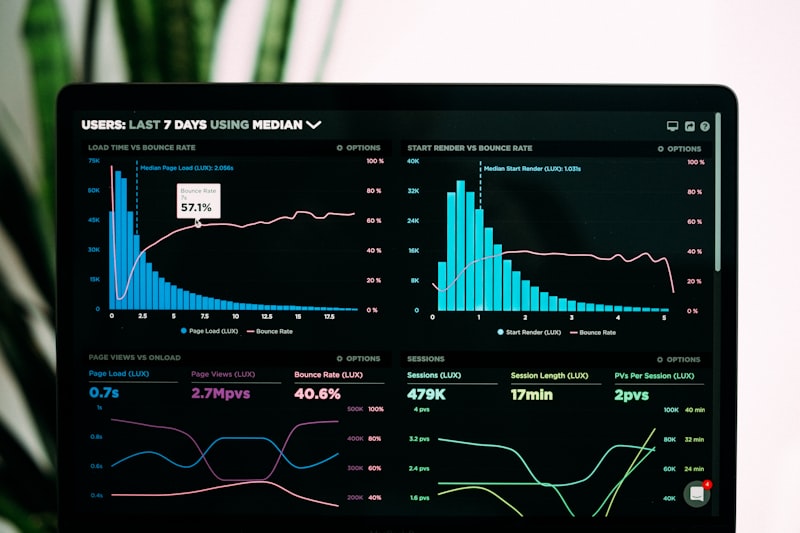
Advanced monitoring equipment used in subsurface research
Step-by-Step Methodology
1. Instrument Placement
Researchers carefully lowered the well instruments into place using the scratcher wire, which served both as a physical support and communication channel.
2. System Calibration
Each sensor was calibrated to ensure precise measurements in the challenging underground environment.
3. Data Collection
The system began continuous monitoring of key parameters including flow velocity, pressure, temperature, and humidity.
4. Signal Transmission
Collected data traveled via acoustic waves through the waveguide to the surface units.
5. Signal Processing
The ground equipment used self-synchronization methods to recover the sensor signals, with sophisticated algorithms compensating for signal degradation 1 .
6. Data Analysis
Scientists interpreted the processed data to build a comprehensive picture of subsurface conditions and how they changed over time.
Sensor Capabilities
| Sensor Type | Measurement Range | Precision |
|---|---|---|
| Flow Velocity | 0.001–0.1 m/s | 0.5% error |
| Pressure Gage | 0–90 mPa | 0.1% error |
| Temperature | 0–125°C | 0.1% error |
| Humidity | 50.1–99.9% | 0.1% error |
Data source: Research on well information-measuring systems 1
Parameter Interpretation
| Parameter | What It Reveals | Management Application |
|---|---|---|
| Flow Velocity | Rate of water movement through formations | Determines recharge rates and contamination spread |
| Pressure | Underground stress conditions and water potential | Maps water movement directions and identifies barriers |
| Temperature | Heat distribution and geothermal activity | Tracks surface water infiltration and identifies pollution sources |
| Humidity | Water content in underground spaces | Assesses overall water saturation and storage capacity |
Key Finding
The system demonstrated the ability to operate reliably in extreme conditions—specifically, with pressure differences of up to 20 mPa 1 . This proved that continuous monitoring of even the most challenging regenerative sources was now technologically feasible.
Beyond the Well: Broader Applications for a Thirsty Planet
Groundwater Exploration and Management
The applications of well information-measuring systems extend far beyond the specific experiment described above. According to research published in the Journal of Hydrology, geophysical methods play a "critical role in exploring, developing, and sustaining groundwater resources" 2 .
These techniques allow scientists to map subsurface structures, characterize aquifer properties, monitor groundwater levels, detect contamination, optimize well siting, and assess groundwater recharge processes 2 .
- Electrical resistivity surveys have successfully identified promising aquifer zones with resistivity values ranging from 10 Ωm to 500 Ωm
- Seismic surveys have accurately delineated aquifer depths from 24 to 150 meters 2
- In contamination studies, geophysical techniques have detected and mapped pollution plumes, with low resistivity zones (<15 Ωm) clearly indicating the presence of contaminants 2
Revolutionizing Agriculture and Ecosystem Management
The impact of these monitoring technologies extends to agriculture and ecosystem restoration. Research on regenerative agriculture demonstrates how remote sensing technologies, combined with ground measurements, can optimize grazing strategies to improve soil health and pasture productivity 3 .
One study found that "high-intensity grazing treatments trampled more biomass, increasing litter, enhancing surface organic matter and decomposition rates"—a finding made possible by precise measurement technologies 3 .
Similarly, in the Tarim River basin in China, ecological water conveyance projects—informed by sophisticated monitoring—have successfully restored degraded ecosystems by reestablishing hydrological connectivity . Researchers evaluated this connectivity across four dimensions: horizontal, longitudinal, vertical, and temporal, demonstrating how comprehensive monitoring guides effective ecosystem management .
Global Impact of Subsurface Monitoring Technologies
Global Water Security
Ensuring sustainable access to clean water resources worldwide
Industrial Applications
Optimizing resource extraction while minimizing environmental impact
Agricultural Efficiency
Improving irrigation practices and water management in farming
Ecosystem Restoration
Reviving degraded environments through informed interventions
The Scientist's Toolkit: Instruments for Planetary Health
The field of subsurface monitoring relies on a sophisticated array of tools that function much like medical instruments.
| Tool/Technology | Primary Function | Ecological 'Medical' Analogy |
|---|---|---|
| Acoustic Waveguide | Communication link between depth and surface | Neural pathway transmitting sensor data |
| Spinner Rotameter Power Supply | Self-contained power generation | Self-sustaining biological system |
| Flow Velocity Sensor | Measures underground water movement | Blood flow monitor in circulatory system |
| Digital Pressure Gage | Tracks subsurface pressure changes | Blood pressure cuff for aquifer systems |
| Temperature Sensors | Maps thermal profiles | Thermometer for detecting ecosystem fever |
| Humidity Sensors | Measures water content in spaces | Skin moisture sensor for soil health |
Interdisciplinary Convergence
This toolkit represents a remarkable convergence of disciplines—bringing together principles from physics, engineering, ecology, and even medicine to create technologies that help us become better stewards of our planet's hidden water resources.
Conclusion: The Future of Seeing the Invisible
Well information-measuring systems represent more than just technical achievements—they embody a fundamental shift in how humanity relates to the natural world.
By giving us "eyes" beneath the surface, these technologies transform invisible processes into manageable data, moving us from guesswork to knowledge-based stewardship of precious resources.
As these technologies continue to evolve, integrating with emerging fields like machine learning and remote sensing 3 , our ability to understand and manage Earth's regenerative sources will only improve. We're moving toward a future where we can monitor the planet's vital signs as comprehensively as physicians monitor human patients—detecting problems early, implementing precise interventions, and tracking recovery.

The future of environmental monitoring integrates advanced technologies for planetary health
The greatest promise of these technologies may ultimately lie in their ability to help us work with natural systems rather than against them—to become partners in regeneration rather than agents of depletion. In learning to read the subtle language of Earth's hidden water worlds, we take an essential step toward a future where both human communities and natural ecosystems can thrive together.
Join the Exploration
The journey to understand and protect our planet's hidden water resources continues. As technology advances, so does our capacity to be responsible stewards of these vital systems.