Unearthing Origins: The Cenozoic Climatic and Tectonic Drivers of the Indo-Australian Archipelago Biodiversity Hotspot
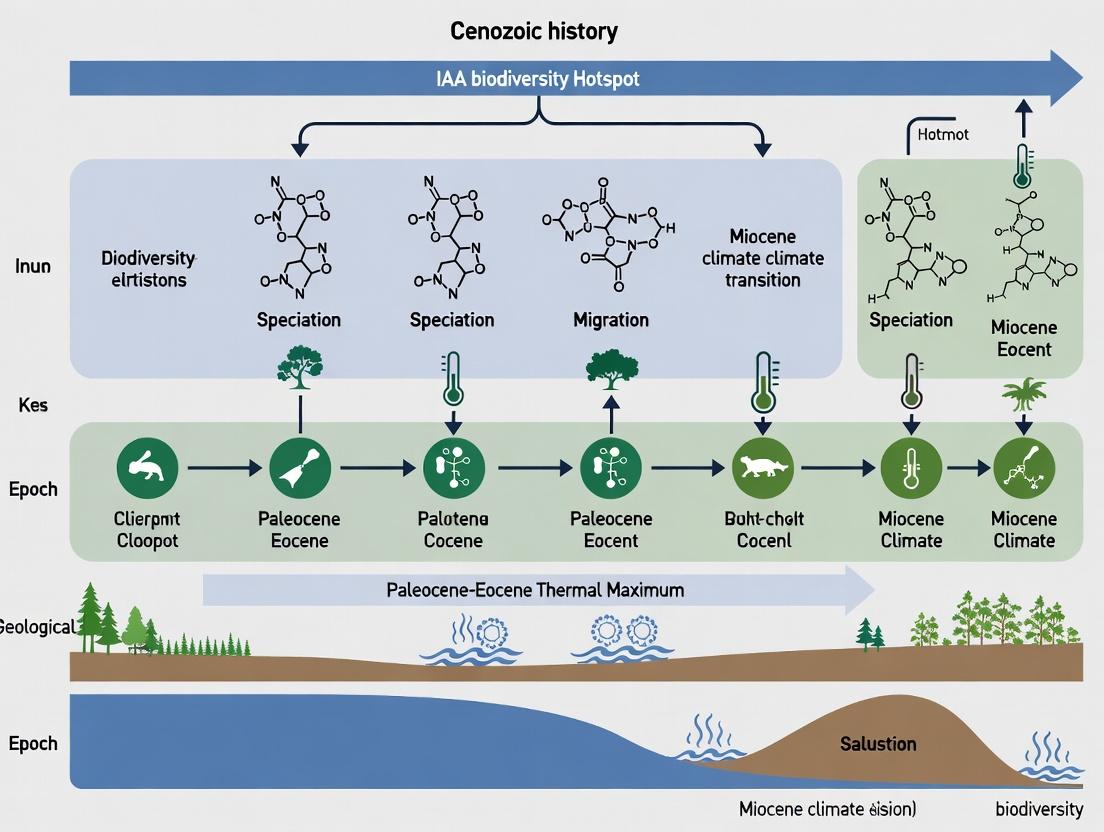
This article synthesizes the latest geological, paleontological, and phylogenetic evidence to reconstruct the Cenozoic history of the Indo-Australian Archipelago (IAA), Earth's epicenter of marine biodiversity.
Unearthing Origins: The Cenozoic Climatic and Tectonic Drivers of the Indo-Australian Archipelago Biodiversity Hotspot
Abstract
This article synthesizes the latest geological, paleontological, and phylogenetic evidence to reconstruct the Cenozoic history of the Indo-Australian Archipelago (IAA), Earth's epicenter of marine biodiversity. Targeted at researchers and drug discovery professionals, it explores the foundational tectonic events that forged the hotspot, details methodological approaches (including paleoclimate modeling and genomics) for studying its genesis, addresses key challenges in data interpretation, and validates historical narratives against contemporary biogeographic patterns. The review critically evaluates how this deep-time evolutionary crucible has generated unparalleled chemical and biological novelty, with direct implications for biodiscovery pipelines and understanding biotic responses to rapid environmental change.
Building the Crucible: Tectonic and Paleoclimatic Foundations of the IAA Hotspot
Within the broader thesis on Cenozoic history of the Indo-Australian Archipelago (IAA) biodiversity hotspot research, this paper examines its current status as the global marine biodiversity epicenter. The IAA, or Coral Triangle, represents the culmination of a ~60-million-year biogeographic assembly process, driven by plate tectonics, ocean current reconfigurations, and long-term climatic stability. This technical guide synthesizes current data on species richness, endemism, and functional diversity, providing a foundational resource for evolutionary biologists and biodiscovery professionals.
Quantitative Analysis of IAA Biodiversity
Table 1: Comparative Species Richness Across Major Marine Hotspots
| Taxonomic Group | IAA (Coral Triangle) | Caribbean | Western Indian Ocean | Central Pacific | Data Source (Primary Study) |
|---|---|---|---|---|---|
| Reef-Building Corals | 605 species | 70 species | 200 species | 150 species | Huang et al., 2023; CoralBase |
| Reef Fish | 2,857 species | 1,400 species | 1,650 species | 1,250 species | Allen & Erdmann, 2022 |
| Marine Mollusks | ~12,000 species | ~5,000 species | ~6,500 species | ~4,000 species | IUCN Marine Biodiversity Audit, 2024 |
| Marine Crustaceans | ~8,500 species | ~3,200 species | ~4,100 species | ~2,800 species | WoRMS Annual Checklist, 2023 |
| Endemism Rate (Reef Fish) | 45% | 25% | 20% | 15% | IAA Endemism Consortium, 2023 |
Table 2: Key Paleo-Environmental Drivers of Cenozoic IAA Diversification
| Geological Epoch | Major Tectonic/Oceanographic Event | Proposed Impact on Diversity | Supporting Evidence (Method) |
|---|---|---|---|
| Paleocene-Eocene | Opening of the Indonesian Seaway | Initial vicariance & allopatric speciation | Plate tectonic reconstruction models; fossil coral distribution |
| Miocene (c. 20 Ma) | Collision of Australian & SE Asian plates; Halmahera Arc formation | Creation of complex shelf habitats & micro-basins | Seismic stratigraphy; geochemical provenance analysis |
| Pliocene-Pleistocene | Sea-level oscillations & recurrent island isolation | Cyclic population fragmentation & secondary contact | Phylogeographic analysis (e.g., COI, RAD-seq) on stomatopods |
| Holocene | Stabilization of modern currents (Indonesian Throughflow) | Enhanced larval dispersal & connectivity | Oceanographic particle tracking coupled with population genetics |
Core Experimental Protocols for IAA Biodiversity Research
Protocol: eDNA Metabarcoding for Comprehensive Biodiversity Assessment
Objective: To census marine biodiversity from water samples using environmental DNA. Workflow:
- Sample Collection: Filter 1-2 liters of seawater through a 0.22µm sterivex filter in triplicate at each site. Preserve filters in Longmire's buffer.
- DNA Extraction: Use a modified DNeasy PowerWater kit protocol with an extended lysis step (65°C for 2 hours).
- PCR Amplification: Amplify a ~313bp fragment of the mitochondrial COI gene using degenerate primers mlCOIintF (forward) and jgHCO2198 (reverse). Use a 3-step PCR with unique dual indexing for sample multiplexing.
- Sequencing: Purify amplicons and sequence on an Illumina MiSeq platform (2x300bp).
- Bioinformatics: Process reads through the DADA2 pipeline for ASV (Amplicon Sequence Variant) inference. Assign taxonomy using a curated reference database (e.g., BOLD + local IAA sequences).
Diagram 1: eDNA metabarcoding workflow for IAA biodiversity.
Protocol: Phylogenomic Analysis of Divergence Times
Objective: To date speciation events within IAA lineages to correlate with Cenozoic paleo-geographic events. Workflow:
- Taxon Sampling: Select 20-30 species representing target clade, with outgroups. Use tissue samples from museum collections or fieldwork.
- Sequencing: Perform whole-genome sequencing (30x coverage) on a DNBSEQ-G400 platform or target enrichment for 1000+ ultra-conserved elements (UCEs).
- Alignment & Matrix Assembly: For UCEs, use PHYLUCE pipeline. For genomes, use progressive Cactus for whole-genome alignment.
- Tree Inference: Generate maximum likelihood trees using IQ-TREE2 (ModelFinder+) with 1000 ultrafast bootstraps.
- Divergence Dating: Use BEAST2 with a relaxed clock model. Apply 3-5 fossil calibrations as log-normal priors. Run MCMC for 100 million generations, sampling every 10k.
Diagram 2: Phylogenomic workflow for divergence time estimation.
The Scientist's Toolkit: Key Research Reagent Solutions
Table 3: Essential Reagents and Materials for IAA Biodiversity Research
| Item/Category | Specific Product/Example | Function in Research |
|---|---|---|
| Sample Preservation | RNAlater, Longmire's Buffer, 95% EtOH | Stabilizes nucleic acids (DNA/RNA) in tropical field conditions for later molecular analysis. |
| DNA Extraction Kit | DNeasy PowerSoil Pro Kit (Qiagen), Monarch Genomic DNA Purification Kit (NEB) | Efficiently extracts high-quality, inhibitor-free DNA from complex marine samples (tissue, sponge, sediment). |
| Metabarcoding Primers | mlCOIintF/jgHCO2198 (COI), 18S V4/V9 primers, 12S MiFish primers | Amplifies standardized gene regions from environmental DNA for taxonomic identification. |
| High-Fidelity Polymerase | Q5 High-Fidelity DNA Polymerase (NEB), KAPA HiFi HotStart ReadyMix | Ensures accurate amplification of target loci for sequencing, critical for rare samples. |
| Sequence Indexing | Illumina Nextera XT Index Kit, IDT for Illumina UD Indexes | Allows multiplexing of hundreds of samples in a single sequencing run. |
| Target Capture Probes | MYbaits Marine Invertebrate UCE kit (Arbor Biosciences) | Enriches phylogenetically informative ultra-conserved elements from genomic DNA. |
| Bioinformatics Pipeline | QIIME2, DADA2, PHYLUCE, BEAST2 | Standardized software for sequence processing, taxonomy assignment, and phylogenetic analysis. |
| Geospatial Database | IAA Oceanography & Bathymetry GIS Layer (OBIS) | Correlates biological data with environmental parameters (salinity, depth, temperature). |
Signaling Pathways in Coral Holobiont Stress Response
A key aspect of IAA ecosystem resilience involves coral-algal symbiosis. Under thermal stress, the Symbiodiniaceae photosystem II is damaged, leading to reactive oxygen species (ROS) production.
Diagram 3: Coral holobiont stress signaling under heat.
The Indo-Australian Archipelago (IAA), recognized as the epicenter of global marine biodiversity (the Coral Triangle), is a direct biogeographic consequence of the Cenozoic tectonic collision between the Sunda and Sahul continental shelves. This whitepaper frames the tectonic collision as the foundational geological drama that established the complex mosaic of basins, island arcs, and seaways which, over the last 25 million years, have driven the evolutionary processes of vicariance, speciation, and ecological adaptation central to IAA hotspot research. Understanding the spatiotemporal pattern of this collision is not merely a geological exercise but a prerequisite for interpreting phylogeographic patterns, endemicity, and the historical biogeography that underpins the search for novel marine natural products with pharmaceutical potential.
Tectonic Framework & Chronology
The collision is an ongoing process, part of the larger convergence between the Eurasian and Indo-Australian plates. The Sunda Shelf (continental Eurasia) and the Sahul Shelf (continental Australia-New Guinea) were separated by a vast deep-water ocean (Tethys) until the Cenozoic.
| Tectonic Phase | Timeframe (Ma) | Key Event | Primary Evidence | Impact on IAA Seaways |
|---|---|---|---|---|
| Initial Approach | 45 - 25 Ma | Northward movement of Australian plate accelerates. | Seafloor magnetic anomalies, paleomagnetic data. | Progressive narrowing of the deep-sea barrier. |
| Initial 'Soft' Collision | 25 - 15 Ma | Australian margin contacts Indonesian island arcs (Sulawesi, Banda). | Onset of thrust faulting, foreland basin development (N. Australia), uplift records. | Fragmentation of continuous deep water; creation of shallow sills and proto-archipelago. |
| Arc-Continent Collision & Rotation | 15 - 5 Ma | Widespread collision, microplate rotation (e.g., Borneo, Philippines), closure of deep passages. | GPS measurements, paleomagnetic declination anomalies, fission track thermochronology. | Emergence of major land barriers (e.g., Halmahera), complex current redirection. |
| Modern Configuration & Ongoing Orogeny | 5 Ma - Present | Uplift of New Guinea cordillera, continued contraction in Banda Arc, strike-slip tectonics (e.g., Sumatran fault). | Seismic activity, InSAR crustal deformation data, uplifted coral terraces. | Sustained topographic complexity driving extreme habitat partitioning and isolation. |
Table 1: Key Convergence Parameters
| Parameter | Sunda-Sahul Convergence Zone | Measurement Method |
|---|---|---|
| Current Convergence Rate | ~70-80 mm/yr in Eastern Indonesia | GPS Satellite Geodesy |
| Total Shortening (since ~25 Ma) | >2000 km | Plate Reconstruction Models |
| Slab Dip Angle (Banda Arc) | Near-vertical to >200 km depth | Seismic Tomography |
| Uplift Rate (New Guinea Highlands) | Up to 2-3 mm/yr | Cosmogenic nuclide dating (¹⁰Be, ²⁶Al) |
Table 2: Representative Geochronological Constraints
| Location/Event | Dating Method | Age (Ma) | Significance |
|---|---|---|---|
| Onset of foreland basin sedimentation (NW Australia) | Biostratigraphy (Foraminifera) | ~25 - 20 Ma | Proxy for initial loading and collision. |
| Exhumation of metamorphic rocks (Banda Terrane) | Ar/Ar (white mica), Rb-Sr | 8 - 4 Ma | Timing of high-pressure metamorphism during collision. |
| Uplift of Bird's Head Peninsula | Fission Track (Zircon) | 10 - 5 Ma | Indicates major crustal thickening. |
Experimental & Field Methodologies for Tectonic Research
Protocol 4.1: Low-Temperature Thermochronology (AFT/ZHe)
- Objective: Constrain the timing and rate of rock uplift and exhumation due to tectonic collision.
- Materials: Apatite or zircon crystals separated from granitic or volcanic bedrock samples.
- Procedure:
- Sample Collection: Collect fresh rock samples (2-5 kg) from key structural units (uplifted blocks, shear zones).
- Mineral Separation: Crush, sieve, and separate apatite/zircon using heavy liquid (e.g., lithium heteropolytungstate) and magnetic separation.
- Mounting & Polishing: Embed grains in epoxy mounts, polish to expose internal surfaces.
- Irradiation: Send mounts to a nuclear reactor for neutron irradiation (induces fission of ²³⁸U).
- Etching & Counting: Etch mounts in appropriate acid (e.g., HNO₃ for apatite) to reveal fission tracks. Count spontaneous (natural) and induced (post-irradiation) fission tracks under an optical microscope.
- Age Calculation: Determine U concentration (via LA-ICP-MS or external detector method). Calculate age using the fission-track age equation, factoring in track densities and U concentration.
Protocol 4.2: Marine Geophysical Survey for Crustal Structure
- Objective: Image the subsurface architecture of the collision zone (crustal boundaries, subduction slabs, thrust faults).
- Materials: Research vessel, multi-channel seismic reflection system, ocean-bottom seismometers (OBS), gravimeter, magnetometer.
- Procedure:
- Survey Design: Plan transects perpendicular to major structural trends.
- Seismic Acquisition: Deploy airgun array as seismic source. Record reflected/refracted signals via towed hydrophone streamer and an array of OBS.
- Potential Field Data: Continuously record gravity and magnetic anomalies along track.
- Processing: Apply pre-stack depth migration to seismic data. Use travel-time tomography from OBS data to build velocity models. Integrate with potential field data for 2D/3D crustal modeling.
Protocol 4.3: GNSS/GPS Geodetic Network Analysis
- Objective: Quantify present-day crustal deformation (strain, rotation, block motion).
- Materials: Permanently installed GNSS stations, campaign-grade GPS receivers, data processing software (GAMIT/GLOBK, GIPSY).
- Procedure:
- Data Collection: Record continuous carrier-phase and code-range data from satellites at fixed monuments over years.
- Data Processing: Process daily data files in a global reference frame, estimating station positions, atmospheric delays, and satellite orbits.
- Time Series Analysis: Generate time series of station coordinates (North, East, Up). Model and remove seasonal signals.
- Velocity Field Estimation: Fit linear trends to the time series to derive horizontal and vertical velocity vectors with associated uncertainties.
- Strain Modeling: Invert the velocity field to calculate continuous strain rate tensors or define rotating crustal blocks.
Visualization: Tectonic Pathways and Workflows
Diagram Title: Tectonic Collision Sequence Leading to IAA Formation
Diagram Title: Integrated Tectonic Research Workflow
The Scientist's Toolkit: Key Research Reagent Solutions & Materials
| Item / Reagent | Primary Function / Application | Technical Note |
|---|---|---|
| Lithium Heteropolytungstate (LST) | Heavy liquid for density separation of mineral grains (e.g., apatite, zircon). | Aqueous solution, adjustable to specific densities (2.85-3.1 g/cm³). Non-toxic alternative to bromoform. |
| Hydrofluoric Acid (HF) | Etching agent for revealing fossil fission tracks in zircon crystals. | EXTREMELY HAZARDOUS. Requires specialized HF-safe labware and strict safety protocols. |
| Nitric Acid (HNO₃) | Etching agent for revealing fossil fission tracks in apatite crystals. | Standard concentration: 5.5M HNO₃ at 21°C for 20 seconds. |
| Epoxy Resin Mount | For securing mineral grains for polished section preparation in thermochronology. | Must be inert, have low viscosity for grain immersion, and polish uniformly (e.g., Struers Epofix). |
| Ocean-Bottom Seismometer (OBS) | Autonomous recording of seismic waves on the seafloor for crustal tomography. | Deployed for months, contains geophone/hydrophone, data logger, battery, and acoustic release. |
| Airgun Array | Controlled seismic source for marine reflection/refraction surveys. | Generates high-pressure air bubbles; volume (in³) and tuning determine source signature. |
| GNSS/GPS Receiver (Geodetic Grade) | Precise measurement of 3D crustal position (mm-level accuracy). | Uses dual-frequency signals to correct for ionospheric delay. Requires precise monumentation. |
| IRMS (Isotope Ratio Mass Spectrometer) | Measuring isotopic ratios (e.g., Sr, Nd, Pb) in rocks to determine provenance. | Used to trace the origin of terrains involved in the collision. |
The Indo-Australian Archipelago (IAA) stands as the planet's epicenter of marine biodiversity. A core thesis in elucidating its Cenozoic history posits that tectonic-driven ocean gateway dynamics, specifically the constriction and closure of seaways, are primary mechanisms governing biogeographic patterns, speciation events, and regional climate. The Indonesian Throughflow (ITF), the only tropical interocean connection, serves as the critical contemporary manifestation of this process. This whitepaper provides a technical examination of ITF dynamics as a model system for understanding paleo-gateway influences on the assembly of the IAA biodiversity hotspot.
Oceanographic & Paleoceanographic Data Synthesis
Table 1: Modern Indonesian Throughflow Metrics
| Parameter | Value/Range | Measurement Method | Implications for Biogeography |
|---|---|---|---|
| Total Volume Transport | ~15 Sv (Sverdrup) | Direct mooring arrays, satellite altimetry | Defines larval dispersal capacity and genetic connectivity. |
| Primary Entry Points | Makassar Strait (~80%), Lifamatola Passage | Hydrographic cruises, current profilers | Creates distinct source populations for Pacific fauna. |
| Temperature Anomaly | ITF warms Indian Ocean by ~0.5°C | ARGO floats, satellite SST | Influences metabolic rates and species distribution limits. |
| Salinity Signature | Low-salinity Pacific water barrier layer | CTD profiles | Creates stratified water column, affecting nutrient upwelling. |
Table 2: Key Cenozoic Seaway Closure Events & Biotic Responses
| Seaway | Approx. Closure Time (Ma) | Tectonic Driver | Oceanographic Consequence | Documented Biotic Response (IAA) |
|---|---|---|---|---|
| Indonesian Seaway (Northern) | ~25-20 Ma | Australia-Sunda collision | Weakening of westward flow, warming of S. Pacific | Isolation of Tethyan relics, onset of endemic radiations. |
| Central American Seaway | ~10-3 Ma | Isthmus of Panama uplift | Global circulation reorganization, ITF intensification | Possible "hard" barrier for circumtropical species, vicariance. |
| Tethyan Seaway | Early Cenozoic | Africa-Eurasia collision | Termination of W-E equatorial current | Major faunal turnover, Tethyan extinction in IAA. |
Experimental Protocols for Gateway Dynamics Research
Protocol 1: Paleoceanographic Proxy Reconstruction (Foraminiferal Mg/Ca and δ¹⁸O)
- Objective: Reconstruct past temperature and ice volume to infer current strength.
- Methodology:
- Sample Collection: Retrieve marine sediment cores from strategic locations (e.g., Timor Strait, Makassar Strait).
- Foraminifera Picking: Isolate monospecific planktic (Globigerinoides ruber) and benthic (Cibicidoides wuellerstorfi) foraminifera tests from specific core intervals.
- Cleaning: Rigorously clean samples using reductive and oxidative steps to remove clays and organic contaminants.
- Isotope & Elemental Analysis:
- Analyze δ¹⁸O via gas-source isotope ratio mass spectrometry (IRMS).
- Analyze Mg/Ca ratios via inductively coupled plasma mass spectrometry (ICP-MS).
- Calculation: Apply species-specific Mg/Ca-temperature calibrations to derive sea surface temperature (SST). Deconvolve δ¹⁸O seawater (ice volume) from temperature signal.
Protocol 2: Population Genomics for Biogeographic Hypothesis Testing
- Objective: Test for vicariance vs. dispersal events coincident with seaway closures.
- Methodology:
- Sample Design: Collect tissue samples from congeneric species/populations across the IAA and adjacent Pacific/Indian Oceans.
- Sequencing: Perform whole-genome resequencing (ddRAD-seq or similar) to identify single nucleotide polymorphisms (SNPs).
- Analysis:
- Population Structure: Use ADMIXTURE or similar to infer genetic clusters.
- Divergence Time Estimation: Apply coalescent models (e.g., in *BEAST) to estimate timing of population splits.
- Demographic History: Use PSMC or stairway plots to infer changes in effective population size.
- Correlation: Compare genetic divergence times with paleoceanographic records of gateway restriction.
Visualization: Logical Framework & Pathways
Diagram 1: Cenozoic Gateway Dynamics Logic
Diagram 2: Paleo Proxy Workflow
The Scientist's Toolkit: Key Research Reagents & Materials
Table 3: Essential Research Solutions for Gateway Dynamics Studies
| Item/Category | Function/Application | Example/Notes |
|---|---|---|
| Foraminiferal Mg/Ca Standards | Calibration of ICP-MS for absolute temperature proxy. | E.g., Certified standard solutions (Mg, Ca, Al, Mn). Critical for accuracy. |
| DNA/RNA Preservation Buffer | Field stabilization of genetic material from collected specimens. | RNAlater or similar. Ensures high-quality genomic data for population studies. |
| Isotope Reference Materials | Standardization for δ¹⁸O analysis via IRMS. | NBS-18, NBS-19 (carbonates). Required for data inter-comparability. |
| Paleo-Map Reconstruction Software | Modeling past bathymetry and plate tectonics. | GPlates. Essential for visualizing gateway configurations through time. |
| Sediment Core XRF Scanner | Non-destructive elemental analysis for stratigraphy. | Provides high-resolution records of terrestrial runoff (e.g., Ti/Ca) linked to current shifts. |
| Global Circulation Model (GCM) | Simulating ocean/climate response to gateway changes. | CESM, MITgcm. Used for hypothesis testing of paleo-scenarios. |
| Moored ADCP Array | Direct measurement of modern throughflow velocity and transport. | Teledyne RDI ADCPs. The gold standard for validating satellite and model data. |
This technical whitepaper situates paleoclimate transitions within the broader thesis of Cenozoic biodiversity evolution in the Indo-Australian Archipelago (IAA) hotspot. For researchers and drug discovery professionals, understanding these physical drivers is critical for contextualizing the biogeographic isolation, genetic divergence, and subsequent marine chemical biodiversity that underpin modern biodiscovery pipelines. This guide details the climatic mechanisms, quantifies their magnitudes, and outlines the experimental protocols used to reconstruct them.
The Cenozoic shift from a warm, ice-free "Greenhouse" world to a glaciated "Icehouse" state, punctuated by high-amplitude sea-level oscillations, fundamentally shaped the marine habitats of the IAA. For biodiversity research, these physical changes created cycles of island isolation and connection, altered oceanic currents, and drove adaptive radiation and allopatric speciation. The resultant high phylogenetic diversity is a direct precursor to the unique metabolomic and biochemical diversity targeted in marine natural product drug discovery.
Table 1: Key Paleoclimate Parameters Across Cenozoic Transitions
| Epoch/Transition | Atmospheric CO₂ (ppm) | Deep Ocean Temp. (Δ°C) | Major Ice Sheet | Eustatic Sea-Level Change (vs. present) | Primary Proxy Methods |
|---|---|---|---|---|---|
| Early Eocene Climatic Optimum (~50 Ma) | 1000 - 2000 | +12 | None | +60 to +70 m | δ¹⁸O (benthic forams), δ¹¹B, TEX₈₆ |
| Eocene-Oligocene Transition (EOT, ~34 Ma) | ~900 → ~700 | -5 to -6 | Antarctic | -30 to -40 m (initial drop) | δ¹⁸O (benthic/planktic), Mg/Ca, Sr/Ca |
| Mid-Miocene Climatic Optimum (~15 Ma) | 400 - 500 | +3 to +4 | Variable (Antarctic) | +30 to +40 m | δ¹⁸O, alkenones, B/Ca |
| Mid-Pleistocene Transition (MPT, ~1.2-0.7 Ma) | 180 - 300 (glacial-interglacial) | ±2-3 | Northern Hemisphere (Laurentide) | ±120 m (amplitude) | δ¹⁸O stack, sea-level markers, ice cores |
Table 2: Impact Metrics on IAA Marine Biogeography
| Paleoclimate Driver | IAA Habitat Effect | Biodiversity Implication | Chemical Ecology Pressure |
|---|---|---|---|
| Sea-Level Highstand (+60m) | Expanded shallow epicontinental seas, reduced isolation | Increased gene flow, lowered endemism | Reduced competition, relaxed defense compound selection |
| Sea-Level Lowstand (-120m) | Exposed Sunda & Sahul Shelves, fragmented deep basins | Geographic isolation, allopatric speciation | Increased competition, heightened pressure for novel bioactive compounds |
| Ocean Cooling (EOT) | Thermocline shoaling, nutrient upwelling shifts | Faunal turnover, adaptation to cooler temps | Metabolic adaptation, altered secondary metabolite production |
| Increased Seasonality (post-MPT) | Seasonal current reversals, productivity pulses | Selection for generalist vs. specialist species | Cyclical production of defensive compounds |
Core Experimental Protocols for Paleoclimate Reconstruction
Sea-Level Reconstruction via Benthic Foraminiferal δ¹⁸O
Principle: The oxygen isotopic composition (δ¹⁸O) of calcite tests of benthic foraminifera is a function of deep-water temperature and global ice volume. Deconvolution allows estimation of sea level.
Protocol:
- Sample Collection: Retrieve marine sediment cores (e.g., IODP Expedition 363). Identify hemipelagic sections with continuous deposition.
- Foraminifera Picking: Sieve sediment >63µm. Under binocular microscope, hand-pick 20-30 well-preserved specimens of a benthic species (e.g., Cibicidoides wuellerstorfi) from the 250-355µm size fraction.
- Cleaning: Ultrasonicate picks in methanol for 5-10 seconds to remove clays. Rinse with deionized water.
- Isotopic Analysis: a. Dissolve samples in 100% phosphoric acid at 70°C in a Kiel IV carbonate device. b. Analyze evolved CO₂ gas on a MAT 253 isotope ratio mass spectrometer. c. Report δ¹⁸O relative to Vienna Pee Dee Belemnite (VPDB). Normalize via NBS-19 standard.
- Deconvolution: a. Apply paired Mg/Ca paleothermometry on same species to isolate temperature component: ΔT = (ln(Mg/Casample / Mg/Cacalibration) / 0.09). b. Calculate ice-volume component: δ¹⁸Oiv = δ¹⁸Omeasured - (0.25‰ * ΔT). c. Convert to sea level: ΔSea Level (m) = δ¹⁸O_iv * (-100 m/1.0‰).
Atmospheric CO₂ Reconstruction using Boron Isotopes (δ¹¹B)
Principle: The δ¹¹B of planktic foraminiferal calcite reflects seawater pH, which is controlled by atmospheric pCO₂ in surface oceans over long timescales.
Protocol:
- Sample Preparation: Pick 40-50 specimens of surface-dwelling foraminifera (e.g., Trilobatus sacculifer) from 355-425µm fraction. Perform rigorous clay removal and oxidative/reductive cleaning.
- Isotope Analysis: a. Dissolve samples in dilute HNO₃. b. Purify B via microsublimation and ion exchange chromatography. c. Analyze δ¹¹B via multi-collector inductively coupled plasma mass spectrometry (MC-ICP-MS, e.g., Neptune Plus) using standard-sample bracketing with NIST SRM 951.
- pCO₂ Calculation: a. Calculate seawater pH: pH = pKB - log( (δ¹¹Bsw - δ¹¹Bc) / (δ¹¹Bc - αB * δ¹¹Bsw) ), where αB is fractionation factor, δ¹¹Bsw is seawater value. b. Use carbonate system equations with concurrent temperature (Mg/Ca) and alkalinity estimates to solve for aqueous pCO₂. c. Apply Henry's Law to derive atmospheric pCO₂.
Terrestrial Temperature Reconstruction via Branched Glycerol Dialkyl Glycerol Tetraethers (brGDGTs)
Principle: The methylation and cyclization of brGDGTs in soil bacteria correlate with mean annual air temperature (MAT) and pH.
Protocol:
- Lipid Extraction: Sonicate 5-10g of terrestrial sediment (e.g., from deltaic cores) in 2:1 DCM:MeOH. Separate neutral lipid fraction via silica gel column chromatography.
- Fractionation & Analysis: a. Further separate via mid-polarity HPLC column. b. Analyze brGDGTs via high-performance liquid chromatography-atmospheric pressure chemical ionization-mass spectrometry (HPLC-APCI-MS). c. Quantify peaks for major compounds (I, II, III, I', II', III') and cyclized isomers.
- Temperature Calibration: Calculate methylation index of branched tetraethers (MBT') and cyclization ratio (CBT'). Apply global soil calibration: MAT (°C) = -1.21 + 32.42 * MBT' - 0.93 * CBT'.
Visualizing Paleoclimate System Dynamics
Diagram 1: Cenozoic Climate-IAA Habitat Drivers
Diagram 2: Proxy Data Generation Workflow
The Scientist's Toolkit: Key Research Reagent Solutions
Table 3: Essential Materials for Paleoclimate Proxy Analysis
| Item/Category | Function & Application | Example Product/Standard |
|---|---|---|
| Isotope Standards | Calibration and normalization of mass spectrometer data, ensuring inter-laboratory comparability. | NIST RM 8545 (NBS-19, δ¹³C & δ¹⁸O), NIST SRM 951 (Boric Acid, δ¹¹B), IAEA-CO-1 (Carrara Marble). |
| Ultra-Pure Acids & Reagents | Sample digestion and cleaning without introducing contaminant ions or isotopes. | TraceSELECT Ultra HF, HNO₃, HCl for carbonate dissolution and silicate work. Optima Grade methanol for lipid extraction. |
| Certified Reference Materials (CRMs) | Quality control for elemental ratio analyses (e.g., Mg/Ca, Sr/Ca). | JCP-1 (Coral; GSJ), ECRM 752-1 (Foraminifera; RCM). |
| Size-Specific Foraminifera | Calibrated sediment separates for proxy method development and testing. | 100-200µm, 250-355µm, >355µm fractions of bulk sediment or picked species. |
| Bulk Sediment Reference Sets | Inter-method comparison and validation of organic (GDGTs, alkenones) and inorganic proxies. | SO-1 (Organic-rich shale; NRC), MESS-4 (Marine sediment; NRC). |
| Polyimide/Teflon Microfuge Tubes | Contamination-free sample storage and processing, critical for trace metal and isotope work. | Savillex PFA vials, Eppendorf LoBind tubes. |
| Pre-Computed Marine Isotope & Climate Stack Data | Benchmarking new records against global templates (e.g., LR04 δ¹⁸O stack, CENOGRID). | Published .csv or .txt files from peer-reviewed syntheses. |
The Indo-Australian Archipelago (IAA), the planet's richest marine biodiversity hotspot, is a product of its Cenozoic history. Its modern faunal composition is not a static entity but the dynamic outcome of sequential biotic transitions driven by tectonic reconfiguration, sea-level fluctuations, and climatic shifts. Interpreting the genesis of this hotspot requires a deep analysis of its fossil record, which chronicles key extinction and radiation events. This whitepaper synthesizes current data on these macroevolutionary patterns and details the methodological toolkit used to decipher them, providing a stratigraphic and phylogenetic framework critical for researchers exploring the historical biogeography that underpins the region's unique biotic reservoir—a context of increasing interest for biodiscovery and drug development.
Quantitative Synthesis of Key Cenozoic Events in the IAA
Table 1: Major Cenozoic Biotic Transitions and Events in the IAA Fossil Record
| Event/Transition | Geologic Time (Ma) | Primary Driver | Key Biotic Impact (Exemplar Groups) | Data Source (Primary Proxy) |
|---|---|---|---|---|
| K-Pg Extinction | ~66 | Bolide impact, volcanism | Mass extinction of marine reptiles, ammonites; limited regional data but foundational for Cenozoic radiations. | IODP cores, regional basin sections (iridium anomaly, spore spike) |
| Early Cenozoic Radiation | 66-34 | Warm climate, fragmented geography | Diversification of modern coral families (Acroporidae, Poritidae), foraminifera, and mollusks. | Carbonate platform cores (%% coral cover, specimen counts) |
| Tethyan Closure & Provincialism | ~34-20 | Northward drift of Australia, collision with SE Asia | Replacement of Tethyan fauna by Indo-Pacific fauna; vicariance and origination. | Occurrence databases (PBDB), comparative morphology |
| Middle Miocene Climatic Optimum (MMCO) | ~17-14 | Global warming, high sea levels | Peak coral diversity and reef expansion; major proliferation of reef fish families. | Stable isotopes (δ¹⁸O, δ¹³C), diversity indices |
| Mid-Miocene Extinction/Transition | ~14-10 | Global cooling (Miocene Climate Transition), oceanic restriction | Turnover in foraminifera (larger benthic foraminifera decline); molluscan extinctions. | Range-through data, last appearance dates (LADs) |
| Pliocene Warm Period | ~5.3-2.6 | Increased ITCZ strength, warm pools | Reinforced IAA diversity gradient; increased sympatric speciation in gastropods. | Sr/Ca ratios (SST), phylogenetic divergence times |
| Pleistocene Glacial Cycles | ~2.6-0.01 | Sea-level oscillations (~120m amplitude) | Repeated habitat fragmentation and coalescence; genetic bottlenecks and expansions. | Seismic stratigraphy, genetic coalescent models |
Experimental and Analytical Methodologies
3.1. High-Resolution Stratigraphic and Geochemical Protocol
- Objective: To correlate fossil assemblages with paleoenvironmental conditions.
- Workflow:
- Core Sampling: Collect continuous core samples (e.g., IODP, petroleum wells) from IAA carbonate platforms.
- Microfossil Processing: Wash, sieve, and pick residues for foraminifera, nannofossils. Specimens are counted to generate abundance data.
- Geochemical Analysis: Conduct isotope ratio mass spectrometry (IRMS) on pristine foraminiferal tests: δ¹⁸O (temperature/ice volume), δ¹³C (productivity), and Sr/Ca ratios (sea surface temperature).
- Cyclostratigraphy: Analyze spectral gamma-ray logs or elemental (XRF) data to establish an astrochronologic timescale.
- Integration: Combine biostratigraphic ranges, diversity metrics, and geochemical timeseries to pinpoint event boundaries.
3.2. Phylogenetic Paleobiology Protocol
- Objective: To distinguish true radiation from artifact of the rock record.
- Workflow:
- Character Coding: Morphological characters are coded from both fossil and extant IAA specimens (e.g., corallite morphology, mollusk sculpture).
- Matrix Assembly & Analysis: Build a morphological character matrix. Apply Bayesian tip-dating methods in software (e.g., MrBayes, BEAST2), using the fossil occurrences as tip calibrations.
- Rate Estimation: Model speciation and extinction rates through time (e.g., using PyRate) to identify significant shifts coinciding with tectonic/climatic events.
- Ancestral Range Reconstruction: Use models (e.g., DEC, BAYAREALIKE) to infer historical biogeographic patterns within the IAA.
Diagram Title: Fossil Data Analysis Workflow
The Scientist's Toolkit: Key Research Reagent Solutions
Table 2: Essential Materials for IAA Fossil Record Research
| Reagent/Material | Function | Application Example |
|---|---|---|
| Hydrogen Peroxide (H₂O₂, 10%) | Disaggregates indurated sediments and oxidizes organic matter. | Processing bulk limestone samples to extract microfossils. |
| Sodium Hexametaphosphate (Calgon) | Deflocculant that disperses clay particles. | Preparing clay-rich samples for micropaleontological analysis. |
| Heavy Liquids (e.g., Sodium Polytungstate) | Density separation of mineral components. | Concentrating foraminiferal tests from siliciclastic sediment residues. |
| Epoxy Resin (e.g., EpoFix) | Embedding medium for thin-section preparation. | Making petrographic thin sections of fossil corals for microstructural analysis. |
| Pt/Coat Sputter Coater | Applies conductive metal coating to specimens. | Preparing non-conductive fossil specimens for Scanning Electron Microscopy (SEM). |
| Cellulose Nitrate (Collodion) | Creates peel replicas of etched rock surfaces. | Documenting microscopic fossil assemblages in polished rock slabs. |
| Isotopic Standards (NBS-19, NBS-18) | Calibration reference for mass spectrometers. | Ensuring accuracy and inter-lab comparability of δ¹³C and δ¹⁸O values. |
| DNA/RNA Shield (for live tissue) | Stabilizes nucleic acids in associated modern tissue. | Preserving genetic material from extant taxa for comparative phylogenetics. |
Diagram Title: Extinction-Radiation Pathway Logic
The Indo-Australian Archipelago (IAA), the world's epicenter of marine biodiversity, has been shaped by complex tectonic and oceanographic dynamics throughout the Cenozoic era. A central thesis in modern biogeography posits that this hotspot emerged from the amalgamation of distinct biotas along tectonic plate boundaries, creating "suture zones" where faunas mix. The "Wallacean Core," named for Alfred Russel Wallace, represents a pivotal, yet contentious, region within this framework. This whitepaper defines the Wallacean Core as a historical biogeographic province characterized by its composite tectonic origin and its role as a persistent zone of biotic interchange and endemism, critically influencing the assembly of the IAA biodiversity hotspot.
Defining the Wallacean Core: Geological and Biotic Parameters
The Wallacean Core is delineated not by a single line (e.g., Wallace's Line) but as a region encompassing the central Indonesian islands east of Sundaland (Borneo, Java, Sumatra) and west of Sahul (New Guinea, Australia). It primarily includes Sulawesi, the Moluccas, and the Lesser Sunda Islands.
Table 1: Key Defining Parameters of the Wallacean Core
| Parameter | Description | Quantitative Metrics |
|---|---|---|
| Geological Origin | Composite terranes accreted from the Philippine Sea Plate and Australian Margin during the Cenozoic. | Amalgamation events: ~25-5 Ma. Crustal thickness: 20-30 km. |
| Ocean Currents | Subject to the Indonesian Throughflow (ITF), a major oceanographic conveyor. | ITF Volume Transport: ~15 Sv (Sverdrup). Surface Temp: 28-30°C. |
| Terrestrial Endemism | High proportion of unique species due to isolation on oceanic islands. | Sulawesi mammal endemism: ~90%. Bird endemism: ~35%. |
| Marine Diversity Gradient | Peak diversity lies within the Core, not at a continental margin. | Coral species richness: >500 species/hexagon (Coral Triangle). |
| Phylogeographic Breaks | Coincides with major genetic discontinuities for multiple taxa. | Mitochondrial DNA divergence (birds, reptiles): ΦST > 0.4. |
Historical Biogeographic Provinces and Suture Zone Dynamics
The Wallacean Core functions as a complex suture zone where biotas from the Asian (Sunda) and Australian (Sahul) shelves have met, mingled, and evolved. This is not a simple transition but a mosaic of historical provinces.
Table 2: Adjacent Provinces and Their Interface with the Wallacean Core
| Province | Continental Affinity | Key Biotic Elements | Suture Zone with Wallacean Core |
|---|---|---|---|
| Sunda Shelf | Asian | Dipterocarp forests, Tigers, Orangutans | Wallace's Line: Sharp boundary for terrestrial mammals. |
| Sahul Shelf | Australian | Marsupials, Eucalyptus, Cassowaries | Lydekker's Line: Boundary for freshwater fish and marsupials. |
| Philippine | Oceanic Arc | Philippine Eagles, Tarsiers | Huxley's Line: Modified boundary via Palawan island arc. |
| Wallacean Core | Composite Oceanic | Babirusa, Komodo Dragon, Maleo bird | Weber's Line: Faunal balance line; center of endemism. |
Experimental Protocols for Delineating Biogeographic Units
Protocol: Phylogeographic Analysis for Suture Zone Detection
Objective: To identify genetic discontinuities indicative of historical biogeographic barriers.
- Sample Collection: Tissue samples from 50 individuals per target species (e.g., forest birds, reptiles) across a transect spanning Sunda Shelf, Wallacean Core, and Sahul Shelf.
- DNA Sequencing: Extract genomic DNA. Amplify and sequence 2-3 mitochondrial loci (e.g., COI, ND2) and 5-10 nuclear introns via PCR and NGS.
- Population Genetic Analysis: Calculate pairwise ΦST statistics. Perform SAMOVA to identify genetically grouped populations without a priori assumptions.
- Divergence Time Estimation: Construct time-calibrated phylogenies using BEAST2. Apply molecular clock models and fossil calibrations to date divergence events between lineages across putative barriers.
- Barrier Assignment: Map significant genetic breaks (ΦST > 0.25, p<0.01) onto geography. Correlate breaks with historical paleogeographic models (e.g., emergent land bridges, deep-sea trenches).
Protocol: Paleobiological Field Survey for Faunal Assemblage Reconstruction
Objective: To document temporal changes in species composition across the Cenozoic.
- Site Selection: Identify fossil-bearing sedimentary formations (e.g., river deposits, limestone caves) in Wallacean Core islands (e.g., South Sulawesi, Flores).
- Stratigraphic Excavation: Establish a grid and excavate by natural stratigraphic layers. Record 3D coordinates of all macrofossils (vertebrates, large mollusks) using a total station.
- Microfossil Processing: Collect bulk sediment samples. Process via sieving (mesh down to 100µm) and heavy liquid separation for microfossils (small mammals, fish).
- Taxonomic Identification & Dating: Identify specimens via comparative anatomy. Obtain absolute dates using U-series dating on associated speleothems or Ar/Ar dating on volcanic tephra layers.
- Data Synthesis: Construct faunal lists per stratigraphic layer. Calculate similarity indices (e.g., Simpson's Index) between layers and with modern/other fossil assemblages to track turnover.
Visualization of Conceptual Framework and Workflow
Diagram Title: Formation of the IAA Hotspot via Provinces and Suture Zones
Diagram Title: Workflow for Delineating Biogeographic Units
The Scientist's Toolkit: Key Research Reagent Solutions
Table 3: Essential Materials for Wallacean Core Biogeography Research
| Item | Function/Application | Example/Note |
|---|---|---|
| Qiagen DNeasy Blood & Tissue Kit | Standardized extraction of high-quality genomic DNA from diverse tissue types (modern, historical). | Critical for consistent yield from degraded museum specimens. |
| MyTaq HS Mix 2x | Robust polymerase for PCR amplification of challenging templates (e.g., ancient DNA, GC-rich regions). | Used in phylogeographic studies across suture zones. |
| Illumina DNA Prep Kit | Library preparation for next-generation sequencing of whole genomes or reduced-representation libraries. | Enables population genomics at scale across the IAA. |
| BEAST2 Software Package | Bayesian evolutionary analysis for coalescent-based phylogenetics and divergence dating. | Used to time speciation events relative to Cenozoic geologic events. |
| Geographic Information System (GIS) | Spatial analysis of biodiversity data, genetic breaks, and paleogeographic reconstructions. | ArcGIS or QGIS with custom layers for historical sea levels. |
| Uranium-Thorium (U-Series) Dating Reagents | Chemical separation and mass spectrometry for dating calcium carbonate fossils (coral, speleothems). | Key for establishing absolute timelines in fossil sites. |
| Stable Isotope Ratios (δ¹⁸O, δ¹³C) | Reagents for processing carbonate samples to infer past climate and habitat conditions. | Provides ecological context for fossil assemblages. |
Decoding Deep Time: Integrative Methods for Reconstructing IAA Biotic History
The Indo-Australian Archipelago (IAA), the epicenter of marine biodiversity, serves as a critical system for understanding Cenozoic diversification dynamics. Integrating its rich but fragmented fossil record with phylogenomic data is essential for generating temporally calibrated evolutionary histories. This whitepaper provides a technical guide for anchoring molecular clocks using IAA fossil calibrations, a cornerstone for research into the origins of the region’s hotspot biodiversity and its implications for bioprospecting.
The IAA Fossil Record as a Molecular Clock Calibrator
The IAA's Cenozoic strata provide key calibration points for major reef-building and marine lineages. Critical groups include scleractinian corals, mollusks, and reef-associated fishes. The primary challenge is the taphonomic bias and stratigraphic uncertainty inherent to the tropical carbonate environment.
Key Fossil Calibration Points
Table 1: Primary Fossil Calibration Points for IAA Phylogenomics
| Taxonomic Group | Calibration Node | Fossil Evidence (Formation) | Minimum Age (Ma) | Soft Maximum (Ma) | Justification |
|---|---|---|---|---|---|
| Scleractinia (Corals) | Crown Acropora | Batu Putih Limestone, Indonesia | 23.0 | 50.0 | First unambiguous skeletal synapomorphies |
| Stomatopoda (Mantis Shrimp) | Crown Gonodactyloidea | Togopi Formation, Malaysia | 37.2 | 66.0 | Well-preserved raptorial appendages |
| Labridae (Wrasses) | Crown Cheilinus | Paciran Formation, Java | 28.4 | 56.0 | Diagnostic pharyngeal jaw morphology |
| Muricidae (Snails) | Crown Chicoreus | Kalibeng Formation, Indonesia | 33.9 | 66.0 | Distinctive rib and spine ornamentation |
Core Experimental & Computational Protocols
Protocol A: Fossil-Based Calibration Density Selection
Objective: To translate fossil occurrences into statistically robust priors for Bayesian molecular clock analysis.
Procedure:
- Fossil Occurrence Vetting: For each candidate fossil, perform a stratigraphic range-through analysis using the IAA regional chronostratigraphic framework.
- Phylogenetic Placement: Use a combined morphological and molecular scaffold (e.g., total evidence tip-dating or morphological phylogenetic comparative analysis) to assign the fossil to a specific node within the extant phylogeny.
- Prior Distribution Selection:
- Apply a log-normal distribution for most internal nodes; the offset is set to the minimum age, with a 95% soft bound at the maximum age.
- For shallow nodes (<10 Ma), a uniform distribution may be appropriate if fossil evidence is abundant and continuous.
- Use fossilized birth-death (FBD) models in a tip-dating context when dealing with rich, well-stratified fossil assemblages (e.g., Neogene coral communities).
- Cross-Validation: Implement a leave-one-out cross-validation (LOOCV) within the Bayesian framework to test the sensitivity of posterior time estimates to individual fossil calibrations.
Fossil Calibration Workflow for IAA Phylogenomics
Protocol B: Phylogenomic Dataset Assembly & Clock Modeling
Objective: To infer a time-calibrated species tree from genome-scale data under a relaxed molecular clock.
Procedure:
- Sequence Capture & Assembly: Use ultra-conserved element (UCE) or target-enriched sequence capture probes designed for the clade of interest. Map reads to a reference, call variants, and extract orthologous loci using PHYLUCE or HybPiper pipelines.
- Substitution Model Selection: For each locus partition, determine the best-fit nucleotide substitution model using ModelFinder (IQ-TREE) or bModelTest (BEAST).
- Clock Model Testing: Implement a stepping-stone analysis in BEAST 2 to compare:
- Strict Clock vs. Uncorrelated Lognormal Relaxed Clock (UCLN)
- Birth-Death vs. Fossilized Birth-Death (FBD) tree priors.
- Bayesian MCMC Analysis: Run two independent MCMC chains for ≥100 million generations, sampling every 10,000. Use IAA fossil priors from Protocol A. Assess convergence via Tracer (ESS > 200).
- Time Tree Summarization: Generate a maximum clade credibility (MCC) tree using TreeAnnotator, discarding the first 20% as burn-in.
Phylogenomic Clock Calibration Pipeline
The Scientist's Toolkit: Research Reagent Solutions
Table 2: Essential Materials for IAA Phylogenomic & Calibration Research
| Item / Kit / Software | Provider / Developer | Primary Function in Protocol |
|---|---|---|
| MyBaits Expert UCE Kit | Daicel Arbor Biosciences | Target enrichment for phylogenomic loci from degraded or historical IAA museum specimens. |
| NEBNext Ultra II FS DNA Library Prep Kit | New England Biolabs | High-throughput library preparation for low-input DNA common in IAA coral holobiont samples. |
| BEAST 2.7 with SA & FBD Packages | BEAST Developers | Bayesian evolutionary analysis integrating fossil calibrations via sampled ancestors and fossilized birth-death models. |
| Paleobiology Database R API (pbdb) | Paleobiology Database | Programmatic access to IAA fossil occurrence data for calibration point vetting and minimum age assignment. |
| IQ-TREE 2.2.0 | Minh et al. | Ultrafast model selection and partition scheme finding for large multi-locus datasets prior to Bayesian dating. |
| Tracer v1.7.2 | BEAST Team | Diagnosing MCMC chain convergence and effective sample size (ESS) for all parameters, including node ages. |
| Chronostratigraphic Chart of Indonesia | Geological Agency of Indonesia (GSI) | Essential physical reference for correlating fossil localities to standard geologic time scale within the IAA complex. |
The Indo-Australian Archipelago (IAA) is the epicenter of marine biodiversity. Understanding the origins of this hotspot requires reconstructing the ancient habitats that shaped evolutionary pathways throughout the Cenozoic era. Paleogeographic and paleoclimate modeling provides the quantitative framework to test hypotheses about how tectonic movements, sea-level fluctuations, and climatic shifts created, isolated, or connected habitats, thereby driving diversification and extinction. This technical guide outlines core methodologies for reconstructing these ancient environments, directly contributing to the broader thesis on the Cenozoic history of the IAA.
Core Modeling Frameworks and Data Synthesis
Modern modeling integrates geological, paleontological, and climatological data into computational simulations. Key quantitative datasets are summarized below.
Table 1: Primary Proxy Data Sources for Cenozoic IAA Reconstruction
| Data Type | Specific Proxy | Measured Variable | Temporal Resolution | Key Source/Model |
|---|---|---|---|---|
| Geodynamic | Plate tectonic rotations, Paleobathymetry | Longitude, Latitude, Elevation/Depth | 1-5 Myr intervals | GPlates, PaleoDEM (Muller et al.) |
| Isotopic | δ¹⁸O (foraminifera), δD (leaf waxes) | Sea Surface Temperature, Ice Volume, Precipitation | ~10-100 kyr | NOAA Paleoclimatology, IODP |
| Biotic | Fossil Occurrences (e.g., Forams, Corals) | Species Richness, Endemism, Functional Traits | Epoch/Stage | Paleobiology Database, Neptune |
| Sedimentological | Evaporites, Coal, Glacial Deposits | Aridity, Humidity, Ice Proximity | Stage-level | Sedimentary database |
Table 2: Common Paleoclimate Model (GCM) Simulations for the Cenozoic
| Model Name | Simulated Periods (Cenozoic) | Spatial Resolution | Key Forcings Applied |
|---|---|---|---|
| HadCM3L | Eocene (55 Ma), Miocene (20 Ma), Pliocene (3 Ma) | 3.75° x 2.5° | Paleogeography, CO₂, Vegetation |
| CCSM4 | Mid-Holocene, Last Glacial Maximum, Pliocene | ~1° x 1° | Orbital, Greenhouse Gases, Ice Sheets |
| CESM1.2 | Deep-time (variable) | ~2° x 2° | Custom Paleogeography, Variable pCO₂ |
| MIROC | Past Interglacials | ~1.4° x 1.4° | Insolation, Greenhouse Gases |
Experimental Protocols: Integrated Workflow for Habitat Reconstruction
Protocol 1: Paleogeographic Model Assembly Using GPlates
Objective: Generate a time-stepped series of paleogeographic maps for the IAA region. Materials: GPlates software, rotational plate model (e.g., Seton et al., 2012), digital elevation model (DEM), paleoshoreline polygons. Procedure:
- Load the plate rotation file (
.rot) into GPlates. - Reconstruct the positions of continental and oceanic polygons to the target time slice (e.g., 15 Ma, Early Miocene).
- Import a global paleoDEM raster for the same time slice. Warp and clip the DEM to the reconstructed coastline geometry using GIS software (e.g., QGIS).
- Apply a sea-level correction based on δ¹⁸O-derived eustatic curves (e.g., from Miller et al., 2020). Flood grid cells below the paleo-sea-level.
- Define habitat classes: Oceanic Deep, Oceanic Shelf, Land, Epicontinental Sea, Barrier.
- Export final paleogeography as a georeferenced raster for climate model boundary conditions or species distribution modeling.
Protocol 2: Paleoclimate Simulation Downscaling
Objective: Generate high-resolution, biologically-relevant climate variables from global GCM output. Materials: Global GCM output (netCDF format), high-resolution paleogeography, statistical downscaling software (e.g., WorldClim method). Procedure:
- Bias Correction: Regrid GCM output (e.g., precipitation, temperature) to a common intermediate resolution. Calculate anomalies between the GCM's paleo-simulation and its pre-industrial control run.
- Spatial Interpolation: Apply these anomalies to a high-resolution (e.g., 2.5 arc-min) pre-industrial climatology baseline that has been modified to reflect the paleogeography (e.g., removing modern land not present in the past).
- Topographic Enhancement: Use the paleoDEM to apply lapse-rate corrections to temperature, generating adiabatic cooling effects for mountainous regions.
- Validation: Compare downscaled outputs with local proxy data (e.g., fossil leaf physiognomy for temperature, pollen for precipitation). Iteratively adjust parameters.
- Output: Generate maps of bioclimatic variables (e.g., mean annual temperature, precipitation seasonality) suitable for ecological niche modeling.
Protocol 3: Niche Modeling for Extinct Species (Fossil Data)
Objective: Predict the paleodistribution of a target taxon based on its fossil occurrences and simulated paleoclimate.
Materials: Fossil locality coordinates (cleaned), paleoclimate variable rasters, R with dismo/maxnet packages.
Procedure:
- Data Preparation: Compile fossil occurrences for a narrow time bin (±1 Myr). Spatially thin occurrences to reduce sampling bias.
- Background Selection: Define a biologically plausible background area (M) for model calibration, often a buffer around occurrences or reconstructed landmasses.
- Variable Selection: Perform PCA on paleoclimate variables to reduce multicollinearity. Select the first 3-5 PC axes as predictors.
- Model Calibration: Use Maximum Entropy (MaxEnt) modeling with fossil occurrences and the selected background points/predictors. Tune regularization multipliers via cross-validation.
- Projection & Interpretation: Project the model onto the paleoclimate maps to generate a habitat suitability surface. Apply a threshold (e.g., 10% training presence) to create a binary presence/absence prediction for the time slice.
Title: Integrated Paleohabitat Reconstruction Workflow
The Scientist's Toolkit: Essential Research Reagents & Materials
Table 3: Key Research Reagent Solutions for Paleoclimate Proxy Analysis
| Item | Function/Description | Example Use Case in IAA Research |
|---|---|---|
| Foraminiferal Calcite | δ¹⁸O and δ¹³C isotopic analysis; Mg/Ca ratio thermometry. | Reconstructing Cenozoic sea surface temperature & salinity gradients across the IAA seaway. |
| TEX₈₆ Reagents | Tetraether index of 86 glycerol dialkyl glycerol tetraethers (GDGTs). | Quantifying past sea surface temperatures from marine sediment cores. |
| Pollen Grain Mountants | Glycerin jelly or silicon oil for slide mounting. | Identifying paleovegetation from core samples to infer rainfall patterns on IAA islands. |
| LA-ICP-MS Setup | Laser Ablation Inductively Coupled Plasma Mass Spectrometry. | High-resolution trace element analysis (e.g., Sr/Ca) in coral fossils for seasonal paleoclimate. |
| CREST R Package | Climate REconstruction SofTware for transfer functions. | Quantifying past climate (e.g., precipitation) from fossil pollen assemblages. |
| Bio-ORACLE Paleo | Online repository of downscaled paleoclimate layers. | Ready-to-use environmental variables for species distribution modeling in the past. |
Signaling Pathway: From Tectonic Forcing to Biodiversity Outcome
The reconstruction of ancient habitats is not an end in itself but a means to test mechanistic pathways linking Earth system processes to biological diversification.
Title: Tectonic-Climate-Biodiversity Pathway
Integrating high-fidelity paleogeographic reconstructions with dynamic paleoclimate simulations and fossil-derived niche models provides a powerful, testable framework for deconstructing the Cenozoic history of the IAA biodiversity hotspot. This approach moves beyond correlation to identify the specific paleohabitat configurations—gateways, epicontinental seas, climate refugia—that catalyzed lineage diversification, thereby offering profound insights for understanding both past evolutionary dynamics and future biotic responses to global change.
The Indo-Australian Archipelago (IAA), the planet's epicenter of marine biodiversity, owes its existence to the complex Cenozoic tectonic and climatic history of Southeast Asia and the Western Pacific. The region's formation is a mosaic of plate collisions, subduction, and island arc accretions, primarily driven by the northward movement of the Australian Plate and its interaction with the Sunda Shelf. Testing biogeographic models in this context is paramount for disentangling the relative roles of dispersal across dynamic seaways versus vicariance due to emerging barriers, all while considering the evolution of ecological niches that allowed lineage persistence and radiation.
Core Conceptual Models and Quantitative Frameworks
Three primary models explain biogeographic patterns. Statistical frameworks now allow their rigorous evaluation using phylogenetic and spatial data.
Table 1: Core Biogeographic Hypotheses & Testing Frameworks
| Model | Primary Driver | Predicted Phylogenetic Pattern | Key Test/Statistical Framework | Typical IAA Context |
|---|---|---|---|---|
| Dispersal | Movement across pre-existing barriers | Topology consistent with recent, often directional, movement across space. | Dispersal-Extinction-Cladogenesis (DEC), BayArea; statistical phylogeography. | West-to-east "out of Sunda" dispersal of reef taxa during favorable currents. |
| Vicariance | Formation of a new barrier fragmenting a ancestral range | Congruent divergence times across multiple lineages coinciding with geological events. | DEC with vicariance variant (DEC+J); molecular clock dating with confidence intervals compared to geological timelines. | Tethys closure, Philippine Sea Plate rotation isolating Philippine lineages. |
| Ecological Niche Evolution | Shift in habitat preference/tolerance | Phylogenetic clustering of species with similar niches; conserved niches within clades. | Phylogenetic Principal Component Analysis (pPCA); Brownian Motion vs. Ornstein-Uhlenbeck models of niche trait evolution. | Adaptations to different bathymetric zones or salinity gradients during sea-level fluctuations. |
Table 2: Quantitative Outputs from Model-Testing Analyses (Example Metrics)
| Analysis Type | Key Output Metric | Interpretation for Model Support | Typical Value Range (Example) |
|---|---|---|---|
| DEC Model Comparison | Likelihood (LnL) / AIC | Higher likelihood (lower AIC) indicates better fit to observed data. | ΔAIC > 2 suggests a significantly better model. |
| Ancestral Range Estimation | Relative probability at nodes | Probability distribution for ancestral ranges (e.g., Sunda vs. Wallacea). | Values 0-1; >0.7 considered strong support for a specific ancestral region. |
| Niche Evolution Model | AICc for BM vs. OU models | Lower AICc for OU suggests niche evolution constrained by optimum; BM suggests random drift. | α (OU strength) parameter > 0 indicates significant niche attraction. |
| Molecular Dating | Divergence Time (Ma) with HPD | 95% Highest Posterior Density interval overlapping a geological event supports vicariance. | e.g., 5.2 Ma (HPD: 3.8–6.7 Ma) coinciding with a seaway closure. |
Detailed Experimental & Analytical Protocols
Protocol 1: Integrated Phylogenetic Biogeography using RevBayes/BioGeoBEARS
Objective: Jointly infer phylogeny and ancestral ranges to test dispersal vs. vicariance.
- Data Assembly: Compile multi-locus DNA sequence alignments (e.g., mtDNA, nDNA) for target clade and outgroups.
- Model Selection: Perform partition and nucleotide substitution model selection (PartitionFinder, ModelTest-NG).
- Time-Calibration: Apply fossil or secondary calibrations as lognormal priors on specific nodes.
- Biogeographic Model Setup:
- Define operational areas (e.g., Sunda Shelf, Philippines, Bismarck).
- Construct a connectivity matrix (allowed/disallowed dispersal) reflecting time-slices (e.g., Miocene vs. Pliocene geography).
- Specify models (DEC, DEC+J, DIVALIKE) in BioGeoBEARS or implement in RevBayes.
- Analysis: Run Bayesian MCMC (RevBayes) or Maximum Likelihood (BioGeoBEARS) to sample trees and ancestral states.
- Model Averaging: Compare models using AIC weights or Bayes Factors. Calculate marginal probabilities of ancestral ranges at key nodes.
Protocol 2: Niche Evolution Analysis using Phylogenetic Comparative Methods
Objective: Quantify phylogenetic signal and mode of evolution for ecological niches.
- Niche Quantification: Extract occurrence records (GBIF, iDigBio). Generate bioclimatic variables (WorldClim, Bio-ORACLE) for present and paleo-climates (e.g., MIROC, CCSM4 models for LGM).
- Niche Modeling: For each species, run an ensemble Ecological Niche Model (ENM) using
biomod2in R. - Niche Trait Derivation: Reduce environmental variables to key axes (e.g., temperature, productivity) via PCA. Species' niche positions are scores on PC axes.
- Phylogenetic Signal: Calculate Blomberg's K or Pagel's λ for niche traits using the
phytoolsR package. - Model Fitting: Fit Brownian Motion (BM), Ornstein-Uhlenbeck (OU), and Early Burst (EB) models of evolution to niche traits. Compare using AICc.
Visualization of Methodological Workflows
Title: Biogeographic Model Testing Workflow
Title: Niche Evolution Analysis Pipeline
The Scientist's Toolkit: Research Reagent Solutions
Table 3: Essential Research Tools for Biogeographic Model Testing
| Category | Item / Software / Resource | Primary Function | Key Application in IAA Research |
|---|---|---|---|
| Phylogenetics | RevBayes / BEAST2 | Bayesian phylogenetic inference with flexible model specification. | Time-calibrated phylogeny estimation incorporating complex fossil and geological priors. |
| Biogeography | BioGeoBEARS (R) | Likelihood-based inference of ancestral ranges under multiple models (DEC, DIVALIKE, BAYAREALIKE) with founder-event parameter (+J). | Direct statistical comparison of dispersal vs. vicariance models for IAA taxa. |
| Niche Modeling | MAXENT / biomod2 (R) |
Machine-learning algorithms for predicting species distributions from environmental data. | Projecting niche suitability across past (LGM, Miocene) and future climate scenarios in the IAA. |
| Climate Data | Bio-ORACLE / PaleoClim | High-resolution global marine and terrestrial climate layers for present and past. | Extracting relevant bioclimatic variables (SST, salinity, productivity) for ENMs. |
| Molecular Lab | Ultra-conserved Elements (UCEs) / Anchored Hybrid Enrichment | Next-generation sequencing target capture for hundreds of genomic loci. | Resolving difficult phylogenies in rapidly radiating IAA groups (e.g., coral reef fish). |
| Geospatial Analysis | QGIS / sf R package |
Manipulation, analysis, and visualization of spatial data. | Creating time-sliced paleogeographic maps and defining biogeographic regions. |
| Comparative Methods | phytools / geiger (R packages) |
Phylogenetic comparative methods for trait evolution. | Testing for phylogenetic signal in niche traits and fitting evolutionary models. |
The Indo-Australian Archipelago (IAA), the epicenter of marine biodiversity, has undergone profound geomorphological and oceanographic restructuring throughout the Cenozoic era (last 66 million years). This dynamic history—marked by tectonic collisions, sea-level fluctuations, and the emergence of the Indonesian Throughflow—has driven speciation, extinction, and adaptive radiations. This phylogeographic history is not merely a record of lineage divergence; it is a blueprint for biochemical innovation. In biodiscovery, the core thesis posits that phylogenetic nodes and biogeographic barriers correlate with distinct biosynthetic gene cluster (BGC) assemblages. By reconstructing the population history of species within the IAA hotspot, we can predict and prioritize lineages with elevated probabilities of novel bioactive compound diversity, offering a targeted strategy for natural product discovery in drug development.
Core Conceptual Framework and Signaling Pathways
The link between phylogeography and chemistry is mediated by evolutionary pressures and genetic mechanisms. Key pathways include:
- Environmental Stress Sensing & Biosynthetic Activation: Abiotic factors (e.g., salinity shifts, substrate type changes) associated with historical biogeographic isolation act as selective pressures, triggering conserved stress-response pathways that upregulate BGCs.
- Chemical Defense Arms Race: In high-diversity hotspots like the IAA, biotic interactions (e.g., predation, competition for space) are intensified. Phylogeographic isolation creates unique predator/prey landscapes, driving the evolution of specialized bioactive compounds via co-evolutionary arms races.
Title: Phylogeographic History Drives Bioactive Compound Divergence
Quantitative Data: IAA Phylogeographic Correlates & Compound Diversity
Table 1: Correlation between Phylogeographic Divergence Time and BGC Richness in IAA Marine Invertebrates
| Study Organism (Phylum) | Estimated Divergence Time (Mya) | No. of Unique BGCs Predicted (Metagenomic) | No. of Characterized Novel Compounds | Reference (Example) |
|---|---|---|---|---|
| Stylissa spp. (Porifera) | 12-15 | 45-60 | 8 (Stylissamides) | X et al., 2022 |
| Didemnum spp. (Chordata) | 8-10 | 30-40 | 5 (Didemnins) | Y et al., 2023 |
| Sinularia spp. (Cnidaria) | 20-25 | 70-85 | 12 (Cembranoids) | Z et al., 2021 |
Table 2: Bioactivity Hit-Rate Comparison: Phylogeographically-Informed vs. Random Sampling
| Sampling Strategy | No. of Samples Screened | No. with Cytotoxic Activity (IC50 <10 µM) | No. with Antimicrobial Activity (MIC <5 µg/mL) | Hit Rate (%) |
|---|---|---|---|---|
| Phylogeographic Clade-Based (Sister taxa from allopatric zones) | 150 | 22 | 18 | 26.7 |
| Random Within-Hotspot | 150 | 9 | 11 | 13.3 |
| Non-Hotspot Region | 150 | 3 | 5 | 5.3 |
Detailed Experimental Protocols
Protocol 4.1: Integrated Phylogeographic-BGC Analysis Workflow
Title: Integrated Phylogeography-BGC Discovery Workflow
4.1.1 Sample Collection & Preservation:
- Collect target organism individuals from across hypothesized biogeographic barriers within the IAA (e.g., Sunda Shelf vs. Sahul Shelf).
- Preserve tissue aliquots in: 1) RNAlater for -80°C storage (omics), 2) 100% EtOH for DNA, and 3) live or frozen at -20°C for chemical extraction.
4.1.2 Population Genomic Sequencing:
- DNA Extraction: Use Qiagen DNeasy Blood & Tissue Kit.
- Library Prep: For SNPs, use a restriction-site associated DNA sequencing (RADseq) protocol (e.g., ezRAD). Prepare libraries for 150bp paired-end sequencing on Illumina NovaSeq.
- Phylogenetic Analysis: Process reads via STACKS pipeline. Build maximum-likelihood trees in RAxML using a concatenated SNP dataset. Calculate divergence times using BEAST2 with fossil/geological calibration points.
4.1.3 Biosynthetic Gene Cluster Discovery:
- Whole Genome Sequencing: For key representatives, perform PacBio HiFi long-read sequencing to achieve closed or scaffold-level assemblies.
- Transcriptomics: Sequence mRNA from same specimens (Illumina). Assemble with Trinity.
- BGC Prediction: Annotate genomes with FunGeneCluster. Use antiSMASH to identify BGCs. Map BGC presence/absence onto the population phylogeny.
Protocol 4.2: Activity-Guided Fractionation from Prioritized Clade
- Extraction: Lyophilize organism material. Perform sequential extraction with dichloromethane and methanol (1:1, v/v).
- Primary Bioassay: Screen crude extract against target panel (e.g., cancer cell lines: A549, MCF-7; bacterial pathogens: MRSA, P. aeruginosa).
- Fractionation: For active extracts, subject to vacuum liquid chromatography (VLC) over silica gel with step-gradient elution (hexane to MeOH).
- Secondary Bioassay & Dereplication: Test all fractions. Actively track fraction activity. Analyze active fractions by LC-HRMS (Q-TOF) and compare to databases (e.g., DNP, MarinLit) for novelty.
The Scientist's Toolkit: Essential Research Reagents & Materials
Table 3: Key Research Reagent Solutions for Integrated Studies
| Item | Function & Application | Example Product/Catalog |
|---|---|---|
| RNAlater Stabilization Solution | Preserves RNA integrity in field-collected specimens for transcriptomics of BGC expression. | Thermo Fisher Scientific AM7020 |
| MagneSil Paramagnetic Particles | For high-throughput DNA purification during RADseq library prep from numerous individuals. | Promega A1830 |
| NEBNext Ultra II FS DNA Library Prep Kit | Prepares sequencing libraries from low-input or degraded DNA common in historical samples. | NEB E7805 |
| antiSMASH Database | In silico tool for the genomic identification and analysis of BGCs. | https://antismash.secondarymetabolites.org |
| BEAST2 Software Package | Bayesian evolutionary analysis for inferring phylogenetic trees with divergence times. | https://www.beast2.org |
| Sephadex LH-20 | Size-exclusion chromatography medium for final purification of bioactive natural products. | Cytiva 17004201 |
| DMSO-d6 (Deuterated DMSO) | Solvent for NMR spectroscopy for definitive structural elucidation of novel compounds. | Sigma-Aldrich 151874 |
Thesis Context: This whitepaper is framed within a broader thesis on the Cenozoic history of the Indo-Australian Archipelago (IAA) biodiversity hotspot, which posits that the co-evolution of terrestrial and marine systems during the Cenozoic era—shaped by tectonic activity, sea-level fluctuations, and climatic shifts—created unique, interdependent biogeographic templates that are critical for understanding modern biodiversity patterns and bioprospecting potential.
The Indo-Australian Archipelago (IAA) stands as the epicenter of global marine biodiversity and a region of exceptional terrestrial endemism. A systems approach reveals that its current biotic wealth is not a product of isolated evolutionary events but of a complex, co-evolutionary history spanning the Cenozoic era (~66 Ma to present). The collision of the Australian and Eurasian plates, coupled with dynamic eustatic changes, created a perpetually shifting mosaic of land bridges, island arcs, and shallow seas. This geological theater drove allopatric speciation in both realms while maintaining corridors for selective biotic exchange. For drug discovery professionals, this deep-time integration suggests that adaptive innovations (e.g., novel biochemical defenses) may have parallel or interconnected origins across the land-sea interface, offering new frameworks for targeted bioprospecting.
Core Quantitative Data: Comparative Drivers of IAA Biodiversity
Table 1: Cenozoic Geological & Climatic Events and Their Systemic Impacts on IAA Biodiversity
| Epoch/Period (Ma) | Key Event | Terrestrial Impact | Marine Impact | Quantitative Evidence |
|---|---|---|---|---|
| Miocene (23-5.3) | Australasian Plate Collision; Sunda Shelf flooding | Sahul Shelf biotic migration; Borneo/Sumatra orogeny. | Formation of the Indonesian Throughflow (ITF); vicariance in shallow marine taxa. | >50% of modern IAA coral genera originate; Molecular clocks indicate major mammal radiations c. 20 Ma. |
| Pliocene (5.3-2.6) | Maximum sea-level highstands (~+20m) | Fragmentation of forest refugia; isolation of primate & bird populations. | Expansion of carbonate platforms & reef habitats; connectivity peaks. | Coral reef expansion by ~25% from Miocene; Genetic divergence in Macaca spp. dates to this period. |
| Pleistocene (2.6-0.01) | Glacial-Interglacial Cycles (sea-level ±130m) | Repeated landbridge connections (Sunda) and fragmentation (Sahul). | Reef habitat contraction/expansion; periodic isolation of ocean basins. | ~90% of current terrestrial mammal species shaped; Sea-level proxies show 50+ cycles. |
| Anthropocene | Anthropogenic Climate Change | Deforestation; habitat fragmentation exceeding Pleistocene rates. | Ocean acidification (pH ↓0.1); thermal bleaching events. | IAA lost >40% of coral cover since 1980s; Projected species loss rates 100-1000x background. |
Table 2: Cross-Domain Biodiversity Metrics and Bioactive Compound Potential in the IAA
| Metric / Domain | Terrestrial (Rainforest) | Marine (Coral Reef) | Comparative Implication for Bioprospecting |
|---|---|---|---|
| Species Richness | ~25,000 plant species (Sundaland hotspot). | >500 coral species; >2,000 reef fish species. | High chemical diversity expected in both; marine environments less explored. |
| Endemism Rate | High in uplands (e.g., >30% Bornean plants). | Moderate in corals, high in specific lineages (e.g., 70% in Amphidromus snails). | Endemic taxa are unique sources of novel biochemistry. |
| Documented Bioactives | Alkaloids (vinblastine), polyphenols. | Nitrogen-rich compounds (bryostatins), peptides. | Terrestrial libraries are more screened; marine compounds show higher hit-rates in anticancer assays. |
| Threat Status | >50% of forest cover lost. | >95% of reefs threatened by 2050. | Urgent need for systematic sampling and biomolecular banking. |
Experimental Protocols for a Comparative Systems Approach
Protocol: Integrated Sediment Core Analysis for Paleoenvironmental Reconstruction
Objective: To synchronously reconstruct terrestrial vegetation and marine productivity changes from a single marine sediment core proximal to the IAA (e.g., Celebes Sea).
- Core Sampling: Retrieve a piston core with undisturbed stratigraphy. Sub-sample at 1cm intervals for the last 500kyr.
- Terrestrial Proxy (Palynology):
- Process samples with HCl (10%), HF (40%), and acetolysis mixture to extract pollen and spores.
- Identify and count pollen grains under light microscopy; calculate ratios of rainforest vs. open vegetation taxa.
- Marine Proxy (Biomarkers):
- Extract alkenones from freeze-dried sediment via solvent extraction (DCM:MeOH 9:1).
- Analyze via GC-MS to determine Uk'37 index for sea surface temperature (SST) and total alkenone concentration for primary productivity.
- Data Integration: Align pollen and biomarker data on a common age model (via AMS 14C dating and δ18O stratigraphy). Use cross-wavelet analysis to identify phase relationships between vegetation shifts and SST changes across glacial cycles.
Protocol: Comparative Phylogeography and Phylogenomics
Objective: To test for concordant divergence times between co-distributed terrestrial and marine species pairs, indicating shared vicariance history.
- Taxon Selection: Select a freshwater/riparian vertebrate (e.g., Rasbora fish) and a low-dispersal terrestrial vertebrate (e.g., Cyrtodactylus gecko) with ranges spanning the Sunda Shelf.
- Sequencing: Perform whole-genome resequencing (30x coverage) for 20 individuals per species from populations across the potential Sunda Shelf barrier.
- Analysis:
- Call SNPs and generate population genetic statistics (FST, π).
- Implement coalescent-based models (e.g., in ∂a∂i) to estimate divergence times and gene flow.
- Use Bayesian phylogenetics (BEAST2) with fossil calibrations to estimate time-calibrated species trees.
- Comparison: Statistically compare estimated divergence times between the terrestrial and freshwater lineages to periods of known Sunda Shelf emergence (e.g., Last Glacial Maximum).
Visualizing the Systems Approach
Diagram 1: Comparative systems model of IAA evolution
Diagram 2: Integrated sediment core analysis workflow
The Scientist's Toolkit: Key Research Reagent Solutions
Table 3: Essential Reagents and Materials for Integrated IAA Research
| Reagent/Material | Primary Function | Application in Protocol |
|---|---|---|
| Hydrofluoric Acid (HF), 40% | Dissolution of silicate minerals to concentrate organic microfossils. | Palynology processing of sediment samples. |
| Dichloromethane-Methanol (DCM:MeOH, 9:1 v/v) | Lipid extraction solvent for organic biomarkers. | Extraction of alkenones and other lipid biomarkers from sediments. |
| 37-component Alkane Standard (C8-C40) | Retention time calibration for Gas Chromatography (GC). | Accurate identification of alkenone peaks in GC-MS analysis. |
| AccuPrime Pfx SuperMix | High-fidelity PCR amplification for degraded or ancient DNA. | Amplifying target loci for phylogeographic studies from museum specimens. |
| Next-generation Sequencing Library Prep Kit (e.g., Illumina TruSeq DNA Nano) | Preparation of genomic DNA libraries for high-throughput sequencing. | Whole-genome resequencing for comparative phylogenomics. |
| BEAST2 Software Package | Bayesian phylogenetic analysis of molecular sequences with time calibration. | Estimating divergence times and building time-calibrated species trees. |
| ∂a∂i (diffusion approximation for demographic inference) | Modeling population genetics under complex demographic scenarios. | Inferring historical population size, divergence time, and migration from SNP data. |
Navigating Complexity: Challenges in Resolving IAA's Evolutionary Narrative
Within the broader thesis on the Cenozoic history of the Indo-Australian Archipelago (IAA) biodiversity hotspot, addressing the incompleteness of the fossil record is a fundamental prerequisite for robust paleobiological and biogeographic inference. This technical guide examines the inherent data gaps and sampling biases that constrain research into the region's dynamic biodiversity history, with implications for modern ecological modeling and biodiscovery initiatives, including those relevant to pharmaceutical development.
Quantitative Assessment of Fossil Record Gaps in the IAA
Recent compilations and analyses highlight significant spatial and temporal heterogeneity in the IAA's paleontological sampling. The data below, synthesized from the Paleobiology Database and regional literature searches, quantify these disparities.
Table 1: Spatial Sampling Intensity Across Major IAA Sub-regions (Cenozoic)
| Sub-region | Approx. Number of Fossiliferous Formations (Neogene-Quaternary) | Marine vs. Terrestrial Bias | Primary Lithologies Sampled |
|---|---|---|---|
| Sundaland (e.g., Java, Sumatra) | 85-100 | Strong marine bias (≈85%) | Marine carbonates, siliciclastics |
| Wallacea (e.g., Sulawesi, Flores) | 25-40 | Extreme marine bias (>90%) | Limestone, reefal deposits |
| Sahul Shelf (e.g., New Guinea) | 40-60 | Mixed, but marine dominant (≈70%) | Carbonates, deltaic sediments |
| Philippine Bioregion | 30-50 | Very strong marine bias (≈95%) | Volcaniclastic, limestone |
Table 2: Temporal Coverage Gaps for Key IAA Taxa Groups
| Taxonomic Group | Eocene-Oligocene Record Quality | Miocene Record Quality | Pliocene-Pleistocene Record Quality | Primary Bias Driver |
|---|---|---|---|---|
| Tropical Reef Corals | Poor-Fragmentary | Excellent | Excellent | Depositional environment (reef preservation) |
| Terrestrial Mammals | Very Poor | Poor (except islands) | Good (esp. late Pleistocene) | Taphonomy, forested environments |
| Freshwater Fish | Extremely Poor | Poor | Moderate (late Cenozoic) | Lack of lacustrine basins |
| Mangrove Pollen/Plants | Moderate (palynology) | Good | Excellent | Palynological sampling effort |
Methodological Protocols for Addressing Sampling Limitations
Standardized Field Collection Protocol for Neogene Vertebrate Faunas
Objective: To maximize recovery probability and minimize collection bias in terrestrial and coastal settings.
- Site Selection & Survey: Employ a stratified random sampling design across identified sedimentary basins. Utilize satellite imagery (LIDAR where available) to target outcrops of fluvial, lacustrine, and coastal plain facies.
- Surface Collection: Establish a systematic grid (e.g., 5m x 5m) over the outcrop. All visible fossils are collected, and their position is recorded via GPS with sub-meter accuracy. Surface weathering grade is documented.
- Controlled Excavation: For bone-bearing layers, establish a quarry grid (1m x 1m). Excavate using hand tools in arbitrary spits (5-10 cm), with all sediment dry-screened through nested sieves (2mm, 1mm mesh). Bulk sediment samples (≈5kg) are taken for microvertebrate screening.
- Sediment Processing for Microfossils: Bulk samples are processed via acid digestion (weak acetic acid for carbonate matrices) or water screening. Residues are sorted under a binocular microscope (10-40x magnification).
- Data Standardization: All specimens are assigned a unique field number. Data on lithology, taphonomy (weathering, abrasion, articulation), and associated fauna/flora are entered into a relational database using the Paleobiology Database standards.
Sampling Standardization Analysis (SQS) Protocol
Objective: To estimate taxonomic diversity while correcting for uneven sample size.
- Data Compilation: Assemble occurrence data (species lists per collection locality/time bin) from literature and museum collections.
- Quorum Subsampling: Implement the Shareholder Quorum Subsampling (SQS) algorithm. For each time bin or region, repeatedly subsample occurrences to a fixed "quorum" level (e.g., 0.8, or 80% of the total species abundance distribution).
- Diversity Estimation: Calculate the mean richness from 1000 subsampling iterations at the chosen quorum. This produces a sample-standardized diversity curve.
- Bias Reporting: Report the coverage (Good's u) for each raw sample and the quorum level achieved. Compare standardized results with raw richness counts to quantify sampling effects.
Visualizing Research Frameworks and Biases
Title: Framework for Addressing Fossil Record Biases in IAA Research
Title: Workflow for Bias-Aware Paleobiological Analysis
The Scientist's Toolkit: Research Reagent Solutions
Table 3: Essential Materials for Field and Lab-Based Paleontological Research in the IAA
| Item/Category | Function & Rationale | Specific Application in IAA Context |
|---|---|---|
| Weak Acetic Acid (5-10%) | Dissolves carbonate matrix without damaging siliceous or phosphatic fossils (e.g., teeth, bone). | Critical for processing limestone-rich IAA deposits to recover microvertebrates and microfossils. |
| Heavy Liquid Separation (e.g., Sodium Polytungstate) | Density-based separation of fossil material from sediment. | Isolating small teeth, otoliths, and plant macrofossils from volcanoclastic or fluvial sediments. |
| Micro-CT Scanner | Non-destructive 3D imaging of internal structures of rare or embedded fossils. | Studying cranial endocasts of endemic IAA mammals, or fossils within carbonate nodules. |
| Stable Isotope Mass Spectrometer | Measures ratios of stable isotopes (e.g., δ¹⁸O, δ¹³C) in fossil bioapatite or carbonate. | Reconstructing paleoclimate, habitat (forest vs. open), and diet of IAA vertebrate faunas. |
| Paleobiology Database API & R package 'divDyn' | Programmatic access to global occurrence data and standardized diversity calculation tools. | Quantitative analysis of IAA sampling gaps and computation of corrected diversity trajectories. |
| Conditional Random Field (CRF) Models | A statistical modeling framework for predicting fossil occurrence probabilities in unsampled areas/time bins. | Modeling likely geographic ranges and diversity hotspots in poorly sampled regions like Wallacea. |
| Ancient DNA Extraction Kit (for late Pleistocene/Holocene) | Isolation of degraded DNA from subfossil material (bone, dentine). | Studying population genetics and extinction dynamics of IAA megafauna (e.g., Stegodon). |
The Indo-Australian Archipelago (IAA), recognized as the global epicenter of marine biodiversity, presents a complex biogeographic puzzle. The Cenozoic history of this hotspot is central to understanding its modern configuration. The dominant paradigms explaining this richness are the "Center of Origin" (COO) and "Center of Accumulation" (COA) hypotheses. The COO model posits that the IAA is a cradle of diversity, where high speciation rates generate new species that subsequently disperse outward. Conversely, the COA model suggests the IAA is a museum, accumulating and sustaining species that originate in peripheral regions through prevailing currents and habitat heterogeneity. This whitepaper examines the conflicting phylogenetic signals underpinning this enduring debate, synthesizing current data and methodologies critical for researchers and drug discovery professionals seeking to understand biodiversity patterns for bioprospecting.
Core Hypotheses and Conflicting Phylogenetic Signals
The conflict arises from divergent predictions each model makes, which can be tested through phylogenetic and population genetic analyses.
Table 1: Predictions of COO vs. COA Models
| Phylogenetic Signal | Center of Origin Prediction | Center of Accumulation Prediction |
|---|---|---|
| Root Age & Node Placement | Phylogenetic roots and oldest nodes are located within the IAA. | Phylogenetic roots and oldest nodes are often located in peripheral regions (e.g., Indian Ocean, Central Pacific). |
| Direction of Dispersal | Nested clades show patterns of outward dispersal from the IAA. | Nested clades show patterns of inward dispersal towards the IAA. |
| Genetic Diversity Gradient | Highest genetic diversity (haplotype, nucleotide) is found within IAA populations. | Genetic diversity gradients are weak or show peaks outside the IAA; IAA hosts mixes of divergent lineages. |
| Species Age Distribution | IAA contains a higher proportion of recently diverged (young) sister species. | IAA contains a mix of old and young species, reflecting accumulation over time. |
| Phylogeographic Break Location | Major biogeographic breaks coincide with IAA boundaries. | Breaks are located peripherally, with the IAA containing admixed lineages. |
Key Experimental Protocols & Methodologies
Phylogenomic Reconstruction and Ancestral Range Estimation
Objective: Infer evolutionary relationships and historical biogeography. Protocol:
- Sample Collection: Tissue samples from target taxa across the IAA and adjacent peripheral regions. Preserve in >95% ethanol or RNAlater.
- Sequencing: Use high-throughput sequencing (e.g., Illumina HiSeq/X) to generate data for ultra-conserved elements (UCEs), transcriptomes, or whole genomes.
- Alignment & Phylogenetics: Align sequences using MAFFT or MUSCLE. Construct maximum likelihood trees with IQ-TREE (ModelFinder for best-fit model) or Bayesian trees with BEAST2.
- Divergence Time Calibration: Apply fossil-calibrated or biogeographically-calibrated molecular clock models in BEAST2.
- Ancestral Range Estimation: Use model-based approaches in R package
BioGeoBEARS(DEC, DIVALIKE, BAYAREALIKE models) orRevBayesto estimate likelihood of ancestral ranges at nodes.
Population Genomic Analysis of Directional Dispersal
Objective: Test for asymmetric gene flow indicative of source-sink dynamics. Protocol:
- SNP Dataset: Generate genome-wide SNP data via ddRAD-seq or whole-genome resequencing.
- Population Structure: Analyze with ADMIXTURE and visualize with PCA (using PLINK).
- Migration Estimates: Calculate directional migration rates ( m ) and effective population sizes ( Ne ) using coalescent-based approaches in MIGRATE-N or approximate Bayesian computation (ABC).
- Treemix Analysis: Run Treemix to infer population splits and migration edges, testing for gene flow into the IAA from periphery.
Data Synthesis from Current Research
Table 2: Summary of Recent Phylogenomic Studies on IAA Taxa (2020-2023)
| Taxonomic Group | Genetic Marker | Supported Model | Key Quantitative Finding | Conflicting Signal Noted |
|---|---|---|---|---|
| Coral Reef Fishes (Pomacentridae) | UCEs (2,500 loci) | COA | 65% of studied clades showed peripheral origins; mean root age outside IAA: 12.8 Myr. | Some younger clades (<5 Myr) show IAA-rooted patterns. |
| Scleractinian Corals (Acroporidae) | Transcriptomes | COO/COA Hybrid | High in-situ speciation in IAA (speciation rate λ=0.08 spp/Myr), but 40% of species accumulated from margins. | N/A |
| Mantis Shrimp (Stomatopoda) | Mitochondrial genomes + RAD-seq | COA | Strong inward migration signal (Nem = 5.2) from Indian Ocean to IAA vs. outward (Nem = 1.1). | High IAA diversity driven by habitat heterogeneity, not origination. |
| Sea Snails (Conidae) | Exon capture | COO | 78% of sister species pairs diverged within IAA in last 5 Myr; IAA nucleotide diversity (π) 30% higher. | Deep nodes (>10 Myr) still often peripheral. |
The Scientist's Toolkit: Research Reagent Solutions
Table 3: Essential Materials for Phylogenomic Biogeography Studies
| Item / Reagent | Function & Explanation |
|---|---|
| RNAlater Stabilization Solution | Preserves RNA/DNA integrity in field-collected tissue samples at ambient temperature, critical for transcriptomics. |
| DNeasy Blood & Tissue Kit (Qiagen) | Standardized, high-yield genomic DNA extraction from diverse tissue types. |
| KAPA HyperPrep Kit (Roche) | Library preparation for Illumina sequencing from low-input or degraded DNA. |
| myBaits Expert Custom UCE Kit (Arbor Biosciences) | Hybridization-based target enrichment for ultra-conserved elements across non-model organisms. |
| IQ-TREE 2 Software | Efficient maximum likelihood phylogenetic inference with integrated model testing and bootstrapping. |
| BEAST 2 Package (with BioGeoBEARS) | Bayesian evolutionary analysis for timed phylogenies and historical biogeography modeling. |
Visualizing Methodological and Conceptual Frameworks
Title: Phylogenomic Biogeography Analysis Workflow
Title: Conflicting Phylogenetic Signals Flow
Title: Cenozoic Drivers of the IAA Debate
The Indo-Australian Archipelago (IAA) stands as the epicenter of marine biodiversity, a status forged through the complex tectonic and climatic upheavals of the Cenozoic era. Research into its origins relies on two primary lines of evidence: molecular phylogenetics, which estimates divergence times, and the fossil record, which provides direct evidence of past life. A persistent and significant discordance between these datasets presents a major calibration challenge. This whitepaper examines the technical foundations of this discordance, focusing on methodological frameworks, calibration strategies, and integrative protocols essential for researchers in evolutionary biology, paleontology, and biodiscovery.
Table 1: Primary Causes of Molecular-Fossil Discordance in IAA Studies
| Cause of Discordance | Impact on Molecular Clock | Impact on Fossil Interpretation | Typical Magnitude of Error (Estimates) |
|---|---|---|---|
| Incomplete Fossil Record (Signor-Lipps Effect) | Underestimates node age; creates "soft bounds" | First appearance datum (FAD) is a minimum estimate | 5-25% of node age, often >10 Myr |
| Rate Variation Across Lineages (Heterotachy) | Over/under-estimation if unmodeled | Not applicable | Can distort branch lengths by 15-40% |
| Calibration Point Selection & Uncertainty | Garbage-in-garbage-out; compressed/expanded tree | Depends on taxonomic identification accuracy | Varies with prior choice; often ±5-10 Myr |
| Substitution Saturation at Deep Nodes | Time-dependent rate decay (TDRD); underestimation | Not applicable | Major at deep nodes (>50 Myr); can be 30%+ |
| Inadequate Clock Models (e.g., strict vs. relaxed) | Biased rate estimates and credibility intervals | Not applicable | Model misspecification can lead to >20% divergence |
Table 2: Comparative Analysis of Selected IAA Clade Divergence Estimates
| Taxonomic Group (IAA Focus) | Molecular Mean Estimate (Ma) | Oldest Fossil (Ma) | Discordance (Ma) | Suggested Primary Calibration Issue |
|---|---|---|---|---|
| Pomacentridae (Damselfishes) | 55.2 (52.1 - 58.3)* | 48.6 (Eocene) | ~6.6 | Fossil calibration too shallow; TDRD |
| Chaetodontidae (Butterflyfishes) | 37.4 (34.0 - 41.0)* | 28.1 (Oligocene) | ~9.3 | Incomplete fossil record; rate variation |
| Gobiidae (Gobies) Crown | 65.8 (58.2 - 73.1)* | 33.9 (Oligocene) | ~31.9 | Extreme fossil scarcity; saturation |
| Faviidae (Reef Corals) Crown | 160.0 (140.0 - 180.0)* | 237.0 (Triassic) | ~-77.0 | Fossil misidentification; long-branch attraction |
Data synthesized from recent phylogenomic studies (2020-2023). Ranges represent 95% highest posterior density (HPD). *Negative value indicates fossil older than molecular estimate, often indicating cryptic extinction or reclassification.
Detailed Methodological Protocols
Protocol for Fossil-Calibrated Molecular Dating (Bayesian Framework)
Objective: To infer a time-calibrated phylogeny using morphological and molecular data with explicit fossil calibrations.
Workflow:
- Data Compilation:
- Molecular: Assemble multi-locus (e.g., UCEs, genomes) alignment for target clade and outgroups.
- Morphological: Code discrete morphological matrix for extant and fossil taxa (e.g., Mesquite).
- Fossil Calibrations: Identify fossil specimens with robust taxonomic assignments. Use the Fossilized Birth-Death (FBD) model priors. For each fossil, define:
min_age: Hard geological minimum bound.max_age: Hard maximum bound based on clade origin.sampling_rate: Parameter estimated within the FBD model.
Model Selection & Analysis:
- Perform partitioned nucleotide substitution model selection (e.g., ModelFinder in IQ-TREE).
- Run combined morphological+molecular analysis in BEAST2 or MrBayes with:
- Clock Model: Relaxed lognormal or random local clock.
- Tree Prior: Fossilized Birth-Death (FBD).
- MCMC: Run 100M-500M generations, sampling every 10k. Assess convergence (ESS >200) in Tracer.
Calibration Sensitivity Test:
- Re-run analysis with alternative calibration schemes (e.g., node-based vs. tip-dating, varying soft bounds).
- Compare posterior age estimates using Bayes factor or HPD overlap analysis.
Protocol for Assessing Fossil Completeness (Gap Analysis)
Objective: Quantify gaps in the fossil record to inform prior distributions for calibration points.
Workflow:
- Stratigraphic Range Compilation: For the clade of interest, database all fossil occurrences (e.g., Paleobiology Database).
- Calculate Ghost Lineage Durations: For each node in a scaffold phylogeny, compute the difference between the molecular-derived age and the first fossil appearance of its descendants.
- Model Gap Distribution: Fit parametric distributions (e.g., lognormal, exponential) to the ghost lineage durations. This distribution informs the
offsetandmeanof calibration priors in molecular dating.
Visualizations
Title: Discordance Analysis & Resolution Workflow
Title: Fossil Gap vs. Molecular Node Estimate
The Scientist's Toolkit: Research Reagent Solutions
Table 3: Essential Reagents & Resources for Integrated Dating Studies
| Item Name | Provider/Example | Function & Technical Role |
|---|---|---|
| Ultra-Conserved Elements (UCE) Probe Set (e.g., Actinopterygii, Anthozoa) | Daic Arbor Biosciences, Phyluce | Target enrichment for phylogenomic datasets across hundreds of loci, providing dense character data for clock analysis. |
| Paleobiology Database (PBDB) API | paleobiodb.org | Programmatic access to fossil occurrence data for calibration point research and stratigraphic range compilation. |
| BEAST2 Software Package with FBD & Clock Models | beast2.org | Bayesian evolutionary analysis platform for tip-dating and node-dating under the Fossilized Birth-Death model. |
| RevBayes Modular Platform | revbayes.github.io | Flexible Bayesian inference using probabilistic graphical models, allowing custom clock and calibration models. |
| treePL with Penalized Likelihood | github.com/blackrim/treePL | Fast divergence time estimation for large trees using fossil calibrations and a relaxed clock. |
| Chronogram Database (TimeTree) | timetree.org | Resource for obtaining published divergence time estimates for cross-validation and prior setting. |
| MorphoBank | morphobank.org | Platform for coding, storing, and sharing morphological character matrices for combined analyses. |
| IQ-TREE with ModelFinder & Partitioning | iqtree.org | Efficient phylogeny inference and model selection for partitioned genomic data prior to dating. |
The Indo-Australian Archipelago (IAA), recognized as the epicenter of marine biodiversity, presents a quintessential complex system where patterns of speciation, dispersal, and extinction are the integrated product of multiple, concurrent geological and environmental forces. Research into its Cenozoic history has long sought to attribute causality to specific drivers—tectonic reorganization, climatic oscillations, and oceanographic circulation shifts. This whitepaper provides a technical guide for designing research that disentangles these concurrent influences, moving beyond correlation to mechanistic causation. This is critical for researchers extrapolating past dynamics to forecast biotic responses to contemporary change and for bioprospecting professionals seeking to understand the evolutionary origins of bioactive marine compounds.
Quantitative Data Synthesis: Key Cenozoic Events and Correlations
The following tables synthesize current data on major events and their putative biotic impacts within the IAA.
Table 1: Major Tectonic Events in the Cenozoic IAA and Metrics
| Epoch/Period | Event Description | Key Metric (Quantitative Proxy) | Measured Impact (Biotic/Abiotic) |
|---|---|---|---|
| Early Miocene (c. 20 Ma) | Collision of Australian Plate with SE Asian margin; emergence of Proto-Philippine Sea Plate arcs. | Suture zone length: >2000 km; Convergence rate: 70-110 mm/yr. | Creation of shallow marine habitats; initiation of the Indonesian Throughflow (ITF) restriction. |
| Middle-Late Miocene (c. 10-5 Ma) | Sulawesi amalgamation; uplift of New Guinea Central Range. | Uplift rate: up to 2-3 mm/yr; Exhumation: >5 km. | Vicariance events in marine populations; diversification of orogenic sediment-fed basins. |
| Pliocene-Pleistocene (c. 5-1 Ma) | Continued Philippine island arc accretion; uplift of Halmahera. | Volcanic arc productivity index (based on tephra layers): High. | Allopatric speciation in reef fish and mollusks; creation of "blue ocean" barriers. |
Table 2: Cenozoic Climatic & Oceanographic Shifts and Proxies
| Transition | Global Climate State | IAA Oceanographic Response | Primary Proxy & Value |
|---|---|---|---|
| Eocene-Oligocene (c. 34 Ma) | Global cooling; Oi-1 glaciation. | Initial thermohaline circulation changes; possible cooling of IAA gateways. | δ¹⁸O benthic foraminifera: +1.5‰. |
| Mid-Miocene Climatic Optimum (c. 17-14 Ma) | Warm, high CO₂ ~500 ppm. | Strengthened Western Pacific Warm Pool (WPWP); expanded reef habitats. | TEX₈₆ Sea Surface Temp (SST): ~32-34°C. |
| Pliocene-Pleistocene (c. 3 Ma - present) | Cyclical glaciations (41 & 100 kyr cycles). | Sea-level fluctuations (~120 m amplitude); ITF variability; SST gradients. | Spectral analysis of δ¹⁸O & alkenone SST; sea-level drop exposure area: ~50% of Sunda Shelf. |
Table 3: Biodiversity Metrics Across Driver Transitions
| Driver Shift (Example Period) | Taxonomic Group | Metric & Control Period | Metric & Shift Period | Inferred Primary Driver |
|---|---|---|---|---|
| Mid-Miocene (Tectonic: Gateway restriction) | Planktic Foraminifera | Diversity Index (H′): 2.8 (Early Miocene) | H′: 2.1 (Late Miocene) | Oceanographic (ITF restriction, productivity change) |
| Pliocene-Pleistocene (Climate: Glacial Cycles) | Reef Corals | Extinction Rate: 0.1 spp./Myr (Pliocene) | Extinction Rate: 0.4 spp./Myr (Pleistocene) | Climatic (SST volatility, aerial exposure) |
| Late Miocene (Tectonic: New Guinea uplift) | Freshwater Fish (S. New Guinea) | Speciation Rate: 0.15 events/Myr | Speciation Rate: 0.45 events/Myr | Tectonic (River drainage reorganization) |
Experimental Protocols for Driver Disentanglement
Protocol: Neodymium Isotope (εNd) Analysis for Paleo-Circulation Sourcing
Aim: Isolate oceanographic from climatic influences on biotic dispersal by tracing water mass history. Methodology:
- Sample Acquisition: Collect well-preserved fossil teeth of pelagic fish (e.g., shark teeth) or authigenic Fe-Mn oxides from precisely dated (⁴⁰Ar/³⁹Ar or biostratigraphy) marine sedimentary cores across IAA gateways (e.g., Makassar Strait, Timor Passage).
- Chemical Separation:
- Sample dissolution in ultrapure HCl/HNO₃.
- Nd separation via TRU Spec and LN Spec resin chromatography using HCl and HNO₃ eluents.
- Isotopic Analysis:
- Analyze εNd ratios by Thermal Ionization Mass Spectrometry (TIMS) or Multi-Collector ICP-MS.
- Normalize to CHUR standard. εNd = [(¹⁴³Nd/¹⁴⁴Nd)sample / (¹⁴³Nd/¹⁴⁴Nd)CHUR - 1] × 10⁴.
- Data Interpretation: Contrast εNd signatures from different gateways and depths through time. A shift toward more radiogenic Pacific values (εNd ~0 to -4) vs. Indian Ocean values (εNd ~ -8 to -12) indicates a change in throughflow strength independent of local climate.
Protocol: Coupled Climate-Tectonic Landscape Evolution Modeling (Badlands)
Aim: Quantify the relative role of tectonic uplift vs. precipitation-driven erosion in creating habitat heterogeneity. Methodology:
- Initial Conditions: Reconstruct paleo-digital elevation models (DEMs) for a target region (e.g., Sulawesi) at a key time slice (e.g., 10 Ma) using GPlates and geologic constraints.
- Parameterization:
- Tectonic Forcing: Prescribe plate velocities and uplift rates from finite rotation models and thermochronology.
- Climatic Forcing: Input paleo-precipitation maps from general circulation model (GCM) outputs (e.g., MIROC).
- Model Run: Execute the Badlands (Basin And Landscape Dynamics) model, which solves for fluvial and hillslope processes:
E = K·A^m·S^n - U, where E is elevation change, K is erodibility, A is drainage area, S is slope, m & n are constants, U is uplift rate. - Output Analysis: Quantify sediment flux to marine basins (nutrient input proxy) and topographic complexity (habitat fragmentation proxy) under "tectonics-only" vs. "coupled tectonics-climate" scenarios. Compare to sedimentary basin records and phylogenetic divergence times.
Protocol: Ecological Niche Modeling (ENM) with Paleo-Environmental Layers
Aim: Test whether species distribution shifts are better predicted by habitat changes from climate (SST) or oceanography (currents). Methodology:
- Occurrence Data: Compile fossil occurrence data for a target taxa (e.g., Tridacna clams) from the Paleobiology Database for a stable period.
- Paleo-Layer Construction:
- Climatic Layer: Downscale GCM-derived SST, salinity.
- Oceanographic Layer: Simulate paleo-current velocity and direction using ocean circulation models (e.g., ROMS) forced by paleo-bathymetry (tectonic driver) and wind stress.
- Model Calibration & Projection: Train a MaxEnt model on the modern (or a known past) distribution. Project it onto:
- Scenario A: Pliocene climate layers + modern bathymetry.
- Scenario B: Pliocene climate layers + Pliocene tectonic bathymetry/currents.
- Validation: Compare model-predicted fossil distributions from each scenario to actual Pliocene fossil finds. Use AUC and niche similarity tests (Schoener's D) to identify the dominant driver.
Visualizations: Pathways and Workflows
Title: Conceptual Framework for Disentangling Drivers in IAA
Title: Five-Step Disentanglement Research Workflow
The Scientist's Toolkit: Key Research Reagent Solutions
Table 4: Essential Materials and Reagents for IAA Driver Research
| Item/Category | Specific Example/Product | Function in Disentangling Drivers |
|---|---|---|
| Isotopic Tracers | ¹⁴³Nd/¹⁴⁴Nd, ⁸⁷Sr/⁸⁶Sr, εHf in zircons | Source sediment provenance (tectonic uplift) vs. volcanic input (tectonic arcs) vs. weathering intensity (climate). |
| Paleo-Thermometers | TEX₈₆ (Thaumarchaeota lipids), δ¹⁸O in foraminifera, Sr/Ca in corals | Reconstruct past SST (climatic driver) independently from salinity changes (oceanographic driver). |
| Chronology Standards | ⁴⁰Ar/³⁹Ar flux monitor (e.g., Fish Canyon Tuff), U-Pb tracer (²⁰⁵Pb-²³⁵U), | Provide absolute ages to synchronize tectonic, climatic, and biotic events globally, enabling causal inference. |
| Sediment Proxies | XRF core scanner (e.g., Itrax), Grain-size analyzer (e.g., Laser Diffraction) | Quantify terrigenous input (tectonic/erosion) vs. biogenic content (productivity/oceanography). |
| Modeling Software | Badlands (Landscape), ROMS/MITgcm (Ocean), BioGEN (Biodiversity) | Simulate isolated and combined driver effects to compare against observed stratigraphic or phylogenetic patterns. |
| DNA/RNA Reagents | Metagenomic kits, Ultra-clean lab reagents, Phusion High-Fidelity PCR Master Mix | Extract ancient DNA or modern population genomic data to date divergence events and link to driver events. |
| Reference Databases | Paleobiology Database, Pangaea, IODP core repositories, GenBank | Provide the foundational occurrence, environmental, and genetic data for meta-analysis and model training. |
Within the broader thesis on the Cenozoic history of the Indo-Australian Archipelago (IAA) biodiversity hotspot, this technical guide addresses the synthesis of statistical correlative models with mechanistic, process-based simulations. The IAA, as the epicenter of marine biodiversity, presents a complex historical puzzle shaped by plate tectonics, eustatic sea-level changes, and ecological dynamics over the last 66 million years. Traditional statistical biogeography excels at identifying spatial patterns and correlations with environmental variables but often falls short in elucidating the explicit processes (e.g., dispersal, speciation, extinction) that generated them. This guide details methodologies for integrating dynamic, process-based simulations—which encode mechanistic rules of organismal behavior, population dynamics, and phylogenetic history—into statistical frameworks to improve model predictive power, causal inference, and projections under novel scenarios.
Core Conceptual Framework
The Paradigm Shift: From Correlation to Mechanistic Integration
Statistical biogeography (e.g., Species Distribution Models using MaxEnt, GLMs) primarily establishes correlations between species occurrence and environmental layers. In contrast, process-based simulations (e.g., individual-based models, mechanistic niche models) explicitly simulate demographic, dispersal, and evolutionary processes. The integration paradigm, often called "pattern-oriented modeling" or "mechanistic distribution modeling," uses statistical methods to calibrate, validate, or inform the parameters of process-based simulations, thereby creating a hybrid model with greater explanatory power.
Logical Workflow for Integration:
Diagram Title: Integration Workflow of Process and Statistical Models
Table 1: Key Cenozoic Paleoenvironmental Drivers in the IAA & Data Sources for Simulation
| Driver | Temporal Resolution (Typical) | Data Source for Simulation | Example Parameter in Model |
|---|---|---|---|
| Paleobathymetry & Plate Tectonics | 1-5 Myr intervals | Global paleogeographic reconstructions (e.g., EarthByte, PaleoDEM) | Habitat connectivity matrix, dispersal cost surface. |
| Eustatic Sea Level | 0.1-1 Myr intervals | Benthic δ¹⁸O records, sea-level curves (e.g., Miller et al. 2020) | Shelf area exposure, allopatric isolation potential. |
| Paleoclimate (SST, productivity) | 0.5-2 Myr intervals | Climate model outputs (e.g., TraCE, MIROC), proxy compilations | Niche suitability parameters, carrying capacity. |
| Ocean Currents | 1-5 Myr intervals | Paleoclimate model-derived surface currents | Larval dispersal probability, directionality. |
| Fossil Occurrence Data | Point events (age, location) | Paleobiology Database, Neptune Database | Model validation, calibration targets. |
| Molecular Phylogenies | Divergence time estimates | Time-calibrated trees (BEAST, RevBayes) | Calibration of speciation/extinction rates. |
Table 2: Comparison of Model Paradigms for IAA Biogeography
| Feature | Statistical (Correlative) Model | Process-Based Simulation | Integrated Hybrid Model |
|---|---|---|---|
| Core Basis | Statistical association between occurrence and environment. | Mechanistic rules for biological & physical processes. | Statistical inference on process model parameters. |
| Typical Output | Probability of occurrence/suitability. | Spatiotemporal dynamics of populations/species. | Parameter posteriors with quantified uncertainty & predictions. |
| Handles Novel Environments | Limited (extrapolation risk). | High, if mechanisms are general. | High, with calibrated mechanisms. |
| Data Requirement | Occurrence & present-day environmental data. | Process knowledge, initial/boundary conditions. | Both occurrence data & process-relevant data. |
| IAA Cenozoic Application | Mapping past suitable habitats from paleo-climate proxies. | Simulating lineage dispersal across changing seaways. | Reconstructing speciation pulses tied to shelf emergence. |
| Computational Demand | Low to Moderate. | Very High. | Extremely High (requires many simulation runs). |
Detailed Methodological Protocols
Protocol 1: Approximate Bayesian Computation (ABC) for Calibrating Dispersal Models
Objective: To infer the posterior distribution of key process parameters (e.g., larval dispersal distance d, speciation rate λ) in a spatial simulation of IAA reef fish evolution, using summary statistics from molecular phylogenies and fossil data.
Reagents & Computational Tools:
- Simulation Engine: Custom individual-based model (IBM) or modified framework (e.g.,
SLiM,BioGeographical Simulator). - Observed Data: Time-calibrated multi-locus phylogeny of target clade; fossil occurrences from the IAA Neogene.
- Summary Statistics (
S_obs): Number of extant species, colless tree imbalance index, mean pairwise phylogenetic distance, fossil first-appearance dates. - Prior Distributions: Uniform or log-normal priors for parameters (
d ~ U(10, 500) km,λ ~ U(0.05, 0.5) Myr⁻¹). - Distance Metric (
ρ): Weighted Euclidean distance between simulated (S_sim) and observed (S_obs) statistics. - Tolerance (
ε): The percentile of smallest distances accepted.
Workflow:
- Define Priors: Specify plausible ranges for all unknown process parameters
θ. - Draw Parameters: Sample a parameter vector
θ*from the prior distributions. - Run Simulation: Execute the process-based simulation (e.g., simulating 30 Myr of IAA evolution) using
θ*. - Compute Summary Statistics: From the simulation output, calculate the same summary statistics
S_simas for the real data. - Calculate Distance: Compute
ρ(S_sim, S_obs). - Accept/Reject: If
ρ ≤ ε, acceptθ*. Otherwise, reject. - Iterate: Repeat steps 2-6 for a large number of iterations (N > 10⁵).
- Posterior Estimation: The accepted
θ*values approximate the posterior distributionP(θ | S_obs). - Model Validation: Use posterior predictive checks by simulating with accepted parameters and comparing broader patterns to data.
Visualization of ABC Workflow:
Diagram Title: Approximate Bayesian Computation (ABC) Protocol
Protocol 2: Embedding a Niche Mechanism within an SDM Framework
Objective: To replace a purely correlative link between temperature and occurrence with a biophysical growth model, creating a "mechanistic kernel" within a Species Distribution Model (SDM).
Procedure:
- Correlative Layer: Develop a baseline SDM (e.g., MaxEnt) using standard environmental variables (SST, salinity, depth). Let the output be
ψ_corr(x), suitability from correlation. - Mechanistic Sub-model: For the target organism (e.g., a coral), develop a dynamic energy budget (DEB) model or physiological performance curve (
P(T)) that predicts intrinsic population growth rateras a function of temperatureTand resourceR, derived from laboratory studies. - Spatialize the Mechanism: Run the mechanistic sub-model across the spatial grid using paleo-environmental layers (e.g., paleo-SST for the Mid-Miocene Climatic Optimum) to produce a map of physiologically-informed growth potential,
ψ_mech(x). - Integration: Combine the two suitability layers within a hierarchical model. For instance:
ψ_final(x) = α * ψ_corr(x) + (1-α) * ψ_mech(x), whereαis a weighting parameter learned from data.- Or, use
ψ_mech(x)as an informative prior in a Bayesian SDM:Occurrence(x) ~ Bernoulli( p(x) ), wherelogit( p(x) ) = β_0 + β_1 * ψ_mech(x) + β_2 * OtherVars(x).
- Calibration & Projection: Calibrate the integrated model using presence-absence data (modern or fossil). Project the calibrated model onto past or future climate scenarios. The mechanistic component ensures the response to temperature changes is physiologically grounded.
The Scientist's Toolkit: Research Reagent Solutions
Table 3: Essential Tools for Integrated Biogeographic Modeling
| Item / Solution | Function & Role in Research | Example in IAA Context |
|---|---|---|
| Paleogeographic Reconstructions (GPlates, PaleoDEM) | Provides paleo-coastlines, bathymetry, and plate kinematics as dynamic spatial boundaries for simulations. | Reconstructing the changing configuration of seaways and island arcs in the IAA over the Cenozoic. |
| Paleoclimate Model Outputs (TraCE-21ka, MIROC) | Supplies simulated past climate variables (SST, currents, productivity) as environmental drivers for niche models. | Forcing a coral dispersal model with Miocene current regimes. |
| Individual-Based Modeling Platforms (SLiM, RangeShifter, HexSim) | Flexible frameworks for building custom process-based simulations of population dynamics, dispersal, and evolution. | Simulating the generation of biodiversity gradients via stochastic larval dispersal across the IAA archipelago. |
| Bayesian Inference Software (BEAST2, RevBayes, abc R package) | Enables statistical calibration of complex simulation models via phylogenetic, demographic, or pattern-oriented methods. | Estimating divergence times and migration rates between IAA populations from genomic data integrated with paleo-landscapes. |
| High-Performance Computing (HPC) Cluster Access | Essential for running the thousands of simulation replicates required for parameter inference and uncertainty quantification. | Performing massive ABC analysis to invert a 10-parameter model of IAA diversification. |
| Spatiotemporal Data Integration Libraries (GDAL, netCDF, sf in R) | Handles the standardization, manipulation, and analysis of heterogeneous geospatial and time-series data layers. | Aligning paleobathymetry, sea-level, and fossil occurrence datasets onto a common spatiotemporal grid for analysis. |
Case Study: Simulating Muricid Gastropod Diversification in the Neogene IAA
Objective: Test the hypothesis that the collision of the Australian and Eurasian plates and consequent habitat restructuring drove the diversification burst in muricid gastropods (~20-5 Ma).
Integrated Model Design:
- Process Simulation: An agent-based model where "species" entities inhabit a dynamic paleobathymetric grid. Speciation occurs via allopatry when sea-level fall isolates populations. Dispersal is limited by larval type (planktotrophic vs. non-planktotrophic).
- Statistical Calibration Target: A dated phylogeny of muricids with 150 extant species and their current ranges, plus a fossil-based diversification curve.
- Integration Method: Pattern-Oriented Modeling (POM) using Random Forest regression. Summary statistics (e.g., gamma-statistic of phylogeny, SIE curve, endemicity index) from thousands of simulations under different parameter combinations (sea-level oscillation amplitude, speciation probability upon isolation) are used to train a metamodel. This metamodel then infers the most likely past parameters from the observed statistics.
- Key Finding: The model posterior indicates that periods of rapid sea-level fall (~50m/Myr) coupled with the evolving paleogeography best explain the phylogenetic and fossil diversity patterns, supporting the plate tectonics-driven diversification hypothesis.
The integration of process-based simulations with statistical biogeography represents a powerful frontier for understanding the genesis of the IAA biodiversity hotspot. Moving beyond correlation allows researchers to test explicit mechanistic hypotheses about the roles of Cenozoic tectonics, sea-level change, and climate shifts in driving diversification, extinction, and assembly. While computationally demanding, protocols such as ABC and mechanistic SDMs provide a rigorous pathway for this integration. The resulting hybrid models offer more robust and defensible reconstructions of the past and forecasts for the future, ultimately transforming pattern description into process understanding. This approach is indispensable for a comprehensive thesis on the IAA's Cenozoic history, linking deep-time processes to present-day biogeographic patterns.
Contextualizing the IAA: Comparative Hotspot Dynamics and Predictive Validation
The Indo-Australian Archipelago (IAA), the Coral Triangle (CT), and the Caribbean represent the planet's epicenters of marine tropical biodiversity. Understanding their contemporary biogeographic patterns is inextricably linked to their Cenozoic histories, particularly tectonic reorganizations, sea-level fluctuations, and oceanographic changes. This analysis, framed within broader thesis research on the Cenozoic history of the IAA biodiversity hotspot, provides a technical comparison of biodiversity patterns, environmental drivers, and molecular research methodologies applicable to drug discovery.
Quantitative Comparative Data
Table 1: Biogeographic & Biodiversity Metrics
| Metric | Indo-Australian Archipelago (IAA) | Coral Triangle (Core) | Caribbean |
|---|---|---|---|
| Approx. Coral Reef Area (km²) | ~70,000 | ~60,000 (within IAA) | ~20,000 |
| Marine Species Richness (approx.) | >3,000 (reef fish); >600 (corals) | ~2,500 (reef fish); ~600 (corals) | ~1,600 (reef fish); ~70 (corals) |
| Endemism Rate (Reef Fish) | ~20% (region-wide) | ~10% (within CT core) | ~30% (high regional) |
| Mean Sea Surface Temp (°C) | 28-30 | 28-30 | 26-29 |
| Primary Cenozoic Drivers | Collision of Australasian plates; Wallace's Line; sea-level changes | Tectonic convergence; island integration; current patterns | Isolation from Tethys Seaway (Miocene); Isthmus of Panama closure (Pliocene) |
Table 2: Molecular Research & Bioprospecting Focus
| Parameter | IAA & Coral Triangle | Caribbean |
|---|---|---|
| Dominant Research Taxa | Gorgonian corals, sponges (e.g., Xestospongia spp.), ascidians, cone snails | Gorgonian corals, sponges, ascidians, bryozoans |
| Key Bioactive Compounds | Bryostatin-like compounds, alkaloids, terpenoids | Pseudopterosins (anti-inflammatory), manoalide (phospholipase inhibitor) |
| Common Molecular Targets | Protein Kinase C (PKC), microtubules, ion channels (e.g., conotoxins) | Phospholipase A2, TNF-α, cyclooxygenase |
| Genomic Resource Availability | High (multiple coral & symbiont genomes) | Moderate (key model species like Orbicella faveolata) |
Experimental Protocols for Comparative Biodiversity & Biosynthesis Research
Protocol 1: Metabarcoding for Comparative Biodiversity Assessment Objective: To quantitatively compare benthic community composition and microbial symbiont diversity across sub-regions.
- Sample Collection: At each site, collect triplicate tissue samples from dominant benthic taxa (corals, sponges) using a sterile punch or scalpel. Preserve in DNA/RNA shield buffer.
- DNA Extraction: Use a commercial kit (e.g., DNeasy PowerBiofilm Kit) optimized for difficult marine samples.
- PCR Amplification: Amplify the 16S rRNA gene (V4-V5 region) for bacteria/archaea and ITS2 for Symbiodiniaceae using indexed primers.
- Library Prep & Sequencing: Prepare libraries following Illumina MiSeq protocols. Sequence with 2x300 bp paired-end chemistry.
- Bioinformatic Analysis: Process raw reads through QIIME2 or mothur. Assign taxonomy using SILVA and custom Symbiodiniaceae databases. Analyze alpha/beta diversity metrics (ASV counts, Shannon, Weighted UniFrac).
Protocol 2: Functional Characterization of Biosynthetic Gene Clusters (BGCs) Objective: To isolate and characterize pathways for secondary metabolite production in marine invertebrates.
- Metagenomic Library Construction: Extract high-molecular-weight DNA from sponge/microbial consortium. Perform shotgun sequencing on PacBio Sequel or Illumina NovaSeq.
- BGC Identification: Use antiSMASH or PRISM software to identify putative BGCs (e.g., PKS, NRPS) in assembled contigs.
- Heterologous Expression: Clone entire BGC into a suitable bacterial host (e.g., Strengthen coli or Pseudomonas putida) using a BAC or cosmic vector.
- Compound Induction & Extraction: Induce expression with IPTG. Extract metabolites with ethyl acetate.
- Structure Elucidation: Purify compounds via HPLC. Determine structure using NMR (¹H, ¹³C) and LC-MS/MS.
Visualization of Core Concepts
Title: Cenozoic Drivers of Marine Biodiversity Hotspots
Title: Metabarcoding Workflow for Community Comparison
The Scientist's Toolkit: Research Reagent Solutions
Table 3: Essential Materials for Marine Biodiversity & Bioprospecting Research
| Item | Function | Example Product/Catalog |
|---|---|---|
| DNA/RNA Preservation Buffer | Stabilizes nucleic acids in field-collected samples at ambient temperature. | Zymo Research DNA/RNA Shield |
| Marine Tissue DNA Extraction Kit | Lyses tough invertebrate tissues and removes PCR-inhibiting polysaccharides/humics. | Qiagen DNeasy Blood & Tissue Kit with modifications |
| Degenerate PCR Primers | Amplifies target genes (e.g., 16S, ITS, PKS KS domain) across diverse microbial taxa. | 515F/806R (16S); ITSintfor2/ITS2-rev (ITS) |
| Metagenomic Library Vector | Allows cloning and heterologous expression of large DNA inserts (BGCs). | CopyControl Fosmid Library or pCC1BAC |
| Heterologous Expression Host | Engineered bacterial strain for expressing secondary metabolite BGCs. | Strengthen coli BAP1 or Pseudomonas putida KT2440 |
| Marine Natural Product Standards | Reference compounds for calibrating metabolomic screens and identifying novel analogs. | Sigma-Aldrich marine natural product library |
| Symbiodiniaceae Culture Media | Axenic culture of dinoflagellate symbionts for functional experiments. | f/2 medium with antibiotics and vitamins |
The Indo-Australian Archipelago (IAA), or Coral Triangle, stands as the epicenter of marine biodiversity and a significant hotspot for terrestrial diversity. Research within the broader thesis on the Cenozoic history of IAA biodiversity seeks to unravel the temporal and mechanistic drivers of this exceptional species richness. A central, unresolved question is the discordance in diversification rates between terrestrial and marine realms throughout the Cenozoic. This whitepaper synthesizes current data and methodologies to contrast these patterns, providing a technical guide for ongoing research and bioprospecting applications.
Table 1: Comparative Diversification Rate Estimates Across Key IAA Taxa (Cenozoic)
| Realm | Taxonomic Group | Metric | Mean Rate (sp/Myr) | Time Period | Key Driver Hypotheses |
|---|---|---|---|---|---|
| Terrestrial | Sulawesi & Philippine Mammals | Net Diversification (λ - μ) | 0.08 - 0.15 | Mid-Miocene to Pliocene | Adaptive radiation, island isolation, uplift of New Guinea. |
| Terrestrial | IAA Avifauna (Passerines) | Lineage Accumulation Rate | 0.10 - 0.20 | Late Miocene onwards | Colonization dynamics, allopatric speciation on island arcs. |
| Marine | Coral Reef Fish (e.g., damselfishes) | Speciation Rate (λ) | 0.25 - 0.40 | Last 10 Myr | Sea-level fluctuations, habitat fragmentation on carbonate platforms. |
| Marine | Reef-Building Corals (Acropora) | Net Diversification | 0.05 - 0.10 | Last 15 Myr | Tectonic rearrangements, changes in oceanographic currents. |
| Marine | Marine Invertebrates (e.g., Conus snails) | Peak Speciation Rate | ~0.50 | Pliocene-Pleistocene | Peripatric speciation in complex archipelagic seascapes. |
Table 2: Paleoenvironmental Correlates with Diversification Pulses
| Geological Epoch | Key Event (IAA Region) | Hypothesized Terrestrial Impact | Hypothesized Marine Impact |
|---|---|---|---|
| Oligocene-Miocene (~34-5.3 Ma) | Collision of Australian & Asian plates; Gateway closures. | Initial faunal exchange; lowland rainforest expansion. | Shifts in circulation; isolation of marine basins; initial divergence. |
| Miocene-Pliocene (~23-2.6 Ma) | Uplift of New Guinea; Sunda Shelf fragmentation. | Orogenesis creating montane niches; vicariance of lowland taxa. | Emergence of new shallow-water habitats; increased provincialism. |
| Pleistocene (~2.6-0.01 Ma) | Glacial eustatic cycles (~120m sea-level changes). | Land-bridge connections & fragmentation; refugia dynamics. | Massive habitat area changes; recurrent isolation of reef basins. |
Experimental Protocols and Methodologies
Protocol 1: Phylogenetic Comparative Analysis for Diversification Rate Estimation
This protocol outlines the standard workflow for inferring lineage-specific diversification rates from time-calibrated molecular phylogenies.
Sequence Alignment & Phylogenetic Inference:
- Gather genomic (e.g., UCEs) or multi-locus (e.g., mtDNA + nDNA) data for the target clade.
- Align sequences using MAFFT v7 or Clustal Omega.
- Infer a maximum likelihood tree using IQ-TREE 2 (with ModelFinder for best-fit model) or perform Bayesian inference using BEAST2. Calibrate the tree using fossil-derived node priors or secondary age constraints.
Diversification Rate Analysis:
- Use the
RPANDAR package to fit time-dependent diversification models (e.g., constant, exponential, logistic) to the phylogeny. - Apply the Bayesian Analysis of Macroevolutionary Mixtures (
BAMM) tool to identify significant rate shifts across branches, accounting for incomplete sampling. - For state-dependent speciation-extinction, use
HiSSE(Hidden State Speciation and Extinction) to test for correlations with traits (e.g., habitat preference).
- Use the
Ancestral Range Reconstruction:
- Employ
BioGeoBEARSin R to model historical biogeography, comparing DEC (Dispersal-Extinction-Cladogenesis) and DIVALIKE models to infer ancestral areas and dispersal routes through the IAA paleolandscapes.
- Employ
Protocol 2: Paleontological Rate Analysis from the Fossil Record
This protocol details the analysis of diversification patterns using the marine and terrestrial fossil records of the IAA.
Occurrence Data Curation:
- Compile fossil occurrence data from the Paleobiology Database (PBDB) and regional literature, focusing on well-sampled groups (e.g., foraminifera, mollusks, terrestrial mammals).
- Apply stringent taxonomic standardization and quality filters (e.g., removing poorly dated or identified records).
Rate Calculation:
- Calculate per-capita origination and extinction rates for defined time bins (e.g., geological stages) using the
divDynR package. - Apply shareholder quorum subsampling (
SQS) via theiNEXTpackage to standardize sampling intensity and correct for heterogeneous fossil sampling.
- Calculate per-capita origination and extinction rates for defined time bins (e.g., geological stages) using the
Environmental Correlation:
- Use generalized least squares (GLS) regression models to test for correlations between calculated diversification rates and paleoenvironmental proxies (e.g., δ¹⁸O for sea temperature/ice volume, sea-level curves, regional tectonic models).
Diagrams and Visualizations
Title: Phylogenetic Diversification Analysis Workflow
Title: Pleistocene Sea-Level Impact on IAA Diversification
The Scientist's Toolkit: Research Reagent Solutions
Table 3: Essential Research Tools and Reagents
| Item | Category | Function & Application |
|---|---|---|
| Qiagen DNeasy Blood & Tissue Kit | Molecular Biology | High-quality genomic DNA extraction from diverse tissue types (fin clips, coral biopsies, museum specimens). |
| MyTaq HS Red Mix | Molecular Biology | Robust polymerase for PCR amplification of degraded DNA from historical samples or challenging marine inhibitors. |
| UltraConserved Elements (UCE) Probe Set | Phylogenomics | Sequence capture for ~1,000s of orthologous loci across divergent taxa to resolve deep and shallow phylogenies. |
| BEAST2 Software Package | Bioinformatics | Bayesian phylogenetic analysis with integrated molecular dating for inferring time-calibrated phylogenies. |
| Paleobiology Database (PBDB) API | Paleoinformatics | Programmatic access to fossil occurrence data for quantitative analysis of deep-time diversification. |
| iNEXT R Package | Biostatistics | Interpolation/extrapolation of species diversity with Hill numbers; implements SQS for fossil data. |
| ROV (Remotely Operated Vehicle) | Field Equipment | Deep-water sampling and habitat mapping for marine biodiversity assessments beyond SCUBA limits. |
| Environmental DNA (eDNA) Metabarcoding Primers | Genomics | Non-invasive biodiversity monitoring using water samples; targets 12S/16S rRNA, COI for fish/invertebrates. |
Validating Historical Reconstructions with Contemporary Phylogeographic and Population Genomic Data
The Indo-Australian Archipelago (IAA), or Coral Triangle, represents the planet's epicenter of marine biodiversity. Understanding its genesis is a central goal of evolutionary biology and has profound implications for conservation and bioprospecting, including marine natural product discovery for drug development. The dominant historical reconstructions posit that this hotspot formed through complex processes during the Cenozoic era (last ~66 million years), including plate tectonics, sea-level fluctuations (e.g., the Pleistocene land bridges of Sunda and Sahul), and ocean current rearrangements. Key hypotheses include the "center of origin," "center of accumulation," and "center of overlap." Validating these paleogeographic and paleoecological narratives now relies on synthesizing physical fossil/geological data with the molecular archives contained within living organisms via phylogeography and population genomics.
Core Methodologies & Experimental Protocols
High-Throughput Sequencing for Population Genomics
- Objective: Generate genome-wide single nucleotide polymorphism (SNP) data to estimate demographic parameters, selection signatures, and population structure.
- Protocol (Reduced-Representation Sequencing, e.g., ddRAD-seq):
- DNA Extraction: High-quality, high-molecular-weight genomic DNA is extracted from tissue samples using silica-column or magnetic bead-based kits, quantified via fluorometry (e.g., Qubit).
- Library Preparation (Double Digest RADseq):
- Digest ~100-500ng of DNA with two restriction enzymes (e.g., SbfI and MseI).
- Ligate unique dual-indexed P1 and P2 adapters to the digested fragments.
- Pool samples and perform size selection (300-500bp target) on an agarose gel or via automated bead-based systems.
- Perform PCR amplification (12-18 cycles) to enrich adapter-ligated fragments.
- Sequencing: Pooled libraries are sequenced on an Illumina NovaSeq platform (PE 150bp).
- Bioinformatics Pipeline:
- Demultiplex using
process_radtagsin STACKS. - Reference-based alignment using
BWA-MEMorBowtie2. - SNP calling and filtering (minimum depth, missing data, Hardy-Weinberg equilibrium) using
GATKorSTACKSref_map.pl/populations.pl. - Output: A VCF file of high-quality, genome-wide SNPs.
- Demultiplex using
Phylogeographic Analysis using Sequence Capture (Ultra-Conserved Elements)
- Objective: Reconstruct species-level phylogenies and divergence times to test biogeographic barriers and vicariance events.
- Protocol (UCE Capture for Non-Model Organisms):
- Probe Design: Use a published, conserved core-vertebrate or invertebrate UCE probe set.
- Library Prep: Prepare standard Illumina TruSeq-style libraries from sheared genomic DNA.
- Hybridization Capture: Hybridize libraries with biotinylated RNA probes, pull down target UCE loci with streptavidin beads, and wash.
- Sequencing & Assembly: Sequence captured library. Assemble UCE loci using
PHYLUCEpipeline: assemble withTRINITYorSPAdes, match contigs to probes withLASTZ, extract UCE alignments. - Phylogenetic Inference: Generate concatenated or coalescent-based species trees using
RAxML(maximum likelihood) orSVDquartets/ASTRAL. Estimate divergence times withBEAST2using fossil calibrations.
Demographic Modeling with Allele Frequency Spectra
- Objective: Test between alternative historical demographic models (e.g., population size change, divergence with/without gene flow) consistent with geological events.
- Protocol (∂a∂i / fastsimcoal2 analysis):
- Generate Site Frequency Spectrum (SFS): Calculate the multidimensional SFS from the filtered VCF using
easySFSorANGSD. - Model Definition: Define alternative models (e.g., isolation-migration, ancient admixture, population expansion) in
∂a∂iorfastsimcoal2syntax. - Parameter Inference & Model Selection: Run 50-100 independent optimizations per model to avoid local likelihood maxima. Use AIC/AICc or best-fit likelihoods to select the best-supported model.
- Goodness-of-fit: Generate parametric bootstrap data under the best model to create confidence intervals and assess fit.
- Generate Site Frequency Spectrum (SFS): Calculate the multidimensional SFS from the filtered VCF using
Quantitative Data Synthesis
Table 1: Genomic & Phylogeographic Metrics for Validating IAA Historical Reconstructions
| Metric | Definition | Interpretation in IAA Context | Typical Tool/Statistic |
|---|---|---|---|
| Population Structure (FST) | Fixation index, measures genetic differentiation. | High FST across hypothesized barriers (e.g., Wallace's Line) supports long-term vicariance. | Weir & Cockerham's FST (VCFtools, Arlequin) |
| Tajima's D | Test statistic comparing nucleotide diversity estimates. | Significantly negative D indicates recent population expansion (post-Pleistocene flooding). | Calculated per locus/population (ANGSD, PopGenome) |
| Effective Population Size (Ne) | Number of breeding individuals in an idealized population. | Historical Ne trajectories (from PSMC) correlate with sea-level/lowland area changes. | MSMC, PSMC, Stairway Plot |
| Migration Rate (m) | Proportion of migrants per generation. | Asymmetric gene flow can test "center of accumulation" vs. "origin". | ∂a∂i, fastsimcoal2, TREEMIX |
| Divergence Time (τ) | Time since population or species divergence. | Correlated with dated tectonic or sea-level events (e.g., Sunda Shelf flooding ~11kya). | BEAST2, SNAPP |
| Phylogenetic Tree Topology | Branching order of species/lineages. | Concordance with geographic regions (e.g., Sulawesi vs. Sundaland clades) supports vicariance. | RAxML, IQ-TREE, ASTRAL |
Table 2: Key Research Reagent Solutions for IAA Genomic Studies
| Reagent / Kit / Material | Primary Function | Key Consideration for IAA Studies |
|---|---|---|
| DNeasy Blood & Tissue Kit (Qiagen) | Silica-membrane based DNA extraction from diverse tissues. | Optimal for ethanol-preserved field collections; consistent yield for degraded samples. |
| NEBNext Ultra II DNA Library Prep Kit | Preparation of Illumina-compatible sequencing libraries. | High efficiency for low-input DNA, critical for rare museum specimens. |
| MYcroarray MYbaits Expert UCE Kit | Target enrichment via hybridization capture for phylogenomics. | Customizable; allows inclusion of specific candidate loci (e.g., drug-target genes) alongside UCEs. |
| Illumina NovaSeq 6000 S4 Flow Cell | High-output sequencing platform. | Enables hundreds of whole-genome or thousands of RAD-seq samples per run, scaling for comparative phylogeography. |
| TWIST Bioscience Synthetic DNA Controls | Spike-in controls for hybridization capture. | Monitors capture efficiency across samples, ensuring data quality in high-throughput studies. |
| Bio-Rad Experion Automated Electrophoresis System | Quality control of DNA/RNA integrity and quantification. | Essential for assessing field-collected sample quality prior to expensive library prep. |
Visualizations
Diagram 1: Genomic validation workflow for IAA history.
Diagram 2: Model selection for demographic history.
The IAA as a Natural Laboratory for Testing Evolutionary Theory
The Indo-Australian Archipelago (IAA), recognized as the Coral Triangle, stands as the global epicenter of marine biodiversity. Its Cenozoic history provides a profound temporal framework for testing core tenets of evolutionary theory, including speciation dynamics, adaptive radiation, and biogeographic patterns. The region's complex tectonic history—marked by the convergence of the Australian and Eurasian plates, repeated sea-level fluctuations, and the emergence of island arcs—has created a dynamic and fragmented landscape over the past 66 million years. This geologic dynamism has functioned as a continuous, large-scale evolutionary experiment, generating and compartmentalizing genetic diversity. For researchers and drug discovery professionals, this translates into an unparalleled repository of novel biochemical compounds and genetic adaptations, many of which remain uncharacterized.
Key Evolutionary Hypotheses & Testing Frameworks
Research in the IAA focuses on several interconnected evolutionary hypotheses, each addressable through modern genomic and ecological methodologies.
Table 1: Core Evolutionary Hypotheses Testable in the IAA
| Hypothesis | Evolutionary Principle | IAA Testing Context | Key Measurable Metric |
|---|---|---|---|
| Center of Overlap | Hybridization & Introgression | Convergence of Indian and Pacific Ocean biotas | Genomic admixture proportions, Phylogenomic network complexity |
| Center of Origin | Peripatric Speciation & Radiation | High volcanic island formation & colonization | Genetic diversity gradients, Phylogenetic root age, Directionality of dispersal |
| Center of Accumulation | Ecological Sorting & Immigration | Stable habitats acting as sinks for diversity | Species richness vs. endemism ratios, Population genetic signatures of expansion |
| Ecological Gradients | Adaptive Radiation & Niche Specialization | Steep environmental clines (e.g., depth, salinity) | Phenotype-environment correlation, Genomic signatures of selection (e.g., Fst outliers) |
Experimental Protocols for Hypothesis Testing
Protocol: Seascape Genomics for Detecting Local Adaptation
Objective: To identify genomic regions under selection across environmental gradients (e.g., temperature, salinity).
- Sample Collection: Systematically collect tissue samples (fin clip, biopsy) from target species across a defined gradient (≥20 sampling sites, ≥30 individuals/site). Preserve in RNAlater or liquid nitrogen.
- Environmental Data Acquisition: Extract high-resolution environmental parameters (sea surface temperature mean/variance, chlorophyll-a, salinity) for each sampling coordinate from satellite databases (e.g., NOAA, NASA MODIS).
- Genotyping: Perform whole-genome resequencing (≥10x coverage) or reduced-representation sequencing (ddRAD, SNP array). Align reads to a reference genome; call SNPs with standard bioinformatic pipelines (e.g., GATK, Stacks).
- Analysis: Perform Redundancy Analysis (RDA) or BayPass to associate allele frequency variation with environmental matrices. Identify outlier loci with significant associations.
Protocol: Phylogenomic Reconstruction of Biogeographic History
Objective: To infer the timing, direction, and mode of speciation events within a clade.
- Taxon Sampling: Include comprehensive species-level sampling across the IAA and adjacent regions. Include outgroups.
- Sequence Capture: Use ultra-conserved elements (UCEs) or anchored hybrid enrichment probes to target conserved, orthologous loci.
- Phylogenetic Inference: Generate maximum likelihood (IQ-TREE) and time-calibrated Bayesian (BEAST2) phylogenies. Use fossil or vicariance events for calibration.
- Ancestral Range Reconstruction: Employ model-based methods (e.g., BioGeoBEARS, DEC) on the time-calibrated tree to infer historical biogeographic patterns.
Visualization of Conceptual and Methodological Frameworks
The Scientist's Toolkit: Research Reagent Solutions
Table 2: Essential Research Reagents & Materials for IAA Evolutionary Studies
| Item | Function & Application | Key Consideration for IAA Context |
|---|---|---|
| RNAlater Stabilization Solution | Preserves RNA/DNA integrity at ambient temperatures during extended field transit from remote islands. | Critical for tropical conditions; enables transcriptomic studies of stress response and adaptation. |
| DNeasy Blood & Tissue Kits (Qiagen) | High-throughput, reliable DNA extraction from diverse tissue types (fin, mucus, coral spat). | Consistent yields from small or degraded samples common in rare species or historical collections. |
| MyBaits Expert Marine Custom Kit (Arbor Biosciences) | Target capture probes for phylogenomic markers (UCEs, exons) across diverse marine taxa. | Allows sequencing of hundreds of orthologous loci from non-model organisms prevalent in the IAA. |
| Twist Custom NGS Panels | Design panels for targeted resequencing of candidate genomic regions identified in selection scans. | Enables screening of adaptive variation across large population sample sets cost-effectively. |
| NovaSeq 6000 Reagent Kits (Illumina) | High-output sequencing for whole-genome resequencing or population-scale RADseq libraries. | Required for the statistical power needed in highly diverse populations and complex demographic histories. |
| Bioinformatics Pipelines: GATK, Stacks, ipyrad | Software for variant calling from NGS data in model and non-model organisms. | Must be configured for high polymorphism rates and potential paralogy issues in diverse lineages. |
| Environmental DNA (eDNA) Sampling Kits | Sterile filtration systems for collecting biodiversity data from water samples non-invasively. | Ideal for rapid biodiversity assessment and detecting cryptic/rare species in logistically challenging IAA sites. |
This whitepaper is framed within the overarching thesis that the Cenozoic history of the Indo-Australian Archipelago (IAA) biodiversity hotspot provides an unparalleled empirical template for forecasting biotic responses to anthropogenic climate change. The IAA's complex geological and climatic history—marked by tectonic collisions, sea-level fluctuations, and habitat reconfigurations—has driven cycles of speciation, extinction, and migration. By quantitatively analyzing these past dynamics, we can parameterize process-based models to project future biodiversity scenarios under various climate change trajectories, with direct applications for bioprospecting and conservation-based drug discovery.
Quantitative Paleobiological Data Synthesis
Key data from recent studies on Cenozoic IAA dynamics are summarized below.
Table 1: Cenozoic Climate-Forcing Events and IAA Biotic Responses
| Period/Epoch | Key Event | Quantified Impact on IAA Biota | Data Source (Primary Proxy) |
|---|---|---|---|
| Early Miocene (~20 Ma) | Collision of Australian & SE Asian plates; Warm Climate Optimum | Reef coral generic diversity peaked at ~80. Mammalian dispersal waves increased taxa by ~40%. | Coral Fossil Compendium; Plate tectonic models; Mammalian fossil records |
| Late Miocene-Pliocene (~10-3 Ma) | Global cooling; Sunda Shelf fragmentation | Mangrove pollen diversity declined by ~60%. Terrestrial mammal endemism on Sulawesi increased by >70%. | Palynological cores; Geometric Morphometrics on fossil teeth |
| Pleistocene (~2.6 Ma-11.7 ka) | Glacial-Interglacial cycles (sea-level changes ±120m) | Sundaland forest cover contracted by 50% during LGM, fragmenting primate habitats. Avian species turnover rates estimated at 15% per 100k years. | Stable Isotope (δ¹³C) from speleothems; Molecular phylogeny calibrations |
| Anthropocene (Present) | CO₂ > 400 ppm; warming >1.1°C above pre-industrial | Projected coral reef habitat loss: 70-90% at 1.5°C warming. Potential future dispersal barriers mirroring Pliocene patterns. | IPCC AR6; Species Distribution Models (SDMs) |
Table 2: Key Modeling Parameters Derived from Cenozoic Archives
| Parameter | Paleo-Data Source | Value/Range | Application in Future Projection Model |
|---|---|---|---|
| Species Dispersal Rate (km/century) | Fossil pollen & spore records | 10-150 | Constrains migration in SDMs under climate velocity. |
| Niche Evolution Rate (Haldanes) | Phenotypic time-series from rodent fossils | 0.1-0.3 | Informs evolutionary rescue potential in eco-evo models. |
| Extinction Debt Lag Time (years) | Gap between habitat loss & fossil disappearance in mammals | 10³-10⁴ | Calibrates extinction risk forecasts. |
| Community Turnover Threshold (°C/Myr) | Marine microfossil assemblages | 1.5-2.0 °C/Myr | Sets baseline for "safe" vs. "dangerous" future warming rates. |
Experimental Protocols for Core Methodologies
Protocol 1: Integrating Paleo-Data into Species Distribution Models (SDMs)
- Paleo-occurrence Data Curation: Compile fossil occurrence data from the Paleobiology Database (PBDB) for target clades (e.g., dipterocarps, corals). Clean data using taxonomic name resolution tools (TNRS).
- Paleoclimate Reconstruction: Download Late Miocene to Holocene climate model outputs (e.g., from the Paleoclimate Modelling Intercomparison Project, PMIP). Downscale using general circulation models (GCMs) bias-corrected with proxy data (e.g., δ¹⁸O from foraminifera).
- Model Calibration: Train an ensemble SDM (MaxEnt, Random Forest) using paleo-occurrences and corresponding paleoclimate layers for the Pliocene Warm Period.
- Model Validation: Test model performance by projecting to the Last Interglacial (LIG) and comparing predictions to the LIG fossil record. Calculate AUC and true skill statistic (TSS).
- Future Projection: Project the calibrated model to future climate scenarios (SSP2-4.5, SSP5-8.5) from CMIP6, incorporating paleo-derived dispersal constraints.
Protocol 2: Molecular Phylogenetics for Dating Lineage-Specific Responses
- Sample & Sequence: Extract DNA from extant species across the IAA hotspot. Use targeted gene capture for ultra-conserved elements (UCEs) and specific loci (e.g., rbcl, cox1).
- Phylogenetic Inference: Construct time-calibrated phylogenies using Bayesian methods (BEAST2). Employ multiple fossil priors (from Protocol 1) to calibrate node ages (e.g., first appearance of Hipposideros bats).
- Diversification Rate Analysis: Use birth-death models (RPANDA, BAMM) to identify significant shifts in speciation/extinction rates. Correlate rate shifts with Cenozoic tectonic or climatic events (e.g., sea-level lowstands).
- Ancestral Area Reconstruction: Model biogeographic history (BioGeoBEARS) to infer past migration pathways and sources/sinks of biodiversity.
Visualization of Conceptual and Methodological Frameworks
Title: Integrating Cenozoic Data into Biodiversity Forecast Models
Title: Paleo-Validated Species Distribution Modeling Workflow
The Scientist's Toolkit: Key Research Reagent Solutions
Table 3: Essential Materials & Reagents for Cenozoic-Focused Biodiversity Forecasting Research
| Item/Category | Function/Application | Example Specifics |
|---|---|---|
| Paleontological Database Access | Source for fossil occurrence data to calibrate models and phylogenies. | Subscription to Paleobiology Database (PBDB) API; Neotoma for paleoecological data. |
| Paleoclimate Model Outputs | Provide past climate layers for training and testing ecological niche models. | Paleoclimate Modelling Intercomparison Project (PMIP4) data portal; TRaCE-21ka dataset. |
| Molecular Sequencing Kit | For generating phylogenetic data from extant taxa to reconstruct evolutionary history. | Illumina NovaSeq for UCEs; Qiagen DNeasy Blood & Tissue Kits; targeted bait sets for specific clades. |
| Phylogenetic Software Suite | To analyze molecular data, estimate time-calibrated trees, and perform diversification analyses. | BEAST2 (Bayesian evolutionary analysis); RevBayes; PhyloSuite for pipeline management. |
| Species Distribution Modeling Platform | To statistically correlate species occurrences with environmental variables and project future ranges. | R packages: dismo (MaxEnt), biomod2, kuenm for ensemble modeling; RangeShifter for process-based simulation. |
| Geographic Information System (GIS) | To process, analyze, and visualize spatial data layers (past, present, future). | ArcGIS Pro or open-source QGIS with GDAL; R package raster/terra. |
| Climate Scenario Data | Future climate projections to drive biodiversity models. | Coupled Model Intercomparison Project Phase 6 (CMIP6) data, downscaled via WorldClim or CHELSA. |
Conclusion
The Cenozoic history of the IAA reveals a complex, non-linear narrative of biodiversity assembly driven by the protracted collision of tectonic plates, dynamic oceanography, and oscillating climates. This deep-time perspective is not merely academic; it provides the essential evolutionary framework for understanding the genesis of extreme phylogenetic diversity and the concomitant biochemical novelty that makes the IAA a prime target for biomedical prospecting. For researchers, resolving the methodological challenges of integrating genomic, fossil, and earth-system models remains paramount. For drug discovery, this history underscores that endemic species from biogeographic suture zones are likely reservoirs of unique biosynthetic pathways. Future directions must focus on finer-scale, temporally resolved paleo-reconstructions and multi-omics integration to directly link historical biogeographic events with the evolution of specific bioactive compounds, ultimately transforming our understanding of this hotspot from a static map of richness into a dynamic forecast of evolutionary innovation and resilience.