Unveiling Cryptic Diversity: DNA Metabarcoding Revolutionizes Coral Reef Biodiversity Discovery and Biomedical Potential
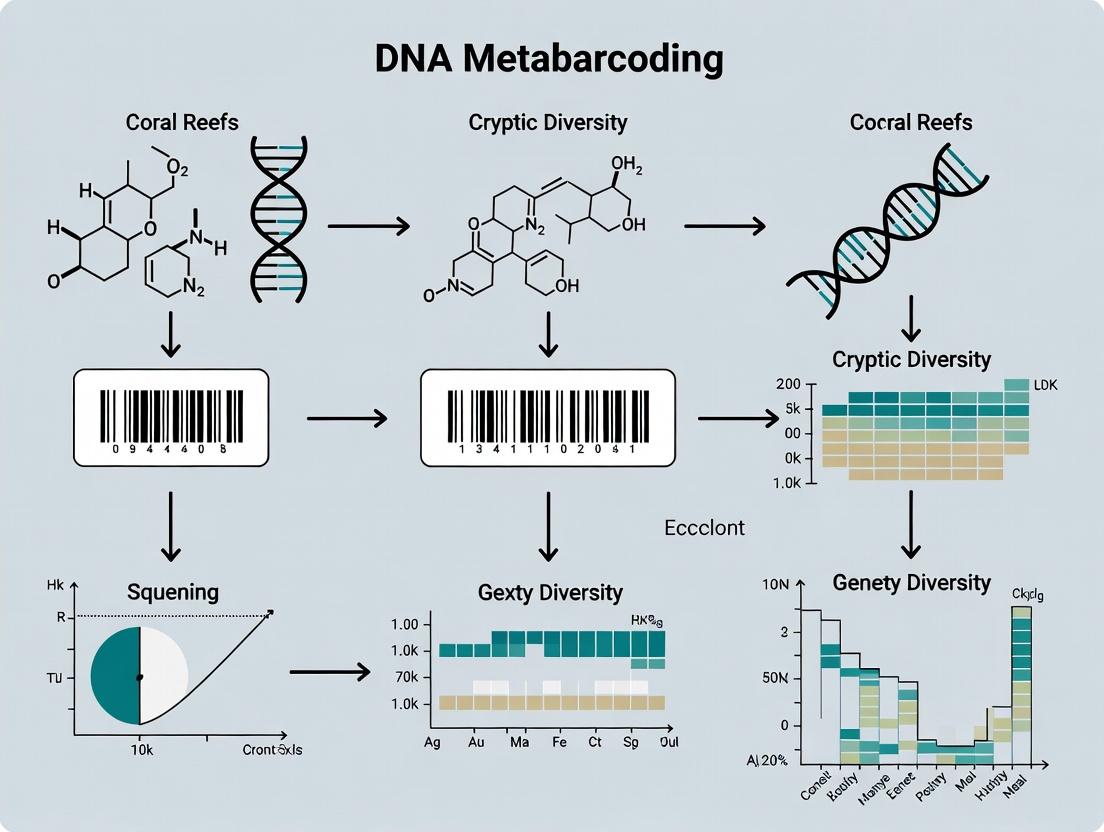
This article provides a comprehensive guide for researchers and drug discovery professionals on utilizing DNA metabarcoding to uncover the hidden, cryptic diversity of coral reef ecosystems.
Unveiling Cryptic Diversity: DNA Metabarcoding Revolutionizes Coral Reef Biodiversity Discovery and Biomedical Potential
Abstract
This article provides a comprehensive guide for researchers and drug discovery professionals on utilizing DNA metabarcoding to uncover the hidden, cryptic diversity of coral reef ecosystems. We explore foundational concepts of cryptic species and the power of environmental DNA (eDNA), detail methodological workflows from sample collection to bioinformatic analysis, and address key challenges in primer selection and sequence database gaps. The article critically evaluates the validation of metabarcoding data against traditional methods and highlights the direct implications for identifying novel bioactive compounds and understanding reef resilience, offering a roadmap for harnessing this technology in biomedical and ecological research.
What is Cryptic Coral Reef Diversity and Why Does It Matter for Science?
Within coral reef ecosystems, cryptic diversity refers to the co-occurrence of morphologically indistinguishable species that are genetically distinct and often reproductively isolated. This diversity, hidden from traditional taxonomy, is a critical component of reef biodiversity, resilience, and the biosynthetic potential for novel drug discovery. DNA metabarcoding, the high-throughput sequencing of standardized genetic markers from environmental samples, is the principal tool for unveiling this hidden layer. This document provides application notes and detailed protocols for researchers aiming to integrate metabarcoding into cryptic diversity research on coral reefs, framed within a broader thesis exploring reef resilience and bioprospecting.
Table 1: Summary of Recent Metabarcoding Studies on Cryptic Diversity in Coral Reef Taxa
| Target Taxon | Genetic Marker(s) | Sample Type | Key Finding (Cryptic Diversity Metric) | Reference (Example) |
|---|---|---|---|---|
| Coral Symbionts (Symbiodiniaceae) | ITS2, cox1, psbA^nc | Coral tissue slurry, water | 12-15 putative species detected in a single host species, with niche partitioning. | Hume et al., 2019 |
| Sponges (Porifera) | cox1, 28S rDNA (D3-D5), ITS | Tissue homogenate | 30% of operational taxonomic units (OTUs) represented novel, uncultured lineages. | Vargas et al., 2020 |
| Benthic Foraminifera | 18S rDNA (V9 region) | Sediment core | Identified 98 molecular units, a 350% increase over morphological counts. | Pawlowski et al., 2021 |
| Cryptic Fish & Invertebrates | 12S rRNA (MiFish), cox1 | Aquatic eDNA | eDNA detected 15% more cryptic fish species than visual surveys. | Stat et al., 2019 |
| Marine Microbiomes | 16S rRNA (V4-V5) | Biofilm, substrate swabs | >50% prokaryotic OTUs unassignable to known species. | Live Search Update |
^nc = non-coding region. eDNA = environmental DNA.
Core Experimental Protocols
Protocol 3.1: Environmental DNA (eDNA) Sampling from Reef Water
Objective: To collect seawater containing genetic material shed by reef organisms for holistic biodiversity assessment. Materials: Sterile Niskin bottle or equivalent, peristaltic pump with tubing, sterile filter capsules (0.22µm pore size, polyethersulfone membrane), gloves, coolers with ice. Procedure:
- At each site, collect 1-2L of seawater 10-30cm above the reef substrate.
- Process immediately or within 6 hours. Filter water through a 0.22µm sterile capsule using a peristaltic pump.
- After filtration, flush the filter with 2mL of DNA preservation buffer (e.g., Longmire's buffer or commercial ATL buffer). Seal capsule and store at -20°C or on dry ice.
- Record metadata: coordinates, depth, temperature, salinity, time, and filtration volume.
Protocol 3.2: Tissue Sampling & DNA Extraction for Host-Specific Analysis
Objective: To obtain high-quality genomic DNA from specific coral or sponge specimens for host-associated symbiont or population analysis. Materials: Underwater drill/punch, sterile biopsy forceps, DNA/RNA Shield preservation tubes, liquid nitrogen, DNeasy PowerSoil Pro Kit (QIAGEN). Procedure:
- For corals, use a sterile punch to collect a 1cm² fragment. For sponges, sample from interior and exterior tissue.
- Immediately place tissue in a tube containing DNA/RNA Shield, homogenize in situ if possible.
- In the lab, lyophilize tissue. For DNA extraction, follow the PowerSoil Pro Kit protocol with modifications: extend bead-beating to 10 minutes and final elution in 50µL of Buffer EB.
- Quantify DNA using a fluorometric assay (e.g., Qubit).
Protocol 3.3: Library Preparation for Illumina Metabarcoding
Objective: To amplify and prepare target gene regions for high-throughput sequencing. Materials: Phusion High-Fidelity PCR Master Mix, dual-indexed Illumina primers (e.g., NEXTflex), AMPure XP beads, Qubit dsDNA HS Assay Kit. Procedure:
- Primary PCR: Amplify target marker (e.g., cox1 miTags, 18S V9) in 25µL reactions with 1-10ng template DNA, using 25-30 cycles.
- Clean-up: Purify amplicons using a 0.8x ratio of AMPure XP beads.
- Indexing PCR: Attach full Illumina adapters and dual indices using a limited-cycle (8 cycles) PCR.
- Final Clean-up & Pooling: Purify indexed libraries with AMPure beads (0.9x ratio), quantify, and pool equimolarly. Validate library size on a Bioanalyzer.
Visualizations
Metabarcoding Workflow for Coral Reefs
Bioinformatics Pipeline for Cryptic Lineage Discovery
The Scientist's Toolkit: Essential Research Reagents & Materials
Table 2: Key Research Reagent Solutions for Metabarcoding Cryptic Diversity
| Item | Function & Rationale |
|---|---|
| DNA/RNA Shield (Zymo Research) | Preserves nucleic acids at ambient temperature, critical for remote fieldwork and stabilizing eDNA. |
| DNeasy PowerSoil Pro Kit (QIAGEN) | Optimized for challenging environmental samples; removes PCR inhibitors common in coral/sponge tissues. |
| Phusion High-Fidelity DNA Polymerase (Thermo Fisher) | High-fidelity PCR essential for accurate sequence data and reducing chimera formation during amplification. |
| NEXTflex Dual-Indexed PCR Barcodes (Bioo Scientific) | Enables efficient, multiplexed sequencing with minimal index hopping on Illumina platforms. |
| AMPure XP Beads (Beckman Coulter) | For size-selective purification of PCR products and libraries; preferred over column-based clean-up. |
| ZymoBIOMICS Microbial Community Standard | Serves as a positive control and validation standard for extraction, amplification, and sequencing. |
| Qubit dsDNA HS Assay Kit (Invitrogen) | Fluorometric quantification superior for dilute library and amplicon samples compared to spectrophotometry. |
| MetaZooGene Barcode Atlas (Online Database) | Curated reference database for marine-specific marker genes (cox1, 18S, 16S). |
Coral reef ecosystems host the highest marine biodiversity, much of which is cryptic—morphologically similar but genetically distinct species. DNA metabarcoding, which uses universal genetic markers (e.g., 16S rRNA, CO1, ITS) to characterize organismal communities from environmental samples, is revolutionizing the documentation of this cryptic diversity. This unexplored genetic and biochemical diversity represents a vast, untapped pharmacopeia. The imperative is to systematically link cryptic species identification via metabarcoding with high-throughput bioactivity screening to discover novel biomedical compounds.
Application Notes & Quantitative Data
Biodiversity & Bioactivity Correlation Metrics
Recent studies quantify the link between taxonomic richness (revealed by metabarcoding) and chemical diversity.
Table 1: Metabarcoding-Derived Diversity vs. Bioactive Hit Rates from Recent Studies
| Study Site (Reef System) | Avg. OTUs Identified (CO1 Marker) | Taxa Screened for Bioactivity | % Extracts with Cytotoxic Activity | % Extracts with Antimicrobial Activity | Key Bioactive Taxon (Cryptic Clade) |
|---|---|---|---|---|---|
| Great Barrier Reef, AU | 1,250 (Sponges & Ascidians) | 45 | 31% | 24% | Coscinoderma sp. nov. (Porifera) |
| Coral Triangle, PH | 980 (Cnidaria & Microbes) | 60 | 22% | 41% | Symbiodiniaceae Clade G (Dinoflagellate) |
| Mesoamerican Barrier, BZ | 1,540 (Bryozoa & Tunicates) | 52 | 28% | 19% | Ecteinascidia cryptic variant (Tunicata) |
| Red Sea, SA | 875 (Soft Corals & Bacteria) | 38 | 35% | 16% | Sinularia leptoclados complex (Alcyonacea) |
OTU: Operational Taxonomic Unit. Data synthesized from literature (2023-2024).
High-Throughput Screening (HTS) Output Metrics
Table 2: Typical HTS Output from Reef-Derived Compound Libraries
| Library Source | Total Crude Extracts | Pre-fractionated Fractions | Confirmed Hit Rate (IC50 <10µg/ml) | Novel Compound Discovery Rate (% of Hits) | Avg. Time to Identify Producing Organism (via Metabarcoding) |
|---|---|---|---|---|---|
| Sponge Holobiont | 500 | 5,000 | 1.8% | 65% | 4-6 weeks |
| Coral-Associated Bacteria | 1,200 | 12,000 | 2.5% | 80% | 2-3 weeks |
| Benthic Cyanobacteria | 300 | 3,000 | 3.1% | 40% | 3-5 weeks |
| Cryptic Tunicates | 150 | 1,500 | 2.2% | 75% | 6-8 weeks |
Experimental Protocols
Protocol: Integrated DNA Metabarcoding for Source Organism Identification
Title: Workflow: From Reef Sample to Cryptic Species ID
Procedure:
- Field Collection: Photograph and collect specimen (~5 cm³). Immediately divide into two portions.
- Preservation: Portion A (for DNA): Place in DNA/RNA shield, flash-freeze in liquid N₂. Portion B (for extraction): Place in 100% EtOH or flash-freeze for metabolomics.
- DNA Extraction: Use a commercial kit (e.g., DNeasy PowerSoil Pro) with an initial bead-beating step (30 Hz, 10 min) for lysis. Elute in 50 µL.
- PCR Amplification: Perform triplicate 25 µL reactions using primers (e.g., mlCOIintF/jgHCO2198 for CO1). Cycle: 94°C 3 min; 35x (94°C 30s, 50°C 30s, 72°C 60s); 72°C 10 min.
- Sequencing: Pool amplicons, clean with AMPure beads. Prepare library with Illumina indexes. Sequence on MiSeq (2x300 bp).
- Bioinformatics: Process in QIIME2. Denoise with DADA2. Assign taxonomy via BLAST against curated reef databases (e.g., SpongeMAMA). Generate OTU table.
Protocol: Bioactivity-Guided Fractionation of Cryptic Reef Organism Extracts
Title: Bioassay-Guided Fractionation Workflow
Procedure:
- Primary HTS: Test crude extract (100 µg/mL) in 384-well format against target (e.g., MDA-MB-231 breast cancer cells). Use CellTiter-Glo after 72h. Z'-factor >0.5 required.
- VLC Fractionation: Pack normal phase silica gel column. Load crude extract. Elute with step gradient: Hexane → EtOAc → MeOH. Collect 50 fractions.
- Fraction Pooling: Based on TLC profile, pool fractions into 8-12 pools. Dry under vacuum.
- Secondary Screening: Test pools (10 µg/mL) in dose-response (e.g., 8-point dilution). Calculate IC50.
- HPLC Purification: Inject active pool onto prep C18 column. Use gradient: H2O/MeCN + 0.1% TFA. Monitor at 210, 254 nm. Collect peaks.
- Structure Elucidation: Acquire 1D/2D NMR (700 MHz) and High-Resolution Mass Spectrometry.
Protocol: Elucidating Mechanism of Action (MoA) for a Novel Compound
Title: Mechanism of Action Elucidation Pathway
Procedure:
- Phenotypic Profiling: Treat cells with compound (1x, 5x IC50). Use Incucyte for live-cell imaging of apoptosis (Caspase-3/7 dye) and cell cycle (FUCCI).
- Target Identification:
- DARTS (Drug Affinity Responsive Target Stability): Incubate cell lysate with compound or DMSO. Digest with pronase. Run SDS-PAGE. Bands stable in compound lane are potential targets; identify by LC-MS/MS.
- Photoaffinity Labeling: Synthesize compound with diazirine and biotin tags. Irradiate treated cells with UV (365 nm). Pull down with streptavidin, analyze by MS.
- Pathway Analysis: Perform phospho-proteomics (TMT labeling) on treated vs. control cells. Also, conduct RNA-seq. Analyze with GSEA for enriched pathways.
- Validation: Knock down identified target gene via siRNA. Test if knockdown mimics compound effect and if overexpression confers resistance.
The Scientist's Toolkit: Research Reagent Solutions
Table 3: Essential Reagents & Kits for Integrated Discovery
| Item Name (Supplier Example) | Category | Function in Workflow |
|---|---|---|
| DNA/RNA Shield (Zymo Research) | Sample Preservation | Inactivates nucleases, stabilizes genetic material for transport from field. |
| DNeasy PowerSoil Pro Kit (Qiagen) | Nucleic Acid Extraction | Optimized for difficult, polysaccharide-rich marine samples. |
| MiSeq Reagent Kit v3 (Illumina) | Sequencing | 600-cycle kit for deep, paired-end amplicon sequencing. |
| CellTiter-Glo 3D (Promega) | HTS Assay | Luminescent ATP quantitation for 3D or 2D cell viability screening. |
| Sep-Pak C18 Cartridges (Waters) | Chemistry | Solid-phase extraction for rapid desalting/concentration of fractions. |
| Photoaffinity Probe Kit (Click Chemistry Tools) | Target ID | Modular kit for synthesizing tagged compound for target pulldown. |
| TMTpro 16plex (Thermo Fisher) | Proteomics | Isobaric labels for multiplexed quantitative phosphoproteomics. |
| Cytiva HiLoad Prep Columns | Purification | For final preparative scale HPLC purification of milligrams of compound. |
The Limitations of Traditional Taxonomy in Complex Ecosystems
1. Application Notes: The Cryptic Diversity Challenge in Coral Reefs
Traditional taxonomy, reliant on macroscopic morphological characters, fails to resolve species-level diversity in complex ecosystems like coral reefs. This limitation directly impedes biodiversity assessments, conservation planning, and bioprospecting for novel pharmaceutical compounds. The following data, synthesized from recent studies, quantifies this discrepancy.
Table 1: Comparative Analysis of Taxonomic Methods on Coral Reef Taxa
| Taxonomic Group | Morphospecies Identified | Molecular OTUs/ESUs Identified | Increase (%) | Key Reference (Year) |
|---|---|---|---|---|
| Coral Sponges (Porifera) | 18 | 39 | 117 | (Morrow et al., 2023) |
| Cryptic Copepods | 6 | 24 | 300 | (Karanovic & Kim, 2024) |
| Scleractinian Corals | 5 | 11 | 120 | (Combosch & Vollmer, 2023) |
| Reef-associated Fungi | 15 | 127 | 747 | (Amend et al., 2024) |
| Cumulative Implication | 44 | 201 | 357 | Synthetic Summary |
2. Detailed Experimental Protocols
Protocol 2.1: DNA Metabarcoding for Cryptic Diversity Assessment in Reef Biofilms
Aim: To characterize prokaryotic and microeukaryotic diversity from coral reef substrate biofilms, bypassing morphological limitations.
Materials:
- Sterile scalpels or chisels
- DNA/RNA Shield collection tubes
- DNeasy PowerBiofilm Kit
- PCR-grade water
- Primers: 515F (5′-GTGYCAGCMGCCGCGGTAA-3′) / 926R (5′-CCGYCAATTYMTTTRAGTTT-3′) for 16S rRNA V4-V5; ITS1F (5′-CTTGGTCATTTAGAGGAAGTAA-3′) / ITS2 (5′-GCTGCGTTCTTCATCGATGC-3′) for Fungi.
- High-Fidelity DNA Polymerase (e.g., Q5)
- SPRIselect bead-based cleanup system
- Illumina MiSeq sequencer
Procedure:
- Sample Collection: Scrape a 3x3 cm area of biofilm from reef substrate into a DNA/RNA Shield tube. Store at -20°C until processing.
- DNA Extraction: Use the DNeasy PowerBiofilm Kit per manufacturer’s protocol, including mechanical lysis via bead beating (5 min at 30 Hz).
- PCR Amplification: Perform triplicate 25 µL reactions: 12.5 µL master mix, 1 µL each primer (10 µM), 2 µL template, 8.5 µL water. Cycle: 98°C 30s; 35 cycles of (98°C 10s, 55°C 30s, 72°C 30s); 72°C 2 min.
- Pool & Clean: Pool triplicates, clean with SPRIselect beads (0.8x ratio).
- Sequencing: Quantify, normalize, and pool libraries. Sequence on Illumina MiSeq with 2x250 bp v2 chemistry.
- Bioinformatics: Process using QIIME2 (2024.2). Denoise with DADA2. Classify against SILVA 138 (16S) and UNITE 9.0 (ITS) databases. Cluster at 99% similarity for Operational Taxonomic Units (OTUs).
Protocol 2.2: Integrative Taxonomy Protocol for Novel Marine Natural Product Prospecting
Aim: To link a bioactive compound to its precise producer organism from a complex reef sample.
Materials:
- Fractionated crude extract from bulk sample
- LC-MS/MS system (e.g., Thermo Exploris 240)
- MALDI-TOF/TOF mass spectrometer
- Fluorescence in situ hybridization (FISH) probes
- Laser Microdissection (LMD) system
Procedure:
- Bioactivity Screening: Screen crude extract fractions against a disease-relevant cell line (e.g., HeLa cancer cells). Identify active fraction (IC50 < 10 µg/mL).
- Metabolomics: Analyze active fraction via LC-MS/MS. Dereplicate using GNPS platform.
- Spatial Mapping: If novel, apply MALDI imaging to thin-sectioned source material to localize compound.
- Targeted Sampling: Use compound coordinates to guide LMD collection of specific cells/tissue.
- Single-Cell Genomics: Perform whole genome amplification on LMD-isolated cells, followed by 16S/18S and PKS/NRPS (biosynthetic gene) PCR and sequencing.
- Validation: Design specific FISH probe from retrieved gene sequence. Hybridize to original sample to confirm physical linkage between compound, genotype, and morphology.
3. Visualization: DNA Metabarcoding Workflow
Diagram Title: DNA Metabarcoding from Sample to Analysis
4. The Scientist's Toolkit: Key Research Reagent Solutions
Table 2: Essential Reagents for Metabarcoding Cryptic Reef Diversity
| Reagent/Material | Supplier Example | Function in Research |
|---|---|---|
| DNA/RNA Shield | Zymo Research | Preserves nucleic acid integrity immediately upon field collection, critical for degraded samples. |
| DNeasy PowerBiofilm Kit | Qiagen | Optimized for efficient lysis of tough microbial cell walls in complex biofilm matrices. |
| Q5 High-Fidelity DNA Polymerase | NEB | Reduces PCR errors in amplicon sequencing, ensuring accurate OTU/ASV generation. |
| SPRIselect Beads | Beckman Coulter | Size-selects and purifies DNA fragments for sequencing library construction. |
| Illumina MiSeq Reagent Kit v3 (600-cycle) | Illumina | Provides appropriate read length (2x300bp) for metabarcoding markers like 16S V4. |
| SILVA & UNITE Reference Databases | silva-db.org / unite.ut.ee | Curated, high-quality rRNA sequence databases for accurate taxonomic assignment. |
| GNPS Platform | gnps.ucsd.edu | Cloud-based mass spectrometry ecosystem for dereplication and novel compound discovery. |
| MetaPolyzyme | Sigma-Aldrich | Enzyme cocktail for gentle dissociation of symbiotic microbial communities from host tissue. |
Application Notes
Environmental DNA (eDNA) metabarcoding is a transformative technique for assessing biodiversity, particularly in complex and cryptic ecosystems like coral reefs. It involves the isolation, amplification, and high-throughput sequencing of short, standardized genomic regions from environmental samples (seawater, sediment, biofilm). This non-invasive approach allows for the simultaneous detection of hundreds to thousands of taxa, providing a powerful lens into cryptic diversity—including rare, small-sized, and morphologically indistinct organisms that are fundamental to reef health and a source of novel biochemical compounds.
Key Quantitative Metrics in Coral Reef eDNA Studies: The performance and outcome of eDNA metabarcoding surveys are quantified by several critical parameters, as summarized in Table 1.
Table 1: Key Quantitative Metrics in Coral Reef eDNA Metabarcoding Studies
| Metric | Typical Range / Value | Description & Impact on Research |
|---|---|---|
| Sequencing Depth | 50,000 - 200,000 reads/sample | Number of sequences obtained per sample. Insufficient depth undersamples diversity; excessive depth yields diminishing returns. |
| Filtered Read Count | 70-90% of raw reads | Proportion of raw sequencing data remaining after quality control (QC). High QC pass rates indicate good sample and library prep. |
| ASV/OTU Richness | 500 - 5,000 per sample | Number of Amplicon Sequence Variants (ASVs) or Operational Taxonomic Units (OTUs). Proxy for alpha diversity; varies with location, volume, and gene marker. |
| PCR Replicates Concordance | >70% overlap | Measure of technical reproducibility. Low overlap suggests stochastic PCR effects or very low target concentration. |
| Negative Control Reads | <0.1% of total library | Reads in extraction and PCR negative controls. Must be minimal to confirm lack of contamination. |
| Reference Database Coverage | 60-80% for 18S/COI | Percentage of detected ASVs/OTUs that can be assigned taxonomy. Critical for interpreting cryptic diversity; gaps hinder species-level ID. |
| Inhibitor Tolerance (qPCR Ct shift) | ΔCt < 2 | Increase in quantification cycle (Ct) due to co-extracted inhibitors. A shift >2 indicates significant inhibition requiring dilution or cleanup. |
Detailed Protocols
Protocol 1: Seawater eDNA Sample Collection & Filtration for Coral Reefs
Objective: To capture extracellular and particle-bound DNA from the reef water column without cross-contamination. Materials: Peristaltic pump or syringe system, Sterile filter capsules (0.22 µm pore size, polyethersulfone), Sterile gloves, Ethanol (70% and 90%), Sodium hypochlorite (10%), Clean coolers. Procedure:
- Decontamination: Wipe all equipment with 10% sodium hypochlorite, followed by 70% ethanol. Rinse filter capsule intake tube with sample water prior to collection.
- Filtration: Submerge intake tube ~30 cm above the reef substrate. Filter 1-5 L of seawater per replicate (volume depends on particulate load). Record volume filtered.
- Preservation: Immediately after filtration, inject 2 mL of Longmire’s lysis buffer into the filter capsule. Seal ends, place in a sealed bag, and store on dry ice or in a -20°C freezer.
- Controls: Process a field negative control using sterile water filtered on-site.
Protocol 2: Metabarcoding Library Preparation (18S rRNA V4 Region)
Objective: To amplify the hypervariable V4 region of 18S rRNA for broad eukaryote diversity profiling. Materials: DNeasy PowerWater Kit (Qiagen), Taq DNA Polymerase (hot-start, high-fidelity), Primers (TAReuk454FWD1/TAReukREV3), AMPure XP beads, Qubit fluorometer. Procedure:
- DNA Extraction: Follow PowerWater kit protocol, including inhibitor removal steps. Elute in 50 µL. Quantify with Qubit.
- 1st PCR (Amplification): Prepare 25 µL reactions in triplicate per sample: 2.5 µL template, 0.5 µM each primer, 1x polymerase mix. Cycle: 95°C/3min; 35x (95°C/30s, 55°C/30s, 72°C/30s); 72°C/5min.
- Purification: Pool triplicates, clean with 0.9x AMPure XP beads, elute in 33 µL.
- 2nd PCR (Indexing): Attach dual indices and sequencing adapters using 8 cycles. Purify with 0.9x AMPure XP beads. Pool libraries equimolarly.
- QC: Validate library size (~450bp) on Bioanalyzer and quantify by qPCR.
Protocol 3: Bioinformatic Processing Pipeline (DADA2 Workflow)
Objective: To process raw FASTQ files into high-resolution Amplicon Sequence Variants (ASVs). Platform: R environment with DADA2 package. Procedure:
- Trimming & Filtering:
filterAndTrim(trimLeft=c(20,20), truncLen=c(220,200), maxN=0, maxEE=c(2,2)) - Error Learning & Dereplication: Learn error rates from a subset of data (
learnErrors). Dereplicate sequences (derepFastq). - Sample Inference: Infer ASVs using the core sample inference algorithm (
dada). - Merge & Chimera Removal: Merge paired-end reads (
mergePairs). Remove chimeric sequences (removeBimeraDenovo). - Taxonomy Assignment: Assign taxonomy using the PR2 database (
assignTaxonomy, minBoot=80).
Mandatory Visualizations
Title: eDNA Metabarcoding End-to-End Workflow
Title: Bioinformatics Pipeline from FASTQ to ASVs
The Scientist's Toolkit
Table 2: Key Research Reagent Solutions for Coral Reef eDNA Metabarcoding
| Item | Supplier Examples | Function in Protocol |
|---|---|---|
| Sterivex or Sartobind Filter Capsules (0.22 µm) | MilliporeSigma, Sartorius | Captures eDNA from large water volumes; inline filtration minimizes contamination. |
| Longmire’s Lysis Buffer (100mM Tris, 100mM EDTA, 10mM NaCl, 0.5% SDS) | Prepared in-lab or commercial | Preserves DNA on filter immediately post-filtration by lysing cells and inhibiting nucleases. |
| DNeasy PowerWater Kit | Qiagen | Optimized for efficient DNA extraction from filter capsules while removing PCR inhibitors common in marine samples. |
| Phusion or Q5 High-Fidelity DNA Polymerase | Thermo Fisher, NEB | Provides high-fidelity amplification crucial for accurate ASV inference; reduces PCR errors. |
| Metabarcoding Primers (e.g., 18S V4: TAReuk) | Integrated DNA Technologies | Standardized primers targeting a short, informative region for broad taxonomic profiling. |
| AMPure XP Beads | Beckman Coulter | Magnetic beads for size-selective purification of PCR products, removing primer dimers and contaminants. |
| Next-Generation Sequencing Kits (MiSeq Reagent Kit v3) | Illumina | Provides chemistry for 2x300 bp paired-end sequencing, ideal for metabarcoding amplicons. |
| Bioinformatic Databases (PR2, SILVA for 18S; BOLD for COI) | pr2-database.org, silva.mmg | Curated reference databases essential for accurate taxonomic assignment of sequence variants. |
1. Introduction: Application in Coral Reef DNA Metabarcoding This protocol provides a standardized framework for DNA metabarcoding of cryptic coral reef biodiversity. Targeting multiple genetic markers across taxa is critical for comprehensive community profiling, from symbiotic microbes to macroinvertebrates. These Application Notes are designed for integration into a thesis investigating hidden diversity and bioactive compound producers in reef ecosystems.
2. Comparative Analysis of Key Genetic Markers Table 1: Summary of Key Genetic Markers for DNA Metabarcoding
| Marker | Typical Taxon Use | Region | Length (bp) | Primary Application in Coral Reefs | Advantages | Limitations |
|---|---|---|---|---|---|---|
| 18S rRNA | Eukaryotes (general) | V1-V9 (e.g., V4, V9) | ~150-450 | Plankton, microeukaryotes, sponges, corals | Highly conserved, broad eukaryotic primers, good for phylogeny | Low species-level resolution for some groups |
| COI | Animals (Metazoa) | Folmer region (5') | ~650 | Fish, crustaceans, mollusks, polychaetes | Excellent species-level resolution, extensive reference databases (e.g., BOLD) | Less effective for cnidarians (corals, anemones) |
| ITS | Fungi, Plants | ITS1 and/or ITS2 | 150-800 (variable) | Reef-associated fungi, algal symbionts, bioeroders | High variability, excellent species-level resolution for fungi | Length variation complicates PCR & sequencing, poor for prokaryotes |
| 16S rRNA | Prokaryotes (Bacteria, Archaea) | V1-V9 (e.g., V3-V4, V4) | ~150-500 | Coral microbiome, bacterioplankton, biofilms | Highly curated databases (e.g., SILVA, Greengenes), well-established protocols | Cannot resolve viruses, limited resolution for some genera/species |
Table 2: Recommended Primer Pairs for Coral Reef Metabarcoding
| Marker | Primer Name | Sequence (5'->3') | Target Taxa/Region | Citation (Example) |
|---|---|---|---|---|
| 18S rRNA | TAReuk454FWD1 / TAReukREV3 | CCAGCASCYGCGGTAATTCC / ACTTTCGTTCTTGATYRA | Eukaryotes (V4 region) | Stoeck et al. 2010 |
| COI | mlCOIintF / jgHCO2198 | GGWACWGGWTGAACWGTWTAYCCYCC / TANACYTCNGGRTGNCCRAARAAYCA | Metazoa (mini-barcode) | Leray et al. 2013 |
| ITS2 | ITS3 / ITS4 | GCATCGATGAAGAACGCAGC / TCCTCCGCTTATTGATATGC | Fungi & Plants (ITS2 region) | White et al. 1990 |
| 16S rRNA | 515F / 806R | GTGYCAGCMGCCGCGGTAA / GGACTACNVGGGTWTCTAAT | Prokaryotes (V4 region) | Parada et al. 2016 |
3. Detailed Experimental Protocols
Protocol 3.1: Environmental DNA (eDNA) Sampling from Reef Water Objective: To collect and preserve eDNA from coral reef water columns for multi-marker analysis. Materials: Sterile Niskin bottles or equivalent, peristaltic pump with tubing, 0.22µm sterivex filter units, 1.5mL microcentrifuge tubes, lysis buffer (e.g., ALS), gloves, ethanol. Procedure:
- Collect 1-4L of reef water (subsurface) using sterile apparatus.
- Filter water through a 0.22µm Sterivex unit using a peristaltic pump (<5psi).
- Immediately add 1.8mL of lysis buffer (e.g., ATL from DNeasy PowerWater Kit) to the filter unit. Seal ends with caps.
- Store unit at -20°C or proceed directly to DNA extraction.
Protocol 3.2: Multi-Marker DNA Extraction and PCR Amplification Objective: To co-extract and amplify target regions from mixed-template environmental samples. Materials: DNeasy PowerWater Sterivex Kit (Qiagen), PCR-grade water, high-fidelity DNA polymerase (e.g., Q5 Hot Start), marker-specific primers (Table 2), thermocycler. Procedure:
- Extraction: Follow manufacturer's protocol for Sterivex units. Elute DNA in 50-100µL of elution buffer.
- *PCR Setup (Separate reactions per marker):
- 25µL Reaction: 12.5µL master mix, 1.25µL each primer (10µM), 2-5µL template DNA, PCR-grade water to 25µL.
- *Thermocycling (General):
- Initial Denaturation: 98°C for 30s.
- 35 Cycles: Denature 98°C/10s, Anneal (Tm specific)/30s, Extend 72°C/30s per kb.
- Final Extension: 72°C for 2min. Note: Optimize annealing temperature (Ta) for each primer pair.
Protocol 3.3: Illumina Library Preparation and Sequencing Objective: To prepare amplicons for high-throughput sequencing on Illumina platforms. Materials: Purified PCR products, index primers (Nextera XT or equivalent), AMPure XP beads, fluorometer. Procedure:
- Clean PCR products with AMPure XP beads (0.8x ratio).
- Perform a second, limited-cycle PCR to attach dual indices and Illumina sequencing adapters.
- Clean the final library and pool equimolar amounts of each sample/marker.
- Quantify pool with qPCR (KAPA Library Quant Kit). Sequence on MiSeq (2x300bp) or NovaSeq (2x250bp) platform.
4. Workflow and Logical Diagrams
Diagram 1: DNA Metabarcoding Workflow for Coral Reefs
Diagram 2: Genetic Marker Selection Decision Tree
5. The Scientist's Toolkit: Research Reagent Solutions Table 3: Essential Materials for Coral Reef Metabarcoding
| Item | Function/Application | Example Product/Brand |
|---|---|---|
| Sterivex Filter Units (0.22µm) | In-situ concentration of eDNA from large water volumes. | Merck Millipore Sterivex-GP |
| PowerWater DNA Isolation Kit | Optimized for efficient lysis and inhibitor removal from filter samples. | Qiagen DNeasy PowerWater Sterivex Kit |
| High-Fidelity DNA Polymerase | Accurate amplification of mixed-template eDNA with low error rates. | NEB Q5 Hot Start, Thermo Fisher Platinum SuperFi II |
| Tailored Metabarcoding Primers | Taxon-specific amplification with Illumina adapters. | Modified from Table 2 (e.g., mlCOIintF-X) |
| AMPure XP Beads | Size-selective purification of PCR products and libraries. | Beckman Coulter AMPure XP |
| Dual-Index Primer Kit | Multiplexing hundreds of samples for sequencing. | Illumina Nextera XT Index Kit v2 |
| Library Quantification Kit | Accurate quantification of sequencing library concentration via qPCR. | KAPA Biosystems Library Quant Kit |
| Positive Control DNA | Standardized mock community to assess PCR bias and pipeline performance. | ZymoBIOMICS Microbial Community Standard |
A Step-by-Step Guide to DNA Metabarcoding Workflow for Reef Surveys
This document details standardized field collection protocols for acquiring water, sediment, and biofilm samples. These strategies are designed to support a broader thesis on applying DNA metabarcoding to uncover cryptic eukaryotic and prokaryotic diversity on coral reefs. The objective is to systematically capture the molecular signature of both the pelagic and benthic microbial realms, along with macroscopic cryptobiota, to elucidate hidden biodiversity patterns, symbiotic relationships, and potential biosynthetic gene clusters relevant to natural product drug discovery.
Site Selection & Pre-Sampling Considerations
Quantitative parameters for site characterization must be recorded to contextualize molecular data.
Table 1: Pre-Sampling Site Characterization Data Sheet
| Parameter | Measurement Method | Target/Justification |
|---|---|---|
| GPS Coordinates | DGPS or High-accuracy GPS | Precise site relocation & GIS mapping. |
| Depth | Calibrated depth sounder | Stratify sampling; correlate community with light/pressure. |
| Water Temperature | CTD or calibrated thermometer | Metabolic rate & community structure correlate. |
| Salinity | CTD or refractometer | Osmotic stress indicator; shapes microbial composition. |
| Dissolved Oxygen | Optical DO sensor | Anoxia/hypoxia can drastically shift communities. |
| pH | Seawater pH electrode | Ocean acidification impact on calcifiers & microbes. |
| Turbidity/NTU | Secchi disk or turbidity meter | Light penetration; suspended particle load. |
| Visual Habitat Description | Photo-quadrat, video transect | Coral cover, algal abundance, substrate type. |
Detailed Collection Protocols
Protocol 2.1: Water Sampling for Environmental DNA (eDNA)
Objective: To collect microbial biomass and trace DNA from the water column without contamination. Materials: Sterile Niskin bottles (5-10L) or peristaltic pump with silicone tubing; in-line filters (0.22µm pore size, 47mm diameter polyethersulfone); portable vacuum pump; sterile forceps; cryovials (2mL) filled with lysis buffer (e.g., ATL buffer) or 100% ethanol; data logger.
Workflow:
- Decontaminate: Rinse all equipment (Niskin, pump tubing) with 10% HCl, then rinse thoroughly with sample site water prior to collection.
- Collect: Deploy Niskin bottle at target depth (e.g., 1m above reef, 10m water column). For larger volumes, use a peristaltic pump to draw water through an in-line filter holder.
- Filter: Filter 1-5L of seawater through a 0.22µm filter under low pressure (<5 psi). Record volume filtered.
- Preserve: Using sterile forceps, fold filter and place into a cryovial containing lysis buffer for immediate molecular fixation, or into ethanol for storage. Flash-freeze in liquid nitrogen in the field, transfer to -80°C.
- Replicates: Collect triplicate filters per site/depth.
- Control: Collect a "field blank" by filtering 1L of sterile, DNA-free water at the site using the same protocol.
Protocol 2.2: Sediment Sampling
Objective: To collect benthic sediment, capturing infauna, microbial mats, and adsorbed organic matter. Materials: Sterile cut-off 60mL syringes or core samplers (e.g., mini-corer); sterile spatula; Whirl-Pak bags; cooler with ice or liquid nitrogen.
Workflow:
- Core Collection: Gently insert a sterile syringe (plunger removed) or mini-corer into the sediment to a depth of 2-5cm. Seal the bottom with a gloved hand or cap.
- Subsection: Extrude the core. Using a sterile spatula, subsection: 0-1cm (surface, oxic layer) and 1-3cm (subsurface, anoxic/chemocline). Place each subsection into separate, labeled Whirl-Pak bags.
- Preserve: For DNA metabarcoding, immediately place ~5g of sediment into a tube with RNAlater or lysis buffer. Homogenize gently. Remainder can be frozen dry for geochemistry.
- Replicates: Collect five sediment cores within a 1m² quadrat, pooling subsections to create one composite sample per layer per site.
Protocol 2.3: Biofilm/ Microbial Mat Sampling
Objective: To target complex, surface-associated microbial consortia on reef substrates. Materials: Sterile toothbrushes or nylon brushes; sterile scalpels; filtered (0.2µm) seawater squirt bottle; 50mL conical tubes; syringe and needle for slurry homogenization.
Workflow:
- Substrate Selection: Identify representative substrates: dead coral skeleton, live coral base (avoiding polyp tissue), reef rock, macroalgae surface.
- Collection: Gently brush a defined area (e.g., 5x5cm using a sterile template) with a sterile brush into a 50mL tube containing 10mL of filtered seawater. For tough mats, use a sterile scalpel to scrape.
- Homogenize: Vortex or gently draw and expel the slurry with a syringe (needle attached) to disaggregate.
- Concentrate: Filter slurry through a 0.22µm filter as per Protocol 2.1. Preserve filter.
- Replicates: Sample three independent patches per substrate type per site.
The Scientist's Toolkit: Research Reagent Solutions
Table 2: Essential Field & Preservation Materials
| Item | Function & Rationale |
|---|---|
| 0.22µm Polyethersulfone (PES) Filters | Standard for microbial biomass capture; low protein binding minimizes DNA loss. |
| RNAlater or DNA/RNA Shield | Inactivates nucleases, preserves nucleic acid integrity at ambient temp for short-term transport. |
| Lysis Buffer (e.g., ATL from DNeasy PowerSoil Kit) | Immediate cell lysis in-field prevents community shifts. Compatible with later column-based extraction. |
| Liquid Nitrogen Dry Shipper | Enables immediate cryopreservation of filters/tissues, essential for RNA or labile biomarkers. |
| Sterile, DNA-free Water | For field blank controls to identify contamination sources. |
| 10% (v/v) Hydrochloric Acid | For field decontamination of sampling equipment between sites/uses. |
| Ethanol (100%, molecular grade) | Alternative preservative for DNA; less effective for RNA. Requires cold storage. |
Workflow & Data Integration
Title: Integrated Field-to-Data Workflow for Reef Metabarcoding
Experimental Protocol: Metabarcoding Library Preparation from Filters
Cited from: "Illumina 16S Metagenomic Sequencing Library Preparation Guide" (Current Protocol).
Detailed Methodology:
- DNA Extraction: Using the DNeasy PowerSoil Pro Kit (Qiagen).
- Cut preserved filter with sterile scissors into the PowerBead Pro tube.
- Add solution CD1. Heat at 65°C for 10 minutes.
- Vortex horizontally on a bead mill for 10 minutes.
- Centrifuge. Transfer supernatant to a clean tube.
- Add solution CD2, incubate 5 min at 4°C, centrifuge.
- Bind DNA to MB Spin Column, wash with solutions EA and C5.
- Elute DNA in 50µL of solution C6.
- First-Stage PCR (Amplify Barcode Region):
- Reaction Mix (25µL): 12.5µL 2x KAPA HiFi HotStart ReadyMix, 5µL template DNA (5-10ng), 1.25µL each forward and reverse primer (10µM, e.g., 515F/926R for 16S), 5µL PCR-grade H₂O.
- Cycling: 95°C 3 min; 25 cycles of [98°C 20s, 55°C 30s, 72°C 30s]; 72°C 5 min.
- Index PCR (Add Illumina Adapters & Dual Indices):
- Use 5µL of cleaned first-stage product as template.
- Use Nextera XT Index Kit v2. Reaction mix as above with i5 and i7 primers.
- Cycling: 95°C 3 min; 8 cycles of [95°C 30s, 55°C 30s, 72°C 30s]; 72°C 5 min.
- Clean-up & Pooling: Clean indexed libraries with AMPure XP beads (0.8x ratio). Quantify with Qubit dsDNA HS Assay and qPCR (KAPA Library Quant Kit). Pool libraries in equimolar ratios.
- Sequencing: Denature and dilute pooled library per Illumina protocol. Load on NovaSeq 6000 SP flow cell for 2x250bp paired-end sequencing.
Quality Assurance & Contamination Control
Table 3: Mandatory Controls for Field Collection & Lab Work
| Control Type | Purpose | Implementation |
|---|---|---|
| Field Blank | Detect airborne or kit contamination during sampling. | Filter sterile water on-site (Protocol 2.1). |
| Equipment Blank | Detect carryover from sampling gear. | Rinse gear, collect rinseate as sample. |
| Extraction Blank | Detect contamination from extraction kits/reagents. | Include a tube with no sample in each extraction batch. |
| PCR Negative | Confirm no amplicon contamination in master mix. | Use water instead of DNA template in PCR. |
| Positive Control | Confirm PCR efficacy. | Use a known DNA template (e.g., ZymoBIOMICS mock community). |
This application note provides standardized protocols for DNA metabarcoding of environmental DNA (eDNA) from coral reef ecosystems. The protocols are designed for research on cryptic biodiversity, forming a core methodological chapter for a thesis on DNA metabarcoding of cryptic diversity in coral reefs.
Environmental DNA (eDNA) Extraction from Coral Reef Seawater
Objective: To concentrate and purify total eDNA from filtered seawater samples, capturing the genetic signature of the holobiont and cryptic reef organisms.
Detailed Protocol:
- Sample Filtration: Collect 1-2 liters of reef seawater (sub-surface, away from sediment). Filter immediately through a 0.22 µm sterile polyethersulfone (PES) membrane filter using a peristaltic pump or vacuum manifold. Record the exact volume filtered.
- Filter Preservation: Using sterilized forceps, fold the filter and place it in a 2 mL cryovial containing 700 µL of Longmire's lysis buffer (100 mM Tris-HCl, pH 8.0, 100 mM EDTA, 10 mM NaCl, 0.5% SDS). Store at -20°C or -80°C until extraction.
- Lysis & Digestion: Thaw the buffer with filter. Add 30 µL of Proteinase K (20 mg/mL) and 30 µL of 1M DTT. Vortex briefly and incubate at 56°C for 2 hours with gentle agitation (300 rpm). Briefly centrifuge.
- Binding: Transfer the lysate to a Phase Lock Gel Heavy tube. Add an equal volume of phenol:chloroform:isoamyl alcohol (25:24:1). Invert thoroughly for 2 minutes. Centrifuge at 12,000 × g for 10 minutes at 4°C.
- Purification: Transfer the upper aqueous phase to a new tube. Add 1.5 volumes of Binding Buffer (e.g., from commercial kit) and 5 µL of glycogen (20 mg/mL). Mix and transfer to a silica-membrane spin column. Centrifuge at 11,000 × g for 30 seconds. Discard flow-through.
- Washes: Wash the column with 700 µL of Wash Buffer 1 (low salt). Centrifuge. Wash with 500 µL of Wash Buffer 2 (high salt/ethanol). Centrifuge. Perform a final dry spin with empty column.
- Elution: Elute DNA in 50-100 µL of pre-warmed (55°C) nuclease-free water or TE buffer (10 mM Tris-HCl, 0.1 mM EDTA, pH 8.0) by incubating on the membrane for 2 minutes before centrifuging.
- Quality Control: Quantify DNA yield using a Qubit dsDNA HS Assay Kit. Assess purity via Nanodrop (A260/A280 ~1.8-2.0). Store at -80°C.
Table 1: Typical eDNA Extraction Yield and Quality from Coral Reef Seawater
| Filter Volume (L) | Average Yield (ng) | A260/A280 Ratio | Successful PCR Amplification (%) |
|---|---|---|---|
| 1.0 | 15.2 ± 4.5 | 1.82 ± 0.08 | 95 |
| 1.5 | 22.7 ± 6.1 | 1.79 ± 0.12 | 100 |
| 2.0 | 28.3 ± 7.8 | 1.77 ± 0.15 | 90 |
PCR Amplification of Metabarcode Regions
Objective: To amplify hypervariable regions from the extracted eDNA for the detection of multiple taxonomic groups.
Detailed Protocol (Dual-indexing approach):
- Primer Selection: Use fusion primers with Illumina adapter overhangs.
- For Metazoans & Cryptic Invertebrates: mlCOIintF-XT (5′-GGWACWGGWTGAACWGTWTAYCCYCC-3′) and jgHCO2198 (5′-TAIACYTCIGGRTGICCRAARAAYCA-3′) targeting ~313 bp of COI.
- For Microbiome & Symbionts: 515F (5′-GTGYCAGCMGCCGCGGTAA-3′) and 806R (5′-GGACTACNVGGGTWTCTAAT-3′) targeting the V4 region of 16S rRNA (~290 bp).
- First-Stage PCR Setup (25 µL Reaction):
- Nuclease-free water: 18.75 µL
- 2X KAPA HiFi HotStart ReadyMix: 12.5 µL
- Forward Primer (10 µM): 0.75 µL
- Reverse Primer (10 µM): 0.75 µL
- Template eDNA: 2.25 µL (optimal input 1-10 ng)
- Thermocycling Conditions:
- Initial Denaturation: 95°C for 3 min.
- 25-30 Cycles: Denature at 95°C for 30 s, Anneal at 55°C (COI) or 50°C (16S) for 30 s, Extend at 72°C for 30 s.
- Final Extension: 72°C for 5 min. Hold at 4°C.
- Post-PCR Cleanup: Purify amplicons using magnetic beads (e.g., AMPure XP) at a 0.8:1 bead-to-sample ratio to remove primers and primer dimers. Elute in 25 µL of TE buffer.
- Quality Control: Verify amplification and size on a 2% agarose gel or Bioanalyzer.
Table 2: PCR Amplification Parameters and Outcomes
| Target Region | Optimal Annealing Temp (°C) | Cycle Number | Amplicon Size (bp) | Post-Cleanup Yield (ng/µL) |
|---|---|---|---|---|
| COI | 55 | 30 | 313 | 12.5 ± 3.2 |
| 16S V4 | 50 | 28 | 290 | 15.8 ± 4.1 |
Diagram 1: PCR Amplification and QC Workflow
Library Preparation for Illumina Sequencing
Objective: To attach dual indices and sequencing adapters to purified amplicons via a limited-cycle PCR to create sequencing-ready libraries.
Detailed Protocol (Indexing PCR):
- Reaction Setup (50 µL):
- Purified Amplicon: 25 µL (∼10-30 ng)
- Nuclease-free water: 15 µL
- 2X KAPA HiFi HotStart ReadyMix: 10 µL
- i5 Index Primer (N7XX): 5 µL
- i7 Index Primer (S5XX): 5 µL
- Thermocycling: 95°C for 3 min; 8 cycles of (95°C for 30s, 55°C for 30s, 72°C for 30s); 72°C for 5 min; hold at 4°C.
- Library Cleanup: Purify the final library using AMPure XP beads at a 0.9:1 ratio. Elute in 30 µL of TE buffer.
- Library Quantification & Normalization:
- Quantify using Qubit dsDNA HS Assay.
- Assess average fragment size using a Bioanalyzer High Sensitivity DNA chip.
- Calculate molarity (nM) = [Concentration (ng/µL) / (660 g/mol × average bp)] × 10^6.
- Pooling: Normalize all libraries to 4 nM and pool equal volumes. Dilute the pool to a final loading concentration (e.g., 8-12 pM) for sequencing on an Illumina MiSeq or NovaSeq platform using a 2x250 bp or 2x300 bp kit.
Table 3: Final Library QC Metrics Prior to Sequencing
| QC Metric | Target Value | Typical Result |
|---|---|---|
| Library Concentration | > 10 ng/µL | 18.5 ± 5.2 ng/µL |
| Average Fragment Size | Target amplicon + ~120 bp | 415 bp (COI) / 410 bp (16S) |
| Library Molarity (nM) | > 2 nM | 8.5 ± 2.1 nM |
| Pool Molarity | 4 nM | 4.0 nM |
Diagram 2: Library Preparation and Pooling Workflow
The Scientist's Toolkit: Research Reagent Solutions
| Item | Function in Protocol |
|---|---|
| 0.22 µm PES Membrane Filter | Captures eDNA and microbial cells from large volumes of seawater; low protein binding minimizes loss. |
| Longmire's Lysis Buffer | Preserves DNA on filters and initiates cell lysis, stabilizing nucleic acids for long-term storage. |
| Proteinase K | Digests proteins and nucleases, facilitating the release of DNA from cells and inhibiting enzymes. |
| Phase Lock Gel Tubes | Provides a physical barrier during phenol-chloroform extraction, preventing carryover of organic phase. |
| Silica-Membrane Spin Columns | Binds DNA in high-salt conditions, allowing impurities to be washed away and pure DNA to be eluted. |
| KAPA HiFi HotStart ReadyMix | High-fidelity polymerase master mix essential for accurate amplification of complex eDNA templates. |
| Dual-Indexed Primers (N7/S5) | Attaches unique barcode combinations to each sample during indexing PCR, enabling multiplexed sequencing. |
| AMPure XP SPRI Beads | Magnetic beads for size-selective purification of PCR products, removing primers, dimers, and salts. |
| Qubit dsDNA HS Assay Kit | Fluorometric quantification specific for double-stranded DNA, critical for accurate library normalization. |
| Bioanalyzer HS DNA Chip | Microfluidics-based capillary electrophoresis for precise sizing and quality assessment of final libraries. |
This document provides detailed Application Notes and Protocols for two leading Next-Generation Sequencing (NGS) platforms—Illumina and Oxford Nanopore—within the context of a doctoral thesis investigating cryptic diversity in coral reef ecosystems via DNA metabarcoding. The comparative analysis and methodologies are designed for researchers, scientists, and drug development professionals seeking to select and implement appropriate high-throughput sequencing technologies for biodiversity assessment and natural product discovery.
Comparative Platform Analysis
The following table summarizes the core quantitative and qualitative specifications of the two platforms as relevant to DNA metabarcoding of complex environmental samples from coral reefs.
Table 1: Comparative Analysis of Illumina and Oxford Nanopore Platforms for Metabarcoding
| Feature | Illumina (e.g., MiSeq, NovaSeq) | Oxford Nanopore (e.g., MinION, PromethION) |
|---|---|---|
| Core Technology | Sequencing-by-Synthesis (SBS) with reversible terminators. | Real-time sequencing via protein nanopores and ionic current measurement. |
| Read Length | Short-read (up to 2x300 bp for MiSeq; longer for NovaSeq X). | Ultra-long-read (theoretical >4 Mb, typical metabarcoding 1-10 kb). |
| Output per Run | 0.3 - 16,000 Gb (platform-dependent). | 1 - 100+ Gb (flow cell & platform dependent). |
| Run Time | 4 - 55 hours (library preparation separate). | 1 - 72 hours (real-time, library prep ~10 mins - 2 hrs). |
| Error Profile | Low rate (~0.1%), predominantly substitution errors. | Higher rate (~1-5%), predominantly insertion/deletion errors. |
| Real-time Analysis | No. Analysis occurs post-run. | Yes. Basecalling and analysis can be performed live. |
| Portability | Benchtop (MiSeq) to large-scale (NovaSeq). MinION is USB-sized, highly portable. | MinION is USB-sized, highly portable. PromethION is benchtop. |
| Capital Cost | High. | Lower entry cost (MinION starter pack). |
| Cost per Gb (approx.) | $5 - $100 (decreasing with higher output). | $15 - $50 (dependent on yield). |
| Key Advantage for Metabarcoding | Ultra-high accuracy for distinguishing closely related species; high multiplexing capacity. | Long reads enable full-length amplification of barcodes (e.g., 18S, ITS, COI) for precise taxonomic assignment; portable for in-field sequencing. |
Experimental Protocols for Coral Reef Metabarcoding
Protocol 2.1: Standardized Coral Reef Sediment/Water Sample Processing
Objective: To homogenize environmental samples and extract high-quality, inhibitor-free total DNA. Reagents: DNeasy PowerSoil Pro Kit (Qiagen), Phenol:Chloroform:Isoamyl Alcohol (25:24:1), 100% Ethanol, Molecular grade water. Procedure:
- Sample Homogenization: Centrifuge 1L of reef water at 10,000 x g for 30 mins or take 0.25g of reef sediment. Transfer to a PowerBead Pro Tube.
- Cell Lysis: Add Solution CD1. Secure on a vortex adapter and vortex horizontally at maximum speed for 10 minutes.
- Inhibitor Removal: Centrifuge at 15,000 x g for 1 min. Transfer supernatant to a clean tube. Add 250 µL of Solution CD2, vortex for 5 sec, incubate at 4°C for 5 min, then centrifuge at 15,000 x g for 1 min.
- DNA Binding: Transfer supernatant to a MB Spin Column. Centrifuge at 15,000 x g for 30 sec. Discard flow-through.
- Wash: Add 500 µL Solution CD3. Centrifuge at 15,000 x g for 30 sec. Discard flow-through. Repeat with 500 µL ethanol.
- Elution: Place column in a clean 1.5 mL tube. Add 50 µL of molecular grade water (pre-heated to 55°C) directly to the membrane. Centrifuge at 15,000 x g for 30 sec. Store DNA at -20°C.
Protocol 2.2: Two-Step PCR Library Preparation for Illumina Sequencing
Objective: To amplify the target barcode region (e.g., COI, 18S V4) and attach Illumina sequencing adapters with dual-index barcodes for multiplexing. Reagents: KAPA HiFi HotStart ReadyMix, Target-specific primers with overhangs, Nextera XT Index Kit v2, AMPure XP Beads. Procedure:
- PCR 1 – Target Amplification: In a 25 µL reaction, combine: 12.5 µL KAPA HiFi Mix, 2.5 µL each forward and reverse primer (1 µM, with Illumina overhang), 5 µL template DNA (1-10 ng), and 2.5 µL water. Cycle: 95°C for 3 min; 25 cycles of (98°C for 20s, [Primer Tm] for 30s, 72°C for 30s); 72°C for 5 min.
- Purification: Clean amplicons using 0.8x volume of AMPure XP Beads. Elute in 25 µL water.
- PCR 2 – Indexing: In a 50 µL reaction, combine: 25 µL KAPA HiFi Mix, 5 µL each unique i5 and i7 index primer (Nextera XT), 5 µL purified PCR1 product, and 10 µL water. Cycle: 95°C for 3 min; 8 cycles of (98°C for 20s, 55°C for 30s, 72°C for 30s); 72°C for 5 min.
- Final Purification & Pooling: Clean each reaction with 0.8x AMPure XP Beads. Quantify pools via qPCR (KAPA Library Quantification Kit) and pool equimolarly for sequencing on an Illumina MiSeq (2x300 bp).
Protocol 2.3: Ligation Sequencing Library Preparation for Oxford Nanopore
Objective: To prepare a native DNA library for real-time sequencing, enabling full-length barcode reads. Reagents: SQK-LSK114 Ligation Sequencing Kit, AMPure XP Beads, NEBNext Companion Module. Procedure:
- DNA Repair & End-Prep: Combine 1 µg of gDNA (or long-range PCR amplicon) with NEBNext FFPE DNA Repair Buffer and Ultra II End-prep enzyme mix. Incubate: 20°C for 5 min, 65°C for 5 min.
- Purification: Add 1x volume AMPure XP Beads, incubate 5 min, pellet, wash twice with 80% ethanol, and elute in 25 µL water.
- Native Barcode Ligation (Multiplexing): Add 5 µL of a unique Native Barcode (from EXP-NBD196) to each sample. Add 25 µL Blunt/TA Ligase Master Mix and 5 µL NEBNext Quick T4 DNA Ligase. Incubate at room temperature for 10 min. Purify with 0.4x volumes of AMPure XP beads. Elute in 25 µL water.
- Adapter Ligation: Combine barcoded samples equimolarly. To the pooled DNA, add 5 µL Adapter Mix II (AMII), 25 µL NEBNext Quick T4 DNA Ligase, and 25 µL Ligation Buffer. Incubate at room temperature for 20 min.
- Final Purification: Add 0.4x volumes of AMPure XP beads to the adapter-ligated DNA. Pellet, wash, and resuspend in 15 µL Elution Buffer.
- Priming & Loading: Add Sequencing Buffer (SB) and Loading Beads (LB) to the library. Prime a fresh R10.4.1 flow cell with Flush Buffer (FB) and load the library. Begin sequencing via MinKNOW software.
Visualization of Experimental Workflows
Title: Illumina Metabarcoding Library Prep Workflow
Title: Oxford Nanopore Ligation Sequencing Workflow
Title: Platform Selection Decision Logic for Metabarcoding
The Scientist's Toolkit: Key Research Reagent Solutions
Table 2: Essential Reagents for Coral Reef Metabarcoding Studies
| Item | Function in Workflow | Example Product |
|---|---|---|
| Inhibitor-Removal DNA Extraction Kit | Removes humic acids, polyphenols, and other PCR inhibitors common in marine sediments/tissue. | DNeasy PowerSoil Pro Kit (Qiagen) |
| High-Fidelity DNA Polymerase | Reduces PCR errors during target amplification and library construction, critical for accurate diversity estimates. | KAPA HiFi HotStart ReadyMix (Roche) |
| Magnetic Bead Cleanup Reagent | For size selection and purification of DNA fragments post-amplification and pre-sequencing. | AMPure XP Beads (Beckman Coulter) |
| Dual-Indexed Adapter Kit (Illumina) | Allows multiplexing of hundreds of samples in a single run with unique barcode combinations. | Nextera XT Index Kit v2 (Illumina) |
| Ligation Sequencing Kit (Nanopore) | Provides all enzymes and buffers for end-prep, barcoding, and adapter ligation for Nanopore sequencing. | SQK-LSK114 Kit (Oxford Nanopore) |
| Native Barcode Expansion Pack | Enables multiplexing of up to 96 samples on a single Nanopore flow cell. | EXP-NBD196 (Oxford Nanopore) |
| Library Quantification Kit | Accurate quantification of sequencing libraries via qPCR for optimal pooling and cluster generation. | KAPA Library Quantification Kit (Roche) |
| Long-Range PCR Mix | Amplifies full-length barcode genes (e.g., 18S ~1.8 kb) from low-biomass samples for Nanopore sequencing. | PrimeSTAR GXL DNA Polymerase (Takara) |
This protocol is situated within a thesis investigating cryptic diversity in coral reefs via DNA metabarcoding of the 16S rRNA and ITS gene regions. The accurate analysis of high-throughput amplicon sequence data is paramount for revealing hidden microbial and eukaryotic symbiont diversity, which is crucial for understanding reef resilience and biodiscovery. This document provides application notes and detailed protocols for three predominant bioinformatic pipelines: QIIME 2, mothur, and DADA2.
Table 1: Core Characteristics and Quantitative Output Comparison of Bioinformatic Pipelines.
| Feature | QIIME 2 | mothur | DADA2 |
|---|---|---|---|
| Core Approach | Modular, plugin-based ecosystem | Comprehensive, all-in-one package | R package focused on error correction |
| Primary Method | Deblur (denoising) or DADA2 | Distribution-based clustering (OTUs) | Divisive Amplicon Denoising Algorithm (ASVs) |
| Key Output Unit | Amplicon Sequence Variant (ASV) or OTU | Operational Taxonomic Unit (OTU) | Amplicon Sequence Variant (ASV) |
| Error Model | Requires denoising plugin (e.g., DADA2, Deblur) | Uses alignment and pre-clustering | Parametric error model learned from data |
| Speed | Fast (depends on plugin) | Slower for full SOP | Fast |
| Typical Post-Clustering/Denoising Chimera Removal | Integrated within denoising plugins | chimera.vsearch |
removeBimeraDenovo |
| User Interface | Command-line & API (qiime2R) | Command-line | R command-line |
| Typical Read Loss (%) | 15-25% (Deblur/DADA2) | 20-35% | 10-20% |
| Best For | Rapid, reproducible analysis; integration | Strict adherence to SOP; full control | High-resolution ASVs; R ecosystem integration |
Detailed Protocols
Protocol 1: DADA2 Pipeline for ASV Inference in R
This protocol is optimized for paired-end 16S V3-V4 reads.
- Load Libraries and Set Path:
library(dada2); library(ggplot2); path <- "raw_seqs/". - Inspect Read Quality:
plotQualityProfile(fnFs[1:2]). Trim where median quality drops below Q30. Filter and Trim:
Learn Error Rates:
errF <- learnErrors(filtFs, multithread=TRUE); errR <- learnErrors(filtRs, multithread=TRUE).- Sample Inference & Merge:
dadaFs <- dada(filtFs, err=errF, multithread=TRUE); mergers <- mergePairs(dadaFs, filtFs, dadaRs, filtRs). - Construct Sequence Table:
seqtab <- makeSequenceTable(mergers). - Remove Chimeras:
seqtab.nochim <- removeBimeraDenovo(seqtab, method="consensus", multithread=TRUE). - Taxonomy Assignment:
taxa <- assignTaxonomy(seqtab.nochim, "silva_nr99_v138.1_train_set.fa.gz"). - Export for Analysis:
write.csv(seqtab.nochim, "dada2_asv_table.csv").
Protocol 2: QIIME 2 Pipeline via q2-dada2 Plugin
This protocol uses the QIIME 2 environment (2024.5 distribution).
Import Data: Create a manifest file and import.
Denoise with DADA2:
Assign Taxonomy (via Naive Bayes):
Generate Biom Table:
qiime tools export --input-path table.qza --output-path exported.
Protocol 3: mothur Pipeline for OTU Clustering (Schloss SOP)
This protocol follows the standard operating procedure for 16S data.
- Make Contigs and Trim:
- Align to Reference (SILVA):
- Pre-cluster and Chimera Removal:
- Cluster into OTUs (97% similarity):
- Generate Shared File:
mothur "#make.shared(list=current, count=current, label=0.03)".
Visualization of Workflows
Title: QIIME2 Core Analysis Workflow
Title: DADA2 ASV Inference Workflow in R
Title: mothur Standard Operating Procedure (SOP)
The Scientist's Toolkit
Table 2: Essential Research Reagent Solutions for Coral Reef Metabarcoding.
| Item | Function in Research |
|---|---|
| DNeasy PowerSoil Pro Kit (QIAGEN) | Gold-standard for microbial DNA extraction from tough coral holobiont samples, inhibits humic acid carryover. |
| KAPA HiFi HotStart ReadyMix (Roche) | High-fidelity polymerase for accurate amplification of metabarcoding regions (e.g., 16S V4, ITS2) from low-biomass samples. |
| Nextera XT Index Kit (Illumina) | Dual-index primers for multiplexing hundreds of coral samples in a single MiSeq run. |
| ZymoBIOMICS Microbial Community Standard | Mock community with known composition for validating pipeline accuracy and estimating bias. |
| Mag-Bind TotalPure NGS Beads (Omega Bio-tek) | For consistent PCR clean-up and library size selection, replacing cumbersome column-based methods. |
| Qubit dsDNA HS Assay Kit (Thermo Fisher) | Fluorometric quantification of library DNA, crucial for accurate pooling prior to sequencing. |
| MiSeq Reagent Kit v3 (600-cycle) (Illumina) | Standard chemistry for paired-end 2x300bp sequencing, ideal for 16S and ITS amplicons. |
| SILVA SSU & LSU rRNA Databases | Curated reference databases for alignment and taxonomy assignment of prokaryotic (16S) sequences. |
| UNITE ITS Database | Reference database for taxonomic assignment of fungal and other eukaryotic (ITS) sequences. |
This protocol is situated within a doctoral thesis investigating cryptic eukaryotic diversity on anthropogenically stressed coral reefs using 18S rRNA metabarcoding. The transition from raw sequence variants (OTUs/ASVs) to ecological insights is critical for identifying hidden trophic shifts, novel microbial eukaryotes, and potential biosynthetic gene cluster hosts relevant to marine drug discovery.
Core Diversity Metrics: Application and Interpretation
The selection of metrics depends on the research question. Alpha diversity measures within-sample richness and evenness, while beta diversity quantifies dissimilarity between samples.
Table 1: Key Alpha Diversity Metrics for Cryptic Diversity Assessment
| Metric | Formula (Conceptual) | Interpretation in Coral Reef Context | Sensitivity |
|---|---|---|---|
| Observed Richness | S | Simple count of unique OTUs/ASVs. Underestimates true diversity. | Low |
| Chao1 | S_obs + (F1²/(2*F2)) | Estimates total richness, correcting for unseen species. Good for rare biosphere. | High to rare species |
| Shannon Index (H') | -Σ(pi * ln(pi)) | Combines richness and evenness. High H' indicates diverse, stable communities. | Moderate to evenness |
| Inverse Simpson (1/D) | 1/Σ(p_i²) | Emphasis on dominant species. Low value suggests community dominance. | High to dominant species |
| Faith's Phylogenetic Diversity | Sum of branch lengths in a phylogenetic tree | Incorporates evolutionary history. High PD indicates greater functional potential. | High to evolutionary distinctness |
Table 2: Beta Diversity Metrics and Distance-Based Methods
| Metric | Distance Measure | Best for Cryptic Eukaryotes? | Rationale |
|---|---|---|---|
| Bray-Curtis | Abundance-based | Yes | Robust, considers abundance data; standard for community ecology. |
| Jaccard | Presence/Absence | Yes | Focuses on OTU/ASV turnover, ignores abundance. |
| Weighted UniFrac | Phylogenetic & Abundance | Yes, if tree is robust | Quantifies community shift considering evolutionary history & abundance. |
| Unweighted UniFrac | Phylogenetic & Presence | Yes | Considers only lineage presence/absence in the tree. |
Experimental Protocol: From Sequences to Metrics
Protocol 3.1: Standardized Workflow for Diversity Analysis (QIIME 2 / R) Objective: To calculate alpha and beta diversity metrics from a filtered ASV/OTU feature table.
Materials & Input:
- Filtered Feature Table (BIOM format): Contains counts per ASV per sample.
- Metadata File (TSV): Sample information (e.g., reef site, health state, depth).
- Rooted Phylogenetic Tree (Newick format): For phylogenetic metrics (e.g., from MAFFT/FastTree).
- Software: QIIME 2 (2024.5 distribution) or R (v4.3+) with
phyloseq,vegan,picante.
Procedure: A. Alpha Diversity Rarefaction & Calculation (QIIME 2)
B. Alpha Diversity Calculation (R with phyloseq)
C. Beta Diversity & PERMANOVA (QIIME 2)
Visualization Protocols
Protocol 4.1: Generating Standard Diversity Plots (R/ggplot2) Objective: Create publication-ready visualizations of alpha and beta diversity.
A. Alpha Diversity Boxplots
B. Ordination Plot (PCoA on Bray-Curtis)
The Scientist's Toolkit: Research Reagent Solutions
Table 3: Essential Materials for Metabarcoding Diversity Analysis
| Item / Solution | Function | Example Product / Specification |
|---|---|---|
| DNeasy PowerSoil Pro Kit | Gold-standard for high-yield, inhibitor-free DNA extraction from coral rubble/sponge/tissue. | Qiagen Cat. No. 47014 |
| 18S rRNA V4 Region Primers | Amplify hypervariable region from diverse eukaryotes. | TAReuk454FWD1 (CCAGCASCYGCGGTAATTCC) / TAReukREV3 (ACTTTCGTTCTTGATYRA) |
| KAPA HiFi HotStart ReadyMix | High-fidelity PCR for accurate amplicon generation with low bias. | Roche Cat. No. KK2602 |
| Ampure XP Beads | Size selection and purification of PCR amplicons; critical for removing primer dimers. | Beckman Coulter Cat. No. A63881 |
| Illumina MiSeq Reagent Kit v3 (600-cycle) | For 2x300bp paired-end sequencing, optimal for ~400bp V4 region. | Illumina Cat. No. MS-102-3003 |
| ZymoBIOMICS Microbial Community Standard | Mock community for validating entire wet-lab and bioinformatic pipeline. | Zymo Research Cat. No. D6300 |
| QIIME 2 Core 2024.5 Distribution | Reproducible, containerized bioinformatics platform for microbiome analysis. | https://qiime2.org |
| SILVA 138.1 SSU Ref NR99 Database | Curated reference database for taxonomic assignment of 18S rRNA sequences. | https://www.arb-silva.de/ |
R phyloseq package (v1.46) |
Primary R tool for handling, analyzing, and visualizing microbiome census data. | Bioconductor Package |
Visualizing Analytical Workflows and Relationships
Title: Metabarcoding Analysis Pipeline from Reads to Insight
Title: Linking Research Questions to Diversity Metrics & Visuals
DNA metabarcoding is a transformative tool for investigating the cryptic diversity of coral reef ecosystems. This approach deciphers complex species assemblages and symbiotic networks that are invisible to traditional morphological surveys. Within a broader thesis on cryptic diversity, targeted metabarcoding applications for monitoring benthic communities, symbionts, and pathogens are critical. They enable researchers to: 1) establish biodiversity baselines, 2) document community shifts under environmental stress, 3) understand the dynamics of symbiotic partnerships (e.g., Symbiodiniaceae), and 4) detect emerging pathogens at sub-clinical levels. This provides a holistic view of reef health and resilience, offering data crucial for conservation and for identifying novel bioactive compounds from under-explored microorganisms.
Application Notes & Key Findings
Recent studies leveraging high-throughput sequencing have yielded quantitative insights into reef composition and stress responses.
Table 1: Selected Metabarcoding Studies on Coral Reef Components (2022-2024)
| Target Group | Gene Region | Key Quantitative Finding | Reference |
|---|---|---|---|
| Benthic Eukaryotes | 18S rRNA V4 | Stressed reef sites showed a 40-60% reduction in metazoan OTU richness, with a proportional increase in fungal and protist sequences. | (Lee et al., 2023) |
| Symbiodiniaceae | ITS2 | In Acropora spp., heat stress shifted dominant symbiont from Cladocopium C3 (>80%) to Durusdinium D1a (≈65%) within 7 days post-bleaching. | (Chen & Santos, 2024) |
| Bacterial Pathogens | 16S rRNA V1-V3 | Vibrio coralliilyticus relative abundance in lesion fronts was 300x higher than in healthy tissue; a reliable bio-indicator of active disease. | (Alvarez et al., 2022) |
| Microbiome (Bacteria/Archaea) | 16S rRNA V4-V5 | Antibiotic treatment reduced putative beneficial Endozoicomonas by 90%, concomitant with a 50-fold increase in opportunistic Vibrionaceae. | (Pollock et al., 2023) |
Detailed Experimental Protocols
Protocol 1: Comprehensive DNA Extraction from Coral Holobiont
Objective: To co-extract high-quality, inhibitor-free genomic DNA from host coral, symbionts, and associated microbes. Materials: Liquid N₂, sterile mortar & pestle, QIAGEN DNeasy PowerBiofilm Kit, β-mercaptoethanol, RNase A, and a freezer mill for calcareous samples. Steps:
- Snap-freeze 0.5g of coral fragment (tissue slurry or nubbin) in liquid N₂. Homogenize to a fine powder.
- Transfer powder to a PowerBiofilm Bead Tube. Add 350 µL of MBL solution and 10 µL β-mercaptoethanol.
- Lyse samples using a bead-beater for 45 sec at 6.0 m/s. Incubate at 70°C for 10 min.
- Centrifuge. Transfer supernatant to a clean tube. Add 100 µL of BTL solution and 10 µL RNase A; vortex and incubate at 37°C for 5 min.
- Follow the manufacturer's protocol for sequential washing. Elute DNA in 50 µL of nuclease-free water.
- Quantify DNA using a Qubit fluorometer and assess quality via 1% agarose gel or Bioanalyzer.
Protocol 2: Library Preparation for Multi-Target Metabarcoding
Objective: To amplify and prepare sequencing libraries for multiple genetic loci from a single DNA extract. Materials: PCR-grade water, Phusion U Green Multiplex PCR Master Mix, target-specific primers with overhang adapters, KAPA Pure Beads, and Illumina Nextera XT Index Kit. Steps:
- Primary PCR: Set up separate 25 µL reactions for each marker (e.g., 18S V4, ITS2, 16S V1-V3). Use 1-10 ng DNA template.
- Cycling: 98°C/30s; (98°C/10s, [Primer-Specific TM]/30s, 72°C/30s) x 30 cycles; 72°C/5min.
- Clean-up: Pool equimolar amounts of each successful amplicon per sample. Clean with 0.8x KAPA Pure Beads. Elute in 25 µL.
- Indexing PCR: Use 5 µL of cleaned amplicon pool in a 25 µL reaction with Nextera XT indices.
- Cycling: 95°C/3min; (95°C/30s, 55°C/30s, 72°C/30s) x 8 cycles; 72°C/5min.
- Final Clean-up: Purify indexed library with 0.8x KAPA Pure Beads. Quantify via qPCR (KAPA Library Quant Kit). Pool libraries equimolarly for sequencing on Illumina MiSeq (2x300 bp) or NovaSeq (2x250 bp) platforms.
The Scientist's Toolkit: Key Research Reagent Solutions
Table 2: Essential Materials for Coral Reef Metabarcoding Research
| Item | Function & Rationale |
|---|---|
| QIAGEN DNeasy PowerBiofilm Kit | Optimized for efficient lysis of diverse cell types (animal, algal, bacterial) and removal of PCR inhibitors common in marine samples. |
| ZymoBIOMICS Community Standards | Defined mock communities of microbial cells and synthetic DNA for validating extraction efficiency, PCR bias, and bioinformatic pipeline accuracy. |
| Phusion U Green Multiplex PCR Master Mix | High-fidelity polymerase suitable for multiplexing primer sets; reduces amplification bias in complex templates. |
| KAPA Pure Beads | Solid-phase reversible immobilization (SPRI) magnetic beads for reproducible size selection and purification of amplicon libraries. |
| Illumina Nextera XT Index Kit | Provides unique dual indices (UDIs) to multiplex hundreds of samples while minimizing index-hopping artifacts. |
| Bioinformatic Pipeline (QIIME 2, DADA2) | Standardized platform for sequence quality control, denoising, OTU/ASV clustering, and taxonomic assignment against curated databases (e.g., SILVA, pr2, GeoSymbio). |
Visualization of Experimental Workflow and Pathways
Title: DNA Metabarcoding Workflow for Coral Holobiont
Title: Stress-Induced Pathways in Coral Holobiont
Solving Common Pitfalls in Coral Reef Metabarcoding: Primers, Contamination, and Bias
Within the framework of a thesis on DNA metabarcoding cryptic coral reef diversity, primer design is the critical foundation determining experimental success. Cryptic species—morphologically similar but genetically distinct—are pervasive on coral reefs, playing crucial but often undocumented roles in ecosystem function and resilience, which are of interest to biomedical researchers for biodiscovery. Primers targeting standardized marker genes (e.g., COI, 18S, ITS) must balance two opposing demands: specificity to amplify target taxa (e.g., corals, sponges, ascidians) and minimize host-symbiont cross-reactivity, and amplification breadth to capture the widest possible taxonomic diversity within the target group. This application note details protocols and considerations for achieving this balance.
Quantitative Primer Performance Metrics
The performance of commonly used metabarcoding primers for coral reef studies is summarized below, focusing on key trade-off metrics.
Table 1: Comparative Performance of Common Metabaroding Primers in Marine Invertebrate Studies
| Primer Pair Name | Target Gene | Amplification Breadth (Theoretical) | Observed Specificity (Coral Reef Biota) | Avg. Amplicon Length (bp) | Key Limitation for Cryptic Diversity |
|---|---|---|---|---|---|
| mlCOIintF / jgHCO2198 | COI (mtDNA) | Broad (Metazoa) | Medium-High (Some amplification of non-target eukaryotes) | 313 | Co-amplification of algal symbionts/endoliths |
| 18S V1-V2 (e.g., 18S1F / 18S400R) | 18S rRNA (Nuclear) | Very Broad (Eukaryotes) | Low (Amplifies host, symbionts, microbes, plankton) | ~350 | Poor taxonomic resolution at species level |
| 18S V4 (e.g., TAReuk454FWD1 / TAReukREV3) | 18S rRNA (Nuclear) | Broad (Eukaryotes) | Medium (Better for microeukaryotes) | ~400 | May miss certain metazoan lineages |
| ITS2 (e.g., ITS-D / ITS2Rev2) | ITS2 (Nuclear) | Narrower (Fungi/Symbiotic Dinoflagellates) | High (For target group) | Variable | Group-specific; requires a priori knowledge |
| 16S "Mini-Barcode" (e.g., 16Smam1F / 16Smam1R) | 16S rRNA (mtDNA) | Narrow (Fish/Mammals) | Very High (For vertebrates) | ~170 | Not applicable for most coral reef invertebrates |
Protocols forIn SilicoandIn VitroPrimer Evaluation
Protocol 3.1:In SilicoSpecificity and Breadth Assessment
Objective: To computationally predict primer binding efficiency and taxonomic coverage across reference databases.
Materials:
- Primer sequences in FASTA format.
- Local installation of ecoPCR (https://git.metabarcoding.org/obitools/ecoPCR) or access to the ANACAPA toolkit.
- Reference sequence database (e.g., MIDORI2, SILVA, EMBL trimmed for the target marker).
Procedure:
- Format Reference Database: Ensure your database is formatted for use with ecoPCR (
obiconvert,obigrep). - Run ecoPCR Simulation: Execute the
ecoPCRcommand with your primer sequences, allowing 0-3 mismatches. Flags:-e(max errors),-l/-L(min/max amplicon length). - Parse and Analyze Output: Use
obiannotateandobistatto generate taxonomic coverage tables. Calculate the proportion of target taxa (e.g., Anthozoa, Porifera) amplified vs. non-target taxa. - Visualize Mismatch Distribution: Map mismatches along the primer sequence to identify critical 3'-end positions where mismatches are most detrimental to amplification.
Protocol 3.2: Wet-Lab Validation via Gradient PCR and Clone Library Analysis
Objective: Empirically test primer performance on a known mock community of coral reef organisms.
Materials:
- Mock Community: Genomic DNA from 5-10 taxonomically diverse but identified coral reef specimens (e.g., scleractinian coral, sponge, ascidian, crustacean).
- Primer Candidates: 2-3 primer pairs from in silico shortlist.
- High-Fidelity PCR Master Mix (e.g., Q5 Hot Start).
- Gradient Thermal Cycler.
Procedure:
- Gradient PCR: Set up reactions for each primer pair across an annealing temperature gradient (e.g., 48°C to 62°C). Include negative controls.
- Agarose Gel Electrophoresis: Visualize PCR products. Score reactions for:
- Brightness: Approximate yield.
- Specificity: Presence of a single, sharp band at expected size.
- Gradient Robustness: Successful amplification across a wide temperature range indicates tolerance to minor mismatches.
- Clone and Sanger Sequence: Purify PCR products from the optimal temperature. Clone using a TA/Blunt-end cloning kit. Pick 20-50 colonies per primer pair and Sanger sequence.
- Bioinformatic Analysis: BLAST sequences against NCBI nt. Record:
- % Target Taxa: Specificity.
- Number of Distinct Genera/Species Recovered: Breadth within mock community.
- Presence of Chimeras/PCR Errors.
Visualization of Primer Design and Selection Workflow
Title: Workflow for Balancing Primer Specificity and Breadth
The Scientist's Toolkit: Research Reagent Solutions
Table 2: Essential Reagents for Primer Validation in Metabarcoding
| Reagent/Material | Supplier Examples | Function in Primer Validation |
|---|---|---|
| High-Fidelity DNA Polymerase (e.g., Q5, KAPA HiFi) | NEB, Roche | Minimizes PCR errors during amplification of mock communities, ensuring accurate downstream sequence analysis. |
| Gel Extraction & PCR Purification Kits | Qiagen, Macherey-Nagel | Cleanup of specific bands from agarose gels or PCR products for cloning and sequencing. |
| TA/Blunt-End Cloning Kit (e.g., pGEM-T, Zero Blunt) | Promega, Thermo Fisher | Ligation of PCR products into vector for transformation and generation of clone libraries for Sanger sequencing. |
| Mock Community Genomic DNA (Custom) | ATCC, self-prepared | Provides known positive control containing DNA from target and non-target taxa to empirically measure primer specificity and breadth. |
| Next-Generation Sequencing Library Prep Kit (e.g., Illumina MiSeq) | Illumina | For final validation of selected primer on complex, environmental samples from coral reefs. |
| Bioinformatic Pipeline Tools (e.g., OBITools, QIIME2, DADA2) | Open Source | Processing of raw sequence data from validation runs to generate operational taxonomic unit (OTU) or amplicon sequence variant (ASV) tables. |
Mitigaging PCR and Laboratory Contamination in Sensitive eDNA Work
Within the broader thesis on DNA metabarcoding to reveal cryptic diversity on coral reefs, contamination control is the foundational pillar determining data validity. Environmental DNA (eDNA) samples from marine systems contain extremely low target DNA concentrations amidst high background organic and microbial matter. Amplifying trace coral larval or cryptic invertebrate DNA via PCR is acutely vulnerable to contamination from previous amplifications (amplicon carryover) and exogenous DNA. Effective mitigation is non-negotiable for accurate biodiversity inventories and downstream drug discovery pipelines, where novel bioactive compound-producing organisms may be rare.
Table 1: Common Contamination Sources & Estimated DNA Load
| Source | Estimated DNA Quantity | Relative Risk in Coral Reef eDNA Work |
|---|---|---|
| PCR Amplicons (carryover) | 10^9 - 10^11 copies/µL | Extremely High |
| Extracted DNA from previous runs | 10 - 100 ng/µL | High |
| Human skin/saliva | 1 - 100 ng per interaction | Moderate |
| Laboratory aerosols (historic amplicons) | Variable, cumulative | High |
| Field & Lab Reagents | 0 - 1000 bacterial copies/µL | Moderate (background noise) |
Table 2: Efficacy of Primary Mitigation Strategies (Based on Recent Literature)
| Strategy | Estimated Reduction in Contamination Events | Key Metric Improvement |
|---|---|---|
| Physical Separation (Pre-PCR vs. Post-PCR labs) | 80-95% | Increased detection of rare taxa |
| Uracil-DNA Glycosylase (UDG) / dUTP system | >99% for carryover | False Positive Rate ↓ |
| Ultraviolet (UV) irradiation of workspaces & plastics | 90-99% for surface DNA | PCR Success Rate ↑ |
| Negative Control Monitoring (Extraction & PCR) | 100% for detection | Data Discard Rate (Quality Control) |
| Dedicated Equipment & Consumables | 70-90% | Sample-to-Sample Cross-talk ↓ |
Experimental Protocols for Contamination Control
Protocol 3.1: Rigorous Laboratory Workflow for Coral Reef eDNA Samples Objective: To process seawater or sediment eDNA samples for metabarcoding while minimizing contamination. Materials: Dedicated pre-PCR lab, UV PCR workstation, filtered pipette tips, DNA-free consumables, UDG-containing master mix, 10% bleach, DNA-ExitusPlus or similar nucleic acid degrading solution. Procedure:
- Pre-Lab Setup: All pre-PCR work is performed in a dedicated, positively pressurized room. Post-PCR analysis is conducted in a separate, negatively pressurized room. Equipment never crosses zones.
- Surface Decontamination: Wipe all surfaces, pipettes, and tube racks with 10% bleach, followed by 70% ethanol, and expose to UV light in cabinet for 20 minutes before use.
- DNA Extraction: Using a robotic liquid handler or dedicated manual extraction kit in the UV cabinet. Include at least one extraction negative control (sterile water) per batch.
- PCR Setup with UDG/dUTP: a. Prepare master mix in UV cabinet using a polymerase mix with UDG and substituting dTTP with dUTP. b. Add template DNA (including extraction negatives and a PCR no-template control) in a dedicated template addition area. c. Run PCR with an initial 50°C hold for 10 minutes for UDG carryover cleavage.
- Post-PCR: Tubes remain sealed in post-PCR area. All pre-PCR waste is inactivated with DNA-ExitusPlus before disposal.
Protocol 3.2: In Silico & Bioinformatic Contamination Screening Objective: To identify and filter potential contaminant sequences from final metabarcoding datasets. Materials: Bioinformatics pipeline (e.g., QIIME2, DADA2), custom negative control database. Procedure:
- Control Sequence Aggregation: Compile all ASVs/OTUs found in extraction and PCR negative controls from multiple runs into a "lab contaminant database".
- Threshold-Based Filtering: Apply a stringent threshold (e.g., discard any sequence that has >99% identity and is represented by ≤10 reads in samples but is abundant in controls).
- Taxonomic Interrogation: Flag sequences taxonomically assigned to common lab contaminants (e.g., Homo sapiens, common gut bacteria, species from unrelated projects run in the same lab) for manual inspection.
- Sample-Based Prevalence Filter: Optionally, filter ASVs/OTUs present in fewer than a defined percentage of samples (e.g., <5%), as they are more likely to be stochastic contaminants, though this risks losing rare true signals.
Visualized Workflows and Relationships
Title: eDNA Workflow with Contamination Control Feedback Loop
Title: Bioinformatic Contaminant Filtering Pipeline
The Scientist's Toolkit: Key Research Reagent Solutions
Table 3: Essential Materials for Contamination-Free Coral Reef eDNA Research
| Item | Function in Contamination Control | Example Product/Type |
|---|---|---|
| UDG/dUTP PCR Master Mix | Enzymatically degrades prior PCR carryover (dUTP-containing amplicons) during initial PCR step. | ThermoFisher Platinum SuperFi II UDG, NEB OneTaq Hot Start with dUTP. |
| DNA-Decontaminating Solution | Irreversibly degrades naked DNA on surfaces and in liquid waste. | AppliChem DNA-ExitusPlus, ThermoFisher DNAZap. |
| UV-C PCR Workstation | Crosslinks nucleic acids on exposed surfaces of plastics and solutions prior to PCR setup. | Bio-Rad PCR Hood, or integrated UV lamp in laminar flow hood. |
| Filtered Pipette Tips | Prevents aerosol carryover from pipette bodies into samples. | ART or equivalent aerosol-barrier tips. |
| DNA-Free Water & Reagents | Certified nucleic acid-free buffers, enzymes, and water to reduce background. | Invitrogen UltraPure DNase/RNase-Free Water, PCR-grade reagents. |
| Environmental DNA Extraction Kit | Optimized for low-biomass, inhibitor-rich samples; includes negative control. | Qiagen DNeasy PowerWater Kit, Norgen's Water DNA Isolation Kit. |
| Robotic Liquid Handler | Automates liquid transfers in pre-PCR zone, reducing human error and shedding. | Opentrons OT-2, Beckman Coulter Biomek. |
| Digital PCR System | Allows absolute quantification without standard curves, useful for validating low-level true signals vs. contamination. | Bio-Rad QX200, ThermoFisher QuantStudio 3D. |
Addressing Amplification Bias and Template Competition
Within a broader thesis on DNA metabarcoding cryptic diversity in coral reefs, addressing amplification bias and template competition is critical for accurate biodiversity assessment. These methodological artifacts can severely skew the interpretation of species abundance and composition, leading to false ecological conclusions. This document provides detailed application notes and protocols for researchers to identify, quantify, and mitigate these issues.
Application Notes
Quantifying Amplification Bias
Amplification bias arises from differential PCR efficiency due to primer-template mismatches, GC content, and amplicon length. In coral reef studies, this can cause under-representation of certain cryptic taxa.
Table 1: Common Sources and Impact of Amplification Bias
| Source | Typical Impact on Relative Abundance | Most Affected Coral Reef Taxa |
|---|---|---|
| Primer-Template Mismatch | Under-representation by up to 1000-fold | Scleractinia, Porifera |
| High GC Content (>60%) | Reduced yield by 40-60% | Symbiodiniaceae clades |
| Long Amplicon Length (>400bp) | Reduction by ~70% compared to short fragments | Fish (Teleostei) |
| Secondary Structure | Inhibition, up to 95% reduction | Various invertebrate larvae |
Understanding Template Competition
Template competition occurs during multiplex PCR when more abundant templates outcompete rarer ones, exacerbating the loss of rare species signals—a key concern for detecting cryptic diversity.
Table 2: Factors Influencing Template Competition in Multiplex Assays
| Factor | Effect on Competition | Recommended Mitigation Strategy |
|---|---|---|
| Initial Template Concentration Difference | Log-linear suppression of rare taxa | Pre-dilution of dominant templates |
| Number of PCR Cycles | Increase beyond 30 cycles intensifies bias | Limit to 25-30 cycles |
| Polymerase Type | Taq shows higher bias than high-fidelity enzymes | Use polymerases with low bias (e.g., Q5) |
| Primer Concentration | Imbalanced concentrations skew output | Optimize via digital PCR calibration |
Experimental Protocols
Protocol 1: Bias Assessment Using Synthetic Communities (SynComs)
Objective: To quantify primer-specific amplification bias. Reagents:
- Synthetic DNA oligos (gBlocks) representing 10-20 coral reef taxa with known ratios.
- Target-specific primers (e.g., 18S V4, COI, ITS2).
- Low-bias PCR master mix (e.g., Q5 Hot Start High-Fidelity).
- Qubit fluorometer and TapeStation for quantification.
Procedure:
- SynCom Preparation: Mix gBlocks at equimolar ratios (Control 1) and at staggered ratios mimicking natural abundance (Control 2).
- PCR Amplification: Amplify SynComs in triplicate using your standard metabarcoding protocol.
- Library Prep & Sequencing: Prepare libraries and sequence on an Illumina MiSeq (2x300bp).
- Bioinformatic Analysis: Map reads back to the reference gBlock sequences.
- Bias Calculation: For each taxon i, calculate the Bias Factor (BF): BF_i = (Observed Read Count_i / Expected Read Count_i) BF > 1 indicates over-amplification; BF < 1 indicates under-amplification.
Protocol 2: Mitigation via Primer Tiering and Cycle Limitation
Objective: To reduce competition by balancing initial amplification efficiency. Procedure:
- Pre-Amplification QC: Quantify total DNA and fragment size for each sample.
- Primary PCR (Limited Cycle): Perform first-round PCR with target primers for a strict limit of 20 cycles.
- Purification: Clean amplicons using bead-based purification (0.9x ratio).
- Secondary PCR (Indexing): Add Illumina flow cell adapters and sample indices in a second, limited-cycle (8-10) PCR.
- Pooling & Sequencing: Quantify, pool equimolarity, and sequence.
Protocol 3: Validation with Spike-In Controls
Objective: To monitor bias and competition in real samples. Procedure:
- Spike-In Design: Select a non-competitive synthetic DNA sequence (alien) not found in coral reef biomes.
- Spike Addition: Add a known, small quantity (e.g., 0.1% by mass) of the spike-in to each sample DNA extract prior to PCR.
- Co-Amplification: Process samples with standard protocol.
- Recovery Analysis: Calculate the percent recovery of the spike-in read count. Deviation from expected indicates the degree of overall bias/competition in the run.
Visualizations
Title: Sources of Bias and Competition in Metabarcoding PCR
Title: Bias-Mitigated Metabarcoding Workflow
The Scientist's Toolkit: Research Reagent Solutions
Table 3: Essential Reagents for Bias-Aware Metabarcoding
| Item | Function & Rationale | Example Product(s) |
|---|---|---|
| High-Fidelity, Low-Bias Polymerase | Reduces sequence errors and preferential amplification of certain templates. Critical for accurate representation. | Q5 Hot Start (NEB), KAPA HiFi HotStart |
| Synthetic DNA Communities (SynComs) | Defined mixes of synthetic DNA sequences used as positive controls to quantify primer bias and PCR efficiency. | gBlocks Gene Fragments (IDT), Twist Synthetic Controls |
| Spike-In Control (Alien DNA) | A known, non-native DNA sequence added to samples to monitor and correct for technical variation across runs. | External RNA Controls Consortium (ERCC) spikes, custom "alien" oligos |
| Magnetic Bead Cleanup Kit | For consistent size selection and purification between PCR stages, removing primers and primer dimers. | AMPure XP Beads (Beckman Coulter), SPRIselect |
| Digital PCR System | For absolute quantification of template DNA and primer efficiency without amplification bias, used for calibration. | QuantStudio Absolute Q Digital PCR, QX200 Droplet Digital PCR |
| Blocking Oligonucleotides | To suppress amplification of dominant, non-target DNA (e.g., host coral), improving rare taxon detection. | Peptide Nucleic Acids (PNAs), Locked Nucleic Acids (LNAs) |
| Dual-Indexed Adapter Kits | Unique dual indices per sample to reduce index hopping errors and allow for higher-plex sequencing runs. | Nextera XT Index Kit, IDT for Illumina UD Indexes |
This protocol is framed within a thesis investigating cryptic metazoan diversity on coral reefs via 18S rRNA gene metabarcoding, a critical step for informing bioprospecting and drug discovery pipelines. Optimal denoising and chimera removal are paramount for generating accurate Amplicon Sequence Variants (ASVs), the fundamental unit for downstream diversity and ecological analyses.
The performance of denoising algorithms is highly sensitive to input parameters and dataset characteristics. The following tables summarize key quantitative findings from recent benchmarking studies.
Table 1: DADA2 Parameter Impact on ASV Output and Fidelity
| Parameter | Typical Range | Impact of Increasing Value | Recommended Starting Point (18S V4) | Effect on Chimera Burden |
|---|---|---|---|---|
truncLen (R1/R2) |
120-250 bp | Reduces reads, may increase merge rate. | 220, 180 | Lower truncation can retain error-prone ends. |
maxEE (R1/R2) |
1.0-3.0 | Allows more erroneous reads; increases sensitivity/error. | 2.0, 4.0 | Higher EE may increase chimeric precursors. |
truncQ |
2-20 | Aggressiveness of quality truncation. | 10 | Reduces errors pre-denoisinG. |
minLen |
50-100 | Filters very short artifacts. | 100 | Removes potential chimera fragments. |
chimera_method |
"consensus" / "pooled" | "pooled" is more sensitive but slower. | "pooled" | Higher sensitivity detection. |
Table 2: UNOISE3 vs. DADA2 Comparative Performance (Benchmark)
| Metric | DADA2 | UNOISE3 (UPARSE) | Implication for Coral Reef Metabarcoding |
|---|---|---|---|
| ASVs Generated | Moderate | Typically Fewer | UNOISE3 may under-split diverse populations. |
| Sensitivity to Rare Variants | High | Lower (alpha parameter) | DADA2 preferred for cryptic diversity. |
| Chimera Detection | Integrated (removeBimeraDenovo) |
Post-clustering (uchime3_denovo) |
Integrated vs. modular approach. |
| Input Data Type | Quality-filtered reads | Dereplicated sequences | Different workflow positioning. |
| Computational Demand | Moderate-High | Lower | Scale consideration for large reef datasets. |
Detailed Experimental Protocol: DADA2 Pipeline for 18S rRNA Data
Materials:
- Paired-end FASTQ files from Illumina sequencing of 18S V4/V9 regions.
- Research Reagent Solutions: See Table 3.
- R environment (v4.0+) with
dada2(v1.26+),ShortRead,Biostrings.
Procedure:
Quality Assessment & Trimming Optimization:
- Visualize read quality profiles using
plotQualityProfile(fastq_files). - Empirical Trimming: Set
truncLenwhere median quality score drops below Q30. For heterogeneous 18S lengths, a conservative truncation (e.g., 220/180 bp for V4) is recommended to maintain overlap for merging. - Filter reads:
filterAndTrim(fwd, filt_fwd, rev, filt_rev, truncLen=c(220,180), maxN=0, maxEE=c(2,4), truncQ=2, rm.phix=TRUE, compress=TRUE).
- Visualize read quality profiles using
Error Model Learning & Denoising:
- Learn platform-specific error rates:
errF <- learnErrors(filt_fwd, multithread=TRUE);errR <- learnErrors(filt_rev, multithread=TRUE). Visualize error plots to ensure proper convergence. - Perform core denoising:
dadaF <- dada(filt_fwd, err=errF, multithread=TRUE);dadaR <- dada(filt_rev, err=errR, multithread=TRUE).
- Learn platform-specific error rates:
Read Merging & Sequence Table Construction:
- Merge paired reads:
mergers <- mergePairs(dadaF, filt_fwd, dadaR, filt_rev, verbose=TRUE). Monitor merge success rate (>80% typical for V4). - Construct sequence table:
seqtab <- makeSequenceTable(mergers). Remove overly long/short chimeras (e.g., outside 300-450 bp for V4) withseqtab2 <- seqtab[,nchar(colnames(seqtab)) %in% seq(300,450)].
- Merge paired reads:
Chimera Removal (Consensus vs. Pooled):
- For single-sample analysis:
seqtab.nochim <- removeBimeraDenovo(seqtab, method="consensus", multithread=TRUE, verbose=TRUE). - For cross-sample chimera detection (recommended for pooled reef samples):
seqtab.nochim <- removeBimeraDenovo(seqtab, method="pooled", multithread=TRUE, verbose=TRUE). - Track reads through pipeline:
getN <- function(x) sum(getUniques(x));track <- cbind(...).
- For single-sample analysis:
Visualized Workflows and Relationships
Title: DADA2 Denoising and Chimera Removal Pipeline
Title: Factors Influencing Denoising Algorithm Performance
The Scientist's Toolkit: Research Reagent Solutions
Table 3: Essential Materials for Metabarcoding Wet-Lab to Bioinformatics
| Item | Function in Protocol | Example/Note |
|---|---|---|
| Marine-specific DNA Extraction Kit | Lyses tough coral holobiont cells, removes PCR inhibitors (polysaccharides, humics). | e.g., PowerSoil Pro Kit (Qiagen) with bead-beating. |
| 18S rRNA Gene Primers (V4/V9) | Amplifies eukaryotic barcode region from mixed template. | V4: 528F/706R; V9: 1380F/1510R. Must be tailed for Illumina. |
| High-Fidelity PCR Master Mix | Reduces amplification errors that mimic biological variation. | e.g., Q5 Hot Start (NEB). Critical for ASV accuracy. |
| Dual-indexed Illumina Adapters | Enables sample multiplexing with minimal index hopping. | Nextera XT or unique dual 8-base indexes. |
| Size-selection Beads | Cleans primer dimers and optimizes library fragment size. | SPRIs (e.g., AMPure XP). Ratio is key for size selection. |
| DADA2 R Package | Implements core denoising and chimera removal algorithm. | Requires R/Bioconductor. Alternative: QIIME2 with dada2 plugin. |
| Reference Database (Curated) | For taxonomic assignment post-denoisinG. | pr2 database (v5.0.0) for marine eukaryotes. |
| High-Performance Computing (HPC) Access | Enables multithreaded processing of large reef datasets. | Essential for multithread=TRUE in learnErrors, dada. |
Quantitative Limitations and Moving Towards Relative Abundance
Application Notes: Quantitative Constraints in Coral Reef Metabarcoding
DNA metabarcoding has revolutionized the assessment of cryptic diversity on coral reefs, but significant quantitative limitations persist. The core challenge is that read counts from high-throughput sequencing are influenced by numerous technical factors beyond template DNA concentration, making absolute quantification unreliable.
Key Quantitative Limitations:
- PCR Bias: Differential primer affinity and amplification efficiency between taxa.
- Gene Copy Number Variation: Varying ribosomal RNA gene copies across eukaryotic microorganisms and invertebrates.
- DNA Extraction Efficiency: Differential lysis of organisms with tough cell walls or exoskeletons.
- Bioinformatic Artifacts: Clustering, chimera formation, and reference database completeness.
Moving to Relative Abundance: The field is shifting focus to Relative Abundance (proportional composition of a community) as a robust, ecologically informative metric. This requires rigorous standardization across sample processing, sequencing, and bioinformatics pipelines to ensure comparability.
Table 1: Key Factors Affecting Quantitation in Coral Reef Metabarcoding
| Factor | Impact on Read Count | Typical Mitigation Strategy |
|---|---|---|
| PCR Cycle Number | Exponential increase in bias with higher cycles. | Limit to 30-35 cycles; use proofreading polymerases. |
| Primer Mismatch | Can reduce or prevent amplification of some taxa. | Use degenerate primers; validate with mock communities. |
| rDNA Copy Number | Can vary from 1 to >20,000 copies/cell. | Interpret data as Operational Taxonomic Units (OTUs) or Amplicon Sequence Variants (ASVs), not species counts. |
| DNA Extraction Kit | Efficiency varies by organism morphology. | Use mechanical lysis (bead-beating) combined with chemical lysis. |
| Sequencing Depth | Low depth fails to detect rare taxa. | Sequence to saturation (rarefaction curves); apply consistent depth for all samples. |
| Bioinformatic Pipeline | Algorithm choice affects OTU/ASV clustering. | Use DADA2 or Deblur for error-correction; apply consistent parameters. |
Protocols
Protocol 1: Standardized Sample Processing for Relative Abundance Analysis
Objective: To process coral reef bulk samples (e.g., sediment, biofilm, invertebrate homogenates) for metabarcoding with minimized quantitative bias.
Materials:
- Sterile tubes and pestles.
- Lysis Buffer (e.g., CTAB, with Proteinase K).
- Mechanical homogenizer (e.g., bead beater with 0.1mm & 0.5mm beads).
- Magnetic bead-based DNA purification kit (e.g., Mag-Bind Environmental DNA Kit).
- PCR reagents: Proofreading polymerase (e.g., Q5 High-Fidelity), target-specific primers with Illumina adapters.
- Quantification kit (e.g., Qubit dsDNA HS Assay).
Procedure:
- Homogenization: For benthic samples, add 0.25g to a tube with lysis buffer and beads. Homogenize in bead beater for 3 minutes at maximum speed.
- DNA Extraction: Incubate at 56°C for 1 hour. Purify DNA following magnetic bead kit protocol. Elute in 50µL nuclease-free water.
- PCR Amplification: Amplify target region (e.g., 18S rRNA V4 region, COI). Use triplicate 25µL reactions per sample to mitigate stochastic PCR effects.
- Thermocycler: 98°C (30s); [30 cycles] of 98°C (10s), 50°C (30s), 72°C (30s); 72°C (2 min).
- PCR Clean-up: Pool triplicates. Clean using magnetic beads. Quantify with Qubit.
- Library Pooling: Normalize all samples to equal molarity (e.g., 4nM) before pooling. This step is critical for comparative relative abundance.
- Sequencing: Sequence on Illumina MiSeq or NovaSeq platform using paired-end chemistry (2x250bp or 2x300bp).
Protocol 2: Mock Community Validation for Pipeline Calibration
Objective: To assess and correct for quantitative bias within a specific laboratory pipeline.
Materials:
- Commercial or custom mock community comprising genomic DNA from 10-20 known eukaryotic taxa (e.g., ZymoBIOMICS Microbial Community Standard, supplemented with coral and sponge DNA).
- Your standard extraction and PCR reagents.
Procedure:
- Extract DNA from the mock community using Protocol 1.
- Process the mock through your standard metabarcoding pipeline (PCR, sequencing, bioinformatics).
- Bioinformatic Analysis: Map resulting ASVs/OTUs to the known reference sequences.
- Calculate Bias: Compare observed read proportions to expected known proportions.
- Generate Correction Factors: Apply statistical models (e.g., linear regression, machine learning) to derive taxon-specific correction factors for future environmental runs. Note: These factors are pipeline-specific and not universally applicable.
Visualizations
Title: Metabarcoding Workflow for Relative Abundance
Title: Technical Biases Between Biology and Read Counts
The Scientist's Toolkit: Research Reagent Solutions
| Item | Function in Coral Reef Metabarcoding |
|---|---|
| DNeasy PowerSoil Pro Kit (Qiagen) | Efficient simultaneous lysis of diverse organisms in reef matrices; removes PCR inhibitors (humics, salts). |
| Q5 High-Fidelity DNA Polymerase (NEB) | Reduces PCR errors and chimera formation, critical for accurate ASV inference. |
| ZymoBIOMICS Microbial Community Standard | Validates entire wet-lab and bioinformatic pipeline for quantitative bias using known bacterial/fungal composition. |
| Mock Community (Custom) | Essential for eukaryotic bias assessment. Comprising DNA from local diatoms, crustaceans, sponges. |
| Mag-Bind Environmental DNA Kit (Omega Bio-tek) | High-recovery magnetic bead purification scalable for large sample batches. |
| Illumina Nextera XT Index Kit | Provides dual indices for multiplexing hundreds of coral reef samples with minimal index hopping risk. |
| DADA2 (R Package) | State-of-the-art error-correction algorithm that infers exact Amplicon Sequence Variants (ASVs). |
| SILVA & PR2 Databases | Curated ribosomal RNA databases for taxonomic assignment of eukaryotic ASVs (e.g., microeukaryotes). |
| Metazoan COI Reference Database (e.g., MIDORI) | Specialized database for assigning animal barcodes, key for cryptic invertebrate diversity. |
Validating Metabarcoding Data: Comparisons with Morphology and Other Omics
This document provides Application Notes and Protocols for ground-truthing DNA metabarcoding results against visual census data. This work is framed within a broader thesis on resolving cryptic diversity on coral reefs using environmental DNA (eDNA) metabarcoding. Accurate validation is critical to establish metabarcoding as a reliable tool for biodiversity assessment, which in turn underpins ecological monitoring and bioprospecting for novel marine-derived compounds in drug development.
The Need for Ground-Truthing
Metabarcoding of reef water or sediment samples detects taxa via trace DNA, offering a sensitive method to capture cryptic, small, and nocturnal organisms often missed by visual surveys. However, results are influenced by technical factors (e.g., primer bias, DNA extraction efficiency) and ecological factors (e.g., DNA persistence, transport). Ground-truthing against a visual census, considered a "gold-standard" for macro-organisms, calibrates the molecular method and identifies its limitations and strengths.
The following table summarizes findings from recent studies comparing metabarcoding and visual census on coral reefs.
Table 1: Comparative Analysis of Visual Census and eDNA Metabarcoding for Reef Biodiversity Assessment
| Study Focus & Location | Visual Census Method | Metabarcoding Target & Source | % Overlap in Species Detection | Key Discrepancy Notes |
|---|---|---|---|---|
| Reef Fish Communities (French Polynesia) | Underwater Visual Census (UVC) by divers | 12S rRNA (teleost fish); Water samples | ~40-60% | eDNA detected more cryptobenthic and pelagic species; UVC recorded more large, mobile predators. eDNA reflected species' biomass. |
| Benthic Invertebrates (Great Barrier Reef) | Quadrat and transect surveys | COI; Sediment and water samples | ~30% | Metabarcoding detected high diversity of small invertebrates (e.g., crustaceans, worms) absent from visual logs. Visual census superior for large, sparse echinoderms. |
| Cryptic Sponge Diversity (Caribbean) | Photo-transects & specimen collection | 28S rRNA (Porifera-specific); Water samples | ~25% (at species level) | Metabarcoding revealed 3x more putative sponge species, primarily novel or cryptic lineages. Highlighted limitation of visual taxonomy. |
| Holobiont Diversity (Red Sea) | Coral colony tissue sampling | ITS2 (Symbiodiniaceae), 16S (bacteria); Tissue slurry | High for dominant symbionts | Metabarcoding provided fine-scale resolution of algal and prokaryotic symbiont types, complementing visual coral health assessment. |
Detailed Experimental Protocols
Protocol 1: Paired Visual Census and eDNA Sampling for Reef Fishes
Objective: To collect spatially and temporally co-located data for direct comparison.
- Site Selection: Choose a 50m x 2m transect on a reef slope.
- Visual Census (UVC): A trained diver conducts a 30-minute survey along the transect, recording all fish species observed and estimating abundance (e.g., 0-10, 10-100, 100+).
- eDNA Sample Collection (IMMEDIATELY AFTER UVC):
- Using a sterile syringe, collect 1L of water 10cm above the reef substrate at 5 equidistant points along the transect.
- Filter water through a 0.22µm Sterivex-GP filter capsule using a peristaltic pump.
- Preserve the filter with 1.6ml of Longmire's buffer. Store in a cool box and transfer to -20°C within 4 hours.
- Replicates: Perform this paired sampling at 3-5 different reef sites.
Protocol 2: Metabarcoding Wet-Lab Workflow
Objective: Process eDNA filters from coral reef samples to generate species composition data.
- DNA Extraction: Using the DNeasy PowerWater Sterivex Kit.
- Thaw preserved filter. Add lysis buffer and incubate at 65°C for 30 min.
- Follow kit protocol. Elute DNA in 50µL of EB buffer.
- Include negative control (blank filter with buffer) and positive control (mock community DNA).
- PCR Amplification: Target the 12S rRNA gene (for fish) or COI gene (invertebrates) with indexed primers.
- Reaction Mix (25µL): 12.5µL of 2x Platinum HotStart PCR Master Mix, 1.25µL each of forward and reverse primer (10µM), 2µL of DNA template, 8µL nuclease-free water.
- Cycling Conditions: 94°C for 2 min; 35 cycles of (94°C for 30s, 52°C for 30s, 72°C for 45s); 72°C for 10 min.
- Clean amplicons using a bead-based purification kit.
- Library Prep & Sequencing: Quantify pooled amplicons with a Qubit fluorometer. Sequence on an Illumina MiSeq platform using paired-end 2x300 bp chemistry.
Protocol 3: Bioinformatic Processing Pipeline
Objective: Transform raw sequencing data into a community matrix.
- Quality Control & Denoising: Use DADA2 or USEARCH to filter reads, remove chimeras, and generate Amplicon Sequence Variants (ASVs).
- Taxonomic Assignment: Assign ASVs using a curated reference database (e.g., MIDORI for 12S, BOLD for COI). Set a confidence threshold of 97-99% for species-level assignment.
- Contamination Filtering: Remove ASVs present in negative controls. Apply a relative read abundance (RRA) threshold (e.g., 0.01% of total reads per sample) to filter low-abundance potential artifacts.
- Data Output: Generate an OTU/ASV table with samples as columns and taxa as rows, containing read counts.
Visualization of Workflows and Relationships
Workflow for Paired Sampling and Analysis
Venn Diagram of Detection & Inference Logic
The Scientist's Toolkit: Research Reagent Solutions
Table 2: Essential Materials for Ground-Truthing Metabarcoding on Coral Reefs
| Item | Function in Protocol | Key Consideration for Coral Reef Research |
|---|---|---|
| 0.22µm Sterivex Filter Capsule | Captures eDNA particles from large water volumes. | In-line, closed system minimizes contamination. Suitable for high particulate load in reef waters. |
| Longmire's Buffer | Preserves DNA on filters at ambient temperature for transport. | Critical for remote fieldwork with no immediate access to -20°C freezing. |
| DNeasy PowerWater Sterivex Kit | Extracts DNA from filters, removing PCR inhibitors (humics, salts). | Optimized for environmental samples; essential for inhibitor-rich coral mucus/sediment. |
| Taxon-Specific Primers (e.g., 12S-V5, mlCOIintF) | Amplifies target gene region from a specific taxonomic group. | Choice dictates detectable community. Use primers validated for marine taxa to avoid bias. |
| Curated Reference Database (e.g., MIDORI, BOLD) | Assigns taxonomy to raw ASVs/OTUs. | Database completeness is the major limiting factor for accurate assignment of cryptic reef diversity. |
| Mock Community Control | Contains known DNA sequences to assess primer bias & PCR error. | Should include common reef taxa to validate the entire wet-lab process. |
| Blank Filter Control | Identifies contamination from reagents, air, or field equipment. | Non-negotiable for reliable results; must be processed identically to samples. |
Integrating Metabarcoding with Traditional Morphological Taxonomy
1. Application Notes
This integration is a cornerstone for thesis research on cryptic diversity in coral reef ecosystems, providing a synergistic framework for comprehensive biodiversity assessment, essential for identifying bioactive compound sources for drug development.
- Synergistic Workflow: Morphological taxonomy provides the essential physical reference (voucher specimens) and ecological context, while metabarcoding reveals hidden genetic diversity within and among morphospecies. Discrepancies (one morphospecies containing multiple Molecular Operational Taxonomic Units - MOTUs) flag potential cryptic species for detailed taxonomic revision.
- Primary Applications in Coral Reef Research:
- Cryptic Species Discovery: Uncovering hidden diversity within functionally important but morphologically conserved groups (e.g., sponges, ascidians, cryptic fish, scleractinian corals).
- Biodiversity Baselines and Monitoring: Rapid, high-throughput assessment of community composition from bulk samples (e.g., Autonomous Reef Monitoring Structures - ARMS, sediment, water) to establish pre-disturbance baselines or track changes.
- Trophic Interaction Mapping: Dietary analysis of reef consumers via gut content metabarcoding, informed by a taxonomically curated reference database.
- Bioprospecting Pipeline Enhancement: Accurately linking the source organism of a bioactive compound to a genetic signature, ensuring reproducible sourcing for drug development.
2. Quantitative Data Summary
Table 1: Comparison of Methodological Attributes
| Attribute | Traditional Morphological Taxonomy | DNA Metabarcoding |
|---|---|---|
| Resolution | Species/Genus level (based on phenotypes) | Species/Genus level (based on genetic divergence; depends on marker & reference DB) |
| Throughput | Low (expert, manual processing) | Very High (parallel sequencing of 100s-1000s of samples) |
| Cost per Sample | High (expert time) | Low to Moderate (after initial setup) |
| Key Output | Voucher specimens, species descriptions, morphological traits | MOTUs, sequence variants, relative read abundance |
| Handles Cryptic Diversity? | Limited (requires expert suspicion) | Excellent (primary discovery tool) |
| Requires Reference Data? | Physical reference collections | Comprehensive, curated genetic reference databases |
Table 2: Common Metabarcoding Markers for Coral Reef Taxa
| Target Group | Genetic Marker | Amplicon Length | Primary Use Case |
|---|---|---|---|
| Metazoans (general) | COI (animal barcode) | ~313 bp (mlCOIintF primer) | Eukaryote diversity on ARMS, sediment, water. |
| Corals | ITS2 | Variable | Symbiodiniaceae diversity; coral host identification. |
| Sponges | 28S rRNA (C2-D2 region) | ~400 bp | Differentiating sponge morphospecies and cryptic lineages. |
| Microbial Communities | 16S rRNA (V4-V5 region) | ~400 bp | Prokaryotic diversity (bacteria, archaea) associated with hosts or environment. |
| Fish/Eukaryotes | 12S rRNA (MiFish primer) | ~170 bp | Vertebrate diversity from water (eDNA) or gut contents. |
3. Experimental Protocols
Protocol 1: Integrated Specimen Collection & Processing for Coral Reef Benthos Objective: To collect samples suitable for parallel morphological and metabarcoding analysis.
- Field Collection: Physically collect target organism (e.g., sponge, coral fragment) or substrate (ARMS, sediment). Photograph in situ and note habitat parameters.
- Morphological Vouchering: Preserve a representative subsample in fixative appropriate for morphology (e.g., 10% formalin for sponges, then transfer to 70% EtOH). A second subsample is preserved for histology if needed. The remainder is designated for genetic analysis.
- Genetic Sample Preservation: Preserve tissue subsample (min. 0.5 cm³) in >95% molecular-grade ethanol or RNAlater, stored at -20°C or -80°C.
- Cataloging: Assign a unique voucher number linking all physical specimens, photographs, and genetic extracts.
Protocol 2: DNA Extraction, Library Prep, and Sequencing for Bulk Substrates (e.g., ARMS) Objective: To generate amplicon libraries for high-throughput sequencing.
- DNA Extraction: Using a DNeasy PowerBiofilm Kit (Qiagen) or similar.
- Homogenize substrate slurry (e.g., ARMS scrapings) by bead-beating.
- Follow kit protocol for lysis, inhibitor removal, and DNA binding/elution.
- Quantify DNA yield using a fluorometric method (e.g., Qubit).
- PCR Amplification: Perform triplicate 25-µL reactions per sample.
- Primers: Use tailed metabarcoding primers (e.g., mlCOIintF/jgHCO2198 for COI).
- Cycle Conditions: 95°C for 3 min; 35 cycles of (95°C for 30s, 50°C for 30s, 72°C for 60s); 72°C for 5 min.
- Pool triplicate reactions.
- Library Preparation & Sequencing: Clean amplicons with magnetic beads. Perform a second, short PCR to attach full Illumina sequencing adapters and dual-index barcodes. Pool libraries in equimolar ratios and sequence on an Illumina MiSeq (2x300 bp) or NovaSeq platform.
Protocol 3: Bioinformatic Processing of Metabarcoding Data (DADA2 Pipeline) Objective: To convert raw sequence data into a table of Amplicon Sequence Variants (ASVs).
- Demultiplexing: Assign reads to samples based on unique barcodes.
- Quality Filtering & Trimming: Using DADA2 in R:
filterAndTrim(truncLen=c(250, 200), maxN=0, maxEE=c(2,2), truncQ=2). - Error Rate Learning & Dereplication: Learn error model from data (
learnErrors) and dereplicate sequences (derepFastq). - Inference of ASVs: Apply core sample inference algorithm (
dada) to identify true biological sequences. - Merge Paired Reads & Construct Table: Merge forward/reverse reads (
mergePairs) and create sequence table. - Chimera Removal: Remove chimeric sequences (
removeBimeraDenovo). - Taxonomic Assignment: Assign taxonomy using a curated reference database (e.g., SILVA for 16S/28S, PR2 for 18S, custom database for COI) via
assignTaxonomywith a minimum bootstrap confidence of 80%.
4. Diagrams
Diagram Title: Integrated Morphological-Metabarcoding Workflow
Diagram Title: DADA2 Bioinformatic Pipeline Steps
5. The Scientist's Toolkit
Table 3: Key Research Reagent Solutions & Materials
| Item | Function/Application |
|---|---|
| DNeasy PowerBiofilm Kit (Qiagen) | Optimized for efficient DNA extraction from complex, inhibitor-rich environmental samples like biofilm from ARMS or sediment. |
| Metabarcoding Primer Sets (e.g., mlCOIintF/jgHCO2198) | Tailored oligonucleotide pairs to amplify a standardized, taxonomically informative genetic region from mixed templates. |
| KAPA HiFi HotStart ReadyMix | High-fidelity PCR enzyme mix crucial for minimizing amplification errors in metabarcoding library prep. |
| AMPure XP Beads (Beckman Coulter) | Magnetic beads for size-selective purification and cleanup of PCR amplicons, removing primers and dimers. |
| Illumina MiSeq Reagent Kit v3 (600-cycle) | Sequencing chemistry for generating up to 2x300 bp paired-end reads, ideal for longer barcodes like COI. |
| Custom-curated Reference Database | A locally managed FASTA file of verified sequences linking genetic markers to authoritatively identified specimens. |
| Tissue Storage: RNAlater | Stabilization solution that preserves RNA/DNA integrity at field temperatures before long-term freezing. |
| Morphological Voucher Fixative (e.g., 10% Neutral Buffered Formalin) | Preserves tissue structure for subsequent taxonomic description and histological analysis. |
Application Notes
Within coral reef research, DNA metabarcoding has revolutionized the identification of cryptic biodiversity, from microbial symbionts to invertebrate fauna. However, metabarcoding provides a compositional, largely taxonomic snapshot based on conserved marker genes. To move from who is there to what are they doing, integrated metagenomic and metatranscriptomic approaches are essential. Metagenomics sequences the total DNA, revealing the functional gene potential (the blueprint) of the entire community. Metatranscriptomics sequences the total RNA, capturing the actively expressed genes (the active workforce) under specific environmental conditions.
For drug discovery, this integration is powerful. It allows researchers surveying coral holobionts to not only identify organisms with biosynthetic potential but also pinpoint which gene clusters, like those for non-ribosomal peptide synthetases (NRPS) or polyketide synthases (PKS), are actively being expressed in situ, potentially in response to stressors like disease or warming. This filters candidate pathways for heterologous expression and screening.
Table 1: Comparative Overview of Metabarcoding, Metagenomics, and Metatranscriptomics in Coral Holobiont Research
| Aspect | DNA Metabarcoding | Metagenomics (Shotgun) | Metatranscriptomics |
|---|---|---|---|
| Target Molecule | DNA (specific marker gene, e.g., 16S, 18S, ITS, COI) | Total genomic DNA | Total RNA (converted to cDNA) |
| Primary Output | Taxonomic profile (OTUs/ASVs) | Catalog of genes/pathways (functional potential) | Profile of actively expressed genes |
| Key Metric | Relative abundance of taxa | Coverage (reads/gigabases per sample) | Transcripts Per Million (TPM) or FPKM/RPKM |
| Functional Insight | Indirect (inferred from taxonomy) | Direct (presence of functional genes) | Direct (expression levels of functional genes) |
| Challenges in Coral Research | Primer bias, reference database gaps, does not differentiate living/dead | High host (coral) DNA contamination, complex assembly | RNA stability, high rRNA depletion required, expensive |
Protocols
Protocol 1: Integrated Sample Preparation for Coral Holobiont Metagenomics & Metatranscriptomics
Objective: To co-extract high-quality DNA and RNA from the same coral fragment for parallel sequencing.
Materials:
- Coral fragment (e.g., 1-2 cm²) preserved in RNAlater or flash-frozen in liquid N₂.
- Sterile mortar and pestle, pre-chilled with liquid N₂.
- QIAGEN AllPrep PowerViral DNA/RNA Kit (or similar co-extraction kit).
- β-mercaptoethanol.
- DNase I, RNase-free.
- Magnetic bead-based rRNA depletion kit (e.g., Ribo-Zero Plus for meta-transcriptomics).
- Qubit Fluorometer and dsDNA HS/RNA HS assays.
- Bioanalyzer/Tapestation (Agilent).
Procedure:
- Homogenization: Under liquid N₂, pulverize the coral fragment to a fine powder. Transfer powder to a tube with kit lysis buffer + β-mercaptoethanol.
- Co-extraction: Follow the AllPrep kit protocol. The lysate is split; nucleic acids bind to separate DNA and RNA columns.
- DNA Elution: Elute DNA in 50-100 µL of kit elution buffer. Assess concentration (Qubit) and fragment size (Bioanalyzer).
- RNA Processing: Treat eluted RNA with DNase I. Clean up using kit columns. Assess concentration, integrity (RIN >7 desired).
- rRNA Depletion (for metatranscriptomics): Use 500 ng - 1 µg of total RNA with the Ribo-Zero Plus kit to deplete host (eukaryotic) and bacterial rRNA.
- Library Prep: For metagenomic DNA, use a standard shotgun library prep kit (e.g., Illumina DNA Prep). For rRNA-depleted RNA, use a stranded RNA-seq library prep kit (e.g., Illumina Stranded Total RNA Prep). Sequence on an Illumina NovaSeq (PE150) to obtain ≥10 Gb (DNA) and ≥50 million reads (RNA) per sample.
Protocol 2: Bioinformatic Workflow for Integrated Functional Analysis
Objective: To process paired metagenomic and metatranscriptomic data to identify active biosynthetic pathways.
Workflow Diagram:
Title: Integrated Meta-omics Bioinformatics Workflow
Procedure:
- Preprocessing: Trim adapters and low-quality bases from both DNA (
MG) and RNA (MT) reads usingfastp. Remove coral host reads by mapping to a reference coral genome (e.g., Acropora millepora) usingBBmapand retaining unmapped reads. - Co-assembly: Assemble the quality-filtered metagenomic reads using
MEGAHITto create a unified contig set representing the community's genetic potential. - Binning: Map metagenomic reads back to contigs. Use coverage and composition data in
MetaBAT2to bin contigs into Metagenome-Assembled Genomes (MAGs). Assess completeness withCheckM. - Annotation: Predict open reading frames on contigs/MAGs using
Prodigal. Annotate functions viaeggNOG-mapperandantiSMASH(for biosynthetic gene clusters,BGCs). - Expression Quantification: Map metatranscriptomic reads to the co-assembly using
Salmonin mapping-based mode to calculateTPMfor each predicted gene. - Integration: Create an activity table: For each
BGCidentified byantiSMASH, list its genes and their medianTPM. Filter forBGCswith high, coordinated expression (TPM > threshold). Correlate with environmental metadata (e.g., disease state).
The Scientist's Toolkit
Table 2: Key Research Reagent Solutions for Coral Meta-omics
| Item | Function & Rationale |
|---|---|
| RNAlater Stabilization Solution | Preserves RNA integrity immediately upon sampling in the field by penetrating tissues and inhibiting RNases, crucial for accurate metatranscriptomics. |
| AllPrep PowerViral DNA/RNA Kit | Simultaneously purifies viral, bacterial, and microbial community DNA and RNA from a single sample, maximizing data consistency and yield from limited coral material. |
| Ribo-Zero Plus rRNA Depletion Kit | Removes abundant ribosomal RNA (from host coral and symbionts), dramatically increasing the proportion of informative mRNA reads in metatranscriptomic libraries. |
| Nextera XT DNA Library Prep Kit | Enables rapid, PCR-based library preparation from low-input metagenomic DNA, incorporating unique dual indices for multiplexing many samples. |
| antiSMASH Software | The definitive bioinformatics platform for the genomic identification and analysis of biosynthetic gene clusters, essential for natural product discovery pipelines. |
| ZymoBIOMICS Microbial Community Standard | A defined mock community of bacteria and fungi used as a positive control and to benchmark the accuracy and bias of the entire meta-omics workflow. |
Application Notes: Integrating Metabarcoding into Marine Biodiscovery Pipelines
Marine invertebrates, particularly sponges (Porifera) and ascidians (Tunicata), are renowned sources of bioactive natural products with anticancer, antimicrobial, and antiviral properties. However, taxonomic challenges, cryptic speciation, and complex microbiomes obscure true biodiversity and complicate sustainable sourcing. DNA metabarcoding, applied within a thesis on coral reef cryptic diversity, provides a high-throughput solution to deconvolute this complexity and guide biodiscovery.
Key Quantitative Findings from Recent Studies:
Table 1: Metabarcoding Studies Revealing Cryptic Diversity in Drug-Producing Taxa
| Study Focus | Target Gene(s) | Sample Size | Key Quantitative Finding | Implication for Drug Discovery |
|---|---|---|---|---|
| Sponge (Family: Theonellidae) Cryptic Speciation | COI, 28S rDNA | 150 specimens | Identified 12 cryptic species clusters from 5 nominal morphospecies. | Explains chemical variation; enables targeted collection of specific chemotypes. |
| Ascidian (Genus: Didemnum) Microbiome & Patellamide Biosynthesis | 16S V4, patE gene | 80 colonies | >95% of 16S amplicons belonged to the cyanobacterial symbiont Prochloron. patE variant correlated with peptide diversity. | Confirms biosynthetic origin; links host genotype, symbiont community, and metabolite profile. |
| Sponge Holobiont (Species: Theonella swinhoei) | 16S, ITS2, COI | 1 sponge species (multi-locality) | Revealed 3 distinct, conserved microbial consortia types, each comprising >200 OTUs. | Suggests microbial consortia, not single symbionts, may produce compounds. Enables consortium cultivation strategies. |
Detailed Experimental Protocols
Protocol 1: Field Collection and Preservation for Integrated Metabolomic & Metabarcoding Analysis
- Collection: SCUBA or dredge collection of sponge/ascidian specimens. Photograph in situ and note habitat parameters (depth, light, associates).
- Processing: Aseptically dissect multiple tissue replicates (≈1 cm³) using sterilized instruments.
- For Metabolomics: Flash-freeze in liquid nitrogen. Store at -80°C until solvent extraction.
- For DNA Metabarcoding: Preserve in:
- Salt-saturated DMSO-EDTA (SE) buffer: For long-term room-temperature storage.
- >95% ethanol: Change after 24 hours. Store at -20°C.
- Silica gel desiccation: For small tissue fragments.
- Vouchering: Preserve a representative specimen in fixative (e.g., 10% formalin/seawater, then 70% ethanol) for morphological taxonomy.
Protocol 2: Holobiont DNA Extraction and Multi-Barcode Amplification
- Extraction: Use a commercial kit (e.g., DNeasy PowerSoil Pro Kit, Qiagen) optimized for difficult tissues and co-extracted microbial DNA. Include negative extraction controls.
- PCR Amplification (Multiplexed):
- Primers: Use primer sets with Illumina adapters.
- Host Barcode (COI): mlCOIintF/dgHCO2198 or similar.
- Prokaryotic 16S rRNA (V3-V4): 341F/805R.
- Fungal ITS2: ITS3/ITS4.
- Reaction: 25 µL volume: 2-10 ng DNA, 1X PCR buffer, 0.2 mM dNTPs, 0.4 µM each primer, 0.5 U high-fidelity polymerase.
- Cycling: Initial denaturation (95°C, 3 min); 30 cycles of (95°C/30s, 52°C/30s, 72°C/60s); final extension (72°C, 5 min).
- Primers: Use primer sets with Illumina adapters.
- Library Preparation: Clean amplicons, index with unique dual indices (Nextera XT), pool equimolarly, and sequence on Illumina MiSeq (2x300 bp) or NovaSeq platform.
Protocol 3: Bioinformatic Processing for Diversity Analysis
- Processing: Use QIIME 2 or DADA2 pipeline.
- Demultiplex, quality filter (Q-score >25), denoise (DADA2), merge paired-end reads, and remove chimeras.
- Cluster remaining sequences into Amplicon Sequence Variants (ASVs).
- Taxonomy Assignment: Assign ASVs using reference databases:
- Host COI: BOLD or curated MIDORI.
- 16S & ITS: SILVA, Greengenes, or UNITE.
- Analysis: Generate alpha/beta diversity metrics. Construct phylogenetic trees (FastTree) for host barcodes. Perform statistical tests (PERMANOVA, ANOSIM) to link community composition to environmental factors or metabolite profiles.
Mandatory Visualizations
Title: Metabarcoding-Guided Drug Discovery Workflow
Title: Host-Symbiont Interaction in Metabolite Production
The Scientist's Toolkit: Research Reagent Solutions
Table 2: Essential Materials for Integrated Metabarcoding & Biodiscovery Research
| Item | Function & Rationale |
|---|---|
| Salt-saturated DMSO-EDTA (SE) Buffer | Non-toxic, room-temperature preservative ideal for field work. Prevents DNA degradation by chelating nucleases. |
| DNeasy PowerSoil Pro Kit (Qiagen) | Optimized for simultaneous lysis of animal and microbial cells; removes PCR inhibitors common in marine samples. |
| KAPA HiFi HotStart PCR Kit | High-fidelity polymerase essential for accurate ASV generation and subsequent phylogenetic analysis. |
| Nextera XT Index Kit (Illumina) | Enables efficient, dual-indexed multiplexing of hundreds of samples for cost-effective sequencing. |
| ZymoBIOMICS Microbial Community Standard | Mock community with known composition; critical for validating extraction to sequencing workflow and detecting bias. |
| QIIME 2 Core Distribution | Reproducible, extensible bioinformatics platform providing all major tools for amplicon analysis in one environment. |
| GNPS (Global Natural Products Social) Molecular Networking | Online platform to correlate metabolomics (MS/MS) data with taxonomic metadata from metabarcoding. |
Assessing Sensitivity and Specificity for Monitoring Rare and Cryptic Species
Application Notes
Within the context of a thesis investigating cryptic diversity on coral reefs via DNA metabarcoding, rigorous assessment of methodological sensitivity and specificity is paramount. This protocol outlines a standardized framework for validating metabarcoding assays to ensure reliable detection of rare, threatened, or morphologically cryptic species amidst complex environmental samples. Accurate metrics are critical for biodiversity baselines, monitoring anthropogenic impact, and discovering novel taxa with potential biosynthetic pathways relevant to drug development.
Core Definitions & Quantitative Benchmarks
- Sensitivity: Probability of correctly detecting a target species' DNA when present. For rare species, limits of detection (LOD) must be established.
- Specificity: Probability of correctly not detecting non-target species. In silico and in vitro checks prevent false positives from sympatric congeners.
- Key Metrics: Calculated from controlled mock community experiments.
Table 1: Summary of Key Performance Metrics from Recent Validation Studies
| Metric | Formula | Target Benchmark for Coral Reef Studies | Example Value from Mock Community Test |
|---|---|---|---|
| Analytical Sensitivity (LOD) | Lowest input DNA concentration yielding ≥95% detection rate. | ≤0.01% of total DNA or ~1-10 target genome copies. | 0.001% relative abundance; 5 target copies. |
| Read Sensitivity | (True Positive Reads / Total Expected Reads) x 100. | >80% for abundant spp.; highly variable for rare spp. | 85% (common spp.), 15% (rare spp. at LOD). |
| Species Detection Sensitivity | (True Positive Species Detections / Total Species Present) x 100. | >95% for species above LOD. | 97.3% (for 37/38 species above LOD). |
| In Silico Specificity | (Target Sequences Perfectly Matched / Total In Silico Test Sequences) x 100. | 100% for primer-binding regions. | 100% for 150/150 reference sequences. |
| In Vitro Specificity | 1 - (False Positive Species Detections / Total Absent Species). | >99.5% (minimal cross-reactivity). | 99.8% (1 false positive from 500 absent species). |
| PCR/Sequencing Error Rate | (Erroneous OTUs / Total OTUs) x 100. | <1% after bioinformatic filtering. | 0.7% with stringent pipeline. |
Protocol 1: Experimental Validation Using Artificial Mock Communities
Objective: Empirically determine sensitivity (LOD) and specificity of a chosen metabarcoding marker (e.g., 18S rRNA, COI, 16S rRNA) for coral reef taxa.
Materials & Workflow:
- Reference Material: Genomic DNA from well-identified reef organisms (porifera, cnidarians, fish, crustaceans, algae).
- Mock Community A (Gradient): Create a series of mixes where a single "rare" target DNA is spiked into a background of 50 common species at defined gradients (e.g., 1%, 0.1%, 0.01%, 0.001%).
- Mock Community B (Complex): A fixed, complex community of 100+ species with known proportions to test bulk specificity.
- Library Preparation: Follow standard metabarcoding PCR with tagged primers, triplicate reactions per mock community.
- Sequencing: Perform on Illumina MiSeq or NovaSeq platform (2x250bp or 2x300bp).
- Bioinformatics: Process reads through pipeline (e.g., DADA2, QIIME2) with strict chimera removal and clustering (≥99% similarity).
- Analysis: Map OTUs/ASVs to reference database. Calculate metrics as per Table 1.
Protocol 2: In Silico Specificity and Primer Bias Evaluation
Objective: Predict primer performance and identify potential cross-reactivity prior to wet-lab work.
Materials & Workflow:
- Database: Curated reference database (e.g., SILVA, PR2, BOLD) for target marker.
- Tool: Use ecoPCR/obitools or primerMATE for in silico PCR.
- Procedure:
- Set parameters: 0-3 mismatches total, perfect match to last 5 bases at 3’ end.
- Run in silico PCR for all primer pairs against the database.
- Analyze amplicon length distribution and taxonomic spread.
- Identify non-target amplifications, particularly from dominant reef taxa.
The Scientist's Toolkit: Research Reagent Solutions
Table 2: Essential Materials for Metabarcoding Validation
| Item | Function & Rationale |
|---|---|
| Certified Reference Genomic DNA | Provides known-source, high-quality template for mock communities, enabling accurate sensitivity calculations. |
| Ultra-low DNA Binding Tubes/Pipette Tips | Minimizes adhesion of trace DNA, critical for handling low-abundance "rare" species templates and preventing carryover. |
| High-Fidelity, Low-Bias Polymerase (e.g., Q5) | Reduces PCR errors and mitigates primer-binding bias, improving specificity and quantitative accuracy of read counts. |
| Duplex-Specific Nuclease (DSN) | Normalizes libraries by degrading abundant cDNA/DNA, enriching rare sequences and improving their detection sensitivity. |
| Synthetic Spike-in DNA (e.g., Alien Oligo) | Exogenous non-biological sequences added in known quantities to monitor and correct for technical variation across samples. |
| Size-selection Beads (SPRI) | Cleanup and size-select post-amplification libraries to remove primer dimers and off-target fragments, enhancing specificity. |
| Blocking Primers/Oligos | Designed to bind to and suppress amplification of highly abundant non-target DNA (e.g., host coral), increasing sensitivity for cryptic symbionts. |
| Strict Negative Controls (NTC, Extraction Blank) | Essential for identifying laboratory or reagent contamination, a major source of false positives for rare taxa. |
Diagrams
Diagram 1: Metabarcoding Validation Workflow
Diagram 2: Factors Affecting Sensitivity & Specificity
Standardization and Reproducibility in Marine Molecular Ecology
Application Notes and Protocols for DNA Metabarcoding in Cryptic Coral Reef Diversity Research
Table 1: Current State of Reproducibility in Marine Metabarcoding Studies (2021-2024)
| Metric | Average Value (Range) | Primary Source of Variation | Impact on Drug Discovery Pipeline |
|---|---|---|---|
| Inter-laboratory taxonomic assignment consistency | 67% (45-89%) | Bioinformatic pipeline (Classifier, DB) | High; affects lead compound source identification |
| PCR replicate concordance | 78% (62-94%) | Polymerase fidelity, primer degeneracy | Medium-High; false negatives obscure bioactive taxa |
| Sample preservation to DNA extraction yield CV* | 31% (12-55%) | Preservation method, homogenization | High; biases abundance estimates for natural product screening |
| Sequence variant (ASV) reproducibility across runs | 72% (58-91%) | Sequencing platform, clustering threshold | Critical; ASVs often link to unique microbial biosynthetic gene clusters |
| Reference database completeness for coral reefs | ~41% of estimated diversity | Geographical bias in sequencing efforts | Fundamental; limits novel enzyme and compound discovery |
CV: Coefficient of Variation. *Based on comparison of SILVA/UNITE records to environmental extrapolations.
Standardized Protocols
Protocol 2.1: Field Sample Collection & Preservation for Cryptic Metazoan/Protist Diversity
Context: Standardized collection of coral rubble, biofilm, and sediment for uncovering cryptic invertebrates and protists as sources of novel chemistry.
Materials:
- Sterile 50ml conical tubes (DNA-free)
- RNAlater or comparable nucleic acid stabilization solution
- Liquid nitrogen dry shipper for transport
- Ethanol (100%, molecular grade) backup preservative
- Anodized aluminum scoops and spatulas (sterile)
- Detailed Reagent Table below.
Procedure:
- At reef site, collect ~10g of target substrate (e.g., coral rubble) using sterile spatula. Triplicate samples per microhabitat.
- Immediately subdivide sample: 5g into 15ml of RNAlater (4°C, 24h, then -20°C); 5g into 10ml of 100% EtOH (store at -20°C).
- For microbial fraction focus, filter 1L of surrounding seawater through 0.22µm polyethersulfone membrane. Preserve filter in RNAlater.
- Log GPS, depth, temperature, pH. Photograph microhabitat.
- Transport to core lab on dry ice or in liquid nitrogen vapor phase within 2 weeks.
Protocol 2.2: Unified DNA Extraction & 18S rRNA Gene Metabarcoding Amplification
Aim: Maximize reproducibility for eukaryotic cryptic diversity.
Extraction:
- Use DNeasy PowerSoil Pro Kit (Qiagen) for all substrate types. Include extraction blanks.
- Homogenize using Benchmark Bead Blaster 24 at 4.5 m/s for 45s x 2 cycles.
- Elute in 50µl of elution buffer. Quantify with Qubit dsDNA HS Assay.
PCR Amplification:
- Primer Set: 18S V4 region, TAReuk454FWD1 (5′-CCAGCASCYGCGGTAATTCC-3′) and TAReukREV3 (5′-ACTTTCGTTCTTGATYRA-3′) with Illumina adapters.
- Master Mix (25µl reaction):
- 12.5µl KAPA HiFi HotStart ReadyMix (Roche)
- 2.5µl Primer Mix (10µM each)
- 5µl DNA template (diluted to 5ng/µl)
- 5µl PCR-grade H2O
- Thermocycling:
- 95°C for 3 min.
- 35 cycles of: 95°C for 30s, 55°C for 30s, 72°C for 30s.
- Final extension: 72°C for 5 min.
- Clean amplicons with AMPure XP beads (0.8x ratio). Pool equimolar libraries.
Bioinformatic Standardization Workflow
Title: Reproducible bioinformatic pipeline for coral reef metabarcoding.
The Scientist's Toolkit: Research Reagent Solutions
Table 2: Essential Reagents for Standardized Marine Metabarcoding
| Item (Supplier) | Function in Protocol | Critical for Reproducibility Because... |
|---|---|---|
| RNAlater Stabilization Solution (Invitrogen) | Preserves nucleic acids in situ at non-freezing temps. | Preposes enzymatic degradation; ensures consistent yield across sample types and delays. |
| DNeasy PowerSoil Pro Kit (Qiagen) | DNA extraction from difficult, inhibitor-rich marine samples. | Standardized bead-beating and silica-column chemistry minimizes batch-to-batch variation. |
| KAPA HiFi HotStart ReadyMix (Roche) | High-fidelity PCR amplification of barcode regions. | Superior polymerase fidelity reduces GC-bias and chimera formation, boosting ASV reproducibility. |
| Nucleotide-Nextera XT Index Kit v2 (Illumina) | Dual-indexing for sample multiplexing. | Unique dual indices drastically reduce index-hopping (misassignment) rates in pooled sequencing. |
| ZymoBIOMICS Microbial Community Standard (Zymo) | Mock community of known genomic composition. | Serves as a positive control to track errors and calculate accuracy from extraction to bioinformatics. |
| AMPure XP Beads (Beckman Coulter) | Size-selective purification of PCR amplicons. | Consistent size selection is critical for removing primer dimers and normalizing library concentrations. |
Pathway: From Standardized Data to Drug Discovery
Title: From standardized metabarcoding data to drug discovery pipeline.
Conclusion
DNA metabarcoding has fundamentally shifted our ability to document and understand the vast cryptic diversity of coral reefs, revealing a biological complexity far beyond the reach of traditional methods. By mastering the foundational principles, methodological workflows, and critical troubleshooting steps outlined, researchers can generate robust, high-resolution biodiversity data. This paradigm not only advances fundamental marine ecology and conservation but also directly fuels biomedical discovery by pinpointing novel taxa and ecosystems rich in biosynthetic potential. Future directions must focus on expanding and curating reference databases, developing quantitative eDNA assays, and integrating multi-omics approaches. For drug development professionals, this technology offers a powerful, non-destructive tool to prioritize sampling efforts in the search for next-generation therapeutics from these endangered yet invaluable ecosystems.