Unveiling the Hidden Realm: Cryptic Biodiversity in Marine Hotspots and Its Promise for Biomedical Discovery
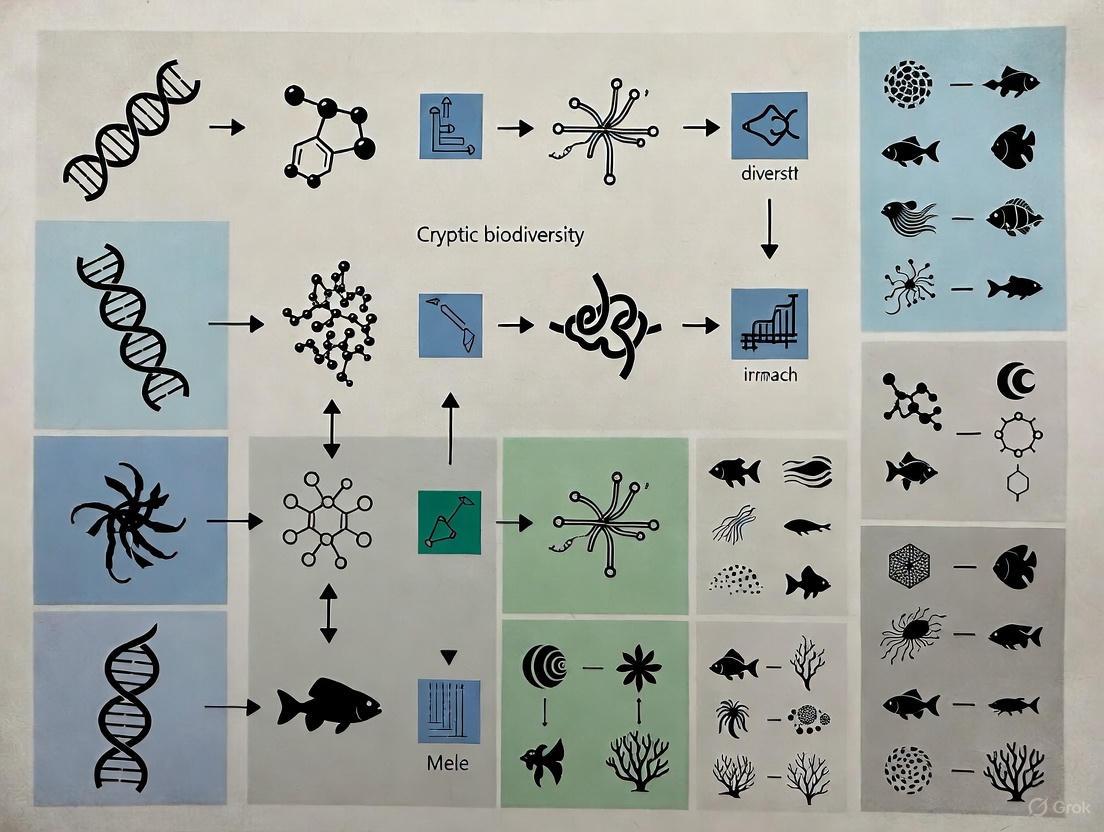
Marine biodiversity hotspots, regions of exceptional species richness and endemism, harbor a vast and largely unexplored reservoir of cryptic diversity—species that are morphologically similar but genetically distinct.
Unveiling the Hidden Realm: Cryptic Biodiversity in Marine Hotspots and Its Promise for Biomedical Discovery
Abstract
Marine biodiversity hotspots, regions of exceptional species richness and endemism, harbor a vast and largely unexplored reservoir of cryptic diversity—species that are morphologically similar but genetically distinct. This article explores the foundational concepts of these hotspots and their cryptic components, reviews advanced methodological tools like eDNA metabarcoding and ARMS for detection, addresses key challenges in bioprospecting and species identification, and validates findings through comparative genomic and ecological analyses. Aimed at researchers and drug development professionals, this synthesis highlights how uncovering this hidden diversity is critical for discovering novel marine natural products with unique mechanisms of action against human diseases, ultimately bridging the gap between ecological discovery and clinical application.
The Unseen World: Defining Marine Hotspots and Cryptic Biodiversity
What Are Marine Biodiversity Hotspots? Defining Characteristics and Global Significance
Marine biodiversity hotspots are geographic regions in the ocean characterized by an exceptionally high concentration of marine species, many of which are endemic, meaning they are found nowhere else on Earth [1] [2]. These regions are not only vital reservoirs of marine genetic diversity but also face severe threats from human activities, making them among the highest priorities for global conservation efforts [1]. The scientific study of these hotspots has evolved from simply cataloging species richness to understanding complex biogeographic patterns, evolutionary histories, and the ecological functions that sustain this diversity.
This technical guide frames marine biodiversity hotspots within the context of cryptic biodiversity research—the study of species that are morphologically similar but genetically distinct. Advances in molecular techniques are revolutionizing our understanding of these regions, revealing a hidden layer of diversity that was previously undetectable, with profound implications for conservation science and bioprospecting [3] [4].
Defining Characteristics and Global Distribution
The formal designation of a biodiversity hotspot relies on specific, quantifiable criteria. These regions are identified based on two primary factors: exceptional endemism and significant habitat loss [2]. To qualify, a region must contain a high number of endemic species and have lost a substantial portion of its primary habitat, typically set at a threshold of 70% or more [2].
The global distribution of marine biodiversity is not uniform. The most prominent hotspot is the Indo-Australian Archipelago (IAA), also known as the Coral Triangle, which is recognized as the world's preeminent marine biodiversity hotspot [3] [5]. This region exhibits a distinctive "bull's-eye" pattern of species richness, with diversity declining latitudinally toward the poles and longitudinally toward the eastern Pacific and western Indian Oceans [3]. Secondary hotspots include the Caribbean Sea and the Mesoamerican Reef region [1] [3].
Table 1: Major Marine Biodiversity Hotspots and Their Characteristics
| Hotspot Name | Key Geographic Areas | Notable Species & Habitats | Threat Status |
|---|---|---|---|
| Indo-Australian Archipelago (IAA)/Coral Triangle | Malaysia, Philippines, Indonesia, Papua New Guinea [3] | >650 Ostracod species; corals, reef fishes [5] | Habitat degradation, climate change [3] |
| Mesoamerican Marine Hotspot | Yucatán Peninsula (Mexico), Belize, Guatemala, Honduras [1] | Mesoamerican Barrier Reef (4,000+ species), mangroves, seagrass beds [1] | Habitat loss, overfishing [1] |
| Caribbean | Caribbean Sea [3] | Coral reefs, mangroves (50% plant endemism) [1] [3] | Historical mass extinction, current threats [5] |
The table above summarizes key characteristics of major marine biodiversity hotspots. The IAA's status is supported by a high-resolution reconstruction of its Cenozoic diversity history, which shows a unidirectional diversification trend since about 25 million years ago, culminating in a diversity plateau beginning about 2.6 million years ago [5]. The Mesoamerican hotspot is notable for the Mesoamerican Barrier Reef System, the second-largest barrier reef in the world, which shelters over 4,000 species, including whale sharks, sea turtles, and manta rays [1].
Evolutionary Origins and Biogeographic Theories
The formation of major biodiversity hotspots is a product of long-term evolutionary and geological processes. Two prominent theoretical frameworks dominate explanations for the origins of the IAA's exceptional biodiversity [3].
The "centers-of" hypotheses propose that specific regions serve as key sources of biodiversity through various mechanisms. The center of origin hypothesis suggests high biodiversity stems from elevated rates of local speciation followed by outward dispersal. In contrast, the center of accumulation posits that diversity results from preferential colonization by species originating elsewhere. The center of overlap hypothesis describes regions where distinct biogeographic faunas converge, while the center of survival identifies areas that have acted as refugia with low extinction rates [3].
In contrast, the "hopping hotspot" hypothesis presents a dynamic view, suggesting that biodiversity hotspots have shifted geographically over geological timescales in response to tectonic and environmental changes [3]. Evidence suggests a westward origin in the Tethys Sea during the Eocene (42-39 million years ago), a subsequent shift to the Arabian region by the late Miocene (around 20 million years ago), and a final relocation to the IAA by the Pleistocene (approximately 1 million years ago) [3]. This migration is linked to major geological events, particularly the closure of the Tethys Sea and the collision between the Australian and Southeast Asian tectonic plates, which dramatically altered ocean currents and created new shallow marine environments [3].
A more recent synthesis, the "Dynamic Centers Hypothesis," integrates these perspectives, proposing that as biodiversity hotspots migrate over time, the IAA's role in generating and sustaining biodiversity has evolved, with varying contributions from different sources dominating distinct historical phases [3]. Fossil evidence from ostracods indicates that the IAA's diversification was primarily controlled by diversity dependency and habitat size, facilitated by the alleviation of thermal stress after 13.9 million years ago [5]. Distinct net diversification peaks at approximately 25, 20, 16, 12, and 5 million years ago appear related to major tectonic events and climate transitions [5].
Cryptic Diversity and Modern Research Methodologies
The Challenge of Cryptic Biodiversity
A critical frontier in marine biodiversity research involves the discovery and characterization of cryptic species—genetically distinct lineages that are morphologically similar or identical. This hidden diversity presents significant challenges for traditional taxonomy and conservation planning, as what appears to be a single widespread species may actually represent multiple evolutionarily distinct units with smaller ranges and different ecological requirements [3]. Advances in DNA barcoding and genomics are uncovering vast cryptic diversity within known hotspots, revolutionizing our comprehension of their phylogeographic history and true species richness [3].
Experimental Workflow for Hotspot Research
Modern research into marine biodiversity hotspots employs an integrated methodological approach combining traditional ecological surveys with cutting-edge molecular techniques. The following diagram illustrates a comprehensive workflow for studying biodiversity hotspots, with particular emphasis on detecting cryptic diversity.
Diagram 1: Integrated Research Workflow for Marine Biodiversity Hotspots. This workflow combines traditional morphological surveys with modern eDNA metabarcoding and bioinformatic analyses to comprehensively characterize biodiversity, including cryptic species.
Essential Research Reagents and Tools
The experimental workflow described above relies on specialized reagents, equipment, and computational tools. The following table details key components of the "research reagent solutions" essential for conducting modern biodiversity hotspot research.
Table 2: Essential Research Reagents and Tools for Marine Biodiversity Hotspot Studies
| Category/Item | Specific Examples | Function/Application |
|---|---|---|
| Field Collection | Niskin bottles, Sterivex-GP cartridge filters (0.45 μm), peristaltic pumps [4] | Sterile collection of water samples for eDNA analysis from multiple depth layers. |
| Genetic Markers | MiFish primers (12S rRNA) [4] | Amplification of specific gene regions for metabarcoding of fish communities. |
| Sequencing & Analysis | NextSeq500/HiSeq X platforms, Qiime2, DADA2 package, BLAST [4] | High-throughput sequencing and bioinformatic processing to identify ASVs/OTUs. |
| Reference Databases | MIDORI2, NCBI GenBank, rfishbase [4] | Reference databases for taxonomic assignment of sequenced DNA barcodes. |
| Data Visualization & Mapping | eDNAmap platform, Generic Mapping Tools, R packages (vegan, pheatmap) [4] | Analysis, visualization, and mapping of species composition and biogeographic boundaries. |
The eDNAmap web platform is particularly noteworthy as a specialized tool for comparing marine metabarcoding data. It allows researchers to upload species or sequence composition data with location information, automatically plot sampling locations, generate heatmaps, perform multivariate statistical analyses (e.g., nMDS, PERMANOVA), and display species distributions [4]. This tool facilitates the detection of concordant biogeographic patterns across different taxonomic groups, strengthening ecological interpretations and helping identify environmental drivers shaping community structures [4].
Global Significance and Conservation Frameworks
Ecological and Biomedical Importance
Marine biodiversity hotspots deliver essential ecosystem services including coastal protection (e.g., by coral reefs and mangroves), carbon sequestration, and support for fisheries that sustain coastal communities [1] [2]. Their rich biological diversity represents a natural library of genetic information with significant potential for drug discovery and biomedical innovation [6].
The preservation of biodiversity is critically linked to pharmaceutical development, as natural products from marine organisms provide unique molecular structures honed by billions of years of evolution [6]. Alarmingly, modern extinction rates are 100 to 1000 times greater than historical background rates, potentially causing the loss of important drug candidates every two years [6]. This irreversible loss of molecular diversity threatens biomedical research and future human health advancements [6].
Threats and Integrated Conservation Strategies
Marine biodiversity hotspots face severe, interconnected threats. Overfishing represents the most significant impact over the past 50 years, with 37.7% of global fish stocks currently overfished and oceanic shark and ray species declining by 71% since the 1970s [7]. Additional major threats include climate change (causing coral bleaching and ocean acidification), pollution from land-based activities, and direct habitat destruction from coastal development and destructive fishing practices [1] [2] [7].
Effective conservation requires moving beyond simple protection to integrated, multidimensional strategies. These include [2]:
- Marine Protected Areas (MPAs) and Shark Sanctuaries: Establishing and effectively managing protected areas, such as the national shark sanctuary in Honduras [1].
- Ecosystem-Based Fisheries Management (EBFM): Shifting from single-species management to holistic approaches that consider entire ecosystems, including reducing bycatch and protecting spawning grounds [2] [7].
- Integrated Coastal Zone Management (ICZM): Managing human activities in coastal areas through collaboration among governments, industries, and local communities to minimize impacts on marine ecosystems [2].
- Restoration Ecology: Actively restoring degraded habitats through coral reef restoration, mangrove replanting, and seagrass bed rehabilitation [2].
- Innovative Financing: Developing sustainable funding through blue bonds, debt-for-nature swaps, and payments for ecosystem services [2].
A comprehensive update to the world's biodiversity hotspots project began in 2025, aiming to incorporate 25 years of new data from the IUCN Red List and advanced metrics like the STAR (Species Threat Abatement and Restoration) metric to better direct conservation funding and action [8].
Marine biodiversity hotspots are complex bio-socio-ecological systems characterized by exceptional species richness, high endemism, and significant evolutionary novelty, all under severe anthropogenic pressure. Understanding their defining characteristics—from the macroevolutionary processes that shaped them to the cryptic diversity being revealed by molecular tools—is essential for their conservation. The ongoing development of sophisticated research methodologies, including eDNA metabarcoding and integrative bioinformatic platforms, is transforming our ability to document and monitor these vital regions. Protecting these irreplaceable centers of marine life requires a transdisciplinary approach that integrates evolutionary biology, ecology, conservation science, and policy implementation to ensure their persistence and the critical ecosystem services they provide to humanity and the planet.
Cryptic species are groups of organisms that are morphologically indistinguishable from one another but are genetically distinct enough to be considered separate species [9]. These species pose significant challenges for taxonomists and ecologists because traditional methods of species identification, which rely on visible physical traits, fail to distinguish them [9]. The term is often used interchangeably with "sibling species," particularly for closely related species that have recently diverged [10]. In marine systems, where many phyla are less accessible and known primarily from preserved material, cryptic species are increasingly recognized as a substantial component of biodiversity, potentially comprising "tens of thousands" of accepted described species [10].
The study of cryptic species is particularly relevant in marine biodiversity hotspots like French Polynesia, where baseline biodiversity information is often fragmented and incomplete [11]. As molecular tools become more accessible, the discovery of cryptic species complexes is accelerating, fundamentally altering our understanding of species distributions, biogeographic patterns, and conservation priorities in marine environments [12]. This technical guide explores the concepts, methodologies, and implications of cryptic species research within the broader context of marine biodiversity science.
Conceptual Framework and Terminology
Defining Cryptic Species
The "cryptic species" concept has a long history of varied usage, causing ambiguity when interpreting their evolutionary and ecological significance [10]. They are frequently defined as species that are morphologically difficult to diagnose despite being genetically distinct evolutionary lineages [13]. The synonymous term "sibling species" (from the German "geschwisterarten") has historical precedence and implies closely related species that may have recently diverged [10].
Distinguishing Related Terminology
- Cryptic Species: Species that appear identical or nearly identical in morphology but are genetically distinct and reproductively isolated. These are often discovered through molecular techniques rather than traditional morphological examination [9].
- Sibling Species: A type of cryptic species; two or more species that are morphologically similar but genetically distinct. The term implies close evolutionary relationship and potential recent divergence, often with sympatric distributions and subtle ecological or behavioral differences [9].
- Sister Species: The closest relatives on an evolutionary tree, sharing a most recent common ancestor. While sister species can be morphologically distinct or similar, they are defined primarily by phylogenetic relationship rather than appearance [9].
Table 1: Conceptual Terminology in Cryptic Species Research
| Term | Definition | Primary Basis of Distinction | Evolutionary Implication |
|---|---|---|---|
| Cryptic Species | Morphologically indistinguishable but genetically distinct species | Genetic divergence despite morphological similarity | Reveals hidden diversity; may indicate recent divergence or morphological stasis |
| Sibling Species | Closely related cryptic species | Genetic distinctness with high morphological similarity | Suggests recent evolutionary divergence, potentially with ecological differentiation |
| Sister Species | Two species that are closest relatives on a phylogenetic tree | Shared most recent common ancestor | Defined by phylogenetic relationship regardless of morphological distinction |
| Species Complex | Group of closely related species difficult to delineate | Combined morphological, genetic, and ecological data | Represents ongoing speciation or recent divergence events |
Methodological Approaches: Uncovering Hidden Diversity
Molecular Tools for Species Delimitation
DNA Barcoding
DNA barcoding has emerged as a pivotal technique for species identification, relying on sequencing a standardized region of the genome—typically the mitochondrial cytochrome c oxidase I (COI) gene in animals—to produce a unique genetic identifier for each species [9] [14]. These barcodes are compared to comprehensive reference libraries to confirm species identity. The utility of DNA barcoding extends to delineating cryptic species by uncovering genetic disparities between organisms that appear identical [9]. For example, in the butterfly genus Astraptes, what was once thought to be a single species was revealed to be at least ten cryptic species using DNA barcoding [9].
However, marine barcoding initiatives face significant challenges. Current assessments indicate that only 14.2% of known marine animal species had COI barcodes available as of 2021, a modest increase from 9.5% in 2011 [14]. This barcoding coverage varies substantially among phyla (from 4.8% to 74.7%) and geographic regions (from 36.8% to 62.4% across Large Marine Ecosystems), with Porifera, Bryozoa, and Platyhelminthes being highly underrepresented compared to Chordata, Arthropoda, and Mollusca [14].
Metabarcoding and Environmental DNA
Metabarcoding extends the principles of DNA barcoding to analyze entire biological communities from environmental samples such as water or sediment [9]. This method extracts DNA from bulk samples and identifies multiple species simultaneously by comparing sequences to reference databases. Metabarcoding is particularly effective for delineating cryptic species within complex ecosystems where traditional survey methods may miss less conspicuous organisms [9].
Environmental DNA (eDNA) barcoding represents another advancement in non-invasive species detection. By extracting DNA directly from environmental matrices, eDNA barcoding captures genetic signatures without direct observation or specimen collection [9]. This technique is invaluable for monitoring elusive or rare cryptic species and has proven especially powerful in aquatic environments [9].
Phylogenetic Haplotype Network Analysis
For cryptic species complexes where recent divergence may involve ongoing or attenuated gene flow, phylogenetic networks offer advantages over traditional phylogenetic trees. Networks better visualize relationships when clear barcoding gaps don't exist and gene flow may still persist between sister lineages [13].
The statistical parsimony algorithm implemented in TCS network software can be used to construct phylogenetic haplotype networks from global metabarcoding datasets [13]. This approach was successfully applied to the Chaetoceros curvisetus (Bacillariophyta) species complex, using data from global initiatives like Ocean Sampling Day (OSD) and Tara Oceans [13]. The methodology involves:
- Reference Sequence Collection: Gathering reference sequences of target genes from cultured strains or databases.
- Metabarcode Data Processing: Downloading and processing metabarcoding datasets, extracting unique haplotypes and abundance tables.
- Haplotype Validation: Using BLAST searches with relaxed similarity thresholds (e.g., ≥95%) to extract haplotypes belonging to the target complex, followed by phylogenetic tree construction to remove false positives.
- Network Construction: Building phylogenetic haplotype networks using statistical parsimony and visualizing them with tools like PopART, including read abundance information for each haplotype.
Diagram 1: Workflow for Cryptic Species Delimitation. This diagram outlines the integrated experimental and computational pipeline for identifying cryptic species from environmental samples, combining metabarcoding with phylogenetic network analysis.
The Scientist's Toolkit: Essential Research Reagents and Materials
Table 2: Essential Research Reagents and Materials for Cryptic Species Research
| Item/Category | Specification/Example | Function in Research |
|---|---|---|
| DNA Extraction Kits | Commercial kits for environmental samples | Isolation of high-quality DNA from diverse marine samples including water, sediment, and tissue |
| PCR Reagents | Primers for barcode regions (COI, 18S V4/V9, ITS) | Amplification of standardized genetic markers for species identification and delimitation |
| Sequencing Platforms | Illumina, PacBio, or Oxford Nanopore technologies | High-throughput generation of genetic sequence data from single specimens or mixed samples |
| Reference Databases | BOLD, NCBI, WoRMS, OBIS | Taxonomic validation and comparison of unknown sequences against known references |
| Bioinformatic Tools | mothur, QIIME2, POPART, TCS | Processing raw sequence data, constructing haplotype networks, and visualizing phylogenetic relationships |
| Taxonomic Validators | WoRMS, GBIF Backbone Taxonomy, Taxize R package | Standardizing and verifying taxonomic nomenclature across disparate data sources |
| Environmental Samplers | Niskin bottles, sediment corers, plankton nets | Collection of representative samples from various marine habitats and depth strata |
Case Studies in Marine Systems
Shelled Marine Gastropods
Shelled marine gastropods provide an instructive case study due to their extensive fossil record and traditional reliance on morphological characters for identification. A comprehensive review of recently published literature revealed that most gastropod species discussed were not cryptic [10]. To the degree that the sampled species represent extinct taxa, the results suggest that a high proportion of shelled marine gastropod species are identifiable for study in the fossil record [10]. This finding has significant implications for paleontological studies that rely on morphological characters to identify species and interpret evolutionary patterns.
Chaetoceros Curvisetus Diatom Complex
Research on the Chaetoceros curvisetus complex demonstrates how phylogenetic haplotype networks applied to global metabarcoding datasets can resolve cryptic species [13]. Despite only two morphologically described species (C. curvisetus and C. pseudocurvisetus), molecular analyses revealed approximately eleven genetically distinct taxa [13]. The study found:
- Absence of barcoding gap between some closely related species
- Variable distribution patterns with some species widely distributed and others restricted
- Evidence for ecological differentiation driving speciation
- Successful application of evolutionary approaches to metabarcoding data for systematic and phylogeographic studies
Stygocapitella Subterranea Annelid Complex
The interstitial meiofaunal annelid Stygocapitella subterranea was long considered a cosmopolitan species until molecular analyses revealed a complex of eight new species [12]. This case study demonstrated:
- With one exception, all newly described species were present along a single coastline
- No diagnostic morphological characters were found to differentiate species
- Both traditional diagnostic features and quantitative morphology failed to recognize species boundaries
- Evidence was found for both historical oceanic transitions and potential recent human-mediated translocations
This study fundamentally challenged the notion of cosmopolitan distributions for this meiofaunal group and highlighted how cryptic species can bias biodiversity assessments and biogeographic interpretations [12].
Ecological and Evolutionary Implications
Impacts on Biodiversity Assessment
The prevalence of cryptic species has profound implications for how we measure, monitor, and conserve marine biodiversity. In fragmented territories like French Polynesia, where inventory completeness rates range from 1.9% to 98.4% across archipelagos and islands, cryptic species further complicate biodiversity assessments [11]. The discovery of cryptic species often drastically reduces the perceived distribution range of individual species, as observed in the Stygocapitella complex where eight newly described species replaced a single "cosmopolitan" species [12].
This taxonomic resolution has direct consequences for understanding biodiversity patterns and processes:
- Biogeographic breaks may be more pronounced than previously recognized
- Endemism rates are likely higher in many marine groups
- Conservation prioritization must account for hidden genetic diversity
- Biomonitoring programs require molecular verification of target species
Implications for Marine Biodiversity Hotspots
Cryptic species complexes present particular challenges in marine biodiversity hotspots, where sampling biases and incomplete inventories already hamper conservation planning [11]. In French Polynesia, spatial and temporal sampling biases were partly explained by accessibility constraints (proximity to airports, roads, or ports), and inventory completeness was higher for marine than terrestrial species [11]. These biases challenge our ability to conduct integrated biogeographic analyses that account for the land-sea meta-ecosystem [11].
Molecular tools like DNA barcoding and metabarcoding hold great potential for biodiversity monitoring in these regions, possibly outperforming traditional taxonomic methods [14]. However, these approaches are limited by the availability of sequences in reference databases, with current assessments indicating approximately 85% of marine animal species still lack COI barcodes [14].
Cryptic species represent both a challenge and opportunity for marine biodiversity science. As molecular tools become more accessible and integrated into biodiversity monitoring, our understanding of species boundaries, distributions, and evolutionary relationships continues to evolve. The study of cryptic species emphasizes the complexity of biodiversity and the need for molecular tools in modern taxonomy and conservation [9].
Future research directions should include:
- Expanded barcoding initiatives to fill critical gaps in reference databases
- Integrated taxonomic approaches combining morphological, ecological, and molecular data
- Standardized sampling protocols to enable comparative analyses across regions
- Long-term monitoring that incorporates cryptic diversity into assessment frameworks
As we move toward more comprehensive characterization of species diversity across fragmented marine territories, explicitly acknowledging and addressing the biases inherent in biodiversity datasets is the crucial first step toward effective conservation and management strategies [11]. The systematic recognition and description of cryptic species is of seminal importance for accurate biodiversity assessments, biogeographic interpretations, and evolutionary studies in marine systems [12].
Cryptic species—discrete species that are difficult or impossible to distinguish morphologically—represent a significant component of Earth's undocumented biodiversity [15]. DNA-based studies are revealing that cryptic species exist across all major taxonomic groups and ecosystems, from tropical rainforests to extreme polar environments [15] [16]. Marine biodiversity hotspots, characterized by exceptionally high species richness and endemism, serve as particularly fertile ground for the emergence and maintenance of this cryptic diversity [17] [18]. The Central Indo-Pacific Ocean, Western Indian Ocean, and Central Pacific Ocean harbor especially high levels of marine biodiversity across multiple dimensions [19], creating ideal conditions for cryptic speciation. Understanding why these hotspots function as cradles for cryptic diversity requires examining the interplay of historical biogeography, ecological opportunity, and evolutionary processes that drive diversification while maintaining morphological stasis.
This whitepaper examines the principal evolutionary mechanisms driving cryptic diversification in biodiversity hotspots, with a specific focus on marine ecosystems. We synthesize current research on patterns of cryptic species distribution, analyze the methodological frameworks for their detection, and explore the implications for conservation biology and pharmaceutical discovery. By integrating phylogeographic evidence, molecular data, and ecological theory, we provide a comprehensive technical framework for researching cryptic diversity in the world's most biologically rich marine environments.
Theoretical Framework and Evolutionary Drivers
Conceptual Models of Hotspot Dynamics
The formation and persistence of biodiversity hotspots can be understood through several conceptual frameworks that explain their dynamic nature over geological timescales. The "hopping hotspot" hypothesis proposes that biodiversity hotspots are not static but migrate across regions in response to tectonic activity and environmental changes [17]. Evidence suggests a westward migration from the Tethys Sea during the Eocene (42-39 million years ago) to the Arabian region by the late Miocene (approximately 20 million years ago), and finally to the Indo-Australian Archipelago (IAA) by the Pleistocene (approximately 1 million years ago) [17]. In contrast, the "centers-of" hypotheses provide complementary explanations for the IAA's exceptional diversity: the center of origin model emphasizes high speciation rates within the region; the center of accumulation highlights preferential colonization by species from elsewhere; the center of overlap describes convergence of distinct biogeographic faunas; and the center of survival proposes the region as a refuge with low extinction rates [17].
The integrated "Dynamic Centers Hypothesis" synthesizes these perspectives, proposing that as biodiversity hotspots migrate, their role in generating and sustaining biodiversity evolves, with different sources dominating distinct historical phases [17]. This dynamic framework helps explain why hotspots accumulate not only taxonomic diversity but also high levels of cryptic diversity through repeated cycles of isolation, adaptation, and persistence.
Evolutionary Mechanisms Promoting Cryptic Speciation
Table 1: Evolutionary Drivers of Cryptic Diversity in Marine Hotspots
| Driver Category | Specific Mechanism | Effect on Cryptic Speciation | Representative System |
|---|---|---|---|
| Historical/Geological | Habitat fragmentation during Pleistocene glaciations | Population isolation and genetic divergence without morphological differentiation | Giraffes (6 cryptic species) [15] |
| Tectonic activity creating barriers | Vicariant speciation in allopatry | Amazonian leaflitter frogs [15] | |
| Environmental | Glacial advances scouring continental shelves | Population bottlenecks and refuge isolation | Southern Ocean marine fauna [16] |
| Sea-surface temperature gradients | Adaptive divergence to thermal niches | Global marine taxa [19] | |
| Biological/Ecological | Assortative mating based on non-morphological cues | Reproductive isolation despite morphological similarity | Giraffe coat patterns [15] |
| Specialization to specific microhabitats | Ecological speciation without morphological change | Symbiotic associations across environmental gradients [20] |
Several interconnected evolutionary mechanisms drive cryptic diversification in biodiversity hotspots:
Refugial Dynamics and Population Bottlenecks: Climate oscillations, particularly during the Pleistocene, repeatedly fragmented habitats, isolating populations in refugia [15] [16]. For example, increasing aridity and expansion of the Mega Kalahari desert fragmented giraffe populations, leading to divergence of at least six lineages between 1.6 million years and 113,000 years ago [15]. Similarly, in the Southern Ocean, repeated glacial advances (at least 38 events in the past 5 million years) annihilated continental shelf communities, forcing species into isolated refugia at localized deep areas, offshore habitats, or peri-Antarctic islands [16].
Environmental Gradients and Adaptive Divergence: Abiotic factors like sea-surface temperature create selective pressures that drive genetic adaptation without necessarily affecting morphology [19] [20]. Spatial analysis reveals significant correlations between sea-surface temperature and marine genetic diversity, suggesting temperature-associated adaptive divergence [19]. Similarly, studies of endophytic fungi across boreal forest climate gradients show strong climatic signatures in genetic structure independent of morphological variation [20].
Non-morphological Reproductive Barriers: Pre-zygotic isolation mechanisms such as differences in reproductive timing, chemically-mediated mate recognition, or imprinted assortative mating based on visual cues like coat patterns can maintain reproductive isolation between cryptic lineages without morphological differentiation [15].
Patterns and Case Studies of Cryptic Diversity
Quantitative Distribution of Cryptic Diversity
Table 2: Documented Cryptic Diversity Across Taxonomic Groups
| Taxonomic Group | Reported Cryptic Species | Geographic Focus | Primary Detection Method |
|---|---|---|---|
| Marine shelled gastropods | Variable proportion; most species not cryptic | Global oceans | Multi-locus genetic analysis [10] |
| Notothenioid fishes | Multiple cryptic lineages (e.g., Lepidonotothen nudifrons) | Southern Ocean | Mitochondrial & nuclear DNA [16] |
| Insects | 996 new cryptic species | Global meta-analysis | DNA barcoding [15] |
| Mammals | 267 cryptic species | Africa (e.g., giraffes) | mtDNA & microsatellites [15] |
| Amazonian frogs | 3 highly divergent cryptic clades | Upper Amazon | mtDNA & microsatellites [15] |
Analysis of cryptic species distribution reveals several important patterns. First, cryptic species are not uniformly distributed across taxa or regions. In shelled marine gastropods, for instance, most species are not considered cryptic, suggesting that many species can be confidently identified and studied in both living and fossil taxa [10]. This finding challenges the assumption that cryptic species represent a uniformly large proportion of all biodiversity.
Second, cryptic diversity appears disproportionately common in certain environments. Among Antarctic invertebrates, independently evolving lineages that remain morphologically indistinguishable are disproportionately common compared to other marine areas [16]. This pattern may reflect the extreme environmental conditions and historical glaciations that have shaped these ecosystems.
Third, the age of cryptic lineages varies substantially. While some cryptic species are the product of recent speciation events, others have ancient origins. For example, cryptic lineages within the upper Amazonian leaflitter frog (Eleutherodactylus ockendeni) date back to late Oligocene and late Miocene (approximately 24-9 million years ago), coinciding with major geotectonic events in the northern Andes rather than Quaternary climatic cycles [15].
Hotspots as Reservoirs of Cryptic Diversity
Marine biodiversity hotspots concentrate not only taxonomic diversity but also genetic and phylogenetic diversity [19]. The Central Indo-Pacific Ocean, Central Pacific Ocean, and Western Indian Ocean harbor high levels of biodiversity across all three dimensions, making them priority areas for conservation [19]. The Indo-Australian Archipelago (IAA), in particular, stands out as the world's preeminent marine biodiversity hotspot, distinguished by its exceptional species richness in tropical shallow waters [17].
These hotspots function as cradles for cryptic diversity through several mechanisms. Their complex habitat heterogeneity provides numerous ecological niches and microhabitats that promote specialization and divergence [17]. Their location at the intersection of different biogeographic realms facilitates the overlap of distinct evolutionary lineages [17]. Additionally, their relative environmental stability over evolutionary timescales has served as a refuge during periods of global climate change, preserving ancient lineages [17].
The conservation significance of these cryptic diversity hotspots is substantial. Current fully protected marine areas conserve only 34% of known taxonomic diversity, 63% of genetic diversity, and 54% of phylogenetic diversity [19]. In contrast, strategically protecting approximately 22% of the ocean would safeguard 95% of taxonomic diversity, 99% of genetic diversity, and 97% of phylogenetic diversity [19].
Methodological Framework for Cryptic Species Detection
Integrated Workflow for Species Delimitation
The detection and confirmation of cryptic species requires an integrated methodological approach combining multiple lines of evidence. The following workflow visualization outlines a comprehensive protocol for cryptic species identification:
Diagram 1: Species Delimitation Workflow
The Scientist's Toolkit: Essential Research Reagents and Materials
Table 3: Essential Research Reagents for Cryptic Species Research
| Reagent/Material | Specific Application | Technical Function |
|---|---|---|
| Mitochondrial DNA primers (COI, Cytb, ND1) | DNA barcoding & phylogenetic analysis | Amplification of standardized gene regions for species identification and divergence estimation |
| Microsatellite markers | Population genetics & gene flow assessment | Detection of nuclear genetic structure and reproductive isolation |
| Taq polymerase & PCR reagents | DNA amplification | In vitro replication of specific DNA sequences for analysis |
| Restriction enzymes | RADseq or similar methods | Genome reduction for SNP discovery and genotyping |
| Sanger sequencing reagents | DNA sequence determination | Determination of nucleotide sequences for phylogenetic analysis |
| RNA later preservative | Tissue sample preservation | Stabilization of RNA and DNA in field-collected specimens |
| Agarose & electrophoresis systems | DNA fragment separation | Size-based separation of DNA fragments for quality control |
| Environmental DNA (eDNA) filters | Non-invasive sampling | Collection of genetic material from water or soil samples |
Experimental Protocols for Key Analyses
Specimen Collection and Preservation: Collect specimens across the target species' entire range. Immediately preserve tissue samples in 95% ethanol or RNA later at -20°C. Record precise collection localities using GPS.
DNA Extraction and Quantification: Use standard phenol-chloroform extraction or commercial kit protocols. Quantify DNA concentration using fluorometry or spectrophotometry. Ensure minimum quality thresholds (A260/A280 ratio of 1.8-2.0).
PCR Amplification of Target Loci: Amplify mitochondrial genes (COI, Cytb) and nuclear markers (microsatellites, introns) using optimized protocols. For COI, use universal primers LCO1490 and HCO2198 with thermal profile: initial denaturation at 94°C for 3 min; 35 cycles of 94°C for 30s, 48°C for 45s, 72°C for 60s; final extension at 72°C for 5-10 min.
Sequencing and Alignment: Purify PCR products and sequence in both directions. Assemble contigs, align sequences using MUSCLE or MAFFT with default parameters. Visually inspect alignments for errors.
Phylogenetic Analysis: Construct gene trees using Maximum Likelihood (RAxML) and Bayesian Inference (MrBayes). Use appropriate substitution models selected by ModelTest. Run analyses until convergence (average standard deviation of split frequencies <0.01).
Species Delimitation: Apply multiple species delimitation methods (ABGD, bPTP, GMYC) to concordantly identify independently evolving lineages.
Population Genetic Structure Analysis Protocol
Microsatellite Genotyping: Amplify 10-20 polymorphic microsatellite loci using fluorescently labeled primers. Separate fragments on capillary sequencer and score alleles against size standards.
Genetic Diversity Metrics: Calculate observed and expected heterozygosity, allelic richness, and nucleotide diversity using packages like Arlequin or GenAlEx.
Population Structure: Analyze using Bayesian clustering (STRUCTURE), discriminant analysis of principal components (DAPC), and F-statistics. Assess hierarchical population structure with AMOVA.
Gene Flow Estimation: Calculate contemporary migration rates using Bayesian methods (BAYESASS) and coalescent-based approaches (MIGRATE-N).
Implications for Conservation and Drug Discovery
Conservation Priorities and Protected Area Design
The discovery of cryptic species has profound implications for conservation biology, particularly in marine biodiversity hotspots. Traditional conservation planning based solely on morphological taxonomy may significantly underestimate true diversity and fail to protect evolutionarily distinct lineages [15] [21]. This is particularly critical for the 34 recognized biodiversity hotspots worldwide, which were originally defined primarily using vertebrates and plants while overlooking hyperdiverse groups like insects, fungi, and marine taxa [21].
Integrating molecular data into conservation planning reveals that strategically protecting approximately 22% of the ocean would conserve 95% of known taxonomic diversity, 99% of genetic diversity, and 97% of phylogenetic diversity [19]. This approach allows for the identification of cryptic biodiversity reservoirs such as peri-Antarctic islands, which harbor previously undocumented vertebrate diversity despite their extreme isolation [16]. Furthermore, even heavily modified urban environments can function as unexpected reservoirs of cryptic diversity, as demonstrated by the endangered shortnose sturgeon population in New York Harbor that contains unique behavioral phenotypes [22].
Modern conservation frameworks must incorporate multifaceted biodiversity assessments including taxonomic, genetic, and phylogenetic dimensions [19] [17]. This requires systematic population sampling, particularly in tropical rainforests and developing countries where cryptic diversity remains most undocumented [15]. The implementation of environmental DNA (eDNA) metabarcoding provides a powerful tool for biodiversity monitoring in marine protected areas, enabling comprehensive community assessments without extensive morphological identification [18].
Bioprospecting Implications for Pharmaceutical Development
Cryptic species in marine biodiversity hotspots represent an largely untapped resource for pharmaceutical discovery. The following diagram illustrates how cryptic diversity exploration can enhance bioprospecting pipelines:
Diagram 2: Bioprospecting Enhanced by Cryptic Diversity
Marine hotspots harbor not only high species diversity but also exceptional chemical diversity with pharmaceutical potential. Cryptic species often possess unique biochemical profiles resulting from their distinct evolutionary trajectories and ecological specializations [17] [18]. The exploration of these previously overlooked lineages increases the probability of discovering novel bioactive compounds with unique mechanisms of action.
The rich symbiotic associations found in marine hotspots, particularly in the IAA, represent promising sources of pharmaceutical leads [20] [18]. These complex holobiont systems—such as sponges, corals, and their microbial symbionts—have co-evolved intricate chemical communication systems that include antibacterial, antifungal, and antipredator compounds [18]. As many of these symbiotic relationships are highly specific, the discovery of cryptic host species often reveals previously unknown microbial symbionts with unique metabolic capabilities.
Marine biodiversity hotspots function as cradles for cryptic diversity through the complex interplay of historical biogeography, environmental heterogeneity, and ecological opportunity. The evolutionary drivers outlined in this technical guide—including refugial dynamics, environmental gradients, and non-morphological reproductive barriers—promote genetic divergence and speciation while maintaining morphological stasis. Advanced molecular methodologies now enable researchers to detect and describe this hidden biodiversity, revealing that cryptic species represent a substantial component of global diversity with significant implications for conservation planning and bioprospecting.
As research in this field advances, integrating multifaceted approaches that combine taxonomic, genetic, and phylogenetic dimensions will be essential for fully understanding and protecting the evolutionary processes that generate and maintain biodiversity in these critical regions. The dynamic nature of hotspots underscores the importance of considering both current patterns and historical processes in biodiversity research and conservation implementation.
The ocean, encompassing over 70% of the Earth's surface and representing its largest habitat, possesses greater biodiversity than terrestrial ecosystems [23] [24]. This biological richness translates to extraordinary chemodiversity, with marine organisms producing structurally novel bioactive compounds that modulate human disease targets through unique mechanisms of action [23]. The evolutionary pressure exerted by marine environments—including extreme conditions of temperature, pressure, salinity, and low light—has driven the development of sophisticated chemical defense strategies in many marine invertebrates, which lack physical defenses or immune systems [23] [24]. These defense molecules often exhibit ideal drug-like properties, including the ability to traverse biological barriers and interact with specific molecular targets, making them particularly valuable for pharmaceutical development [23]. The field of marine pharmaceuticals has evolved from early discoveries in the 1950s to a mature discipline that has yielded approximately 15-20 clinically approved drugs, predominantly for cancer treatment and pain management, with many more in clinical development [23] [24].
The commercial significance of marine-derived pharmaceuticals is demonstrated by substantial market growth and valuation projections. The global marine pharmaceuticals market continues to expand rapidly, driven by increasing demand for novel therapeutic agents and advancements in marine biotechnology.
Table 1: Marine Pharmaceuticals Market Projections
| Market Metric | 2024/2025 Value | 2034/2035 Projection | CAGR | Key Drivers |
|---|---|---|---|---|
| Market Size | USD 6.19 billion (2024) [25] | USD 10.34 billion (2034) [25] | 5.29% [25] | Unique marine biodiversity, chronic disease prevalence, biotechnology advances [25] |
| Alternative Market Size | USD 4,177.9 million (2025) [26] | USD 9,264.04 million (2035) [26] | 8.3% [26] | Demand for natural therapies, anti-infective needs, sustainable sourcing [26] |
| Oncology Segment | USD 1.44 billion (2018) [27] | Significant growth by 2028 [27] | - | Rising cancer prevalence, novel mechanisms of action [27] |
Regional market analysis reveals that North America dominates with approximately 40% market share, supported by well-established biotechnology infrastructure, significant research funding from agencies like NOAA and NIH, and high prevalence of chronic diseases [25] [27]. The Asia-Pacific region is projected to witness the fastest growth rate during 2025-2034, fueled by rich marine biodiversity, increasing investments in marine research, and government support in countries like China, Japan, and South Korea [25].
Therapeutic application segmentation shows that oncology/anticancer applications hold the largest market share (30-35%), while the anti-infective segment is expected to grow at the fastest CAGR, driven by the global antimicrobial resistance crisis [25]. By product type, active pharmaceutical ingredients (APIs) constitute approximately 40% of the market, with semi-synthetic/synthetic derivatives exhibiting the most rapid growth as they enhance stability and potency while improving production scalability [25].
Historical Success Stories: From Sea to Clinic
The historical trajectory of marine pharmaceutical discovery demonstrates a compelling narrative of scientific innovation, beginning with foundational discoveries in the mid-20th century.
Table 2: Historically Significant Marine-Derived Pharmaceuticals
| Compound/Drug | Marine Source | Year/Period | Clinical Application | Significance |
|---|---|---|---|---|
| Spongothymidine & Spongouridine | Caribbean sponge Tethya crypta (later renamed Cryptothethya crypta) [23] | 1940s-1950s [23] | Lead compounds for synthetic antiviral and anticancer drugs [23] | First marine-derived bioactive compounds; inspired development of Ara-C (cytarabine) and Ara-A [23] |
| Cytarabine (Ara-C) | Synthetic derivative inspired by sponge nucleosides [23] [24] | Approved 1969 [23] | Acute lymphoblastic leukemia, acute myeloid leukemia, meningeal leukemia [24] | First marine-inspired drug approved; antimetabolite/antineoplastic agent [24] |
| Ziconotide | Cone snail (Conus magus) [24] | Approved 2004 [24] | Chronic pain management [24] | Potent analgesic (1000x more potent than morphine); calcium channel blocker [24] |
| Eribulin (Halaven) | Synthetic analog of halicondrin B from sponge Halichondria okadai [24] | Approved 2010 (USA) [24] | Advanced breast cancer, liposarcoma [24] | Macrocyclic ketone analog; inhibits cell growth in multiple cancer lines [24] |
| Bryostatin | Bryozoan Bugula neritina [24] | Clinical trials [24] | Cancer, Alzheimer's disease, anti-HIV [24] | Protein kinase C modulator; demonstrates diverse therapeutic potential [24] |
The discovery of spongothymidine and spongouridine from the Caribbean sponge Tethya crypta by Bergmann and Feeney in the 1940s-1950s represented the pivotal starting point for marine pharmaceuticals [23]. These novel nucleosides containing arabinose sugar moieties inspired synthetic chemists to develop analogs that would eventually become the first marine-inspired drugs approved for human use [23]. The subsequent approval of cytarabine (Ara-C) for leukemias established that marine organisms could yield clinically significant therapeutics, paving the way for future marine drug discovery efforts [23] [24].
The progression from initial discovery to clinical application typically follows an extended timeline, often spanning decades. This process involves multiple stages including biomass collection, extract preparation, bioactivity screening, compound isolation, structural elucidation, mechanism of action studies, and extensive preclinical and clinical development [23]. The supply chain challenge has been addressed through various innovative approaches including aquaculture, mariculture, and semi-synthetic production, as total synthesis of complex marine natural products is often economically unfeasible [24].
Cryptic Biodiversity: Hidden Diversity in Marine Ecosystems
Cryptic biodiversity—the presence of morphologically similar but genetically distinct species—presents both challenges and opportunities for marine bioprospecting. Molecular genetic studies have revealed that many supposedly widespread marine species actually comprise complexes of multiple evolutionary lineages, with significant implications for bioprospecting efforts.
The ascidian Pyura stolonifera, an important ecosystem engineer dominating temperate coastal communities in the southern hemisphere, exemplifies this phenomenon. Genetic analyses using mitochondrial COI and nuclear markers (ANT, ATPSα, 18S) have revealed "nested cryptic diversity" within this taxon, with at least five distinct species further subdivided into smaller-scale genetic lineages [28]. This complex genetic structure initially created uncertainty about whether populations in Africa, Australasia, and South America represented the fragmented remains of a pan-Gondwanan species or recent introductions through human activities [28].
The implications of cryptic diversity for bioprospecting are substantial:
- Chemodiversity Potential: Genetically distinct lineages often produce different suites of bioactive compounds as part of their chemical defense systems, expanding the potential for novel drug discovery within a single morphological species [28].
- Sustainable Sourcing: Identifying the correct genetic lineage is crucial for developing sustainable sourcing strategies, as different lineages may require different aquaculture or conservation approaches [28].
- Benefit Sharing: Understanding the true geographic distributions of evolutionary units is essential for equitable benefit-sharing arrangements, a key consideration under international agreements like the Nagoya Protocol [28].
- Quality Control: Ensuring consistent genetic identity of source organisms is critical for reproducible production of marine-derived pharmaceuticals [28].
Similar patterns of cryptic diversity have been documented across diverse marine taxa, suggesting that the phenomenon is widespread in marine ecosystems. This hidden diversity represents a largely untapped resource for discovering novel bioactive compounds with unique mechanisms of action [28].
Methodological Framework: From Collection to Clinical Candidate
The discovery and development of marine-derived pharmaceuticals follows a systematic workflow that integrates traditional natural product chemistry with modern technological approaches.
Sample Collection and Preparation
Marine bioprospecting begins with the strategic collection of marine organisms from diverse ecosystems, including extreme environments [23]. Sampling approaches must consider cryptic biodiversity by collecting from multiple habitats and biotic zones within a region [28]. Proper documentation and preservation of voucher specimens is essential for taxonomic identification and future recollection [23]. For marine invertebrates and microorganisms, biomass is typically extracted using organic solvents, followed by removal of solvents to generate crude extracts potentially containing hundreds to thousands of compounds [23].
Bioactivity Screening and Compound Isolation
The subsequent workflow involves multiple stages of fractionation and testing:
- Initial fractionation to remove water-soluble compounds (salts, sugars) and highly lipophilic compounds (fats) [23]
- Biological screening using assays relevant to human diseases, particularly focusing on unmet medical needs [23]
- Bioassay-guided fractionation through iterative chromatographic purification and activity testing to pinpoint bioactive compounds [23]
- Dereplication using liquid chromatography-mass spectrometry (LC-MS) to identify known compounds and focus efforts on novel bioactives [23]
- Structural elucidation of pure bioactive compounds using mass spectrometry (MS) and nuclear magnetic resonance (NMR) spectroscopy [23]
Advanced Technologies in Marine Drug Discovery
Contemporary marine pharmaceutical discovery employs sophisticated technologies that enhance efficiency and success rates:
- Genome Mining: Identification of biosynthetic gene clusters (BGCs) in marine microorganisms predicts their capacity to produce novel bioactive compounds [29]. Tools like antiSMASH facilitate BGC identification, though novel BGCs may be overlooked due to reference-based algorithms [29].
- High-Throughput Sequencing (HTS): Metagenomic analysis of marine microbial communities without cultivation, using specific gene regions or barcodes to assess genetic diversity and biosynthetic potential [24].
- HTS combined with LC-MS/NMR: Increased sensitivity and specificity in compound identification through integrated omics approaches [24].
- Artificial Intelligence (AI): Prediction of structure-activity relationships and biological targets of marine natural products; systems like AlphaFold predict 3D protein structures to facilitate target identification [24].
- Heterologous Expression: Production of marine-derived compounds by expressing BGCs in culturable microbial hosts to overcome supply limitations [23].
- Semi-synthetic Derivatization: Chemical or enzymatic modification of marine-derived lead compounds to enhance stability, potency, and pharmacokinetic properties while maintaining structural novelty [25] [24].
Table 3: Essential Research Reagents and Technologies for Marine Pharmaceutical Discovery
| Reagent/Technology | Function/Application | Specific Examples/Protocols |
|---|---|---|
| DNA Extraction Kits | Genetic analysis of cryptic diversity; genome mining | Salting-out protocol for ascidian tissue [28] |
| PCR Reagents & Primers | Amplification of taxonomic and biosynthetic genes | Custom primers (e.g., StolidoANT-F for ascidian ANT gene) [28] |
| LC-MS Systems | Dereplication; compound identification | Analysis of extracts and fractions to identify novel vs. known compounds [23] |
| NMR Spectroscopy | Structural elucidation of novel compounds | Determination of complex structures with novel skeletons [23] |
| HTS Screening Platforms | Bioactivity assessment | Disease-relevant assays for cancer, infectious diseases, inflammation [24] |
| Bioinformatic Tools | BGC identification; sequence analysis | antiSMASH for BGC prediction; phylogenetic analysis software [29] |
| Aquaculture Systems | Sustainable biomass production | In-sea and on-land aquaculture for species like bryozoan [24] |
| Fermentation Bioreactors | Microbial culture and compound production | Large-scale fermentation of marine microorganisms [23] |
Current Challenges and Future Directions
Despite notable successes, marine pharmaceutical discovery faces several significant challenges that must be addressed to fully realize the potential of marine biodiversity.
Technical and Development Challenges
The "valley of death" in drug development describes the difficulty in advancing promising lead compounds to clinical candidates [27]. For marine-derived leads, this transition requires comprehensive mechanism of action studies, structure-activity relationship characterization, pharmaceutical property assessment, pharmacokinetic profiling, and medicinal chemistry optimization [27]. The complex structural features of many marine natural products often make total synthesis economically unfeasible, necessitating alternative approaches such as semi-synthesis, aquaculture, or heterologous expression [24].
Supply chain sustainability remains a critical consideration, as many marine source organisms occur in low abundances or fragile ecosystems [23]. Innovative solutions include the development of aquaculture for species such as the bryozoan Bugula neritina (bryostatin source), which has been successfully cultivated through both in-sea and on-land systems [24]. For marine microorganisms, fermentation-based production offers a scalable alternative, though it requires optimization of growth conditions and nutrient media [23].
Biodiversity Conservation and Ethical Considerations
The exploration of marine genetic resources raises important questions about equitable benefit-sharing, particularly given that benefits currently flow disproportionately to economically powerful states and corporations [30]. International agreements, including the Nagoya Protocol, aim to ensure fair and equitable sharing of benefits arising from the utilization of genetic resources [30].
The phenomenon of cryptic biodiversity complicates these efforts, as the true geographic distributions of evolutionary units may not align with political boundaries [28]. Comprehensive sampling across a species' range is essential to accurately determine biogeographic patterns and establish appropriate benefit-sharing frameworks [28].
Future Prospects
Future advances in marine pharmaceutical discovery will likely focus on several key areas:
- Unexplored Ecosystems: Deep-sea and extreme environments harbor specially adapted organisms with unique metabolic capabilities, representing a promising resource for novel bioactive compounds [24] [29].
- Synergistic Combinations: Research into synergistic interactions between marine-derived compounds may enhance efficacy and combat drug resistance [29].
- Targeted Delivery Systems: Antibody-drug conjugates linking marine cytotoxins to targeted antibodies represent an emerging approach to enhance therapeutic specificity [23].
- Sustainable Exploration: Advances in marine biotechnology, including in situ cultivation and microbiome engineering, will enable more sustainable exploration of marine pharmaceutical resources [24] [26].
The historical success of marine-derived pharmaceuticals demonstrates the profound medical potential residing in marine biodiversity. From the initial discovery of novel nucleosides in Caribbean sponges to contemporary approved drugs for cancer and pain, marine natural products have established a compelling track record of clinical utility. The recognition of cryptic biodiversity within marine ecosystems reveals an even greater chemical diversity than previously appreciated, with distinct evolutionary lineages representing unique reservoirs of bioactive compounds.
The continued exploration of this resource requires interdisciplinary approaches that integrate marine biology, natural product chemistry, genomics, and drug development expertise. As technological advances facilitate the discovery and production of marine-derived therapeutics, and with international frameworks evolving to ensure equitable benefit-sharing, marine pharmaceuticals are poised to make increasingly significant contributions to addressing unmet medical needs. The future of this field lies in balancing aggressive bioprospecting with conscientious conservation, ensuring that marine ecosystems continue to provide novel therapeutic agents for generations to come.
The Mesoamerican Reef (MAR) represents one of the most valuable coral reef systems in the Northern Hemisphere, yet its full biological diversity remains incompletely characterized [31]. This technical guide examines the critical knowledge gap between known and undocumented biodiversity within this and similar marine hotspots, framing the issue within the broader context of cryptic biodiversity research. As climate change and anthropogenic pressures accelerate, quantifying this gap becomes increasingly urgent for developing effective conservation strategies and understanding the true scale of potential biodiversity loss [31]. We synthesize current assessment methodologies, present quantitative data on documented species, and outline protocols for detecting the cryptic diversity that conventional surveys overlook, providing researchers with a comprehensive framework for biodiversity inventory in complex marine ecosystems.
The Documented Biodiversity of the Mesoamerican Reef
Current Ecological Health Indicators
Systematic monitoring programs, such as the Healthy Reefs Initiative, have established quantitative baselines for key ecological indicators across the MAR. The 2024 Reef Health Report Card evaluated 286 sites, providing a snapshot of the system's known ecological state [32]. The data reveal an ecosystem under significant stress, with only 10% of sites rated in "good" or "very good" condition.
Table 1: Ecosystem Health Indicators in the Mesoamerican Reef (2024 Assessment)
| Indicator | Status | Trend (2021-2023) | Quantitative Measure |
|---|---|---|---|
| Reef Health Index (RHI) | Poor | Improving | 2.3 → 2.5 (out of 5) |
| Coral Cover | Fair | Declining | 19% → 17% |
| Herbivorous Fish Biomass | Fair | Increasing | 1,843 → 2,419 g/100m² |
| Commercial Fish Biomass | Poor | Stable (except Belize) | Belize: 330 → 791 g/100m² |
| Fleshy Macroalgae | Poor | Not Specified | Not Specified |
The documented decline in coral cover from 19% to 17% between 2021 and 2023 is primarily attributed to disease and bleaching events, with all reefs exposed to severe heat stress during the monitoring period [32]. Notably, approximately 40% of corals experienced severe bleaching in 2023, with significant mortality events occurring post-monitoring in iconic sites like Banco Cordelia in Honduras, where live coral cover plummeted from 46% to 5% between September 2023 and February 2024 [32].
Structurally Complex Coral Assemblages
The architectural complexity provided by specific coral taxa is a critical determinant of overall reef biodiversity. Research identifies Orbicella annularis and Orbicella faveolata as crucial for maintaining the structural complexity and associated biodiversity in the central and southern zones of the MAR's northern sector [33]. These framework-building species create the three-dimensional habitats that support diverse fish and invertebrate communities.
A 2016 study of 158 sites across the MAR revealed that only 13% were "hotspots" containing more than 10% live coral cover of these key structural species (competitive and stress-tolerant corals) [31]. The distribution of these hotspots showed a spatial mismatch with existing Marine Protected Areas (MPAs), highlighting a significant conservation gap. Only 30% of these critical sites benefiting from full protection within Replenishment Zones, where all extractive activities are prohibited [31].
Methodologies for Biodiversity Assessment
Conventional Ecological Monitoring Protocols
The quantitative data presented in Section 2 derive from standardized monitoring protocols that have been systematically implemented across the MAR:
- Video Transect Surveys: The foundational methodology for benthic community assessment involves 50m long by 0.4m wide video transects, with subsequent frame-by-frame analysis to quantify species richness and percentage cover [33]. Typically, 40 frames are reviewed per transect, with 13 fixed points systematically distributed to record coral species presence and abundance.
- Reef Health Index Calculation: This composite metric integrates multiple indicators (coral cover, fleshy macroalgae, herbivorous and commercial fish biomass) into a single score on a 5-point scale, allowing for standardized comparison across sites and temporal trends [32].
- Habitat Area Estimation: Satellite imagery (e.g., Landsat TM) combined with supervised classification in programs like ERDAS enables quantification of reef habitat area, a key variable influencing biodiversity patterns [33].
Molecular Approaches for Cryptic Diversity Detection
Traditional morphological surveys significantly underestimate true diversity, particularly for taxonomically challenging groups. DNA barcoding has emerged as a powerful complementary tool for revealing cryptic species complexes.
- Sample Collection: Extensive specimen collection across biodiversity hotspots provides the foundational material for analysis. For example, a study on plateau loach in the Qinghai-Tibet Plateau collected 1,630 specimens to assess cryptic diversity [34].
- DNA Extraction and COI Amplification: Standard DNA extraction followed by PCR amplification of a ~650 bp fragment of the mitochondrial cytochrome c oxidase subunit I (COI) gene using universal primers [34].
- Sequence Analysis: Sequencing and alignment of COI sequences (typically trimmed to a consensus length of 606 bp) with analysis of nucleotide composition, variable sites, and haplotype diversity [34].
- Molecular Operational Taxonomic Unit (MOTU) Delineation: Application of multiple analytical methods to identify putative species:
- Poisson Tree Processes (PTP) Model: Uses phylogenetic tree branch lengths to identify speciation events [34].
- General Mixed Yule-Coalescent (GMYC) Model: Distinguishes between coalescent (population-level) and Yule (species-level) processes on phylogenetic trees [34].
- Automatic Barcode Gap Discovery (ABGD): Partitions sequences into MOTUs based on the presence of a "barcode gap" in genetic distances [34].
Diagram 1: Integrated workflow for comprehensive biodiversity assessment combining traditional morphological surveys and modern molecular approaches.
The Known Unknowns: Quantifying the Biodiversity Gap
Limitations of Conventional Biodiversity Inventories
The gap between documented and actual diversity stems from several methodological and taxonomic limitations:
- Cryptic Species Complexes: Morphologically similar but genetically distinct species are common in marine environments. DNA barcoding studies regularly reveal 10-30% more MOTUs than morphospecies in well-studied groups [34].
- Taxonomic Resolution Gaps: Global barcoding coverage varies significantly among phyla. As of 2021, only 14.2% of known marine species had been barcoded, with dramatic disparities between groups (Chordata: 74.7% vs. Porifera: 4.8%) [14].
- Inadequate Spatial Coverage: Even in monitored systems like the MAR, sampling intensity varies geographically, with remote or deep areas frequently under-surveyed [35].
DNA Barcoding Coverage Across Marine Taxa
The uneven progress in molecular characterization of marine species creates significant blind spots in biodiversity assessments:
Table 2: DNA Barcoding Coverage Across Major Marine Phyla in Large Marine Ecosystems (LMEs)
| Phylum | Barcoding Coverage | Representation in Reference Databases |
|---|---|---|
| Chordata | High (74.7%) | Well-represented |
| Arthropoda | Moderate | Fairly represented |
| Mollusca | Moderate | Fairly represented |
| Porifera | Low (4.8%) | Highly underrepresented |
| Bryozoa | Low | Highly underrepresented |
| Platyhelminthes | Low | Highly underrepresented |
This coverage disparity means biodiversity assessments for well-studied groups like fishes may be relatively complete, while those for sponges and other poorly-barcoded taxa significantly underestimate true diversity [14]. Between 2011 and 2021, the percentage of barcoded marine species increased from 9.5% to 14.2%, indicating progress but still leaving the majority of marine species without molecular characterization [14].
The Scientist's Toolkit: Essential Research Reagents and Materials
Table 3: Essential Research Reagents and Materials for Comprehensive Biodiversity Assessment
| Reagent/Material | Application | Function/Protocol |
|---|---|---|
| Underwater Video Systems | Benthic community surveys | High-definition video recording along transects for later frame analysis of species composition and cover [33]. |
| DNA Extraction Kits | Molecular analysis | Standardized protocols for obtaining high-quality genomic DNA from tissue samples (fin clips, tissue biopsies) [34]. |
| COI Universal Primers | DNA barcoding | Amplification of ~650 bp cytochrome c oxidase I region for species identification and delimitation [34]. |
| GPS & GIS Software | Spatial mapping | Precise location data for survey sites; spatial analysis of biodiversity patterns and protected area coverage [31] [33]. |
| BOLD Database | Sequence repository | Reference database for comparing obtained sequences with known barcodes; identification of unknown specimens [14]. |
Quantifying the gap between known and unknown diversity in critical regions like the Mesoamerican Reef requires integrating traditional ecological monitoring with cutting-edge molecular techniques. While current data reveal an ecosystem under significant stress, with only 10% of sites in good health and key structural corals in decline, the true scale of biodiversity remains incompletely characterized [32] [31]. The documented increase in barcoded marine species from 9.5% to 14.2% over the past decade represents progress, but significant taxonomic gaps persist, particularly for non-vertebrate taxa [14].
Future research must prioritize the application of integrated assessment protocols, expanding molecular characterization to understudied taxa, and increasing spatial coverage to include mesophotic depths and remote areas. Only through such comprehensive approaches can we accurately quantify marine biodiversity and implement effective conservation strategies for these critically important ecosystems. The protection of the remaining hotspots of structural complexity, which currently show a spatial mismatch with existing fully protected zones, deserves particular urgency in conservation planning [31].
Advanced Tools for Detection: From eDNA Metabarcoding to Autonomous Monitoring
In the vast and complex realm of marine biodiversity hotspots, a significant portion of biological diversity remains undetected by traditional survey methods. Cryptic biodiversity—encompassing rare, elusive, and morphologically similar species—often evades visual census and capture-based techniques, creating substantial knowledge gaps in some of the world's most ecologically important regions [36] [37]. Environmental DNA (eDNA) metabarcoding has emerged as a revolutionary approach to address this challenge, enabling comprehensive biodiversity assessment through genetic traces organisms leave in their environment [38]. This transformative technology detects multi-species presence from water, sediment, or ice samples without direct observation or capture, making it particularly valuable for monitoring protected areas and detecting invasive or endangered species [38] [36]. In marine ecosystems, where traditional methods face limitations in scalability, detection sensitivity, and invasiveness, eDNA metabarcoding provides a non-invasive, cost-effective alternative that can uncover previously hidden components of biodiversity [36] [39]. This technical guide examines the core workflows, applications, and advancements in eDNA metabarcoding that are revolutionizing discovery in marine biodiversity research.
Core Technical Workflow: From Sample Collection to Data Interpretation
The standard eDNA metabarcoding workflow involves multiple critical stages, each requiring meticulous execution to ensure reliable results. The process begins with environmental sample collection and progresses through DNA extraction, sequencing, and sophisticated bioinformatic analysis.
Sample Collection and Preservation
Water sampling represents the most common approach in marine eDNA studies, with several collection methods validated for scientific use:
- Niskin Bottles: Deployed at specific depths (typically 5-150m), these devices provide depth-resolved samples and minimize surface contamination [39] [4]. They require the vessel to stop during deployment but are relatively easy to maintain contamination-free.
- Ship-Bottom Intake: Continuously samples water from several meters below the surface (approximately 4.5m) while the vessel is underway, enabling broader spatial coverage [39]. This method faces challenges with potential metal ion obstructions and maintaining a clean intake system.
- Surface Bucket Sampling: Collects water from the air-sea interface (0m depth), offering the simplest approach but limited to calm sea conditions [39]. Comparative studies indicate bucket sampling may show enhanced detection for some surface-associated species like Japanese jack mackerel and Pacific saury [39].
Recent research comparing these methods in the western North Pacific found that despite technical differences, all three approaches detected similar fish community compositions when sampling within the well-mixed surface layer [39]. This suggests methodological flexibility based on logistical constraints while maintaining scientific validity.
Sediment sampling provides an alternative substrate for eDNA studies, particularly for detecting benthic and sessile organisms. Studies comparing sediment and water eDNA samples have revealed markedly different communities, with sediment samples consistently yielding a greater number of distinct operational taxonomic units (OTUs) [40]. For certain taxonomic groups like Nematoda and Platyhelminthes, detection probability significantly favors sediment samples [40].
Following collection, sample preservation is critical for maintaining DNA integrity. Freezing at -20°C and preservation in Longmire's buffer represent common approaches, with performance variations depending on the target genetic marker [40].
Filtration and DNA Extraction
Water samples are typically filtered through Sterivex-GP cartridge filters (0.45 μm pore size) to capture eDNA particles [4]. Filtration volume varies based on water turbidity and particulate load, with marine samples often processing 1-10 liters [36]. Following filtration, DNA extraction employs specialized kits optimized for recovering low-concentration environmental DNA, with careful attention to avoiding contamination throughout the process.
PCR Amplification and Library Preparation
Metabarcoding PCR amplifies target gene regions using universal primers designed to capture broad taxonomic groups. For marine fish biodiversity assessments, the MiFish primers targeting 12S rRNA mitochondrial DNA have demonstrated particularly high performance [39] [4] [41]. These primers amplify a ~170 bp region that provides sufficient variation for species-level identification in many teleost fish [4].
The qMiSeq approach incorporates internal standard DNAs with known copy numbers to enable quantitative estimation [41]. This method constructs sample-specific regression lines between input DNA copies and output sequence reads, correcting for PCR inhibition and library preparation biases [41]. Library preparation typically employs a two-step tailed PCR protocol, followed by quality assessment and normalization before sequencing [4].
Sequencing and Bioinformatics Analysis
High-throughput sequencing on platforms such as Illumina's NextSeq or HiSeq X systems generates millions of paired-end reads (typically 2×150 bp) [4] [41]. Bioinformatic processing involves:
- Quality Filtering: Removing low-quality sequences and adapter contamination
- Paired-end Merging: Combining forward and reverse reads
- Denoising: Error-correction to generate amplicon sequence variants (ASVs) using tools like DADA2 [4]
- Chimera Removal: Filtering artificial recombinant sequences
- Singleton Removal: Eliminating rare sequences (e.g., singletons, doubletons, tripletons) to reduce false positives [4]
Taxonomic Assignment
Processed sequences are compared against reference databases such as MIDORI2 (containing 57,969 metazoan mitochondrial sequences) or regionally augmented custom databases [4] [37]. Taxonomic assignment typically employs BLAST searches with stringent similarity thresholds, though some workflows incorporate phylogenetic placement for improved accuracy [4]. Database incompleteness remains a significant limitation, particularly in understudied regions like the Middle East and North Africa (MENA), where only ~50% of marine fish species may have reference sequences for commonly used markers [36].
Table 1: Comparison of eDNA Sampling Methods for Marine Applications
| Method | Sample Depth | Advantages | Limitations | Best Use Cases |
|---|---|---|---|---|
| Niskin Bottles | 5-150m | Depth-resolved samples, minimal contamination | Requires vessel to stop, limited spatial coverage | Vertical profiling, precise depth associations |
| Ship-Bottom Intake | ~4.5m | Continuous sampling while underway, broad spatial coverage | Potential metal ion obstruction, difficult to clean | Large-scale spatial surveys, time series |
| Surface Bucket | 0m | Simple, cost-effective, minimal equipment | Limited to calm conditions, surface layer only | Near-surface communities, small vessel operations |
| Sediment Sampling | Benthic layer | Detects benthic/sessile species, higher OTU richness | Complex DNA extraction, habitat-specific | Benthic biodiversity, historic persistence studies |
Technological Visualization: eDNA Metabarcoding Workflow
The following diagram illustrates the complete eDNA metabarcoding workflow, from sample collection to data interpretation:
Diagram Title: Complete eDNA Metabarcoding Workflow
Research Reagent Solutions: Essential Materials for eDNA Studies
Table 2: Essential Research Reagents and Materials for Marine eDNA Metabarcoding
| Reagent/Material | Function | Examples & Specifications |
|---|---|---|
| Sterivex-GP Filters | Capture eDNA from water samples | 0.45 μm pore size, polyethersulfone membrane [4] |
| DNA Extraction Kits | Isolate and purify eDNA from filters | Commercial kits optimized for low-biomass environmental samples [4] |
| MiFish Primers | Amplify fish-specific 12S rRNA region | MiFish-U/E: 12S rRNA target (~170 bp) [4] [41] |
| PCR Master Mix | Amplify target DNA fragments | Includes DNA polymerase, dNTPs, buffers, MgCl₂ [4] |
| Internal Standard DNAs | Enable quantitative estimation (qMiSeq) | Synthetic sequences with known copy numbers [41] |
| Index Adapters | Multiplex samples for sequencing | Unique dual indices for sample identification [4] |
| Negative Controls | Monitor contamination | Extraction blanks, PCR negatives, field controls [4] [40] |
| Reference Databases | Taxonomic assignment of sequences | MIDORI2, custom regional databases [4] [37] |
Applications in Cryptic Biodiversity Research
eDNA metabarcoding has demonstrated remarkable capability for detecting previously overlooked biological diversity in marine ecosystems. Several key applications highlight its transformative potential:
Revealing the Cryptic Diversity Paradox
Studies in Mediterranean marine reserves have uncovered a surprising conservation paradox: higher fish species richness in fished areas compared to nearby no-take reserves [37]. This counterintuitive pattern emerged only when eDNA metabarcoding detected cryptobenthic, pelagic, and rare fishes typically missed by visual surveys [37]. The dissimilarity in species composition between protection levels reached 58%, with turnover (species replacement) accounting for 74% of this dissimilarity [37]. This finding demonstrates how eDNA can reveal complex ecological patterns that challenge conventional understanding of marine conservation impacts.
Detecting Elusive and Endangered Species
eDNA metabarcoding consistently outperforms traditional methods in detecting rare, endangered, and cryptic species [36]. Applications have successfully identified endangered species including scalloped hammerhead sharks, European eels, and Macquarie perch, often at lower abundances than detectable through alternative methods [36]. The enhanced sensitivity of eDNA approaches enables monitoring of species at risk without the disturbance associated with capture techniques.
Tracking Non-Indigenous Species
Early detection of non-indigenous species (NIS) represents a critical application of eDNA metabarcoding in marine hotspots [36] [40]. Comparative studies have demonstrated close concordance between eDNA surveys and traditional rapid assessment surveys for NIS detection [40]. eDNA approaches offer advantages for monitoring artificial coastal structures like marinas and harbors, which serve as introduction hotspots but present challenges for traditional surveying [40].
Quantitative Community Assessments
The development of quantitative metabarcoding approaches like qMiSeq has expanded eDNA applications from presence-absence detection to abundance estimation [41]. Studies comparing eDNA concentrations with capture data have demonstrated significant positive relationships between eDNA concentrations and both abundance and biomass for multiple fish species [41]. This quantitative capability enhances the utility of eDNA for comprehensive community assessment and ecosystem monitoring.
Methodological Challenges and Innovative Solutions
Despite its transformative potential, eDNA metabarcoding faces several methodological challenges that require careful consideration:
Reference Database Limitations
Incomplete reference databases represent a fundamental constraint, particularly in biodiverse but understudied regions like the MENA region [36]. Analyses reveal that only approximately 50% of Northeast Atlantic marine fish species have reference sequences for the widely used 12S rRNA marker [36]. Solutions include regional database augmentation initiatives and collaborative sequencing efforts to fill taxonomic gaps [36].
Technical Biases and Standardization
Primer bias remains a significant challenge, with amplification efficiency varying across taxa and potentially skewing community composition profiles [36]. Even widely adopted primers like MiFish show inconsistent performance across ecosystems [36]. Bioinformatic inconsistencies in clustering thresholds, denoising algorithms, and taxonomic assignment parameters further complicate cross-study comparisons [36]. Ongoing efforts to develop standardized protocols and computational methods aim to address these limitations [38] [36].
Data Integration and Visualization Platforms
The growing volume of eDNA data has created demand for specialized platforms for analysis, storage, and visualization. Tools like eDNAmap enable researchers to plot sampling locations, generate similarity heatmaps, perform multivariate analyses, and display species distributions [4]. Such platforms facilitate comparison of biological compositions across different marine areas and support identification of biogeographic patterns [4].
The future of eDNA metabarcoding in marine cryptic biodiversity research lies in technological refinement, expanded applications, and enhanced integration. Promising directions include:
- Multi-marker approaches that provide comprehensive taxonomic coverage across diverse organismal groups [36]
- Autonomous sampling systems that enable large-scale, time-series data collection in remote marine environments [36]
- Portable sequencing technologies that facilitate real-time, field-based eDNA analysis [36]
- Quantitative advancements that improve abundance and biomass estimation from eDNA data [41]
- International collaboration to address regional disparities in reference data and methodological capacity [36]
eDNA metabarcoding has fundamentally transformed our approach to exploring marine biodiversity hotspots, revealing hidden biological patterns and enabling monitoring at unprecedented scales. As methodological standards solidify and technologies advance, this powerful workflow will continue to revolutionize discovery in marine ecosystems, providing critical insights for conservation management and ecological understanding in an era of rapid environmental change.
The quantification and understanding of marine biodiversity, particularly within renowned hotspots like the Indo-Australian Archipelago (IAA), represent a central challenge in modern marine ecology. A significant portion of this diversity is cryptic, escaping detection by traditional morphological methods. This technical guide elucidates the power of multi-marker molecular approaches, specifically integrating the nuclear Internal Transcribed Spacer 2 (ITS2) and the mitochondrial 12S ribosomal RNA (12S) genes, to unveil this hidden fauna. By framing the discussion within the context of dynamic biodiversity hotspots and providing detailed experimental protocols, this whitepaper serves as a comprehensive resource for researchers and scientists aiming to achieve robust, comprehensive biodiversity assessments for applications ranging from fundamental ecology to drug discovery from marine organisms.
Marine biodiversity hotspots, such as the Indo-Australian Archipelago (IAA), are characterized by exceptional species richness, yet their true diversity is profoundly underestimated [17]. This "cryptic diversity" — comprising species that are morphologically indistinguishable but genetically distinct — is a major component of the marine world. Unraveling this complexity is crucial, as it forms the foundation for understanding ecosystem functioning, biogeographic patterns, and the identification of novel organisms with potential in drug development.
Traditional morphological identification often fails to discriminate cryptic species and is challenged by the presence of early life stages or fragmented specimens. Molecular tools have therefore become indispensable. The "hopping hotspot hypothesis" suggests that centers of biodiversity are not static but have shifted over geological time, for instance, from the ancient Tethys Sea to the modern-day IAA [17]. Similarly, the "whack-a-mole" model proposes that hotspots emerge in different locations where habitat conditions are favorable [17]. Testing such dynamic hypotheses and accurately capturing the ensuing complex biodiversity requires genetic data of high resolution and breadth, which single-gene barcodes cannot provide.
Theoretical Foundations: Why a Multi-Marker Approach?
Single-marker metabarcoding, often relying on the mitochondrial COI gene, has been a workhorse for metazoan diversity studies. However, it faces significant limitations:
- Incomplete Reference Databases: A vast number of marine species remain unsequenced for any given marker. A 2022 assessment revealed that only 14.2% of known marine animal species have a COI barcode, with significant phyla like Porifera and Platyhelminthes being highly underrepresented (<5% coverage) [14].
- Taxonomic Bias: No single marker is universally optimal across all animal groups due to variations in primer binding sites and evolutionary rates.
- Limited Resolution: A single gene may not provide sufficient phylogenetic signal to resolve recently diverged species or complex evolutionary histories, such as those involving hybridization.
Integrating nuclear and mitochondrial markers overcomes these hurdles by providing complementary genetic information. Mitochondrial genes like 12S are typically maternally inherited, evolve relatively quickly, and are present in high copy number per cell, making them excellent for sensitive detection from environmental DNA (eDNA). In contrast, nuclear markers like ITS2 are biparentially inherited, can be multi-copy, and often exhibit higher sequence variation, providing an independent line of evidence for species delimitation and revealing patterns that mitochondrial DNA alone might miss [42]. This synergy enhances the detection capacity and taxonomic coverage of biodiversity surveys.
Table 1: Key Characteristics of Mitochondrial and Nuclear Markers for Biodiversity Assessment
| Feature | Mitochondrial 12S | Nuclear ITS2 |
|---|---|---|
| Inheritance | Maternal (haploid) | Biparental (diploid) |
| Copy Number | High (hundreds to thousands per cell) | Moderate (varies by species) |
| Evolutionary Rate | Relatively fast | Fast, but can be complex due to intra-genomic variation |
| Primary Strength | High sensitivity in eDNA; good for vertebrates | Independent lineage assessment; resolves cryptic species |
| Common Application | Vertebrate-focused eDNA metabarcoding | Phylogenetics and species delimitation across metazoans |
| Key Challenge | Limited power for some invertebrate groups | Potential for intra-individual variation (paralogs) |
Practical Implementation: Marker Selection and Workflow
The choice of genetic markers is critical for the scope and success of a study. A multi-marker approach is not about using many markers, but about using complementary markers that together cover the taxonomic breadth of interest.
The Role of Complementary Markers
Studies have consistently demonstrated that different markers recover distinct, yet complementary, components of the metazoan community. For instance, a 2023 eDNA study in Singapore's coastal waters found that a universal COI assay primarily identified invertebrates, while a marine vertebrate 16S rRNA assay recovered fish and other vertebrates, with zero overlap in Molecular Operational Taxonomic Units (MOTUs) between the two assays [43]. This underscores that a comprehensive characterization of marine metazoan biodiversity "requires broad amplification of genetic markers or complementary loci" [43].
Similarly, a broad-scale study on mesozooplankton in the Adriatic Sea demonstrated that a combined matrix of COI and 18S V9 rRNA markers recovered a more comprehensive inventory of 234 taxa, outperforming either marker used alone [44]. The 12S marker, featured in this guide, shares the advantages of the 16S marker in being a small, structurally conserved ribosomal RNA gene that is highly effective for vertebrate detection from eDNA samples.
Integrating ITS2 and 12S for Cryptic Diversity
The combination of ITS2 and 12S is particularly powerful for investigating cryptic biodiversity in hotspots. The mitochondrial 12S gene provides high sensitivity for detecting vertebrate species from water samples, while the nuclear ITS2 region offers an independent tool to validate species boundaries, especially in taxa known for cryptic radiation.
Research on Antarctic sea spiders (Pallenopsis patagonica complex) highlights the importance of this validation. Initial COI data suggested a high number of divergent lineages, but subsequent analysis of the nuclear ITS region (including ITS1 and ITS2) showed that the number of distinct species was lower, indicating that mitochondrial data alone could lead to an overestimation of species diversity [42]. This mito-nuclear comparison is essential for confirming whether highly divergent mitochondrial clades represent genuine cryptic species or are the result of other evolutionary processes.
Table 2: Overview of Essential Research Reagents and Materials
| Reagent / Material | Function / Application | Example from Literature |
|---|---|---|
| Universal PCR Primers | Amplification of target gene regions from mixed DNA. | MiFish primers for 12S; various ITS2 primers tailored to metazoan groups. |
| High-Fidelity DNA Polymerase | Accurate amplification with low error rates for sequencing. | Used in all cited studies for preparing metabarcoding libraries. |
| Environmental DNA (eDNA) Filters | Capture of genetic material from water samples. | Peristaltic pumps and sterivex filters used in coastal eDNA surveys [43]. |
| High-Throughput Sequencer | Parallel sequencing of millions of DNA fragments. | Personal Genome Machine (PGM) Ion Torrent [44]; Illumina platforms. |
| Bioinformatics Pipelines | Processing raw sequences: quality filtering, clustering (MOTUs), taxonomic assignment. | USEARCH, VSEARCH, QIIME2; LULU curation for OTU tables [44]. |
| Reference Database (e.g., GenBank, BOLD) | Taxonomic assignment of sequenced MOTUs. | Critical yet often incomplete; requires curated, local databases [44] [14]. |
Detailed Experimental Protocol
This section provides a generalized, step-by-step protocol for a multi-marker eDNA study using ITS2 and 12S.
Sample Collection and DNA Extraction
- Water Collection: Collect water samples (e.g., 1-2 liters per replicate) from the target marine environment using sterile or single-use equipment. Multiple replicates per site are essential for robust statistical analysis.
- Filtration: Immediately filter water samples through sterile membrane filters (e.g., 0.22 µm pore size) to capture particulate matter and cellular debris. Filters can be stored in lysis buffer at -80°C until extraction.
- eDNA Extraction: Extract total genomic DNA from the filters using a commercial DNA extraction kit designed for complex environmental samples (e.g., DNeasy PowerWater Kit, Qiagen). Include negative control filters (using sterile water) during the filtration and extraction process to monitor for contamination.
PCR Amplification and Library Preparation
- Marker Selection and Primer Choice:
- For 12S, select a well-established primer set like MiFish-U/V (for teleost fish) or other broad-range vertebrate primers.
- For ITS2, choose primers that are well-conserved across the metazoan groups of interest but flank the variable ITS2 region.
- Amplification: Perform PCR in triplicate for each sample and marker using primers that include Illumina (or other platform) adapter sequences. Use a high-fidelity polymerase to minimize amplification errors. PCR conditions (annealing temperature, cycle number) must be optimized for each primer set.
- Library Pooling and Purification: Combine the triplicate PCR products for each sample, then pool equimolar amounts of the 12S and ITS2 amplicons from all samples. Purify the final pooled library and quantify it before sequencing.
Bioinformatics and Data Analysis
- Sequence Processing: Demultiplex sequences by sample and marker. Use a pipeline (e.g., DADA2 or USEARCH) to perform quality filtering, paired-end read merging, and removal of chimeras and singletons.
- Clustering and Taxonomic Assignment: Cluster high-quality sequences into MOTUs at a defined similarity threshold (e.g., 97% for ITS2, >99% for 12S). Assign taxonomy to representative sequences from each MOTU by comparing them against curated reference databases (e.g., GenBank) using BLAST or a similar algorithm. Manually curate assignments to correct for misidentifications [44].
- Data Integration and Analysis: Combine the taxon lists from the 12S and ITS2 datasets into a single community matrix for downstream ecological analysis. Use statistical software (e.g., R with vegan package) to calculate diversity indices, perform ordination (e.g., NMDS), and test for community differences between sites or regions.
The following workflow diagram visualizes the key steps in this multi-marker approach:
Diagram 1: Experimental workflow for a multi-marker eDNA study, from sample collection to integrated data analysis.
Data Visualization and Interpretation
Effective visualization of the resulting complex datasets is paramount. Adherence to scientifically sound color practices ensures that data is represented accurately and is accessible to all readers, including those with color vision deficiency (CVD) [45].
Key Principles for Data Visualization:
- Perceptual Uniformity: Use color gradients that change evenly in perceived lightness across the data range (e.g., viridis, cividis). This prevents the introduction of visual distortions that can mislead interpretation [45].
- CVD Accessibility: Avoid color combinations that are indistinguishable to common forms of CVD, such as red-green. Tools are available to check figures by converting them to grayscale; if colors become indistinguishable, the palette is not accessible [46].
- Color Bar Selection:
- Use sequential color bars (e.g., viridis) for data representing magnitude or density.
- Use diverging color bars (e.g., blue-red) for data representing anomalies or deviations from a central value [47].
The following diagram illustrates the logical relationship between marker data and the resolution of cryptic species hypotheses, a core outcome of this methodology.
Diagram 2: Logical framework for interpreting genetic data from multiple markers to test cryptic species hypotheses.
The integration of nuclear and mitochondrial markers, such as ITS2 and 12S, represents a paradigm shift in marine biodiversity assessment. This multi-marker approach is no longer just a best practice but a necessity for accurately characterizing the complex and cryptic diversity endemic to marine hotspots like the IAA. By providing independent and complementary lines of evidence, it mitigates the limitations of individual markers and offers a more holistic and reliable view of the metazoan community.
Looking forward, the field is poised for further transformation. The continued expansion of comprehensive, curated reference databases is critical [14]. Emerging genomic techniques, such as genome skimming and targeted capture, promise to generate data for hundreds of markers simultaneously, providing unprecedented phylogenetic resolution. Finally, the integration of this rich genetic data with other biodiversity dimensions (phylogenetic, functional) and with ecological models will be essential to develop a multidimensional conservation framework capable of preserving these dynamic and invaluable marine ecosystems in an era of global change [17].
Coral reefs are among the most biologically diverse ecosystems on Earth, yet the majority of this diversity remains hidden within the complex three-dimensional structure of the reef framework. This "cryptic community" comprises a vast array of small, sessile, and mobile organisms that are notoriously difficult to sample and identify using traditional survey methods [48]. These neglected taxa represent an estimated two-thirds of reef volume and include ecologically vital suspension feeders, detritivores, and herbivores that drive essential nutrient cycles [49]. Understanding these hidden assemblages is critical for comprehensive biodiversity assessment, yet their documentation has been hampered by taxonomic challenges and the lack of standardized sampling approaches [50].
Autonomous Reef Monitoring Structures (ARMS) represent a transformative solution to this challenge. These standardized units were first conceived in 2004 and later developed by the Census of Marine Life's CReefs Program as a systematic approach to sample cryptobenthic diversity across local and global scales [48] [51]. By mimicking the structural complexity of coral reefs, ARMS attract colonizing organisms, enabling researchers to collect comparable biodiversity data through time and space [50]. With over 1,600 ARMS deployed worldwide, this method has emerged as a vital tool for documenting patterns in cryptic marine life amid accelerating environmental change [48].
ARMS Methodology and Standardization
Structural Design and Deployment
ARMS are precisely engineered to replicate the structural heterogeneity of natural coral habitats. Each unit consists of nine 23 cm × 23 cm gray, type 1 PVC plates stacked in an alternating series of open and obstructed formats, attached to a 35 cm × 45 cm base plate [50]. This specific configuration creates a gradient of light and flow conditions that attract diverse cryptic taxa. The entire structure is affixed to the sea floor with stainless steel stakes, weights, and zip ties to maintain stability during deployment periods that typically range from 2 to 24 months, allowing sufficient time for colonization by both sessile and mobile organisms [51].
Standardized deployment is critical for comparative studies. Units are typically placed at consistent depths (commonly ~10-15m) on coral reefs, with careful documentation of GPS coordinates, depth, and habitat characteristics [50] [49]. Upon retrieval, a fine-mesh net (e.g., 106 μm nitex-lined crate) is placed over the ARMS during ascent to prevent the loss of motile organisms, maintaining the integrity of the collected community [48].
Processing Methods and Preservation Experiments
Retrieved ARMS undergo meticulous processing to separate different biological fractions. The standardized protocol involves disassembling plates layer by layer, with organisms carefully extracted through washing and brushing procedures [48]. Specimens are then size-fractioned using sterilized sieves into distinct categories: 106–500 μm, 500 μm–2 mm, and >2 mm, allowing for targeted genetic analysis of different organism size classes [48].
Preservation methods significantly impact DNA quality and subsequent genetic analyses. Comparative studies have evaluated multiple preservatives including 95% ethanol, DMSO-based solutions, and RNAlater [48]. Research indicates that a standardized protocol (the NOAA method) combined with DMSO preservation of tissues provides the most accurate representation of underlying communities while being cost-effective and practical for sample transportation [48]. This standardization is particularly important for metabarcoding studies where DNA quality directly impacts sequence recovery and taxonomic identification.
Table: Standardized Processing Methods for ARMS Components
| ARMS Component | Processing Method | Preservation Recommendation | Key Considerations |
|---|---|---|---|
| Sessile Fraction | Scraping of plates with subsequent homogenization | DMSO (0.25 M EDTA, 25% DMSO, NaCl-saturated) | Provides accurate community representation; cost-effective |
| Motile Fraction (106-500μm) | Sieving and division into equal subsamples | DMSO or 95% EtOH | Preferential use of DMSO for improved DNA preservation |
| Motile Fraction (500μm-2mm) | Sieving and division into equal subsamples | DMSO or 95% EtOH | Enables molecular analysis of small motile organisms |
| Motile Fraction (>2mm) | Individual specimen collection | 95% EtOH | Standard barcoding and morphometric analysis |
Experimental Workflow from Deployment to Data Analysis
The following diagram illustrates the comprehensive ARMS workflow from initial deployment through final data analysis, integrating both morphological and genetic approaches:
ARMS Experimental Workflow
Genetic Analysis and Biodiversity Assessment
Metabarcoding Approaches
DNA metabarcoding has revolutionized the analysis of ARMS samples by enabling rapid characterization of community composition across taxonomic groups. This approach involves high-throughput sequencing of specific genetic markers from environmental samples, allowing simultaneous identification of multiple taxa [48] [51]. Two primer sets are commonly employed targeting different gene regions: mitochondrial cytochrome c oxidase I (COI) for metazoan identification with higher taxonomic resolution, and 18S rRNA for broader eukaryotic diversity screening [49]. The combination of these markers provides complementary insights, with COI offering better discrimination of closely related species and 18S capturing a wider spectrum of eukaryotic life.
Studies consistently demonstrate that ARMS metabarcoding captures extraordinary biodiversity from relatively small sampling areas. For instance, analysis of just three ARMS units (total area: 2.607 m²) in Mo'orea, French Polynesia, detected 3,372 operational taxonomic units (OTUs) spanning twenty-eight phyla, including 17 of the 33 known marine metazoan phyla [48]. This highlights the power of ARMS combined with metabarcoding for revealing the hidden diversity within coral reef ecosystems.
Bioinformatics and Reference Databases
Bioinformatic processing of sequence data involves multiple critical steps: quality filtering, denoising, chimera removal, clustering into OTUs, and taxonomic assignment against reference databases [48]. The accuracy of taxonomic identifications is heavily dependent on the completeness of reference databases, which remains a significant challenge for cryptic marine species [51].
Research demonstrates the profound impact of database selection on identification success. Studies utilizing locally curated barcode inventories, such as the Mo'orea Biocode Project, increased sequences identified at ≥97% similarity more than 7-fold (from 5.1% to 38.6%) compared to public databases [48]. For higher-level taxonomic assignments, a ≥85% sequence identity cut-off provided accurate phylum-level identifications for 86.3% of sequence reads with minimal errors (0.7%), whereas phylogenetic approaches accrued phylum identification errors of 9.7% due to sparse taxonomic coverage [48].
Table: Bioinformatics Approaches for ARMS Metabarcoding Data
| Analysis Step | Recommended Parameters | Considerations | Impact on Results |
|---|---|---|---|
| Sequence Quality Filtering | Q-score >30, length >200bp | Removes low-quality sequences | Reduces false positives in OTU calling |
| Clustering Threshold | 97% similarity for species-level | Geographically local barcode inventory greatly improves success | 7-fold increase in species identifications with local databases [48] |
| Taxonomic Assignment | ≥85% similarity for phylum-level | Balance between resolution and accuracy | 86.3% of reads identified with 0.7% errors [48] |
| Database Selection | Curated local references preferred | Public databases have sparse coverage | Phylogenetic approaches have 9.7% phylum ID errors [48] |
Research Applications and Findings
Documenting Biodiversity Patterns
ARMS have revealed previously undocumented biodiversity patterns across environmental gradients. A cross-shelf investigation in the Red Sea employing ARMS at 11 sites demonstrated clear gradients in cryptic community composition from near-shore to off-shore environments [49]. The study, which deployed triplicate ARMS for two years at approximately 10m depth, found the units dominated by Porifera (sessile fraction), Arthropoda, and Annelida (mobile fractions) [49]. Beta-diversity partitioning revealed that species replacement (substitution of species along environmental gradients) contributed more to overall diversity differences than richness variations, indicating that different reef habitats across the shelf harbor distinct communities – a finding with significant implications for marine protected area design [49].
Temporal studies using ARMS have documented succession patterns in cryptobenthic communities. Research in Pemuteran, Bali, recovered 18 ARMS units at two-month intervals over one year, collecting 434 individual decapod samples representing three infraorders (Anomura, Brachyura, Caridea) and 11 families [50]. While the overall abundance of motile organisms (decapods) and sessile cover fluctuated temporally, the study documented clear successional changes, highlighting how ARMS can track community assembly processes over time [50].
Detecting Environmental Change and Non-Indigenous Species
ARMS networks have emerged as powerful tools for monitoring environmental change and biological invasions. The ARMS-Marine Biodiversity Observation Network (ARMS-MBON) currently consists of 20 observatories distributed across European coastal waters and polar regions, with 134 ARMS deployed to date [51]. This growing network enables standardized assessment of status and change in benthic communities using genomic methods, providing critical baseline data against which future changes can be measured [51].
The sensitivity of ARMS to community changes makes them particularly valuable for early detection of non-indigenous species (NIS). Comparative studies have demonstrated that metabarcoding of ARMS samples can effectively identify NIS, complementing conventional monitoring methods [51]. This application is increasingly important in coastal zones where human activities facilitate species introductions through shipping and other vectors.
The Scientist's Toolkit: Essential Research Reagents and Materials
Table: Essential Research Reagents and Materials for ARMS Studies
| Item | Specification/Function | Application Notes |
|---|---|---|
| ARMS Unit | 9-layer PVC plate structure (23cm × 23cm plates) | Mimics structural complexity of natural reef; standardized dimensions enable global comparisons [50] |
| Preservation Solution - DMSO | 25% DMSO (0.25 M EDTA, NaCl-saturated) | Recommended for sessile macroorganisms; provides accurate community representation [48] |
| Preservation Solution - Ethanol | 95% EtOH | Traditional preservative for motile fractions >2mm; suitable for barcoding and morphometrics [48] |
| DNA Extraction Kit | DNeasy kit (Qiagen) or AutoGeneprep 965 | Standardized extraction for consistent results across studies; enables downstream genetic analyses [49] |
| PCR Primers - COI | Versatile primers for 313bp fragment of mitochondrial COI | Optimized for metazoans; provides species-level resolution for diversity assessments [49] |
| PCR Primers - 18S rRNA | Primers targeting V4 region (~400bp) | Broad eukaryotic coverage; complements COI data by capturing non-metazoan diversity [49] |
| Sieving System | Sterilized sieves (106μm, 500μm, 2mm) | Size fractionation of organisms; enables targeted analysis of different size classes [48] |
Integration with Broader Research Initiatives
ARMS methodology has been successfully integrated into large-scale marine research infrastructure programs. The European Marine Biological Resource Centre (EMBRC) has established an operational ARMS-MBON with standardized protocols for field sampling, genetic analysis, data management, and legal compliance [51]. This network exemplifies how ARMS data can be made FAIR (Findable, Accessible, Interoperable, and Reusable), maximizing its value for both research and policy [51].
The growing importance of standardizing ARMS methods is underscored by their deployment in diverse research contexts, from the assessment of oyster reefs [48] to coastal habitats in Europe [48] and coral reefs across the tropics [50]. This expanding application highlights the versatility of ARMS as a tool for quantifying benthic diversity across ecosystem types and geographic regions.
Autonomous Reef Monitoring Structures represent a paradigm shift in how researchers document and monitor cryptic marine biodiversity. By providing standardized, reproducible sampling of the hidden majority of reef diversity, ARMS enable robust comparisons across spatial and temporal scales that were previously impossible with conventional methods. When coupled with modern genetic tools like metabarcoding, ARMS yield unprecedented insights into patterns of species distribution, community assembly, and ecosystem change.
The integration of ARMS into global observation networks like MBON represents a critical advancement in marine biodiversity assessment, providing the systematic data needed to inform conservation strategies and marine policy. As human impacts on ocean ecosystems intensify, these standardized approaches to monitoring cryptic diversity will become increasingly vital for detecting changes, evaluating management interventions, and tracking the health of the planet's valuable coral reef ecosystems. The continued refinement of ARMS methodology, expansion of genetic reference databases, and growth of observational networks will further enhance our ability to understand and protect the hidden dimensions of marine biodiversity.
The exploration of biosynthetic gene clusters (BGCs) represents a frontier in natural product discovery, offering unprecedented access to the molecular machinery behind bioactive compound synthesis. Within marine biodiversity hotspots, which host an extraordinary concentration of unique species, this approach unlocks particularly valuable chemical diversity for therapeutic development [52]. Marine environments, especially those identified as Large Marine Ecosystems (LMEs), are rich reservoirs of biosynthetic potential, yet significant gaps exist in their genetic characterization [14]. Cryptic biodiversity—the substantial portion of marine species that remains undescribed or genetically unsequenced—presents both a challenge and an opportunity. Current assessments reveal that COI barcoding coverage in these hotspots varies dramatically between 36.8% and 62.4% of known species, with significant disparities across phyla [14]. Porifera (sponges), Bryozoa, and Platyhelminthes are highly underrepresented, creating targeted opportunities for metagenomic discovery where traditional methods fall short. The systematic mining of BGCs from these underexplored organisms and their associated microbiomes enables researchers to bypass cultivation barriers, directly accessing the genetic blueprint for novel anti-infective, anticancer, and biocontrol agents hidden within marine cryptic biodiversity [53].
Computational Tools and Workflows for BGC Detection
The initial phase of BGC mining relies on sophisticated bioinformatics platforms that predict and annotate gene clusters from genomic and metagenomic sequence data. These tools employ diverse algorithms, from homology-based searches to probabilistic models, each with specific strengths for different aspects of cluster detection and analysis.
Table 1: Key Bioinformatics Tools for BGC Mining
| Tool Name | Primary Function | Type of BGCs Detected | Specialized Features |
|---|---|---|---|
| antiSMASH [54] [55] | Comprehensive BGC detection & analysis | PKS, NRPS, RiPPs, Terpenes, Hybrids | Most widely used; provides chemical structure predictions |
| PRISM [54] | BGC detection & structure prediction | NRPS, PKS (Types I & II), RiPPs | Predicts putative chemical structures of metabolites |
| BAGEL [54] | Database & mining for RiPPs | Ribosomally synthesized peptides (RiPPs) | Identifies and classifies RiPP biosynthetic gene clusters |
| ARTS [54] | BGC prioritization & target identification | Various BGC classes | Identifies resistant targets to prioritize antibiotic BGCs |
| ClusterFinder [54] | Probabilistic BGC detection | Novel/Putative BGCs | Uses probabilistic model to find putative clusters in genomic data |
| BiG-SCAPE [54] [55] | BGC similarity networking & family analysis | Various BGC classes | Builds sequence similarity networks and gene cluster families |
| RODEO [54] | RiPP BGC detection & analysis | RiPPs | Detects RiPP clusters; integrated into antiSMASH |
| EvoMining [54] | Phylogenomics-based discovery | Novel BGCs from enzyme duplicates | Identifies BGCs encoding duplicates of primary metabolism enzymes |
The computational workflow typically begins with antiSMASH (Antibiotics & Secondary Metabolite Analysis Shell), the most extensively utilized platform for initial BGC identification [55]. antiSMASH employs profile hidden Markov models (profile HMMs) to identify conserved domains within BGCs and compares identified regions against a comprehensive database of known clusters. However, antiSMASH predictions alone may provide insufficient structural information, particularly for highly novel clusters [55]. For this reason, researchers increasingly employ complementary tools like BiG-SCAPE (Biosynthetic Gene Similarity Clustering and Prospecting Engine) to analyze sequence similarity relationships between identified BGCs and build gene cluster families (GCFs) [54] [55]. This integrated approach helps researchers prioritize novel BGCs while avoiding redundant characterization of known clusters. For specialized applications, tool-specific pipelines such as BAGEL for ribosomally synthesized and post-translationally modified peptides (RiPPs) or EvoMining for discovering BGCs derived from primary metabolic enzyme duplicates offer targeted capabilities for specific BGC classes [54].
Experimental Methodologies for BGC Characterization
Following computational prediction, experimental validation is essential to confirm BGC functionality and characterize the resulting metabolites. This multi-stage process involves heterologous expression, chemical analysis, and biological activity testing to fully elucidate the potential of discovered clusters.
Genome Sequencing and Assembly
The foundation of effective BGC mining begins with high-quality genomic DNA extraction and sequencing. For marine bacteria, this typically involves culturing strains in appropriate marine-based media (e.g., Marine Broth 2216) followed by DNA extraction using commercial kits optimized for GC-rich organisms [55]. For metagenomic approaches targeting unculturable symbionts, environmental DNA (eDNA) is extracted directly from marine samples—sponge tissues, sediment, or water—using methods that maximize yield while minimizing shearing [53]. Recent protocols employ long-read sequencing technologies (PacBio, Oxford Nanopore) to span repetitive regions common in BGCs, complemented by short-read Illumina data for accuracy correction. For metagenome-assembled genomes (MAGs), binning algorithms based on sequence composition and differential coverage separate individual genomes from complex microbial communities, enabling BGC discovery from uncultivated marine microorganisms [53].
Table 2: Key Reagents and Materials for BGC Characterization
| Category | Specific Reagents/Materials | Function/Application |
|---|---|---|
| DNA Extraction | Marine Broth 2216, Proteinase K, CTAB, Phenol-Chloroform | Cultivation of marine bacteria & high-quality DNA extraction |
| Sequencing | Illumina NovaSeq, PacBio Sequel II, Oxford Nanopore | Whole genome & metagenome sequencing for BGC discovery |
| Cloning | BAC Vectors, Fosmid Systems, Gibson Assembly Master Mix | Heterologous expression of large BGCs in surrogate hosts |
| Expression Hosts | Streptomyces coelicolor, Pseudomonas putida, E. coli | Heterologous production of secondary metabolites |
| Chemical Analysis | LC-MS/MS Systems, HPLC Columns, NMR Solvents | Metabolite separation, purification, and structural elucidation |
| Activity Testing | Mueller-Hinton Agar, Fungal Pathogen Strains, Cell Lines | Assessment of antimicrobial, antifungal, and cytotoxic activities |
Heterologous Expression and Metabolite Analysis
A significant challenge in marine natural product discovery involves activating silent or cryptic BGCs that are not expressed under laboratory conditions [55]. Heterologous expression in well-characterized host strains provides a powerful solution. Current protocols typically involve fosmid or bacterial artificial chromosome (BAC) library construction to capture large BGC segments (40-200 kb) from source DNA [55]. These constructs are then transferred into expression hosts such as Streptomyces coelicolor or Pseudomonas putida optimized for secondary metabolite production [55]. For particularly large or complex BGCs, direct cloning techniques like transformation-associated recombination (TAR) in yeast enable capture of entire gene clusters. Following successful introduction into expression hosts, cultures are grown in production media, often with OSMAC (One Strain Many Compounds) approaches varying media composition, aeration, and induction timing to stimulate metabolite production [55].
Metabolite analysis begins with organic extraction of culture broths using solvents of varying polarity (ethyl acetate, butanol, methanol) to capture diverse chemical classes. Extracts undergo fractionation typically using vacuum liquid chromatography or solid-phase extraction, followed by high-performance liquid chromatography (HPLC) with diode-array detection for metabolite separation. Liquid chromatography coupled with tandem mass spectrometry (LC-MS/MS) provides molecular weight and fragmentation data for preliminary structural characterization [55]. For complete structural elucidation, compounds are purified to homogeneity through repeated preparative HPLC, followed by nuclear magnetic resonance (NMR) spectroscopy (1H, 13C, 2D experiments). The biological activities of purified metabolites are assessed through standardized antimicrobial assays (disk diffusion or broth microdilution), cytotoxicity testing against human cancer cell lines, and specialized assays targeting specific therapeutic areas [55].
Marine Applications and Biodiversity Hotspots
The application of BGC mining in marine environments specifically targets biodiversity hotspots where unique ecological pressures have driven the evolution of specialized metabolites. Large Marine Ecosystems (LMEs) represent particularly promising targets, though current barcoding coverage remains incomplete [14]. Marine sponges and their associated microorganisms have yielded numerous bioactive compounds, with sponges alone accounting for a significant percentage of marine natural products described to date [52]. Dinoflagellates of the genus Amphidinium produce structurally unique polyketides with potent biological activities including anticancer, antimicrobial, and antifungal effects [56]. These Amphidinium-derived polyketides (APKs) represent promising candidates for drug discovery, driving research efforts to understand their biosynthetic pathways and develop strategies for enhanced production [56].
The challenge of barcoding gaps is particularly acute in marine environments, where only 14.2% of marine animal species were COI-barcoded as of 2021, up from 9.5% in 2011 [14]. This discrepancy between known biodiversity and genetic characterization makes metagenomic approaches particularly valuable for accessing the biosynthetic potential of uncultivated and uncharacterized marine organisms. Metagenome-assembled genomes (MAGs) have emerged as a powerful strategy to access BGCs from uncultivated marine bacteria, including promising taxa like the Myxococcota, which are known for their prolific production of bioactive secondary metabolites but are challenging to cultivate using conventional methods [53]. This approach enables researchers to bypass cultivation requirements and directly access the genetic potential of marine cryptic biodiversity for drug discovery and biotechnological applications.
Case Studies and Research Applications
Recent applications of genomic and metagenomic mining demonstrate the power of this approach for discovering novel bioactive compounds with therapeutic potential. A comprehensive study of entomopathogenic bacteria from the genera Xenorhabdus and Photorhabdus revealed extensive biosynthetic diversity, identifying 314 BGCs across 13 bacterial genomes through antiSMASH analysis [55]. Further refinement using BiG-SCAPE and manual curation identified 178 putative BGCs, including 89 NRPS clusters, 9 PKS clusters, 22 hybrid clusters, and 22 orphan BGCs with no known homologous gene clusters, highlighting the potential for novel compound discovery [55]. This study exemplifies the integrated computational approach necessary to distinguish truly novel biosynthetic potential from well-characterized pathways.
In marine environments, BGC mining has revealed promising candidates for addressing pressing agricultural challenges. Research on marine-derived Myxococcota has identified BGCs encoding metabolites with potent activity against resistant fungal phytopathogens, offering potential bioprotective alternatives to chemical fungicides [53]. Similarly, marine-derived compounds that regulate ferroptosis—a form of programmed cell death driven by iron-dependent lipid peroxidation—have shown promise for tumor therapy, with unique marine natural products targeting key molecules including glutathione peroxidase 4 (GPX4) and long-chain acyl-CoA synthetase 4 (ACSL4) to modulate cell death pathways in cancer cells [56]. These applications demonstrate how BGC mining from marine biodiversity hotspots can address diverse therapeutic needs through the discovery of novel mechanistic pathways.
Documenting marine biodiversity is more critical than ever in the face of global anthropogenic changes, yet for the vast majority of marine taxa, global patterns and underlying drivers of biodiversity remain unassessed [57]. This is particularly true for cryptic biodiversity—genetically distinct lineages that are morphologically similar—within marine biodiversity hotspots. Among the most emblematic patterns of marine biodiversity is the Coral Triangle (Indo-Australian Archipelago), widely recognized as the center of species richness for many marine life forms [57]. However, recent genetic studies reveal that many "well-known" species assumed to occupy wide geographic ranges are actually complexes of cryptic species with far more restricted distributions [57].
The application of genetic tools has fundamentally changed our understanding of phylogenetic relationships and species boundaries in marine invertebrates, especially for taxonomically challenging groups like octocorals [57]. For researchers and drug development professionals, accurately identifying these cryptic lineages is essential, as they may produce unique bioactive compounds with pharmaceutical potential. This guide provides integrated field and laboratory protocols designed specifically for detecting and documenting cryptic biodiversity in marine hotspots, enabling more accurate biodiversity assessments and facilitating the discovery of novel genetic resources.
Field Sampling Design and Collection Protocols
Pre-Fieldwork Planning and Site Selection
Effective cryptic biodiversity research begins with strategic sampling design that targets known marine biodiversity hotspots and accounts for various ecological niches. The Coral Triangle and Western Indian Ocean have been identified as dual centers of species richness for zooxanthellate soft corals, while peripheral regions like the Red Sea and Hawaii host high proportions of endemic taxa [57]. Sampling should be stratified to cover:
- Known biodiversity hotspots: Prioritize regions with documented high species richness or endemism.
- Multiple habitat types: Include varied depths, substrates, and environmental conditions.
- Biogeographic transitions: Sample across potential biogeographic boundaries to capture distribution limits.
- Areas with sampling gaps: Target underrepresented regions in existing databases.
Statistical considerations for spatial sampling include determining appropriate sample sizes based on expected diversity, with larger samples required for highly diverse taxa. For example, a comprehensive study of Indo-Pacific soft corals sequenced over 4,400 specimens to document diversity patterns [57].
Field Collection Methods for Genetic Analysis
Proper field collection is crucial for subsequent genetic analyses aimed at detecting cryptic diversity. The following protocols ensure sample integrity:
Table 1: Field Collection Equipment and Preservation Methods
| Equipment/Reagent | Specification | Function | Quality Control |
|---|---|---|---|
| Sample Containers | Sterile 50ml centrifuge tubes | Prevent cross-contamination between specimens | Pre-sterilized, individually packaged |
| Preservation Solution | >95% ethanol (molecular grade) | DNA stabilization and preservation | Freshly opened containers for each sampling day |
| Secondary Preservation | >70% ethanol | Long-term specimen storage | Regular concentration verification |
| Field Data Logging | Underwater tablets/dslates | Habitat data collection (depth, substrate, etc.) | Regular data backup and synchronization |
| GPS Unit | High-accuracy marine GPS | Precise location recording | Differential correction capability |
| Underwater Camera | High-resolution with scale | Morphological documentation | Color calibration chart included |
Collection should be performed using SCUBA to depths of approximately 30 meters, with representatives of all distinguishable morphospecies collected haphazardly to avoid sampling bias [57]. For each specimen, collect both:
- Genetic samples: Small tissue subsamples (0.5-1 cm³) preserved immediately in >95% ethanol for DNA analysis
- Voucher specimens: Whole colonies or fragments preserved in >70% ethanol for morphological reference and museum deposition [57]
Comprehensive metadata must be recorded for each sample, including:
- Geographic coordinates (using high-accuracy GPS)
- Collection date and time
- Depth and habitat characteristics
- Collector information
- Photographic documentation of in-situ appearance
All collections should be deposited in museum collections to ensure permanent vouchering and accessibility for future research [57].
Laboratory Processing and Molecular Analysis
DNA Extraction and Quality Control
Proper DNA extraction is fundamental for successful genetic analysis of cryptic diversity. The following protocol ensures high-quality DNA for subsequent applications:
- Tissue Homogenization: Using sterile tools, homogenize 20-25 mg of preserved tissue in liquid nitrogen
- DNA Extraction: Employ commercial kits (e.g., Qiagen DNeasy Blood & Tissue kit) following manufacturer's protocols with these modifications:
- Extend incubation time with proteinase K to 24 hours for tough tissue types
- Perform final elution in 100 μL of EB buffer (10 mM Tris-Cl, pH 8.5)
- DNA Quantification: Measure DNA concentration using fluorometric methods (e.g., Qubit dsDNA HS Assay)
- Quality Assessment: Verify DNA integrity through agarose gel electrophoresis (1% gel)
Extracted DNA should be stored at -20°C for short-term use or -80°C for long-term preservation.
Target Gene Amplification and Sequencing
For detecting cryptic biodiversity, specific genetic markers have proven effective as DNA barcodes. For octocorals and many other marine invertebrates, the mitochondrial gene mtMutS and nuclear 28S ribosomal DNA provide complementary phylogenetic information [57].
Table 2: PCR Amplification Protocols for Biodiversity Assessment
| Component | mtMutS Amplification | 28S rDNA Amplification | Function |
|---|---|---|---|
| DNA Template | 1-10 ng/μL | 1-10 ng/μL | Target sequence source |
| Primers | nd4F: 5'-TGAATAAGGGCTAGGATGAT-3' [57] | 28S-F: 5'-ACCCGCTGAATTTAAGCAT-3' [57] | Target-specific binding |
| nd4R: 5'-CACCTCAGGGTGCTCCAAAA-G-3' [57] | 28S-R: 5'-AGTTTCACCATCTTCGGGTG-3' [57] | ||
| PCR Buffer | 1X with 1.5 mM MgCl₂ | 1X with 2.0 mM MgCl₂ | Optimal enzyme activity |
| dNTPs | 200 μM each | 200 μM each | Nucleotide supply |
| Taq Polymerase | 1.25 units | 1.25 units | DNA synthesis |
| Thermal Cycling | 94°C/3min → [94°C/30sec → 48°C/45sec → 72°C/90sec] × 35 → 72°C/10min | 94°C/3min → [94°C/30sec → 52°C/45sec → 72°C/90sec] × 35 → 72°C/10min | DNA denaturation, annealing, extension |
Amplification products should be verified by agarose gel electrophoresis before purification and Sanger sequencing. For challenging templates, consider using touchdown PCR or increasing cycle number to 40.
Sequence Data Processing and Quality Control
Raw sequence data requires careful processing to ensure reliability for cryptic species detection:
Sequence Editing: Use bioinformatics tools like Geneious or CodonCode Aligner to:
- Trim low-quality bases from sequence ends (typically Q-score < 20)
- Review chromatograms for ambiguous base calls
- Assemble forward and reverse reads into contigs
Sequence Alignment: Perform multiple sequence alignment using MAFFT v.5 with the FFT-NS-i method [57], which provides accurate alignment for variable regions
Alignment Refinement: Manually review and adjust alignments as needed, particularly for indels and regions of high variability
Processed sequences should be deposited in public repositories like GenBank or BOLD systems to ensure accessibility and transparency.
Data Analysis for Cryptic Species Delimitation
Molecular Operational Taxonomic Unit (MOTU) Delimitation
The core analysis for detecting cryptic biodiversity involves delineating Molecular Operational Taxonomic Units (MOTUs) as proxies for species. The following workflow implements established methods:
Species Delimitation Workflow
Implementation using mothur v.1.48 [57]:
- Calculate genetic distances: Use
dist.seqsfunction with parameters:calc=onegap,countends=F,cutoff=0.1,output=lt - Cluster sequences: Apply
clusterfunction withmethod=average,precision=1000 - Assign MOTUs: Use
bin.seqsto output FASTA files with MOTU identities
Distance thresholds should be established based on prior validation studies. For octocorals, thresholds of 0.003 for mtMutS and 0.005 for 28S rDNA have shown highest concordance with morphospecies [57]. For other taxa, these thresholds may require empirical validation.
Biodiversity Metric Calculation
Standardized biodiversity metrics enable meaningful comparisons across regions and studies:
Species Richness Estimation: Account for uneven sampling using coverage-based rarefaction and extrapolation methods as implemented in iNEXT Online (v. March 2024) [57]
Phylogenetic Diversity: Calculate Phylogenetic Species Variability (PSV) using the 'picante' package in R to measure phylogenetic disparity among species [57]
Endemism Metrics: Calculate proportion of endemic MOTUs restricted to specific geographic regions
Table 3: Biodiversity Metrics for Cryptic Diversity Assessment
| Metric | Calculation Method | Interpretation | Application in Hotspots |
|---|---|---|---|
| Standardized Species Richness | Coverage-based rarefaction/extrapolation [57] | Comparison of diversity independent of sampling effort | Identify true centers of biodiversity |
| Phylogenetic Species Variability | picante package in R [57] | Evolutionary distinctiveness of assemblages | Quantify phylogenetic endemism |
| Endemism Index | Proportion of range-restricted MOTUs | Uniqueness of regional biota | Delineate areas of unique diversity |
| Sample Coverage | 1 - probability next individual is new species [57] | Completeness of sampling | Guide additional sampling efforts |
For comparative analyses, standardize species richness by sample coverage where 1 - SC represents the probability that the next individual sampled will be a previously undetected species [57]. Base sample coverage should be estimated for each region, and a combination of rarefaction and extrapolation used to compare richness at the lowest base sample coverage value observed among majority of regions.
Data Management and Reporting Standards
FAIR Data Principles Implementation
Effective data management ensures that biodiversity data meets FAIR (Findable, Accessible, Interoperable, and Reusable) principles [58] [59]. Implementation guidelines include:
Data Documentation:
- Record all methodological details using standardized vocabularies
- Document all sampling and laboratory protocols
- Maintain detailed metadata for each dataset
Data Publication:
- Deposit raw sequences in appropriate repositories (GenBank, BOLD)
- Publish specimen records with collection data in OBIS (Ocean Biodiversity Information System) [59]
- Share MOTU assignments with associated metadata
Data Integration:
- Use standardized formats (Darwin Core for occurrences)
- Apply consistent taxonomic nomenclature
- Include geographic coordinates in standard format
The OBIS system plays a critical role in facilitating marine biodiversity data collection and sharing, aligning with international frameworks like the Global Biodiversity Framework and Biodiversity Beyond National Jurisdiction agreement [59].
Integration with Broader Biodiversity Initiatives
To maximize impact, integrate research data with broader biodiversity initiatives:
- Contribute to OBIS: Publish data through national OBIS nodes to support global biodiversity assessments [59]
- Support Monitoring Networks: Align with Marine Biodiversity Observation Network (MBON) protocols for time-series data
- Implement Data Pipelines: Establish automated data flows from laboratory information systems to international repositories, as demonstrated by the British Oceanographic Data Centre's pipeline to OBIS [59]
Emerging tools like OBISBot, which integrates the OBIS API with natural language processing, can enhance data accessibility for non-experts and support broader data utilization [59].
Essential Research Reagent Solutions
Table 4: Key Research Reagents for Cryptic Biodiversity Research
| Reagent/Kit | Specific Application | Critical Function | Quality Considerations |
|---|---|---|---|
| Qiagen DNeasy Blood & Tissue Kit | DNA extraction from marine invertebrate tissues | High-quality DNA purification from diverse sample types | Batch-to-batch consistency; inhibitor removal efficiency |
| PCR Reagents (dNTPs, Taq Polymerase) | Target gene amplification for barcoding | Specific and efficient DNA amplification | Low error rate; minimal contamination risk |
| Sanger Sequencing Reagents | DNA sequencing of barcode regions | Accurate base calling for species delimitation | High signal-to-noise ratio; long read lengths |
| Ethanol (95-100%) | Field preservation of tissue samples | DNA stabilization prior to extraction | Molecular grade; moisture-controlled storage |
| Agarose | Electrophoretic quality control | DNA fragment separation and quantification | High gel strength; consistent melting properties |
| DNA Size Standards | Fragment analysis | Accurate size determination of amplified products | Stable fluorescence; appropriate size range |
Integrated field and laboratory protocols are essential for accurately documenting and understanding cryptic biodiversity in marine hotspots. The standardized approaches outlined in this guide—from strategic field sampling through molecular analysis and data management—enable robust detection of cryptic lineages that would remain hidden using traditional morphological methods alone. For drug development professionals, these protocols facilitate the discovery of novel genetic resources potentially associated with unique bioactive compounds. For researchers, they provide a framework for generating comparable biodiversity data across regions and taxa, ultimately supporting more effective conservation prioritization and management decisions in increasingly threatened marine ecosystems.
Navigating Challenges: From Sampling Biases to Sustainable Supply
In the realm of marine biodiversity hotspots research, the accurate documentation of life is fundamentally compromised by pervasive sampling biases. These biases—spatial, temporal, and taxonomic—present a critical challenge, particularly in the context of cryptic biodiversity, which encompasses genetic lineages and species complexes that are morphologically indistinguishable but evolutionarily distinct. The Indo-Australian Archipelago (IAA), recognized as the world's preeminent marine biodiversity hotspot, serves as a prime example where these biases can distort our understanding of evolutionary and ecological patterns [3]. Modern genetic tools are increasingly revealing that many "well-known" species with assumed wide distributions are actually complexes of multiple species with more restricted ranges [57]. This hidden layer of diversity remains particularly vulnerable to oversight when sampling efforts are uneven. The dynamic centers hypothesis of IAA biogeography, which synthesizes the "centers-of" and "hopping hotspot" models, provides a theoretical framework underscoring why a comprehensive and unbiased dataset is essential for unraveling the region's complex evolutionary history [3]. This technical guide details the nature of these biases, provides quantitative assessments of their impacts, and outlines standardized experimental protocols designed to mitigate them, thereby enabling a more accurate characterization of cryptic biodiversity in marine hotspots.
Quantifying the Gaps: A Status Report on Sampling Biases
Systematic assessments of global marine biodiversity data reveal stark imbalances in sampling effort. A recent analysis of nearly 19 million records from the Ocean Biodiversity Information System (OBIS) demonstrated that data are heavily skewed toward the Northern Hemisphere (over 75% of records), shallow waters (50% of benthic records come from just the shallowest 1% of the seafloor), and vertebrate taxa (namely fish), while the deep sea, southern hemisphere, and invertebrates remain critically under-sampled [60]. These broad patterns manifest concretely in specific regions and taxonomic groups, creating a fragmented and incomplete picture of marine life.
Table 1: Spatial and Taxonomic Biases in Documented Marine Biodiversity
| Bias Category | Region/Taxon | Key Metric | Source |
|---|---|---|---|
| Spatial (Regional) | French Polynesia (Islands) | Inventory completeness rates range from 1.9% to 98.4% | [11] |
| Spatial (Global) | Benthic Records | 50% originate from the shallowest 1% of the seafloor (<20m) | [60] |
| Spatial (Global) | Record Distribution | Over 75% of records come from the Northern Hemisphere | [60] |
| Taxonomic (Phylum) | Chordata (Marine Animals) | ~74.7% of species COI-barcoded | [14] |
| Taxonomic (Phylum) | Porifera (Sponges) | Only ~4.8% of species COI-barcoded | [14] |
| Taxonomic (Global) | Invertebrates vs. Vertebrates | Invertebrates are "poorly represented" despite comprising most biodiversity | [60] |
The gaps in data are compounded by significant shortfalls in the genetic reference libraries essential for molecular biodiversity assessment. In the Red Sea, Arabian Gulf, and Gulf of Oman, only 24% of annelid species listed in regional checklists have a corresponding barcode in public databases, and a mere three species had sequences actually derived from the region itself [61]. Furthermore, 43% of the Barcode Index Numbers (BINs)—clusters that serve as proxies for species—in the Barcode of Life Data System (BOLD) for annelids revealed taxonomic ambiguities, indicating widespread misidentification or unresolved taxonomy [61]. This deficiency directly impacts the effectiveness of molecular methods; a metabarcoding study of 135 Autonomous Reef Monitoring Structures (ARMS) in the region yielded 5,375 Amplicon Sequence Variants (ASVs), but 55% could only be classified to the class or phylum level [61]. The consequences of these biases are profound, challenging the scientific community's ability to conduct robust biogeographic analyses, accurately model the impacts of environmental change, and formulate effective, targeted conservation strategies for vulnerable cryptic species.
Experimental Protocols for Bias-Aware Biodiversity Assessment
Standardized Sampling with Autonomous Reef Monitoring Structures (ARMS)
Autonomous Reef Monitoring Structures (ARMS) are standardized, passive sampling devices that mimic the complex three-dimensional structure of coral reef habitats to attract and retain benthic invertebrates and other cryptobiota. Their deployment follows a highly replicable protocol.
- Apparatus: ARMS typically consist of 9-12 stacked PVC plates, spaced with spacers, creating a multi-layer structure that offers a gradient of light and flow conditions. The entire unit is anchored to the reef.
- Deployment: Units are deployed at pre-determined depths (e.g., 10-15m) and locations using a standardized GPS-based positioning protocol. A minimum of three replicates per site is recommended to account for local heterogeneity.
- Recovery and Processing: After a deployment period of 1-3 years, the ARMS are carefully retrieved and sealed underwater to prevent loss of organisms. In the laboratory, the structure is disassembled, and the biota from each plate are separately scraped and preserved. Preservation involves multiple methods: 95% ethanol (for DNA analysis) and buffered formalin (for morphological vouchering).
- Metabarcoding Workflow: DNA is extracted from bulk tissue samples from each plate. A standard barcode marker, such as the mitochondrial COI gene (e.g., using mlCOIintF/jgHC2198 primers), is amplified via PCR. The resulting amplicons are sequenced on a high-throughput platform (e.g., Illumina MiSeq). Bioinformatic processing involves quality filtering, denoising into Amplicon Sequence Variants (ASVs) or clustering into Molecular Operational Taxonomic Units (MOTUs) using defined identity thresholds (e.g., 97%), and taxonomic assignment against reference databases (BOLD, GenBank) [61].
Table 2: Key Research Reagents and Tools for Molecular Biodiversity Assessment
| Reagent / Tool | Function / Application | Example Use Case |
|---|---|---|
| ARMS (PVC plates) | Standardized habitat for sampling cryptobiota | Collecting benthic invertebrates for metabarcoding [61] |
| mtMutS & 28S rDNA | DNA barcode markers for Octocorallia | Delimiting zooxanthellate soft coral species [57] |
| mtCOI-5P | Standard DNA barcode for metazoans (e.g., Annelida, Fish) | Metabarcoding from ARMS; fish barcoding [61] [62] |
| Qiagen DNeasy Kit | DNA extraction from preserved tissue | Standard protocol for specimen barcoding [57] |
| BOLD / OBIS / GBIF | Data repositories for barcodes & occurrences | Reference databases for taxonomic assignment [14] [11] |
Integrative Taxonomy for Cryptic Species Detection
This protocol combines genetic and morphological data to uncover and validate cryptic species, moving beyond reliance on morphology alone.
- Specimen Collection and Preservation: Specimens are collected via SCUBA or other methods across the target biogeographic region. Tissue samples for DNA are immediately preserved in >95% ethanol. Voucher specimens are preserved in >70% ethanol or formalin and deposited in a museum collection to ensure permanent accessibility [57].
- DNA Barcoding and Sequencing: Standard barcode regions are sequenced. For soft corals, this involves mtMutS and 28S rDNA [57]. For fish and many other metazoans, the COI gene is used [62]. Sanger sequencing is typically employed for individual specimens.
- Phylogenetic and Species Delimitation Analysis: Sequences are aligned, and phylogenetic trees (Maximum Likelihood, Bayesian Inference) are constructed to visualize evolutionary relationships. Species delimitation methods like Assemble Species by Automatic Partitioning (ASAP) [62] or MOTHUR (using predefined genetic distance thresholds, e.g., 0.003 for mtMutS) [57] are applied to classify sequences into Molecular Operational Taxonomic Units (MOTUs).
- Morphological Re-examination: Specimens grouped within newly delineated MOTUs are subjected to detailed morphological examination using microscopic and morphometric analysis (e.g., with digital vernier calipers) to search for previously overlooked diagnostic characters [62].
The following diagram illustrates the integrated workflow from sampling to species identification, highlighting how molecular and morphological data converge to reveal cryptic diversity.
Visualizing and Mitigating Bias: A Strategic Research Framework
Understanding the interconnected nature of sampling biases is the first step toward mitigating them. The following diagram maps the primary sources and consequences of spatial, taxonomic, and technical biases, illustrating how they collectively impede the discovery and documentation of cryptic marine biodiversity.
To effectively close these gaps, a multi-pronged strategic framework is required:
- Priority Sampling Initiatives: Future sampling efforts must be strategically directed toward the identified priority areas: the deep sea (>1500 m), the southern hemisphere, remote Areas Beyond National Jurisdiction (ABNJ), and focused on invertebrate taxa [60]. This requires international collaboration and funding dedicated to exploring these logistically challenging frontiers.
- Boosting Genetic Reference Libraries: A concerted, global effort is needed to sequence specimens from under-barcoded phyla (e.g., Porifera, Bryozoa, Platyhelminthes) and from underrepresented geographic regions [14] [61]. This includes re-sequencing museum voucher specimens with updated taxonomic identifications and ensuring new collections are accompanied by comprehensive genetic and morphological data.
- Adopting Integrative Taxonomy: Moving beyond purely morphological identification is non-negotiable. Research must routinely combine genetic data (e.g., DNA barcoding, phylogenomics) with detailed morphological, ecological, and behavioral data to validate species boundaries, especially within known cryptic complexes [57] [62].
- Enhancing Data Curation and Accessibility: Supporting and contributing to open-access data platforms like OBIS, GBIF, and BOLD is crucial. This must be coupled with rigorous curation to resolve taxonomic ambiguities and improve the quality of metadata associated with each record [11] [61].
Addressing the pervasive issues of spatial, temporal, and taxonomic sampling biases is not merely an academic exercise but a fundamental prerequisite for advancing the study of cryptic biodiversity in marine hotspots. The quantitative data and standardized protocols outlined in this guide provide a roadmap for generating more robust, comparable, and comprehensive datasets. By strategically targeting sampling gaps, aggressively expanding genetic reference libraries, and mandating the use of integrative taxonomic approaches, the scientific community can begin to correct the skewed picture of marine life. This effort is critical for developing accurate biogeographic models, understanding the evolutionary history of hotspots like the IAA, and implementing effective conservation strategies that protect not just the charismatic and easily observed, but the entire spectrum of biodiversity, including the hidden and the small.
The accurate assessment of cryptic biodiversity in marine hotspots is fundamentally constrained by significant gaps in DNA barcoding reference libraries. These databases are essential for translating environmental DNA (eDNA) sequences into identifiable species, yet their coverage is markedly uneven. In marine environments, foundational research reveals that DNA barcoding coverage varies dramatically across phylogenetic lineages, with phyla such as Porifera (sponges), Bryozoa, and Platyhelminthes being highly underrepresented compared to Chordata, Arthropoda, and Mollusca [14]. This disparity creates a critical blind spot in marine biodiversity research, particularly in biologically rich but under-sequenced regions like the Western and Central Pacific Ocean (WCPO), where high biodiversity coexists with limited sequencing efforts [63]. The problem is compounded by quality issues in public databases, including taxonomic misassignment, short sequences, and ambiguous nucleotides, which collectively undermine the reliability of species identification [63] [64]. Overcoming these limitations is a prerequisite for uncovering the true scale of cryptic diversity and advancing conservation strategies within the world's most vulnerable marine ecosystems.
Quantitative Assessment of Current Barcoding Coverage
A systematic evaluation of barcoding coverage reveals profound disparities across both taxonomic groups and geographic regions. Quantifying these gaps is the first step toward prioritizing and streamlining future barcoding efforts.
Taxonomic Disparities in Coverage
Recent analyses of major reference databases, including the National Center for Biotechnology Information (NCBI) and the Barcode of Life Data System (BOLD), show that barcoding progress has been highly phylum-specific. The following table summarizes the current coverage for key underrepresented marine phyla based on a global assessment [14] and a focused study in the North Sea [65].
Table 1: Barcoding Coverage for Select Marine Phyla
| Phylum | Reported Barcoding Coverage | Context and Notes |
|---|---|---|
| Porifera (Sponges) | ~4.8% (Global COI-barcoded species) [14] | Highly underrepresented; significant cryptic diversity suspected. |
| Bryozoa | ~50% (of target checklist species in North Sea) [65] | Represents only 8% of total North Sea fauna; low sequence numbers [65]. |
| Platyhelminthes | Highly underrepresented (Global) [14] | Along with Porifera and Bryozoa, identified as a significant gap in WCPO [63]. |
| Annelida | Low sequence numbers (North Sea) [65] | Despite 126 species barcoded, represented by only 358 sequences, indicating low per-species coverage. |
| Echinodermata | 93% (of target checklist species in North Sea) [65] | High coverage example; 40 species barcoded, demonstrating what is achievable. |
| Arthropoda | 47% of a curated library (North Sea) [65] | Well-represented; 1886 sequences for 246 species in the GEANS library. |
These disparities stem from a combination of factors, including the difficulty of morphological identification in certain groups, lack of taxonomic expertise, and research focus on more charismatic or commercially valuable phyla.
Geographic and Database Disparities
The barcode gap is not only taxonomic but also geographic. An assessment of five Large Marine Ecosystems (LMEs) showed that the percentage of COI-barcoded species varied significantly by region, ranging from 36.8% to 62.4% [14]. Furthermore, a comparative analysis of databases found that while the NCBI database often exhibits higher overall barcode coverage, it generally has lower sequence quality compared to the curated BOLD system [63]. The BOLD database benefits from stricter quality control protocols and its Barcode Index Number (BIN) system, which automatically clusters sequences into operational taxonomic units, helping to identify cryptic diversity and problematic records [63]. However, its more stringent metadata requirements can also limit the immediate availability of new sequence submissions [63].
A Systematic Workflow for Curated Reference Library Development
Addressing the barcoding gap requires a methodical and collaborative approach. The GEANS project (Genetic Tools for Ecosystem Health Assessment in the North Sea Region) successfully established a replicable, seven-step workflow for constructing a curated DNA barcode reference library for marine macrobenthos [65]. This workflow provides an excellent model for targeted efforts aimed at underrepresented phyla.
Diagram: Workflow for Developing a Curated DNA Barcode Library
This workflow, adapted from the GEANS project, outlines the steps for creating a high-quality reference library [65].
Detailed Experimental Protocol for Library Construction
The following protocol elaborates on the key wet-lab and bioinformatic steps from the workflow above, providing a actionable methodology for researchers.
Step 1: Specimen Collection and Identification
- Collection: Specimens should be collected using standardized methods appropriate for the target habitat and phyla (e.g., Van Veen grabs for soft-bottom benthos, SCUBA diving, or ROVs for hard substrates) [65]. Precise geographic coordinates and depth must be recorded.
- Morphological Identification: Initial identification is performed by taxonomic experts using traditional morphological keys. This is a critical step, even for poorly known groups, as it provides the foundational taxonomy for the barcode record [65].
Step 2: Vouchering and Tissue Sampling
- Voucher Preservation: Each specimen must be preserved as a voucher. The preservation method (e.g., ethanol, formalin) should be chosen based on the intended downstream molecular and morphological analyses [65].
- Tissue Subsample: A tissue subsample (e.g., a fragment of sponge, bryozoan colony) is taken specifically for DNA analysis, typically preserved in 96-100% ethanol [65]. The voucher specimen and tissue sample are given identical, unique catalog numbers to ensure traceability.
Step 3: DNA Extraction and COI Amplification
- DNA Extraction: Use standardized commercial kits (e.g., DNeasy Blood & Tissue Kit, Qiagen) or CTAB-based protocols optimized for difficult marine samples [65].
- PCR Amplification: Amplify the 5' region of the cytochrome c oxidase subunit I (COI) gene using universal primers such as LCO1490/HCO2198 or their newer variations [65] [63]. PCR conditions (annealing temperature, cycle number) may require optimization for specific problematic phyla.
Step 4: Sequencing and Data Assembly
- Purify PCR products and perform Sanger sequencing in both forward and reverse directions.
- Assemble contigs from sequence traces and perform base-calling. Visually inspect chromatograms to identify and correct ambiguous bases [65].
Step 5: Curation and Validation (BIN Check)
- This is a crucial quality control step. The newly generated barcode sequence is uploaded to the BOLD database.
- The BOLD system automatically assigns a Barcode Index Number (BIN), which clusters sequences based on genetic similarity [63]. Researchers must then:
- Check for BIN concordance: Confirm that all sequences within the new BIN correspond to the same morphological species.
- Investigate discordances: BINs containing multiple morphospecies may indicate cryptic diversity. Conversely, a single morphospecies split across multiple BINs may signal contamination, sequencing errors, or misidentification [63] [65]. These records require re-examination.
Step 6: Final Upload and Public Release
- Once curated and validated, the barcode record is made public on BOLD. The record must be linked to the voucher specimen's information, including photographs, collection data, and taxonomy, creating a comprehensive and auditable reference [65].
Strategic Recommendations for Enhancing Coverage
Closing the barcoding gap for underrepresented phyla requires coordinated strategy alongside technical execution. The following recommendations provide a path forward.
Research Reagent Solutions and Essential Materials
Table 2: Key Research Reagents and Materials for Barcoding Underrepresented Phyla
| Item | Function/Application | Considerations for Underrepresented Phyla |
|---|---|---|
| DNA Extraction Kits (e.g., DNeasy Blood & Tissue Kit) | Isolation of high-quality genomic DNA from tissue samples. | May require modification or pre-treatment for phyla with high levels of secondary metabolites (e.g., Porifera) [65]. |
| Universal COI Primers (e.g., LCO1490/HCO2198) | PCR amplification of the standard COI barcode region. | Primer mismatches can cause PCR failure; may require design of phylum-specific primers for recalcitrant groups [63]. |
| PCR Reagents (Polymerase, dNTPs, Buffer) | Enzymatic amplification of the target COI fragment. | Use of polymerases resistant to inhibitors found in marine tissues can improve success rates. |
| Sanger Sequencing Services | Determination of the nucleotide sequence of the amplified COI fragment. | Bidirectional sequencing is essential for generating high-quality, verifiable data. |
| Voucher Specimen Preservation (e.g., Ethanol, Formalin) | Long-term morphological reference for the sequenced specimen. | Critical for validating the taxonomy of poorly known groups and resolving BIN discordances [65]. |
Regional and Collaborative Initiatives
Future efforts must be prioritized and guided by a clear understanding of existing gaps. A systematic workflow for regional assessment, as demonstrated in the WCPO, can identify the specific deficiencies in barcode coverage and quality for a given hotspot [63]. Furthermore, long-term, collaborative initiatives like the GEANS project demonstrate the power of transnational consortia in building comprehensive regional libraries [65]. Such models should be expanded to other marine hotspots, with a specific mandate to target underrepresented phyla. Finally, the research community must align with global frameworks—such as the UN Ocean Decade and the Kunming-Montreal Global Biodiversity Framework—to secure the sustained funding and institutional support necessary for this long-term endeavor [14].
Diagram: Strategy for Comprehensive Regional Barcode Coverage
This strategic approach, from baseline assessment to policy integration, ensures efforts are targeted and impactful [14] [63] [65].
Improving the DNA barcoding coverage for underrepresented marine phyla is an achievable but demanding goal, essential for unlocking the secrets of cryptic biodiversity in global hotspots. While the gaps in Porifera, Bryozoa, and Platyhelminthes are significant, the combination of a standardized curation workflow, strategic use of the BOLD database and its BIN system, and coordinated, taxon-focused initiatives provides a clear roadmap. By adopting these rigorous, collaborative approaches, the scientific community can build the robust reference libraries needed to accurately monitor marine ecosystem health, inform the design of Marine Protected Areas, and ultimately support the conservation of marine biodiversity in a rapidly changing world.
The marine environment, Earth's largest ecosystem, harbors a prolific resource of organisms with immense biological and chemical diversity [66]. This environment, characterized by vastly different conditions of pressure, temperature, and light, drives the evolution of unique adaption mechanisms, including the production of biologically active secondary metabolites [66]. For drug development professionals, this represents an unparalleled resource; the hit rate for marine natural products (MNPs) as drugs is approximately 1 in 3,500, significantly higher than the 1 in 5,000 to 1 in 10,000 rate for non-marine-derived natural products [67].
However, this promise is tempered by a significant supply challenge. Traditional sourcing of MNPs by harvesting wild biomass is often ecologically unsustainable and practically unfeasible, particularly for drugs requiring large quantities of active compound [66]. This challenge is compounded when research moves to the scale of clinical trials and commercial production. Furthermore, the investigation of cryptic biodiversity—the vast proportion of marine species that are undescribed or uncultivable—adds a layer of complexity [66] [68]. Modern assessment techniques like metabarcoding have revealed that cryptic communities differ considerably in species composition from those detected by visual census, and they are often more sensitive to environmental changes and geographic isolation [68]. This article provides an in-depth technical guide to overcoming the supply challenge through integrated strategies of aquaculture, chemical synthesis, and heterologous expression, with a specific focus on leveraging cryptic marine biodiversity.
Aquaculture and Mariculture
Sustainable aquaculture involves the cultivation of marine organisms under controlled conditions, providing a reliable and renewable supply of biomass. The NOAA Fisheries 2025 Aquaculture Accomplishments Report highlights strategic growth in this sector, focusing on species like oysters, mussels, and kelps (sugar, ribbon, and bull kelp) [69]. A key technical advance is the use of marine spatial planning and tools like SeaSketch to map wild seaweed beds, aiding in the selection of aquaculture opportunity areas (AOAs) and ensuring compliance with environmental guidelines like the "50-50 Rule" [69]. For species difficult to cultivate, the development of optimized broodstock is critical. Researchers at the Alaska Fisheries Science Center, for instance, are developing genetically distinct lines of Pacific oysters optimized for growth in colder Alaskan waters, reducing reliance on external seed suppliers [69].
Heterologous Expression
For many compounds, especially those from cryptic or slow-growing organisms, total synthesis is economically unviable. Heterologous expression provides an alternative by transferring the genetic machinery for compound production into a cultivable host organism. Escherichia coli is a predominant host due to its well-characterized genetics, rapid growth, and the availability of extensive molecular tools [70] [71]. The process involves identifying biosynthetic gene clusters (BGCs) from the source organism and expressing them in a suitable host like E. coli or yeast [67]. Despite its advantages, this method faces challenges such as protein toxicity to the host, incorrect protein folding, formation of inclusion bodies, and codon usage biases [70] [72] [71].
Chemical Synthesis and Synthetic Biology
For molecules of moderate complexity, total chemical synthesis can be a viable route. However, the structural complexity of many MNPs often makes this prohibitively difficult. Combinatorial biosynthesis, a form of synthetic biology, offers a powerful middle ground. This approach re-engineers natural product biosynthetic pathways in a heterologous host to produce novel "unnatural" natural products or to optimize the production of existing ones [67]. This allows for the generation of analog libraries for structure-activity relationship studies from a single BGC.
Quantitative Comparison of Sourcing Strategies
The table below summarizes the core characteristics, advantages, and limitations of the three primary sustainable sourcing strategies.
Table 1: Comparative Analysis of Sustainable Sourcing Strategies for Marine Natural Products
| Strategy | Technical Description | Key Advantages | Major Challenges | Exemplary Marine-Derived Product |
|---|---|---|---|---|
| Aquaculture/Mariculture | Cultivation of whole marine organisms (e.g., seaweed, shellfish) in controlled environments [69]. | • Preserves natural biosynthetic pathways.• Provides ecosystem services (e.g., water filtration).• Supports coastal economies. | • Limited to cultivable species.• Subject to environmental and disease risks.• Can require significant maritime space. | Sugar Kelp, Ribbon Kelp [69]; Pacific Oysters [69] |
| Heterologous Expression | Recombinant expression of biosynthetic gene clusters in surrogate microbial hosts (e.g., E. coli, yeast) [70] [67]. | • Independent of original biomass availability.• Enables production from uncultivable/cryptic organisms.• Amenable to high-throughput fermentation. | • Post-translational modifications may be incorrect [70].• Protein misfolding and inclusion body formation [72].• Host toxicity from recombinant proteins [71]. | Proteins rich in disulfide bonds (produced using CyDisCo system in E. coli) [70]; IgG1-based Fc fusion proteins [70] |
| Combinatorial Biosynthesis | Genetic re-engineering of biosynthetic pathways to create novel analogs or optimize production [67]. | • Generates novel compound libraries from a single BGC.• Optimizes pharmacokinetics or reduces toxicity.• Circumvents supply of rare starting materials. | • Requires deep understanding of biosynthetic pathways.• Can result in non-functional enzymatic complexes.• Metabolic burden on host can be high. | Plitidepsin, Gemcitabine (analogs in clinical trials) [67] |
Advanced Experimental Protocols
Protocol for Heterologous Expression of Difficult-to-Produce Proteins inE. coli
This protocol addresses common challenges such as protein toxicity, low solubility, and incorrect disulfide bond formation [70] [71].
- Host Strain and Vector Selection: For proteins with disulfide bonds, use commercial E. coli strains with mutations in the reduction pathway (e.g., gor and trxB) or employ the CyDisCo (cytoplasmic disulfide bond formation in E. coli) system, which has been shown to produce mammalian extracellular matrix proteins with up to 44 disulfide bonds [70]. For toxic proteins, use strains with tighter regulatory control, such as C41(DE3) or C43(DE3) [71].
- Leakage Expression Suppression: Employ a dual transcriptional–translational control system to completely suppress basal expression before induction. This can be achieved using systems that incorporate riboswitches, ribozymes, antisense RNA, or the incorporation of site-specific unnatural amino acids [70].
- Codon Optimization: Perform computational codon optimization to match the heterologous gene's codon usage frequency to that of the E. coli host, thereby enhancing translation efficiency and yield [71].
- Fusion Tags for Solubility: Clone the target gene downstream of a fusion tag such as Maltose-Binding Protein (MBP) or Glutathione-S-Transferase (GST) to improve solubility and mitigate toxicity [70] [71].
- Induction and Cultivation: Inoculate a small volume of rich medium (e.g., LB) with a single colony and grow overnight. Dilute the culture into fresh medium and grow at 37°C until the OD600 reaches 0.6-0.8. Induce protein expression with a suitable concentration of IPTG (e.g., 0.1-1.0 mM). To promote proper folding, lower the incubation temperature (e.g., 16-25°C) post-induction and extend the induction time (e.g., 16-20 hours) [72].
- Solubility Analysis and Refolding: Lyse the cells and separate soluble and insoluble fractions by centrifugation. If the target protein is in inclusion bodies, solubilize using denaturants like urea or guanidine hydrochloride. Refold the protein using a slow dilution or dialysis method, testing various redox shuffling systems (e.g., glutathione or cysteine/cystamine) if disulfide bonds are present [70].
Diagram 1: Heterologous Protein Expression Workflow
Protocol for Cryptic Biodiversity Assessment and Gene Cluster Mining
This protocol leverages modern molecular techniques to access the biosynthetic potential of cryptic marine organisms [68] [67].
Sample Collection and Metabarcoding:
- Deploy ARMS: Place Autonomous Reef Monitoring Structures (ARMS) at the target site (e.g., coral reefs) for a prolonged period (typically 1-4 years) to allow colonization by cryptic organisms [68].
- Sample Processing: Upon retrieval, disassemble the ARMS and separate the community into different size fractions (e.g., sessile, 106–500 μm, and 500–2000 μm) [68].
- DNA/RNA Extraction: Perform bulk nucleic acid extraction from each fraction. The 18S rRNA gene is a common target for eukaryotic diversity assessment [68].
- Sequencing and Analysis: Perform high-throughput sequencing (e.g., Illumina). Process the data through bioinformatic pipelines (e.g., QIIME2, mothur) to assign taxonomic classifications. ANOSIM (Analysis of Similarities) can be used to test for significant differences in community structure between sites [68].
Biosynthetic Gene Cluster (BGC) Discovery:
- Whole Genome Sequencing: For cultivable isolates of interest, perform whole-genome sequencing. For uncultivable communities, perform shotgun metagenomic sequencing.
- In Silico BGC Identification: Analyze sequence data with specialized bioinformatics tools such as antiSMASH to identify and annotate BGCs encoding for secondary metabolites like polyketides, non-ribosomal peptides, and ribosomally synthesized and post-translationally modified peptides (RiPPs) [67].
- Heterologous Expression: Clone the identified BGC into a suitable expression vector (e.g., BAC, cosmid) and transform it into a surrogate host like E. coli or Streptomyces for production and characterization of the encoded natural product [67].
The Scientist's Toolkit: Key Research Reagents and Solutions
Success in sustainable sourcing relies on a suite of specialized reagents and tools. The following table details essential items for researchers in this field.
Table 2: Essential Research Reagents for Marine Natural Product Sourcing
| Reagent / Tool | Function / Description | Application in Sustainable Sourcing |
|---|---|---|
| Autonomous Reef Monitoring Structures (ARMS) | Standardized plates that mimic the complex structure of coral reefs, facilitating colonization by cryptic marine organisms [68]. | Assessment of cryptic biodiversity; source of genetic material for metagenomics and BGC discovery [68]. |
| CyDisCo System | A genetically engineered E. coli strain co-expressing sulfhydryl oxidase and a disulfide bond isomerase [70]. | Production of complex, disulfide-bonded eukaryotic proteins in the E. coli cytoplasm [70]. |
| Natural Deep Eutectic Solvents (NADES) | Biocompatible, tunable solvents formed from natural primary metabolites [73]. | Used as media additives to improve soluble protein yields, solubilizing agents for inclusion bodies, and excipients for protein stabilization [73]. |
| pET Plasmid Series | A family of expression vectors utilizing a T7 RNA polymerase promoter system for high-level protein expression in E. coli [71]. | The foundational cloning vector for most heterologous protein expression projects in E. coli [71]. |
| antiSMASH Software | A comprehensive web-based platform for the automated genomic identification and analysis of biosynthetic gene clusters [67]. | In silico mining of BGCs from sequenced marine microbial genomes or metagenomic assemblies [67]. |
Diagram 2: Sustainable Sourcing from Cryptic Biodiversity
The sustainable sourcing of marine natural products is no longer an insurmountable challenge but a multifaceted technical problem with a growing toolkit of solutions. By strategically integrating aquaculture for cultivable species, heterologous expression for the products of cryptic and uncultivable organisms, and combinatorial biosynthesis for optimization and analog generation, researchers can reliably advance marine-derived compounds through the drug development pipeline. The continued development of robust experimental protocols, advanced bioinformatic tools, and novel reagents like NADES and the CyDisCo system will be critical for unlocking the full potential of marine cryptic biodiversity, ensuring that the search for new medicines from the ocean is both scientifically fruitful and ecologically responsible.
The exploration of cryptic biodiversity within marine hotspots, such as the Indo-Australian Archipelago and the Abrolhos Bank, presents a formidable challenge for natural product researchers [17] [74]. These regions harbor immense species richness, including countless undocumented microorganisms and invertebrates whose metabolic potential remains largely untapped [68]. A major bottleneck in the discovery of new bioactive compounds from these sources is the frequent re-isolation of known molecules, which wastes critical resources and delays the identification of truly novel chemotypes [75] [76]. Dereplication—the process of rapidly identifying known compounds in crude extracts early in the discovery pipeline—has thus become an indispensable strategy for efficient biodiscovery programs focused on marine biodiversity hotspots [76].
Within this context, modern dereplication integrates advanced analytical technologies with bioinformatics to navigate the complex chemical space of marine organisms. This technical guide outlines comprehensive dereplication workflows, detailed methodologies, and essential tools specifically tailored for research targeting cryptic marine biodiversity, where the taxonomic provenance of samples is often unknown and the likelihood of rediscovering known compounds is high [75].
Fundamental Concepts and Strategic Approaches
Dereplication functions as a strategic triage system for natural product screening, enabling researchers to prioritize novel leads while minimizing redundant characterization efforts. Since its formal definition in 1990 as "a process of quickly identifying known chemotypes," dereplication methodologies have evolved substantially [76]. Contemporary approaches can be categorized into five distinct workflows, each suited to different research objectives:
- Rapid untargeted identification of major compounds in single samples
- Bioactivity-guided fractionation acceleration for active extracts
- Untargeted chemical profiling of extract collections in metabolomic studies
- Targeted identification of predetermined metabolite classes
- Microbial strain identification via gene-sequence analysis [76]
For marine biodiversity research, where sample masses are often limited and taxonomic information sparse, workflows 1, 2, and 4 are particularly relevant for efficiently identifying novel bioactive compounds from cryptic organisms.
Analytical Platforms and Technical Methodologies
Integrated Chromatography-Spectrometry Systems
The cornerstone of modern dereplication is the integration of separation science with sophisticated detection technologies. Ultraperformance Liquid Chromatography-Photodiode Array-High-Resolution Tandem Mass Spectrometry (UPLC-PDA-HRMS-MS/MS) has emerged as a particularly powerful platform for comprehensive metabolite profiling [75].
Experimental Protocol: UPLC-PDA-HRMS-MS/MS Dereplication
- Sample Preparation: Marine extracts are prepared as 1 mg/mL solutions in appropriate solvents (typically methanol or methanol-water mixtures). For filamentous fungi or bacterial isolates, small-scale cultures are extracted with ethyl acetate or methanol after growth in appropriate marine-based media [75].
- Chromatographic Separation:
- Column: C18 reversed-phase (e.g., 1.7 μm, 2.1 × 100 mm)
- Mobile Phase: Water (A) and acetonitrile (B), both with 0.1% formic acid
- Gradient: 5-100% B over 10 minutes
- Flow Rate: 0.4 mL/min
- Injection Volume: 2-5 μL [75]
- Detection Parameters:
- PDA Detection: 200-600 nm range for UV-visible spectra
- MS Ionization: Electrospray ionization (ESI) in both positive and negative modes
- Mass Resolution: >25,000 (high-resolution)
- MS/MS Fragmentation: Data-dependent acquisition on top 5-10 ions per scan
- Collision Energies: Stepped (e.g., 20, 40, 60 eV) [75]
This methodology enables the acquisition of multiple data dimensions—retention time, accurate mass, isotope pattern, UV spectrum, and fragmentation pattern—from a single injection, providing complementary lines of evidence for compound identification.
Database Creation and Spectral Libraries
The effectiveness of dereplication is directly dependent on the quality and comprehensiveness of reference databases. Researchers should construct customized spectral libraries specific to their target organisms and research focus.
Table 1: Essential Components of a Dereplication Database
| Data Dimension | Specifications | Utility in Identification |
|---|---|---|
| Accurate Mass | Resolution >25,000; mass accuracy <5 ppm | Elemental composition determination |
| MS/MS Spectra | Fragmentation at multiple collision energies | Structural fingerprinting via diagnostic fragments |
| UV-Vis Spectra | 200-600 nm range with maxima | Compound class indication (e.g., chromophores) |
| Retention Time | Relative or indexed retention | Hydrophobicity estimation and cross-system calibration |
| Retention Index | Calibrated with standard compounds | Normalization across different chromatographic systems |
A specialized fungal secondary metabolite database described in the literature contains HRMS and MS/MS spectra acquired in both ionization modes, complemented by UV absorption maxima and retention times, enabling the confident elimination of approximately 50% of cytotoxic extracts from further study after identification of known compounds [75].
Bioassay-Guided Fractionation Integration
For bioactive natural products discovery, dereplication is most effective when integrated directly with activity screening. The following protocol describes this integrated approach:
Experimental Protocol: Bioactivity-Guided Dereplication
- Primary Screening: Crude extracts are screened in target bioassays (e.g., cytotoxicity, antimicrobial, enzyme inhibition)
- Active Extract Analysis: Active extracts are analyzed via UPLC-PDA-HRMS-MS/MS
- Database Query: Acquired data are searched against in-house and public databases
- Known Compound Identification: Matches for known bioactive compounds are identified
- Priority Assessment: Extracts containing novel or rare chemotypes are prioritized for scale-up
- Fractionation Guidance: For extracts proceeding to fractionation, dereplication data guide the isolation process away from known compounds [75] [76]
This approach is particularly valuable for marine biodiversity studies, where the high rediscovery rate of common metabolites can otherwise overwhelm research efforts.
Workflow Visualization: Dereplication Strategy
The following diagram illustrates the strategic decision points in a comprehensive dereplication workflow for marine natural products discovery:
Essential Research Tools and Reagents
Successful implementation of dereplication strategies requires specific analytical tools and bioinformatics resources. The following table details essential components of the dereplication toolkit:
Table 2: Research Reagent Solutions for Dereplication
| Tool/Category | Specific Examples | Function in Dereplication Workflow |
|---|---|---|
| Chromatography | UPLC C18 columns (1.7 μm); water/acetonitrile with 0.1% formic acid mobile phase | High-resolution separation of complex metabolite mixtures |
| Mass Spectrometry | Q-TOF, Orbitrap instruments; electrospray ionization sources | Accurate mass measurement and MS/MS fragmentation |
| Spectroscopy | Photodiode array detectors (200-600 nm) | UV-visible spectral acquisition for chromophore characterization |
| Reference Standards | Authentic natural product standards; retention index calibration mixes | System calibration and confirmation of identifications |
| Databases | MarinLit, AntiBase, GNPS, in-house spectral libraries | Reference data for compound identification |
| Bioinformatics | MS-DIAL, XCMS, GNPS molecular networking | Data processing, peak alignment, and visualization |
Advanced Integrative Approaches
Metabarcoding and Dereplication Synergy
In marine biodiversity hotspots, where cryptic diversity predominates, integrating molecular techniques with metabolomic profiling provides a powerful multidimensional approach. Research comparing visual census with metabarcoding techniques on Autonomous Reef Monitoring Structures (ARMS) revealed that metabarcoding significantly increased estimates of species diversity (p < 0.001) and showed higher sensitivity for identifying differences between reef communities at smaller geographic scales [68]. This approach can be extended to connect taxonomic identification with metabolic potential, particularly when analyzing microbial communities associated with marine invertebrates.
Molecular Networking and Spectroscopic Networking
Molecular networking based on MS/MS spectral similarity has emerged as a powerful untargeted dereplication strategy that does not require prior knowledge of metabolite identities. This approach, sometimes termed "spectroscopic networking," groups related molecules based on their fragmentation patterns, enabling the identification of compound families and structural analogs within complex extracts [76]. When applied to marine organisms, this technique can rapidly highlight novel molecular scaffolds worthy of further investigation while grouping known metabolite classes.
Dereplication represents an essential strategic framework for efficient natural product discovery in the context of marine biodiversity hotspots. By integrating advanced analytical technologies with bioinformatics resources and implementing the detailed protocols outlined in this guide, researchers can significantly accelerate the identification of novel bioactive compounds from cryptic marine organisms. As marine biodiscovery increasingly focuses on underexplored hotspots and their unique biota, robust dereplication strategies will be crucial for navigating the complex chemical diversity of these ecosystems and unlocking their pharmaceutical potential.
Marine biodiversity hotspots, regions characterized by exceptionally high species richness and endemism, are critical areas for conservation efforts [77]. These zones, such as the Coral Triangle or Indo-Australian Archipelago (IAA), host the highest marine diversity on Earth yet face unprecedented threats from habitat fragmentation, climate change, and biological invasions [77] [78]. A fundamental challenge in studying and protecting these ecosystems lies in detecting and monitoring cryptic species—those organisms that are difficult to observe using traditional methods due to their small size, elusive behavior, or inaccessible habitats.
Traditional survey methods, such as visual point counts and trawl surveys, have long been the standard for assessing marine biodiversity. However, these approaches often suffer from significant limitations, including taxonomic bias, limited temporal scope, and poor detection of small or cryptic organisms [79] [80]. The emergence of omics technologies, particularly environmental DNA (eDNA) metabarcoding, has revolutionized marine biodiversity monitoring by detecting genetic material shed into the environment, offering a complementary tool to overcome these limitations [79] [81].
This technical guide provides a comprehensive framework for integrating traditional survey methods with advanced omics approaches to achieve a more accurate and holistic understanding of cryptic biodiversity in marine hotspots. By leveraging the strengths of both methodologies while mitigating their respective weaknesses, researchers can generate robust datasets essential for effective conservation planning and ecosystem management.
Comparative Analysis of Methodological Approaches
Traditional Survey Methods: Established but Limited
Traditional survey methods encompass a range of techniques including visual point counts, trawl surveys, acoustic monitoring, and camera trapping. These approaches provide direct observations of species presence and abundance, with the advantage of collecting behavioral and contextual ecological data. However, they typically require significant expertise, are labor-intensive, and may miss cryptic or rare species [80].
In a comparative study of waterbird biodiversity in Tai Lake, China, traditional point counting methods recorded a higher total number of species (22) compared to eDNA techniques (16), demonstrating that traditional methods can still provide important baseline diversity data [79]. However, the same study found that eDNA detected significantly more species per sampling site (12.48 ± 1.97) than point counting (6.13 ± 2.69), highlighting the complementary nature of these approaches [79].
Omics Approaches: Enhanced Detection with Limitations
Environmental DNA (eDNA) analysis involves collecting and analyzing genetic material directly from environmental samples without first isolating target organisms. This approach includes both single-species detection methods (qPCR) and community-level assessments (metabarcoding) [80]. eDNA methods have demonstrated particular utility for detecting cryptic, rare, or elusive species that traditional surveys often miss [79] [80].
A study on arboreal mammals demonstrated that eDNA metabarcoding could detect over 60% of expected diversity in the area, with significantly more DNA recovered for arboreal versus non-arboreal species [80]. The research also found that targeted qPCR assays provided 3.4 times higher detection rates for big brown bats compared to metabarcoding approaches, illustrating how method selection within omics approaches affects sensitivity [80].
Table 1: Performance Comparison of Traditional and Omics Approaches for Biodiversity Monitoring
| Parameter | Traditional Surveys | Omics Approaches |
|---|---|---|
| Detection efficiency | Varies by taxa and behavior; lower for cryptic species [80] | Generally high for rare/cryptic species; technology-dependent [79] [80] |
| Taxonomic resolution | Typically species-level when visually confirmed | Varies with reference databases; can be species-level with validated primers |
| Quantitative capacity | Direct counts possible but affected by detectability | Semi-quantitative; correlates with biomass but affected by many factors [79] |
| Temporal scope | Single time point without continuous monitoring | Integrates over hours to days depending on environmental conditions |
| Spatial coverage | Limited to directly surveyed areas | Can capture DNA from organisms not directly observed [80] |
| Cost per sample | Generally high due to labor requirements | Variable; decreasing with technological advances |
| Expertise required | Taxonomic identification skills | Molecular biology and bioinformatics expertise |
| Methodological standardization | Well-established protocols | Still evolving; lack of universal standards |
Integrated Methodological Framework
Experimental Design for Complementary Data Collection
Effective integration of traditional and omics approaches requires careful experimental design to ensure data compatibility. Researchers should establish paired sampling protocols where eDNA collection occurs simultaneously with traditional surveys at identical locations. This spatial and temporal alignment is crucial for meaningful comparisons and validation studies.
The sampling strategy must account for the different spatial and temporal scales captured by each method. While traditional surveys provide snapshot data, eDNA signals integrate over time and space, influenced by environmental conditions that affect DNA persistence and transport. In aquatic environments, factors including currents, temperature, UV exposure, and microbial activity significantly impact eDNA detection probabilities [81].
Field Collection Protocols
Traditional Survey Methods
For marine biodiversity assessments, traditional methods should include:
- Visual surveys: Conducted by trained observers using standardized protocols for species identification and enumeration. For waterbirds, point counting at predetermined locations with fixed observation periods provides consistent data comparable across sites [79].
- Physical sampling: Including trawls, nets, and traps for specimen collection that provides voucher specimens for taxonomic verification and reference database development.
eDNA Sampling Techniques
Multiple eDNA collection methods are available, each with specific advantages:
- Active filtration: Pumping water through sterile membranes (typically 0.2-10μm) to capture eDNA [81]. This method allows for standardized volume processing but requires equipment and power sources.
- Passive eDNA samplers (PEDS): Deployment of DNA-collecting materials (e.g., cellulose ester filters, cotton rounds) in the environment for extended periods without active pumping [81]. A recent study found that 15-minute PEDS deployments matched the detection sensitivity of 2-L active filtration for a macroalgal species [81].
- Surface sampling: Using specialized tools like paint rollers to collect eDNA from surfaces such as tree bark for terrestrial or intertidal applications [80].
Table 2: Comparison of eDNA Sampling Methodologies
| Method | Best Applications | Advantages | Limitations |
|---|---|---|---|
| Active filtration | Targeted sampling; quantitative studies | Controlled sample volume; high throughput potential | Requires equipment/power; may clog in turbid waters |
| Passive samplers (PEDS) | Long-term monitoring; remote areas | Equipment-free; cost-effective; time-integrative | Lower DNA yield; qualitative data [81] |
| Surface sampling | Benthic surveys; intertidal zones | Direct habitat assessment; simple implementation | Limited to accessible surfaces; potential contamination |
| Sediment/soil sampling | Historical baselines; cumulative diversity | DNA preservation over time; community integration | Complex extraction; inhibitory substances [80] |
Laboratory Processing Workflows
eDNA Extraction and Amplification
Optimal DNA extraction methods vary by sample type but should prioritize:
- Inhibition removal: Incorporating inhibition-resistant polymerases or cleanup steps to address PCR inhibitors common in environmental samples.
- Contamination controls: Including field blanks, extraction blanks, and PCR negatives to monitor contamination throughout the process.
- Quantitative assessment: Using fluorometric methods to quantify DNA yield and quality before amplification.
For metabarcoding, primer selection is critical and should target appropriate genetic markers (e.g., 12S rRNA for fish, 18S rRNA for eukaryotes, COI for invertebrates) with demonstrated specificity for the target taxonomic group. The number of PCR replicates significantly affects detection sensitivity, particularly for rare species [81].
Bioinformatics Processing
Bioinformatics pipelines for metabarcoding data typically include:
- Quality filtering and primer removal using tools like Cutadapt or Trimmomatic.
- Denoising and sequence variant inference with DADA2 or UNOISE3.
- Taxonomic assignment against curated reference databases using alignment-based or phylogenetic methods.
- Contamination removal based on control samples and prevalence filtering.
Data Integration and Analytical Approaches
Statistical Framework for Method Comparison
Occupancy modeling provides a robust statistical framework for comparing detection probabilities between traditional and omics approaches while accounting for imperfect detection [81]. This approach estimates the probability of species presence given the detection history from both methods, providing a more accurate assessment of true occurrence.
Multi-method occupancy models can be implemented using Bayesian or maximum likelihood approaches in programs like RPresence or via custom scripts in R or Python. These models yield method-specific detection probabilities that inform the optimal combination of approaches for target taxa.
Data Synthesis Techniques
Integrated data analysis can be approached through:
- Complementarity assessment: Identifying species uniquely detected by each method to create comprehensive species inventories.
- Rank abundance comparisons: Evaluating correlation between traditional abundance metrics and eDNA sequence reads to assess quantitative potential [79].
- Multivariate analysis: Using ordination techniques (e.g., NMDS, PERMANOVA) to compare community composition revealed by each method.
A study in Tai Lake found that eDNA sequencing abundance correlated significantly with species occurrence but showed different patterns in community composition compared to point counts, suggesting each method captures different aspects of community structure [79].
Visualizing Integrated Approaches
The following workflow diagram illustrates the complementary nature of traditional and omics approaches for marine biodiversity assessment:
Diagram 1: Integrated Workflow for Marine Biodiversity Assessment
Essential Research Reagent Solutions
Table 3: Essential Research Reagents and Materials for Integrated Biodiversity Studies
| Reagent/Material | Application | Function | Considerations |
|---|---|---|---|
| Mixed Cellulose Ester Filters | Active eDNA filtration | Capture DNA from water samples | Various pore sizes (0.22-10μm); may require pre-filtration [81] |
| Cotton Rounds | Passive eDNA sampling | Absorb and preserve eDNA without power | Cost-effective; higher yield for some targets [81] |
| DNA/RNA Shield | Field preservation | Stabilize nucleic acids during transport | Critical in warm climates; prevents degradation |
| Inhibition-Resistant Polymerase | PCR amplification | Reduce false negatives from inhibitors | Essential for complex samples like sediment [80] |
| Metabarcoding Primers | Taxonomic targeting | Amplify specific gene regions | Must be validated for target taxa; degeneracy improves coverage |
| Synthetic DNA Controls | Quality assurance | Monitor extraction/PCR efficiency | Spike-in controls differentiate technical from biological variation |
| Magnetic Bead Cleanup Kits | DNA purification | Remove PCR inhibitors | Critical for sediment/soil samples [80] |
| Indexed Sequencing Adapters | Library preparation | Enable sample multiplexing | Reduce per-sample sequencing costs |
Case Studies and Applications
Waterbird Monitoring in Tai Lake
A direct comparison between eDNA metabarcoding and traditional point counting for waterbird diversity assessment in Tai Lake demonstrated complementary strengths. While point counting recorded more total species (22 vs. 16), eDNA detected significantly more species per sampling site (12.48 ± 1.97 vs. 6.13 ± 2.69) [79]. The eDNA method exhibited lower Pielou evenness but successfully detected several rare and elusive species missed by visual surveys [79]. This case study highlights how integrated approaches provide both comprehensive species lists and improved spatial detection.
Arboreal Mammal Detection via Terrestrial eDNA
Research on cryptic arboreal mammals demonstrated novel eDNA sampling from tree bark and soil could detect 16 mammal species, representing over 60% of expected diversity in the study area [80]. More DNA was recovered for arboreal (mean: 2466 reads/sample) versus non-arboreal species (mean: 289 reads/sample), demonstrating the method's specificity for target taxa [80]. The study also showed that targeted qPCR increased detection rates for big brown bats by 3.4 times compared to metabarcoding [80].
Marine Nuisance Alga Detection with Passive Samplers
In the Papahānaumokuākea Marine National Monument, passive eDNA samplers (PEDS) successfully detected the cryptogenic macroalga Chondria tumulosa with sensitivity matching conventional active filtration [81]. The study compared research-grade cellulose ester filters with low-cost cotton rounds, finding the latter yielded greater target eDNA and more reliable detection [81]. This approach demonstrates the potential for cost-effective, scalable monitoring in remote marine environments.
Implementation Challenges and Solutions
Methodological Limitations
Integrated approaches face several challenges:
- Reference database gaps: Incomplete reference sequences hamper taxonomic assignment, particularly in diverse marine hotspots with many undescribed species.
- Quantification uncertainty: The relationship between eDNA read abundance and organism biomass remains complex and context-dependent [79].
- Spatial uncertainty: eDNA transport in marine environments makes precise localization of source organisms challenging.
Technical Considerations
- Sample contamination: Implement rigorous field and laboratory controls, including dedicated clean rooms, filter sterilization, and procedural blanks.
- Inhibition management: For complex samples like sediment, incorporate pre-extraction cleanup or inhibitor-resistant polymerases [80].
- Validation requirements: Conduct method-specific validation studies to establish detection limits and optimize protocols for target taxa and environments.
The integration of traditional surveys with omics approaches represents a paradigm shift in marine biodiversity monitoring, particularly for assessing cryptic diversity in hotspots. Future developments will likely focus on automated sampling systems, portable sequencing technologies, and improved bioinformatics pipelines for real-time biodiversity assessment.
Emerging technologies like digital twins of marine ecosystems, which create dynamic 3D models fed by multimodal data including eDNA results, promise to enhance predictive capabilities for conservation planning [82]. Similarly, AI-powered platforms like SeaSwipe are streamlining the annotation and analysis of marine imagery, creating synergies with genetic approaches [82].
For researchers embarking on integrated biodiversity studies, a phased approach is recommended: begin with methodological validation for target taxa and ecosystems, then implement parallel sampling designs, and finally develop customized analytical frameworks that account for the specific strengths and limitations of each method. This systematic approach to data integration will ultimately provide the comprehensive insights needed to understand and protect marine biodiversity hotspots in an era of unprecedented environmental change.
Validating Discovery: Comparative Efficacy and Biomedical Potential
Accurately assessing marine biodiversity, particularly of cryptic species in biodiversity hotspots, is a fundamental challenge in marine ecology and conservation. For decades, the Underwater Visual Census (UVC) has been the standard method for monitoring marine life in clear, shallow waters. However, the emergence of environmental DNA (eDNA) metabarcoding presents a powerful, non-invasive alternative. This technical guide provides an in-depth comparison of these two methodologies, framing the discussion within the critical context of detecting and monitoring cryptic biodiversity in marine hotspots. We synthesize recent, direct comparative studies to equip researchers and professionals with the data needed to select appropriate methods for their specific research objectives.
Core Principles and Methodologies
Underwater Visual Census (UVC)
UVC is a traditional, direct observation method where trained divers conduct surveys along transect lines to record species identity, abundance, and size classes.
- Standard Protocol: The Reef Life Survey (RLS) protocol, widely used by organizations like MarineGEO, involves divers surveying a 50-meter transect line, recording fish and large mobile invertebrates within a 1-meter wide by 2-meter high band on either side of the line [83]. For sessile benthic communities, photo-quadrats are often taken at regular intervals along the transect for later analysis [83].
- Key Outputs: Species lists, population counts, size-frequency distributions, and behavioral observations.
eDNA Metabarcoding
eDNA metabarcoding is an indirect, molecular method that involves collecting environmental samples (e.g., water, sediment), extracting the genetic material, and using high-throughput sequencing to identify the species present.
- Core Workflow: The process involves water or sediment collection, filtration, DNA extraction, PCR amplification of standardized gene regions (e.g., COI, 12S, 16S, ITS2) using universal primers, library preparation, and sequencing [84] [85] [86].
- Key Outputs: Lists of Operational Taxonomic Units (OTUs) or Amplicon Sequence Variants (ASVs), which are bioinformatic proxies for species, providing a presence/absence or semi-quantitative community composition.
Quantitative Performance Comparison
The following tables synthesize key findings from recent direct comparative studies across different marine ecosystems.
Table 1: Comparative Species Richness Detection across Multiple Studies
| Study Location & Ecosystem | UVC Detected Richness | eDNA Detected Richness | Sediment eDNA Richness | Key Finding |
|---|---|---|---|---|
| Nanji Islands, China (Subtidal Zone) [85] | Lowest | Higher than UVC | Highest | Sediment eDNA detected the highest number of taxa, particularly for Annelida and Arthropoda. |
| Shenzhen, China (Coral Reefs) [86] | 23 genera, 63 species | 42 genera, 77 species | Not Applicable | Multi-marker eDNA revealed 19 more genera and 14 more species than a single visual survey. |
| Gulf of California (Eukaryotes) [84] [87] | Not Specified | 5,495 OTUs across depth gradients | Not Applicable | Demonstrated rich but distinct communities across depths, challenging the "deep refugia" hypothesis. |
| Texas Gulf Coast (Fish) [88] | 100 species×site detections | 86 species×site detections | Not Applicable | 41 shared detections; 59 exclusive to UVC; 45 exclusive to eDNA, showing high complementarity. |
Table 2: Methodological Advantages and Limitations for Cryptic Biodiversity Research
| Attribute | eDNA Metabarcoding | Underwater Visual Census (UVC) |
|---|---|---|
| Detection of Cryptic Species | High. Detects small, burrowing, nocturnal, or juvenile organisms [85] [86]. | Low. Limited to visible, identifiable organisms during dive times [86]. |
| Taxonomic Bias | Bias towards taxa with well-represented sequences in reference databases [89]. | Bias towards large, diurnal, and non-cryptic species [88]. |
| Spatial Scale / Integration | Integrates DNA over a water mass; source can be ambiguous [89]. | Precise, in-situ location data for observed individuals. |
| Quantification | Semi-quantitative (read abundance correlates loosely with biomass); not yet reliable for absolute abundance [89]. | Direct counts and size measurements for absolute abundance and biomass [83]. |
| Depth/Location Access | Excellent for deep, turbid, or logistically challenging environments [84] [87]. | Limited by diver safety and water clarity (typically <30m) [84]. |
| Non-invasiveness | High. Requires only water or sediment samples [89] [88]. | Low. Can disturb organisms and habitat. |
Detailed Experimental Protocols
- Transect Deployment: SCUBA divers deploy a 50-meter fiberglass or metal tape measure along a predetermined bearing and depth contour.
- Fish Census: Divers swim slowly along the transect, recording all fish species observed within 1 meter on either side and 2 meters above the tape (a 100m² area). Abundance and size estimates (e.g., in 5-cm bins) are recorded for each species.
- Benthic Census: For sessile organisms, high-resolution photographs of quadrats (e.g., 0.5m x 0.5m) are taken at set intervals (e.g., every 2.5 meters) along the transect. The images are later analyzed using software to estimate percent cover of different taxa.
- Data Validation: Identifications are typically performed by experienced taxonomists, and data is managed using standardized spreadsheets.
- Water Sample Collection:
- Shallow water: Collected by divers using sterile containers, often integrating surface and bottom water [85].
- Deep water: Collected using Niskin bottles deployed on a CTD rosette [84] [87].
- Filtration: Water is filtered through membranes (typically 0.22 µm). Pre-filtration steps may be used to prevent clogging and increase processed water volume [88]. Filters are preserved on dry ice or at -20°C.
- Sediment Sample Collection: Collected using a grab sampler or by divers, then subsampled and similarly preserved [85].
- DNA Extraction & Amplification: DNA is extracted using commercial kits (e.g., DNeasy PowerWater Kit, QIAamp PowerFecal Pro DNA Kit). Polymerase Chain Reaction (PCR) is performed using universal primer sets targeting specific gene regions:
- Sequencing & Bioinformatic Analysis: Amplified products are sequenced on platforms like Illumina NovaSeq. Raw sequences are processed through a bioinformatic pipeline (e.g., using DADA2 or VSEARCH) to denoise, cluster into ASVs/OTUs, and assign taxonomy by comparing to reference databases (e.g., NCBI) [85].
Diagram: Comparative Workflows of eDNA Metabarcoding and UVC. The diagram illustrates the distinct steps involved in each method, culminating in complementary data outputs that can be integrated for a comprehensive assessment.
The Scientist's Toolkit: Essential Research Reagents & Materials
Table 3: Key Reagents and Materials for eDNA and UVC Protocols
| Category | Item | Function & Application |
|---|---|---|
| eDNA Sampling | Niskin Bottles / Sterile Containers | Collection of water samples from specific depths or locations. |
| Sterivex Filter Units (0.22 µm) / Mixed Cellulose Ester (MCE) Membranes | Capturing eDNA particles from water samples during filtration. | |
| DNeasy PowerWater Kit (Qiagen) | Standardized extraction of DNA from water filters. | |
| QIAamp PowerFecal Pro DNA Kit (Qiagen) | Standardized extraction of DNA from sediment samples. | |
| PCR & Sequencing | Universal Primers (e.g., MiFish-U, mlCOIintF/jgHCO2198) | Amplifying target gene regions from a wide range of taxa for metabarcoding. |
| TruSeq DNA PCR-Free Kit (Illumina) | Preparing sequencing libraries for high-throughput sequencing. | |
| Illumina NovaSeq / MiSeq Platforms | Conducting high-throughput sequencing of amplified DNA libraries. | |
| UVC Equipment | Transect Lines (50m) | Defining the survey area for standardized visual counts. |
| Underwater Slates / Data Loggers | Recording species identifications, counts, and sizes in real-time. | |
| High-Resolution Underwater Cameras | Documenting benthic communities via photo-quadrats for later analysis. | |
| Bioinformatics | DADA2 / VSEARCH | Denoising sequences and clustering into ASVs/OTUs. |
| NCBI NT/Eukaryote Database | Reference database for taxonomic assignment of sequences. |
The "showdown" between eDNA metabarcoding and UVC is not a battle for supremacy but a recognition of their powerful synergy, especially in the context of cryptic biodiversity. The evidence consistently shows that eDNA metabarcoding is superior for detecting a broader range of taxa, particularly cryptic, small, and rare species, thereby revealing a more complete picture of biodiversity in marine hotspots [85] [86]. However, UVC remains indispensable for gathering precise data on species abundance, size structure, and behavior that eDNA cannot yet provide [88]. For comprehensive monitoring that supports robust conservation decisions and pharmaceutical bioprospecting, an integrated approach is paramount. Leveraging the strengths of both methods will be key to uncovering and protecting the hidden diversity of our oceans.
Environmental DNA (eDNA) metabarcoding is revolutionizing our understanding of coral reef biodiversity by revealing significant levels of previously undetected cryptic diversity. This technical guide details how eDNA-based approaches are uncovering higher coral genera and species richness in marine biodiversity hotspots, challenging long-held assumptions based on traditional morphological surveys. We present comprehensive experimental protocols, quantitative data comparisons, and analytical frameworks that demonstrate how eDNA metabarcoding enables researchers to detect up to 97% of known reef-building coral genera from simple water samples, dramatically improving monitoring efficiency and accuracy for conservation and drug discovery applications.
Marine biodiversity hotspots, particularly the Indo-Australian Archipelago (IAA) or Coral Triangle, represent the planet's richest marine ecosystems yet harbor significant cryptic diversity that conventional survey methods consistently underestimate [17]. The historical "bull's-eye" pattern of species richness in the IAA has been explained through competing theoretical frameworks including the "centers-of hypotheses" (origin, accumulation, overlap, survival) and the dynamic "hopping hotspot hypothesis," which proposes that biodiversity hotspots have shifted geographically over geological timescales in response to tectonic and environmental changes [17]. Until recently, testing these hypotheses and accurately quantifying coral diversity has been hampered by methodological limitations.
Traditional coral monitoring relies on morphological identification by divers, a approach constrained by time, depth, taxonomic expertise, and the challenge of distinguishing species with minimal morphological variation [90]. These methods typically survey only 10-20 meter transects, making comprehensive assessment of reefs spanning kilometers to hundreds of kilometers logistically impractical [90]. Furthermore, the phenomenon of cryptic species—genetically distinct organisms with similar morphology—has resulted in substantial underestimates of true diversity, compromising conservation planning and bioprospecting efforts for novel pharmaceutical compounds.
The eDNA Revolution: Principles and Advantages
What is Environmental DNA?
Environmental DNA (eDNA) refers to genetic material shed by organisms into their environment through mucus, gametes, tissue fragments, feces, or other biological material [91]. In marine ecosystems, this DNA becomes suspended in the water column, where it can be collected, sequenced, and analyzed to identify the species present in a given habitat without direct observation or collection of specimens.
Comparative Advantages Over Traditional Methods
Table 1: Comparison of Coral Biodiversity Assessment Methods
| Parameter | Traditional Morphological Surveys | eDNA Metabarcoding |
|---|---|---|
| Spatial coverage | Limited (typically 10-20m transects) | Extensive (km-scale from single samples) |
| Taxonomic resolution | Often limited to genus/morphospecies | Potential species-level identification |
| Survey speed | Hours per transect | Minutes per sample collection |
| Depth limitations | Significant (diver safety) | Minimal (remote sampling) |
| Cryptic species detection | Low | High |
| Required expertise | Taxonomic specialization | Molecular/mbioinformatics |
| Physical disturbance | High (often requires specimen collection) | Low/non-invasive |
| Time to process samples | Immediate but limited | Days-weeks but comprehensive |
eDNA methods address critical limitations of traditional surveys by enabling detection of species regardless of life stage, size, or behavior, while also reducing survey bias and enabling access to logistically challenging environments like deep-sea ecosystems [91]. The method is particularly valuable for detecting rare, endangered, or cryptic species that might be missed by visual surveys and for monitoring biodiversity changes in response to disturbances like the Deepwater Horizon oil spill or marine heatwaves [91].
Technical Frameworks for Coral eDNA Research
Sample Collection and Processing
Water sample collection for coral eDNA follows a standardized protocol to minimize contamination and DNA degradation:
Collection: Seawater samples are collected using remotely operated vehicles (ROVs), Niskin bottles, or other sampling devices from multiple depths and locations across the target habitat [91]. Samples from Okinawa's main and surrounding islands, including Kerama, Miyako, and Kumejima, have proven particularly effective for revealing previously undocumented diversity [90].
Filtration: Water samples are immediately filtered using sterile membranes with appropriate pore sizes (typically 0.22-0.45 μm) to capture particulate matter containing eDNA [91].
Preservation: Filters are preserved using appropriate buffers or frozen at -20°C or -80°C until DNA extraction can be performed in laboratory conditions [91].
DNA Extraction and Amplification
Successful eDNA analysis depends on efficient extraction and amplification of often degraded and low-quantity DNA:
Extraction: Commercial silica-based extraction kits are typically used to purify DNA from filters, with modifications to optimize yield from environmental samples [91].
Target Selection: The choice of genetic marker is critical for effective taxonomic identification. The 28S ribosomal RNA gene has emerged as a highly effective barcode for coral eDNA studies due to its balanced properties of conservation and variation [91]. This gene is present in high concentrations in all coral species and contains both conserved regions (for primer binding) and variable regions (for species discrimination) [91].
Amplification: Polymerase chain reaction (PCR) is used to amplify the target barcode region with primers designed to target specific taxonomic groups while minimizing amplification of non-target organisms.
Sequencing and Bioinformatics Analysis
Next-generation sequencing platforms enable simultaneous analysis of millions of DNA sequences from a single sample:
Sequencing: Illumina MiSeq or similar platforms are typically used for high-throughput sequencing of amplicon libraries [90].
Bioinformatics Pipeline:
- Quality filtering and denoising of raw sequence data
- Clustering into Operational Taxonomic Units (OTUs) or Amplicon Sequence Variants (ASVs)
- Taxonomic assignment using reference databases
- Statistical analysis of diversity patterns
Reference Databases: Comprehensive reference libraries of known sequences are essential for accurate taxonomic assignment. Recent efforts have significantly expanded coral reference databases, enabling identification of approximately 85 genera of reef-building corals known in Japanese waters, whereas previous databases contained only about 60 genera [90].
Case Study: Quantitative Results from Okinawan Reefs
The Scleractinian eDNA Metabarcoding System
Researchers from the Okinawa Institute of Science and Technology (OIST) and collaborating institutions developed a comprehensive eDNA metabarcoding system specifically designed for reef-building corals (Scleractinia) [90]. The Scleractinian Environmental DNA Metabarcoding (Scl-eDNA-M) system successfully detects 83 of the 85 genera of reef-building corals known in Japanese waters, representing a 97.6% detection rate [90].
Revealing Cryptic Diversity
Application of the Scl-eDNA-M system to waters around Okinawa and the Ryukyu Archipelago has revealed exceptional richness of reef-building corals that had been largely overlooked in previous surveys [90]. The research identified at least 70 coral genera in these waters, suggesting that Okinawa's coastline hosts far greater coral diversity than previously documented through conventional methods [90].
Table 2: Comparative Biodiversity Assessment from Okinawan Waters
| Survey Method | Documented Genera | Spatial Coverage | Time Investment | Cryptic Genera Detected |
|---|---|---|---|---|
| Traditional diver surveys | ~45-50 | Limited transects | Weeks-months | Low |
| Scl-eDNA-M system | 70+ | Extensive (island-scale) | Days-weeks | High (25+ additional genera) |
| Improvement | +40-55% | >10x greater | ~50-70% faster | Significant |
This newly revealed diversity has profound implications for understanding the ecological significance of the Ryukyu Archipelago and its role in regional conservation planning [90]. The findings also align with the "Dynamic Centers Hypothesis," which integrates elements of both center-of-origin and hopping hotspot models to explain the IAA's biodiversity patterns through time [17].
Essential Research Reagents and Materials
Table 3: Research Reagent Solutions for Coral eDNA Studies
| Reagent/Material | Function | Application Notes |
|---|---|---|
| Sterile filtration apparatus | Capture eDNA from water samples | Various pore sizes available; 0.22μm typical |
| DNA extraction kits (silica-membrane based) | Purify eDNA from environmental samples | Commercial kits with modifications for environmental samples |
| 28S rRNA primers | Amplify coral-specific barcode region | Designed for broad coral taxa amplification |
| PCR reagents | Amplify target DNA regions | Includes enzymes, buffers, nucleotides |
| Indexed sequencing adapters | Enable sample multiplexing | Critical for high-throughput sequencing |
| Positive control DNA | Verify PCR efficiency | From known coral species |
| Negative control reagents | Monitor contamination | Nuclease-free water and field blanks |
| Reference database | Taxonomic assignment | Curated collection of verified sequences |
Workflow Visualization
Coral eDNA Analysis Workflow
Comparative Methodologies Visualization
Methodology Comparison
Implications for Conservation and Pharmaceutical Research
The enhanced capacity to detect coral diversity through eDNA metabarcoding has profound implications for both conservation planning and pharmaceutical discovery:
Conservation Applications
eDNA technology enables more responsive and comprehensive monitoring of coral reefs facing unprecedented threats from climate change, including widespread bleaching events [92] [90]. The method facilitates:
- Rapid assessment of coral community changes following disturbances
- Detection of range shifts in response to ocean warming
- Identification of previously overlooked biodiversity hotspots
- More effective design and monitoring of marine protected areas
Professor Nori Satoh of OIST notes that corals are now appearing in previously uninhabited regions like the entrance to Tokyo Bay—a sign of climate change reshaping marine ecosystems—highlighting the urgent need for the accurate monitoring provided by eDNA systems [90].
Pharmaceutical Discovery Potential
The revelation of greater cryptic diversity through eDNA approaches significantly expands the potential for discovery of novel bioactive compounds:
- Previously undocumented coral species may represent untapped sources of pharmaceutical compounds
- Improved understanding of coral distribution enables targeted bioprospecting efforts
- Metabolic pathway analysis can be informed by more accurate phylogenetic frameworks
- Conservation of genetically unique populations preserves potential drug resources
Future Directions and Implementation Recommendations
As eDNA methodologies continue to evolve, several promising directions emerge for enhancing coral biodiversity assessment:
Expanded Geographical Application: The Scl-eDNA-M system is currently being tested beyond Japanese waters in locations including Palau, Taiwan, and Hawaii [90].
Temporal Monitoring: Establishing time-series eDNA sampling stations can track community changes in response to environmental shifts and management interventions.
Integration with Other 'Omics Approaches': Combining eDNA with metabolomic or proteomic data could provide insights into functional diversity and biochemical potential.
Standardization and Method Refinement: Continued refinement of sampling protocols, marker selection, and bioinformatic pipelines will enhance reproducibility and comparability across studies.
For researchers implementing coral eDNA studies, we recommend:
- Investing in comprehensive reference database development
- Employing rigorous contamination controls throughout the workflow
- Utilizing multiple genetic markers for complementary taxonomic resolution
- Integrating eDNA data with traditional ecological knowledge and survey methods
Environmental DNA metabarcoding represents a paradigm shift in coral biodiversity assessment, consistently revealing higher genera and species richness than previously documented through conventional methods. The Scl-eDNA-M system demonstrates that approximately 97% of known reef-building coral genera can be detected from simple water samples, enabling comprehensive monitoring at spatial scales impossible with diver-based surveys. As climate change and other anthropogenic pressures increasingly threaten coral reef ecosystems, this powerful tool provides scientists, conservation managers, and pharmaceutical researchers with an unprecedented capacity to document, understand, and protect marine biodiversity hotspots and their cryptic diversity. The integration of eDNA approaches into broader biodiversity and drug discovery pipelines promises to accelerate our understanding of coral ecosystem functioning and biochemical potential in the coming decades.
Marine biodiversity hotspots, regions characterized by exceptionally high species richness and endemism, represent one of the most promising yet underexplored frontiers for drug discovery [93] [1]. These areas, which include coral reefs, deep-sea vents, and mangrove systems, cover less than 10% of the ocean area yet account for more than 40% of marine species [93]. The extreme environmental conditions and unique ecological interactions within these hotspots have driven the evolution of specialized metabolic pathways, resulting in the production of novel bioactive compounds with exceptional pharmacological potential [94] [95].
The exploration of cryptic biodiversity—the vast genetic and metabolic diversity hidden within marine organisms, particularly microbial symbionts—has revealed that marine natural products occupy a biologically relevant chemical space not represented by synthetic compounds or terrestrial natural products [94]. Approximately 71% of molecular scaffolds found in marine organisms are exclusively utilized by them, and marine samples show approximately ten times higher incidence of significant bioactivity compared with terrestrial organisms in preclinical cytotoxicity screens [94]. This technical guide provides a comprehensive framework for the pharmacological validation of novel compounds derived from these marine biodiversity hotspots, outlining established workflows, detailed experimental protocols, and emerging technologies to bridge the gap between species identification and therapeutic application.
From Sea to Assay: Compound Discovery Workflow
The path from marine specimen to pharmacologically validated lead compound requires an integrated, multi-disciplinary approach. The workflow below outlines the key stages in this process, from initial sample collection to the identification of a validated hit.
Figure 1: Integrated workflow for the discovery and pharmacological validation of novel marine-derived compounds, from sample collection in marine biodiversity hotspots to lead compound identification.
Sample Collection and Preparation
Protocol 2.1.1: Ethical Collection and Biobanking of Marine Specimens
- Site Selection: Prioritize marine biodiversity hotspots with high endemism and unique environmental adaptations (e.g., Coral Triangle, Mesoamerican Barrier Reef, deep-sea hydrothermal vents) [93] [1].
- Ethical Collection:
- For macro-organisms: Employ non-destructive sampling techniques where possible (e.g., partial tissue collection from sponges, tunicates).
- For microbial communities: Use specialized equipment for water, sediment, or biofilm collection, maintaining in situ pressure and temperature when sampling from deep-sea environments.
- Documentation: Record GPS coordinates, depth, temperature, pH, and symbiotic associations. Preserve voucher specimens for taxonomic identification.
- Stabilization: Immediately stabilize samples in liquid nitrogen or specialized preservation media (e.g., RNAlater for transcriptomics) to prevent degradation of labile metabolites.
- Biobanking: Create aliquots for long-term storage at -80°C or in vapor-phase liquid nitrogen, with detailed metadata cataloging.
Protocol 2.1.2: Metabolite Extraction from Marine Specimens
- Homogenization: Cryogenically grind tissue samples (50-100 mg) under liquid nitrogen using a pre-chilled mortar and pestle or mechanical homogenizer.
- Multi-Solvent Extraction:
- Sequential extraction using solvents of increasing polarity: hexane (non-polar), dichloromethane (medium polarity), and methanol (polar).
- Solvent-to-sample ratio: 10:1 (v/w), with sonication for 30 minutes at 4°C followed by centrifugation at 10,000 × g for 15 minutes.
- Combine extracts from the same specimen or maintain as separate fractions for screening.
- Symbiont Separation: For holobiont specimens, employ differential centrifugation or density gradients to separate host tissue from microbial symbionts, extracting each fraction independently to identify the true biosynthetic source [94].
- Solvent Removal: Concentrate extracts under reduced pressure using a rotary evaporator, followed by complete drying in a vacuum centrifuge. Store dried extracts at -20°C under desiccant.
Pharmacological Validation: Mechanisms and Targets
Bioactivity Screening Platforms
Initial screening of marine extracts and purified compounds requires a tiered approach to identify promising hits with specific therapeutic activities.
Table 1: Standardized Bioactivity Screening Platforms for Marine Natural Products
| Therapeutic Area | Primary Assays | Cell Lines/Model Systems | Key Readouts | Hit Criteria |
|---|---|---|---|---|
| Oncology | MTT/XTT cell viability assay | UACC-62 melanoma, NCI-60 panel | IC₅₀ values, LC₅₀ (e.g., 18 nM for palmerolide A) [94] | IC₅₀ < 10 µM, selectivity index >10 |
| Anti-inflammatory | ELISA for cytokine production | LPS-stimulated macrophages | Inhibition of TNF-α, IL-6, COX-2 [96] | >50% inhibition at 10 µM |
| Antimicrobial | Broth microdilution assay | MRSA, VRE, Candida spp. | Minimum Inhibitory Concentration (MIC) | MIC < 10 µg/mL |
| Neuropathic Pain | Calcium flux assays | Primary nociceptors | N-type voltage-sensitive calcium channel blockade [94] | >80% inhibition at 1 µM |
Mechanism of Action Studies
Protocol 3.2.1: Target Identification via Chemical Proteomics
- Compound Immobilization: Covalently link the marine natural product (1-5 mg) to NHS-activated Sepharose beads via a chemically accessible functional group (e.g., primary amine, carboxyl).
- Cell Lysate Preparation: Lyse target cells (e.g., cancer cell lines) in non-denaturing lysis buffer (50 mM Tris-HCl, pH 7.5, 150 mM NaCl, 1% NP-40, protease inhibitors). Clarify by centrifugation at 15,000 × g for 20 minutes.
- Affinity Purification: Incubate cell lysate (1-2 mg total protein) with compound-conjugated beads (50 µL slurry) for 4 hours at 4°C with gentle rotation.
- Washing and Elution: Wash beads extensively with lysis buffer (5 × 1 mL), followed by elution of bound proteins with SDS-PAGE sample buffer or competitive elution with free compound (100 µM).
- Protein Identification: Separate eluted proteins by SDS-PAGE, trypsin digest, and analyze by LC-MS/MS. Identify specific binding proteins through database searching against appropriate proteomes.
Protocol 3.2.2: Pathway Analysis via Western Blotting
- Cell Treatment and Lysis: Treat relevant cell models with marine compound at multiple concentrations (based on IC₅₀) and time points (15 min - 24 h). Lyse cells in RIPA buffer supplemented with phosphatase and protease inhibitors.
- Protein Quantification: Determine protein concentration using BCA assay, prepare equal amounts (20-30 µg) in Laemmli buffer.
- Immunoblotting: Separate proteins by SDS-PAGE, transfer to PVDF membranes, block with 5% BSA/TBST, and incubate with primary antibodies (1:1000) against key signaling proteins (e.g., p-NF-κB, p-MAPK, cleaved caspases) overnight at 4°C.
- Detection: Incubate with HRP-conjugated secondary antibodies (1:5000), develop with ECL reagent, and image. Normalize to housekeeping proteins (e.g., β-actin, GAPDH).
The diagram below illustrates the key inflammatory signaling pathways that are frequently targeted by marine-derived anti-inflammatory compounds, showing critical points for pharmacological intervention.
Figure 2: Key inflammatory signaling pathways (NF-κB and MAPK) targeted by marine-derived bioactive compounds, showing critical intervention points for pharmacological inhibition.
The Researcher's Toolkit: Essential Reagents and Technologies
Successful pharmacological validation of marine-derived compounds relies on specialized reagents and technologies. The following table details essential solutions for key experimental approaches in this field.
Table 2: Essential Research Reagent Solutions for Marine Natural Product Pharmacology
| Reagent Category | Specific Examples | Primary Function | Application Notes |
|---|---|---|---|
| Cell-Based Assay Kits | MTT/XTT cell viability kits, LDH cytotoxicity kits | Quantification of cell health and compound toxicity | Use marine organism-specific cell lines when available |
| Protein Analysis | BCA protein assay kits, RIPA lysis buffers, Protease/phosphatase inhibitor cocktails | Protein quantification and preparation for mechanistic studies | Critical for analyzing signaling pathways in MoA studies |
| Immunoassay Reagents | ELISA kits for TNF-α, IL-6, COX-2; Phospho-specific antibodies for NF-κB, MAPK pathways | Quantification of inflammatory mediators and pathway activation | Essential for anti-inflammatory activity validation [96] |
| Apoptosis Detection | Annexin V-FITC/PI apoptosis detection kits, Caspase activity assays | Evaluation of programmed cell death mechanisms | Key for anticancer compound characterization |
| Ion Channel Assays | FLIPR Calcium 6 assay kits, Membrane potential dyes | Functional analysis of ion channel modulation | Critical for neuroactive compounds like ziconotide [94] |
| Metabolomics Tools | HPLC/MS-grade solvents, Stable isotope-labeled internal standards, Derivatization reagents | Compound separation, identification, and quantification | Enable structure elucidation and metabolic stability studies |
Analytical Technologies for Structural Characterization
Protocol 4.1.1: Structural Elucidation of Marine Natural Products
LC-MS/MS Analysis:
- Instrumentation: UHPLC system coupled to Q-TOF or Orbitrap mass spectrometer.
- Conditions: Reverse-phase C18 column (2.1 × 100 mm, 1.7 µm), gradient elution with water/acetonitrile (both with 0.1% formic acid) from 5% to 95% acetonitrile over 15 minutes.
- Data Acquisition: Full scan MS (m/z 100-2000) in positive and negative ionization modes, data-dependent MS/MS for top 5-10 ions.
NMR Spectroscopy:
- Sample Preparation: Dissolve 1-5 mg of purified compound in 0.6 mL of deuterated solvent (CDCl₃, DMSO-d₆, or CD₃OD).
- Experiments: Acquire 1D (¹H, ¹³C) and 2D (COSY, HSQC, HMBC, NOESY) spectra at 500-900 MHz.
- Structure Determination: Combine MS and NMR data for partial structure assembly, followed by full structure elucidation using molecular modeling software.
Regulatory and Ethical Considerations in Marine Compound Research
The pursuit of marine-derived therapeutics operates within an evolving regulatory landscape, particularly concerning access to genetic resources and benefit-sharing. Researchers must now navigate two significant international frameworks:
Digital Sequence Information (DSI) on Genetic Resources: Recent agreements under the Convention on Biological Diversity regulate the use of DSI, requiring scientists to integrate compliance with access and benefit-sharing legislation into their research practices [97].
Biodiversity Beyond National Jurisdiction (BBNJ) Agreement: This treaty, expected to take effect in the near future, covers access to and use of marine biodiversity from areas beyond national jurisdiction for research and development [97].
These policies affect how genetic information from marine biodiversity hotspots is stored, shared, and used, necessitating careful documentation and compliance throughout the drug discovery pipeline.
Marine biodiversity hotspots represent an unparalleled resource for discovering novel bioactive compounds with unique mechanisms of action, as evidenced by the successful development of marine-derived drugs such as ziconotide, trabectedin, and eribulin mesylate [94]. The pharmacological validation framework presented in this guide—encompassing rigorous bioactivity screening, detailed mechanism of action studies, and comprehensive target identification—provides a structured approach to translate the chemical diversity of marine organisms into validated lead compounds. As technological advances in genomics, metabolomics, and chemical synthesis continue to overcome historical challenges associated with marine natural products research [94] [95], the systematic exploration of these marine pharmaceutical resources promises to yield a new wave of therapeutics addressing unmet medical needs across diverse disease areas.
Cryptic biodiversity, comprising species that are morphologically similar but genetically distinct, presents a significant challenge and opportunity in marine biodiversity research. Accurately identifying and quantifying this hidden diversity is crucial for effective conservation and management, particularly within the world's most species-rich marine ecosystems. Advances in molecular techniques are revolutionizing our ability to detect and describe this cryptic component, revealing that traditional biodiversity assessments based solely on morphology significantly underestimate true species richness. This whitepaper synthesizes contemporary methodologies and patterns in cross-regional comparisons of marine biodiversity hotspots, providing researchers with technical frameworks for investigating cryptic diversity across spatial and taxonomic scales. By integrating traditional taxonomic approaches with cutting-edge molecular tools, scientists can now unravel complex biogeographic histories and ecological processes that have shaped the distribution of marine life across global hotspots.
Comparative Metrics and Quantitative Patterns Across Hotspots
Biodiversity Measurement and Hotspot Definitions
Table 1: Comparative Metrics Across Major Marine Biodiversity Hotspots
| Metric | Indo-Australian Archipelago (IAA) | Caribbean Sea | Mediterranean Sea | NE Atlantic |
|---|---|---|---|---|
| Theoretical Framework | Dynamic Centers Hypothesis [17] | Secondary hotspot [17] | Tropicalization/Deborealization [98] | Community Temperature Index shifts [98] |
| Species Richness | Highest global marine diversity [17] | Secondary Atlantic hotspot [17] | — | — |
| Climate Response | — | — | Fast warming, deborealization dominance [98] | Tropicalization dominance (54% of sites) [98] |
| Barcoding Coverage | — | — | 36.8%-62.4% of species [14] | 36.8%-62.4% of species [14] |
The Indo-Australian Archipelago (IAA) stands as the world's preeminent marine biodiversity hotspot, distinguished by its exceptional species richness in tropical shallow waters and characterized by a distinctive "bull's-eye" pattern of diversity distribution [17]. This region encompasses Malaysia, the Philippines, Indonesia, and Papua New Guinea, serving as a focal point for debates regarding the evolutionary and biogeographic origins of marine biodiversity [17]. In contrast, the Caribbean Sea represents a secondary biodiversity hotspot in the western Atlantic Ocean, while European seas including the Mediterranean, Baltic, and NE Atlantic provide model systems for studying climate-driven community shifts [98] [17].
The "Dynamic Centers Hypothesis" has emerged as an integrated framework explaining IAA biodiversity, proposing that as biodiversity hotspots migrate over time, the IAA's role in generating and sustaining biodiversity has evolved, with varying contributions from different sources dominating distinct historical phases [17]. This hypothesis synthesizes earlier theoretical frameworks including the "centers-of" hypotheses (origin, accumulation, overlap, and survival) and the "hopping hotspot hypothesis," which asserts that biodiversity hotspots are dynamic, shifting across geological timescales in response to tectonic and environmental changes [17].
Taxonomic and Geographic Disparities in Biodiversity Documentation
Table 2: Taxonomic Disparities in Biodiversity Documentation and Discovery
| Taxonomic Group | COI Barcoding Coverage | Annual Discovery Rate | Average Specimens per Description | Size Class Prevalence |
|---|---|---|---|---|
| Chordata | High coverage [14] | — | ~7-8 (fishes) [99] | Megabiota (>200mm) [99] |
| Arthropoda | High coverage [14] | — | 19 (Crustacea) [99] | Macrobiota (2-200mm) [99] |
| Mollusca | High coverage [14] | — | 7-8 [99] | Macrobiota (2-200mm) [99] |
| Porifera | Highly underrepresented (4.8%) [14] | — | — | — |
| Bryozoa | Highly underrepresented (4.8%) [14] | — | — | — |
| Platyhelminthes | Highly underrepresented (4.8%) [14] | — | — | — |
| All Marine Taxa | 14.2% (global average) [14] | 2,332 species/year [99] | 10.8 (average) [99] | 2-10mm (36% of new species) [99] |
Significant disparities exist in barcoding coverage between geographic regions and taxonomic groups. Currently, only 14.2% of known marine species have been barcoded, a modest increase from 9.5% in 2011 [14]. Across Large Marine Ecosystems (LMEs), barcoding coverage ranges from 36.8% to 62.4% of known species [14]. Taxonomically, Chordata, Arthropoda, and Mollusca enjoy relatively high barcoding coverage, while Porifera, Bryozoa, and Platyhelminthes remain highly underrepresented at just 4.8% [14].
Marine biota continue to be discovered and named steadily at a current average of 2,332 new species per year [99]. The "average" newly described marine species is a benthic crustacean, annelid, or mollusc between 2 and 10 mm in size, living in the tropics at depths of 0-60 m, and represented in the description by 7-19 specimens [99]. Most new species descriptions (87.7%) are based on benthic organisms, with only 7% nektonic and 5.3% planktonic [99]. The majority of new species (47.8%) are discovered from shallow waters (0-60m), with only 7% coming from depths greater than 1,000m [99].
Methodological Framework for Cross-Regional Comparisons
Molecular Approaches for Biodiversity Assessment
DNA Barcoding and Metabarcoding
DNA barcoding using standardized gene regions (e.g., COI for animals) provides a powerful tool for species identification and discovery [14]. Metabarcoding extends this approach to environmental samples, enabling characterization of entire communities from water or sediment samples [14] [4]. However, metabarcoding-based biodiversity assessments remain limited by the availability of sequences in reference databases, with incomplete coverage resulting in high percentages of unassigned sequences [14].
The typical workflow for eDNA metabarcoding involves: (1) water collection using Niskin bottles or similar devices; (2) eDNA capture by filtering seawater through Sterivex-GP cartridge filters (0.45 μm); (3) DNA extraction using specialized kits; (4) library preparation involving two-step tailed PCR with taxonomic group-specific primers (e.g., MiFish primers for 12S rRNA in fish); (5) sequencing on platforms such as NextSeq500 or HiSeq X; and (6) bioinformatic processing using pipelines like Qiime2 with DADA2 for amplicon sequence variant (ASV) calling [4].
Community Temperature Index (CTI) Analysis
The Community Temperature Index (CTI) tracks the mean thermal affinity of ecological communities weighted by the relative abundance of each species, providing a sensitive metric for detecting climate-driven community changes [98]. CTI analysis has been applied to various biological groups including zooplankton, coastal benthos, pelagic and demersal invertebrates, and fish across European seas [98].
The CTI workflow involves: (1) compiling long-term species abundance data; (2) assigning each species its thermal affinity (preferred temperature); (3) calculating the community-weighted mean temperature; (4) analyzing temporal trends in CTI; and (5) decomposing changes into four ecological processes: tropicalization (increase in warm-water species), deborealization (decrease in cold-water species), detropicalization (decrease in warm-water species), and borealization (increase in cold-water species) [98].
Analysis of 65 biodiversity time series across European seas containing 1,817 species revealed that most communities (80% of sites) have responded to ocean warming via increased CTI, with an average rate of increase of 0.23°C per decade [98]. This response was primarily driven by abundance increases of warm-water species (tropicalization, 54% of sites) and decreases of cold-water species (deborealization, 18% of sites) [98].
The Scientist's Toolkit: Essential Research Reagents and Materials
Table 3: Essential Research Reagents and Materials for Marine Biodiversity Research
| Category | Specific Tools/Reagents | Function/Application | Key Considerations |
|---|---|---|---|
| Field Sampling | Niskin bottles | Water collection for eDNA analysis | Maintain chain of custody for samples |
| Sterivex-GP cartridge filters (0.45 μm) | eDNA capture from water samples | Process quickly to prevent degradation | |
| Dredges/trawls, grabs/cores, nets | Organism collection for morphology and barcoding | Select appropriate gear for target organisms | |
| Molecular Analysis | DNA extraction kits | Nucleic acid purification from filters/tissues | Optimize for inhibitor removal |
| Taxonomically-specific primers (e.g., MiFish) | Target amplification for metabarcoding | Validate specificity and coverage | |
| PCR reagents | Library preparation for sequencing | Include controls for contamination | |
| Bioinformatics | Qiime2, DADA2 | ASV calling from raw sequences | Remove chimeras and singletons |
| BLAST, MIDORI2 database | Species identification | Consider database completeness limitations | |
| R packages (vegan, pheatmap) | Community analysis and visualization | Apply appropriate similarity indices | |
| Data Integration | eDNAmap platform | Cross-regional comparison of species composition | Detect biogeographic boundaries [4] |
| DEVOTool | Biodiversity indicator selection and assessment | Access to 600+ indicators [100] |
Signaling Pathways and Ecological Processes in Biodiversity Patterns
Theoretical Framework of Hotspot Dynamics
The dynamics of marine biodiversity hotspots are governed by complex ecological and evolutionary processes that operate across spatial and temporal scales. The integrated "Dynamic Centers Hypothesis" provides a framework for understanding these processes, incorporating elements from both the "hopping hotspot" model and various "centers-of" hypotheses [17].
The "hopping hotspot" hypothesis suggests that biodiversity hotspots are dynamic, shifting across geological timescales in response to tectonic and environmental changes [17]. Evidence supports an eastward migration from the Tethys Sea (42-39 million years ago) to the Arabian region (20 million years ago) and finally to the IAA (1 million years ago) [17]. In contrast, the "whack-a-mole" model suggests that biodiversity hotspots arise and fade in different locations over time, driven by in situ diversification spurred by favorable habitat conditions resulting from geological processes, rather than by the migration of faunal communities from earlier hotspots [17].
Climate-Driven Community Restructuring
Ocean warming is driving substantial restructuring of marine communities across European seas, with variation in responses between well-connected open systems and semi-enclosed basins [98]. Analysis of 65 biodiversity time series revealed that the Community Temperature Index increased at 80% of sites, with an average rate of 0.23°C per decade, mirroring the observed ocean warming [98].
The underlying ecological processes driving CTI changes varied regionally. Tropicalization (increases of warm-water species) dominated in Atlantic sites (54% of sites), while semi-enclosed basins like the Mediterranean and Baltic Seas experienced faster warming and greater biodiversity loss through deborealization (decreases of cold-water species, 18% of sites) [98]. This pattern suggests that physical barrier constraints to connectivity and species colonization limit tropicalization in semi-enclosed seas, making them particularly vulnerable to ocean warming [98].
Integrated Research Framework for Cryptic Biodiversity Assessment
A comprehensive approach to assessing cryptic biodiversity across marine hotspots requires integrating multiple methodologies and data sources. The following framework provides a structured protocol for cross-regional comparisons:
This integrated framework leverages complementary approaches to overcome the limitations of individual methodologies. Traditional taxonomy provides essential morphological validation and description of new species [99]. Molecular barcoding builds reference databases that are critical for metabarcoding applications [14]. eDNA metabarcoding enables comprehensive community assessments, particularly valuable in remote or poorly studied areas [4]. Population genomics reveals cryptic diversity not detectable through standard barcoding approaches [17]. Finally, synthesized data support cross-regional comparisons using standardized metrics like the Community Temperature Index [98] and facilitate the identification of biogeographic boundaries [4].
Implementation of this framework requires consideration of several critical factors: (1) uneven barcoding coverage across taxa and regions, with specific deficiencies for Porifera, Bryozoa, and Platyhelminthes [14]; (2) depth and habitat biases in biodiversity sampling, with most new species descriptions from shallow (0-60m) benthic environments [99]; and (3) methodological standardization to enable valid cross-study comparisons [100] [4].
Cross-regional comparisons of marine biodiversity hotspots reveal complex patterns driven by interacting geological, environmental, and ecological processes. The integration of traditional taxonomic approaches with modern molecular tools has dramatically improved our ability to detect and describe cryptic biodiversity, revealing significant underestimates of true species richness in marine ecosystems. Climate change is driving rapid community restructuring through tropicalization and deborealization processes, with varying manifestations across different marine regions based on their connectivity and physical constraints.
Future research priorities should address critical gaps in barcoding coverage for underrepresented taxa and regions, develop standardized protocols for cross-study comparisons, and integrate multidimensional biodiversity data (taxonomic, phylogenetic, functional) to better inform conservation strategies. As technological advances continue to accelerate species discovery and characterization, maintaining comprehensive databases and leveraging platforms like eDNAmap and DEVOTool will be essential for synthesizing biodiversity information across global hotspots. The continued application of integrated research frameworks will enhance our understanding of marine biodiversity patterns and processes, ultimately supporting more effective conservation and management of these vital ecosystems in an era of rapid environmental change.
The ocean, representing the largest reservoir of untapped chemical diversity on our planet, harbors most branches of the tree of life [101]. Marine biodiversity hotspots, particularly in tropical areas of the Pacific Ocean, have yielded a remarkable array of bioactive compounds with potential clinical applications [101]. From 1990-2019, research documented 15,442 New Marine Natural Products from Invertebrates (NMNPIs), with the 2010s being the most prolific decade [101]. The phyla Porifera (sponges) and Cnidaria (including corals) contributed significantly, accounting for 47.2% and 35.3% of NMNPIs respectively during this period [101]. However, genomic evidence now suggests we have only accessed a small fraction of the total natural product potential from marine organisms [102]. This guide examines the integrated approaches required to validate biosynthetic pathways from marine sources and advance them toward clinical translation, with particular emphasis on biodiversity hotspots and their unique chemical ecology.
Table 1: Key Marine Invertebrate Sources of New Natural Products (2010-2019)
| Taxonomic Group | Common Name | NMNPIs Reported (2010-2019) | Noteworthy Producer Species |
|---|---|---|---|
| Porifera | Sponges | 2,659 | Theonella swinhoei (75 NMNPIs), Xestospongia testudinaria (74 NMNPIs) |
| Cnidaria | Corals, Sea Fans | 1,989 | Soft corals (Family Alcyoniidae: 1,001 NMNPIs) |
| Actinomycetes | Marine Bacteria | Not specified (but significant) | Streptomyces, Rhodococcus species |
Biodiscovery Trends in Marine Biodiversity Hotspots
The Indo-Burma biodiversity hotspot emerged as the most relevant area for biodiscovery in the 2010s, accounting for nearly one-third (1,819 NMNPIs) of the total reported [101]. The Chinese exclusive economic zone (EEZ) alone contributed nearly one-quarter (24.7%) of all NMNPIs recorded during this period, displacing Japan's leading role from previous decades [101]. However, since 2012, the number of annually reported NMNPIs has steadily declined, raising critical questions about whether this trend results from reduced bioprospecting efforts or exhaustion of chemodiversity from traditional sources [101].
This declining discovery rate underscores the need for innovative approaches that target underexplored marine environments and leverage cryptic biodiversity. Microbial mats in extreme environments like Shark Bay, Australia, have revealed an abundance of biosynthetic gene clusters (BGCs), with 1,477 BGCs detected across a 20 mm mat depth horizon [103]. The surface layer alone possessed over 200 BGCs and contained the highest relative abundance, suggesting specialized adaptation to harsh conditions of high temperature, salinity, desiccation, and UV radiation [103]. Notably, potentially novel BGCs were detected from Heimdallarchaeota and Lokiarchaeota, two evolutionarily significant archaeal phyla not previously known to possess such clusters [103].
Integrated Workflows for Biosynthetic Pathway Validation
Metabologenomics: Integrating Genomics and Metabolomics
Metabologenomics represents a powerful multi-omics approach that combines genome sequencing with mass spectrometry-based metabolomics to elucidate secondary metabolism and select BGCs with chemical novelty [104]. This integrated methodology is particularly effective when combined with the OSMAC (One Strain Many Compounds) approach, which cultivates microorganisms under varying laboratory conditions to stimulate the expression of different classes of secondary metabolites [104].
In a study focusing on Amazonian biodiversity, this approach revealed the vast unexplored repertoire of secondary metabolites from bacterial strains isolated from pristine soils [104]. Genome mining of three Gram-positive strains (ACT015, ACT016, and FIR094) identified 33, 17, and 14 biosynthetic gene clusters (BGCs) respectively, including pathways for biosynthesis of antibiotic and antitumor agents [104]. Significantly, 40 BGCs (62.5% of the total) were related to unknown metabolites, highlighting the substantial cryptic potential awaiting discovery [104].
Diagram 1: Integrated metabologenomics workflow for BGC validation.
Genome Mining and BGC Identification
The identification of biosynthetic gene clusters begins with comprehensive genome sequencing and assembly. For bacterial strains, this typically involves both short-read (e.g., Ion GeneStudio S5 Plus) and long-read (e.g., Oxford Nanopore PromethION) sequencing technologies to achieve high-quality assemblies [104]. The antiSMASH (antibiotics & Secondary Metabolite Analysis Shell) platform serves as the primary computational tool for BGC detection and analysis, offering detection strictness options and multiple extra features [104] [103]. This pipeline has been validated against a database of 473 verified BGCs with a reported accuracy of 97.7% [103].
Following automated prediction, manual curation is essential using resources including:
- MIBiG (Minimum Information about a Biosynthetic Gene Cluster) platform
- BLAST for sequence homology analysis
- GenBank, UniProt, Pfam, and PDB for functional annotation [104]
Table 2: Key Bioinformatics Tools for BGC Analysis
| Tool/Resource | Primary Function | Application in Validation |
|---|---|---|
| antiSMASH | BGC detection & analysis | Initial prediction of BGC boundaries and types |
| MIBiG | Repository of known BGCs | Comparison against characterized clusters |
| BLAST | Sequence homology | Identification of conserved domains and genes |
| NaPDoS | PKS/NRPS analysis | Specific analysis of polyketide and non-ribosomal peptide clusters |
Metabolomic Profiling and Compound Identification
Untargeted metabolomics using increasingly sensitive tandem mass spectrometry (MS/MS) systems enables in-depth analysis of the metabolic components of bacterial extracts [104] [102]. Advanced LC-MS/MS platforms facilitate high-throughput screening and comparative metabolomics, allowing researchers to efficiently connect identified BGCs to their metabolic products [102].
Critical steps in metabolomic profiling include:
- Culture extraction: Sonication of cultures in ice bath followed by centrifugation at 37,000× g for 30 minutes [104]
- Chromatographic separation: Utilization of HPLC or UHPLC systems coupled with various column chemistries
- Mass spectrometric analysis: High-resolution tandem MS for accurate mass determination and structural elucidation
- Molecular networking: Using platforms like GNPS (Global Natural Products Social Molecular Networking) to identify structurally related compounds and novelty [105]
Experimental Protocols for Pathway Validation
Heterologous Expression of BGCs
Heterologous expression provides direct experimental validation of BGC function by expressing the cluster in a surrogate host. This approach is particularly valuable for marine symbionts and uncultured microorganisms [105].
Protocol: BGC Heterologous Expression
- Cluster amplification and cloning: Isolate the complete BGC using methods such as TAR (Transformation-Associated Recombination) cloning or direct synthesis
- Vector assembly: Insert the BGC into an appropriate expression vector containing necessary regulatory elements
- Host transformation: Introduce the construct into a suitable heterologous host (commonly Streptomyces coelicolor or S. albus for actinomycete-derived clusters)
- Metabolite analysis: Culture the recombinant strain and compare metabolite profiles to the wild-type using LC-MS/MS
- Compound isolation: Scale up fermentation and purify the target compound for structural validation by NMR [105]
CRISPR-Based Gene Inactivation
CRISPR-Cas systems enable precise gene editing to establish genotype-phenotype relationships for BGCs.
Protocol: CRISPR-Cas Mediated Gene Knockout
- sgRNA design: Design guide RNAs targeting essential biosynthetic genes within the BGC
- Vector construction: Clone sgRNA sequences into appropriate CRISPR plasmid backbone
- Protoplast transformation: Introduce CRISPR construct into the native producer via protoplast transformation or conjugal transfer
- Mutant screening: Screen for successful gene knockouts using antibiotic selection and PCR verification
- Metabolite comparison: Analyze metabolic profiles of wild-type and mutant strains to identify absent compounds [105]
The Scientist's Toolkit: Essential Research Reagents
Table 3: Key Research Reagents for Biosynthetic Pathway Validation
| Reagent/Kit | Function | Application Context |
|---|---|---|
| DNeasy Blood & Tissue Kit (Qiagen) | Genomic DNA extraction | High-quality DNA preparation for genome sequencing |
| GoTaq Green Master Mix (Promega) | PCR amplification | 16S rRNA gene amplification for taxonomic classification |
| BigDye Terminator v3.1 Kit | DNA sequencing | Sanger sequencing of PCR products |
| antiSMASH software | BGC prediction | In silico identification of biosynthetic gene clusters |
| ISP2, TSB, R2A Media | Microbial cultivation | OSMAC approach to stimulate secondary metabolite production |
| C18 LC Columns | Chromatographic separation | Metabolite separation prior to mass spectrometric analysis |
Clinical Translation Strategies
Overcoming Supply Challenges
A significant bottleneck in developing marine-derived compounds is obtaining sufficient quantities for clinical development. Traditional extraction from marine invertebrates often requires massive biomass collection, which is environmentally unsustainable [23]. Several strategies have emerged to address this challenge:
- Heterologous expression: As detailed above, expressing BGCs in amenable host organisms [105]
- Total synthesis: Chemical synthesis of complex natural products, though often challenging for marine compounds with intricate structures [23]
- Semi-synthesis: Using a naturally sourced intermediate as the starting point for chemical synthesis [23]
- Biomimetic synthesis: Design of synthetic analogs with improved pharmacological properties or simplified structures [105] [23]
Clinical Success Stories
Marine-derived compounds have yielded several clinical successes, with approximately 15-20 marine-derived compounds receiving clinical approval, mainly for cancer treatment [23]. Notable examples include:
- ω-conotoxin MVIIA (Prialt): The first marine-derived drug approved by the FDA for treatment of chronic pain [23]
- Ecteinascidin-743 (Trabectedin): Isolated from the Caribbean sea squirt, approved for advanced soft tissue sarcoma [23]
- Brentuximab vedotin (Adcetris): Antibody-drug conjugate incorporating a marine-derived dolastatin analog for Hodgkin lymphoma [23]
Diagram 2: Clinical translation pathway for marine-derived compounds.
The validation of biosynthetic pathways from marine biodiversity hotspots represents a promising frontier for drug discovery. Integrated approaches combining metabologenomics, heterologous expression, and sophisticated analytical techniques are essential to unlock the vast cryptic potential of marine microorganisms. As technological advancements continue to improve our ability to detect, characterize, and produce marine natural products, the pipeline of marine-derived clinical candidates is poised for growth, potentially yielding novel therapeutics for diseases with unmet medical needs.
Conclusion
The exploration of cryptic biodiversity within marine hotspots, powered by advanced molecular tools, is fundamentally reshaping our understanding of oceanic life and opening unprecedented avenues for biomedical research. The integration of eDNA metabarcoding and ARMS with traditional methods has proven indispensable, revealing a hidden layer of diversity that is both vast and critically under-sampled. Successfully navigating the associated challenges—from sampling biases and database gaps to sustainable compound supply—is paramount. For researchers and drug development professionals, this expanded biological lexicon is not merely an academic exercise; it represents a rich, untapped pipeline for novel chemical entities with unique mechanisms of action. Future efforts must focus on closing taxonomic data gaps, standardizing cross-disciplinary methods, and fostering collaborations that can rapidly translate the genetic and chemical diversity of cryptic species into the next generation of therapeutics for cancer, pain, viral infections, and other diseases of unmet need.
References
- 1. Marine Biodiversity Hotspots: Why Protecting These ... [https://maralliance.org/marine-biodiversity-hotspots-why-protecting-these-regions-is-crucial-for-global-ocean-health/]
- 2. Marine Biodiversity Hotspots → Term [https://climate.sustainability-directory.com/term/marine-biodiversity-hotspots/]
- 3. Integrating hotspot dynamics and centers of diversity [https://link.springer.com/article/10.1007/s42995-025-00313-w]
- 4. eDNAmap: A Metabarcoding Web Tool for Comparing Marine ... [https://pmc.ncbi.nlm.nih.gov/articles/PMC12627913/]
- 5. Cenozoic history of the tropical marine biodiversity hotspot [https://www.nature.com/articles/s41586-024-07617-4]
- 6. Biodiversity, drug discovery, and the future of global health [https://pmc.ncbi.nlm.nih.gov/articles/PMC5735771/]
- 7. Marine biodiversity [https://www.msc.org/en-au/what-we-are-doing/oceans-at-risk/marine-biodiversity]
- 8. Comprehensive update to the world's biodiversity hotspots ... [https://iucn.org/news/202510/comprehensive-update-worlds-biodiversity-hotspots-project-begins]
- 9. Cryptic Species – Molecular Ecology & Evolution [https://openpress.wheatoncollege.edu/molecularecologyv1/chapter/cryptic-species/]
- 10. How we study cryptic species and their biological implications [https://pmc.ncbi.nlm.nih.gov/articles/PMC10480071/]
- 11. Species richness variation in marine and terrestrial fauna ... [https://www.nature.com/articles/s41598-025-06631-4]
- 12. Delimitation of cryptic species drastically reduces the ... [https://www.sciencedirect.com/science/article/pii/S1055790319303975]
- 13. Resolving cryptic species complexes in marine protists [https://www.nature.com/articles/s41396-021-00895-0]
- 14. Are well-studied marine biodiversity hotspots still ... [https://www.sciencedirect.com/science/article/pii/S2351989421004595]
- 15. Cryptic biodiversity in a changing world - PMC - PubMed Central [https://pmc.ncbi.nlm.nih.gov/articles/PMC2373901/]
- 16. Cryptic species diversity in sub-Antarctic islands: A case ... [https://www.sciencedirect.com/science/article/abs/pii/S1055790316301609]
- 17. Integrating hotspot dynamics and centers of diversity [https://pmc.ncbi.nlm.nih.gov/articles/PMC12413385/]
- 18. Editorial: Marine biodiversity hotspots – challenges and ... [https://www.frontiersin.org/journals/marine-science/articles/10.3389/fmars.2024.1338242/full]
- 19. Conservation priorities for global marine biodiversity across ... [https://pmc.ncbi.nlm.nih.gov/articles/PMC10171637/]
- 20. Environmental drivers and cryptic biodiversity hotspots ... [https://www.sciencedirect.com/science/article/abs/pii/S0960982224001003]
- 21. Time to refine the geography of biodiversity hotspots by ... [https://www.sciencedirect.com/science/article/abs/pii/S000632072300263X]
- 22. Cryptic life history diversity supports endangered species ... [https://www.nature.com/articles/s41598-025-24360-6]
- 23. Pharmaceuticals from marine sources: past, present and ... [https://pharmaceutical-journal.com/article/research/pharmaceuticals-from-marine-sources-past-present-and-future]
- 24. Pharmaceuticals from Marine Sources: Past, Present and ... [https://www.news-medical.net/life-sciences/Pharmaceuticals-from-Marine-Sources-Past-Present-and-Future.aspx]
- 25. Marine Pharmaceuticals Market to Reach USD 10.34 ... [https://www.globenewswire.com/news-release/2025/11/19/3191122/0/en/Marine-Pharmaceuticals-Market-to-Reach-USD-10-34-Billion-by-2034-Driven-by-Rising-Bioprospecting-and-R-D-Investments.html]
- 26. Marine-Based Drug Market Size & Growth [https://www.futuremarketinsights.com/reports/marine-based-drug-market]
- 27. Marine Pharmaceuticals Market 2024-2028 [https://www.technavio.com/report/marine-pharmaceuticals-market-industry-analysis]
- 28. "Nested" cryptic diversity in a widespread marine ecosystem ... [https://bmcecolevol.biomedcentral.com/articles/10.1186/1471-2148-11-176]
- 29. progress in exploring new environments for novel antibiotics [https://www.nature.com/articles/s44259-024-00025-8]
- 30. A review of marine genetic resource valuations [https://www.nature.com/articles/s44183-024-00081-7]
- 31. The last hotspots of structural complexity as conservation ... [https://www.sciencedirect.com/science/article/abs/pii/S0006320721000732]
- 32. Abstract OOS2025-1536 [https://meetingorganizer.copernicus.org/OOS2025/OOS2025-1536.html]
- 33. Coral biodiversity and bio-construction in the northern ... [https://www.frontiersin.org/journals/marine-science/articles/10.3389/fmars.2015.00013/full]
- 34. DNA barcoding reveals cryptic diversity in the underestimated ... [https://bmcecolevol.biomedcentral.com/articles/10.1186/s12862-020-01718-0]
- 35. Limited Evidence for Depth Specialism in Isolated Seamount ... [https://pmc.ncbi.nlm.nih.gov/articles/PMC12391911/]
- 36. Environmental DNA Metabarcoding in Marine Ecosystems [https://www.mdpi.com/2079-7737/14/11/1467]
- 37. Environmental DNA metabarcoding reveals and unpacks a ... [https://pmc.ncbi.nlm.nih.gov/articles/PMC8080007/]
- 38. Environmental DNA (eDNA): A Powerful Tool for Exploring ... [https://www.boem.gov/newsroom/ocean-science-news/environmental-dna-edna-powerful-tool-exploring-marine-ecosystems]
- 39. Patterns in marine surface fish biodiversity and ... [https://link.springer.com/article/10.1007/s10872-025-00771-x]
- 40. Detection of introduced and resident marine species using ... [https://www.nature.com/articles/s41598-019-47899-7]
- 41. Quantitative environmental DNA metabarcoding shows ... [https://www.nature.com/articles/s41598-022-25274-3]
- 42. Nuclear and Mitochondrial Gene Data Support Recent ... [https://www.frontiersin.org/journals/ecology-and-evolution/articles/10.3389/fevo.2016.00139/full]
- 43. Complementary broad-range mitochondrial markers improve... | CoLab [https://colab.ws/articles/10.1007%2Fs12526-023-01385-6]
- 44. - Multi metabarcoding marker to study mesozooplankton at... approach [https://www.nature.com/articles/s41598-018-30157-7?error=cookies_not_supported&code=58bd8884-5b69-4d33-a1de-60e7d10d0836]
- 45. The misuse of colour in science communication [https://www.nature.com/articles/s41467-020-19160-7]
- 46. Navigating color integrity in data visualization - PMC [https://pmc.ncbi.nlm.nih.gov/articles/PMC11117063/]
- 47. Making Better Color Choices for Data Visualization [https://coastwatch.noaa.gov/cwn/news/2021-09-23/colors-and-confusion-making-better-color-choices-data-visualization.html]
- 48. A case study using autonomous reef monitoring structures ... [https://journals.plos.org/plosone/article?id=10.1371/journal.pone.0175066]
- 49. Cross-shelf investigation of coral reef cryptic benthic ... [https://www.nature.com/articles/s41598-018-26332-5]
- 50. Utilizing the Autonomous Reef Monitoring Structure (ARMS ... [https://www.sciencedirect.com/science/article/abs/pii/S2352485523001147]
- 51. A Marine Biodiversity Observation Network for Genetic ... [https://www.frontiersin.org/journals/marine-science/articles/10.3389/fmars.2020.572680/full]
- 52. Plant and marine-derived natural products: sustainable ... [https://pmc.ncbi.nlm.nih.gov/articles/PMC11743463/]
- 53. South African Myxococcota: an untapped resource for ... [https://pmc.ncbi.nlm.nih.gov/articles/PMC12397197/]
- 54. Cluster mining tools - SMBP - SecondaryMetabolites.org [https://www.secondarymetabolites.org/mining/]
- 55. Genome mining reveals novel biosynthetic gene clusters in ... [https://pmc.ncbi.nlm.nih.gov/articles/PMC10676414/]
- 56. Mar. Drugs, Volume 23, Issue 6 (June 2025) – 37 articles [https://www.mdpi.com/1660-3397/23/6]
- 57. Biodiversity and biogeography of zooxanthellate soft corals ... [https://www.nature.com/articles/s41598-025-98790-7]
- 58. A field and laboratory manual for sampling, processing and ... [https://www.frontiersin.org/journals/marine-science/articles/10.3389/fmars.2025.1674412/full]
- 59. Programme [https://oceandataconference.org/iodc-iii-programme/]
- 60. new global assessment reveals stark biases in ocean ... [https://www.plymouth.ac.uk/news/mapping-the-gaps-new-global-assessment-reveals-stark-biases-in-ocean-biodiversity-data]
- 61. Gaps and Data Ambiguities in DNA Reference Libraries [https://pmc.ncbi.nlm.nih.gov/articles/PMC12178944/]
- 62. Cryptic biodiversity of freshwater fish species in Bangladesh [https://journals.plos.org/plosone/article?id=10.1371/journal.pone.0318982]
- 63. Evaluation of DNA barcoding reference databases for marine ... [https://pmc.ncbi.nlm.nih.gov/articles/PMC12269782/]
- 64. Evaluation of DNA barcoding reference databases for ... [https://pubmed.ncbi.nlm.nih.gov/40677746/]
- 65. A taxonomically reliable DNA barcode reference library for ... [https://www.nature.com/articles/s41597-025-05500-z]
- 66. Marine-Derived Pharmaceuticals – Challenges and ... [https://pmc.ncbi.nlm.nih.gov/articles/PMC5098534/]
- 67. Advances in Biosynthesis of Natural Products from Marine ... [https://www.mdpi.com/2076-2607/9/12/2551]
- 68. Visual census and cryptic biodiversity assessment at ... [https://www.sciencedirect.com/science/article/pii/S0141113616300617]
- 69. NOAA Fisheries Releases 2025 Alaska Aquaculture ... [https://www.fisheries.noaa.gov/feature-story/noaa-fisheries-releases-2025-alaska-aquaculture-accomplishments-report]
- 70. Heterologous Expression of Difficult to Produce Proteins in ... [https://pmc.ncbi.nlm.nih.gov/articles/PMC10815505/]
- 71. Strategies to overcome the challenges of low or no ... [https://www.sciencedirect.com/science/article/abs/pii/S0734975024001113]
- 72. Challenges and advances in the heterologous expression of ... [https://biotechnologyforbiofuels.biomedcentral.com/articles/10.1186/s13068-014-0135-5]
- 73. A Comprehensive Review of Heterologous Protein Expression ... [https://sciety-discovery.elifesciences.org/articles/by?article_doi=10.20944/preprints202508.1396.v1]
- 74. Abrolhos: A South Atlantic marine treasure in need of ... [https://news.mongabay.com/2025/11/abrolhos-a-south-atlantic-marine-treasure-in-need-of-protection/]
- 75. High-resolution MS, MS/MS, and UV database of fungal secondary... [https://pubmed.ncbi.nlm.nih.gov/23947912/]
- 76. in natural product research: How many tools... Dereplication strategies [https://link.springer.com/article/10.1007/s11101-015-9448-7]
- 77. – Challenges and Resilience Marine Biodiversity Hotspots [https://www.frontiersin.org/research-topics/19111/marine-biodiversity-hotspots---challenges-and-resilience/magazine]
- 78. Cenozoic history of the tropical marine | Nature biodiversity hotspot [https://www.nature.com/articles/s41586-024-07617-4?error=cookies_not_supported&code=c2cf2cb6-5ba1-49f3-8d05-646c35589e37]
- 79. eDNA enhances detection efficiency but reveals lower ... [https://www.sciencedirect.com/science/article/pii/S2053716625000155]
- 80. Sampling environmental DNA from trees and soil to detect ... [https://www.nature.com/articles/s41598-023-27512-8]
- 81. No pump, no problem: evaluating passive eDNA sampling ... [https://pubmed.ncbi.nlm.nih.gov/40895069/]
- 82. OceanX's AI Revolution [https://oceanx.org/blog/oceanx-ai-revolution/]
- 83. Visual Census - MarineGEO [https://marinegeo.github.io/modules/visual-census]
- 84. eDNA metabarcoding shows highly diverse but distinct ... [https://peerj.com/articles/19249/]
- 85. Comparison of Environmental DNA Metabarcoding and ... [https://pmc.ncbi.nlm.nih.gov/articles/PMC12292762/]
- 86. Multi-marker eDNA metabarcoding reveals more abundant ... [https://www.sciencedirect.com/science/article/abs/pii/S0141113625007184]
- 87. eDNA metabarcoding shows highly diverse but distinct ... [https://pmc.ncbi.nlm.nih.gov/articles/PMC12024446/]
- 88. Assessing the Performance of Environmental DNA ... [https://link.springer.com/article/10.1007/s12237-025-01613-1]
- 89. eDNA Adoption: Weighing the Benefits and Challenges from ... [https://pmc.ncbi.nlm.nih.gov/articles/PMC12457547/]
- 90. Discovering the rich biodiversity of coral reefs using a ... [https://www.oist.jp/news-center/news/2025/5/22/discovering-rich-biodiversity-coral-reefs-using-comprehensive-new-system]
- 91. Collecting Coral Codes: Environmental DNA Helps ... [https://ocean.si.edu/collecting-coral-codes-environmental-dna-helps-scientists-assess-coral-biodiversity]
- 92. Coral genomes to combat bleaching [https://sangerinstitute.blog/2024/10/02/coral-genomes-to-combat-bleaching/]
- 93. : Importance & Causes Marine Biodiversity Hotspots [https://www.studysmarter.co.uk/explanations/environmental-science/ecological-conservation/marine-biodiversity-hotspots/]
- 94. Marine natural products: a new wave of drugs? - PMC [https://pmc.ncbi.nlm.nih.gov/articles/PMC3210699/]
- 95. Exploring the potential of marine natural products in drug ... [https://www.sciencedirect.com/science/article/abs/pii/S1874390024000028]
- 96. Marine Bioactive Peptides in the Regulation of Inflammatory ... [https://pmc.ncbi.nlm.nih.gov/articles/PMC12550990/]
- 97. a scientist's guide to DSI and BBNJ - Natural Product ... [https://pubs.rsc.org/en/content/articlelanding/2025/np/d4np00070f]
- 98. Cross-basin and cross-taxa patterns of marine community ... [https://www.nature.com/articles/s41467-024-46526-y]
- 99. Marine biodiversity discovery: the metrics of new species ... [https://www.frontiersin.org/journals/marine-science/articles/10.3389/fmars.2023.929989/full]
- 100. A Catalogue of Marine Biodiversity Indicators [https://www.frontiersin.org/journals/marine-science/articles/10.3389/fmars.2016.00207/full]
- 101. Updated Trends on the Biodiscovery of New Marine ... [https://pmc.ncbi.nlm.nih.gov/articles/PMC9228037/]
- 102. the evolution of high-throughput mass spectrometry in ... [https://pubs.rsc.org/en/content/articlelanding/2025/np/d4np00026a]
- 103. Discovery of an Abundance of Biosynthetic Gene Clusters ... [https://www.frontiersin.org/journals/microbiology/articles/10.3389/fmicb.2020.01950/full]
- 104. A metabologenomics approach reveals the unexplored ... [https://pmc.ncbi.nlm.nih.gov/articles/PMC11705897/]
- 105. Advances in Biosynthesis of Natural Products from Marine ... [https://pmc.ncbi.nlm.nih.gov/articles/PMC8706298/]